Today Pope Leo’s first apostolic exhortation, Dilexi te, was published. It addresses the centrality of love for the poor and is the work of four hands. The text was started by Pope Francis and completed by Pope Leo. As usual, I wholeheartedly recommend reading its 21K words in full. If you are in a hurry, or would like to have a first sense of it through my favorite passages, you can find their 2.5K words here:
3. [I]n continuity with the Encyclical Dilexit Nos, Pope Francis was preparing in the last months of his life an Apostolic Exhortation on the Church’s care for the poor, to which he gave the title Dilexi Te, as if Christ speaks those words to each of them, saying: “You have but little power,” yet “I have loved you” ( Rev 3:9). I am happy to make this document my own — adding some reflections — and to issue it at the beginning of my own pontificate, since I share the desire of my beloved predecessor that all Christians come to appreciate the close connection between Christ’s love and his summons to care for the poor. I too consider it essential to insist on this path to holiness, for “in this call to recognize him in the poor and the suffering, we see revealed the very heart of Christ, his deepest feelings and choices, which every saint seeks to imitate.”
4. Jesus’ disciples criticized the woman who poured costly perfumed oil on his head. They said: “Why this waste? For this ointment could have been sold for a large sum, and the money given to the poor.” However, the Lord said to them in response: “You always have the poor with you, but you will not always have me” (Mt 26:8-9,11). That woman saw in Jesus the lowly and suffering Messiah on whom she could pour out all her love. What comfort that anointing must have brought to the very head that within a few days would be pierced by thorns! It was a small gesture, of course, but those who suffer know how great even a small gesture of affection can be, and how much relief it can bring. Jesus understood this and told the disciples that the memory of her gesture would endure: “Wherever this good news is proclaimed in the whole world, what she has done will be told in remembrance of her” (Mt 26:13). The simplicity of that woman’s gesture speaks volumes. No sign of affection, even the smallest, will ever be forgotten, especially if it is shown to those who are suffering, lonely or in need, as was the Lord at that time.
5. Love for the Lord, then, is one with love for the poor. The same Jesus who tells us, “The poor you will always have with you” (Mt 26:11), also promises the disciples: “I am with you always” (Mt 28:20). We likewise think of his saying: “Just as you did it to one of the least of these brothers and sisters of mine, you did it to me” (Mt 25:40). This is not a matter of mere human kindness but a revelation: contact with those who are lowly and powerless is a fundamental way of encountering the Lord of history. In the poor, he continues to speak to us.
9. [T]here are many forms of poverty: the poverty of those who lack material means of subsistence, the poverty of those who are socially marginalized and lack the means to give voice to their dignity and abilities, moral and spiritual poverty, cultural poverty, the poverty of those who find themselves in a condition of personal or social weakness or fragility, the poverty of those who have no rights, no space, no freedom.
16. God is merciful love, and his plan of love, which unfolds and is fulfilled in history, is above all his descent and coming among us to free us from slavery, fear, sin and the power of death. Addressing their human condition with a merciful gaze and a heart full of love, he turned to his creatures and thus took care of their poverty. Precisely in order to share the limitations and fragility of our human nature, he himself became poor and was born in the flesh like us. We came to know him in the smallness of a child laid in a manger and in the extreme humiliation of the cross, where he shared our radical poverty, which is death. It is easy to understand, then, why we can also speak theologically of a preferential option on the part of God for the poor, an expression that arose in the context of the Latin American continent and in particular in the Puebla Assembly, but which has been well integrated into subsequent teachings of the Church. This “preference” never indicates exclusivity or discrimination towards other groups, which would be impossible for God. It is meant to emphasize God’s actions, which are moved by compassion toward the poverty and weakness of all humanity. Wanting to inaugurate a kingdom of justice, fraternity and solidarity, God has a special place in his heart for those who are discriminated against and oppressed, and he asks us, his Church, to make a decisive and radical choice in favor of the weakest.
20. There are some clues about Jesus’ social status. First of all, he worked as a craftsman or carpenter, téktōn (cf. Mk 6:3). These were people who earned their living by manual labor. Not owning land, they were considered inferior to farmers. When the baby Jesus was presented in the Temple by Joseph and Mary, his parents offered a pair of turtledoves or pigeons (cf. Lk 2:22-24), which according to the prescriptions of the Book of Leviticus (cf. 12:8) was the offering of the poor. A fairly significant episode in the Gospel tells us how Jesus, together with his disciples, gathered heads of grain to eat as they passed through the fields (cf. Mk 2:23-28). Only the poor were allowed to do this gleaning in the fields. Moreover, Jesus says of himself: “Foxes have holes, and birds of the air have nests; but the Son of Man has nowhere to lay his head” (Mt 8:20; Lk 9:58). He is, in fact, an itinerant teacher, whose poverty and precariousness are signs of his bond with the Father. They are also conditions for those who wish to follow him on the path of discipleship. In this way, the renunciation of goods, riches and worldly securities becomes a visible sign of entrusting oneself to God and his providence.
41. Among the Eastern Fathers, perhaps the most ardent preacher on social justice was Saint John Chrysostom, Archbishop of Constantinople from the late 300s to the early 400s. In his homilies, he exhorted the faithful to recognize Christ in the needy: “Do you wish to honor the body of Christ? Do not allow it to be despised in its members, that is, in the poor, who have no clothes to cover themselves. Do not honor Christ’s body here in church with silk fabrics, while outside you neglect it when it suffers from cold and nakedness… [The body of Christ on the altar] does not need cloaks, but pure souls; while the one outside needs much care. Let us therefore learn to think of and honor Christ as he wishes. For the most pleasing honor we can give to the one we want to venerate is that of doing what he himself desires, not what we devise… So you too, give him the honor he has commanded, and let the poor benefit from your riches. God does not need golden vessels, but golden souls.” Affirming with crystal clarity that, if the faithful do not encounter Christ in the poor who stand at the door, they will not be able to worship him even at the altar, he continues: “What advantage does Christ gain if the sacrificial table is laden with golden vessels, while he himself dies of hunger in the person of the poor? Feed the hungry first, and only afterward adorn the altar with what remains.” He understood the Eucharist, therefore, as a sacramental expression of the charity and justice that both preceded and accompanied it. That same charity and justice should perpetuate the Eucharist through love and attention to the poor.
75. The Church’s tradition of working for and with migrants continues, and today this service is expressed in initiatives such as refugee reception centers, border missions and the efforts of Caritas Internationalis and other institutions. […] The Church, like a mother, accompanies those who are walking. Where the world sees threats, she sees children; where walls are built, she builds bridges. She knows that her proclamation of the Gospel is credible only when it is translated into gestures of closeness and welcome. And she knows that in every rejected migrant, it is Christ himself who knocks at the door of the community.
91. Charity has the power to change reality; it is a genuine force for change in history. It is the source that must inspire and guide every effort to “resolve the structural causes of poverty,” and to do so with urgency. It is my hope that we will see more and more “politicians capable of sincere and effective dialogue aimed at healing the deepest roots — and not simply the appearances — of the evils in our world.” For “it is a matter of hearing the cry of entire peoples, the poorest peoples of the earth.”
92. We must continue, then, to denounce the “dictatorship of an economy that kills,” and to recognize that “while the earnings of a minority are growing exponentially, so too is the gap separating the majority from the prosperity enjoyed by those happy few. This imbalance is the result of ideologies that defend the absolute autonomy of the marketplace and financial speculation. Consequently, they reject the right of states, charged with vigilance for the common good, to exercise any form of control. A new tyranny is being born, invisible and often virtual, which unilaterally and relentlessly imposes its own laws and rules.” There is no shortage of theories attempting to justify the present state of affairs or to explain that economic thinking requires us to wait for invisible market forces to resolve everything. Nevertheless, the dignity of every human person must be respected today, not tomorrow, and the extreme poverty of all those to whom this dignity is denied should constantly weigh upon our consciences.
97. All the members of the People of God have a duty to make their voices heard, albeit in different ways, in order to point out and denounce such structural issues, even at the cost of appearing foolish or naïve. Unjust structures need to be recognized and eradicated by the force of good, by changing mindsets but also, with the help of science and technology, by developing effective policies for societal change. It must never be forgotten that the Gospel message has to do not only with an individual’s personal relationship with the Lord, but also with something greater: “the Kingdom of God (cf. Lk 4:43); it is about loving God who reigns in our world. To the extent that he reigns within us, the life of society will be a setting for universal fraternity, justice, peace and dignity. Both Christian preaching and life, then, are meant to have an impact on society. We are seeking God’s Kingdom.”
104. No Christian can regard the poor simply as a societal problem; they are part of our “family.” They are “one of us.” Nor can our relationship to the poor be reduced to merely another ecclesial activity or function. In the words of the Aparecida Document, “we are asked to devote time to the poor, to give them loving attention, to listen to them with interest, to stand by them in difficult moments, choosing to spend hours, weeks or years of our lives with them, and striving to transform their situations, starting from them. We cannot forget that this is what Jesus himself proposed in his actions and by his words.”
115. I would like to close by saying something about almsgiving, which nowadays is not looked upon favorably even among believers. Not only is it rarely practiced, but it is even at times disparaged. Let me state once again that the most important way to help the disadvantaged is to assist them in finding a good job, so that they can lead a more dignified life by developing their abilities and contributing their fair share. In this sense, “lack of work means far more than simply not having a steady source of income. Work is also this, but it is much, much more. By working we become a fuller person, our humanity flourishes, young people become adults only by working. The Church’s social doctrine has always seen human work as a participation in God’s work of creation that continues every day, also thanks to the hands, mind and heart of the workers.” On the other hand, where this is not possible, we cannot risk abandoning others to the fate of lacking the necessities for a dignified life. Consequently, almsgiving remains, for the time being, a necessary means of contact, encounter and empathy with those less fortunate.
116. Those inspired by true charity know full well that almsgiving does not absolve the competent authorities of their responsibilities, eliminate the duty of government institutions to care for the poor, or detract from rightful efforts to ensure justice. Almsgiving at least offers us a chance to halt before the poor, to look into their eyes, to touch them and to share something of ourselves with them. In any event, almsgiving, however modest, brings a touch of pietas into a society otherwise marked by the frenetic pursuit of personal gain. In the words of the Book of Proverbs: “Those who are generous are blessed, for they share their bread with the poor” (22:9).
119. Our love and our deepest convictions need to be continually cultivated, and we do so through our concrete actions. Remaining in the realm of ideas and theories, while failing to give them expression through frequent and practical acts of charity, will eventually cause even our most cherished hopes and aspirations to weaken and fade away. For this very reason, we Christians must not abandon almsgiving. It can be done in different ways, and surely more effectively, but it must continue to be done. It is always better at least to do something rather than nothing. Whatever form it may take, almsgiving will touch and soften our hardened hearts. It will not solve the problem of world poverty, yet it must still be carried out, with intelligence, diligence and social responsibility. For our part, we need to give alms as a way of reaching out and touching the suffering flesh of the poor.
120. Christian love breaks down every barrier, brings close those who were distant, unites strangers, and reconciles enemies. It spans chasms that are humanly impossible to bridge, and it penetrates to the most hidden crevices of society. By its very nature, Christian love is prophetic: it works miracles and knows no limits. It makes what was apparently impossible happen. Love is above all a way of looking at life and a way of living it. A Church that sets no limits to love, that knows no enemies to fight but only men and women to love, is the Church that the world needs today.
Continuing with my reading of Pope Leo’s homilies and speeches, I would here like to share my favorite passages from the last week or so. To my mind they continue to demonstrate a close alignment with Pope Francis’ vision of a Church that embraces intimacy with Jesus and closeness to the world as it is today. What is also emerging ever more clearly is a sense of careful, deep thinking, coupled with boldness and an emphasis on friendship and peace.
Let’s start by taking a look at Pope Leo’s first General Audience on 28th May during which he spoke beautifully about the Good Samaritan, emphasizing the compassionate, human help that he offered the wounded man:
“[L]ife is made up of encounters, and in these encounters, we emerge for what we are. We find ourselves in front of others, faced with their fragility and weakness, and we can decide what to do: to take care of them or pretend nothing is wrong. […]
It is indeed haste, so present in our lives, that very often prevents us from feeling compassion. Those who think that their own journey must take precedence are not willing to stop for another.
But here comes someone who is actually able to stop: he is a Samaritan, hence a person belonging to a despised people (cf. 2 Kings 17). In his case, the text does not specify the direction, but only says that he was travelling. Religiosity does not enter into this. This Samaritan simply stops because he is a man faced with another man in need of help.
[… I]f you want to help someone, you cannot think of keeping your distance, you have to get involved, get dirty, perhaps be contaminated. […]
Dear brothers and sisters, when will we too be capable of interrupting our journey and having compassion? When we understand that the wounded man in the street represents each one of us. And then the memory of all the times that Jesus stopped to take care of us will make us more capable of compassion.”
A couple of days later, Pope Leo then gave some powerful advice to candidates for the priesthood before ordaining them. Even though they are addressed at future priests, the call to step out of ourselves, to make space for others and to not possessing others applies to everyone:
“To belong to God – to be servants of God, the people of God – ties us to the earth: not to an ideal world, but to the real one. Like Jesus, it is flesh-and-blood people whom the Father places along your path. To them, consecrate yourselves, without separating from them, without isolating yourselves, without turning the gift you have received into a kind of privilege. Pope Francis has warned us many times about this, because self-referentiality extinguishes the fire of the missionary spirit.
The Church is by its very nature outward-looking, just as outward-looking are the life, passion, death, and resurrection of Jesus. In every Eucharist, you will make His words your own: it is ‘for you and for all.’ No one has ever seen God. He turned to us, He went out of Himself. The Son became His exegesis, His living narrative. And He gave us the power to become children of God. Let us not seek – let us not desire – any other power!
[…]
Paul passes on to them the secret of every mission: ‘The Holy Spirit has made you guardians’ (Acts 20:28). Not masters, but guardians. The mission belongs to Jesus. He is Risen, therefore He is alive and goes before us. None of us is called to replace Him. The day of the Ascension teaches us to recognize His invisible presence. He trusts us, He makes room for us; He even went so far as to say: ‘It is better for you that I go’ (John 16:7). We bishops, dear ordinands, by involving you in the mission today, are also making room for you. And you, in turn, make room for the faithful and for every creature, to whom the Risen One is close and in whom He loves to visit us and surprise us. The people of God are more numerous than what we can see. Let us not set boundaries on them.”
[…]
‘For the love of Christ urges us on,’ dear brothers and sisters! It is a possession that sets us free and enables us not to possess anyone. To liberate, not to possess. We belong to God: there is no greater wealth to treasure and to share. It is the only wealth that multiplies when shared. We want to bring it together into the world that God so loved that He gave His only Son (cf. John 3:16).”
Yesterday, Pope Leo then shared a clear picture of what Jesus means by speaking about unity in John 17:20 – a unity that does not homogenize, but that draws us into the inner life of God, who loves “loves us as he loves himself”:
Christ prays that we may “all be one” (v. 21). This is the greatest good that we can desire, for this universal union brings about among his creatures the eternal communion of love that is God himself: the Father who gives life, the Son who receives it and the Spirit who shares it.
The Lord does not want us, in this unity, to be a nameless and faceless crowd. He wants us to be one: “As you, Father, are in me and I am in you, may they also be in us” (v. 21). The unity for which Jesus prays is thus a communion grounded in the same love with which God loves, which brings life and salvation into the world. As such, it is firstly a gift that Jesus comes to bring. From his human heart, the Son of God prays to the Father in these words: “I in them and you in me, that they may become completely one, so that the world may know that you have sent me and have loved them even as you have loved me” (v. 23).
Let us listen with amazement to these words. Jesus is telling us that God loves us as he loves himself. The Father does not love us any less than he loves his only-begotten Son. In other words, with an infinite love. God does not love less, because he loves first, from the very beginning! Christ himself bears witness to this when he says to the Father: “You loved me before the foundation of the world” (v. 24). And so it is: in his mercy, God has always desired to draw all people to himself. It is his life, bestowed upon us in Christ, that makes us one, uniting us with one another.
Today he then addressed the following words to the participants of a seminar organized by the Dicastery for the Laity, the Family and Life that is suffuses by the spirit of Amoris Lætitia:
What great need there is to promote an encounter with God, whose tender love values and loves the story of every person! It is not a matter of giving hasty answers to difficult questions, but of drawing close to people, listening to them, and trying to understand together with them how to face their difficulties. And this requires a readiness to be open, when necessary, to new ways of seeing things and different ways of acting, for each generation is different and has its own challenges, dreams and questions. Yet amid all these changes, Jesus Christ remains “the same yesterday and today and forever” (Heb 13:8). Consequently, if we want to help families experience joyful paths of communion and be seeds of faith for one another, we must first cultivate and renew our own identity as believers.
Finally, Pope Leo also spoke during a commemoration of Blessed Iuliu Hossu, a Romanian bishop who saved the lives of many Jews during the Nazi persecution and who was later himself persecuted by the Communists:
We are meeting today […] to commemorate an Apostle of Hope: Blessed Iuliu Hossu, the Greek-Catholic Bishop of Cluj-Gherla and a martyr for the faith during the Communist persecution in Romania. Today, in a certain sense, he enters [the Sistine] Chapel, having been created a Cardinal in pectore by Saint Paul VI on 28 April 1969, while imprisoned for his fidelity to the Church of Rome.
[…]
At enormous risk to himself and to the Greek-Catholic Church, Blessed Hossu undertook extensive activities on behalf of the Jews aimed at preventing their deportation. In the spring of 1944, as preparations were being made in Cluj-Napoca (in Hungarian Kolozsvár) and other cities in Transylvania, to establish ghettos for the Jews, he mobilized the Greek-Catholic clergy and faithful through a pastoral letter published on 2 April 1944. […] In that letter, he launched a vibrant and deeply human appeal. “Our plea”, he wrote, “is addressed to all of you, venerable brothers and beloved children, to help the Jews not only with your thoughts, but also with your sacrifice, knowing that there is no act more noble to be carried out today than providing Christian and Romanian assistance, born of ardent human charity. Our first concern in the present moment must be this work of relief.” According to the personal testimony of [Moshe Carmilly-Weinberger,] the former Chief Rabbi [of the Jewish community of Cluj-Napoca], Cardinal Hossu helped save the lives of thousands of Jews in northern Transylvania between 1940 and 1944.
[…]
[H]e was beatified by Pope Francis on 2 June 2019 in Blaj. In the homily on that occasion, the Pope quoted a phrase of the Cardinal that summed up his entire life: “God has sent us into this darkness of suffering in order to offer forgiveness and to pray for the conversion of all.”
These words embody the spirit of the martyrs: an unshakeable faith in God, devoid of hatred and coupled with a spirit of mercy that turns suffering into love for one’s persecutor. Even now, those words remain as a prophetic invitation to overcome hatred through forgiveness and to live one’s faith with dignity and courage.
Over the last two weeks I have continued to closely follow the words of Pope Leo XIV, with the desire to understand the way he looks at the challenges of the world and the Church today. With every address and homily I hear, I am getting a stronger sense of someone who thinks carefully and deeply, someone who is well informed about a breadth of topics and deeply rooted in the Gospel and in St. Augustine, and someone who lives a joyous and close relationship with Jesus that he desires to share with all. To show you what is leading me to these conclusions, I have picked out some of my favorite passages from these last 10 days of Pope Leo’s talks, plus a bonus from an interview with Fr. Bob from 2012 that I particularly enjoyed.
Let’s start with Pope Leo’s explanation of what doctrine means and how it relates to science, knowledge and dialogue that he gave during an audience with members of the “Centesimus Annus Pro Pontifice” foundation:
For many of our contemporaries, the words “dialogue” and “doctrine” can seem incompatible. Perhaps when we hear the word “doctrine,” we tend to think of a set of ideas belonging to a religion. The word itself makes us feel less disposed to reflect, call things into question or seek new alternatives.
In the case of the Church’s social doctrine, we need to make clear that the word “doctrine” has another, more positive meaning, without which dialogue itself would be meaningless. “Doctrine” can be a synonym of “science,” “discipline” and “knowledge.” Understood in this way, doctrine appears as the product of research, and hence of hypotheses, discussions, progress and setbacks, all aimed at conveying a reliable, organized and systematic body of knowledge about a given issue. Consequently, a doctrine is not the same as an opinion, but is rather a common, collective and even multidisciplinary pursuit of truth.
“Indoctrination” is immoral. It stifles critical judgement and undermines the sacred freedom of respect for conscience, even if erroneous. It resists new notions and rejects movement, change or the evolution of ideas in the face of new problems. “Doctrine,” on the other hand, as a serious, serene and rigorous discourse, aims to teach us primarily how to approach problems and, even more importantly, how to approach people. It also helps us to make prudential judgements when confronted with challenges. Seriousness, rigour and serenity are what we must learn from every doctrine, including the Church’s social doctrine.
He then goes on to extoll the virtues of critical thinking, which is needed to counter the many sources of disinformation and intellectual distortion that act on us today, and call for recognizing the value of the words of the poor and marginalized:
In the context of the ongoing digital revolution, we must rediscover, emphasize and cultivate our duty to train others in critical thinking, countering temptations to the contrary, which can also be found in ecclesial circles. There is so little dialogue around us; shouting often replaces it, not infrequently in the form of fake news and irrational arguments proposed by a few loud voices. Deeper reflection and study are essential, as well as a commitment to encounter and listen to the poor, who are a treasure for the Church and for humanity. Their viewpoints, though often disregarded, are vital if we are to see the world through God’s eyes. Those born and raised far from the centers of power should not merely be taught the Church’s social doctrine; they should also be recognized as carrying it forward and putting it into practice. Individuals committed to the betterment of society, popular movements and the various Catholic workers’ groups are an expression of those existential peripheries where hope endures and springs anew. I urge you to let the voice of the poor be heard.
During his inaugural mass on 18th May, Pope Leo then professes his own unworthiness and highlights the pillars of his mission: “I was chosen, without any merit of my own, and now, with fear and trembling, I come to you as a brother, who desires to be the servant of your faith and your joy, walking with you on the path of God’s love, for he wants us all to be united in one family.” Faith, joy, love, unity.
Next, he sets out his vision of who St. Peter, whom he now succeeds, was and how his ministry is to be exercised, leading to a beautifully broad and fundamental definition of the Church in St. Augustine’s words:
Peter is thus entrusted with the task of “loving more” and giving his life for the flock. The ministry of Peter is distinguished precisely by this self-sacrificing love, because the Church of Rome presides in charity and its true authority is the charity of Christ. It is never a question of capturing others by force, by religious propaganda or by means of power. Instead, it is always and only a question of loving as Jesus did.
The Apostle Peter himself tells us that Jesus “is the stone that was rejected by you, the builders, and has become the cornerstone” (Acts 4:11). Moreover, if the rock is Christ, Peter must shepherd the flock without ever yielding to the temptation to be an autocrat, lording it over those entrusted to him (cf. 1 Pet 5:3). On the contrary, he is called to serve the faith of his brothers and sisters, and to walk alongside them, for all of us are “living stones” (1 Pet 2:5), called through our baptism to build God’s house in fraternal communion, in the harmony of the Spirit, in the coexistence of diversity. In the words of Saint Augustine: “The Church consists of all those who are in harmony with their brothers and sisters and who love their neighbour” (Serm. 359,9).
Pope Leo then calls for a mission that subsumes diversity in God’s love:
This is the missionary spirit that must animate us; not closing ourselves off in our small groups, nor feeling superior to the world. We are called to offer God’s love to everyone, in order to achieve that unity which does not cancel out differences but values the personal history of each person and the social and religious culture of every people.
On the next day, 19th May, Pope Leo then addressed representatives of various Churches, Ecclesial Communities and other religions. He started with a clear and strong statement of his commitment to full communion among Christians:
While we are on the journey to re-establishing full communion among all Christians, we recognise that this unity can only be unity in faith. As Bishop of Rome, I consider one of my priorities to be that of seeking the re-establishment of full and visible communion among all those who profess the same faith in God the Father, the Son and the Holy Spirit. [… O]ur communion is realised to the extent that we meet in the Lord Jesus. The more faithful and obedient we are to him, the more united we are among ourselves. We Christians, then, are all called to pray and work together to reach this goal, step by step, which is and remains the work of the Holy Spirit.
To conclude, Pope Leo emphasised our shared values and fraternity:
In a world wounded by violence and conflict, each of the communities represented here brings its own contribution of wisdom, compassion and commitment to the good of humanity and the preservation of our common home. I am convinced that if we are in agreement, and free from ideological and political conditioning, we can be effective in saying “no” to war and “yes” to peace, “no” to the arms race and “yes” to disarmament, “no” to an economy that impoverishes peoples and the Earth and “yes” to integral development.
Dear friends, thank you again for your closeness. Let us ask for God’s blessing in our hearts: may his infinite goodness and wisdom help us to live as his children and as brothers and sisters to each other, so that hope may grow in the world.
During his first General Audience on 21st May, he provides an exegesis of the parable of the sower, underlining his surprising wastefulness:
We are used to calculating things – and at times it is necessary – but this does not apply in love! The way in which this “wasteful” sower throws the seed is an image of the way God loves us. Indeed, it is true that the destiny of the seed depends also on the way in which the earth welcomes it and the situation in which it finds itself, but first and foremost in this parable Jesus tells us that God throws the seed of his Word on all kinds of soil, that is, in any situation of ours: at times we are more superficial and distracted, at times we let ourselves get carried away by enthusiasm, sometimes we are burdened by life’s worries, but there are also times when we are willing and welcoming. God is confident and hopes that sooner or later the seed will blossom. This is how he loves us: he does not wait for us to become the best soil, but he always generously gives us his word. Perhaps by seeing that he trusts us, the desire to be better soil will be kindled in us. This is hope, founded on the rock of God’s generosity and mercy.
In telling the way in which the seed bears fruit, Jesus is also talking about his life. Jesus is the Word, he is the Seed. And the seed, to bear fruit, must die. Thus, this parable tells us that God is ready to “waste away” for us and that Jesus is willing to die in order to transform our life.
Yesterday, Pope Leo then spoke beautifully about how the Gospel offers an response to the anxiety of feeling inadequate, the anxiety of imposter syndrome:
[I]n both our daily lives and our journey of faith, there are times when we feel inadequate.
On the eve of the Master’s death, the Apostles, in their bewilderment and distress, wondered how they were to continue to bear witness to the kingdom of God. Jesus then spoke to them of the gift of the Holy Spirit. He made this wonderful promise: “Those who love me will keep my word, and my Father will love them, and we will come to them and make our home with them” (v. 23).
In this way, Jesus freed the disciples from their anxiety, telling them: “Do not let your hearts be troubled, and do not let them be afraid” (v. 27). For if we remain in his love, he comes to dwell in us and our life will become a temple of God. His love enlightens us, influences the way we think and act, spreads outwards to others and embraces every situation in our lives. […]
It is wonderful to think that […] each of us can say with confidence: “Despite my weakness, the Lord is not ashamed of my humanity. Instead, he comes to dwell within me. He accompanies me with his Spirit; he enlightens me and makes me an instrument of his love for others, for society and for the world.”
Dear friends, on the basis of that promise, let us walk in the joy born of faith, in order to become a holy temple of the Lord. Let us resolve to bring his love everywhere, never forgetting that each of our sisters and brothers is a dwelling place of God and that his presence is manifested above all in the little ones, in the poor and the suffering, who ask us to be thoughtful and compassionate Christians.
Finally, I would like to go back to an interview that then–Father Robert Prevost gave in 2012 when he attended the Synod of Bishops on the New Evangelization as prior general of the Augustinians. It is an extensive and wide-ranging interview that I recommend in full and from which I would just like to pick out one passage in which he calls to critical thinking in the face of the distortions acting on us through a variety of media:
How do we teach people to become critical thinkers? How do we teach people to understand that not everything you hear or everything you read should be taken at face value? And how do we come to give people the formation that they need to read something or to hear something and to be able to discern, if you will, to understand that underlying the message that’s being communicated is a very different message or a very subtle message that has severe consequences for the future of society, let’s say, that can or cannot be understood as a part of a much bigger picture, if you will.
I began reflecting on this topic myself because of having lived outside the United States now for a number of years, and then when I would go back to the United States and perhaps just watch a TV show at random or visiting friends or relatives, seeing the change that has taken place in the kinds of content that are in sitcoms, that are spoken about on your regular TV programs, even on news shows, the kinds of messages that seem to be portrayed, and the slant that is taken at times in whichever direction, the kinds of even polemical argumentation that is presented on TV in the United States.
To get a closer sense of Pope Leo XIV, I have been following his various activities over the last days and would here like to share some highlights from his homilies and speeches.
First, on Sunday 11th May he said a private mass at the tomb of St. Peter, from which Vatican press office shared the text of his homily, which concludes with the following call to humble listening:
“How important it is to listen! Jesus says: ‘My sheep listen to my voice.’ And I think it’s important that all of us learn more and more to listen, in order to enter into dialogue. First of all with the Lord: always listening to the Word of God. Then also listening to others, knowing how to build bridges, knowing how to listen so as not to judge, not to close doors thinking that we possess the whole truth and no one else can tell us anything. It is very important to listen to the voice of the Lord, to listen to one another in this dialogue, and to see where the Lord is calling us.”
On Monday, Pope Leo then addressed the media, present in Rome to cover the conclave and his election. There he first underlined a close link between peace and communication and the choices that it implies:
In the Sermon on the Mount, Jesus proclaimed: “Blessed are the peacemakers” (Mt 5:9). This is a Beatitude that challenges all of us, but it is particularly relevant to you, calling each one of you to strive for a different kind of communication, one that does not seek consensus at all costs, does not use aggressive words, does not follow the culture of competition and never separates the search for truth from the love with which we must humbly seek it. Peace begins with each one of us: in the way we look at others, listen to others and speak about others. In this sense, the way we communicate is of fundamental importance: we must say “no” to the war of words and images, we must reject the paradigm of war.
Then he declared unequivocal support for imprisoned journalists and asked for their release:
Let me, therefore, reiterate today the Church’s solidarity with journalists who are imprisoned for seeking to report the truth, and with these words I also ask for the release of these imprisoned journalists. The Church recognises in these witnesses – I am thinking of those who report on war even at the cost of their lives – the courage of those who defend dignity, justice and the right of people to be informed, because only informed individuals can make free choices. The suffering of these imprisoned journalists challenges the conscience of nations and the international community, calling on all of us to safeguard the precious gift of free speech and of the press. […] Saint Augustine reminds of this when he said, “Let us live well and the times will be good. We are the times” (Discourse 80.8).
Pope Leo then emphasised that communication is not a neutral transmission of facts, but that how it is done creates culture. He also returned to the challenges of AI, which presents opportunities but also calls for responsibility and discernment:
Today, one of the most important challenges is to promote communication that can bring us out of the “Tower of Babel” in which we sometimes find ourselves, out of the confusion of loveless languages that are often ideological or partisan. Therefore, your service, with the words you use and the style you adopt, is crucial. As you know, communication is not only the transmission of information, but it is also the creation of a culture, of human and digital environments that become spaces for dialogue and discussion. In looking at how technology is developing, this mission becomes ever more necessary. I am thinking in particular of artificial intelligence, with its immense potential, which nevertheless requires responsibility and discernment in order to ensure that it can be used for the good of all, so that it can benefit all of humanity. This responsibility concerns everyone in proportion to his or her age and role in society.
Finally, he called for a “disarmed and disarming” communication that gives a voice to the voiceless:
We do not need loud, forceful communication, but rather communication that is capable of listening and of gathering the voices of the weak who have no voice. Let us disarm words and we will help to disarm the world. Disarmed and disarming communication allows us to share a different view of the world and to act in a manner consistent with our human dignity.
This morning Pope Leo then addressed representatives of Eastern Churches, present in Rome for the Jubilee. After expressing his profound appreciation for them and the gift that they are for the whole Church, he went on to connect their suffering to a universal desire for peace:
Who, better than you, can sing a song of hope even amid the abyss of violence? Who, better than you, who have experienced the horrors of war so closely that Pope Francis referred to you as “martyr Churches” (Address to ROACO, ibid.)? From the Holy Land to Ukraine, from Lebanon to Syria, from the Middle East to Tigray and the Caucasus, how much violence do we see! Rising up from this horror, from the slaughter of so many young people, which ought to provoke outrage because lives are being sacrificed in the name of military conquest, there resounds an appeal: the appeal not so much of the Pope, but of Christ himself, who repeats: “Peace be with you!” (Jn 20:19, 21, 26). And he adds: “Peace I leave you; my peace I give to you. I do not give it to you as the world gives it” (Jn 14:27). Christ’s peace is not the sepulchral silence that reigns after conflict; it is not the fruit of oppression, but rather a gift that is meant for all, a gift that brings new life. Let us pray for this peace, which is reconciliation, forgiveness, and the courage to turn the page and start anew.
From there Pope Leo expanded his call for peace and decried the futility of war, also connecting it with negating the anti-immigrant trope repeated ad nauseam by Trump and MAGA that identifies foreigners with crime:
For my part, I will make every effort so that this peace may prevail. The Holy See is always ready to help bring enemies together, face to face, to talk to one another, so that peoples everywhere may once more find hope and recover the dignity they deserve, the dignity of peace. The peoples of our world desire peace, and to their leaders I appeal with all my heart: Let us meet, let us talk, let us negotiate! War is never inevitable. Weapons can and must be silenced, for they do not resolve problems but only increase them. Those who make history are the peacemakers, not those who sow seeds of suffering. Our neighbours are not first our enemies, but our fellow human beings; not criminals to be hated, but other men and women with whom we can speak. Let us reject the Manichean notions so typical of that mindset of violence that divides the world into those who are good and those who are evil.
The Church will never tire of repeating: let weapons be silenced. I would like to thank God for all those who, in silence, prayer and self-sacrifice, are sowing seeds of peace. I thank God for those Christians – Eastern and Latin alike – who, above all in the Middle East, persevere and remain in their homelands, resisting the temptation to abandon them. Christians must be given the opportunity, and not just in words, to remain in their native lands with all the rights needed for a secure existence. Please, let us strive for this!
What is becoming crystal clear is the emergence of key themes in Pope Leo XIV’s words of peace, dialogue and a discerning attitude towards AI.
This morning Pope Leo briefly addressed the college of cardinals, before inviting them to open dialogue. He first underlined the role of the pope and paid homage to and declared continuity with Pope Francis:
Beginning with Saint Peter and up to myself, his unworthy Successor, the Pope has been a humble servant of God and of his brothers and sisters, and nothing more than this. It has been clearly seen in the example of so many of my Predecessors, and most recently by Pope Francis himself, with his example of complete dedication to service and to sober simplicity of life, his abandonment to God throughout his ministry and his serene trust at the moment of his return to the Father’s house. Let us take up this precious legacy and continue on the journey, inspired by the same hope that is born of faith.
He the invited to a close listening to God’s voice that speaks in “sheer silence”:
It is the Risen Lord, present among us, who protects and guides the Church, and continues to fill her with hope through the love “poured into our hearts through the Holy Spirit who has been given to us” (Rom 5:5). It is up to us to be docile listeners to his voice and faithful ministers of his plan of salvation, mindful that God loves to communicate himself, not in the roar of thunder and earthquakes, but in the “whisper of a gentle breeze” (1 Kings 19:12) or, as some translate it, in a “sound of sheer silence.” It is this essential and important encounter to which we must guide and accompany all the holy People of God entrusted to our care.
Next he spoke beautifully about the Church who has also shown herself prominently during the events of the last days:
She is the womb from which we were born and at the same time the flock (cf. Jn 21:15-17), the field (cf. Mk 4:1-20) entrusted to us to protect and cultivate, to nourish with the sacraments of salvation and to make fruitful by our sowing the seed of the Word, so that, steadfast in one accord and enthusiastic in mission, she may press forward, like the Israelites in the desert, in the shadow of the cloud and in the light of God’s fire (cf. Ex 13:21).
Then followed a commitment to and lucid synthesis of the Second Vatican Council, seen through the lens of Pope Francis’ Evangelii Gaudium:
In this regard, I would like us to renew together today our complete commitment to the path that the universal Church has now followed for decades in the wake of the Second Vatican Council. Pope Francis masterfully and concretely set it forth in the Apostolic Exhortation Evangelii Gaudium, from which I would like to highlight several fundamental points: the return to the primacy of Christ in proclamation (cf. No. 11); the missionary conversion of the entire Christian community (cf. No. 9); growth in collegiality and synodality (cf. No. 33); attention to the sensus fidei (cf. Nos. 119-120), especially in its most authentic and inclusive forms, such as popular piety (cf. No. 123); loving care for the least and the rejected (cf. No. 53); courageous and trusting dialogue with the contemporary world in its various components and realities (cf. No. 84; Second Vatican Council, Pastoral Constitution Gaudium et Spes, 1-2).
Pope Leo also shared his central reason for choosing to point to Leo XIII in his choice of name, which is motivated by defending the dignity of humanity, justice and work on the threshold of the nascent AI-powered industrial revolution:
Sensing myself called to continue in this same path, I chose to take the name Leo XIV. There are different reasons for this, but mainly because Pope Leo XIII in his historic Encyclical Rerum Novarum addressed the social question in the context of the first great industrial revolution. In our own day, the Church offers to everyone the treasury of her social teaching in response to another industrial revolution and to developments in the field of artificial intelligence that pose new challenges for the defence of human dignity, justice and labour.
In summary, this brief speech continues to unveil the vision that Pope Leo XIV has for the Church. It is a vision that is firmly rooted in that of his predecessor, a vision irradiated by beauty and closeness to all, a forward-looking vision, fully aware of the epochal challenges that are unfolding as we speak.
This morning I listened with anticipation to Pope Leo XIV’s first homily since his election, in which he addressed the college of cardinals. I remember vividly listening to Popes Benedict XVI and Francis do likewise, and in all these cases, this morning’s one included, the first papal sermons set out visions of who we are as Church, what the world needs and how the freshly installed pontiff sees the road ahead.
Even before he spoke, I was pleased to see that both readings were proclaimed by women. The first clearly a nun and the second perhaps not. A key element of the mass – the proclamation of the Word of God – was shared between the pope and two women.
The homily then started with a brief foreword in English, delivered by Pope Leo – referred to by his friends as Bob – in an appropriately unmistakeable US accent. It might sound like an exaggeration, but that brief prelude alone already spoke volumes to me.
It starts with thanksgiving for God’s generosity:
I want to repeat the words from the Responsorial Psalm: “I will sing a new song to the Lord, because he has done marvels.”
And indeed, not just with me but with all of us. My brother Cardinals, as we celebrate this morning, I invite you to recognize the marvels that the Lord has done, the blessings that the Lord continues to pour out on all of us through the Ministry of Peter.
And then spells out who we are (Jesus’ friends) and what we are supposed to do (announce the Good News):
You have called me to carry that cross, and to be blessed with that mission, and I know I can rely on each and every one of you to walk with me, as we continue as a Church, as a community of friends of Jesus, as believers to announce the Good News, to announce the Gospel.
Pope Leo then switches to Italian and proceeds to unfold the homily proper. Here too we start with a beautiful, simple and kerygmatically succinct proclamation:
Jesus is the Christ, the Son of the living God: the one Saviour, who alone reveals the face of the Father.
In him, God, in order to make himself close and accessible to men and women, revealed himself to us in the trusting eyes of a child, in the lively mind of a young person and in the mature features of a man (cf. Gaudium et Spes, 22), finally appearing to his disciples after the resurrection with his glorious body. He thus showed us a model of human holiness that we can all imitate, together with the promise of an eternal destiny that transcends all our limits and abilities.
Jesus is the Father’s closeness, a human, divinizing example to follow. “Peter, in his response, understands both of these things: the gift of God and the path to follow in order to allow himself to be changed by that gift.”
What role does the Church, administered by Pope Leo, play here?
In a particular way, God has called me by your election to succeed the Prince of the Apostles, and has entrusted this treasure to me so that, with his help, I may be its faithful administrator (cf. 1 Cor 4:2) for the sake of the entire mystical Body of the Church. He has done so in order that she may be ever more fully a city set on a hill (cf. Rev 21:10), an ark of salvation sailing through the waters of history and a beacon that illumines the dark nights of this world.
City on a hill. Ark. Beacon. But how?
And this, not so much through the magnificence of her structures or the grandeur of her buildings – like the monuments among which we find ourselves – but rather through the holiness of her members. For we are the people whom God has chosen as his own, so that we may declare the wonderful deeds of him who called us out of darkness into his marvellous light (cf. 1 Pet 2:9).
What is to shine is God’s light, through our individual and joint holiness, not structures or pomp.
Pope Leo then circles back to the question of who Jesus is, which Jesus himself addressed to Peter: “Who do people say that the Son of Man is?” (Mt 16:13) He then offers two alternative answers – that of “the world” and that of “ordinary people”.
First, there is the world’s response. Matthew tells us that this conversation between Jesus and his disciples takes place in the beautiful town of Caesarea Philippi, filled with luxurious palaces, set in a magnificent natural landscape at the foot of Mount Hermon, but also a place of cruel power plays and the scene of betrayals and infidelity. This setting speaks to us of a world that considers Jesus a completely insignificant person, at best someone with an unusual and striking way of speaking and acting. And so, once his presence becomes irksome because of his demands for honesty and his stern moral requirements, this “world” will not hesitate to reject and eliminate him.
The Jesus of “the world” is a character, a celebrity perhaps, but insignificant. Here I was struck by Pope Leo’s choice of “eliminate” as the manner in which the world disposes of Jesus. It had echoes of genocide in my ears. An impersonal, systematic, blanket killing by a state or regime to whom those whom it eliminates don’t register as individuals, as humans. The elimination is in service of ideology, power, domination.
Pope Leo next turns to an alternative response to the Christological question:
Then there is the other possible response to Jesus’ question: that of ordinary people. For them, the Nazarene is not a charlatan, but an upright man, one who has courage, who speaks well and says the right things, like other great prophets in the history of Israel. That is why they follow him, at least for as long as they can do so without too much risk or inconvenience. Yet to them he is only a man, and therefore, in times of danger, during his passion, they too abandon him and depart disappointed.
This is a step up. A recognition of another I, another person, even of righteousness, greatness, truth, but limited by convenience. These same attitudes that Jesus’ contemporaries exhibited persist into the present, where preference is given to “other securities […] like technology, money, success, power, or pleasure”.
How is such rejection to be responded to:?
These are contexts where it is not easy to preach the Gospel and bear witness to its truth, where believers are mocked, opposed, despised or at best tolerated and pitied. Yet, precisely for this reason, they are the places where our missionary outreach is desperately needed. A lack of faith is often tragically accompanied by the loss of meaning in life, the neglect of mercy, appalling violations of human dignity, the crisis of the family and so many other wounds that afflict our society.
Today, too, there are many settings in which Jesus, although appreciated as a man, is reduced to a kind of charismatic leader or superman. This is true not only among non-believers but also among many baptized Christians, who thus end up living, at this level, in a state of practical atheism.
Note the important twist at the end: Pope Leo is not drawing a distinction between the Church and the World, but between friendship with Jesus and his reductive distortions. The distinction is not a rejection or shunning though, but a recognition of the calling for encounter.
This is the world that has been entrusted to us, a world in which, as Pope Francis taught us so many times, we are called to bear witness to our joyful faith in Jesus the Saviour. Therefore, it is essential that we too repeat, with Peter: “You are the Christ, the Son of the living God” (Mt 16:16).
It is essential to do this, first of all, in our personal relationship with the Lord, in our commitment to a daily journey of conversion. Then, to do so as a Church, experiencing together our fidelity to the Lord and bringing the Good News to all (cf. Lumen Gentium, 1).
It is the joy of the Gospel that is to be shared, as Pope Francis also taught so clearly, which starts with my own personal and daily conversion (i.e., allowing myself to be changed by that gift of God’s closeness).
The homily is then brought to its conclusion with a powerful and stark reminder of what it takes to access divine joy:
I say this first of all to myself, as the Successor of Peter, as I begin my mission as Bishop of Rome and, according to the well-known expression of Saint Ignatius of Antioch, am called to preside in charity over the universal Church (cf. Letter to the Romans, Prologue). Saint Ignatius, who was led in chains to this city, the place of his impending sacrifice, wrote to the Christians there: “Then I will truly be a disciple of Jesus Christ, when the world no longer sees my body” (Letter to the Romans, IV, 1). Ignatius was speaking about being devoured by wild beasts in the arena – and so it happened – but his words apply more generally to an indispensable commitment for all those in the Church who exercise a ministry of authority. It is to move aside so that Christ may remain, to make oneself small so that he may be known and glorified (cf. Jn 3:30), to spend oneself to the utmost so that all may have the opportunity to know and love him.
The self-noughting that Pope Leo proposes here to the cardinals and to those who exercise authority is in fact the invitation Jesus extends to everyone. Knowing Jesus, being his friend, requires “to spend oneself to the utmost so that all may have the opportunity to know and love him.” This is what leads to joy, a joy that invites imitation and closeness and that leads to God. And Pope Leo XIV does not mince his words about it.
When Pope Leo XIV appeared on the balcony of St. Peter’s earlier today, I had no idea who Robert Prevost was, but the obvious joy on the faces of the cardinals around him reassured me greatly. His subsequent words then furthered my joy at this 267th successor of St. Peter. As Cardinal Giovanni Battista Re put it so beautifully in his sermon during the mass for the election of a new roman pontiff, “The election of the new Pope is not a simple succession of persons, instead it is always the Apostle Peter who returns.”
Listening to his first address after being elected, I had a clear sense of continuity with Pope Francis, whom he also explicitly thanked. He spoke about peace (“This is the peace of the Risen Christ, a peace that is unarmed and disarming, humble and persevering.”), about God’s love for all (“God loves us all unconditionally.”), about “Help us too, and then help one another to build bridges—through dialogue, through encounter—coming together to be one people, always in peace. Thanks to Pope Francis!”), and about the kind of Church he would like us to be (“We want to be a synodal Church, a Church that journeys, a Church that always seeks peace, always seeks charity, always seeks to be close especially to those who suffer.”).
I also delighted in hearing that he was an Augustinian and by the choice of quote from St. Augustine he used: “With you, I am a Christian; for you, I am a bishop.”
Later in the day I looked for what he has said over the last years and I discovered that he also had a Twitter (now X) account, scrolling thought which gave the sense of a genuine, humble, normal person.
What particularly struck during this first, brief excursion into the thought of Leo XIV were the following:
His sense of the mission of the Church: “We have to announce the good news of the Kingdom of God at the same time that we understand what the Church is in its universal reality. […] There are many different cultures, many different languages, many different circumstances around the world where the Church responds. So when we list our priorities and weigh up the challenges before us we have to be aware that the urgencies of Italy, Spain, the United States, Peru or China, for example, are almost certainly not the same except in one thing: the underlying challenge that Christ left to us to preach the Gospel and that this is the same everywhere. The priorities of pastoral work will always be different from one place to another, but recognising the great richness of diversity within the People of God is tremendously useful because it makes us more sensitive when it comes time to better reach out and respond to what they expect from us.”
His thoughts on polarization and ideology: “It is a real challenge, especially when polarisation has become the modus of operating in a society that, rather than seeking unity as a fundamental principle, goes instead from extreme to extreme. Ideologies have acquired greater power than the real experience of humanity, of faith, of the actual values we live by. Some misconstrue unity as uniformity: “You have to be the same as we are.” No. This cannot be. Nor can diversity be understood as a way of living without criteria or order. The latter lose sight of the fact that from the very creation of the world, the gift of nature, the gift of human life, the gift of so many different things that we actually live and celebrate, cannot be sustained by making up our own rules and only doing things our way. These are ideological positions. When an ideology becomes master of my life, then I can no longer dialogue or engage with another person because I have already decided how things will be. I am closed to the encounter and transformation cannot, as a result, take place. And that can happen anywhere in the world on any issue. This obviously makes it very challenging to be Church, to be community, to be brothers and sisters.”
His clear vision of what a bishop is called to be today: “We must above all be “Catholic”: sometimes a bishop runs the risk of focusing only on the local dimension. But a bishop must have a much broader vision of the Church and of reality, and experience the universality of the Church. He also needs the ability to listen to others and to seek advice, as well as psychological and spiritual maturity. A fundamental element of the profile is to be a pastor, capable of being close to the members of the community, starting with the priests—for whom the bishop is both father and brother. To live this closeness with everyone, excluding no one. Pope Francis spoke of the four forms of closeness: closeness to God, to fellow bishops, to priests, and to all the People of God. One must not give in to the temptation to live in isolation, separated in a palace, elevated by a certain social status or level within the Church. And one must not hide behind an idea of authority that no longer makes sense today. The authority we have is that of service—accompanying priests in order to be pastors and teachers. We are often concerned with teaching doctrine, the way to live our faith, but we run the risk of forgetting that our first task is to teach what it means to know Jesus Christ and to bear witness to our closeness to the Lord. That is the first thing: to communicate the beauty of faith, the beauty and joy of knowing Jesus. It means that we ourselves are living it and sharing that experience.”
His active engagement in social justice: “We should be concerned about national and regional policies aimed at alleviating the most urgent ills afflicting our society and our city. We cannot be complacent; we must face the problems and seek viable and sustainable solutions. […] We must work for the poorest, most vulnerable families. We must also promote spaces for culture, art, and sports, as well as spaces to celebrate faith.”
His opposition to the death penalty three years before it became official Catholic teaching: “It’s time to end the death penalty.”
My dearest Pope Francis, thank you for your generous and constant love for me and for all, all, all. I will forever be grateful for your example of following Jesus, seeking closeness with Mary, discerning the presence of the Father everywhere and being docile to the Holy Spirit.
On this, your dies natalis, I grieve your loss but rejoice and give thanks for the gift you have been and continue to be for me, and I feel you even more closely now that you have joined the communion of saints in heaven.
To deepen this closeness, I particularly remember these words of yours that radiate the Gospel and speak to me especially at this moment:
“The Lord has redeemed all of us, all of us, with the Blood of Christ: all of us, not just Catholics. Everyone! ‘Father, the atheists?’ Even the atheists. Everyone! And this Blood makes us children of God of the first class! We are created children in the likeness of God and the Blood of Christ has redeemed us all! And we all have a duty to do good. And this commandment for everyone to do good, I think, is a beautiful path towards peace. If we, each doing our own part, if we do good to others, if we meet there, doing good, and we go slowly, gently, little by little, we will make that culture of encounter: we need that so much. We must meet one another doing good. ‘But I don’t believe, Father, I am an atheist!’ But do good: we will meet one another there.” (Homily at Domus Sanctae Marthae, 22nd May 2013)
“War is madness. It is the suicide of humanity. It is an act of faith in money, which for the powerful of the earth is more important than the human being. For behind a war there are always sins. [… War] is the suicide of humanity, because it kills the heart, it kills precisely that which is the message of the Lord: it kills love! Because war comes from hatred, from envy, from desire for power, and – we’ve seen it many times – it comes from that hunger for more power.” (Homily at Domus Sanctae Marthae, 2 June 2013).
“I would not speak about “absolute” truths, even for believers, in the sense that absolute is that which is disconnected and bereft of all relationship. Truth, according to the Christian faith, is the love of God for us in Jesus Christ. Therefore, truth is a relationship. As such each one of us receives the truth and expresses it from within, that is to say, according to one’s own circumstances, culture and situation in life, etc. This does not mean that truth is variable and subjective, quite the contrary. But it does signify that it comes to us always and only as a way and a life. Did not Jesus himself say: “I am the way, the truth, and the life?” In other words, truth, being completely one with love, demands humility and an openness to be sought, received and expressed.” (Letter to Eugenio Scalfari, 4 September 2013)
“A person once asked me, in a provocative manner, if I approved of homosexuality. I replied with another question: ‘Tell me: when God looks at a gay person, does he endorse the existence of this person with love, or reject and condemn this person?’ We must always consider the person. Here we enter into the mystery of the human being. In life, God accompanies persons, and we must accompany them, starting from their situation. It is necessary to accompany them with mercy.” (Interview in America magazine, 30 September 2013)
“I prefer a Church which is bruised, hurting and dirty because it has been out on the streets, rather than a Church which is unhealthy from being confined and from clinging to its own security. […] More than by fear of going astray, my hope is that we will be moved by the fear of remaining shut up within structures which give us a false sense of security, within rules which make us harsh judges, within habits which make us feel safe, while at our door people are starving and Jesus does not tire of saying to us: “Give them something to eat” (Mk 6:37).” (Evangelii Gaudium, §49, 24 November 2013)
“And this is the Church, the Lord’s vineyard, the fertile Mother and caring [female] Teacher, who is not afraid to roll up her sleeves to pour oil and wine on the wounds of men (cf. Lk 10: 25-37); who does not look at humanity from a glass castle to judge or categorize people. This Church is the One, Holy, Catholic, Apostolic and composed of sinners, in need of His mercy. This is the Church, the true bride of Christ, seeking to be faithful to her spouse and to his doctrine. It is the Church who is not afraid of eating and drinking with prostitutes and tax collectors (Luke 15). The Church that has doors wide open to receive the needy, the repentant and not only the righteous or those who think they are perfect! The Church that is not ashamed of the fallen brother and does not pretend not to see him, what’s more, she feels involved and almost obliged to raise him and encourage him to continue his journey, and she accompanies him to the final encounter with her Spouse, in the heavenly Jerusalem.” (Address for the conclusion of the third extraordinary general assembly of the synod of bishops, 14 October 2014))
“We have to realize that all of us are a complex mixture of light and shadows. The other person is much more than the sum of the little things that annoy me. Love does not have to be perfect for us to value it. The other person loves me as best they can, with all their limits, but the fact that love is imperfect does not mean that it is untrue or unreal. It is real, albeit limited and earthly. If I expect too much, the other person will let me know, for he or she can neither play God nor serve all my needs. Love coexists with imperfection. It “bears all things” and can hold its peace before the limitations of the loved one” (Amoris Laetitia, §113, 19 March 2016)
“In terms of the use of language, reading a literary text places us in the position of “seeing through the eyes of others”, thus gaining a breadth of perspective that broadens our humanity. We develop an imaginative empathy that enables us to identify with how others see, experience and respond to reality. Without such empathy, there can be no solidarity, sharing, compassion, mercy. In reading we discover that our feelings are not simply our own, they are universal, and so even the most destitute person does not feel alone.” (Letter on the role of literature in formation, 4 August 2024)
“Christians know very well that it is only by affirming the infinite dignity of all that our own identity as persons and as communities reaches its maturity. Christian love is not a concentric expansion of interests that little by little extend to other persons and groups. In other words: the human person is not a mere individual, relatively expansive, with some philanthropic feelings! The human person is a subject with dignity who, through the constitutive relationship with all, especially with the poorest, can gradually mature in his identity and vocation. The true ordo amoris that must be promoted is that which we discover by meditating constantly on the parable of the “Good Samaritan” (cf.Lk10:25-37), that is, by meditating on the love that builds a fraternity open to all, without exception.” (Letter to the bishops of the USA, 11 February 2025)
“I appeal to all those in positions of political responsibility in our world not to yield to the logic of fear which only leads to isolation from others, but rather to use the resources available to help the needy, to fight hunger and to encourage initiatives that promote development. These are the “weapons” of peace: weapons that build the future, instead of sowing seeds of death! May the principle of humanity never fail to be the hallmark of our daily actions. In the face of the cruelty of conflicts that involve defenceless civilians and attack schools, hospitals and humanitarian workers, we cannot allow ourselves to forget that it is not targets that are struck, but persons, each possessed of a soul and human dignity.” (Urbi et orbi message, 20th April 2025)
Last week, the Vatican released a document entitledAntiqua et Nova about the ethical and philosophical implications of Artificial Intelligence (AI). It was initially written with technological experts and ethicists in mind but, as I read it, I realized that its reflections on intelligence, creativity, and human dignity apply to all of us. In fact, I found it to be a profound reflection more broadly on the human experience and its relationship with technological advancement.
What stood out to me was how the document encourages a thoughtful and hopeful approach to AI. Rather than seeing it as something to fear or blindly embrace, the Church invites us to consider how it can serve humanity when guided by ethics, empathy, and moral responsibility. The tone of the text felt inclusive and bridge-building, offering a perspective that welcomes questions and dialogue.
While the document is fairly extensive at 21K words, I would nonetheless recommend reading it in full. But if you’d like to start with the passages that spoke to me most, you can find them below:1
3. The Church encourages the advancement of science, technology, the arts, and other forms of human endeavor, viewing them as part of the “collaboration of man and woman with God in perfecting the visible creation.” As Sirach affirms, God “gave skill to human beings, that he might be glorified in his marvelous works” (Sir. 38:6). Human abilities and creativity come from God and, when used rightly, glorify God by reflecting his wisdom and goodness. In light of this, when we ask ourselves what it means to “be human,” we cannot exclude a consideration of our scientific and technological abilities.
5. [T]echnological advances should be directed toward serving the human person and the common good.
7. The concept of “intelligence” in AI has evolved over time, drawing on a range of ideas from various disciplines. While its origins extend back centuries, a significant milestone occurred in 1956 when the American computer scientist John McCarthy organized a summer workshop at Dartmouth University to explore the problem of “Artificial Intelligence,” which he defined as “that of making a machine behave in ways that would be called intelligent if a human were so behaving.” This workshop launched a research program focused on designing machines capable of performing tasks typically associated with the human intellect and intelligent behavior.
8. Since then, AI research has advanced rapidly, leading to the development of complex systems capable of performing highly sophisticated tasks. These so-called “narrow AI” systems are typically designed to handle specific and limited functions, such as translating languages, predicting the trajectory of a storm, classifying images, answering questions, or generating visual content at the user’s request. While the definition of “intelligence” in AI research varies, most contemporary AI systems—particularly those using machine learning—rely on statistical inference rather than logical deduction. By analyzing large datasets to identify patterns, AI can “predict” outcomes and propose new approaches, mimicking some cognitive processes typical of human problem-solving. Such achievements have been made possible through advances in computing technology (including neural networks, unsupervised machine learning, and evolutionary algorithms) as well as hardware innovations (such as specialized processors). Together, these technologies enable AI systems to respond to various forms of human input, adapt to new situations, and even suggest novel solutions not anticipated by their original programmers.
9. Due to these rapid advancements, many tasks once managed exclusively by humans are now entrusted to AI. These systems can augment or even supersede what humans are able to do in many fields, particularly in specialized areas such as data analysis, image recognition, and medical diagnosis. While each “narrow AI” application is designed for a specific task, many researchers aspire to develop what is known as “Artificial General Intelligence” (AGI)—a single system capable of operating across all cognitive domains and performing any task within the scope of human intelligence. Some even argue that AGI could one day achieve the state of “superintelligence,” surpassing human intellectual capacities, or contribute to “super-longevity” through advances in biotechnology. Others, however, fear that these possibilities, even if hypothetical, could one day eclipse the human person, while still others welcome this potential transformation.
10. Underlying this and many other perspectives on the subject is the implicit assumption that the term “intelligence” can be used in the same way to refer to both human intelligence and AI. Yet, this does not capture the full scope of the concept. In the case of humans, intelligence is a faculty that pertains to the person in his or her entirety, whereas in the context of AI, “intelligence” is understood functionally, often with the presumption that the activities characteristic of the human mind can be broken down into digitized steps that machines can replicate.
11. This functional perspective is exemplified by the “Turing Test,” which considers a machine “intelligent” if a person cannot distinguish its behavior from that of a human. However, in this context, the term “behavior” refers only to the performance of specific intellectual tasks; it does not account for the full breadth of human experience, which includes abstraction, emotions, creativity, and the aesthetic, moral, and religious sensibilities. Nor does it encompass the full range of expressions characteristic of the human mind. Instead, in the case of AI, the “intelligence” of a system is evaluated methodologically, but also reductively, based on its ability to produce appropriate responses—in this case, those associated with the human intellect—regardless of how those responses are generated.
12. AI’s advanced features give it sophisticated abilities to perform tasks, but not the ability to think. This distinction is crucially important, as the way “intelligence” is defined inevitably shapes how we understand the relationship between human thought and this technology. To appreciate this, one must recall the richness of the philosophical tradition and Christian theology, which offer a deeper and more comprehensive understanding of intelligence—an understanding that is central to the Church’s teaching on the nature, dignity, and vocation of the human person.
14. In the classical tradition, the concept of intelligence is often understood through the complementary concepts of “reason” (ratio) and “intellect” (intellectus). These are not separate faculties but, as Saint Thomas Aquinas explains, they are two modes in which the same intelligence operates: “The term intellect is inferred from the inward grasp of the truth, while the name reason is taken from the inquisitive and discursive process.” This concise description highlights the two fundamental and complementary dimensions of human intelligence. Intellectus refers to the intuitive grasp of the truth—that is, apprehending it with the “eyes” of the mind—which precedes and grounds argumentation itself. Ratio pertains to reasoning proper: the discursive, analytical process that leads to judgment. Together, intellect and reason form the two facets of the act of intelligere, “the proper operation of the human being as such.”
15. Describing the human person as a “rational” being does not reduce the person to a specific mode of thought; rather, it recognizes that the ability for intellectual understanding shapes and permeates all aspects of human activity. Whether exercised well or poorly, this capacity is an intrinsic aspect of human nature. In this sense, the “term ‘rational’ encompasses all the capacities of the human person,” including those related to “knowing and understanding, as well as those of willing, loving, choosing, and desiring; it also includes all corporeal functions closely related to these abilities.” This comprehensive perspective underscores how, in the human person, created in the “image of God,” reason is integrated in a way that elevates, shapes, and transforms both the person’s will and actions.
16. Christian thought considers the intellectual faculties of the human person within the framework of an integral anthropology that views the human being as essentially embodied. In the human person, spirit and matter “are not two natures united, but rather their union forms a single nature.” In other words, the soul is not merely the immaterial “part” of the person contained within the body, nor is the body an outer shell housing an intangible “core.” Rather, the entire human person is simultaneously both material and spiritual.
18. Human beings are “ordered by their very nature to interpersonal communion,” possessing the capacity to know one another, to give themselves in love, and to enter into communion with others. Accordingly, human intelligence is not an isolated faculty but is exercised in relationships, finding its fullest expression in dialogue, collaboration, and solidarity. We learn with others, and we learn through others.
19. The relational orientation of the human person is ultimately grounded in the eternal self-giving of the Triune God, whose love is revealed in creation and redemption. The human person is “called to share, by knowledge and love, in God’s own life.”
21. Moving beyond the limits of empirical data, human intelligence can “with genuine certitude attain to reality itself as knowable.” While reality remains only partially known, the desire for truth “spurs reason always to go further; indeed, it is as if reason were overwhelmed to see that it can always go beyond what it has already achieved.” Although Truth in itself transcends the boundaries of human intelligence, it irresistibly attracts it. Drawn by this attraction, the human person is led to seek “truths of a higher order.”
26. human intelligence becomes more clearly understood as a faculty that forms an integral part of how the whole person engages with reality. Authentic engagement requires embracing the full scope of one’s being: spiritual, cognitive, embodied, and relational.
27. This engagement with reality unfolds in various ways, as each person, in his or her multifaceted individuality, seeks to understand the world, relate to others, solve problems, express creativity, and pursue integral well-being through the harmonious interplay of the various dimensions of the person’s intelligence. This involves logical and linguistic abilities but can also encompass other modes of interacting with reality. Consider the work of an artisan, who “must know how to discern, in inert matter, a particular form that others cannot recognize” and bring it forth through insight and practical skill. Indigenous peoples who live close to the earth often possess a profound sense of nature and its cycles. Similarly, a friend who knows the right word to say or a person adept at managing human relationships exemplifies an intelligence that is “the fruit of self-examination, dialogue and generous encounter between persons.” As Pope Francis observes, “in this age of artificial intelligence, we cannot forget that poetry and love are necessary to save our humanity.”
30. In light of the foregoing discussion, the differences between human intelligence and current AI systems become evident. While AI is an extraordinary technological achievement capable of imitating certain outputs associated with human intelligence, it operates by performing tasks, achieving goals, or making decisions based on quantitative data and computational logic. For example, with its analytical power, AI excels at integrating data from a variety of fields, modeling complex systems, and fostering interdisciplinary connections. In this way, it can help experts collaborate in solving complex problems that “cannot be dealt with from a single perspective or from a single set of interests.”
31. However, even as AI processes and simulates certain expressions of intelligence, it remains fundamentally confined to a logical-mathematical framework, which imposes inherent limitations. Human intelligence, in contrast, develops organically throughout the person’s physical and psychological growth, shaped by a myriad of lived experiences in the flesh. Although advanced AI systems can “learn” through processes such as machine learning, this sort of training is fundamentally different from the developmental growth of human intelligence, which is shaped by embodied experiences, including sensory input, emotional responses, social interactions, and the unique context of each moment. These elements shape and form individuals within their personal history.In contrast, AI, lacking a physical body, relies on computational reasoning and learning based on vast datasets that include recorded human experiences and knowledge.
32. Consequently, although AI can simulate aspects of human reasoning and perform specific tasks with incredible speed and efficiency, its computational abilities represent only a fraction of the broader capacities of the human mind. For instance, AI cannot currently replicate moral discernment or the ability to establish authentic relationships. Moreover, human intelligence is situated within a personally lived history of intellectual and moral formation that fundamentally shapes the individual’s perspective, encompassing the physical, emotional, social, moral, and spiritual dimensions of life. Since AI cannot offer this fullness of understanding, approaches that rely solely on this technology or treat it as the primary means of interpreting the world can lead to “a loss of appreciation for the whole, for the relationships between things, and for the broader horizon.”
35. Considering all these points, as Pope Francis observes, “the very use of the word ‘intelligence’” in connection with AI “can prove misleading” and risks overlooking what is most precious in the human person. In light of this, AI should not be seen as an artificial form ofhuman intelligence but as a product ofit.
38. Like any human endeavor, technological development must be directed to serve the human person and contribute to the pursuit of “greater justice, more extensive fraternity, and a more humane order of social relations,” which are “more valuable than advances in the technical field.”
40. Like any product of human creativity, AI can be directed toward positive or negative ends. When used in ways that respect human dignity and promote the well-being of individuals and communities, it can contribute positively to the human vocation. Yet, as in all areas where humans are called to make decisions, the shadow of evil also looms here. Where human freedom allows for the possibility of choosing what is wrong, the moral evaluation of this technology will need to take into account how it is directed and used.
41. At the same time, it is not only the ends that are ethically significant but also the means employed to achieve them. Additionally, the overall vision and understanding of the human person embedded within these systems are important to consider as well. Technological products reflect the worldview of their developers, owners, users, and regulators, and have the power to “shape the world and engage consciences on the level of values.” On a societal level, some technological developments could also reinforce relationships and power dynamics that are inconsistent with a proper understanding of the human person and society.
42. Therefore, the ends and the means used in a given application of AI, as well as the overall vision it incorporates, must all be evaluated to ensure they respect human dignity and promote the common good. As Pope Francis has stated, “the intrinsic dignity of every man and every woman” must be “the key criterion in evaluating emerging technologies; these will prove ethically sound to the extent that they help respect that dignity and increase its expression at every level of human life,” including in the social and economic spheres. In this sense, human intelligence plays a crucial role not only in designing and producing technology but also in directing its use in line with the authentic good of the human person. The responsibility for managing this wisely pertains to every level of society, guided by the principle of subsidiarity and other principles of Catholic Social Teaching.
44. An evaluation of the implications of this guiding principle could begin by considering the importance of moral responsibility. Since full moral causality belongs only to personal agents, not artificial ones, it is crucial to be able to identify and define who bears responsibility for the processes involved in AI, particularly those capable of learning, correction, and reprogramming. While bottom-up approaches and very deep neural networks enable AI to solve complex problems, they make it difficult to understand the processes that lead to the solutions they adopted. This complicates accountability since if an AI application produces undesired outcomes, determining who is responsible becomes difficult. To address this problem, attention needs to be given to the nature of accountability processes in complex, highly automated settings, where results may only become evident in the medium to long term. For this, it is important that ultimate responsibility for decisions made using AI rests with the human decision-makers and that there is accountability for the use of AI at each stage of the decision-making process.
45. In addition to determining who is responsible, it is essential to identify the objectives given to AI systems. Although these systems may use unsupervised autonomous learning mechanisms and sometimes follow paths that humans cannot reconstruct, they ultimately pursue goals that humans have assigned to them and are governed by processes established by their designers and programmers. Yet, this presents a challenge because, as AI models become increasingly capable of independent learning, the ability to maintain control over them to ensure that such applications serve human purposes may effectively diminish. This raises the critical question of how to ensure that AI systems are ordered for the good of people and not against them.
46. While responsibility for the ethical use of AI systems starts with those who develop, produce, manage, and oversee such systems, it is also shared by those who use them. As Pope Francis noted, the machine “makes a technical choice among several possibilities based either on well-defined criteria or on statistical inferences. Human beings, however, not only choose, but in their hearts are capable of deciding.” Those who use AI to accomplish a task and follow its results create a context in which they are ultimately responsible for the power they have delegated. Therefore, insofar as AI can assist humans in making decisions, the algorithms that govern it should be trustworthy, secure, robust enough to handle inconsistencies, and transparent in their operation to mitigate biases and unintended side effects. Regulatory frameworks should ensure that all legal entities remain accountable for the use of AI and all its consequences, with appropriate safeguards for transparency, privacy, and accountability. Moreover, those using AI should be careful not to become overly dependent on it for their decision-making, a trend that increases contemporary society’s already high reliance on technology.
48. [T]he use of AI, as Pope Francis said, must be “accompanied by an ethic inspired by a vision of the common good, an ethic of freedom, responsibility, and fraternity, capable of fostering the full development of people in relation to others and to the whole of creation.”
51. Viewed through this lens, AI could “introduce important innovations in agriculture, education and culture, an improved level of life for entire nations and peoples, and the growth of human fraternity and social friendship,” and thus be “used to promote integral human development.” AI could also help organizations identify those in need and counter discrimination and marginalization. These and other similar applications of this technology could contribute to human development and the common good.
52. However, while AI holds many possibilities for promoting the good, it can also hinder or even counter human development and the common good. Pope Francis has noted that “evidence to date suggests that digital technologies have increased inequality in our world. Not just differences in material wealth, which are also significant, but also differences in access to political and social influence.” In this sense, AI could be used to perpetuate marginalization and discrimination, create new forms of poverty, widen the “digital divide,” and worsen existing social inequalities.
53. Moreover, the concentration of the power over mainstream AI applications in the hands of a few powerful companies raises significant ethical concerns. Exacerbating this problem is the inherent nature of AI systems, where no single individual can exercise complete oversight over the vast and complex datasets used for computation. This lack of well-defined accountability creates the risk that AI could be manipulated for personal or corporate gain or to direct public opinion for the benefit of a specific industry. Such entities, motivated by their own interests, possess the capacity to exercise “forms of control as subtle as they are invasive, creating mechanisms for the manipulation of consciences and of the democratic process.”
55. Therefore, rather than merely pursuing economic or technological objectives, AI should serve “the common good of the entire human family,” which is “the sum total of social conditions that allow people, either as groups or as individuals, to reach their fulfillment more fully and more easily.”
59. Because “true wisdom demands an encounter with reality,” the rise of AI introduces another challenge. Since AI can effectively imitate the products of human intelligence, the ability to know when one is interacting with a human or a machine can no longer be taken for granted. Generative AI can produce text, speech, images, and other advanced outputs that are usually associated with human beings. Yet, it must be understood for what it is: a tool, not a person. This distinction is often obscured by the language used by practitioners, which tends to anthropomorphize AI and thus blurs the line between human and machine.
60. Anthropomorphizing AI also poses specific challenges for the development of children, potentially encouraging them to develop patterns of interaction that treat human relationships in a transactional manner, as one would relate to a chatbot. Such habits could lead young people to see teachers as mere dispensers of information rather than as mentors who guide and nurture their intellectual and moral growth. Genuine relationships, rooted in empathy and a steadfast commitment to the good of the other, are essential and irreplaceable in fostering the full development of the human person.
61. In this context, it is important to clarify that, despite the use of anthropomorphic language, no AI application can genuinely experience empathy. Emotions cannot be reduced to facial expressions or phrases generated in response to prompts; they reflect the way a person, as a whole, relates to the world and to his or her own life, with the body playing a central role. True empathy requires the ability to listen, recognize another’s irreducible uniqueness, welcome their otherness, and grasp the meaning behind even their silences. Unlike the realm of analytical judgment in which AI excels, true empathy belongs to the relational sphere. It involves intuiting and apprehending the lived experiences of another while maintaining the distinction between self and other. While AI can simulate empathetic responses, it cannot replicate the eminently personal and relational nature of authentic empathy.
62. In light of the above, it is clear why misrepresenting AI as a person should always be avoided; doing so for fraudulent purposes is a grave ethical violation that could erode social trust. Similarly, using AI to deceive in other contexts—such as in education or in human relationships, including the sphere of sexuality—is also to be considered immoral and requires careful oversight to prevent harm, maintain transparency, and ensure the dignity of all people.
66. Another area where AI is already having a profound impact is the world of work. As in many other fields, AI is driving fundamental transformations across many professions, with a range of effects. On the one hand, it has the potential to enhance expertise and productivity, create new jobs, enable workers to focus on more innovative tasks, and open new horizons for creativity and innovation.
67. However, while AI promises to boost productivity by taking over mundane tasks, it frequently forces workers to adapt to the speed and demands of machines rather than machines being designed to support those who work. As a result, contrary to the advertised benefits of AI, current approaches to the technology can paradoxically deskillworkers, subject them to automated surveillance, and relegate them to rigid and repetitive tasks. The need to keep up with the pace of technology can erode workers’ sense of agency and stifle the innovative abilities they are expected to bring to their work.
68. AI is currently eliminating the need for some jobs that were once performed by humans. If AI is used to replace human workers rather than complement them, there is a “substantial risk of disproportionate benefit for the few at the price of the impoverishment of many.” Additionally, as AI becomes more powerful, there is an associated risk that human labor may lose its value in the economic realm. This is the logical consequence of the technocratic paradigm: a world of humanity enslaved to efficiency, where, ultimately, the cost of humanity must be cut. Yet, human lives are intrinsically valuable, independent of their economic output. Nevertheless, the “current model,” Pope Francis explains, “does not appear to favor an investment in efforts to help the slow, the weak, or the less talented to find opportunities in life.” In light of this, “we cannot allow a tool as powerful and indispensable as Artificial Intelligence to reinforce such a paradigm, but rather, we must make Artificial Intelligence a bulwark against its expansion.”
85. AI could be used as an aid to human dignity if it helps people understand complex concepts or directs them to sound resources that support their search for the truth.
86. However, AI also presents a serious risk of generating manipulated content and false information, which can easily mislead people due to its resemblance to the truth. Such misinformation might occur unintentionally, as in the case of AI “hallucination,” where a generative AI system yields results that appear real but are not. Since generating content that mimics human artifacts is central to AI’s functionality, mitigating these risks proves challenging. Yet, the consequences of such aberrations and false information can be quite grave. For this reason, all those involved in producing and using AI systems should be committed to the truthfulness and accuracy of the information processed by such systems and disseminated to the public.
87. While AI has a latent potential to generate false information, an even more troubling problem lies in the deliberate misuse of AI for manipulation. This can occur when individuals or organizations intentionally generate and spread false content with the aim to deceive or cause harm, such as “deepfake” images, videos, and audio—referring to a false depiction of a person, edited or generated by an AI algorithm. The danger of deepfakes is particularly evident when they are used to target or harm others. While the images or videos themselves may be artificial, the damage they cause is real, leaving “deep scars in the hearts of those who suffer it” and “real wounds in their human dignity.”
102. At the same time, while the theoretical risks of AI deserve attention, the more immediate and pressing concern lies in how individuals with malicious intentions might misuse this technology. Like any tool, AI is an extension of human power, and while its future capabilities are unpredictable, humanity’s past actions provide clear warnings. The atrocities committed throughout history are enough to raise deep concerns about the potential abuses of AI.
103. Saint John Paul II observed that “humanity now has instruments of unprecedented power: we can turn this world into a garden, or reduce it to a pile of rubble.” Given this fact, the Church reminds us, in the words of Pope Francis, that “we are free to apply our intelligence towards things evolving positively,” or toward “decadence and mutual destruction.” To prevent humanity from spiraling into self-destruction, there must be a clear stand against all applications of technology that inherently threaten human life and dignity. This commitment requires careful discernment about the use of AI, particularly in military defense applications, to ensure that it always respects human dignity and serves the common good. The development and deployment of AI in armaments should be subject to the highest levels of ethical scrutiny, governed by a concern for human dignity and the sanctity of life.
104. Technology offers remarkable tools to oversee and develop the world’s resources. However, in some cases, humanity is increasingly ceding control of these resources to machines. Within some circles of scientists and futurists, there is optimism about the potential of artificial general intelligence (AGI), a hypothetical form of AI that would match or surpass human intelligence and bring about unimaginable advancements. Some even speculate that AGI could achieve superhuman capabilities. At the same time, as society drifts away from a connection with the transcendent, some are tempted to turn to AI in search of meaning or fulfillment—longings that can only be truly satisfied in communion with God.
105. However, the presumption of substituting God for an artifact of human making is idolatry, a practice Scripture explicitly warns against (e.g., Ex. 20:4; 32:1-5; 34:17). Moreover, AI may prove even more seductive than traditional idols for, unlike idols that “have mouths but do not speak; eyes, but do not see; ears, but do not hear” (Ps. 115:5-6), AI can “speak,” or at least gives the illusion of doing so (cf. Rev. 13:15). Yet, it is vital to remember that AI is but a pale reflection of humanity—it is crafted by human minds, trained on human-generated material, responsive to human input, and sustained through human labor. AI cannot possess many of the capabilities specific to human life, and it is also fallible. By turning to AI as a perceived “Other” greater than itself, with which to share existence and responsibilities, humanity risks creating a substitute for God. However, it is not AI that is ultimately deified and worshipped, but humanity itself—which, in this way, becomes enslaved to its own work.
108. Considering the various challenges posed by advances in technology, Pope Francis emphasized the need for growth in “human responsibility, values, and conscience,” proportionate to the growth in the potential that this technology brings—recognizing that “with an increase in human power comes a broadening of responsibility on the part of individuals and communities.”
109. At the same time, the “essential and fundamental question” remains “whether in the context of this progress man, as man, is becoming truly better, that is to say, more mature spiritually, more aware of the dignity of his humanity, more responsible, more open to others, especially the neediest and the weakest, and readier to give and to aid all.”
110. As a result, it is crucial to know how to evaluate individual applications of AI in particular contexts to determine whether its use promotes human dignity, the vocation of the human person, and the common good. As with many technologies, the effects of the various uses of AI may not always be predictable from their inception. As these applications and their social impacts become clearer, appropriate responses should be made at all levels of society, following the principle of subsidiarity. Individual users, families, civil society, corporations, institutions, governments, and international organizations should work at their proper levels to ensure that AI is used for the good of all.
112. AI should be used only as a tool to complement human intelligence rather than replace its richness.
117. From this perspective of wisdom, believers will be able to act as moral agents capable of using this technology to promote an authentic vision of the human person and society. This should be done with the understanding that technological progress is part of God’s plan for creation—an activity that we are called to order toward the Paschal Mystery of Jesus Christ, in the continual search for the True and the Good.
Notes
93. The term “bias” in this document refers to algorithmic bias (systematic and consistent errors in computer systems that may disproportionately prejudice certain groups in unintended ways) or learning bias (which will result in training on a biased data set) and not the “bias vector” in neural networks (which is a parameter used to adjust the output of “neurons” to adjust more accurately to the data).
The introduction to this article was written by ChatGPT, while this footnote is written directly by me, Irene. Or is it? Can you tell? ↩︎
At first sight, this maxim may seem entirely unproblematic. Love the sinner – of course! Everyone is a sinner and everyone is another I, to be loved like God loves them and like I would want to be loved if I was them. Hate the sin – but certainly! Sin is a failure to love and therefore an obstacle to relating to God and to others. By sinning, I cut myself off from others and when others sin, they too isolate themselves and ultimately hurt themselves and others.
The difficulty comes when this principle is pulled out like a clobber verse – a statement to be used not for aligning oneself well, but for beating others over the head with it. More often that not it is dusted off and pulled out precisely when love or even just tolerance of someone whose life is deemed as objectionable is proposed. “Certainly we must love them!” they’d say. “It’s just that we need to make sure we are not misunderstood as endorsing their perverted lives”, after which the wielder of this phrase will add, in pectore of course, “which so contrast with my own righteousness.” For, “As the saying goes: love the sinner, hate the sin!”
I have recently had the pleasure of spending time with a group of consecrated persons, among whom there were various moments of sharing about how we each put the Gospel into practice. Seeing how others, whom I had not known previously, were striving to live for the good of others was a true gift and source of joy. On one such occasions I spoke about my close friendships with some gay couples and my appreciation for their love for each other and others around them. This was followed by two others speaking about their experiences and when the third person had shared theirs, they turned to me and proceeded to pull out the “love the sinner, hate the sin” maxim to make a cautionary point.
Were they right to address that point to me? While my first reaction was one both of disappointment and frustration, I soon thought that, yes, they were right to say that to me. They were, however, not right to not say it to everyone else, and to themselves too. It seemed to me that the problem was not that this admonition was directed at my conduct, but that my experience was singled out as meriting it. How about loving those who are jealous, angry, impatient, greedy, selfish? Who do not share their possessions with the poor, who don’t pay a fair wage, who use others for their own pleasure, who look down on others, who let the actions of others frustrate them and who allow disappointment to inhibit their love. Like me, for example … Love of sinners and hatred of sin is the right attitude so long as it doesn’t transform into a sieve by which some sins and the sinners who commit them are singled out while other sins and their perpetrators are considered to not merit this warning.
Like all one–liners, there tends to be more to them than they suggest at first sight, and knowing that the origin of this one is St Augustine, I became curious about the context in which this idea arose and the spirit in which it was pronounced.
To get a better sense of this, we have to go back to 423 AD when Augustine wrote a letter of admonition to the nuns in the monastery in which his sister previously served as prioress, where the nuns then rebelled against her successor. The letter is a pretty strong telling-off of the nuns who have gotten themselves into a bit of a twist about food, clothing, male attention, comfort and privilege, and who have turned against each other and their new prioress in the process. Augustine proceeds with setting out rules for them, in the context of which he adds that a certain rule is to be applied “with due love for the persons and hatred of the sin.”
But, let’s proceed step by step to get a better sense of the spirit in which Augustine added the clause, and let’s also take a closer look at how it differs from the variant popularly attributed to him today.
To begin with, Augustine’s focus is mercy and charity, not punishment, as is explicit from the opening line of the letter:
“As severity is ready to punish the faults which it may discover, so charity is reluctant to discover the faults which it must punish. This was the reason of my not acceding to your request for a visit from me, at a time when, if I had come, I must have come not to rejoice in your harmony, but to add more vehemence to your strife.”
Reading these sentences gave me a great sense of joy as they make plain Augustine’s love for the nuns and his desire to bring them back to a harmonious life rather than amplify their discord. In the second paragraph he returns to his decision not to visit and presents it as mirroring a choice that St. Paul made with regard to the Christians of Corinth. To my mind this both emphasizes the importance he placed on conducting himself in a maximally charitable way and on placing Scripture at the basis of his actions:
“The apostle, writing to the Corinthians, says: “Moreover, I call God for a record upon my soul, that to spare you I came not as yet to Corinth. Not for that we have dominion over your faith, but are helpers of your joy.” 2 Corinthians 1:23 I also say the same to you; to spare you I have not come to you.”
Augustine then proceeds to set the scene for his rules by first pointing to the irrationality of the nuns’ rebellion against the prioress, who has a stellar track record both as his younger sister Perpetua’s massistant and then as her successor. Her governance has both been long-lasting and fruitful and the idea of suddenly demanding her resignation, which happens to coincide with the arrival of a new prior whom the nuns “love in Christ” and who is himself minded to leave on account of their rebellion. Augustine wraps up his setting out of the background with a rather sharp rebuke:
May God therefore calm and compose your minds: let not the work of the devil prevail in you, but may the peace of Christ gain the victory in your hearts; and do not rush headlong to death, either through vexation of spirit, because what you desire is refused, or through shame, because of having desired what you ought not to have desired, but rather by repentance resume the conscientious discharge of duty; and imitate not the repentance of Judas the traitor, but the tears of Peter the shepherd.
Yikes! Be like Peter, not like Judas.
Then follow several paragraphs that all respond to issues arising from the fact that some nuns came from wealthy families while others entered the monastery from poverty and that argue for need to be the basis of justice, not equality in how the nuns live the evangelical counsels of poverty, chastity and obedience. He is critical both of laxity and of excessive zeal and keeps bringing all rules to a life of the Gospel and of charity. An example of admonition to the nuns of wealthy origin here is: “what avails it to lavish money on the poor, and become poor oneself, if the unhappy soul is rendered more proud by despising riches than it had been by possessing them?”
Coming back to the passage in question, it appears in the midst of rules on how to dress and deal with inappropriate attention from both men and women:
In walking, in standing, in deportment, and in all your movements let nothing be done which might attract the improper desires of any one, but rather let all be in keeping with your sacred character. Though a passing glance be directed towards any man, let your eyes look fixedly at none; for when you are walking you are not forbidden to see men, but you must neither let your desires go out to them, nor wish to be the objects of desire on their part.
Augustine then turns from those in danger of breaking their vows of chastity to their fellow sisters, who have a duty to help them, along the lines of the advice Jesus himself gives in Matthew 16, where a sequence of widening reprimand is prescribed from starting one on one, via involving a witness to bringing the issue to the whole community. Augustine again roots his advice in Scripture and fills it with compassion:
And if you perceive in any one of your number this frowardness of eye, warn her at once, so that the evil which has begun may not go on, but be checked immediately. But if, after this admonition, you see her repeat the offense, or do the same thing on any other subsequent day, whoever may have had the opportunity of seeing this must now report her as one who has been wounded and requires to be healed, but not without pointing her out to another, and perhaps a third sister, so that she may be convicted by the testimony of two or three witnesses (Matthew 18:16), and may be reprimanded with necessary severity. And do not think that in thus informing upon one another you are guilty of malevolence. For the truth rather is, that you are not guiltless if by keeping silence you allow sisters to perish, whom you may correct by giving information of their faults. For if your sister had a wound on her person which she wished to conceal through fear of the surgeon’s lance, would it not be cruel if you kept silence about it, and true compassion if you made it known? How much more, then, are you bound to make known her sin, that she may not suffer more fatally from a neglected spiritual wound.
Next we arrive at the key passage:
Moreover, what I have now said in regard to abstaining from wanton looks should be carefully observed, with due love for the persons and hatred of the sin, in observing, forbidding, reporting, proving, and punishing of all other faults.
Notice how it speaks about persons in the plural rather than about a person and how it, crucially!, does not brand those persons as sinners. This is also clear in the original Latin text: cum dilectione hominum et odio vitiorum. Augustine makes this call for love about the community in which sin is beginning to spread and where its members need to compassionately be helped back to a life of charity. Love here is due to the whole wounded community. Sin then is to be rejected (hated) by all, since it is an impediment to the community living its vows, directed at living the Gospel. Important is also the admonition that the process of communitarian correction applies to all faults (sins) and not only to those regarding chastity.
I also find Augustine’s instructions at the end of the letter, addressed to the prioress, particularly illuminating as to the spirit in which the community is to conduct itself and have authority exercised:
But let [the prioress] count herself happy not in exercising the power which rules, but in practising the love which serves. In honour in the sight of men let her be raised above you, but in fear in the sight of God let her be as it were beneath your feet. Let her show herself before all a “pattern of good works.” (Titus 2:7) Let her “warn the unruly, comfort the feeble-minded, support the weak, be patient toward all.” (1 Thessalonians 5:14) Let her cheerfully observe and cautiously impose rules. And, though both are necessary, let her be more anxious to be loved than to be feared by you; always reflecting that for you she must give account to God. For this reason yield obedience to her out of compassion not for yourselves only but also for her, because, as she occupies a higher position among you, her danger is proportionately greater than your own.
Overall it seems to me that Augustine’s advice is to treat people with love, care and compassion, while rejecting sin and to do so within the communities that we are members of, rather than by separating ourselves from others, branding them as sinners and humble-bragging about loving them in spite of their flaws.
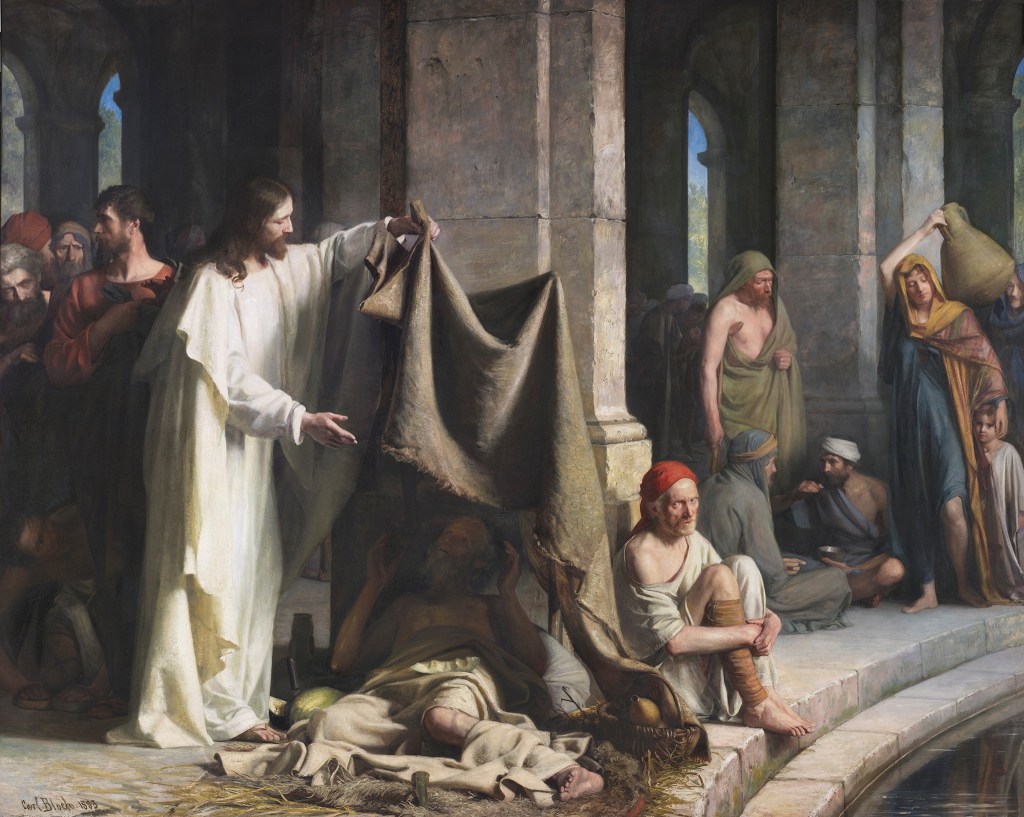
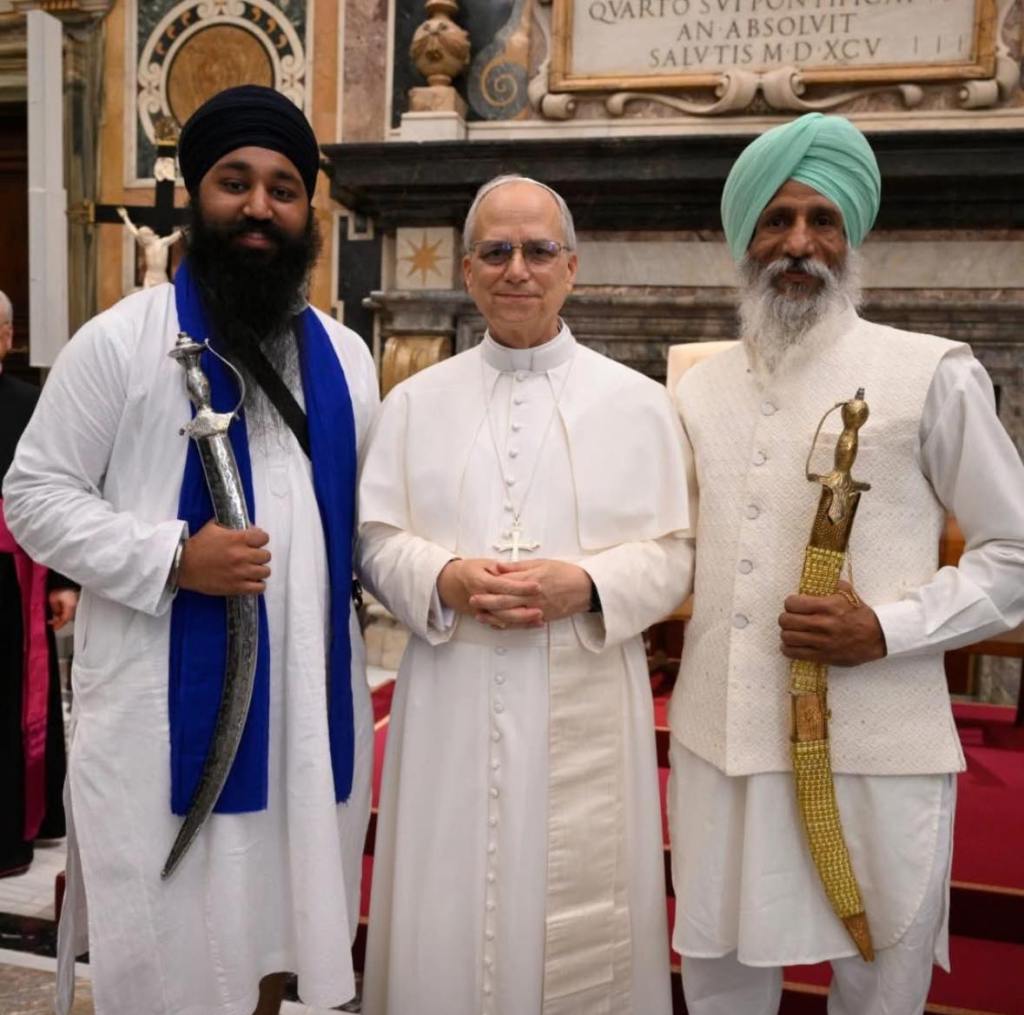
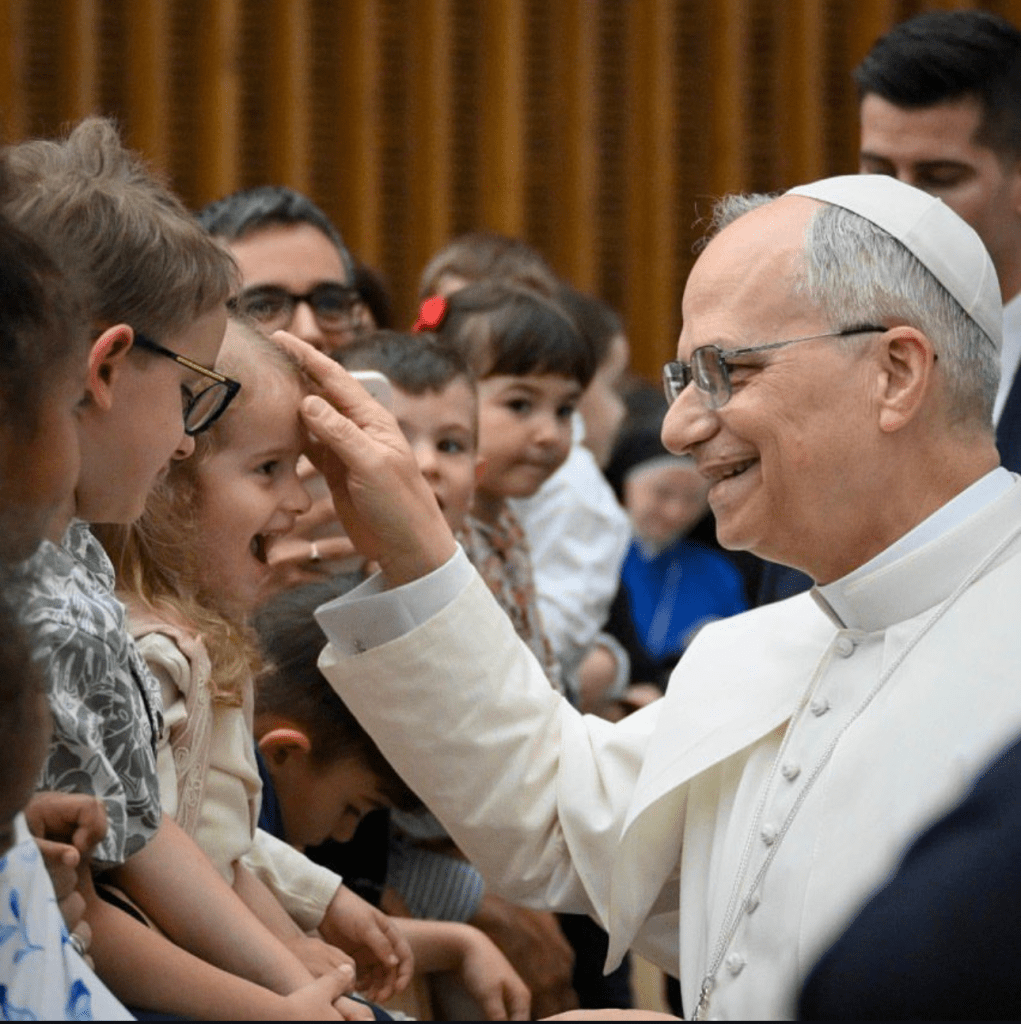
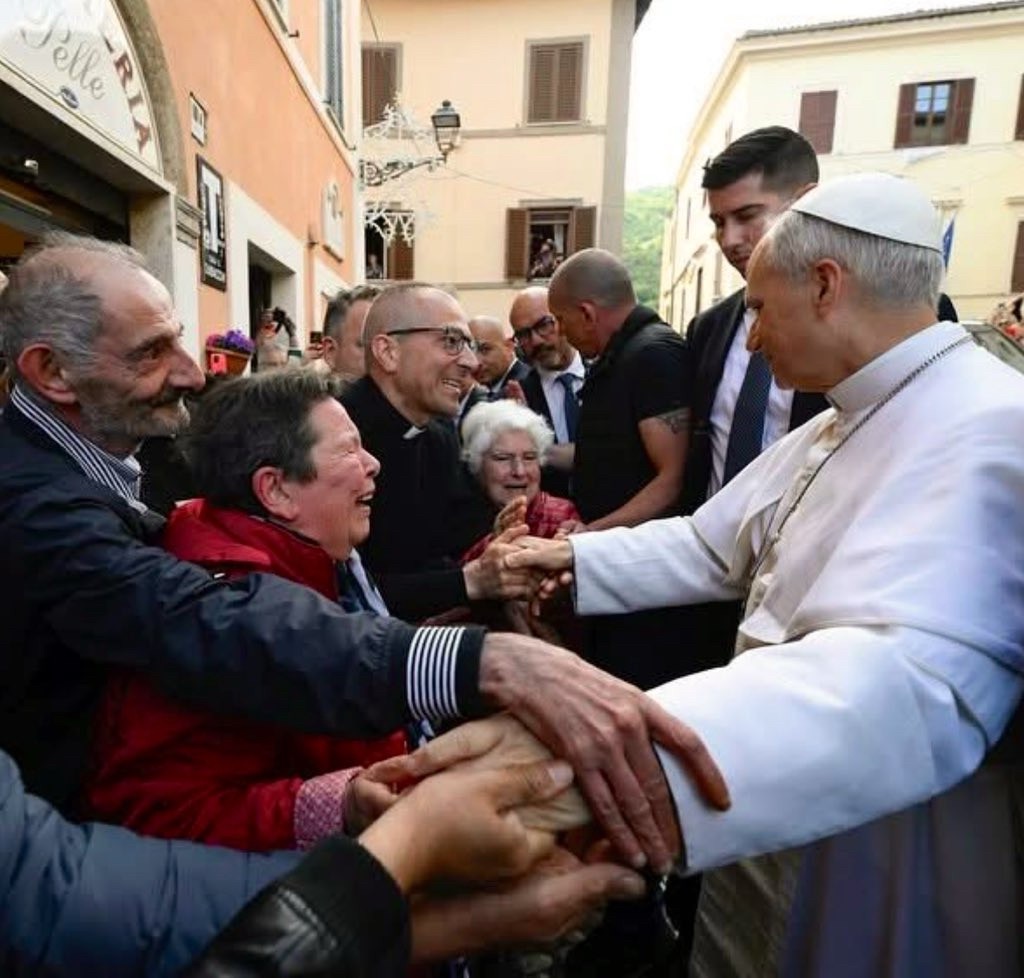
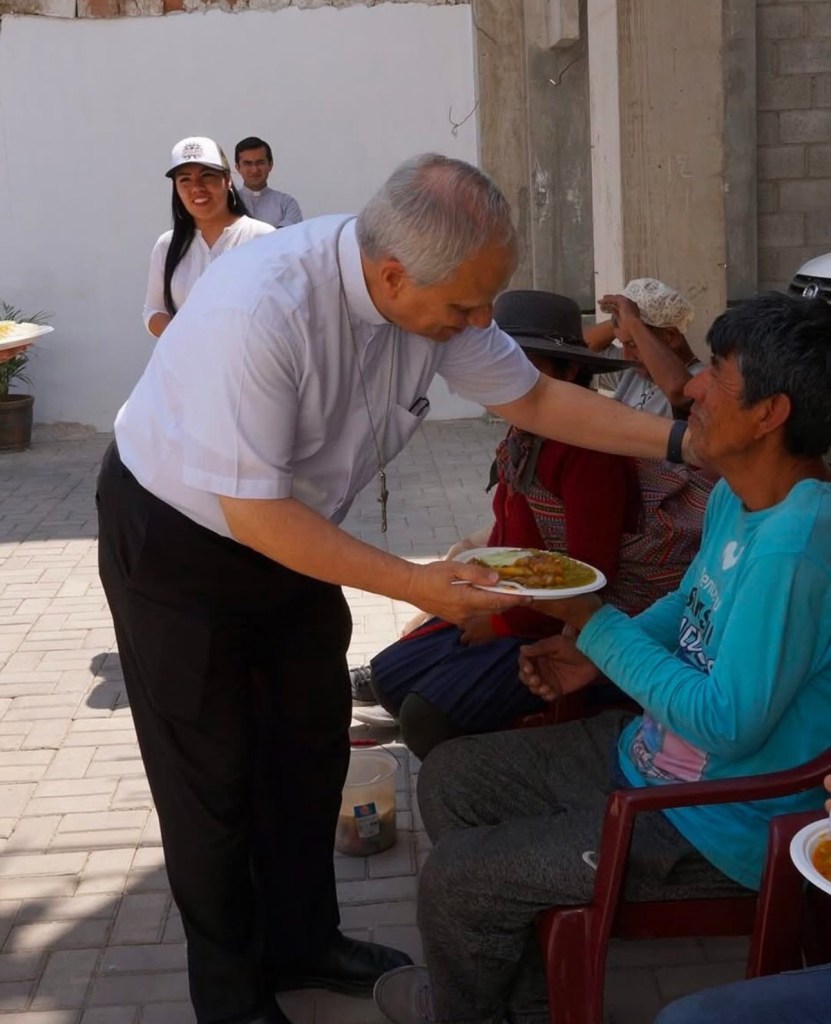
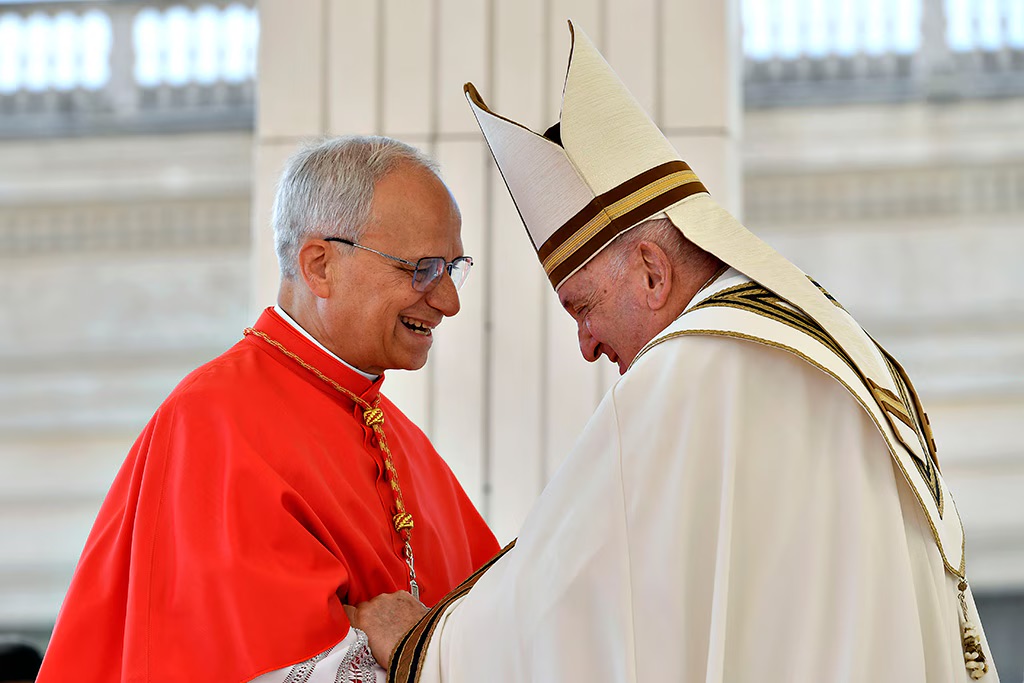
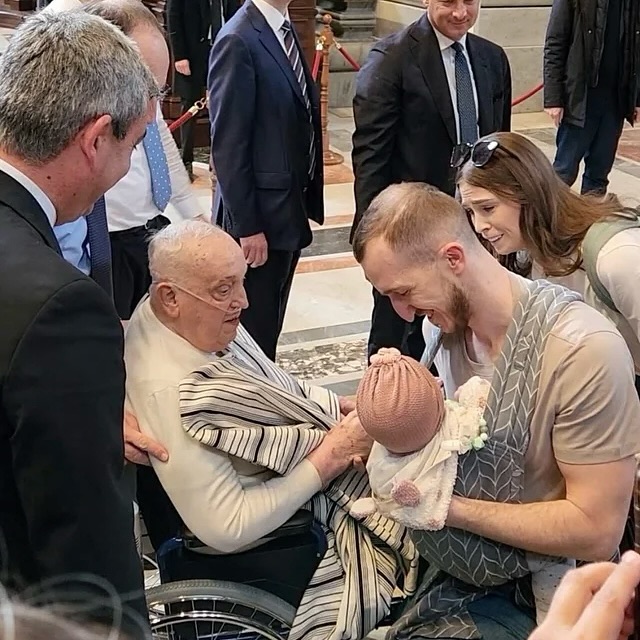

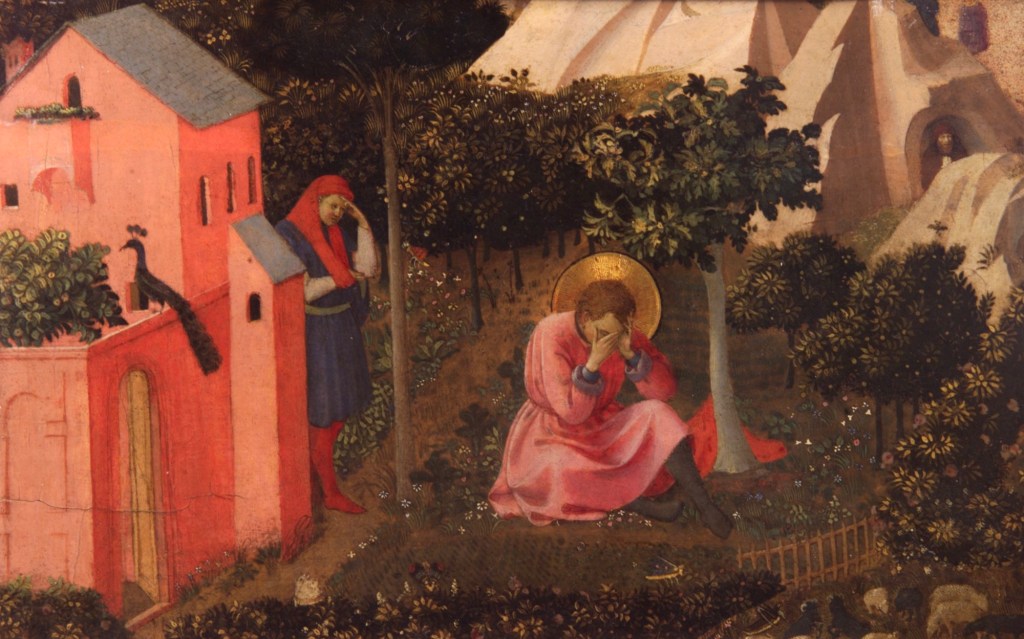
 eyebeleave