Two days ago, Pope Francis published his Apostolic Letter entitled Desiderio desideravi, which gets its title from a verse in St. Luke’s gospel: “Desiderio desideravihoc Pascha manducare vobiscum, antequam patiar” – i.e., “I have earnestly desired to eat this Passover with you before I suffer.” (Lk 22:15). Its subject is the liturgy and he addresses points about its nature, about its role in the life of the Church, about the art of practising it, about the formation it calls for and about various distortions that it is being subjected to. I would very much recommend reading its 11K words in full, but if you would prefer to go only with a selection, the following are the passages that most spoke to me.
You will see that I am including almost the entirety of the first 9 paragraphs, which struck me by their beauty and intimacy and which give such a vivid sense of Jesus’ desire for us – for each and every one of us!
“I have earnestly desired to eat this Passover with you before I suffer.” (Lk 22:15) These words of Jesus, with which the account of the Last Supper opens, are the crevice through which we are given the surprising possibility of intuiting the depth of the love of the persons of the Most Holy Trinity for us. (2)
Peter and John were sent to make preparations to eat that Passover, but in actual fact, all of creation, all of history — which at last was on the verge of revealing itself as the history of salvation — was a huge preparation for that Supper. Peter and the others are present at that table, unaware and yet necessary. Necessary because every gift, to be gift, must have someone disposed to receive it. In this case, the disproportion between the immensity of the gift and the smallness of the one who receives it is infinite, and it cannot fail to surprise us. Nonetheless, through the mercy of the Lord, the gift is entrusted to the Apostles so that it might be carried to every man and woman. (3)
No one had earned a place at that Supper. All had been invited. Or better said: all had been drawn there by the burning desire that Jesus had to eat that Passover with them. (4)
I want […] that all can be seated at the Supper of the sacrifice of the Lamb and live from Him. (5)
Before our response to his invitation — well before! — there is his desire for us. We may not even be aware of it, but every time we go to Mass, the first reason is that we are drawn there by his desire for us. For our part, the possible response — which is also the most demanding asceticism — is, as always, that surrender to this love, that letting ourselves be drawn by him. Indeed, every reception of communion of the Body and Blood of Christ was already desired by him in the Last Supper. (6)
The content of the bread broken is the cross of Jesus, his sacrifice of obedience out of love for the Father. If we had not had the Last Supper, that is to say, if we had not had the ritual anticipation of his death, we would have never been able to grasp how the carrying out of his being condemned to death could have been in fact the act of perfect worship, pleasing to the Father, the only true act of worship, the only true liturgy. Only a few hours after the Supper, the apostles could have seen in the cross of Jesus, if they could have borne the weight of it, what it meant for Jesus to say, “body offered,” “blood poured out.” It is this of which we make memorial in every Eucharist. When the Risen One returns from the dead to break the bread for the disciples at Emmaus, and for his disciples who had gone back to fishing for fish and not for people on the Sea of Galilee, that gesture of breaking the bread opens their eyes. It heals them from the blindness inflicted by the horror of the cross, and it renders them capable of “seeing” the Risen One, of believing in the Resurrection. (7)
From the very beginning the Church was aware that this was not a question of a representation, however sacred it be, of the Supper of the Lord. It would have made no sense, and no one would have been able to think of “staging” — especially before the eyes of Mary, the Mother of the Lord — that highest moment of the life of the Master. From the very beginning the Church had grasped, enlightened by the Holy Spirit, that that which was visible in Jesus, that which could be seen with the eyes and touched with the hands, his words and his gestures, the concreteness of the incarnate Word — everything of Him had passed into the celebration of the sacraments. (9)
Christian faith is either an encounter with Him alive, or it does not exist. (10)
The salvific power of the sacrifice of Jesus, his every word, his every gesture, glance, and feeling reaches us through the celebration of the sacraments. I am Nicodemus, the Samaritan woman at the well, the man possessed by demons at Capernaum, the paralytic in the house of Peter, the sinful woman pardoned, the woman afflicted by haemorrhages, the daughter of Jairus, the blind man of Jericho, Zacchaeus, Lazarus, the thief and Peter both pardoned. […] It is the way in which he satisfies his own thirst for us that he had declared from the cross. (Jn 19:28) (11)
Participating in the Eucharistic sacrifice is not our own achievement, as if because of it we could boast before God or before our brothers and sisters. The beginning of every celebration reminds me who I am, asking me to confess my sin and inviting me to implore the Blessed Mary ever virgin, the angels and saints and all my brothers and sisters to pray for me to the Lord our God. Certainly, we are not worthy to enter his house; we need a word of his to be saved. (cf. Ma 8:8) We have no other boast but the cross of our Lord Jesus Christ. (cf. Gal 6:14) The Liturgy has nothing to do with an ascetical moralism. It is the gift of the Paschal Mysteryof the Lord which, received with docility, makes our life new. The cenacle is not entered except through the power of attraction of his desire to eat the Passover with us: Desiderio desideravi hoc Pascha manducare vobiscum, antequam patiar (Lk 22:15). (20)
The continual rediscovery of the beauty of the Liturgy is not the search for a ritual aesthetic which is content by only a careful exterior observance of a rite or is satisfied by a scrupulous observance of the rubrics. Obviously, what I am saying here does not wish in any way to approve the opposite attitude, which confuses simplicity with a careless banality, or what is essential with an ignorant superficiality, or the concreteness of ritual action with an exasperating practical functionalism. (22)
Let us be clear here: every aspect of the celebration must be carefully tended to (space, time, gestures, words, objects, vestments, song, music…) and every rubric must be observed. Such attention would be enough to prevent robbing from the assembly what is owed to it; namely, the paschal mystery celebrated according to the ritual that the Church sets down. But even if the quality and the proper action of the celebration were guaranteed, that would not be enough to make our participation full. (23)
If there were lacking our astonishment at the fact that the paschal mystery is rendered present in the concreteness of sacramental signs, we would truly risk being impermeable to the ocean of grace that floods every celebration. Efforts to favour a greater quality to the celebration, even if praiseworthy, are not enough; nor is the call for a greater interiority. Interiority can run the risk of reducing itself to an empty subjectivity if it has not taken on board the revelation of the Christian mystery. The encounter with God is not the fruit of an individual interior searching for Him, but it is an event given. We can encounter God through the new fact of the Incarnation that reaches in the Last Supper the extreme point of his desiring to be eaten by us. How can the misfortune of distancing ourselves from the allure of the beauty of this gift happen to us? (24)
When I speak of astonishment at the paschal mystery, I do not at all intend to refer to what at times seems to me to be meant by the vague expression “sense of mystery.” Sometimes this is among the presumed chief accusations against the liturgical reform. It is said that the sense of mystery has been removed from the celebration. The astonishment or wonder of which I speak is not some sort of being overcome in the face of an obscure reality or a mysterious rite. It is, on the contrary, marvelling at the fact that the salvific plan of God has been revealed in the paschal deed of Jesus (cf. Eph 1:3-14), and the power of this paschal deed continues to reach us in the celebration of the “mysteries,” of the sacraments. It is still true that the fullness of revelation has, in respect to our human finitude, an abundance that transcends us and will find its fulfilment at the end of time when the Lord will return. But if the astonishment is of the right kind, then there is no risk that the otherness of God’s presence will not be perceived, even within the closeness that the Incarnation intends. If the reform has eliminated that vague “sense of mystery,” then more than a cause for accusations, it is to its credit. Beauty, just like truth, always engenders wonder, and when these are referred to the mystery of God, they lead to adoration. (25)
Wonder is an essential part of the liturgical act because it is the way that those who know they are engaged in the particularity of symbolic gestures look at things. It is the marvelling of those who experience the power of symbol, which does not consist in referring to some abstract concept but rather in containing and expressing in its very concreteness what it signifies. (26)
Liturgy is about praise, about rendering thanks for the Passover of the Son whose power reaches our lives. The celebration concerns the reality of our being docile to the action of the Spirit who operates through it until Christ be formed in us. (Cf. Gal 4:19) The full extent of our formation is our conformation to Christ. I repeat: it does not have to do with an abstract mental process, but with becoming Him. This is the purpose for which the Spirit is given, whose action is always and only to confect the Body of Christ. It is that way with the Eucharistic bread, and with every one of the baptized called to become always more and more that which was received as a gift in Baptism; namely, being a member of the Body of Christ. Leo the Great writes, “Our participation in the Body and Blood of Christ has no other end than to make us become that which we eat.” (41)
The Liturgy is done with things that are the exact opposite of spiritual abstractions: bread, wine, oil, water, fragrances, fire, ashes, rock, fabrics, colours, body, words, sounds, silences, gestures, space, movement, action, order, time, light. The whole of creation is a manifestation of the love of God, and from when that same love was manifested in its fullness in the cross of Jesus, all of creation was drawn toward it. It is the whole of creation that is assumed in order to be placed at the service of encounter with the Word: incarnate, crucified, dead, risen, ascended to the Father. It is as the prayer over the water at the baptismal font sings, but also the prayer over the oil for sacred chrism and the words for the presentation of the bread and wine — all fruit of the earth and work of human hands. (42)
The Liturgy gives glory to God not because we can add something to the beauty of the inaccessible light within which God dwells (cf. 1Ti 6:16). Nor can we add to the perfection of the angelic song which resounds eternally through the heavenly places. The Liturgy gives glory to God because it allows us — here, on earth — to see God in the celebration of the mysteries, and in seeing Him to draw life from his Passover. We, who were dead through our sins and have been made be alive again with Christ — we are the glory of God. By grace we have been saved (Eph 2:5). Irenaeus, the doctor unitatis, reminds us of this: “The glory of God is man alive, and the life of man consists in seeing God: if the revelation of God through the creation already gives life to all living beings on earth, how much more then is the manifestation of the Father through the Word the cause of life for those who see God.” (43)
Above all we must reacquire confidence about creation. I mean to say that things — the sacraments “are made” of things — come from God. To Him they are oriented, and by Him they have been assumed, and assumed in a particular way in the Incarnation, so that they can become instruments of salvation, vehicles of the Spirit, channels of grace. In this it is clear how vast is the distance between this vision and either a materialistic or spiritualistic vision. If created things are such a fundamental, essential part of the sacramental action that brings about our salvation, then we must arrange ourselves in their presence with a fresh, non-superficial regard, respectful and grateful. From the very beginning, created things contain the seed of the sanctifying grace of the sacraments. (46)
Among the ritual acts that belong to the whole assembly, silence occupies a place of absolute importance. Many times it is expressly prescribed in the rubrics. The entire Eucharistic celebration is immersed in the silence which precedes its beginning and which marks every moment of its ritual unfolding. In fact, it is present in the penitential act, after the invitation “Let us pray,” in the Liturgy of the Word (before the readings, between the readings and after the homily), in the Eucharistic prayer, after communion. [16] Such silence is not an inner haven in which to hide oneself in some sort of intimate isolation, as if leaving the ritual form behind as a distraction. That kind of silence would contradict the essence itself of the celebration. Liturgical silence is something much more grand: it is a symbol of the presence and action of the Holy Spirit who animates the entire action of the celebration. For this reason it constitutes a point of arrival within a liturgical sequence. Precisely because it is a symbol of the Spirit, it has the power to express the Spirit’s multifaceted action. In this way, going over again the moments I just mentioned, silence moves to sorrow for sin and the desire for conversion. It awakens a readiness to hear the Word and awakens prayer. It disposes us to adore the Body and Blood of Christ. It suggests to each one, in the intimacy of communion, what the Spirit would effect in our lives to conform us to the Bread broken. For all these reasons we are called to enact with extreme care the symbolic gesture of silence. Through it the Spirit gives us shape, gives us form. (52)
Every gesture and every word contains a precise action that is always new because it meets with an always new moment in our own lives. I will explain what I mean with a simple example. We kneel to ask pardon, to bend our pride, to hand over to God our tears, to beg his intervention, to thank Him for a gift received. It is always the same gesture which in essence declares our own being small in the presence of God. Nevertheless, done in different moments of our lives, it moulds our inner depths and then thereafter shows itself externally in our relation with God and with our brothers and sisters. Also kneeling should be done with art, that is to say, with a full awareness of its symbolic sense and the need that we have of this gesture to express our way of being in the presence of the Lord. And if all this is true for this simple gesture, how much more will it be for the celebration of the Word? Ah, what art are we summoned to learn for the proclamation of the Word, for the hearing of it, for letting it inspire our prayer, for making it become our very life? All of this is worthy of utmost attention — not formal or merely exterior, but living and interior — so that every gesture and every word of the celebration, expressed with “art,” forms the Christian personality of each individual and of the community (53)
Our life is not a random chaotic series of events, one following the other. It is rather a precise itinerary which, from one annual celebration of the His Death and Resurrection to the next, conforms us to Him, as we await the blessed hope and the coming of our Saviour, Jesus Christ. (64)
Let us abandon our polemics to listen together to what the Spirit is saying to the Church. Let us safeguard our communion. Let us continue to be astonished at the beauty of the Liturgy. The Paschal Mystery has been given to us. Let us allow ourselves to be embraced by the desire that the Lord continues to have to eat His Passover with us. All this under the gaze of Mary, Mother of the Church. (65)
It is Christmas. The feast of the greater-than-אω–infinite, (self–)transcendent God’s second syncatabasis. The God who previously lowered himself to speak the universe – a finite immanence – into being, now goes even further. He becomes a mere human. An infinitesimal spec within the infinitesimal spec that is his creation. He empties himself into his son, who then spends his earthly life showing us how to reciprocate that self-emptying gift, to the point of accepting even abandonment and death on the cross. So great is God’s love for me that he is willing to lose his very self for the sake of spelling out the totality and unconditionality of his love, for the sake of being at my side even when I am alone in pain.
No one, nowhere, at no time is from then on ever alone. No matter what is happening to them or what they are doing. The self-sacrificing, self-emptying, self-giving transcendent is with them, is in them – and they are in him. He is at our side, ready to welcome us into the infinite, ever-increasing, ever-self-transcending cycle of Trinitarian love.
But, what does this mean for me? What tangible consequences does God’s incarnation in the person of Jesus of Nazareth, born of his mother Mary, have for me, who desires to follow him?
I believe the consequences to be twofold.
First, the incarnation is an invitation to perfection. An invitation to total self-emptying self-giving. Following Jesus means to give myself to others, to make the good of others my priority, which – paradoxically – also implies striving to make myself the best that I can be, so that my self-giving may be a true gift for its recipients. In other words, it is an invitation to the perfection of the incarnate God. An invitation not to making my finite, limited, feeble self perfect, but to participation in God’s perfection. He does the heavy lifting; all he asks of me is to say yes to his call to follow him. He meets me where I am, he comes to me in my own backwater of a Bethlehem and stretches out his hand towards me. He has already overcome the greatest chasm: the infinite making himself also finite, the transcendent becoming also immanent. No flaws of mine, versus his perfection, can compare to what he has already lowered himself to.
Second, the incarnation is an invitation to imperfection. An invitation to not shirk from it, to not let it get in the way of following him who broke bread with tax collectors and prostitutes. Why? Because each one of us is him. Suffering for our distance from him, rejoicing in our closeness to him, called to being one with him. Jesus looks at the tax collector, the prostitute, and sees himself. He looks at us and envelops us in his love. He first accepts us as we are, no matter who and how we are. And only then does he invite us to perfection. He loves us regardless of whether we accept it or not. He loves us even if we are the ones crucifying him.
He calls me to love him in every person I meet and not to get hung up about their choices, regardless of how I judge them. No matter how good I think they may be, or how wrong their choices may be in my eyes, or how incomprehensible they may be to me, he calls me not to judge them, but to love them.
Who am I to not love the racist, the conspiracy theorist, the woman who has had an abortion, the Catholic who, out of a distorted sense of tradition, is fixated on rules, the hater, the envier, the ill-wisher, the embezzler, the egoist, the ideologist, the dogmatist, the relativist, the flat-earther, the trickle-down capitalist, the science fiction fan, the avid gardener, the transgender person, the gay couple, or my own, sinful self? How presumptuous of me to think that these are more different from me than infinity is from the finite, than transcendence is from the immanent! How un-Christian of me to think that any of these could constitute legitimate grounds for distance, for the withdrawal of Christ-imitating, self-giving love!
Jesus left us clear instructions: that we all may be one, like the father is in him and he is in the father, so that we all may be in them. All called to perfection by participation in divine love, convinced by the incarnation that no distance, no differences, no imperfections can get in the way.
The bedrock of authentic, profound relationships is a paradoxical interplay of being and nothingness. For me to welcome you, I need to make space for you in me. I need to lose myself to receive you. And for such reception to be perfect, my self-annihilation too needs to be total. Only then can I welcome you as you are, and not only as the parts of my self that I hold on to leave room for. Unless I become nothing, I cannot receive you wholly.
But you mustn’t do the same! You mustn’t self-annihilate. If you did, there would be nothing for me to receive from you and we would both perish in vain. You must become the best you that you can be, so that you may have a gift worthy of filling the void I made of myself for you.
And when you give yourself to me, do it wholly. Hold nothing back. Empty yourself to the point of becoming the residual nothing of self-giving. And I, what will I do? Having received your perfect gift of self that fills the void I made by giving myself to you, I cannot but reciprocate by giving myself wholly to you. I make myself the best I that I can be, an I that has received a perfect gift from you. I now give my self, that you have enriched in me with your own self, to you. You receive me, a me that contains you, and can accept it wholly, having made yourself nothing.
To receive you, I must be nothing. To give myself to you, I must be everything. Everything for you. I am the best I that I can be when I give my self to you. A self that is nothing, so as to welcome you perfectly. A self that is everything, so as to be a perfect gift for you.
I am the best I that I can be when I give my self to you, and you reciprocate my free gift with your own. I become nothing for you. You become everything for me. I become everything for you. You become nothing for me. And our relationship becomes the place where we, self-annihilated and fulfilled in mutual self-giving, truly are.
Looking back at Judith Buttler’s “Gender Trouble: Feminism and the Subversion of Identity” (that I wrote about here) and at John Paul II’s “Man and Woman He Created Them” (covered here), I am reminded of the advice that Chiara Lubich offered to Giuseppe Maria Zanghí, when he turned to her in disillusionment with the ideas of thinkers that he found lacking and which he recounts as follows:1
“It was Chiara, later, who drew my attention to all the expressions of human inquiry, because, she told me, each of them had been, is in love with the truth and in one way or another had it, touched it. And there is in all a patrimony of suffering, of invocation, of awaiting, which must be respected with humble attention and strong participation. “You must learn from everyone”, she told me, “so that you may know how to approach everyone with love”.”
What struck me when I first read this was that it is a manifesto for dialogue and for engaging with the ideas and worldviews of all. Believing in their love of truth, the authenticity of suffering to which they respond and the sincerity of their desire to overcome it, invites humility, rather than judgment, to be the mode of engagement.
Above all, I was drawn to the realization that all serious thought comes with a heritage of suffering, that it grows from a suffering that calls to it for remedy. And this is apparent both in Buttler’s discursive-constructionist-linguistic approach and in John Paul II’s theological one. It also seems to me that the suffering roots of the two are intertwined and overlapping and that they may be the ideal locus for attempting a reading of the two that understands their shared and distinct positions. I also think that a focus on the suffering to which the two respond may make their mutual recognition of a shared project more accessible. In the following I will draw on passages from Buttler’s book that I have not written about before, as well as underlining the suffering that she sets out in the introduction that was the primary source of a previous blog post here. This will be followed by an analogous perspective on John Paul II’s thought with the aim simply to catalogue, to set out the laments to which both respond.
Buttler starts off by synthesizing Simone de Beauvoir’s position, that “women are the negative of men, the lack against which masculine identity differentiates itself” and points to Luce Irigaray reading that inequality in even starker terms. For “Irigaray both the subject [masculine] and the Other [feminine] are masculine mainstays of a closed phallogocentric signifying economy that achieves its totalizing goal through the exclusion of the feminine altogether”. This wound is an annihilation of the feminine as subject and its exclusion from a totalitarian masculine signifying economy. The very structure of verbal thought denies women the status of subject and relegates them to objects. The masculine, according to Beauvoir, not only negates the feminine but goes beyond it to usurp the universal:
“[T]he “subject” within the existential analytic of misogyny is always already masculine, conflated with the universal, differentiating itself from a feminine “Other” outside the universalizing norms of personhood, hopelessly “particular,” embodied, condemned to immanence.”
And, in Irigaray’s thought, does so to the extent of entirely removing any possibility of the feminine to qualify for subjecthood:
“Women can never “be,” according to this ontology of substances, precisely because they are the relation of difference, the excluded, by which that domain marks itself off. Women are also a “difference” that cannot be understood as the simple negation or “Other” of the always-already-masculine subject. [… T]hey are neither the subject nor its Other, but a difference from the economy of binary opposition, itself a ruse for a monologic elaboration of the masculine. […]
[T]he Other as well as the Same are marked as masculine; the Other is but the negative elaboration of the masculine subject with the result that the female sex is unrepresentable— that is, it is the sex which, within this signifying economy, is not one. But it is not one also in the sense that it eludes the univocal signification characteristic of the Symbolic, and because it is not a substantive identity, but always and only an undetermined relation of difference to the economy which renders it absent.”
This inequality and asymmetry can also present itself in the form of an identification of women with nature and men with culture, which the following consequences, as set out by anthropologists Marilyn Strathern and Carol MacCormack who have argued
“that nature/culture discourse regularly figures nature as female, in need of subordination by a culture that is invariably figured as male, active, and abstract. As in the existential dialectic of misogyny, this is yet another instance in which reason and mind are associated with masculinity and agency, while the body and nature are considered to be the mute facticity of the feminine, awaiting signification from an opposing masculine subject. As in that misogynist dialectic, materiality and meaning are mutually exclusive terms.”
Continuing with an anthropological analysis, Buttler refers to Lévi-Strauss’ The Elementary Structures of Kinship, which argues that:
“the object of exchange that both consolidates and differentiates kinship relations is women, given as gifts from one patrilineal clan to another through the institution of marriage. The bride, the gift, the object of exchange constitutes “a sign and a value” that opens a channel of exchange that not only serves the functional purpose of facilitating trade but performs the symbolic or ritualistic purpose of consolidating the internal bonds, the collective identity, of each clan differentiated through the act. In other words, the bride functions as a relational term between groups of men; she does not have an identity, and neither does she exchange one identity for another. She reflects masculine identity precisely through being the site of its absence.”
The denial of subject status to women, which also removes their personal identity, degrades their participation in family relationships to the role of mere tokens by which groups of men relate to each other. What struck me when I first read the above perspective on kinship relations was how they are a perversion of the relationships among the Persons of the Trinity. In both cases there are three that participate in a relational structure and in both cases there are identities, subjects and exchanges. In the case of the Trinity, the Father, as subject and without ceasing to be subject, freely gives himself to the Son, who in return and with full subjecthood freely reciprocates the gift in such a way that the mutual self-exchange of Father and Son is the Person of the Holy Spirit who has equal subject- and personhood as the Father and the Son. It is a dynamic of three free persons of equal subjecthood that makes them one. The traces of this dynamic and subject-affirming structure can be seen in Butler’s account of Lévi-Strauss’ theory, but only as ruins ravaged by distortion and perversion. Where there are three subjects in the Trinity, here there are only two: two groups of men, with full identities and distinct subjecthoods. Where the relating of subjects takes place through and in a fully equal third subject in the Trinity, here the third is denied her subject- and personhood and rendered an object, used and exploited by the other two, who deprive themselves of true relationships by relating to each other through exploiting a third. The self-giving loves of the Father and the Son are perverted into selfish appropriation; the glory of the Holy Spirit is perverted into the objectification and depersonalization of women.
Butler then continues the same paragraph with spelling out the brutal consequences the these relationships in Lévi-Strauss’ thought:
“Clan members, invariably male, invoke the prerogative of identity through marriage, a repeated act of symbolic differentiation. Exogamy distinguishes and binds patronymically specific kinds of men. Patrilineality is secured through the ritualistic expulsion of women and, reciprocally, the ritualistic importation of women. As wives, women not only secure the reproduction of the name (the functional purpose), but effect a symbolic intercourse between clans of men. As the site of a patronymic exchange, women are and are not the patronymic sign, excluded from the signifier, the very patronym they bear. The woman in marriage qualifies not as an identity, but only as a relational term that both distinguishes and binds the various clans to a common but internally differentiated patrilineal identity.”
Buttler then spells out a further wound caused by such inequality, which not only impacts individual women, but also the relationships among women:
The relation of reciprocity established between men, however, is the condition of a relation of radical nonreciprocity between men and women and a relation, as it were, of nonrelation between women.
The wounds caused by the hegemony of a masculinist signifying economy are deep when viewed from the perspective of women in a heterosexual context and, according to Monique Wittig, even deeper when it comes to homosexual persons, whose very existence, or even potential existence, is denied and invalidated:
“A woman, [Wittig] argues, only exists as a term that stabilizes and consolidates a binary and oppositional relation to a man; that relation, she argues, is heterosexuality.A lesbian, she claims, in refusing heterosexuality is no longer defined in terms of that oppositional relation. Indeed, a lesbian, she maintains, transcends the binary opposition between woman and man; a lesbian is neither a woman nor a man. But further, a lesbian has no sex; she is beyond the categories of sex. Through the lesbian refusal of those categories, the lesbian exposes (pronouns are a problem here) the contingent cultural constitution of those categories and the tacit yet abiding presumption of the heterosexual matrix.”
In summary, the wounds exposed by feminism as represented in Judith Butler’s “Gender Trouble: Feminism and the Subversion of Identity” derive from a fundamental inequality between men and women, where only men are true subjects and women are merely passive objects. Women are excluded and objectified, reduced to facilitating relations among men and, due to their non-subjecthood, even the possibility of relations among them are impossible.
In Pope John Paul II’s “Man and Woman He Created Them” we can find the same fundamental wound of the deprivation of personhood and of objectification, albeit seen as a danger in both how men can mistreat women and how women can mistreat men, the latter being a danger also noted by Butler:
“Concupiscence2 […] attacks precisely this “sincere gift”: it deprives the human being, one could say, of the dignity of the gift, which is expressed by their body through femininity and masculinity, and in some sense “depersonalizes” the human being, making them an object “for the other.” Instead of being “together with the other”—a subject in unity, or better, in the sacramental “unity of the body”—the human being becomes an object for the human being, the female for the male and vice versa.”
The fundamental and equal subjecthood of men and women is also underlined by John Paul II in the reading of the Genesis account of creation, which is sometimes interpreted as being masculinist. He counters such a reading by pointing to how this text speaks about humans before versus after the fall – i.e., where the “before” is the intended state and the “after” is the wounded, perverted state:3
“The ethos of the gift delineates in part the problem of the “subjectivity” of the human being, who is a subject made in the image and likeness of God. In the creation account (see Gen 2:23–25), “the woman” is certainly not just “an object” for the man, although both remain before one another in the whole fullness of their objectivity as creatures, as “bone from my bones, flesh from my flesh,” as male and female, both of them naked. Only the nakedness that turns the woman into an “object” for the man, or vice versa, is a source of shame. The fact that “they did not feel shame” means that the woman was not an “object” for the man, nor he for her. Inner innocence as “purity of heart” made it impossible somehow for one to be reduced by the other to the level of a mere object. If “they did not feel shame,” this means that they were united by the consciousness of the gift, that they had reciprocal awareness of the spousal meaning of their bodies, in which the freedom of the gift is expressed and the whole inner richness of the person as subject is shown. This reciprocal interpenetration of the “I” of the human persons, of the man and the woman, seems to exclude subjectively any “reduction to an object.” […]
And even through the veil of shame, the human being was continually to discover themselves in it as the guardian of the mystery of the subject, that is, of the freedom of the gift, in order to defend this freedom from any reduction to the position of a mere object.”
Elsewhere John Paul II also speaks about the breakdown of subjecthood, and relationships based on mutual self-giving, by saying that “[t]he relationship of the gift changes into a relationship of appropriation.”
While the wounds of gender equality that Butler focuses on are those where the feminine is objectified by the masculine, John Paul II mostly presents them in both directions. I believe, this is motivated by his reflection being centered on the potential that both men and women have for mutual fulfillment and oppression alike, rather than on an analysis of a pervasive cultural asymmetry. Interestingly, the instances where he focuses on women being reduced to objects by men have their roots in Jesus himself focusing on it, as opposed to talking about both directions:
“It is, in fact, one thing to have the consciousness that the value of sex is part of the whole richness of values with which a feminine being appears to a man; it is quite another thing to “reduce” the whole personal richness of femininity to this one value, that is, to sex as the fitting object of the satisfaction of one’s own sexuality. One can apply the same reasoning to what masculinity is for a woman, although the words of Matthew 5:27–284 refer directly only to the other relation. […]
In the situation described by Christ, this dimension exists one-sidedly between the man, who is a subject, and the woman, who has become an object.”
At a fundamental level there is strong alignment though between Judith Butler and John Paul II in terms of the shared aim that every person is to be a fully-fledged subject and a denunciation of any form of objectification. How both propose to go about it is something to look into next.
1Zanghí, G. M. (2008) Gesù abbandonato maestro di pensiero, Città Nuova, Rome, pp. 14–15.
2 “Concupisence” here refers to an “inclination to sin”, i.e., the potential for a human person to act out of self-interest and with disregard for their own good and the good of others.
3 Please, see this previous post about what John Paul II means by referring to Genesis as being a mythical text and about adjustments made to the English translation of his book in the quotes I use here.
4“You have heard that it was said, ‘You shall not commit adultery.’ But I say to you that everyone who looks at a woman with lust has already committed adultery with her in his heart.” (Matthew 5:27-28)
As I read, and recently wrote about, Judith Butler’s “Gender Trouble: Feminism and the Subversion of Identity”, my mind kept turning to memories of John Paul II’s Theology of the Body (“Man and Woman He Created Them”). I kept noticing parallels, not in where these two thinkers were going, but in patterns of relationships among concepts and in the clear desire of both to get to the bottom of the questions they posed. Since I read “Man and Woman He Created Them” eight years ago1, I wanted to go back to it and, this time, focus on who it is that John Paul II speaks about, more so than what he says about them. Who are the “man and woman”, the “male and female” he writes about and what is the locus in which he writes about them.
Before proceeding with a reading of the key passages from John Paul II’s writings, please, bear with me while I go into a serious issue with its English translation. Given the question at hand, the choice of vocabulary used to refer to human beings as distinct from male and female human beings needs to be examined. Key here is the fact that the origin of these texts, many of which were written before John Paul II’s election as pope, is Polish. In Polish, the noun “człowiek” refers to a human being with no indication as to their sex or gender, while “mężczyzną” indicates a male human and “niewiastą” a female one. However, since English does not have a noun to designate a human being without indicating their sex or gender, “człowiek” gets translated as “man”. The same happens when the German “Mensch” or the Hungarian “ember”, which are equivalent to the Polish “człowiek”, are rendered as “man” in English. John Paul II’s book is full of the word “man” in its English translation, while being full of the word “człowiek” in Polish. For this not to cloud our response to his words, I will replace “man” with “human being” (and italicize these substitutions and their grammatical consequences) in the following passages, where the Polish version has “człowiek”, and I would only use “man” if John Paul II used “mężczyzną”. Phrases like “the creation of man as male and female” become “the creation of the human being as male and female”, avoiding a masculinist slant that the English translation introduces and that is not present in the original.
From the outset, John Paul II makes it clear that he is concerned with the relationship between human beings and God, that his reflection has a theological and metaphysical character, and that it plays out both in the created, physical universe and beyond it in the uncreated, divine milieu (to borrow Teilhard de Chardin’s expression):
“The human person can neither be understood nor explained in their full depth with the categories taken from the “world,” that is, from the visible totality of bodies. Nevertheless, the human person too is a body.” […]
“Although the human person is so strictly tied to the visible world, nevertheless the biblical narrative does not speak of their likeness with the rest of creatures, but only with God (“God created the human being in his image; in the image of God he created them,” Gen 1:27).”
John Paul II also refers to objective reality when he points to the first source of knowledge about men and women in the context of the two accounts of their creation in Genesis. There the text of Genesis 1, which is historically more recent even though it appears earlier in the Hebrew Bible, presents a simultaneous creation of male and female humans:
“God created the human being in his image…; male and female he created them.” (Gen 1:27) One must recognize that the first account is concise, free from any trace of subjectivism: it contains only the objective fact and defines the objective reality, both when it speaks about the creation of the human being, male and female, in the image of God, and when it adds a little later the words of the first blessing, “God blessed them and said to them, ‘Be fruitful and multiply, fill the earth, subdue it, and rule’” (Gen 1:28).
It is worth noting here that John Paul II’s references to “objective fact” are not an indication of some naïve literalist reading of Scripture. Instead, he speaks about how Genesis has a mythical character and what that means:
“Following contemporary philosophy of religion and of language, one can say that we are dealing with a mythical language. In this case, in fact, the term “myth” does not refer to fictitious-fabulous content, but simply to an archaic way of expressing a deeper content.”
The second Genesis account (which is historically more ancient) talks about a sequential process, where the human being is created first, before male and female are separated:
“[T]he characteristic feature of [the second creation account] is the separate creation of woman (see Gen 2:18–23), while the account of the creation of the first man (male) is found in Genesis 2:5–7. The Bible calls this first human being “human being,” (’āḏām), while from the moment of the creation of the first woman, it begins to call him “male,” îš, in relation to ’iššāh (“woman,” because she has been taken from the male = îš).
What is clear throughout the book is a view of the human being as male and female. It is a binary configuration though that is highly egalitarian with regard to the two “modes” or “incarnations” of being human. This also comes across clearly in the deeper analysis of the second Genesis account, where the female is created from the male while the male is asleep:
“[I]n the light of the context of Genesis 2:18–20, there is no doubt that the human being falls into this “torpor” with the desire of finding a being similar to himself. If by analogy with sleep we can speak here also of dream, we must say that this biblical archetype allows us to suppose as the content of this dream a “second I,” which is also personal and equally related to the situation of original solitude, that is, to that whole process of establishing human identity in relation to all living beings (animalia), inasmuch as it is a process of man’s “differentiation” from such surroundings. In this way, the circle of the human person’s solitude is broken, because the first “man” reawakens from his sleep as “male and female.”
The phrase “male and female” occurs 162 times in the text and is the default subject that John Paul II talks about here, as opposed to a different treatment of the two. As far as he is concerned, the overarching question is what God’s plan is for humans – male and female – in terms of their relationship with Him and among themselves.
While the focus is very much a binary view of human sexuality, John Paul II was not blind to it not being universal, to there being other states. This can be seen in the following passage where he refers to being male or female as the “normal constitution”. In this passage he also argues for the primacy of being a body over whether that body is male or female, of being humans before being men or women:
“Although in its normal constitution, the human body carries within itself the signs of sex and is by its nature male or female, the fact that the human being is a “body” belongs more deeply to the structure of the personal subject than the fact that in his somatic constitution he is also male or female. For this reason, the meaning of original solitude, which can be referred simply to “the human being,” is substantially prior to the meaning of original unity; the latter is based on masculinity and femininity, which are, as it were, two different “incarnations,” that is, two ways in which the same human being, created “in the image of God” (Gen 1:27), “is a body.””
Importantly, these two ways of being a body are not mapped discretely onto humans – i.e., these “ways” or “incarnations” are not exclusive at the level of an individual in John Paul II’s thought:
“In the mystery of creation—on the basis of the original and constitutive “solitude” of his being—the human being has been endowed with a deep unity between what is, humanly and through the body, male in them and what is, equally humanly and through the body, female in them.” […]
“Let us recall the passage of Genesis 2:23: “Then the human being2 said, ‘This time she is flesh from my flesh and bone from my bones. She will be called woman because from man has she been taken.’” In the light of this text we understand that the knowledge of the human being passes through masculinity and femininity, which are, as it were, two “incarnations” of the same metaphysical solitude before God and the world—two reciprocally completing ways of “being a body” and at the same time of being human—as two complementary dimensions of self-knowledge and self-determination and, at the same time, two complementary ways of being conscious of the meaning of the body.”
Important as these “ways” of being a body are, the true nature of humans, in John Paul II’s thought is their being in communion:
The human being becomes an image of God not so much in the moment of solitude as in the moment of communion. They are, in fact, “from the beginning” not only an image in which the solitude of one Person, who rules the world, mirrors itself, but also and essentially the image of an inscrutable divine communion of Persons.
Still reading Genesis, John Paul II argues that the heart of such communion, mirrored on the life of the Trinity, is the mutual self-giving of woman and man which takes place perfectly “before” the fall:
According to Genesis 2:25, “the man and the woman did not feel shame.” This allows us to reach the conclusion that the exchange of the gift, in which their whole humanity, soul and body, femininity and masculinity, participates, is realized by preserving the inner characteristic (that is, precisely innocence) of self-donation and of the acceptance of the other as a gift. These two functions of the mutual exchange are deeply connected in the whole process of the “gift of self”: giving and accepting the gift interpenetrate in such a way that the very act of giving becomes acceptance, and acceptance transforms itself into giving.”
Woman and man here are not the same, but have an equal essence, which is that of self-giving and receiving the other. The following passages show how John Paul II’s understand these two halves of the spousal relationship – i.e., the relationship that constitutes communion:
“[T]he woman, in giving herself (from the very first moment, in which, in the mystery of creation, she has been “given” by the Creator to the man), at the same time “discovers herself,” thanks to the fact that she has been accepted and welcomed and thanks to the way in which she has been received by the man. She therefore finds herself in her own gift of self […] when she has been accepted in the way in which the Creator willed her, namely, “for her own sake,” through her humanity and femininity; she comes to the innermost depth of her own person and to the full possession of herself when, in this acceptance, the whole dignity of the gift is ensured through the offer of what she is in the whole truth of her humanity and in the whole reality of her body and her sex, of her femininity. We add that this finding of oneself in one’s own gift becomes the source of a new gift of self that grows by the power of the inner disposition to the exchange of the gift and in the measure in which it encounters the same and even deeper acceptance and welcome as the fruit of an ever more intense consciousness of the gift itself.” […]
“While in the mystery of creation the woman is the one who is “given” to the man, he on his part, in receiving her as a gift in the full truth of her person and femininity, enriches her by this very reception, and, at the same time, he too is enriched in this reciprocal relationship. The man is enriched not only through her, who gives her own person and femininity to him, but also by his gift of self. The man’s act of self-donation, in answer to that of the woman, is for him himself an enrichment; in fact, it is here that the specific essence, as it were, of his masculinity is manifested, which, through the reality of the body and of its sex, reaches the innermost depth of “self-possession,” thanks to which he is able both to give himself and to receive the gift of the other. The man, therefore, not only accepts the gift, but at the same time is welcomed as a gift by the woman in the self-revelation of the inner spiritual essence of his masculinity together with the whole truth of his body and his sex. When he is accepted in this way, he is enriched by this acceptance and welcoming of the gift of his own masculinity. It follows that such an acceptance, in which the man finds himself through the “sincere gift of self,” becomes in him a source of a new and more profound enrichment of the woman with himself. The exchange is reciprocal, and the mutual effects of the “sincere gift” and of “finding oneself” reveal themselves and grow in that exchange.”
To complete this sketch of who John Paul II’s “man and woman” are, it is important to understand how he understands the consequences of the fall, of concupiscence (i.e., the “inclination to sin”) on the above relationships:
Concupiscence […] attacks precisely this “sincere gift”: it deprives the human being, one could say, of the dignity of the gift, which is expressed by their body through femininity and masculinity, and in some sense “depersonalizes” the human being, making them an object “for the other.” Instead of being “together with the other”—a subject in unity, or better, in the sacramental “unity of the body”—the human being becomes an object for the human being, the female for the male and vice versa.
By violating the dimension of the mutual gift of the man and the woman, concupiscence also casts doubt on the fact that each of them is willed by the Creator “for himself.” The subjectivity of the person gives way in some sense to the objectivity of the body. Because of the body, the human being becomes an object for the human being: the female for the male and vice versa. Concupiscence signifies, so to speak, that the personal relations of man and woman are one-sidedly and reductively tied to the body and to sex, in the sense that these relations become almost incapable of welcoming the reciprocal gift of the person. They neither contain nor treat femininity and masculinity according to the full dimension of personal subjectivity; they do not constitute the expression of communion, but remain one-sidedly determined “by sex.”
Concupiscence brings with it the loss of the interior freedom of the gift. The spousal meaning of the human body is linked exactly to this freedom. The human being can become a gift—that is, man and woman can exist in the relationship of the reciprocal gift of self—if each of them masters themselves. Concupiscence, which manifests itself as a “constraint ‘sui generis’ of the body,” limits and restricts self-mastery from within, and thereby in some sense makes the interior freedom of the gift impossible. At the same time, also the beauty that the human body possesses in its male and female appearance, as an expression of the spirit, is obscured. The body is left as an object of concupiscence and thus as a “terrain of appropriation” of the other human being. Concupiscence as such is not able to promote union as a communion of persons. By itself, it does not unite, but appropriates to itself. The relationship of the gift changes into a relationship of appropriation.
Expressed differently, an objectification of the other negates their being a subject and places power and ownership at the basis of relating to them, which ought to sound not unfamiliar to a feminist philosophical ear.
There would be a lot more to say about the rich theory of male and female human beings and their relationships that John Paul II sets out in his 400K word book, but I believe the above sketches out some of its key features. This theory is above all about how humans relate to God and to each other in a way that mirrors the inner life of God-Trinity. The men and women presented here are made in God’s image as a gift for each other, to be given freely and to be reciprocated. Made for each other, men and women are of equal status here, with perversions of such equality being the domain of failure and sin that are denounced and to be overcome. Wile being very much about two “ways of being a body” – male and female, John Paul II does not consider these to lead to facile and stereotypical distinctions, since both masculinity and femininity are present in all human beings.
Before being condemned for blasphemy and tortured to death, Jesus left his followers with his last will and testament, “that they may all be one” (Jn 17:21). This exhortation resonates particularly strongly in me today and I am drawn to Jesus’ imperative of oneness having a universal determiner. Reading these words makes me stop and ask myself whether I truly include “all” as I think of those whose oneness Jesus desires. It also makes me ask the question in a negative form: whom do I not include among these “all”.
Without unpacking the question fully, I have the sense that an important element of inclusion is understanding. How can I truly include someone and relate to them in the way in which Jesus related to those he met, if I lack an understanding of who they are, what they care about, what pains them, what gives them joy. The most important part of this, always incomplete, understanding will come from a personal relationship, but there is also value in an understanding of the contexts in which another person’s life is set. Some understanding of their culture, history, values, etc., may help in building an authentic relationship with them, without such preambles determining it.
Another way to frame this picture is to ask who it is that I understand least and who it is that I am therefore least well prepared to welcome and relate to. Today the answer for me is twofold: religious fundamentalists and transgender people. In both cases the root cause is that I don’t, knowingly, have friends to which either of these apply. And in both cases I would like to know more, so that, if I were to get to know a transgender or religious fundamentalist person, I would be in a position to befriend them without inadvertently and unnecessarily offending them due to a lack of basic understanding. Just to be clear, I don’t believe that such knowledge is indispensable – friendship is open with all even without a shred of knowledge – only that it is preferable.
As you can guess from the title of this post, I chose to focus on trying to develop an understanding of transgender people first and I started with reading their testimonies, like those shared by PFLAG (the largest US organization uniting parents, families, and allies with people who are lesbian, gay, bisexual, transgender, and queer (LGBTQ+)) in their “Our trans loved ones” publication. This is an excellent resource with FAQs, expert opinions and experiences shared by transgender individuals and their families, and one that I’d recommend as a starting point.
I felt though that I wanted to know more about the philosophical underpinnings of what was presented in very accessible, but therefore simplified and abbreviated ways in this text. After reading around for a bit, I realized that to get a better sense of what is meant by gender, sex and sexual orientation, I need to go and read some feminist philosophers first, since the initial critical confrontation with these concepts comes from their thought. This quickly led me to Judith Butler’s “Gender Trouble: Feminism and the Subversion of Identity”, which I have now finished reading and which I would like to reflect on in the remainder of this post. Needless to say, these are first steps into a rich and complex field, but even as such I found them very insightful and rewarding.
From the get-go, Butler’s approach is critical in the best philosophical sense and is meticulous about examining and challenging potential flaws in preconceived, inherited concepts. For a start, she questions what the subject of feminism ought to be and is reluctant to accept “women” as an unqualified answer for the following reasons:
“In the course of this effort to question “women” as the subject of feminism, the unproblematic invocation of that category may prove to preclude the possibility of feminism as a representational politics. What sense does it make to extend representation to subjects who are constructed through the exclusion of those who fail to conform to unspoken normative requirements of the subject? What relations of domination and exclusion are inadvertently sustained when representation becomes the sole focus of politics? The identity of the feminist subject ought not to be the foundation of feminist politics, if the formation of the subject takes place within a field of power regularly buried through the assertion of that foundation. Perhaps, paradoxically, “representation” will be shown to make sense for feminism only when the subject of “women” is nowhere presumed.”
In essence, an underlying concern for Butler – and, as we’ll see later, also for feminist philosophers like Beauvoir and Irigaray whose work she builds on – is that concepts like woman, gender and sex qua concepts, by definition, exist in a signifying economy. In other words, the fundamental domain in which these analyses unfold is that of language, where “woman”, “gender”, “sex” have meanings that are established by the system-language they are parts of. An analysis of these concepts becomes an analysis of their meanings within a given system and it is the system itself that needs to be questioned instead. Accepting it and therefore, implicitly, accepting and being constrained by its structure, even while attempting a “correction” of the meanings of “woman”, “gender” and “sex”, would be a trap.
Butler then proceeds with probing the consequences of conventional ways of thinking about sex as given/natural and gender as constructed/cultural:
“If gender is the cultural meanings that the sexed body assumes, then a gender cannot be said to follow from a sex in any one way. Taken to its logical limit, the sex/gender distinction suggests a radical discontinuity between sexed bodies and culturally constructed genders. Assuming for the moment the stability of binary sex, it does not follow that the construction of “men” will accrue exclusively to the bodies of males or that “women” will interpret only female bodies. […]
Can we refer to a “given” sex or a “given” gender without first inquiring into how sex and/or gender is given, through what means? And what is “sex” anyway? Is it natural, anatomical, chromosomal, or hormonal, and how is a feminist critic to assess the scientific discourses which purport to establish such “facts” for us? Does sex have a history? Does each sex have a different history, or histories? Is there a history of how the duality of sex was established, a genealogy that might expose the binary options as a variable construction? Are the ostensibly natural facts of sex discursively produced by various scientific discourses in the service of other political and social interests? If the immutable character of sex is contested, perhaps this construct called “sex” is as culturally constructed as gender; indeed, perhaps it was always already gender, with the consequence that the distinction between sex and gender turns out to be no distinction at all.”
As she later states explicitly, Butler here follows in Nietzsche’s footsteps by setting out to elaborate a genealogy of gender, along analogous lines to his “Genealogy of Morals”. That is, to question the forces, factors, contributors whose interplay results in a particular concept of gender. This is especially clear in the above passage, where history, science, politics, society, power and processes of gender construction/acquisition are all called upon as elements of a genealogy.
Butler then argues that “sex” and “gender” are both firmly discursive, language-bound concepts and that not even sex can claim “given”, “natural”, “prediscursive” status and therefore immunity from semiotic enquiry. In other words, “sex” and “gender” start their existence in a language, as opposed to having non-linguistic, prior being:
“Gender ought not to be conceived merely as the cultural inscription of meaning on a pregiven sex (a juridical conception); gender must also designate the very apparatus of production whereby the sexes themselves are established. As a result, gender is not to culture as sex is to nature; gender is also the discursive/cultural means by which “sexed nature” or “a natural sex” is produced and established as “prediscursive,” prior to culture, a politically neutral surface on which culture acts. […]
Bodies cannot be said to have a signifiable existence prior to the mark of their gender; the question then emerges: To what extent does the body come into being in and through the mark(s) of gender? How do we reconceive the body no longer as a passive medium or instrument awaiting the enlivening capacity of a distinctly immaterial will? Whether gender or sex is fixed or free is a function of a discourse which, it will be suggested, seeks to set certain limits to analysis or to safeguard certain tenets of humanism as presuppositional to any analysis of gender.”
Even though the argument here is that “sex” and “gender” are a consequence of a broader discourse in which they attain their meanings, and Butler warns against conflating a particular cultural discourse with “universal rationality”, she also does not consider all gendered possibilities as open:
“The limits of the discursive analysis of gender presuppose and preempt the possibilities of imaginable and realizable gender configurations within culture. This is not to say that any and all gendered possibilities are open, but that the boundaries of analysis suggest the limits of a discursively conditioned experience. These limits are always set within the terms of a hegemonic cultural discourse predicated on binary structures that appear as the language of universal rationality. Constraint is thus built into what that language constitutes as the imaginable domain of gender.”
Having laid out the setting in which an engagement with “gender” and a theorizing about it will take place, Butler presents two alternative, prior theories. The first is Simone de Beauvoir’s, in which:
“women are designated as the Other […] the “subject” within the existential analytic of misogyny is always already masculine, conflated with the universal, differentiating itself from a feminine “Other” outside the universalizing norms of personhood, hopelessly “particular,” embodied, condemned to immanence. […] Beauvoir is often understood to be calling for the right of women, in effect, to become existential subjects and, hence, for inclusion within the terms of an abstract universality, her position also implies a fundamental critique of the very disembodiment of the abstract masculine epistemological subject. That subject is abstract to the extent that it disavows its socially marked embodiment and, further, projects that disavowed and disparaged embodiment on to the feminine sphere, effectively renaming the body as female.”
The key idea here is that already at a conceptual-linguistic level there is a categorical imbalance between male and female genders, whereby the universal, seemingly genderless subject is male, with women relegated to being an “other” to the universal male, to being passive bodies in contrast with male existential subjects. From the perspective of such a theory of gender, it makes perfect sense to call for a feminist restructuring of everything. “Feminist science”, “feminist history”, etc. all make sense, since the hitherto seemingly universal subject has implicitly been cast as male. It is not about some reframing within a universal signifying economy, but about a universalizing of what only apparently was universal.
Butler then introduces Luce Irigaray’s critique of Beauvoir:
“Irigaray argues that both the subject and the Other are masculine mainstays of a closed phallogocentric signifying economy that achieves its totalizing goal through the exclusion of the feminine altogether. For Beauvoir, women are the negative of men, the lack against which masculine identity differentiates itself; for Irigaray, that particular dialectic constitutes a system that excludes an entirely different economy of signification. Women are not only represented falsely within the Sartrian frame of signifying-subject and signified-Other, but the falsity of the signification points out the entire structure of representation as inadequate.”
Rather than challenging the concept of women within a given signifying economy, Irigaray argues that women are not represented at all in the ruling “hegemonic Western representation” in force today, that the “feminine” is defined wholly in terms of the “masculine” and therefore not a “feminine” at all. In the face of such an insidious totalitarian structure, Butler sounds a warning that feminism too needs to heed its risks and be weary of power relations that can undermine dialogue:
“Feminist critique ought to explore the totalizing claims of a masculinist signifying economy, but also remain self-critical with respect to the totalizing gestures of feminism. The effort to identify the enemy as singular in form is a reverse-discourse that uncritically mimics the strategy of the oppressor instead of offering a different set of terms. […]
Perhaps a coalition needs to acknowledge its contradictions and take action with those contradictions intact. Perhaps also part of what dialogic understanding entails is the acceptance of divergence, breakage, splinter, and fragmentation as part of the often tortuous process of democratization. The very notion of “dialogue” is culturally specific and historically bound, and while one speaker may feel secure that a conversation is happening, another may be sure it is not. The power relations that condition and limit dialogic possibilities need first to be interrogated.”
The consequences of such a theory of gender, that Irigaray argues is embedded in Western culture, is that it does not even allow for the possibility of women to “be” and leaves them as an unintelligible “difference”:
“Irigaray’s theory of sexual difference suggests that women can never be understood on the model of a “subject” within the conventional representational systems of Western culture precisely because they constitute the fetish of representation and, hence, the unrepresentable as such.Women can never “be,” according to this ontology of substances, precisely because they are the relation of difference, the excluded, by which that domain marks itself off. Women are also a “difference” that cannot be understood as the simple negation or “Other” of the always-already-masculine subject. As discussed earlier, they are neither the subject nor its Other, but a difference from the economy of binary opposition, itself a ruse for a monologic elaboration of the masculine.”
Importantly, Butler also challenges the relationships between “sex”, “gender”, “identity” and “personhood”, pointing to a risk of not understood gender identities threatening the very personhood of an individual when these concepts are tightly coupled:
“To what extent do regulatory practices of gender formation and division constitute identity, the internal coherence of the subject, indeed, the self-identical status of the person? To what extent is “identity” a normative ideal rather than a descriptive feature of experience? And how do the regulatory practices that govern gender also govern culturally intelligible notions of identity? In other words, the “coherence” and “continuity” of “the person” are not logical or analytic features of personhood, but, rather, socially instituted and maintained norms of intelligibility. Inasmuch as “identity” is assured through the stabilizing concepts of sex, gender, and sexuality, the very notion of “the person” is called into question by the cultural emergence of those “incoherent” or “discontinuous” gendered beings who appear to be persons but who fail to conform to the gendered norms of cultural intelligibility by which persons are defined.”
Such incoherence and unintelligibility are only avoided when the starting assumption is heterosexuality, which therefore is embedded in them:
“Gender can denote a unity of experience, of sex, gender, and desire, only when sex can be understood in some sense to necessitate gender—where gender is a psychic and/or cultural designation of the self—and desire—where desire is heterosexual and therefore differentiates itself through an oppositional relation to that other gender it desires. The internal coherence or unity of either gender, man or woman, thereby requires both a stable and oppositional heterosexuality.”
How then are these systematic biases and inhibitors to an equitable representation of all individuals to be overcome? Here the answer offered by Butler, on the basis of Beauvoir’s thought and that of Monique Wittig, is the following:
“The identification of women with “sex,” for Beauvoir as for Wittig, is a conflation of the category of women with the ostensibly sexualized features of their bodies and, hence, a refusal to grant freedom and autonomy to women as it is purportedly enjoyed by men. Thus, the destruction of the category of sex would be the destruction of an attribute, sex, that has, through a misogynist gesture of synecdoche, come to take the place of the person, the self-determining cogito. In other words, only men are “persons,” and there is no gender but the feminine. […]
Gender is the linguistic index of the political opposition between the sexes. Gender is used here in the singular because indeed there are not two genders. There is only one: the feminine, the “masculine” not being a gender. For the masculine is not the masculine, but the general.
Hence, Wittig calls for the destruction of “sex” so that women can assume the status of a universal subject.”
Finally, Butler makes an explicit reference to Nietzsche and proposes a parallel with his concepts of doing and a doer as a first hint of her “performative” gender theory:
“The challenge for rethinking gender categories outside of the metaphysics of substance will have to consider the relevance of Nietzsche’s claim in On the Genealogy of Morals that “there is no ‘being’ behind doing, effecting, becoming; ‘the doer’ is merely a fiction added to the deed—the deed is everything.” In an application that Nietzsche himself would not have anticipated or condoned, we might state as a corollary: There is no gender identity behind the expressions of gender; that identity is performatively constituted by the very “expressions” that are said to be its results.”
Again, Butler makes the point that such a concept of “gender” does not imply arbitrariness:
“To claim that gender is constructed is not to assert its illusoriness or artificiality, where those terms are understood to reside within a binary that counterposes the “real” and the “authentic” as oppositional. As a genealogy of gender ontology, this inquiry seeks to understand the discursive production of the plausibility of that binary relation and to suggest that certain cultural configurations of gender take the place of “the real” and consolidate and augment their hegemony through that felicitous self-naturalization.”
The first, introductory chapter of “Gender Trouble: Feminism and the Subversion of Identity”, where all of the above comes from and which I would recommend reading in full, then concludes with the following mission statement for the rest of the book:
“This text continues, then, as an effort to think through the possibility of subverting and displacing those naturalized and reified notions of gender that support masculine hegemony and heterosexist power, to make gender trouble, not through the strategies that figure a utopian beyond, but through the mobilization, subversive confusion, and proliferation of precisely those constitutive categories that seek to keep gender in its place by posturing as the foundational illusions of identity.”
What follows are sharp, in-depth confrontations with the gender theories of Lévi-Strauss, Lacan, Foucault and Freud and further analyses of Irigaray, Beauvoir and Wittig’s thought, which would take far too long to engage with in this already long read.
Let me conclude by sharing two passages from the book’s final chapter, in which Butler talks about the consequences of a performative theory of gender and a call to action aimed at challenging established cultural and political structures.
“The tacit constraints that produce culturally intelligible “sex” ought to be understood as generative political structures rather than naturalized foundations. Paradoxically, the reconceptualization of identity as an effect, that is, as produced or generated, opens up possibilities of “agency” that are insidiously foreclosed by positions that take identity categories as foundational and fixed. For an identity to be an effect means that it is neither fatally determined nor fully artificial and arbitrary. […] Construction is not opposed to agency; it is the necessary scene of agency, the very terms in which agency is articulated and becomes culturally intelligible.The critical task for feminism is not to establish a point of view outside of constructed identities; that conceit is the construction of an epistemological model that would disavow its own cultural location and, hence, promote itself as a global subject, a position that deploys precisely the imperialist strategies that feminism ought to criticize. The critical task is, rather, to locate strategies of subversive repetition enabled by those constructions, to affirm the local possibilities of intervention through participating in precisely those practices of repetition that constitute identity and, therefore, present the immanent possibility of contesting them. […]
The task here is not to celebrate each and every new possibility qua possibility, but to redescribe those possibilities that already exist, but which exist within cultural domains designated as culturally unintelligible and impossible. If identities were no longer fixed as the premises of a political syllogism, and politics no longer understood as a set of practices derived from the alleged interests that belong to a set of ready-made subjects, a new configuration of politics would surely emerge from the ruins of the old. Cultural configurations of sex and gender might then proliferate or, rather, their present proliferation might then become articulable within the discourses that establish intelligible cultural life, confounding the very binarism of sex, and exposing its fundamental unnaturalness. What other local strategies for engaging the “unnatural” might lead to the denaturalization of gender as such?
Reading Butler’s “Gender Trouble: Feminism and the Subversion of Identity” has been an enriching and challenging experience. Her thought is complex, deeply rooted in the history of philosophy and complemented by a web of connections to anthropology, sociology and psychology. Like all good philosophy, her enquiry goes to the root of the question and, like previous feminist philosophers, challenges the very structure of language, meaning, identity and agency. While the motivation is a reframing of “sex” and “gender” for the purposes of a better representation for all individuals, the deeper project here is an examination, demasculinization and universalization of the universal, of the very concept of a thinking, acting, being subject.
If reading the title of this blog post makes you think: “What on Earth?!”, please, do bear with me. What I would like to reflect on here is an aspect of the McCarrick report that emerged gradually for me as I was reading its 449 pages and 156K words.1
Before turning to the report, let’s consider the following thought experiment where you and I work at the same company. Both of us are managers at the same level, as is a third person with whom we have both interacted over many years and who has gone through the same career progression as us. Let’s call him “Ted Carrick” for simplicity’s sake.
One day you then hear rumours and third person accounts of Ted having embezzled a sizeable sum of money and you are not sure what to make of them. So, you come to me and ask:
Scenario 1:
You: “Have you heard the rumours about Ted embezzling money?”
I: “Yes, I have. Bill told me. Not sure what to make of them. Susan said that Jeff told her he saw Ted do it.”
Scenario 2:
You: “Has Your Eminence heard the rumours about His Eminence Ted Carrick, Senior Department Manager, embezzling money?”
I: “Yes, I have, Your Eminence. An employee told me. Not sure what to make of them. Another employee – a woman – said that a contractor told her that he saw His Eminence Ted Carrick, Senior Department Manager, do it.”
In which scenario do you think you would be more likely to follow up on these rumours? You may think that you would do the same thing in both cases, or even that Scenario 2 would make you more suspicious, and you may be right. However – and this is harder to imagine – what would the effect on you be if you and I, and “Ted” always communicated in the manner of the second scenario? Could it be that addressing each other with such excessive and exalting formality would skew our view of “us” versus those who are not “Eminences” like ourselves?
Sociology of Language research certainly suggests so and points to a relationship between forms of address and two dimensions: power and solidarity.2 The greater the formality the greater the degree of subordination, while solidarity favours informality.
Before turning to the use of modes of address in the McCarrick report, let me just add this famous and painful example of how modes of address are inextricably tied to modes of thought and action. It is an exchange between the Harvard psychiatrist Dr. Alvin Poussaint and a police officer who stopped his car:3
“What’s your name boy?” the policeman asked. “Doctor Poussaint. I am a physician.” “What’s your first name, boy?” … As my heart palpitated, I muttered in profound humiliation: “Alvin.”
The race of both speakers goes without saying …
With that context in place, let’s turn to the McCarrick report. Reading it, I was struck by the manner in which various Bishops, Cardinals and Papal Nuncios addressed each other, noting that the following excerpts are not public speeches or official documents, but highly private communication that their authors would have assumed would never see the light of day:
“I am not sure whether Your Excellency knows that over the past few months two Anonymous letters have been circulated among the cardinals and several bishops attacking my reputation.”
“I felt it only proper that I would share this with Your Excellency.”
“Let me assure Your Excellency that I have known Archbishop McCarrick for many years.”
“Your Eminence, my reason for writing this is to protect the Church.”
“Your Excellency, As you have requested I relate here what has been brought to my attention concerning a good friend and a devoted servant of our Holy Father, His Excellency, the Most Reverend Theodore McCarrick.”
“Although I have forewarned neither, Your Excellency might wish to consult with His Excellency, the Most Reverend James McHugh […]”
“With deep regret for having to provide the above at the request of Your Excellency, and writing very painfully about a personal friend of extraordinary ability, I nonetheless submit the above in conscience. I am sure that Your Excellency will be kind enough to advise me if this letter meets your needs, or if you would consider it inadequate as written, in which case I would try to improve upon it and to provide whatever other information you may desire.”
“Unfortunately, the reading of the document and its annexes leaves a painful, quite negative, impression regarding the moral behavior that His Excellency McCarrick seems to have had.”
“I write on a matter of the greatest sensitivity and highest confidentiality in which I am duty bound to ask Your Excellency’s assistance, coram Domino and solely for the good of the Church.”
“Your Excellency will have my sincere and continuing prayers as you seek to serve the Church in truth and justice. If Your Excellency wishes to talk to me personally, I will be available at Your Excellency’s convenience.”
“[…] I feel the duty to transmit this news to Your Eminence, in consideration of the fact that the Congregation for Bishops, in the persons of the Most Eminent Card. Giovanni Battista Re, Prefect emeritus, and of the Most Eminent Card. Marc Ouellet, current Prefect, has repeatedly given instructions […]”
“Furthermore, I have the honor to transmit to your Eminence a copy of the letter dated June 16, 2008 sent by my predecessor to the then Cardinal Secretary of State regarding the relationship of the cardinal with the Roman Curia.”
It is worth stating again that the above – which are 12 from among the 117 instances of the use of “Your Eminence” or “Your Excellency” in the text – is not how Bishops, Cardinals and Papal Nuncios address each other in public, but how they write to each other in private. This is how they write to each other when no one else is watching. I have also, deliberately, omitted stating who is writing to whom in these examples, since the tone and level of formality is uniform across all of the communication made public in the McCarrick report. This is not a matter of some churchmen overdoing it with politeness and formality – this is the way they talk among themselves.
There is a final flourish to note here, which in this report is particular to Mr. McCarrick and which is his reference to brotherhood (among Eminences and Excellencies) when closing some of his letters:
“Grateful for your attention to this request, I am Fraternally, s/ Cardinal Theodore E. McCarrick Archbishop Emeritus of Washington”
“With gratitude for your patience in reading this letter[.] Fraternally +Theodore McCarrick”
“Your devoted brother in Christ, +Ted Cardinal Theodore E. McCarrick Archbishop Emeritus of Washington”
Formality and modes of address weren’t features of the McCarrick report that immediately jumped out at me – the abuse itself and the distorted sense of what constitutes scandal (that I wrote about before) towered far above the point I am making here. However, the sense of unease about the language used among Bishops, Cardinals and Papal Nuncios continued to trouble me and I think I now know why.
I believe it boils down to the following question: “Is this how the apostles spoke among themselves, or how they would speak among themselves today?” Or, to put it differently: “If I didn’t know otherwise, could I deduce that I am reading the words of the successors of the fishers of men, or would I think that this is the sham formality of an amateur historical society reenacting the manners of Baroque courtiers?”
The words we use matter. Addressing someone as “Doctor Poussaint”, or “Alvin” or “boy” already comes with a whole set of choices, even before anything else is said or done.
1 Do take a look at a previous blog post here for links to overviews of the McCarrick report and a take on how “scandal” is spoken about in the material covered by the report.
2 Brown, R. and Gilman, A. 1960. The Pronouns of Power and Solidarity. In Sebeok, T. A. (ed.), Style in Language, 253-276. Cambridge, Mass: MIT Press.
3 Alvin Poussaint, “A Negro Psychiatrist Explains the Negro Psyche,” New York Times Magazine, 20 August 1967, p. 52.
[WARNING: This post deals with topics that are unsuitable for minors and may be traumatizing for others. Please, approach it with caution.]
I have written about the topic of scandal three years ago here, focusing on its meaning and origin and reflecting on the asymmetry it has when applied to others versus oneself, when read in function of Jesus’ new commandment of mutual love.
Today I would like to look at another feature of scandal, which stood out to me when reading the McCarrick report that chronicles the institutional knowledge and decision-making that allowed for Mr. McCarrick, formerly Cardinal and Archbishop of Washington, to rise to the highest levels of the Catholic Church while being a serial perpetrator of sexual abuse as well as abuse of power and authority. There would be a lot to say about this report and about the events, (in)actions and attitudes it describes, but I would here like to focus on only one – namely the distorted concept of scandal underpinning many of the decisions detailed in its 449 pages.
The following will not be a summary of the McCarrick case and will necessarily be incomplete by virtue of being mono–thematically about scandal, and I would therefore like to make it clear at this point that focusing on scandal is in no way meant to imply a lesser importance of other features, paramount among which is the sexual and psychological abuse itself that McCarrick perpetrated on priests, seminarians, young men and children that lead to Mr. McCarrick’s laicization. I would therefore encourage you to read some summaries of the case (e.g., this high-level one, or this more in-depth one) and ideally the entire report (which I recommend wholeheartedly) before proceeding.
Among the prolegomena it is also worth mentioning why I read the report at all and why I have just recommended its reading to you. The reason for this is simple: the suffering, anguish and damage caused by sexual abuse, and in a particularly grave way by sexual abuse perpetrated by those in positions of religious power and authority, are woulds borne by humanity that cry out for closeness, care and healing. Not turning away from them or pretending that they don’t exist or matter is precisely what Jesus would do today and what he did when presented with suffering, marginalisation and oppression when he walked the Earth 2000 years ago.
Let’s now turn to what references the McCarrick report makes to scandal and look at the role it played in the disastrous decisions that have allowed McCarrick to go uninhibited for four decades. I will first set out that thread {where my in-line additions will be in {} and where emphasis in bold is mine} and then reflect on the distortion of scandal that it represents.
The first mention comes in a 28th October 1999 letter from Cardinal O’Connor to Nuncio Montalvo:
“What, then, would be my overall assessment at this moment? With deep regret, I would have to express my own grave fears and those of authoritative witnesses cited above, that should Archbishop McCarrick be given higher responsibility in the United States, particularly if elevated to a Cardinatial See, seem[] sound reasons for believing that rumors and allegations about the past might surface with such an appointment, with the possibility of accompanying grave scandal and widespread adverse publicity. It has been my personal experience over many years that the truth is very difficult to determine in such complex cases. Obviously, however, while charity must prevail and the benefit of the doubt always given to the “accused”, the good of souls and the reputation of the Church must be seriously considered and the potential for scandal given equally serious consideration. I can not, therefore, in conscience, recommend His Excellency, Archbishop McCarrick for promotion to higher office, should this be the reason for your inquiry concerning him at this time. On the contrary, I regret that I would have to recommend very strongly against such promotion, particularly if to a Cardinatial See, including New York.”
Montalvo then writes in a subsequent report:
“The charges leveled against His Excellency McCarrick appear to be known to some priests among the Metuchen clergy and probably to some of the country’s Bishops. In this hypothesis, which appears true, and to avoid the possibility of causing a scandal of great proportions, it would seem that not only would it be more prudent to not consider S.E. McCarrick for transfer, but that it would be necessary either to leave him in his present office [i.e., Newark] or to think of entrusting him with some other duty outside the United States. It is in fact to be feared that a possible resignation by the Prelate of his pastoral governance of Newark could not occur without causing a serious scandal. All carefully considered, I would be of the humble opinion that it is better, as things stand today, “quieta non movere.” {i.e., “do not move settled things”}”
After receiving Nuncio Montalvo’s report, Substitute Re asks former Nuncio Cacciavillan to review the case, whose 3 July 2000 response to Re then acknowledges the possibility that allegations against McCarrick might resurface and writes:
“a promotion (cardinalate) could be just the moment for somebody and for certainmedia [outlets] to cause such more or less scandalous news to resurface, whether or not well-founded.”
On 16 September 2005, a canonist collaborator at the Congregation for the Doctrine of the Faith then writes an internal memorandum about one of McCarrick’s victims (referred to as “Priest 1” in the report) in which he states:
“that the priest never intended this information about the Archbishop to be communicated beyond the confidentiality of his Bishop and his counsellor nor did he wish it used to create scandal for the Church. The counsellor makes a strong argument, however, for the credibility of the priest’s statements, even though Bishop Hughes did not feel there was a factual basis for determining their credibility.”
Some months later, on 16 January 2006, scandal is mentioned directly by McCarrick in a letter to Cardinal Re:
“I would never have accepted promotion to Newark or Washington if I thought I would ever be a scandal to the Church. I hope I love the Lord and the Church more than that. My life has always been open. I have always lived with priests or bishops, holy men and wise. For the last twenty-five years as an Ordinary, everyone has always known where I am and with whom I am at all times. This is true today and always has been.”
Re then writes to Secretary of State Cardinal Bertone on 27 November 2006, stating that:
“While everyone recognizes Cardinal McCarrick’s warmth, skill, and political flair, he nevertheless keeps us all on edge for the possibility that he may be involved in sex scandals at any moment. Writings and talk in this regard circulated in the past. […] I know that the Cardinal chose an attorney for his own defense; it is to be hoped that this time as well, whether with a lot of money or a little, he succeeds in obtaining silence.”
A few days later, on 6 December 2006, Archbishop Carlo Maria Viganò (at that time Delegate for Pontifical Representations within the Secretariat of State) wrote a memorandum related to Nuncio Sambi’s letter, including:
“Si vera et probata sunt exposita [if what is asserted be true and proven], it would require an exemplary measure that might have a medicinal function that would soothe the serious scandal for the faithful, who nevertheless continue to love and believe in the Church.
For once, it might be healthy if the ecclesiastical authorities were to intervene before the civil authorities and if possible before the scandal erupts in the press. This would restore a little dignity to a Church so tried and humiliated for so many abominable behaviors on the part of some pastors. In this case, the civil authority would no longer be required to judge an Eminent Cardinal, but a pastor in whose regard the Church had already taken the measures it deemed most opportune. S.m.i. [Salvo meliore iudicio]. {“I defer to wiser judgment”}”
In a letter Nuncio Sambi then recorded having said the following to McCarrick during a meeting at the Nunciature on 15 December 2006:
“no one believes in the truth of the accusations, but in the USA today to create a scandal involving a cardinal and one that damages the Church, the truthfulness of the facts is not indispensable.‘”
On 27 December 2008, Nuncio Sambi then sends a report to Cardinal Re including the following observation:
“Mindful of the instructions given by your Dicastery to Cardinal Theodore McCarrick, Archbishop Emeritus of Washington, following the recurrent accusations against him (most recently last April, during the visit of the Holy Father to the USA) of unacceptable moral conduct: accusations that in all likelihood are unfounded, but that can become the explosive material of a grave scandal in the hands of the mass media.”
The above is essentially a complete set of references made to scandal in the McCarrick report (only omitting a small number of repetitions of the above points made in other places). Reading them closely allows for a reconstruction of what is meant by scandal by the various parties involved in these exchanges. First, and most seriously, all of the references to scandal here consider it as not having happened yet – as a potential threat that is to be avoided and where silence is the desired outcome. Second, the locus, the place where a potential scandal could come about are the media, the press. It is the news that has the potential to be scandalous, to cause scandal, and the mass media who are the subjects capable of bringing about scandal. Third, even measures that would respond to the abuses perpetrated by McCarrick, such as his resignation, could be causes of scandal. In summary, no scandal has taken place and the potential for the media to be the authors of scandal is to be avoided, for the good of the Church.
This is a deeply flawed and perverse mutation of what scandal means in the Hebrew Bible, in Jesus’ words in the New Testament and in the Catechism of the Catholic Church. In McCarrick’s case the scandal – the “leading another to do evil” (Catechism of the Catholic Church §2284-2286), the “caus[ing] one of these little ones who believe [in me] to sin” (Mark 9:42), the “put a stumbling block in front of the blind” (Leviticus 19:14) – happened when he sexually abused children, young men, seminarians and priests. That is the scandal by which he drew and coerced others into evil and by which he visited suffering and torment upon their heads. That is what his superiors and his superiors’ superiors should have fretted and agonised about. Not whether it will get discovered and publicised! By the time they worried about a potential future scandal, the horse has long bolted …
I would like to finish on a quote from St. John Paul II’s address to the Cardinals of the United States on 23 April 2002, which to my mind perfectly expresses the nature of the scandal that McCarrick perpetrated (and which is quoted in the McCarrick report itself). If only the Cardinals and Bishops had listened more carefully to his words and if only he had not been taken in by McCarrick’s web of lies:
“Like you, I too have been deeply grieved by the fact that priests and religious, whose vocation it is to help people live holy lives in the sight of God, have themselves caused such suffering and scandal to the young. Because of the great harm done by some priests and religious, the Church herself is viewed with distrust, and many are offended at the way in which the Church’s leaders are perceived to have acted in this matter. The abuse which has caused this crisis is by every standard wrong and rightly considered a crime by society; it is also an appalling sin in the eyes of God. To the victims and their families, wherever they may be, I express my profound sense of solidarity and concern.”
Pope Francis has today published his encyclical entitled Fratelli Tutti, in which he reflects on fraternity and “social friendship”, presenting its various failures today, taking the parable of the Good Samaritan as the template to approaching it and concluding with concrete proposals for how to foster it around the world. The encyclical runs to 44K words and I highly recommend reading it in total. If, instead you are looking for an shorter collection of some key passages, the following are the ones that most spoke to me.
“[St.] Francis went to meet the Sultan [Malik-el-Kamil, in Egypt] with the same attitude that he instilled in his disciples: if they found themselves “among the Saracens and other nonbelievers”, without renouncing their own identity they were not to “engage in arguments or disputes, but to be subject to every human creature for God’s sake”. In the context of the times, this was an extraordinary recommendation. We are impressed that some eight hundred years ago Saint Francis urged that all forms of hostility or conflict be avoided and that a humble and fraternal “subjection” be shown to those who did not share his faith.” (§3)
“Francis did not wage a war of words aimed at imposing doctrines; he simply spread the love of God. He understood that “God is love and those who abide in love abide in God” (1 Jn 4:16). In this way, he became a father to all and inspired the vision of a fraternal society. Indeed, “only the man who approaches others, not to draw them into his own life, but to help them become ever more fully themselves, can truly be called a father”.” (§4)
““Here we have a splendid secret that shows us how to dream and to turn our life into a wonderful adventure. No one can face life in isolation… We need a community that supports and helps us, in which we can help one another to keep looking ahead. How important it is to dream together… By ourselves, we risk seeing mirages, things that are not there. Dreams, on the other hand, are built together”.[6] Let us dream, then, as a single human family, as fellow travelers sharing the same flesh, as children of the same earth which is our common home, each of us bringing the richness of his or her beliefs and convictions, each of us with his or her own voice, brothers and sisters all.” (§8)
“Ancient conflicts thought long buried are breaking out anew, while instances of a myopic, extremist, resentful and aggressive nationalism are on the rise. In some countries, a concept of popular and national unity influenced by various ideologies is creating new forms of selfishness and a loss of the social sense under the guise of defending national interests. Once more we are being reminded that “each new generation must take up the struggles and attainments of past generations, while setting its sights even higher. This is the path. Goodness, together with love, justice and solidarity, are not achieved once and for all; they have to be realized each day. It is not possible to settle for what was achieved in the past and complacently enjoy it, as if we could somehow disregard the fact that many of our brothers and sisters still endure situations that cry out for our attention”.” (§11)
“One effective way to weaken historical consciousness, critical thinking, the struggle for justice and the processes of integration is to empty great words of their meaning or to manipulate them. Nowadays, what do certain words like democracy, freedom, justice or unity really mean? They have been bent and shaped to serve as tools for domination, as meaningless tags that can be used to justify any action.” (§14)
“The best way to dominate and gain control over people is to spread despair and discouragement, even under the guise of defending certain values. Today, in many countries, hyperbole, extremism and polarization have become political tools. Employing a strategy of ridicule, suspicion and relentless criticism, in a variety of ways one denies the right of others to exist or to have an opinion. Their share of the truth and their values are rejected and, as a result, the life of society is impoverished and subjected to the hubris of the powerful. Political life no longer has to do with healthy debates about long-term plans to improve people’s lives and to advance the common good, but only with slick marketing techniques primarily aimed at discrediting others. In this craven exchange of charges and counter-charges, debate degenerates into a permanent state of disagreement and confrontation.
Amid the fray of conflicting interests, where victory consists in eliminating one’s opponents, how is it possible to raise our sights to recognize our neighbours or to help those who have fallen along the way? A plan that would set great goals for the development of our entire human family nowadays sounds like madness. We are growing ever more distant from one another, while the slow and demanding march towards an increasingly united and just world is suffering a new and dramatic setback.” (§15-16)
“[A] readiness to discard others finds expression in vicious attitudes that we thought long past, such as racism, which retreats underground only to keep reemerging. Instances of racism continue to shame us, for they show that our supposed social progress is not as real or definitive as we think.” (§20)
“Paradoxically, we have certain ancestral fears that technological development has not succeeded in eliminating; indeed, those fears have been able to hide and spread behind new technologies. Today too, outside the ancient town walls lies the abyss, the territory of the unknown, the wilderness. Whatever comes from there cannot be trusted, for it is unknown, unfamiliar, not part of the village. It is the territory of the “barbarian”, from whom we must defend ourselves at all costs. As a result, new walls are erected for self-preservation, the outside world ceases to exist and leaves only “my” world, to the point that others, no longer considered human beings possessed of an inalienable dignity, become only “them”. Once more, we encounter “the temptation to build a culture of walls, to raise walls, walls in the heart, walls on the land, in order to prevent this encounter with other cultures, with other people. And those who raise walls will end up as slaves within the very walls they have built. They are left without horizons, for they lack this interchange with others”.” (§27)
“In today’s world, the sense of belonging to a single human family is fading, and the dream of working together for justice and peace seems an outdated utopia. What reigns instead is a cool, comfortable and globalized indifference, born of deep disillusionment concealed behind a deceptive illusion: thinking that we are all-powerful, while failing to realize that we are all in the same boat. This illusion, unmindful of the great fraternal values, leads to “a sort of cynicism. For that is the temptation we face if we go down the road of disenchantment and disappointment… Isolation and withdrawal into one’s own interests are never the way to restore hope and bring about renewal. Rather, it is closeness; it is the culture of encounter. Isolation, no; closeness, yes. Culture clash, no; culture of encounter, yes”.” (§30)
“All too quickly, however, we forget the lessons of history, “the teacher of life”. Once this health crisis passes, our worst response would be to plunge even more deeply into feverish consumerism and new forms of egotistic self-preservation. God willing, after all this, we will think no longer in terms of “them” and “those”, but only “us”. If only this may prove not to be just another tragedy of history from which we learned nothing. If only we might keep in mind all those elderly persons who died for lack of respirators, partly as a result of the dismantling, year after year, of healthcare systems. If only this immense sorrow may not prove useless, but enable us to take a step forward towards a new style of life. If only we might rediscover once for all that we need one another, and that in this way our human family can experience a rebirth, with all its faces, all its hands and all its voices, beyond the walls that we have erected.” (§35)
“No one will ever openly deny that [migrants] are human beings, yet in practice, by our decisions and the way we treat them, we can show that we consider them less worthy, less important, less human. For Christians, this way of thinking and acting is unacceptable, since it sets certain political preferences above deep convictions of our faith: the inalienable dignity of each human person regardless of origin, race or religion, and the supreme law of fraternal love.” (§39)
“I realize that some people are hesitant and fearful with regard to migrants. I consider this part of our natural instinct of self-defence. Yet it is also true that an individual and a people are only fruitful and productive if they are able to develop a creative openness to others. I ask everyone to move beyond those primal reactions because “there is a problem when doubts and fears condition our way of thinking and acting to the point of making us intolerant, closed and perhaps even – without realizing it – racist. In this way, fear deprives us of the desire and the ability to encounter the other”.” (§41)
“Social aggression has found unparalleled room for expansion through computers and mobile devices.
This has now given free rein to ideologies. Things that until a few years ago could not be said by anyone without risking the loss of universal respect can now be said with impunity, and in the crudest of terms, even by some political figures. Nor should we forget that “there are huge economic interests operating in the digital world, capable of exercising forms of control as subtle as they are invasive, creating mechanisms for the manipulation of consciences and of the democratic process. The way many platforms work often ends up favouring encounter between persons who think alike, shielding them from debate. These closed circuits facilitate the spread of fake news and false information, fomenting prejudice and hate”.” (§44-45)
“True wisdom demands an encounter with reality. Today, however, everything can be created, disguised and altered. A direct encounter even with the fringes of reality can thus prove intolerable. A mechanism of selection then comes into play, whereby I can immediately separate likes from dislikes, what I consider attractive from what I deem distasteful. In the same way, we can choose the people with whom we wish to share our world. Persons or situations we find unpleasant or disagreeable are simply deleted in today’s virtual networks; a virtual circle is then created, isolating us from the real world in which we are living.” (§47)
“Together, we can seek the truth in dialogue, in relaxed conversation or in passionate debate. To do so calls for perseverance; it entails moments of silence and suffering, yet it can patiently embrace the broader experience of individuals and peoples. The flood of information at our fingertips does not make for greater wisdom. Wisdom is not born of quick searches on the internet nor is it a mass of unverified data. That is not the way to mature in the encounter with truth. Conversations revolve only around the latest data; they become merely horizontal and cumulative. We fail to keep our attention focused, to penetrate to the heart of matters, and to recognize what is essential to give meaning to our lives. Freedom thus becomes an illusion that we are peddled, easily confused with the ability to navigate the internet. The process of building fraternity, be it local or universal, can only be undertaken by spirits that are free and open to authentic encounters.” (§50)
“Despite these dark clouds, which may not be ignored, I would like in the following pages to take up and discuss many new paths of hope. For God continues to sow abundant seeds of goodness in our human family. The recent pandemic enabled us to recognize and appreciate once more all those around us who, in the midst of fear, responded by putting their lives on the line. We began to realize that our lives are interwoven with and sustained by ordinary people valiantly shaping the decisive events of our shared history: doctors, nurses, pharmacists, storekeepers and supermarket workers, cleaning personnel, caretakers, transport workers, men and women working to provide essential services and public safety, volunteers, priests and religious… They understood that no one is saved alone.” (§54)
“The parable [of the Good Samaritan] is clear and straightforward, yet it also evokes the interior struggle that each of us experiences as we gradually come to know ourselves through our relationships with our brothers and sisters. Sooner or later, we will all encounter a person who is suffering. Today there are more and more of them. The decision to include or exclude those lying wounded along the roadside can serve as a criterion for judging every economic, political, social and religious project. Each day we have to decide whether to be Good Samaritans or indifferent bystanders. And if we extend our gaze to the history of our own lives and that of the entire world, all of us are, or have been, like each of the characters in the parable. All of us have in ourselves something of the wounded man, something of the robber, something of the passers-by, and something of the Good Samaritan.” (§69)
“It is remarkable how the various characters in the story change, once confronted by the painful sight of the poor man on the roadside. The distinctions between Judean and Samaritan, priest and merchant, fade into insignificance. Now there are only two kinds of people: those who care for someone who is hurting and those who pass by; those who bend down to help and those who look the other way and hurry off. Here, all our distinctions, labels and masks fall away: it is the moment of truth. Will we bend down to touch and heal the wounds of others? Will we bend down and help another to get up? This is today’s challenge, and we should not be afraid to face it. In moments of crisis, decisions become urgent. It could be said that, here and now, anyone who is neither a robber nor a passer-by is either injured himself or bearing an injured person on his shoulders.” (§70)
“One detail about the passers-by does stand out: they were religious, devoted to the worship of God: a priest and a Levite. This detail should not be overlooked. It shows that belief in God and the worship of God are not enough to ensure that we are actually living in a way pleasing to God. A believer may be untrue to everything that his faith demands of him, and yet think he is close to God and better than others. The guarantee of an authentic openness to God, on the other hand, is a way of practising the faith that helps open our hearts to our brothers and sisters. Saint John Chrysostom expressed this pointedly when he challenged his Christian hearers: “Do you wish to honour the body of the Saviour? Do not despise it when it is naked. Do not honour it in church with silk vestments while outside it is naked and numb with cold”. Paradoxically, those who claim to be unbelievers can sometimes put God’s will into practice better than believers.” (§74)
““Robbers” usually find secret allies in those who “pass by and look the other way”. There is a certain interplay between those who manipulate and cheat society, and those who, while claiming to be detached and impartial critics, live off that system and its benefits. There is a sad hypocrisy when the impunity of crime, the use of institutions for personal or corporate gain, and other evils apparently impossible to eradicate, are accompanied by a relentless criticism of everything, a constant sowing of suspicion that results in distrust and confusion. The complaint that “everything is broken” is answered by the claim that “it can’t be fixed”, or “what can I do?” This feeds into disillusionment and despair, and hardly encourages a spirit of solidarity and generosity. Plunging people into despair closes a perfectly perverse circle: such is the agenda of the invisible dictatorship of hidden interests that have gained mastery over both resources and the possibility of thinking and expressing opinions.” (§75)
“I sometimes wonder why […] it took so long for the Church unequivocally to condemn slavery and various forms of violence. Today, with our developed spirituality and theology, we have no excuses. Still, there are those who appear to feel encouraged or at least permitted by their faith to support varieties of narrow and violent nationalism, xenophobia and contempt, and even the mistreatment of those who are different. Faith, and the humanism it inspires, must maintain a critical sense in the face of these tendencies, and prompt an immediate response whenever they rear their head. For this reason, it is important that catechesis and preaching speak more directly and clearly about the social meaning of existence, the fraternal dimension of spirituality, our conviction of the inalienable dignity of each person, and our reasons for loving and accepting all our brothers and sisters.” (§86)
“People can develop certain habits that might appear as moral values: fortitude, sobriety, hard work and similar virtues. Yet if the acts of the various moral virtues are to be rightly directed, one needs to take into account the extent to which they foster openness and union with others. That is made possible by the charity that God infuses. Without charity, we may perhaps possess only apparent virtues, incapable of sustaining life in common.” (§91)
“The spiritual stature of a person’s life is measured by love, which in the end remains “the criterion for the definitive decision about a human life’s worth or lack thereof”.[71] Yet some believers think that it consists in the imposition of their own ideologies upon everyone else, or in a violent defence of the truth, or in impressive demonstrations of strength. All of us, as believers, need to recognize that love takes first place: love must never be put at risk, and the greatest danger lies in failing to love (cf. 1 Cor 13:1-13).” (§92)
“Love, then, is more than just a series of benevolent actions. Those actions have their source in a union increasingly directed towards others, considering them of value, worthy, pleasing and beautiful apart from their physical or moral appearances. Our love for others, for who they are, moves us to seek the best for their lives. Only by cultivating this way of relating to one another will we make possible a social friendship that excludes no one and a fraternity that is open to all.” (§94)
“Love also impels us towards universal communion. No one can mature or find fulfilment by withdrawing from others. By its very nature, love calls for growth in openness and the ability to accept others as part of a continuing adventure that makes every periphery converge in a greater sense of mutual belonging. As Jesus told us: “You are all brothers” (Mt 23:8).” (§95)
“Social friendship and universal fraternity necessarily call for an acknowledgement of the worth of every human person, always and everywhere. If each individual is of such great worth, it must be stated clearly and firmly that “the mere fact that some people are born in places with fewer resources or less development does not justify the fact that they are living with less dignity”. This is a basic principle of social life that tends to be ignored in a variety of ways by those who sense that it does not fit into their worldview or serve their purposes.” (§106)
“[I]f one person lacks what is necessary to live with dignity, it is because another person is detaining it. Saint John Chrysostom summarizes it in this way: “Not to share our wealth with the poor is to rob them and take away their livelihood. The riches we possess are not our own, but theirs as well”. In the words of Saint Gregory the Great, “When we provide the needy with their basic needs, we are giving them what belongs to them, not to us”.” (§119)
“If every human being possesses an inalienable dignity, if all people are my brothers and sisters, and if the world truly belongs to everyone, then it matters little whether my neighbour was born in my country or elsewhere. My own country also shares responsibility for his or her development, although it can fulfil that responsibility in a variety of ways. It can offer a generous welcome to those in urgent need, or work to improve living conditions in their native lands by refusing to exploit those countries or to drain them of natural resources, backing corrupt systems that hinder the dignified development of their peoples. What applies to nations is true also for different regions within each country, since there too great inequalities often exist. At times, the inability to recognize equal human dignity leads the more developed regions in some countries to think that they can jettison the “dead weight” of poorer regions and so increase their level of consumption.” (§125)
“Ideally, unnecessary migration ought to be avoided; this entails creating in countries of origin the conditions needed for a dignified life and integral development. Yet until substantial progress is made in achieving this goal, we are obliged to respect the right of all individuals to find a place that meets their basic needs and those of their families, and where they can find personal fulfilment. Our response to the arrival of migrating persons can be summarized by four words: welcome, protect, promote and integrate.” (§129)
“Indeed, when we open our hearts to those who are different, this enables them, while continuing to be themselves, to develop in new ways. The different cultures that have flourished over the centuries need to be preserved, lest our world be impoverished. At the same time, those cultures should be encouraged to be open to new experiences through their encounter with other realities, for the risk of succumbing to cultural sclerosis is always present.” (§134)
“I do not wish to limit this presentation to a kind of utilitarian approach. There is always the factor of “gratuitousness”: the ability to do some things simply because they are good in themselves, without concern for personal gain or recompense. Gratuitousness makes it possible for us to welcome the stranger, even though this brings us no immediate tangible benefit. Some countries, though, presume to accept only scientists or investors.” (§139)
“Just as there can be no dialogue with “others” without a sense of our own identity, so there can be no openness between peoples except on the basis of love for one’s own land, one’s own people, one’s own cultural roots. I cannot truly encounter another unless I stand on firm foundations, for it is on the basis of these that I can accept the gift the other brings and in turn offer an authentic gift of my own. I can welcome others who are different, and value the unique contribution they have to make, only if I am firmly rooted in my own people and culture. Everyone loves and cares for his or her native land and village, just as they love and care for their home and are personally responsible for its upkeep. The common good likewise requires that we protect and love our native land. Otherwise, the consequences of a disaster in one country will end up affecting the entire planet. All this brings out the positive meaning of the right to property: I care for and cultivate something that I possess, in such a way that it can contribute to the good of all.” (§143)
“Other cultures are not “enemies” from which we need to protect ourselves, but differing reflections of the inexhaustible richness of human life. Seeing ourselves from the perspective of another, of one who is different, we can better recognize our own unique features and those of our culture: its richness, its possibilities and its limitations. Our local experience needs to develop “in contrast to” and “in harmony with” the experiences of others living in diverse cultural contexts.” (§147)
“Lack of concern for the vulnerable can hide behind a populism that exploits them demagogically for its own purposes, or a liberalism that serves the economic interests of the powerful. In both cases, it becomes difficult to envisage an open world that makes room for everyone, including the most vulnerable, and shows respect for different cultures.” (§155)
“My criticism of the technocratic paradigm involves more than simply thinking that if we control its excesses everything will be fine. The bigger risk does not come from specific objects, material realities or institutions, but from the way that they are used. It has to do with human weakness, the proclivity to selfishness that is part of what the Christian tradition refers to as “concupiscence”: the human inclination to be concerned only with myself, my group, my own petty interests. Concupiscence is not a flaw limited to our own day. It has been present from the beginning of humanity, and has simply changed and taken on different forms down the ages, using whatever means each moment of history can provide. Concupiscence, however, can be overcome with the help of God.
Education and upbringing, concern for others, a well-integrated view of life and spiritual growth: all these are essential for quality human relationships and for enabling society itself to react against injustices, aberrations and abuses of economic, technological, political and media power. Some liberal approaches ignore this factor of human weakness; they envisage a world that follows a determined order and is capable by itself of ensuring a bright future and providing solutions for every problem.” (§166-167)
“Recognizing that all people are our brothers and sisters, and seeking forms of social friendship that include everyone, is not merely utopian. It demands a decisive commitment to devising effective means to this end. Any effort along these lines becomes a noble exercise of charity. For whereas individuals can help others in need, when they join together in initiating social processes of fraternity and justice for all, they enter the “field of charity at its most vast, namely political charity”. This entails working for a social and political order whose soul is social charity. Once more, I appeal for a renewed appreciation of politics as “a lofty vocation and one of the highest forms of charity, inasmuch as it seeks the common good”.” (§180)
“It is an act of charity to assist someone suffering, but it is also an act of charity, even if we do not know that person, to work to change the social conditions that caused his or her suffering. If someone helps an elderly person cross a river, that is a fine act of charity. The politician, on the other hand, builds a bridge, and that too is an act of charity. While one person can help another by providing something to eat, the politician creates a job for that other person, and thus practices a lofty form of charity that ennobles his or her political activity.” (§186)
“At a time when various forms of fundamentalist intolerance are damaging relationships between individuals, groups and peoples, let us be committed to living and teaching the value of respect for others, a love capable of welcoming differences, and the priority of the dignity of every human being over his or her ideas, opinions, practices and even sins. Even as forms of fanaticism, closedmindedness and social and cultural fragmentation proliferate in present-day society, a good politician will take the first step and insist that different voices be heard. Disagreements may well give rise to conflicts, but uniformity proves stifling and leads to cultural decay. May we not be content with being enclosed in one fragment of reality.” (§191)
“Dialogue is often confused with something quite different: the feverish exchange of opinions on social networks, frequently based on media information that is not always reliable. These exchanges are merely parallel monologues. They may attract some attention by their sharp and aggressive tone. But monologues engage no one, and their content is frequently self-serving and contradictory.” (§200)
“Authentic social dialogue involves the ability to respect the other’s point of view and to admit that it may include legitimate convictions and concerns. Based on their identity and experience, others have a contribution to make, and it is desirable that they should articulate their positions for the sake of a more fruitful public debate. When individuals or groups are consistent in their thinking, defend their values and convictions, and develop their arguments, this surely benefits society.” (§203)
“Is it possible to be concerned for truth, to seek the truth that responds to life’s deepest meaning? What is law without the conviction, born of age-old reflection and great wisdom, that each human being is sacred and inviolable? If society is to have a future, it must respect the truth of our human dignity and submit to that truth. Murder is not wrong simply because it is socially unacceptable and punished by law, but because of a deeper conviction. This is a non-negotiable truth attained by the use of reason and accepted in conscience. A society is noble and decent not least for its support of the pursuit of truth and its adherence to the most basic of truths.” (§207)
“If something always serves the good functioning of society, is it not because, lying beyond it, there is an enduring truth accessible to the intellect? Inherent in the nature of human beings and society there exist certain basic structures to support our development and survival. Certain requirements thus ensue, and these can be discovered through dialogue, even though, strictly speaking, they are not created by consensus. The fact that certain rules are indispensable for the very life of society is a sign that they are good in and of themselves. There is no need, then, to oppose the interests of society, consensus and the reality of objective truth. These three realities can be harmonized whenever, through dialogue, people are unafraid to get to the heart of an issue.” (§212)
“The image of a polyhedron can represent a society where differences coexist, complementing, enriching and reciprocally illuminating one another, even amid disagreements and reservations. Each of us can learn something from others. No one is useless and no one is expendable. This also means finding ways to include those on the peripheries of life. For they have another way of looking at things; they see aspects of reality that are invisible to the centres of power where weighty decisions are made.” (§214)
“[S]ome things may have to be renounced for the common good. No one can possess the whole truth or satisfy his or her every desire, since that pretension would lead to nullifying others by denying their rights. A false notion of tolerance has to give way to a dialogic realism on the part of men and women who remain faithful to their own principles while recognizing that others also have the right to do likewise. This is the genuine acknowledgment of the other that is made possible by love alone. We have to stand in the place of others, if we are to discover what is genuine, or at least understandable, in their motivations and concerns.” (§221)
“Renewed encounter does not mean returning to a time prior to conflicts. All of us change over time. Pain and conflict transform us. We no longer have use for empty diplomacy, dissimulation, double-speak, hidden agendas and good manners that mask reality. Those who were fierce enemies have to speak from the stark and clear truth. They have to learn how to cultivate a penitential memory, one that can accept the past in order not to cloud the future with their own regrets, problems and plans. Only by basing themselves on the historical truth of events will they be able to make a broad and persevering effort to understand one another and to strive for a new synthesis for the good of all.” (§226)
“[This] does [not] mean calling for forgiveness when it involves renouncing our own rights, confronting corrupt officials, criminals or those who would debase our dignity. We are called to love everyone, without exception; at the same time, loving an oppressor does not mean allowing him to keep oppressing us, or letting him think that what he does is acceptable. On the contrary, true love for an oppressor means seeking ways to make him cease his oppression; it means stripping him of a power that he does not know how to use, and that diminishes his own humanity and that of others. Forgiveness does not entail allowing oppressors to keep trampling on their own dignity and that of others, or letting criminals continue their wrongdoing. Those who suffer injustice have to defend strenuously their own rights and those of their family, precisely because they must preserve the dignity they have received as a loving gift from God. If a criminal has harmed me or a loved one, no one can forbid me from demanding justice and ensuring that this person – or anyone else – will not harm me, or others, again. This is entirely just; forgiveness does not forbid it but actually demands it.
The important thing is not to fuel anger, which is unhealthy for our own soul and the soul of our people, or to become obsessed with taking revenge and destroying the other. No one achieves inner peace or returns to a normal life in that way. The truth is that “no family, no group of neighbours, no ethnic group, much less a nation, has a future if the force that unites them, brings them together and resolves their differences is vengeance and hatred. We cannot come to terms and unite for the sake of revenge, or treating others with the same violence with which they treated us, or plotting opportunities for retaliation under apparently legal auspices”. Nothing is gained this way and, in the end, everything is lost.” (§241-242)
“When conflicts are not resolved but kept hidden or buried in the past, silence can lead to complicity in grave misdeeds and sins. Authentic reconciliation does not flee from conflict, but is achieved in conflict, resolving it through dialogue and open, honest and patient negotiation.” (§244)
“Nowadays, it is easy to be tempted to turn the page, to say that all these things happened long ago and we should look to the future. For God’s sake, no! We can never move forward without remembering the past; we do not progress without an honest and unclouded memory. We need to “keep alive the flame of collective conscience, bearing witness to succeeding generations to the horror of what happened”, because that witness “awakens and preserves the memory of the victims, so that the conscience of humanity may rise up in the face of every desire for dominance and destruction”. The victims themselves – individuals, social groups or nations – need to do so, lest they succumb to the mindset that leads to justifying reprisals and every kind of violence in the name of the great evil endured. For this reason, I think not only of the need to remember the atrocities, but also all those who, amid such great inhumanity and corruption, retained their dignity and, with gestures small or large, chose the part of solidarity, forgiveness and fraternity. To remember goodness is also a healthy thing.” (§249)
“War can easily be chosen by invoking all sorts of allegedly humanitarian, defensive or precautionary excuses, and even resorting to the manipulation of information. In recent decades, every single war has been ostensibly “justified”. The Catechism of the Catholic Church speaks of the possibility of legitimate defence by means of military force, which involves demonstrating that certain “rigorous conditions of moral legitimacy” have been met. Yet it is easy to fall into an overly broad interpretation of this potential right. In this way, some would also wrongly justify even “preventive” attacks or acts of war that can hardly avoid entailing “evils and disorders graver than the evil to be eliminated”. At issue is whether the development of nuclear, chemical and biological weapons, and the enormous and growing possibilities offered by new technologies, have granted war an uncontrollable destructive power over great numbers of innocent civilians. The truth is that “never has humanity had such power over itself, yet nothing ensures that it will be used wisely”. We can no longer think of war as a solution, because its risks will probably always be greater than its supposed benefits. In view of this, it is very difficult nowadays to invoke the rational criteria elaborated in earlier centuries to speak of the possibility of a “just war”. Never again war!” (§258)
“A journey of peace is possible between religions. Its point of departure must be God’s way of seeing things. “God does not see with his eyes, God sees with his heart. And God’s love is the same for everyone, regardless of religion. Even if they are atheists, his love is the same. When the last day comes, and there is sufficient light to see things as they really are, we are going to find ourselves quite surprised”.” (§281)
As I was reading John’s Gospel recently1, I was struck by how often Jesus there connects himself with his Father and with his audience, and therefore, by extension, with us. I had the impression that he was using personal and possessive pronouns (I, you, my, your, …) to a greater degree than in the synoptic Gospels and a train of thought started in me about what the motives of such a pattern might be.
Then, I started wondering about whether such a characterisation of Jesus’ words in John was rooted in fact, or merely the fruit of some psychological bias that I brought to the text. This, naturally, led to a bit of an exploration of some statistics of Jesus’ words in the four Gospels. I proceeded to parse the four texts and separate the words that the narrator attributed to Jesus from the words of the narrator proper, resulting in a pair of texts for each Gospel – its full text and Jesus’ words only.
Let’s start with some high level descriptive statistics in terms of word and verse totals for the two texts per Gospel, and some relative comparisons of Jesus’ words to the whole in each case:
Matthew
Mark
Luke
John
All words
22893
14309
25103
18813
Jesus’ words (JWs)
12903
5017
11978
7849
JWs as % of all
56%
35%
48%
42%
All verses
1071
678
1150
781
Verses with JWs
647
183
585
411
Verses with JWs as % of all
60%
27%
51%
53%
Mark’s Gospel is shortest and contains fewest of Jesus’ words, but while Luke is 75% longer than Mark, it is Matthew who recounts most words by Jesus – more than twice as many as Mark. In other words, Mathew is most about sharing what Jesus said, while Mark’s focus is on what Jesus did.
Before turning to the question about pronouns, I also wondered about the broader features of these eight texts in terms of complexity and understandability, which are summarised in the following table:
Matthew
Mark
Luke
John
Flesch reading ease score (all)
81
81
80
84
Flesch reading ease score (JWs)
84
87
83
90
Automated readability index (all)
5.1
4.7
5.6
4.5
Automated readability index (JWs)
4.8
3.6
5.4
3.3
Lexical density (all)
36%
36%
36%
31%
Lexical density (JWs)
33%
32%
33%
25%
Lexical diversity (all)
12%
14%
12%
9%
Lexical diversity (JWs)
15%
21%
16%
11%
Here the Flesch score looks at the mean number of words per sentence and the mean number fo syllables per word to derive a score that relates to the level of education required of a reader to understand a text (e.g., Reader’s Digest and written assignments of 12-year-olds score around 65, while the Harward Law Review would come in around 30). Here we can see that all of the eight texts score very high in reading ease terms, but there is some difference nonetheless between Luke’s Gospel as a whole (80) and Jesus’ words in John (90). The automated readability index, which is based on characters rather than syllables paints a similar picture and its scores, which are in terms of school grades suggest that Luke’s gospel as a whole would be accessible to an 11-year-old, while an 8-year-old could follow Jesus’ words in John.
Next, we can also look at the lexical properties of these texts, where the characteristics of lexical words (nouns, adjectives, verbs, and adverbs – i.e., “content” words) are compared with those of functional words (everything else – i.e., “grammar” words). Lexical density looks at the proportion of lexical words compared to all words (i.e., the more “content” words the denser a text) while lexical diversity looks at the number of unique lexical words versus all lexical words in a text. Here again John comes out as both least dense and least diverse, while the density of the synoptic gospels is similar and diversity is highest in Mark. All levels of lexical density here are extremely low though – for comparison, the lexical density of a 10-year-old’s spontaneous narrative is 30-40 and that of an adult around 60, with essays written by adults scoring around 90. In other words, the Gospels are written in an unusually simple way as far as vocabulary is concerned.
This tendency towards linguistic simplicity and frugality across the board, and especially in John can also be seen if we look more closely at the number of unique words used in each of the eight texts next. As a benchmark, the typical vocabulary of a 4-year-old English speaker is 5 000 words and that of an adult 20 000.
Matthew
Mark
Luke
John
Unique words (all)
2391
1864
2765
1500
Unique words (JWs)
1704
1004
1819
802
JWs as % of all
71%
54%
66%
53%
While we are looking at how words are used in these texts, let us also take a look at what the most frequent ones are, focusing on Jesus’ words in the four gospels, and let’s do so for nouns and verbs separately:
Top nouns
Matthew
Mark
Luke
John
1.
father
god
god
father
2.
heaven
man
son
world
3.
man
son
man
life
4.
kindgom
kingdom
father
god
5.
son
father
kingdom
son
The top 5 noun lists paint an interesting picture! In all four Gospels, Jesus’ words include father and son in the top five and this does make a great deal of sense. The gospels are all about God the Father and his Son. There is a notable difference between the synoptics, which are very homogeneous from this perspective, and John, where Jesus says world and life, instead of kingdom and man. Clearly this is only a hint at what goes on in these texts that are so rich in meaning, while being constructed with extreme simplicity and a highly sparing use of variety.
Top verbs
Matthew
Mark
Luke
John
1.
be
be
be
do
2.
do
do
do
have
3.
have
have
have
be
4.
say
come
say
know
5.
come
say
come
sent
The top 5 verbs are even more consistent, with the synoptics using the same set of five (be, do, have, say, come) and John sharing the top three of these and replacing say and come with know and sent. An intriguing hint at Jesus’ focus on being sent by the Father in John, instead of the invitation to come and join/follow him in the synoptics. The say-know pair is also telling and, to me, points to another axis between the interior and exterior in which John and the other three differ.
Now, we can finally turn to the question that sparked this little exploration for me. Does John’s Jesus use personal and possessive pronouns2 more than the Jesus of the other gospels? The simple answer is: yes, he does! In the synoptic gospels, 13% of the words Jesus says are in this category, while in John they make up a whopping 20% – every fifth words that Jesus says in John’s gospel is a reference to the Father, to himself and to his audience. It is about who Jesus is, who the Father is and who we are as we relate to them and to each other in them.
Verses like the following are prime examples of a pattern that jumped out at me: “For the Father loves his Son and shows him everything that he himself does, and he will show him greater works than these, so that you may be amazed.” (5:20), “Just as the living Father sent me and I have life because of the Father, so also the one who feeds on me will have life because of me.” (6:57) or “You heard me tell you, ‘I am going away and I will come back to you.’ If you loved me, you would rejoice that I am going to the Father; for the Father is greater than I.” (14:28) They are examples of a message that is rooted in and permeated by relationships among persons – divine and human; relationships that are deeply personal and all-possessing.
I used the New American Bible Revised Edition (NABRE) translation, which is also the basis of the analysis that follows.







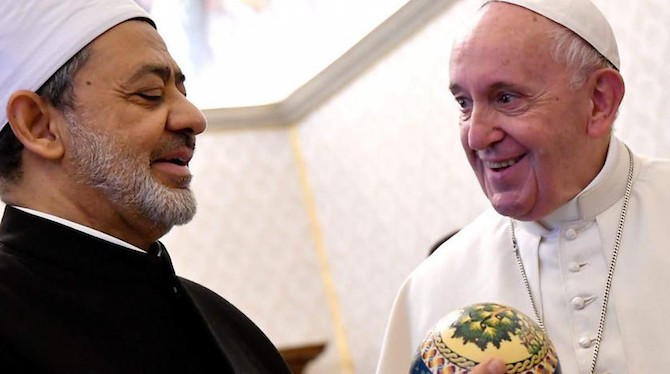

 eyebeleave