Chiaretto: truth, freedom, unity

Chiara e Don Foresi

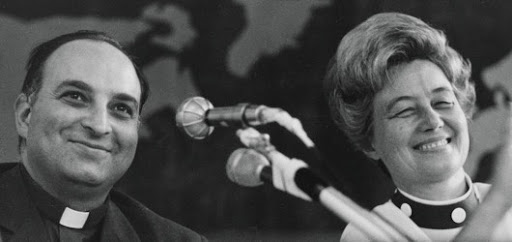
This morning, Don Pasquale Foresi, one of Chiara Lubich’s first companions and a co-founder of the Work of Mary, has completed his earthly journey. Don Foresi, known to his friends as Chiaretto, was a man who has given his life to God unreservedly and I am sure that there will be much written about him in the years to come. Instead of attempting to share an outline of his life here, I will focus on his thought, which shone with brilliance and where he displayed not only a love of the truth, but also great care for and familiarity with the world and the Church. Chiaretto was an extraordinary theologian and philosopher, but before all else, he was a follower of Jesus worthy of the apostles.

Chiaretto’s thoughts on prayer are something I shared here already, but since they are such a great example of his characteristic focus on the essential, let’s re-read them again:

Prayer does not consist in dedicating time during the day to meditation, or to reading some passages from Scripture or from the writings of the saints, or in thinking of God or our ourselves with the aim of some internal reform. This isn’t prayer in its essence.

Reciting the rosary or morning or evening prayers is just the same. One can do these things all day without ever having prayed even for a minute.

Prayer, to be truly such, requires above all a relationship with Jesus: to go with the spirit beyond our human condition, our worries, our prayers – no matter how nice and necessary they may be, and establishing this intimate, personal relationship with him.

In an early article in Nuova Umanità from 1979, Chiaretto embarks on an profound analysis of the first three chapters of Genesis, with the aim of examining the way woman is presented there and arriving at a conclusion of fundamental equality between her and man. Just to get a sense of his clarity of thought, take a look at the following excerpt:

“Verse 23 [of Genesis 2], which says that: “the man said: “This one, at last, is bone of my bones and flesh of my flesh; This one shall be called ‘woman,’ for out of man this one has been taken.”” is a hymn of joy of the man who has found his partner. He discovers the same flesh, the same bones. In Hebrew “flesh” had a far vaster meaning than in our languages, because there was no word for “body”. Von Rad sees in this verse the key to explaining the creation account of Eve; this is in fact about understanding one fact: the primordial attraction between the sexes – whence comes a love as strong as death?

It seems to me that the Yahwist writer certainly explains the origin of the sexes, but his story is far more extensive and elevated than that. It is not just about a differentiation internal to the first couple, but it is the story of how all of humanity is meant to be that is being presented to us.

The deep love, (made tangible by the account of the birth of woman from a rib) between the first man and the first woman, foreshadows the love between all beings that are to be born; hatred ought not to exist, because it is against one’s own flesh; that which later will be said spiritually, “then” was true also physically.”

Many years later, in a seminal paper from 2001 entitled “Doing philosophy,” Chiaretto presents a startling picture of what is at stake when true philosophy is sought:

“[P]hilosophy implies a risk: the risk of one’s own peace of mind. Doing philosophy, in the sense I intend, is to say: I prefer to take risks, not be calm; I want to know, I want clear things up, I want to go further beyond. And this is a terrifying step, because no one helps us, because the answers that all give us the feel prefabricated, something that is meaningless because we must look for the real answer within ourselves. Only in these moments do we know what the real problem is, we feel it, even if we can not express it yet, to clarify it, to say it. It is the choice of a non-peace in the face of the appearance of peace offered by the world around us. It is a choice that involves changing all relationships with others. Because of this I would say that one aspect of this tragic situation is that almost no one will understand us. The surprise implies a break with the world around us: that surprise which is the wonder of being in the world without being in the world. One is cut off from everyone else, one is alone, naked. You say one thing and the others will understand another; they say one thing and you maybe understand the contrary. Basically, you do not receive any solution from the others, and even though you know that you have to find the solution with others, one feels alone, not in the sense of not having company but in the sense of a radical, metaphysical impossibility of “feeling oneself with someone.” It is as if one lived in another world. It’s like entering a cave, with the risk of never coming out of it again. But none of this is of interest in those moments: “what will be will be,” I can not have peace until I accept to face myself, to face the problem of my existence and of my knowing myself. We realize that we are at sea, in an abyss, in a dark universe. We have only just started to walk and we can not turn back. There is nothing left but to press ahead. This is the drama of doing authentic philosophy.”

In a follow-up paper Chiaretto then argues for knowledge being intrinsically social, even though the journey towards it starts in that dark universe of the self that artists like Antony Gormley have explored with such beauty:

“Knowledge is always born in dialogue. All knowledge is a talking with others while addressing myself. Or, more precisely, it is a dialogue with myself which others are present intrinsically and profoundly. They will perhaps be present in a confused, imperfect way, but they are there. I never know solipsistically, even when when I know “by myself.”

What happens then when I give some of my knowledge to others? The words that I formulate to express and transmit that being that I perceived, are not only mine, but come simultaneously from me and from others: this means that when I offer what I have known, those who are listening to me are already inserted in the expressions that become formulated from before.

In telling others those words-knowledge of mine, they are completely, even if unknowingly, inserted in what I am saying, precisely because they have contributed to my knowing, they have given it to me and constructed it for me at least to some extent. Those insights are already the result of some communion with them.”

And finally, let me share with you Chiaretto’s synthesis of how Mary completes God making us in His own image, which is highly consonant also with how Pope Benedict XVI spoke about the Trinity in his “Introduction to Christianity”:

“God is the Father who gives himself wholly in the Son, who in turn wholly re-gives himself to Him. And their reciprocal love for each other – the relationship that unites them among themselves – is the Holy Spirit.

Being like God means therefore to live with Him in this same Trinitarian dynamic.

We, like all creatures, are called to being by God, just like the Son by the Father, and, precisely because we are his creatures, we tend to return to him in a relationship of love. Yet, this re-giving of oneself, even when total, of the creature to God, does not yet fully expresses its capacity to be like Him. Such a way of being does not in fact reach a “re-giving” of God to God, as it is in the Trinity. There, the Father is Father because he begets the Son. In other words, being Father is determined by the relation of sonship, that is, the Son being makes the Father be the Father.

To us too, then, created “in the likeness” of God, must be given the opportunity to give God to God, that is, to return to Him as creatures truly able to be his likes.

This possibility has taken on complete form on earth, at a given moment in history, in Mary.”

There would be so much more to talk about in terms of Chiaretto’s thought, but I believe that the above give a sense of his genius, even in the crude translations provided here.

Dearest Chiaretto, thank you!
Let yourself cross the bridges that you build

Bosnia Pope Visit JPEG 027fc c0 276 3726 2447 s561x327

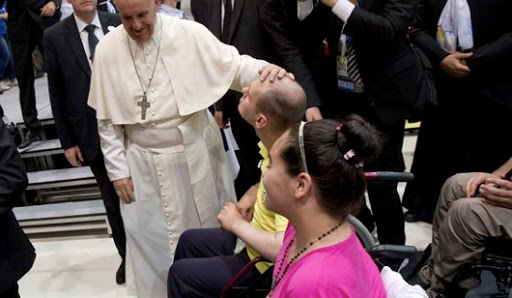
Last weekend, Pope Francis spent a day in Sarajevo, where he met with secular authorities, youth and representatives of different religions and where he powerfully spoke out against war and called for all to become “artisans of peace.” In this post I would just like to share what to me where the highlights of that day.

Right at the start of the day, when addressing the authorities, Francis called for an opposition to those who promote violence and for a uniting of “different voices”:

“In order to successfully oppose the barbarity of those who would make of every difference the occasion and pretext for further unspeakable violence, we need to recognize the fundamental values of human communities, values in the name of which we can and must cooperate, build and dialogue, pardon and grow; this will allow different voices to unite in creating a melody of sublime nobility and beauty, instead of the fanatical cries of hatred.”

Next, during mass at Sarajevo’s Koševo Stadium he spoke about how one works for peace in practice:

“So how does one do this, how do we build peace? The prophet Isaiah reminds us succinctly: “The effect of righteousness will be peace” (32:17). Opus justitiae pax (“the work of justice is peace”), from the Vulgate version of Scripture, has become a famous motto, even adopted prophetically by Pope Pius XII. Peace is a work of justice. Here too: not a justice proclaimed, imagined, planned… but rather a justice put into practice, lived out. The Gospel teaches us that the ultimate fulfilment of justice is love: “You shall love your neighbour as yourself” (Mt 22:39; Rm 13:9). When, by the grace of God, we truly follow this commandment, how things change! Because we ourselves change! Those whom I looked upon as my enemy really have the same face as I do, the same heart, the same soul. We have the same Father in heaven. True justice, then, is doing to others what I would want them to do to me, to my people (cf. Mt 7:12).

Saint Paul, in the second reading, shows us the attitude needed to make peace: “Put on then… compassion, kindness, lowliness, meekness and patience, forbearing one another and, if one has a complaint against another, forgiving each other; as the Lord has forgiven you, so you also must forgive” (Col 3:12-13).”

Following the mass, and after hearing the testimonies of priests and religious who were tortured during the Bosnian war, Pope Francis spoke off-the-cuff instead of following his prepared text:

“Another thing that struck me in their talks was mention of the one hundred and twenty days spent in the concentration camp. How many times the spirit of the world makes us forget our ancestors, the sufferings of our forebears! Those days are counted, not in days, but by the minute, because every minute, every hour is torture. To live together like this, dirty, with no food or water, in the heat and cold – and for a long time! And we, who complain when we have a toothache, or who want to have a television in our comfortable rooms, or who whisper behind the back of our Superior when the meals are not so good… Do not forget, I beg of you, the witness of your ancestors. Think of how much these persons have suffered; think of the six litres of blood that this priest had to receive – he, the first one who spoke – in order to survive. Conform your lives worthily to the Cross of Christ.

Worldly sisters, priests, bishops, and seminarians are a caricature, and are of no use to the Church. They do not remember the martyrs. They have lost the memory of Jesus Christ crucified, our only glory.

Another thing that comes to mind is the story of the soldier who gave a pear to the Sister; and that Muslim woman who now lives in America, who brought something to eat… We are all brothers and sisters. Even the cruel man has thought… well, I don’t know what he thought, but he felt the Holy Spirit in his heart and perhaps he thought of his mother and said, “Have this pear and say nothing to anyone”. And the Muslim woman who reached out beyond her own religious tradition: she loved. She believed in God and she did good.

Look for the good of everyone. Each person has potential, the seed of goodness. We are all children of God.”

From the meeting with representatives of different religions and Christian denominations, where Pope Francis agains spoke about dialogue and peace, what struck me was the prayer he said there together by Muslim, Jewish and Christian faithful:

“Almighty and eternal God,
good and merciful Father;
Creator of heaven and earth, of all that is visible and invisible;
God of Abraham, God of Isaac, God of Jacob,
King and Lord of the past, of the present and of the future;
sole judge of every man and woman,
who reward your faithful with eternal glory!
We, the descendants of Abraham according to our faith in you, the one God,
Jews, Christians and Muslims,
humbly stand before you
and with trust we pray to you
for this country, Bosnia and Herzegovina,
that men and women, followers of different religions, nations and cultures
may live here in peace and harmony.
We pray to you, O Father,
that it may be so in every country of the world!
Strengthen in each of us faith and hope,
mutual respect and sincere love
for all of our brothers and sisters.
Grant that we may dedicate ourselves
courageously to building a just society,
to being men and women of good will,
filled with mutual understanding and forgiveness,
patient artisans of dialogue and peace.
May each of our thoughts, words and actions
be in harmony with your holy will.
May everything be to your glory and honour and for our salvation.
Praise and eternal glory to you, our God!
Amen.”

Next, Pope Francis met with young people, where he again put his prepared speech aside and answered their questions instead, where two fragments stood out for me:

“It is not a case of “them and us”, but rather of “we”. We want to be “us”, to not destroy our homeland, to not ruin our country. You are a Muslim, you are a Jew, you are Orthodox, you are Catholic… but we are “us”. This is how to make peace.

[…]

Everyone speaks of peace: some world leaders speak of peace, and say beautiful things about peace, but behind it all they still sell weapons. From you, I expect honesty, coherence between what you think, what you feel and what you do: these three things together. The contrary is called hypocrisy.

[…]

Be united, build bridges, but also let yourselves cross the bridges that you build. This is brotherhood.”

Finally, as is now customary with Pope Francis’ trips abroad, there was a press conference during the flight back. There, one of the journalists asked him to elaborate on what he meant by referring to world leaders who speak openly of peace while selling weapons, to which he replied:

“Sure: there’s always hypocrisy! Thus I said that it is not enough just to talk about peace, one must also work for peace! And the one who only talks about peace but doesn’t work for it is contradicts himself; and the one who speaks of peace while promoting war, for example, through the selling of weapon, is a hypocrite. It’s that simple…”

At the end of the press conference, a French journalist jumped in to ask the pope about whether he would come to France in spite of problems with the French government, which may have been a reference to the stand-off about the candidate they put forward as ambassador to the Vatican, who is gay. After reassuring the journalist that he would come to France, Pope Francis said what was my favorite line of the whole trip:

“As for problems: little problems are not problems!”

Marriage: nature and sacrament

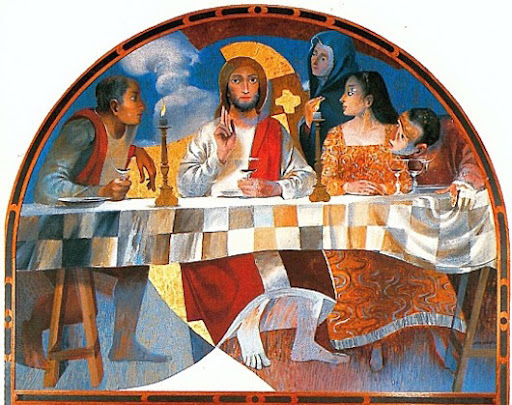
129arcabas

Since the Church is on a journey between two Synods on the family, I would here like to take a closer look at what the Catechism of the Catholic Church and its Code of Canon Law say on the subject.1 In particular, I would like to get a clearer picture of what it is that the Church considers to be natural marriage, as it pre-existed Christianity or other religions and as it applies to everyone. Then, I would also like to get a clearer sense of what the Church sees as being specific to Christian (or, more specifically, Catholic) marriage. In other words: what does the sacrament of marriage consists in?

You may wonder why I am embarking on what may seem like a hair-splitting excursion into legalese. In fact, understanding the difference between natural and sacramental marriage is, in my opinion, highly relevant to the journey that the Church is on right now – a journey of discerning how her doors may be flung wide open to all, while remaining faithful to Jesus’ teaching and the inspiration that she has received from the Holy Spirit throughout her history. Being clear about what she believes to be inscribed in the hearts of all versus what is given access to through the sacraments of Christian initiation is a key part of understanding key milestones along a process of gradually increasing perfection.

With the above in mind, let’s first look at what Canon Law has to say about natural marriage:

“The matrimonial covenant, [is that] by which a man and a woman establish between themselves a partnership of the whole of life and which is ordered by its nature to the good of the spouses and the procreation and education of offspring […].” (Can. 1055.1)

“The essential properties of marriage are unity and indissolubility […].” (Can. 1056)

Matrimonial consent is an act of the will by which a man and a woman mutually give and accept each other through an irrevocable covenant in order to establish marriage. (Can.  1057.2) From a valid marriage there arises between the spouses a bond which by its nature is perpetual and exclusive. […] (Can.  1134)

Note, that none of the above is thought to be specific to Christianity and when the Church sees any married couple, it considers it to have entered into a perpetual covenant as set out above. The Catechism goes further still in extolling the value and beauty of natural marriage by attributing its authorship to God:

““The intimate community of life and love which constitutes the married state has been established by the Creator and endowed by him with its own proper laws…. God himself is the author of marriage.” The vocation to marriage is written in the very nature of man and woman as they came from the hand of the Creator. Marriage is not a purely human institution despite the many variations it may have undergone through the centuries in different cultures, social structures, and spiritual attitudes. These differences should not cause us to forget its common and permanent characteristics. Although the dignity of this institution is not transparent everywhere with the same clarity, some sense of the greatness of the matrimonial union exists in all cultures. “The well-being of the individual person and of both human and Christian society is closely bound up with the healthy state of conjugal and family life.” (§1603)

Marriage, as an institution present in all cultures, has its source in the nature inscribed in everyone by God and the Catechism goes on to rooting natural marriage in God having created all in His likeness and having called all to participate in His being love:

“God who created man out of love also calls him to love—the fundamental and innate vocation of every human being. For man is created in the image and likeness of God who is himself love. Since God created him man and woman, their mutual love becomes an image of the absolute and unfailing love with which God loves man. It is good, very good, in the Creator’s eyes. And this love which God blesses is intended to be fruitful and to be realized in the common work of watching over creation: “And God blessed them, and God said to them: ‘Be fruitful and multiply, and fill the earth and subdue it.’” (§1604)

The very next paragraph of the Catechism goes further still and presents a deeply beautiful view of natural marriage, which is to be a remedy for existential solitude and, being based on mutual self-giving, to underline the fundamental value of men and women and their inherent equality. Men receive women as a gift; women represent God. This is not identity, but instead a mutual rejoicing in the specific beauty of the other, equally loved by God and equally to be loved by self.

“Holy Scripture affirms that man and woman were created for one another: “It is not good that the man should be alone.” The woman, “flesh of his flesh,” his equal, his nearest in all things, is given to him by God as a “helpmate”; she thus represents God from whom comes our help. “Therefore a man leaves his father and his mother and cleaves to his wife, and they become one flesh.” The Lord himself shows that this signifies an unbreakable union of their two lives by recalling what the plan of the Creator had been “in the beginning”: “So they are no longer two, but one flesh.” (§1605)

Remember that we are still talking “only” about natural marriage, although by now it ought to be clear that the Church teaches that marriage is a gift from God whenever it is entered into and not only in its sacramental form.

Natural marriage is, in a surprise move, put forward even as a means for overcoming selfishness and opening oneself up to others – as transforming hardship into a remedy for its causes:

“In his mercy God has not forsaken sinful man. The punishments consequent upon sin, “pain in childbearing” and toil “in the sweat of your brow,” also embody remedies that limit the damaging effects of sin. After the fall, marriage helps to overcome self-absorption, egoism, pursuit of one’s own pleasure, and to open oneself to the other, to mutual aid and to self-giving.” (§1609)

Finally, and possibly most startlingly, marital love is also presented as witnessing to God’s love, and – again – this is not restricted to sacramental marriage.

“It can seem difficult, even impossible, to bind oneself for life to another human being. This makes it all the more important to proclaim the Good News that God loves us with a definitive and irrevocable love, that married couples share in this love, that it supports and sustains them, and that by their own faithfulness they can be witnesses to God’s faithful love.” (§1648)

The Catholic Church’s teaching on natural marriage – i.e., the marriage covenant entered into by men and women of any religion or none – recognizes a wealth of goodness in it already. Marriage is a remedy for selfishness, recognizes the equality of men and women and is even witness to God’s own love. Not Christian or Catholic marriage, but all marriage.

Before looking at how the sacrament of marriage differs from natural marriage, it is worth refreshing our minds about what a sacrament is. Here Canon Law provides a first glimpse:

“[The sacraments] are signs and means which express and strengthen the faith, render worship to God, and effect the sanctification of humanity and thus contribute in the greatest way to establish, strengthen, and manifest ecclesiastical communion.” (Can. 840)

The Catechism then elaborates as follows:

“Sacraments are “powers that comes forth” from the Body of Christ, which is ever-living and life-giving. They are actions of the Holy Spirit at work in his Body, the Church.” (§ 1116)

“Celebrated worthily in faith, the sacraments confer the grace that they signify. They are efficacious because in them Christ himself is at work: it is he who baptizes, he who acts in his sacraments in order to communicate the grace that each sacrament signifies.” (§1127)

“The sacraments are efficacious signs of grace, instituted by Christ and entrusted to the Church, by which divine life is dispensed to us. The visible rites by which the sacraments are celebrated signify and make present the graces proper to each sacrament. They bear fruit in those who receive them with the required dispositions.” (§1131)

Sacraments are signs (hence consisting of a signifier and a signified, where the former here is natural while the latter supernatural) that not only point beyond themselves but that are efficacious – i.e., they confer grace that strengthens and leads to holiness.

Armed with an idea of natural marriage and the concept of a sacrament, let’s look at sacramental marriage next:

“The entire Christian life bears the mark of the spousal love of Christ and the Church. Already Baptism, the entry into the People of God, is a nuptial mystery; it is so to speak the nuptial bath which precedes the wedding feast, the Eucharist. Christian marriage in its turn becomes an efficacious sign, the sacrament of the covenant of Christ and the Church. Since it signifies and communicates grace, marriage between baptized persons is a true sacrament of the New Covenant.” (§1617)

The sacrament of marriage does not consist wholly in the union of a man and a woman effected by their mutual covenant. Instead, that union is only the signifier, while the signified is the “covenant of Christ and the Church.” When I see a person being baptized, what I see is a sign, while what it signifies is that person becoming part of the Body of Christ, which is the Church. Instead, the sacrament of marriage shows me a man and a woman who are becoming one, but whose meaning is the union of Christ and the Church. Christian marriage is a manifestation of Christ and the Church being one. This is the key to the sacrament of marriage!

Wait a minute, but what about the whole efficaciousness business?

Well spotted! There is more to sacramental marriage than husband and wife being the signifier whose signified is Christ’s union with the Church. The Catechism explains:

“This unequivocal insistence on the indissolubility of the marriage bond may have left some perplexed and could seem to be a demand impossible to realize. However, Jesus has not placed on spouses a burden impossible to bear, or too heavy—heavier than the Law of Moses. By coming to restore the original order of creation disturbed by sin, he himself gives the strength and grace to live marriage in the new dimension of the Reign of God. It is by following Christ, renouncing themselves, and taking up their crosses that spouses will be able to “receive” the original meaning of marriage and live it with the help of Christ. This grace of Christian marriage is a fruit of Christ’s cross, the source of all Christian life.” (§ 1615)

The sacrament of marriage is nothing other than participation in Christ’s self-giving sacrifice on the cross. It calls for self-renunciation and a participation in Christ’s self-emptying and self-othering love. And the “efficaciousness” part of the sacrament is Jesus himself giving “strength and grace to live marriage,” for his “yoke is easy, and [his] burden light” (Matthew 11:30).

The Catechism goes on to spell out the effects of the sacrament of marriage further:

“By reason of their state in life and of their order, [Christian spouses] have their own special gifts in the People of God.” This grace proper to the sacrament of Matrimony is intended to perfect the couple’s love and to strengthen their indissoluble unity. By this grace they “help one another to attain holiness in their married life and in welcoming and educating their children.” (§1641)

Christ is the source of this grace. “Just as of old God encountered his people with a covenant of love and fidelity, so our Savior, the spouse of the Church, now encounters Christian spouses through the sacrament of Matrimony.” Christ dwells with them, gives them the strength to take up their crosses and so follow him, to rise again after they have fallen, to forgive one another, to bear one another’s burdens, to “be subject to one another out of reverence for Christ,” and to love one another with supernatural, tender, and fruitful love. In the joys of their love and family life he gives them here on earth a foretaste of the wedding feast of the Lamb. (§1642)

My overwhelming impression from all of the above is a profound sense of beauty when thinking both about natural and sacramental marriage, as understood by the Catholic Church. Natural marriage, i.e., the marriage covenant that is present in different cultures and open to all, regardless of their beliefs, is seen as giving witness to God’s love and being a remedy both to self-centeredness and inequality. Sacramental marriage then places a married couple in close communion with Christ and his Church and opens them up to having Him dwell with them.


1 If you are not a Catholic – welcome! 🙂 To get more out of what follows, you might want to take a look at a caveat I wrote in the second paragraph of the following post.

An intense sensation of heat

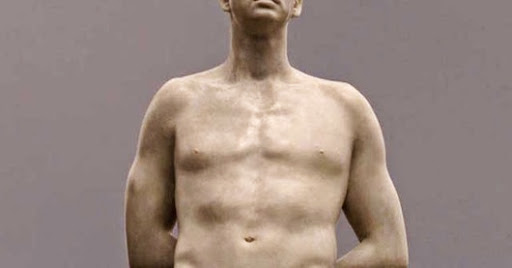
Ecce homo

A man has been killed. He was in his mid to late thirties, around 180 cm tall and weighed between 72 and 77 kgs. The forensic pathology report, based on an analysis of images of the cadaver, indicates that the immediate causes of death were a myocardial infarction and Takotsubo cardiomyopathy that followed an earlier myocardial contusion and a lengthy catalogue of trauma resulting from torture prior to the subject’s execution.

The body bears markings that reflect abrasions and contusions and others that indicate punctures and an outflow of blood from cavities.

The skin bears marks on the anterior chest and the back of the body, where they extend from the shoulders to the calves. Each of the marks consists of two portions indicating a bifid instrument. There are indented bleeding points at each of these sites and the marks resolve into scratch-like linear lesions, each with three or four parallel elements. While the lower extremities show signs of these injuries, none are present on the arms or forearms. The appearance of these wounds is consistent with the application of a whip-like device having sharp or rounded ends that tore the skin and lead to hypovolemia. Two large, discolored areas over the shoulder blades are consistent with bleeding from surface abrasions as if a heavy, rough object had been in contact with the skin at these points.

The hands of the cadaver are crossed over the pubis with the left hand covering the right wrist. The outlines of four fingers are clear but the thumbs are not visible in the images. In the left wrist area there is a stab wound and a bloodstain that is composed of two projecting rivulets from a central source and separated by an angle of about 10 degrees. The wound indicates a sharp object having been driven through the bones of the wrist, separating them but not producing fractures. The lack of thumbs in the images of both hands is related not only to a lesion of the median nerve, which causes only a slight flexion of the thumb, but also to the fact that the object driven into the wrist has pulled or injured the flexor pollicis longus tendon causing its dragging and the complete retraction of the thumb. This suggests a double insertion of the sharp object into the subject’s wrists, with the second insertion lower down between the two rows of carpal bones, on the ulnar side of the hand.

Images of the cadaver also indicate an under-glenoidal dislocation of the humerus on the right side, a lowering of the shoulder, and a flattened hand. These injuries indicate that the subject suffered a violent, blunt trauma to the neck, chest and shoulder from behind, causing neuromuscular damage and lesions of the entire brachial plexus. The posture of the left claw-hand is indicative of an injury of the lower brachial plexus, as is the crossing of the hands on the pubis, not above the pubis as it would normally be.

The above, blunt force trauma also resulted in neck and shoulder muscle paralysis, and caused a displacement of the head from the side opposite to the shoulder depression. In this case, the nerves of the upper brachial plexus (particularly branches C5 and C6) are violently stretched resulting in an Erb-Duchenne paralysis because of loss of motor innervation to the deltoid, supraspinatus, infraspinatus, biceps, supinator, brachioradialis and rhomboid muscles. As a consequence, the right shoulder is lower than the left by 10±5 degrees.

From the angulation of the stain on the left wrist as well as the direction of flows of blood on the forearms, a position of the arms at approximately 65 degrees above the horizontal can be inferred at the time of the blood flow, which, together with the other markings, is consistent with crucifixion. The divergence of the streams suggests that two positions were maintained by the subject during the period of the blood flow. The difference in angulation is about 10 degrees and can be explained by the subject elevating his body by directing his weight toward the feet and then changing position to permit the full body weight to be supported by the wrists.

A nearly complete image of the right foot shows an outline of the heel and toes. In the area corresponding to the metatarsal zone is a square surrounded by a pale halo, which shows where the foot has been pierced. The image of the left foot is less clear. Examination of the calves of the legs on the dorsal view shows that the right calf has left a well-defined print in which the marks of a whip can be seen. It appears that the right foot was directly against the surface of a cross and the left leg was flexed at the knee and the foot rotated so that the left foot rested on the instep of the right foot. The sole of the right foot became completely covered with blood while the left did not. An analysis of the imprint of the sole of the right foot shows that two nails were driven into it: one between the second and third metatarsal and another at heel level. A swelling of the right knee further indicates a knee cap fracture.

Among the marks on the cadaver’s swollen head there are several blood prints on the front of the forehead. Circling the scalp posteriorly is a row of blood prints and high on the scalp at the vertex are similar prints. Any puncture of the scalp ordinarily produces bleeding excessively because of retraction of torn vessels. A cap-like structure with sharp needle-like protrusions at the center and periphery would account for such bloodstains on the head. On the face over the right cheek, there is a swelling and there is partial closure of the right eye, which is further retracted into the orbit because of the paralysis of the entire arm. There is a very slight deviation of the nose and at the tip of the nose is an area of discoloration consistent with a bruise, covered in scratches and dirt. These are consistent with the nose having made contact with the ground, most likely as the result of a fall.

The subject suffered very serious and widespread pain, accompanied by an intense sensation of heat, and usually shock at even the slightest limb movement, caused by a total paralysis of the right arm, the nailing of the left arm because of damage to the median nerve and the nailing of the feet because of damage to the tibial nerves. This method of nailing led to breathing impairment: with the arms raised at an approximately 15 degree angle causing the ribcage to expand, the lungs had difficulty expiring, reducing air flow. Each deep breath the subject will have taken to speak or to catch his breath will have put a strain on the lower limbs, causing intense pain.

Serum stains can also be seen, separate from blood stains from a chest stab wound sustained post mortem, which were formed as a result of bleeding in the lungs. This bleeding will have started before the crucifixion, after the violent fall which caused the contusion on the subject’s shoulders. Restricted breathing and the presence of a haemothorax, which put pressure on the right lung, were not enough to bring about death by asphyxia. Asphyxia involves an inability to breathe, which results in loss of conscience and coma. The fall and/or the flagellation have likely caused not only a pulmonary contusion but also a cardiac contusion. This, together with the serious clinical and mental condition the subject was in, may have led to death through myocardial infarction and cardiomyopathy.

A man has been brutally tortured and executed in cold blood.

But, who was he?

As you may have guessed, the above forensic pathology notes are derived from the Turin Shroud blood stains and “imprint” and represent a compilation of the latest results of its study,1-3 which has gone on for over a century and which has involved a worldwide assortment of forensic pathologists, trauma specialists and medical imaging scientists. While the identity of the subject is not scientifically beyond doubt, one thing is for sure: whoever it was whose “imprint” and blood stains are shown on the Turin Shroud, or – even in the case of it being a fake – whatever the nature of the event depicted here, we are looking at the savage and prolonged torture of a human being here, who had suffered fractured bones, stab wounds, contusions, paralysis, neurological damage, internal organ failure and unspeakable pain, terror and anguish, leading to a fatal heart attack.

While reading about the Turin Shroud, I personally have come to the conclusion that there is a high likelihood of it being genuine and an engagement with its forensic pathology was an invitation to contemplate Jesus’ self-giving sacrifice with greater specificity and therefore a heightened invitation to compassion.

Such thoughts very quickly lead to another realization: Jesus’ suffering on the cross (whether it be precisely in the form indicated by the Turin Shroud or of the less specific, while still equally brutal and savage, nature reported in the Gospels) draws attention to the suffering of all. Every single victim of violence deserves the same degree of care and attention as that heaped on the Turin Shroud. Every single wound and violent act is as much an offense against God as was the murder of his own Son, since every single person is a child of God.

The Christians crucified in Syria, the women suffering domestic abuse worldwide, the factory workers killed as a result of inhumane working conditions, the Muslim detainees tortured at Guantanamo, the schoolgirls kidnapped by Boko Haram, the homeless left to starve and freeze to death at the doorsteps of a society living in excess, the millions left to die of infectious diseases in the absence of clean water and sanitation, the Chinese prisoners executed and then having their organs harvested for the transplant market. They all deserve tears spilled over their wounds, careful attention paid to the violence visited on them and everything possible done to end or, better still, prevent the offenses perpetrated against them. Every one of them is a child of God, in every one of them there is a presence of God, just as much as there was in Jesus’ torn and mangled body, brutally tortured to death on a cross.


1 Bucklin (1982) The Shroud of Turin: a Pathologist’s Viewpoint, Legal Medicine Annual, ISSN 0075-8590.
2 M. Bevilacqua, et al. (2013) Do we really need new medical information about the Turin shroud?, Injury, Vol. 45, Issue 2, pp. 460–464.
3 N. Svensson (2010) Medical and forensic aspects of the Man depicted on the Turin Shroud, Proceedings of the International Workshop on the Scientific approach to the Acheiropoietos Images, ENEA Frascati, Italy, 4‐6 May 2010.

Francis: God’s tenderness for man and woman

Blake divine presence

Pope Francis has dedicated two of his Wednesday General Audiences to the topic of men and women, their equal dignity, complementarity and the challenges they and their relationships face today. These two catecheses are set within the broader context of the family that he has been speaking about for several weeks now. However, since the question of how the complementarity of men and women is to be understood is close to my heart, I would like to offer a selection of passages from these two talks, which present a particularly clear and useful perspective.

Two weeks ago, Pope Francis started addressing this question by going back to its first treatment in the Bible, to the first creation account in Genesis, and underlining the joint value of man and woman:1

“As we all know, sexual differences are present in so many forms of life, in the long scale of the living. However, only in man and in woman does it bear in itself the image and likeness of God: the biblical text repeats it a good three times in two verses (Genesis 1:26-27): Man and woman are image and likeness of God! This tells us that not only man in himself is the image of God, not only woman in herself is the image of God, but also that man and woman, as a couple, are the image of God. The difference between man and woman is not for opposition, or for subordination, but for communion and creation, always in the image and likeness of God.”

Pope Francis then reflects on gender theory, which he rejects, and to which he offers an alternative, but whose roots he recognizes:

“I wonder […] if the so-called gender theory is not also an expression of a frustration and of a resignation, which aims to cancel the sexual difference because it no longer knows how to address it. Yes, we risk taking a step backward. The removal of the difference, in fact, is the problem, not the solution. To resolve their problems of relation, man and woman must instead talk more to one another, listen more to one another, know one another more, love one another more. They must relate to one another with respect and cooperate with friendship.”

Instead of a denial of differences, the key is respect, communication, friendship and love. However, the present problems are not to be laid equally at the feet of men and women:

“It is without doubt that we must do much more in favor of woman if we want to give back more strength to the reciprocity between men and women. In fact, it is necessary that women not only be more listened to, but that her voice has real weight, a recognized authoritativeness in society and in the Church. The way itself with which Jesus considered women – we read it in the Gospel, it is so! – in a context less favorable than ours, because in those times women were in fact in second place … and Jesus considered them in a way which gives a powerful light, which enlightens a path that leads far, of which we have only followed a small piece. We have not yet understood in depth what things the feminine genius can give us, which woman can give to society and also to us. Perhaps to see things with other eyes that complements the thoughts of men. It is a path to follow with more creativity and more audacity.”

While Pope Francis does not present a solution, he very clearly identifies the problem and sets the challenge of identifying ways that would lead to women having the place in society and the Church that they are due.

In the second catechesis this morning, Pope Francis returns to the question of reciprocity and equal dignity, and he takes the second creation account from Genesis as the starting point:

“[In the second chapter of Genesis] we read that the Lord, after having created heaven and earth, “formed man of dust from the ground, and breathed into his nostrils the breath of life; and man became a living being.” He is the pinnacle of creation. Then God put man in a most beautiful garden so that he would till and keep it. […] When […] God presents woman to him, man rejoices and recognizes that creature, and only that one, which is part of him: “bone of my bones and flesh of my flesh.” Finally, there is a reflection of himself, a reciprocity.”

While the second creation account establishes a closeness between man and woman, where woman is the “flesh of [man’s] flesh,” and which Pope Francis refers to in the same way in which the creed describes how God the Father and Jesus relate (as being consubstantial), he is quick also to emphasize that woman is created directly by God and not in some way by or through man:

“Woman is not a “replica” of man; she comes directly from the creative gesture of God. The image of the “rib” does not express inferiority or subordination but, on the contrary, that man and woman are of the same substance and are complementary. And the fact that – still in the parable – God formed woman while man slept, stresses in fact that she is in no way creature of man, but of God. And it also suggests something else: To find woman, and we can say to find love in woman, to find woman, man must first dream her and then he finds her.”

I particularly like the poetry of Pope Francis speaking about man dreaming woman to then find her and find love in her!

Francis then returns to the challenges facing men and women by reference to suspicion and mistrust and delusions of one’s omnipotence that we are all prone to:

“God’s trust in man and woman, to whom he entrusts the earth, is generous, direct and full. However, it is here where the Evil One introduces in his mind suspicion, incredulity, mistrust and finally disobedience to the commandment that protected them. They fall into that delirium of omnipotence that contaminates everything and destroys harmony. We also feel it within ourselves, so many times, all of us.”

From the general, Francis turns to denouncing injustice and violence committed against women as a result of patriarchal excesses, chauvinism and a turning of women into merchandise and a means:

“Sin generates mistrust and division between man and woman. Their relationship is threatened by thousands of ways of dishonesty and submission, of deceitful seduction and humiliating arrogance, even to the most dramatic and violent degrees. History bears their marks. Let us think, for instance, of the negative excesses of patriarchal cultures. Let us think of the many forms of chauvinism where woman is considered to be second class. Let us think of the instrumentalization and merchandising of the female body in current media culture.”

Next, he makes a pitch for a revival of an alliance between man and woman, whose absence leads to an uprooting of children from their maternal wombs:

“However, let us also think of the recent epidemic of mistrust, skepticism and even hostility that is spreading in our culture – in particular beginning with an understandable mistrust by women – in relation to an alliance between man and woman that would be able to, at the same time, improve the intimacy of communion and to protect the dignity of difference. If we do not find a jolt of sympathy for this alliance, that leads new generations to repairing mistrust and indifference, children will come into the world ever more uprooted from the maternal womb. The social devaluation of the stable and generative alliance of man and woman is certainly a loss for all. We must reassess marriage and the family!”

How so we go about such a reassessment though? Here Francis offers two indications. First, that marriage derives from a self-emptying for the sake of a new, joint journey where the spouses become all for each other (which is precisely the Trinitarian economy):

“And the Bible says a beautiful thing: man finds woman, they find one another, and man must leave something to find her fully. And for this, man will leave his father and his mother to go to her. It is beautiful! This means beginning a journey. Man is all for woman and woman is all for man.”

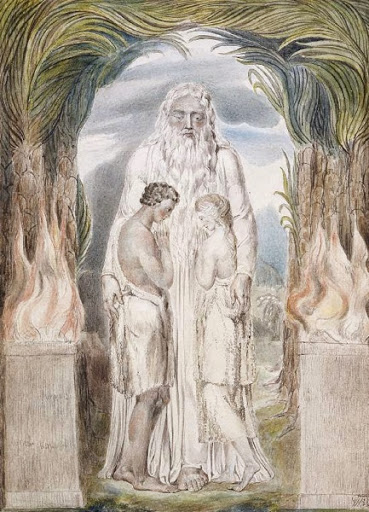
Second – and this should come as no surprise to anyone who has been following last year’s Synod on the Family or even just the Bull of indiction of the coming Jubilee of Mercy – that God is a tender, loving father to all, regardless of their shortcomings and that we too are called to treat others in exactly that same way. And Francis offers a surprising, beautiful reading of the motives behind Adam and Eve leaving Paradise clothed:2

“To care for this alliance of man and woman – even if they are sinners and wounded, confused and humiliated, mistrustful and uncertain – is therefore, for us believers, a challenging and exciting vocation, under present circumstances. The same account of creation and of sin, at its end, gives us a most beautiful icon: “And the Lord God made for Adam and for his wife garments of skins, and clothed them.” It is an image of tenderness to that sinful couple that leaves us with our mouth open: the tenderness of God for man and for woman. It is an image of paternal care of the human couple. God himself takes care of and protects his masterpiece.”


1 Note, that the English quotes from Pope Francis’ catecheses are mostly verbatim from the Zenith translations, except for a few passages that are adjusted based on the Italian original in an attempt of a more literal rendering.
2 Which turns out to be highly consonant with William Blake’s depiction of that scene, shown at the top of this post.

The light of the world

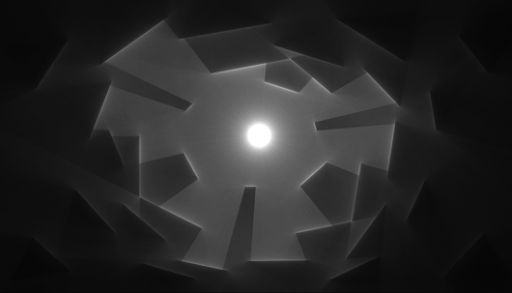
Zen photon garden

[Guest post: The following is an extended version of an article prepared for publication in print by Dr. Ján Morovič, which is reproduced here with the author’s permission.]

By pronouncing “Let there be light.” (Genesis 1:3), God spoke it into being and when he became incarnate in the person of Jesus, he identified himself with it by proclaiming: “I am the light of the world. Whoever follows me will not walk in darkness, but will have the light of life.” (John 8:12). Jesus even attributed that same nature to us, when turning to the crowd who had just heard him preach the beatitudes, and saying: “You are the light of the world.” (Matthew 5:14-15). Light was also the sign by which Jesus’ divinity was manifested to Peter, James and John on Mount Tabor, an event about which Matthew wrote: “[H]e was transfigured before them; his face shone like the sun and his clothes became white as light.” (17:2). Finally, completing the arc started in Genesis, the New Testament ends by foretelling – in its last chapter – a definitive victory of light, where those gathered around God at the end of time are described as follows: “Night will be no more, nor will they need light from lamp or sun, for the Lord God shall give them light, and they shall reign forever and ever.” (Revelation 22:5).

Not only is light singled out in Scripture, and existentially identified with God and his sons and daughters, but it is also presented as the means by which understanding comes about. St. Paul exhorts the first Christians in Ephesus to “[l]ive as children of light” (5:8) and emphasizes the tight link between light and vision: “But all things become visible when they are exposed by the light, for everything that becomes visible is light. […] Watch carefully then how you live, not as foolish persons but as wise.” (5:13,15).

Such an understanding of light is, in fact, very close to how contemporary science defines it: as “radiation […] considered from the point of view of its ability to excite the human visual system” (CIE, 2011). Light is fundamentally about the effect of matter on human sensory perception. The only thing that makes the range of electromagnetic radiation with wavelengths between around 400 and 700 nanometers be light is that our eyes are lined with cells in which oxidation takes place when such radiation is incident on them. This, in turn, triggers an electrical signal that passes through an interconnected sequence of neural layers, leading to the back of the brain, where such signals are further processed in dramatically complex and varied ways that lead to our visual experiences.

The evolution of vision, which originated during the lower Cambrian period 508 million years ago (Parker, 2009) in the photoreceptor proteins of single-cell organisms, has reached a remarkable degree of sensitivity to light in humans. For a start, our eyes go to extraordinary lengths to detect light. A single photon incident on a photoreceptive rod cell in a human retina triggers a signal, and even though it takes five to nine photons landing on such a cell for at least 100 milliseconds for the signal to make it past the visual system’s noise suppression, reach the brain and result in conscious perception (Hecht et al., 1942), the staggering degree of the eye’s sensitivity becomes clear when these numbers are put into perspective: a single candle emits 5 million billion (i.e., 5×10¹⁵ – a quadrillion!) photons during such a 100 millisecond period. Put differently, a single candle could be seen in complete darkness from a distance of 30 miles between two mountaintops.

As if this wasn’t enough, our eyes go further still. Instead of simply relaying signals from the array of light-sensitive cells that line their backs, such signals are first combined so that the relationships of a signal from one cell with those from cells around it are amplified. This center-surround mechanism (Wandell, 1995) means that the boundaries between differently-colored regions in our environment are emphasized. Further down the neural pathway from the eyes to the brain, in the lateral geniculate nucleus, the signals from cells sensitive to different ranges of radiation wavelengths are again processed and differences between opponent colors: red-green, yellow-blue and black-white are also enhanced (de Valois et al., 1966). As a result, the signal that originates in the light-sensitive cells of our eyes is enhanced both for spatial and color discrimination, even before it is reaches and is processed and interpreted by the brain and leads to a conscious experience.

What does all of the above mean though, and how can we even begin to reflect on Scripture and the findings of contemporary science side-by-side? Even though Scripture is not and does not claim to be science, and, e.g., the Genesis account of creation is better thought of as symbolical (like the Catechism of the Catholic Church teaches (§337)) or as myth, this does not mean that it “refer[s] to fictitious-fabulous content, but simply to an archaic way of expressing deeper content.” (John Paul II, 2011). The truth revealed in Scripture, the truth sought by empirical and scientific means and even the truth expressed in art are not distinct truths though, and instead present different modes of knowledge of the one reality. John Paul II derives this position from the principle of non-contradiction, whereby truth cannot contradict truth. Hence, the truth, which

“God reveals to us in Jesus Christ, is not opposed to the truths which philosophy perceives. On the contrary, the two modes of knowledge lead to truth in all its fullness. The unity of truth is a fundamental premise of human reasoning, as the principle of non-contradiction makes clear. Revelation renders this unity certain, showing that the God of creation is also the God of salvation history. It is the one and the same God who establishes and guarantees the intelligibility and reasonableness of the natural order of things upon which scientists confidently depend, and who reveals himself as the Father of our Lord Jesus Christ.” (John Paul II, 1998)

During this Year of Light, proclaimed by the United Nations for 2015, we can look at the insights about it both from Scripture and science, and form a picture that is richer than either of them would provide by themselves. Instead of considering these two modes of knowledge as competing with each other, or requiring each other for justification, they stand on their own feet and complement each other. With respect to light, science shows us its fundamentally relational nature – both because of its very definition pointing to the relationship between humans and the world around us, and because of how human vision is tuned to the perception of relationships among the matter that acts upon it. Science also underscores the importance that light has for life, by showing the extraordinary sensitivity that has evolved to it. Scripture, in turn, identifies light with God, with those who follow him, and with the destiny of creation, and it points to light as a means for attaining wisdom and persistence in living as God’s children.


References
CIE (2011) CIE S 017/E:2011 ILV: International Lighting Vocabulary, CIE, Vienna, Austria
De Valois R. L., Abramov I., Jacobs G. H. (1966) Analysis of Response Patterns of LGN Cells, Journal of the Optical Society of America, 56:966–977.
Hecht S., Schlaer S., Pirenne M. H. (1942) Energy, Quanta and vision, Journal of the Optical Society of America, 38:196-208.
John Paul II (2011) Man and Woman He Created Them, Pauline Books and Media
John Paul II (1998) Fides et Ratio, Encyclical Letter, §34
Parker, A. R. (2009) On the origin of optics, Optics & Laser Technology 43(2):323–329.
Wandell B. A. (1995) Foundations of Vision, Sinauer Associates, Sunderland, MA. [UPDATE on 2nd July 2015: An abridged version of this post has now been published in New City Magazine.]


The face of mercy

Arcabas prodigal son

On Saturday evening, on the eve of Mercy Sunday, Pope Francis proclaimed the opening of the Extraordinary Jubilee of Mercy that will run from 8th December 2015 until 20th November 2016 by presenting the bull of indiction, Misericordiae Vultus – “The face of mercy.” At 9.5K words some have called it “Evangelii Gaudium II” already, and in terms of significance of content, it is not hard to see why. If you have the time and inclination, I would very much like to encourage you to read it in full, but, if you prefer, the following is my selection of key passages from this important statement.

To begin with, Francis identifies mercy with Jesus and its recipients with all of humanity:

“Jesus Christ is the face of the Father’s mercy. These words might well sum up the mystery of the Christian faith. Mercy has become living and visible in Jesus of Nazareth, reaching its culmination in him.” (§1)

“How much I desire that the year to come will be steeped in mercy, so that we can go out to every man and woman, bringing the goodness and tenderness of God! May the balm of mercy reach everyone, both believers and those far away, as a sign that the Kingdom of God is already present in our midst!” (§6)

A love that to God is “visceral,” fatherly and motherly is then presented as the motivation for mercy:

“[T]he mercy of God is not an abstract idea, but a concrete reality through which he reveals his love as that of a father or a mother, moved to the very depths out of love for their child. It is hardly an exaggeration to say that this is a “visceral” love. It gushes forth from the depths naturally, full of tenderness and compassion, indulgence and mercy.” (§6)

Several parables are then pointed to as examples of Jesus explaining what mercy means, with a particularly poignant one being the parable of the ruthless servant in which mercy becomes “a criterion for ascertaining who his true children are”:

“In the parables devoted to mercy, Jesus reveals the nature of God as that of a Father who never gives up until he has forgiven the wrong and overcome rejection with compassion and mercy. We know these parables well, three in particular: the lost sheep, the lost coin, and the father with two sons (cf. Lk 15:1-32). In these parables, God is always presented as full of joy, especially when he pardons. In them we find the core of the Gospel and of our faith, because mercy is presented as a force that overcomes everything, filling the heart with love and bringing consolation through pardon. […]

“[In the parable of the “ruthless servant,” (Matthew 18:21-35)] Jesus affirms that mercy is not only an action of the Father, it becomes a criterion for ascertaining who his true children are. In short, we are called to show mercy because mercy has first been shown to us. Pardoning offences becomes the clearest expression of merciful love, and for us Christians it is an imperative from which we cannot excuse ourselves. At times how hard it seems to forgive! And yet pardon is the instrument placed into our fragile hands to attain serenity of heart. To let go of anger, wrath, violence, and revenge are necessary conditions to living joyfully. Let us therefore heed the Apostle’s exhortation: “Do not let the sun go down on your anger” (Eph 4:26). Above all, let us listen to the words of Jesus who made mercy as an ideal of life and a criterion for the credibility of our faith: “Blessed are the merciful, for they shall obtain mercy” (Mt 5:7): the beatitude to which we should particularly aspire in this Holy Year.” (§9)

Having set out the centrality of mercy in Jesus’ teaching and identified it with Him, Pope Francis places it at the basis of the Church and insists that “nothing in her preaching and in her witness to the world can be lacking in mercy”:

“Mercy is the very foundation of the Church’s life. All of her pastoral activity should be caught up in the tenderness she makes present to believers; nothing in her preaching and in her witness to the world can be lacking in mercy. The Church’s very credibility is seen in how she shows merciful and compassionate love. The Church “has an endless desire to show mercy.” Perhaps we have long since forgotten how to show and live the way of mercy. The temptation, on the one hand, to focus exclusively on justice made us forget that this is only the first, albeit necessary and indispensable step. But the Church needs to go beyond and strive for a higher and more important goal. On the other hand, sad to say, we must admit that the practice of mercy is waning in the wider culture. It some cases the word seems to have dropped out of use. However, without a witness to mercy, life becomes fruitless and sterile, as if sequestered in a barren desert. The time has come for the Church to take up the joyful call to mercy once more. It is time to return to the basics and to bear the weaknesses and struggles of our brothers and sisters. Mercy is the force that reawakens us to new life and instils in us the courage to look to the future with hope.” (§10)

Next, two complementary points are made about language and silence: the need for merciful expression and for silence so as to hear God’s Word:

“It is absolutely essential for the Church and for the credibility of her message that she herself live and testify to mercy. Her language and her gestures must transmit mercy, so as to touch the hearts of all people and inspire them once more to find the road that leads to the Father.” (§12)

“The Evangelist reminds us of the teaching of Jesus who says, “Be merciful just as your Father is merciful” (Lk 6:36). It is a programme of life as demanding as it is rich with joy and peace. Jesus’s command is directed to anyone willing to listen to his voice (cf. Lk 6:27). In order to be capable of mercy, therefore, we must first of all dispose ourselves to listen to the Word of God. This means rediscovering the value of silence in order to meditate on the Word that comes to us. In this way, it will be possible to contemplate God’s mercy and adopt it as our lifestyle.” (§13)

To complement the positive expressions of mercy, Pope Francis also sets out a negative one (negative in the sense that it proscribes rather than prescribes) that echoes his “Who am I to judge?” that so many have downplayed since it was pronounced in an interview rather than an official, magisterial document:

“The Lord asks us above all not to judge and not to condemn [cf. (Luke 6:37-38)]. If anyone wishes to avoid God’s judgement, he should not make himself the judge of his brother or sister. Human beings, whenever they judge, look no farther than the surface, whereas the Father looks into the very depths of the soul. How much harm words do when they are motivated by feelings of jealousy and envy! To speak ill of others puts them in a bad light, undermines their reputation and leaves them prey to the whims of gossip. To refrain from judgement and condemnation means, in a positive sense, to know how to accept the good in every person and to spare him any suffering that might be caused by our partial judgment and our presumption to know everything about him. But this is still not sufficient to express mercy. Jesus asks us also to forgive and to give. To be instruments of mercy because it was we who first received mercy from God. To be generous with others, knowing that God showers his goodness upon us with immense generosity.” (§14)

Pope Francis then links mercy to the Father’s self-giving that he characterizes using the hallmarks of the life of the Trinity:

“Merciful like the Father, therefore, is the “motto” of this Holy Year. In mercy, we find proof of how God loves us. He gives his entire self, always, freely, asking nothing in return. He comes to our aid whenever we call upon him.” (§14)

Leading his exposition of mercy to practical measures, Francis points to the corporal and spiritual acts of mercy that the Church has advocated since its beginning:

“Jesus introduces us to these works of mercy in his preaching so that we can know whether or not we are living as his disciples. Let us rediscover these corporal works of mercy: to feed the hungry, give drink to the thirsty, clothe the naked, welcome the stranger, heal the sick, visit the imprisoned, and bury the dead. And let us not forget the spiritual works of mercy: to counsel the doubtful, instruct the ignorant, admonish sinners, comfort the afflicted, forgive offences, bear patiently those who do us ill, and pray for the living and the dead.

We cannot escape the Lord’s words to us, and they will serve as the criteria upon which we will be judged: whether we have fed the hungry and given drink to the thirsty, welcomed the stranger and clothed the naked, or spent time with the sick and those in prison (cf. Mt 25:31-45). Moreover, we will be asked if we have helped others to escape the doubt that causes them to fall into despair and which is often a source of loneliness; if we have helped to overcome the ignorance in which millions of people live, especially children deprived of the necessary means to free them from the bonds of poverty; if we have been close to the lonely and afflicted; if we have forgiven those who have offended us and have rejected all forms of anger and hate that lead to violence; if we have had the kind of patience God shows, who is so patient with us; and if we have commended our brothers and sisters to the Lord in prayer. In each of these “little ones,” Christ himself is present. His flesh becomes visible in the flesh of the tortured, the crushed, the scourged, the malnourished, and the exiled … to be acknowledged, touched, and cared for by us. Let us not forget the words of Saint John of the Cross: “as we prepare to leave this life, we will be judged on the basis of love.”” (§15)

That mercy is not about following rules, but about a going out towards those who are in need of it and a respect for their dignity, is put clearly next:

“For his part, Jesus speaks several times of the importance of faith over and above the observance of the law. It is in this sense that we must understand his words when, reclining at table with Matthew and other tax collectors and sinners, he says to the Pharisees raising objections to him, “Go and learn the meaning of ‘I desire mercy not sacrifice.’ I have come not to call the righteous, but sinners.” (Mt 9:13). Faced with a vision of justice as the mere observance of the law that judges people simply by dividing them into two groups – the just and sinners – Jesus is bent on revealing the great gift of mercy that searches out sinners and offers them pardon and salvation. One can see why, on the basis of such a liberating vision of mercy as a source of new life, Jesus was rejected by the Pharisees and the other teachers of the law. In an attempt to remain faithful to the law, they merely placed burdens on the shoulders of others and undermined the Father’s mercy. The appeal to a faithful observance of the law must not prevent attention from being given to matters that touch upon the dignity of the person.” (§20)

Pope Francis then goes on to situating mercy in an inter-religious context, with a particular focus on Judaism and Islam, and with a call to open-mindedness, respect and peacefulness:

“There is an aspect of mercy that goes beyond the confines of the Church. It relates us to Judaism and Islam, both of which consider mercy to be one of God’s most important attributes. Israel was the first to receive this revelation which continues in history as the source of an inexhaustible richness meant to be shared with all mankind. As we have seen, the pages of the Old Testament are steeped in mercy, because they narrate the works that the Lord performed in favour of his people at the most trying moments of their history. Among the privileged names that Islam attributes to the Creator are “Merciful and Kind.” This invocation is often on the lips of faithful Muslims who feel themselves accompanied and sustained by mercy in their daily weakness. They too believe that no one can place a limit on divine mercy because its doors are always open.

I trust that this Jubilee year celebrating the mercy of God will foster an encounter with these religions and with other noble religious traditions; may it open us to even more fervent dialogue so that we might know and understand one another better; may it eliminate every form of closed-mindedness and disrespect, and drive out every form of violence and discrimination.” (§23)

The next day – on Mercy Sunday, Pope Francis returned to the starting point of Misericordiae Vultus, where he identifies mercy with Jesus and went on to spell out the basis of that identity:


“[T]he Lord shows us, through the Gospel, his wounds.  They are wounds of mercy.  It is true: the wounds of Jesus are wounds of mercy. […]

Jesus invites us to behold these wounds, to touch them as Thomas did, to heal our lack of belief.  Above all, he invites us to enter into the mystery of these wounds, which is the mystery of his merciful love. Through these wounds, as in a light-filled opening, we can see the entire mystery of Christ and of God: his Passion, his earthly life – filled with compassion for the weak and the sick – his incarnation in the womb of Mary.

Faced with the tragic events of human history we can feel crushed at times, asking ourselves, “Why?”.  Humanity’s evil can appear in the world like an abyss, a great void: empty of love, empty of goodness, empty of life.  And so we ask: how can we fill this abyss?  For us it is impossible; only God can fill this emptiness that evil brings to our hearts and to human history.  It is Jesus, God made man, who died on the Cross and who fills the abyss of sin with the depth of his mercy.”

Judaism and Christianity: A common heritage

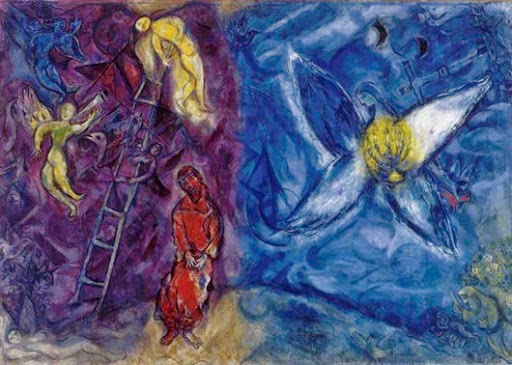
Chagall jacobs dream

A very good friend of mine (CA) lent me a great book about Judaism, entitled “What is a Jew?” and aimed at providing an introduction to a broad variety of aspects of what it means to be Jewish. The book is structured in the form of questions and answers and its tone exudes warmth and a desire to share rather than to impose or indoctrinate. Even before I started reading the book, I was looking forward to learning more about Judaism, both because of a desire to have a better understanding of the religion of several friends of mine, and because of the heightened insistence on a rediscovery of Judaism made by the Catholic Church since Vatican II.

John Paul II was famously the first pope to visit a synagogue, during which visit he spoke with clarity and warmth about the relationship between Christianity and Judaism:

“The Jewish religion is not ‘extrinsic’ to us, but in a certain way is ‘intrinsic’ to our own religion. […] With Judaism, therefore, we have a relationship which we do not have with any other religion. You are our dearly beloved brothers, and, in a certain way, it could be said that you are our elder brothers.”

Benedict XVI went on to maintain very strong relationships with Judaism, both acknowledging the Church’s past wrongs and expressing its gratitude and debt to the Jewish people:

“Abraham, father of the people of Israel, father of faith, has become the source of blessing, for in him ‘all the families of the earth shall call themselves blessed.’ The task of the Chosen People is therefore to make a gift of their God – the one true God – to every other people. In reality, as Christians we are the inheritors of their faith in the one God. Our gratitude therefore must be extended to our Jewish brothers and sisters who, despite the hardships of their own history, have held on to faith in this God right up to the present and who witness to it…”

Finally, Pope Francis has not only continued along the direction indicated by his predecessors, but has also benefitted from close personal friendships with the Jewish community. An example of this is the book – “On Heaven and Earth” that he co-authored with Rabbi Abraham Skorka, who also accompanied him on his recent visit to Israel and who has been a frequent visitor at the Vatican. Pope Francis has also reiterated, in his apostolic exhortation Evangelii Gaudium, the brotherly relationship that his predecessors have stressed:
“We hold the Jewish people in special regard because their covenant with God has never been revoked, for “the gifts and the call of God are irrevocable” (Rom 11:29). The Church, which shares with Jews an important part of the sacred Scriptures, looks upon the people of the covenant and their faith as one of the sacred roots of her own Christian identity (cf. Rom 11:16-18). As Christians, we cannot consider Judaism as a foreign religion; nor do we include the Jews among those called to turn from idols and to serve the true God (cf. 1 Thes 1:9). With them, we believe in the one God who acts in history, and with them we accept his revealed word. Dialogue and friendship with the children of Israel are part of the life of Jesus’ disciples. […] While it is true that certain Christian beliefs are unacceptable to Judaism, and that the Church cannot refrain from proclaiming Jesus as Lord and Messiah, there exists as well a rich complementarity which allows us to read the texts of the Hebrew Scriptures together and to help one another to mine the riches of God’s word. We can also share many ethical convictions and a common concern for justice and the development of peoples.” (§247-9)

Against this background I was particularly pleased to see the relationship between Christianity and Judaism described by Rabbi Morris Kertzer in “What is a Jew?” as follows:

“[The] German dramatist, Gotthold Ephraim Lessing, caught the essence of this common heritage [of Judaism and Christianity] in a play called Nathan, the Wise. One of the most memorable scenes depicts a meeting between a friar and the Jew Nathan. Moved by the beauty of Nathan’s character, the friar exclaims, “Nathan! Nathan! You are a Christian!” His friend replies, “We are of one mind, for that which makes me, in your eyes, a Christian, makes you, in my eyes, a Jew!”” (pp. 279)

I have to say that this paragraph from the last pages of the book very much rang true for me and expressed with accuracy the feeling I had as I made my way through the whole book. To give you a sense of what triggered such a recognition of what I believe to be very much mine in Rabbi Kertzer’s description of Judaism, I will share a number of excerpts from it next.

To begin with, the mystical tradition in Judaism, and its propensity to expressing itself by means of short stories reminded me immediately of the stories told about the Desert Fathers (and also about Zen kōans and the stories of the Sufi Mullah Nasrudin):

““Rabbi,” one of the disciples complained, “some of the congregants are gossiping in the midst of prayer!” “How wonderful are your people, O God,” The rabbi retorted. “Even in the midst of gossip, they devote a few moments to prayer!”

“Can you tell me, Rabbi, why the wicked are always looking for companions while the righteous are not?” “The answer is simple: The wicked walk in darkness, so are anxious for company. Good people walk in the light of God; they don’t mind walking alone.”” (pp. 21-22)

Next, I was struck by a repeated insistence on orthopraxy, which has a strong tradition in Christianity too:

“Jews are urged to put their religion into action. “Talking is not the main thing; action is,” goes a talmudic maxim, and action includes not just activity within the confines of the Jewish world, but working for the welfare of the larger society in which we live. We call this tikkun olam, meaning the “reparation of world.”” (pp. 30)

And Rabbi Kertzer goes on to recounting the same story about the building of the Tower of Babel that Pope Francis reflects on in his above-mentioned book, and then to presenting a synthesis of principles that resonate very strongly with Christianity too:

“The Rabbis used telling parables to illustrate this point. Why did the Tower of Babel crumble? Because the leaders of the project were more interested in the work than in the workers. When a brick fell to earth, they would pause to bewail its loss; when a worker fell they would urge the others to keep on building. The brick was more important than the human being. So God destroyed the imposing edifice. […]

Basic to Judaism are these fundamental principles, which are also basic to democracy: 1) God recognizes no distinction among us  on the basis of creed, color, gender, or class; all of us are equal in God’s sight. 2) We are all our brother’s and sister’s keepers; we bear responsibility for our neighbors’ failings as well as for their needs. 3) All of us, being made in God’s image, have infinite capacity for doing good; therefore the job of society is to evoke the best that is in each of us. 4) Freedom is to be prized above all things; the very first words of the Ten Commandments depict God as the Great Liberator: “I am the Eternal your God who brought you out of the land of Egypt.”” (pp. 31)

A couple of questions later, Kertzer then sets out an understanding of Scripture that could have come from the Vatican II dogmatic constitution Dei Verbum:

“[M]ost Jews look upon the accounts of miracles as inspiring literature, rather than as actual historical events. That is to say, we do not necessarily accept older interpretations of their significance, since an important lesson for the fifth century may be unimportant in the face of today’s spiritual questions; but we do use these tales as sources of inspiration ourselves, trying to draw religious lessons from the text, even the text of an event that may not be literally true. God did not create the world in precisely six days, just as the biblical text insists, but we can learn lessons for our lives from such stories as the Garden of Eden or the Tower of Babel.” (pp. 45)

On the subject of death and the Kaddish prayer, the book presents a profoundly beautiful reflection by Rabbi Steinberg:

“It is easier for me to let go of life with all its treasures, because these things are not and never have been mine. They belong to the Universe and the God who stands behind it. True, I have been privileged to enjoy them for an hour but they were always a loan to be recalled.

And I let go of them the more easily because I know that as parts of the divine economy they will not be lost. The sunset, the bird’s song, the baby’s smile, the thunder of music, the surge of great poetry, the dreams of the heart, and my own being—all these I can well trust to the God who made them. There is a poignancy and regret about giving them up, but no anxiety. When they slip from my hands they will pass to hands better, stronger, and wiser than mine.

Life is dear; let us then hold it tight while yet we may. But we must hold it loosely also! It is at once infinitely precious and yet a thing lightly to be surrendered. Because of God, we clasp the world, but with relaxed hands; we embrace it, but with open arms.” (pp. 67)

The juxtaposition of an enjoyment of the beauty of the universe and a detachment from it leads to an experiencing of everything in relationship with and gratitude to God:

“Because of its innate trust in both God and God’s world, Judaism affirms the value of life and life’s pleasures. It is therefore a religion that urges us to pay attention to the wonderful universe about us. To help us do so, it provides blessings for all of life’s bounties: seeing a rainbow; experiencing a thunderstorm; observing the first blossoms of springtime; putting on new clothes; even eating our first garden produce, as each crop ripens year after year.” (pp. 85)

That the above relationship with God is not simply an individual matter is shown clearly through the concept of minyan, which also reminded me of Jesus’ promise of his presence where “two or three” are gathered together in his name:

“Personal prayer between the individual and God may take place anywhere, any time, and with no one present but God and the individual worshiper. Public services, however, have traditionally required what is known as a minyan, that is, the presence of at least ten adult worshipers. […] Behind the idea of a minimum number is the notion that Jewish spirituality is in some sense communal. We all received the Torah together on Mount Sinai. We are all part of the people Israel.” (pp. 86)

Kertzer then goes on to presenting a simultaneous openness to diversity and faithfulness to God, that has echoes in the Church’s desire for “unity in diversity”:

“Our experience with diverse cultures has enriched our religion in many ways. Above all, perhaps, has been our hospitality to differences. Every question of Jewish law contains both an austere interpretation and a liberal one, and the Rabbis ruled that “both opinions are the word of the living God.” […] One famous rabbinic aphorism pictures God as saying, in effect, “As long as Jews do My will, they need not believe in Me.” That is an exaggeration, of course. Judaism does teach some beliefs, among them the firm conviction that God is real: a real presence in the lives of men and women, children and adults. We can know that reality as surely as we know the beauty of love, the satisfaction of faithfulness, or the buoyancy of hope.” (pp. 108)

In more specific terms, the three pillars of the Jewish faith are presented next, and unity among them is declared:

“We believe, then, in God: a personal God whose ways may be beyond our comprehension, but whose reality makes the difference between a world that has purpose and one that is meaningless.

We believe all human beings are made in God’s image; our role in the universe is thus uniquely important, and despite the failings that spring from our mortality, we are endowed with infinite potential for goodness and greatness.

We believe too that human beings actualize their potential as part of a community. The people Israel is such a community, harking back to Sinai, existing despite all odds from then until now, and still the source of satisfaction for Jews who wish to pursue a life of purpose grounded in the age-old wisdom we call Torah.

And we believe in Torah, therefore, as a continuing source of revelation.

It has been said that you can sum up Jewish belief in these three words, God, Torah, Israel. As the mystics used to say, “God, Torah, and Israel are all one.” If we lose our faith in any one of them, the others quickly perish. […]

In antiquity, it was common for scholars to distill the essence of religion in a simple formula. Thus, Hillel, the great Rabbi and scholar of the first century B.C.E., was asked to sum up Judaism while the questioner stood on one foot! Hillel replied: “Certainly! What is hateful to you, do not do to your neighbor. That is all there is in the Torah. All the rest is mere commentary. I suggest you study the commentary.”” (pp. 109)

The transcendence of God, the universal access to following Him and its being rooted in a putting into practice of His qualities brings the exposition of the Jewish faith to completion:

“Jews believe in the existence of a God who cannot be accurately conceived, described, or pictured. But God is a real presence in the universe at large; and the lives of each of us in particular. We believe also that we most genuinely show God honor when we imitate the qualities that are godly: As God is merciful, so we must be compassionate; as God is just, so we must deal justly with out neighbor; as God is slow to anger, so we must be tolerant in our judgment.” (pp. 110)

“It is the recognition of the reality of God, and the basic moral virtues, such as kindliness, justice, and integrity, that we regard as eternal verities. But we claim no monopoly on these verities, for we recognize that every great religious faith has discovered them. That is what Rabbi Meir meant some eighteen centuries ago, when he said that a non-Jew who follows the Torah is as good as our high priest.” (pp. 113)

Finally, Kertzer also speaks very powerfully about the necessity of remembering the horrors of the Shoah:

“[T]he moral reason [to remember the Shoah] may be the most important one. When the mass murderer Adolf Eichmann was on trial, the Israelis informed the world that the motive behind the judicial proceedings was not vengeance but the moral education of contemporary women and men. The striking thing about Eichmann was precisely that he was so ordinary, a living symbol of what historian Hannah Arendt called “the banality of evil.” Contemplating the events of the Nazi era, we came to see that the sin of omission on the part of the decent peoples of the world was the sin of silence, the refusal to believe that a highly enlightened people like the Germans could permit themselves to be led by a madman into acts of national depravity that culminated in the events of Auschwitz and the other death camps. We had to learn to readjust our vision and take evil seriously once again.” (pp. 161)

Not only is it essential to pursue the doing of good, but so is a taking seriously of evil and a standing up to it, since omission and silence too are grave sins – insights that are of acute relevance today and that were at the time of the Shoah also shared by Christians. The Lutheran theologian Dietrich Bonhoeffer, whose anniversary of being murdered in the Flossenbürg concentration camp in 1945 was yesterday, said:

“Silence in the face of evil is itself evil:
God will not hold us guiltless.
Not to speak is to speak.
Not to act is to act.”

Holy See at Venice Biennale: The Word became flesh

Following its first participation in the Venice Biennale two years ago, the Holy See returns this year with the continuing “desire to re-establish dialogue between art and faith” (Card. Gianfranco Ravasi). The theme this year is: “In the beginning … the Word became flesh,” where the focus is on encounters:1

“[T]he transcendent Word that is “in the beginning”, and, at the same time, reveals the dialogical and communicative nature of the God of Jesus Christ (John 1:1-5), and the Word that becomes “flesh”, body, to bring the presence of God into the essence of humanity, above all where it appears injured and suffering (John 1:14).”

Cardinal Ravasi continues with an exposition of the theme by highlighting the parable of the Good Samaritan:

“The return to immanence is expressed in almost visual terms in the parable of the Good Samaritan, which is taken up in this context as a further thematic suggestion completing the perspective. The pages of the Gospel of Luke offer the image of a God present within a humanity harassed in its human condition. The God made flesh aids the injured man, marked by death and fragility.

The “vertical-transcendent” dimension of the Logos and the “horizontal-immanent” one of the “flesh” are, in this sense, the axes of inquiry. These, including their “intersections”, need to be referred to for an understanding of the individual pieces, of the dialogue that they weave among themselves within the exhibition space.”

Micol Forti, curator of the Holy See pavilion and head of the Vatican Museums’ contemporary art collection, expresses her vision of the theme in particularly vibrant terms:

“There are two poles around which the project for the Pavilion of the Holy See revolves and takes shape: the Logos and the flesh. The Logos establishes a relationship, a harmony, a mediation; the flesh imposes an immanence, a track, a process of in-carnation.

Their inseparable link brings about a dialectic dynamism, irregular, elliptical, abruptly accelerating, precipitously slowing down, to solicit in the artists as in the public, a reflection on a twinning that is at the root of humanity itself.”

Forti then proceeds to introduce this year’s choice of artists – a choice she characterizes as having resulted from risk-taking – two women and one man, all in the early stages of their artistic practices, and all from places that merit the label “peripheral.”

Monika bravo

The Colombian multi-disciplinary artist, Monika Bravo, presents “a narrative that is assembled and reassembled on six screens and as many transparent panels, placed on strongly colored walls. In every composition, Nature, Word – written and spoken – and artistic Abstraction present themselves as active elements of a heuristic vision, open to a degree of experimental uncertainty in the development of a new perceptual space and of a sensory fullness, through the gracefulness and poetic “manualness” with which the artist uses technological media.”

Elpida

The Macedonian site-specific installation artist, Elpida Hadzi-Vasileva, “blends artisanal abilities, scientific knowledge and a powerful aesthetic vision. She has designed a monumental architectural installation for the Pavilion, whose “fabric,” almost a skin, a mantle, welcomes visitors both in a physical and symbolic dimension at the same time. Made with organic waste materials, in a way that leads from the ready-made to the re-made, the artist creates a cloth that is both an embroidery and a surface, a physical presence and transparency, an instrument of suggestion and surprise.”

Macilau

And finally, the Mozambican photographer Mário Macilau, presents a “series of nine black and white photographs, taken in Maputo, the capital of Mozambique, […] dedicated to the street children who, while still little find themselves facing life as survival. This is not a documentary, but a poetic work that brings the connections between the Now and the Already passed, the Near and the Far, the Visible and the Non-visible. The theme of the origin and the end of each artistic act is carried by the power of photographic composition in confrontation with the agony of the real.”

I believe, this year’s offering of the Holy See pavilion is again an excellent one and both well-balanced, with a representation of video, installation, sculptural and photographic art, and daring, in the choice of artists brought together to represent the Catholic Church at this important event in the art world. It is further confirmation that the Vatican is becoming serious again about engaging with contemporary art and that – to my mind – is essential.


1 Note that the quotes here are from the press kit provided by the Holy See, but that they are a re-translation from the Italian original instead of a use of the official English translation as is.

A marriage and family questionnaire

John Everett Millais Christ in the House of His Parents `The Carpenter s Shop Google Art Project s

Ahead of this October’s Synod on the Family, the Bishops of England and Wales have published a questionnaire about marriage and the family, in line with the recommendations issued at the end of last year’s Extraordinary Synod on the same subject. If you reside in England or Wales, I would very much encourage you to complete it, and if you live elsewhere, you might like to find out whether your local bishops’ conference is doing something similar.

Finally, in case you are interested, I would also like to share my own responses to this questionnaire, which I found to be a good opportunity for stopping and reflecting (although not in one go, obviously – I wrote these lines while taking a break from a basketball game with my sons, later while having a couple of minutes to myself before a supper and finally while waiting for a flight – continuity, sadly, is the stuff of fairytales :).

What are your joys and hopes of marriage and family life today?

To me the greatest source of joy with regard both to the family and marriage is the warmth and tenderness that can be experienced there. The family is where all its members can be free to express themselves unreservedly, to share their joys and sorrows, to develop their love for others and to know that their welcome by all in the family is unconditional. It is a place where difficulties can be overcome without judgment and where successes can be shared without envy. Above all though, marriage and the family are an openness to participating in the life of the Trinity: in mutual self-giving, in loving and being loved, that invite Jesus’ presence among those gathered together in His name

What are your struggles and fears of marriage and family life today?

The struggles and challenges that each member of a family faces individually are also a challenge for the family as a whole. Self-centeredness, isolation, indifference, consumerism, a lack of concern for the poor and a tendency to see what distinguishes at the expense of what unites are all prominent dangers. What makes them worse is if they are faced individually and without the benefit of the family or the relationship between spouses. And what makes them even more serious is if a family closes itself, instead of sharing its warmth and tenderness with those around it, if it only looks inside, instead of recognising the presence of God in all around them. These are the greatest dangers and fears I see today. 

How can we better understand marriage as a vocation?

By first understanding and responding to the vocation that follows from baptism and that consists in participation in Christ’s priestly, prophetic and royal nature. Only then can the membership in the mystical body of Christ that the Eucharist gives life to and the access to the Holy Spirit that follows from confirmation be understood and lived. And only on the basis of a conscious experience of these sacraments can an understanding of the sacramentality and vocational nature of marriage be understood and its choice, instead of the choice of other vocations, be discerned and made in alignment with the will of God. Both the putting into practice of the Gospel and a life-long learning of the faith are indispensable here.

  How does your marriage enrich you?

This is a question akin to asking about the benefits derived from oxygen. Getting married is an existential transformation that is followed by a new, joint being where the spouses are one. It is a monologue becoming dialogue, an individual participating in communion and a one that is not alone. It is a complementarity that is not self-sufficient or self-fulfilling but oriented towards God and neighbours instead. 

How does your family life enrich those around you?

This question would better be addressed to those around my family, while for us it is more of an examination of conscience. I hope those around us feel welcomed by us as they are and feel that we understand and don’t judge them. If we keep Jesus’ words and He makes His home with us, I hope we are able to share Him with those whom we meet. 

In what way, through the abiding presence of God, is your family “salt of the earth and light to the world,” and a place of and for handing on our faith?

By placing the Gospel at the heart of our family’s life: as a guiding light and explicit interpretative key for the events in our family and the world at large, as the motivation for our actions, as a mirror in which to identify our failings and as the inspiration for starting again and again with putting it into practice. 

Do you have any other comments?

I would like to express my wholehearted agreement with and support for Pope Francis’ words at the close of last year’s Extraordinary Synod on the Family, where he emphasised the need for the Church to be open to all, not ashamed of the wounds of our fallen brothers and sisters, and be “[t]he Church that has doors wide open to receive the needy, the repentant and not only the righteous or those who think they are perfect!”