My “Faith on Sunday”

Ancient mercies

“God’s creation of the world out of nothing should always surprise and delight us. If God is his own happiness, He is absolutely complete to Himself. He has no need to crate anything, and yet He creates the world. It was a supremely free act and reveals to us a significant and consoling fact about God’s nature: He is playful! The closest analogy most of us have for God’s creative act is play. Strictly speaking, play’s primary end is play. In other words, its primary end is not outside itself, and in this way is analogous to creation. We may catch a glimpse of the nature of God’s will at each moment of time, if we consider God’s act of creation , and his holding everything in being, as pure play.”

All I can say to the above is “+1,” which fills me with delight since I far prefer supporting another’s views than being critical of them. What heightens my joy further is that this, great, presentation of an important aspect of God’s creativity (it’s gratuity and its being an unnecessary end in itself, and therefore like play) was published last Sunday in the “Our Faith on Sunday”’s “Faith and Reason” column, which I have criticized here extensively in the past. While I previously distanced myself from it vehemently,1 I can now wholeheartedly count myself among its supporters.2


1 For all my posts relating to this column – the previous seven of which were categorically critical, please, see here.
2 I would like to thank my besties PC, ML, KM, PM and JM for encouraging and transmitting the gist of my criticisms to the newsletter’s publishers. Without claiming that that had anything to do with their change of approach of the “Faith and Reason” column (and, I am guessing, author too – due to the dramatic change of tone, the greatly heightened consonance with what the Church’s magisterium have been saying for decades and the column’s revisiting of previously covered ground – last Sunday’s issue having discussed the same topic as the 31st March one), I am still grateful to them for having turned analysis into action.

The infinite nouns of unbelief

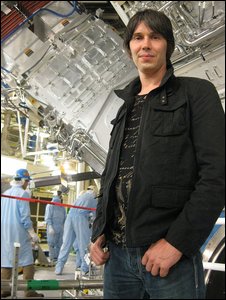
Brian cox

I have been a fan of the physicist Prof. Brian Cox for a while (not least for his TED appearances and the great “Wonders of the Universe” and “Wonders of Life” BBC series) and I now have a new reason: his views on the science-religion relationship:

“As someone who thinks about religion very little – I reject the label atheist because defining me in terms of the things I don’t believe would require an infinite list of nouns – I see no necessary contradiction between religion and science. By which I mean that if I were a deist, I would claim no better example of the skill and ingenuity of The Creator than in the laws of nature that allowed for the magnificent story of the origin and evolution of life on Earth, and their overwhelmingly beautiful expression in our tree of life. I am not a deist, philosopher or theologian, so I will make no further comment on the origin of the laws of nature that permitted life to evolve. I simply don’t know; perhaps someday we will find out.” (Preface, Wonders of Life)

Not only does Prof. Cox put himself into the shoes of those who hold beliefs different from his own – “if I were a deist” – (a key pre-requisite for dialogue), but he even extends the possibility of cognitive consonance to them – “I see no necessary contradiction between religion and science.”

While the above is great, and a real departure from how others, who equally don’t believe in God but have a negative take on the science-religion question, have been approaching this topic, what struck me most about Prof. Cox’s words1 is his saying that “I reject the label atheist because defining me in terms of the things I don’t believe would require an infinite list of nouns.” When I read this, I immediately thought that the same is true of me – “defining me in terms of the things I don’t believe would require an infinite list of nouns” – and that I would not want that either, if I were someone who does not believe in God. Just like I wouldn’t want to be labeled an “amanichean2 (which by virtue of what it denies links me to it), I can see why Prof. Cox is distancing himself from the atheist tag.

What the above attitude also points to is its complement: a focus on what one does believe in, and I think that Prof. Cox and I would have a lot in common, even in the absence of a shared belief in God.3


1 I first saw them in a tweet by @brainpicker and then traced their origin to the “Wonders of Life” book via a blog post.
2 Apologies for the possibly unnecessary neologism …
3 E.g., see a set-theoretic take in an earlier post here.

Jesus laughed

Jesus laughed

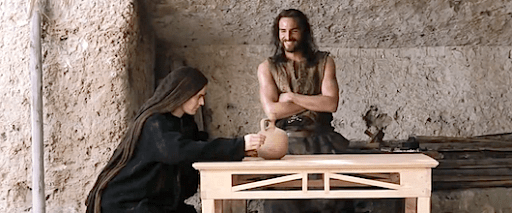
In many ways I find the subject of today’s post among the most difficult to talk about as, to me, it is akin to asking whether Jesus looked people in the eye when he spoke to them (or whether he looked down at his feet instead). Neither is mentioned in the Bible, yet both seem equally self-evident to me. I have yet to meet a loving, kind, compassionate person whom I haven’t also seen and heard laughing. So why is it that I am even writing about this topic?

The most immediate reason is a message I received from my bestie ML a couple of days ago, in which he shares a frustration that I too have had for years: the tendency of some to make a science out of distinguishing between joy and “mere fun,” branding one as a deplorable, shallow waste of time while extolling the other as a good, clean, Christian virtue. The point here isn’t that no distinctions ought to be made between varieties of enjoyment (the joy of mutual love, of a joke shared among friends, of delighting in success not being consubstantial with sadism or schadenfreude), but that such an enterprise bears the great risk of draining the joy out of Christian life through a process of abstract analysis and categorization that leaves one dour and cold.

In fact, the above thoughts were triggered by one of Pope Francis’ homilies from last week, where he says:

“A Christian is a man and a woman of joy. Jesus teaches us this, the Church teaches us this, in a special way in this liturgical time. What is this joy? Is it having fun? No: it is not the same. Fun is good, eh? Having fun is good. But joy is more, it is something else. […] Fun, if we want to have fun all the time, in the end becomes shallow, superficial, and also leads us to that state where we lack Christian wisdom. […] Joy is another thing. Joy is a gift from God. It fills us from within. It is like an anointing of the Spirit. [… On the other hand, s]ometimes melancholy Christian faces have more in common with pickled peppers than the joy of having a beautiful life.”

Clearly Francis distinguishes between fun that becomes shallow and joy that “fills us from within,” but he also warns against the lifelessness that follows from an absence of joy and that this is not Christian.

Having read and re-read Francis’ sermon many times over the last days, I am coming to the conclusion that the distinction ought not to be between fun and joy but between fun that leads to or subsists in joy and fun that does not and that leads to resentment, frustration and disappointment. In fact, Francis himself says that “Having fun is good[, b]ut joy is more” and I believe that this leads to a reading not of dichotomy but of set relationships, where fun and joy overlap. I’d like to go a step further though and argue that if joy is sought on the back of avoiding fun then only the latter is likely to be be achieved. Fun is a context in which relationships are built and avoiding it or looking down on it will eventually cut a person off from their neighbors – precisely the neighbors Jesus asks me to love like myself.

If I just look at my best friends, I can say with confidence that the moments that have lead to the birth of friendship have been ones of fun and joy – of delighting in each other, of recognizing oneself in the other, of having fun being together. This is not all that friendship is and moments of difficulty and suffering certainly test and strengthen it, but ultimately, as John Paul II said: “We are an Easter people.” Being an “Easter people” means both understanding the fundamental value that suffering has and realizing that its embracing is not for its own sake but as a means that leads to the joy of the resurrection.

But where does the question about whether Jesus laughed fit into this picture? It comes precisely from concerns about fun: should it be discredited or seen as a potential contributor to love and joy. At least up until the middle ages, many viewed laughter with deep-seated suspicion, but there were also those, like Erasmus of Rotterdam, who wrote the “Morias Enkomion” (“In Praise of Folly”) to his friend, St. Thomas More, who were its proponents. I don’t mean to mount an extensive defense of Jesus’ having laughed here – it is not something I believe is necessary and if you are convinced he never laughed, then Billy Graham would tell you: “I feel sorry for [you], because a balanced sense of humor can save us from taking ourselves too seriously, and help us see through the pride and pretense of our sinful world.” If, however, you’d like to see such a defense of laughter, others have done so very well already and I’d just pick out two: first, there are the very interesting scriptural pointers by the Protestant Rev. Kuiper and second, the great defense of humour by the Jesuit Fr. Martin, both of which I very much recommend.

To conclude on a fun note, let me leave you with a couple of examples of humor and laughter from the bible and the sayings of the saints (who are always a great weather vane for orthopraxy):

  1. St. Sarah (yes, “Old Testament” figures are held up as saints in the Catholic Church), who is the patron saint of laughter, laughed when God told her she’d get pregnant in her nineties: “God has given me cause to laugh, and all who hear of it will laugh with me.” (Genesis 21:6). Not only did Sarah laugh, but her son was named Isaac, which means “He laughed.”
  2. Jesus, during the “Sermon on the Plain” says: “Blessed are you who are now weeping, for you will laugh.” (Luke 6:21).
  3. Jesus often employs humor (which does not preclude him making important points at the same time) – e.g., as in the “eye of the needle” image: “[I]t is easier for a camel to pass through the eye of a needle than for one who is rich to enter the kingdom of God.” (Matthew 19:24).
  4. I have previously argued that the opening line of the Johannine prologue has the structure of a joke.
  5. When St. Thomas More is about to be executed for disobeying Henry VIII, he pulls his beard off the chopping block and tells the executioner: “This hath not offended the king.”
  6. In instructions to fellow nuns, St. Teresa of Ávila said: “What would happen if we hid what little sense of humor we had? Let each of us humbly use this to cheer others.”
  7. When asked by a journalist “How many people work in the Vatican?,” Blessed Pope John XXIII replied: “About half.”

🙂

Art’s dialogue: Vatican @ Venice Biennale

“It’s Sandro, about the Biennale.” was the first thought that entered my mind when I heard about the Vatican’s latest plans to engage with contemporary art, followed by an “Phew!” as soon as I read the details. While the Church has been a patron of the arts during many centuries, it would be fair to say that it’s ties with contemporary art have slipped of late. While still proclaiming the importance of art as such, the picture it portrayed was one of art having expired after the Renaissance.

It was therefore great to see the announcement yesterday by Cardinal Ravasi that the Holy See is going to present a pavilion at this year’s Venice Biennale and to hear about the artists commissioned for it: Studio Azzurro (a Milanese group of video and performance artists), Josef Koudelka (a highly respected Czech photographer, represented by Magnum Photos) and Lawrence Carroll (Australian-born, American painter whose work is in the permanent collections of galleries like the MOCA). Before taking a closer look at these artists, it is worth noting the theme of the pavilion: “In the Beginning.”1 The focus here is on the first 11 chapters of Genesis as an inspiration for the exploration of man’s origins (“Creation”), the introduction of evil into history (“Un-creation”) and the hope that enters the world via the New Man (“Re-creation”). In Ravasi’s words:

“Creation concentrates on the first part of the biblical narrative, when the creative act is introduced through the Word and the breath of the Holy Spirit, generating a temporal and spatial dimension, and all forms of life including human beings.

Un[-]creation, on the other hand, invites us to focus on the choice of going against God’s original plan through forms of ethical and material destruction, such as original sin and the first murder (Cain and Abel), inviting us to reflect on the “inhumanity of man.” The ensuing violence and disharmony trigger a new start for humanity, which begins with the punitive/purifying event of the Flood.

In this biblical story, the concept of the voyage, and the themes of seeking and hope, represented by the figure of Noah and his family and then by Abraham and his progeny, eventually lead to the designation of a New Man and a renewed creation, where a profound internal change gives new meaning and vitality to existence.”

By the sounds of it, this is a very broad brief, which Ravasi underlines by saying that “each of these aspects was only a starting point for the selected artists. A vital, rich, and elaborate dialogue has been established with them and is a sign of a renewed, modern patronage.” And the aim of such patronage? “[I]nstituting and promoting occasions of dialogue within an ever broader and diversified context,” which sounds exactly like the mission statement of Ravasi’s Pontifical Council for Culture and a natural extension to the dialogue already in progress with intellectuals of all faiths an none, promoted via the Courtyard of the Gentiles initiative.

So, who are the three artists chosen for the first Vatican presence at a Venice Biennale?
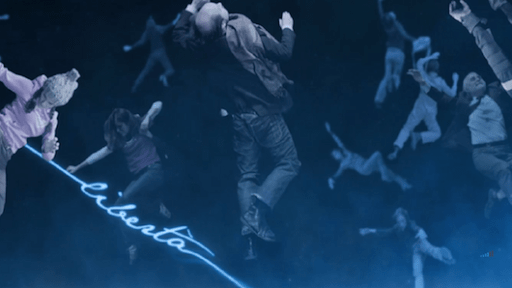
Studio azzurro

Of the three, the only one I didn’t know of is Studio Azzurro, who have been given the first of the three themes: “Creation” and who place “light, sound, and sensory stimuli at the center of their artistic investigation,” in the words of the art historian and director of the Vatican Museums Prof. Antonio Paolucci. He adds that “[t]heir work triggers a dialogue, awash with echoes and reverberations, between the vegetable and animal kingdoms and the human dimension, which leads, via memory, to other personal narrations.” In broad strokes this sounds like their “Fare gli Italiani” installation in Turin two years ago (a video of which can be seen here) or their earlier “Meditazioni Mediterraneo.” From the perspective of the artists themselves, their interests lie in the “values of memory, places and communities” and their use in “strongly participatory” ways.
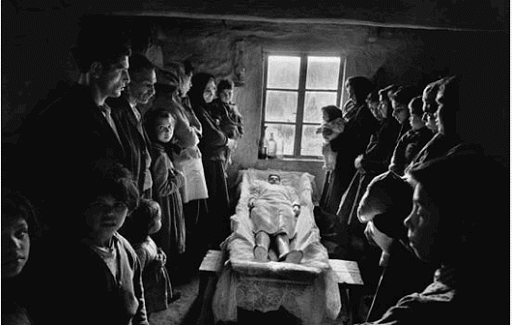
Koudelka slovacchia 1963

“Un-creation” is entrusted to the photographer Josef Koudelka, whose work is described by Paolucci as follows: “themes such as the destruction brought about by war, the material and conceptual consumption of history through time, and the two opposing poles of nature and industry are made to emerge. The photographer’s images expose an abandoned, wounded world, and at the same time are able to transform fragments of reality into works of art bordering on abstraction.” In many ways this sounds like the “redeeming ugliness” also explored by Michel Pochet, mentioned in an earlier post. To my mind this part of the theme is of great importance as it underlines the being “in the world but not of the world” (cf. John 15:19) of Christianity and a readiness to engage with all of reality. This is an attitude that is at the heart of Koudelka’s approach, who says that “I would like to see everything, look at everything, I want to be the view itself.” His portfolios covering the 1968 invasion of Prague by the Soviet army, the lives of gypsies in Eastern Europe in the ’70s (from which the above photo is taken) and the Welsh landscape in the late ’90s are all great examples of his desire to “be part of everything that is around [him].”
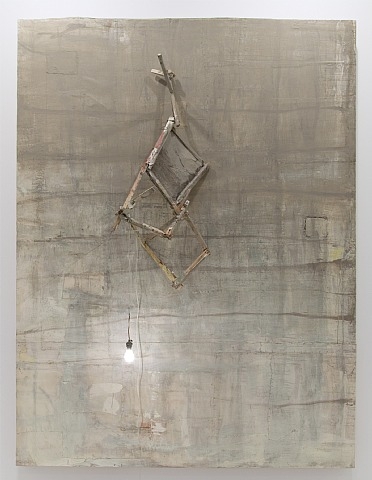
Lawrence carroll

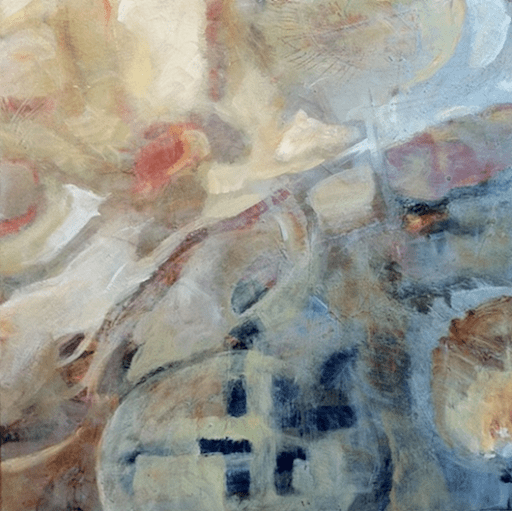
Finally, “Re-creation” will be taken up in the work of the painter Lawrence Carroll, who uses “salvaged materials and the processes of transfiguration, which [he] presents both realistically and symbolically together. His is an elaboration that, meditating on the experiences of Arte Povera, actualizes a continuous and cyclical action of recovery and erosion, of suspension and decline, and of pause and reactivation through the reintroduction of objects into a temporal circuit, forcing fragility and monumentality to coexist” (Paolucci). Carroll himself says that his work “is about the idea that ideas and things have the possibility of having another life” carried from generation to generation of artists. In many ways his work is not only about the transformative, transcendent aspects of art but also its interconnectedness both with past and present ideas, forms and objects.

I believe Cardinal Ravasi has achieved something very impressive here. First, he has chosen a theme with universal appeal and accessible to believers and non-believers alike. Second, he has chosen a set of three artists who are very different from each other, who are respected in and representative of the contemporary art world (insofar as that is possible) and who have a great sense personal freedom (both Koudelka and Carroll have been emphasizing their commitment to their own independence over the year, e.g., with Koudelka saying: “I refuse assignments, even for projects that I have decided to do anyhow […] the idea that no one can buy me is important for me”). Third, he has steered clear of art “destined for the liturgy and sacred spaces” – this is not about interior decoration or illustration but about “rebuild[ing] relations between art and faith.” While not overtly religious, the works commissioned by the Vatican nonetheless speak to themes that are core to Christianity, since – as Cardinal Ravasi puts it – “they should raise questions in people’s minds about their origins and the origins of the world, about sin and destruction, about suffering, but also about hope for a new creation and new way of living.”


1 A theme dear to this blog, where it was covered in the context of the Johannine prologue, the perspective of the roots of science in Genesis and of John Paul II’s Theology of the Body among others.
Look at Mary, see Jesus

8717839098 b716ba634d

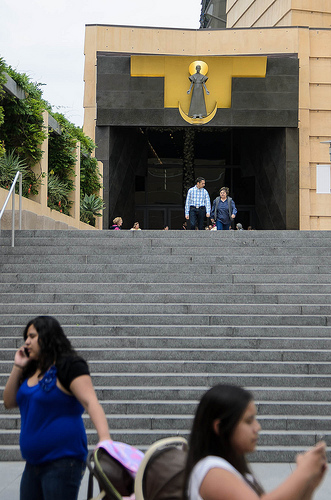
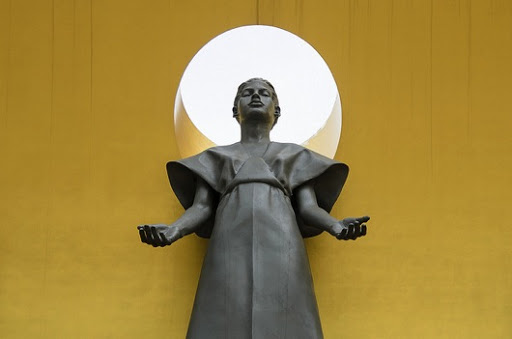
Last week I visited the Cathedral of Our Lady of the Angels in Los Angeles1 and it struck me that the statue above its entrance showed something akin to an optical illusion. Already when seen from afar, the statue above the main doors of the cathedral presented a somewhat ambiguous figure – the short hair, bare arms and forward facing palms were more consonant with an adolescent Jesus, prefiguring his later crucifixion wounds, while the context (i.e., it being the Cathedral of Our Lady and “the medium [being] the message” as McLuhan put it), the moon at the figure’s feet and the placement of the belt on the robe pointed to Mary, albeit posed in a highly unusual way.

In fact, if you look at the typical silhouettes of a statue of Mary (left – where her cloak dominates the outline), the LA statue (center) and a statue of Jesus (right – where head and hands are clearly distinct from the torso) you’ll see where my ambiguity came from:

Silhouette

Even up close this ambiguity does not resolve itself:

8716719089 f0a29367d0 z

The muscular arms as well as the scale of the hands are consistent with a young man, while the dress becomes more clearly female and the face is sufficiently androgynous to allow both for a male and a female reading. In the end I am left with a feeling akin to viewing the rabbit-duck in that I can both resolve the ambiguity in Mary’s and in Jesus’ favor.

What the sculptor Robert Graham has achieved here – at least through my eyes, is to put in bronze the key to Mary being the model Christian. Saint Louis Marie de Montfort put it as follows: “We never give more honor to Jesus than when we honor his Mother, and we honor her simply and solely to honor him all the more perfectly. We go to her only as a way leading to the goal we seek – Jesus, her Son.” And Pope Benedict XVI simply expressed it by saying that we look to Christ by “going towards Mary who shows us Jesus.” Instead of seeking fame and glory for herself, her whole life was one of self-effacing humility, a constant pointing beyond herself – to Jesus – to the point of becoming transparent.


1 For more about the cathedral’s architecture see here.

Atheists: adversaries, or brothers?

Trio

It is no secret that I have a great deal of respect for my atheist and agnostic friends and I feel like I have learned a lot from them about matters that are of profound value to me as a Christian. With Cardinal Ravasi I can also say that I too have absolutely no interest in converting them (or anyone else for that matter). At the same time I am aware of this attitude not having been the mainstream position of the Church for a long time (although there have always been those who have shared it – many of whom were saints) and that atheism is seen by some (many?) in the Church as a problem even today.

It is against this background that I was pleased to hear voices consonant with mine while reading two great books: On Heaven and Earth (by Cardinal Bergoglio – now Pope Francis – and Rabbi – and biophysicist! – Abraham Skorka, mentioned here before) and Colloqui (by Fr. Pasquale Foresi – one of the co-founders of the Focolare Movement).

Here Francis has the following to say:1

“When I meet atheist persons, I share with them human questions […] which are such rich material for sharing and working on together that they can easily lead to mutual and complementary enrichment. As a believer I know these riches are a gift from God[, but] instead of proselytizing, I respect atheists and I present myself the way I am. I have nothing to hide and I would not say that their life is condemned, because I am convinced that I have no right to judge their honesty. […] We have to be coherent with the message we receive from the Bible: all men and women are made in the image of God, whether they are believers or not.”

Later in the book, this attitude is also reinforced by Rabbi Skorka, saying that “we are all joined by the links of brotherhood.” While the position is, to my mind, positive – we are all brothers and sisters irrespective of our beliefs and there are great riches to be shared with each other in openness, a point worth elaborating on are the positions that Pope Francis rejects here – i.e., proselytism and condemnation.

Why these are novelties in the Catholic Church is addressed in Fr. Foresi’s book, which I happened to read at the same time :). There he points to the great changes that have been confirmed by the Second Vatican Council, a key point of which was an increased emphasis on and respect for following one’s conscience.2 Among others, this shift also legitimized pacifist positions held by prominent Christians during the last century’s World Wars. E.g., see the Catholic, Italian MP Igino Giordani – now in the process of being considered for sainthood, who championed a bill to allow for conscientious objectors to abstain from military service – incidentally in collaboration with atheist Communists (a great rarity during the first half of the 20th century).

It was on the back of this rediscovery of the importance of conscience that the honesty of atheist beliefs was contemplated and while the Church certainly has a position different from atheism, it stated clearly in the Gaudium et Spes constitution of the Second Vatican Council that,

“motivated by love for all men, [the Church] believes [that the] questions [raised by atheism] ought to be examined seriously and more profoundly. [… T]he Church sincerely professes that all men, believers and unbelievers alike, ought to work for the rightful betterment of this world in which all alike live; such an ideal cannot be realized, however, apart from sincere and prudent dialogue. Hence the Church protests against the distinction which some state authorities make between believers and unbelievers, with prejudice to the fundamental rights of the human person.” (Gaudium et Spes, 21)

Fr. Foresi explains that prior to Vatican II it was generally thought that “one couldn’t be an atheist in good faith, and that it was “impossible” for them to be saved.” This has all changed though, so that now there are not only individuals in the Church, who are keen to build relationships with their atheist friends, but it is the Church’s official teaching that the dignity of believers and non-believers alike be protected and valued.

And there is more. In his book, Fr. Foresi recounts how the Focolare Movement, founded by Chiara Lubich, has gone a step further and has done so with the Church’s formal approval. The Focolare Movement is an organization that promotes unity and universal brotherhood among all and even though it started in the Catholic Church during the Second World War, it also has members from other Christian churches and communities and from other religions. And it also counts agnostics or atheists among its members. While links with non-Catholics and atheists were at first informal, as the Focolare Movement was gaining official recognition by the Catholic Church, it also asked for its non-Catholic members to be officially recognized as such – a request eventually granted by the Vatican.

Why am I saying all this? Do I care so much about being “official”? No, not for its own sake, but I believe that it is an indication of how seriously these questions are taken by the Church and how it is not only its declared intention to be open to atheists but also something it approves formally.


1 Since I have the original book in Spanish, the English text is my rough translation.
2 For a more detailed discussion of this topic see a previous post.

The devil

Liardet2

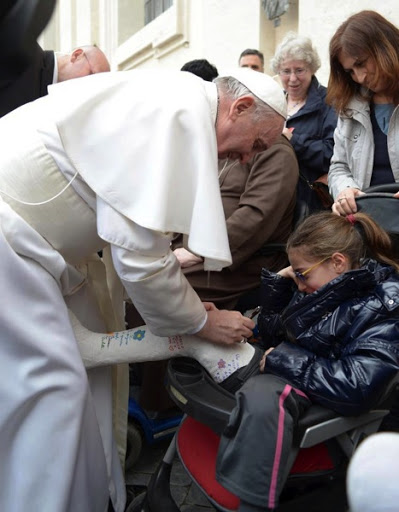
Beyond his great humility, simplicity, personal poverty, warmth and approachability, what struck me about Pope Francis have also been his frequent references to the devil. He mentioned him as early as his first full day in office and keeps bringing him up at least on a weekly, if not a more frequent, basis in his sermons.

Since the devil is not part of what consciously constitutes my spiritual life, I have at first just glossed over his mentions, but I am now growing curious about why it is that Francis so frequently refers to him. It is not that I have an issue with the devil being referred to – it is more that I just haven’t given him much thought. The Christianity I try to practice is about love rather than the avoidance of sin, about following Jesus rather than combatting the devil and about seeking to encounter goodness, truth and beauty rather than learning how to recognize evil. It is not that I don’t care about avoiding evil, but I believe that to be a necessary side-effect of seeking good.

The problem of evil is unquestionably challenging though and its manifestations in the world are a source of horror and sorrow for me, which does make me want to understand why it is that Francis speaks so often about the devil. In fact, I have been reading Steven Pinker’s excellent The Better Angels of Our Nature precisely for the sake of gaining a better understanding of how it is that we, humans, are capable of the shocking atrocities that we keep perpetrating on each other. While Pinker is certainly critical of religion and opposed to the idea of the devil, he makes two points that I think are relevant here: first, that “[we] need to make the case that [our inner demons] exist, because there is a resistance in modern intellectual life to the idea that human nature embraces any motives that incline us toward violence at all,”1 and second that “[violence] is not a single motive, let alone a mounting urge. It is the output of several psychological systems that differ in their environmental triggers, their internal logic, their neurobiological basis, and their social distribution.” In other words, Pinker argues both that there is a tendency to deny the ubiquity of the capacity for violence and that its origins and manifestations are complex.

These two points are in fact a great bridge from contemporary psychology and anthropology to the Church’s teaching about evil and the devil. In its most recent (1975) review of the subject of the devil, the Congregation of the Doctrine of the Faith starts with the same kind of realization as Pinker makes in the context of violence – that “the very existence of the devil is frankly called into question.” On the point of complexity too, it calls for caution and reason: “The many forms of superstition [and] obsessional preoccupation with Satan […] have always been condemned by the Church. […] Reserve and prudence are in fact demanded. [… O]ne must exercise discernment. And one must leave room for research and its findings.” Finally, it also dispells a potential misunderstanding, where the devil could be used as an excuse and a barrier to seeking scientific understanding: “It is clear that [the Church] has never allowed man to rid himself of his responsibility by attributing his faults to the devil. The Church did not hesitate to oppose such escapism when the latter manifested itself, saying with St. John Chrysostom: “It is not the devil but men’s own carelessness which causes all their falls and all the ills of which they complain.””

So, why is it that the Church speaks about the devil? By far the most obvious and compelling answer is that Jesus himself did so – calling him “tempter” (Matthew 4:3), “accuser” (Revelation 12:10), “father of lies” and “murderer” (John 8:44). Who is this devil though, whom Jesus speaks about? Jesus himself describes him as follows: “He was a murderer from the beginning and does not stand in truth, because there is no truth in him.” (John 8:44). Two things are important here: first, that the devil has been present “from the beginning,” which the Catechism explains by saying that ““[t]he devil and the other demons were indeed created naturally good by God, but they became evil by their own doing.” Scripture speaks of a sin of these angels. This “fall” consists in the free choice of these created spirits, who radically and irrevocably rejected God.” (§391-392). This means that the devil is God’s creature, rather than an equivalent but opposed being, which in turn leaves God as having created only what is good and the devil opposing him out of pride and his free choice. The second part of Jesus’ profile of the devil is equally key: the devil has “no truth in him” – his temptations are lies and the sufferings they lead to are a consequence of an opposition to the truth.

Coming back to Pope Francis, let me just pick out a couple of his references to the devil:

  1. In his very first sermon after being elected pope, Francis quotes the French poet Léon Bloy: “Whoever does not pray to God, prays to the devil.” I read this as him pointing to there being no middle ground between truth and falsehood.
  2. During one of his morning masses in the Domus Sanctae Marthae, he points to the seriousness of falsehood: “We are all sinners; all of us. We all commit sins. But calumny is something else. It is of course a sin, too, but it is something more. Calumny aims to destroy the work of God, and calumny comes from a very evil thing: it is born of hatred. And hate is the work of Satan. Calumny destroys the work of God in people, in their souls. Calumny uses lies to get ahead. And let us be in no doubt, eh?: Where there is calumny, there is Satan himself.”
  3. On another occasion he places the impulse to gossip at the feet of the devil: “When we prefer to gossip, gossip about others, criticize others- these are everyday things that happen to everyone, including me – these are the temptations of the evil one who does not want the Spirit to come to us and bring about peace and meekness in the Christian community.”
  4. Finally, he also warns that “the devil, lead[s] us to believe that ghosts, fantasies, are reality,” again underlining how it is the absence of truth that is the root from which evil springs.

As you can see, the above is just my attempt to structure some first notes rather than an exposition of some clear insight. I am at the point of trying to begin to make sense of why it is that Francis keeps bringing up the devil and trying to understand why it is that Jesus, and subsequently the Church, speaks about him. The picture I am getting is one that certainly makes sense in the bigger context of creation and has the following as its core idea: The truth presented to a free recipient can be rejected out of pride, where subsequent lies result in evil and suffering. To have this rejection of the truth be the act of a creature, albeit spiritual, rather than “just” an abstract concept or principle is again consistent with the personal nature of the Trinity and the ultimate superiority of good to evil.


1 This reminded me of the following line from The Usual Suspects (delivered by the character Keyser Söze), which comes from Charles Baudelaire’s Le spleen de Paris: “The finest trick of the devil is to persuade you that he does not exist.”

Joy and humility, instead of rules and political correctness

Francis cast

What would it be like if the Pope were just a simple parish priest, saying daily morning masses in a small side-chapel and addressing a few simple words to his small flock. Well, that is precisely what has been going on since around a month ago in the Domus Sanctae Marthae – the Vatican guest house, where Pope Francis choses to reside and where he says daily morning mass. He invites various small groups of Vatican employees and addresses short sermons to them that are always rooted in the mass readings of the day and that have an immediately accessible style. Reading excerpts from these short homilies has been a daily joy for me over these last weeks and I would here like to share my favorite bits with you. If you’d like to follow these very short sermons yourself, the quickest way is to look at the Vatican Radio website, where they get published a couple of hours after their delivery.

Instead of trying to be in any way comprehensive, let me just pick out a few gems and leave you to follow up on their context if you wish. First, here are a couple of excerpts that show Francis’ take on what it means to be a Christian:

  1. Wonder and joy: “Wonder is a great grace, the grace that God gives us in our encounter with Jesus Christ. It is something that draws us outside of ourselves with joy … it is not a mere enthusiasm like that of sports fans when their favorite team wins, but it’s something deeper. Of course we cannot live forever in a state of wonder, but it is the beginning which leads to spiritual consolation. It is the consolation of those who have encountered Jesus Christ.”
  2. God spray: “Faith is not an impalpable presence, like an essence of mist that spreads around without really knowing what it is. God is a concrete ‘Person,’ and therefore faith in Him comes from a living encounter, which we experience as tangible. We believe in God who is Father, who is the Son, who is the Holy Spirit. We believe in people, and when we talk to God we talk to People: I speak with the Father, with the Son or with the Holy Spirit. And this is the faith. But faith is a gift, the Father gives it. This faith that makes us strong, it makes us joyful, this faith that always begins with the encounter with Jesus.”
  3. Facing difficulties: “When there are difficulties, we need to look closely at them, and confront them and speak about them. But never hide them. We must not be afraid of problems: Jesus himself said to his disciples: ‘It is I. Do not be afraid’. In life’s difficulties, with problems, with new things that we must face: the Lord is always with us. We may make mistakes, certainly, but he is always with us and says: ‘You made a mistake, now get back on the right path.’ Masquerading life, disguising life, is not a very good way to behave: no no. Life is what it is, that’s the reality. It’s exactly as God wants it to be, or as God allows it to be, it is what it is, and we have to accept it as it is.”
  4. Gossip: “When we prefer to gossip, gossip about others, criticize others – these are everyday things that happen to everyone, including me – these are the temptations of the evil one who does not want the Spirit to come to us and bring about peace and meekness in the Christian community. These struggles always exist in the parish, in the family, in the neighborhood, among friends. Instead, keep quiet and if you have something to say, say it to the interested parties, to those who can remedy the situation, but not to the entire neighborhood.”
  5. Love instead of rules: “The Lord saves us by His love: not with a letter, nor with a decree, but with his love, a love so great that it led him to send his Son, who, became one of us, walked with us, and this saves us. We are worthy, we are men and women of hope: this is what it means to be saved by love. The problem is that sometimes we want to save ourselves, and we believe we can do it, for example basing our security on money – and we think: ‘I have money, I am secure, I have it all, there are no worries, I have dignity: the dignity of a rich person.’ This is not enough. Think of the parable of the Gospel, of the man who had the full granary, who said, ‘I’ll make another to get more, and then I’ll sleep soundly,’ and the Lord says, ‘You fool! This evening you will die.’ That salvation is wrong, it is a temporary salvation, it is also only apparent salvation.”
  6. Normality, not magic: “God does not act like a fairy with a magic wand. Rather, he gives grace and says, as he said to all those he healed, ‘Go, walk.’ He says the same to us: ‘Move forward in your life, witness to everything the Lord does with us.’ Triumphalism is not of the Lord. The Lord came to Earth humbly; he lived his life for 30 years; he grew up like a normal child; he experienced the trial of work and the trial of the Cross. Then, in the end, he rose from the dead. The life of the Christian consists of a normality that is lived daily with Christ.”
  7. Forgiveness: “St. Paul said that his glory was Christ crucified in his sins. Why? Because he, in his sins, found Christ crucified who forgave him. In the middle of the ‘night,’ the many ‘nights,’ the many sins that we commit, because we are sinners, there is always the embrace of the Lord that helps us say: ‘This is my glory. I am a poor sinner, but You are my Savior.’ We think of how nice it is to be saints, but also how nice it is to be forgiven.”
  8. Peace: “Even in the most painful tests, a Christian never loses the peace and presence of Jesus. With a little courage we can pray: ‘Lord, grant me this grace which is the hallmark of our encounter with you: spiritual consolation and peace.’ A peace that we cannot lose because it is ours, it is the Lord’s true peace that cannot be bought or sold. It is a gift from God.”

Francis also presents are very beautiful view of the Church, both by pointing to its treasures and by warning against its pitfalls:

  1. Taming the Holy Spirit: “The Holy Spirit upsets us because it moves us, it makes us walk, it pushes the Church forward. We wish to calm down the Holy Spirit, we want to tame it and this is wrong. The Holy Spirit gives us the strength to go forward but many find this upsetting and prefer the comfort of the familiar. Nowadays everybody seems happy about the presence of the Holy Spirit, but it’s not really the case and there is still that temptation to resist it. The Second Vatican council was a beautiful work of the Holy Spirit. But 50 years later, have we done everything the Holy Spirit was asking us to do during the Council? The answer is ‘No.’ We celebrate this anniversary, we put up a monument but we don’t want it to upset us. We don’t want to change and what’s more there are those who wish to turn the clock back. This is called stubbornness and wanting to tame the Holy Spirit. The same thing happens in our personal life. The Spirit pushes us to take a more evangelical path but we resist this.”
  2. Saints v. ideologues: “The Word of Jesus goes to the heart because it is the Word of love, it is a beautiful word and brings love, makes us to love. But, ideologues cut off the road of love, and also that of beauty. And when ideology enters into the Church, when ideology enters into our understanding of the Gospel, no authentic comprehension is possible. And these ideologues, on the road of duty, load everything on the shoulders of the faithful. The ideologues falsify the gospel. Every ideological interpretation, wherever it comes from – is a falsification of the Gospel. And these ideologues – as we have seen in the history of the Church – end up being intellectuals without talent, ethicists without goodness – and let us not so much as mention beauty, of which they understand nothing. Rather, the path of love, the way of the Gospel, is simple: it is the road that the Saints understood. The saints are those who lead the Church forward! The road of conversion, the way of humility, of love, of the heart, the way of beauty …”
  3. The Church dormant: “The early Christians had nothing but the power of baptism that gave them their apostolic courage, the strength of the Spirit. I think of us, the baptized: do we really have this strength – and I wonder – do we really believe in this? Is Baptism enough? Is it sufficient for evangelization? Or do we rather ‘hope’ that the priest should speak, that the bishop might speak … and what of us? Then, the grace of baptism is somewhat closed, and we are locked in our thoughts, in our concerns. Or do we sometimes think: ‘No, we are Christians, I was baptized, I made Confirmation, First Communion … I have my identity card alright. And now, go to sleep quietly, you are a Christian.’ But where is this power of the Spirit that carries us forward? We need to be faithful to the Spirit, to proclaim Jesus with our lives, through our witness and our words. When we do this, the Church becomes a mother church that produces children and more children, because we, the children of the Church, we carry that. But when we do not, the Church is not the mother, but the babysitter, that takes care of the baby – to put the baby to sleep. It is a Church dormant. Let us reflect on our Baptism, on the responsibility of our Baptism.”
  4. Mother, not domestic administrator: “We, the women and men of the Church, we are in the middle of a love story: each of us is a link in this chain of love. And if we do not understand this, we have understood nothing of what the Church is. The Church does not grow by human strength. Some Christians have gone wrong for historical reasons, they have taken the wrong path, they have raised armies, they have waged wars of religion: that is another story, that is not the story of love. Yet we learn, with our mistakes, how the story of love goes. But how does it increase? Jesus said simply: like the mustard seed, it grows like yeast in the flour, without noise. The Church is not just another organization: she is Mother. How would you feel if someone said: she’s a domestic administrator? ‘No, I am the mother!’ And the Church is Mother. And we are in the middle of a love story that continues thanks to the power of the Holy Spirit. All of us together are a family in the Church, who is our Mother.”
  5. Humility, not conquest: “The style of evangelical preaching should have this attitude: humility, service, charity, brotherly love. ‘But … Lord, we must conquer the world!’ That word, conquer, doesn’t work. We must preach in the world. The Christian must not be like soldiers who when they win the battle make a clean sweep of everything. The Christian proclaims the Gospel with his witness, rather than with words. As St. Thomas Aquinas says: “A great soul that is not afraid of great things, that moves forward towards infinite horizons, and the humility to take into account the small things.” This is divine, it is like a tension between the great and the small. The triumph of the Church is the Resurrection of Jesus. But there is first the Cross. Today we ask the Lord to become missionaries in the Church, apostles in the Church but in this spirit: a great magnanimity and also a great humility. So be it.”

Synthetic life: out of bounds or cause for optimism?

Synthetic dna s

Take bottles of the chemicals that constitute living organisms and by following a process that does not involve re-using parts of living beings arrive at a new, living creature. That would the the synthetic creation of life from scratch.1

The pioneer of this strand of scientific endeavor is the biologist Dr. J. Craig Venter, who was among the first to sequence the human genome, and who is now seemingly nearing the first synthetic creation of life from fully non-living components. A prequel to this upcoming breakthrough has been the 2010 insertion of synthetic, man-made DNA into a bacteria, which resulted in the first living organism with an entirely artificial genome. While this had elements of being synthetic life, it was only partially so and Dr. Venter’s team is continuing in their quest. Last year they then passed the landmark of the first software simulation of an entire organism, and only last month Dr. Venter announced that his team is close to creating a living being from scratch. Their initial aim is to use the process for positive ends by creating artificial life that can “eat pollution and generate energy.”

While the scientific achievement of synthesizing life would unquestionably be a huge success (and the steps taken by Dr. Venter’s team already are!), there are also important ethical questions to consider, with multiple experts offering their assessments, from among which I would just like to offer two perspectives, at first introduced only anonymously:

Statement A: “All available evidence goes to show that there is no unmediated passage from non-life to life. [… A]ll living beings receive their life from a principle outside themselves, which is itself capable of infusing life; this we call God.”

Statement B: “If it is used to promote the good, to treat pathologies, we can only be positive[. …] If it turns out not to be [used] to respect the dignity of the person, then our judgment would change. [… Dr Venter’s work is a] further sign of intelligence, God’s gift to understand creation and be able to better govern it.”

The first statement is a classic “God of Gaps” stance, infused both with a lack of scientific understanding (i.e., missing the importance of the steps already made towards synthetic life and underestimating the likelihood of their ultimate success) and with a mistaking of a purely philosophical construct for the personal God of Abraham, Jesus and the Church. Statement A’s god is banished into ever-narrower, farther-removed spheres and serves a strictly soulless, utilitarian end. This god is now a workaround for the specter of infinite causal chains and now for the magical-seeming wafer-thin sliver wedged between not-life and life. If you have read this blog, you will know where Statement A comes from, and if not then I just apologize that I will not revealed its source, which I have already afforded more than its fair share of publicity. All I will say is that it is taken from a “catholic” newsletter that is broadly distributed in the UK.

I believe the best way to show how un-Christian the above is, is to contrast it with what Pope Francis said during the sermon of last Thursday’s morning mass in the chapel of the Domus Sanctae Marthae, where he is staying and where he has been inviting various groups working at the Vatican to celebrate mass with him:2

“But who is this God you believe in? An ‘all over the place – god’, a ‘god-spray’ so to speak, who is a little bit everywhere but who no-one really knows anything about? We believe in God who is Father, who is Son, who is Holy Spirit. We believe in Persons, and when we talk to God we talk to Persons: or I speak with the Father, or I speak with the Son, or I speak with the Holy Spirit. And this is the faith.”

You can just picture it: a storeroom somewhere, with a spray bottle with “life” written on it in black Sharpie, a box on another shelf with the “first mover” label beginning to peel, a pair of jars in the corner – one labelled “irresistible force,” the other “immovable object” – lids screwed tightly in place. All waiting to kick into action whenever necessary.

Let’s turn to Statement B, which directs its gaze to the good that synthetic life could do, while being conscious of its dangers, and which categorizes the intelligence that has lead to it as a good whose source is God. The source of this statement is a combination of what Archbishop Rino Fisichella, the then president of the Pontifical Academy for Life, and Cardinal Angelo Bagnasco, president of the Italian Bishops’ Conference, had to say when Dr. Venter announced the incorporation of fully synthetic DNA in a bacteria in 2010. It is a statement that views scientific progress as a means for greater good, as a way of deepening our understanding of how the universe that God created and sustains in its entirety operates, and as a licit use of the gift of reason, which also springs from God. The possibility of man-made, synthetic life is placed wholly inside God and seen as having a clear potential for good when used responsibly.


1 Although not “from scratch” in the Carl Sagan sense: “If you wish to make an apple pie from scratch, you must first invent the universe.”
2 This time it was the turn of the Italian State Police who serve the Vatican area.

Bonhoeffer, Lubich, Teilhard: A world luminous from within

Bonhoeffer lubich teilhard s

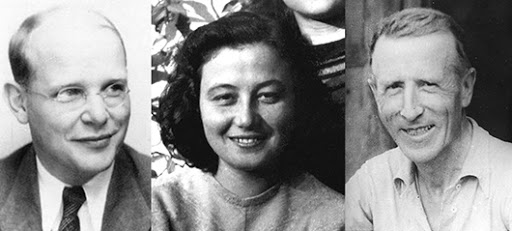
Sixty eight years ago yesterday, in the Flossenbürg concentration camp, the Lutheran pastor and theologian Dietrich Bonhoeffer was martyred. His opposition to Nazi euthanasia and genocide directed against the Jewish people, born of his discipleship of Jesus, earned him the gallows. While I have long been an admirer of Bonhoeffer’s witness and theology, I have only now come across the following passage from his Letters and Papers from Prison, where he points particularly lucidly to the alternative to the God of Gaps caricature still popular today:

“How wrong it is to use God as a stop-gap for the incompleteness of our knowledge. If in fact the frontiers of knowledge are being pushed further and further back (and that is bound to be the case), then God is being pushed back with them, and is therefore continually in retreat. We are to find God in what we know, not in what we don’t know.”

This emphasis on the presence of God in what we know made me think of Chiara Lubich’s mystical experience that started during the summer of 1949.1 There, before the start of the actual “intellectual visions,” she recounts the following:

“[N]ature seemed to me to be enveloped totally by the sun; it already was physically, but it seemed to me that an even stronger sun enveloped it, saturated it, so that the whole of nature appeared to me as being “in love.” I saw things, rivers, plants, meadows, grass as linked to one another by a bond of love in which each one had a meaning of love with regard to the others. […] I had seemed to see the blossom of a horse chestnut tree alive with a higher life that sustained it from beneath so that it seemed to be coming out towards me.” (Paradise ’49)

How is it though that one comes to seeing God “in what we know,” as “sustain[ing everything] from beneath”? Here, in the paragraphs preceding the above quote, Lubich says that “[for about five years w]e had been trying with great intensity to live [… communion] with Jesus in the Eucharist, with our brother or sister, with the Word of God […] constantly in the present moment.” Her answer then is that this experience of God “enveloping” all has for her and her companions followed a putting of the Gospel into practice.

This in turn made me think of Pierre Teilhard de Chardin’s “The Divine Milieu,” where he sets out “a way of teaching how to see” and starts by posing a challenge:

“God is as pervasive and perceptible as the atmosphere in which we are bathed. He encompasses us on all sides, like the world itself. What prevents you, then, from enfolding him in your arms? Only one thing: your inability to see him.”

Reflecting on the above near the end of his life, Teilhard shares the following:

“Throughout my life, by means of my life, the world has little by little caught fire in my sight until, aflame all around me, it has become almost completely luminous from within. … Such has been my experience in contact with the earth — the diaphany of the Divine at the heart of the universe on fire … Christ; his heart; a fire: capable of penetrating everywhere and, gradually, spreading everywhere.”

Again the vision of God illuminating the world “from within” follows a life focused on seeking Him, as Teilhard says in “The Divine Milieu,” both in what we do and what happens to us – both the active and the passive, and therefore in life as a whole:

“It is the whole of human life, down to its most “natural” zones, which, the Church teaches, can be sanctified. […] “So whether you eat or drink, or whatever you do, do everything for the glory of God.” (1 Corinthians 10:31).”


1 For previous mentions of “Paradise ’49” see the following posts here and here.