Venture freely into the open sea of the truth

I am glad I kept tabs on Pope Benedict XVI’s sermons, articles and speeches over the Christmas period and that I now had a chance to read them, as there were some true gems to be found there.

Let’s start with his Christmas Vigil homily, where he summed up the trusting fragility of the Christmas paradox particularly vividly and beautifully:

“Again and again it astonishes us that God makes himself a child so that we may love him, so that we may dare to love him, and as a child trustingly lets himself be taken into our arms. It is as if God were saying: I know that my glory frightens you, and that you are trying to assert yourself in the face of my grandeur. So now I am coming to you as a child, so that you can accept me and love me.”

Then, in his article in the Financial Times, he drew out the consequences of God’s becoming man and the love for humanity He thereby demonstrated:

“Christians shouldn’t shun the world; they should engage with it. But their involvement in politics and economics should transcend every form of ideology.

Christians fight poverty out of a recognition of the supreme dignity of every human being, created in God’s image and destined for eternal life. Christians work for more equitable sharing of the earth’s resources out of a belief that, as stewards of God’s creation, we have a duty to care for the weakest and most vulnerable. Christians oppose greed and exploitation out of a conviction that generosity and selfless love, as taught and lived by Jesus of Nazareth, are the way that leads to fullness of life. Christian belief in the transcendent destiny of every human being gives urgency to the task of promoting peace and justice for all.”

However, the engagement of Christians in the world is to be done on Gospel terms and here Benedict introduces a (to me) new reading of Jesus’ famous response to the trap some Pharisees laid him: “Christians render to Caesar only what belongs to Caesar, not what belongs to God.” He goes beyond a splitting of responsibilities and highlights the wrongful demands that secular powers can lay claim to:

“Christians have at times throughout history been unable to comply with demands made by Caesar. From the Emperor cult of ancient Rome to the totalitarian regimes of the last century, Caesar has tried to take the place of God. When Christians refuse to bow down before the false gods proposed today, it is not because of an antiquated world-view. Rather, it is because they are free from the constraints of ideology and inspired by such a noble vision of human destiny that they cannot collude with anything that undermines it.”

Benedict then takes this central idea of freedom in truth and applies it, in a to me surprisingly bold way, to the topic of inter-religious dialogue, which “is a necessary condition for peace in the world and is therefore a duty for Christians as well as other religious communities.” He first presents the current rules of this dialogue as, first, “not aim[ing] at conversion, but at understanding” and, second, that “both parties to the dialogue remain consciously within their identity, which the dialogue does not place in question either for themselves or for the other.” While he underlines the correctness of not aiming at conversion, Benedict sees these rules as “too superficial” and instead proposes the following to the Christian participant:

“[T]he search for knowledge and understanding always has to involve drawing closer to the truth. Both sides in this piece-by-piece approach to truth are therefore on the path that leads forward and towards greater commonality, brought about by the oneness of the truth. As far as preserving identity is concerned, it would be too little for the Christian, so to speak, to assert his identity in a such a way that he effectively blocks the path to truth. Then his Christianity would appear as something arbitrary, merely propositional. He would seem not to reckon with the possibility that religion has to do with truth. On the contrary, I would say that the Christian can afford to be supremely confident, yes, fundamentally certain that he can venture freely into the open sea of the truth, without having to fear for his Christian identity.”

This is decidedly not a cautious edging towards compromise, but instead a realization that Christians “can enter openly and fearlessly into any dialogue.”

Lumen Gentium: The Laity

Emm

Chapter 4 of Lumen Gentium brings us to a presentation of the role of the laity – i.e., “all the faithful except those in holy orders [discussed at length in chapter 3] and those in the state of religious life [to be covered in detail later].” Like in previous posts about Vatican II documents, if you are not a Catholic, I would again encourage you to take a look at paragraph two of my post on Dei Verbum, where I propose an approach that might make reading the following more accessible.

The chapter on the laity starts with, and is run through by, repeated emphases on the unity and singularity of purpose of the whole Church, against the background of which any distinctions are to be read: “Everything that has been said [about] the People of God is intended for the laity, religious and clergy alike. [… The lay] faithful are by baptism made one body with Christ and are constituted among the People of God; they are in their own way made sharers in the priestly, prophetical, and kingly functions of Christ.” The specific aspect of the laity os that they “live in the ordinary circumstances of family and social life […] They are called there by God that by exercising their proper function and led by the spirit of the Gospel they may work for the sanctification of the world from within as a leaven.” The key here to me is that the laity is not some sort of “other” or “miscellaneous” category, but that its members are “called there by God” – being a lay person can be a calling like being a member of the church’s hierarchy or of a religious order.

The equality of the People of God (i.e., laity, clergy and religious all together) is then stated very explicitly:

“[T]he chosen People of God is one: “one Lord, one faith, one baptism”; sharing a common dignity as members from their regeneration in Christ, having the same filial grace and the same vocation to perfection; possessing in common one salvation, one hope and one undivided charity. There is, therefore, in Christ and in the Church no inequality on the basis of race or nationality, social condition or sex, because “there is neither Jew nor Greek: there is neither bond nor free: there is neither male nor female. For you are all ‘one’ in Christ Jesus”.”

Furthermore this equality of dignity extends not only across natural but also across spiritual categories: “And if by the will of Christ some are made teachers, pastors and dispensers of mysteries on behalf of others, yet all share a true equality with regard to the dignity and to the activity common to all the faithful for the building up of the Body of Christ.” A source for this equality can also be found in the mutual interdependence of the clergy and laity: “[P]astors and the other faithful are bound to each other by a mutual need. Pastors of the Church, following the example of the Lord, should minister to one another and to the other faithful. These in their turn should enthusiastically lend their joint assistance to their pastors and teachers.” This is further (and to my mind beautifully!) underlined as follows:

“Therefore, from divine choice the laity have Christ for their [brother] who though He is the Lord of all, came not to be served but to serve. They also have for their brothers those in the sacred ministry who by teaching, by sanctifying and by ruling with the authority of Christ feed the family of God so that the new commandment of charity may be fulfilled by all.”

St. Augustine then puts the difference between his being a Christian and a bishop in particularly clear terms: “What I am for you terrifies me; what I am with you consoles me. For you I am a bishop; but with you I am a Christian. The former is a duty; the latter a grace. The former is a danger; the latter, salvation.” Again it is the saints, whose words illuminate and breathe a heightened sense of life into the Church’s formal teaching.

Next, Lumen Gentium elaborates on the apostolic and prophetic roles of the laity and there is a clear sense here even just from the language that this is a blueprint for the future (e.g., by many sentences having the form of “let the laity …”), rather than a re-statement of well-established teaching, as is the case in some of the earlier parts of this document.

The apostolic role of the laity (to which they are commissioned “[t]hrough their baptism and confirmation”) is a call “to [making] the Church present and operative in those places and circumstances where only through them can it become the salt of the earth.” The apostolate of the laity (i.e., it’s spreading of the Gospel) is not restricted only to such conditions where the hierarchy would be less effective or appropriate. Instead, it “can also be called in various ways to a more direct form of cooperation in the apostolate of the Hierarchy. This was the way certain men and women assisted Paul the Apostle in the Gospel. […] Further, they have the capacity to assume from the Hierarchy certain ecclesiastical functions.” The model here is very much one of co-operation rather than exclusive leadership by the hierarchy. This does not in any way diminish the leadership of the hierarchy, but, to my mind, it expresses a desire to reflect the emphasis on equality in the preceding paragraphs. It shows a desire for spreading of the Gospel in a way where the talents of all are put to good use.

The way the laity spread the Gospel, “by a living testimony as well as by the spoken word, takes on a specific quality and a special force in that it is carried out in the ordinary surroundings of the world. […] For all their works, prayers and apostolic endeavors, their ordinary married and family life, their daily occupations, their physical and mental relaxation, if carried out in the Spirit, and even the hardships of life, if patiently borne—all these become “spiritual sacrifices acceptable to God through Jesus Christ”.” What strikes me as key here is that a lay person is called to follow Jesus 24/7 and that even when they rest, that is an opportunity to bear witness to God’s love for all. This is very explicitly the opposite of the unhealthy compartmentalization that can creep into anyone’s life, where their Christianity is manifest only in some contexts but not in all. Finally, the part on the laity’s apostolic role concludes with the profound statement that “the laity consecrate the world itself to God.”

Turning to the prophetic aspect, Lumen Gentium states that “Christ […] continually fulfills His prophetic office […] not only through the hierarchy who teach in His name and with His authority, but also through the laity whom He made His witnesses and to whom He gave understanding of the faith (sensu fidei).” Here I was immediately struck by the attribution of a rational and reflexive function to the laity, which again does not detract from the authority of the hierarchy, but which places the lay person in a position of intellectual engagement rather than blind obedience. This is again underlined by the exhortation to “let the laity devotedly strive to acquire a more profound grasp of revealed truth, and let them insistently beg of God the gift of wisdom.”

Then comes a bit of a surprise to me:

“In connection with the prophetic function is that state of life which is sanctified by a special sacrament […], namely, married and family life. […] In such a home husbands and wives find their proper vocation in being witnesses of the faith and love of Christ to one another and to their children. The Christian family loudly proclaims both the present virtues of the Kingdom of God and the hope of a blessed life to come. […] They must assist each other to live holier lives even in their daily occupations. In this way the world may be permeated by the spirit of Christ and it may more effectively fulfill its purpose in justice, charity and peace. The laity have the principal role in the overall fulfillment of this duty.”

This places the sacrament of marriage in a position not only of a commitment of the spouses to each other and to their children – for their individual good, but also makes it a foretaste of things to come and a source from which Jesus’ love is to be brought to the whole world so that “justice, charity and peace” may be brought about. Such projection into the world has its challenges though and the laity is reminded that:

“[T]he faithful should learn how to distinguish carefully between those rights and duties which are theirs as members of the Church, and those which they have as members of human society. Let them strive to reconcile the two, remembering that in every temporal affair they must be guided by a Christian conscience, since even in secular business there is no human activity which can be withdrawn from God’s dominion.”

The relationship of the laity and the hierarchy is then introduced as follows:

“The laity […] should openly reveal to [the hierarchy] their needs and desires with that freedom and confidence which is fitting for children of God and brothers in Christ. They are, by reason of the knowledge, competence or outstanding ability which they may enjoy, permitted and sometimes even obliged to express their opinion on those things which concern the good of the Church.”

This again underlines the need for active, rational participation of the laity in the life of the Church and even the obligation to escalate concerns to its leadership, but it also requires that “[t]he laity [… then] accept in Christian obedience decisions of their spiritual shepherds, since they are representatives of Christ as well as teachers and rulers in the Church.”

In summary, “[e]ach individual layman must stand before the world as a witness to the resurrection and life of the Lord Jesus and a symbol of the living God. All the laity as a community and each one according to his ability must nourish the world with spiritual fruits. They must diffuse in the world that spirit which animates the poor, the meek, the peace makers—whom the Lord in the Gospel proclaimed as blessed.”

As a lay person I found this part of Lumen Gentium particularly encouraging as it shows very clearly that in Vatican II the hierarchy of the Church (since all of these documents’ authors were part of it!) calls for greater participation by all members of the Church in its life. The hierarchy does not shirk away from its responsibilities (and I don’t believe it should), but it makes it clear that it desires dialogue among equals. Even though a bishop is placed at the head of his local church, he is the brother of all the faithful he leads and this brotherhood, pioneered by Jesus himself outranks any hierarchical distinctions. I know full well that this is often not what happens even today – 50 years after Vatical II, but I am pleased to see at least that this is the blueprint, even if the boat is still under construction.

The blue of the sky

On New Year’s Day was one of my favourite feasts of the Church calendar: that of Mary, mother of God. While the emphasis on Christmas Day is very much on God becoming man – the infinite also becoming finite, the feast of the Theotokos looks at another central aspect of the Christmas paradox.

Instead of descending to earth on a cloud or by means of some other superficial spectacle, God first sought the consent of a girl and then grew and developed inside her in the same way every human does. He joined humanity from the ground floor rather than waltzing in at the peak of its powers as a fully-grown adult. This also means that he has a mum whom he loved, respected, was concerned for and esteemed just like other children and adults relate to their mothers. He also felt her absolute love, care, commitment and devotion, just like children and adults receive from their mothers.

In an intellectual vision in 1949, Chiara Lubich received the following, particularly striking, insight about Mary’s relationship to God:

“As the blue of the sky contains sun and moon and stars, so Mary appeared to me, made by God so great as to contain God Himself in the Word.”

This image clearly expresses how great a love God has for Mary by making her contain Him as His mother (like the sky contains the sun), which in some sense shows God as being smaller than Mary. Yet, since it is God who made himself small, this self-humbling adds to his magnanimity and greatness and we see a God who is great, but whose greatness includes His making Himself small.

By having Mary be His mother, God leads us to humility by example, which is also what Jesus explicitly called us to: “But many who are first will be last, and the last will be first.” (Matthew 19:30).

Happy New Year 2013


My dear readers, many thanks for the 10 295 times that you have visited my blog this year. Since the first post on 9th July, I have greatly enjoyed sharing some thoughts with you (75K words to be precise) and receiving a wealth of feedback, both directly on the blog and via emails and in person. I am pleased to see that so many of you are based in the US (66%), that a good number of you are in the UK, Spain, Slovakia and Russia and that I also have readers from Germany, France, Italy, Poland and Canada.

I am also delighted that – as a bunch – you are keen on art and science (and gossip!), with the following having been the most popular posts so far:

  1. Contemporary art and its enemies (284 views)
  2. An atheist creed (211 views)
  3. A universe from nothing (196 views)
  4. What is a holy person like? (163 views)
  5. Jesus’ wife: clicks, facts and ‘children in a marketplace (161 views)

If you like, you can download the whole content of the blog’s first year as a PDF here.

Thank you again for all your time and attention and all the best for 2013! 🙂

A mathematical paradox of Christmas

Rembrandt nativity

An aspect of Christmas that is closest to my heart is that, where A is any set and where H is the set of all humans, it is also about the following:1, 2

!&#8707 A: A &#8836 Q &#8658 Q &#8834 Q &#8743 Q &#8835 Q
H &#8834 Q
&#8707 h: h &#8712 H &#8743 h = Q &#8658 Q &#8712 H &#8743 H &#8712 Q

In other words,3 God (an aspect of whom is represented here by Q), who includes and exceeds everything (which is beautifully put by the Islamic expression Allāhu Akbar – الله أكبر): “God is greater”), has become an individual human person (h) – i. e., a member of one of the myriad sets whose strict superset He is. The resulting recursive, infinite regress of divine in human in divine … is a fundamental aspect of what Christians believe and celebrate at Christmas. Yes, there is a lot more to it and, no, I am not attempting either a reduction or any sort of proof here, but, I believe the mathematical representation of what happened at Christmas just makes the enormity and irregularity of it stand out more starkly than using any other means.

God – the transcendent beyond, has become a man – a finite creature, while retaining His transcendence and immanence simultaneously. This paradox (and it strictly is a paradox since it amounts to a finiteness and infinity that cannot be resolved) is a mind-boggling event regardless of the specific circumstances under which it took place and would in any case have shown God’s love for humanity. His choice of coming into being as a human from the moment of conception (which Christians celebrate on the feast of the Annunciation and when the above paradox actually took place), being born the way all humans are and doing so under the humblest of circumstances just eases our comprehension of this extraordinary event and of the inexhaustible love that God has for us – a love that can also be read from the above set theoretic notation.

Another level of recursive infinity is introduced when Jesus institutes the Eucharist (making his divine-human self present in a transubstantiated, finite quantity of bread and wine), when it is He Himself who is present among any set of two or more humans who follow his words, and when it is He Himself who is also present in each human being. This makes not only God be transcendent-immanent but every single one if us too, by participation in His life. The ontological configuration that the incarnation introduces is truly a source of constant wonder for me and I hope that I managed to share some of that with you here.

Merry Christmas!


1 Thanks to my bestie PM for fixing my initially muddled notation!
2 Yes, I know I am using Cantor’s naïve set theory here and not Zermelo–Fraenkel (ZF or ZFC), but I do so since the latter has been designed to avoid the occurrence of paradox, which in most cases makes good sense, while Cantor’s system is more unconstrained and is precisely what the expression of the Christmas paradox calls for. Also, note that the term “naïve” here merely means non-axiomatic as opposed to implying any derogatory connotations.
3 In case you are not familiar with (this) set theoretic notation, it reads as: “No set A exists such that A is not a strict subset of Q (where a set X is another set Y’s strict subset if and only if all of the members of X are also members of Y and Y has at least one member that is not a member of X), therefore Q is a strict subset and also a strict superset of itself. H is a strict subset of Q. There exists a h that is a member of H and that is identical with Q, therefore Q is a member of H and H is a member of Q.”

Rational and evidential equivalence

RothkoMural4

I don’t usually chase popularity, but what I saw after my previous post was published gave me cause for reflection. Of the 94 posts on this blog, “An atheist creed” has certainly had the best first 24 hours, with more than 100 views during that period alone. It was also my most popular post by far, reaching 10 “+1s” within a couple of hours. On Twitter and Google+ too it was received well, which suggested that I had picked a good topic. Not only that, but on Google+ it also lead to a conversation that made me append an update to the original post.

And then three of the original +1s were revoked, still leaving a respectable seven but clearly signaling disagreement with the update’s content. After a day of trying to work out what might have lead to someone changing their mind (and if you are one of the three who did, I’d love to hear from you), I have decided to expand on what I said, with the hope of being more explicit than the update’s 100 or so words allowed.

While the initial post attempted a summary of Dawkins’ “The God Delusion” and arrived at the conclusion that his position is one of unacknowledged belief, for the explicit variant of which he chides those who hold religious ones. At the end of the post I then admitted that, while I respect agnostic positions and hold a Christian one, I fail to see the honesty of atheism. After an enriching exchange on Google+ I then returned to the post and added an update in which I quote one of my atheist friends as saying that their atheism is a belief in there being nothing else out there beyond what we experience. Since this was the first time I have encountered atheism as a creed (my post’s title originally having been intended as a dig at Dawkins), I was surprised and felt like I needed to take a fresh look at it.

I suspect, although I am not sure (and, please, do correct me if I am wrong), that the following may have been the root of the discontent with the post’s update: “the nature of [religious or atheist] belief and [their] relation to evidence and rationality are, to my mind, equivalent.” While the original post was decidedly negative about atheism, the update may have looked like I have softened my stance and like I may even have devalued my own Christian beliefs. Let me therefore be more explicit about these two possible interpretations.

First, everything I have said in the post before the update still stands as is. The atheism presented by Dawkins, and many other militant, aggressive atheists like him, is to my mind rationally feeble and delusional. It claims to be a purely rational, evidence-derived position, while it cannot possibly be. This lack of honesty about the nature of such atheism is fundamentally harmful to those who hold it, since it endows them with an illusory sense of superiority that dramatically (and demonstrably) inhibits their capacity for dialogue.

Why do I claim that their position cannot be evidence derived? For a more detailed answer see this previous post, but in a nutshell it is this: All empirical evidence that I can ever have is in the form of my own experiences and not directly of entities beyond myself. I experience images, sounds, sensations of texture, pressure, temperature, etc. but in all of this I am only conscious of aspects of myself. When I have the experience of seeing an apple, my evidence is not of some external entity – the “apple” as separate from events in my stream of consciousness – but of an image formed in my consciousness. No amount of reference to others, method, measurement or anything else can possibly result in anything other than events that I can with certainty place anywhere other than my own consciousness. This is the nature of experience that has been well understood by philosophers for some centuries now (very clearly by Hume and Locke and to different extents also by many others in preceding centuries).

The only exclusively empirical position is to restrict oneself to making statements only about oneself. Anything else requires belief. A belief in a physical world that causes the experiences we have access to, or even a belief that there is nothing beyond oneself (or some of the more esoteric beliefs typically posited for the sake of exploring the nature of knowledge, like the idea that we are all brains in vats, being fed signals that give rise to the experience we have). A belief that the physical world is all there is or that there is something or someone else beyond it. Beliefs about what it is that lies beyond the physical world. All of these beliefs have the same relationship to empirical evidence – i.e., none! Empirical evidence can contribute to greater or lesser confidence being attributed to one theory or another that explains it, but its scope is only that of the empirical. Evidence cannot point one way or another when it comes to what is beyond it – whether it be nothing or something.

It is with this in mind that I said, and repeat, that an atheist creed has the same empirical and rational status as a religious creed (including my Christian one). The position that is rationally inferior is an atheism that considers itself to be derived from evidence and devoid of the necessity of forming beliefs beyond its scope.

Finally, let me also emphasize that this position is fully compatible with how Christianity understands its own beliefs – as a gift from God (Catechism of the Catholic Church, §153-154):

“Believing is possible only by grace and the interior helps of the Holy Spirit. But it is no less true that believing is an authentically human act. Trusting in God and cleaving to the truths he has revealed are contrary neither to human freedom nor to human reason. Even in human relations it is not contrary to our dignity to believe what other persons tell us […] or to trust their promises […] to share a communion of life with one another.”

My belief in God is empirically and rationally equivalent to another’s belief that there is nothing beyond the physical world and I look forward to learning from my atheist friends what it is like to hold the beliefs they do. Open, honest and charitable dialogue can only be enriching to all who partake in it and I am pleased that I can now count some atheists among those who appreciate it as much as I do.

An atheist creed

Ancient evidence by california artist nancy eckels abstract contemporary modern art painting 3ab3ad12d3d6cababf2ad2ad61347a7f

I have finally read Richard Dawkins’ “The God Delusion” and I highly recommend it: if, like me, you consider “faith and reason [to be the] wings on which the human spirit rises to the contemplation of truth” then this book will give you an (albeit laboriously gleaned) insight into Dawkins’ views and the insults directed there at you will be good practice for charity and compassion. If, on the other hand, you are among those religious fanatics whom Dawkins most vehemently attacks, then you are unlikely to be reading this anyway and anything I say will have about as much effect as Dawkins’ words themselves. The category of reader for whom Dawkins’ book is probably of least value are those who are genuinely seeking to understand the questions he addresses, as they will find far more chaff here than wheat.

While I have heard Richard Dawkins speak on several occasions and have also read various articles of his, I have always come away with a feeling of not knowing what his position is as opposed to what he attacks (the latter having always come across crystal-clear). “The God Delusion” has certainly helped me here and I will try to share my understanding of it next. If you are thinking of reading the book yourself (and I do encourage you to) – just a word of advice: gloss over his attacks on religion and focus instead on those sparse passages where he exposes his own views.

I believe Dawkins’ philosophy is most succinctly expressed by the following needle of a quote from his book:

“An atheist […] is somebody who believes there is nothing beyond the natural, physical world [… and i]f there is something that appears to lie beyond the natural world as it is now imperfectly understood, we hope eventually to understand it and embrace it within the natural.”

In other words: a belief in nothing existing beyond the physical and a hope for an understanding that vindicates such a belief. As an ontological position this is vanilla-flavor materialism and not worthy of further comment. What is more interesting though is not the ontology of this view, but its being posited in terms of “belief” and “hope.” Dawkins (implicitly) acknowledges that atheism is a position that (like all other ontological positions, including religious ones) cannot be held on purely epistemological grounds. Whether there is or isn’t something beyond the physical, sensible is by definition of what counts as evidence beyond its scope (since no sensory, empirical data will ever derive from it). Holding beliefs about nonexistence is more complicated still, thanks to the challenges of evidencing absence,1 which Cowper puts beautifully by saying that “absence of proof is not proof of absence.”2 The presence of hope is also noteworthy since it suggests that this ontological position is not held dispassionately, but that Dawkins cares about its truth value. While not being a religious position by any means, it nonetheless exhibits two of the three key aspects of Christianity: faith and hope, with love also being of clear importance to Dawkins. This is in no way a “gotcha,” but simply a realization that Dawkins’ atheist beliefs share features with my Christian ones and I don’t begrudge him this.

While Dawkins’ hope for and belief in only the physical existing are not derived from evidence (there being no evidence for the absence of non-physical existence), he happily challenges those who hold religious beliefs for making assertions “for which they neither have, nor could have, any evidence.” In fact, he goes even further by mounting an argument for a particular entity not existing in this non-physical void: God.3 Here Dawkins’ argument against God’s existence is the following:

“The argument from improbability states that complex things could not have come about by chance.”

“However statistically improbable the entity you seek to explain by invoking a designer, the designer himself has got to be at least as improbable.”

It is ironic to see what Dawkins does here. He takes a weak cosmological argument for the existence of God (that many have torn to shreds) and “leverages” it for his own ends, while inheriting (even amplifying) its weaknesses. In essence this argument – a favorite among Creationists – is that the world is so complex that it couldn’t have come about by chance or from simpler entities and that a designer or creator had to be its source. Dawkins then comes along and thinks he is trumping them by adding that the presumed creator must be more complex still and therefore even less likely. Far be it from me to defend the original cosmological argument, but it is disappointing to see Dawkins attempt its use as an argument for the almost-non-existence of God. The irony is greater still since it is Dawkins’ own scientific work that has contributed to illuminating how it is that greater complexity comes about from simpler origins …

My final takeaway is a deflated “oh …” in the face of the naïveté of Dawkins’ position. First, for his schoolboy materialist creed and, second, for his clumsy attempt at offering an argument for the statistical non-existence of God. Is this the best that atheism has to offer intellectually? Before writing this piece I have tried to think about whether I could offer a better atheist position, but I have to admit that I have failed. Atheism just does not make any sense since it is at its core an oxymoron: the belief in an entity’s non-existence. Agnosticism is another matter altogether. It is a position I don’t hold, but one that I have great respect for and that I have seen stated convincingly and with a great sense of honesty.

UPDATE (19 December 2012): I have just read the following, illuminating comment on this post on Google+:

“I could very elegantly be an agnostic, which is the rational stance, and save myself some problems. But I actually have this belief inside, my gut bets that there is NOTHING else out there. So I have to be honest about that.”

This is the kind of atheist position I was trying to (but failing to) intuit before writing the post. It is an atheism that to me sounds ultimately honest and is very much like my own Christianity: it holds a belief about what there is beyond the empirical. There is a clear difference in what that belief contains, but the nature of the belief and its relation to evidence and rationality are, to my mind, equivalent. I now feel that I need to look at atheism in a new way and I hope to learn more about it.

UPDATE (9 January 2013): This post is fast becoming one of the most popular on this blog and it has certainly triggered a lot of discussion both on- and off-line. For coverage of some of its aftermath see the following post.


1 For a very well presented analysis of this point, and with reference to Dawkins, see Brian Garvey’s paper.
2 This dictum is not without challenge and I hope to return to it in a future post.
3 Dawkins goes to great lengths to be clear that he doesn’t mean an “Einsteinian God” or a God of the laws of physics, but a personal God like that of the Abrahamic religions. From my perspective this only amounts to a display of a profound misunderstanding of how Christianity sees God (displayed with particular virtuosity when discussing the Trinity).

Lumen Gentium: On Hierarchical Structure

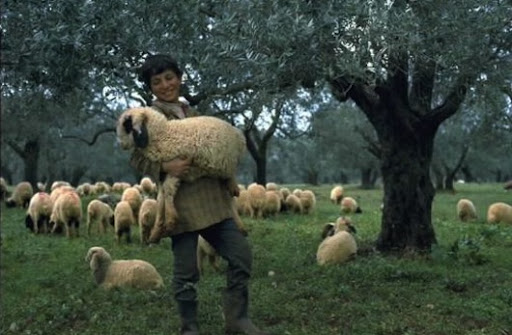
Shepherd

Following the coverage of chapters one and two of Lumen Gentium, let me now take a look at chapter three, which deals with the Church’s hierarchy, before then turning to the laity in chapter four. As before, if you are not a Catholic, I’d like to encourage you to read paragraph two of my post on Dei Verbum, the first of the sixteen Vatican II documents I would like to try and read during this Year of Faith.

So, after chapter one sketched out what the purpose of the Church is and chapter two covered how the “priestly community” that is the Church lives and relates to the rest of humanity, we now proceed to consider the Church’s hierarchy.

The starting point here (as everywhere else in Lumen Gentium) is Jesus who “sent forth the apostles as He Himself had been sent by the Father; and He willed that their successors, namely the bishops, should be shepherds in His Church,” the purpose of their pastoral function being to “serve their brethren, so that [… they] may arrive at salvation[, …] freely and in an orderly way.” To ensure that the bishops themselves, who serve the rest of the People of God, are “one and undivided, He placed Blessed Peter over the other apostles, and instituted in him a permanent and visible source and foundation of unity of faith and communion.”

In the Early Church, “the apostles, by preaching the Gospel everywhere, and it being accepted by their hearers under the influence of the Holy Spirit, gather together the universal Church.” Since the Gospel that the apostles taught is meant for all time, their mission too needs to persist, which is why the apostles appointed successors. “They passed on to [them …], as it were, in the form of a testament, the duty of confirming and finishing the work begun by themselves” and called them to appoint their successors in turn. “Through those who were appointed bishops by the apostles, and through their successors down in our own time, the apostolic tradition is manifested and preserved.”

“Bishops, therefore, with their helpers, the priests and deacons, […] presid[e] in place of God over the flock, whose shepherds they are, as teachers for doctrine, priests for sacred worship, and ministers for governing. […] In the bishops, therefore, for whom priests are assistants, [… Jesus], is present in the midst of those who believe.” The “outpouring of the Holy Spirit” that the apostles received from Jesus was “passed on […] to their helpers by the imposition of hands, and it has been transmitted down to us in Episcopal consecration.” In addition to sanctifying, episcopal consecration “also confers the office of teaching and of governing, which […] can be exercised only in hierarchical communion with the head and the members of the college.” This to my mind is an important point as it underlines the centrality of communion among the members of the hierarchy of the Church (as among all of its members). While episcopal consecration is a gift to the consecrated individual, the powers it confers in terms of teaching and governing are contingent on the entire hierarchy of the Church and don’t ultimately reside with the single bishop. This is again very much modeled on how the Early Church operated: the apostles weren’t just an association of individuals, but a united body of Jesus’ followers, with Jesus in their midst. Lumen Gentium calls them a “college,” which already etymologically points to collaboration, since it derives from collega: “one chosen to work with another.”

“St. Peter and the other apostles constitute one apostolic college, so in a similar way the Roman Pontiff, the successor of Peter, and the bishops, the successors of the apostles, are joined together.” Hence, “issues [are to be] settled in common, the opinion of the many having been prudently considered.” Nonetheless, “the college […] of bishops has no authority unless it is understood together with the Roman Pontiff, the successor of Peter as its head.” The college of bishops, “insofar as it is composed of many, expresses the variety and universality of the People of God, but insofar as it is assembled under one head, it expresses the unity of the flock of Christ.” To my mind, the balance presented here between collegiality on the one hand and singular, individual authority on the other, and between variety and unity, are all modeled on the Trinity itself, where unity and distinction coexist and where there is a life that needs to be participated in rather than rules for mindless execution.

One of the main roles of bishops is preaching the Gospel, from which they bring forth “new things and old,[see Matthew 13:52] making it bear fruit and vigilantly warding off any errors that threaten their flock.” When “teaching in communion with the Roman Pontiff, [they] are to be respected by all as […] speak[ing] in the name of Christ.”

In this context, Lumen Gentium underlines the doctrine of papal infallibility, by again starting from Jesus, who “willed His Church to be endowed [with infallibility] in defining doctrine of faith and morals.” The pope’s infallibility manifests itself when he, “the head of the college of bishops, […] as the supreme shepherd and teacher of all the faithful, who confirms his brethren in their faith, by a definitive act […] proclaims a doctrine of faith or morals.” The resulting proclamations “of themselves, and not from the consent of the Church, are […] irreformable, since they are pronounced with the assistance of the Holy Spirit, promised to him in blessed Peter, and therefore they need no approval of others, nor do they allow an appeal to any other judgment.” Seen within the above presentation of the Church’s hierarchy, there is nothing jarring or surprising about infallibility being attributed to the above proclamations. Furthermore the weight of responsibility they carry has meant a tremendously sparing use since this teaching first became dogmatically binding in Vatican I (see Pastor Aeternus).

Another of a bishop’s key roles is his being the steward of priesthood in the local church that he serves, “especially in the Eucharist, which he offers or causes to be offered.” “Every legitimate celebration of the Eucharist is regulated by the bishop, […] administering it in accordance with the Lord’s commandments and the Church’s laws, as further defined by his particular judgment for his diocese.” Bishops are therefore there to transmit Jesus’ holiness: “By the ministry of the word […] and through the sacraments, the regular and fruitful distribution of which they regulate by their authority, they sanctify the faithful. [… B]y the example of their way of life they must be an influence for good to those over whom they preside, refraining from all evil and, as far as they are able with God’s help, exchanging evil for good, so that together with the flock committed to their care they may arrive at eternal life.” In all this they need to “remember that he who is greater should become as the lesser and he who is the chief become as the servant” (cf. Luke 22:26-27).

The above “job description” is brought together by emphasizing the Good Shepherd as the role model for bishops, “who came not to be ministered unto but to minister, and to lay down his life for his sheep” (cf. John 10:11). Bishops are then reminded that they too are “beset with weakness” and that this ought to lead them “to hav[ing] compassion on the ignorant and erring.” A bishop is “not [to] refuse to listen to his subjects” and needs to “take care of [his flock] by his prayer, preaching, and all the works of charity, and not only of them but also of those who are not yet of the one flock.” The faithful in turn “must cling to their bishop, as the Church does to Christ, and Jesus Christ to the Father, so that all may be of one mind through unity.”

Having presented the role of the bishop, Lumen Gentium proceeds to introduce priests and deacons, to whom a bishop “hand[s] on […] various degrees of participation in [his] ministry.” Priests, who “are dependent on the bishops in the exercise of their power[, …] are consecrated to preach the Gospel and shepherd the faithful and to celebrate divine worship.” “They exercise their sacred function especially in the Eucharistic worship or the celebration of the Mass[, …] acting in the person of Christ.” Priests “believ[e] what they have read and meditated upon in the law of God, teach what they have believed, and put in practice in their own lives what they have taught.” Finally, priests are also called to “wipe out every kind of separateness, so that the whole human race may be brought into the unity of the family of God.”

Chapter three then ends with a presentation of how deacons figure in the Church’s hierarchy. “[S]trengthened by sacramental grace, in communion with the bishop and […] priests they serve in the diaconate of the liturgy, of the word, and of charity to the people of God.” The list of a deacon’s duties then is to “administer baptism solemnly, to be custodian and dispenser of the Eucharist, to assist at and bless marriages in the name of the Church, to bring Viaticum to the dying, to read the Sacred Scripture to the faithful, to instruct and exhort the people, to preside over the worship and prayer of the faithful, to administer sacramentals, to officiate at funeral and burial services.” In other words, this looks to me like almost everything that a priest is ordained to do, expect for celebrating the Eucharist. Lumen Gentium then states that “[t]he diaconate can in the future be restored as a proper and permanent rank of the hierarchy [… and] be conferred upon men of more mature age, even upon those living in the married state.” Raising the diaconate to a permanent state (as opposed to a transitory one that those preparing for the priesthood received towards the end of their studies) and opening it to married men was a big deal and something contemplated for the future during Vatican II. Today, fifty years later, it is great to see that – at least in some countries – this vision has become reality.

The end of the third chapter brings us to the point where the Church, initially presented as the link between God and humanity and then fleshed out in terms of how it operates, has had its hierarchy presented in greater detail. Like in its previous chapters, here too there is a constant balancing act (that was also present in Dei Verbum), which attempts to present the transcendent, divine and perfect, incarnate in the weak, human and limited. Instead of being a cause for frustration and disappointment, humanity is lifted up and called to participate in the life of the Trinity, while remaining conscious of its limitations. Instead of being obstacles, these limitations are opportunities for compassion and for the overcoming of separateness. To my mind this chapter too is a source of joy and I look forward to reading about the laity next in chapter four.

The Saints, Our Friends: a children’s book

John of the cross

My besties PM and JM are launching their book entitled “The Saints, Our Friends,” from which we have already had a preview here some time ago. The book contains short stories from the lives of 19 Saints, Blesseds or Servants of God and is aimed at children around the age of 8-9 that can be enjoyed by younger kids too (4-5 probably being the youngest I’d read it to). Since tomorrow is the feast of St. John of the Cross, who is one of the 19 in the book, here is his story:

“Saint John of the Cross, who lived around five hundred years ago and was a friend of Saint Teresa of Ávila, was one of the greatest poets ever and is still famous for having written some of the most beautiful verses in the Spanish language. Listen to the following lines from his poem, The Dark Night of the Soul:

All in the dark went right,
Down secret steps, disguised in other clothes,
(O coming of delight!)
In dark when no one knows,
When all my house lay long in deep repose.

And in the luck of night
In secret places where no other spied
I went without my sight
Without a light to guide
Except the heart that lit me from inside.

It guided me and shone
Surer than noonday sunlight over me,
And lead me to the one
Whom only I could see
Deep in a place where only we could be.

How did you like that? Who do you think he was talking about at the end there? Yes, it was Jesus, who is in your heart too and who calls you to follow him and to love everyone you meet.

Do you think St. John wrote this poem while sitting on a beach or while walking through a calm forest? No, he wrote it in prison – a prison that his fellow monks put him in because they didn’t like what he was doing. All St. John wanted was to live simply and spend his life talking to Jesus in prayer and loving the people around him. The other monks found that too hard and because they didn’t want to give up their comforts, they turned on St. John.

Do you think he gave up? No, he stayed faithful to Jesus all his life and that is why he is a Saint.”

The book is available from MagCloud.com in print and from iTunes as an iBook. Printable coloring pages can be downloaded from primo3r.com and I wholeheartedly recommend it 🙂

Does the word “infinity” make you uncomfortable?

The Dominoes Are Falling

I learned a lesson today: never read the parish newsletter before the start of mass. This morning I did and it just lead to regret as I spent the vast majority of mass being distracted1 by it and trying to reconstruct in my mind the reasons against an argument put forward in it. What is even worse is that this wasn’t just the regular newsletter that our parish priest prepares (and that has as yet lead neither to disappointment, nor elation), but a newsletter – “Our Faith on Sunday” – prepared by the company who provides the weekly mass sheets and who ought to know better.

The argument in question is that of Aristotle’s unmoved mover (or first cause), which is a form of the cosmological argument. The basic idea is the following: since all change (motion, temperature variation, …) is the result of a previous change, there are two possibilities: either a causal chain stretching back into an infinite past or a first, “unmoved mover” that triggered a finite chain of causal links leading to the present. The possibility of infinite regress is dismissed as ridiculous, ergo there had to be a first mover. So far Aristotle’s argument from over 2300 years ago, which at that time was unarguably brilliant and which has survived without chinks into the 18th century (this by itself being pretty impressive too!). So, Aristotle comes out pretty well from this incident. The same cannot be said about the nameless author, who not only sticks it into a parish newsletter in 2012 without attribution, but who – to add insult to injury – finishes the piece with saying that the “unmoved mover” is God.

No it ain’t! And that is just the start of a litany of complaints that flooded my mind this morning, with the following being the 800 pound gorillas:

  1. In this context, the gravest mistake is clearly to present a piece of philosophy (however good it may be) and to equate it with God. Not just to say: “Well, this concept gives us hints about some aspects of what God may be like,” but to say “Unmoved mover = God.” Not only is this entirely divorced from Christian theology (giving a false sense of being able to grasp God in His fullness, etc.) but it is positively counterproductive. In essence the argument postulates a God who is relegated to a distant past, who is far removed from us and who just plays the role of a snooker player, hitting the first ball that leads to a vast sequence of knock-ons – a true God of Gaps. This is not the God of Christianity. It is not the loving Father who sent his Son to become one of us and the Holy Spirit to guide us. It is not the God who’s three persons love one another to the point of being one and who invites us to partake in His innermost life. The “unmoved mover” is a cheap imitation and one that is rightly and thankfully the butt of atheist jokes.
  2. Next, taking a philosophical argument made over two thousand years ago and (presumably, hopefully!) not checking whether there have been any significant challenges made against it is pretty sloppy too. And an excuse of obscurity cannot be used here either as the cosmological argument (whose one variant this is) has been debated to death! Furthermore, its critics have included such giants of philosophy as David Hume, who challenged the notion of causation itself (arguing that our senses simply don’t have access to the necessary connection between supposed cause A and supposed effect B – instead, all we have are repeated experiences of event B following event A). With causation undermined, there is clearly no necessity for a “first cause.” Does that mean a disproof of God? No – just of the grotesque God of Gaps of the cosmological argument, and not a disproof as such (those live exclusively in the realm of mathematics or other formal systems – and even there are limited by incompleteness) but a counterargument instead.
  3. Finally, and this is a criticism that I cannot fairly level at the authors of the newsletter, there is also that recurring misunderstanding of infinity that hampers many a philosophical argument from centuries past. Before Georg Cantor’s groundbreaking work on set theory and the concept of cardinality and the subsequent advances in our understanding of infinite sets and their properties (with contributions by pioneers like David Hilbert), an arm-waving approach to infinity and blanket statements about its unintelligibility or impossibility (e.g., by Thomas Aquinas2) were all we could manage. Today these are just not good enough anymore. E.g., a good example of how the impossibility of an infinite sequence of causes can be refuted can be found in Peter Clark’s paper: “Consider the set of events with no first member but a last member: {… an … a4, a3, a2, a1, a0} [where] for every j (aj-1 causes aj). There is no logical contradiction in this supposition whatsoever. […] Every event in the above sequence is finitely accessible from each and every event preceding it.” What this means is that an infinite sequence stretching back in time does not imply the necessity for a member that is infinitely far in the past. No matter how far you go back in the sequence (i.e., an) – and remember that you can’t go back to the beginning, which does not exist – there is a finite number of steps that bring you to the present (i.e., a0). All the infinity of the sequence means is that there is no first member, without necessarily entailing members that are infinitely removed in the past. This may sounds counterintuitive, but presents no logical contradiction.3

So: lesson learned. Next time, I’ll defer reading the newsletter until after mass and especially its “Faith and Reason” section, where, ironically, Aristotle’s argument was plagiarized.


1 I almost missed this gem of a line from St. Paul’s letter to the Philippians: “And this is my prayer: that your love may increase ever more and more in knowledge and every kind of perception, to discern what is of value” (1:9-10), again pointing to an induction of orthodoxy from orthopraxy.
2 “The existence of an actual infinite multitude is impossible. For any set of things one considers must be a specific set. And sets of things are specified by the number of things in them. Now no number is infinite, for number results from counting through a set of units. So no set of things can actually be inherently unlimited, nor can it happen to be unlimited.” (Thomas Aquinas, Summa Theologica, Part 1, Question 7, Article 4).
3 I realize this paragraph barely scratches the topic of infinity, to which I hope to return in the future … Also, please, note that I am not advocating an argument for the universe having existed infinitely – I am merely pointing to the objection to an infinite causal chain being outdated.