Happy Birthday, Maryām!

Protectrix

Tomorrow is the feast of Mary’s nativity – her birthday 🙂 and, to be honest, it hasn’t meant a whole lot to me up until now. I greatly appreciated the feasts of Mary’s being mother of God (that opens the calendar year), of her sorrows, of her assumption into heaven (which coincides with my parents’ wedding anniversary and my younger son’s birth), of the annunciation and of her immaculate conception, but her birthday just seemed a bit of an add-on.

Trying to understand the significance of this feast, which is only one of three birthdays the Church celebrates (the others being those of John the Baptist and Jesus), I started looking at what has been said about it so far, and I have to say that most homilies that I came across were rather disappointing. Not necessarily as such, but with regard to shedding light on celebrating Mary’s birthday, rather than other aspects of her life.

Then I found this gem:

“The present Feast is for us the beginning of feasts. Serving as boundary to the law and to prototypes, at the same time it serves as a doorway to grace and truth. “For Christ is the end of the law” (Romans 10:4), Who, having freed us from the letter (of the law), raises us to spirit.” (St. Andrew of Crete, sermon on the Nativity of the Theotokos)

Wow! Reading this was a real ‘eureka’ moment for me as it does squarely hit the nail on its head. Mary’s birth can be seen as the start of Christianity, which becomes flesh in her some years later. It is the beginning of a new way, the breaking of prototypes, the transition from rules to life. I warmly recommend the whole sermon, which opens with the above lines and which, in its joyous tone, is a great fit for tomorrow’s celebration.

Marriage and the family

Rothko3

I am married and am immensely grateful for being part of several families: the family I was born into (since, even though I am a first child, my parents were a family already before I was born or even conceived), multiple extended families, and the family my spouse and I form with our children. And that’s only as far as biological ties go. I am also a member of the Church – the family of Jesus and (some of) his followers. In many ways I also consider the relationship I have with close friends to be like that with brothers, sisters or parents and I strive to extend this circle whenever and with whomever possible.

What is it that is so special about the family? I believe it is the fact that it mimics the relationships of the persons of the Trinity, where each loves the others without limits and with complete self-noughting,1 to the extent that the three become one. In my families I have often experienced love that is selfless, self-sacrificing, generous, gratuitous and unconditional and that invokes Jesus’s promise: “For where two or three are gathered together in my name, there am I in the midst of them” (Matthew, 18:20). This love makes the family a place of peace, trust, safety, stability, openness, growth and joy and a place where I can most fully be myself. I can rely on the support and love of other family members and also on their desiring only the best for me. I don’t have to look out for myself, as it is the others who look out for me and I can instead focus on them and on others. My families have also been safe havens that have protected me from state-organized oppression, from the negative influence of others, from erroneous tendencies of my own and that have also looked after me in illness, bad moods, uncertainty and fatigue.

Is this to say that there are no challenges with living in a family? Certainly not, since even though the model is perfect, its instances are often not, even to the point of breaking. Does that make the model any less worthy of following? I don’t think so, since even when not lived to perfection, the ideal of the family provides a clear direction of what to aim for.

For me, as a Christian (and for others too), the foundation of a family – its birth, is in marriage, where the spouses each make an indissoluble gift of themselves to one another, which they do in front of God and which they aim to sustain with His help and in His presence. The day I got married was one of the sacred, lived in great simplicity (I remember polishing shoes in the morning and sending a couple of emails to close friends who couldn’t be with us and being filled with great joy and a delicious lightness of being,2 not even to mention the rest of the day that you would expect to be joyous). The years that then followed and persist into the present have been filled both with everything I said about the ideal of the family and with challenges, trials, difficulties and suffering. To me, as a Christian, these too are very much part of being married and of living in a family, just like they were very much part of Jesus’ life. They are always an opportunity to recognize Jesus’ presence and to start again to seek forgiveness, forgive and love and I am deeply grateful to God for my spouse, children, parents, siblings and all with whom I have family-like relationships.

There would be a lot more to say, but I believe I managed to give an idea of why marriage and the family matter to me. This reflection was very directly motivated by many recent pronouncements by different representatives of the Church who have spent paragraphs upon paragraphs talking about what threatens the family and how it needs to be opposed and which have always left me wondering: ‘But what is it about the family that you see worth protecting? How do you see the things you oppose as threatening? [beyond stating them as such] And what positive proposal can you make as an alternative to the ones you oppose?’ I am not saying that opposition alone isn’t worthwhile, but it is very much a level zero approach and I was certainly hoping for more. The closest I have seen to an acknowledgement of this trend is a statement made two days ago by Archbishop Diarmuid Martin:

“The Church’s social doctrine must always be animated with charity and must be accompanied by charity and will only really be understood through the lens of charity. When the Church’s organizations simply become lobbying bodies alongside other lobby organizations or social commentators alongside other social commentators then they loose their real originality and therefore their original contribution to the debate about the formation of society.”

This is exactly what I have been looking to hear from many others and I hope that Archbishop Martin will follow up this call to a focus on love and apply it to the various issues being so hotly debated these days.

Lest I be misunderstood in a way that is most repulsive to me, let me be explicit about one thing: I believe there is the potential for good in all human relationships, regardless of who their protagonists are or what their status is. What I have said about the family and about marriage was in no way meant as suggesting that the things which I value about it cannot also take place under other circumstances. In no way do I mean to suggest that the family built on marriage has a monopoly on all the good that it is capable of. Compassion, commitment, selflessness, caring, support and love are the potential of any human relationship and my seeking them in the context of my family, and the marriage it is built on, is in no way a declaration of inferiority or inadequacy with respect to other forms of life.

Finally, I do see a big challenge that the Church (i.e., me too!) faces, which is to find a way for all, who want to, to participate in its life. Cardinal Martini in his last interview gave a clear example: “A woman is abandoned by her husband and finds a new companion who is concerned for her and her three children. The second love succeeds. If this family is discriminated against, not only the woman, but her children, too, will be cut off.” Cardinal Woelki said that he tries to “acknowledge that [homosexuals] take responsibility for each other on a permanent basis, have promised each other faithfulness and want to look after each other, even though [he] cannot endorse their life choices.” And there are many others like them! What is very positive in my eyes is that there are representatives of the Church, who feel the presence of gaps that ought not be there and even though I don’t see how the gaps will be closed (without throwing the baby out with the bathwater either), I trust God will help us find a way to make everyone feel welcome in His Church.


1 Thanks to my bestie, CS, for coining this term, which I believe expresses the extent of the love the Persons of the Trinity have for one another spot on.
2 The antithesis of its unbearable variant, so beautifully described by Kundera though.

Martini: backstabber or faithful son?

Primus inter pares

You’ll know from a previous post here, that I am becoming a great fan of Cardinal Martini, whose funeral was celebrated two days ago and whose exchange of letters with Umberto Eco I enjoyed greatly. Upon hearing of his death, I was keen to learn more about him and I also eagerly read the last interview with him, published in the Corriere della Sera (and available in English translation here).

The interview took place on 8th August and asks Martini to comment on the state of the Church – a question he is very well positioned to answer and that he answers with great honesty. Martini says that the church is tired, culturally out of date, being weighted down by bureaucracy and basically showing the traits of a mature business rather than a dynamic start-up (my words :). The Church lacks the dynamism of John the Baptist and St. Paul, the faith of the Roman centurion (whose servant Jesus healed) and of St. Mary Magdalen and the closeness to the people that the Servant of God, Bishop Óscar Romero and the Jesuit martyrs of El Salvador had. Martini’s answer to this predicament is to involve more people from outside formal Church structures, to recognize our own errors and start a process of conversion, to return to the Word (i.e., to a personal closeness to the Gospel), to renew an adherence to the sacraments and to be open to all, regardless of what family and social circumstances they are in. Finally, he exhorts us to renew our faith, confidence and courage and to let ourselves be conquered by God’s love.

My immediate reaction was that of gratitude for such a greatly distilled analysis of where the Church is today, for the degree of honesty and self-criticism, for the concrete steps forward and for a final call to love.

The second hand, to form applause with Martini’s interview, then is the message that Pope Benedict XVI sent to his funeral. The pope picks a line from Psalm 119: “Your word is a lamp for my feet, a light for my path” to sum up the cardinal’s life, calls him a “generous and faithful pastor of the Church” and states that everything Martini did was “for the greater glory of God.” The pope then goes on to say that:

[h]e did so with a great openness of heart, never refusing to encounter and dialogue with anyone, responding concretely to the Apostle’s invitation to “always be ready to give an explanation to anyone who asks you for a reason for your hope ” (1 Peter 3:15).

Finally, he concludes by saying: “May the Lord, who guided Cardinal Carlo Maria Martini his whole life, receive this tireless servant of the Gospel and of the Church in the Heavenly Jerusalem.” Not only an elegant nod to Martini’s fondness for the earthly Jerusalem, but also an endorsement of his faithfulness to and inspiration from God.

If it were just for these two texts – the last interview with Martini and the pope’s message at his funeral – you could think that the two were uncontroversial parts of giving thanks for the life of a great son of the Church and, I believe you’d be right. A quick look at the press presents a very different picture though. The Independent calls Martini’s interview “a damning critique that has rocked the Catholic Church,” the Daily Mail calls it a “scathing attack,” the Belfast Telegraph says that the “Vatican is rocked by Cardinal Martini’s damning words from beyond the grave” and all news outlets latch on to Martini’s saying that “the Church is two hundred years behind.” Reading these and virtually all other reports (with the notable exception of Fr. Lucie-Smith’s blog), you’d think that Martini’s last interview was some kind of vengeful, underhand jab at the Church. Instead, I see Martini’s words as much more in line with Blessed Pope John Paul II’s emphasis on acknowledging past wrongs as a first step towards a renewal of the Church. E.g., in Incarnationis Mysterium he says that the Church “should kneel before God and implore forgiveness for the past and present sins of her sons and daughters” (Section 11), such humble repentance being in fact a common feature of the attitude of saints.


I’d first like to thank my bestie, PM, for suggesting this as a topic for a post 🙂

I also realize that I may come across as someone who unreservedly agrees with everything the Church and its representatives do. Let me assure you that this is far from the case and may in fact be more a consequence of my desire to focus on what is good and worth sharing rather than on presenting a complete, balanced view of how I see the Church. As an example of something that recently irked me, take a look at the third question in this very recent interview with Cardinal Cormac Murphy-O’Connor:

Q: At a lecture after Archbishop Vincent Nichols’ installation you urged Christians to treat atheists and agnostics with deep esteem. However, later you are quoted as saying that a lack of Faith is the ‘greatest of all evils’. You blamed atheism for war and destruction, and implied it was a greater evil than sin itself. Is this a contradiction, or were you misquoted?
[At this point Cardinal Cormac got up and went to his adjacent study. Perhaps this was an abrupt end to our interview? However, after a few minutes he returned with two books.]
A: Yes, I was misquoted – it was out of context. To get the full meaning of what I said, I would encourage [you] to study the books I have assembled ‘Faith in Britain’ and ‘Faith in Europe’.

No, thanks … If the Cardinal cannot address this, very good question in the interview and his only recourse is to bring back TWO books that the reader is to study and from which they are to distill what the Cardinal thinks, then in all likelihood those books are not going to be any help either. Seeing a response like this (and much of the lengthy interview) just makes me recoil in frustration and shake my head in disappointment …

Saints as teaching

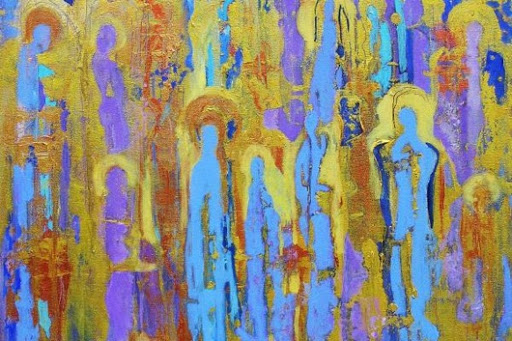
Communion of saints elise ritter

Especially if you are a nonbeliever (and even if you aren’t), you would be forgiven for looking at saints as a rather outmoded, superficially pious and self-congratulatory aspect of Christianity. Their statues can appear as nothing more than window dressing and be part of what Cardinal Martini referred to as off-putting ‘pomp‘. Even a closer look can yield unedifying results and present a view of saints as freaks, focusing either on their horrific deaths (burning, skinning, drawing and quartering, beheading, mauling, hanging, …) or on weird stunts like levitation, bilocation, living atop a pillar, or severe self-mortification. With a view like that, you’d do best to stay well clear of them and the last thing you’d want to do is tell your children about them!

If you have seen this blog before, you’ll know that I profoundly admire many saints and that I strive to learn from them. St. Francis is an example for approaching poverty, St. Therese for valuing simple, everyday life, St. Maximilian Kolbe for what it means to give one’s life for one’s friends, St. Anselm for how logic can point to God, St. Philip Neri for recognizing humor as a gift, Bl. Chiara ‘Luce’ for how cancer can be an encounter with Jesus, St. John of the Cross for how one’s relationship with God can be misunderstood even by one’s closest fellow believers, St. Thomas More for how adherence to Jesus is above any secular power. And I could go on and on 🙂

What is the point of looking up to saints though? Actually, the point is precisely that it is a looking across rather than a looking up, since saints are my fellow followers of Jesus – subject to weakness, limitations, errors, lapses, pride, difficulties of personality and bounded intelligence. They are what makes me think that I too may have a shot at faithfully following Jesus and it is their virtue, selflessness, compassion, determination and love for all that spurn me on.

There is another key aspect to saints that has been forming in my mind since I have started writing this blog, and it is the following: Church teaching is a complex, often technical and hierarchically–governed set of prescriptions and proscriptions. It is far more akin to the law than anything else, and – just like in the case of the law, its correct interpretation and application to ‘real life’ is arbitrated by professionals: theologians and church officials – the barristers/solicitors and judges of theology. This, however, presents a serious challenge for the individual Christian, who is keen to be faithful to Jesus’ teaching, but who faces the complexities of a technical corpus with finely-tuned, carefully-crafted, legalistic language. How am I, an apprentice follower of Jesus, to grapple with encyclicals, exhortations, the church fathers, canon law, the councils, and even the relatively user-friendly catechism, when I lack theological and legal training? How on earth did St. Peter – a fisherman – do it?

The answer lies precisely in what the early Christians realized already: that it requires putting one’s faith in God and acting on the inspiration provided by the Holy Spirit (e.g., see the account of St. Stephen’s trial and execution in the Acts of the Apostles – chapters 6-8, where Stephen is repeatedly referred to as being ‘filled with the holy Spirit’ (e.g., Acts 7:55), but it also requires continuity with how God acts in others and has acted in others in the past (where the more structured aspect of Church teaching, referred to before, comes from) also so that one’s conscience is purified of errors. What all of this leads to is that explicit Church teaching is certainly a guide to following Jesus, but also that the example of others can provide a more accessible means of seeing it put into practice. For example, by imitating St. Therese in seeking God’s will in everyday chores and doing them out of love for Him and my neighbors, I will not only act orthopractically, but also on an orthodox basis. By seeing how a saint has acted, I have a more applied and immediate view of what the Church teaches. In fact, Pope Benedict XVI said something similar yesterday in the context of ecumenism, when he highlighted that while Church unity is not something that we can cause (it will be a gift from God), we can “learn from each other how to follow Christ today.” In other words, orthopraxy is to be imitated regardless of who does it.

Finally, there is another aspects of learning from the actions of saints, which is that it is not only individual Christians who can do so, but the Church as a whole too. I believe that official, formal Church teaching can be seen as a distillation of the orthopraxy (holiness) and therefore orthodoxy of saints. This was evidently so at the very beginning of the Church, where it is Jesus’ actions and beliefs that are Church teaching, but right from the get go it is also the teachings of the apostles that attain orthodox status (e.g., see Peter’s ‘trance’ in which he is told to eat food considered impure and told “What God has made clean, you are not to call profane.” (Acts, 10:15)). The history of the church is then a sequence of growing insight into how best to follow Jesus and the actions and beliefs of saints are a key part of it (just look at the Catechism and notice the number of references to what the saints have said). Since such growth of insight also involves change, the new understanding, acted upon by saints, is often misunderstood and often so for decades or centuries (but luckily saints don’t do what they do for celebrity status). In the end though, the orthopraxy of saints tends to be of such vehemence that doubts about the origin of their beliefs are dispelled.

Servant of servants

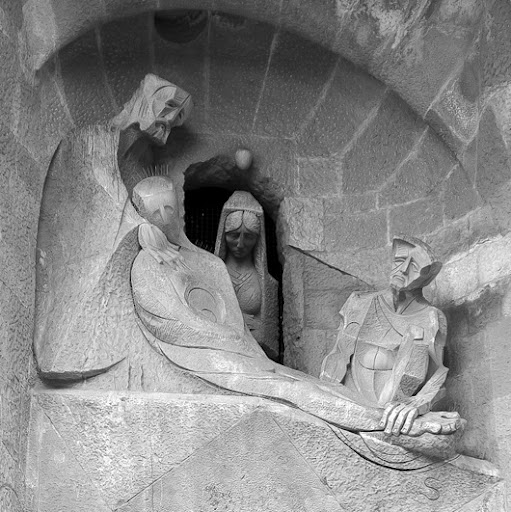
Jesusfeet

Today is the feast of a saint whose name alone – Pope Gregory the Great – promises an edifying closer look and, if you have been following this blog (e.g., here and here), you will also know that he influences the Church to this day. St. Gregory had a varied and rich career, whose first milestone (after an extensive and broad eduction spanning music, law, mathematics and natural sciences) was to be named Prefect of the City of Rome (effectively its mayor). Following the death of this father, Gregory became a monk though and withdrew from the world, only to be called upon by Pope Pelagius II to act as his ambassador to Constantinople. Instead of being allowed to retire to the monastic life after this mission, he was instead elected pope, very much against his will, and lead the Church for 14 years during which he introduced reforms both in the administration of the Church and in its liturgy.

There would be lots to say about St. Gregory, but I would like to focus only on two points:

  1. His love for the poor and his large-scale charitable work, best expressed by him saying: “I hold the office of steward to the property of the poor.” St. Gregory saw the church as a not-for-profit organization (in secular terms) and distributed the many donations the Church received to the poor – only keeping what was necessary for maintaining its facilities and supporting its personnel.
  2. His reluctance towards being pope, born of a deep humility, very clearly expressed by his adoption of the title “Servant of the servants of God” – by far my favorite papal title and one used to this day by his successors. St. Gregory also emphasized the importance of personal spiritual life for those holding high office in the Church, e.g., by saying “[U]nder the cloak of the Ecclesiastical office, I found myself plunged on a sudden in a sea of secular matters, and because I had not held fast the tranquillity of the monastery when in possession, I learnt by losing it, how closely it should have been held.” This is certainly an attitude I have seen very clearly both in the current pope and his predecessor and in many priests I have known and admire.

Orthodoxy and/or orthopraxy

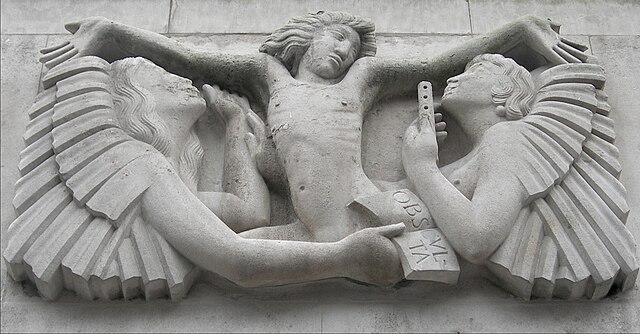
640px Ariel between Wisdom and Gaiety

What is the relationship between correct belief (orthodoxy) and correct action (orthopraxy) and how much does one matter versus the other? Is it more important what you think or what you do? While this is not a new question, I believe it is still a key one today.

Starting with Jesus, we can see him emphasizing both orthopraxy (also as a means of inferring orthodoxy when heterodoxy may be suspected):

“By their fruits you will know them. Do people pick grapes from thornbushes, or figs from thistles?” (Matthew 7:16) and

“Not everyone who says to me, ‘Lord, Lord,’ will enter the kingdom of heaven, but only the one who does the will of my Father in heaven.” (Matthew 7:21)

and validating orthodoxy in spite of it’s proponents’ heteropraxy:

“The scribes and the Pharisees have taken their seat on the chair of Moses. Therefore, do and observe all things whatsoever they tell you, but do not follow their example. For they preach but they do not practice. They tie up heavy burdens [hard to carry] and lay them on people’s shoulders, but they will not lift a finger to move them. All their works are performed to be seen.” (Matthew 23:2-5)

Looking at Jesus’s teaching, there is a clear preference for orthopraxy (whose absence is an obstacle and which will also be the basis for the questions asked at the last judgement about feeding the hungry, quenching their thirst, welcoming strangers, clothing the naked, caring for the sick, visiting prisoners, … (Matthew 25:31-46)) but orthodoxy is valued in its own right as a (non-exclusive) means for engendering orthopraxy (and, by Christians, as a gift from God). In a way it can be seen as being assumed to be present at least implicitly, partially, unconsciously in those behaving orthopractically.

Let me just pick out two examples of where this principle of orthopraxy being taken to assume (implicit) orthodoxy has been employed by Jesus’ followers – a very recent one and a rather ancient one:

  1. Saint Pope Gregory the Great (6-7 century AD) was so taken by the justice that the emperor Trajan (1-2 century AD) has shown towards a widow, who violently lost her only son, and by his virtue that he prayed for the salvation of his soul and it’s promotion from purgatory to heaven. In other words, Gregory was motivated by Trajan’s orthopraxy to petition for his receiving the rewards he thought were only due to the orthodox.
  2. Archbishop Müller, when questioned about his friendship with Gustavo Gutiérrez, the father of Liberation Theology, responded: “The theology of Gustavo Gutiérrez, independently of how you look at it, is orthodox because it is orthopractic. It teaches us the correct way of acting in a Christian fashion since it comes from true faith.” This is not to say that all of Liberation Theology is exonerated by virtue of the virtue of its followers (the Vatican’s criticisms of Marxist influences in some of its strands are upheld by Müller), but that the virtue of its followers is a fruit of their orthodoxy.

All of this links rather nicely with Martini’s idea of (non)believers and is another argument for appreciating the orthopraxy of all while also valuing beliefs that can lead to it. I also believe it is a key to reading some Protestant–Catholic differences, to relating the lives of saints and Church doctrine and to appreciating great works of art created by artists who have committed heinous crimes (a.k.a., my roadmap for a couple of future posts :).

Martini & Eco: ethics for (non)believers

Martini eco

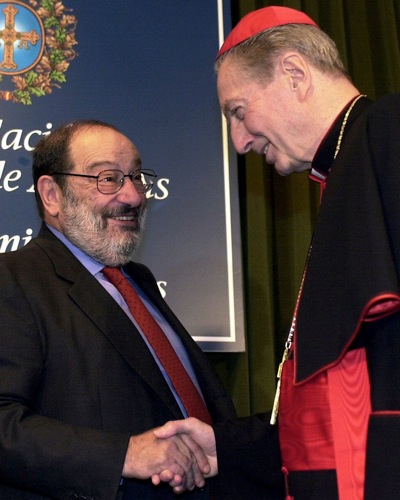
The passing of one of the princes of the Church is always a call for me to find out a bit about them, if I didn’t know of them already, and Cardinal Martini, whose dies natalis was yesterday, is no exception. I’ll leave it to you to find out about him for yourself (and there is certainly interesting material widely available across the internet) and will instead spend a couple of paragraphs talking about a topic very close to my own heart: the relationship between believers and nonbelievers, which is also the subject of a great book (or rather pamphlet as it is only 60-odd pages in length) containing the correspondence of Carlo Maria Martini and one of my favorite writers and an agnostic, Umberto Eco. The book is entitled “Belief Or Nonbelief” and I highly recommend it to you in full.

The two points I would like to pick out here (and I may return to others covered there in the future) are what constitutes (non)believers and whether one can think of a common basis for ethics that can be shared by all.

In the introduction, by Harvey Cox, Martini is quoted as saying the following about (non)believers:

When I think about “believers” and “nonbelievers,” I don’t have two different groups of people in mind. In all of us there is something of the believer and something of the nonbeliever, and this is true of this bishop as well.

As soon as I read this, I knew that I was going to enjoy the whole book – and I was not disappointed. After tackling topics like hope, human life and the role of men and women, the pair – who deliver a masterclass is dialogue (neither trying to trip up or ridicule the other, striving to deepen their understanding of each other’s positions) – turn to the question of whether there is common ground in terms of the ethical basis of believers and nonbelievers.

The question is posed by Martini, who asks: “what guides a secular person[, who does not recognize a personal God or appeal to an Absolute, to] profess moral principles, principles so firmly held that the person would give his life for them?” Martini acknowledges that all have ethical foundations and that even believers would often not seek recourse to God when making decisions under ordinary circumstances. What interests Martini is what happens in extremis – when one’s life is at stake – and he also pays homage to nonbelievers who have sacrificed their lives for their moral convictions or performed acts of great altruism. He is particularly keen to drill down to the foundations, which kick into action when things are pushed to their limits and wants to sweep away the consequences of “custom, convention, usage, functional or pragmatic behavior, even social necessity” and get to life and death choices which these can’t underpin.

To answer his question on behalf of believers, Martini points to inter-religious efforts that have looked into it and that point to it being “transcendental Mystery” that forms the basis for moral action. For Christians this is the Trinity, which provides us with “God the Father, Creator of All, and our brother Jesus Christ,” who give us an impulse to closeness and solidarity with others and who express that “the other is within us.”1 Quoting Hans Küng, Martini also points out that this basis makes ethical values “binding unconditionally (and not simply when it’s convenient) and hence universally (to all classes, ranks, and races).”

Eco’s2 response kicks off with an admission of his, now lost, Catholic roots and the realization that their past presence cannot be factored out. Given such caveats, he states that there can be a sense of the scared and of “communion with something greater even in the absence of faith in a personal and provident deity,” but he rightly comes back on track by reiterating the focus on that which is “binding, compelling, and unrenounceable” in secular ethics.

Eco cleverly and appropriately widens the scope of the question to universals and not just their application to ethics and proceeds with a magisterial introduction to “universal semantics3 – i.e., that “notions common to all cultures exist” (citing examples of referring to our position in space – up, down, left, right, …). After postulating the universality of perception, memory, desire, fear, pleasure, pain, … Eco steps back and draws our attention to there being not only universals applicable to the “solitary Adam,” but that sex, dialogue, parental love or the loss of a loved one provide social ones too. Poignantly Eco exposes the underlying implications of the semantic basis so far – that of focusing on ‘us,’ and on restricting the “other” or Martini’s “the other is within us” to those from our own tribal group, ethnicity or circle. Those outwith are inhuman and may therefore be treated barbarically even while members of one’s own group are afforded respect. Eco places the growth of who is considered a member of one’s circle at a millennial scale and cites even Jesus’s coming as having been conditioned by when humanity was ready for his teaching of the Golden Rule.

To get to the basis of what can drive a nonbeliever to give their life for a moral principle, Eco cites the example of a “communist” whom he asked how he, an atheist, can make sense of “something as otherwise meaningless as his own death.” “By asking before I die for a public funeral, so that, though I am no longer, I have left an example to others.” Eco argues that it is this “continuity of life,” a sense of duty to those who come after us, “because in some way what one believes or what one finds beautiful can be believed or seen as beautiful by those who come after.”

In essence my take on this exchange is that Martini threw a bit of a curved ball, knowing that Eco’s answer can but elaborate the consequences of his own beliefs about the roots of morality since he also believes that God is present in all – whether they believe in him or not. Eco did hold his own though by turning the situation around and highlighting the value of the Christian story, whether it is true or not. What they have done together is present a case for the Golden Rule both from divine revelation and from semantic analysis. I only see winners in this exchange: Martini’s “the other is within us” and Eco’s “continuity of life” form a pair of insights that, I believe, enrich all (non)believers :).


1 See my take on the epistemological parallel of this concept here.
2Please, note that, unlike Cardinal Martini for Catholics, Eco is not an official representative of nonbelievers and his answer therefore cannot be taken even as being intended as an answer on behalf of all nonbelievers. I, therefore, also don’t take it as such and don’t presume that, if you are a nonbeliever, it represents you. If you do happen to be a nonbeliever reading this and either agree or disagree with Eco’s take, I’d very much appreciate hearing from you in the comments. Thanks! 🙂
3 Semantics being the “study of meaning.”

Somewhat off-topic is another gem from the book – a reference of Eco’s to Kant’s take on atheism: how can one not believe in God, maintain that it is impossible to prove his existence, yet also firmly believe in the nonexistence of God, claiming that it can be proved 🙂

I would, finally, also like to dedicate this post to my bestie, SH – the most sincere agnostic I have ever met and a man who to this day teaches me humility by consistently beating me at scrabble, typically by a factor of two …

What do you mean, John 3:16?

Joseph nicodemus

Today is the feast of two great saints: Nicodemus and Joseph of Arimathea. Neither was involved in the great battles against heresy that mark the lives of so many saints nor were they believed to have been martyred, to have lead ascetic lives or to have had visions or ecstasies. Also, in all likelihood, both were married men – pillars of the Jewish community at the time. Nicodemus was a politician, judge and prominent public figure, while Joseph (believed by some to be none other than Josephus Flavius) was an aristocrat and scholar. If they had LinkedIn profiles, they would come across as regular 1%ers.

Nonetheless, these guys are great examples of following Jesus – and they had the privilege of doing so in person. Nicodemus visiting Jesus in secret at first (John 3:1-21) but then coming out in the open to help Joseph to bury him (John 19:39–42) and Joseph being the one who stepped out of the shadows to petition Pilate for Jesus’s corpse. To my mind, both have shown great courage to place themselves at Jesus’s side under risky circumstances, putting their good standing and reputation at risk by associating themselves with a convicted and executed criminal. While that may not be asked of me, I see them as examples for taking Jesus’s side also when it is uncomfortable in the eyes of society.


Nicodemus can’t be mentioned without a nod to Wyclef Jean‘s “John 3 16,” where “pig couldn’t fly straight so you die in your sleep; I stay awake only to see Nicodemus.” Here you can find the lyrics and the song itself.

Stubbornly unholy brutalist: church architecture today

Churchcocathedral

Cathedral christ light som220109 th 0

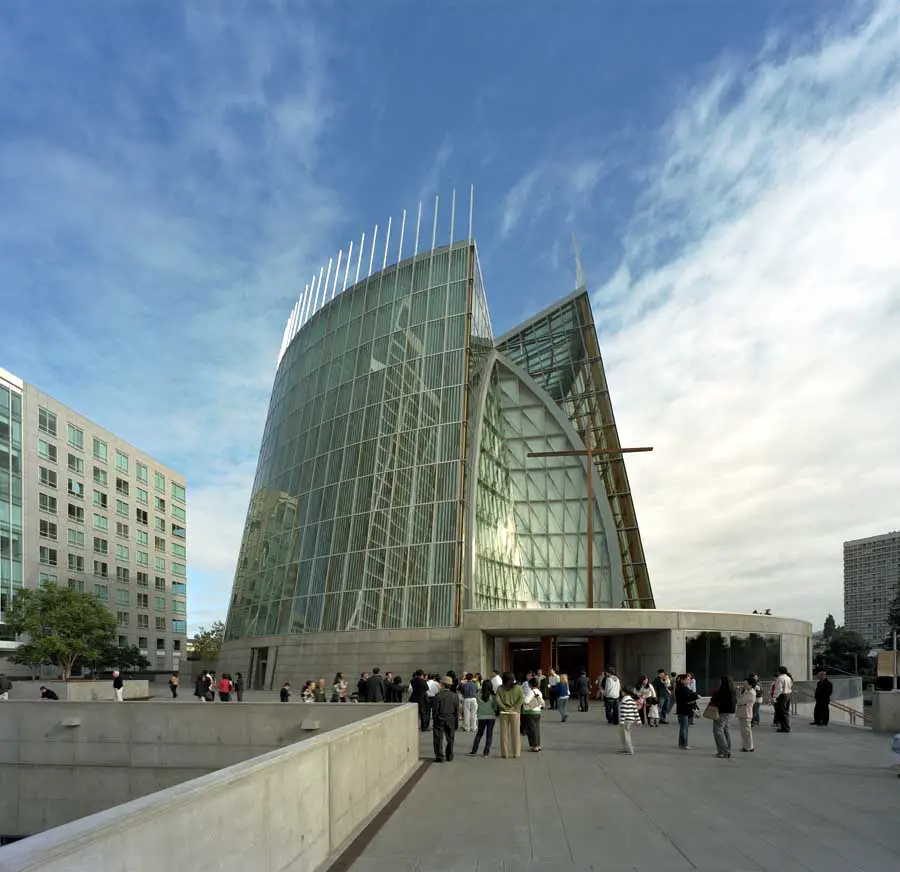
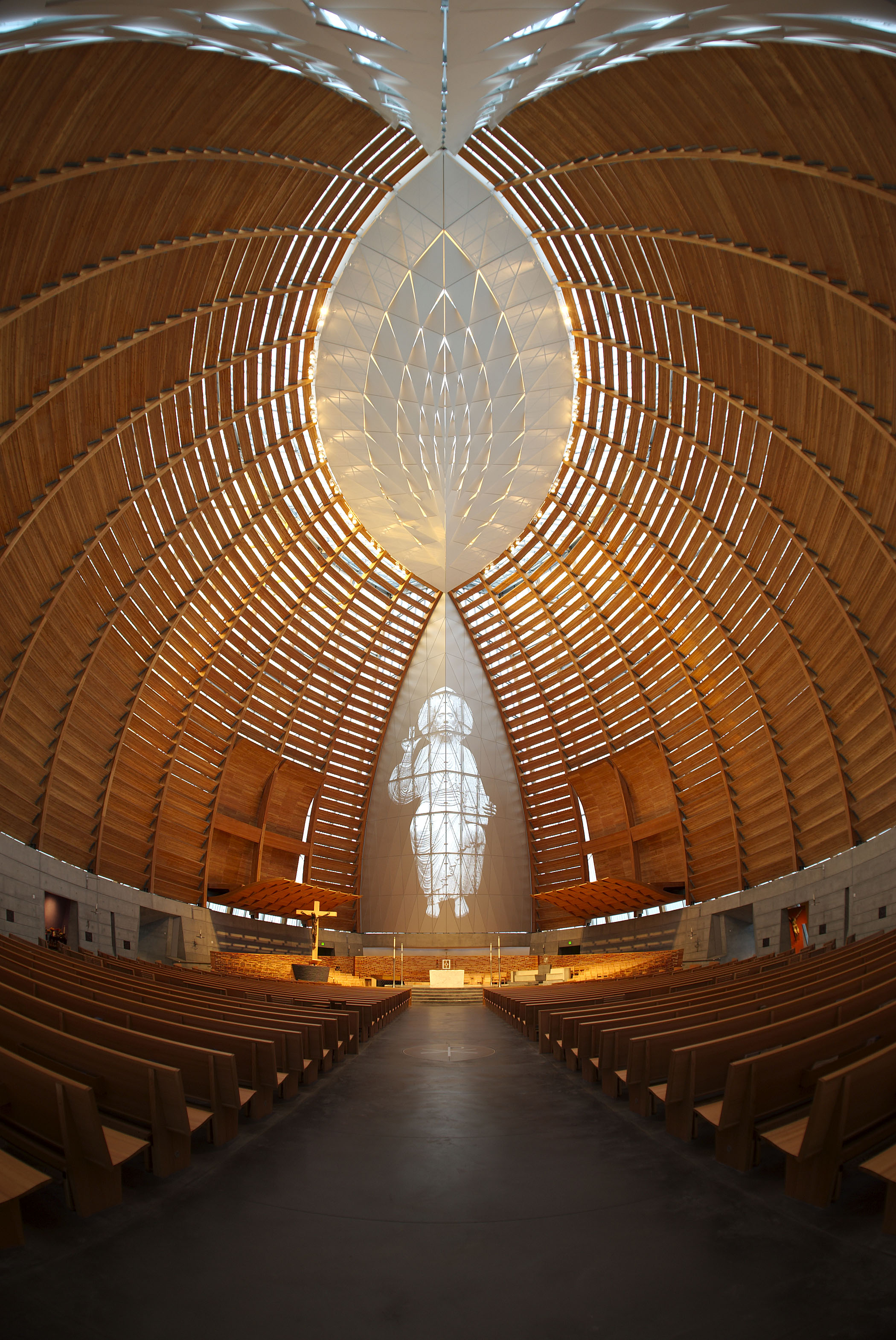
Which of the above churches looks more aesthetically appealing to you? The top or the bottom one? If you answered ‘top,’ kindly move along as you will at best find offence in what follows. If, however, your answer was ‘bottom,’ please, come with me on a brief journey of ‘I can’t believe they said that!’

The church at the top happens to be the Co-Cathedral of the Sacred Heart in Houston while the bottom photo shows the Cathedral of Christ the Light in Oakland. Now, why did I pick these two churches for the following rant? The choice was far from random and was in fact motivated by an article published two days ago by an ‘architectural theorist,’ ‘the author of many books.’ At first I hoped to learn something interesting from reading it, but instead it just made me outraged at the pure nonsense of the views it propounded.

In summary, the article’s author argues in favor of the traditional (yet to the author ‘innovative’) Houston [co-]cathedral, which provides “[h]armonious ornamentation achieved through multiple symmetries [that] nourishes our senses and creates in us a healing state.” The style is even likened to Viennese Secession! [Wagner and Olbrich are spinning in their graves …]

Instead, the Oakland cathedral is an exercise in technocratic self indulgence, failing to provide a “traditional church volume” and opening itself to criticisms like the following: “Why are the wooden slats horizontal instead of vertical? Are we not trying to connect vertically to the universe, to transcend the materiality of this building so that our souls can rise upwards?” Aside from the obvious counter arguments of why bricks or stone slabs in churches built in the past are not positioned vertically but instead horizontally, I find the idea that the orientation of wooden slats can inhibit transcendence preposterous and trivial (reminding me of the tin foil hats worn by those afraid of having their minds intercepted). Let us take a look at the interior of the Oakland cathedral to get a first hand feel for its potential to enable a rising up of souls:

BLAUSTEIN CCL 4688

And for comparison let’s also look inside the Houston Co-cathedral:

Dsc 0001

If you’ve read this far (and are not doing it just to raise your blood pressure), then the above needs no explanation.

Then there are also those “stubborn asymmetries,” “the use of brutalist concrete[, which is] fundamentally unholy [and does not] conveyed a love for the Creator,” and not being “appropriate for housing the timeless truths offered by religion.”

Wow! Not only does the author not like the Oakland cathedral, but considers it unholy and inappropriate! I couldn’t disagree more and am baffled by his credentials.

First, let me get one point out of the way: I am grateful for the existence of both buildings since they provide spaces where the Church (i. e., people) can meet to build a community, celebrate mass and house the Eucharist. That is not what this rant is about.

Second, let me challenge the conclusions of the article on theological grounds. Christianity is an incarnate, living, historic religion where it’s “timeless truths” are timeless in substance but very much temporally incarnate in form! Since the person of Jesus, the Church has been a body with spatio-temporal location, evolving its understanding and putting into practice of the revelation Jesus brought. How can it therefore be claimed that there are some ancient, preferred church architectures rather than a preference for using the best of contemporary architecture?! Weren’t the Hagia Sophia, the Antwerp cathedral and the Sagrada Familia all children of their times? Should church architecture have stopped at the catacombs? I find this kind of thinking as incongruous as that of Catholics who want to cling onto tradition as it was in the early 20th century (but why then?!). Authentic tradition leads up to the now and is the fruit of the Holy Spirit’s continuing life in the Church.

Third, let me argue that the Oakland cathedral is aesthetically vastly superior to the Houston one. Just look at them! The former looks like the result of inspiration meeting taste, while the latter seems to me like a conveyor-belt, Disneyfied knock-off. I guess you either see that or not …


Apologies if this was too harsh, but I couldn’t let a piece like that just go. Not only are there plenty of ‘Catholic’ voices out there that make us seem like fools, but also fools without taste, like the one I tried to respond to here.

Hatred and liberty cannot coexist

Chief Rabbi Lord Sacks pic 3 Copy

I have been following Lord Sacks, the chief rabbi of the Commonwealth, for a while on Twitter and have greatly enjoyed his writings ever since. Today’s post on his website is no exception and is well worth reading in full. Kicking off with a great quote by Martin Luther King:

Darkness cannot drive out darkness: only light can do that. Hate cannot drive out hate: only love can do that. Hate multiplies hate, violence multiplies violence, and toughness multiplies toughness …

he then goes on to discuss one of the instructions Moses gives to his people: “Do not hate an Egyptian, because you were a stranger in his land.” (Deuteronomy 23: 8). Lord Sacks emphasizes how counter-intuitive a law this is, given the exploitation and slavery the Israelites suffered at the hands of the Egyptians, instead of a spell of hospitality that the quote may suggest. His key point though is that hatred makes us slaves of the past and allows for past wrongs to persist in us even after they occurred. This does not mean that injustice ought to be forgotten, but only that its remembrance is to serve the purpose of prevention rather than retaliation. The key paragraph from Lord Sacks’s exegesis to me is the following though:

Hatred and liberty cannot coexist. A free people does not hate its former enemies; if it does, it is not yet ready for freedom. To create a non-persecuting society out of people who have been persecuted, you have to break the chains of the past; rob memory of its sting; sublimate pain into constructive energy and the determination to build a different future.

In many ways this is similar also to what St. Augustine, whose feast it is today, said:

“[He] he shall neither hate the man because of his vice, nor love the vice because of the man, but hate the vice and love the man. For the vice being cursed, all that ought to be loved, and nothing that ought to be hated, will remain.” (The City of God, 14:6)

Here Lord Sacks’ words can be read as saying that a fault’s or wrongdoing’s ‘cure’ needs to be accelerated and that those who have been wronged can take the first step. Maybe hatred is not a feeling I have myself, but there are certainly past events that have hurt or saddened me and I will strive to apply Lord Sacks’s advice to my attitude to them.