Ravasi: God’s presence in innocent suffering

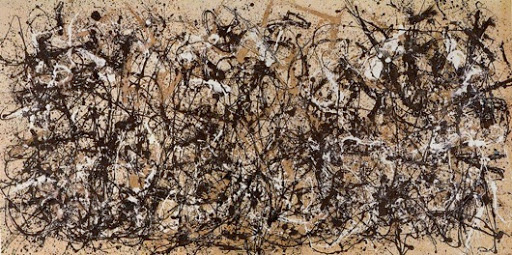
Autumn rhythm

4092 words, 21 min read

The following is my rough, English translation of Cardinal Gianfranco Ravasi’s opening talk, given during the meeting of the Courtyard of the Gentiles in Lecco on 14th June 2016, entitled “Innocent suffering”.


My reflection will be made up of, if you will a kind of diptych, two panels. One dark, sombre panel, and one that is a little bit more luminous, while not being able to remove the darkness altogether. But, before turning to these two, I would like to make a premise, if you will, the binding that holds together the two panels. And, I would like to label this premise with the title of a book by an American writer called Susan Sontag. This American writer, who was a Hebrew non-believer, of non-believing origin, was diagnosed with cancer around 1975. And in 1978 she published a book, significantly entitled “Illness as Metaphor” in which she represented and interpreted in her own flesh, but also in her experience as an intellectual, precisely this event that she has experienced, the event of being ill with a tumor. And the title is significant. […]

So, illness as a metaphor, that is illness as a symbol, because of which it is not only a physiological, biological, psychophysical question. It is something more. The patient lives through an experience that is existential, sapiential, and also philosophical; it is fundamentally anthropological. Because of which, when facing illness, and more specifically a sick person (illness being an abstract term), what is not sufficient – it is necessary but not sufficient – is medical science. There is a need also for the humanities. Anatomy is not enough, there is a need also for spirituality, understood in the most general possible, non-denominational sense. Therapy is not enough, there is a need also for a more global vision of the person, a metaphor, because it is the representation of the human being that is limited, frail, fragile, imperfect. It is the experience of an entire being. So, this is what I would say is the binding that allows also for a Courtyard of the Gentiles like this one to happen, that has a welfare dimension and a scientific one, but that is – above all – a human experience.

Well, now we arrive at the two panels that I would like to call forth. The first panel, I have said, is the dark one. That is, illness in general. Suffering in general. But above all this: innocent suffering, which brings about a crisis of sense, a crisis of meaning.

It is curious to note, and maybe this is not sufficiently developed, not even among theologians, that theology as such is born as theodicy, which, literally, means to justify God. Why? Because of the question of suffering, of evil, of the world. This was the function of theology, because such an absence of sense is something we see represented very well – and here I will have to appeal more than once to the experience of those witnesses, who are believers or non-believers, who are – I would say – the most profound witnesses, who delve … poets, writers, who live this experience. I started precisely with Sontag.

You all, I believe, have read that novel, which for this topic is fundamental: “La peste” [The Plague] by Camus.[…] You remember Camus’ La peste, but I would just like to remind you of that moment in which Dr. Rieux holds in his arms the child who has caught the plague, and he says: “I could never believe in a creation and in a creator God for as long as I hold in my arms a child sick with the plague.”1 We could say sick with cancer. The parents who embrace their child, sick with an illness that by then is making their life drip away towards its end, cannot but express this crisis of meaning. As I said, it is precisely like this that theology came about.

I would now like to share the curious witness of a philosopher, whom you all know at least by reputation, Epicurus. As far as Epicurus is concerned, his writings are not preserved, except as quotes or as fragments. Here we have a 4th century Christian writer, Lactantius, who was the tutor of Constantine’s son, quoting this syllogistic sequence, which fundamentally is an irresolvable contradiction, put by Epicurus as follows – and I’ll summarize it here, as it is a bit more articulate in Latin: “If God wants to remove evil, but can’t, he is impotent and therefore isn’t God. If God can remove evil but does not want to, he is “hostilis et invidus” – hostile and envious with regard to us. Third, if he wants to remove evil and can do it – as befits a God – then why is there evil?”2

You can see how the interweaving of these questions is consequential and it is this experience of the absence of sense, of darkness, that can be found, paradoxically for the believer, in the Bible itself. We have a book, like the book of Job, among others, one of the literary masterpieces of humanity, that poses this problem of innocent suffering. Job is caught up in this storm, and his theologian friends, to justify God, affirm the principle that is characteristic of many cultures, not only of the culture of the Bible, of the Old Testament, which is the principle of retribution. You have sinned, therefore you suffer. Crime – punishment. Which is a very simple explanation. But, obviously it clashes with a rising up of reality, with a rising up of this person who is aware of not being guilty. And this brings us to his challenge, and I am quoting from among the many possible pages of this protest against God. “I,” says Job, “would speak3 with the Almighty; I want to argue with God.” (Job 13:3).

You can see how it is courageous that a sacred text, which for believers has the seal of God, presents itself with this attack against God. It is also true that at a certain point, Job, slowly as his dialogue progresses, strays into cursing. And this blasphemy, in that moment, is a paradoxical profession of faith. Because he, once more, returns to that fundamental node, which is a theological node, in fact he accuses God: “But you are like a sadistic archer who pierces me in my heart and my kidneys. You are like a leopard who fixes his eyes on me to devour me. You are like a triumphant general who crushes my skull.” (cf. Job 16:12-14, Job 10:16).

As you can see it is a representation of the divine God as an enemy, as a monster, because of which, in his commentary on Job, and we say this in an ecumenical spirit, Luther uses a phrase that is truly dazzling from this point of view. […] It is a phrase that is based precisely on Job: “God is pleased much more with the blasphemous cries of a desperate person than with the composed praises of a conformist on Sunday morning during a service.” This phrase is significant, because God listens more to Job than to his theologian friends, those perfect, impassive, impeccable theologians, as will be said at the end. Because, you know, at the end God says: “Job is the only one who spoke rightly about me.” (cf. Job 42:7)

That is why, at this point I think that innocent suffering is the highest, or most profound, point of the silence of God, of the incomprehensibility of the divine mystery. This is the first panel of the diptych.

The second panel, which, as I have said, is more luminous, but without being totally solar […]. And this panel is that even in such pain, in pain in general, there is a revelation of sense, of meaning. […] I don’t now want to present the history of humanity that has continuously been clashing against this citadel, this well-defended citadel that is the citadel of suffering, not even thinking of its heart, which is the citadel of innocent suffering. It has tried many explanations, ranging from the totally pessimistic ones, where what in the end becomes difficult to explain is the good and not evil, this being our condition. Here we can think of certain ideas at the margins of Buddhism, for example, where, practically, evil is the fundamental substance by which we are permeated.

On the other hand, there are entirely optimistic perspectives. Here let’s take a look at a very approximate, simplistic example, […] the Hindu idea where we are part of the great ocean of God, an ocean that on the surface may have storms, but in its abyssal depths there is serenity, there is calm, there is peace. And therefore it suffices to enter into this kind of mysticism of depth.

Then there are these explanations, already in the Greek world, where Aeschylus says: “Wisdom is conquered only through suffering.” But he himself, Aeschylus, in The Persians, puts these words into the mouth of one of his characters: “Is there a God who answers from the shadow to the breath of pain that rises from the earth towards heaven?”4 And the question was left unanswered, that is, [the answer was] negative. And then he also maintained that pain has a paideic, cathartic function, but this is very problematic in the case of innocent suffering. I don’t want to enter here into the history of the hermeneutic, the interpretation of pain …

The book of Job itself, to tell the truth, isn’t an attempt at an explanation of pain. It isn’t. If you pay attention to its conclusion – and I can’t now show what it actually is about – and if you see the last words that Job pronounces, leaving aside the final part which is a framing narrative quoted by the author and which was already known in previous literature … No, let’s pause above all at the point of the true final poetry. Job is in front of God and God simply tells him: “All you see is just a small horizon of the mystery of being, of existence that is immense, and like one who, when looking at a painting, only sees a detail made of small brush strokes, of colors that don’t make sense, then it is obvious that it doesn’t have meaning.” Only God, and we too, when looking at the painting in its entirety, can succeed in understanding its meaning. Also this is an attempt at an explanation, that, however, has some very specific preconditions for acceptance. But, I wanted to say that Job, at the end, makes a statement that is substantially of another kind, of faith: “By hearsay I had heard of you, but now my eye has seen you. Therefore I disown what I have said, and repent in dust and ashes.” (Job 42:5-6)

So all is again as before, expect that he had now met God. And this is why it is possible to make a reflection, that I only sketch out here as it is very complex, about the Christology of suffering. That is, about a Christian explanation of suffering, which, naturally, has as its starting point a fundamental given for Christianity. The real, effective, concrete intertwining of the transcendent and the immanent, of the divine and the human. That great masterpiece that is the prologue of the fourth Gospel, the Gospel of St. John, as you know, has those fascinating verses […] from 1:1 to 1:14. The Logos, which is perfect, which is the beginning, which is God, which is the cause of all being … and the Logos became flesh. Precisely using the verb “to become.” Therefore here we have the specific concept of the entrance of the divine into the human, which is very well represented by the account of the Passion, where you can see that Christ traverses the full, dark spectrum of pain. The full range is there on purpose, from the fear of death (Father, take this cup from me, which in Biblical language means this – I am afraid of dying), then passing through the sweating of blood, then solitude, which is one of the great sufferings, the great pains; the betrayal by his friends, and then also physical torture, and then ascending that hill, ascending the cross, he, as God!, passes through the silence of God (My God, my God, why have you forsaken me), and then – at the end – death. Death, which is our ID card. Together with pain, but above all death, because God – by definition – is eternal, does not die. There, instead, and it is curious that the Gospels of Matthew and of Mark present the death of Christ, unlike those of Luke and John, who see divinity already shining through the corpse, the crucified corpse, they represent the death of Christ as an ugly death. He “cried out again in a loud voice, and gave up his spirit” (Matthew 27:50). The cry of a hand that raises up again and tries to grab the air one last time, while he is suffocating to death.

Here we arrive at the fundamental component of the Christian explanation. [Outside Christianity] God doesn’t die, does not suffer, (The suffering of God is something theologians have elaborated, but it has another meaning.) because these are human characteristics. Christianity says that God isn’t he who bends down like an impassive emperor and holds out his hand towards the suffering person, at times even healing them. Instead it is he who traverses the non-sense of dying. He as God, enters our horizon.

St. Paul has an expression in 2 Corinthians, chapter 5, which is very suggestive in this sense, even though it does not refer to suffering: “For our sake he made him to be sin who did not know sin, so that we might become the righteousness of God in him.” (2 Corinthians 5:21). You see that he takes on himself another of the fundamental human characteristics: guilt, therefore not only pain but also guilt, and in that moment, naturally, he, when he is reduced to a corpse, when he has finally assumed all our identity, also in that moment he, however, does not cease to be God. And it is because of this that he plants in suffering, in evil, in guilt a seed of the eternal, of the infinite, a seed of redemption. And this is the meaning of the resurrection. It is simply to remember that the passage of God through human reality isn’t a passage that leaves it unaltered. And it is because of this that there is a tension towards redemption which is that of a divine that has traversed, while preserving its identity, our own identity, which is transient and weak.

You have surely heard about Dietrich Bonhoeffer. Bonhoeffer was one of the famous theologians of the last century and was eliminated by Hitler. Note well the date of his death: 9th April 1945, when the Nazi monster was already in agony and it seems that the order came directly from the top to have him hanged at the camp in Flossenbürg where he was detained. During his imprisonment, he wrote […] many notes among which there is this one, which is significant and which may seem – at first sight – a bit paradoxical. He said: “God in Christ does not save us by virtue of his omnipotence – otherwise he would remain above, in his prefect transcendence, in his golden horizon – God saves us in Christ by virtue of his impotence, because he enters and takes on also our quality.”

At this point it can be understood also that at the center of the heart of Christianity there is a problem. Certainly, as you see it is an option, an option of faith, to recognize the center of the incarnation, the word that makes itself flesh, flesh that is fragile, transient, weak. And, let’s think of those words, and I’ll only quote a few lines to you from “Il dolore” (“Grief”) by Ungaretti, which he wrote because of the death of his son Antonietto:5

Christ, brother, you who immolate yourself
perennially to rebuild
man humanly
Holy, Holy, Holy6 you who suffer

And it is in this way that brotherhood with us comes about. […] I would say that all believers and non-believers can take on the subtle, implied component that justifies this Christology of suffering. God does not want to – we can’t say that he can’t, but he doesn’t want to, he does not manage to as the rabbinic tradition says, impede that which is also structurally required. The creature as such must be limited, finite, transient … […] Beyond this, in the interior of this incarnation, there is a fundamental dimension which is one that can be put into practice also by us. At the basis there is, as Ungaretti said: “Christ, brother, you who immolate yourself to rebuild man.” There is solidarity. There is love.

And here I would like to remember, above all, a miracle. Usually we look at miracles as if they were magical gestures. Let’s never forget that Christ, instead, requires for them to be done in silence, hiding their spectacular aspect. The miracle I have in mind is that of the leper. Hansen’s disease is an illness like many others, but in the oriental world it is seen as the compendium of all suffering, because it wasn’t only a physical suffering, the flesh that would disintegrate, but it was also a social and moral condemnation. It was an excommunication. The leper had to have committed such a terrible transgression that this is the punishment they received. It was thought to be the most infectious disease – even though that is not true – because of which they had to live separately from the community. The book of Leviticus says that the leper has to signal their presence to others, because it is a polluting presence, and has to shout so that the other would not cross their path. What does Christ do? And this is underlined by the Evangelists. Not only does he go to meet the leper, he goes to speak to him – asking him what he wants – and then Christ touches him and tells him: “I will do it. Be made clean.” (Matthew 8:3). He touches him. You see, it is the gesture of assumption. The gesture of fraternity. The gesture of love. […]

I’d like to conclude by giving the word to two people, whom I’d ideally summon here, two figures of history, of culture of the last century. Different from each other, one a believer the other a non-believer.

Let’s start with the believer, the poet Paul Claudel […]. He writes: “God didn’t come to explain suffering, but to fill it with his presence. God, therefore, doesn’t protect us from suffering, but sustains us in every suffering.” Because he too entered there. Also he, with his human impotence, but precisely because he does not cease to be God, sustains us. And the other, and this is why I say that this act of solidarity, can be performed by all and can be a principle of – in quotes – “healing”, not necessarily of physical healing.

When doctors enter a corridor, a hospital, the room of a patient – and it was Susan Sontag who noted this, when she said: “They arrived and all stood there in front of me and I was lying in bed.” You see the profound difference between the two positions, because, standing up is the position of the living, lying down the position of the dead, of the absolutely impotent. It is also true that standing up has been the hallmark not only of the living, but of the greatness of the human person. From evolution we know that it is much more logical to walk on all fours like animals do, also for the distribution of weight. Humans, as a result of evolution, use their posture, that is rather improbable from the point of view of statics – to carry all of their weight on such a small base. But they have done it so that, from this position, they could dominate the horizon of all other living beings and of all being.

So, in that moment comes this profound difference, because of which – evidently – the gesture of love, of solidarity that isn’t just a matter of bowing down but of bringing one’s own understanding and one’s alliance, one’s harmony, one’s closeness, even if the sick person is burdensome and pedantic, because their horizon is deprived of meaning and they are in their world, looking for sense. We must accompany them without sneaking glances at our watches.

So, this act of solidarity is possible for all and it is represented well by the last person whom I’d like to summon here, ideally, and whom I quote often. He is an agnostic, lay, anticlerical writer – Ennio Flaiano, also the screenwriter of some of Fellini’s movies.

During his life it was specifically this topic [innocent suffering] that was before his eyes, because one of his daughters was born with an epileptic encephalopathy. This daughter survived him. He would never speak about her. He also saw her as a metaphor, a symbol of guilt. […] But, he never spoke about her. After his death, among his papers, they found a text, a rough draft and it wasn’t clear whether it was for a novel or a screenplay.

This text is truly significant, because it is written by a non-believer. He imagines that Christ returns to earth. And, as soon as he returns and the news spreads, he is surrounded by a crowd of the sick who huddle around him and ask for miracles. They ask for healing. And he is uneasy, because now there is something that wasn’t there before – there is television, cinema, the press, advertising, which he doesn’t want. He’d like signs of a different kind and even though he cures them, he does so unhappily. One day he finally manages to free himself from the crowd and retreat along a path. And as he walks along this path to find solitude and pray to the Father, he sees the outline of a strange couple on the horizon. A father who drags his shaky daughter by he hand, as she walks beside him. When Christ sees them, he is ready to perform. He says to himself that he’ll do it one more time, but at least this one is in solitude. However, when this father and his daughter are in front of Christ, and Christ is about to perform his miraculous gesture, that father says: “No, I don’t want you to heal her. I would like you to love her.” And so, Christ takes this little girl, kisses her, and say this phrase, which is the concluding phrase: “In truth, in truth I tell you, this man has asked of me that which I truly want to and can give.”


1 Cardinal Ravasi may be paraphrasing this sentence from The Plague: “I have a different notion of love; and to the day I die I shall refuse to love this creation in which children are tortured.”
2 The full text of that quote is: ““God,” he [Epicurus] says, “either wants to eliminate bad things and cannot, or can but does not want to, or neither wishes to nor can, or both wants to and can. If he wants to and cannot, then he is weak and this does not apply to god. If he can but does not want to, then he is spiteful which is equally foreign to god’s nature. If he neither wants to nor can, he is both weak and spiteful, and so not a god. If he wants to and can, which is the only thing fitting for a god, where then do bad things come from? Or why does he not eliminate them?” Lactantius, On the Anger of God, 13.19”
3 In the Italian translation quoted by Ravasi, the verb is “accuse” or “incriminate” rather than “speak”.
4 Maybe a reference to the following lines:
“Hears the honour’d godlike king?
These barbaric notes of wo,
Taught in descant sad to ring,
Hears he in the shades below?”
5 Since I couldn’t find an English translation of “Mio fiume anche tu” from which Ravasi quotes, this is my attempt at a verbatim translation – a crime when applied to poetry but it will have to do in the absence of anything else.
6 Ravasi here adds an extra “Holy” that is not in Ungaretti’s text.
Freedom, with and without God

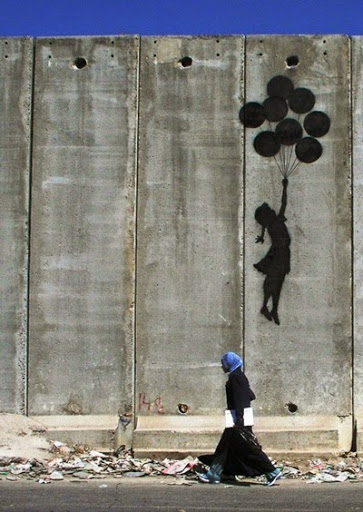
Banksy westbank wall balloon girl1

[Warning: very long read :)]

A video that has been burning a hole in my pocket since last November is the recording of the opening evening of the Berlin Courtyard of the Gentiles, that I already wrote about in a previous post.1 While I focused on Cardinal Ravasi’s talk on beauty and art there, today I’d like to cover the opening session’s discussion of morality, which was conducted under the title “Freedom, with and without God” and where Dostoevsky’s controversial dictum: “If God does not exist, everything is permitted” provided the initial impetus.

To open the evening’s dialogue, Cardinal Gianfranco Ravasi starts with a quote from Albert Camus’ The Plague, which says: “Can one be a saint without God? That’s the problem, in fact the only problem, I’m up against today.” and then proceeds to set the scene by being critical of the obstacles to open and fruitful dialogue between those who hold religious beliefs and those who do not:2

“These days a kind of fog engulfs both true religion and rigorous atheism. This is more of a sociological than an ideological phenomenon. It is an indifference, a superficiality, a banality, a sarcastic derision. In this atmosphere of indifference, mythos rules over logos, the pamphlet replaces the analytical essay, a fundamentalist approach is stronger than a critical weighing of alternative positions, jeering conflict is valued over a calm exchange of ideas, faith gives way to a spiritual collage. Syncretism uses a spiritual menu from which to compose an a la carte offering from which everyone can pick and choose what happens to suit him or her. These pathologies both of unbelief and of religion can benefit from a response in the form of the following dialogue.”

Ravasi then acknowledges the differences of the two positions and proposes that they nonetheless share a common element:

“In fact, the two logoi, the two argumentative positions that will be presented next, have an intrinsic difference, an objective difference. The secular non-believer takes the individual as their point of reference – the subject who seeks their own, personal and social, ethical orientation. The religious person, on the other hand, is convinced that truth, nature and moral order precede and exceed us. To use a famous image from Plato’s Phaedros, these realities are like a plane that stretches out in front of the chariot of the human soul, which proceeds through it towards discovering its objective foundations. A first point of agreement between these obviously differing perspectives – one which is predominantly subjective and the other objective – could be the thoughts of St. Augustine, who claimed that in each one of us there is an innate, original knowledge of good and evil, which enables the capacity for moral judgment. […] A reference to conscience is not a optional call to situational subjectivism, but a return to this radical anthropological structure, which is our conscience. At the same time we have to constantly bear in mind the limitedness of the human subject inherent in its being a creature.”

The opening remarks are then followed by two talks, one by a non-believer and the other by a believer. The first speaker was Prof. Herbert Schnädelbach, an agnostic philosopher whose work has included social philosophy and theories of rationality, epistemology, free will and values. Here Schnädelbach kicks off with an anecdote:

“A friend of mine, who is also a philosopher, said: “This sentence should be place on a list of the most stupid sentences ever – and fairly high up. Even in the absence of the existence of God, I am not allowed to break a red light, to withhold the payment of my taxes or to hit my wife, if that were even physically possible for me. And it is irrational to think that all of this were permitted without God.””

And proceeds to argue that the Dostoevsky quote is meant to teach us a fear of atheism and of atheists, and a fear of what supposedly follows: senselessness and anarchy. Dostoevsky’s quote implies that all rules and norms cease to have power in the absence of God. However:

“we live in a whole network of rules that we adhere to because we consider following them to be rational (e.g., the highway code), or because we want to avoid penalties imposed if they are broken (e.g., paying taxes). I can’t imagine though that Dostoevsky would not have know this. […] Dostoevsky claims that reason is an insufficient basis for our normative culture, that its normative power is too weak, that a more resilient basis is needed to hold up their edifice and that this foundation can only be God.”

This leads Schnädelbach to asking whether “God is even a suitable foundation for norms and who this God is?” and to drawing a parallel with Plato’s dialogue about the nature of piety in his Euthyphro: ““Is the pious loved by the gods because it is pious? Or is it pious because it is loved by the gods?” (10a). By analogy, Schnädelbach asks “is what is good and right for humans, good and right because God commanded it, or did God command it because it is good and right for humans?” and argues that there are two possible answers, using the Ten Commandments of the Old Testament as context:

  1. In the first case, God is sovereign and can freely choose what is good and right and no one can hold him to account. This is a voluntaristic image of God, which is closely related both to fundamentalism and to normative nihilism. They are two faces of the same coin. They rely on the same model of thinking of the all or nothing: either there is an ultimate justification or there is no justification, which is why systematic philosophers, at least since Descartes and until Hegel, have always looked for an absolute first justification for knowledge and claimed that the alternative is skepticism.
  2. In the second case, if God commands what is good and right, he is not an unaccountable tyrant, who could, at will, one day, make law what is evil and unjust. He commands what every person can see to be good and right with their own, healthy reason. This makes commandments 4-10 merely God teaching the People of Israel what they themselves could have discovered with their own reason, and the same would hold true for all of humanity too. This God, who commands what is rational because it is rational, and for no other reason, is the God of the Johannine Logos.”

Schnädelbach then proceeds to argue that only one of the above scenarios is problematic:

“If one assumes a sovereign God who commands without it being possible to ask them for reasons, i.e., where norms are divorced from reason, and if one then denies their existence, then truly everything is permitted. Then our normative culture would have its foundations removed. This danger does not exist, however, if the God who commands what is right and just, because it is right and just for humans, does not exist, since there is still the chance that people will discover it with their own reason and will make it hold even without God’s teaching.”

And, finally, the argument is brought to its logical conclusion, which, along the above lines or reasoning leads to a redundancy of God:

“Why should the practical reason of people and their free consent to what they discover to be normative in the process of rational discourse not be sufficient? Admittedly, this does presuppose the mutual recognition of discourse participants as free and equal partners, and their uninhibited participation in processes where public will is built and set. My final questions is: what could an transcendent God add at this point?”

I have to say that I find Schnädelbach’s reasoning very clear and compelling. There is a basis for morality derived from reason and consensus that is well-founded without the need for God. As a Christian I see this is as being extremely positive, and consistent with my belief in a loving God, who does not make a pursuit of what is good contingent on a person believing in His existence. There’d be more to say regarding the idea of a God who “can freely choose what is good and right,” but I’ll leave that for another time :).

Returning to the Berlin event, the second speaker of the evening was Prof. Hans Joas, a Catholic sociologist, who has worked in areas like social philosophy and the history of values. Joas first appeals for specificity, arguing that there isn’t a single religious or even Christian position, like there isn’t a homogeneous secular or atheist position and that “the level of discussion on this topic rises as the level of abstraction is lowered.” He then proceeds to present his view of the role played by morality in atheism:

“In the 20th century the vast majority of thinkers and writers who have self-identified as atheists did so for strong moral reasons. Often their arguments against faith were moral arguments: a focus on the afterlife would limit one in working for the good here on earth, one would do good only in the hope of a reward in the afterlife, or, a focus on the afterlife inhibits living this life to the full. Religions lead to unnecessary feelings of guilt, risk leading to hypocrisy in interpersonal relationships, or to a denial of one’s corporeality. For those who thought or think in this way, the absence of God is even a heightening of morality. This has to be taken seriously and I have high esteem for philosophers or writers who thought in this way, such as Ludwig Feuerbach or George Eliot. These are people who understood an exceptionally great deal about faith and who were exceptionally serious about going beyond what religion and Christianity had to offer.

For us Christians, it is necessary to look at the history of these views as a history of our failures. These weren’t lunatics, but people who understood certain things very precisely, and it was a failure of Christians to present their faith to them. An example is also the strong secularization of the workers’ movement in 19th century Germany, instead of its alignment with the Church. When asked, some of its members said that they didn’t go to church because they didn’t have the right clothes … This is an actual quote from a survey of Protestant pastors about dwindling numbers at the time. What shocked me here is that the pastor in question didn’t think, “What can I change about the Sunday service, so that people don’t stay away for a stupid thing like clothes.”

The atheism that had such strong moral motives in the beginning, has in some instances also degenerated, as in the case of the German Democratic Republic (GDR), where its leading philosopher claimed that the supreme moral point of reference was the wellbeing of the GDR. And today, there is often a tiredness on the side of non-militant atheism and a rigidity on the militant side. The first challenge, in my opinion, is to reopen a dialogue between believers and non-believers and a mutual awareness.”

Joas then moves on to distancing himself from the Dostoevskian quote and from belief in God being a prerequisite for morality, and instead argues for a developmental and experiential basis, from which God can then be sought:

“I don’t agree with the statement “Values need God.” Many findings in the context of developmental psychology and cultural anthropology point to another source, which has nothing whatsoever to do with religion, and which consists in experiences of reciprocity. Already games played by children point to fundamental rules that underlie human coexistence. Reflecting on them points to the value of justice, to the value of fairness in interpersonal relationships. At the same time, such relationships are under threat of falling apart if one of the participants chooses not to adhere to the rules, e.g., when these are to their disadvantage.

It is therefore useful to think about what it could be that would make humans adhere to moral rules, other than rational appeal, and what could make them adhere to them even when these are to their short-term detriment. What motivates the start of moral reasoning, what makes one start thinking about moral questions, what makes one adhere to shared moral rules? This still doesn’t bring us to God though. I believe we arrive at strong values, at intense convictions of there being such a thing as the good. This can be rooted in positive experiences, such as an encounter with someone who lives in an exemplary way, or in negative experiences, such as wanting to make sure that something doesn’t ever happen again the way that it happened before. For example, on German soil, National Socialism was an obvious, direct experience of evil itself, without the need for rational underpinnings. Then, a long journey can begin that can lead to an understanding how God relates to these values and rules.”

The position of Joas is very clear here: morality played a strong role in early atheism and is in no way in need of divine justification. Even the simple experiences of children lead to a recognition of the good of justice and fairness. My takeaway here is the importance of the emphasis of our common ground, which is what Joas chose to do here – an emphasis of the role of experience and the innate ability to identify good and evil, with only a hint of how God relates to morality for a Christian.

In the discussion that followed, Joas returned to the role of reason in morality, and emphasized the psychological perspective:

“Many things appear as obviously good or evil to us; reasons for why that is are needed when we encounter others who don’t share these evidential experiences with us and challenge us to explain why we value certain things. If we are honest with ourselves, we can see that whether something is good or evil is a matter that does not require rational justification to ourselves – it is obvious to us, and even in the face of counterarguments from others, instead of changing our minds about what appeared good to us from the start, we will look for reasons to support our original intuition. Note that this is a psychological, not a philosophical argument.”

The final contribution to the discussion was Schnädelbach’s sharing his personal experience of what it is like to be a – as he self-labeled himself – “pious atheist”:

“I have great respect for personal piety and for religious experiences, but personally I have to say that I can’t connect these to the God of the Bible – neither the Old nor the New Testament. At times, when something very good happens, I feel the desire to thank someone. But whom? And when something bad happens, I feel – like Job – the urge to argue with someone. But there is no one. I think though that this is the point that makes me who I am – a pious atheist.”

And to conclude the evening, Cardinal Ravasi was invited to share his thoughts, which he prefixed with saying that he is resisting the temptation to join the conversation between Schnädelbach and Joas or even to summarize it. Instead, he decided to present his understanding of the verb “to know”:

“In Hebrew the verb is yada, which has the same meaning as the New Testament Greek word genoskein, which reflects very well the polymorphism of anthropological knowledge, of human knowledge. Knowledge, according to this view, which is a symbolical view that is important also in the current dialectic or counter-positioning of faith and science, arrives along four ways. There is first the intellective, rational way. Added to it is the volitive way; decision, the willed intensity of knowing. The third line then is that of affectivity, of feeling. And the last, the fourth way, is that of action – knowing, which, e.g., in the Bible also means a completion of the sexual act. In other words, an encounter between two people in the fullness also of corporeality.

At this point, knowledge arrives in diverse ways, and each of these ways may lead to different stages. However, all of the stages are necessary. Hence the knowledge of the horizon of God, of transcendence, is a knowledge that has to pass through all of this, this whole itinerary. Therefore, the scientific way is certainly also relevant, as is a well-elaborated theology. But what is also indispensable is a knowledge of the esthetic kind, also of the spiritual kind, of a mystical kind. And this is why individual concepts and individual disciplines reveal themselves to be insufficient if they don’t travel along all the four ways.

This is also true of human experience itself, in general; To know a reality fully, it is not enough to only have knowledge of the phenomenon, knowledge of the context, knowledge of the “documentation.” A knowledge of love is also necessary, a knowledge that is substantially narrative. This knowledge that is also historical is the one that predisposes us to the ultimate foundations, to extreme questions.”

Since this post is massively long as is, I’ll refrain from attempting to present my own understanding of this topic, and will defer to do so at a later time. In any case, my intention with this post was just to share with you the above conversation among Cardinal Ravasi and Profs. Joas and Schnädelbach, which was such a joy to follow and whose availability only in German has been bugging me over this last half year.


1 It may come as a surprise to long-time readers of this blog, but I am actually following up on a strand from a previous post that I said I’d follow up on :).
2 All quotes from the event here are my crude translations from the evening’s recording in German.

Camus on dialogue, revolt, beauty and love

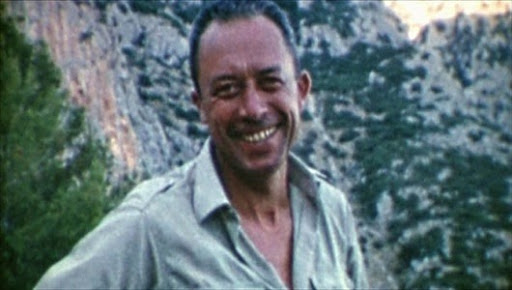
Camus

One of the features of Pope Francis’ first encyclical, Lumen Fidei, that stood out for me most is its constant reference to love, regardless of the specific subject of its reflection. This certainly is not surprising in the context of Christian theology – a theology that is all about God, who is Love – but it’s all-pervasiveness nonetheless made me think. In particular, it made me think about what someone who is not a Christian, who is an atheist or humanist, would say on the subject.

With these questions in mind, I turned to my “read later” reading list and my eyes landed on a piece by Cardinal Gianfranco Ravasi, where he speaks about how Albert Camus‘ thought is a confrontation with the same questions that Christianity grapples with. Questions of meaning, purpose, suffering, revolt, hope and love.

Ravasi there starts with quoting from a talk Camus gave to a group of Dominicans in 1948, where he says to his hosts that “the world of today needs Christians who remain Christians” and where he declares:

“I shall not, as far as I am concerned, try to pass myself off as a Christian in your presence. I share with you the same revulsion from evil. But I do not share your hope, and I continue to struggle against this universe in which children suffer and die.”

This directness and honesty of Camus has always been very attractive to me, which made me look for the full text of his talk to the Dominicans and I found a fairly extensive set of fragments from it here. What struck me there is how I find myself very much agreeing with him, where what he says is in fact a very powerful examination of conscience for Christianity and also for me personally.

From these fragments it is explicit that the Dominicans invited Camus to talk to them about what “unbelievers expect of Christians,” which makes me very impressed with them too, and for which Camus also acknowledged their “intellectual generosity.” He then proceeds to set out the following principles of dialogue:

that “if I allowed myself at the end of this statement to demand of you certain duties, these could only be duties that it is essential to ask of any man today, whether he is or is not a Christian.”

that “I shall never start from the supposition that Christian truth is illusory, but merely from the fact that I could not accept it.”

and that “I shall not try to change anything that I think or anything that you think (insofar as I can judge of it) in order to reach a reconciliation that would be agreeable to all. On the contrary, what I feel like telling you today is that the world needs real dialogue, that falsehood is just as much the opposite of dialogue as is silence, and that the only possible dialogue is the kind between people who remain what they are and speak their mind.”

These are an excellent set of principles: do to others as you would want them to do to you, the principle of charity and respect for the other being who they are, not setting out to change them. In fact, they seem to me to be very much in sync with what Pope Francis said on the same topic: “Dialogue is born of an attitude of respect towards another person, of a conviction that the other has something good to say; it requires that we make space in our heard their point of view, their opinion and their position.”

With these principles as the basis, Camus proceeds to spelling out his expectations:

“What the world expects of Christians is that Christians should speak out, loud and clear, and that they should voice their condemnation in such a way that never a doubt, never the slightest doubt, could rise in the heart of the simplest man. That they should get away from abstraction and confront the blood-stained face history has taken on today. The grouping we need is a grouping of men resolved to speak out clearly and to pay up personally. When a Spanish bishop blesses political executions, he ceases to be a bishop or a Christian; even a man; he is a dog just like the one who, backed by an ideology, orders that execution without doing the dirty work himself. We are still waiting, and I am waiting, for a grouping of all those who refuse to be dogs and are resolved to pay the price that must be paid so that man can be something more than a dog. […]

Perhaps we cannot prevent this world from being a world in which children are tortured. But we can reduce the number of tortured children. And if you don’t help us, who else in the world can help us do this? […]

But it may be […] that Christianity will insist on maintaining a compromise or else on giving its condemnations the obscure form of the encyclical. Possibly it will insist on losing once and for all the virtue of revolt and indignation that belonged to it long ago. In that case Christians will live and Christianity will die. In that case the others will in fact pay for the sacrifice. [… I]f Christians made up their minds to it, millions of voices—millions, I say—throughout the world would be added to the appeal of a handful of isolated individuals who, without any sort of affiliation, today intercede almost everywhere and ceaselessly for children and for men.”

When I read this, it really stopped me in my tracks. This is the kind of dialogue that we, Christians need – someone from the “outside” shaking us, pointing to our errors and doing so not for the sake of some propagandist point-scoring, but out of a genuine concern for our returning to our roots and maintaining our identity. In many ways, what Pope Francis is doing now from the “inside” is similar – the call to poverty, to the “existential peripheries” and to respect for and collaboration with atheists are all examples of it and I am deeply grateful to him and to Camus.

Returning to Ravasi’s discourse, he steers it to another very interesting point of common interest to Christianity and Camus, by quoting from “Helen’s Exile” and then from “The Rebel”:

“Man cannot do without beauty, and this is what our era pretends to want to disregard. It steels itself to attain the absolute and authority; it wants to transfigure the world before having exhausted it, to set it to rights before having understood it. Whatever it may say, our era is deserting this world.”

“Beauty, no doubt, does not make revolutions. But a day will come when revolutions will have need of beauty.”

Here the connection between beauty and the revolt Camus speaks about to the Dominicans is clear – both are set against an exploitation and ignoring of the world. Revolt is directed against suffering while beauty is aimed at appreciating existence.

Ravasi then makes the, to me at first surprising, summary of the above as being “the way of love.” To get a sense of why he may have interpreted it as such, Camus’ own words in “The Rebel” point to the key: “The procedure of beauty, which is to contest reality while endowing it with unity, is also the procedure of rebellion.” Rebellion and beauty bring about unity, which in turn is synonymous with love in Christianity – the Persons of the Trinity being One is their love for each other; Jesus-Love is present among his followers if they are united in his name (cf. Matthew 18:20), etc.

Finally, to underline the importance Camus gives to love, Ravasi quotes the following from his “Notebooks” from 1937:

“If someone told me to write a book on morality, it would have a hundred pages and ninety-nine of them would be blank. On the last page I would write, “I recognize only one duty and that is to love.” And as far as everything else is concerned, I say no.”

St. Augustine would be pleased, as am I 🙂