1532 words, 8 min read
A book-length interview with Pope Francis, by the Italian journalist Andrea Tornielli and entitled “The Name of God is Mercy”, has been published today and I would here like to share some of my favorite passages with you (and encourage you to read it in full!).
First, there is Francis’ rooting of mercy in Ezekiel’s account of the foundation of Jerusalem:
“[M]ercy is God’s identity card. God of Mercy, merciful God. For me, this really is the Lord’s identity. I was always impressed by the story of Jerusalem as it is told in chapter 16 of the Book of Ezekiel. The story compares Jerusalem to a little girl whose umbilical cord wasn’t cut, who was left in blood and cast out. God saw her wallowing in blood, he washed the blood from her, he anointed her, he dressed her, and when she grew up he adorned her with silk and jewels. But she, infatuated with her own beauty, became a harlot, taking lovers not for money but paying them herself. God, however, will never forget his covenant and he will place her above her sisters so that Jerusalem will remember and be ashamed (Ezekiel 16:63), when she is forgiven for what she has done.
For me this is one of the most important revelations: you will continue to be the chosen people and all your sins will be forgiven. So mercy is deeply connected to God’s faithfulness. The Lord is faithful because he cannot deny himself. This is explained well by Saint Paul in the Second Letter to Timothy: “If we are faithless, he remains faithful, for he cannot deny himself.” You can deny God, you can sin against him, but God cannot deny himself. He remains faithful.”
Second, Francis exalts the goodness of starting again over that of an (impossible) never failing:
“The most important thing in the life of every man and every woman is not that they should never fall along the way. The important thing is always to get back up, not to stay on the ground licking your wounds. The Lord of mercy always forgives me; he always offers me the possibility of starting over. He loves me for what I am, he wants to raise me up, and he extends his hand to me.”
In fact, earlier in the book, Francis is explicit about the impossibility of not sinning and follows it up with a great quote by St. Francis de Sales:
“We must take this sad reality of ours into account: no one can avoid sin, small or great, for very long. ‘But,’ as Saint Francis de Sales said, ‘if you have a little donkey and along the road it falls onto the cobblestones, what should you do?’ You certainly don’t go there with a stick to beat it, poor little thing; it’s already unfortunate enough. You must take it by the halter and say: ‘Up, let’s take to the road again . . . Now we will get back on the road, and we will pay more attention next time.’”
Third, there is a good number of personal experiences that Pope Francis shares in the book, to give his answers to Tornielli’s questions a fresh sense of concreteness and specificity. Of these one of my favorites is the following:
“Back when I was rector of the Collegio Massimo of Jesuits and a parish priest in Argentina, I remember a mother with young children, whose husband had left her. She did not have a steady job and only managed to find temporary work a couple of months out of the year. When there was no work, she had to prostitute herself to provide her children with food. She was humble, she came to the parish church, and we tried to help her with our charity, Caritas. I remember one day—it was during the Christmas holidays—she came with her children to the College and asked for me. They called me and I went to greet her. She had come to thank me. I thought it was for the package of food from Caritas that we had sent to her. “Did you receive it?” I asked. “Yes, yes, thank you for that, too. But I came here today to thank you because you never stopped calling me Señora.” Experiences like this teach you how important it is to welcome people delicately and not wound their dignity. For her, the fact that the parish priest continued to call her Señora, even though he probably knew how she led her life during the months when she could not work, was as—or perhaps even more—important than the concrete help that we gave her.”
Fourth, in response to being asked to clarify what he meant when he said that famous “who am I to judge” soon after being elected pope, Francis said:
“I am glad that we are talking about “homosexual people” because before all else comes the individual person, in his wholeness and dignity. And people should not be defined only by their sexual tendencies: let us not forget that God loves all his creatures and we are destined to receive his infinite love. I prefer that homosexuals come to confession, that they stay close to the Lord, and that we pray all together.”
Fifth, in the context of being asked about the “scholars of the law” whom Francis frequently lambasts in his homilies, he recalled a great quote from St. Ambrose’s De Abraham:
“When it comes to bestowing grace, Christ is present; when it comes to exercising rigor, only the ministers of the Church are present, but Christ is absent.”
Sixth, Francis addresses the important question put to him by Tornielli of whether there is a risk of “infection” when dealing with those who live in sin:
“We need to enter the darkness, the night in which so many of our brethren live. We need to be able to make contact with them and let them feel our closeness, without letting ourselves be wrapped up in that darkness and influenced by it. Caring for outcasts and sinners does not mean letting the wolves attack the flock. It means trying to reach everyone by sharing the experience of mercy, which we ourselves have experienced, without ever caving in to the temptation of feeling that we are just or perfect. The more conscious we are of our wretchedness and our sins, the more we experience the love and infinite mercy of God among us, and the more capable we are of looking upon the many “wounded” we meet along the way with acceptance and mercy. So we must avoid the attitude of someone who judges and condemns from the lofty heights of his own certainty, looking for the splinter in his brother’s eye while remaining unaware of the beam in his own. Let us always remember that God rejoices more when one sinner returns to the fold than when ninety-nine righteous people have no need of repentance.”
Seventh, there is also a great deal that made me smile in this book, like the following passage that, while clearly communicating a profound truth, does so with humor:
“At times I have surprised myself by thinking that a few very rigid people would do well to slip a little, so that they could remember that they are sinners and thus meet Jesus. I think back to the words of God’s servant John Paul I, who during a Wednesday audience said, “The Lord loves humility so much that sometimes he permits serious sins. Why? In order that those who committed these sins may, after repenting, remain humble. One does not feel inclined to think oneself half a saint, half an angel, when one knows that one has committed serious faults.””
Eighth, Pope Francis speaks beautifully about how compassion relates to mercy, using Jesus himself as the example:
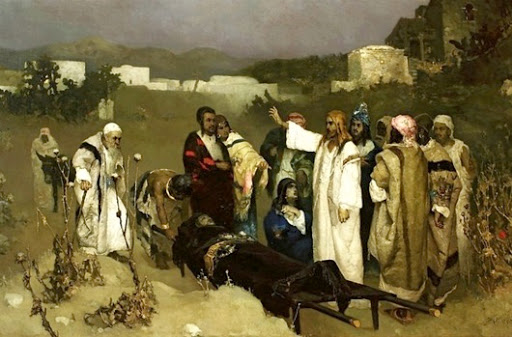
“Let us reflect on the beautiful pages that describe the raising from the dead of the widow’s son. When Jesus arrived in the village of Nain in Galilee, he was moved by the tears of the widow, who was devastated by the loss of her only son. He says to her, “Woman, do not weep.” As Luke writes in the Gospel: “When the Lord saw her, he felt compassion for her” (7:13). God Incarnate let himself be moved by human wretchedness, by our need, by our suffering. The Greek verb that indicates this compassion is σπλαγχνίζομαι [splanchnízomai, ed.], which derives from the word that indicates internal organs or the mother’s womb. It is similar to the love of a father and mother who are profoundly moved by their own son; it is a visceral love. God loves us in this way, with compassion and mercy. Jesus does not look at reality from the outside, without letting himself be moved, as if he were taking a picture. He lets himself get involved. This kind of compassion is needed today to conquer the globalization of indifference. This kind of gaze is needed when we find ourselves in front of a poor person, an outcast, or a sinner. This is the compassion that nourishes the awareness that we, too, are sinners.”
 eyebeleave