Defending the lion

Aslan roar

True to form, yesterday’s “Faith and Reason” column1 of the “Our Faith on Sunday” newsletter again hatcheted its way through another important question, i.e., of how the universe relates to God. It did its best both to obfuscate and to end up in absolute incompatibility with a Christian understanding of the topic. While I am still incredulous about the absurdity of the column’s content, at least the element of surprise is now taken out of the equation and I am in a position to read it and forget about it as opposed to being consumed with indignation :). Nonetheless, its confusion serves as an excuse to talk about how it is that the Church understands the various topics that it butchers.

Let me start this time with quoting the column’s full text and doing so in two parts – the first an attack on “the rationalist” and the second on “the pantheist”:

“The Rationalist’s answer to the origin of the universe can only sound absurd in the Christian’s ears. If matter were eternal and necessary, it would be divine; if divine, it would be the sufficient reason for its own existence. For matter to exist in the first place, it requires there to be a cause other than itself.”

The first thing that strikes me about the above is that it is an attack against a position that I personally have not seen held by anyone I know or even written about by anyone in the last 100 years. To give it column inches in a parish newsletter in 2013 is therefore utterly pointless to my mind. The position attacked here is one of claiming matter to have existed eternally, to have existed necessarily and to be “sufficient reason for its own existence.” This supposed position is then dealt a deadly blow by pointing out that matter requires a “cause other than itself.” At best the argument here is a re-heated Ancient Greek or Mediæval one, which starts from the position of everything requiring a reason for being and of that reason being a causal chain, which necessarily cannot be infinite. As such, it is also a regurgitated earlier “Faith and Reason” column, which I have already dealt with and which I will therefore say no more about here.

“The Pantheists would have us believe that the universe is an emanation from the substance of God. To believe this we need to hold that the infinite and the finite, that the necessary and contingent, are substantially the same; that the table I am writing on is just as divine as the supreme being that holds all things in existence. This is absurd, because, if the infinite became finite, it would no longer be infinite.”

The attack on what is referred to here as pantheism is more relevant, at least in that it is a position that some hold today, albeit in a variety of more or less strict and/or conscious ways. While the column’s author makes pantheism mean that “the universe is an emanation from the substance of God,” its meaning instead is that the universe is God (i.e., that there is an identity between the totality of nature and God). What the column’s author refers to as pantheism would more accurately be called emanationism, which in turn is sometimes linked to pantheism, but which is more about the origin of the universe than about its being.

Following this initial confusion between pantheism and emanationism, the column’s author goes on to assert that it implies that “we need to hold that the infinite and the finite […] are substantially the same.” I don’t see why that would be the case. If God is believed to be identical to nature (or even if nature “emanates” from God), there is no logical necessity to believe that there is a mismatch between the cardinality of the two, whether both be finite or infinite. The most absurd (to use the column author’s own language) part of the entire text though is the conclusion of its last sentence: “if the infinite became finite, it would no longer be infinite.” This final flourish is, I believe, a shot in the foot par excellence for a Christian “thinker” to make, since it is a direct denial of the incarnation. What else is God becoming Man in the person of Jesus, if not the infinite becoming finite, while retaining its infinity?! What the unidentified author of the “Faith and Reason” column has achieved is to first attack an irrelevant position, then mislabel and misanalyse a potentially interesting one and finally declare the heart of the Christian mystery absurd. Bravo!

Before attempting an alternative text in place of the above travesty, let me share with you my theory on the misguided fumblings of the column’s author. I believe it is motivated by the erroneous conviction that for the Christian faith to have rational credibility, all other views and beliefs have to be demonstrated as irrational, illogical and absurd, for fear of their discrediting Christianity. This is not only an insult to the freedom which is at the heart of God’s plan for us (i.e., his not forcing us to believe in him), but also an affront to the rationality and strength of the truth. Here, I believe the following quotes present the true Christian position much more lucidly and consistently than I ever could:

“The truth is like a lion. You don’t have to defend it. Let it loose. It will defend itself.” (St. Augustine)

“As far as preserving identity is concerned, it would be too little for the Christian, so to speak, to assert his identity in a such a way that he effectively blocks the path to truth. Then his Christianity would appear as something arbitrary, merely propositional. He would seem not to reckon with the possibility that religion has to do with truth. On the contrary, I would say that the Christian can afford to be supremely confident, yes, fundamentally certain that he can venture freely into the open sea of the truth, without having to fear for his Christian identity.” (Benedict XVI, Christmas Greetings to the Roman Curia, 2012)

To conclude, the following then is my alternative text for yesterday’s “Faith and Reason” column, using only one word more that the original:2, 3

“The question about the origins of the universe has been the object of many scientific studies which have enriched our knowledge of its age and dimensions, the development of life-forms and the appearance of man. These discoveries invite us to even greater admiration for the greatness of the Creator, prompting us to give him thanks for all his works and for the understanding and wisdom he gives to scholars and researchers.

To counteract erroneous theories about the universe’s origins, such as claims of its eternal existence (rationalist materialism) or of its identity with God (pantheism), faith leads reason to the understanding of this truth: “By faith we understand that the world was created by the word of God, so that what is seen was made out of things which do not appear.””


1 Previous ones having protested against the allegedly separate “orders of knowledge” of science and religion, the abuse of “cf.,” the perversion of philosophy and a plagiaristic ignorance of infinity.
2 For a more detailed look at the topic, see a previous post.
3 Cf. § 283, 285 and 286 of the Catechism of the Catholic Church, which is the verbatim source of ~90% of my alternative text.

Gödel, Church teaching, Holy Spirit

Gödel

One of the most disconcerting, but profoundly beautiful pieces of Mathematics are Kurt Gödel’s incompleteness theorems, which he proved in 1931 and which show that “no consistent system of axioms […] is capable of proving all truths about the relations of the natural numbers […]. For any such system, there will always be statements about the natural numbers that are true, but that are unprovable within the system [… and] that such a system cannot demonstrate its own consistency.”

Here axioms are a system’s premises or starting points that are taken for granted (as self-evident or as expressing a property of the entities the system refers to), and are not provable within that system, and theorems are statements derived from these axioms. Gödel’s theorems therefore say that no matter how complex a system of consistent axioms (i.e., axioms that cannot lead both to a theorem and its negation), the set of all possible theorems derived from it will not include all true statements about natural numbers. In other words, that there exists an arithmetic statement that is true but not provable within that system of axioms (i.e., not derivable from them). Gödel achieves this using an ingenious device – the so-called “Gödel sentence” – which in essence claims that it (the Gödel sentence) cannot be proved within a given, consistent axiomatic system.

If this theorem (the Gödel sentence) could be proved using a system’s axioms, then the system would contain a theorem that contradicts itself (i.e., the theorem stating that it cannot be proved would be proved). The system would therefore be inconsistent. However, since the axiomatic system is consistent, the theorem cannot be proved within it. The system’s consistency renders the theorem both true and outside the system. The system is therefore incomplete (not containing the true Gödel sentence) and provability-within-a-system-of-axioms is not the same as truth. This is the gist of the first of the two theorems, put in as plain language as I could manage.1

If you are still reading this, I guess you may be wondering “when do we get to the Church teaching bit?” and I apologize for the unusually lengthy preamble and for passing through the following de-tour, before attempting a bringing together of the strands I set out in the title. That detour regards the Theory of Everything (that I name-dropped in an earlier post) and the death-blow it was dealt by Gödel’s theorems. The Theory of Everything is “a putative theory of theoretical physics that fully explains and links together all known physical phenomena, and predicts the outcome of any experiment that could be carried out in principle.” While such a theory does not exist, for a long time it has been the goal that science has been striving for and that it believed to be progressing towards. One day it would arrive at a level of understanding of the universe that would allow it to predict any event and to do so using a single, unified theory.

Without going into to the varied arguments for the impossibility of such a theory, let me just quote Stephen Hawking:

“What is the relation between Gödel’s theorem, and whether we can formulate the theory of the universe, in terms of a finite number of principles. One connection is obvious. According to the positivist philosophy of science, a physical theory is a mathematical model. So if there are mathematical results that can not be proved, there are physical problems that can not be predicted. One example might be the Goldbach conjecture. Given an even number of wood blocks, can you always divide them into two piles, each of which can not be arranged in a rectangle. That is, it contains a prime number of blocks.

[…]

Some people will be very disappointed if there is not an ultimate theory, that can be formulated as a finite number of principles. I used to belong to that camp, but I have changed my mind. I’m now glad that our search for understanding will never come to an end, and that we will always have the challenge of new discovery. Without it, we would stagnate.”

So, what does all of this have to do with Church teaching or with the Holy Spirit? Well, if you look at any system of reasoning, where some statements are derived from others and where validity can be determined by comparing a statement with the system’s premises according to its rules of reasoning (themselves being premises), then such a system can be seen as having an underlying mathematical model, which thanks to Gödel is now forever revealed as incomplete. The Church’s teaching, as a set of premises (e.g., dogmas, Scripture, etc.) and statements derived from them, is therefore also subject to Gödel’s catch and, even from the perspective of logic alone, incapable of claiming to contain all truth.

Before you shout “Blasphemy!”,2 let me argue that this is neither negative nor new. The Church aims to proclaim the Good News of God’s love that Jesus brought both by his own teaching and – completely – in his own person. When Jesus says during the Last Supper: “I am in the Father and the Father is in me” (John 14:11) and that “[I have] been with you for so long a time and you still do not know me”, he is telling us that he – Jesus the person – is the message and that he cannot be reduced only to the teachings he explicitly shared with his disciples during those three short years of public ministry.

In fact, he proceeds to tell those assembled in the Upper Room that: “The Advocate, the holy Spirit that the Father will send in my name—he will teach you everything and remind you of all that [I] told you.” (John 14:26). During his last address to his followers, Jesus emphasizes the fact that the Church will, to use Hawking’s words “always have the challenge of new discovery,” thanks to the Holy Spirit, who will supply it with a continuous stream of inputs.3 Essentially, the Church can claim to have the Truth insofar as it is the Mystical Body of Jesus, who is its head, who is one with the Father and the Holy Spirit, who is God and who therefore is the fullness of Truth. As far as its explicit, finite set of teachings is concerned, it is subject to incompleteness. This is so not only because of the underlying limitations of any system that employs premises and statements derived from them (as Gödel’s theorems prove), but also because God, who is infinite, always-greater, cannot be encapsulated in a set of human-readable rules and statements. If we thought otherwise and viewed the Church’s teaching (qua teaching) as complete and comprehensive, “we would stagnate” (again borrowing Prof. Hawking’s words).

I believe the above is highly consistent with how Benedict XVI presented the aims of the Year of Faith that is currently in progress. Instead of calling the members of the Church to swat up on its rules and regulations, he invited them to “an encounter with a Person,” a “friendship with the Son of God.” This does not mean that knowledge of the understanding that the Church has gained since Jesus walked the Earth is not valuable (it is!), but that the Christian faith is “no theory.” To conclude, Benedict sums the centrality of the person of Jesus up as follows:

“The joy of love, the answer to the drama of suffering and pain, the power of forgiveness in the face of an offence received and the victory of life over the emptiness of death: all this finds fulfilment in the mystery of his Incarnation, in his becoming man, in his sharing our human weakness so as to transform it by the power of his resurrection.”


I would like to thank my überbestie, PM, for the sanity check, his Nihil Obstat and Transferitur.

1 For those of you who are mathematically inclined, the Wikipedia page on the incompleteness theorems both contains a sketch of the proof (including his beautiful arithmetization syntax, which allows for the Gödel sentence’s expression in arithmetic axiomatic systems) and points to more in-depth material. It also addresses how even adding the Gödel sentence to a set of axioms (i.e., making the Gödel sentence an axiom of a system) fails to defeat it :).
2 And proceed to purchase a small packet of gravel from Harry the Haggler.
3 E.g., see also the Second Vatican Council’s Dei Verbum saying: “Sacred tradition and Sacred Scripture form one sacred deposit of the word of God, committed to the Church.” and “This tradition […] comes from the Apostles [and is] develop[ed] in the Church with the help of the Holy Spirit.”

Ascending the mountain

Elijah

The last words one shares before a departure, especially one from which a return is unlikely or impossible, tend to contain the essence of what one wants those who stay behind to understand and internalize. It is with this in mind that I followed as much as I could of Pope Benedict XVI’s last days in office and listened with heightened attention to his words. Words that I found to be brimming with wisdom and love and whose highlights I would like to share with you.

Let me start by quoting from Benedict’s final Angelus greeting that took place on the last Sunday of his pontificate. It was there that he first introduced the picture of the mountain that then underpinned everything else he said during the following week:

“The Christian life consists in continuously scaling the mountain to meet God and then coming back down, bearing the love and strength drawn from him, so as to serve our brothers and sisters with God’s own love.”1

This is a beautiful synthesis of the two constituent aspects of being a Christian: the vertical, that refers to my relationship with God, and the horizontal, that relates to my relationship with fellow humans. Benedict’s image further emphasizes that it is the vertical that impels us to the horizontal and that the two are in a continuous dynamic.

Against this backdrop, Benedict presents his own role as follows:

“The Lord is calling me to “climb the mountain”, to devote myself even more to prayer and meditation. But this does not mean abandoning the Church, indeed, if God is asking me to do this it is so that I can continue to serve the Church with the same dedication and the same love with which I have done thus far, but in a way that is better suited to my age and my strength.”

To me this is the first of the gems of last week: service does not equal activity – instead it is a frame of mind, an attitude. While it may under many circumstances lead to activity, it can also manifest itself differently if one is incapacitated, while fundamentally remaining the same service.

On Wednesday, 27th February, during his last general audience Benedict returns to his role following the resignation by elaborating on the above picture as follows:

“I do not return to private life, to a life of travel, meetings, receptions, conferences and so on. I do not abandon the cross, but remain in a new way near to the Crucified Lord. I no longer wield the power of the office for the government of the Church, but in the service of prayer I remain, so to speak, within St. Peter’s bounds. St. Benedict, whose name I bear as Pope, shall be a great example in this for me. He showed us the way to a life which, active or passive, belongs wholly to the work of God.”

Far from being an opt-out, a return to the life of a leisurely academic or a move to the speaking circuit that retired politicians favor,2 Benedict remains close to the suffering Jesus whom he served in office and whom he will continue to serve away from the world. This is the second gem for me: Benedict’s move is not a giving up, but instead an expression of utter humility and a putting of the good of the Church before his own.3

Finally, we arrive at Thursday, 28th February – the last day of Pope Benedict XVI as the Bishop of Rome. The first thing that struck me here was the fact that all his activities during this day were streamed live on news.va, which meant that anyone could listen in both to him saying his farewell to the cardinals and later to the inhabitants of the town of Castel Gandolfo, where he will spend the first weeks after his resignation. I found this to be a wonderful thing for the Church to do and I hope that this openness and accessibility will persist.

In his short address to the cardinals, the first thing that struck me was Benedict’s perspective on his pontificate as a walk “in light of the presence of the Risen Lord,” which points squarely to Jesus’ appearance to his disciples on the road to Emmaus and which is the first nod to the Church being the living body of Christ that morning.

The second comes very soon after, when Benedict expresses his wish: “so that the College of Cardinals is like an orchestra, where diversity, an expression of the universal Church, always contributes to a superior harmony of concord.” Here we again have the image of a living body – the orchestra – as well as the introduction of a diversity that is constituent of harmony, which echoes his insistence on “the possibility of a unity which is not dependent upon uniformity” delivered during a talk in Jerusalem in 2009.

The third, and most explicit, angle, which Benedict says “is close to my heart” is a quote from Romano Guardini:

“The Church is not an institution devised and built at table, but a living reality. She lives along the course of time by transforming Herself, like any living being, yet Her nature remains the same. At Her heart is Christ.”

To which Benedict adds:

“[…T]he Church is a living body, animated by the Holy Spirit, and truly lives by the power of God, She is in the world but not of the world. She is of God, of Christ, of the Spirit. […] The Church lives, grows and awakens in those souls which like the Virgin Mary accept and conceive the Word of God by the power of the Holy Spirit. They offer to God their flesh and in their own poverty and humility become capable of giving birth to Christ in the world today. Through the Church the mystery of the Incarnation remains present forever. Christ continues to walk through all times in all places.”

This, to me, is the third gem: remember that the Church is alive, that its diverse, yet harmonious, ever changing, yet of constant nature, that it is Her who makes the Incarnation persistent and that it is through Her that Jesus walks the Earth wherever and whenever She is.

Mind. Blown.

Yet again Benedict transmits that serenity, calmness, confidence and at the same time humility that he has shared on previous occasions4 and takes advantage of this last official occasion to deliver yet another masterclass.

Then there is the brief greeting to the inhabitants of Castel Gandolfo, which to my mind is core to the conclusion of his papacy and which finishes with the following:

“I am simply a pilgrim beginning the last leg of his pilgrimage on this earth. But I would still with my heart, with my love, with my prayers, with my reflection, and with all my inner strength, like to work for the common good and the Good of the Church and of humanity. […]

I now wholeheartedly impart my blessing. Blessed be God Almighty, Father, Son, and Holy Spirit. Good night! Thank you all!”

This is the fourth of the gems I have received during this week from Pope Benedict: we Christians are all simple pilgrims, striving for the common good and for the good of the Church and even the position of greatest responsibility and power is only to be exercised as long as it is out of service. When it is then relinquished, one reverts to the shared Christian pilgrimage.

Finally, I keep coming back to the following thought of Cardinal Dolan’s, when asked what he is looking for in the next pope: “You always look for somebody that reminds you of Jesus.”

Dearest Holy Father, Benedict XVI, thank you for reminding me of Jesus!


1 Actually this is a quote from his Lenten message.
2 See, e.g., Hillary Clinton’s plans.
3 See him saying the following when he announced his resignation: “[I]n order to govern the barque of Saint Peter and proclaim the Gospel, both strength of mind and body are necessary, strength which in the last few months, has deteriorated in me to the extent that I have had to recognize my incapacity to adequately fulfill the ministry entrusted to me.”
4 To my mind one of the most staggering instances of this has been a passage I have quoted before, but one whose conclusion I’ll repeat here again: “I would say that the Christian can afford to be supremely confident, yes, fundamentally certain that he can venture freely into the open sea of the truth, without having to fear for his Christian identity.”

Utter confusion (cf. profound insight)

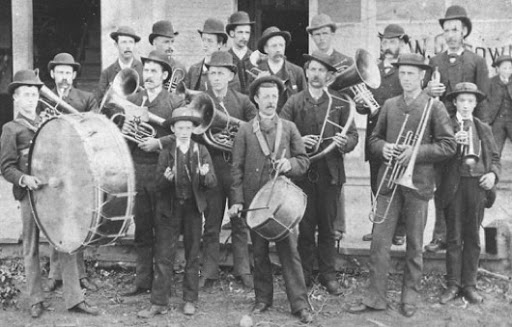
Military music

1+1=3 (cf. A. Whitehead and B. Russell, Principia Mathematica).

Two words: Falk lands (cf. Oxford English Dictionary).

The element of surprise (cf. D. Mendeleev, The Dependence between the Properties of the Atomic Weights of the Elements).

If you have read this blog before, you won’t be surprised if I tell you that this post (like two previous ones – here and here) will be about the infamous “Faith and Reason” column in the “Our Faith on Sunday” newsletter that my parish subscribes to. To be more specific, it will be a rant triggered by the abuse of the imperative singular form of the Latin verb conferre – abbreviated as “cf.”.

Last week I was already on the verge of charging at the column’s previous installment, which argued that reason is what is best about being human, but I decided against giving such a blatantly narrow-minded idea air time. When the column continued along the same track today and when it went from just being blinkered to plain ludicrous, my blood-pressure rose, and when its author suggested that their stumbling echoed Benedict XVI’s masterful Regensburg address,1 I snapped!

So, what did the column say today:

  1. That “[a]s a result of the fall man’s reasoning faculty was seriously damaged.”
  2. That “even after baptism his capacity to reason is handicapped by the scars of Original Sin.”
  3. That “[r]ationality is “of the inner nature of God”, and so in assuming a human nature, He especially assumes that human attribute which is most like Himself and which is at the same time most constitutive of human nature.”
  4. That “[r]isen, ascended, and glorified, human Reason now resides in the bosom of the Father.”
  5. “(cf. Benedict XVI’s address at the University of Regensburg, 2006.)”

Instead of expletives, let me try and argue against each of the above points, which to my mind are even more confused that the typical militant atheist jabs at Christianity:

  1. The assertion that “[a]s a result of the fall man’s reasoning faculty was seriously damaged” conjures up images of Adam and Eve discussing the, sadly now elusive, Theory of Everything before the fall. Taking a bite from the fruit of the forbidden tree then turns them into gibbering savages who are barely in a position to count their own fingers. While this sounds like an entertaining sketch, it has nothing to do with Genesis or with its contemporary Catholic exegesis. In the Genesis account of the fall, the immediate consequences are the appearance of shame and knowledge of good and evil and the subsequent burdening with hard work, tensions between man and woman and expulsion from the Garden of Eden, meted out as punishment. At no point is there any mention or indication of an impact on rational faculty. Turning to the Catechism, the discussion of Original Sin (§396-421) there centers on abuse of freedom, and of God’s trust and friendship, with the consequences being loss of holiness and harmony (with God, between man and woman, …) and a distortion of God’s image. The only mention there of anything to do with reason is man’s being “subject to ignorance, suffering and the dominion of death” (i.e., the building blocks of “concupiscence”). As far as ignorance is concerned, I’d be the last person to deny it, but it is hard to attribute it to the fall, since it was Adam and Eve’s pre-fall selves who were tricked by the snake in the Genesis creation myth …
  2. Saying that “even after baptism [the] capacity to reason is handicapped” also sounds bizarre, suggesting that baptism has – albeit limited – reason-enhancing properties! If that were the case, you’d expect for pre- versus post-baptism IQ tests to show statistically significant differences and one would have to think carefully when such a boost of intelligence would be most beneficial in a person’s life. Again, this is not only nonsensical, but also in direct contradiction with the Catechism, where §1264 says that “frailties inherent in life[, such] as weaknesses of character, and so on, as well as an inclination to sin that Tradition calls concupiscence” remain after baptism.
  3. The assertion that rationality is the human attribute that is most like God is akin to saying that the most important part of the human body is the brain. This too is absurdly reductive and I’d just let St. Paul counter-argue: “If the whole body were an eye, where would the hearing be? If the whole body were hearing, where would the sense of smell be?” (1 Corinthians 12:17).
  4. Suggesting that Jesus’s resurrection and ascension into heaven result in “human reason” residing in the bosom of the Father also smacks of great confusion. Is there a reason substantially different from God’s (as opposed to differing from it by degree) that before the resurrection was lacking in God and that the resurrection “imported”?
  5. Finally, let me turn to the part of today’s column that pushed me to writing this post: “(cf. Benedict XVI’s address at the University of Regensburg, 2006.)” When I read this I knew there was no way Benedict XVI could have said anything like the above – not even as a joke. Nonetheless, let’s follow up on the “cf.” and see what the cited source has to say about original sin, baptism, human reason and the other topics that the column’s unknown author strung together. Interestingly the Regensburg address contains precisely zero mention of baptism or indeed Original Sin (even “sin” only occurs as part of the words “single” and “since,” each used precisely once). What about “human reason”? Surely that phrase does occur in a talk entitled “Faith, Reason and the University. Memories and Reflections.” Here I have to admit that it does … once: “[T]he fundamental decisions made about the relationship between faith and the use of human reason are part of the faith itself; they are developments consonant with the nature of faith itself.” Wait, what? “Human reason” is part of faith and “consonant with the nature of faith”? Yet our trusty anonymous illuminator places it outside God, brought within His remit only thanks to the resurrection … At best the reference in today’s “Faith and Reason” column to Benedict XVI’s gem is (as the Marxist2 saying puts it) like military music is to music or military justice is to justice – and that’s being a shade unfair to the military.

1 And I mean his actual talk, to which I will return in a future post, as opposed to the reduction of its misinterpretation as being anti-Muslim that gripped the media at the time.
2 Groucho, not Karl – obviously …

Benedict XVI: Servant of the servants of God

B16

The papal title that has always impressed me the most by far is Servus servorum Dei (Servant of the servants of God), first used by Saint Gregory the Great, and I believe Benedict XVI’s shock resignation today is an extreme expression of taking it seriously. When a servant can no longer serve, the ultimate manifestation of service is to resign. The Italian economist Prof. Luigino Bruni put this particularly clearly by saying that Benedict XVI’s humble decision has “shown us that the Pope is not a king but a servant.”

Having spent the day thinking about what to say, I have decided against the following, all of which would have been great choices:

  1. Reflecting on the specifics of his beautiful resignation message (a highlight being his affirmation that the Petrine ministry “must be carried out not only with words and deeds, but no less with prayer and suffering.”).
  2. Reviewing the many heartfelt messages arriving from all around the world (a great example being Israeli Chief Rabbi Yona Metzger’s spokesman saying that “I think he deserves a lot of credit for advancing inter-religious links the world over between Judaism, Christianity and Islam. During his period there were the best relations ever between the Church and the chief rabbinate and we hope that this trend will continue.”)
  3. Surveying both the historical precedents (admiring in particular Saint Pontian, who in 235 AD “was arrested and sent to the salt mines, and in order for a successor to be able to be elected in Rome, […] resigned his office.”) and the canon law applicable in this case (pausing over the fact that for the resignation to be valid it does not need to be accepted by anyone).
  4. Arguing that at the heart of both Benedict XVI’s resignation and John Paul II’s persistence in spite of his crippling illness (retorting that “Christ did not come down from the cross either,” when asked whether he’d consider resigning), which prima facie look contradictory, lies a profound commitment to discerning and heroically acting on the will of God.

Instead, I will share with you those insights and teachings of Benedict XVI that have most encouraged, guided and delighted me:1

  1. His joint highlighting of the saints and of art: “[T]o me art and the Saints are the greatest apologetic for our faith. [… I]f we look at the Saints, this great luminous trail on which God passed through history, we see that there truly is a force of good which resists the millennia; there truly is the light of light. [… H]eart and reason encounter one another, beauty and truth converge, and the more that we ourselves succeed in living in the beauty of truth, the more that faith will be able to return to being creative in our time too, and to express itself in a convincing form of art.”
  2. His insistence on a fearless seeking of the Truth, backed by a profound trust in God: “[T]he search for knowledge and understanding always has to involve drawing closer to the truth. […] As far as preserving identity is concerned, it would be too little for the Christian, so to speak, to assert his identity in a such a way that he effectively blocks the path to truth. Then his Christianity would appear as something arbitrary, merely propositional. He would seem not to reckon with the possibility that religion has to do with truth. On the contrary, I would say that the Christian can afford to be supremely confident, yes, fundamentally certain that he can venture freely into the open sea of the truth, without having to fear for his Christian identity.”
  3. His freedom to recognize truth even in sources that don’t have the Church’s approval, such as quoting Origen attributing the following saying to Jesus: “Whoever is close to me is close to the fire” – a statement not found in Catholic canonical Scripture, or praising Teilhard de Chardin’s vision that “At the end we will have a true cosmic liturgy, where the cosmos becomes a living host.”
  4. His clear denunciation of fideism, by affirming that Catholic tradition “has always rejected the so-called principle of ‘fideism’, that is, the will to believe against reason. […] Indeed, although a mystery, God is not absurd. […] If, in contemplating the mystery, reason sees only darkness, this is not because the mystery contains no light, rather because it contains too much. Just as when we turn our eyes directly to the sun, we see only shadow – who would say that the sun is not bright? Faith allows us to look at the ‘sun’ that is God, because it welcomes His revelation in history. […] God has sought mankind and made Himself known, bringing Himself to the limits of human reason.”
  5. His passionate emphasis of the centrality of joy: “Joy is at the heart of the Christian experience. [W]e experience immense joy, the joy of communion, the joy of being Christian, the joy of faith [… and w]e can see the great attraction that joy exercises. In a world of sorrow and anxiety, joy is an important witness to the beauty and reliability of the Christian faith.”
  6. His proclamation that closeness to God is not contingent on a belief in His existence:2 “[A]gnostics, who are constantly exercised by the question of God, those who long for a pure heart but suffer on account of our[, the Church’s,] sin, are closer to the Kingdom of God than believers whose life of faith is “routine” and who regard the Church merely as an institution, without letting their hearts be touched by faith.”
  7. His insight that faith is not a subscription to this or that dogma, but an encounter with the person of Jesus: “[M]any Christians dedicate their lives with love to those who are lonely, marginalized or excluded, as to those who are the first with a claim on our attention and the most important for us to support, because it is in them that the reflection of Christ’s own face is seen. […] It is faith that enables us to recognize Christ and it is his love that impels us to assist him whenever he becomes our neighbour along the journey of life.”

1 Thanks to my bestie PM for this great suggestion!
2 The truth of this was yet again brought home to me today, when my expressing admiration for Pope Benedict was met with understanding from an agnostic and an atheist friend of mine and with mockery from two Christian ones …

The identity of discernibles

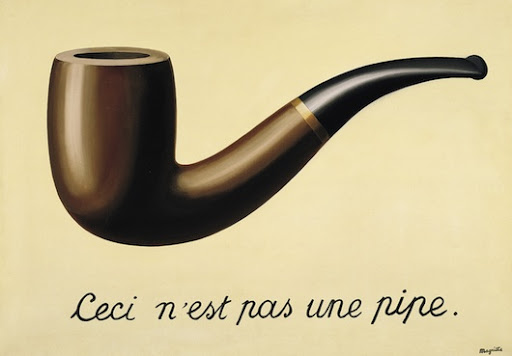
margritti-this-is-not-a-pipe_s.jpg

If two men or two women want to make a life-long commitment of love and support to one another, for better, for worse, for richer, for poorer, in sickness and in health, why shouldn’t that be called marriage? Why do many religious people have an issue with this and why don’t they just recognize and appreciate the love and commitment such couples have for one another? Doesn’t a lack of support for same-sex marriages show an elitism, judgment and discrimination that are foreign to Jesus’ message? As heterosexual couples can marry, why should that right be denied to homosexual ones? And why is it that same-sex marriage should be a threat to the very idea of marriage?

Questions like the above have, I believe, a great deal of profound Christian appeal: love, commitment, not judging, equality and taking the beam out of one’s own eye before proceeding to the splinter in another’s are all deeply Christian principles and when Christians are criticized for their seeming lack, they better take them seriously. Actually, when I say they, I mean me, so let me make this train of thought more personal. What do I think? Where do I stand?

First, let me be super clear about one thing: I believe God has a plan for every single human being and loves each one of us immensely. The late Patriarch Athenagoras saying that “God loves everyone equally, but secretly each one of us is his favorite,” Martin Luther saying “It is not because we are beautiful that God loves us, but because God loves us that we are beautiful,” John Paul II adding that “The person who does not decide to love forever will find it very difficult to really love for even one day,” and Benedict XVI tweeting yesterday that “Everything is a gift from God: it is only by recognizing this crucial dependence on the Creator that we will find freedom and peace,” sum it up for me. Everyone is loved by God, who sees beauty in them, and my love for all mustn’t be selective, jealous or fretting either. So, I believe God loves homosexual men and women and I too need to do the same to call myself a follower of Jesus.

I am therefore vehemently opposed to any lack of love shown towards homosexual persons and am strongly against homophobia, bullying, marginalization or any other respect and care that is not extended to them. Violence against homosexual men or women horrifies me, with cases where it is the state that fuels it (as in Uganda and countries where there are criminal penalties for homosexuality) being particularly abhorrent to me. This is a position that I hold beyond doubt and one in which I feel fully in line with the position and teaching of the Church.

The Catechism states clearly that homosexual persons “must be accepted with respect, compassion, and sensitivity. Every sign of unjust discrimination in their regard should be avoided. These persons are called to fulfill God’s will in their lives.” (Catechism of the Catholic Church, §2358). Several bishops have emphasized that there is good in relationships among homosexual men or women, such as Bishop Woelki of Berlin saying “I also try to acknowledge that they take responsibility for each other on a permanent basis, have promised each other faithfulness and want to look after each other,” the Bishops of England and Wales stating that “We also recognise that many same sex couples raise children in loving and caring homes,” or the late Cardinal Basil Hume affirming that “Homosexual people […] can, and often do, give a fine example of friendship and the art of chaste loving.” As recently as last Monday, there is also the determination by Archbishop Vincenzo Paglia, head of the Pontifical Council for the Family, for the Church to “do more to protect gays and lesbians from discrimination in countries where homosexuality is illegal. […] In the world there are 20 or 25 countries where homosexuality is a crime, […] I would like the church to fight against all this.”1

So, am I in favor of same sex marriage then? Actually, no … My reason for this is that marriage is a lifelong commitment of one woman and one man to each other. This commitment results in the birth of a family, which, at least in principle, is open to the procreation of children. As this is what the concept of marriage means, it is not applicable to same sex couples. But isn’t this discriminatory and doesn’t it fly in the face of everything I have said above? I honestly don’t think so, and I am fully in agreement with the Bishops of England and Wales, who say:

“We disagree that the signal that is sent currently, by restricting marriage to opposite sex couples, is one of disparagement of same sex relationships. The basic argument that is advanced in favour of same sex marriage is one of equality and fairness. But we suggest that this intuitively appealing argument is fundamentally flawed. Those who argue for same sex marriage do so on the basis that it is unjust to treat same sex and heterosexual relationships differently in allowing only heterosexual couples access to marriage. Our principal argument against this is that it is not unequal or unfair to treat those in different circumstances differently. Indeed, to treat them the same would itself be unjust.”

This to me is the crux of the argument: the outcome of even the commitment expressed by marriage vows results in two different states depending on whether it is done by two people of different sexes or the same sex. While there are similarities (i.e., the value and sincerity of the commitment and the love that it springs from and subsequently supports), there are categorical differences too (i.e., the possibility of bringing children into the world and the complementarity of the male and female sexes). Ignoring such differences is the beginning of a loss of clarity of thought and consequently of judgment and action. It is akin to suddenly deciding that we will call an ear an eye – they are both organs and result in sensory perception and surely the ear is just as good as the eye. It is certainly possible to do this, but it will result in confusion (were all the pre-ear=eye statements about eyes meant to apply to the new eye or only to eye-eyes and not ear-eyes?).

The motivation for extending marriage to same sex couples may in many cases be good and be underpinned by principles that I fully subscribe to, but the result is a delusion and a divorce from reality.

Nonetheless, I believe that many homosexual men and women do not feel welcomed by the Church, which to me is similar to the lack of unity among Christians – both pain me, but for both I place myself firmly inside the Church and try to understand what it is that I can do towards overcoming them. With Christian unity too we could decide from one day to the next that we will declare ourselves to be united, that we’ll just change the definition of a couple of terms so that they span previously exclusive concepts. But what would we achieve with that? Not only nothing, but it would be a step back, as it would hinder a true understanding of underlying reality and efforts to arrive at a loving solution that has its eyes wide open.2


1 Even though it is not the topic of this post and addressing it even just briefly would make it way too long, I can’t not mention the Church’s classification of homosexual relationships as “objectively disordered.” This, I have to say, is an unfortunate choice of words. Cardinal Hume felt the same and provided the following reflection:

“The word ”disordered” is a harsh one in our English language. It immediately suggests a sinful situation, or at least implies a demeaning of the person or even a sickness. It should not be so interpreted. First, the word is a term belonging to the vocabulary of traditional Catholic moral theology and philosophy. It is used to describe an inclination which is a departure from what is generally regarded to be the norm. The norm consists of an inclination towards a sexual relationship with a person of the opposite sex and not between persons of the same sex. Being a homosexual person is, then, neither morally good nor morally bad.”

This is an argument I do agree with: the sexual relationship between a man and a woman is constituent of what it means to be human, while such relationships between persons of the same sex are a departure from the inherent purpose of sexuality (without meaning to restrict it to its procreative function). I do believe this to be a fact, but that does not mean that homosexual men and women should not be welcomed by the Church in more effective and constructive ways than is the case today. What these ought to be is not clear to me, but I am convinced of their necessity.
2 Thanks to my überbesties KM, PM and MR for reviewing a draft of this post and for their great feedback!

Tarkovsky: glimpse with sightless eyes

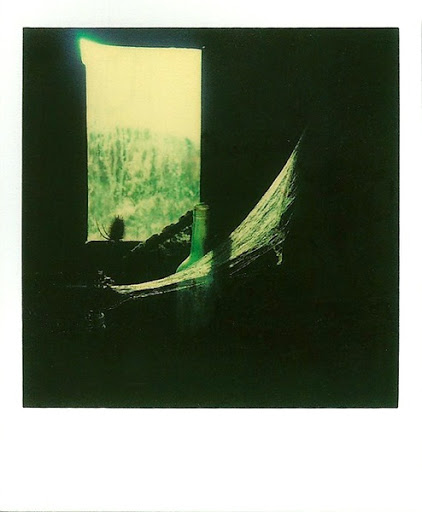
Tarkovsky76 s

Today I have received a wonderful Christmas present from my bestie PM: the book “Instant Light Tarkovsky Polaroids” that contains a series of Polariods taken by the Russian film director Andrei Tarkovsky. If you haven’t seen any of his work, I highly recommend it – his movies are beautifully shot, profound, thought-provoking and reveal a desire to use cinema as a means of exploring fundamental aspects of human nature: “Juxtaposing a person with an environment that is boundless, collating him with a countless number of people passing by close to him and far away, relating a person to the whole world, that is the meaning of cinema.” Fortunately, his movies can now be seen for free on-line, with openculture.com having an up-to-date listing here.

What struck me about the book is first of all the personal character of its photos. They are how I’d imagine Tarkovsky’s Instagram feed to be, rather than a polished fine art collection. While exhibiting the atmospheric, observant nature of his movies, they instead show his dog, son and wife or scenes from places he visited during travels in Russia and Italy. In addition to the photos, there are also a couple of poems, prayers and reflections by Tarkovsky here and I believe these to be the true gems of the book. Let me share a couple of my favorites with you.

First, Tarkovsky gives thought to the nature of artistic expression (italics show original emphasis):

“The image is not a certain meaning
expressed by the director,
but the entire world
reflected as in a drop of water.”

This view very much rings true for me. Whenever I am asked to “explain” my own paintings I feel like I am just one of the multitude of possible viewers, all of whom can confront the work as a world in itself and extract feelings, insights, questions, etc. from it. To my mind, as to Tarkovsky’s, a piece of art is not a message, but an alternate representation of the world. This concept of the image as world, is taken further along a religious line in the following:

“An image
is an impression
of the Truth,
which God
has allowed us
to glimpse
with our
sightless eyes.”

Again there is the world/Truth impressed in an image here, but it is now confronted with our inherent inability to even glimpse it with our “sightless eyes.” I believe this expresses beautifully that basic inability to absolutely interpret artistic work, which is an impression (i.e., not the thing in and of itself) or a reflection (again, only a twisted representation) of a reality that lies beyond it. Tarkovsky here attributes any success in attaining meaning or Truth to God’s benevolence and takes his religious viewpoint further still in the following passage:

“Whatever it expresses –
even destruction and ruin –
the artistic image
is by definition an embodiment of hope,
it is inspired by faith.
Artistic creation
is by definition a denial of death.
Therefore it is optimistic,
even if in an ultimate sense the artist is tragic.
And so there can never be
optimistic artists and pessimistic artists.
There can only be talent and mediocrity.”

To my mind this very much resonates with both what the painter Michel Pochet said about the redemptive power of ugliness and what Benedict XVI said about the liberating, uplifting effect of art even when it is shocking. The role of faith that Tarkovsky sees here, comes out even more clearly in the next quote, where he emphasizes love as the key to faith and their subsequent resolution of the limitations set out above:

“We are crucified on one plane,
while the world is many-dimensional.
We are aware of that
and are tormented by our inability
to know the truth.
But there is no need to know it!
We need to love.
And to believe.
Faith is knowledge with the help of love.”

Finally, Tarkovsky also reflects on man being created in the “image of God” according to the Genesis account – a point that is also central to John Paul II’s Theology of the Body (covered first here and then here):

“In my opinion, when we talk about God
making man in His own image and likeness,
we should understand that the likeness
has to do with His essence, and this is creation.
From this comes the possibility
of evaluating a work and what it represents.
In short, the meaning of art
is the search of God in man.”

This, I believe, is a beautiful synthesis of the above quotes. Man is created in God’s image and is by himself incapable of going beyond the surface of even his own creations. It is only through love and faith that he can seek to be granted access to meaning, Truth and God in himself, in art and in the world.

Science and religion: a set-theoretic view

Universe

The question of how science and religion relate is a staple of this blog, yet in spite of numerous posts1 on this topic already, I feel the need to revisit it again (and probably not for the last time either). What I would like to give some thought to here, are different beliefs (or at least assumptions) about how God and the universe relate2 and the consequences they have on how science and religion are viewed.

For a change, let me start with what I believe myself and then proceed to contrast it with alternatives. To my mind, God infinitely exceeds the universe and is present everywhere and always – as St. Augustine puts it, God is “more inward to me than my most inward part; and higher than my highest.” (Confessions 3, 6). He has both created and sustains the universe, but does so in a way that is intelligible (and therefore also repeatable – the expectation of different outcomes when doing the same thing being one of the definitions of insanity, as Albert Einstein puts it). My position is therefore panentheistic (as opposed to pantheistic – God being equal to the universe – or deist, believing in a distant, separate God) and one that is fundamentally rational as opposed to fideist (a point also emphatically underlined by Benedict XVI during a general audience in November ’12). Here the universe, created “in and by” God,3 is both other than God and very much part of God and the top left quadrant of the diagram above is an attempt to depict it in terms of sets: the universe is represented by a circle, situated in an infinitely extending plane – God.

In this worldview, science is profoundly good not only because of the improvements to life that it can yield, but also because it tells me about how the universe that God created operates. It tells me about God in a way that is like learning about a mime artist by viewing their performance – the information is not immediate, but nonetheless leads to insights about the actor. Another source of understanding God comes to me from theology, which seeks to understand what God has revealed about himself through his relationship with the people of Israel, through his Son, Jesus and through his presence among his followers since then and into the present. These two sources of information about God are in perfect complementarity and equally fill me with wonder and admiration.

Yet science and religion (theology) are not the same – the former has methods finely tuned to bringing the laws of the universe to light and spans the sensible (empirical), while the latter has a span that exceeds that of science, by addressing the extra-empirical aspects of the universe (the whys and ought(’nt)s) as well as events and entities exclusive to its scope. This is not to place one above the other, but simply to put them in relationship as far as their scopes are concerned (bottom left quadrant of the above diagram).

In summary, my understanding of science and religion is that they jointly yield an understanding both of the world I live in and its source and purpose that I believe in. As John Paul II said, “Science can purify religion from error and superstition; religion can purify science from idolatry and false absolutes. Each can draw the other into a wider world, a world in which both can flourish.”

As for alternative views, a positioning of the world as separate from God and outside God, as shown on the right side of the above diagram, is also widespread among religious believers. Here God’s involvement in creation is only an initial impulse and setup, followed by a subsequent separation and distance. The scope of what science and religion have to talk about has no overlap.

My impression here is that this separation also extends into other spheres, beyond just the relationship between God and the universe. At times I come across (repulsive) statements that, e.g., imply that ethical behavior is “owned” by those who hold religious beliefs or that the same applies to truth or beauty.4 In my set theory of the God-universe relationship, all that is good, true and beautiful in the universe, and is accessible without faith, is mine and I just feel like I am being given more or being helped more to live it from my additional, extra-empirical sources.

I have a feeling that this (right) picture also applies to atheist believers, with the circle representing God removed. Here all that is believed to exist is the universe, which is being understood by scientific means and religion is a separate activity that has no corresponding object.

Finally, I suspect that those atheists, who don’t acknowledge that their position is a belief, operate on a worldview like mine (i.e., on the left above), but with the labels swapped. Claims about God are treated like claims about an entity enclosed in the universe and therefore fully subject to the methods of science. Religion too is an activity that can be fully reduced to scientific scrutiny just like any other human activity. If this is correct, then I can understand why atheists who fall in this category find religious belief as lacking in credibility, to the point of being hostile to it.

If any of you, my readers, identify with one of the positions other than mine, I would very much appreciate it if you let me know if I misunderstood something about it. And even if you agree with me, I’d be keen to hear from you :).


1 With previous looks at the science of creation from nothing, a mystical view of creation, the role of belief in science (also here), the dialogue between Chief Rabi Sacks and Prof. Dawkins, the ambiguous relationship between theory and evidence, the constraints of empiricism, the “God of gaps” caricature, atheism as a creed, the evidential equivalence of atheism and religious belief, Martini and Eco’s dialogue on ethics and a call for recognizing rationality in (some of) religion and science alike – to mention just a few :).
2 Many thanks to NP and AG with whom I have spoken about some aspects of this picture by email and over on Facebook over the last weeks. Their insights triggered a lot of interesting and valuable discussion.
3 “The universe, created in and by the eternal Word, the “image of the invisible God,” is destined for and addressed to man, himself created in the “image of God” and called to a personal relationship with God. Our human understanding, which shares in the light of the divine intellect, can understand what God tells us by means of his creation.” (Catechism of the Catholic Church, §299)
4 My friend, SC, told me of a particularly saddening and vile case of her parish priest telling her (at the age of 7) that she wasn’t even human, because she didn’t believe in God. This has nothing to do with Christianity as I understand it, as I hear it taught by the current and previous popes or presented in the Catechism. Instead, it is its perversion.

Venture freely into the open sea of the truth

I am glad I kept tabs on Pope Benedict XVI’s sermons, articles and speeches over the Christmas period and that I now had a chance to read them, as there were some true gems to be found there.

Let’s start with his Christmas Vigil homily, where he summed up the trusting fragility of the Christmas paradox particularly vividly and beautifully:

“Again and again it astonishes us that God makes himself a child so that we may love him, so that we may dare to love him, and as a child trustingly lets himself be taken into our arms. It is as if God were saying: I know that my glory frightens you, and that you are trying to assert yourself in the face of my grandeur. So now I am coming to you as a child, so that you can accept me and love me.”

Then, in his article in the Financial Times, he drew out the consequences of God’s becoming man and the love for humanity He thereby demonstrated:

“Christians shouldn’t shun the world; they should engage with it. But their involvement in politics and economics should transcend every form of ideology.

Christians fight poverty out of a recognition of the supreme dignity of every human being, created in God’s image and destined for eternal life. Christians work for more equitable sharing of the earth’s resources out of a belief that, as stewards of God’s creation, we have a duty to care for the weakest and most vulnerable. Christians oppose greed and exploitation out of a conviction that generosity and selfless love, as taught and lived by Jesus of Nazareth, are the way that leads to fullness of life. Christian belief in the transcendent destiny of every human being gives urgency to the task of promoting peace and justice for all.”

However, the engagement of Christians in the world is to be done on Gospel terms and here Benedict introduces a (to me) new reading of Jesus’ famous response to the trap some Pharisees laid him: “Christians render to Caesar only what belongs to Caesar, not what belongs to God.” He goes beyond a splitting of responsibilities and highlights the wrongful demands that secular powers can lay claim to:

“Christians have at times throughout history been unable to comply with demands made by Caesar. From the Emperor cult of ancient Rome to the totalitarian regimes of the last century, Caesar has tried to take the place of God. When Christians refuse to bow down before the false gods proposed today, it is not because of an antiquated world-view. Rather, it is because they are free from the constraints of ideology and inspired by such a noble vision of human destiny that they cannot collude with anything that undermines it.”

Benedict then takes this central idea of freedom in truth and applies it, in a to me surprisingly bold way, to the topic of inter-religious dialogue, which “is a necessary condition for peace in the world and is therefore a duty for Christians as well as other religious communities.” He first presents the current rules of this dialogue as, first, “not aim[ing] at conversion, but at understanding” and, second, that “both parties to the dialogue remain consciously within their identity, which the dialogue does not place in question either for themselves or for the other.” While he underlines the correctness of not aiming at conversion, Benedict sees these rules as “too superficial” and instead proposes the following to the Christian participant:

“[T]he search for knowledge and understanding always has to involve drawing closer to the truth. Both sides in this piece-by-piece approach to truth are therefore on the path that leads forward and towards greater commonality, brought about by the oneness of the truth. As far as preserving identity is concerned, it would be too little for the Christian, so to speak, to assert his identity in a such a way that he effectively blocks the path to truth. Then his Christianity would appear as something arbitrary, merely propositional. He would seem not to reckon with the possibility that religion has to do with truth. On the contrary, I would say that the Christian can afford to be supremely confident, yes, fundamentally certain that he can venture freely into the open sea of the truth, without having to fear for his Christian identity.”

This is decidedly not a cautious edging towards compromise, but instead a realization that Christians “can enter openly and fearlessly into any dialogue.”

Lumen Gentium: On the People of God

Fish family

[Just a quick apology before you proceed – this post has turned out to be rather longer than I hoped for, but there was just so much of interest in this chapter of Lumen Gentium that I couldn’t be any more succinct. You may prefer to read it in parts rather than all in one go …]

To have any chance of reading the full set of 16 Vatican II documents during this Year of Faith, I need to press on and take a look at the second chapter of Lumen Gentium, the council’s dogmatic constitution on the Church. In the first chapter, we got a view of who the Church is, as seen from God’s perspective – i.e., what the ultimate end of the Church is, while here, in chapter two, the focus is more on a view from the trenches: the People of God.

If you are reading this as an agnostic or a non-Catholic, let me first point you to the caveat in my post on Dei Verbum (paragraph 2), and re-iterate how this particular document does not use the most accessible language (e.g., with sentences like “Fortified by so many and such powerful means of salvation, all the faithful, whatever their condition or state, are called by the Lord, each in his own way, to that perfect holiness whereby the Father Himself is perfect.”). While I would feel quite at ease recommending a direct reading of Dei Verbum to anyone interested in how the Church understands Scripture, I’d hesitate when it comes to Lumen Gentium. Nonetheless, if you consider Lumen Gentium to be like a patent is to a scientific paper and take the time to peel away its particular form, the substance it carries is well worth the effort.

The starting point of Chapter 2 is Jesus’ New Testament, which forms a new people (the People of God) by means not of genetics (as was the case in the Old Testament, where the Israelites are already called the “Church of God”) but of the Spirit. All who believe in Jesus, become members of His people through baptism and the actions of the Holy Spirit. “The state of this people is that of the dignity and freedom of the sons of God, in whose hearts the Holy Spirit dwells as in His temple. Its law is the new commandment to love as Christ loved us.” A clearer distinction is made here between those who are members of the People of God and those who are not than in the first chapter. The Church is presented as the salt or yeast from which the whole world can benefit: “although it does not actually include all men, and at times may look like a small flock, [the Church] is nonetheless a lasting and sure seed of unity, hope and salvation for the whole human race.” Looking back at chapter one and at Dei Verbum, this should not be taken as an indication of superiority, but simply as an attempt at specificity. Clearly not all of humanity believes that Jesus is God, who came to show us the way to Himself, and Lumen Gentium here strives to spell out what it is that those who hold this belief are like and how they live as a community. This positioning of the Church is particularly clear from the following: “Established by Christ as a communion of life, charity and truth, [the Church] is also used by Him as an instrument for the redemption of all.”

The role of the People of God is to “bear witness to Christ and give an answer to those who seek an account of that hope of eternal life which is in them.” This is done by all members of the Church by participating in the priesthood of Jesus, who is its head. Those consecrated to the “ministerial priesthood” “teach and rule the priestly people; acting in the person of Christ, making present the Eucharistic sacrifice, and offering it to God in the name of all the people.” The laity too participate in Jesus’ (“royal”) priesthood, which they exercise “in receiving the sacraments, in prayer and thanksgiving, in the witness of a holy life, and by self-denial and active charity.” The whole church therefore is a “priestly community.”

It is a community that operates through the “sacraments and the exercise of the virtues,” where members are “[i]ncorporated in the Church through baptism” (incorporated since the Church is the Body of Christ, as chapter one sets out). This membership is further perfected by confirmation, when “the Holy Spirit endows them with special strength so that they are more strictly obliged to spread and defend the faith, both by word and by deed.” The Eucharist, which is “the fount and apex of the whole Christian life” strengthens them and “manifest[s] in a concrete way [the] unity of the people of God.” Through the sacrament of Penance, they “obtain pardon from […] God for the offence committed against Him and are […] reconciled with the Church.” Through the anointing of the sick, the People of God “associat[e] themselves freely with the passion and death of Christ.” Those who are consecrated by “Holy Orders[,] are appointed to feed the Church in Christ’s name with the word and the grace of God,” while those who receive the sacrament of Matrimony, “partake of the mystery of that unity and fruitful love which exists between Christ and His Church, help each other to attain to holiness in their married life and in the rearing and education of their children.” “From the wedlock of Christians there comes the family, in which new citizens of human society are born, who by the grace of the Holy Spirit received in baptism are made children of God, thus perpetuating the people of God through the centuries. The family is, so to speak, the domestic church.” What is crystal clear from the above is that the sacraments (shown in bold) are the “means of salvation,” helping the members of the Church to “bear witness to Christ.”

So far, so good, but what comes next in §12 is to me the most interesting part of Chapter 2 (as the preceding paragraphs were edifying, but had a sense of the taxonomical about them):

“The entire body of the faithful […] cannot err in matters of belief. They manifest this special property by means of the whole peoples’ supernatural discernment in matters of faith when “from the Bishops down to the last of the lay faithful” they show universal agreement in matters of faith and morals. That discernment in matters of faith is aroused and sustained by the Spirit of truth. It is exercised under the guidance of the sacred teaching authority, in faithful and respectful obedience to which the people of God accepts that which is not just the word of men but truly the word of God. Through it, the people of God adheres unwaveringly to the faith given once and for all to the saints, penetrates it more deeply with right thinking, and applies it more fully in its life.”

This is strong stuff, both as it states that the entire body of the faithful “cannot err” when it comes to faith and morals and as it calls for careful thought being applied to these beliefs and for their ever more perfect putting into practice. To my mind the key takeaway here is that infallibility here is attributed to the “entire body of the faithful” – i.e., the Mystical Body of Christ that has Jesus as its head. If truly all the faithful hold a certain belief then I can well subscribe to that belief having to be taken seriously and having to be attributed to the Holy Spirit. What this view does is to place the whole of the Church in a position of tremendous importance and responsibility, far from the usual caricature where the hierarchy is seen as dictating to a flock that follows it blindly and unthinkingly. The flip side of such status is the responsibility we carry for disagreements and disunity within the Church, which prevents us from accessing the unerring insights that the Holy Spirit has prepared for us when we are united.1

Two aspects of the above strike me as relevant: first, that this is not a new idea, but instead a centuries-old idea that has had new light shed on it and second, that it again points to the continuing action of the Holy Spirit. In terms of the first aspect, the basic idea can be seen already in the Latin proverb: “Vox populi, vox Dei” (“The voice of the people is the voice of God”) which has been quoted as a proverb already in the 8th century AD. The second aspect then is particlarly clearly illuminated by what Pope Benedict XVI in fact said just today:

“This gift, the sensus fidei, constitutes in the believer a kind of supernatural instinct that has a connatural life with the same object of faith. It is a criterion for discerning whether or not a truth belongs to the deposit of the living apostolic tradition. It also has a propositional value because the Holy Spirit does not cease to speak to the Churches and lead them to the whole truth.”

To underline the profound vocation of every single member of the People of God, Lumen Gentium points to the Holy Spirit’s gifts being bestowed on anyone whom He chooses: “[T]he Holy Spirit sanctifies and leads the people of God and enriches it with virtues, “allotting his gifts to everyone according as He wills.” He distributes special graces among the faithful of every rank. By these gifts He makes them fit and ready to undertake the various tasks and offices which contribute toward the renewal and building up of the Church.” This acknowledges very clearly that it is not the hierarchy of the church alone who have a role of leadership in the Church, but that the Holy Spirit can choose anyone to contribute to its renewal, “but judgment as to their genuinity and proper use belongs to those who are appointed leaders in the Church, to whose special competence it belongs, not indeed to extinguish the Spirit, but to test all things and hold fast to that which is good.” A very careful balance is presented here between the hierarchical and the “charismatic” aspect of the Church, which underlines again the fact that the Church are all the People of God.

Paragraph 13 then focuses on there being only one People of God, “which takes its citizens from every race, making them citizens of a kingdom which is of a heavenly rather than of an earthly nature.” This “takes nothing away from the temporal welfare of any people. On the contrary it fosters and takes to itself, insofar as they are good, the ability, riches and customs in which the genius of each people expresses itself.” All the diversity in the Church then has as its goal the fulfillment of St. Peter’s words: “According to the gift that each has received, administer it to one another as good stewards of the manifold grace of God” (1 Peter 4:10).

In paragraph 14 we turn to the role of the Church in the context of salvation and we start with a warning: “Whosoever, […] knowing that the Catholic Church was made necessary by Christ, would refuse to enter or to remain in it, could not be saved.” Membership in the Church requires acceptance of “her entire system and all the means of salvation given to her, and [being] united with her as part of her visible bodily structure and through her with Christ, who rules her through the Supreme Pontiff and the bishops.” Even membership (for those who know that it is necessary for salvation) is not sufficient though: “He is not saved, however, who, though part of the body of the Church, does not persevere in charity. He remains indeed in the bosom of the Church, but, as it were, only in a “bodily” manner and not “in his heart.”” And it gets even worse! Those who “fail […] to respond to [the grace of Christ] in thought, word and deed, not only shall they not be saved but they will be the more severely judged.” Reading Chapter two very much gives you a sense of growing wonder as you proceed towards the end of §13, only to be followed by a cold shower and stark warnings!

So, what does §15 hold? First, it starts by acknowledging that there are Christians outside the Catholic Church:

“They lovingly believe in God the Father Almighty and in Christ, the Son of God and Saviour. They are consecrated by baptism, in which they are united with Christ. They also recognize and accept other sacraments within their own Churches or ecclesiastical communities. Many of them rejoice in the episcopate, celebrate the Holy Eucharist and cultivate devotion toward the Virgin Mother of God. They also share with us in prayer and other spiritual benefits. Likewise we can say that in some real way they are joined with us in the Holy Spirit, for to them too He gives His gifts and graces whereby He is operative among them with His sanctifying power.”

The key to me here is not only the extensive list of similarities that the Catholic Church sees in other “churches and ecclesiastical communities” but also the warmth of the language used (“lovingly believe,” “consecrated by baptism,” “rejoice in the episcopate,” “cultivate devotion,” “joined with us in the Holy Spirit”). There is a real yearning and well-wishing here and a desire to “pray, hope and work” towards being “peacefully united.”

Paragraph 16 then talks about where the Catholic Church sees non-Christians in this picture and there is again a sense of openness, warmth and yearning here. First come the Jews, “from whom Christ was born according to the flesh”: “this people remains most dear to God, for God does not repent of the gifts He makes nor of the calls He issues.” Next, come the Muslims “who, professing to hold the faith of Abraham, along with us adore the one and merciful God, who on the last day will judge mankind.” Then there are all others who seek God: “Nor is God far distant from [them], for it is He who gives to all men life and breath and all things, and as Saviour wills that all men be saved.” Finally, all those of good will are in the picture too: “Divine Providence [does not] deny the helps necessary for salvation to those who, without blame on their part, have not yet arrived at an explicit knowledge of God and with His grace strive to live a good life.” The message is very clear: all are called to salvation and each has to take advantage of all the means they are offered for reaching it, according to their conscience and understanding.

Finally, Chapter 2 closes with a reminder of Jesus’ words: “Go, therefore, make disciples of all nations, baptizing them in the name of the Father and of the Son and of the Holy Spirit, teaching them to observe all things whatsoever I have commanded you. And behold I am with you all days even to the consummation of the world” (Mathew 28:19). All members of the Church have an “obligation of spreading the faith” so that “whatever good is in the minds and hearts of men, whatever good lies latent in the religious practices and cultures of diverse peoples, is not only saved from destruction but is also cleansed, raised up and perfected unto the glory of God.” All this is done so that “the entire world may become the People of God,” which instead of being an attempt to conquer or colonize is one of striving for unity in diversity.


1 I would just like to tip my hat to my bestie PM, who has essentially arrived at this point without having read Lumen Gentium!