Camus on dialogue, revolt, beauty and love

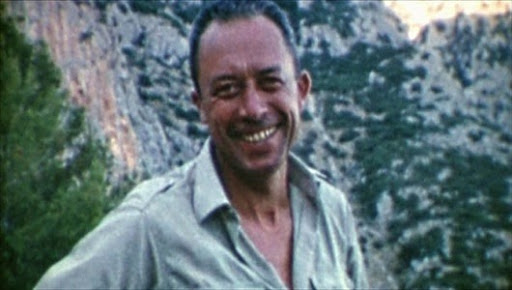
Camus

One of the features of Pope Francis’ first encyclical, Lumen Fidei, that stood out for me most is its constant reference to love, regardless of the specific subject of its reflection. This certainly is not surprising in the context of Christian theology – a theology that is all about God, who is Love – but it’s all-pervasiveness nonetheless made me think. In particular, it made me think about what someone who is not a Christian, who is an atheist or humanist, would say on the subject.

With these questions in mind, I turned to my “read later” reading list and my eyes landed on a piece by Cardinal Gianfranco Ravasi, where he speaks about how Albert Camus‘ thought is a confrontation with the same questions that Christianity grapples with. Questions of meaning, purpose, suffering, revolt, hope and love.

Ravasi there starts with quoting from a talk Camus gave to a group of Dominicans in 1948, where he says to his hosts that “the world of today needs Christians who remain Christians” and where he declares:

“I shall not, as far as I am concerned, try to pass myself off as a Christian in your presence. I share with you the same revulsion from evil. But I do not share your hope, and I continue to struggle against this universe in which children suffer and die.”

This directness and honesty of Camus has always been very attractive to me, which made me look for the full text of his talk to the Dominicans and I found a fairly extensive set of fragments from it here. What struck me there is how I find myself very much agreeing with him, where what he says is in fact a very powerful examination of conscience for Christianity and also for me personally.

From these fragments it is explicit that the Dominicans invited Camus to talk to them about what “unbelievers expect of Christians,” which makes me very impressed with them too, and for which Camus also acknowledged their “intellectual generosity.” He then proceeds to set out the following principles of dialogue:

that “if I allowed myself at the end of this statement to demand of you certain duties, these could only be duties that it is essential to ask of any man today, whether he is or is not a Christian.”

that “I shall never start from the supposition that Christian truth is illusory, but merely from the fact that I could not accept it.”

and that “I shall not try to change anything that I think or anything that you think (insofar as I can judge of it) in order to reach a reconciliation that would be agreeable to all. On the contrary, what I feel like telling you today is that the world needs real dialogue, that falsehood is just as much the opposite of dialogue as is silence, and that the only possible dialogue is the kind between people who remain what they are and speak their mind.”

These are an excellent set of principles: do to others as you would want them to do to you, the principle of charity and respect for the other being who they are, not setting out to change them. In fact, they seem to me to be very much in sync with what Pope Francis said on the same topic: “Dialogue is born of an attitude of respect towards another person, of a conviction that the other has something good to say; it requires that we make space in our heard their point of view, their opinion and their position.”

With these principles as the basis, Camus proceeds to spelling out his expectations:

“What the world expects of Christians is that Christians should speak out, loud and clear, and that they should voice their condemnation in such a way that never a doubt, never the slightest doubt, could rise in the heart of the simplest man. That they should get away from abstraction and confront the blood-stained face history has taken on today. The grouping we need is a grouping of men resolved to speak out clearly and to pay up personally. When a Spanish bishop blesses political executions, he ceases to be a bishop or a Christian; even a man; he is a dog just like the one who, backed by an ideology, orders that execution without doing the dirty work himself. We are still waiting, and I am waiting, for a grouping of all those who refuse to be dogs and are resolved to pay the price that must be paid so that man can be something more than a dog. […]

Perhaps we cannot prevent this world from being a world in which children are tortured. But we can reduce the number of tortured children. And if you don’t help us, who else in the world can help us do this? […]

But it may be […] that Christianity will insist on maintaining a compromise or else on giving its condemnations the obscure form of the encyclical. Possibly it will insist on losing once and for all the virtue of revolt and indignation that belonged to it long ago. In that case Christians will live and Christianity will die. In that case the others will in fact pay for the sacrifice. [… I]f Christians made up their minds to it, millions of voices—millions, I say—throughout the world would be added to the appeal of a handful of isolated individuals who, without any sort of affiliation, today intercede almost everywhere and ceaselessly for children and for men.”

When I read this, it really stopped me in my tracks. This is the kind of dialogue that we, Christians need – someone from the “outside” shaking us, pointing to our errors and doing so not for the sake of some propagandist point-scoring, but out of a genuine concern for our returning to our roots and maintaining our identity. In many ways, what Pope Francis is doing now from the “inside” is similar – the call to poverty, to the “existential peripheries” and to respect for and collaboration with atheists are all examples of it and I am deeply grateful to him and to Camus.

Returning to Ravasi’s discourse, he steers it to another very interesting point of common interest to Christianity and Camus, by quoting from “Helen’s Exile” and then from “The Rebel”:

“Man cannot do without beauty, and this is what our era pretends to want to disregard. It steels itself to attain the absolute and authority; it wants to transfigure the world before having exhausted it, to set it to rights before having understood it. Whatever it may say, our era is deserting this world.”

“Beauty, no doubt, does not make revolutions. But a day will come when revolutions will have need of beauty.”

Here the connection between beauty and the revolt Camus speaks about to the Dominicans is clear – both are set against an exploitation and ignoring of the world. Revolt is directed against suffering while beauty is aimed at appreciating existence.

Ravasi then makes the, to me at first surprising, summary of the above as being “the way of love.” To get a sense of why he may have interpreted it as such, Camus’ own words in “The Rebel” point to the key: “The procedure of beauty, which is to contest reality while endowing it with unity, is also the procedure of rebellion.” Rebellion and beauty bring about unity, which in turn is synonymous with love in Christianity – the Persons of the Trinity being One is their love for each other; Jesus-Love is present among his followers if they are united in his name (cf. Matthew 18:20), etc.

Finally, to underline the importance Camus gives to love, Ravasi quotes the following from his “Notebooks” from 1937:

“If someone told me to write a book on morality, it would have a hundred pages and ninety-nine of them would be blank. On the last page I would write, “I recognize only one duty and that is to love.” And as far as everything else is concerned, I say no.”

St. Augustine would be pleased, as am I 🙂
Art’s dialogue: Vatican @ Venice Biennale

“It’s Sandro, about the Biennale.” was the first thought that entered my mind when I heard about the Vatican’s latest plans to engage with contemporary art, followed by an “Phew!” as soon as I read the details. While the Church has been a patron of the arts during many centuries, it would be fair to say that it’s ties with contemporary art have slipped of late. While still proclaiming the importance of art as such, the picture it portrayed was one of art having expired after the Renaissance.

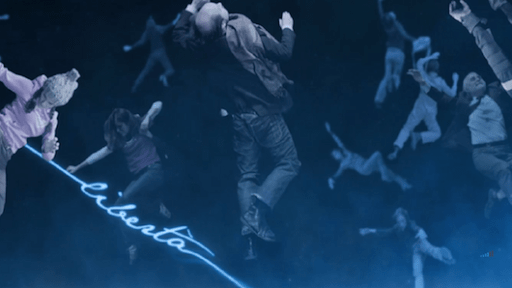
It was therefore great to see the announcement yesterday by Cardinal Ravasi that the Holy See is going to present a pavilion at this year’s Venice Biennale and to hear about the artists commissioned for it: Studio Azzurro (a Milanese group of video and performance artists), Josef Koudelka (a highly respected Czech photographer, represented by Magnum Photos) and Lawrence Carroll (Australian-born, American painter whose work is in the permanent collections of galleries like the MOCA). Before taking a closer look at these artists, it is worth noting the theme of the pavilion: “In the Beginning.”1 The focus here is on the first 11 chapters of Genesis as an inspiration for the exploration of man’s origins (“Creation”), the introduction of evil into history (“Un-creation”) and the hope that enters the world via the New Man (“Re-creation”). In Ravasi’s words:

“Creation concentrates on the first part of the biblical narrative, when the creative act is introduced through the Word and the breath of the Holy Spirit, generating a temporal and spatial dimension, and all forms of life including human beings.

Un[-]creation, on the other hand, invites us to focus on the choice of going against God’s original plan through forms of ethical and material destruction, such as original sin and the first murder (Cain and Abel), inviting us to reflect on the “inhumanity of man.” The ensuing violence and disharmony trigger a new start for humanity, which begins with the punitive/purifying event of the Flood.

In this biblical story, the concept of the voyage, and the themes of seeking and hope, represented by the figure of Noah and his family and then by Abraham and his progeny, eventually lead to the designation of a New Man and a renewed creation, where a profound internal change gives new meaning and vitality to existence.”

By the sounds of it, this is a very broad brief, which Ravasi underlines by saying that “each of these aspects was only a starting point for the selected artists. A vital, rich, and elaborate dialogue has been established with them and is a sign of a renewed, modern patronage.” And the aim of such patronage? “[I]nstituting and promoting occasions of dialogue within an ever broader and diversified context,” which sounds exactly like the mission statement of Ravasi’s Pontifical Council for Culture and a natural extension to the dialogue already in progress with intellectuals of all faiths an none, promoted via the Courtyard of the Gentiles initiative.

So, who are the three artists chosen for the first Vatican presence at a Venice Biennale?

Studio azzurro

Of the three, the only one I didn’t know of is Studio Azzurro, who have been given the first of the three themes: “Creation” and who place “light, sound, and sensory stimuli at the center of their artistic investigation,” in the words of the art historian and director of the Vatican Museums Prof. Antonio Paolucci. He adds that “[t]heir work triggers a dialogue, awash with echoes and reverberations, between the vegetable and animal kingdoms and the human dimension, which leads, via memory, to other personal narrations.” In broad strokes this sounds like their “Fare gli Italiani” installation in Turin two years ago (a video of which can be seen here) or their earlier “Meditazioni Mediterraneo.” From the perspective of the artists themselves, their interests lie in the “values of memory, places and communities” and their use in “strongly participatory” ways.

Koudelka slovacchia 1963

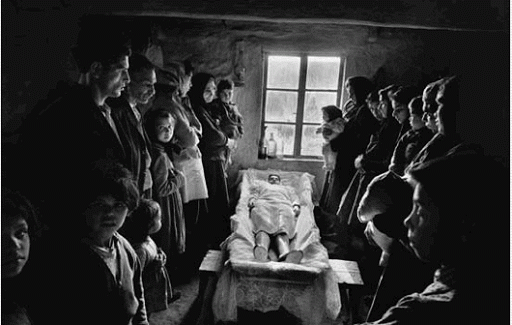
“Un-creation” is entrusted to the photographer Josef Koudelka, whose work is described by Paolucci as follows: “themes such as the destruction brought about by war, the material and conceptual consumption of history through time, and the two opposing poles of nature and industry are made to emerge. The photographer’s images expose an abandoned, wounded world, and at the same time are able to transform fragments of reality into works of art bordering on abstraction.” In many ways this sounds like the “redeeming ugliness” also explored by Michel Pochet, mentioned in an earlier post. To my mind this part of the theme is of great importance as it underlines the being “in the world but not of the world” (cf. John 15:19) of Christianity and a readiness to engage with all of reality. This is an attitude that is at the heart of Koudelka’s approach, who says that “I would like to see everything, look at everything, I want to be the view itself.” His portfolios covering the 1968 invasion of Prague by the Soviet army, the lives of gypsies in Eastern Europe in the ’70s (from which the above photo is taken) and the Welsh landscape in the late ’90s are all great examples of his desire to “be part of everything that is around [him].”

Lawrence carroll

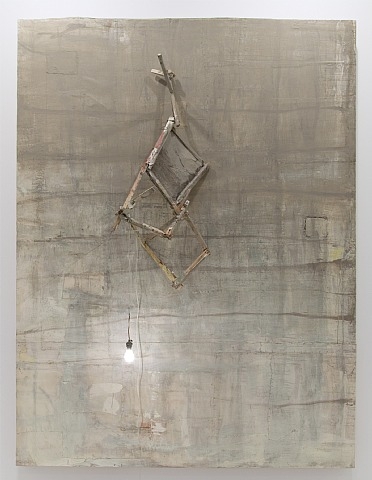
Finally, “Re-creation” will be taken up in the work of the painter Lawrence Carroll, who uses “salvaged materials and the processes of transfiguration, which [he] presents both realistically and symbolically together. His is an elaboration that, meditating on the experiences of Arte Povera, actualizes a continuous and cyclical action of recovery and erosion, of suspension and decline, and of pause and reactivation through the reintroduction of objects into a temporal circuit, forcing fragility and monumentality to coexist” (Paolucci). Carroll himself says that his work “is about the idea that ideas and things have the possibility of having another life” carried from generation to generation of artists. In many ways his work is not only about the transformative, transcendent aspects of art but also its interconnectedness both with past and present ideas, forms and objects.

I believe Cardinal Ravasi has achieved something very impressive here. First, he has chosen a theme with universal appeal and accessible to believers and non-believers alike. Second, he has chosen a set of three artists who are very different from each other, who are respected in and representative of the contemporary art world (insofar as that is possible) and who have a great sense personal freedom (both Koudelka and Carroll have been emphasizing their commitment to their own independence over the year, e.g., with Koudelka saying: “I refuse assignments, even for projects that I have decided to do anyhow […] the idea that no one can buy me is important for me”). Third, he has steered clear of art “destined for the liturgy and sacred spaces” – this is not about interior decoration or illustration but about “rebuild[ing] relations between art and faith.” While not overtly religious, the works commissioned by the Vatican nonetheless speak to themes that are core to Christianity, since – as Cardinal Ravasi puts it – “they should raise questions in people’s minds about their origins and the origins of the world, about sin and destruction, about suffering, but also about hope for a new creation and new way of living.”


1 A theme dear to this blog, where it was covered in the context of the Johannine prologue, the perspective of the roots of science in Genesis and of John Paul II’s Theology of the Body among others.

Serving the Church

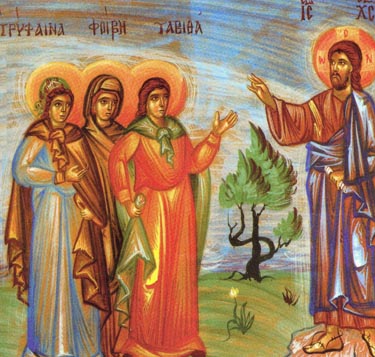
Christ calling Deaconesses to serve the Church

I am starting from scratch after having written a lengthy post on this topic already and realizing – after talking to my besties YYM1 and PM – that I was approaching the topic all wrong. I can still use all the research, but the tone had to change from the playful and partly sarcastic to what I am going to try next.

I feel that my being married, working at a tech company and being a lay person allows me to seek God without limits, to fully participate in the life of the Church and to have the path to sanctity wide open to me. At the same time I realize though that some of my Catholic sisters suffer from feeling the call to the priesthood and being faced with (a now final) barrier to it:

“I declare that the Church has no authority whatsoever to confer priestly ordination on women and that this judgment is to be definitively held by all the Church’s faithful.” (Ordinatio Sacerdotalis, §4)

At first sight (and maybe even after repeated reading) this might sound like an aspect of Church teaching that is simply out of date, that needs to catch up with the times and that can be summed up with the following:

“[T]here is an urgent need to achieve real equality in every area: equal pay for equal work, protection for working mothers, fairness in career advancements, equality of spouses with regard to family rights and the recognition of everything that is part of the rights and duties of citizens in a democratic State.” (Letter to Women, §4)

Now, maybe this will come as a surprise, but the author of both of the above quotes is the same person: Blessed Pope John Paul II, and you may ask yourself how he can at the same time talk about women’s rights and slam the door shut on the question of women priests. I believe the answer lies in the following (and, yes, it too is by John Paul II):

“If Christ […] entrusted only to men the task of being an “icon” of his countenance as “shepherd” and “bridegroom” of the Church through the exercise of the ministerial priesthood, this in no way detracts from the role of women, or for that matter from the role of the other members of the Church who are not ordained to the sacred ministry, since all share equally in the dignity proper to the “common priesthood” based on Baptism.” (Letter to Women, §11)

When I first saw this, a light went on in my mind after I read the words “an “icon” of his countenance.” Priests are Jesus’ proxies and transmit to us his presence in the Church and his being the source of the sacraments. When I attend mass, I experience a man saying the words that bring about the Eucharist, like I would have, had I been at the Last Supper; when I go to confession, I speak to a man, as I would have, had I been among Jesus’ disciples. Jesus having come into the world as a man rather than a woman is not an accident, nor is it a consequence of social conventions. I believe, that God became flesh as a baby boy, to use the male gender in a specific way, just like he sought consent from a girl to become His mother, again because of the specifics of the female gender. To read this as in any way discriminatory against women is incomprehensible to my mind, but I’ll leave that to another post.

Let me now put my last card on the table with regard to the priesthood. God’s call is ultimately the same for all of us: to choose Him as the first priority in our lives and to follow his new commandment of love. Placing something above a love for one’s neighbor and for God is a mistake, even if that something is the priesthood. If love for God and neighbor are missing, the priesthood becomes a millstone (“The road to hell is paved with the skulls of erring priests, with bishops as their signposts.” St. John Chrysostom) and if they are present, then it becomes secondary and one seeks specifics with humility. To come at the argument from a perspective of rights is also a category mistake. No one has the right to be made a priest, whether man or woman, and it is in all cases a gift that is received rather than an entitlement that can be claimed.

For now, let it suffice that my argument is this: the priesthood is only open to men, because Jesus was a man and because he indicated to us from the very beginning that it was through men that he wanted certain aspects of his ministry to be perpetuated. In this way, his ministers’ being male is integral to their being Jesus’ proxies and no matter what social or other developments ensue, the priesthood in the Catholic Church is going to remain restricted to them.

This is not the end of the story though, since we are ultimately all being called to be Jesus’ proxies: to be the means by which He can show His love to all. As a married, lay person I don’t feel in any way limited in the extent to which I can strive to imitate Jesus’ love for humanity, even if I don’t become a priest. But, and there is a but, there is a variety of other ways in which Jesus can be imitated and and in which Catholics can serve the Church (which is fundamentally also what the priesthood is about: service). Two of these, which today are not open to women, are the diaconate and the office of cardinal, and I would like to argue that they may both one day (hopefully soon) be conferred on women.

Bishop Emil Wcela has just published a very interesting article (that I recommend in full), entitled “Why not women?” It starts where the final word on women priests in the Catholic Church ends: by making a case for exploring the possibility of ordaining women as deacons. Wcela presents a compelling case, starting with evidence for deaconesses dating back right to the time of the apostles (giving the example of St. Phoebe, whom St. Paul calls a diakonos in his letter to the Romans (16:1) – although the meaning of the term is disputed) and dotted through the history of the church (including Pope Benedict VIII writing to the bishop of Porto to give him authority to ordain deaconesses). He the proceeds to give the example of deaconesses in other Christian churches, but is also clear about the fact that this is not the case in the Catholic Church at present.

Nonetheless, there has been a desire to explore its possibility since the Second Vatican Council, including a raising of the issue by the US bishops in a pastoral letter from 1992. 2009 then saw an important change to Canon law, which differentiates between the nature of the priestly and episcopal order and that of deacons, stating that bishops and priests “receive the mission and capacity to act in the person of Christ the Head; deacons, however, are empowered to serve the People of God in the ministries of the liturgy, the word and charity.” (Canon 1009 of the Code of Canon Law). This change removes the constraints that previous legislation placed on the diaconate and historical precedent further supports a future change in this area. Bishop Wcela finally notes that women already participate extensively in the Church’s ministry and that ordaining them as deacons would provide greater official recognition, confer the grace of the sacrament on them and give them access to ecclesiastical offices that require ordination. The article ends with a call to raising awareness of this opportunity and I would personally like to add my voice to it.

On a related note, Cardinal Timothy Dolan stated in an interview last March, that the office of cardinal is in principle open to women, since it does not require priestly or episcopal orders. He then proceeded to tell the story of how someone once suggested to Pope John Paul II to make Mother Teresa a cardinal, to which he replied: “I asked her – she doesn’t want to be one.” While the John Paul II – Mother Teresa story may be little more than an anecdote, it nonetheless expresses both the Church’s newfound openness and Mother Teresa’s humility beautifully. What is key here is the acknowledgement by one of the cardinals that his office is in principle not restricted to women.

I hope it is clear what I am getting at: the role of women in the Church is certainly not what it ought to be, but I see clear signs of a desire to change that, including at the highest levels. What it won’t be is an opening of the priesthood to women, but the diaconate and the office of cardinal are both on the horizon (hopefully even in my own lifetime). One point I would like to emphasize though is that the role of women in the Church needs to be all-pervasive and not only constrained to “women’s issues.” When one of the 23 women present at the Second Vatican Council – one of the Council Mothers – was asked what topics were discussed that related to women, she responded “We are now interested in everything.” As Fr. Fabio Ciardi, who was taught by Rosemary Goldie (another Council Mother) during his time at the Lateran University, said: “The temptation is to constrain women in the Church to dealing with topics that are about women, not knowing that all topics are about them and that they have a contribution to make to all of them.”


1 Thanks to YYM also for giving me probably the most acceptable label: “progressive orthodox.” It may sound like an oxymoron, but I shall wear it with pride :).