Finding beauty in ugliness

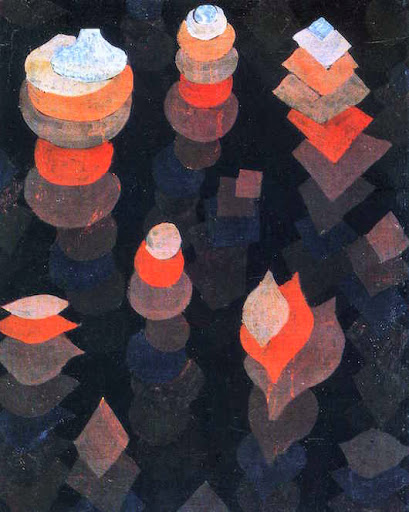
Klee fantasy

1515 words, 8 min read

Last Saturday, Cardinal Gianfranco Ravasi addressed a meeting entitled “Beauty will save the world, let us save beauty,” organized by Earth Day Italia, that took place in the Vatican’s church of St Stephen of the Abyssinians. In his talk, Cardinal Ravasi spoke about the etymology of the word for beauty in Hebrew, Greek and Italian, pointing to the fact that in all these languages the word either directly refers both to beauty and goodness, or at least has roots that do. After the Q&A that followed, Cardinal Ravasi then added a few words in defense of a certain kind of ugliness, lest beauty be misunderstood as aestheticizing. What follows is my translated transcript of the talk:


I would like to start from a thing that is the most material possible, the most limiting possible, which, however, is always fundamental for humanity: that is, the vocabulary, words. […] In the Bible, both the Old and New Testaments, using two completely different languages – Hebrew and Greek, and we are still at the point of vocabulary, words, which, on the other hand are the fundamental instruments of communication, we have a single word that contemporaneously expresses two realities that are different for us. In fact, in Hebrew there is the word ‘tov’ (טוֹב) that at the same time means good and beautiful. And in the New Testament, predominantly when a prominent figure or a significant act is to be described, the Greek word kalos (καλός) is used, which in the New Testament means good.
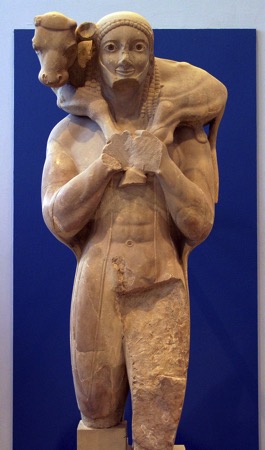
Vatican good shepherd800px ACMA Moschophoros

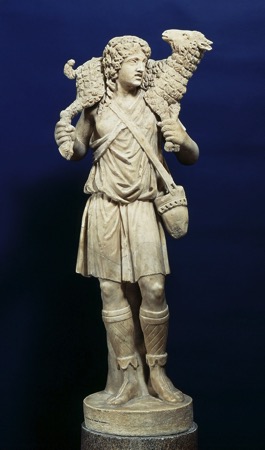
Let me give you an example that you all have in mind but about which you maybe do not have the idea of its original Greek basis. How does Jesus define himself in John’s Gospel? I am the good shepherd. I am sure you all have the famous statue of the good shepherd from the Vatican museums in mind, which is a Christian transcription of a Greek statue of the moscophoros. So, in Greek we have – listen! – “egō eimi ho poimēn ho kalos” (ἐγώ εἰμι ὁ ποιμὴν ὁ καλός.) “Ho kalos” – I am the beautiful shepherd, because these two realities must interweave among us.

With this background, let’s look at Italian. […] In Italian we have this word “bello”. Now, probably only few among you know […] that it has nothing to do with Latin. What does “bellum” mean in Latin? War. That has nothing to do with it. Think about the fact that the word “bello” is a deformation – or the synthesis, the portmanteau, if you will – of a late mediaeval Latin word which sounded like this: “bonicellus” which means good, pleasant, nice and which gradually became first bonellus and then bellum, but in Italian and not in Latin. So, you can see, that at the basis of the Italian word beautiful (“bello”) there is the word “good.”

Let’s now pass to another word, which is antipodean to the word beauty, which is “brutto” (ugly). In Italian there are two words that bud from it and these two other words have the same basis but are not synonymous with it, even if we may use them in an undifferentiated manner. We have the words “bruttezza” (ugliness) and the word “bruttura” (nastiness). The word “bruttezza” indicates an aesthetic quality while the word “bruttura” an ethical one. Imagine for a moment, without wishing to give offense since this applies to many other cities too, that we are going to a district at the peripheries of Rome. A dilapidated district, a district where there is exploitation and rampant overdevelopment, where blocks of flats are built on top of each other in all their ugliness (bruttezza). Such spaces also tend to become the sites of moral degeneration and of social degeneration. And so we arrive at the dimension of nastiness (bruttura).

This is why I am saying that the aesthetic question is also relevant to the ethical and social question. Imagine a kid, one of our kids, who comes out of one of these quarters, where he always sees a gray and rundown block of flats, a flowerbed – if there is one – that is always scruffy, streets that are littered with garbage … and he comes to the center and sees the splendor of architecture, of monuments, … What does he do? He slashes them. They mean nothing to him. Because, with the ethical dimension he has also lost the aesthetic one.
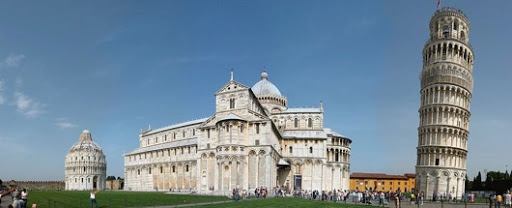
Piazza miracoli

Instead, let’s imagine a kid in the 14th century, who’d leave his house in Siena, would enter the Square of Miracles and walk around in that quarter. Evidently here aesthetics in some way influenced a lifestyle. Naturally, subject to the limits of the weakness and the wickedness also of the human creature.

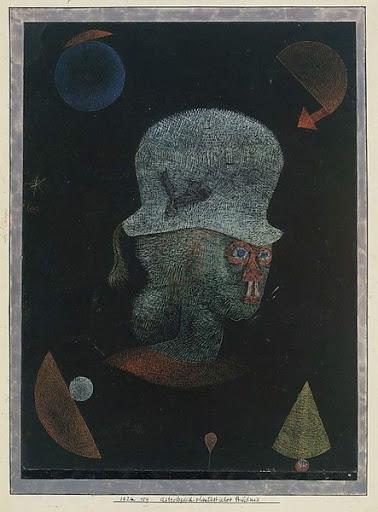
I conclude and would just like to remember [… a message from the bishops at the Second Vatican Council to artists that reflected on the despair caused by ugliness and nastiness] but in that same message there was also another consideration […] whose basis was that art and faith – both authentic: authentic art and authentic faith – are sisters. Why? And I’d like to answer that with the words of a great painter, Paul Klee, who wrote a very important definition of art: “Art does not represent the visible, but the invisible that is in the visible.” Transcendence. And what is it that religion does if not the same job? […] And finally I would like to quote a writer who is far from Christianity and who is also immoral in the eyes of Christianity: Henry Miller, who wrote Tropic of Cancer, Tropic of Capricorn. In a short essay, The Wisdom of the Heart, […] he wrote the following phrase: “Art, like faith, is good for nothing, other than to show the meaning of life.” And that is not little.

[… at the end of the Q&A that followed, Cardinal Ravasi added:]

I would like to conclude by speaking about ugliness. Let’s say straightaway that squalor is squalor and there is ugliness that is ugly. And we need the courage to say it. We have to say that we are being assaulted by ugliness and nastiness. But, having said this, I would now like to present an defense of ugliness, but of a particular ugliness. For many, and that is why I don’t like this expression that “beauty will save the world” so much, it has become a generally aestheticizing phrase.

We can see, and these are often the victims, with women that feminine beauty has become thought of exclusively as the fruit of an artificial operation applied to a person. To the point of having created an entire medical discipline whose criteria are aestheticizing ones, at times in the form of an external lucidity that, however, isn’t a profound transparency. I remember a beautiful poem by John Donne, this great 17th century English poet, which should be read in English. What does he do? He dedicates beautiful verses to the face of his wife, which by then is marked by a web of wrinkles. To this he says – and I agree fully, “I haven’t seen a season as beautiful as autumn.”1 Imagine what Roman autumn is like. It is infinitely more beautiful than summer.

This is why I said that I would like to present a sort of defense of ugliness. […] Beauty is not smoothness. It is not a dictation formed by beautiful words searched for in a dictionary, as Sunday poets often do. It is, instead, the capacity to capture the transcendent, to capture that which is not seen, but that which is the soul of reality. So, when you go and see an exhibition […] of Caravaggio, you can’t come out from it indignant because Caravaggio also touches evil.
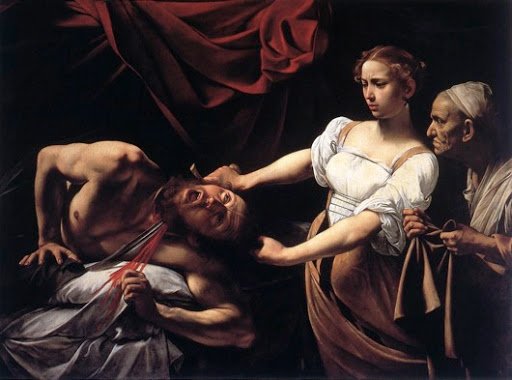
Caravaggio Judith Beheading Holofernes

Without reflecting on evil, and evil is ugly, we wouldn’t have 60-70% of literature. It would not exist. We’d have to get rid of virtually all of Dostoyevsky. This is why I say that it is important to remember that the beautiful is also the groundwork, the pilgrimage, the entrance to the substratum, the underground (to use Dostoyevsky), the entering into a nest of vipers (to quote Mauriac) that represent humanity. When Rilke, who is one of the great poets that I love alongside Eliot, writes the Duino Elegies, how does he define beauty? He defines it as “the beginning of terror.” This is an impressive theophany that torments. Not being a writer or a poet I’ll give my voice to Virginia Woolf, when she too defines beauty saying: “Beauty has two faces, one of joy, one of anguish, both cutting, wounding the heart.” That is, beauty offends, disturbs, disconcerts, also. Let’s think of the Divine Comedy. The best part, they say paradoxically, is the Inferno. And this is precisely because the song wants to enter … and it is also right that we be able to see in something ugly, that may represent humanity’s breath of pain, that we try to look even there for what is truly beautiful that, in the end, however, redeems even evil. It is transfiguration. It is liberation.


1 I guess Cardinal Ravasi is referring to Elegy IX: The Autumnal.
The world: a flowerbed of communion

Klee flowers

Yesterday and today, a fantastic meeting of the Courtyard of the Gentiles – entitled “Renewing the Church in a Secular Age” – is taking place at the Gregorian University in Rome, and it is also being freely live-streamed. Since listening to the opening remarks of the university’s rector, Fr. François-Xavier Dumortier S. J., Fr. George McLean, the President of The Council for Research in Values and Philosophy, and Cardinal Gianfranco Ravasi yesterday, I have been working on a transcript of parts of the first two and pretty much the entirety of the last one, since they struck me as profound and beautiful expressions of the openness and warmth of the Church that I am keen to share with you as soon as possible. I will therefore, in the interest of speed, dispense with my own commentary and reflections, and just offer you the transcript (and coarse translation into English) next:

First, here is the conclusion of Fr. Dumortier’s opening remarks:

“This conference is about the Church in her relationship with the world of today, i.e., with the men and women of today, but also with the societies and cultures of our time. It won’t only be about being at the frontiers that cut through these societies and cultures and our selves too, but about going ahead with confidence and hope in the discovery of God who works mysteriously everywhere and in everyone and who, in some way, calls us to leave behind the certainties we guard too tightly and the places we know too well. This challenge of thinking about our current intellectual and spiritual situation asks for the capacity to go out of the context of our individual specializations, the constraints of our own cultures, from self-referentiality, not so as to confront that which is different and at times far removed, but so as to listen, encounter, understand and learn. It seems to me that such an attitude would indicate a Church that is not afraid of living the newness of the Gospel and that has the audacity of meeting head-on the challenges that permeate cultures today. To recognize when and how human beings are searching for God, which is never a private matter and which is done until the end of self and the end of time. To deepen our current way of humbly bringing the word of God that truly speaks to the hearts and minds of today’s men and women. Desiring to promote a culture of mutual welcome. It is a dialogue that does not despair of anything or anyone. They are challenges that we can now live with the courage and the strength of intelligence, with a generosity of intelligence that broadens the space in which one moves.”

Next, a couple of points made by Fr. McLean, that particularly struck me, where he spoke about a new perspective on secularism, derived from the work of Charles Taylor and Jose Casanova, who

“took on the fallacy that secularity was simply a loss of religion and said: “No!” secularity is a new way of being religious, and he pointed us in the direction that would make that possible. […] There are four things that we need to study: one of them is that of the seekers, that is not that they are against religion or abandoning religion, but they are looking in new ways – can we meet them? Can we find out where they are going? Can we speak to them? This is a new, creative mode of approaching the secular age. And then also the magisterium. How can the magisterium be the guide, the teacher of the new seekers? How can that be done? This is the great challenge for the Church. […] Perhaps there are many different ways in the world today in which people are seeking the divine and responding in their own way. Can we bring those together? Can this be the life of the Church? A creative pastoral responsibility.”

And finally, the main course, Cardinal Gianfranco Ravasi’s superb exposition of two interpretations of the concept “seculum” and the need for dialogue flowing from them:

“I would like to place this word at the center: “seculum”, also because it is directly in the title of this meeting. Seculum, as we know well, generates two meanings and I will build a brief reflection around them that will be more theologically-pastoral in character. The first meaning is a positive meaning: secolo generates secularity, which is a Christian category. Let’s not forget, for example, that “secolo” in New Testament Greek is “aeon”, and “aeon” also has a dimension of eternity. This also holds for the Hebrew “olam” (עוֹלָם) which simultaneously indicates temporality but also a dimension of globality.

[… I’ll start with] secularity as a theological category. I will express the theological form of this category in this case only in an impressionist way, in a simplified way. I’ll express it by means of three components of Christian faith.

The first component is creation. It suffices to listed to these verses from the Book of Wisdom – a book, among other things, of dialogue between the Hebrew and Greek cultures – “[T]he creatures of the world are wholesome; There is not a destructive drug among them.” (Wisdom 1:14). Note: “the creatures of the world.” Second: “For you love all things that are and loathe nothing that you have made.” (Wisdom 11:24).The Lord – lover of life. To the Creator nothing is profane. And this already makes us understand how we must look to totality, we must have an optimistic perspective.

The second component: Jesus is a lay person. He is not a priest. The letter to the Hebrews says so: “It is clear that our Lord arose from Judah, and in regard to that tribe Moses said nothing about priests.” (Hebrews 7:14) But the author of the letter to the Hebrews wasn’t content just with this: “If then he [Jesus] were on earth, he would not be a priest.” (Hebrews 8:4). This aspect, that our founder is a lay person, is truly very significant. Even with all the clarifications that theologians then make.

The third element: Christianity presents a model of the relationship between faith and politics, faith and society, that is extremely significant. because it says no to sacralism, it says no to hierocracy , to integralism and, naturally, it also says no to statolatry, to the negation of any religious component in society.

What is being asserted? An assertion that Christ formulates and on which exegesis has been based for centuries, above all in terms of incarnation. The assertion is precise, and as I often say – it is a tweet that in Greek has only 50 characters, including spaces: “Then repay to Caesar what belongs to Caesar and to God what belongs to God.” (Luke 20:25) There is the recognition that there is a strong autonomy of the image of God that is man, of religion on the one hand, and on the other hand a real autonomy, naturally, of society and the state. Christian religion cannot accept the extraordinary phrase […] “The Temple is my country and my nation, and there is nothing outside it.” (spoken by Joad, the Jewish high priest in Jean Racine’s Athalie). Christianity, instead, recognizes secularity.

I’d now like to conclude with two considerations about secularity. First, secularity is a “locus theologicus”, delicate but real. And it has, fortunately, been considered in various ways during the 20th century. I’d now like to give three examples by just quoting some indicative phrases from these authors whose works I have read.

First, and all know this one and expect me to say his name: Bonhoeffer. Bonhoeffer with his theory of the “mündige Welt” – the adult world, the grown-up world, which, like a young person who becomes emancipated, does not break the links with the family, but has their own autonomy. And the challenge for faith is precisely this: to abandon the theophanic, ex machina God who embraces all reality, in favor of a kenotic God. The God of the cross, who does have his presence, but – you will see – a presence as seed. Not as power.

The second person, whom many will think of as representing fruitfulness, is Gogarten. Gogarten, in his work of 1953, Despair and hope for our time, wrote: “Secularity is the necessary and legitimate consequence of Christian faith.” And here we come to the second topic I would like to address: secularism or secularization. Secularism is a degeneration of secularity because it takes leave of God, radicalizing its own autonomy and canceling the co-presence of the divine. [Gogarten] then continues: “The autonomy of man does not detach itself from God but neither is it sacramentally overpowered.” It is not detached, but it is not crushed either. “The Church must live,” he continues, “in sincere solidarity with the world, without wanting to sacralize it.”

And the third one, obviously, is Rahner. Rahner […], referring to Gaudium et Spes, in his Theological Investigations wrote these words about secularization in 1966 […]: “The Church must and wants to codetermine also the way of the secular world, without, however, wanting to determine it in an integral and doctrinal way.” […] 


Let’s now turn to the second aspect of the word “seculum,” which I’d define as secularism. What symbol could we use to represent secularism? Well, all know it, it is a symbol that has become popular in everyday language […]: disenchantment. The disenchantment of the world. “Entzauberung der Welt.” This phrase, by the way, is not – as all say – by Max Weber, but by Hölderlin. Hölderlin used it in a different sense though, and it is a term that also became popular through a 1985 work of Marcel Gauchet.

So, what are the characteristics of secularism? […] First of all, an emancipation from sacral bonds and subjection, the emancipation from sacral authorities, symbols and institutions. The emancipation from the jurisdiction of the scared. Second, […] the ontological, epistemological, deontological  autonomy from theology. In practice, there is a desire to relegate theology to a sort of protected oasis, but one that is independent of the horizon of knowledge. Also since there is only one subject – humanity, heaven is empty of gods. Another component, which is a consequence of this one, is one I often call the monodicity of knowledge, i.e., knowledge with a single tone, which in the end is the rational/scientific one. As a consequence, what comes to the fore is the scene of the world rather than the foundations of reality. The possibility of transcendence and its own language for approaching it are excluded.

Fortunately, we know that this attitude is now in crisis. We know that our knowledge, that of all – including the simplest person – is polymorphous. When a person, even a scientist, falls in love, they use another channel of knowledge. Esthetics, art … The last component, that I would like to mention, among many examples of secularism, is the phenomenon of the metropolis, of urbanization. This is a component that I take from the work “The secular city” by Harvey Cox from 1975 […] “Urbanization means a structure of life together, in which diversity and the disintegration of traditions dominate.  A kind of impersonality dominates. A certain degree of tolerance and of anonymity that replace traditional moral sanctions and codified knowledge.” You see, even a man from the countryside who arrives in a city, who has his traditions, his morality, when he enters this gray place, loses his identity. […] 


What I think though is that in contemporary secularism there are two pastoral challenges. Two challenges that are also cultural and that are the result of two phenomena, among many other possible ones, in the complex society and culture of today.

The first phenomenon. I’ll label it with a term that I need to explain, because it has been used by some authors already, is: apatheism. Apatheism is the union of apathy and atheism. It is what we often call indifferentism. This is a phenomenon with which, for example, the Courtyard of the Gentiles – this dialogue between believers and non-believers that I am trying to develop – is trying to confront with great difficulty. Because we are in front of a wall of fog. Apathy. A beautiful definition here comes from none other than Diderot in his “Letter on the blind for the use of those who see”, addressed to his atheist friend, Voltaire: “It is very important not to mistake hemlock for parsley, but believing in God or not isn’t.” This is a bit the style of apatheism, which is really problematic and ever more dominant. It doesn’t answer head-on, like Nietzschean atheism, it doesn’t fight faith like atheist regimes do. It ignores God as a stranger. Like a reviewer of Prof. Taylor’s book, Costa, wrote: “If God walked into a square in a contemporary city, he wouldn’t surprise anyone. At most a guard would ask him for his papers.” He’d be asked for his papers because his identity is unknown. God mustn’t interfere in human affairs. He is a stranger. He is not the basis of existential choices. Even transcendence can be recognized but he must remain in the limbo of his transcendence. The times have finished where, de Sade in his “Justine (or The Misfortunes of Virtue)” writes, as an emphatic atheist: “When atheism needs martyrs, it should say so – my blood is ready.” This now would be ridiculous. Atheists today are apatheists. The last ones who are aggressive are a kind of endangered species. Those who feel strongly about atheism. And this relegates religion to insignificance. To uselessness, to irrelevance in history. […]

This situation of apatheism, pastorally, calls out to Christians. I asks Christians why they have not been able to communicate their difference in the face of this indifference. If anything, they have reduced themselves to the minimum, […] they are no longer able to provide answers to key questions and thereby to stimulate questions. Indifferent societies do not love questions. The question, in our languages is represented as something that claws [Ravasi draws a question mark in the air]. Oscar Wilde rightly said that everyone is able to give answers, but it takes genius to ask true questions. A question requires depth and requires tension too. Herein lies the importance of provoking with ultimate truths. Evil. Suffering. The meaning of life. Things that don’t enter into … Also the authenticity of the truth. And we, Christians, have probably lost warmth as far as our lives, our lifestyles go. Let’s recognize it. Very often our communities deserve the condemnation that the Apocalypse launches against the church of Laodicea: “So, because you are lukewarm, neither hot nor cold, I will spit you out of my mouth.” (Revelation 3:16). There are communities lacking any testimony, incoherent. They are no longer the leaven and the yeast of the Gospel.

The second phenomenon that could stimulate us is what I would call polytheism. Which in a nicer way we could express as religious pluralism. We know that already Max Weber in his day spoke about the polytheism of ethical values. Now, however, we have confirmation of this unquestionable phenomenon of a continuous intersection of religions and civilizations. And this phenomenon of a polytheism of more divinities, or more religions leads to three possible reactions as I can see. First, there is fundamentalism. Fear of the other god, of the other culture. Therefore there is aggressive apologetics, self-referential. Islamic fundamentalism is an example of this. It is the choice of pulling out the sword straight-away against the other. Second, there is a reaction that is more alive in Europe. Which is generic syncretism and then apatheism. Inoffensive syncretism. Without identity. The famous poet George Eliot said: “If we lose Christianity, we, Europeans, will no longer be able to understand even Voltaire and Nietzsche. But there is an even worse risk. We will lose our countenance. We will no longer have a face.” Forgetfulness. A loss of memory. Religious memory and also cultural memory, which means that, when faced with fundamentalism, we are in no position to react since we have no identity anymore. Certainly, fundamentalism has an exasperated identity, which is negative too.

So, what is the third way? The third way, evidently, and even though it is demanding, modest and to be carried out with a bowed head, and I have to say that the Church and Pope Francis are going it, is the way of dialogue. Dialogue with all its risks and troubles, inter-religious and intercultural dialogue. What ought this dialogue be like? We could talk about lot about it, but let us just look more closely at the word dialogue.

In its Greek form, and not everyone knows this, it has two meanings. The preposition ‘dia’ has two values – not one. Usually it is said that ‘dia’ is the crossing of two different ‘logoi.’ In reality, ‘dia’ also means a descending into depth. Ideologies have died, but as ideologies died, thought has died with them. We must return to a deepening of our faith, to the foundations, and ask of others that their argumentation be substantial epistemologically and in terms of content. I think that dialogue also means many other things, such as a making oneself close to the other, putting oneself in a position of listening to the other. And this is another very demanding practice. It reminds me of the expression used by John Paul II in his Novo Millennio Ineunte with regard to the Church, which I think ought to become the ideal for humanity too, which share a common basis. He says that we must “make the Church the home and the school of communion.” Here the call is for a humanity that in its diversity manages to share a home which is that of this modest planet. This small flowerbed as Dante Alighieri called it.

In the rabbinical tradition there is a beautiful image, a beautiful aphorism that says: “When men coin money, they do so with a single die, as a result of which all coins are the same. God, too makes men with a single die, yet all men are different.” Dialogue is an arduous, lengthy, maybe eschatological, process of building a shared home. 

To conclude, I would like to pass the word to the Bible, which is to give us a push and the capacity to decipher our own history. The Judaeo-Christian religion is a historical religion. It doesn’t call us to detach ourselves from reality towards mythical or mystical heavens. It is an incarnate religiosity, starting with Christ, who is a great sign. Because of this I would like to remember that stereotype, which has unfortunately become a stereotype, used since conciliar times […]: “the signs of the times.” Signs are important, the signs of power, and I’d say the power of signs is important. And I’ll give the word about this to two fundamental biblical characters, two biblical witnesses: We’ll start with the prophets, where I’ll choose Jeremiah 8:7 “Even the stork in the sky knows its seasons; Turtledove, swift, and thrush observe the time of their return, But my people do not know the order of the LORD.” And now, in the same style, the voice of Christ, who speaks to us from Matthew 16:2-3, using the symbol of meteorological forecasting “In the evening you say, ‘Tomorrow will be fair, for the sky is red’; and, in the morning, ‘Today will be stormy, for the sky is red and threatening.’ You know how to judge the appearance of the sky, but you cannot judge the signs of the times.” 


Humanist transcendence in religious art

Algebraicszoom s

A couple of weeks ago I read an excellent article in the Guardian, by the philosopher and Distinguished Supporter of the British Humanist Association, Kenan Malik. While it is an article that clearly positions religion as deprecated, inferior and outmoded (sentiments I certainly don’t share), it nonetheless makes some very positive moves.

Malik starts out by recognizing a piece of Christian writing as “wonderful, luminous,” able to “discover the poetic even in the most mundane,” and proceeds to argue that the awe that inspires religious artists and the spiritual force that drives them to create are “a celebration of our ability to find the poetic and the transcendent,” which is “something very human.” It is this attitude of recognizing value in the work of another, whose beliefs the author of the article does not share and even opposes, that made me like Malik’s approach from the start.

Having established an openness towards religious art, Malik asks whether “non-believers can truly comprehend the meaning of religiously inspired art.” The answer he provides not only addresses this interesting question, but serves as a basis for even broader dialogue between religion and atheism:

“[W]e can think about the sacred in art [… n]ot so much as an expression of the divine but, paradoxically perhaps, more an exploration of what it means to be human; what it is to be human not in the here and now, not in our immediacy, nor merely in our physicality, but in a more transcendental sense. It is a sense that is often difficult to capture in a purely propositional form, but one that we seek to grasp through art or music or poetry. Transcendence does not, however, necessarily have to be understood in a religious fashion, solely in relation to some concept of the divine. It is rather a recognition that our humanness is invested not simply in our existence as individuals or as physical beings but also in our collective existence as social beings and in our ability, as social beings, to rise above our individual physical selves and to see ourselves as part of a larger project […].”

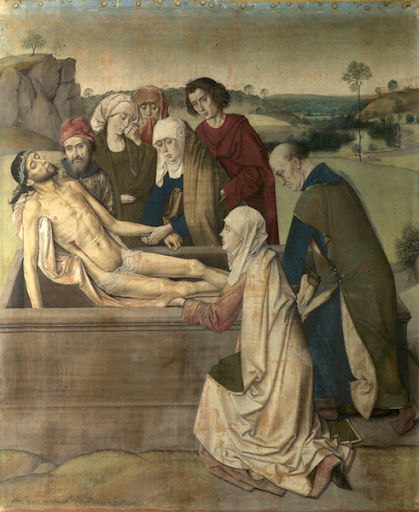
Malik then proceeds to sketch out a brief history of transcendence in philosophy and art, noting its roots in religious belief and proceeding to present attempts made to transplant it into humanist soil in the 15th century, e.g., by Dante Alighieri in his Divine Comedy and by Dirk Bouts, whose “The Entombment” (shown next) Malik analyzes to great effect, arguing that it is an example of a “changing conception of the sacred” that reveals a “humanising impulse.”

Bouts the entombment s

Malik is quick though to point out a “growing suspicion of the very idea of transcendence” in the post-Enlightenment period when “the very rootedness of the idea of transcendence in religious belief made it an uncomfortable concept.” These were accompanied by a gradual ebbing away of the “optimism about human capacities that had originally suffused the humanist impulse,” leading – through the horrors of 20th century history – to a “darkening perceptions of humans.” At the same time, that century also witnessed a “revolution in the way that artists were able to conceive of the human.” Here Malik points to “Olivier Messiaen’s Quartet for the End of Time to Mark Rothko’s paintings, from Barbara Hepworth’s figures to Pablo Neruda’s odes” as “astonishing works of art,” but proceeds to declare that “[i]t makes little sense to call such works of art “sacred”.”

What is curious though is that Malik next quotes Mark Rothko as saying: “The people who weep before my pictures are having the same religious experience as I had when I painted them,” but decides to consider Rhothko’s being religious merely a being “religious”:

“What Rothko calls “religious experience” is not what would traditionally be seen as such. It is rather an attempt to grasp the meaning of our humanness not in its immediacy, nor merely in its physicality, but, to borrow a religious term, in a more apophatic sense.”

If anything, saying that something is apophatic is to align it with the most traditional and deep-seated of religious intuitions about God’s otherness, put particularly starkly by Blessed Duns Scotus: “We do not know what God is. God Himself does not know what He is because He is not anything. Literally God is not, because He transcends being.” or by St. Cyril of Alexandria: “For we explain not what God is but candidly confess that we have not exact knowledge concerning Him. For in what concerns God to confess our ignorance is the best knowledge.” To Christians, God is – to borrow Malik’s words from a different context – “difficult to capture in a purely propositional form.” And this is not just the opinion of fringe elements or of eccentrics from a distant past – it is clearly stated in the Catholic Church’s current Catechism: “God transcends all creatures. We must therefore continually purify our language of everything in it that is limited, image-bound or imperfect, if we are not to confuse our image of God — “the inexpressible, the incomprehensible, the invisible, the ungraspable” — with our human representations. Our human words always fall short of the mystery of God.” (§42). If that’s not apophatic, then I don’t know what is …

The above is not an attempt at an “aha!” or a “gotcha” though – instead it is meant just to suggest that what Malik sees as an areligious or a meta-religious transcendence – a “break[ing of] the shackles of the sacred while maintaining the sense of the transcendent”, in fact has the hallmarks of what I would wholeheartedly label as religious.

What I’d like to take away from Malik’s thought is a very positive point though, which is that the transcendence understood very differently by Malik and myself nonetheless seems like the one transcendence to me that we both appreciate and relate to. In spite of Malik’s efforts to distance contemporary expressions of transcendence in art from any and all religious associations, that exact same art is to me deeply religious and connects to the scared when I view, hear or read it.

Ultimately Malik’s moves can also be seen as a mirror to Pope Benedict XVI’s quoting Simone Weil saying that “all art of the first order is, by its nature, religious.” I have to say I like this picture: atheists claiming religious art is not really religious but humanist, and religious people claiming that secular art is religious after all. To my mind these are both profound compliments and a source of joy :).