Žižek: what separates me from God, unites me to him

Sutherland thorn cross small

1389 words, 7 min read

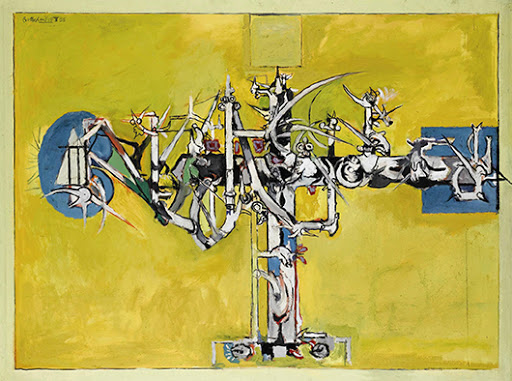
Jesus’ cry of forsakenness on the cross is by some considered to be the pinnacle of his suffering and therefore of God’s self-emptying and self-giving love. It is a moment in Jesus’ life that has attracted many and that many have reflected on and meditated on. Among the latest of these is the atheist philosopher Slavoj Žižek, who, in a book co-authored with the Lutheran theologian Boris Gunjević and entitled “God in Pain”, presents a particularly insightful analysis.

Žižek approaches Jesus’ forsakenness on the cross by first posing one of the most perennially challenging questions in Christianity, and in any religion that posits a loving God, which is that of evil and suffering:

“Every theologian sooner or later faces the problem of how to reconcile the existence of God with the fact of the Shoah or some similar excessive evil: How are we to reconcile the existence of an omnipotent and good God with the terrifying suffering of millions of innocents, like the children killed in the gas chambers?”

After dismissing two unsatisfactory answers (the first being an argument from mystery and the second from God self-imposing limitations that effectively lead to dualism), Žižek proceeds to present a, to his (and my) mind, credible response:

This brings us to the third position […]: that of a suffering God — not a triumphalist God who always wins in the end, although “his ways are mysterious” since he secretly pulls all the strings; not a God who exerts cold justice, since he is by definition always right; but a God who — like the suffering Christ on the cross — is agonized, who assumes the burden of suffering, in solidarity with human misery. It was already Schelling who wrote: “God is a life, not merely a being. But all life has a fate and is subject to suffering and becoming. … Without the concept of a humanly suffering God … all of history remains incomprehensible.” Why? Because God’s suffering implies that he is involved in history, affected by it, not just a transcendent Master pulling the strings from above: God’s suffering means that human history is not just a theater of shadows, but the place of a real struggle, the struggle in which the Absolute itself is involved and its fate is decided. This is the philosophical background of Dietrich Bonhoeffer’s deep insight that, after the Shoah, “only a suffering God can help us now” — a proper supplement to Heidegger’s “Only a God can save us!” from his last interview. One should therefore take the statement that “the unspeakable suffering of the six million is also the voice of the suffering of God” quite literally: the very excess of this suffering over any “normal” human measure makes it divine. Recently, this paradox was succinctly formulated by Jürgen Habermas: “Secular languages which only eliminate the substance once intended leave irritations. When sin was converted to culpability, and the breaking of divine commands to an offense against human laws, something was lost.”

Which is why secular-humanist reactions to phenomena like the Shoah or the gulag (amongst others) are experienced as insufficient: in order to reach the level of such phenomena, something much stronger is needed, something akin to the old religious topic of a cosmic perversion or catastrophe in which the world itself is “out of joint”—when one confronts a phenomenon like the Shoah, the only appropriate reaction is to ask the perplexed question “Why did the heavens not darken?” (the title of Arno Mayor’s book). Therein resides the paradox of the theological significance of the Shoah: although it is usually conceived as the ultimate challenge to theology (if there is a God and if he is good, how could he have allowed such a horror to take place?), it is at the same time only theology that can provide the frame enabling us to somehow approach the scope of the catastrophe — the fiasco of God is still the fiasco of God.

I believe that Žižek makes two key observations here: first, that God’s suffering is born of solidarity with human suffering, in other words, that it is the result of mercy, and, second, that it is God’s suffering that is a key to beginning to understand the suffering of others and suffering itself.

Furthermore, Žižek also sees Jesus’ abandonment on the cross as the key to man transcending his animal origins and as a bridge over the otherwise insurmountable abyss between God and man:

“The crucial problem is how to think the link between the two “alienations” — the one of modern man from God (who is reduced to an unknowable In-itself, absent from the world subjected to mechanical laws), the other of God from himself (in Christ, in the incarnation) — they are the same, although not symmetrically, but as subject and object. In order for (human) subjectivity to emerge out of the substantial personality of the human animal, cutting links with it and positing itself as the I = I dispossessed of all substantial content, as the self-relating negativity of an empty singularity, God himself, the universal Substance, has to “humiliate” himself, to fall into his own creation, “objectivize” himself, to appear as a singular miserable human individual, in all its abjection, i.e., abandoned by God. The distance of man from God is thus the distance of God from himself.”

Žižek then argues that Jesus’ abandonment is the key to union with God since in that moment God makes what separates man from Him part of Himself. The gap that separated us from Him becomes part of Him and makes us immediately adjacent and no longer at a distance:

“In Christianity, the gap that separates God from man is not effectively “sublated” in the figure of Christ as god-man, but only in the most tense moment of crucifixion when Christ himself despairs (“Father, why have you forsaken me?”): in this moment, the gap is transposed into God himself, as the gap that separates Christ from God the Father; the properly dialectical trick here is that the very feature which appeared to separate me from God turns out to unite me with God.”

Finally, Žižek claims the forsaken Jesus for himself by conferring on him his own atheist identity and he does so also through the words of G. K. Chesterton:

“[I]n Christianity, when, dying on the cross, Christ utters his “Father, father, why did you forsake me?”—here, for a brief moment, God himself does not believe in himself—or, as G. K. Chesterton put it in emphatic terms: “When the world shook and the sun was wiped out of heaven, it was not at the crucifixion, but at the cry from the cross: the cry which confessed that God was forsaken of God. And now let the revolutionists choose a creed from all the creeds and a god from all the gods of the world, carefully weighing all the gods of inevitable recurrence and of unalterable power. They will not find another god who has himself been in revolt. Nay (the matter grows too difficult for human speech), but let the atheists themselves choose a god. They will find only one divinity who ever uttered their isolation; only one religion in which God seemed for an instant to be an atheist.” (G. K. Chesterton, Orthodoxy (San Francisco: Ignatius Press, 1995), 145.)”

Žižek’s “God in Pain” is a book that I wholeheartedly recommend to read in full, since it is a rich source of profound reflection on a variety of questions, from among which the above are the highlights of his insights into the forsaken Jesus. Personally, I find his perspective very enriching in that it provides a view from a vantage point that is close to the event of Jesus’ abandonment and that spells out aspects of what that experience might have been “from the inside.” Žižek’s insight that Jesus’ taking on what separates God from man is what builds a bridge is particularly striking and also an invitation to radical dialogue. By emptying myself to receive what separates me from you, we become one.


I can’t not mention another outstanding feature of “God in Pain”, which is the deeply beautiful re-telling and analysis of St. Mark’s Gospel that Gunjević presents in the book’s final chapter, entitled “Pray and Watch — The Messianic Subversion.” It alone is worth the price of admission.
Judaism and Christianity: A common heritage

Chagall jacobs dream

A very good friend of mine (CA) lent me a great book about Judaism, entitled “What is a Jew?” and aimed at providing an introduction to a broad variety of aspects of what it means to be Jewish. The book is structured in the form of questions and answers and its tone exudes warmth and a desire to share rather than to impose or indoctrinate. Even before I started reading the book, I was looking forward to learning more about Judaism, both because of a desire to have a better understanding of the religion of several friends of mine, and because of the heightened insistence on a rediscovery of Judaism made by the Catholic Church since Vatican II.

John Paul II was famously the first pope to visit a synagogue, during which visit he spoke with clarity and warmth about the relationship between Christianity and Judaism:

“The Jewish religion is not ‘extrinsic’ to us, but in a certain way is ‘intrinsic’ to our own religion. […] With Judaism, therefore, we have a relationship which we do not have with any other religion. You are our dearly beloved brothers, and, in a certain way, it could be said that you are our elder brothers.”

Benedict XVI went on to maintain very strong relationships with Judaism, both acknowledging the Church’s past wrongs and expressing its gratitude and debt to the Jewish people:

“Abraham, father of the people of Israel, father of faith, has become the source of blessing, for in him ‘all the families of the earth shall call themselves blessed.’ The task of the Chosen People is therefore to make a gift of their God – the one true God – to every other people. In reality, as Christians we are the inheritors of their faith in the one God. Our gratitude therefore must be extended to our Jewish brothers and sisters who, despite the hardships of their own history, have held on to faith in this God right up to the present and who witness to it…”

Finally, Pope Francis has not only continued along the direction indicated by his predecessors, but has also benefitted from close personal friendships with the Jewish community. An example of this is the book – “On Heaven and Earth” that he co-authored with Rabbi Abraham Skorka, who also accompanied him on his recent visit to Israel and who has been a frequent visitor at the Vatican. Pope Francis has also reiterated, in his apostolic exhortation Evangelii Gaudium, the brotherly relationship that his predecessors have stressed:
“We hold the Jewish people in special regard because their covenant with God has never been revoked, for “the gifts and the call of God are irrevocable” (Rom 11:29). The Church, which shares with Jews an important part of the sacred Scriptures, looks upon the people of the covenant and their faith as one of the sacred roots of her own Christian identity (cf. Rom 11:16-18). As Christians, we cannot consider Judaism as a foreign religion; nor do we include the Jews among those called to turn from idols and to serve the true God (cf. 1 Thes 1:9). With them, we believe in the one God who acts in history, and with them we accept his revealed word. Dialogue and friendship with the children of Israel are part of the life of Jesus’ disciples. […] While it is true that certain Christian beliefs are unacceptable to Judaism, and that the Church cannot refrain from proclaiming Jesus as Lord and Messiah, there exists as well a rich complementarity which allows us to read the texts of the Hebrew Scriptures together and to help one another to mine the riches of God’s word. We can also share many ethical convictions and a common concern for justice and the development of peoples.” (§247-9)

Against this background I was particularly pleased to see the relationship between Christianity and Judaism described by Rabbi Morris Kertzer in “What is a Jew?” as follows:

“[The] German dramatist, Gotthold Ephraim Lessing, caught the essence of this common heritage [of Judaism and Christianity] in a play called Nathan, the Wise. One of the most memorable scenes depicts a meeting between a friar and the Jew Nathan. Moved by the beauty of Nathan’s character, the friar exclaims, “Nathan! Nathan! You are a Christian!” His friend replies, “We are of one mind, for that which makes me, in your eyes, a Christian, makes you, in my eyes, a Jew!”” (pp. 279)

I have to say that this paragraph from the last pages of the book very much rang true for me and expressed with accuracy the feeling I had as I made my way through the whole book. To give you a sense of what triggered such a recognition of what I believe to be very much mine in Rabbi Kertzer’s description of Judaism, I will share a number of excerpts from it next.

To begin with, the mystical tradition in Judaism, and its propensity to expressing itself by means of short stories reminded me immediately of the stories told about the Desert Fathers (and also about Zen kōans and the stories of the Sufi Mullah Nasrudin):

““Rabbi,” one of the disciples complained, “some of the congregants are gossiping in the midst of prayer!” “How wonderful are your people, O God,” The rabbi retorted. “Even in the midst of gossip, they devote a few moments to prayer!”

“Can you tell me, Rabbi, why the wicked are always looking for companions while the righteous are not?” “The answer is simple: The wicked walk in darkness, so are anxious for company. Good people walk in the light of God; they don’t mind walking alone.”” (pp. 21-22)

Next, I was struck by a repeated insistence on orthopraxy, which has a strong tradition in Christianity too:

“Jews are urged to put their religion into action. “Talking is not the main thing; action is,” goes a talmudic maxim, and action includes not just activity within the confines of the Jewish world, but working for the welfare of the larger society in which we live. We call this tikkun olam, meaning the “reparation of world.”” (pp. 30)

And Rabbi Kertzer goes on to recounting the same story about the building of the Tower of Babel that Pope Francis reflects on in his above-mentioned book, and then to presenting a synthesis of principles that resonate very strongly with Christianity too:

“The Rabbis used telling parables to illustrate this point. Why did the Tower of Babel crumble? Because the leaders of the project were more interested in the work than in the workers. When a brick fell to earth, they would pause to bewail its loss; when a worker fell they would urge the others to keep on building. The brick was more important than the human being. So God destroyed the imposing edifice. […]

Basic to Judaism are these fundamental principles, which are also basic to democracy: 1) God recognizes no distinction among us  on the basis of creed, color, gender, or class; all of us are equal in God’s sight. 2) We are all our brother’s and sister’s keepers; we bear responsibility for our neighbors’ failings as well as for their needs. 3) All of us, being made in God’s image, have infinite capacity for doing good; therefore the job of society is to evoke the best that is in each of us. 4) Freedom is to be prized above all things; the very first words of the Ten Commandments depict God as the Great Liberator: “I am the Eternal your God who brought you out of the land of Egypt.”” (pp. 31)

A couple of questions later, Kertzer then sets out an understanding of Scripture that could have come from the Vatican II dogmatic constitution Dei Verbum:

“[M]ost Jews look upon the accounts of miracles as inspiring literature, rather than as actual historical events. That is to say, we do not necessarily accept older interpretations of their significance, since an important lesson for the fifth century may be unimportant in the face of today’s spiritual questions; but we do use these tales as sources of inspiration ourselves, trying to draw religious lessons from the text, even the text of an event that may not be literally true. God did not create the world in precisely six days, just as the biblical text insists, but we can learn lessons for our lives from such stories as the Garden of Eden or the Tower of Babel.” (pp. 45)

On the subject of death and the Kaddish prayer, the book presents a profoundly beautiful reflection by Rabbi Steinberg:

“It is easier for me to let go of life with all its treasures, because these things are not and never have been mine. They belong to the Universe and the God who stands behind it. True, I have been privileged to enjoy them for an hour but they were always a loan to be recalled.

And I let go of them the more easily because I know that as parts of the divine economy they will not be lost. The sunset, the bird’s song, the baby’s smile, the thunder of music, the surge of great poetry, the dreams of the heart, and my own being—all these I can well trust to the God who made them. There is a poignancy and regret about giving them up, but no anxiety. When they slip from my hands they will pass to hands better, stronger, and wiser than mine.

Life is dear; let us then hold it tight while yet we may. But we must hold it loosely also! It is at once infinitely precious and yet a thing lightly to be surrendered. Because of God, we clasp the world, but with relaxed hands; we embrace it, but with open arms.” (pp. 67)

The juxtaposition of an enjoyment of the beauty of the universe and a detachment from it leads to an experiencing of everything in relationship with and gratitude to God:

“Because of its innate trust in both God and God’s world, Judaism affirms the value of life and life’s pleasures. It is therefore a religion that urges us to pay attention to the wonderful universe about us. To help us do so, it provides blessings for all of life’s bounties: seeing a rainbow; experiencing a thunderstorm; observing the first blossoms of springtime; putting on new clothes; even eating our first garden produce, as each crop ripens year after year.” (pp. 85)

That the above relationship with God is not simply an individual matter is shown clearly through the concept of minyan, which also reminded me of Jesus’ promise of his presence where “two or three” are gathered together in his name:

“Personal prayer between the individual and God may take place anywhere, any time, and with no one present but God and the individual worshiper. Public services, however, have traditionally required what is known as a minyan, that is, the presence of at least ten adult worshipers. […] Behind the idea of a minimum number is the notion that Jewish spirituality is in some sense communal. We all received the Torah together on Mount Sinai. We are all part of the people Israel.” (pp. 86)

Kertzer then goes on to presenting a simultaneous openness to diversity and faithfulness to God, that has echoes in the Church’s desire for “unity in diversity”:

“Our experience with diverse cultures has enriched our religion in many ways. Above all, perhaps, has been our hospitality to differences. Every question of Jewish law contains both an austere interpretation and a liberal one, and the Rabbis ruled that “both opinions are the word of the living God.” […] One famous rabbinic aphorism pictures God as saying, in effect, “As long as Jews do My will, they need not believe in Me.” That is an exaggeration, of course. Judaism does teach some beliefs, among them the firm conviction that God is real: a real presence in the lives of men and women, children and adults. We can know that reality as surely as we know the beauty of love, the satisfaction of faithfulness, or the buoyancy of hope.” (pp. 108)

In more specific terms, the three pillars of the Jewish faith are presented next, and unity among them is declared:

“We believe, then, in God: a personal God whose ways may be beyond our comprehension, but whose reality makes the difference between a world that has purpose and one that is meaningless.

We believe all human beings are made in God’s image; our role in the universe is thus uniquely important, and despite the failings that spring from our mortality, we are endowed with infinite potential for goodness and greatness.

We believe too that human beings actualize their potential as part of a community. The people Israel is such a community, harking back to Sinai, existing despite all odds from then until now, and still the source of satisfaction for Jews who wish to pursue a life of purpose grounded in the age-old wisdom we call Torah.

And we believe in Torah, therefore, as a continuing source of revelation.

It has been said that you can sum up Jewish belief in these three words, God, Torah, Israel. As the mystics used to say, “God, Torah, and Israel are all one.” If we lose our faith in any one of them, the others quickly perish. […]

In antiquity, it was common for scholars to distill the essence of religion in a simple formula. Thus, Hillel, the great Rabbi and scholar of the first century B.C.E., was asked to sum up Judaism while the questioner stood on one foot! Hillel replied: “Certainly! What is hateful to you, do not do to your neighbor. That is all there is in the Torah. All the rest is mere commentary. I suggest you study the commentary.”” (pp. 109)

The transcendence of God, the universal access to following Him and its being rooted in a putting into practice of His qualities brings the exposition of the Jewish faith to completion:

“Jews believe in the existence of a God who cannot be accurately conceived, described, or pictured. But God is a real presence in the universe at large; and the lives of each of us in particular. We believe also that we most genuinely show God honor when we imitate the qualities that are godly: As God is merciful, so we must be compassionate; as God is just, so we must deal justly with out neighbor; as God is slow to anger, so we must be tolerant in our judgment.” (pp. 110)

“It is the recognition of the reality of God, and the basic moral virtues, such as kindliness, justice, and integrity, that we regard as eternal verities. But we claim no monopoly on these verities, for we recognize that every great religious faith has discovered them. That is what Rabbi Meir meant some eighteen centuries ago, when he said that a non-Jew who follows the Torah is as good as our high priest.” (pp. 113)

Finally, Kertzer also speaks very powerfully about the necessity of remembering the horrors of the Shoah:

“[T]he moral reason [to remember the Shoah] may be the most important one. When the mass murderer Adolf Eichmann was on trial, the Israelis informed the world that the motive behind the judicial proceedings was not vengeance but the moral education of contemporary women and men. The striking thing about Eichmann was precisely that he was so ordinary, a living symbol of what historian Hannah Arendt called “the banality of evil.” Contemplating the events of the Nazi era, we came to see that the sin of omission on the part of the decent peoples of the world was the sin of silence, the refusal to believe that a highly enlightened people like the Germans could permit themselves to be led by a madman into acts of national depravity that culminated in the events of Auschwitz and the other death camps. We had to learn to readjust our vision and take evil seriously once again.” (pp. 161)

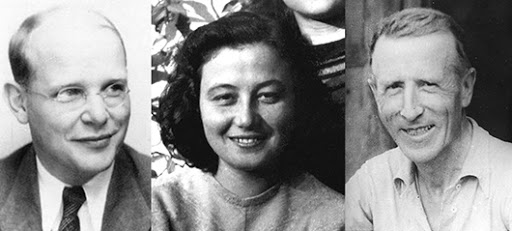
Not only is it essential to pursue the doing of good, but so is a taking seriously of evil and a standing up to it, since omission and silence too are grave sins – insights that are of acute relevance today and that were at the time of the Shoah also shared by Christians. The Lutheran theologian Dietrich Bonhoeffer, whose anniversary of being murdered in the Flossenbürg concentration camp in 1945 was yesterday, said:

“Silence in the face of evil is itself evil:
God will not hold us guiltless.
Not to speak is to speak.
Not to act is to act.”

The world: a flowerbed of communion

Klee flowers

Yesterday and today, a fantastic meeting of the Courtyard of the Gentiles – entitled “Renewing the Church in a Secular Age” – is taking place at the Gregorian University in Rome, and it is also being freely live-streamed. Since listening to the opening remarks of the university’s rector, Fr. François-Xavier Dumortier S. J., Fr. George McLean, the President of The Council for Research in Values and Philosophy, and Cardinal Gianfranco Ravasi yesterday, I have been working on a transcript of parts of the first two and pretty much the entirety of the last one, since they struck me as profound and beautiful expressions of the openness and warmth of the Church that I am keen to share with you as soon as possible. I will therefore, in the interest of speed, dispense with my own commentary and reflections, and just offer you the transcript (and coarse translation into English) next:

First, here is the conclusion of Fr. Dumortier’s opening remarks:

“This conference is about the Church in her relationship with the world of today, i.e., with the men and women of today, but also with the societies and cultures of our time. It won’t only be about being at the frontiers that cut through these societies and cultures and our selves too, but about going ahead with confidence and hope in the discovery of God who works mysteriously everywhere and in everyone and who, in some way, calls us to leave behind the certainties we guard too tightly and the places we know too well. This challenge of thinking about our current intellectual and spiritual situation asks for the capacity to go out of the context of our individual specializations, the constraints of our own cultures, from self-referentiality, not so as to confront that which is different and at times far removed, but so as to listen, encounter, understand and learn. It seems to me that such an attitude would indicate a Church that is not afraid of living the newness of the Gospel and that has the audacity of meeting head-on the challenges that permeate cultures today. To recognize when and how human beings are searching for God, which is never a private matter and which is done until the end of self and the end of time. To deepen our current way of humbly bringing the word of God that truly speaks to the hearts and minds of today’s men and women. Desiring to promote a culture of mutual welcome. It is a dialogue that does not despair of anything or anyone. They are challenges that we can now live with the courage and the strength of intelligence, with a generosity of intelligence that broadens the space in which one moves.”

Next, a couple of points made by Fr. McLean, that particularly struck me, where he spoke about a new perspective on secularism, derived from the work of Charles Taylor and Jose Casanova, who

“took on the fallacy that secularity was simply a loss of religion and said: “No!” secularity is a new way of being religious, and he pointed us in the direction that would make that possible. […] There are four things that we need to study: one of them is that of the seekers, that is not that they are against religion or abandoning religion, but they are looking in new ways – can we meet them? Can we find out where they are going? Can we speak to them? This is a new, creative mode of approaching the secular age. And then also the magisterium. How can the magisterium be the guide, the teacher of the new seekers? How can that be done? This is the great challenge for the Church. […] Perhaps there are many different ways in the world today in which people are seeking the divine and responding in their own way. Can we bring those together? Can this be the life of the Church? A creative pastoral responsibility.”

And finally, the main course, Cardinal Gianfranco Ravasi’s superb exposition of two interpretations of the concept “seculum” and the need for dialogue flowing from them:

“I would like to place this word at the center: “seculum”, also because it is directly in the title of this meeting. Seculum, as we know well, generates two meanings and I will build a brief reflection around them that will be more theologically-pastoral in character. The first meaning is a positive meaning: secolo generates secularity, which is a Christian category. Let’s not forget, for example, that “secolo” in New Testament Greek is “aeon”, and “aeon” also has a dimension of eternity. This also holds for the Hebrew “olam” (עוֹלָם) which simultaneously indicates temporality but also a dimension of globality.

[… I’ll start with] secularity as a theological category. I will express the theological form of this category in this case only in an impressionist way, in a simplified way. I’ll express it by means of three components of Christian faith.

The first component is creation. It suffices to listed to these verses from the Book of Wisdom – a book, among other things, of dialogue between the Hebrew and Greek cultures – “[T]he creatures of the world are wholesome; There is not a destructive drug among them.” (Wisdom 1:14). Note: “the creatures of the world.” Second: “For you love all things that are and loathe nothing that you have made.” (Wisdom 11:24).The Lord – lover of life. To the Creator nothing is profane. And this already makes us understand how we must look to totality, we must have an optimistic perspective.

The second component: Jesus is a lay person. He is not a priest. The letter to the Hebrews says so: “It is clear that our Lord arose from Judah, and in regard to that tribe Moses said nothing about priests.” (Hebrews 7:14) But the author of the letter to the Hebrews wasn’t content just with this: “If then he [Jesus] were on earth, he would not be a priest.” (Hebrews 8:4). This aspect, that our founder is a lay person, is truly very significant. Even with all the clarifications that theologians then make.

The third element: Christianity presents a model of the relationship between faith and politics, faith and society, that is extremely significant. because it says no to sacralism, it says no to hierocracy , to integralism and, naturally, it also says no to statolatry, to the negation of any religious component in society.

What is being asserted? An assertion that Christ formulates and on which exegesis has been based for centuries, above all in terms of incarnation. The assertion is precise, and as I often say – it is a tweet that in Greek has only 50 characters, including spaces: “Then repay to Caesar what belongs to Caesar and to God what belongs to God.” (Luke 20:25) There is the recognition that there is a strong autonomy of the image of God that is man, of religion on the one hand, and on the other hand a real autonomy, naturally, of society and the state. Christian religion cannot accept the extraordinary phrase […] “The Temple is my country and my nation, and there is nothing outside it.” (spoken by Joad, the Jewish high priest in Jean Racine’s Athalie). Christianity, instead, recognizes secularity.

I’d now like to conclude with two considerations about secularity. First, secularity is a “locus theologicus”, delicate but real. And it has, fortunately, been considered in various ways during the 20th century. I’d now like to give three examples by just quoting some indicative phrases from these authors whose works I have read.

First, and all know this one and expect me to say his name: Bonhoeffer. Bonhoeffer with his theory of the “mündige Welt” – the adult world, the grown-up world, which, like a young person who becomes emancipated, does not break the links with the family, but has their own autonomy. And the challenge for faith is precisely this: to abandon the theophanic, ex machina God who embraces all reality, in favor of a kenotic God. The God of the cross, who does have his presence, but – you will see – a presence as seed. Not as power.

The second person, whom many will think of as representing fruitfulness, is Gogarten. Gogarten, in his work of 1953, Despair and hope for our time, wrote: “Secularity is the necessary and legitimate consequence of Christian faith.” And here we come to the second topic I would like to address: secularism or secularization. Secularism is a degeneration of secularity because it takes leave of God, radicalizing its own autonomy and canceling the co-presence of the divine. [Gogarten] then continues: “The autonomy of man does not detach itself from God but neither is it sacramentally overpowered.” It is not detached, but it is not crushed either. “The Church must live,” he continues, “in sincere solidarity with the world, without wanting to sacralize it.”

And the third one, obviously, is Rahner. Rahner […], referring to Gaudium et Spes, in his Theological Investigations wrote these words about secularization in 1966 […]: “The Church must and wants to codetermine also the way of the secular world, without, however, wanting to determine it in an integral and doctrinal way.” […] 


Let’s now turn to the second aspect of the word “seculum,” which I’d define as secularism. What symbol could we use to represent secularism? Well, all know it, it is a symbol that has become popular in everyday language […]: disenchantment. The disenchantment of the world. “Entzauberung der Welt.” This phrase, by the way, is not – as all say – by Max Weber, but by Hölderlin. Hölderlin used it in a different sense though, and it is a term that also became popular through a 1985 work of Marcel Gauchet.

So, what are the characteristics of secularism? […] First of all, an emancipation from sacral bonds and subjection, the emancipation from sacral authorities, symbols and institutions. The emancipation from the jurisdiction of the scared. Second, […] the ontological, epistemological, deontological  autonomy from theology. In practice, there is a desire to relegate theology to a sort of protected oasis, but one that is independent of the horizon of knowledge. Also since there is only one subject – humanity, heaven is empty of gods. Another component, which is a consequence of this one, is one I often call the monodicity of knowledge, i.e., knowledge with a single tone, which in the end is the rational/scientific one. As a consequence, what comes to the fore is the scene of the world rather than the foundations of reality. The possibility of transcendence and its own language for approaching it are excluded.

Fortunately, we know that this attitude is now in crisis. We know that our knowledge, that of all – including the simplest person – is polymorphous. When a person, even a scientist, falls in love, they use another channel of knowledge. Esthetics, art … The last component, that I would like to mention, among many examples of secularism, is the phenomenon of the metropolis, of urbanization. This is a component that I take from the work “The secular city” by Harvey Cox from 1975 […] “Urbanization means a structure of life together, in which diversity and the disintegration of traditions dominate.  A kind of impersonality dominates. A certain degree of tolerance and of anonymity that replace traditional moral sanctions and codified knowledge.” You see, even a man from the countryside who arrives in a city, who has his traditions, his morality, when he enters this gray place, loses his identity. […] 


What I think though is that in contemporary secularism there are two pastoral challenges. Two challenges that are also cultural and that are the result of two phenomena, among many other possible ones, in the complex society and culture of today.

The first phenomenon. I’ll label it with a term that I need to explain, because it has been used by some authors already, is: apatheism. Apatheism is the union of apathy and atheism. It is what we often call indifferentism. This is a phenomenon with which, for example, the Courtyard of the Gentiles – this dialogue between believers and non-believers that I am trying to develop – is trying to confront with great difficulty. Because we are in front of a wall of fog. Apathy. A beautiful definition here comes from none other than Diderot in his “Letter on the blind for the use of those who see”, addressed to his atheist friend, Voltaire: “It is very important not to mistake hemlock for parsley, but believing in God or not isn’t.” This is a bit the style of apatheism, which is really problematic and ever more dominant. It doesn’t answer head-on, like Nietzschean atheism, it doesn’t fight faith like atheist regimes do. It ignores God as a stranger. Like a reviewer of Prof. Taylor’s book, Costa, wrote: “If God walked into a square in a contemporary city, he wouldn’t surprise anyone. At most a guard would ask him for his papers.” He’d be asked for his papers because his identity is unknown. God mustn’t interfere in human affairs. He is a stranger. He is not the basis of existential choices. Even transcendence can be recognized but he must remain in the limbo of his transcendence. The times have finished where, de Sade in his “Justine (or The Misfortunes of Virtue)” writes, as an emphatic atheist: “When atheism needs martyrs, it should say so – my blood is ready.” This now would be ridiculous. Atheists today are apatheists. The last ones who are aggressive are a kind of endangered species. Those who feel strongly about atheism. And this relegates religion to insignificance. To uselessness, to irrelevance in history. […]

This situation of apatheism, pastorally, calls out to Christians. I asks Christians why they have not been able to communicate their difference in the face of this indifference. If anything, they have reduced themselves to the minimum, […] they are no longer able to provide answers to key questions and thereby to stimulate questions. Indifferent societies do not love questions. The question, in our languages is represented as something that claws [Ravasi draws a question mark in the air]. Oscar Wilde rightly said that everyone is able to give answers, but it takes genius to ask true questions. A question requires depth and requires tension too. Herein lies the importance of provoking with ultimate truths. Evil. Suffering. The meaning of life. Things that don’t enter into … Also the authenticity of the truth. And we, Christians, have probably lost warmth as far as our lives, our lifestyles go. Let’s recognize it. Very often our communities deserve the condemnation that the Apocalypse launches against the church of Laodicea: “So, because you are lukewarm, neither hot nor cold, I will spit you out of my mouth.” (Revelation 3:16). There are communities lacking any testimony, incoherent. They are no longer the leaven and the yeast of the Gospel.

The second phenomenon that could stimulate us is what I would call polytheism. Which in a nicer way we could express as religious pluralism. We know that already Max Weber in his day spoke about the polytheism of ethical values. Now, however, we have confirmation of this unquestionable phenomenon of a continuous intersection of religions and civilizations. And this phenomenon of a polytheism of more divinities, or more religions leads to three possible reactions as I can see. First, there is fundamentalism. Fear of the other god, of the other culture. Therefore there is aggressive apologetics, self-referential. Islamic fundamentalism is an example of this. It is the choice of pulling out the sword straight-away against the other. Second, there is a reaction that is more alive in Europe. Which is generic syncretism and then apatheism. Inoffensive syncretism. Without identity. The famous poet George Eliot said: “If we lose Christianity, we, Europeans, will no longer be able to understand even Voltaire and Nietzsche. But there is an even worse risk. We will lose our countenance. We will no longer have a face.” Forgetfulness. A loss of memory. Religious memory and also cultural memory, which means that, when faced with fundamentalism, we are in no position to react since we have no identity anymore. Certainly, fundamentalism has an exasperated identity, which is negative too.

So, what is the third way? The third way, evidently, and even though it is demanding, modest and to be carried out with a bowed head, and I have to say that the Church and Pope Francis are going it, is the way of dialogue. Dialogue with all its risks and troubles, inter-religious and intercultural dialogue. What ought this dialogue be like? We could talk about lot about it, but let us just look more closely at the word dialogue.

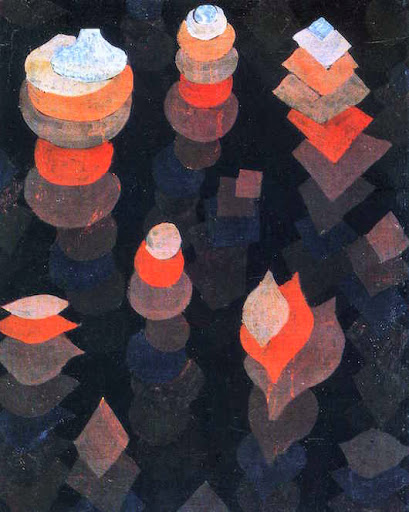
In its Greek form, and not everyone knows this, it has two meanings. The preposition ‘dia’ has two values – not one. Usually it is said that ‘dia’ is the crossing of two different ‘logoi.’ In reality, ‘dia’ also means a descending into depth. Ideologies have died, but as ideologies died, thought has died with them. We must return to a deepening of our faith, to the foundations, and ask of others that their argumentation be substantial epistemologically and in terms of content. I think that dialogue also means many other things, such as a making oneself close to the other, putting oneself in a position of listening to the other. And this is another very demanding practice. It reminds me of the expression used by John Paul II in his Novo Millennio Ineunte with regard to the Church, which I think ought to become the ideal for humanity too, which share a common basis. He says that we must “make the Church the home and the school of communion.” Here the call is for a humanity that in its diversity manages to share a home which is that of this modest planet. This small flowerbed as Dante Alighieri called it.

In the rabbinical tradition there is a beautiful image, a beautiful aphorism that says: “When men coin money, they do so with a single die, as a result of which all coins are the same. God, too makes men with a single die, yet all men are different.” Dialogue is an arduous, lengthy, maybe eschatological, process of building a shared home. 

To conclude, I would like to pass the word to the Bible, which is to give us a push and the capacity to decipher our own history. The Judaeo-Christian religion is a historical religion. It doesn’t call us to detach ourselves from reality towards mythical or mystical heavens. It is an incarnate religiosity, starting with Christ, who is a great sign. Because of this I would like to remember that stereotype, which has unfortunately become a stereotype, used since conciliar times […]: “the signs of the times.” Signs are important, the signs of power, and I’d say the power of signs is important. And I’ll give the word about this to two fundamental biblical characters, two biblical witnesses: We’ll start with the prophets, where I’ll choose Jeremiah 8:7 “Even the stork in the sky knows its seasons; Turtledove, swift, and thrush observe the time of their return, But my people do not know the order of the LORD.” And now, in the same style, the voice of Christ, who speaks to us from Matthew 16:2-3, using the symbol of meteorological forecasting “In the evening you say, ‘Tomorrow will be fair, for the sky is red’; and, in the morning, ‘Today will be stormy, for the sky is red and threatening.’ You know how to judge the appearance of the sky, but you cannot judge the signs of the times.” 


Bonhoeffer, Lubich, Teilhard: A world luminous from within

Bonhoeffer lubich teilhard s

Sixty eight years ago yesterday, in the Flossenbürg concentration camp, the Lutheran pastor and theologian Dietrich Bonhoeffer was martyred. His opposition to Nazi euthanasia and genocide directed against the Jewish people, born of his discipleship of Jesus, earned him the gallows. While I have long been an admirer of Bonhoeffer’s witness and theology, I have only now come across the following passage from his Letters and Papers from Prison, where he points particularly lucidly to the alternative to the God of Gaps caricature still popular today:

“How wrong it is to use God as a stop-gap for the incompleteness of our knowledge. If in fact the frontiers of knowledge are being pushed further and further back (and that is bound to be the case), then God is being pushed back with them, and is therefore continually in retreat. We are to find God in what we know, not in what we don’t know.”

This emphasis on the presence of God in what we know made me think of Chiara Lubich’s mystical experience that started during the summer of 1949.1 There, before the start of the actual “intellectual visions,” she recounts the following:

“[N]ature seemed to me to be enveloped totally by the sun; it already was physically, but it seemed to me that an even stronger sun enveloped it, saturated it, so that the whole of nature appeared to me as being “in love.” I saw things, rivers, plants, meadows, grass as linked to one another by a bond of love in which each one had a meaning of love with regard to the others. […] I had seemed to see the blossom of a horse chestnut tree alive with a higher life that sustained it from beneath so that it seemed to be coming out towards me.” (Paradise ’49)

How is it though that one comes to seeing God “in what we know,” as “sustain[ing everything] from beneath”? Here, in the paragraphs preceding the above quote, Lubich says that “[for about five years w]e had been trying with great intensity to live [… communion] with Jesus in the Eucharist, with our brother or sister, with the Word of God […] constantly in the present moment.” Her answer then is that this experience of God “enveloping” all has for her and her companions followed a putting of the Gospel into practice.

This in turn made me think of Pierre Teilhard de Chardin’s “The Divine Milieu,” where he sets out “a way of teaching how to see” and starts by posing a challenge:

“God is as pervasive and perceptible as the atmosphere in which we are bathed. He encompasses us on all sides, like the world itself. What prevents you, then, from enfolding him in your arms? Only one thing: your inability to see him.”

Reflecting on the above near the end of his life, Teilhard shares the following:

“Throughout my life, by means of my life, the world has little by little caught fire in my sight until, aflame all around me, it has become almost completely luminous from within. … Such has been my experience in contact with the earth — the diaphany of the Divine at the heart of the universe on fire … Christ; his heart; a fire: capable of penetrating everywhere and, gradually, spreading everywhere.”

Again the vision of God illuminating the world “from within” follows a life focused on seeking Him, as Teilhard says in “The Divine Milieu,” both in what we do and what happens to us – both the active and the passive, and therefore in life as a whole:

“It is the whole of human life, down to its most “natural” zones, which, the Church teaches, can be sanctified. […] “So whether you eat or drink, or whatever you do, do everything for the glory of God.” (1 Corinthians 10:31).”


1 For previous mentions of “Paradise ’49” see the following posts here and here.