Man and Woman: Nakedness

Arm back

John Paul II opens the 11th talk on the Theology of the Body1 by reflecting on the previous ten. He highlights the profile of the human person and the male-female union presented there as always being “at the root of every human experience. […T]hey are so interwoven with the ordinary things of life that we generally do not realize their extraordinary character. [… They show] the absolute originality of what the male-female human being is inasmuch as he or she is human, that is, also through the body.”

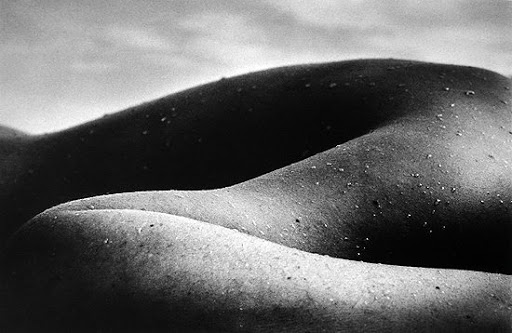
The aspect of Genesis that is taken under the microscope in talks 11-13 is the following sentence: “Now both were naked, the man and his wife, but they did not feel shame.” (2:25), which is placed alongside the insights about “man’s original solitude and original unity” in importance. Original nakedness in the absence of shame evidences innocence, and shows the original “reciprocal experience of the body, that is, the man’s experience of the femininity that reveals itself in the nakedness of the body and, reciprocally, the analogous experience of masculinity by the woman.” This also makes shame the boundary experience between the original human state and that after the fall, also since shame is used in later passages to highlight how reality has altered after the fall: “Then the eyes of both were opened, and they realized that they were naked; they sewed fig leaves together and made themselves loincloths.” (Genesis 3:7).2

The next challenge in understanding the fullness of original nakedness is to attempt its reconstruction by first trying to understand shame. Here John Paul II offers the following description, given the context already set up in the previous chapters: “In the experience of shame, the human being experiences fear in the face of the “second I” (thus, for example, woman before man), and this is substantially fear for ones own “I.”” What then is the meaning of its absence from the original human state? Here John Paul II argues that such a question is a misunderstanding of the Genesis account – it is not like there was a lack of shame before the fall, but that shame was inapplicable, which “indicate[s] a particular fullness of consciousness and experience, above all the fullness of understanding the meaning of the body connected with the fact that “they were naked.”” To understand this “fullness of consciousness” we need to pan out and remember how original solitude (separateness from the rest of creation) is overcome by being created as man and woman (the other being another “I”). This overcoming of solitude occurs “through the body [… which is the] direct and visible source of [the] experience that effectively establishes their unity.” Therefore “the man and the woman were originally given to each other precisely according to this truth inasmuch as “they were naked”” also as evidenced by the “perception of the senses.”

At this point John Paul II argues that while the above external view of nakedness is essential and not to be discounted, it is necessary to look at its inner dimension as well. “[T]hrough its own visibility, the body manifests man and, in manifesting him, acts as an intermediary that allows man and woman, from the beginning, to communicate with each other.” But what is this interior nakedness that the body manifests? Here John Paul II’s answer is yet another stunner:

“To this fullness of “exterior” perception, expressed by physical nakedness, corresponds the “interior” fullness of the vision of man in God, that is, according to the measure of the “image of God” (see Genesis 1:27). According to this measure, man “is” truly naked (“they were naked”), even before becoming aware of it (see Genesis 3:7–10).”

Before the fall man internally sees (understands!) woman as she was created in God and woman sees man again as created in God, which makes shame inapplicable. Pure genius! And he continues:

“[Man] has […] a share in the vision of the Creator himself — in that vision about which the account of Genesis 1 speaks several times, “God saw everything that he had made, and indeed, it was very good” (Genesis 1:31). “Nakedness” signifies the original good of the divine vision. It signifies the whole simplicity and fullness of this vision, which shows the “pure” value of man as male and female, the “pure” value of the body and of [its] sex.”

A consequence of this state is that it “does not contain an inner break and antithesis between what is spiritual and what is sensible. […] They see and know each other, in fact, with all the peace of the interior gaze, which creates precisely the fullness of the intimacy of persons.” Finally, John Paul II concludes by summing up the original meaning of nakedness in that it “corresponds to the simplicity and fullness of vision in which [man’s and woman’s] understanding of the meaning of the body is born from the very heart, as it were, of their community-​communion. We will call this meaning “spousal.”” This brings us to the end of his analysis of man and woman “from the beginning,” which has taken us up to the threshold of the fall. The next part of the book then looks at how man and woman are created as a gift and takes the “spousal” relationship as its point of departure.

I have to say that, beyond the content for which my enthusiasm should be explicit from the above, I continue to be hugely impressed with John Paul II’s method, behind which I feel a profound trust in God and in Scripture containing wisdom. His efforts to access it are, to my mind, a perfect embodiment (pardon the pun) of the critical, rational approach set out in Vatican II’s Dei Verbum, where faith and trust fuel the quest and where reason and analysis are its means. An aspect of the book that I haven’t mentioned so far are also its superb footnotes, which span sources as diverse as C. G. Jung, Shakespeare, Nietzsche, Marx and Freud, as well as a rich body of biblical scholarly and theological literature (including the young Ratzinger). Far from being carried out in isolation, John Paul II’s thought is lucidly aware of the intellectual context of his time and references the insights of those in and beyond the Church alike.


1 If you are interested in this topic, consider taking a look of the first two posts where I cover earlier chapters first here and then here and getting the book they are based on: Man and Woman He Created Them.
2 John Paul II is very careful throughout these talks to be clear about the fact that the Genesis account is a myth, which “does not refer to fictitious-fabulous content, but simply to an archaic way of expressing a deeper content.” So, references to the fall and to humanity before and after it are not to be read historically, but rather as means of conceiving of different aspects of human anthropology, psychology and ontology.
Tarkovsky: glimpse with sightless eyes

Tarkovsky76 s

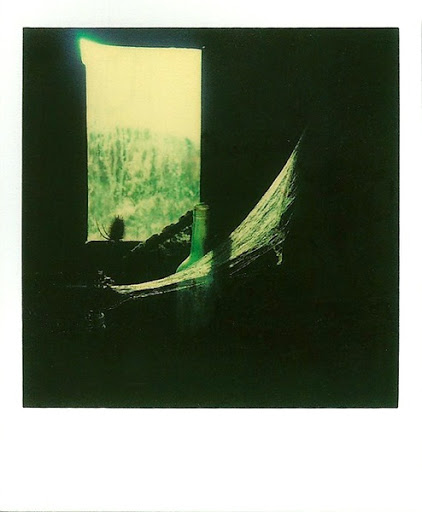
Today I have received a wonderful Christmas present from my bestie PM: the book “Instant Light Tarkovsky Polaroids” that contains a series of Polariods taken by the Russian film director Andrei Tarkovsky. If you haven’t seen any of his work, I highly recommend it – his movies are beautifully shot, profound, thought-provoking and reveal a desire to use cinema as a means of exploring fundamental aspects of human nature: “Juxtaposing a person with an environment that is boundless, collating him with a countless number of people passing by close to him and far away, relating a person to the whole world, that is the meaning of cinema.” Fortunately, his movies can now be seen for free on-line, with openculture.com having an up-to-date listing here.
What struck me about the book is first of all the personal character of its photos. They are how I’d imagine Tarkovsky’s Instagram feed to be, rather than a polished fine art collection. While exhibiting the atmospheric, observant nature of his movies, they instead show his dog, son and wife or scenes from places he visited during travels in Russia and Italy. In addition to the photos, there are also a couple of poems, prayers and reflections by Tarkovsky here and I believe these to be the true gems of the book. Let me share a couple of my favorites with you.

First, Tarkovsky gives thought to the nature of artistic expression (italics show original emphasis):

“The image is not a certain meaning
expressed by the director,
but the entire world
reflected as in a drop of water.”

This view very much rings true for me. Whenever I am asked to “explain” my own paintings I feel like I am just one of the multitude of possible viewers, all of whom can confront the work as a world in itself and extract feelings, insights, questions, etc. from it. To my mind, as to Tarkovsky’s, a piece of art is not a message, but an alternate representation of the world. This concept of the image as world, is taken further along a religious line in the following:

“An image
is an impression
of the Truth,
which God
has allowed us
to glimpse
with our
sightless eyes.”

Again there is the world/Truth impressed in an image here, but it is now confronted with our inherent inability to even glimpse it with our “sightless eyes.” I believe this expresses beautifully that basic inability to absolutely interpret artistic work, which is an impression (i.e., not the thing in and of itself) or a reflection (again, only a twisted representation) of a reality that lies beyond it. Tarkovsky here attributes any success in attaining meaning or Truth to God’s benevolence and takes his religious viewpoint further still in the following passage:

“Whatever it expresses –
even destruction and ruin –
the artistic image
is by definition an embodiment of hope,
it is inspired by faith.
Artistic creation
is by definition a denial of death.
Therefore it is optimistic,
even if in an ultimate sense the artist is tragic.
And so there can never be
optimistic artists and pessimistic artists.
There can only be talent and mediocrity.”

To my mind this very much resonates with both what the painter Michel Pochet said about the redemptive power of ugliness and what Benedict XVI said about the liberating, uplifting effect of art even when it is shocking. The role of faith that Tarkovsky sees here, comes out even more clearly in the next quote, where he emphasizes love as the key to faith and their subsequent resolution of the limitations set out above:

“We are crucified on one plane,
while the world is many-dimensional.
We are aware of that
and are tormented by our inability
to know the truth.
But there is no need to know it!
We need to love.
And to believe.
Faith is knowledge with the help of love.”

Finally, Tarkovsky also reflects on man being created in the “image of God” according to the Genesis account – a point that is also central to John Paul II’s Theology of the Body (covered first here and then here):

“In my opinion, when we talk about God
making man in His own image and likeness,
we should understand that the likeness
has to do with His essence, and this is creation.
From this comes the possibility
of evaluating a work and what it represents.
In short, the meaning of art
is the search of God in man.”

This, I believe, is a beautiful synthesis of the above quotes. Man is created in God’s image and is by himself incapable of going beyond the surface of even his own creations. It is only through love and faith that he can seek to be granted access to meaning, Truth and God in himself, in art and in the world.

Man and woman: a communion of persons

Twoone

In a previous post (that I highly recommend if you’d like to get the most out of this one), I shared my notes on the first eight chapters of John Paul II’s “Man and Woman He Created Them.” There he presents an astonishing view of the human person, derived from the creation account of Genesis. It centers around his argument for the self-consciousness and self-determination of the human person, and, as their consequence, their relating to God as a partner. The human person is set against the background of man’s initial solitude, out of which the differentiation of the male and female sexes arises. In this post I would like to continue sharing my takeaways from John Paul II’s book, where the relationship between the “two ways in which [a] human being […] is a body” is further elaborated.

Here the narrative continues on from the “unity of two beings” established in chapter 8, and emphasizes the value of the human person to God (“God saw everything that he had made, and indeed, it was very good” Genesis 1:31) and of man and woman to each other, as “an overcoming of the frontier of solitude.” This original solitude of man is already an indication that man is made for woman and vice versa. The “existence of the person “for” the person1 […] is confirmed, in a negative sense, precisely by [man’s original] solitude.” Such being for each other results in the formation of a communion of persons, where it is the ““double solitude” of the man and the woman, […] which [gives] to both the possibility of being and existing in a particular reciprocity.” The human person’s being created “in the image of God” (Genesis 1:27) lets us deduce that “man became the image of God not only through his own humanity, but also through the communion of persons, which man and woman form from the very beginning.” This is beautifully summed up by John Paul II saying that “[m]an becomes an image of God not so much in the moment of solitude as in the moment of communion.” Man is “not only an image in which the solitude of one Person, who rules the world, mirrors itself, but also and essentially the image of an inscrutable divine communion of Persons.”

All I can say to that is: wow! The clarity of thought, the beauty of the universal image of the human person and its relationship with God that John Paul II presents here is astonishing and seems so fresh and open that I am lost for words!

Turning back to the human person, he extracts yet another profound realization from the Genesis account: “on the basis of the original and constitutive solitude of his being – man has been endowed with a deep unity between what is, humanly and through the body, male in him and what is, equally humanly and through the body, female in him.” The “twofold aspect of man’s somatic constitution” – masculinity and femininity – indicates “the new consciousness of the meaning of one’s body[, which is] reciprocal enrichment.” These “two reciprocally completing ways of “being a body” [… are] complementary dimensions of self-knowledge and self-determination.” It is important to note here that John Paul II does not refer to an individual, when he says “man” in the above quotes (i.e., he is not saying that a single person is constituted by masculine and feminine parts) and neither is he talking about a male human being. Instead, “man” refers to humanity, where human person have these two “ways of being” that have among them a deep unity. This becomes particularly clear also from the following passage, where he says that being male or female “is “constitutive for the person” (not only “an attribute of the person”) [… Man] is [deeply] constituted by the body as “he” or “she”.”

With the human person understood as above, the next step is to turn to the unity between male and female that Genesis expresses as: “the two will be one flesh” (2:24). This “is without doubt the unity that is expressed and realized in the conjugal act.” “When they unite with each other (in the conjugal act) so closely so as to become “one flesh,” man and woman rediscover every time and in a special way the mystery of creation, thus returning to the union in humanity (“flesh from my flesh and bone from my bones” [Genesis 2:23]) that allows them to recognize each other reciprocally.” “This means reliving in some way man’s original virginal value [… and for man and woman to discover] their own humanity, both in its original unity and in the duality of a mysterious reciprocal attraction.” “[S]ex expresses an ever-new surpassing of the limit of man’s solitude [… and] always implies that in a certain way one takes upon oneself the solitude of the body of the second “I” as one’s own.”

Finally, chapter 10 (yes, all of this is in only two, short chapters!), highlights the core importance of choice in becoming “one flesh” “While the man, by virtue of generation, belongs “by nature” to his father and mother, “he unites,” by contrast, with his wife (or she with her husband) by choice.” This choice, which is an “expression of self-determination” that is fundamental to the “structure” of the human person, “is what establishes the conjugal covenant between the persons, who become “one flesh” only based on [it].” “When both unite so intimately with each other that they become “one flesh,” their conjugal union presupposes a mature consciousness of the body.” The result is a new “discovery of the […] original consciousness of the unitive meaning of the body in its masculinity and femininity.”

OK, that’s about as much as I can try to cover in one go. John Paul II’s thought is intricate, dense (re-reading a good few times is a must) and has peculiarities of vocabulary (like all good, philosophically meaty texts), but the rewards are rich and will, at least for me, lead to many more re-reads and hopefully new insights in the future. Even the surface I managed to skim here presents the sexual relationship between man and woman as a mirror of the cosmic event of creation (in the rich depth that John Paul II has exposed in these first 10 chapters ), as a mirror of the innermost nature of God’s own Trinitarian life and as a mirror of the fundamental complementarity and reciprocity of human relationships. Consciousness, choice, bodiliness, solitude and a gratuitous giving of one’s self to another self are all weaved into a profoundly illuminating tapestry, which shows off the beauty of a positive, Christian understanding of humanity and sexuality.


1 Please, note that all italicized emphases are John Paul II’s own, from the original text.

Man and woman: the beginning

Woman

It has been a long time since I last read a text that filled me with excitement and admiration and lead me through a seemingly inexhaustible sequence of insights and profound realizations. The book I am talking about is John Paul II’s “Man and Woman He Created Them,” which presents his “Theology of the Body” – a term that I have heard mentioned on various blogs but that has meant little more to me than a buzz-word so far.

The book presents the content of a series of talks that Blessed John Paul II gave during his Wednesday general audiences between September 1979 and November 1984 (!) that closely track a manuscript he wrote before being elected pope. Instead of the usual pastoral material, typically presented at events like these, the first chapter already makes it crystal clear that the book is going to be technical and intellectually challenging material. To think that he shared it with the crowds who came to see him in Rome is astonishing to me by itself, as it is the polar opposite of the typical dumbing-down that so often informs pubic communication.

The starting point is the origin of the family in marriage, whose indissolubility Jesus categorically reaffirms when challenged by some Pharisees:

“Have you not read that from the beginning the Creator created them male and female and said, ‘For this reason a man will leave his father and his mother and unite with his wife, and the two will be one flesh’? So it is that they are no longer two, but one flesh. Therefore, what God has joined let man not separate.” (Matthew 19:4-6; emphasis by John Paul II)

Here John Paul II picks up on Jesus’ emphasis on “the beginning” and his quoting of verses from two separate chapters of Genesis. Instead of this passage from Matthew being only taken as a confirmation and reinforcement of the Genesis model of marriage, Jesus’ emphasis on “the beginning” triggers an analysis of the creation of humanity. In fact, John Paul II focuses on the specific features and complementary differences of the two Genesis accounts to look not only at the differences between male and female genders, but at key characteristics of what it means to be human.

The first account (which is chronologically more recent and which has more of a theological character) is that “God created man [hā’ādām, collective noun: “humanity”?] in his image, in the image of God he created him, man [zākār, male] and woman [neqēbāh, female] he created them.” (Genesis 1:27, John Paul II’s additions in []). In other words, the creation of man and woman is “a single act.” In contrast, in the second account (which is more ancient and has more of a mythical character), man’s creation (Genesis 2:5-7) precedes that of woman’s (Genesis 2:18-23). However, even here, the first human being is called “man” (’ādām), “while from the moment of the creation of the first woman, [Genesis] begins to call him “male,” îš, in relation to ’iššāh (“woman,” because she has been taken from the male = îš).”

While the above “single-act” creation of the sexes is an aspect of Genesis that I certainly was not aware of, the most impressive move in John Paul II’s analysis comes next and is the insight that the solitude of the pre–male-female differentiated “man,” – expressed in Genesis as “It is not good that the man should be alone” (2:18) – is a reference not only to an individual’s solitude (lacking a mate) but to a fundamental feature of every person’s nature. In Genesis, the first “man” is shown both as being separate from the rest of creation (being alone in spite of a multitude of other living beings already populating the world) and as searching for his identity (being asked by God to name “every living creature” but not “find[ing] a help similar to himself” (Genesis 2:19-20)).

This original solitude of the human person indicates self-consciousness and the commandment about not eating from the “tree of the knowledge of good and evil” introduces self-determination (free will) as a basic feature of humanity. These two together make the human person “created in the image of God” and a “partner of the Absolute.” Next, John Paul II argues that it is man’s (’ādām’s) body that is the source of his awareness of solitude. This body that could have made man place himself as equal among the other created bodies, instead gives him awareness of his otherness and solitude. This in turn makes it evident that “the “invisible” determines man more than the “visible”.”

Next, man’s body is also the means of his “cultivating the earth” (Genesis 2:5) and “subdu[ing] it” (1:28), as the Genesis account further states. As a result, the human body is not only involved in man’s awareness of his separateness from the rest of creation and his potential for self-determination, but also “permits him to be the author of genuinely human activity[, where] the body expresses the person.” The final ingredient that John Paul II identifies in the Genesis account is the introduction of the difference between death an immortality in the form of the mystery of the three of knowledge: “The LORD God gave the man this order: You are free to eat from any of the trees of the garden except the tree of knowledge of good and evil. From that tree you shall not eat; when you eat from it you shall die.” (Genesis 2:16-17).

With man’s features emerging as his self-consciousness, self-determination and, as their consequence, relating to God as a partner, John Paul II turns to taking a closer look at the meaning of the original unity of humanity. The starting point here is an argument for there being a distinction between “bodiliness and sexuality” whereby our being bodies is fundamental to the structure of our being personal subjects, even before differences between the male and female genders are considered. Being a body is fundamental to being human and is intrinsic to the nature of that humanity (as John Paul II argues above), while masculinity and femininity are “two ways in which [a] human being […] is a body.” These two ways of being human bodies – the “double unity as male and female” – are introduced as means of overcoming the solitude of the sexually undifferentiated human. From the Genesis account of how male and female are differentiated, John Paul II notes in particular two aspects: First, that the “second I” – the female – that emerges from the “torpor” of the undifferentiated man during which differentiation is created – is “also personal and equally related to the situation of original solitude.” Second, that man “shows joy and even exultation […] for the other human being, for the second “I”.”

The first 8 chapters, a high-level synthesis of which the above has attempted, take us to the point of the basic features of man and woman having been sketched out, which is then the starting point for looking at the nature of the marital relationship. What I found particularly impressive, beyond the actual content and the psychological and anthropological profile of the human person that John Paul II presents, is the method of analysis he applies to Genesis. Throughout this discourse he is very clear about considering that text to be of mythical character, which “does not refer to fictitious-fabulous content, but simply to an archaic way of expressing a deeper content.” And he goes on to say that “[w]ithout any difficulty, we discover that content under the stratum of the archaic narrative, truly marvelous in the quality and condensation of the truths contained there.” What a guy! While I certainly cannot echo the “without difficulty” qualifier, the marvelousness and “quality and condensation of the truths” that he manages to reveal in this ancient text is amazing. His approach strikes me as being categorically different both from a naive, literal reading of Genesis that leads some to highly irrational and a-scientific conclusions and from a superficial “this is just a story” approach that fails to uncover deeper meaning.

In the beginning

In the beginning

This is my third attempt at starting a post1 that I have been thinking about intensively all weekend (and that follows a train of thought that I have nursed on and off for years). Why write about it now? Because I believe I have finally understood something that has been staring me in the face for years: the opening line of St. John’s Gospel is a joke!

“Whoa!” I hear you say “Hold it right there!” Before you start crying “Blasphemy!” or “Stone him!,” please, do hear me out.2 I don’t mean to say that it is ridiculous, frivolous, trivial or inconsequential. On the contrary! I believe that I can now see a twist of humor in it that furthermore alludes to complexity that would otherwise have taken tomes upon tomes to try and spell out and that would have been well beyond St. John or the Christians of the first many centuries.

Picture this (imaginary, non-canonical!) scene:

God the Father, Jesus and the Holy Spirit are sitting around a table, chatting (you can imagine that this is what they spoke about in the scene Rublev painted, if you like):

Father: OK, guys, let’s get John started with his Gospel.

Jesus: Dad, can we have him spell out how it all started, and not just open with my birth?

HS: Sure(!), but the maths might be a tad beyond him, don’t you think?

Jesus: I didn’t mean to give him the full recipe, HS! This is not about repeatability and independent verification …

HS: So, were you thinking along the lines of the atemporal – yet dynamic, hyper-dimensional, infinite, partaking in the finite, linear, half-axis of time and being delimited in space? Even if we dumb it down to the level of philosophy, it’s still a tall order (although if anyone can do it, I can!).

Father: Look, HS, Jesus does have a point – we could give them a sense of what is going on, without having to bring Ambrose, Thomas or Albert forward. Surely you can think of some little quip to point them in the right direction.

[A “moment”’s silence later.]

HS: It’s a bit cheeky, but how about this – and I’m just riffing here (plus they’ll have to wait for Ludwig and Martin to start unpacking it) …

Jesus: Get on with it! We may have all eternity, but I’d rather get back to giving Sidd some more hints.

HS: All right, all right! How about John opens with this: “In the beginning was the Word!”

The Father and Jesus look at each other, wide-eyed, exclaim: “Genius!” and the triune bursts out laughing.

The insight I had, while walking to mass on Sunday morning and thinking about Dei Verbum, the Johannine prologue and Descartes’ “cogito,” was the following: Saying “In the beginning was the Word” is like starting a recipe with “knead the dough.” A word cannot possibly be the start: it requires a language, other words, syntax, grammar and speakers and listeners who know how to play the games it facilitates. Saying “In the beginning was the Word” is saying “Look, this is as far back as we can take you, but know that there was lots that came before.” It places at the beginning an innocent-looking entity: a word, yet one that vehemently points beyond itself. To meaning, to reference, to relation, to function, to communication, to a meeting of minds. With a simple sentence, John (with some help), gives a masterclass on the inevitability of the preexisting and the core of Trinitarian relationships, where, like a word, each person points beyond themselves.

“Alright,” you say, “but why call it a joke?” I believe the structure of this sentence is precisely that of all one-liners: the first part (“In the beginning”) prepares you for a certain set of expectations and the second surprises you with something that just does not fit (“the Word,” which cannot possibly be in the beginning :). This is exactly what Kant meant with “Laughter is an effect that arises if a tense expectation is transformed into nothing.” Not wanting to kill humor with explanation, let me leave you with another example of the same comedic form: “Every winter when the first snow fell, I’d run to the front door with excitement, start banging on it and shout: “Mum! Dad! Let me in!”” (Milton Jones).

Realizing the above, I started seeing the Johannine pattern elsewhere too. Descartes, starts with “cogito ergo sum,” in an attempt to draw a line and derive a philosophy from that stake in the ground. Yet, it is a line that carries a lot of baggage beyond itself. My own earlier attempt too, which tries to take the “cogito” a step further by starting with “Language” is nothing but an explicit acknowledgement of such a necessary preexistence and in no way escapes or circumvents it. Unsurprisingly, the account of creation in Genesis uses the word/language mechanism for indicating the process of creation, where matter is spoken into being (“Then God said: Let there be light, and there was light” (Genesis 1:3)). More surprisingly, one of the Hindu creation accounts (the Nasadiya Sukta in the Rigveda) also employs a similar, though not identical, mechanism: “The One breathed windlessly and self-sustaining […] that was the primal seed, born of the mind.” Even the creation account of the Sumerians (The debate between Sheep and Grain, written in the 3rd millennium BC), highlights the role of language in the process: “the great gods, did not even know the names Grain or Sheep.”

What is clear to me from the above is the fundamental role of language in the process of something coming from nothing, which in a sense undermines the idea of a true nothing having preceded the something. With this in mind, the Christian identification of Jesus with “the Word,” which I have been wondering about for years, makes perfect sense. The Father makes himself known to us by speaking his Son, who in turn points back to Him: “Whoever has seen me has seen the Father.” (John 14:9) and then: “The words that I speak to you I do not speak on my own. The Father who dwells in me is doing his works. Believe me that I am in the Father and the Father is in me, or else, believe because of the works themselves.” (John 14:10-11, with a nice hat-tip to orthopraxy).

So, let me finish with a one-liner: “In the beginning was the Word.” 🙂


1 In a previous version I would have taken you through Lemaître, the Planck epoch and the opening lines of the Tanakh, before getting to the Johannine prologue.
2 Thanks to my über–bestie, PM, for his Nihil Obstat and Transferitur (the Imprimatur of the digital age) – much appreciated!