Zanghí: the person, an individual fulfilled

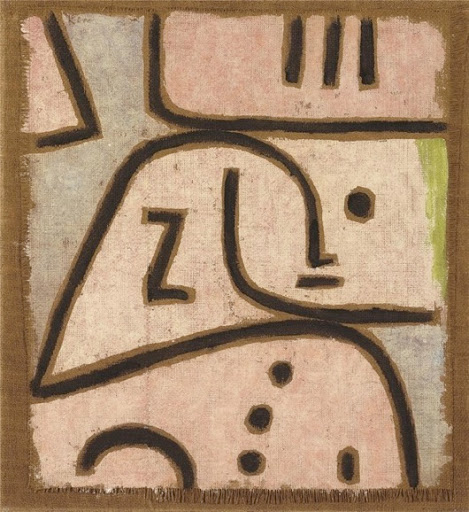
Klee person

930 words, 5 min read

The question of who I am is at the very heart of philosophy and a failure to answer it was presented by Socrates even as grounds for voiding the very value of his being, when he said his famous “The unexamined life is not worth living.” during the trial that lead to his being sentenced to death. A philosopher who has given this question some very careful and insightful thought is Giuseppe Maria Zanghí, who in his 1980 article entitled “A few thoughts on the person” has looked at the distinction between person and individual.

His starting point is the presentation is a key challenge that we face when attempting to subject the person to scientific enquiry:

“In the humanity common to all humans, the person is precisely that which is not in common, that which constitutes me as me in a shared humanity. How is it possible, then, to objectify the person? If we do that, we can only state what the person is not (not to confuse with, e.g., human nature); but if we want to say what the person is, we won’t find a “scientific” answer.”

By definition, that of which there is only a single specimen can not be subjected to the scientific method, since it does not allow for repeatability, for generalization and for verification (already Aristotle knew this well, when he argued in he Metaphysics (XIII, 10) that there can be no science of individual entities).

This initial roadblock leads Zanghí to define the person as follows:

“The person […] is a “singularity” irreducible to another since it is other; it is that unrepeatable “singularity” that makes a human be this human, who then is the concretely existing one.”

Next, Zanghí introduces an important nuance and distinction: that between the person and the individual, lest his definition of the former be taken as pointing to the latter:

“Could we, therefore, say that the person is the individual? The answer to this question calls for careful reflection. If we analyze ourselves, we realize that the individual is that which exists concretely: only in it does human nature not exist as a logical concept but as effective reality. But there remains a difference between nature and individual, without which the individual would absorb the totality of the nature and would deny the other. We can say, therefore, that the individual is defined by the precise limits within which it exists; the individual is, to use an image, carved into the common, shared nature. Human nature is constrained, it contracts, becoming concrete in the space-times that are individuals.”

What I believe Zanghí is saying here is that the individual is an instance of human nature, but distinct from it, since, otherwise, there could be only one individual, and that it is a spatiotemporal restriction and concretization of that nature.

This leads Zanghí to the realization of what it is that distinguishes the person from the individual:

“Yet, as I affirm all this (non-identity between the individual and nature, spatiotemporality of the individual), if what I say makes sense, I demonstrate to myself that, because of the awareness that I have of it, I am overcoming precisely the limits that make me an individual; I overcome, by speaking about it, the space-time in which I am an individual, I overcome the individual-nature distinction. Not in a sense that confuses the logical and existential planes, but in the sense that I unite them on a higher level, that I call ontological. I can think of myself as I think, because I transcend myself as an individual, I achieve a way of being where the individual-nature opposition, and thus individuality itself, is overcome (but not negated). In this act of transcendence, in this overcoming that I achieve while thinking, I reverse the state proper to the individual, that is, I assume nature, through the individual but beyond the individual, in an “other” with regard to the individual, and that is the person.”

The person is essentially the individual’s self-transcendence, a going beyond the constraints and unicity of the individual that is demonstrated by the very act of thinking about oneself, which would otherwise not be possible – without transcendence the individual could not think about itself.

Zanghí unpacks this transcendental nature of the person as follows:

“I would say, then, that the person is the individual’s act of transcendence, it is the individual that overcomes itself by taking nature up into itself and achieving a unity between universality (proper to nature) and existential concreteness, that is, the particular (proper to the individual). Human nature exists concretely in an act of transcendence that, while it “limits” it in the concreteness of the here and now (the individual), it returns it to an existing universality (the person).”

Finally, in anticipation of a potential misunderstanding that the above could lead to, Zanghí focuses on how individual and person relate:

“It is to be understood, also, that the person is not placed above, so to speak, the individual: almost as though, if the individual is what exists, is substance, then the person is also another substance added to the individual. The person is the act of the individual human substance, the act in which that-which-is-human (the individual human individual) is in its fullness, I would simply say: is.”

In other words, Zanghí is careful to avoid a dualist misinterpretation of his thought by stressing that we are not some strange amalgams of two distinct substances: individual and person, but that it is the person which is how the individual exists/is.

Reason in Faith: God’s exile of love in the world

Emmaus4

1592 words, 8 min read

The questions of how faith and reason relate to each other and to reality are of central importance in contemporary dialogue, and while I have previously focused on this topic with the desire to either make religious thought accessible to a non-religious reader or vice versa, I would here like to share a view “from inside”, a view that is deeply embedded in Christianity. I will do this by providing an English translation of a few passages from a book I have just read, in which the great Christian philosopher, Giuseppe Maria Zanghí, gives an account of his personal journey through philosophy. It is an account that is profoundly internal to its author, whose roots as a poet give the narrative both a mesmerizing beauty and, at times, call for his words to be be wrestled with repeatedly, putting us in the position of Jacob’s encounter with the angel (Genesis 32:22-33). Even if the result is defeat, and a hip injury, I believe that Zanghí’s words will leave us with an inner conviction that then allows for free, universal dialogue with all.

Zanghí, who in his youth met and then throughout his life followed Chiara Lubich, recounts this foundational piece of advice early on in the book:

“It was Chiara who […] made me pay attention to all expressions of human enquiry, because, she told me, each of them had been, is in love with the truth and in one way or another had, has touched it. In all there is a patrimony of suffering, invocation, anticipation, which must be respected with humble attention and strong participation. “You have to learn from everyone,” she said, “so that you may draw near to all with love.””

It is with this conviction, that behind all human enquiry there is a desire for truth and that all human enquiry also arrives at some truth, that its various forms can be approached with humility and be candidates for participation.

In this context, Zanghí understands our engaging with reality as:

“a unitary discourse set in a reality that is wholly given as God-Love’s word of love. An intuitive discourse, in which a face of reality, infinite in its original source that is the Word of God, opens itself up rationally and thereby offers itself to our weakness, to be reached in its entirety by the unity of knowledge that is wisdom.”

Since the above is a highly concentrated expression of what engaging with reality consists in, Zanghí proceeds to spell out what he means and anchors thought in Jesus’ forsakenness on the cross (pp. 26-27):

“The philosopher’s1 approach to reality does not presuppose a previous mathematical approach (as Plato wanted): it captures, in one go, an aspect of reality in which reality speaks-gives itself all-in-a-piece. To the philosopher (like the mathematician, physicist, artist), in their “innocence”, reality gives herself wholly, without mediation through other kinds of knowledge, but she presents herself with a face that expresses all of her concealed in her entirety.

Every field of knowledge grasps all that is real, but reality is given to it in a way that hides while revealing.

And here the fulfillment of Jesus’ question – the commandment of mutual love (John 15:12-17) – opens itself to the thinker (and the artist). Because it is in the actuality of this that the one reality can be approached by a perichoresis of different kinds of knowledge, in a circular dance of knowledge, that is light and in tune with the profound harmony of God. Each kind of knowledge is custodian of its approach to reality; reality that unfolds fully in the mutual embrace of the different kinds of knowledge, an embrace in which individual thinkers will be lead to stripping themselves of their own approaches, making them gifts for the others. To receive as a gift the real in its entirety, that transcends individual kinds of knowledge.

Jesus forsaken is always the teacher: being and non-being. Knowing how to face the “emptiness” that follows the true gift, “losing” one’s own knowledge out of love in the attentive listening to the other, joined in their knowledge by my knowledge, mine and no longer mine, and waiting for their gift of a response in which I find again my knowledge made more complete by theirs. Without making their knowledge pass through the maze, the grating of my knowledge, that would result in me being joined by none other than myself.

In this communion one can, in some way, catch, in the faces of reality through which it is reached by our knowledge, the one face that it speaks and does not speak, to reveal itself to our reciprocal love. Catching the face of the triune God, of Trinitarian perichoresis, that speaks itself while hiding in realities and opens itself in their communion.”

What Zanghí presents here in highly dense and poetic language is an understanding of reality, knowledge and God that is unlocked by what Jesus revealed about the Trinity, and therefore love, in his abandonment on the cross. Since love is about loving in a way that requires a total self-giving, to the point of becoming empty, and about being loved, where my emptiness is filled by the other’s total gift, and since the God whose very life is such love is the source of reality, it too can only be grasped in that same dynamic of love, and knowledge too follows the logic of self-giving to an empty recipient. As a result, reality (spoken by God) makes itself known to our mutual self-giving. Knowledge is received when we empty ourselves and offer ourselves as gifts to each other. In such a world, dialogue is fundamental, since it is the space where knowledge is received as gift. It becomes the privileged locus of understanding and participating in reality and the lives of others, rather than being a mere PR exercise or an attempt at influencing others and changing their minds.

With the above world-view, let’s finally turn to Zanghí’s reflection on faith and reason (pp. 38-39):

“Faith and reason are not two ways of knowing. Faith without reason would remain blind, suspended in emptiness. Reason without faith would remain unfulfilled desire. They would remain one outside the other, one foreign to the other, ripping man apart.

And reason could never offer its light, out of love, to penetrating in faith the mystery of God and as far as possible to opening his riches to a creature, allowing itself to be lead to the pinnacle of its power, and immersing in those riches the created realities. Reason, without faith, would remain folded in mortifying impotence.

And faith could not let penetrate to the heart of man the light of God who is God in his loving self-offering to the efforts of the creature – efforts which, moreover, are provoked by that very light. The promise of knowing in the way in which it is known (cf. 1 Corinthians 13:12) would remain unfulfilled, the order of created things would not be illuminated by the divine Order, by the Trinity, but would have to give itself a poor and unsatisfactory foundation and unfolding.

We must unite the divine that is offered in faith immersed as “form” in reason, and the human that is open in reason, pulled to himself by God, in faith for being filled with light. Without confusion and without separation.

For me it has been a beautiful experience to follow the rush of reason unfettered by cultural blocks, to the point of feeling it welcomed by God, who responds to it in faith, in a perichoresis, still on a journey, of the divine and the human.

Faith, due to one of its aspects, is, in some way, reason itself being led by God, in the ecstasy of cognitive love, outside itself, remaining itself but permeated by Christ.

Reason in faith is, in some way, the voice of God in its exile of love in the world.

Reason is the material offered to God who gives it human-divine form in faith.

Reason as the seal of divine love that participates in man, as a creature, his Logos.

Faith as the tenderness of God-Love for his creature, whom He does not want to burn with His divine power but lead, respecting it in its creaturely weakness, in a consuming embrace in which the creature, while entering the searing heart-mind of God, must remain herself.

Faith, in short, as a moment of mediation between that which I can here, as a man, know of God through the Revelation of God, and that which I will then know of God in God’s own way, no longer mediated through faith. Remaining man, like Jesus at the right hand of the Father is always the man of Nazareth.”

What strikes me as I re-read these passages for at least the tenth time is that clear both-and instead of an either-or that Zanghí establishes between faith and reason. On the one hand, the picture he presents can be seen as showing reason as supreme, since faith only plays a temporary role, as tender protection against the overwhelming power of God and therefore as a means for preserving our identity in the face of God. On the other hand, his words can also be heard as exalting faith above reason, since faith is reason transfigured, Christified, an expression of God’s love.


1 I will render Zanghí’s “metafisico” as “philosopher” even though it might be more correct – but arguably more cumbersome – to say “metaphysician”.

Being body in spirit

Le christ arcabas

Last Saturday at mass, I heard something along the following lines during the sermon: “We need to look after our souls more than after our bodies, since our souls are eternal and our bodies will be discarded at the end of our lives.” While the intention behind this statement may have been good, and was set in the context of the priest noting that only around 1% of those who attend mass come to confession in his parish, the suggestion of the body being secondary and only temporarily attached to the soul certainly wasn’t in keeping with the Church’s teaching. Since such dualist views are not uncommon and since I have heard them attributed to Catholicism by some friends of mine, I would here like to take a closer look at what the Catholic Church actually teaches about this topic.

Originally I was going to look at the question of how the body and soul are understood in a broader way, with a look at Scripture, a mention of St. Francis of Assisi, a glimpse at the counter-reformation and then examples from Pope Francis’ teaching (e.g., his insistence on the importance of touching the flesh of the poor and suffering), I will instead stay monographic and focus on what St. John Paul II wrote on the subject in his “Man and Woman He Created Them.” As soon as I went back to that book and started re-reading the relevant passages I realized that all of what I wanted to bring into play is there and is expressed crisply and sharply.

To being with, John Paul II’s point of departure is that of humans1 being made in the image of God and therefore being a “primordial sacrament”:

“Man appears in the visible world as the highest expression of the divine gift, because he bears within himself the inner dimension of the gift. And with it he carries into the world his particular likeness to God, with which he transcends and also rules his “visibility” in the world, his bodiliness, his masculinity or femininity, his nakedness. […] Thus, in this dimension, a primordial sacrament is constituted, understood as a sign that efficaciously transmits in the visible world the invisible mystery hidden in God from eternity. And this is the mystery of Truth and Love, the mystery of divine life, in which man really participates. In the history of man, it is original innocence that begins this participation and is also the source of original happiness. The sacrament, as a visible sign, is constituted with man, inasmuch as he is a “body,” through his “visible” masculinity and femininity. The body, in fact, and only the body, is capable of making visible what is invisible: the spiritual and the divine. It has been created to transfer into the visible reality of the world the mystery hidden from eternity in God, and thus to be a sign of it.”

Note how John Paul II does not say “he has a body” but “he is a body” and that the sacramentality of humans consists in their being a “visible sign” of God’s presence in the world. Unlike other sacraments, humans are conscious of their being so and therefore become subjects rather than objects:

“Consciousness of the gift conditions in this case “the sacrament of the body”: in his body as man or woman, man senses himself as a subject of holiness. With this consciousness of the meaning of his own body, man, as male and female, enters into the world as a subject of truth and love.”

The body’s origins (as gift from God and God’s visible sign in the world) and function (as “subject of holiness”) already point to it’s being a lasting and intrinsic part of what it is to be human:

“[W]e draw a first hope already from the mystery of creation: namely, that the fruit of the divine economy of truth and love, which revealed itself “at the beginning,” is not Death, but Life, and not so much the “destruction of the body of man made in the image of God,” but rather the “call to glory” (Romans 8:30).”

And it is Jesus’ resurrection that seals the deal:

“The resurrection, according to Christ’s words reported by the Synoptics, means not only the recovery of bodiliness and the reestablishment of human life in its integrity, through the union of body and soul, but also a wholly new state of human life itself.”

It is often said that all philosophy is a conversation between Plato and Aristotle, and the body-soul question seems to be no different. John Paul II here clearly aligns Christianity and Catholic teaching with Aristotle and later with Thomas Aquinas:

“Reflection about the resurrection led Thomas Aquinas in his metaphysical (and simultaneously theological) anthropology to abandon Plato’s philosophical conception on the relation between the soul and the body and to draw near to Aristotle’s view. In fact, the resurrection attests, at least indirectly, that in the whole of the human composite, the body is not, contrary to Plato, only temporarily linked with the soul (as its earthly “prison,” as Plato maintained), but that together with the soul it constitutes the unity and integrity of the human being. This is precisely what Aristotle taught, in contrast to Plato. When St. Thomas in his anthropology accepted Aristotle’s conception, he did so because he considered the truth about the resurrection. In fact, the truth about the resurrection clearly affirms that man’s “eschatological perfection and happiness cannot be understood as a state of the soul alone, separated (according to Plato, liberated) from the body, but must be understood as the definitively and perfectly “integrated” state of man brought about by such a union of the soul with the body that it definitively qualifies and assures this perfect integrity.”

Siding with Aristotle here is firmly on the basis of the resurrection, which brings about the original harmony that was created by God “in the beginning”:

“In the resurrection, the body will return to perfect unity and harmony with the spirit: man will no longer experience the opposition between what is spiritual and what is bodily in him. [… It is] not only that the spirit will master the body, but, I would say, that it will also fully permeate the body and the powers of the spirit will permeate the “energies of the body.””

John Paul II is quick to insist on the resurrection not having resulted in victory of spirit over body, a subjugation, but in participation and personal fulfillment:

“In fact, in the composite, psychosomatic being that is man, perfection cannot consist in a reciprocal opposition of the spirit and the body, but in a deep harmony between them, in safeguarding the primacy of the spirit. In the “other world,” this primacy will be realized, and it will be manifested in a perfect spontaneity without any opposition on the part of the body. Nevertheless, this should not be understood as a definitive “victory” of the spirit over the body. The resurrection will consist in the perfect participation of all that is bodily in man in all that is spiritual in him. At the same time, it will consist in the perfect realization of what is personal in man.”

This also very much echoes Giuseppe Maria Zanghí’s thought on how our being in God does not annihilate us, is not a victory over us, but instead:

“I can be myself in Him (being an intimate participant of Trinitarian life in the Word), while being really distinct from Him (by virtue of being a creature different from Him). It is His love that wants me, and the love of God does not withdraw into itself, canceling diversity with the other by totally reverting it to Himself, but “makes” the other and guards them in diversity from Himself, not wanting to possess (like He doesn’t possess Himself) in total reabsorption. […] Because the relationship between the two “opposing” extremes (I and the other, I and God) is still thought of as ending in one of the two (and, therefore, in the strongest!); while, if Christian faith is true, the relationship does not end in either of the mediated extremes, but in a third that saves them precisely in their diversity.”

And – as far as the body-soul relationship is concerned, I believe Zanghí’s “third” is precisely John Paul II’s “resurrection.”


1 In my own words I will use the somewhat awkward “humans” to refer to both men and women, while in the quotes from John Paul II’s writings there will be reference to “man.” Note, however, that John Paul II means “human” when his words are rendered as “man” in English, which is explicit from the full text of “Man and Woman He Created Them” and also reflects the fact that in Polish he uses the word “człowiek” which also refers to both men and women and is used in everyday language without the technical connotations that “human” has in English.

Peppuccio: being by not being

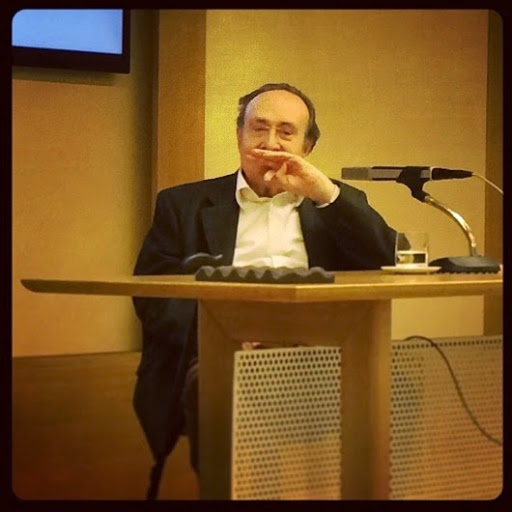
Peppuccio

Today, at the age of 85, the man who has helped me most with understanding God has gone to be with Him. Giuseppe Maria Zanghí, known simply as Peppuccio to all who met him (the Italian diminutive for Joseph that in English would be rendered as Joey), was a follower and close collaborator of Chiara Lubich, whose process of beatification is completing its diocesan phase and transferring to the Vatican on Tuesday.

Peppuccio’s philosophical genius will, I am certain, provide the basis for a deeper understanding of God for many generations to come. His insights into the fundamental interconnectedness of being and not being as the key to love and to an intuition of the value of suffering are akin to Einstein’s theory of relativity in that they turn all that came before on its head, while, at the same time, being a superset of it. Having had the privilege to listen to him speak and to get to know him personally a little has been a great gift for me and I will never forget meeting him again last May, after not seeing him for many years. By that time he had become a frail, old man, whose former steel had given way to the warmth of a kindly grandfather. I will never forget his recognizing me and caressing my face like my own grandfather used to.

Dearest Peppuccio, I will miss you very much! Thank you for all you have taught me!

Instead of telling you more about his extraordinary life, I prefer to translate for you an excerpt from a paper he wrote in 1979, entitled “Identity and dialogue,” so that you may get a flavor of his extraordinary thought directly.

In this paper Peppuccio considers the challenges and seeming opposition of the concepts of individual identity on the one hand and of dialogue on the other. Let’s join Peppuccio’s train of thought at the point where he presents how God loves us without possessing us, after having presented profound analyses of both identity and dialogue in isolation:

“I can be myself in Him (being an intimate participant of Trinitarian life in the Word), while being really distinct from Him (by virtue of being a creature different from Him). It is His love that wants me, and the love of God does not withdraw into itself, canceling diversity with the other by totally reverting it to Himself, but “makes” the other and guards them in diversity from Himself, not wanting to possess (like He doesn’t possess Himself) in total reabsorption.

And also those who are other than me, the other, or other subjects, are really different from me, because they are “guarded” in the diversity of God, and yet we are one because we are all seized by the same movement of God’s love.”

Peppuccio here roots our diversity-preserving union with God and our own relationships with others in His own inner life, where God’s relationship of love to all is the basis of our own diversity-preserving union with them. He then spells out the consequences of a departure from this many-but-one life:

“If I remove myself from the ecstasy of love, the ecstasy of being, my identity will experience an infinite regress, and I loose myself in the abyss of a nothing that, not being the “nothing” of the Love that wants me ecstatically, is a nothing that is not real, it is nothing-nothing … And community with others will be a collision and a negation and a distancing to infinity. The peace that is Love is replaced by the war that is hatred.”

Note that ecstasy in the above is best read in the Ancient Greek philosophical sense of ἔκστασις (ekstasis), “to be or stand outside oneself, a removal to elsewhere,” since it refers to the self-giving, self-othering nature of love. Removing oneself from the ecstasy of love means retreating into oneself, while God’s love for me being ecstatic underlines His going out of Himself for my sake.

Peppuccio then proceeds to sketch out the Christian approach to relating to others, as a departure from the self-constrained, static nothingness resulting from a withdrawal from ecstatic relationships:

“The Christian revelation has ripped through this way of thinking and of being socially structured from the inside. But we are still far, it seems to me, from having understood this clearly and from having draw practical conclusions from it. It is true, in modern thought duality has been made more dynamic with dialectic. But the logic of confrontation and struggle has not been overcome. Because the relationship between the two “opposing” extremes (I and the other, I and God) is still thought of as ending in one of the two (and, therefore, in the strongest!); while, if Christian faith is true, the relationship does not end in either of the mediated extremes, but in a third that saves them precisely in their diversity. The relationship between two, if it wants to be thought and lived in the logic of God, must be torn from pure (and abstract) symmetry and discovered, as it were, in the asymmetry of a third that “transforms” the opposition into agreement, the conflict into peace.”

What is apparent from the above is God’s intrinsic role also in human relationships as the asymmetry that allows for unity in diversity, which very much also prefigures Pope Francis’ insistence in Evangelii Gaudium (§236) that the Church, and society too, ought to be modeled on the polyhedron (where diverse parts preserve their distinctiveness while converging to form one whole) rather than the sphere (where there is total uniformity).

Peppuccio finally leads the above considerations towards reciprocity and freedom in a masterful synthesis:

“In the relationship with God, this means living the relationship with Him, diversity, within Him, in Tri-unity.

In the relationship with others, it means “allowing” for God to be among the many, as the “third asymmetrical,” so to speak. This Presence among the many makes diversity true, uniting it without annulling it. This applies to my relationship with myself. It applies to my relationship with the other and with others. Diversity is experienced as love, identity is experienced as love: diversity is experienced as identity, and vice versa. I am me in the infinite, and absolute, gift of myself: in the diversity of me with myself, experienced not as laceration but as ecstatic love. The other, whoever they are, is my giving myself made person, real because giving myself is real. And reciprocally. Without reciprocity what I say here is suffered as an impossibility that must become, but still is not, possible. History, after all, is the path towards a realization of the necessity of this reciprocity so that everyone may be themselves!

From this dialectical perspective “as three,” identity and dialogue are the same thing: they are the love by which I am myself insofar as I am not myself. They are the sign of that freedom-love which is, if I may say so, the secret of being.”

Reciprocal ecstasy, a mutual being outside oneself, for the other, as a gift for each other, bring identity and dialogue together in love, and, if I too may say so with Peppuccio, are the secret of being.

Thank you, Peppuccio, for your wisdom and love!

Men and women: towards unity in diversity

Chagall adam and eve

[Warning: Long read.]

My personal experience of having many good friends among both men and women is leading me to believe that differences between the two genders are real, but that their nature is very complex and that any attempt to characterize one versus the other ends up in traits that span some of both genders’ populations. No matter what profile is devised with the intention to characterize what a man’s trademark traits are, there will be women I know who excel at some of them, and, equally, I can think of men who excel at traits that would be attributed to the archetypal woman.

Claims that women are more intuitive while men are more rational have always struck me as simplistic and reductive in terms of their predictive capacity in the face of meeting a new person of either gender, and – more importantly, I have found them to be unhelpful, or even obstructive, when it comes to building relationships. Yet, the view of resolving the question about the differences between men and women by means of two list of ‘typical’ traits is very popular, as can also be seen from best-sellers like “Men are from Mars, Women are from Venus” (the first book I read that compelled me to write a review on Amazon :).

To counter this trend, I would like to sketch out my understanding of how men and women compare, and do so from two perspectives: the first one being science (both neuroscience and psychology) and the second one religion (specifically Christianity, and even more specifically Catholic exegesis, the Theology of the Body of St. John Paul II and the intellectual visions of the Servant of God, Chiara Lubich).

From the perspective of science, there is a growing body of work on quantifying both the neurological/physiological and psychological differences between men and women, where certain physical as well as behavioral differences have been measured repeatedly and for which evidence is mounting.

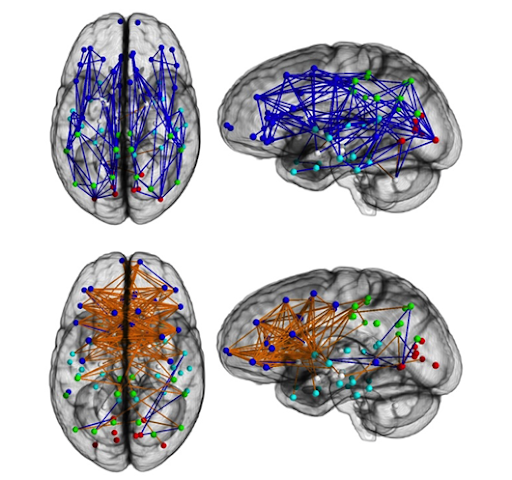
On the neurological and physiological side, there is strong evidence (obtained by a team from Oxford and Cambridge, who pooled together 126 studies, involving 43 000 subjects) to show that the brains of men are between 8% and 13% larger in volume than those of women. There is also evidence for there being significant differences between the relative volumes and densities of different regions in the brain between men and women. A recent example here is the work of Nopoulos et al. from the University of Iowa, who used functional Magnetic Resonance Imaging (fMRI) to study the ventral prefrontal cortex (VPC), a region involved in social cognition and interpersonal judgment. The findings, based on 30 men and 30 women, showed a relatively larger volume of this region in women, by 10%. In other words, relative to the total volume of a brain, the VPC region is 10% larger in women. Finally, there are not only volumetric differences between the brains of men and women, but also morphological ones. Here the most well-known, recent study is by Ingalhalikar et al., where the brains of 949 subjects (428 male and 521 female) were studied in terms of the nature of neural connections (connectome maps) between and within brain hemispheres (using diffusion tensor imaging). The results showed a systematic difference where male brains displayed a greater degree of intra-hemispherical synaptic connections (see top of following figure), while female brains had more prevalent inter-hemispherical links (see bottom of following figure). Interestingly, the authors of this study refer to the differences between the connectome maps of males and females as being a “complementarity” that makes them particularly suitable for collaboration …
Penn medicine

While there is strong evidence for systematic physiological differences between male and female brains, the question of what their consequences are remains far less clearly understood. E.g., taking the question of intelligence, there are studies whose results support all three of the possible outcomes: that there is no statistically significant difference, that men are more intelligent, or that women are more intelligent on average (e.g., see pp. 72 of the following paper). Even in the cases where a difference is shown, it tends to be small: 2-4 points in terms of the well known IQ test, and whether it is men or women who come out ahead depends on the specific test used. E.g., in a study involving 6780 subjects from Brazil, women came out ahead by 2 IQ points using Cambraia’s Attention Test, while men did better in Raven’s Standard Progressive Matrices test – by 1.8 IQ points. Similarly the behavioral consequences, from the perspective of differences between the sexes, of the VPC differences measured by Nopoulos et al., present a complex picture. There, no significant differences were found between men and women in terms of performing the Interpersonal Perception Task, which tests a subject’s ability to understand different types of social interaction. However, when the subjects were asked to complete a Personal Attributes Questionnaire (answering questions that lead to the subject’s self-perception in terms of two scales: “instrumentality” and “expressivity”, which are commonly taken to stand for masculinity and femininity and are used as a measure of gender identity), the resulting scores displayed strong correlation with the Interpersonal Perception Task outcomes.

The point of the above examples taken from recent findings in neuroscience and psychology, from studies that explore the differences between men and women, is to illustrate the complexity of the results obtained to date. On the one hand there is strong evidence for biological differences between male and female subjects, while on the other hand the specific nature of the differences and their impact on psychological traits or inclinations is complex and does not neatly divide along lines of a subject’s sex. While nature differs on average, an individual’s characteristics make them different from their sex’s average, with nurture and society further contributing to there being a continuum of states instead of a binary categorization of abilities, preferences, or traits. In my opinion, the psychology of personality, as opposed to that of gender, is a better means for understanding how one individual may differ from another in terms of their preferences and inclinations, which in turn can facilitate building mutually-fulfilling relationships.1

Turning to how the differences between men and women are understood in the context of Christianity, I would like to highlight three perspectives, as already mentioned at the beginning of this post.

First, there is St. John Paul II’s Theology of the Body, as set out in his “Men and Women He Created Them,” which I have already written about at length here. The only insight I’d like to point to here is John Paul II’s insistence on men and women being created “in the image of God” intrinsically referring to the communion of Persons in the Trinity. He makes this clear by saying that “man2 became the image of God not only through his own humanity, but also through the communion of persons, which man and woman form from the very beginning.” And it is in this context that the differences between men and women have a specific purpose, which is that these “two reciprocally completing ways of “being a body” [… are] complementary dimensions of self-knowledge and self-determination.” This in turn leads John Paul II to saying that a person’s “sex expresses an ever-new surpassing of the limit of man’s solitude [… and] always implies that in a certain way one takes upon oneself the solitude of the body of the second “I” as one’s own.” Men and women are different and complementary, but in profound, existential ways rather than as reducible to a trivial set of typical features or traits.

Second, the New Testament is rich in portraying different roles played by men versus women in the context of Jesus’ mission on Earth. Here Damiano Marzotto’s “Pietro e Maddalena” (mentioned by Pope Francis as being on his reading list), does a superb job of analyzing what these roles are in the Gospels, as a first step towards understanding how women could play the prominent role that they need to have in the Church, which they lack today. Marzotto summarizes his findings by first pointing out a greater propensity in women for welcoming Jesus’ teaching and making themselves available for a deepening and contemplation of his message (with men then acting on what the women understood). Mary’s keeping the events surrounding Jesus’ birth and “reflecting on them in her heart” (Luke 2:19) illustrates this very clearly. This places women in a position of welcoming novelty, of taking risks and of stepping out of line – traits not commonly associated with women in first century Palestine. The women of the Gospel, while having some common features, very much break the mold of societal stereotypes – another argument against characterizing men and women by sets of static, opposed features. The second aspect that Marzotto identifies in the women of the Gospel is an ability to anticipate Jesus’ actions and to provoke him or the apostles to action. Mary’s intervention at the wedding in Cana (John 2:1-12), or Mary Magdalene going to the apostles after meeting the risen Christ (John 20:1-3) are good examples here. Finally, Marzotto also argues that women have been responsible for a broadening of Jesus’ mission, for a greater universality of who it is addressed to. Here the woman suffering from hemorrhage (Mark 5:25-34), the Samaritan woman (John 4:4-42), the Canaanite woman (Matthew 15:21-28), or the widow of Nain (Luke 7:11-17) are great examples.

Third, the Servant of God, Chiara Lubich, in her intellectual visions (like those of Sts. Teresa of Ávila and Ignatius) during the summer of 1949 (referred to as the Paradise ’49), prefigures St. John Paul II’s interpreting the relationship between men and women from the perspective of the Trinity. As Giuseppe Maria Zanghí puts it, “this means that a meeting between the two “differences” requires, in each one of the two, a fullness of being: their synthesis is possible […] because, already before the two meet, each one of them is complete in themselves. Every form of weakness, every temptation of “subjection”, is overcome. […] True unity between man and woman can be achieved if each of the two realities is fulfilled in itself.” During her visions in 1949, Lubich recounts the following insight:

“The perfect man has the woman in him: he contains in his strength all of feminine sweetness, in his directness all of a woman’s suppleness. His character is unitarian, closed and severe like unity. But, if he is perfect (unitarian), he contains in himself the Trinity, who is a woman that is all open, caressing, loving. So the woman too, if she is perfect, encloses her open character in self-restraint that is reminiscent of the Madonna. She is man. Trinity in Unity.” (Paradise ’49, 1319-1320)3

The relationship between men and women, as understood also by Lubich in her mystical vision, is one of unity in distinction and distinction in unity, which is love. To reduce it only to distinction, and to a simplistic binary one at that, is to deny the Trinitarian image in which both men and women were made, and it is also to distort the complex and deeply beautiful picture that science is in the process of understanding as we speak.

[UPDATE on 17 November 2014:] Today Pope Francis opened a symposium on precisely the subject of how men and women relate, entitled “The Complementarity of Man and Woman in Marriage,” during which he had the following to say about the nature of differences between the sexes:

“Christians find [the] deepest meaning [of complementarity] in the first Letter to the Corinthians where Saint Paul tells us that the Spirit has endowed each of us with different gifts so that-just as the human body’s members work together for the good of the whole-everyone’s gifts can work together for the benefit of each. (cf. 1 Cor. 12). To reflect upon “complementarity” is nothing less than to ponder the dynamic harmonies at the heart of all Creation. […]

When we speak of complementarity between man and woman in this context, let us not confuse that term with the simplistic idea that all the roles and relations of the two sexes are fixed in a single, static pattern. Complementarity will take many forms as each man and woman brings his or her distinctive contributions to their marriage and to the formation of their children — his or her personal richness, personal charisma.”


1 But, we’ll have to leave that for another time …
2 “Man” here meaning the human person (as is clear from the context of the original text).
3 Apologies for the crude translation, the Italian original can be found in Zanghí’s “Leggendo un carisma” on pp. 149-150.