Pope Francis’ Universe

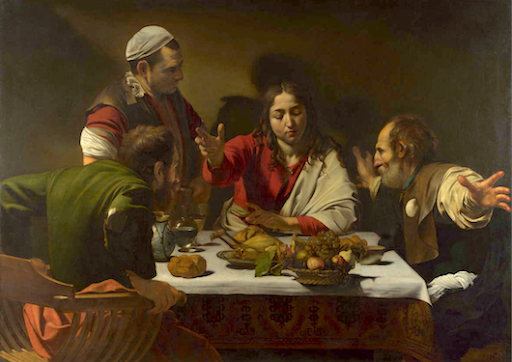
Caravaggio

As I outlined in the first installment of this series, I am in the process of looking at how the universe is being thought of from different perspectives and by thinkers of different backgrounds. After a brief look at Chiara Lubich’s intellectual visions concerning creation, I would now like to share a high-level view of how Pope Francis has been speaking about this topic.

The first thing to note is that he uses the terms “universe,” “creation,” and “nature” (with the odd mention of “cosmos”) interchangeably, while referring to social, economic and cultural spheres when speaking about the “world.” With this categorization, we can look at what Francis thinks the universe is, how he speaks about approaching and understanding it, what value he gives it and what relationship he proposes for us to have with it.

The most important point in terms of which to read all that follows is the intimate relationship Francis sees between God and “the universe, the precious gift of the Creator”:

“[T]he Holy Trinity […] leads us to contemplate and worship the divine life of the Father, the Son and the Holy Spirit: a life of communion and perfect love, origin and aim of all the universe and of every creature: God.” (Angelus, 15th June 2014)

Not only is the universe God’s gift to us and a gift that has both source and destination in the inner life of the Trinity, but it is also permeated by God’s presence:

“God and Christ walk with us and are present also in nature, as the Apostle Paul affirmed in his address at the Areopagus: “In Him we live and move and have our being” (Acts 17:28). When we read in Genesis the account of Creation, we risk imagining that God was a magician, with such a magic wand as to be able to do everything. However, it was not like that. He created beings and left them to develop according to the internal laws that He gave each one, so that they would develop, and reach their fullness. He gave autonomy to the beings of the universe at the same time that He assured them of his continual presence, giving being to every reality.” (Address to Pontifical Academy of Sciences, 27th October 2014)

God is paradoxically, simultaneously present throughout the universe, giving it being, and at the same time investing it with laws and autonomy. He desires its development, but remains close to his creation. Francis then, in the same speech, elaborates on the significance of these God-given laws of nature:

“The beginning of the world was not the work of chaos, which owes its origin to another, but it derives directly from a Supreme Principle who creates out of love. The Big-Bang, that is placed today at the origin of the world, does not contradict the divine intervention but exacts it. The evolution in nature is not opposed to the notion of Creation, because evolution presupposes the creation of beings that evolve.”

The world is not arbitrary, but has order, which it turn leads to repeatability and therefore rationality, making the universe knowable – an aspect of God’s gift that Francis values highly, and about which he speaks in the context of its relationship with faith and truth in the encyclical Lumen Fidei (§34):

“A common truth intimidates us, for we identify it with the intransigent demands of totalitarian systems. But if truth is a truth of love, if it is a truth disclosed in personal encounter with the Other and with others, then it can be set free from its enclosure in individuals and become part of the common good. [… F]aith is not intransigent, but grows in respectful coexistence with others. One who believes may not be presumptuous; on the contrary, truth leads to humility, since believers know that, rather than ourselves possessing truth, it is truth which embraces and possesses us. Far from making us inflexible, the security of faith sets us on a journey; it enables witness and dialogue with all. Nor is the light of faith, joined to the truth of love, extraneous to the material world, for love is always lived out in body and spirit; the light of faith is an incarnate light radiating from the luminous life of Jesus. It also illumines the material world, trusts its inherent order and knows that it calls us to an ever widening path of harmony and understanding. The gaze of science thus benefits from faith: faith encourages the scientist to remain constantly open to reality in all its inexhaustible richness. Faith awakens the critical sense by preventing research from being satisfied with its own formulae and helps it to realize that nature is always greater. By stimulating wonder before the profound mystery of creation, faith broadens the horizons of reason to shed greater light on the world which discloses itself to scientific investigation.”

Believing in God being the creator of the universe is not an alternative to a scientific world view, but its enabler for the Christian scientist, who trusts in the inherent order of their object of inquiry and who responds to God’s invitation to know Him also through His creation. Francis elaborates on this point in his apostolic exhortation Evangelii Gaudium (§242-243), also calling for a multidisciplinary approach to understanding the universe:

“Whereas positivism and scientism “refuse to admit the validity of forms of knowledge other than those of the positive sciences”,[190] the Church proposes another path, which calls for a synthesis between the responsible use of methods proper to the empirical sciences and other areas of knowledge such as philosophy, theology, as well as faith itself […]. Faith is not fearful of reason; on the contrary, it seeks and trusts reason, since “the light of reason and the light of faith both come from God”[191] and cannot contradict each other. […]

The Church has no wish to hold back the marvellous progress of science. On the contrary, she rejoices and even delights in acknowledging the enormous potential that God has given to the human mind. Whenever the sciences – rigorously focused on their specific field of inquiry – arrive at a conclusion which reason cannot refute, faith does not contradict it. […]”

In fact, on a separate occasion, Francis puts the Church’s appreciation of science in maternal terms: “as a mother rejoices and is rightly proud as her children grow “in wisdom, and age and grace” (Lk 2:52)” and adds art to the modes of engagement with the universe, saying:

“In every age the Church has called upon the arts to give expression to the beauty of her faith and to proclaim the Gospel message of the grandeur of God’s creation, the dignity of human beings made in his image and likeness, and the power of Christ’s death and resurrection to bring redemption and rebirth to a world touched by the tragedy of sin and death.”

The sense of awe and wonder that drive both rational and artistic engagement with the universe (for believers and non-believers alike) is further emphasized in one of Francis’ catecheses about the Holy Spirit:

“When our eyes are illumined by the Spirit, they open to contemplate God, in the beauty of nature and in the grandeur of the cosmos, and they lead us to discover how everything speaks to us about Him and His love. All of this arouses in us great wonder and a profound sense of gratitude! It is the sensation we experience when we admire a work of art or any marvel whatsoever that is borne of the genius and creativity of man: before all this, the Spirit leads us to praise the Lord from the depths of our heart and to recognize, in all that we have and all that we are, an invaluable gift of God and a sign of his infinite love for us.”

And to round out this picture of how a knowledge of the universe complements faith, it is worth reading Pope Francis’ words from this year’s Epiphany homily, where he places the two side-by-side as “great books”:

“[O]ur life is a journey, illuminated by the lights which brighten our way, to find the fullness of truth and love which we Christians recognize in Jesus, the Light of the World. [… E]very person has two great “books” which provide the signs to guide this pilgrimage: the book of creation and the book of sacred Scripture. What is important is that we be attentive, alert, and listen to God who speaks to us, who always speaks to us.”

Pope Francis also points to Jesus himself having made use of this “book of creation” in his own teaching:

“When he speaks to the people, Jesus uses many parables: in language understandable to everyone, with images from nature and from everyday situations.”

Far from being optional or even frowned upon, knowledge of the material world is a guide to the Christian as is that of Scripture, which is further underlined by the universe being seen as good (as opposed to evil or even just neutral):

“In the first Chapter of Genesis, right at the beginning of the Bible, what is emphasized is that God is pleased with his creation, stressing repeatedly the beauty and goodness of every single thing. At the end of each day, it is written: “God saw that it was good” (1:12, 18, 21, 25): if God sees creation as good, as a beautiful thing, then we too must take this attitude and see that creation is a good and beautiful thing.” (General Audience, 21st May 2014)

““And God saw that it was good” (Gen 1:12, 18, 21, 25). The biblical account of the beginning of the history of the world and of humanity speaks to us of a God who looks at creation, in a sense contemplating it, and declares: “It is good”.” (Vigil for Peace, 7th September 2013)

What then ought to be our attitude towards a universe that we can relate to in truth (through knowledge), beauty (through the senses and art) and goodness (through contemplation)? Francis’ answer, unsurprisingly, is “respect and gratitude”:

“[I]f God sees creation as good, as a beautiful thing, then we too must take this attitude and see that creation is a good and beautiful thing. […] Creation is not some possession that we can lord over for our own pleasure; nor, even less, is it the property of only some people, the few: creation is a gift, it is the marvellous gift that God has given us, so that we will take care of it and harness it for the benefit of all, always with great respect and gratitude. […] We must protect creation for it is a gift which the Lord has given us, it is God’s present to us; we are the guardians of creation. When we exploit creation, we destroy that sign of God’s love. To destroy creation is to say to God: “I don’t care”. And this is not good: this is sin.”

An important aspect here is the harnessing of the universe for the good of all, which Francis also ties to the universe’s “grammar”:

“The human family has received from the Creator a common gift: nature. The Christian view of creation includes a positive judgement about the legitimacy of interventions on nature if these are meant to be beneficial and are performed responsibly, that is to say, by acknowledging the “grammar” inscribed in nature and by wisely using resources for the benefit of all, with respect for the beauty, finality and usefulness of every living being and its place in the ecosystem. Nature, in a word, is at our disposition and we are called to exercise a responsible stewardship over it.”

And on another occasion he then links the care for nature to the care we must have for one another:

“All of creation forms a harmonious and good unity, but above all humanity, made in the image and likeness of God, is one family, in which relationships are marked by a true fraternity not only in words: the other person is a brother or sister to love, and our relationship with God, who is love, fidelity and goodness, mirrors every human relationship and brings harmony to the whole of creation. God’s world is a world where everyone feels responsible for the other, for the good of the other.”

In summary, Francis’ universe is a gratuitous gift from God whose being He sustains and in which He is close to us, but also where He instituted laws and, at the same time, autonomy. It is a gift that has its origin and being in God and its destiny too, via its being harnessed for the good of all. It is a gift that exhibits goodness and beauty and whose nature can be expressed in truth. As a result it invites respectful stewardship for the good of all, contemplation and rational understanding. Francis, using a rich metaphor, therefore issues an “appeal for respect and protection of the entire creation which God has entrusted to man, not so that it be indiscriminately exploited, but rather made into a garden.”


Francis fights fundamentalism

20110311 gor chakhal

A new book by Pope Francis, entitled “Beauty will teach the world,” was published today in Italian and the daily La Repubblica has already released an excerpt. There Francis speaks out against fundamentalism, and while his thoughts are very much along the lines of the understanding of truth that he laid out in the letter to Scalfari, their freshness and forcefulness expand the scope and intensity of the previous sketch. Since I haven’t found an English translation yet, the following is my own, rough attempt.

In the published excerpt, Francis starts with an analysis of fundamentalism, portrayed as a flavor of insecurity and cowardice:

“What is apparent is the fact that during the course of history there has been an explosion, and there continues to be an explosion also today, of fundamentalisms. At their heart, these systems of thought and conduct are absolutely outdated, mummified, and serve as bunkers. Fundamentalism grows from the rigidity of a single thought, inside which a person protects itself from sources of instability (and from crises) in exchange for a certain existential calm. Fundamentalism does not allow for shades of meaning or second thoughts, simply because it is afraid and – specifically – it is afraid of the truth. The person who hides in fundamentalism is someone who is afraid to set out on a journey in search of truth. They already “possess” the truth, they have already acquired it and used it as a defensive means; therefore they experience each discussion as personal aggression.”

Francis then presents an alternative view of the truth – not as defense mechanism and aggression, but as a shared gift, very much reminiscent also of Dr. Slipper’s paper on “cognition by mutual reflection”:

“Our relationship to the truth isn’t static, because the Supreme Truth is infinite and can always be known better; it is always possible to immerse oneself into greater depth in it. The apostle Peter asks of Christians to be ready to “give an explanation”1 of their hope; which means that the truth, on which we base existence, must open itself to dialogue, to the difficulties that others show us or that circumstances present us with. Truth is always “reasonable,” even when I may not be, and the challenge is to remain open to the point of view of the other, without turning our convictions into an immovable whole. Dialogue does not mean relativism, but a “logos” that is shared, reason that offers itself in love, to build together a reality that is more and more liberating every time.”

Dialogue therefore fosters a sharing in truth and freedom, built on mutual openness, and Francis proceeds to project the consequences of such an attitude even further, calling it a “virtuous cycle”:

“In this virtuous cycle, dialogue uncovers the truth and the truth is nourished by dialogue. Careful listening, respectful silence, sincere empathy, an authentic making oneself available to the stranger and the other, are essential virtues that are to be fostered and transmitted in today’s world. God himself calls us to dialogue, he calls and summons us by his Word, the Word that has abandoned every nest and shelter to make itself human.”

Dialogue is presented here not only as something that is a good thing to do, but – for Christians – as a direct call from God and an example set by Him, which in turn opens new dimensions:

“As a result, three, intimately interlinked, dimensions of dialogue appear: one between the person and God – the one that we Christians call prayer, one among human beings themselves, and a third one, of dialogue with oneself. Through these three dimensions the truth grows, consolidates itself and extends over time. […] At this point we have to ask ourselves: what do we mean by the truth? Seeking the truth is different from finding formulae for possessing and manipulating it to one’s own liking.”

An aspect of the above that I particularly like is the order in which Francis presents the dimensions of dialogue: God, others, self … With this framework in place, he proceeds to emphasize the role of humility in the quest for truth:

“The search involves the totality of the person and of being. It is a journey that fundamentally involves humility. With the firm conviction that no one is sufficient for themselves and that it is dehumanizing to use others as means for being sufficient for oneself, the search for the truth embarks on this laborious journey, often artisanal, with a humble heart that refuses to quench its thirst with standing waters.

A fundamentalist “possession” of the truth lacks humility: it tries to impose itself on others by a gesture that, in and of itself, is self-defensive. The search for truth does not quench the roaring thirst. An awareness of “wise ignorance”2 lets us continually restart the journey. A “wise ignorance” that, with life’s experiences, becomes “learned.” We can affirm without fear that the truth isn’t had, is not possessed: it is encountered. For us to desire it, it must cease to be the one that can be possessed. The truth opens itself, uncovers itself to those who – in turn – open themselves to her. The word truth, precisely in its Greek sense of aletheia, suggests that which manifests itself, that which uncovers itself, that which reveals itself by means of a miraculous and gratuitous apparition. The Hebrew sense, instead, of the term emet, unites the meaning of the true with that of the certain, stable, that which does not lie or deceive. The truth, therefore, has a dual connotation: it is a manifestation of the essence of things and persons, that in their opening up of their innermost selves give us the certainty of their authenticity, the reliable proof that invites us to believe in them.”

How does such a concept of certainty mesh with the humility Francis called for earlier on?

“Such certainty is humble, because it simply “lets the other be” it its manifestation, and does not subject it to our needs or demands. This is the first justice that we owe others and ourselves: to accept the truth of what we are, to tell the truth of what we think. Our painful political history has tried many times to gag them. Very often the use of euphemisms has anesthetized us or made us fall asleep before her. But, the time has come to rejoin, to twin ourselves with the truth that needs to be announced prophetically, with justice authentically restored. Justice only springs forth when the circumstances, that we are betrayed and deceived by in our historical destiny, are called by their names. And by doing this, we accomplish one of the principal services of responsibility due to future generations.”

The above seems very clear to me: the need for dialogue and humility that Francis starts out with is motivated by the need for an honest understanding and acceptance of reality, whose denial and distortion otherwise go against the good of all. To conclude the excerpt, Francis pulls back from truth, to reveal her sisters – goodness and beauty:

“The truth is never found by herself. Together with her there are goodness and beauty. Or, better put, the Truth is good and beautiful. An Argentinian thinker used to say: “A truth that is not entirely good always hides some goodness that is not entirely true.” I insist: these three go together and it is neither possible to find nor seek one without the others. It is a reality that is very different from the simple “possession of truth” claimed by fundamentalism: they take formulae in and of themselves as valid, emptied of goodness and beauty, and they try to impose themselves on others with aggression and violence, doing evil and conspiring against life itself.”

As soon as a proper translation becomes available, I’ll point to it here, but I hope that even my broken attempts at rendering Pope Francis’ thoughts in English will give you a sense of his concerns and his positioning of the truth as part of a set with goodness and beauty and as a gift received with others in response to openness, dialogue and a journey shared.


1 “Always be ready to give an explanation to anyone who asks you for a reason for your hope.” (1 Peter 3:15)
2 I guess this is in reference to the Socratic: “I am wiser than this man; for neither of us really knows anything fine and good, but this man thinks he knows something when he does not, whereas I, as I do not know anything, do not think I do either. I seem, then, in just this little thing to be wiser than this man at any rate, that what I do not know I do not think I know either.” (Plato, Apology 21d)

The tyranny of absolutism

Stalin

Walking home this evening I felt like Douglas Hofstadter may have felt when coming up with the central idea of his spectacular Gödel, Escher, Bach book. Unlike his realization about a “golden braid” linking the thoughts of Kurt Gödel, M. C. Escher and Johann Sebastian Bach, which all shed light on infinity, I felt like I saw a way to connect the seemingly opposed words of Popes Benedict XVI and Francis with regard to relativism.

Benedict XVI famously attacked relativism in his sermon during the opening mass of the conclave that elected him, saying:

“To have a clear faith, according to the creed of the Church, is often labeled as fundamentalism. While relativism, that is, allowing oneself to be carried about with every wind of “doctrine,” seems to be the only attitude that is fashionable. A dictatorship of relativism is being constituted that recognizes nothing as absolute and which only leaves the “I” and its whims as the ultimate measure.”

The message here is very clear – the arbiter of truth and falsehood as well as good and evil has become the individual, with no intrinsic meaning left for these concepts beyond what each person chooses to invest them with for themselves. It is not only a relativity of meaning but also a solitude – I have my truth and you yours and that is the end of the story. In his book-length interview with Benedict XVI (“Light Of The World”), Peter Seewald, gets Benedict to elaborate on the above idea, when he says:

“It is obvious that the concept of truth has become suspect. Of course it is correct that it has been much abused. Intolerance and cruelty have occurred in the name of truth. To that extent people are afraid when someone says, “This is the truth”, or even “I have the truth.” We never have it; at best it has us. No one will dispute that one must be careful and cautious in claiming the truth. But simply to dismiss it as unattainable is really destructive.

A large proportion of contemporary philosophies, in fact, consist of saying that man is not capable of truth. But viewed in that way, man would not be capable of ethical values, either. Then he would have no standards. Then he would only have to consider how he arranged things reasonably for himself, and then at any rate the opinion of the majority would be the only criterion that counted. History, however, has sufficiently demonstrated how destructive majorities can be, for instance, in systems such as Nazism and Marxism, all of which also stood against truth in particular.

[…] That is why we must have the courage to dare to say: Yes, man must seek the truth; he is capable of truth. It goes without saying that truth requires criteria for verification and falsification. It must always be accompanied by tolerance, also. But then truth also points out to us those constant values which have made mankind great. That is why the humility to recognize the truth and to accept it as a standard has to be relearned and practiced again.”

Essentially, Benedict says that just because we cannot possess the truth, it does not mean that “the” truth does not exist. Our access to it is imperfect and tolerance and caution are called for, but denying its existence (just because of our epistemological constraints) is a dangerous path to follow. The picture from the above is very clear – relativism (making one’s “I” the ultimate arbiter of truth) is a tyranny and a reliance of one’s self is dangerous.

Fast-forward to this morning’s interview1 with Pope Francis talking to Eugenio Scalfari and take a look at what he has to say on the subject:

“Scalfari: Your Holiness, is there is a single vision of the Good? And who determines it?

Francis: Each of us has their own vision of Good and also of Evil. We have to encourage him to proceed towards that which he thinks is Good.

Scalfari: Your Holiness, you have already written it in the letter you addressed to me. Conscience is autonomous, you said, and everyone must obey their own conscience. I think that’s one of the most courageous passages spoken by a Pope.

Francis: And I repeat it here. Each one has their own idea of Good and of Evil and must choose to follow Good and fight Evil as they understand them. This would suffice to make the world a better place.”

“Each one has their own idea of Good and Evil […] as they understand them.” But, this sounds precisely like the relativism (the “I” being arbiter of truth) that Benedict denounced and declared a destructive danger. Are Francis and Benedict disagreeing here? Is Francis changing Church teaching?

I don’t think so. Instead, I believe, that their apparent opposition flows from the different perspectives from which they speak about truth and good and evil. Benedict describes what you’d see from God’s perspective: truth is absolute and denying its existence and substituting one’s whims for it, just because humans can’t access it, is a mistake. Francis, instead looks at the picture from the perspective of the individual: trust your conscience’s discernment between good and evil and choose good. Each human has a conscience by means of which they can discern (to varying degrees of faithfulness – “At present we see indistinctly, as in a mirror” as St. Paul says in 1 Corinthians 13:12) a reflection of the absolute truth. It is the same landscape, but Benedict looks down from the mountaintop while Francis looks up from the valley.

Applying this to myself, I can simultaneously believe in absolute truth and goodness, while being aware of my own inability to grasp them fully (or even with a known level of (in)accuracy). This epistemic constraint in no way undoes the meaningfulness of pursuing goodness and truth and instead makes tolerance and dialogue necessary. It also means that – as Francis said in the same interview – “Proselytism is pompous foolishness that has no sense. We must get to know each other and listen to each other and grow our understanding of the world around us.” I believe we are all accessing fragments of the one Truth,2 which makes me want to know what you have understood as much as deepening my understanding of my own faith.


1 The English translation sadly has some serious issues at the time of this post’s writing (the tile itself being seriously mistranslated), as a result of which I started from it but made adjustments based on reading the Italian original.
2 This is consonant with Francis saying, still in this same interview that “I believe in God. Not a Catholic God, there is no Catholic God, there is God.”

Pope Francis: Beauty, Goodness, Truth

Pope francis at back

As you many not have the time to follow all of Pope Francis’ talks during these first days of his pontificate, I have compiled the following links to them and my favorite quotes from each one of them – consider it a taster menu if you like:

  1. Patriarch Bartholomew I’s address to Pope Francis on behalf of the religious leaders meeting him after his installation mass on Tuesday:

    “This world is the domain where we realize [the] spiritual way of life, where we achieve our integration into the body of Christ, and where we are brought through Him into eternal life. [… W]e travel this way of truth, acquiring the heavenly through the earthly.”

  2. Pope Francis’ address to the religious leaders then affirmed his commitment both to ecumenism and inter-religious dialogue and he also took advantage of the occasion to emphasize again the importance of aligning ourselves also with those who hold no religious beliefs:

    “[W]e feel the closeness also of those men and women who, while not belonging to any religious tradition, feel, however the need to search for the truth, the goodness and the beauty of God, and who are our precious allies in efforts to defend the dignity of man, in the building of a peaceful coexistence between peoples and in the careful protection of creation.”

    If you are an agnostic or atheist, please, don’t read the above as the Pope imposing a search for God on you. I believe it only refers to a “search for […] truth, […] goodness and […] beauty” since in the Pope’s (and my!) eyes, these all point to God whether you are looking for him through them or not.

  3. During this morning’s mass with Vatican gardeners and cleaners, Pope Francis shared the following insight during his short, impromptu homily (with reference to today’s Gospel reading (John 10:31-42), where Jesus is facing an angry mob that is on the verge of stoning him).

    “When we have a heart of stone it happens that we pick up real stones and stone Jesus Christ in the person of our brothers and sisters, especially the weakest of them.”

  4. Later this morning, Pope Francis then met with the diplomatic corps, again returning to the topics of fraternity, poverty and peace that have been a constant throughout these first days of his being in office and he again underlined the importance of cordial relationships with all – whether they hold religious beliefs of not – and placed this also at the heart of our relationship with God:

    “It is not possible to build bridges between people while forgetting God. But the converse is also true: it is not possible to establish true links with God, while ignoring other people. […] And it is also important to intensify outreach to non-believers, so that the differences which divide and hurt us may never prevail, but rather the desire to build true links of friendship between all peoples, despite their diversity.”

Have a good weekend! 🙂