Holy Saturday: the logic of freedom

7060307609 632056d692 z

1864 words, 10 min read

A highlight of the Easter Triduum has for me always been Holy Saturday, when the tabernacle’s emptiness, the stripped altar and the absence of the Eucharist are all stark reminders of what a world without God’s incarnation as a fellow human would be like. It is, for me, a day for being particularly close to atheists and agnostics and for reflecting on the gift of Jesus’ friendship, whose enormity is heightened by its apparent absence.

I have, for some years now, had a feeling that there is much more to Holy Saturday than I am aware of, that Jesus’ participation in death is saying more than I am hearing. Against this background, I have come across Hans Urs von Balthasar’s “Mysterium Paschale: The Mystery of Easter”, whose 4th chapter is dedicated to Holy Saturday, and I would here like to give you a sense of the beautiful line of thought he sets out there.

Von Balthasar starts by tracing the origins of the idea of Jesus’ participation in death to the New Testament and argues for this being a consequence of redemption’s scope extending beyond the living. Jesus’ death here is a “being with” a “solidarity” with death as a human condition:

“‘[G]oing to the dead’, an expression justified, in our opinion, by I Peter 3, 19: ‘he went, poreutheis, and preached to the spirits in prison’—preached, that is, the ‘good news’ as I Peter 4, 6 adds by way of a self-evident clarification. […]

There is no difficulty about understanding this ‘going to the souls in prison’ as, first and foremost, a ‘being with’, and the ‘preaching’ in the same primary fashion as the publication of the ‘redemption’, actively suffered, and brought about by the Cross of the living Jesus—and not as a new activity, distinct from the first. For then the solidarity with the condition of the dead would be the prior condition for the work of redemption, whose effects would be deployed and exercised in the ‘realm’ of the dead, though that work itself would remain fundamentally finished (consummatum est!) on the Cross. In this sense the actively formulated term ‘preaching’ (I Peter 3, 19; in 4, 6 it is passive, evēngelisthē) should be conceived as the efficacious outworking in the world beyond of what was accomplished in the temporality of history.”

More important even than his descent and the being with the departed, is Jesus’ ascent from the dead, as a paving of the way for the resurrection of all:

“It is not the going to the dead which is important here—that is taken for granted, and identified, simply, with what it is to be genuinely dead—but rather the return from that bourn. God has not ‘left’ (or ‘abandoned’) Jesus ‘in Hades’ where he tarried; he has not let his Holy One see corruption. The accent is placed on the whence—the phrase ek nekrōn occurs some fifty times in the New Testament—a whence which implies a point of departure, namely, being with the dead. Death here is characterised by ‘pangs’, by ‘pains’ (?dines), and by its lust to seize and hold (krateisthai): but God is stronger than death. The only thing that matters is the facticity of the ‘being’ of the one who is dead in ‘death’ or—for this amounts to the same thing—in Hades, whose character is (objectively) referred to by the term ‘pains’. It is from thence that Jesus is ‘awoken’. […]

[I]n the Cross the power of Hell is already broken (down), the locked door of the grave is already burst open, yet Christ’s own laying in the tomb and his ‘being with the dead’ is still necessary, so that, on Easter Day, the common resurrection ek tōn nekrōn—with ‘Christ the first-fruits’—can follow.”

Von Balthasar then turns to the motivation for Jesus’ descent and again ascribes it to solidarity with the “unredeemed dead”, relying on St. Augustine who insists that Christ’s descent extended not only to the as-yet-unredeemed, but redemption-worthy, but also to those considered unworthy:

“The fact of being with the unredeemed dead, in the Sheol of the Old Testament, signifies a solidarity in whose absence the condition of standing for sinful man before God would not be complete. This is why Sheol must be understood in the classic Old Testament sense […]

Augustine distinguishes between a lower infernum (where the ‘rich man’ lives) and a higher (where Lazarus dwells, in the bosom of Abraham). The two are separated by a chaos magnum, yet both belong equally to Hades. That Christ descended even to the lower infernum, in order to ‘deliver from their sufferings tortured souls, that is, sinners’ (salvos facere a doloribus) Augustine regards as certain (non dubito). The grace of Christ redeemed all those who tarried there: adhuc requiro1. […]

This ultimate solidarity is the final point and the goal of that first ‘descent’, so clearly described in the Scriptures, into a ‘lower world’.

Looking at what the Early Fathers of the Church have written about Holy Saturday, von Balthasar presents the descent into hell as a matter of logical necessity, following from the incarnation. To become fully human, Christ had to participate in death too. Without this, his incarnation would have been incomplete, as would his redemptive action:

“And so, in order to assume the entire penalty imposed upon sinners, Christ willed not only to die, but to go down, in his soul, ad infernum. As early as the Fathers of the second century, this act of sharing constituted the term and aim of the Incarnation. The ‘terrors of death’ into which Jesus himself falls are only dispelled when the Father raises him again. According to Tertullian, the Son of God adapted himself to the whole law of human death: Huic quoque legi satisfecit, forma humanae mortis apud inferos functus2. The same affirmation is found in Irenaeus: Dominus legem mortuorum servavit, ut fieret primogenitus a mortuis.3 He insists on his own grounding principle, namely, that only what has been endured is healed and saved. Since above all this is a matter of penetrating into the realm of the inferi, so for Ambrosiaster in the Quaestiones ex Novo Testamento, Christ had to die so as to be capable of this step. Christ willed to be like us, says Andrew of Crete, in ‘walking amidst the shadows of death, in that place where souls had been bound with chains unbreakable’. All that only expresses the law of human death, thought through to its logical conclusion.”

Von Balthasar then draws our attention to a seemingly paradoxical aspect of Christ’s being among the dead – i.e., that is was a “solitary [being] with others” that did not come with a subjective experience:

“To the extent that the experience of death was objectively capable of containing an interior victory and thus a triumph over hostile powers, to that extent it was in no way necessary that this triumph be subjectively experienced. For precisely that would have abolished the law of solidarity. Let it not be forgotten: among the dead, there is no living communication. Here solidarity means: being solitary like, and with, the others.”

A further aspect of Christ’s being with the dead is that it is both an act of ultimate obedience and an act of the Trinity, where the self-noughting of its persons is enacted here in creation. This is also reminiscent of Slavoj Žižek’s concept of God taking into himself the gap that may otherwise be between Him and humanity:

“His being with the dead is an existence at the utmost pitch of obedience, and because the One thus obedient is the dead Christ, it constitutes the ‘obedience of a corpse’ (the phrase is Francis of Assisi’s)4 of a theologically unique kind. By it Christ takes the existential measure of everything that is sheerly contrary to God, of the entire object of the divine eschatological judgment, which here is grasped in that event in which it is ‘cast down’ (hormēmati blēthēsetai, Apocalypse 18, 21; John 12, 31; Matthew 22, 13). But at the same time, this happening gives the measure of the Father’s mission in all its amplitude: the ‘exploration’ of Hell is an event of the (economic) Trinity.”

Finally, von Balthasar brings his line of thought to its pinnacle, by presenting Jesus’ being among the dead as a logical consequence of his having received the power to judge from the Father and from Hell being the “supreme entailment of human liberty”. Without participating in it, and to do so as a human entails death, the transformation he brought about by his resurrection would have been incomplete.

“If the Father must be considered as the Creator of human freedom—with all its foreseeable consequences—then judgment belongs primordially to him, and thereby Hell also; and when he sends the Son into the world to save it instead of judging it, and, to equip him for this function, gives ‘all judgment to the Son’ (John 5, 22), then he must also introduce the Son made man into ‘Hell’ (as the supreme entailment of human liberty). But the Son cannot really be introduced into Hell save as a dead man, on Holy Saturday. This introducing is needful since the dead must ‘hear the voice of the Son of God’, and hearing that voice, ‘live’ (John 5, 15). The Son must ‘take in with his own eyes what in the realm of creation is imperfect, unformed, chaotic’ so as to make it pass over into his own domain as the Redeemer.”

To my mind, von Balthasar presents a beautiful insight into the events of Holy Saturday, whose coverage in Scripture is scant, by returning to a close reading of those passages, by understanding what the Early Church and the saints have written about it and by connecting it with the drama of salvation, which entails a transformation of creation as a whole. Only by being with the dead could Christ’s incarnation be complete and his redeeming power extend to the full scale of the consequences of human freedom.


1 “I yet enquire.”
2 “He also satisfied this law, enduring the form of human death in Hell.” De Anima, Chapter LIV.
3 “The Lord observed the law of the dead, that he would be the first-born from the dead.”
4 This is a reference to the following passage from St. Francis’ The Mirror of Perfection:

““Tell us, Father, what is perfect obedience?” To which he answered, speaking of true and perfect obedience under the figure of a corpse, “ Take a dead body and place it anywhere you please, it will not murmur at being moved, it will not change its position or cry out if you let it go. If you seat it on a throne it will not look up but down, and to clothe it in purple but makes it more pale. This is the type of perfect obedience, that asks not why he is moved, minds not where he is placed, nor insists upon being sent elsewhere. If he be promoted to office he still keeps humble, and the more he is honoured the more he counts himself unworthy.”
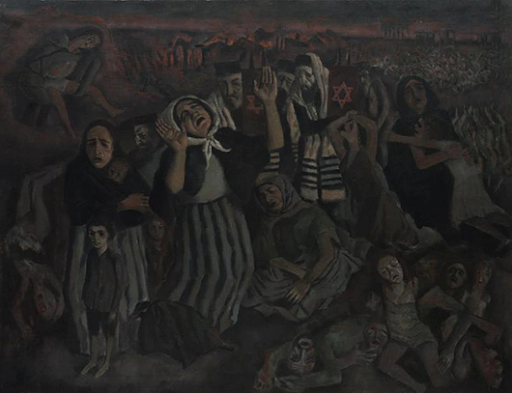

Where nothing articulate can be said

Lama sabachthani

The idea of God crying out in forsakenness, nailed to a cross like a criminal, is both deeply disturbing (hence the frequent denial of its “reality”) and a window onto Jesus’ new commandment: “I give you a new commandment: love one another. As I have loved you, so you also should love one another.” (John 13:34). It is an event that has not only occupied theologians and mystics, but has also attracted non-believers and has been written about on this blog several times. Today, I’d like to look at how Hans Urs von Balthasar, St. John Paul II, Gianfranco Ravasi and Chiara Lubich understood it and what consequences they drew from it.

Von Balthasar, like Pope Francis in Evangelii Gaudium (“Jesus’ sacrifice on the cross is nothing else than the culmination of the way he lived his entire life.” §269), argues for a deep continuity between Jesus’ life and teaching and his abandonment on the cross:

“The inarticulate cry of the cross of Jesus is no denial of his articulate proclamation to his disciples and to the people… instead it is the final end of all those articulations… which he utters with the greatest force where nothing articulate can be said any longer.” (The Whole in the Fragment)

To von Balthasar, Jesus’ forsakenness is not failure, but culmination, and this perspective can also be seen in St. John Paul II’s thought where he presents it as necessary for God’s “full solidarity” with humanity:

“[O]n Jesus’ lips the “why” addressed to God was also [… an expression of] pained bewilderment at that suffering which had no merely human explanation, but which was a mystery of which the Father alone possessed the key. Therefore, […] the question contained a theological significance in regard to the sacrifice whereby Christ, in full solidarity with sinful humanity, had to experience in himself abandonment by God.”

During that same General Audience in 1988, John Paul II also presents a synthesis of positions that argue for and against the “reality” of Jesus’ abandonment on the cross:

“If Jesus felt abandoned by the Father, he knew however that that was not really so. He himself said, “I and the Father are one” (Jn 10:30). Speaking of his future passion he said, “I am not alone, for the Father is with me” (Jn 16:32). Jesus had the clear vision of God and the certainty of his union with the Father dominant in his mind. But in the sphere bordering on the senses, and therefore more subject to the impressions, emotions and influences of the internal and external experiences of pain, Jesus’ human soul was reduced to a wasteland. He no longer felt the presence of the Father, but he underwent the tragic experience of the most complete desolation.

Here one can sketch a summary of Jesus’ psychological situation in relationship to God. The external events seemed to manifest the absence of the Father who permitted the crucifixion of his Son, though having at his disposal “legions of angels” (cf. Mt 26:53), without intervening to prevent his condemnation to death and execution. In Gethsemane Simon Peter had drawn a sword in Jesus’ defense, but was immediately blocked by Jesus himself (cf. Jn 18:10 f.). In the praetorium Pilate had repeatedly tried wily maneuvers to save him (cf. Jn 18:31, 38 f.; 19:4-6, 12-15); but the Father was silent. That silence of God weighed on the dying Jesus as the heaviest pain of all […].

In the sphere of feelings and affection this sense of the absence and abandonment by God was the most acute pain for the soul of Jesus who drew his strength and joy from union with the Father. This pain rendered all the other sufferings more intense. That lack of interior consolation was Jesus’ greatest agony.”

While the above may at first look like a variant of the naive arguments for the unreality of Jesus’ abandonment by the Father, which revolve around the claim that Jesus knew he wasn’t “really” abandoned, John Paul II’s position is more nuanced. He both affirms Jesus’ knowledge of the Father’s presence and the fullness of Jesus experiencing the Father’s absence. Unlike the naive positions that present knowledge as a mitigating factor, John Paul II does not hesitate to describe Jesus’ soul as a “wasteland” and his experience as being one of “most complete desolation.” It is essentially a third-person, “objective” view that recognizes the continuing presence of the Father while Jesus fully experiences his absence on the cross. In many ways this is akin to a Christian, who sees their atheist friends’ sincerity, recognizing that their friends live in the absence of an experience of God, while they themselves see both their own and their friends’ lives unfolding in His presence. This is not to deny the “reality” of the atheist experience (qua experience) while at the same time situating it within one’s own understanding of reality. I believe such a parallel also underlines John Paul II’s claim that Jesus’ abandonment on the cross was necessary for the sake of “full solidarity” with all of humanity – both with those who believe in God and who do not.

John Paul II’s analysis does seem to me to be the key also to understanding why many theologians wrestle with with the contradiction of Jesus’ forsakenness on the cross. Even Cardinal Ravasi, who in one context affirms the reality of Jesus’ forsakenness (even calling it “salvific atheism”), in another context speaks both about His being our “brother also in the tragedy of the absence of God” and at the same time about it not being possible to “classify that cry as a sign of despair and almost of disbelief.”

Beyond considerations about the reality of Jesus’ forsakenness and its central role in God’s closeness to humanity, what is its practical impact though? What difference does it mean to me, as a Christian, that Jesus experienced such complete desolation? Here the insights of the Servant of God Chiara Lubich are key, since she recognized in Jesus’ forsakenness the key to uniting herself both to God and to every neighbor she encountered, to the point of declaring Jesus Forsaken to be her spouse.

In a talk from 1971,1 Lubich shares her insight into Jesus’ forsakenness being the pinnacle of his self-giving:

“He had given everything.

First, a life lived beside Mary in hardship and obedience.

Then, three years of mission, revealing the Truth, giving witness to the Father, promising the Holy Spirit, and working all kinds of miracles of love.

Finally, three hours on the cross, from which he gave forgiveness to his executioners, opened paradise to the thief, gave his mother to us, and ultimately gave his body and blood, after having given them mystically in the Eucharist.

He had nothing left but his divinity.

His union with the Father, that sweet and ineffable union with the One who had made him so powerful on earth as the Son of God and so regal on the cross, that feeling of God’s presence had to disappear into the depths of his soul and no longer make itself felt, separating him somehow from the One with whom he had said to be one: “The Father and I are one” (Jn 10:30). In him love was annihilated, the light extinguished, wisdom silenced.”

Left in a state of complete self-noughting, “where nothing articulate can be said,” what choice did he have left?

“To formulate a question was the only way Jesus could then possibly express himself; that loud cry is the Word which is no longer word, which therefore, cannot be understood and explained as word. It is the indescribable reality which is so beyond what words that are uttered in the created world can express. It is the sub-word; that which is chosen by the Powers of Heaven to bear the Eternal ultra- word.”

What was the point of such complete annihilation though? Here Lubich presents a deeply logical argument:

“So he made himself nothing to make us share in the All; a worm2 of the earth, to make us children of God.

We were cut off from the Father. It was necessary that the Son, in whom all of us were represented, should experience separation from the Father. He had to experience being forsaken by God so that we might never be forsaken again.

He had taught that no one has greater love than one who lays down his life for his friends. He who was Life laid down his whole self. This was the culminating point, love’s most beautiful expression. He loved in God’s way! With a love as big as God!”

Most importantly though, Jesus Forsaken was not of academic interest to Lubich, who – with her companions and a growing number of sympathizers and followers – sought to put the Gospel into practice in everything she did, but a person with whom she developed a close relationship:

“He drew us to himself; we discovered him everywhere: in every physical moral or spiritual pain. They were shadows of his great suffering. […] Then we saw him in every neighbor who was suffering. […] Every personal suffering also appeared to us as a countenance of Jesus forsaken to be loved and wanted in order to be with him and like him, so that through the death of ourselves […], he might give life to us and to many others.”

In fact, Lubich understood that such a relationship with Jesus Forsaken, a becoming another Jesus Forsaken, is the way to profound relationships of unity:

“In his testament Jesus had said: “With me in them and you in me, may they be so perfected in unity” (Jn 17:23). If Jesus was in me, if Jesus was in the other, and if Jesus was in all, at that moment we were perfected in unity. […] Jesus forsaken is the model for those who must build unity with others. I cannot enter into another spirit if I am rich of my own. To love others I must constantly make myself so poor in spirit that I possess nothing but love. Love is empty of itself. Jesus forsaken is the perfect model of one who is poor in spirit. He is so poor that he has not even God, so to speak. He does not feel God’s presence.”

And finally, picking up on a theme so close to Pope Francis’ heart, Lubich points to the simultaneous closeness to humanity and God that Jesus’ forsakenness brings about, where He becomes the void that bridges the finite with the infinite:

“In his forsakenness Jesus seems to be nothing but a man, and so never had he been as close to us human beings as in that moment and never, therefore, had he loved so much. At the same time, never had he been so close to the Father; it is out of love for him that he dies in that way.”


1 Which was also my source for the quotes from von Balthasar’s “The Whole in the Fragment” above.
2 “But I am a worm, not a man, scorned by men, despised by the people.” (Psalms 22:7)

Kandinsky: innermost necessity of the soul

Kandinsky several circles website hd 5 13

[Warning: long read :)] Wassily Kandinsky, the father of abstract painting, is among those artists whom I have greatest affinity to, not for some specific reason, but simply because of the persistent bond that I feel between his work and myself. Looking at a piece like “Composition VIII” or at “St George I,” a reproduction of which we have in our living room, is always an experience that is hard to describe and that I prefer to leave unverbalized.

A couple of days ago I then came across a video from 1926 of him painting, which was a completely unexpected treat (thanks, @openculture!) and which lead me to his book “Point and line to plane,” where he gives the following, stunning definition of the point:

“The geometric point is an invisible thing. Therefore, it must be defined as an incorporeal thing. Considered in terms of substance, it equals zero. Hidden in this zero, however, are various attributes which are “human” in nature. We think of this zero — the geometric point — in relation to the greatest possible brevity, i.e., to the highest degree of restraint which, nevertheless, speaks. Thus we look upon the geometric point as the ultimate and most singular union of silence and speech. […] In the flow of speech, the point symbolizes interruption, non-existence The (negative element), and at the same time it forms a bridge from one existence to another (positive element). In writing, this constitutes its inner significance.”

This is clearly neither a mathematical definition, nor a scientific one (invisible=incorporeal?), but a phenomenological, even spiritual one. It is more like what a close friend would say in a eulogy, and that is how I felt when reading this book: to Kandinsky the point, line and plane were not some hypothetical concepts, but intimate friends and collaborators. His writing about them at times sounds like a person’s memoirs, rather than detached rationalizations of a theorist. Needless to say, I was hooked, and then delighted when I came to reading the foreword to the book (which I don’t tend to do as a rule) and discovering that “Point and line to plane” was the sequel to “On the spiritual in art.” This fact alone pointed me to another interpretative key for the above passage about the point, and its parallels with the person of Jesus and indeed with the Trinity jumped out at me. The process of non-existence, while simultaneously bridging between existences is precisely the dynamic between the persons of the Trinity (each emptying themselves – becoming nothing1 – out of love for the other).

If you have any interest in art, I can’t recommend “On the spiritual in art” too highly – not only is it an insight into one of the greatest painters of all time, but, to my mind, it is of the order of Plato’s Republic in terms of foundation myths.

Kandinsky starts out by emphasizing the necessity to act in the present moment (much like Le Corbusier insisted too), instead of attempting to imitate the past, which he depicts in harsh terms:

“[E]very cultural period creates art of its own, which can never be repeated again. An effort to revive art-principles of the past, at best, can only result in works of art resembling a still-born child. […] The sculptor’s attempts to employ Greek principles can only achieve a similarity in form, while the work itself remains for all time without a soul.”

Within the space of a couple of pages from the beginning, Kandinsky then proceeds to present his view of the hierarchy of spiritual life, which he equates with that of artistic life, since “[the] grammar of painting [… are] the rules of the inner necessity […] of the soul.”:

“A large acute triangle divided into unequal segments, the narrowest one pointing upwards, is a schematically correct representation of spiritual life. The lower the segment the larger, wider, higher, and more embracing will be the other parts of the triangle. The entire triangle moves slowly, almost invisible, forward and upward and where the apex was “today,” the second segment is going to be “tomorrow,” that is to say, that which today can be understood only by the apex, and which to the rest of the triangle seems an incomprehensible gibberish, tomorrow forms the true and sensitive life of the second segment.

At the apex of the top segment, sometimes one man stands entirely alone. His joyous vision corresponds to a vast inner sorrow, and even those, who are closest to him, do not comprehend him. […] Artists are to be found in every segment of this imaginary triangle. Each one of these artists, who can see beyond the limits of his present stage, in this segment of spiritual evolution is a prophet to those surrounding him and helps to move forward the ever obstinate carload of humanity. However, one of those not possessed by such vision, or misusing it for base purposes and reasons, when he closes the triangle may be easily understood by his fellow men and even acclaimed. The larger the segment (that is, the lower it lies in the triangle), the greater is the number of people to comprehend the words of the artist. In spite of it and correspondingly every group consciously or unconsciously hungers for spiritual food.”

While the above is unquestionably elitist, there are several details to note, which, I believe, hint at a dichotomy with the universally-accessible. First, the interconnectedness of the entire universe of spiritual ascent and the impact of its protagonists on all (“where the apex was “today,” the second segment is going to be “tomorrow.””). Second, the positive view of everyone’s potential to comprehend advances in art, albeit with a delay (“[T]hat which today […] to the rest of the triangle seems an incomprehensible gibberish, tomorrow forms the true and sensitive life of the second segment.”). Third, the desire of all for genuine spiritual food, in spite of some contenting themselves with fakes. Added to the above pull towards democratization of the elite striving for spiritual/artistic progress is also his declaration that “[a]nyone, who absorbs the innermost hidden treasures of art, is an enviable partner in building the spiritual pyramid, which is meant to reach into heaven.”

This tension is further carried forward, when Kandinsky argues that there is only a single criterion for what makes eternal art – its “inner necessity” from the perspective of its author:

“The artist should be blind to the importance of “recognition” or “non-recognition” and deaf to the teachings and demands of the time. His eye should be directed to his inner life and his ear should harken to the words of the inner necessity. Then, he will resort with equal ease to every means and achieve his end. […] All means are sacred when called upon by innermost necessity.”

““[O]uter necessity” […] can never lead beyond the limits of the conventional, that is, traditional “beauty” only. The “inner necessity” does not know such limits and, for this reason, often creates results which are conventionally termed “ugly.” “Ugly” is, therefore, only a conventional term which continues to lead a sham life long after the inner necessity […] has been superseded. At that time, everything was considered ugly if it was not connected with the inner necessity of the time, and anything so connected was termed beautiful. Everything, which appeals to the inner necessity is already beautiful by its virtue, and will be recognized sooner or later.”

“As no “dissonant notes” exist in music, nor in painting “inharmony,” in these two art expressions every sound, whether harmony or discord, is beautiful (appropriate), if it results from inner need. The inner value of each and every movement will soon be felt, as the inner beauty replaces the sensuous aspect. Thus, “ugly” movements suddenly appear beautiful, from which an undreamed power and vital force will burst forth instantly.”

Rooting perfection in “inner necessity” also changes the criteria by which art is judged and the means that are justified for its pursuit:

“A “perfect drawing” is the one where nothing can be changed without destroying the essential inner life, quite irrespective of whether this drawing contradicts our conception of anatomy, botany, or other sciences.”

“Likewise, colours should be used not because they are true to nature but only because the colour harmony is required by the paintings individually. The artist is not only justified in using any form necessary for his purposes, but it is his very duty to do so. Neither anatomical correctness nor any basic overthrow of scientific statements are necessary, only the artist’s unlimited freedom in the selection of his means.”

“This unlimited freedom must be based on inner necessity (which is called honesty). This is not only the principle of art but of life. This principle is the great sword of the superman with which he fights the Philistines.”

More than anything, the above reminds me of St. Augustine’s most famous dictum: “Love and then what you will, do,” which we could put into Kandinsky’s mouth as “Be honest and then what you will, paint,” without incurring any contradiction with his own words.

I have to say that reading “On the spiritual in art” has made me feel even closer to Kandinsky and has armed me with new means, with which I can revisit his paintings (and those of others!) in an attempt to connect with the innermost necessity that lead to their creation.


1 This self-emptying – kenosis – is explicitly indicated in St. Paul’s letter to the Philippians (2:5-9) and beautifully explained also by Hans Urs von Balthasar: “The Father, in uttering and surrendering himself without reserve, does not lose himself. He does not extinguish himself by self-giving, just as he does not keep back anything of himself either. For in this self surrender he is the whole divine essence. Here we see both God’s infinite power and his powerlessness; he cannot be God in any other way but in this “kenosis” within the Godhead itself.” (Theo-Drama: Theological Dramatic Theory: The Action Vol 4).

She said, he said

Fragments

Have you ever been approached by a Jehova’s witness and had them quote from the Bible to you? I have (several times 🙂 and the thing that first struck me, and I have found almost invariably since, is that they tend to use a small set of passages to further their cause while being blind to the fullness of the Good News. A frequent example is their reference to Revelation for arguing that very few will be saved (and that they can get you a seat): “I heard the number of those who had been marked with the seal, one hundred and forty-four thousand marked from every tribe of the Israelites” (Revelation 7:4). Yet, only a couple of sentences later John says: “After this I had a vision of a great multitude, which no one could count, from every nation, race, people, and tongue. They stood before the throne and before the Lamb, wearing white robes and holding palm branches in their hands.” (Revelation 7:9). And my pointing it out to them in their copy of the Bible tends to be the end of our friendly chat …

“OK,” you may think, “so Jehova’s witnesses are a bit blinkered – but I already knew that!” and you’d be right. There is no surprise there, but where I have been surprised recently was by the controversy surrounding Dr. Tina Beattie, Professor of Catholic Studies at Roehampton University. Prof. Beattie has last week had an invitation revoked to be a Visiting Fellow at the University of San Diego and to deliver a series of talks. Naturally, she objected and she went on to claim that unfounded denunciations of her writings by numerous “Catholic” blogs were to blame. This is not the first time such cancellations happened either, as plans for a lecture by her at Clifton Cathedral in Bristol have also been cancelled recently on grounds of her alleged heterodoxy. Such claims by her and her critics made me curious about what was behind them and the following is what I managed to piece together.

First of all, Prof. Beattie does not deny that she holds some views that are in conflict with the teaching of the Church (e.g., she signed a letter to The Times, saying that Catholics could, “using fully informed consciences, … support the legal extension of civil marriage to same-sex couples.”) Instead, she justifies her position by the following:

“I am an academic theologian who is also a practising Catholic. (This is subtly different from claiming to be a Catholic theologian if that implies somebody with a licence who is authorised to teach by the official magisterium). […]

Any academic theologian working in a university must […] seek to promote an intellectual culture in which reason rather than fideism is the basis for enquiry and research, knowing that in the Catholic tradition reason and revelation go hand in hand. […]

I have also always had absolute respect for the difference between the doctrinal truths of the faith, made knowable through revelation alone, and those truths which are arrived at by reason and which involve philosophical reflection informed by natural law and in engagement with other sources of human knowledge. So, with regard to all the doctrinal teachings that belong within the deposit of faith entrusted to the Church, my theological position is absolutely orthodox.”

Hmm … where to start?! Even before looking at what Prof. Beattie has to say, I see several issues with how she positions herself, although I also see things that I agree with unreservedly! Promoting an “intellectual culture in which reason rather than fideism is the basis for enquiry and research” is certainly one of them. Where Prof. Beattie and I would part ways though is her compartmentalization of herself: as a practicing Catholic on the one had and as a critical academic on the other. Not only do I believe this to be unhealthy, but also impossible! Either one strives to be a practicing Catholic (with all that implies and not only with a cherry–picking of it), or one places themselves outside that community and is honest about it.

Such bipolarity is further underlined by the last part of the above quote, where Prof. Beattie draws a line between faith “knowable through revelation alone” and “truths arrived at by reason [and] human knowledge.” At its basis this is just as contradictory a position as the practicing-academic one. Dei Verbum states very clearly that “God, who spoke of old, uninterruptedly converses with the bride of His beloved Son; [through the] Holy Spirit, through whom the living voice of the Gospel resounds in the Church, and through her, in the world” (§8). To draw a line between God speaking “of old” and his “uninterrupted conversation” with the Church is just as contrary to what the Church teaches as the other topics that she has been picked up on.

I don’t mean to recount in a lot of detail what Prof. Beattie is being criticized for, and if you are easily (or even not all that easily 🙂 offended, please, skip to the last paragraph.

The key bone of contention, as cited by the “Protect the Pope” blog and many others, beyond her support for same-sex marriage and abortion under some circumstances, is the claim that she describes the Mass as “an act of (homo) sexual intercourse” on pp. 80 of her book entitled “God’s Mother, Eve’s Advocate.” This is an accusation that Prof. Beattie vehemently denies and claims is a result of a misunderstanding:

“In the work that is cited and quoted by these bloggers, I was writing an extended critique of the theology of Hans Urs von Balthasar, whose writings I have studied for a number of years. My comments were made in the context of my deep concern over his highly sexualised representation of the Mass. This criticism is shared by a number of others who have written on von Balthasar. The suggestion that I mock the Mass because I criticise another theologian’s interpretation is outrageous.”

I have to say I agree with Prof. Beattie here: the remarks she is being attacked for are ones she herself is critical of and attributes to another. On pp. 196 of the same book she states clearly that “neo-orthodox theology risks reducing the Mass to an orgasmic celebration of homosexual love.” Where my agreement fizzles out though is with her attributing the view she criticizes to von Balthasar. While I haven’t studied his writings “for a number of years,” I am familiar with some of them and have even tracked down the following passage, where von Balthasar talks about the Trinity (which must also inform his views on the mass), in terms that others have taken as him reading their relationships in sexual terms:

“In Trinitarian terms, of course, the Father, who begets him who is without origin, appears primarily as (super-) masculine; the Son, in consenting, appears as (super-) feminine, but in the act (together with the Father) of breathing forth the Spirit, he is (super-) masculine. As for the Spirit, he is (super-) feminine. There is even something (super-) feminine about the Father too, since as we have shown, in the action of begetting and breathing forth he allows himself to be determined by the Persons who thus proceed from him.” (Hans Urs von Balthasar, Theo-drama. V: The last act, pp. 91)

To take the above and interpret it as von Balthasar talking about homosexual relationships among the persons of the Trinity or during the mass is confused though – and, more importantly from the perspective of the argument I am trying to make here, not what von Balthasar meant! Here it suffices to just read on in the same paragraph, where he says:

“The very fact of the Trinity forbids us to project any secular sexuality into the Godhead (as happens in many religions and in the gnostic syzygia). It must be enough for us to regard the ever-new reciprocity of acting and consenting, which in turn is a form of activity and fruitfulness, as the transcendent origin of what we see realized in the world of creation: in the form and actualization of love and its fruitfulness in sexuality.”

Far from sexualizing the Trinity, von Balthasar instead points to the Trinitarian origin of human sexuality, where its self-giving, reciprocal, consenting and fruit-bearing aspects reflect the dynamics of intra-Trinitarian relationships. A very different and wholly orthodox view in my opinion … It may well be that her way of interpreting von Balthasar is again a consequence of Prof. Beattie’s distinction between Scripture and Tradition as it seems like the taking of a text in isolation and a free interpretation of it (free as in fall – not beer :).

In summary, I acknowledge that I only have a very partial view of Prof. Beattie’s thought and even though she recently prepared a “public statement on [her] theological views,” its focus was on what she does not mean rather than on what she does – a useful, but inherently limited exercise. Further, her self-justification seems to rely on a separation between Catholic practice and academic thought and between Scripture and Tradition, neither of which are beneficial or orthodox. While I wholeheartedly support Prof. Beattie’s commitment to a reasoned critique of Church teaching and to the model of “diversity in unity,” her own approach seems to me heterodox not only in content but also in method. Finally, let me express an even more categorical disagreement with blogs like “Protect the Pope,” who snatch a fragmentary quote out of context and present it in a light that is diametrically opposed to its original meaning and, furthermore, that they take this to initiate a witch-hunt! In the end we arrive at a misrepresentation of a misinterpretation, which instead of supporting either party’s position just places both into disrepute. This is not a reasoned diversity manifesting itself (which I would wholeheartedly support and be proud of), but brawlers lashing out at each other in the dark.