Schönborn: The door is never closed

Yesterday, the Jesuit journal, La Civiltà Cattolica, published an extensive interview of its director Fr. Antonio Spadaro, SJ with Cardinal Christoph Schönborn of Vienna in Italian. Even though some partial translations in English are already available, the following is my, rough translation of the passages that spoke to me most strongly (it is around 90% of the full text and the passages I left out were only left out for practical reasons …).

In response to a question about whether the scope of the upcoming Synod on the family ought to be doctrinal, Cardinal Schönborn replied:

“The challenge that Pope Francis puts in front of us is to believe that, with the courage that comes from simple closeness, from the everyday reality of people, we will not distance ourselves from doctrine. We don’t risk diluting its clarity by walking with people, because we ourselves are called to walk in faith. Doctrine isn’t, in the first place, a series of abstract statements, but the light of the word of God demonstrated by the apostolic witness at the heart of a Church and in the hearts of believers who walk in the world today. The clarity of the light of faith and its doctrinal development in each person is not in contradiction with the journey that God undertakes with us, who are often far from living the Gospel fully.”

When asked about how we ought to view and what attitude we ought to have towards those who live in irregular arrangements, he then replied:

“At the last Synod, I proposed an interpretative key that has lead to much discussion and was referred to in the Relatio post disceptationem, but that was no longer present in the final document, the Relatio Synodi. It was an analogy with the ecclesiological interpretative key given by Lumen Gentium, the constitution on the Church, in its article 8. There the question is: “Where is the Church of Christ? Where it is incarnated concretely? Does the Church of Jesus Christ, which he desired and founded, really exist?” To this, the Council responded with the famous statement: “The only Church of Christ subsists in the Catholic Church”, subsistit in Ecclesia catholica. It is not a pure and simple identification, like saying that the Church of Jesus Christ is the Catholic Church. The Council affirmed: it “subsists in the Catholic Church”, united with the Pope and legitimate bishops. The Council adds this phrase, which has become key: “Although many elements of sanctification and of truth are found outside of its visible structure. These elements, as gifts belonging to the Church of Christ, are forces impelling toward catholic unity.” Other denominations, other churches, other religions are not simply nothing. Vatican II excludes and ecclesiology of the all or nothing. The all is fulfilled in the Catholic Church, but there are elements of truth and holiness in other churches, and even in other religions. These elements are elements of the Church of Christ, and by their nature they tend to catholic unity and the unity of mankind, towards which the Church herself tends, in anticipation of, so to speak, the great plan of God that is the one Family of God, humanity. The approach of the Council is justified in this key, because of which one does not consider first what is missing in the other Churches, Christian communities or religions, but what is positive there. One gathers the semina Verbi, as has been said, the seeds of the Word, elements of truth and sanctification.”

And how does this translate to the family?

“I simply proposed to apply this interpretation to the ecclesiological reality of the sacrament of marriage. Because marriage is a Church in miniature, an ecclesiola, the family as a small Church, it seems legitimate to me to establish an analogy and say that the sacrament of marriage is fully realized where there is a properly established sacrament between a man and a woman living in faith etc. But this does not prevent that, outside of this full realization of the sacrament of marriage, there be elements of marriage that are anticipatory signs, positive elements.”

Let’s take, for example, civil marriage:

“Yes, we consider it as something more than simple cohabitation. Why? It is a simple civil contract that from a strictly ecclesial point of view has no meaning. But we recognize that in civil marriage there is more commitment, therefore a greater alliance, than in simple cohabitation. The two make a commitment before society, humanity and themselves, in a more explicit alliance, anchored legally with sanctions, obligations, duties, rights … The Church believes that this is a further step than simply living together. There is in this case a greater proximity to sacramental marriage. As a promise, an anticipatory sign. Instead of speaking about all that is missing, one can approach these realities, noting the positive that exist in this love that is becoming more stable.”

How do we therefore consider situations that have objective shortcomings?

“We should look at the numerous situations of coexistence not only from the point of view of what is missing, but also from the point of view of what is already promised, what is already present. Moreover, the Council adds that, although there is always real holiness in the Church, it is made up of sinners and advances along the path of conversion (LG 8). It is always in need of purification. A Catholic mustn’t put themselves on a step above others. There are saints in all the Christian churches, and even in other religions. Jesus said twice to the pagans, a woman [cf. Luke 8:48] and a Roman officer [Luke 7:9]: “I tell you, not even in Israel have I found such faith.” A true faith, that Jesus found outside the chosen people.”

So, the dividing line is not between those who live sacramental marriage and who don’t?

“Those who have the grace and the joy of living sacramental marriage in faith, humility and mutual forgiveness, in a trust in God who acts in our daily lives, know how to look and discern in a couple, in a cohabitation, the elements of true heroism, true charity, true mutual giving. Even though we must say: “It is not yet the full reality of the sacrament.” But who are we to judge and say that there are no elements of truth and sanctification in them? The Church is a people that God draws to himself and to which all are called. The Church’s role is to accompany everyone in growth, along a path. As a pastor I experience this joy of being on a journey, among believers, but also among many non-believers.”

Cardinal Schönborn then gives examples of how a person who has been through several marriages may find faith in later life and how accompanying them and caring for them may require considering their specific, individual circumstances rather than a simple application of rules. He concludes that answer with saying “I can’t hide […] that I have been shocked by how a purely formalist way of thinking wields the axe of the “intrinsece malum.” Fr. Spadaro then explains it in a footnote thus: “What is meant by an “intrinsically evil” (intrinsece malum) act is an action whose moral connotation is such that it can in no case change from negative to positive. Therefore it is an act that is always considered morally evil, irrespective of the ulterior intentions of the one acting and of the circumstances.”

Could you elaborate on the problem of that which is defined as “intrinsece malum”?

“In practice, it excludes any reference to the question of fitness [convenientia] that, for St. Thomas, is always a way of expressing prudence. It is neither utilitarianism nor an easy pragmatism, but a way to express a sense of appropriateness, of conformity, of harmony. Regarding the question of divorce, this type of argument has been systematically excluded by our intransigent moralists. If misunderstood, the intrinsece malum suppresses discussion of – by definition complex – circumstances of and situations in life. A human act is never simple, and the risk is to “paste” in a false relationship between the true object, purpose and circumstances, which instead should be read in the light of freedom and of an attraction to the good. The free act is reduced to a physical one so that the clarity of logic suppresses any moral discussion and all circumstances. The paradox is that by focusing in the intrinsece malum one loses all the wealth, I would say almost the beauty of a moral articulation, resulting in its annihilation. Not only does the moral analysis of situations become univocal, but but one is left cut off from a comprehensive perspective on the dramatic consequences of divorce: economic, educational, psychological, etc. This is true for everything that regards the themes of marriage and the family. The obsession with intrinsece malum has so impoverished the debate that we are deprived of a wide range of arguments in favor of the uniqueness, indissolubility, openness to life, of the human foundation of the doctrine of the Church. We have lost the flavor of discourse on these human realities. One of the key elements of the Synod is the reality of the Christian family, not from an exclusive point of view, but from an inclusive one. The Christian family is a grace, a gift of God. It is a mission, and by its nature – if it is lived in a Christian way – is something to be welcomed. I remember a proposal for a pilgrimage for families in which the organizers wanted to invite only those who practice natural birth control. During a meeting of the Bishops Conference we asked them how they would: “Select only those who practice 100%, n%? How do you do that?”. From these somewhat caricature expressions you realize that if the Christian family is lived in this way, it inevitably becomes sectarian. A world apart. When you seek safety, you are not a Christian, you are focused only on yourself!”

On the challenges of pastoral accompaniment of persons living in irregular unions:

“If a valid sacramental marriage existed, a second marriage is an irregular union. However, there is the whole dimension of spiritual and pastoral care for people living in irregular situations, where it will be necessary to discern between everything and nothing. You can not transform an irregular situation into a regular, but there are ways of healing, of deepening, ways in which the law is experienced step by step. There are also situations where the priest, the accompanying person, who knows the people well, may arrive at saying: “Your situation is such that, in conscience, in your and in my consciousness as a pastor, I see your place in the sacramental life of the Church.””

Could you tell me about a pastoral experience that was particularly significant for you?

“I have an unforgettable memory of the time when I was a student at Saulchoir, with the Dominicans in Paris. I was not yet a priest. Under the bridge over the Seine that leads to the Évry convent lived a homeless couple. She had been a prostitute and I don’t know what he has done in life. Certainly they were not married, nor did they frequent the Church, but every time I passed by there, I said to myself: “My God, they help each other along the path through such a hard life.” And when I saw gestures of tenderness between them, I said to myself: “My God, it is beautiful that these two poor people should help each other, what a great thing!” God is present in this poverty, this tenderness. We must break free from this narrow perspective on the access to the sacraments in irregular situations. The question is: “Where is God in their lives? And how can I, as a pastor, discern the presence of God in their lives? And how can they can me to better discern the work of God in a life?” We need to learn how to read the Word of God in actu [in reality] between the lines on which life is written and not only between the lines of incunabula!”

Are there any situations that are irreparable for the mercy of God?

“There may certainly be situations of self-exclusion. When Jesus says: “But you were unwilling” [Matthew 23:37]. Faced with this, in some way, God is disarmed, because He gave us the freedom … And the Church must recognize and accept the freedom to say no. It’s hard to want to reconcile at all costs complex situations in life with full participation in the life of the Church. This will never prevent either hoping or praying, and will always be an invitation to entrust such a situation to the providence of God, which can continuously offer instruments of salvation. The door is never closed.”

How can we find realist and Gospel-based words to accompany homosexuals along their journey of faith?

“We can and we must respect the decision to form a union with a person of the same sex, to seek means under civil law to protect their living together with laws to ensure such protection. But if we are asked, if it is demanded of the Church to say that this is a marriage, well, we have to say: non possumus [we cannot]. It is not a discrimination of persons: to distinguish does not mean to discriminate. This absolutely does not prevent having great respect, friendship, or collaboration with couples living in this kind of union, and above all we mustn’t look down on them. No one is obliged to accept this doctrine, but one can’t pretend that the Church does not teach it.”

Have you come across circumstances in the lives of homosexuals that have spoken to you in a particular way?

“Yes, for example, I know a homosexual person who has lived a series of experiences for years, not with a particular person or cohabiting, but frequent experiences with different people. Now he has found a stable relationship. It is an improvement, if nothing else then on a human level, this not jumping from one relationship to another, but being in a stable relationship that is not based only on sexuality. One shares one’s life, one shares the joys and sufferings, one helps one another. We must recognize that this person has made an important step for his own good and for the good of others, even though, of course, this is not a situation that the Church can consider regular. The judgment on homosexual acts as such is necessary, but the Church mustn’t look first in the bedroom, but in the dining room instead! We must accompany.”

What then is the correct, Gospel-based attitude in the face of all these challenges?

“Pope Benedict has magnificently shown in his teaching that the Christian life is not at first a morality, but a friendship, a meeting, a person. In this friendship we learn how to behave. If we say that Jesus is our teacher, it means that we learn directly from him the path of Christian life. It is not a catalog of abstract doctrine or a backpack full of heavy stones that we must carry, it is a living relationship instead. In the life and Christian practice of following Christ, the Christian path shows its soundness and its fruits of joy. Jesus promised us that on this path “the Holy Spirit will teach you everything and remind you of all that I told you.” (Jn 14:26). The entire doctrine of the Church acquires sense only in a living relationship with Jesus, of a friendship with him and a docility towards the guidance of the Holy Spirit. Herein lies the power of Pope Francis’ gestures. I think that he really lives the charism of the Jesuits and of St. Ignatius, that of being available to the movement of the Holy Spirit. It is also the classical doctrine of St. Thomas on the new law, the law of Christ, which is not an external law, but the work of the Holy Spirit in the human heart. Of course, we also need external teaching, but for it to be a living reality, it must pass through the heart. When we observe a lived Christian marriage, we perceive the meaning of marriage; and seeing Mother Teresa in action, in her gestures, we understand what it means to love the poor. Life teaches us doctrine, more than doctrine not teaching us life.”

How do we unite the two dimensions of doctrine and mercy?

“The doctrine of the Church is the doctrine of the Good Shepherd. In an attitude of faith, there is no opposition between “doctrine” and “pastoral”. Doctrine is not an abstract utterance without a link to “what the Spirit says to the churches” (Rev 2.7). Pastoral ministry is not a degraded putting into practice, or even a pragmatic version of doctrine. The doctrine is the teaching of the “Good Shepherd”, which manifests itself in his person, the true way of life, a teaching of a Church who, as she walks, goes towards all those who are awaiting Good News, a waiting that is sometimes kept secret in the heart . The pastoral is a doctrine of salvation in actu [in reality], the “Good Teacher”‘s Word of life for the world. There is an involution between these two dimensions of the Word of God, of which the Church is bearer. The pastoral without doctrine is nothing but a “clashing cymbal” (1 Cor 13.1). The pastoral without doctrine is only “human thought” (Mt 16:[23]). Doctrine is first of all the Good News: “For God so loved the world that he gave his only Son, so that everyone who believes in him might not perish but might have eternal life.” (Jn 3:16). It is the announcement of the fundamental truth of faith: God has used mercy. And all that the Church teaches is this message, that is then translated into complementary doctrines, into a true hierarchy of truth, both dogmatic and moral. We must constantly return to the kerygma, to what is essential and gives meaning to our whole body of doctrine, especially to moral teaching.”

We need to be pastors [shepherds] …

“Pope Francis calls each of us, pastors to a real pastoral conversion. In the final speech of the Synod, he summed up what he meant when he said that the experience of the Synod is an experience of the Church: one, holy, catholic, and apostolic and composed of sinners, in need of His mercy. It is the Church who is not afraid of eating and drinking with prostitutes and tax collectors. The Pope expresses perfectly the balance that must characterize this pastoral conversion. At the end of this, his speech, all spontaneously stood up, and there was a unanimous and intense applause. Everyone felt that it was the Pope, Peter, who spoke.”

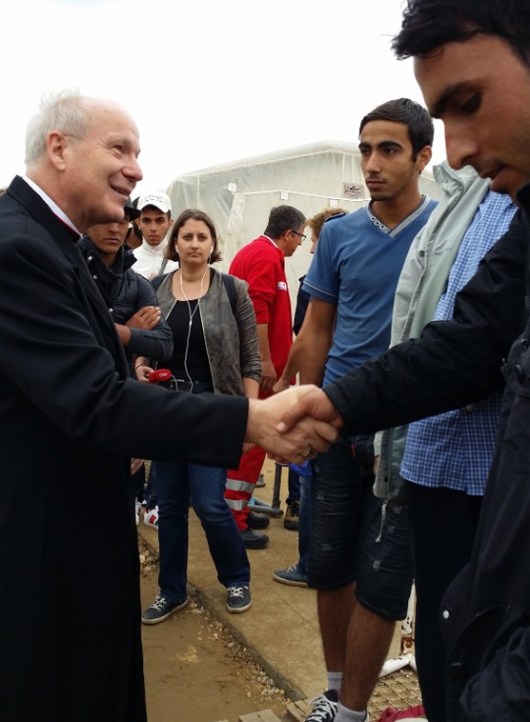
I feel a great sense of gratitude towards Cardinal Schönborn for his deep wisdom and obvious love for humanity, that has also shone during this last days in his welcoming of Syrian refugees – a welcoming that was not only conceptual by highly practical when he went to meet and welcome them as they crossed the border from Hungary to Austria. I wish the bishops of other Central European countries would follow his example. I am also grateful to Fr. Spadaro for not only having conducted such an outstanding interview, but for having made it freely available. Thank you!
The Parable of the Good Lesbian

Good samaritan

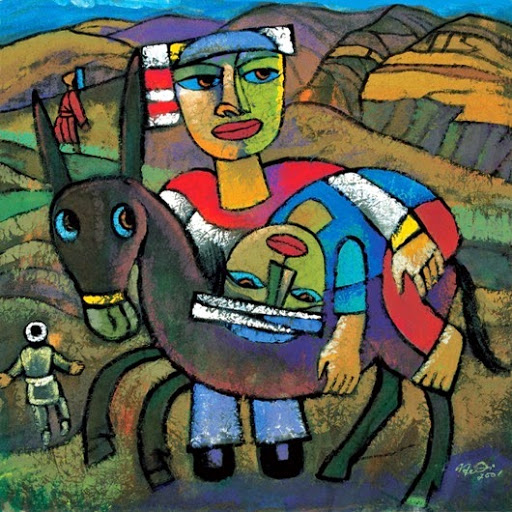
A very good friend of mine, MK, wrote the following on Facebook a couple of days ago: “I think that if Jesus was telling the parable of the good Samaritan today, maybe it would be the parable of the good gay.” And, as soon as I saw it, I “liked” it, since it seemed to fit Jesus’ choice of profile for that particular parable character like a glove – i.e., as someone who is frowned upon, mistrusted and seen as repulsive by “good” God-fearing folk, and with whom there is an us-versus-them that needs to be undermined.

A short while later I noticed that MK’s Facebook status had received 43 comments, dominated by outrage, exhortations to read St. Paul (undoubtedly a good idea, and one, which that comment’s author should also self-apply) and a bandying-about of phrases like “the truth of Christ” (as if there were different flavors of truth). There were also reasonable comments, but these formed a small minority among the sea of tirades that followed the outrageous suggestion that homosexuals could be thought of as today’s equivalent of first-century Judea’s Samaritans.

My immediate reaction to seeing this was to look more closely at the Good Samaritan parable and get a sense of how well founded MK’s suggestion for its contemporary adaptation is – not so much for the sake of assessing its reasonableness (which had intuitive appeal to me from the start), but to get a more specific sense of its context and exegesis.

To get an idea of how Jews and Samaritans got on with each other, Blessed John Henry Newman provides the following summary, after giving an account of mutual killings between the two peoples:

“[… T]he strongest expression of hatred the Jews could invent against Christ was ‘Thou art a Samaritan and hast a devil’ (John 8:48). [… I]f a Jew and a Samaritan met in a narrow way, they were particularly careful to avoid touching each fearing to receive pollution from the other.”

Saying “Samaritan” in the first century AD to an audience of Jewish lawyers (as Jesus – and, lets not forget, himself a Jew, did), seems to have been the same kind of trigger as saying “gay” is today to my friend’s “Christian” contacts. 1:0 to MK – the glove does indeed seem to fit.

Let me next take a look at how the last three popes have read this parable and see whether that sheds light on the transposition proposed by my friend.

St. John Paul II spoke at length about the Parable of the Good Samaritan in his apostolic letter on suffering, Salvifici Doloris (§28):

“The parable of the Good Samaritan belongs to the Gospel of suffering. For it indicates what the relationship of each of us must be towards our suffering neighbour. We are not allowed to “pass by on the other side” indifferently; we must “stop” beside him. Everyone who stops beside the suffering of another person, whatever form it may take, is a Good Samaritan. This stopping does not mean curiosity but availability. It is like the opening of a certain interior disposition of the heart, which also has an emotional expression of its own. The name “Good Samaritan” fits every individual who is sensitive to the sufferings of others, who “is moved” by the misfortune of another. If Christ, who knows the interior of man, emphasizes this compassion, this means that it is important for our whole attitude to others’ suffering. Therefore one must cultivate this sensitivity of heart, which bears witness to compassion towards a suffering person. Some times this compassion remains the only or principal expression of our love for and solidarity with the sufferer.

Nevertheless, the Good Samaritan of Christ’s parable does not stop at sympathy and compassion alone. They become for him an incentive to actions aimed at bringing help to the injured man. In a word, then, a Good Samaritan is one who brings help in suffering, whatever its nature may be. Help which is, as far as possible, effective. He puts his whole heart into it, nor does he spare material means. We can say that he gives himself, his very “I”, opening this “I” to the other person. Here we touch upon one of the key-points of all Christian anthropology. Man cannot “fully find himself except through a sincere gift of himself” (Gaudium et Spes, 24). A Good Samaritan is the person capable of exactly such a gift of self.”

What strikes me here immediately are two things: first, the deep-seated universality of St. John Paul II’s words, addressed to “each of us,” “everyone,” “every individual,” where “Good Samaritan” status is predicated only on one’s capacity for “a gift of self.” Second, the imperative nature of his words which insist both on what we must do (being sensitive to, moved by and helping our suffering neighbors; being compassionate and self-giving) and what we are not allowed to do: be indifferent. This exegesis too easily extends to homosexuals, who are undoubtedly in a position of showing compassion to those around them and of selflessly coming to their aid.

Pope Benedict XVI adds further clarity to this universally-predicated imperative to love, in his exceptional piece of thinking: the encyclical Deus Caritas Est:

“14. […] Union with Christ is also union with all those to whom he gives himself. I cannot possess Christ just for myself; I can belong to him only in union with all those who have become, or who will become, his own. […] We become “one body”, completely joined in a single existence. Love of God and love of neighbour are now truly united: God incarnate draws us all to himself. […] the “commandment” of love is only possible because it is more than a requirement. Love can be “commanded” because it has first been given.

15. This principle is the starting-point for understanding the great parables of Jesus. […] The parable of the Good Samaritan (cf. Lk 10:25-37) offers two particularly important clarifications. Until that time, the concept of “neighbour” was understood as referring essentially to one’s countrymen and to foreigners who had settled in the land of Israel; in other words, to the closely-knit community of a single country or people. This limit is now abolished. Anyone who needs me, and whom I can help, is my neighbour. The concept of “neighbour” is now universalized, yet it remains concrete. Despite being extended to all mankind, it is not reduced to a generic, abstract and undemanding expression of love, but calls for my own practical commitment here and now. The Church has the duty to interpret ever anew this relationship between near and far with regard to the actual daily life of her members.”

For me, the most significant aspect of this passage is Benedict’s insistence on love being a commandment and on the justification of its imperative status being the precedent of God’s love. Since the source of this “obligation” to love is inexhaustible, its scope too is universal (as St. John Paul II already made clear). Furthermore, Benedict also calls for a keeping current of what such universality means in the present. This is very much in line with the current process of discernment underway in the Catholic Church, which is on the road to the second Synod on the Family this October. Specifically, the challenges of how to provide opportunities for homosexuals to feel part of the Church are on the table there too, which is easily read as an instance of Benedict’s “interpret[ing] ever anew this relationship between near and far.”

Finally, let’s hear what Pope Francis has to say about this parable:

“The Gospel passage from St Luke (10:25-37) tells of a certain man, half dead, who had been thrown into the street. Now by chance a priest was going down that road. A good priest, in his cassock: good, very good. He saw him and looked: I’ll be late for Mass, and he went on his way. He didn’t hear the voice of God there”. […] It is curious to note that only a man who habitually fled from God, a sinner, the Samaritan, was the very one who perceived the voice of God. He drew near to the man. He bound up his wounds, pouring on oil and wine; then he set him on his own beast. Oh how much time he lost: he brought him to an inn, and took care of him. He lost the whole evening! In the meantime, the priest arrived in time for the Holy Mass and all the faithful were content.

Why did the priest flee from God? Because his heart was closed. When your heart is closed you cannot hear the voice of God. Instead, it was a Samaritan on a journey who saw the wounded man and had compassion. His heart was opened, he had a human heart. His humanity enabled him to draw near.

The priest had a plan for his life: he wanted to write his own history well, according to God’s ways. But he was the one writing it. However, this other sinner allowed God to write the history of his life. He changed all his plans that evening because the Lord placed before him this poor, wounded man who had been thrown out onto the street.

I ask myself and I also ask you: do we allow God to write the history of our lives or do we want to write it? This speaks to us of docility: are we docile to the Word of God? Yes, I want to be docile, but are you able to listen to his Word, to hear it? Are you able to find the Word of God in the history of each day, or do your ideas so govern you that you do not allow the Lord to surprise you and speak to you?”

What strikes me here is the supremacy of openness over righteousness. Making oneself the ultimate judge (+ jury & executioner), instead of opening oneself up to discerning the will of God and listening to the promptings of the Holy Spirit through one’s conscience, leads to a spoiling even of things that are good in themselves and to an assumption of ultimate power by an imperfect subject. Instead, the admission of sinfulness, that Pope Francis (and before him the saints universally) has made for himself and that each one of us can recognize in our own lives, if we are sincere enough, helps us both to recognize brothers and sisters in all, without exception, and to open ourselves up to God’s surprises.

Synod14: A reality check

Francis synod

If you are a regular on this blog, you’ll know that I have been following the Extraordinary Synod on the Family very closely. I have seen all the press conferences, read all the documents, watched all the interviews, waded through the, sadly mostly morass, of tweets tagged with #synod14, and have written blog posts daily. At the end of the Synod’s two weeks, I felt a great sense of joy and I delighted at the whole process, which, to my mind, was an example of a shared journey, of transparency, and of a group of bishops and lay people striving for the good of the family, with a tremendous sense of seriousness and honesty.

When I then read the first reports on Saturday evening, and then during the course of today in the general press, about what this Synod has arrived at, I have to admit that I came away from them with disappointment. I shouldn’t have been that naive, since this seems to be the norm in how anything moderately nuanced gets reported. From the perspective of the media, the result has been some variant of the following Guardian headline: “Catholic bishops veto gay-friendly statements leaving Pope Francis the loser.”

What I have seen over the last two weeks couldn’t be further from a loss for Pope Francis, first of all because that is a meaningless way of looking at the situation. And even if one were to apply the loss/victory categories to the Synod, the opposite would be my conclusion. Let me therefore lay out what I believe just happened, in as blunt terms as I can, and, please, bear with me while I take a couple of steps back to do this picture justice.

In the beginning was the Word …

No, let me not go back that far just yet (although that verse from the Johannine prologue is highly relevant to one of the keys to the Synod that I will return to in a later post) and instead start with a thought from Pope Benedict XVI’s resignation letter, where he assesses the current situation in the world as follows:

“[T]oday’s world [is] subject to so many rapid changes and shaken by questions of deep relevance for the life of faith”

Questions of deep relevance need to be addressed and Benedict does not have the strength to do it. So, he does what a true servant of servants must, and vacates the See of Peter. A conclave is called and cardinals present their visions for the Church. One Jorge Bergoglio presents the following program:

“Holy Week challenges us to step outside ourselves so as to attend to the needs of others: those who long for a sympathetic ear, those in need of comfort or help. We should not simply remain in our own secure world, that of the ninety-nine sheep who never strayed from the fold, but we should go out, with Christ, in search of the one lost sheep, however far it may have wandered.”

He gets elected Pope Francis and, the next day, in his first address to the cardinals since his election he declares:

“[A]ll together, pastors and faithful, we will make an effort to respond faithfully to the eternal mission: to bring Jesus Christ to humanity, and to lead humanity to an encounter with Jesus Christ: the Way, the Truth and the Life, truly present in the Church and, at the same time, in every person.”

Then follow months of Francis putting his mission to welcome and accompany not only every single person who comes his way, but to go out of his way to reach out to those who may feel far from the Church. His correspondence with the atheist Eugenio Scalfari, his iPhone video to Evangelical Christians in the US and his resounding “Who am I to judge them?” with regard to gays are just a couple of examples off the top of my head.

Eight months after his election and to drive home the message that being a Church that is open and welcoming of all is a must, Francis pens the magnificent apostolic exhortation Evangelii Gaudium – a magisterial document of the Catholic Church, where he declares in the section entitled “A mother with an open heart” that:

“Everyone can share in some way in the life of the Church; everyone can be part of the community, nor should the doors of the sacraments be closed for simply any reason. This is especially true of the sacrament which is itself “the door”: baptism. The Eucharist, although it is the fullness of sacramental life, is not a prize for the perfect but a powerful medicine and nourishment for the weak.[51] These convictions have pastoral consequences that we are called to consider with prudence and boldness. Frequently, we act as arbiters of grace rather than its facilitators. But the Church is not a tollhouse; it is the house of the Father, where there is a place for everyone, with all their problems.” (§47)

A whole year later, and a year where an outreach to the peripheries, an openness to all, regardless of how “proper” or well-ordered their lives are, have been Francis’ daily mission, he has the following to say on the eve of the Synod – just in case someone hasn’t been listening during the preceding year and a half:

“The temptation to greed is ever present. We encounter it also in the great prophecy of Ezekiel on the shepherds (cf. ch. 34), which Saint Augustine commented upon in one his celebrated sermons which we have just reread in the Liturgy of the Hours. Greed for money and power. And to satisfy this greed, evil pastors lay intolerable burdens on the shoulders of others, which they themselves do not lift a finger to move (cf. Mt 23:4)

We too, in the Synod of Bishops, are called to work for the Lord’s vineyard. […] We are all sinners and can also be tempted to “take over” the vineyard, because of that greed which is always present in us human beings. God’s dream always clashes with the hypocrisy of some of his servants. We can “thwart” God’s dream if we fail to let ourselves be guided by the Holy Spirit. The Spirit gives us that wisdom which surpasses knowledge, and enables us to work generously with authentic freedom and humble creativity.

My Synod brothers, to do a good job of nurturing and tending the vineyard, our hearts and our minds must be kept in Jesus Christ by “the peace of God which passes all understanding” (Phil 4:7). In this way our thoughts and plans will correspond to God’s dream: to form a holy people who are his own and produce the fruits of the kingdom of God (cf. Mt 21:43).”

Note two things about what Francis says here: First, God’s dream is a holy people who are his own and who are looked after by his servants, servants who are not to overburden them. Second, he quotes Scripture and a saint to them [remember this for contrast with how he speaks to the Synod Fathers after the Synod].

A week of the Synod later, during which Francis attends almost every single session (skipping one due to the General Audience on the Wednesday), but during which he does not intervene, the interim report of the Synod is published – written by Archbishop Bruno Forte, whom Francis directly appointed to the job of doing so. What does the interim report (the “relatio post disceptationem”) say? Well, amongst other things:

“[I]t is the task of the Church to recognize those seeds of the Word that have spread beyond its visible and sacramental boundaries. Following the expansive gaze of Christ, whose light illuminates every man (cf. Jn 1,9; cf. Gaudium et Spes, 22), the Church turns respectfully to those who participate in her life in an incomplete and imperfect way, appreciating the positive values they contain rather than their limitations and shortcomings. […]

In this respect, a new dimension of today’s family pastoral consists of accepting the reality of civil marriage and also cohabitation, taking into account the due differences. Indeed, when a union reaches a notable level of stability through a public bond, is characterized by deep affection, responsibility with regard to offspring, and capacity to withstand tests, it may be seen as a germ to be accompanied in development towards the sacrament of marriage. […]

Homosexuals have gifts and qualities to offer to the Christian community: are we capable of welcoming these people, guaranteeing to them a fraternal space in our communities? Often they wish to encounter a Church that offers them a welcoming home. Are our communities capable of providing that, accepting and valuing their sexual orientation, without compromising Catholic doctrine on the family and matrimony?”

The Pope listened to everyone speaking their mind and then had “his man” pen the key takeaways – recognize a participation in the life of the Gospel no matter under what circumstances it happens, be welcoming, look for ways for everyone, who wants to, to find their place in the Church.

A week later, during which significant resistance is shown by some cardinals to the interim report, a final report is produced that tones down the interim reports’ language, but that still speaks about all the topics mentioned in the interim report. The final report is voted on paragraph by paragraph, but instead of only those paragraphs that have reached the 2/3 majority needed for them to be official proposals from the Synod to the Pope, all paragraphs are published on the Pope’s orders, including the data on how many votes each paragraph received. The purpose of this final document of the Extraordinary Synod on the Family is that it sets the agenda for the work of this, next year that leads to the Ordinary Synod on the Family in October 2015. Keeping all topics from the interim report in the final report means that they will get discussed both over the course of this year and at the next Synod.

Is that the end of the story? Not at all! What Pope Francis does next is to completely upstage the final report of the Synod, by delivering an amazing closing speech. Why does he do that? Because this Synod is not about its final document – it is the kick-off for a year of discernment and work towards the next Synod, after which proposals are going to be made to the Pope.

So, what did Pope Francis say at the end of this year’s Synod? First, he thanked all for their great effort and then he moved straight to telling them the temptations he saw them struggle with: “the temptation of hostile rigidity,” “the temptation of destructive do-goodery,” “the temptation to turn stone into bread and also to turn bread into stone,” “the temptation to come down from the cross” and “the temptation to neglect the “deposit of faith” and the temptation to ignore reality.” Ouch!

Then he proceeds to spell out, yet again!, what he is looking for:

“And this is the Church, the Lord’s vineyard, the fertile Mother and caring [female] Teacher, who is not afraid to roll up her sleeves to pour oil and wine on the wounds of men (cf. Lk 10: 25-37); who does not look at humanity from a glass castle to judge or categorize people. This Church is the One, Holy, Catholic, Apostolic and composed of sinners, in need of His mercy. This is the Church, the true bride of Christ, seeking to be faithful to her spouse and to his doctrine. It is the Church who is not afraid of eating and drinking with prostitutes and tax collectors (Luke 15). The Church that has doors wide open to receive the needy, the repentant and not only the righteous or those who think they are perfect! The Church that is not ashamed of the fallen brother and does not pretend not to see him, what’s more, she feels involved and almost obliged to raise him and encourage him to continue his journey, and she accompanies him to the final encounter with her ​​Spouse, in the heavenly Jerusalem.”

But he doesn’t leave it there and in true Steve Jobs fashion pulls a “one more thing”:

“We will speak a little bit about the Pope, now, in relation to the Bishops [laughing]. So, the duty of the Pope is that of guaranteeing the unity of the Church; it is that of reminding the faithful of their duty to faithfully follow the Gospel of Christ; it is that of reminding the pastors that their first duty is to nourish the flock – to nourish the flock – that the Lord has entrusted to them, and to seek to welcome – with fatherly care and mercy, and without false fears – the lost sheep. I made a mistake here. I said welcome: [rather] to go out and find them.”

Francis pulls a great in-joke here, since the word “welcome” as applied to homosexuals was one of the most contested points in the interim report. Note the serrated edge that the above (“I made a mistake here. I said welcome”) gets in light of what Francis says at the end of his speech. First, however, he reads to them from one of Benedict XVI’s General Audiences:

“His duty is to remind everyone that authority in the Church is a service, as Pope Benedict XVI clearly explained, with words I cite verbatim: “The Church is called and commits herself to exercise this kind of authority which is service and exercises it not in her own name, but in the name of Jesus Christ… through the Pastors of the Church, in fact: it is he who guides, protects and corrects them, because he loves them deeply. But the Lord Jesus, the supreme Shepherd of our souls, has willed that the Apostolic College, today the Bishops, in communion with the Successor of Peter… to participate in his mission of taking care of God’s People, of educating them in the faith and of guiding, inspiring and sustaining the Christian community, or, as the Council puts it, ‘to see to it… that each member of the faithful shall be led in the Holy Spirit to the full development of his own vocation in accordance with Gospel preaching, and to sincere and active charity’ and to exercise that liberty with which Christ has set us free (cf. Presbyterorum Ordinis, 6)… and it is through us,” Pope Benedict continues, “that the Lord reaches souls, instructs, guards and guides them. St Augustine, in his Commentary on the Gospel of St John, says: ‘let it therefore be a commitment of love to feed the flock of the Lord’ (cf. 123, 5); this is the supreme rule of conduct for the ministers of God, an unconditional love, like that of the Good Shepherd, full of joy, given to all, attentive to those close to us and solicitous for those who are distant (cf. St Augustine, Discourse 340, 1; Discourse 46, 15), gentle towards the weakest, the little ones, the simple, the sinners, to manifest the infinite mercy of God with the reassuring words of hope (cf. ibid., Epistle, 95, 1).”

In other words, Francis is saying: what I have set out before you at the beginning of the Synod is pretty much what Benedict asked of you four years ago and what I have been telling you day in, day out, for the last year and a half.

And, just to sharpen the point a touch – and make it more directly understandable for those who have been misusing the law as a veto against accepting change – Francis concludes by quoting canon law to them (a. k. a. reading them the riot act!):

“So, the Church is Christ’s – she is His bride – and all the bishops, in communion with the Successor of Peter, have the task and the duty of guarding her and serving her, not as masters but as servants. The Pope, in this context, is not the supreme lord but rather the supreme servant – the “servant of the servants of God”; the guarantor of the obedience and the conformity of the Church to the will of God, to the Gospel of Christ, and to the Tradition of the Church, putting aside every personal whim, despite being – by the will of Christ Himself – the “supreme Pastor and Teacher of all the faithful” (Can. 749) and despite enjoying “supreme, full, immediate, and universal ordinary power in the Church” (cf. Cann. 331-334).”

Boom! Oh, you think my saying “welcoming” was a “mistake”? Think again.

“Catholic bishops veto gay-friendly statements leaving Pope Francis the loser.” Not even close.

Synod14: Speak clearly, don’t be afraid to offend me

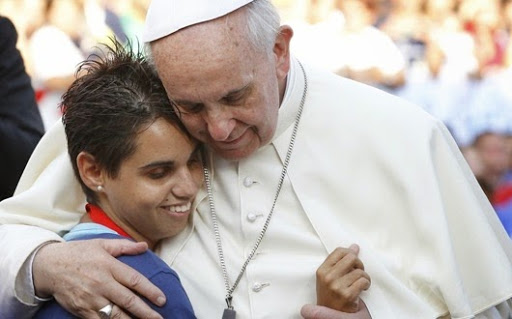
Francis hug

Today saw the first two sessions (“congregations” in Vatican-speak) of the two-week-long extraordinary bishops’ Synod on the family, and I would just like to pick out a couple what I saw as their highlights. First, however, it is worth going back to yesterday’s opening mass of the Synod, when Pope Francis had some warnings for his brother bishops, that clearly set the tone that he expects from the next two weeks’ work:

“The temptation to greed is ever present. […] Greed for money and power. And to satisfy this greed, evil pastors lay intolerable burdens on the shoulders of others, which they themselves do not lift a finger to move (cf. Mt 23:4)

We too, in the Synod of Bishops, are called to work for the Lord’s vineyard. Synod Assemblies are not meant to discuss beautiful and clever ideas, or to see who is more intelligent… They are meant to better nurture and tend the Lord’s vineyard, to help realize his dream, his loving plan for his people. In this case the Lord is asking us to care for the family, which has been from the beginning an integral part of his loving plan for humanity.

We are all sinners and can also be tempted to “take over” the vineyard, because of that greed which is always present in us human beings. God’s dream always clashes with the hypocrisy of some of his servants. We can “thwart” God’s dream if we fail to let ourselves be guided by the Holy Spirit. The Spirit gives us that wisdom which surpasses knowledge, and enables us to work generously with authentic freedom and humble creativity.”

This morning, more along good cop lines, his brief opening remarks then presented the method he would like participants to follow, which builds on clarity, openness, boldness (parrhesia) and tranquility:

“A basic general condition is this: to speak clearly. No one must say: “This can’t be said; he will think of me this way or that …” It is necessary to say everything that is felt with parrhesia. After the last Consistory (February 2014), in which there was talk of the family, a Cardinal wrote to me saying: too bad that some Cardinals didn’t have the courage to say some things out of respect for the Pope, thinking, perhaps, that the Pope thought something different. This is not good; this is not synodality, because it is necessary to say everything that in the Lord one feels should be said, with human respect, without fear. And, at the same time, one must listen with humility and receive with an open heart what the brothers say. Synodality will be exercised with these two attitudes.

Therefore, I ask you, please, for these attitudes of brothers in the Lord: to speak with parrhesia and to listen with humility.

And do so with much tranquillity and peace, because the Synod always unfolds cum Petro et sub Petro, and the Pope’s presence is the guarantee for all and protection of the faith.”

The first session then saw Cardinal Erdő present a 7.5K-word opening document – the “relatio ante disceptationem” – that is effectively the first follow-up to the “Instrumentum Laboris” in which the results of the preceding worldwide questionnaire were summarised. Erdő’s report is based on the written contributions made by the Synod Fathers ahead of the Synod’s opening and, together with the discussions that will last all this week and then in smaller groups next week, it will contribute to the final document that will be submitted to Pope Francis at the conclusion of this process.

As you’d expect, Erdő’s report broadly follows the structure of the Instrumentum Laboris, kicking off with an assessment of the challenges faced today on an individual level:

Many people today have difficulty in thinking in a logical manner and reading lengthy documents. We live in an audio-visual culture, a culture of feelings, emotional experiences and symbols. […]

Many look upon their lives not as a life-long endeavour but a series of moments in which great value is placed on feeling good and enjoying good health. From this vantage point, any firm commitment seems insurmountable and the future appears threatening, because it may happen that in the future we will feel worse. Even social relationships may appear as limitations and obstacles. Respect and “seeking the good” of another person can even call for sacrifice. Isolation is oftentimes linked, therefore, with this cult of a momentary well-being.

How this general disposition (which would not have come as a surprise to Aristippus or Epicurus some 2400 years ago) impacts the position and perception of marriage is addressed next, where there is a balance between challenges and the persistent beauty of the Church’s central teaching:

Avoiding marriage is seen as not only a sign of individualism but also a symptom of the crisis of a society already burdened by formalisms, obligations and bureaucracy. […]

The obligations arising from marriage must not be forgotten, but seen as the demands of the gift which the gift itself makes possible. […]

[The Church’s] teaching [on the family] enjoys a broad consensus among practicing Catholics. This is the case, particularly with regard to the indissolubility of marriage and its sacramental nature among those who are baptized. The teaching on the indissolubility of marriage as such is not questioned. Indeed, it is unchallenged and for the most part observed also in the pastoral practice of the Church with persons who have failed in their marriage and seek a new beginning.

Homosexuality, gender-based discrimination and gender theory get covered next, with a refreshing degree of frankness:

[T]here is a broad consensus that people with a homosexual orientation should not be discriminated against, as reiterated in The Catechism of the Catholic Church (2357-2359). Secondly, it is quite clear that the majority of the baptized — and all episcopal conferences — do not expect that these relationships be equated with marriage between a man and a woman, nor is there a consensus among a vast majority of Catholics on the ideology of gender theories. […]

[M]any want to see a change in the traditional roles in society which are culturally conditioned and in discrimination against women, which continues to be present, without denying, in the process, the differences by nature between the sexes and their reciprocity and complementarity.

The focus is then broadened to a societal level and an acute analysis of the external pressures incident on the family is presented:

We are not dealing with only problems involving individual behaviour but the structures of sin hostile to the family, in a world of inequality and social injustice, of consumerism, on the one hand, and poverty, on the other. Rapid cultural change in every sphere is distorting families, which are the basic unit of society, and putting into question the traditional family culture and oftentimes destroying it. On the other hand, the family is fast becoming the last welcoming human reality in a world determined almost exclusively by finance and technology. A new culture of the family can be the starting point for a renewed human civilization. […]

The widespread difficulty in creating a serene atmosphere of communication in some families is due to multiple factors: business and economic worries; differing views on the upbringing of children from various models of parenting; a reduction in time for dialogue and relaxation. In addition, there are disruptive factors like separation and divorce, with the consequences of a blended family, and, conversely, single parenting, where a relationship with the other parent is confused or limited, if not totally absent. Finally, this lack of communication can result from a widespread selfish mentality that closes in upon itself, with the disturbing consequence of the practice of abortion. The same selfishness can lead to the false idea of parents that children are objects or their property, who can be produced by them as they desire.

Then comes one of my favourite part, where the need for accompanying, for inclusion and for the proclamation of God’s fatherhood and the Church’s motherhood follows:

[T]hought needs to be given on how best to accompany people who find themselves in these situations [of marriage difficulty], so they do not feel excluded from the life of the Church. Finally, forms and suitable language needs to be devised to proclaim that all are and remain God’s children and are loved by God the Father and the Church as Mother. […]

Indeed, God never tires of forgiving the sinner who repents and he does not tire of giving him this possibility again and again. This mercy is not a justification to sin but rather the sinner’s justification, to the extent that he converts and aims to sin no more.

Mercy then gets the central place is requires, with a beautifully succinct paragraph:

Mercy, the central theme of the God’s revelation, is highly important as a hermeneutic for the Church’s actions (cf. Evangelii gaudium, 193 ff.). Certainly, she does not do away with truth nor relativize it, but seeks to interpret it correctly in the hierarchy of truths (cf. Unitatis redintegratio, 11; Evangelii gaudium, 36-37). Nor does she do away with the demands of justice. Consequently, mercy does not take away the commitments which arise from the demands of the marriage bond. They will continue to exist even when human love is weakened or has ceased. This means that, in the case of a (consummated) sacramental marriage, after a divorce, a second marriage recognized by the Church is impossible, while the first spouse is still alive.

Another highlight then is the following section, where the good that is there in civil marriages and even in some forms of cohabitation is called out. This is very much in the spirit of Evangelii Gaudium, where Pope Francis calls for a discernment of what there is of God in every context:

[A] new dimension of pastoral care of the family today reveals itself through considering the reality of civil marriages and, despite the differences, even cohabitation. Consequently, when these relationships are obviously stable in a publicly recognized legal bond, they are characterized by deep affection, display a parental responsibility towards their offspring and an ability to withstand trials and they can be seen as a seed to be nurtured on the path towards celebrating the Sacrament of Marriage. […] The Church cannot fail to take advantage of an opportunity, even in situations which, at first sight, are far from satisfying the criteria of the Gospel, and to draw close to people in order to bring them to a conscious, true and right decision about their relationship.

After an extensive coverage of how the challenges facing those who got divorced and civilly remarried, the report says something that I find tremendously positive and a great example of how we, Catholics, can also look to other Christian churches for inspiration:

The Instrumentum laboris relates that some responses suggest further examining the practice of some of the Orthodox Churches, which allows the possibility of a second or third marriage, marked by a penitential character (cf. 95). Examining this matter is necessary to avoid any questionable interpretations and conclusions which are not sufficiently well-founded. In this regard, studying the history of the discipline of the Churches in the East and West is important. Possible contributions might also come from considering the disciplinary, liturgical and doctrinal traditions of the Eastern Churches.

Finally, Cardinal Erdő’s report concludes with a crescendo:

If we look at the origins of Christianity, we see how it has managed — despite rejection and cultural diversity — to be accepted and welcomed for the depth and intrinsic force of its message. Indeed, Christian revelation has manifested the dignity of the person, not to mention love, sexuality and the family.

The challenge for this synod is to try to bring back to today’s world, which in some way resembles that of the early days of the Church, the attractiveness of the Christian message about marriage and the family, highlighting the joy which they give, but, at the same time, respond, in a true and charitable way (cf. Eph 4:15), to the many problems which have a special impact on the family today and emphasizing that true moral freedom does not consists in doing what one feels or living only by one’s feelings but is realized only in acquiring the true good.

In a real way, we are called upon, above all, to put ourselves alongside our sisters and our brothers in the spirit of the Good Samaritan (cf. Lk 10: 25-37): being attentive to their lives and being especially close to those who have been “wounded” by life and expect a word of hope, which we know only Christ can give us (cf. Jn 6:68).

Francis in Rio: we’re ALL brothers and sisters

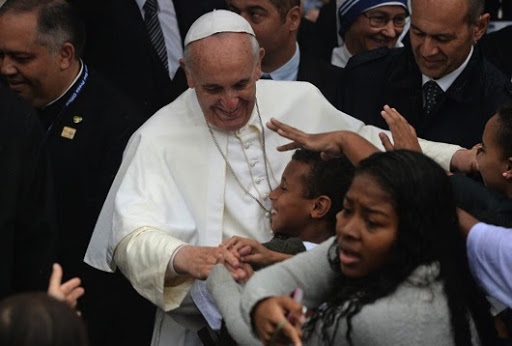
Francis favela

[Warning: Long read! 🙂 The following are my favorite bits from the many talks and homilies Pope Francis gave last week in Brazil. The originals span 30K words, while the following comes in at just above 3K. As you will see, it is more of a collection of gems than an attempt to comment on them, which I am sure I’ll get to in due course. For now I just wanted to give you my “best of” of Francis’ spectacular week in Brazil.]

Last week saw the 28th World Youth Day take place in Rio de Janeiro in Brazil, where as many as 3.7 million young people participated in a variety of events and during which time Pope Francis went on a pilgrimage to the Marian shrine of Aparecida, met with local bishops as well as the leadership of the Latin American Bishops’ Conference (CELAM) and visited one of Rio’s favelas. Instead of giving you a run-through of the week’s proceedings, let me instead just pick out my favorite bits.

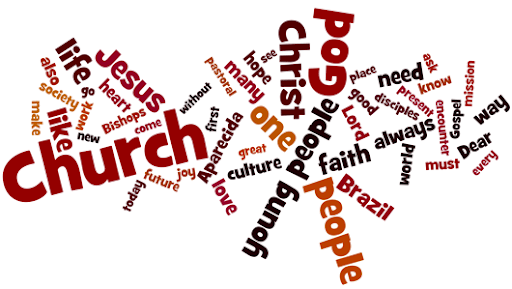
Before digging into Francis’ 30K words spoken publicly last week, it might again be interesting to see the ones he used most frequently, with the top 50 being the following:

Wyd2013

Even just from the above, it is clear both that his emphasis, as ever, is on Jesus, but it can also be seen that he had a particular concern for emphasizing our communion among ourselves and with Him – the Church. Looking at the other words, there is a high frequency of active verbs: make, work, come, love, hope, see, ask, know, encounter – and his frequent use of the word “Aparecida” also stands out. Here, the references are not so much to the place of pilgrimage as to the document written there in 2007 by the Latin American bishops, under the leadership of the then-cardinal Bergoglio. A document that Francis has referred to several times already and with even greater frequency during his visit to Brazil.

Already the day before his departure for Rio, Francis set out his expectations by saying: “All those who come to Rio want to hear Jesus’ voice, to listen to Jesus: ‘Lord, what should I do with my life? What path I should take?’” During the flight from Rome he then spoke briefly to the journalists on his plane, starting by saying that he doesn’t give interviews (a point worth remembering once we’ll come to the spectacular interview he gave during the flight back 🙂 and going on to outline his intentions for the trip, where his aim is:

“to reach out to young people, not in isolation but rather within the larger fabric of society. When we isolate them, we do them an injustice because young people already belong in several ways … they belong to a family, a country, a culture and a faith. […] It’s true, of course, that youth are the future of a people. They’re the future because they have the strength, as young people, to move forward. But those at the other extremity of life, the elderly, are also the future of a people. A people has a future if it moves forward with both these ends – young people with their strength to go forward and the elderly because they’re the ones who offer us the wisdom of life.”

Upon arrival in Rio, Francis heads to the Guanabara Palace for an official welcome, where he starts his speech by saying: “I have neither silver nor gold, but I bring with me the most precious thing given to me: Jesus Christ!,” which again underlines the constant focus on Jesus and a preference for the poor.

Two days later, Francis travels to the Marian shrine of Aparecida, where he starts off by emphasizing the role of Mary: “When the Church looks for Jesus, she always knocks at his Mother’s door and asks: “Show us Jesus”. It is from Mary that the Church learns true discipleship. That is why the Church always goes out on mission in the footsteps of Mary.” Francis then proceeds to talk about “three simple attitudes: hopefulness, openness to being surprised by God, and living in joy” and has the following to say about the last one:

“Christians are joyful, they are never gloomy. God is at our side. We have a Mother who always intercedes for the life of her children, for us […]. Jesus has shown us that the face of God is that of a loving Father. Sin and death have been defeated. Christians cannot be pessimists! They do not look like someone in constant mourning. If we are truly in love with Christ and if we sense how much he loves us, our heart will “light up” with a joy that spreads to everyone around us.”

The next morning Francis headed to the Varginha which is part of the Manguinhos Favela in Rio and said the following to the community assembled in a football field:

“From the start, my wish in planning this visit to Brazil was to be able to visit every district throughout the nation. I would have liked to knock on every door, to say “good morning”, to ask for a glass of cold water, to take a cafezinho, to speak as one would to family friends, to listen to each person pouring out his or her heart – parents, children, grandparents. […]

I am well aware that when someone needing food knocks at your door, you always find a way of sharing food; as the proverb says, one can always “add more water to the beans”! And you do so with love, demonstrating that true riches consist not in material things, but in the heart![…]

No amount of “peace-building” will be able to last, nor will harmony and happiness be attained in a society that ignores, pushes to the margins or excludes a part of itself. A society of that kind simply impoverishes itself, it loses something essential. Let us always remember this: only when we are able to share do we become truly rich; everything that is shared is multiplied! The measure of the greatness of a society is found in the way it treats those most in need, those who have nothing apart from their poverty!”

From the favela, Francis headed for an unscheduled meeting with Argentinian youth in Rio’s cathedral, where he indicated his expectations for when they return home from the World Youth Day:

“I would like us to make noise, I would like those inside the Dioceses to go out into the open; I want the Church to be in the streets; I want us to defend ourselves against all that is worldliness, comfort, being closed and turned within – Parishes, colleges and institutions must get out otherwise they risk becoming NGOs, and the Church is not a Non-Governmental Organization. […] Young people and old people in this moment of history are condemned to the same destiny: exclusion. Don’t let yourselves be excluded!”

Next, Francis headed to the St Francis of Assisi hospital, located in the run-down Tijuca district of northern Rio de Janeiro, where young Franciscan friars and sisters care for the poorest and most marginalized slum dwellers. His message was again about brotherhood and he returned to the image of the “flesh of Christ” that he spoke of on previous occasions:

“[W]hen Francis embraced a leper, this brother, suffering and an outcast, [he] was the “mediator of light … for Saint Francis of Assisi” (Lumen Fidei, 57), because in every suffering brother and sister that we embrace, we embrace the suffering Body of Christ. Today, in this place where people struggle with drug addiction, I wish to embrace each and every one of you, who are the flesh of Christ, and to ask God to renew your journey, and also mine, with purpose and steadfast hope. […] We all need to look upon one another with the loving eyes of Christ, and to learn to embrace those in need, in order to show our closeness, affection and love.”

This same Thursday, that Francis started in Aparecida, continued in the favelas, the cathedral of Rio and finally the hospital caring for drug addicts, concluded with a prayer service on Copacabana beach with the World Youth Day pilgrims, whom he addressed as follows:

“[T]oday you are all here, or better yet, we are all here together as one, in order to share the faith and the joy of an encounter with Christ, of being his disciples. […] Today Christ asks each of us again: Do you want to be my disciple? Do you want to be my friend? Do you want to be a witness to my Gospel? […] I think the answer is yes, because here today, it is good for all of us to be gathered together around Jesus! It is he who welcomes us and who is present in our midst here in Rio. […] Certainly, possessions, money and power can give a momentary thrill, the illusion of being happy, but they end up possessing us and making us always want to have more, never satisfied. “Put on Christ” in your life, place your trust in him and you will never be disappointed!”

On Saturday, Francis first met with Brazil’s political, cultural and business leaders, whom he addressed by touching on on “cultural tradition, joint responsibility for building the future, and constructive dialogue in facing the present moment”:

“Memory of the past and utopian vision of the future meet in the present. […]

[A]n integral humanism and the culture of encounter and relationship: this is the Christian way of promoting the common good, the joy of living. Here, faith and reason unite, the religious dimension and the various aspects of human culture – art, science, labour, literature… Christianity combines transcendence and incarnation; it has the capacity to bring ever new vitality to thought and life, in the face of the threat of frustration and disillusionment which can creep into hearts and spread in the streets.

No one should be denied what is necessary and everyone should be guaranteed dignity, fraternity and solidarity: this is the road that is proposed. In the days of the prophet Amos, God’s frequent warning was already being heard: “They sell the righteous for silver and the needy for a pair of sandals – they … trample down the head of the poor into the dust of the earth and push the afflicted out of the way” (Amos 2:6-7). The outcry, the call for justice, continues to be heard even today.

Between selfish indifference and violent protest there is always another possible option: that of dialogue. Dialogue between generations, dialogue within the people, because we are all that people, the capacity to give and receive, while remaining open to the truth. […] Others always have something to give me, if we know how to approach them in a spirit of openness and without prejudice. This open spirit, without prejudice, I would describe as “social humility”, which is what favours dialogue. Only in this way can understanding grow between cultures and religions, mutual esteem without needless preconceptions, in a climate that is respectful of the rights of everyone. Today,either we take the risk of dialogue, we risk the culture of encounter, or we all fall; this is the path that will bear fruit.”

From the encounter with secular society, Francis proceeds to celebrating mass with priests, religious and seminarian in Rio’s cathedral and speaks to them about the call by God, to proclaim the Gospel and to “promote the culture of encounter”:

“It is not pastoral creativity, or meetings or planning that ensure our fruitfulness, but our being faithful to Jesus, who says insistently: “Abide in me and I in you” (John 15:4). And we know well what that means: to contemplate him, to worship him, to embrace him, especially through our faithfulness to a life of prayer, and in our daily encounter with him, present in the Eucharist and in those most in need. “Being with” Christ does not isolate us from others. Rather, it is a “being with” in order to go forth and encounter others.

We cannot keep ourselves shut up in parishes, in our communities, when so many people are waiting for the Gospel! It is not enough simply to open the door in welcome, but we must go out through that door to seek and meet the people! Let us courageously look to pastoral needs, beginning on the outskirts, with those who are farthest away, with those who do not usually go to church. They are the V.I.P.s invited to the table of the Lord… go and look for them in the nooks and crannies of the streets.”

After lunch with the Brazilian bishops and cardinals, Francis addresses the following words to them:

“[H]umility is one of God’s essential features, part of God’s DNA.

Let us read once again […] the story of Emmaus (cf. Luke 24:13-15). The two disciples have left Jerusalem. They are leaving behind the “nakedness” of God. They are scandalized by the failure of the Messiah in whom they had hoped and who now appeared utterly vanquished, humiliated, even after the third day (vv. 17-21). Here we have to face the difficult mystery of those people who leave the Church, who, under the illusion of alternative ideas, now think that the Church – their Jerusalem – can no longer offer them anything meaningful and important. […] Perhaps the Church appeared too weak, perhaps too distant from their needs, perhaps too poor to respond to their concerns, perhaps too cold, perhaps too caught up with itself, perhaps a prisoner of its own rigid formulas, perhaps the world seems to have made the Church a relic of the past, unfit for new questions; perhaps the Church could speak to people in their infancy but not to those come of age. It is a fact that nowadays there are many people like the two disciples of Emmaus; not only those looking for answers in the new religious groups that are sprouting up, but also those who already seem godless, both in theory and in practice.

Faced with this situation, what are we to do?

We need a Church unafraid of going forth into their night. We need a Church capable of meeting them on their way. We need a Church capable of entering into their conversation. We need a Church able to dialogue with those disciples who, having left Jerusalem behind, are wandering aimlessly, alone, with their own disappointment, disillusioned by a Christianity now considered barren, fruitless soil, incapable of generating meaning.”

In the evening Francis was back with the young people on Copacabana beach, talking to them about being a disciple and a missionary, by analogy with three different uses of a field: as a place for sowing, as a training ground and as a construction site:

“Jesus offers us something bigger than the World Cup! He offers us the possibility of a fulfilled and fruitful life; he also offers us a future with him, an endless future, eternal life. But he asks us to train, “to get in shape”, so that we can face every situation in life undaunted, bearing witness to our faith. How do we get in shape? By talking with him: by prayer, which is our daily conversation with God, who always listens to us. By the sacraments, which make his life grow within us and conform us to Christ. By loving one another, learning to listen, to understand, to forgive, to be accepting and to help others, everybody, with no one excluded or ostracized.”

On Sunday Francis returned to say mass on Copacabana beach, to a crowd of 3 million, and continued with the theme of mission:

“Jesus did not say: “go, if you would like to, if you have the time”, but he said: “Go and make disciples of all nations.” Sharing the experience of faith, bearing witness to the faith, proclaiming the Gospel: this is a command that the Lord entrusts to the whole Church, and that includes you; but it is a command that is born not from a desire for domination, from the desire for power, but from the force of love, from the fact that Jesus first came into our midst and did not give us just a part of himself, but he gave us the whole of himself, he gave his life in order to save us and to show us the love and mercy of God. Jesus does not treat us as slaves, but as people who are free, as friends, as brothers and sisters; and he not only sends us, he accompanies us, he is always beside us in our mission of love.

Where does Jesus send us? There are no borders, no limits: he sends us to everyone. The Gospel is for everyone, not just for some. It is not only for those who seem closer to us, more receptive, more welcoming. It is for everyone. Do not be afraid to go and to bring Christ into every area of life, to the fringes of society, even to those who seem farthest away, most indifferent. The Lord seeks all, he wants everyone to feel the warmth of his mercy and his love.”

After lunch, Francis addressed the leadership of the Council of Bishops’ Conferences of Latin America and the Caribbean, CELAM, with a rich speech, from which I’d just like to pick out a couple of points:

“Christ’s followers are not individuals caught up in a privatized spirituality, but persons in community, devoting themselves to others.

Is pastoral discernment a habitual criterion, through the use of Diocesan Councils? Do such Councils and Parish Councils, whether pastoral or financial, provide real opportunities for lay people to participate in pastoral consultation, organization and planning? The good functioning of these Councils is critical. I believe that on this score, we are far behind. […] As pastors, bishops and priests, are we conscious and convinced of the mission of the lay faithful and do we give them the freedom to continue discerning, in a way befitting their growth as disciples, the mission which the Lord has entrusted to them? Do we support them and accompany them, overcoming the temptation to manipulate them or infantilize them?

Responding to the existential issues of people today, especially the young, listening to the language they speak, can lead to a fruitful change, which must take place with the help of the Gospel, the magisterium, and the Church’s social doctrine. The scenarios and the areopagi involved are quite varied. For example, a single city can contain various collective imaginations which create “different cities”. If we remain within the parameters of our “traditional culture”, which was essentially rural, we will end up nullifying the power of the Holy Spirit. God is everywhere: we have to know how to find him in order to be able to proclaim him in the language of each and every culture; every reality, every language, has its own rhythm.

Every utopian (future-oriented) or restorationist (past-oriented) impulse is spiritually unhealthy. God is real and he shows himself in the “today”. With regard to the past, his presence is given to us as “memory” of his saving work, both in his people and in each of us as individuals; with regard to the future, he gives himself to us as “promise” and hope. In the past God was present and left his mark: memory helps us to encounter him; in the future is promise alone… […] The “today” is closest to eternity; even more: the “today” is a flash of eternity. In the “today”, eternal life is in play.”

Before embarking on the journey back to Rome, Francis met with the volunteers who had helped out with the World Youth Day and addressed the following words to them on the subject of vocations:

“God calls you to make definitive choices, and he has a plan for each of you […]. God calls each of us to be holy, to live his life, but he has a particular path for each one of us. Some are called to holiness through family life in the sacrament of Marriage. Today, there are those who say that marriage is out of fashion; in a culture of relativism and the ephemeral, many preach the importance of “enjoying” the moment. They say that it is not worth making a life- long commitment, making a definitive decision, “for ever”, because we do not know what tomorrow will bring. I ask you, instead, to be revolutionaries, to swim against the tide; yes, I am asking you to rebel against this culture that sees everything as temporary and that ultimately believes that you are incapable of responsibility, that you are incapable of true love. I have confidence in you and I pray for you. Have the courage “to swim against the tide”. Have the courage to be happy.”

Finally, the return flight itself was one of the highlights of this trip, as Francis spent an hour and twenty minutes answering unvetted questions from the journalist on board his plane. I wonder what brought about this change of attitude in Francis, who on the outbound flight declared that he doesn’t do interviews, but I am glad he changed his mind :). Of the many interesting, and masterfully answered questions, let me just pick out the following few:1

“[In response to a question asking Francis why he didn’t address the topics of abortion and same sex marriage:]

Francis: The Church has already expressed itself clearly about this. There was no need to return to it, like there was no need to talk about fraud, or lying, or other topics about which the Church has a clear doctrine.

Patricia Zorzan: But this is a question that interests young people …

Francis: Yes, but there was no need to speak about this, but rather about positive things that open the way ahead for kids. Isn’t that true? Furthermore, young people know perfectly well what the position of the Church is!

Patricia Zorzan: What is the position of Your Holiness, could you tell us?

Francis: That of the Church. I am a son of the Church!

[Asked about the role of women in the Church, Francis responded:]

A Church without women is like the college of apostles without Mary. The role of the woman in the Church is not only maternity, being the mum of a family, it is stronger: she is the icon of the Virgin, of the Madonna; her who helps to grow the Church! Think that the Madonna is more important than the Apostles! She is more important! The Church is female: she is Church, she is a spouse, she is a mother. But the role of the woman in the Church mustn’t end up being just that of a mum, a worker, limited … No! It is something else! […] It is impossible to think of a Church without women, but women who are active in the Church. […] In the Church one has to think of a woman from this perspective: making risky choices, but as women. This has to be explained better. I believe that we haven’t done a deep theology of the woman in the Church yet. She can only do this or that, now she is an altar server, now she reads a reading, she is the president of Caritas … But, there is more! There is a need for a profound theology of the woman. This is what I think.

[In response to another journalist’s question Francis returns to this topic:]

I would like to explain a bit what I have said about the participation of women in the Church: it mustn’t be limited to them being an altar server, president of the Caritas, a catechist … No! It has to be more, but profoundly more, also mystically more, with regard to what I have said about the theology of the woman. And, as far as the ordination of women, the Church has spoken and says: “No.” John Paul II said it with a definitive formulation. That one is closed, that door, but I would like to tell you one thing about it. I have already said it, but I’ll repeat it. The Madonna, Mary, was more important than the Apostles, than bishops, that deacons and than priests. The woman, in the Church, is more important than bishops and than priests; how, is what we need to try and explain better, because I believe that we are missing a theological explanation of this. Thank you.

[Finally, the answer that most stirred the media (for, I believe, good reasons), was in response to a two-part question, whose second part was about the “gay lobby”]

[…] You mention the gay lobby. Uff! [Mah! in Italian :)] A lot is being written about the gay lobby. So far I have not met anyone who’d give me their Vatican ID card with “gay” on it. They say that there are some of them. I believe that when one meets a person like that, it is necessary to distinguish between the fact of it being a gay person and the fact of lobbying, because lobbying is never good. That is bad. If a person is gay and they seek the Lord and have good will, who am I to judge them? The Catechism of the Catholic Church explains this in a very beautiful way. It says: “these persons mustn’t be marginalized for this, they need to be integrated in society.” The problem is not having this tendency, no, we must be brothers, because this is one, but there are others and others. The problem is lobbying: a lobby of misers, a lobby of politicians, a lobby of masons, many lobbies. This is the most serious problem for me. I thank you very much for having asked me this question. Thank you very much!”

In spite of this being a long post, the passages I picked here are just a skimming of the surface of Francis’ spectacular week in Brazil and there will be a lot to think about and internalize in the coming weeks and months. From everything I have read, and from the videos I have seen of Francis speak, by far the most consistent message that I have heard is the emphasis on us all – Christians or not – being brothers and sisters and the need for dialogue, encounter and love. Every person must be loved first, before anything else can be said or done. It is this profound conviction that, I believe, drives Francis to reaching out to all who are in any way marginalized: the poor, the young and elderly, women, gays. It is not some politicking, demagoguery or a giving–in to external pressures that are at play, but a consistent and universal reading of brotherhood and sisterhood.

A final comment I’d like to make regards the frequent insistence over the last days that Francis is not changing Church teaching and that he couldn’t even if he wanted to. While it remains to be seen what changes to Church teaching will result from his unquestionable change of tone and emphasis, I believe that the signs are very strong already: the admission that the theology of the woman is lacking, the outreach to gays (and even the use of the word “gay”!), and his response to a question about the divorced and re-married (that I didn’t quote above) are all pointers that have an unmistakeable direction. To claim that Francis, the head and supreme legislator of the Catholic Church, successor of Peter to whom Jesus said: “I will give you the keys to the kingdom of heaven. Whatever you bind on earth shall be bound in heaven; and whatever you loose on earth shall be loosed in heaven.” (Matthew 16:19), cannot change Church teaching is astonishingly naïve and historically uninformed. Francis insists that he is a “son of the Church,” but let’s not be blind to the fact that it is a Church where, as Francis said, “[t]he “today” is closest to eternity.”


1 For the full, official Italian transcript see here, and for notes from one of the journalists in English, go here. The English in this post is my own, crude, strepidotious, but close, translation from the Italian (and where available, Spanish).

The identity of discernibles

margritti-this-is-not-a-pipe_s.jpg

If two men or two women want to make a life-long commitment of love and support to one another, for better, for worse, for richer, for poorer, in sickness and in health, why shouldn’t that be called marriage? Why do many religious people have an issue with this and why don’t they just recognize and appreciate the love and commitment such couples have for one another? Doesn’t a lack of support for same-sex marriages show an elitism, judgment and discrimination that are foreign to Jesus’ message? As heterosexual couples can marry, why should that right be denied to homosexual ones? And why is it that same-sex marriage should be a threat to the very idea of marriage?

Questions like the above have, I believe, a great deal of profound Christian appeal: love, commitment, not judging, equality and taking the beam out of one’s own eye before proceeding to the splinter in another’s are all deeply Christian principles and when Christians are criticized for their seeming lack, they better take them seriously. Actually, when I say they, I mean me, so let me make this train of thought more personal. What do I think? Where do I stand?

First, let me be super clear about one thing: I believe God has a plan for every single human being and loves each one of us immensely. The late Patriarch Athenagoras saying that “God loves everyone equally, but secretly each one of us is his favorite,” Martin Luther saying “It is not because we are beautiful that God loves us, but because God loves us that we are beautiful,” John Paul II adding that “The person who does not decide to love forever will find it very difficult to really love for even one day,” and Benedict XVI tweeting yesterday that “Everything is a gift from God: it is only by recognizing this crucial dependence on the Creator that we will find freedom and peace,” sum it up for me. Everyone is loved by God, who sees beauty in them, and my love for all mustn’t be selective, jealous or fretting either. So, I believe God loves homosexual men and women and I too need to do the same to call myself a follower of Jesus.

I am therefore vehemently opposed to any lack of love shown towards homosexual persons and am strongly against homophobia, bullying, marginalization or any other respect and care that is not extended to them. Violence against homosexual men or women horrifies me, with cases where it is the state that fuels it (as in Uganda and countries where there are criminal penalties for homosexuality) being particularly abhorrent to me. This is a position that I hold beyond doubt and one in which I feel fully in line with the position and teaching of the Church.

The Catechism states clearly that homosexual persons “must be accepted with respect, compassion, and sensitivity. Every sign of unjust discrimination in their regard should be avoided. These persons are called to fulfill God’s will in their lives.” (Catechism of the Catholic Church, §2358). Several bishops have emphasized that there is good in relationships among homosexual men or women, such as Bishop Woelki of Berlin saying “I also try to acknowledge that they take responsibility for each other on a permanent basis, have promised each other faithfulness and want to look after each other,” the Bishops of England and Wales stating that “We also recognise that many same sex couples raise children in loving and caring homes,” or the late Cardinal Basil Hume affirming that “Homosexual people […] can, and often do, give a fine example of friendship and the art of chaste loving.” As recently as last Monday, there is also the determination by Archbishop Vincenzo Paglia, head of the Pontifical Council for the Family, for the Church to “do more to protect gays and lesbians from discrimination in countries where homosexuality is illegal. […] In the world there are 20 or 25 countries where homosexuality is a crime, […] I would like the church to fight against all this.”1

So, am I in favor of same sex marriage then? Actually, no … My reason for this is that marriage is a lifelong commitment of one woman and one man to each other. This commitment results in the birth of a family, which, at least in principle, is open to the procreation of children. As this is what the concept of marriage means, it is not applicable to same sex couples. But isn’t this discriminatory and doesn’t it fly in the face of everything I have said above? I honestly don’t think so, and I am fully in agreement with the Bishops of England and Wales, who say:

“We disagree that the signal that is sent currently, by restricting marriage to opposite sex couples, is one of disparagement of same sex relationships. The basic argument that is advanced in favour of same sex marriage is one of equality and fairness. But we suggest that this intuitively appealing argument is fundamentally flawed. Those who argue for same sex marriage do so on the basis that it is unjust to treat same sex and heterosexual relationships differently in allowing only heterosexual couples access to marriage. Our principal argument against this is that it is not unequal or unfair to treat those in different circumstances differently. Indeed, to treat them the same would itself be unjust.”

This to me is the crux of the argument: the outcome of even the commitment expressed by marriage vows results in two different states depending on whether it is done by two people of different sexes or the same sex. While there are similarities (i.e., the value and sincerity of the commitment and the love that it springs from and subsequently supports), there are categorical differences too (i.e., the possibility of bringing children into the world and the complementarity of the male and female sexes). Ignoring such differences is the beginning of a loss of clarity of thought and consequently of judgment and action. It is akin to suddenly deciding that we will call an ear an eye – they are both organs and result in sensory perception and surely the ear is just as good as the eye. It is certainly possible to do this, but it will result in confusion (were all the pre-ear=eye statements about eyes meant to apply to the new eye or only to eye-eyes and not ear-eyes?).

The motivation for extending marriage to same sex couples may in many cases be good and be underpinned by principles that I fully subscribe to, but the result is a delusion and a divorce from reality.

Nonetheless, I believe that many homosexual men and women do not feel welcomed by the Church, which to me is similar to the lack of unity among Christians – both pain me, but for both I place myself firmly inside the Church and try to understand what it is that I can do towards overcoming them. With Christian unity too we could decide from one day to the next that we will declare ourselves to be united, that we’ll just change the definition of a couple of terms so that they span previously exclusive concepts. But what would we achieve with that? Not only nothing, but it would be a step back, as it would hinder a true understanding of underlying reality and efforts to arrive at a loving solution that has its eyes wide open.2


1 Even though it is not the topic of this post and addressing it even just briefly would make it way too long, I can’t not mention the Church’s classification of homosexual relationships as “objectively disordered.” This, I have to say, is an unfortunate choice of words. Cardinal Hume felt the same and provided the following reflection:

“The word ”disordered” is a harsh one in our English language. It immediately suggests a sinful situation, or at least implies a demeaning of the person or even a sickness. It should not be so interpreted. First, the word is a term belonging to the vocabulary of traditional Catholic moral theology and philosophy. It is used to describe an inclination which is a departure from what is generally regarded to be the norm. The norm consists of an inclination towards a sexual relationship with a person of the opposite sex and not between persons of the same sex. Being a homosexual person is, then, neither morally good nor morally bad.”

This is an argument I do agree with: the sexual relationship between a man and a woman is constituent of what it means to be human, while such relationships between persons of the same sex are a departure from the inherent purpose of sexuality (without meaning to restrict it to its procreative function). I do believe this to be a fact, but that does not mean that homosexual men and women should not be welcomed by the Church in more effective and constructive ways than is the case today. What these ought to be is not clear to me, but I am convinced of their necessity.
2 Thanks to my überbesties KM, PM and MR for reviewing a draft of this post and for their great feedback!