Gaudete et Exsultate: God’s face reflected in so many other faces

Faces

6590 words, 33 min read

At Roman noon today, Pope Francis published his latest apostolic exhortation, entitled Gaudete et Exsultate (“Rejoice and be glad”) in which he sets out “to repropose the call to holiness in a practical way for our own time, with all its risks, challenges and opportunities. For the Lord has chosen each one of us “to be holy and blameless before him in love” (Eph 1:4).” (§2). This 126K word document will take some time to receive and internalize well and I would, for now, just like to share with you my favorite passages from it. The holiness Pope Francis presents here is one that has its eyes wide open to the world and to God present in it. It is a holiness that asks for everything and that gives more in return. A holiness that requires sacrifice to the smallest details and that offers fulfilment and endless joy in a community where God dwells among his people.


I like to contemplate the holiness present in the patience of God’s people: in those parents who raise their children with immense love, in those men and women who work hard to support their families, in the sick, in elderly religious who never lose their smile. In their daily perseverance I see the holiness of the Church militant. Very often it is a holiness found in our next-door neighbours, those who, living in our midst, reflect God’s presence. We might call them “the middle class of holiness”. (§7)

Holiness is the most attractive face of the Church. But even outside the Catholic Church and in very different contexts, the Holy Spirit raises up “signs of his presence which help Christ’s followers” (Novo Millennio Ineunte). Saint John Paul II reminded us that “the witness to Christ borne even to the shedding of blood has become a common inheritance of Catholics, Orthodox, Anglicans and Protestants”. In the moving ecumenical commemoration held in the Colosseum during the Great Jubilee of the Year 2000, he stated that the martyrs are “a heritage which speaks more powerfully than all the causes of division”. (§9)

We should not grow discouraged before examples of holiness that appear unattainable. There are some testimonies that may prove helpful and inspiring, but that we are not meant to copy, for that could even lead us astray from the one specific path that the Lord has in mind for us. The important thing is that each believer discern his or her own path, that they bring out the very best of themselves, the most personal gifts that God has placed in their hearts (cf. 1 Cor 12:7), rather than hopelessly trying to imitate something not meant for them. We are all called to be witnesses, but there are many actual ways of bearing witness. (§11)

To be holy does not require being a bishop, a priest or a religious. We are frequently tempted to think that holiness is only for those who can withdraw from ordinary affairs to spend much time in prayer. That is not the case. We are all called to be holy by living our lives with love and by bearing witness in everything we do, wherever we find ourselves. Are you called to the consecrated life? Be holy by living out your commitment with joy. Are you married? Be holy by loving and caring for your husband or wife, as Christ does for the Church. Do you work for a living? Be holy by labouring with integrity and skill in the service of your brothers and sisters. Are you a parent or grandparent? Be holy by patiently teaching the little ones how to follow Jesus. Are you in a position of authority? Be holy by working for the common good and renouncing personal gain. (§14)

When you feel the temptation to dwell on your own weakness, raise your eyes to Christ crucified and say: “Lord, I am a poor sinner, but you can work the miracle of making me a little bit better”. In the Church, holy yet made up of sinners, you will find everything you need to grow towards holiness. The Lord has bestowed on the Church the gifts of scripture, the sacraments, holy places, living communities, the witness of the saints and a multifaceted beauty that proceeds from God’s love, “like a bride bedecked with jewels” (Is 61:10). (§15)

This holiness to which the Lord calls you will grow through small gestures. Here is an example: a woman goes shopping, she meets a neighbour and they begin to speak, and the gossip starts. But she says in her heart: “No, I will not speak badly of anyone”. This is a step forward in holiness. Later, at home, one of her children wants to talk to her about his hopes and dreams, and even though she is tired, she sits down and listens with patience and love. That is another sacrifice that brings holiness. Later she experiences some anxiety, but recalling the love of the Virgin Mary, she takes her rosary and prays with faith. Yet another path of holiness. Later still, she goes out onto the street, encounters a poor person and stops to say a kind word to him. One more step. (§16)

At times, life presents great challenges. Through them, the Lord calls us anew to a conversion that can make his grace more evident in our lives, “in order that we may share his holiness” (Heb 12:10). At other times, we need only find a more perfect way of doing what we are already doing: “There are inspirations that tend solely to perfect in an extraordinary way the ordinary things we do in life”. When Cardinal François-Xavier Nguyên van Thuân was imprisoned, he refused to waste time waiting for the day he would be set free. Instead, he chose “to live the present moment, filling it to the brim with love”. He decided: “I will seize the occasions that present themselves every day; I will accomplish ordinary actions in an extraordinary way”. (§17)

At its core, holiness is experiencing, in union with Christ, the mysteries of his life. It consists in uniting ourselves to the Lord’s death and resurrection in a unique and personal way, constantly dying and rising anew with him. But it can also entail reproducing in our own lives various aspects of Jesus’ earthly life: his hidden life, his life in community, his closeness to the outcast, his poverty and other ways in which he showed his self-sacrificing love. The contemplation of these mysteries, as Saint Ignatius of Loyola pointed out, leads us to incarnate them in our choices and attitudes. (§20)

The Father’s plan is Christ, and ourselves in him. In the end, it is Christ who loves in us, for “holiness is nothing other than charity lived to the full”. As a result, “the measure of our holiness stems from the stature that Christ achieves in us, to the extent that, by the power of the Holy Spirit, we model our whole life on his”. Every saint is a message which the Holy Spirit takes from the riches of Jesus Christ and gives to his people. (§21)

It is not healthy to love silence while fleeing interaction with others, to want peace and quiet while avoiding activity, to seek prayer while disdaining service. Everything can be accepted and integrated into our life in this world, and become a part of our path to holiness. We are called to be contemplatives even in the midst of action, and to grow in holiness by responsibly and generously carrying out our proper mission. (§26)

Needless to say, anything done out of anxiety, pride or the need to impress others will not lead to holiness. We are challenged to show our commitment in such a way that everything we do has evangelical meaning and identifies us all the more with Jesus Christ. We often speak, for example, of the spirituality of the catechist, the spirituality of the diocesan priesthood, the spirituality of work. For the same reason, in Evangelii Gaudium I concluded by speaking of a spirituality of mission, in Laudato Si’ of an ecological spirituality, and in Amoris Laetitia of a spirituality of family life. (§28)

This does not mean ignoring the need for moments of quiet, solitude and silence before God. Quite the contrary. The presence of constantly new gadgets, the excitement of travel and an endless array of consumer goods at times leave no room for God’s voice to be heard. We are overwhelmed by words, by superficial pleasures and by an increasing din, filled not by joy but rather by the discontent of those whose lives have lost meaning. How can we fail to realize the need to stop this rat race and to recover the personal space needed to carry on a heartfelt dialogue with God? Finding that space may prove painful but it is always fruitful. (§29)

We need a spirit of holiness capable of filling both our solitude and our service, our personal life and our evangelizing efforts, so that every moment can be an expression of self-sacrificing love in the Lord’s eyes. In this way, every minute of our lives can be a step along the path to growth in holiness. (§31)

Do not be afraid of holiness. It will take away none of your energy, vitality or joy. On the contrary, you will become what the Father had in mind when he created you, and you will be faithful to your deepest self. To depend on God sets us free from every form of enslavement and leads us to recognize our great dignity. We see this in Saint Josephine Bakhita: “Abducted and sold into slavery at the tender age of seven, she suffered much at the hands of cruel masters. But she came to understand the profound truth that God, and not man, is the true Master of every human being, of every human life. This experience became a source of great wisdom for this humble daughter of Africa”. (§32)

When somebody has an answer for every question, it is a sign that they are not on the right road. They may well be false prophets, who use religion for their own purposes, to promote their own psychological or intellectual theories. God infinitely transcends us; he is full of surprises. We are not the ones to determine when and how we will encounter him; the exact times and places of that encounter are not up to us. Someone who wants everything to be clear and sure presumes to control God’s transcendence. (§42)

It is not easy to grasp the truth that we have received from the Lord. And it is even more difficult to express it. So we cannot claim that our way of understanding this truth authorizes us to exercise a strict supervision over others’ lives. Here I would note that in the Church there legitimately coexist different ways of interpreting many aspects of doctrine and Christian life; in their variety, they “help to express more clearly the immense riches of God’s word”. It is true that “for those who long for a monolithic body of doctrine guarded by all and leaving no room for nuance, this might appear as undesirable and leading to confusion”. (§43)

Only on the basis of God’s gift, freely accepted and humbly received, can we cooperate by our own efforts in our progressive transformation. We must first belong to God, offering ourselves to him who was there first, and entrusting to him our abilities, our efforts, our struggle against evil and our creativity, so that his free gift may grow and develop within us: “I appeal to you, therefore, brethren, by the mercies of God, to present your bodies as a living sacrifice, holy and acceptable to God” (Rom 12:1). For that matter, the Church has always taught that charity alone makes growth in the life of grace possible, for “if I do not have love, I am nothing” (1 Cor 13:2). (§56)

Still, some Christians insist on taking another path, that of justification by their own efforts, the worship of the human will and their own abilities. The result is a self-centred and elitist complacency, bereft of true love. This finds expression in a variety of apparently unconnected ways of thinking and acting: an obsession with the law, an absorption with social and political advantages, a punctilious concern for the Church’s liturgy, doctrine and prestige, a vanity about the ability to manage practical matters, and an excessive concern with programmes of self-help and personal fulfilment. Some Christians spend their time and energy on these things, rather than letting themselves be led by the Spirit in the way of love, rather than being passionate about communicating the beauty and the joy of the Gospel and seeking out the lost among the immense crowds that thirst for Christ. (§57)

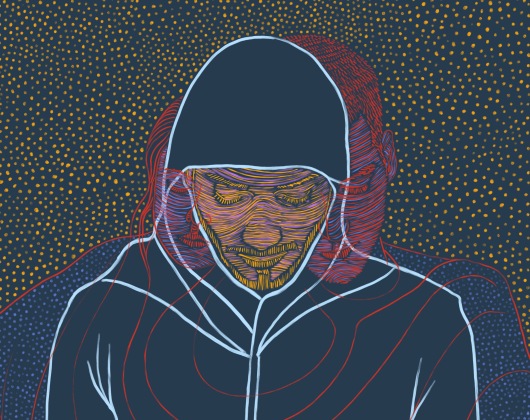
[A]mid the thicket of precepts and prescriptions, Jesus clears a way to seeing two faces, that of the Father and that of our brother. He does not give us two more formulas or two more commands. He gives us two faces, or better yet, one alone: the face of God reflected in so many other faces. For in every one of our brothers and sisters, especially the least, the most vulnerable, the defenceless and those in need, God’s very image is found. Indeed, with the scraps of this frail humanity, the Lord will shape his final work of art. For “what endures, what has value in life, what riches do not disappear? Surely these two: the Lord and our neighbour. These two riches do not disappear!” (§61)

The Beatitudes are like a Christian’s identity card. So if anyone asks: “What must one do to be a good Christian?”, the answer is clear. We have to do, each in our own way, what Jesus told us in the Sermon on the Mount. In the Beatitudes, we find a portrait of the Master, which we are called to reflect in our daily lives. (§63)

The word “happy” or “blessed” thus becomes a synonym for “holy”. It expresses the fact that those faithful to God and his word, by their self-giving, gain true happiness. (§64)

“Blessed are the poor in spirit, for theirs is the kingdom of heaven”

Wealth ensures nothing. Indeed, once we think we are rich, we can become so self-satisfied that we leave no room for God’s word, for the love of our brothers and sisters, or for the enjoyment of the most important things in life. In this way, we miss out on the greatest treasure of all. That is why Jesus calls blessed those who are poor in spirit, those who have a poor heart, for there the Lord can enter with his perennial newness. (§68)

This spiritual poverty is closely linked to what Saint Ignatius of Loyola calls “holy indifference”, which brings us to a radiant interior freedom: “We need to train ourselves to be indifferent in our attitude to all created things, in all that is permitted to our free will and not forbidden; so that on our part, we do not set our hearts on good health rather than bad, riches rather than poverty, honour rather than dishonour, a long life rather than a short one, and so in all the rest”. (§69)

“Blessed are the meek, for they will inherit the earth”

These are strong words in a world that from the beginning has been a place of conflict, disputes and enmity on all sides, where we constantly pigeonhole others on the basis of their ideas, their customs and even their way of speaking or dressing. Ultimately, it is the reign of pride and vanity, where each person thinks he or she has the right to dominate others. Nonetheless, impossible as it may seem, Jesus proposes a different way of doing things: the way of meekness. This is what we see him doing with his disciples. It is what we contemplate on his entrance to Jerusalem: “Behold, your king is coming to you, humble, and mounted on a donkey” (Mt 21:5; Zech 9:9). (§71)

Someone might object: “If I am that meek, they will think that I am an idiot, a fool or a weakling”. At times they may, but so be it. It is always better to be meek, for then our deepest desires will be fulfilled. The meek “shall inherit the earth”, for they will see God’s promises accomplished in their lives. In every situation, the meek put their hope in the Lord, and those who hope for him shall possess the land… and enjoy the fullness of peace (cf. Ps 37:9.11). For his part, the Lord trusts in them: “This is the one to whom I will look, to the humble and contrite in spirit, who trembles at my word” (Is 66:2). (§74)

“Blessed are those who mourn, for they will be comforted”

The world tells us exactly the opposite: entertainment, pleasure, diversion and escape make for the good life. The worldly person ignores problems of sickness or sorrow in the family or all around him; he averts his gaze. The world has no desire to mourn; it would rather disregard painful situations, cover them up or hide them. Much energy is expended on fleeing from situations of suffering in the belief that reality can be concealed. But the cross can never be absent. (§75)

A person who sees things as they truly are and sympathizes with pain and sorrow is capable of touching life’s depths and finding authentic happiness. He or she is consoled, not by the world but by Jesus. Such persons are unafraid to share in the suffering of others; they do not flee from painful situations. They discover the meaning of life by coming to the aid of those who suffer, understanding their anguish and bringing relief. They sense that the other is flesh of our flesh, and are not afraid to draw near, even to touch their wounds. They feel compassion for others in such a way that all distance vanishes. In this way they can embrace Saint Paul’s exhortation: “Weep with those who weep” (Rom 12:15). (§76)

“Blessed are those who hunger and thirst for righteousness, for they will be filled”

Hunger and thirst are intense experiences, since they involve basic needs and our instinct for survival. There are those who desire justice and yearn for righteousness with similar intensity. Jesus says that they will be satisfied, for sooner or later justice will come. We can cooperate to make that possible, even if we may not always see the fruit of our efforts. (§77)

True justice comes about in people’s lives when they themselves are just in their decisions; it is expressed in their pursuit of justice for the poor and the weak. While it is true that the word “justice” can be a synonym for faithfulness to God’s will in every aspect of our life, if we give the word too general a meaning, we forget that it is shown especially in justice towards those who are most vulnerable: “Seek justice, correct oppression; defend the fatherless, plead for the widow” (Is 1:17). (§79)

“Blessed are the merciful, for they will receive mercy”

Jesus does not say, “Blessed are those who plot revenge”. He calls “blessed” those who forgive and do so “seventy times seven” (Mt 18:22). We need to think of ourselves as an army of the forgiven. All of us have been looked upon with divine compassion. If we approach the Lord with sincerity and listen carefully, there may well be times when we hear his reproach: “Should not you have had mercy on your fellow servant, as I had mercy on you?” (Mt 18:33). (§82)

“Blessed are the pure in heart, for they will see God”

A heart that loves God and neighbour (cf. Mt 22:36-40), genuinely and not merely in words, is a pure heart; it can see God. In his hymn to charity, Saint Paul says that “now we see in a mirror, dimly” (1 Cor 13:12), but to the extent that truth and love prevail, we will then be able to see “face to face”. Jesus promises that those who are pure in heart “will see God”. (§86)

“Blessed are the peacemakers, for they will be called children of God”

It is not easy to “make” this evangelical peace, which excludes no one but embraces even those who are a bit odd, troublesome or difficult, demanding, different, beaten down by life or simply uninterested. It is hard work; it calls for great openness of mind and heart, since it is not about creating “a consensus on paper or a transient peace for a contented minority”, or a project “by a few for the few”. Nor can it attempt to ignore or disregard conflict; instead, it must “face conflict head on, resolve it and make it a link in the chain of a new process”. We need to be artisans of peace, for building peace is a craft that demands serenity, creativity, sensitivity and skill. (§89)

“Blessed are those who are persecuted for righteousness’ sake, for theirs is the kingdom of heaven”

Jesus himself warns us that the path he proposes goes against the flow, even making us challenge society by the way we live and, as a result, becoming a nuisance. He reminds us how many people have been, and still are, persecuted simply because they struggle for justice, because they take seriously their commitment to God and to others. Unless we wish to sink into an obscure mediocrity, let us not long for an easy life, for “whoever would save his life will lose it” (Mt 16:25). (§90)

Here we are speaking about inevitable persecution, not the kind of persecution we might bring upon ourselves by our mistreatment of others. The saints are not odd and aloof, unbearable because of their vanity, negativity and bitterness. The Apostles of Christ were not like that. The Book of Acts states repeatedly that they enjoyed favour “with all the people” (2:47; cf. 4:21.33; 5:13), even as some authorities harassed and persecuted them (cf. 4:1-3, 5:17-18). (§93)

In the twenty-fifth chapter of Matthew’s Gospel (vv. 31-46), Jesus expands on the Beatitude that calls the merciful blessed. If we seek the holiness pleasing to God’s eyes, this text offers us one clear criterion on which we will be judged. “I was hungry and you gave me food, I was thirsty and you gave me drink, I was a stranger and you welcomed me, I was naked and you clothed me, I was sick and you took care of me, I was in prison and you visited me” (vv. 35-36). (§95)

Given these uncompromising demands of Jesus, it is my duty to ask Christians to acknowledge and accept them in a spirit of genuine openness, sine glossa. In other words, without any “ifs or buts” that could lessen their force. Our Lord made it very clear that holiness cannot be understood or lived apart from these demands, for mercy is “the beating heart of the Gospel”. (§97)

If I encounter a person sleeping outdoors on a cold night, I can view him or her as an annoyance, an idler, an obstacle in my path, a troubling sight, a problem for politicians to sort out, or even a piece of refuse cluttering a public space. Or I can respond with faith and charity, and see in this person a human being with a dignity identical to my own, a creature infinitely loved by the Father, an image of God, a brother or sister redeemed by Jesus Christ. That is what it is to be a Christian! Can holiness somehow be understood apart from this lively recognition of the dignity of each human being? (§98)

[An] ideological error is found in those who find suspect the social engagement of others, seeing it as superficial, worldly, secular, materialist, communist or populist. Or they relativize it, as if there are other more important matters, or the only thing that counts is one particular ethical issue or cause that they themselves defend. Our defence of the innocent unborn, for example, needs to be clear, firm and passionate, for at stake is the dignity of a human life, which is always sacred and demands love for each person, regardless of his or her stage of development. Equally sacred, however, are the lives of the poor, those already born, the destitute, the abandoned and the underprivileged, the vulnerable infirm and elderly exposed to covert euthanasia, the victims of human trafficking, new forms of slavery, and every form of rejection. We cannot uphold an ideal of holiness that would ignore injustice in a world where some revel, spend with abandon and live only for the latest consumer goods, even as others look on from afar, living their entire lives in abject poverty. (§101)

We often hear it said that, with respect to relativism and the flaws of our present world, the situation of migrants, for example, is a lesser issue. Some Catholics consider it a secondary issue compared to the “grave” bioethical questions. That a politician looking for votes might say such a thing is understandable, but not a Christian, for whom the only proper attitude is to stand in the shoes of those brothers and sisters of ours who risk their lives to offer a future to their children. Can we not realize that this is exactly what Jesus demands of us, when he tells us that in welcoming the stranger we welcome him (cf. Mt 25:35)? (§102)

The saints do not waste energy complaining about the failings of others; they can hold their tongue before the faults of their brothers and sisters, and avoid the verbal violence that demeans and mistreats others. Saints hesitate to treat others harshly; they consider others better than themselves (cf. Phil 2:3). (§116)

It is not good when we look down on others like heartless judges, lording it over them and always trying to teach them lessons. That is itself a subtle form of violence. Saint John of the Cross proposed a different path: “Always prefer to be taught by all, rather than to desire teaching even the least of all”. And he added advice on how to keep the devil at bay: “Rejoice in the good of others as if it were your own, and desire that they be given precedence over you in all things; this you should do wholeheartedly. You will thereby overcome evil with good, banish the devil, and possess a happy heart. Try to practise this all the more with those who least attract you. Realize that if you do not train yourself in this way, you will not attain real charity or make any progress in it”. (§117)

If you are unable to suffer and offer up a few humiliations, you are not humble and you are not on the path to holiness. The holiness that God bestows on his Church comes through the humiliation of his Son. He is the way. Humiliation makes you resemble Jesus; it is an unavoidable aspect of the imitation of Christ. For “Christ suffered for you, leaving you an example, so that you might follow in his steps” (1 Pet 2:21). In turn, he reveals the humility of the Father, who condescends to journey with his people, enduring their infidelities and complaints (cf. Ex 34:6-9; Wis 11:23-12:2; Lk 6:36). (§118)

Here I am not speaking only about stark situations of martyrdom, but about the daily humiliations of those who keep silent to save their families, who prefer to praise others rather than boast about themselves, or who choose the less welcome tasks, at times even choosing to bear an injustice so as to offer it to the Lord. “If when you do right and suffer for it, you have God’s approval” (1 Pet 2:20). This does not mean walking around with eyes lowered, not saying a word and fleeing the company of others. At times, precisely because someone is free of selfishness, he or she can dare to disagree gently, to demand justice or to defend the weak before the powerful, even if it may harm his or her reputation. (§119)

Far from being timid, morose, acerbic or melancholy, or putting on a dreary face, the saints are joyful and full of good humour. Though completely realistic, they radiate a positive and hopeful spirit. The Christian life is “joy in the Holy Spirit” (Rom 14:17), for “the necessary result of the love of charity is joy; since every lover rejoices at being united to the beloved… the effect of charity is joy”. Having received the beautiful gift of God’s word, we embrace it “in much affliction, with joy inspired by the Holy Spirit” (1 Thess 1:6). If we allow the Lord to draw us out of our shell and change our lives, then we can do as Saint Paul tells us: “Rejoice in the Lord always; I say it again, rejoice!” (Phil 4:4). (§122)

Holiness is also parrhesía: it is boldness, an impulse to evangelize and to leave a mark in this world. To allow us to do this, Jesus himself comes and tells us once more, serenely yet firmly: “Do not be afraid” (Mk 6:50). “I am with you always, to the end of the world” (Mt 28:20). These words enable us to go forth and serve with the same courage that the Holy Spirit stirred up in the Apostles, impelling them to proclaim Jesus Christ. Boldness, enthusiasm, the freedom to speak out, apostolic fervour, all these are included in the word parrhesía. The Bible also uses this word to describe the freedom of a life open to God and to others (cf. Acts 4:29, 9:28, 28:31; 2 Cor 3:12; Eph 3:12; Heb 3:6, 10:19). (§129)

Look at Jesus. His deep compassion reached out to others. It did not make him hesitant, timid or self-conscious, as often happens with us. Quite the opposite. His compassion made him go out actively to preach and to send others on a mission of healing and liberation. Let us acknowledge our weakness, but allow Jesus to lay hold of it and send us too on mission. We are weak, yet we hold a treasure that can enlarge us and make those who receive it better and happier. Boldness and apostolic courage are an essential part of mission. (§131)

God is eternal newness. He impels us constantly to set out anew, to pass beyond what is familiar, to the fringes and beyond. He takes us to where humanity is most wounded, where men and women, beneath the appearance of a shallow conformity, continue to seek an answer to the question of life’s meaning. God is not afraid! He is fearless! He is always greater than our plans and schemes. Unafraid of the fringes, he himself became a fringe (cf. Phil 2:6-8; Jn 1:14). So if we dare to go to the fringes, we will find him there; indeed, he is already there. Jesus is already there, in the hearts of our brothers and sisters, in their wounded flesh, in their troubles and in their profound desolation. He is already there. (§135)

Let us not forget that Jesus asked his disciples to pay attention to details. The little detail that wine was running out at a party. The little detail that one sheep was missing. The little detail of noticing the widow who offered her two small coins. The little detail of having spare oil for the lamps, should the bridegroom delay. The little detail of asking the disciples how many loaves of bread they had. The little detail of having a fire burning and a fish cooking as he waited for the disciples at daybreak. (§144)

A community that cherishes the little details of love, whose members care for one another and create an open and evangelizing environment, is a place where the risen Lord is present, sanctifying it in accordance with the Father’s plan. There are times when, by a gift of the Lord’s love, we are granted, amid these little details, consoling experiences of God. (§145)

Finally, though it may seem obvious, we should remember that holiness consists in a habitual openness to the transcendent, expressed in prayer and adoration. The saints are distinguished by a spirit of prayer and a need for communion with God. They find an exclusive concern with this world to be narrow and stifling, and, amid their own concerns and commitments, they long for God, losing themselves in praise and contemplation of the Lord. I do not believe in holiness without prayer, even though that prayer need not be lengthy or involve intense emotions. (§147)

So let me ask you: Are there moments when you place yourself quietly in the Lord’s presence, when you calmly spend time with him, when you bask in his gaze? Do you let his fire inflame your heart? Unless you let him warm you more and more with his love and tenderness, you will not catch fire. How will you then be able to set the hearts of others on fire by your words and witness? If, gazing on the face of Christ, you feel unable to let yourself be healed and transformed, then enter into the Lord’s heart, into his wounds, for that is the abode of divine mercy. (§151)

I ask that we never regard prayerful silence as a form of escape and rejection of the world around us. (§152)

Meeting Jesus in the Scriptures leads us to the Eucharist, where the written word attains its greatest efficacy, for there the living Word is truly present. In the Eucharist, the one true God receives the greatest worship the world can give him, for it is Christ himself who is offered. When we receive him in Holy Communion, we renew our covenant with him and allow him to carry out ever more fully his work of transforming our lives. (§157)

We are not dealing merely with a battle against the world and a worldly mentality that would deceive us and leave us dull and mediocre, lacking in enthusiasm and joy. Nor can this battle be reduced to the struggle against our human weaknesses and proclivities (be they laziness, lust, envy, jealousy or any others). It is also a constant struggle against the devil, the prince of evil. Jesus himself celebrates our victories. He rejoiced when his disciples made progress in preaching the Gospel and overcoming the opposition of the evil one: “I saw Satan fall like lightning from heaven” (Lk 10:18). (§159)

[W]e should not think of the devil as a myth, a representation, a symbol, a figure of speech or an idea. This mistake would lead us to let down our guard, to grow careless and end up more vulnerable. The devil does not need to possess us. He poisons us with the venom of hatred, desolation, envy and vice. When we let down our guard, he takes advantage of it to destroy our lives, our families and our communities. “Like a roaring lion, he prowls around, looking for someone to devour” (1 Pet 5:8). (§161)

God’s word invites us clearly to “stand against the wiles of the devil” (Eph 6:11) and to “quench all the flaming darts of the evil one” (Eph 6:16). These expressions are not melodramatic, precisely because our path towards holiness is a constant battle. Those who do not realize this will be prey to failure or mediocrity. For this spiritual combat, we can count on the powerful weapons that the Lord has given us: faith-filled prayer, meditation on the word of God, the celebration of Mass, Eucharistic adoration, sacramental Reconciliation, works of charity, community life, missionary outreach. If we become careless, the false promises of evil will easily seduce us. (§162)

Discernment is necessary not only at extraordinary times, when we need to resolve grave problems and make crucial decisions. It is a means of spiritual combat for helping us to follow the Lord more faithfully. We need it at all times, to help us recognize God’s timetable, lest we fail to heed the promptings of his grace and disregard his invitation to grow. Often discernment is exercised in small and apparently irrelevant things, since greatness of spirit is manifested in simple everyday realities. It involves striving untrammelled for all that is great, better and more beautiful, while at the same time being concerned for the little things, for each day’s responsibilities and commitments. For this reason, I ask all Christians not to omit, in dialogue with the Lord, a sincere daily “examination of conscience”. Discernment also enables us to recognize the concrete means that the Lord provides in his mysterious and loving plan, to make us move beyond mere good intentions. (§169)

Only if we are prepared to listen, do we have the freedom to set aside our own partial or insufficient ideas, our usual habits and ways of seeing things. In this way, we become truly open to accepting a call that can shatter our security, but lead us to a better life. It is not enough that everything be calm and peaceful. God may be offering us something more, but in our comfortable inadvertence, we do not recognize it. (§172)

Naturally, this attitude of listening entails obedience to the Gospel as the ultimate standard, but also to the Magisterium that guards it, as we seek to find in the treasury of the Church whatever is most fruitful for the “today” of salvation. It is not a matter of applying rules or repeating what was done in the past, since the same solutions are not valid in all circumstances and what was useful in one context may not prove so in another. The discernment of spirits liberates us from rigidity, which has no place before the perennial “today” of the risen Lord. The Spirit alone can penetrate what is obscure and hidden in every situation, and grasp its every nuance, so that the newness of the Gospel can emerge in another light. (§173)

An essential condition for progress in discernment is a growing understanding of God’s patience and his timetable, which are never our own. God does not pour down fire upon those who are unfaithful (cf. Lk 9:54), or allow the zealous to uproot the tares growing among the wheat (cf. Mt 13:29). Generosity too is demanded, for “it is more blessed to give than to receive” (Acts 20:35). Discernment is not about discovering what more we can get out of this life, but about recognizing how we can better accomplish the mission entrusted to us at our baptism. This entails a readiness to make sacrifices, even to sacrificing everything. For happiness is a paradox. We experience it most when we accept the mysterious logic that is not of this world: “This is our logic”, says Saint Bonaventure, pointing to the cross. Once we enter into this dynamic, we will not let our consciences be numbed and we will open ourselves generously to discernment. (§174)

God asks everything of us, yet he also gives everything to us. He does not want to enter our lives to cripple or diminish them, but to bring them to fulfilment. Discernment, then, is not a solipsistic self-analysis or a form of egotistical introspection, but an authentic process of leaving ourselves behind in order to approach the mystery of God, who helps us to carry out the mission to which he has called us, for the good of our brothers and sisters. (§175)

Antony Gormley: tools for carrying nothing

0401 quantumcloud ix 1999 001

3083 words, 16 min read

Ever since my first encounter with Antony Gormley’s sculptures, I have had a sense of great affinity with his work and later, as I started reading various of his writings and interviews, also with his thought. What attracted me to his sculptures initially is not verbalizable, but reflecting on it leads me to a recognition of shared experience and of shared values. And I am thinking here of existential and ontological values first, although not to the exclusion of moral ones.

Being in the presence of one of his pieces has always given me a profound sense of incarnation – of a beyond in the here – and of communion, of a blurring of boundaries. The latter is obvious in sculptures since his Domain series (and also in Quantum Could, Hive and other, later ones) but I feel it is also there in his earlier work that, at first sight, may suggest the polar opposite – isolation, separation, individuation. Already the Three Part Lead Bodycase works, which on the face of it are solid, lead boundaries, impermeably encasing individuals, are such strong pointers to that “darkness of the body” that Gormley presents as “objectless”, that they too bring out a sense of a collective, shared place – to which each one of us has access in their own bodies, open to encounter and communion.

Instead of talking more about how I see Gormley’s work, I’d like to share some of his thoughts with you, and encourage you to go an see his sculptures next time you get a chance.

To begin with, Gormley has a concept of art that is extreme (a matter of life and death), paradoxical (useless yet vital), but at the same time profound (potentially life-changing confrontation rather than illustrative decoration):

“Art is the way that life tests and expresses itself, without which we are already dead. [… A]rt […] is useless but vital; it is through art that we communicate what it feels like to be alive.” (Art In The Time Of Global Warming, 2010)

“Art is the means by which we communicate what it feels like to be alive – in the past that was mixed up with other illustrative duties but that was still its central function that has been liberated in the art called modern. Art is not necessarily good for you or about communicating “good things”. […] Making beautiful things for everyday use is a wonderful thing to do – making life flow more easily – but art confronts life, allowing it to stop and perhaps change direction – they are completely different.” (BBC Forum Questions And Answers, 2002)

Gormley’s art is very much also about meaning and has parallels with religion: “[My] work comes from the same source as the need for religion: wanting to face existence and discover meaning. The work attempts by starting with a real body in real time to face space and eternity. The body – or rather the place that the body occupies is seen as the locus on which those forces act.” (Concerning The Religious Dimension In My Art, 1987) While rejecting the Christianity of his childhood, which he recounts as something that he was “indoctrinated” with and where he speaks about how he was told that the Devil is inside him, Gormley looks to art as the means also for preserving what is good in religion, while excluding its past errors:

“I am interested in reviving this idea of presence. Can we have presence without the God? Can we resurrect the monument without bringing the shadow of bad history? The idea of an image that is open enough to be interpreted widely, that has multiple and generative potential for meaning but is strong enough to be a focus. How do we construct such an image? In its being someone’s can it become everyone’s? It has seemed for quite a long time obvious to me that the body can represent at the present time what abstraction did at the beginning of the twentieth century. That is, the ground on which all the seeds of emancipated identity are to grow: the last frontier, the inner realm. (Space has been probed but what do we really know of the body’s darkness.) The body, not as an object of idealisation that should be forced to carry allegorical, symbolic or dramatic readings, but the body as a place. The body not as hero or as sexual object, but the body in some way as the collective subjective – the place where we all live. The place on which the pressures of society are inscribed and out of which expression, language, feeling can come.” (Still Moving, 1996)

In the same interview, Gormley emphasizes communion as a purpose of art – also a deeply Christian teleology:

“Can we use the space of art for communion? A contact not only between ourselves but between ourselves and history? In doing this can we also derive the energy necessary to believe in our part in the construction of the future? Is it possible for art to provide a space that can be regenerative? Is it possible to use the space of art to resist this restlessness, this sense of fragmentation, this sense of alienation from self and from place?”

In fact, Gormely sees art as closely tied to beliefs about the value of life and its future not only in the context of an individual but of society and humanity as a whole:

“It is necessary these days to hold on to the crucial function art has in the continuance and regulation of life. It provides us with images and acts by which we identity ourselves but so often now in an unstable way. Art can be a focus for life by reasserting in times of vicissitude the central belie[fs] of a people. In tribal cultures it is a collective act whether in dance, carving, self-decoration that reasserts the body of the people and it is from this that the individual draws his or her power. Art and the practice of non-utilitarian skills is an act of will for the future and is as critical an aspect of survival as hunting or gathering food. What has happened to this urgency expressed in a collective creativity that projects into the future and ensures the belief necessary for life? It is not that we have lost it, but the repositories of dance, dream and art are dispersed into the hands of individuals who have responsibility not simply to a single family or tribe but as points of consciousness of the whole world.” (The Impossible Self, 1988)

The desire for community and an undoing of alienation and fragmentation through art is also a strong theme in Gormley’s 2010 talk about the specific role of art in the context of Global Warming, which is highly relevant also to the upcoming UN conference on climate change that starts on Monday in Paris and deeply consonant with Pope Francis’ Laudato si’ encyclical:

“Is it possible to re-think art and take it from this finished-object status and make it into a verb, a participatory, open space, a place of transformation and the exchange of ideas and reflection on our state and status? Can we use art as a way of investigating this perilous time? Can we change from our obsession with production values? Instead of the perfection of an Asprey’s catalogue or the gloss of the desirable branded object can we accept that art has to find its own raw and direct way of existing?

[In my studio w]e create here situations and objects that can become catalysts for a form of reflexivity that allows the viewing subject not simply to be a passive consumer of an already tested experience but for the experience of art itself to be testing ground for both the model of art and the model of the human subject. We have in making art a specialisation and its exchange as a matter of high monetary worth lost its central subject – the human being. In the art of the 20th century the Duchampian breakthrough was the examination of human labour and mass production in the ‘found object’. I would like art to re-focus on the lost subject.” (Art In The Time Of Global Warming, 2010)

I particularly like that Gormley self-applies his thinking about the state of the world – to his own most immediate environment: his studio. At the same time his perspective is anything but parochial and extends to a global scale [in same text as above]:

“In facing the challenges of global climate crisis in a culture which encourages us to do more, produce more, be seen more – my initial response is paralysing fear, I want to shrink, to go into a hibernating state with minimum muscular effort and put minimal demand on any kind of fuel.

This position is not helpful but perhaps is a good place to start to rethink one’s place in the world.

[…] We can no longer assume that more is better. We have to change our cultural heroes from generals and captains of industry to meditators and mediators, from Rambo and Terminator to Ghandi and the Dalai Lama.

Our tool systems, no longer stone, having separated us from the rest of the planet and biosphere, are now what will, without this revolution, destroy both. The notion that human life was going to be improved by an empirical march of tool making that would make life stronger, longer and safer is challenged by the fall out effects of this very technology. Technology that was in some senses made to make life better has now become the problem.”

Given the above context, let’s turn to what is at the basis of Gormley’s own work as an artist, a sculptor:

“I’m interested in art’s ability to bear witness, and I start with what I know, the bit of the material world in which my consciousness is embedded: my body. And I try to present that bit of material (to myself as much as to anybody else) in a way in which its trace is registered. So my work always starts with the idea of a body at a particular moment in a particular position, fixed by a negative just like a photographic negative, except that this is a three-dimensional negative and we call it a mould. I still think of a mould as being the most magical and mysterious thing. The mould is a testament, a proof of the existence of an object or a body and, for my sculpture, the particular body that I inhabit. […]

I think of my work as instrumental. My sculptures will be seen as very boring objects if you look at them in terms of Western art history, or a kind of desire to make beautiful objects or a “picture” of reality. But if you look at them as instruments then they can become vessels, empty things that can be used for a type of thinking or a kind of feeling, then they begin to get more interesting.” (Silence And Stillness: Antony Gormley Interviewed By Enrique Juncosa, 2002)

I get a great sense of humility from Gormley’s words: a starting from one’s own body, a witnessing first to oneself, a recognition of one’s work being an empty vessel (immediately making me think of Christ’s kenotic self-emptying).

This impression is further strengthened by seeing how Gormley explains the need for starting from the body, which represents common ground and which he sees as an invitation for others to inhabit his work:

“The issue for me is that it is impossible to make art that can truly be shared without acknowledging the body as a starting point of common experience. So I have to acknowledge the body and at the same time try to find a way of not representing it, or presenting it simply as an object. This is the reason why I’m not interested in the perfect copy, in representation. We probably never did it better than Mantegna or Masaccio, and anyway, photography does it perfectly. […]

[My sculptures] are tools for carrying nothing, nothing else than emptiness, shadow, darkness, carrying the condition of embodiment. They each carry the condition we all know. All you have to do is to shut your eyes when you are awake you are in the place that the bodyforms and the bodycases carry. […]

I completely disagree with the […] proposition that the highest aspiration of art is to have a specific object that is purely itself and refers to nothing. I want people to inhabit my sculpture with their own lives, feelings, thoughts, emotions, whatever. I would like the logical and affective to be in the right balance.” (Interview With Pierre Tillet, 2008)

A final point in this thread is also that Gormley sees art as non-elitist, as a landscape open to all:

“We could say that for most of European art’s progress, it’s been about picturing. Then in Modernism it turns to interpretation and deconstruction. And now, I think, we’re into a completely new phase in which art is about providing a place where the human subject is somehow able to concentrate on his/her own being. […] The subjective experience of space-time, the condition of life, rather than being in some way the assumed background condition for refined perceptions of the object, now becomes a landscape in itself. And I think this is a new paradigm in the evolution of art.” (Interview With Hans Ulrich Obrist, 2008)

While Gormley has been extremely successful in his appreciation by the art world, there is an explicit desire in his thought to not be confined by it and to live “in the wild” instead:

“All art now has to be lost: to be an awkward interloper within life, that is its job. What Heidegger talks about in The Origin of the Work of Art, the idea that the temple is part of its landscape and the landscape part of the temple is an ideal, and we have lost it. This is a classical image of interdependence of site and object. And while I recognise this ideal, I think that sculpture does not have a home. For me, sculpture is a lost subject, an alien body that infects and interrupts the cohesion of place. The museum is just one place amongst many wherein you might find art – but not art at work but in refuge. I’m not against museums because I think they have a very important part to play in the memory of a culture. But before my work has any need to be in the museums it has to have a life, it has to have adventures in the real world. For me, art has to be part of everyday life and every one of my pieces is an attempt to look at a new context and say: how can I deal with this opportunity?” (Interview With Pierre Tillet, 2008)

Gormley then positions the scope of art even beyond inter-personal communication, between artist and viewer:

“I’m not so interested in formal validations of work, where people called artists make something called art that belongs in a gallery. It’s tiny the ecology and economy of the art world. Art is not simply human communication or a way of explaining ourselves to ourselves. I’m interested in art that speaks of our vulnerability in time, in the same way that a figure on Easter Island looks up at the sky somewhere above the horizon and is evidently not a substitute for me speaking to you. It’s not about communication between human beings; it’s about communication between human beings and deep time and deep space. This is the broader horizon that I’m interested in positioning the work against. I want to make an art that has to do with survival, that thinks about where human beings fit in the chain of being, that asks who we are, and where we’re going…well, these big, big questions.” (Silence And Stillness: Antony Gormley Interviewed By Enrique Juncosa, 2002)

On the basis of the above, it should come as no surprise that Gormley is an admirer of Teilhard de Chardin, whose concepts of a continuum between matter and spirit and of an evolution towards collective consciousness bear strong resemblance to his art:

“The Internet, for better or worse, is an objectification of Teilhard de Chardin’s idea of the communion of human mind – the noosphere, which is the third encirclement of the globe, the first being the biosphere and the second the atmosphere. With this possibility of instant communication, created by a non-space that is everywhere, the idea of place becomes very important.” (Still Moving, 1996)

“I love Teilhard de Chardin’s idea of the ‘Noosphere’; the idea that there is a deep connection between the mineral and the mental. This has everything to do with sculpture. But in some way the history of material transformation on the planet is a progress from slower, less complex forms to faster, more complex forms and that, in some way, human consciousness is a kind of atmosphere. He calls it ‘Noosphere’ – the idea of an encirclement of the entire surface of the globe by ‘mind’. I think that mind is collective; a collective subjective and one of the tasks is to make that collectivity more apparent.” (Interview With Marjetica Potrc, 1994)

To conclude, let’s look at how Gormley positions his own work in such a continuous world view, speaking about the Earth in not dissimilar ways to St. Francis’ Canticle of Brother Sun:

“Sculpture is a direct way of allowing mind to dwell in matter. It is a means of becoming aware of the connections between matter, space and time in a way that complements (but is completely different from) the connections that science has demonstrated. I firmly believe that we are part of a chain of being and that sculpture is a way of providing instruments in which our place within it can be tested, made manifest and perhaps transformed.

Where does the world begin? Of course we can make it moment by moment and most intimately in what we call the self – but world and self cannot be separated – they are continuous. Where consciousness ends and the world begins is not so easy to define. We are, after all, borrowing our bodies from the earth and is it not likely that the earth knows more of us than we of it? Nothing is ever lost.” (Present Time, 1996)


I’d also recommend a great BBC documentary about Antony Gormley that has only come out recently.

Our Sister, Mother Earth

Klimt

Pope Francis’ much anticipated encyclical on the environment, entitled “Praised Be” (“Laudato Si’”) after the opening line of St. Francis’ canticle, starts by personifying our planet, calling her our sister and mother, and lamenting the violence we have visited on her, with whom we are one, who lives in us and who sustains us:

““Laudato si’, mi’ Signore” – “Praise be to you, my Lord”. In the words of this beautiful canticle, Saint Francis of Assisi reminds us that our common home is like a sister with whom we share our life and a beautiful mother who opens her arms to embrace us. “Praise be to you, my Lord, through our Sister, Mother Earth, who sustains and governs us, and who produces various fruit with coloured flowers and herbs”.1

This sister now cries out to us because of the harm we have inflicted on her by our irresponsible use and abuse of the goods with which God has endowed her. We have come to see ourselves as her lords and masters, entitled to plunder her at will. The violence present in our hearts, wounded by sin, is also reflected in the symptoms of sickness evident in the soil, in the water, in the air and in all forms of life. This is why the earth herself, burdened and laid waste, is among the most abandoned and maltreated of our poor; she “groans in travail” (Rom 8:22). We have forgotten that we ourselves are dust of the earth (cf. Gen 2:7); our very bodies are made up of her elements, we breathe her air and we receive life and refreshment from her waters.”

Already the above, opening paragraphs of this encyclical are worth pausing over, and before even proceeding with reflecting on its remaining 183 pages, I would like to pick up on the idea that the earth ought to be thought of as another person, instead of “just” as some inanimate matter that is alien to the human race. In fact, Pope Francis decries such an attitude towards our planet later on in Laudato si’ by quoting Romano Guardini (§115):

“[T]he technological mind sees nature as an insensate order, as a cold body of facts, as a mere ‘given’, as an object of utility, as raw material to be hammered into useful shape; it views the cosmos similarly as a mere ‘space’ into which objects can be thrown with complete indifference.”

To get a sense of the origin and nature of St. Francis’ broad use of personification when addressing not only the Earth as sister and mother, but all of creation too, let us take a look at the circumstances of his writing the Canticle of Brother Sun that Pope Francis quotes. In a profound analysis of the Canticle, Ilia Delio, O.S.F. recounts the circumstances of its writing in the spring or summer of 1225 (some 6-10 months after St. Francis received the stigmata), quoting from the Legenda perugina:

“He could no longer see in the daytime the light of day, nor at night the light of the fire, but always remained in the house and in the little cell in darkness. Moreover, he had great pain in his eyes day and night so that at hight he could scarcely rest or sleep, which was very bad for him and greatly aggravated the sickness of his eyes and his other infirmities.”

St. Francis was at a low point in the midst of this suffering and he cried out to God for help: “Lord, come to my help and look on my infirmities so that I may bear them patiently.” He then heard a voice promising him eternal happiness in the kingdom of heaven, expressed via an image in which the earth transformed into gold (still in the Legenda perugina):

“Tell me brother: if anyone were to give you for your infirmities and tribulations such a great and precious treasure that, if the whole earth were pure gold, all stones were precious stones, and all water were balsam, yet you would consider all this as nothing, and these substances as earth, stones, and water in comparison with the great and precious treasure given to you, surely you would rejoice greatly?”

To this St. Francis replied:

“That would be a great treasure, Lord, and worth seeking, truly precious and greatly to be loved and desired.”

The voice then said to him:

“Therefore, brother, rejoice, and rather be glad in your infirmities and tribulations, since henceforth you are as secure as if you were already in my kingdom.”

The next morning, St. Francis awoke, wrote the Canticle of Brother Sun and sent his fellow friars out to sing it “as minstrels of the Lord.”

What seems particularly significant to me here is that the Canticle was not the result of some euphoric lyricising, but instead the response to having received consolation from God in response to St. Francis placing his trust in Him in the midst of suffering and distress.

Beyond the circumstances of its writing, it is important to note what St. Francis’ disciple, St. Bonaventure though of the motives behind Francis’ personification of the created. The following are passages Delio quotes from Bonaventure’s Legenda maior:

“When he considered the primordial source of all things, he was filled with even more abundant piety, calling creatures, no matter how small, by the name of brother or sister, because he knew they had the same source as himself.

[…]

With a feeling of unprecedented devotion he savored in each and every creature – as in so many rivulets – that Goodness which is their fountain source … and like the prophet David sweetly exhorted them to praise the Lord.”

St. Francis called the Earth sister and mother because both she and he share the one origin: God. Since we and all of creation share the one Father, we are all siblings – not only among members of the human race, but also in relation to all of creation, from the simplest forms of inanimate matter to lifeforms most similar to us: a worldview also highly consistent with that of Pierre Teilhard de Chardin, whom Pope Francis also refers to in Laudato Si’ (§83).

St. Francis tracing brotherhood and sisterhood with the Earth and with all of creation to a shared source in God is also very closely related to the intellectual visions of the Servant of God, Chiara Lubich, who in 1949 experienced insights into the life of the Trinity. There, Lubich saw the following image of how all creation proceeds from God:

“When God created, He created all things from nothing because He created them from Himself: from nothing signifies that they did not pre-exist because He alone pre-existed (but this way of speaking is inexact as in God there is no before and after). He drew them out from Himself because in creating them He died (of love), He died in love, He loved and therefore He created.

As the Word, who is the Idea of the Father, is God, analogously the ideas of things, that “ab aeterno” are in the word, are not abstract, but they are real: word within the Word.

The Father projects them — as with divergent rays — “outside Himself,” that is, in a different and new, created dimension, in which he gives to them “the Order that is Life and Love and Truth.” Therefore, in them there is the stamp of the Uncreated, of the Trinity.”

All of creation is a projection of the Word (words within the Word) “outside” of the Father, where these words (ideas) are the models, laws or forms of things, as Dr. Callan Slipper explains in an analysis of Lubich’s visions of creation. While all of creation is viewed in the above terms, consonant with St. Francis, Lubich also sees differences between the relationship that humans have with the Word (Jesus) and the relationship that the rest of creation has:

“At the end of time (and already now for God) the model of each pine tree, that is beneath each pine tree, will come into light and both the particular and the universal will be seen contemporaneously. Now the head is on High, and together with the other models, in the Word of God. […]

The plants that we see now, for instance the pine trees, are “members” of the model pine tree [that is, various forms of the model pine tree, Lubich explains] that is in the Word and thus destined to be Word. Here too is the mystery of the Mystical Body in nature. […]

Human beings, instead, because they are immortal, will return into the Word: son in the Son, but they will also be distinct from the Son as another son of God. Having however in themselves the whole of the Word they too will be a mirror of the Universe that is in the Word. […]

[I]n each human being [Jesus] sees the Human Being, that is Himself, the model of humanity, likewise He already sees beneath other creatures (as the pine tree for example) the Idea, the Word, that is then part (= the whole) of Himself. The human being (made in the image of God) is the whole of Himself; the plant is part of Himself (but = to Himself and it says: humanity—its God—is greater than me).”

While every created entity has its source in God, human beings each are both particular instances of a word-idea and the whole of the Word (Jesus); the rest of creation too has its source in the Word, but in a way that only partly expresses Him. Instead of suggesting superiority, the relationships between God (Word), human beings (particular instances of the whole Word) and the rest of creation (particular instances of the partial Word), place human beings in a position of containing the rest of creation (being “mirrors of the Universe”) by being instances of the Word that is their source and destination. This particular nature of humanity is also addressed in Laudato si’, where Pope Francis highlights both the need for treating all living beings responsibly and the greater dignity of the human person that is particularly, and most perversely, violated by other humans:

“At times we see an obsession with denying any pre-eminence to the human person; more zeal is shown in protecting other species than in defending the dignity which all human beings share in equal measure. Certainly, we should be concerned lest other living beings be treated irresponsibly. But we should be particularly indignant at the enormous inequalities in our midst, whereby we continue to tolerate some considering themselves more worthy than others.” (§90)

I believe that the personification of creation that St. Francis used as a means for acknowledging that all of creation has the same Father as each one of us, that Chiara Lubich’s vision of the life of the Trinity clarified with even greater nuance, and that Pope Francis placed at the basis of his call for a new culture of relating to each other and to nature is a perspective that immediately brings with it a deep sense of clarity. Thinking of nature as a sibling rather than as the “mere given” that Pope Francis criticized is a great token for investing it with a whole architecture of care and affection that other mental models would struggle to bring about. And it is a perspective that was easily accessible even to my 7 and 12 year old sons, who understood what it meant as soon as I told them about it and who immediately saw that it makes sense.


1 Just because of its beauty, here is the original in St. Francis’ own, Umbrian words: «Laudato si’, mi’ Signore, per sora nostra matre Terra, la quale ne sustenta et governa, et produce diversi fructi con coloriti flori et herba.»

Dare to turn world’s suffering into our own

St francisbanner

Pope Francis’ second encyclical, «Laudato si’» (“Praised be”) finally came out on Thursday and I would here just like to share my favorite passages from its 186 pages [everything that follows are direct quotes from it; if you can, I would very much like to encourage you to read the full 41K words instead of my pick of 9K that follow]:

“Laudato si’, mi’ Signore” – “Praise be to you, my Lord”. In the words of this beautiful canticle, Saint Francis of Assisi reminds us that our common home is like a sister with whom we share our life and a beautiful mother who opens her arms to embrace us. “Praise be to you, my Lord, through our Sister, Mother Earth, who sustains and governs us, and who produces various fruit with coloured flowers and herbs”. (§1)

This sister now cries out to us because of the harm we have inflicted on her by our irresponsible use and abuse of the goods with which God has endowed her. We have come to see ourselves as her lords and masters, entitled to plunder her at will. The violence present in our hearts, wounded by sin, is also reflected in the symptoms of sickness evident in the soil, in the water, in the air and in all forms of life. This is why the earth herself, burdened and laid waste, is among the most abandoned and maltreated of our poor; she “groans in travail” (Rom 8:22). We have forgotten that we ourselves are dust of the earth (cf. Gen 2:7); our very bodies are made up of her elements, we breathe her air and we receive life and refreshment from her waters. (§2)

[F]aced as we are with global environmental deterioration, I wish to address every person living on this planet. […] I would like to enter into dialogue with all people about our common home. (§3)

Authentic human development has a moral character. It presumes full respect for the human person, but it must also be concerned for the world around us and “take into account the nature of each being and of its mutual connection in an ordered system”. Accordingly, our human ability to transform reality must proceed in line with God’s original gift of all that is. (§5)

[Benedict XVI] observed that the world cannot be analyzed by isolating only one of its aspects, since “the book of nature is one and indivisible”, and includes the environment, life, sexuality, the family, social relations, and so forth. It follows that “the deterioration of nature is closely connected to the culture which shapes human coexistence”. (§6)

[Patriarch Bartholomew:] As Christians, we are also called “to accept the world as a sacrament of communion, as a way of sharing with God and our neighbours on a global scale. It is our humble conviction that the divine and the human meet in the slightest detail in the seamless garment of God’s creation, in the last speck of dust of our planet.” (§9)

Just as happens when we fall in love with someone, whenever [St. Francis] would gaze at the sun, the moon or the smallest of animals, he burst into song, drawing all other creatures into his praise. He communed with all creation, even preaching to the flowers, inviting them “to praise the Lord, just as if they were endowed with reason”. His response to the world around him was so much more than intellectual appreciation or economic calculus, for to him each and every creature was a sister united to him by bonds of affection. That is why he felt called to care for all that exists. His disciple Saint Bonaventure tells us that, “from a reflection on the primary source of all things, filled with even more abundant piety, he would call creatures, no matter how small, by the name of ‘brother’ or ‘sister’”. Such a conviction cannot be written off as naive romanticism, for it affects the choices which determine our behaviour. If we approach nature and the environment without this openness to awe and wonder, if we no longer speak the language of fraternity and beauty in our relationship with the world, our attitude will be that of masters, consumers, ruthless exploiters, unable to set limits on their immediate needs. By contrast, if we feel intimately united with all that exists, then sobriety and care will well up spontaneously. The poverty and austerity of Saint Francis were no mere veneer of asceticism, but something much more radical: a refusal to turn reality into an object simply to be used and controlled. (§11)

[St.] Francis asked that part of the friary garden always be left untouched, so that wild flowers and herbs could grow there, and those who saw them could raise their minds to God, the Creator of such beauty. Rather than a problem to be solved, the world is a joyful mystery to be contemplated with gladness and praise. (§12)

I urgently appeal, then, for a new dialogue about how we are shaping the future of our planet. We need a conversation which includes everyone, since the environmental challenge we are undergoing, and its human roots, concern and affect us all. The worldwide ecological movement has already made considerable progress and led to the establishment of numerous organizations committed to raising awareness of these challenges. Regrettably, many efforts to seek concrete solutions to the environmental crisis have proved ineffective, not only because of powerful opposition but also because of a more general lack of interest. Obstructionist attitudes, even on the part of believers, can range from denial of the problem to indifference, nonchalant resignation or blind confidence in technical solutions. We require a new and universal solidarity. (§14)

Although change is part of the working of complex systems, the speed with which human activity has developed contrasts with the naturally slow pace of biological evolution. Moreover, the goals of this rapid and constant change are not necessarily geared to the common good or to integral and sustainable human development. Change is something desirable, yet it becomes a source of anxiety when it causes harm to the world and to the quality of life of much of humanity. (§18)

Our goal is not to amass information or to satisfy curiosity, but rather to become painfully aware, to dare to turn what is happening to the world into our own personal suffering and thus to discover what each of us can do about it. (§19)

Some forms of pollution are part of people’s daily experience. Exposure to atmospheric pollutants produces a broad spectrum of health hazards, especially for the poor, and causes millions of premature deaths. People take sick, for example, from breathing high levels of smoke from fuels used in cooking or heating. There is also pollution that affects everyone, caused by transport, industrial fumes, substances which contribute to the acidification of soil and water, fertilizers, insecticides, fungicides, herbicides and agrotoxins in general. Technology, which, linked to business interests, is presented as the only way of solving these problems, in fact proves incapable of seeing the mysterious network of relations between things and so sometimes solves one problem only to create others. (§20)

The earth, our home, is beginning to look more and more like an immense pile of filth. (§21)

The climate is a common good, belonging to all and meant for all. At the global level, it is a complex system linked to many of the essential conditions for human life. A very solid scientific consensus indicates that we are presently witnessing a disturbing warming of the climatic system. […] It is true that there are other factors (such as volcanic activity, variations in the earth’s orbit and axis, the solar cycle), yet a number of scientific studies indicate that most global warming in recent decades is due to the great concentration of greenhouse gases (carbon dioxide, methane, nitrogen oxides and others) released mainly as a result of human activity.(§23)

If present trends continue, this century may well witness extraordinary climate change and an unprecedented destruction of ecosystems, with serious consequences for all of us. A rise in the sea level, for example, can create extremely serious situations, if we consider that a quarter of the world’s population lives on the coast or nearby, and that the majority of our megacities are situated in coastal areas. (§24)

Many of the poor live in areas particularly affected by phenomena related to warming, and their means of subsistence are largely dependent on natural reserves and ecosystemic services such as agriculture, fishing and forestry. They have no other financial activities or resources which can enable them to adapt to climate change or to face natural disasters, and their access to social services and protection is very limited. For example, changes in climate, to which animals and plants cannot adapt, lead them to migrate; this in turn affects the livelihood of the poor, who are then forced to leave their homes, with great uncertainty for their future and that of their children. There has been a tragic rise in the number of migrants seeking to flee from the growing poverty caused by environmental degradation. They are not recognized by international conventions as refugees; they bear the loss of the lives they have left behind, without enjoying any legal protection whatsoever. Sadly, there is widespread indifference to such suffering, which is even now taking place throughout our world. Our lack of response to these tragedies involving our brothers and sisters points to the loss of that sense of responsibility for our fellow men and women upon which all civil society is founded. (§25)

One particularly serious problem is the quality of water available to the poor. Every day, unsafe water results in many deaths and the spread of water-related diseases, including those caused by microorganisms and chemical substances. Dysentery and cholera, linked to inadequate hygiene and water supplies, are a significant cause of suffering and of infant mortality. Underground water sources in many places are threatened by the pollution produced in certain mining, farming and industrial activities, especially in countries lacking adequate regulation or controls. It is not only a question of industrial waste. Detergents and chemical products, commonly used in many places of the world, continue to pour into our rivers, lakes and seas. (§29)

[A]ccess to safe drinkable water is a basic and universal human right, since it is essential to human survival and, as such, is a condition for the exercise of other human rights. Our world has a grave social debt towards the poor who lack access to drinking water, because they are denied the right to a life consistent with their inalienable dignity. (§30)

Each year sees the disappearance of thousands of plant and animal species which we will never know, which our children will never see, because they have been lost for ever. The great majority become extinct for reasons related to human activity. Because of us, thousands of species will no longer give glory to God by their very existence, nor convey their message to us. We have no such right. (§33)

[A] sober look at our world shows that the degree of human intervention, often in the service of business interests and consumerism, is actually making our earth less rich and beautiful, ever more limited and grey, even as technological advances and consumer goods continue to abound limitlessly. We seem to think that we can substitute an irreplaceable and irretrievable beauty with something which we have created ourselves. (§34)

Human beings too are creatures of this world, enjoying a right to life and happiness, and endowed with unique dignity. So we cannot fail to consider the effects on people’s lives of environmental deterioration, current models of development and the throwaway culture. (§43)

We were not meant to be inundated by cement, asphalt, glass and metal, and deprived of physical contact with nature.(§44)

In some places, rural and urban alike, the privatization of certain spaces has restricted people’s access to places of particular beauty. In others, “ecological” neighbourhoods have been created which are closed to outsiders in order to ensure an artificial tranquillity. Frequently, we find beautiful and carefully manicured green spaces in so-called “safer” areas of cities, but not in the more hidden areas where the disposable of society live. (§45)

True wisdom, as the fruit of self-examination, dialogue and generous encounter between persons, is not acquired by a mere accumulation of data which eventually leads to overload and confusion, a sort of mental pollution. Real relationships with others, with all the challenges they entail, now tend to be replaced by a type of internet communication which enables us to choose or eliminate relationships at whim, thus giving rise to a new type of contrived emotion which has more to do with devices and displays than with other people and with nature. Today’s media do enable us to communicate and to share our knowledge and affections. Yet at times they also shield us from direct contact with the pain, the fears and the joys of others and the complexity of their personal experiences. (§47)

The human environment and the natural environment deteriorate together; we cannot adequately combat environmental degradation unless we attend to causes related to human and social degradation. In fact, the deterioration of the environment and of society affects the most vulnerable people on the planet: “Both everyday experience and scientific research show that the gravest effects of all attacks on the environment are suffered by the poorest”. (§48)

Today, however, we have to realize that a true ecological approach always becomes a social approach; it must integrate questions of justice in debates on the environment, so as to hear both the cry of the earth and the cry of the poor. (§49)

To blame population growth instead of extreme and selective consumerism on the part of some, is one way of refusing to face the issues. It is an attempt to legitimize the present model of distribution, where a minority believes that it has the right to consume in a way which can never be universalized, since the planet could not even contain the waste products of such consumption. Besides, we know that approximately a third of all food produced is discarded, and “whenever food is thrown out it is as if it were stolen from the table of the poor”. (§50)

The foreign debt of poor countries has become a way of controlling them, yet this is not the case where ecological debt is concerned. In different ways, developing countries, where the most important reserves of the biosphere are found, continue to fuel the development of richer countries at the cost of their own present and future. The land of the southern poor is rich and mostly unpolluted, yet access to ownership of goods and resources for meeting vital needs is inhibited by a system of commercial relations and ownership which is structurally perverse. […] We need to strengthen the conviction that we are one single human family. There are no frontiers or barriers, political or social, behind which we can hide, still less is there room for the globalization of indifference. (§52)

It is remarkable how weak international political responses have been. The failure of global summits on the environment make it plain that our politics are subject to technology and finance. There are too many special interests, and economic interests easily end up trumping the common good and manipulating information so that their own plans will not be affected. […] Consequently the most one can expect is superficial rhetoric, sporadic acts of philanthropy and perfunctory expressions of concern for the environment, whereas any genuine attempt by groups within society to introduce change is viewed as a nuisance based on romantic illusions or an obstacle to be circumvented.(§54)

It is foreseeable that, once certain resources have been depleted, the scene will be set for new wars, albeit under the guise of noble claims. War always does grave harm to the environment and to the cultural riches of peoples, risks which are magnified when one considers nuclear arms and biological weapons. (§57)

For all our limitations, gestures of generosity, solidarity and care cannot but well up within us, since we were made for love. (§58)

As often occurs in periods of deep crisis which require bold decisions, we are tempted to think that what is happening is not entirely clear. Superficially, apart from a few obvious signs of pollution and deterioration, things do not look that serious, and the planet could continue as it is for some time. Such evasiveness serves as a licence to carrying on with our present lifestyles and models of production and consumption. This is the way human beings contrive to feed their self-destructive vices: trying not to see them, trying not to acknowledge them, delaying the important decisions and pretending that nothing will happen. (§59)

On many concrete questions, the Church has no reason to offer a definitive opinion; she knows that honest debate must be encouraged among experts, while respecting divergent views. But we need only take a frank look at the facts to see that our common home is falling into serious disrepair. Hope would have us recognize that there is always a way out, that we can always redirect our steps, that we can always do something to solve our problems. Still, we can see signs that things are now reaching a breaking point, due to the rapid pace of change and degradation; these are evident in large-scale natural disasters as well as social and even financial crises, for the world’s problems cannot be analyzed or explained in isolation. There are regions now at high risk and, aside from all doomsday predictions, the present world system is certainly unsustainable from a number of points of view, for we have stopped thinking about the goals of human activity. “If we scan the regions of our planet, we immediately see that humanity has disappointed God’s expectations”. (§61)

Why should this document, addressed to all people of good will, include a chapter dealing with the convictions of believers? I am well aware that in the areas of politics and philosophy there are those who firmly reject the idea of a Creator, or consider it irrelevant, and consequently dismiss as irrational the rich contribution which religions can make towards an integral ecology and the full development of humanity. Others view religions simply as a subculture to be tolerated. Nonetheless, science and religion, with their distinctive approaches to understanding reality, can enter into an intense dialogue fruitful for both. (§62)

If the simple fact of being human moves people to care for the environment of which they are a part, Christians in their turn “realize that their responsibility within creation, and their duty towards nature and the Creator, are an essential part of their faith”. It is good for humanity and the world at large when we believers better recognize the ecological commitments which stem from our convictions. (§64)

We are not God. The earth was here before us and it has been given to us. This allows us to respond to the charge that Judaeo-Christian thinking, on the basis of the Genesis account which grants man “dominion” over the earth (cf. Gen 1:28), has encouraged the unbridled exploitation of nature by painting him as domineering and destructive by nature. This is not a correct interpretation of the Bible as understood by the Church. Although it is true that we Christians have at times incorrectly interpreted the Scriptures, nowadays we must forcefully reject the notion that our being created in God’s image and given dominion over the earth justifies absolute domination over other creatures. The biblical texts are to be read in their context, with an appropriate hermeneutic, recognizing that they tell us to “till and keep” the garden of the world (cf. Gen 2:15). “Tilling” refers to cultivating, ploughing or working, while “keeping” means caring, protecting, overseeing and preserving. This implies a relationship of mutual responsibility between human beings and nature. Each community can take from the bounty of the earth whatever it needs for subsistence, but it also has the duty to protect the earth and to ensure its fruitfulness for coming generations. “The earth is the Lord’s” (Ps 24:1); to him belongs “the earth with all that is within it” (Dt 10:14). Thus God rejects every claim to absolute ownership: “The land shall not be sold in perpetuity, for the land is mine; for you are strangers and sojourners with me” (Lev 25:23). (§67)

[T]he Bible has no place for a tyrannical anthropocentrism unconcerned for other creatures. (§68)

The universe did not emerge as the result of arbitrary omnipotence, a show of force or a desire for self-assertion. Creation is of the order of love. God’s love is the fundamental moving force in all created things: “For you love all things that exist, and detest none of the things that you have made; for you would not have made anything if you had hated it” (Wis 11:24). Every creature is thus the object of the Father’s tenderness, who gives it its place in the world. Even the fleeting life of the least of beings is the object of his love, and in its few seconds of existence, God enfolds it with his affection. Saint Basil the Great described the Creator as “goodness without measure”, while Dante Alighieri spoke of “the love which moves the sun and the stars”. Consequently, we can ascend from created things “to the greatness of God and to his loving mercy”. (§77)

God is intimately present to each being, without impinging on the autonomy of his creature, and this gives rise to the rightful autonomy of earthly affairs.50 His divine presence, which ensures the subsistence and growth of each being, “continues the work of creation”. The Spirit of God has filled the universe with possibilities and therefore, from the very heart of things, something new can always emerge: “Nature is nothing other than a certain kind of art, namely God’s art, impressed upon things, whereby those things are moved to a determinate end. It is as if a shipbuilder were able to give timbers the wherewithal to move themselves to take the form of a ship”. (§80)

The ultimate destiny of the universe is in the fullness of God, which has already been attained by the risen Christ, the measure of the maturity of all things. (Against this horizon we can set the contribution of Fr Teilhard de Chardin). (§83)

The entire material universe speaks of God’s love, his boundless affection for us. Soil, water, mountains: everything is, as it were, a caress of God. The history of our friendship with God is always linked to particular places which take on an intensely personal meaning; we all remember places, and revisiting those memories does us much good. Anyone who has grown up in the hills or used to sit by the spring to drink, or played outdoors in the neighbourhood square; going back to these places is a chance to recover something of their true selves. (§84)

The bishops of Japan, for their part, made a thought-provoking observation: “To sense each creature singing the hymn of its existence is to live joyfully in God’s love and hope”. This contemplation of creation allows us to discover in each thing a teaching which God wishes to hand on to us, since “for the believer, to contemplate creation is to hear a message, to listen to a paradoxical and silent voice”. We can say that “alongside revelation properly so-called, contained in sacred Scripture, there is a divine manifestation in the blaze of the sun and the fall of night”. Paying attention to this manifestation, we learn to see ourselves in relation to all other creatures: “I express myself in expressing the world; in my effort to decipher the sacredness of the world, I explore my own”. (§85)

A sense of deep communion with the rest of nature cannot be real if our hearts lack tenderness, compassion and concern for our fellow human beings. It is clearly inconsistent to combat trafficking in endangered species while remaining completely indifferent to human trafficking, unconcerned about the poor, or undertaking to destroy another human being deemed unwanted. This compromises the very meaning of our struggle for the sake of the environment. It is no coincidence that, in the canticle in which Saint Francis praises God for his creatures, he goes on to say: “Praised be you my Lord, through those who give pardon for your love”. Everything is connected. Concern for the environment thus needs to be joined to a sincere love for our fellow human beings and an unwavering commitment to resolving the problems of society. (§91)

We have only one heart, and the same wretchedness which leads us to mistreat an animal will not be long in showing itself in our relationships with other people. Every act of cruelty towards any creature is “contrary to human dignity”. We can hardly consider ourselves to be fully loving if we disregard any aspect of reality: “Peace, justice and the preservation of creation are three absolutely interconnected themes, which cannot be separated and treated individually without once again falling into reductionism”. Everything is related, and we human beings are united as brothers and sisters on a wonderful pilgrimage, woven together by the love God has for each of his creatures and which also unites us in fond affection with brother sun, sister moon, brother river and mother earth. (§92)

The natural environment is a collective good, the patrimony of all humanity and the responsibility of everyone. If we make something our own, it is only to administer it for the good of all. If we do not, we burden our consciences with the weight of having denied the existence of others. That is why the New Zealand bishops asked what the commandment “Thou shalt not kill” means when “twenty percent of the world’s population consumes resources at a rate that robs the poor nations and future generations of what they need to survive”. (§95)

Jesus lived in full harmony with creation, and others were amazed: “What sort of man is this, that even the winds and the sea obey him?” (Mt 8:27). His appearance was not that of an ascetic set apart from the world, nor of an enemy to the pleasant things of life. Of himself he said: “The Son of Man came eating and drinking and they say, ‘Look, a glutton and a drunkard!’” (Mt 11:19). He was far removed from philosophies which despised the body, matter and the things of the world. Such unhealthy dualisms, nonetheless, left a mark on certain Christian thinkers in the course of history and disfigured the Gospel. Jesus worked with his hands, in daily contact with the matter created by God, to which he gave form by his craftsmanship. It is striking that most of his life was dedicated to this task in a simple life which awakened no admiration at all: “Is not this the carpenter, the son of Mary?” (Mk 6:3). In this way he sanctified human labour and endowed it with a special significance for our development. As Saint John Paul II taught, “by enduring the toil of work in union with Christ crucified for us, man in a way collaborates with the Son of God for the redemption of humanity”. (§98)

Technology has remedied countless evils which used to harm and limit human beings. How can we not feel gratitude and appreciation for this progress, especially in the fields of medicine, engineering and communications? How could we not acknowledge the work of many scientists and engineers who have provided alternatives to make development sustainable? (§102)

Valuable works of art and music now make use of new technologies. So, in the beauty intended by the one who uses new technical instruments and in the contemplation of such beauty, a quantum leap occurs, resulting in a fulfilment which is uniquely human. (§103)

Never has humanity had such power over itself, yet nothing ensures that it will be used wisely, particularly when we consider how it is currently being used. We need but think of the nuclear bombs dropped in the middle of the twentieth century, or the array of technology which Nazism, Communism and other totalitarian regimes have employed to kill millions of people, to say nothing of the increasingly deadly arsenal of weapons available for modern warfare. In whose hands does all this power lie, or will it eventually end up? It is extremely risky for a small part of humanity to have it. (§104)

[H]uman beings are not completely autonomous. Our freedom fades when it is handed over to the blind forces of the unconscious, of immediate needs, of self-interest, and of violence. In this sense, we stand naked and exposed in the face of our ever-increasing power, lacking the wherewithal to control it. We have certain superficial mechanisms, but we cannot claim to have a sound ethics, a culture and spirituality genuinely capable of setting limits and teaching clear-minded self-restraint. (§105)

[T]he idea of infinite or unlimited growth […] is based on the lie that there is an infinite supply of the earth’s goods, and this leads to the planet being squeezed dry beyond every limit. It is the false notion that “an infinite quantity of energy and resources are available, that it is possible to renew them quickly, and that the negative effects of the exploitation of the natural order can be easily absorbed”. (§106)

Modern anthropocentrism has paradoxically ended up prizing technical thought over reality, since “the technological mind sees nature as an insensate order, as a cold body of facts, as a mere ‘given’, as an object of utility, as raw material to be hammered into useful shape; it views the cosmos similarly as a mere ‘space’ into which objects can be thrown with complete indifference”. (§115)

Our openness to others, each of whom is a “thou” capable of knowing, loving and entering into dialogue, remains the source of our nobility as human persons. A correct relationship with the created world demands that we not weaken this social dimension of openness to others, much less the transcendent dimension of our openness to the “Thou” of God. Our relationship with the environment can never be isolated from our relationship with others and with God. Otherwise, it would be nothing more than romantic individualism dressed up in ecological garb, locking us into a stifling immanence. (§119)

Since everything is interrelated, concern for the protection of nature is also incompatible with the justification of abortion. How can we genuinely teach the importance of concern for other vulnerable beings, however troublesome or inconvenient they may be, if we fail to protect a human embryo, even when its presence is uncomfortable and creates difficulties? “If personal and social sensitivity towards the acceptance of the new life is lost, then other forms of acceptance that are valuable for society also wither away”. (§120)

The culture of relativism is the same disorder which drives one person to take advantage of another, to treat others as mere objects, imposing forced labour on them or enslaving them to pay their debts. The same kind of thinking leads to the sexual exploitation of children and abandonment of the elderly who no longer serve our interests. It is also the mindset of those who say: Let us allow the invisible forces of the market to regulate the economy, and consider their impact on society and nature as collateral damage. In the absence of objective truths or sound principles other than the satisfaction of our own desires and immediate needs, what limits can be placed on human trafficking, organized crime, the drug trade, commerce in blood diamonds and the fur of endangered species? Is it not the same relativistic logic which justifies buying the organs of the poor for resale or use in experimentation, or eliminating children because they are not what their parents wanted? This same “use and throw away” logic generates so much waste, because of the disordered desire to consume more than what is really necessary. We should not think that political efforts or the force of law will be sufficient to prevent actions which affect the environment because, when the culture itself is corrupt and objective truth and universally valid principles are no longer upheld, then laws can only be seen as arbitrary impositions or obstacles to be avoided. (§123)

To ensure economic freedom from which all can effectively benefit, restraints occasionally have to be imposed on those possessing greater resources and financial power. To claim economic freedom while real conditions bar many people from actual access to it, and while possibilities for employment continue to shrink, is to practise a doublespeak which brings politics into disrepute. Business is a noble vocation, directed to producing wealth and improving our world. It can be a fruitful source of prosperity for the areas in which it operates, especially if it sees the creation of jobs as an essential part of its service to the common good. (§129)

Human creativity cannot be suppressed. If an artist cannot be stopped from using his or her creativity, neither should those who possess particular gifts for the advancement of science and technology be prevented from using their God-given talents for the service of others. We need constantly to rethink the goals, effects, overall context and ethical limits of this human activity, which is a form of power involving considerable risks. (§131)

The respect owed by faith to reason calls for close attention to what the biological sciences, through research uninfluenced by economic interests, can teach us about biological structures, their possibilities and their mutations. Any legitimate intervention will act on nature only in order “to favour its development in its own line, that of creation, as intended by God”. (§132)

Ecology studies the relationship between living organisms and the environment in which they develop. This necessarily entails reflection and debate about the conditions required for the life and survival of society, and the honesty needed to question certain models of development, production and consumption. It cannot be emphasized enough how everything is interconnected. Time and space are not independent of one another, and not even atoms or subatomic particles can be considered in isolation. Just as the different aspects of the planet – physical, chemical and biological – are interrelated, so too living species are part of a network which we will never fully explore and understand. A good part of our genetic code is shared by many living beings. It follows that the fragmentation of knowledge and the isolation of bits of information can actually become a form of ignorance, unless they are integrated into a broader vision of reality. (§138)

When we speak of the “environment”, what we really mean is a relationship existing between nature and the society which lives in it. Nature cannot be regarded as something separate from ourselves or as a mere setting in which we live. We are part of nature, included in it and thus in constant interaction with it. […] We are faced not with two separate crises, one environmental and the other social, but rather with one complex crisis which is both social and environmental. Strategies for a solution demand an integrated approach to combating poverty, restoring dignity to the excluded, and at the same time protecting nature. (§139)

Culture is more than what we have inherited from the past; it is also, and above all, a living, dynamic and participatory present reality, which cannot be excluded as we rethink the relationship between human beings and the environment. (§143)

There is a need to respect the rights of peoples and cultures, and to appreciate that the development of a social group presupposes an historical process which takes place within a cultural context and demands the constant and active involvement of local people from within their proper culture. Nor can the notion of the quality of life be imposed from without, for quality of life must be understood within the world of symbols and customs proper to each human group. (§144)

Given the interrelationship between living space and human behaviour, those who design buildings, neighbourhoods, public spaces and cities, ought to draw on the various disciplines which help us to understand people’s thought processes, symbolic language and ways of acting. It is not enough to seek the beauty of design. More precious still is the service we offer to another kind of beauty: people’s quality of life, their adaptation to the environment, encounter and mutual assistance. Here too, we see how important it is that urban planning always take into consideration the views of those who will live in these areas. (§150)

It is important that the different parts of a city be well integrated and that those who live there have a sense of the whole, rather than being confined to one neighbourhood and failing to see the larger city as space which they share with others. Interventions which affect the urban or rural landscape should take into account how various elements combine to form a whole which is perceived by its inhabitants as a coherent and meaningful framework for their lives. Others will then no longer be seen as strangers, but as part of a “we” which all of us are working to create. (§151)

Human ecology is inseparable from the notion of the common good, a central and unifying principle of social ethics. The common good is “the sum of those conditions of social life which allow social groups and their individual members relatively thorough and ready access to their own fulfilment”. (§156)

Interdependence obliges us to think of one world with a common plan. Yet the same ingenuity which has brought about enormous technological progress has so far proved incapable of finding effective ways of dealing with grave environmental and social problems worldwide. A global consensus is essential for confronting the deeper problems, which cannot be resolved by unilateral actions on the part of individual countries. Such a consensus could lead, for example, to planning a sustainable and diversified agriculture, developing renewable and less polluting forms of energy, encouraging a more efficient use of energy, promoting a better management of marine and forest resources, and ensuring universal access to drinking water. (§164)

We know that technology based on the use of highly polluting fossil fuels – especially coal, but also oil and, to a lesser degree, gas – needs to be progressively replaced without delay. (§165)

Some strategies for lowering pollutant gas emissions call for the internationalization of environmental costs, which would risk imposing on countries with fewer resources burdensome commitments to reducing emissions comparable to those of the more industrialized countries. Imposing such measures penalizes those countries most in need of development. A further injustice is perpetrated under the guise of protecting the environment. Here also, the poor end up paying the price. (§170)

Enforceable international agreements are urgently needed, since local authorities are not always capable of effective intervention. Relations between states must be respectful of each other’s sovereignty, but must also lay down mutually agreed means of averting regional disasters which would eventually affect everyone. Global regulatory norms are needed to impose obligations and prevent unacceptable actions, for example, when powerful companies dump contaminated waste or offshore polluting industries in other countries. (§173)

What is needed, in effect, is an agreement on systems of governance for the whole range of so-called “global commons”. (§174)

There are certain environmental issues where it is not easy to achieve a broad consensus. Here I would state once more that the Church does not presume to settle scientific questions or to replace politics. But I am concerned to encourage an honest and open debate so that particular interests or ideologies will not prejudice the common good. (§188)

Politics must not be subject to the economy, nor should the economy be subject to the dictates of an efficiency-driven paradigm of technocracy. (§189)

Once more, we need to reject a magical conception of the market, which would suggest that problems can be solved simply by an increase in the profits of companies or individuals. Is it realistic to hope that those who are obsessed with maximizing profits will stop to reflect on the environmental damage which they will leave behind for future generations? Where profits alone count, there can be no thinking about the rhythms of nature, its phases of decay and regeneration, or the complexity of ecosystems which may be gravely upset by human intervention. (§190)

A strategy for real change calls for rethinking processes in their entirety, for it is not enough to include a few superficial ecological considerations while failing to question the logic which underlies present-day culture. (§197)

It cannot be maintained that empirical science provides a complete explanation of life, the interplay of all creatures and the whole of reality. This would be to breach the limits imposed by its own methodology. If we reason only within the confines of the latter, little room would be left for aesthetic sensibility, poetry, or even reason’s ability to grasp the ultimate meaning and purpose of things.141 I would add that “religious classics can prove meaningful in every age; they have an enduring power to open new horizons… Is it reasonable and enlightened to dismiss certain writings simply because they arose in the context of religious belief?”142 It would be quite simplistic to think that ethical principles present themselves purely in the abstract, detached from any context. Nor does the fact that they may be couched in religious language detract from their value in public debate. The ethical principles capable of being apprehended by reason can always reappear in different guise and find expression in a variety of languages, including religious language. (§199)

The majority of people living on our planet profess to be believers. This should spur religions to dialogue among themselves for the sake of protecting nature, defending the poor, and building networks of respect and fraternity. Dialogue among the various sciences is likewise needed, since each can tend to become enclosed in its own language, while specialization leads to a certain isolation and the absolutization of its own field of knowledge. This prevents us from confronting environmental problems effectively. An open and respectful dialogue is also needed between the various ecological movements, among which ideological conflicts are not infrequently encountered. The gravity of the ecological crisis demands that we all look to the common good, embarking on a path of dialogue which requires patience, self-discipline and generosity, always keeping in mind that “realities are greater than ideas”. (§201)

Many things have to change course, but it is we human beings above all who need to change. We lack an awareness of our common origin, of our mutual belonging, and of a future to be shared with everyone. This basic awareness would enable the development of new convictions, attitudes and forms of life. A great cultural, spiritual and educational challenge stands before us, and it will demand that we set out on the long path of renewal. (§202)

When people become self-centred and self-enclosed, their greed increases. The emptier a person’s heart is, the more he or she needs things to buy, own and consume. It becomes almost impossible to accept the limits imposed by reality. In this horizon, a genuine sense of the common good also disappears. As these attitudes become more widespread, social norms are respected only to the extent that they do not clash with personal needs. So our concern cannot be limited merely to the threat of extreme weather events, but must also extend to the catastrophic consequences of social unrest. Obsession with a consumerist lifestyle, above all when few people are capable of maintaining it, can only lead to violence and mutual destruction. (§204)

We are always capable of going out of ourselves towards the other. Unless we do this, other creatures will not be recognized for their true worth; we are unconcerned about caring for things for the sake of others; we fail to set limits on ourselves in order to avoid the suffering of others or the deterioration of our surroundings. Disinterested concern for others, and the rejection of every form of self-centeredness and self-absorption, are essential if we truly wish to care for our brothers and sisters and for the natural environment. These attitudes also attune us to the moral imperative of assessing the impact of our every action and personal decision on the world around us. If we can overcome individualism, we will truly be able to develop a different lifestyle and bring about significant changes in society. (§208)

“[T]e relationship between a good aesthetic education and the maintenance of a healthy environment cannot be overlooked”.150 By learning to see and appreciate beauty, we learn to reject self-interested pragmatism. If someone has not learned to stop and admire something beautiful, we should not be surprised if he or she treats everything as an object to be used and abused without scruple. If we want to bring about deep change, we need to realize that certain mindsets really do influence our behaviour. (§215)

“The external deserts in the world are growing, because the internal deserts have become so vast”. For this reason, the ecological crisis is also a summons to profound interior conversion. It must be said that some committed and prayerful Christians, with the excuse of realism and pragmatism, tend to ridicule expressions of concern for the environment. Others are passive; they choose not to change their habits and thus become inconsistent. So what they all need is an “ecological conversion”, whereby the effects of their encounter with Jesus Christ become evident in their relationship with the world around them. Living our vocation to be protectors of God’s handiwork is essential to a life of virtue; it is not an optional or a secondary aspect of our Christian experience. (§217)

This conversion calls for a number of attitudes which together foster a spirit of generous care, full of tenderness. First, it entails gratitude and gratuitousness, a recognition that the world is God’s loving gift, and that we are called quietly to imitate his generosity in self-sacrifice and good works: “Do not let your left hand know what your right hand is doing… and your Father who sees in secret will reward you” (Mt 6:3-4). It also entails a loving awareness that we are not disconnected from the rest of creatures, but joined in a splendid universal communion. As believers, we do not look at the world from without but from within, conscious of the bonds with which the Father has linked us to all beings. By developing our individual, God-given capacities, an ecological conversion can inspire us to greater creativity and enthusiasm in resolving the world’s problems and in offering ourselves to God “as a living sacrifice, holy and acceptable” (Rom 12:1). We do not understand our superiority as a reason for personal glory or irresponsible dominion, but rather as a different capacity which, in its turn, entails a serious responsibility stemming from our faith. (§220)

[S]obriety, when lived freely and consciously, is liberating. It is not a lesser life or one lived with less intensity. On the contrary, it is a way of living life to the full. In reality, those who enjoy more and live better each moment are those who have given up dipping here and there, always on the look-out for what they do not have. They experience what it means to appreciate each person and each thing, learning familiarity with the simplest things and how to enjoy them. So they are able to shed unsatisfied needs, reducing their obsessiveness and weariness. Even living on little, they can live a lot, above all when they cultivate other pleasures and find satisfaction in fraternal encounters, in service, in developing their gifts, in music and art, in contact with nature, in prayer. Happiness means knowing how to limit some needs which only diminish us, and being open to the many different possibilities which life can offer. (§223)

[N]o one can cultivate a sober and satisfying life without being at peace with him or herself. An adequate understanding of spirituality consists in filling out what we mean by peace, which is much more than the absence of war. Inner peace is closely related to care for ecology and for the common good because, lived out authentically, it is reflected in a balanced lifestyle together with a capacity for wonder which takes us to a deeper understanding of life. Nature is filled with words of love, but how can we listen to them amid constant noise, interminable and nerve-wracking distractions, or the cult of appearances? Many people today sense a profound imbalance which drives them to frenetic activity and makes them feel busy, in a constant hurry which in turn leads them to ride rough-shod over everything around them. This too affects how they treat the environment. An integral ecology includes taking time to recover a serene harmony with creation, reflecting on our lifestyle and our ideals, and contemplating the Creator who lives among us and surrounds us, whose presence “must not be contrived but found, uncovered”. (§225)

Saint Therese of Lisieux invites us to practise the little way of love, not to miss out on a kind word, a smile or any small gesture which sows peace and friendship. An integral ecology is also made up of simple daily gestures which break with the logic of violence, exploitation and selfishness. In the end, a world of exacerbated consumption is at the same time a world which mistreats life in all its forms. (§230)

The universe unfolds in God, who fills it completely. Hence, there is a mystical meaning to be found in a leaf, in a mountain trail, in a dewdrop, in a poor person’s face. [Footnote: The [Sufi] spiritual writer Ali al-Khawas stresses from his own experience the need not to put too much distance between the creatures of the world and the interior experience of God. As he puts it: “Prejudice should not have us criticize those who seek ecstasy in music or poetry. There is a subtle mystery in each of the movements and sounds of this world. The initiate will capture what is being said when the wind blows, the trees sway, water flows, flies buzz, doors creak, birds sing, or in the sound of strings or flutes, the sighs of the sick, the groans of the afflicted…”]. (§233)

Saint John of the Cross taught that all the goodness present in the realities and experiences of this world “is present in God eminently and infinitely, or more properly, in each of these sublime realities is God”.161 This is not because the finite things of this world are really divine, but because the mystic experiences the intimate connection between God and all beings, and thus feels that “all things are God”.162 Standing awestruck before a mountain, he or she cannot separate this experience from God, and perceives that the interior awe being lived has to be entrusted to the Lord: “Mountains have heights and they are plentiful, vast, beautiful, graceful, bright and fragrant. These mountains are what my Beloved is to me. Lonely valleys are quiet, pleasant, cool, shady and flowing with fresh water; in the variety of their groves and in the sweet song of the birds, they afford abundant recreation and delight to the senses, and in their solitude and silence, they refresh us and give rest. These valleys are what my Beloved is to me”. (§234)

The Eucharist joins heaven and earth; it embraces and penetrates all creation. The world which came forth from God’s hands returns to him in blessed and undivided adoration: in the bread of the Eucharist, “creation is projected towards divinization, towards the holy wedding feast, towards unification with the Creator himself”.167 Thus, the Eucharist is also a source of light and motivation for our concerns for the environment, directing us to be stewards of all creation. (§236)

The Father is the ultimate source of everything, the loving and self-communicating foundation of all that exists. The Son, his reflection, through whom all things were created, united himself to this earth when he was formed in the womb of Mary. The Spirit, infinite bond of love, is intimately present at the very heart of the universe, inspiring and bringing new pathways. The world was created by the three Persons acting as a single divine principle, but each one of them performed this common work in accordance with his own personal property. Consequently, “when we contemplate with wonder the universe in all its grandeur and beauty, we must praise the whole Trinity”. (§238)

For Christians, believing in one God who is trinitarian communion suggests that the Trinity has left its mark on all creation. Saint Bonaventure went so far as to say that human beings, before sin, were able to see how each creature “testifies that God is three”. The reflection of the Trinity was there to be recognized in nature “when that book was open to man and our eyes had not yet become darkened”.170 The Franciscan saint teaches us that each creature bears in itself a specifically Trinitarian structure, so real that it could be readily contemplated if only the human gaze were not so partial, dark and fragile. In this way, he points out to us the challenge of trying to read reality in a Trinitarian key. (§239)

Mary, the Mother who cared for Jesus, now cares with maternal affection and pain for this wounded world. Just as her pierced heart mourned the death of Jesus, so now she grieves for the sufferings of the crucified poor and for the creatures of this world laid waste by human power. Completely transfigured, she now lives with Jesus, and all creatures sing of her fairness. She is the Woman, “clothed in the sun, with the moon under her feet, and on her head a crown of twelve stars” (Rev 12:1). Carried up into heaven, she is the Mother and Queen of all creation. In her glorified body, together with the Risen Christ, part of creation has reached the fullness of its beauty. She treasures the entire life of Jesus in her heart (cf. Lk 2:19,51), and now understands the meaning of all things. Hence, we can ask her to enable us to look at this world with eyes of wisdom. (§241)

At the end, we will find ourselves face to face with the infinite beauty of God (cf. 1 Cor 13:12), and be able to read with admiration and happiness the mystery of the universe, which with us will share in unending plenitude. Even now we are journeying towards the sabbath of eternity, the new Jerusalem, towards our common home in heaven. Jesus says: “I make all things new” (Rev 21:5). Eternal life will be a shared experience of awe, in which each creature, resplendently transfigured, will take its rightful place and have something to give those poor men and women who will have been liberated once and for all. (§243)

In the meantime, we come together to take charge of this home which has been entrusted to us, knowing that all the good which exists here will be taken up into the heavenly feast. In union with all creatures, we journey through this land seeking God, for “if the world has a beginning and if it has been created, we must enquire who gave it this beginning, and who was its Creator”. Let us sing as we go. May our struggles and our concern for this planet never take away the joy of our hope. (§244)