Mary

3047 words, 15 min read

[The following is based on two talks given to groups of young adults in Barcelona and London in December ’17 and January ’18 respectively.]


Today I would like to share something with you about who Mary is for me and I will try to do that in three ways: say something about who she is, tell you about my relationship with her and reflect on what this relationship has taught me about what love is and who God is.

Who is Mary?

Instead of painting a comprehensive picture, I would like to focus on three moments in Mary’s life that I believe tell us a lot about who she is: the annunciation, the ~30 years she spent living with Jesus before his public ministry and her suffering at the foot of the cross. What I hope to do here is to highlight that Mary is more than an object of piety, that she is more than meekness and compliance and that she is an example for all Christians and people of good will, whether they be women or men.

But, let’s start at the beginning, which in terms of the Gospels is Luke’s account of the annunciation, where we are drawn into an event of courage, non-conformity and selflessness and where the very nature of the universe changes categorically. Mary, a young woman is presented with a startling request: to become the mother of God. She is unmarried and pregnancy would make her a social outcast, she would be rejected by her fiancee and would bring dishonour on her family, not to mention that she can’t even get her head around how this could possibly happen since she is a virgin. Yet, she takes a leap of faith and gives her consent. And everything changes. God, the uncreated, eternal, infinite, all powerful, while retaining all of these attributes, also becomes a clump of cells in Mary’s womb. Incarnate in the created, not only finite, but infinitesimal, not only weak but highly vulnerable. Mary’s self-giving, in spite of her doubts, reservations and incomprehension is immediately rewarded in a way that makes a hundredfold look positively mean.

In a recent homily on the feast of the Annunciation last year, Pope Francis drew parallels between Mary’s response to the Annunciation and our own reality today, when he said:

“Like in the past, God continues to look for allies, continues to look for men and women capable of believing, capable of remembering, of feeling part of his people so as to cooperate with the creativity of the Spirit. God continues to pass through our neighbourhoods and our streets, he goes everywhere in search of hearts capable of listening to his invitation and of making him become flesh here and now. Paraphrasing St. Ambrose […] we can say: God continues to look for hearts like that of Mary, willing to believe even under the most extraordinary conditions.”


The second moment to reflect on is what the Gospels are silent about. The long years during which Mary, her husband Josep and their son Jesus lived together as a family. After the initial, extraordinary, cosmic drama of Jesus’ incarnation there followed decades of what I hesitate to call “ordinary” life. It couldn’t have been! Just imagine it – Mary, the mother of God, Joseph, a just man whom God chose to teach and raise his only son, and Jesus, God made man, all living in a small town in Palestine. Working, doing household chores, getting together with friends, being good, religiously-observant first-century Jews, being frustrated and angered by social and political issues, having to budget their resources with prudence, having worries and fears, hopes and dreams. Yet those who met them, who got to know them, must have felt that there was something special here. This family drew them in, they felt welcome there, they felt the warmth of how Joseph looked at Mary, how Mary took everyone as a member of her family from the first moment and how their son, Jesus flourished as a child, grew up to be a kind and friendly youth and developed into a wise, just and loving man.

This is a period in the life of Mary that Chiara Lubich also spoke about and where she saw the Holy Family as a real model for us to imitate:

“[It must have been a] family, whose members starting with a supernatural vision, seeing Jesus in others, end with the most down-to-earth and simple expressions typical of family life. A family whose members do not have a heart of stone but a heart of flesh, like Jesus, like Mary, like Joseph. Are there among you some who are suffering because of spiritual trials? They must be understood as much as and more than a mother would. Bring them the light with a word or by example. Do not let them feel the absence of the family warmth, on the contrary, let them feel it all the more. Are there among you some who are suffering physically? Let them be treated as favourites. It is necessary to suffer with them. Try to understand them right to the depth of their pain. Are there some who are dying? Imagine yourself in their place and do for them whatever you would have done for you up to the moment of your last breath. Is one of you rejoicing over some success or for any other reason? Rejoice with him or her so that the joy is not spoilt and the soul closed in on itself, but the happiness is shared by all. Is one of you going away? Do not let him or her leave without a heart filled with a single legacy: the sense of the family, so as to take it with them wherever they go. Never put any kind of activity, either spiritual or apostolic, before the spirit of the family.”

Finally, let us consider a third picture, which is that of Mary standing at the foot of the cross. There, above her hangs the mangled, broken, twisted and damaged body of her son, her own flesh and blood. She looks at him and sees the baby she gave birth to, the little boy who learned to walk, read, do geometry, the man who never stopped being her child and who brought heaven into the midst of the world, who announced the good news of God’s love for all, who cured the sick, who revived the dead and who was then betrayed and condemned to death by his peers. Such suffering may be unimaginable to us, but it is shared today by mothers, fathers, brothers, sisters and friends of those killed in natural disasters, by illnesses, in wars and out of hatred. Yet, for Mary even this unbearable burden was only part of the story. She also saw her son cry out to his Father: “My God, my God, why have you forsaken me?” His physical and psychological torment culminated in a complete loss of that which made him who he is – his being one with the Father. Mary looked at her son lose his faith. She saw God without God. The God who changed the universe in her at the annunciation was now gone, leaving her son a mere husk of a man. What would I have done in her place? I, like the apostles, would have run and run far – seeing Jesus on the cross would have been unbearable beyond words. Yet, Mary stayed. She didn’t care about the cost to herself, what it would look like, what the consequences would be. She chose to be there with and for her son while utterly helpless in the face of his suffering. She had to stay, because it was in this moment that her son loved us most – giving everything, holding back nothing, showing us that he is there in all our suffering. And Mary’s response of silent unity with her son spoke volumes. It took courage, it ignored social disapproval and it was utterly self-less and self-giving.

Yet the question remains: why did they – Jesus in his forsakenness and Mary in her desolation – have to suffer so much? Here Chiara Lubich again proposes a key:

“How beautiful is Mary desolate in this turning of herself towards humanity to gather up the fruit of her son’s death – truly co-redeemer in this working together for the redemption of all. I see her with him running towards humanity which has become their god out of love for God! Both ready to leave everything for us. We too, like them, must leave God for human beings, must leave unity for the Jesus forsakens scattered throughout the world. Must make of unity our launch pad towards humanity. Must come, must live for sinners and not for the righteous – like him, like her.”

What is my relationship with Mary like?

When I say that I have a close relationship with Mary, I don’t mean to suggest something esoteric, elitist or extraordinary (although the extraordinary is to be found everywhere!). What I mean is that she is someone whose presence I seek and find in my relationship with others. It is not dissimilar to me finding a shared friend in my relationship with another friend, or finding my parents in my relationship with my siblings, or my wife in my relationship with my sons. Analogously, I find Mary in all my relationships, since she is the one through whom Jesus, in whom all relationships subsist, came to us.

When I meet someone new, I see her since she is the mother of all and recognising her reminds me that this person who is new to me is at the same time my sibling, to be cared for, to be welcomed, to be treated with lightness and warmth. When I find myself mindlessly in the midst of a routine, I glimpse her and the routine recedes into the background of a conversation with her – after all, a routine shared is a routine halved :). When I am troubled, when it is unclear to me what I should do, when what happens doesn’t make sense, I find her beside me, consoling me and leading me to her son. When I see exclusion, discrimination, injustice, I recognise her among the excluded, calling me to herself, giving me courage to join her. And when I see suffering, I see her son and her by his side, with space for me to stand beside her. Useless, impotent, but present and ready to look for the little that I may be able to do.

Let me give you an example to illustrate what I am talking about here. During the last months there have been many challenging moments at work, where I saw that my colleagues were struggling with the pressures they were under. One Monday morning, when I arrived at work, I saw a young colleague looking physically unwell, as pale as a sheet, another colleague injecting panic into every conversation and a general sense of defeat and disillusionment among all who worked on a project that my brother Peter and I are leading. The previous week some technical challenges emerged and the general feeling was that they could end up making our project completely collapse, after ten years of hard work and before it brought anything to the company. This was unquestionably a moment of crisis and I knew that the expectation was for me to lead, to drive, to persuade and ultimately to win! I certainly wanted our project to succeed, no doubt, but the question that kept going around in my head was: “What would Mary do here?” I saw my colleagues like lost children at that moment, who first of all needed to be loved. And who better to learn from than their mother! Mary would surely comfort them, tell them they were special and give them a hug. I couldn’t do that literally, but I set out to go around, talking to them one by one and making sure they felt my closeness, that they felt understood and that they knew that we were in this difficult situation together. It was a day spent alongside Mary and therefore a day spent recognising Jesus in all.

What does Mary tell us about what love is and who God is?

Finally, we can also look at the above and ask what it tells us about what love is and who God is. Here there are two aspects that I would like to focus on, both of which are expressed with particular clarity in a mystical vision of Paradise that Chiara Lubich had in 1949. At that point she and her friends had spent five years of putting the Gospel into practice in their daily lives and when they went on holiday to the Dolomites, Chiara started receiving intellectual visions. Speaking about one of them some years later, she described Mary in the following way:

“On that day I understood Mary, perhaps through an intellectual vision, as I had never seen her before. And now twelve years have passed since that day, but I still have the clear impression of the unexpected “greatness” that this discovery of the Mother of God in the Bosom of the Father made on me.
As the blue of the sky contains sun and moon and stars, so Mary appeared to me, made by God so great as to contain God Himself in the Word.
I had never had such a notion of Mary, but there her divine greatness (divine by participation in the divinity of God) was impressed upon my soul in such a way that I do not know how to say it again.”


God, who is Love, makes Mary, his creature, greater than himself to the point where she contains him. Yet, this extreme humility in turn adds to God’s greatness because it shows the measure of his love for Mary. The result is a virtuous cycle of love where my making myself small so that the other may flourish fulfils me too and makes me grow, which in turn adds to the greatness of the other person whom I love and so on. Asking here who is greater then becomes a misunderstanding, since the “greatness” that follows from love has no limit once the first step of making oneself “small” out of love is taken.

A second vision that Chiara Lubich received shows an image that sheds light on the relationships among the persons of the Trinity, Mary and all of humanity. Here I’d like to read you just one passage from it:

“The tree of humanity was […] created in the image of God.
When, in the fullness of time, it blossomed, unity was made between heaven and earth, and the Holy Spirit espoused Mary.
Therefore, there is one flower: Mary. And there is one fruit: Jesus. And Mary, though alone, is nevertheless the synthesis of the entire creation in the culminating moment of its beauty when it presents itself as spouse to its Creator.
Jesus, instead, is creation and the uncreated made one: the Marriage consummated. And he contains Mary within himself just as the fruit contains the flower. Once the flower has served its purpose, it falls and the fruit matures. Even so, if there had never been a flower, then neither would the fruit have ripened.
Just as Mary is daughter of her Son, similarly, the flower is child of the fruit which is its child.”

To get a clearer reading of this mystical and poetic text, let’s listen to what reflections it inspired in Fr. Pasquale Foresi, one of Chiara Lubich’s closest collaborators, who in 2006 wrote the following:

“God is the Father who gives himself wholly in the Son, who in turn wholly gives himself back to Him. And their mutual love – the relationship that unites them among themselves – is the Holy Spirit. Being like God then means living this same Trinitarian dynamic with Him. […]
Also to us, then, created “in the likeness” of God, must be given the possibility of giving God to God, that is, of returning to him as creatures truly capable of being like him.
This possibility took shape fully on earth, at a given moment in history, in Mary.
She is the creature who was made capable of generating in the flesh the Word, the second Person of the Trinity.
We must understand this prerogative of Mary in all its extraordinary depth, which makes it unique among all creatures.
Mary, being Mother of Jesus, is the Mother of the only human-divine Person of the Word, to whom she gives human nature, which in him unites in most profound and most perfect union – “without division” and “without confusion”, as the Council of Chalcedon affirms – with the divine one.
Mary is therefore, in the true sense, Mother of God. God has been able to bring about so much in her because of her free consent to the divine plan prepared from all eternity: “May it be done to me according to your word” (Lk 1:38).
At the same time, Mary, because conceived of by God as the one who in herself sums up the whole creation, has opened to creation itself the possibility of generating God.
This is how with her and in her the freedom of the human person reaches its truth and its fullness.”

What stands out to me here is the level of intimacy and unity between God and us, his creation, which has its pinnacle in Mary, the person whom God singled out in his relationship with humanity and who is at the same time one of us and one with God. Through God’s relationship with Mary we see the relationship we are all called to and in which we all already share through Mary. And again it also speaks about what love is, regardless of whether you believe in God or not. The relationship we are presented with between God and Mary is one where the lover surrenders to the beloved, risks their own plans by placing them at the mercy of the beloved, but ultimately arrives at a relationship of such unity with an other, who is so dramatically different from their self, that they both become each other’s source and fulfilment.

A heart as great as the heart of God

Maria fiore

Today is the feast of Mary’s assumption into heaven, a belief held by Christians since at least the second century and proclaimed as a dogma of the Catholic Church in 1950 by Pope Pius XII:

“we pronounce, declare, and define it to be a divinely revealed dogma: that the Immaculate Mother of God, the ever Virgin Mary, having completed the course of her earthly life, was assumed body and soul into heavenly glory.”

To get a better sense of what this teaching of the Church means and, even more importantly, what its implications are, I would like to share some passages from homilies given by the last three popes on this important marian feast that have given me most joy.

To begin with, St. John Paul II situates the feast of the Assumption not only as a guide for Catholics or Christians, but for all “people of good will” and links it to two themes so central to Pope Francis’ teaching: the poor and mercy:

“Taken up into heaven, Mary shows us the way to God, the way to heaven, the way to life. She shows it to her children baptized in Christ and to all people of good will. She opens this way especially to the little ones and to the poor, those who are dear to divine mercy. The Queen of the world reveals to individuals and to nations the power of the love of God whose plan upsets that of the proud, pulls down the mighty from their thrones and exalts the humble, fills the hungry with good things and sends the rich empty away (cf. Lk 1:51-53).” (St. John Paul II, 15 August 1999)

Pope Benedict XVI then elaborates on what is meant by the destination of Mary’s assumption – Heaven – and how this teaching of the Church is central to two important aspects of its world view: that all of what is on earth is destined for salvation and that there is a profound continuity between the here and now and the eternal:

“All of us today are well aware that by the term “Heaven” we are not referring to somewhere in the universe, to a star or such like; no. We mean something far greater and far more difficult to define with our limited human conceptions. With this term “Heaven” we wish to say that God, the God who made himself close to us, does not abandon us in or after death but keeps a place for us and gives us eternity. We mean that in God there is room for us. To understand this reality a little better let us look at our own lives. We all experience that when people die they continue to exist, in a certain way, in the memory and heart of those who knew and loved them. We might say that a part of the person lives on in them but it resembles a “shadow” because this survival in the heart of their loved ones is destined to end. God, on the contrary, never passes away and we all exist by virtue of his love. We exist because he loves us, because he conceived of us and called us to life. We exist in God’s thoughts and in God’s love. We exist in the whole of our reality, not only in our “shadow”. Our serenity, our hope and our peace are based precisely on this: in God, in his thoughts and in his love, it is not merely a “shadow” of ourselves that survives but rather we are preserved and ushered into eternity with the whole of our being in him, in his creator love. It is his Love that triumphs over death and gives us eternity and it is this love that we call “Heaven”: God is so great that he also makes room for us. And Jesus the man, who at the same time is God, is the guarantee for us that the being-man and the being-God can exist and live, the one within the other, for eternity.

This means that not only a part of each one of us will continue to exist, as it were pulled to safety, while other parts fall into ruin; on the contrary it means that God knows and loves the whole of the human being, what we are. And God welcomes into his eternity what is developing and becoming now, in our life made up of suffering and love, of hope, joy and sorrow. The whole of man, the whole of his life, is taken by God and, purified in him, receives eternity. Dear Friends! I think this is a truth that should fill us with deep joy. Christianity does not proclaim merely some salvation of the soul in a vague afterlife in which all that is precious and dear to us in this world would be eliminated, but promises eternal life, “the life of the world to come”. Nothing that is precious and dear to us will fall into ruin; rather, it will find fullness in God. Every hair of our head is counted, Jesus said one day (cf. Mt 10: 30). The definitive world will also be the fulfilment of this earth, as St Paul says: “Creation itself will be set free from its bondage to decay and obtain the glorious liberty of the children of God” (Rom 8: 21). Then we understand that Christianity imparts a strong hope in a bright future and paves the way to the realization of this future. We are called, precisely as Christians, to build this new world, to work so that, one day, it may become the “world of God”, a world that will surpass all that we ourselves have been able to build. In Mary taken up into Heaven, who fully shares in the Resurrection of the Son, we contemplate the fulfilment of the human creature in accordance with “God’s world”. (Benedict XVI, 15 August 2010)

Benedict also traces the belief in Mary’s Assumption to her closeness with her Son and, like Francis does in Evangelii Gaudium (§269) with regard to the life and passion of Jesus, explains its deep continuity:

“[T]he Mother of God is so deeply integrated into Christ’s Mystery that at the end of her earthly life she already participates with her whole self in her Son’s Resurrection. She lives what we await at the end of time when the “last enemy” death will have been destroyed (cf. 1 Cor 15: 26); she already lives what we proclaim in the Creed: “We look for the Resurrection of the dead, and the life of the world to come”. (Benedict XVI, 15 August 2010)

Two years later, during the last year of his pontificate, Benedict XVI focuses on what the specific implications of the Assumption are for our life as Christians, and he points to two complementary statements: in God there is room for man, and in man there is room for God:

“But now let us ask ourselves: how does the Assumption of Mary help our journey? The first answer is: in the Assumption we see that in God there is room for man, God himself is the house with many rooms of which Jesus speaks (cf. Jn 14:2); God is man’s home, in God there is God’s space. And Mary, by uniting herself, united to God, does not distance herself from us. She does not go to an unknown galaxy, but whoever approaches God comes closer, for God is close to us all; and Mary, united to God, shares in the presence of God, is so close to us, to each one of us.

There is a beautiful passage from St Gregory the Great on St Benedict that we can apply to Mary too. St Gregory the Great says that the heart of St Benedict expanded so much that all creation could enter it. This is even truer of Mary: Mary, totally united to God, has a heart so big that all creation can enter this heart, and the ex-votos in every part of the earth show it. Mary is close, she can hear us, she can help us, she is close to everyone of us. In God there is room for man and God is close, and Mary, united to God, is very close; she has a heart as great as the heart of God.

But there is also another aspect: in God not only is there room for man; in man there is room for God. This too we see in Mary, the Holy Ark who bears the presence of God. In us there is space for God and this presence of God in us, so important for bringing light to the world with all its sadness, with its problems. This presence is realized in the faith: in the faith we open the doors of our existence so that God may enter us, so that God can be the power that gives life and a path to our existence. In us there is room, let us open ourselves like Mary opened herself, saying: “Let your will be done, I am the servant of the Lord”. By opening ourselves to God, we lose nothing. On the contrary, our life becomes rich and great.” (Benedict XVI, 15 August 2012)

Finally, Pope Francis, in his first Assumption homily as pope, outlined the strong parallels between Jesus’ and Mary’s lives, as a result of Mary’s unity with her Son, making her not only our Mother, but also our “eldest sister”:

“The Apostle Paul, writing to the Corinthians, insists that being Christian means believing that Christ is truly risen from the dead. Our whole faith is based upon this fundamental truth which is not an idea but an event. Even the mystery of Mary’s Assumption body and soul is fully inscribed in the resurrection of Christ. The Mother’s humanity is “attracted” by the Son in his own passage from death to life. Once and for all, Jesus entered into eternal life with all the humanity he had drawn from Mary; and she, the Mother, who followed him faithfully throughout her life, followed him with her heart, and entered with him into eternal life which we also call heaven, paradise, the Father’s house.

Mary also experienced the martyrdom of the Cross: the martyrdom of her heart, the martyrdom of her soul. She lived her Son’s Passion to the depths of her soul. She was fully united to him in his death, and so she was given the gift of resurrection. Christ is the first fruits from the dead and Mary is the first of the redeemed, the first of “those who are in Christ”. She is our Mother, but we can also say that she is our representative, our sister, our eldest sister, she is the first of the redeemed, who has arrived in heaven.” (Francis, 15 August 2013)

Thinking about the words of these three popes, what stood out for me is the profound logic of Mary’s assumption into heaven – body and soul – and her closeness to all of humanity, and this – in turn – reminded me of a beautiful passage from the intellectual visions that the Servant of God Chiara Lubich had in 1949. There, she one day saw the following image:1

“Looking at nature, it seems that Jesus has given his new commandment also to it.

I observed two plants and I thought about pollination. Before it happens, the plants grow upward, as if they loved God with their whole being. Then they unite, almost as if they loved one another as the Persons of the Trinity love one another. Out of two they make one single thing. They love to the point of abandonment, to the point of losing – so to speak – their personality like Jesus in His forsakenness.

Then, from the flower that emerges, the fruit is born and, therefore, life continues. It is like the eternal Life of God imprinted in nature.

The Old and New Testaments form a single tree. Its flowering came about in the fullness of time. And the only flower was Mary.

The fruit that followed it was Jesus.

Also the tree of humanity was created in God’s image.

In the fullness of time, at the point of blooming, unity came about between heaven and earth and the Holy Spirit married Mary.”


1 Apologies for the limitations of the following translation from Italian, which is mine.

Chiara Lubich’s Universe

All in one

In anticipation of Pope Francis’ upcoming encyclical on ecology, I have been reading up on various Christian perspectives on the universe, since it is the context to which Francis’ thought will be applied. Speaking about ecology – the “interrelationship of organisms and their environments” – presupposes at least an implicit concept of what those environments and organisms are, and what I will attempt over a series of blog posts will be to sketch out how various Christian thinkers, and the official teaching of the Catholic Church, conceive of it.

Instead of following a chronological or hierarchical order, I will first look at the view that is closest to my own heart – the mystical experience of Chiara Lubich. In 1949, after several years of living to put the Gospel into practice during World War II and its aftermath, Lubich and her companions went to spend a summer in the Dolomites. There, Lubich experienced a series of intellectual visions during which she saw the Trinity reveal Itself to her and provide her with insights that she then proceeded to share with her companions and gradually with all she came in contact with. Here I don’t mean to dwell on the nature of these experiences, but instead pick out a couple of passages from them that show how creation (i.e., the Universe) was experienced by her in the context of the Trinity.

In fact, the first passage relates to the days before the first mystical experience took place, where Lubich recounts her sensation of God’s presence permeating nature (speaking in 1961):

“I remember that during those days, nature seemed to me to be enveloped totally by the sun; it already was physically, but it seemed to me that an even stronger sun enveloped it, saturated it, so that the whole of nature appeared to me as being “in love.” I saw things, rivers, plants, meadows, grass as linked to one another by a bond of love in which each one had a meaning of love with regard to the others.”

On another occasion, she speaks about the same experience as follows:

“I felt that I could perceive, perhaps because of a special grace from God, the presence of God beneath things. Therefore, if the pine trees were gilded by the sun, if the brooks flowed into the glimmering falls, if the daisies, other flowers and the sky were all decked in summer array, stronger than all this was the vision of a sun beneath all creation. In a certain sense, I saw, I believe, God who supports, who upholds things. … The vision of God beneath things, which gave unity to creation, was stronger than the things themselves; the unity of the whole was stronger than the distinction among them.”

What emerges clearly from this event is an intuition of God’s sustaining presence in nature, of His being a unifying and all-pervasive presence and of nature being ordered according to the internal life of the Trinity, which is that of being a self-noughting, self-othering gift – i.e., love. While one way of thinking about the above is a spiritual one, the same experience can also be read from a conceptually paradigmatic perspective that suggests a relational, dynamically-interconnected nature of the universe. And while this is not science, and does not pretend to be science, it is a perspective on the same universe that science is working to understand.

Later, in the midst of a sequence of mystical visions, Lubich experiences creation (the universe) as seen from the perspective of paradise:

“When God created, He created all things from nothing because He created them from Himself: from nothing signifies that they did not pre-exist because He alone pre-existed (but this way of speaking is inexact as in God there is no before and after). He drew them out from Himself because in creating them He died (of love), He died in love, He loved and therefore He created.

As the Word, who is the Idea of the Father, is God, analogously the ideas of things, that “ab aeterno” are in the word, are not abstract, but they are real: word within the Word.

The Father projects them — as with divergent rays — “outside Himself,” that is, in a different and new, created dimension, in which he gives to them “the Order that is Life and Love and Truth.” Therefore, in them there is the stamp of the Uncreated, of the Trinity.”

The pre-mystical intuition of God being beneath all things is brought into focus and spelled out with greater specificity by making three points here: First, that the nothing that is the Universe’s origin is a nothing that results from God’s self-emptying (dying), motivated by love (a total giving of self (God), to the point of becoming nothing, out of love for an other (the Universe)). Second, that the “ideas of things” have a reality in themselves, instead of being mere abstractions. Third, that the way that God relates to the Universe is akin to the relationship between the sun and its rays (the rays being projected outwards, while remaining all sun) and that these “rays” (the Universe) are ordered (have “laws”, regularity – cf. earlier blog post on Genesis 1).

Dr. Callan Slipper, a theologian and close collaborator of Lubich, expands on the above passage as follows:

“Created things in themselves are not and remain nothing, but they have being insofar as it is given to them by participation. This means that creation, even though it is created and distinct from God and always dependent upon God, is, in its being, God. It is an externalized “God,” a “God” transferred outside Godself, a “God” that has become other. Certainly things are always nothing in themselves, but insofar as they are, they are constantly created by God. Their being is “God,” a “God,” so to speak, who is created and so having all the characteristics proper to creatures (finitude, temporality, incapacity, ignorance, and the possibility of suffering).”

What emerges is a picture where the Universe is anything but a remnant of a long forgotten game of snooker where God may have made the first shot and then withdrawn to the point of appearing dead. It is instead an image where God is the singer and the universe his song (cf. Zephaniah 3:17) – nothing in and of itself, yet made real and beautiful by the actions of its performer. On another occasion, Lubich speaks more specifically about how the universe relates to God-Trinity:

“In fact, in Creation all is Trinity: Trinity the things in themselves, because their Being is Love, is Father; the Law in them is Light, is Son, Word; the Life in them is Love, is Holy Spirit. The All given by participation to the Nothing.”

The point here is that the dependence on God is not just some wishy-washy generalisation, but that the Universe is seen as specifically intertwined with the Persons of the Trinity in ways that simultaneously reflect the specificity of each Person (Being, Law, Life) and their being one (Love). Slipper puts this particularly forcefully: “the “vestigia trinitatis” — the “traces of the Trinity” — that can be seen impressed upon things are neither arbitrary nor metaphorical, but are the presence of God” (emphasis mine).

Later, Lubich offers another powerful insight about how creation (the Universe) relates to God:

“When I see a lake of water projected by the sun upon the walls and see the play of the water upon the walls shudder according to the quivering of the real water, I think of creation.

The Father is the real sun. The Word is the real water. The lake reflected is the created. The created is nothingness clothed in the Word: it is the Word reflected. Of “being” in the created therefore there is only God. Except that, while the lake on the walls is false, in creation the Word is present and alive: “I am . . . the Life.”

In the created there is unity between God and nothingness. In the Uncreated between God and God.”

While this is fundamentally analogous to the image of the sun and its rays, the image of the reflection of a lake adds nuance by investing the created (the Universe) with reality. Not a reality independent of God (as has already been established), but a reality of finite, temporal, variety nonetheless. In fact, Lubich returns to this point when recounting a vision of the Eschaton – the end of time:

“I think, for example, of a bird. In paradise there will be the Idea of the bird and there will be all the various ideas. It is likely that there will be therefore also this bird ‘clarified.’ […] And they [i.e., all created things] are Trinity among themselves, since the one is Son and Father of the other, and they all come together, loving one another in the One from whence they came.”

Slipper again explains the above with great clarity, by emphasising that “In bringing about this return to the model, each thing will not be lost in a unity without qualifications, a kind of totalizing void, but, returning to the model Idea, the various ideas come back together in all their variety.”

Finally, and bringing this thread to its point of contact with the question of ecology, Lubich also speaks about the consequences of the above relationship between God and the Universe:

“[T]he fact that God was beneath things meant that they weren’t as we see them; they were all linked to one another by love; all, so to speak, in love with one another. So if the brook flowed into the lake it was out of love. If the pine tree stood high next to another pine tree, it was out of love. […]

I have been created as a gift for the person next to me, and the person next to me has been created by God as a gift for me. … On earth all stands in a relationship of love with all: each thing with each thing. We have to be Love, however, to discover the golden thread among all things that exist.”

Love of and care for the entire Universe are, in Lubich’s vision, a direct consequence of all creation being Trinity by participation, of all relating to all as the Persons of the Trinity relate to each other. I am ontologically bound not only to my neighbours, but the Universe in its totality, all of us jointly having resulted from God’s total gift of self. Such an understanding of creation takes John Donne’s famous “any man’s death diminishes me, because I am involved in mankind, and therefore never send to know for whom the bell tolls; it tolls for thee” and projects it out beyond humanity to the entire Universe.

Just to avoid a potential misunderstanding, it is worth addressing the question of what the nature of the above insights is and how they relate to other forms of rational enquiry, such as philosophy and science. Here, the thoughts of another of Lubich’s collaborators – the nuclear engineer, philosopher and theologian, Prof. Sergio Rondinara – provide a framework by arguing for a unity of knowledge applied to a single reality, albeit approached by different means:

“[Philosophy, science and theology] are forms of autonomous and legitimate interpretation because of the different methods each employs. They are also formally distinct based on the different purposes each has assigned to the same act of cognition. [… They] are not comparable one with the other, since what is affirmed by one cannot be said by the other. For this reason they are mutually complementary, and […] can best express their approach to truth and their truthful contents in a dialogical context.

This […] aims to prevent the isolation of single fields of knowledge. Through appropriate philosophical mediation an indirect interaction among different fields of knowledge can be realized. It is a context in which proper interdisciplinary dialogue presumes that the quest for truth demands openness and acceptance of the position of others, requires each party to know and accept the differences and the specific contributions of the other, seeks what is common, and recognizes the interdependence of the parties. For [Lubich], dialogue between the natural sciences, philosophy, and the knowledge of the faith — that is, theology — is a way toward knowledge of the only reality and the only truth that can help the consciousness reach a unity of knowledge.”

Men and women: towards unity in diversity

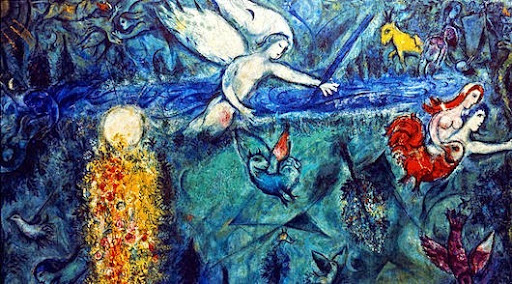
Chagall adam and eve

[Warning: Long read.]

My personal experience of having many good friends among both men and women is leading me to believe that differences between the two genders are real, but that their nature is very complex and that any attempt to characterize one versus the other ends up in traits that span some of both genders’ populations. No matter what profile is devised with the intention to characterize what a man’s trademark traits are, there will be women I know who excel at some of them, and, equally, I can think of men who excel at traits that would be attributed to the archetypal woman.

Claims that women are more intuitive while men are more rational have always struck me as simplistic and reductive in terms of their predictive capacity in the face of meeting a new person of either gender, and – more importantly, I have found them to be unhelpful, or even obstructive, when it comes to building relationships. Yet, the view of resolving the question about the differences between men and women by means of two list of ‘typical’ traits is very popular, as can also be seen from best-sellers like “Men are from Mars, Women are from Venus” (the first book I read that compelled me to write a review on Amazon :).

To counter this trend, I would like to sketch out my understanding of how men and women compare, and do so from two perspectives: the first one being science (both neuroscience and psychology) and the second one religion (specifically Christianity, and even more specifically Catholic exegesis, the Theology of the Body of St. John Paul II and the intellectual visions of the Servant of God, Chiara Lubich).

From the perspective of science, there is a growing body of work on quantifying both the neurological/physiological and psychological differences between men and women, where certain physical as well as behavioral differences have been measured repeatedly and for which evidence is mounting.

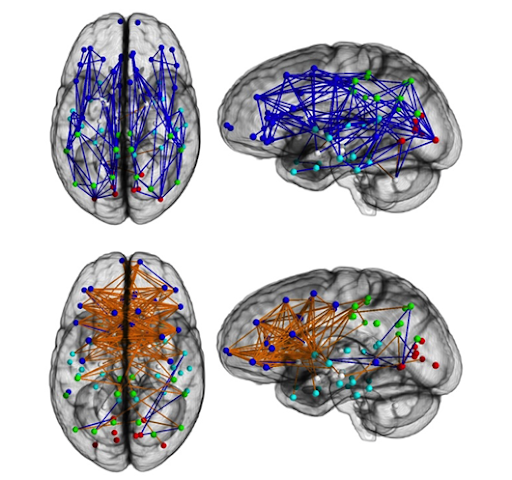
On the neurological and physiological side, there is strong evidence (obtained by a team from Oxford and Cambridge, who pooled together 126 studies, involving 43 000 subjects) to show that the brains of men are between 8% and 13% larger in volume than those of women. There is also evidence for there being significant differences between the relative volumes and densities of different regions in the brain between men and women. A recent example here is the work of Nopoulos et al. from the University of Iowa, who used functional Magnetic Resonance Imaging (fMRI) to study the ventral prefrontal cortex (VPC), a region involved in social cognition and interpersonal judgment. The findings, based on 30 men and 30 women, showed a relatively larger volume of this region in women, by 10%. In other words, relative to the total volume of a brain, the VPC region is 10% larger in women. Finally, there are not only volumetric differences between the brains of men and women, but also morphological ones. Here the most well-known, recent study is by Ingalhalikar et al., where the brains of 949 subjects (428 male and 521 female) were studied in terms of the nature of neural connections (connectome maps) between and within brain hemispheres (using diffusion tensor imaging). The results showed a systematic difference where male brains displayed a greater degree of intra-hemispherical synaptic connections (see top of following figure), while female brains had more prevalent inter-hemispherical links (see bottom of following figure). Interestingly, the authors of this study refer to the differences between the connectome maps of males and females as being a “complementarity” that makes them particularly suitable for collaboration …

Penn medicine

While there is strong evidence for systematic physiological differences between male and female brains, the question of what their consequences are remains far less clearly understood. E.g., taking the question of intelligence, there are studies whose results support all three of the possible outcomes: that there is no statistically significant difference, that men are more intelligent, or that women are more intelligent on average (e.g., see pp. 72 of the following paper). Even in the cases where a difference is shown, it tends to be small: 2-4 points in terms of the well known IQ test, and whether it is men or women who come out ahead depends on the specific test used. E.g., in a study involving 6780 subjects from Brazil, women came out ahead by 2 IQ points using Cambraia’s Attention Test, while men did better in Raven’s Standard Progressive Matrices test – by 1.8 IQ points. Similarly the behavioral consequences, from the perspective of differences between the sexes, of the VPC differences measured by Nopoulos et al., present a complex picture. There, no significant differences were found between men and women in terms of performing the Interpersonal Perception Task, which tests a subject’s ability to understand different types of social interaction. However, when the subjects were asked to complete a Personal Attributes Questionnaire (answering questions that lead to the subject’s self-perception in terms of two scales: “instrumentality” and “expressivity”, which are commonly taken to stand for masculinity and femininity and are used as a measure of gender identity), the resulting scores displayed strong correlation with the Interpersonal Perception Task outcomes.

The point of the above examples taken from recent findings in neuroscience and psychology, from studies that explore the differences between men and women, is to illustrate the complexity of the results obtained to date. On the one hand there is strong evidence for biological differences between male and female subjects, while on the other hand the specific nature of the differences and their impact on psychological traits or inclinations is complex and does not neatly divide along lines of a subject’s sex. While nature differs on average, an individual’s characteristics make them different from their sex’s average, with nurture and society further contributing to there being a continuum of states instead of a binary categorization of abilities, preferences, or traits. In my opinion, the psychology of personality, as opposed to that of gender, is a better means for understanding how one individual may differ from another in terms of their preferences and inclinations, which in turn can facilitate building mutually-fulfilling relationships.1

Turning to how the differences between men and women are understood in the context of Christianity, I would like to highlight three perspectives, as already mentioned at the beginning of this post.

First, there is St. John Paul II’s Theology of the Body, as set out in his “Men and Women He Created Them,” which I have already written about at length here. The only insight I’d like to point to here is John Paul II’s insistence on men and women being created “in the image of God” intrinsically referring to the communion of Persons in the Trinity. He makes this clear by saying that “man2 became the image of God not only through his own humanity, but also through the communion of persons, which man and woman form from the very beginning.” And it is in this context that the differences between men and women have a specific purpose, which is that these “two reciprocally completing ways of “being a body” [… are] complementary dimensions of self-knowledge and self-determination.” This in turn leads John Paul II to saying that a person’s “sex expresses an ever-new surpassing of the limit of man’s solitude [… and] always implies that in a certain way one takes upon oneself the solitude of the body of the second “I” as one’s own.” Men and women are different and complementary, but in profound, existential ways rather than as reducible to a trivial set of typical features or traits.

Second, the New Testament is rich in portraying different roles played by men versus women in the context of Jesus’ mission on Earth. Here Damiano Marzotto’s “Pietro e Maddalena” (mentioned by Pope Francis as being on his reading list), does a superb job of analyzing what these roles are in the Gospels, as a first step towards understanding how women could play the prominent role that they need to have in the Church, which they lack today. Marzotto summarizes his findings by first pointing out a greater propensity in women for welcoming Jesus’ teaching and making themselves available for a deepening and contemplation of his message (with men then acting on what the women understood). Mary’s keeping the events surrounding Jesus’ birth and “reflecting on them in her heart” (Luke 2:19) illustrates this very clearly. This places women in a position of welcoming novelty, of taking risks and of stepping out of line – traits not commonly associated with women in first century Palestine. The women of the Gospel, while having some common features, very much break the mold of societal stereotypes – another argument against characterizing men and women by sets of static, opposed features. The second aspect that Marzotto identifies in the women of the Gospel is an ability to anticipate Jesus’ actions and to provoke him or the apostles to action. Mary’s intervention at the wedding in Cana (John 2:1-12), or Mary Magdalene going to the apostles after meeting the risen Christ (John 20:1-3) are good examples here. Finally, Marzotto also argues that women have been responsible for a broadening of Jesus’ mission, for a greater universality of who it is addressed to. Here the woman suffering from hemorrhage (Mark 5:25-34), the Samaritan woman (John 4:4-42), the Canaanite woman (Matthew 15:21-28), or the widow of Nain (Luke 7:11-17) are great examples.

Third, the Servant of God, Chiara Lubich, in her intellectual visions (like those of Sts. Teresa of Ávila and Ignatius) during the summer of 1949 (referred to as the Paradise ’49), prefigures St. John Paul II’s interpreting the relationship between men and women from the perspective of the Trinity. As Giuseppe Maria Zanghí puts it, “this means that a meeting between the two “differences” requires, in each one of the two, a fullness of being: their synthesis is possible […] because, already before the two meet, each one of them is complete in themselves. Every form of weakness, every temptation of “subjection”, is overcome. […] True unity between man and woman can be achieved if each of the two realities is fulfilled in itself.” During her visions in 1949, Lubich recounts the following insight:

“The perfect man has the woman in him: he contains in his strength all of feminine sweetness, in his directness all of a woman’s suppleness. His character is unitarian, closed and severe like unity. But, if he is perfect (unitarian), he contains in himself the Trinity, who is a woman that is all open, caressing, loving. So the woman too, if she is perfect, encloses her open character in self-restraint that is reminiscent of the Madonna. She is man. Trinity in Unity.” (Paradise ’49, 1319-1320)3

The relationship between men and women, as understood also by Lubich in her mystical vision, is one of unity in distinction and distinction in unity, which is love. To reduce it only to distinction, and to a simplistic binary one at that, is to deny the Trinitarian image in which both men and women were made, and it is also to distort the complex and deeply beautiful picture that science is in the process of understanding as we speak.

[UPDATE on 17 November 2014:] Today Pope Francis opened a symposium on precisely the subject of how men and women relate, entitled “The Complementarity of Man and Woman in Marriage,” during which he had the following to say about the nature of differences between the sexes:

“Christians find [the] deepest meaning [of complementarity] in the first Letter to the Corinthians where Saint Paul tells us that the Spirit has endowed each of us with different gifts so that-just as the human body’s members work together for the good of the whole-everyone’s gifts can work together for the benefit of each. (cf. 1 Cor. 12). To reflect upon “complementarity” is nothing less than to ponder the dynamic harmonies at the heart of all Creation. […]

When we speak of complementarity between man and woman in this context, let us not confuse that term with the simplistic idea that all the roles and relations of the two sexes are fixed in a single, static pattern. Complementarity will take many forms as each man and woman brings his or her distinctive contributions to their marriage and to the formation of their children — his or her personal richness, personal charisma.”


1 But, we’ll have to leave that for another time …
2 “Man” here meaning the human person (as is clear from the context of the original text).
3 Apologies for the crude translation, the Italian original can be found in Zanghí’s “Leggendo un carisma” on pp. 149-150.

Divergent rays

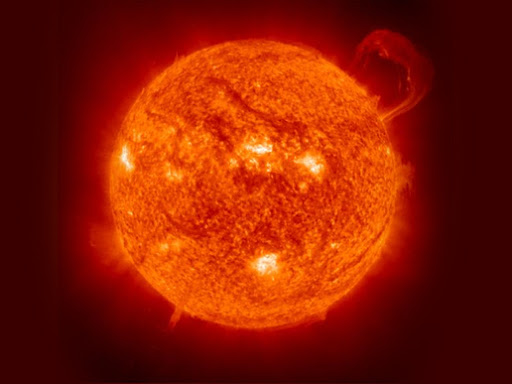
Nasa sun

The Gospel verse “In the beginning was the Word” has been going around in my head, ever since it dawned on me last weekend that it clearly points to something having preceded it. Thinking more about it made me revisit a text (actually, various fragments of it, since it has, as yet, not been published in full) where Chiara Lubich recounts her “intellectual visions” of Paradise that started in 1949. In particular, I wanted to re-read how she described Jesus, the Word:

“I found myself […], as in a vision seen with the eyes of the soul, having come into the Bosom of the Father, who showed me, as it were, the inside of a sun that was all gold or flames of gold, infinite, but not frightening.”

“[F]rom the walls inside the Sun, the Father pronounced the word: Love, and this Word, concentrated in the heart of the Father, was his Son.”

The picture here is very vivid and in many ways like those of St. Hildegard of Bingen’s visions. It transmits a very clear sense of what it may have seemed like to be there “in the beginning.” Reading on, Chiara also shares the following vision of creation:

“When God created, He created all things from nothing because He created them from Himself: from nothing signifies that they did not pre-exist because He alone pre-existed (but this way of speaking is inexact as in God there is no before and after). He drew them out from Himself because in creating them He died (of love), He died in love, He loved and therefore He created.

As the Word, who is the Idea of the Father, is God, analogously the ideas of things, that “ab aeterno” are in the word, are not abstract, but they are real: word within the Word.

The Father projects them — as with divergent rays — “outside Himself,” that is, in a different and new, created dimension, in which he gives to them “the Order that is Life and Love and Truth.” Therefore, in them there is the stamp of the Uncreated, of the Trinity.”

I find the above paragraphs particularly important since they indicate several key ways of thinking about how God and the universe are related:

  1. That God (the Trinity, the Uncreated) can be found in nature since it bears His “stamp,”
  2. that Jesus – the Word – is not only God who made himself present in the world as a human being 2000 years ago, but is the very means by which the Father goes “outside Himself” in His Creation,
  3. that creation is an act of self-noughting love, and
  4. that creation can be thought of as a new dimension of God.

This relationship is clearly not that of a “God of gaps,” cobbled-on caricature, but a tightly-interwoven, integral, first-person communion. Creation is to God as the rays of the sun are to the sun.

In fact, the picture of the sun and its divergent rays (and the use of “picture” is very deliberate, given what follows), is also very much consonant with Wittgenstein’s thoughts on how a system (the world) and its meaning relate:

“The sense of the world must lie outside the world. In the world everything is as it is and happens as it does happen. In it there is no value—and if there were, it would be of no value.

If there is a value which is of value, it must lie outside all happening and being-so. For all happening and being-so is accidental.

What makes it non-accidental cannot lie in the world, for otherwise this would again be accidental.

It must lie outside the world.” (Tractatus Logico-Philosophicus, 6.41)

Where does this leave a Christian in terms of how science and revelation make sense of the world? I believe, James Clerk Maxwell put it very well: “I think Christians whose minds are scientific are bound to study science that their view of the glory of God may be as extensive as their being is capable.” It is with this mindset that Prof. John Lennox commented on the Higgs Boson discovery by saying “God created it, Higgs predicted it and Cern found it.” Instead of a conflict, the advances of science are as much a source of wonder and joy to a Christian as are the visions of those who seek God and to whom he makes himself known in entirely unscientific ways.