Capacity for otherness

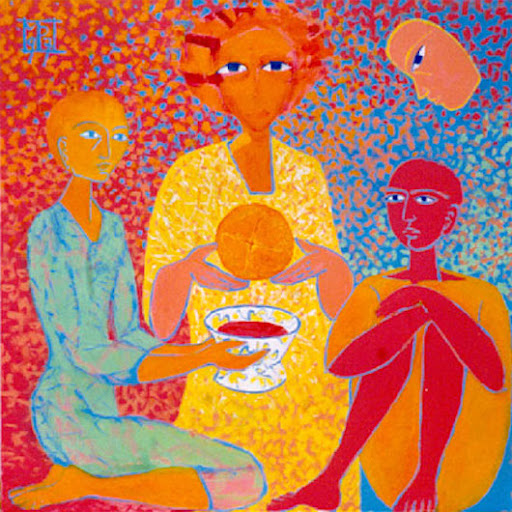
Moma conner untitledfrommandalaseries ct2538 06 x2016

1390 words, 7 min read

A couple of weeks ago I had an article recommended to me that I then read and greatly appreciated. Since the original is in Spanish, I would here like to offer a quick translation of the text to English, since I believe that it has a high degree of relevance and value beyond its original context. The article is entitled “A space yet to be discovered” and was written by the Catalan Jesuit, Xavier Melloni, in response to the current, tense political situation in Catalonia. Here Melloni offers his perspective on what it takes to truly dialogue with another person, which is something that is needed everywhere and at all times.


In view of the events of recent months in Catalonia, the assessments and interpretations we have made have grown out of our own positions. At first it can not be otherwise, because we do not see reality as it is, but as we are. There is no objective reality and subjective perception, instead at the moment of perceiving reality we are already configuring and co-creating it with our categories. Starting from this assessment, is essential to avoid falling into moral judgments about the opinions of others, because opinion is preceded by perception, at the same time as perception being conditioned by opinion, because every cognitive act is both affective and perceptive. Now, if we want to go beyond the increasingly polarized, tense and entrenched situation in which we find ourselves, we have to find a place that transcends us and makes us all grow. This place is not behind us, as if nothing had happened, but within each one of us and in front of us, in a space still to be discovered and created. A space that will only appear and will only be reached when we are capable of mutual recognition, which also involves the ability to recognize one’s own excesses or mistakes.

So much is the vehemence of our positions that we do not have nor leave space for the other. We are facing an important and delicate issue that corresponds to the third and fourth needs according to the scale of Abraham Maslow: the sense of belonging and the need for recognition, issues that revolve around identity. Leaving space for the other does not mean confusing ourselves with them or submitting to their point of view, instead it implies considering them seriously and tenaciously as part of the reality that we both (three, four, hundreds, thousands, millions of citizens) are parts of. We are all parts of everything and we are parts of an All. We must come to accept that the other’s point of view is as necessary and valid as our own and welcome it, just as we expect the other to do so with regard to ourselves. For this to be possible, the first step is to avoid judgment, to not dismiss the other. I can only maintain my own position with nobility if I consider that the position of the other is also noble and that they, as I do, look for their sense of belonging and for their need for recognition. Every time I think or say that the other is stupid or lies, we are annihilating them and committing mental or verbal violence against them, even if they do not hear us. We have to arrive at a vote of confidence in the other having some reasons in terms of which they perceive-interpret events in a way that is different and even opposed to mine, but that this does not mean that they lie, just as I hope that they do not consider me an idiot or a liar either, because I perceive-interpret things in a way opposite to theirs.

If we are able to have such openness and such respect, many things will follow, since an affective and cognitive space will appear where the other is present also. This nobility and generosity towards the other, this vote of firm and sustained confidence is put to the test when the other then does not give me space, when I do not feel that they recognize me. It is then easy to give in and respond with the same dismissal and judgment that I receive.

The principles of non-violence are very demanding and their fruits tend to be long-term. Only rarely are they immediate. But this is the test that a confrontation must go through if it wants to be noble. If the confrontation is noble, it will ennoble those who participate in it and they will turn it into fertile dialogue. If it is vile, confrontation will degrade them. It is difficult, very difficult, to persist in the non-dismissal of the other when their opinion, attitude or action are opposed to our own. But it is here that the extent to which we have integrated the values of the Gospel into our lives, which are the same as those of non-violence, manifests itself. Jesus says in the Sermon on the Mount: ““You have heard that it was said to your ancestors, ‘You shall not kill; and whoever kills will be liable to judgment.’ But I say to you, whoever is angry with his brother will be liable to judgment, and whoever says to his brother, ‘Raqa,’ will be answerable to the Sanhedrin, and whoever says, ‘You fool,’ will be liable to fiery Gehenna.” (Mt 5:21-22).

What Jesus means is that when we insult someone, we are killing them. We kill them because we do not recognize them, because we eliminate them by condemning them to the categories we have assigned them. The other cannot be recognized in the image I have made of him. Then I cannot expect them to recognize me either. An abyss has been created between the two. We are both condemned by the other. This is the fire by which we are consumed. What is the way out of this hell? “You have heard that it was said, ‘An eye for an eye and a tooth for a tooth.’ But I say to you, offer no resistance to one who is evil. When someone strikes you on your right cheek, turn the other one to him as well. If anyone wants to go to law with you over your tunic, hand him your cloak as well. Should anyone press you into service for one mile, go with him for two miles.” (Mt 5:38-41).

The bar is very high, as high are the flames of the fire that devours us and as tall are the walls that we must transcend to find the place where we still are not.

This is not naiveté or “do-goodery”, instead they are the conditions for the possibility of a new way of existing and co-existing that can be born in each moment if we apply ourselves to it. The challenge is to convert every act, every word and every thought into a spiritual exercise. I understand by “spiritual” the open and available space that exists between me and the other, beyond and deeper than our understandable, but visceral and totally insufficient, reactions. Political and civic life are urgently in need of this demanding exercise of the containment and transcendence of our positions that are still too primary and emotional. The emotions are intense, but ephemeral. What remains are acts and we still have time to reorient them towards the creation of a common space.

Space widens when we look, speak and act from a broader perspective that includes the other. Conversely, when we absolutize our point of view, we constrain our inner space and also the common space and we tear each other apart because there is no space for everyone. We cannot wait to open this space until the other is willing to do so. It begins to appear when one takes the first step and acts with courage and generosity, giving a vote of confidence to the other, as many times as necessary. “As many as seven times?” “Not seven times but seventy-seven times.” (Mt 18:21-22).

Each one of those times brings me closer to the other, who, feeling recognized, sooner or later will also recognize me and we will discover a space that is fruitful for all. Is not this the opportunity we have to grow together in greater capacity for otherness?
Reason in Faith: God’s exile of love in the world

Emmaus4

1592 words, 8 min read

The questions of how faith and reason relate to each other and to reality are of central importance in contemporary dialogue, and while I have previously focused on this topic with the desire to either make religious thought accessible to a non-religious reader or vice versa, I would here like to share a view “from inside”, a view that is deeply embedded in Christianity. I will do this by providing an English translation of a few passages from a book I have just read, in which the great Christian philosopher, Giuseppe Maria Zanghí, gives an account of his personal journey through philosophy. It is an account that is profoundly internal to its author, whose roots as a poet give the narrative both a mesmerizing beauty and, at times, call for his words to be be wrestled with repeatedly, putting us in the position of Jacob’s encounter with the angel (Genesis 32:22-33). Even if the result is defeat, and a hip injury, I believe that Zanghí’s words will leave us with an inner conviction that then allows for free, universal dialogue with all.

Zanghí, who in his youth met and then throughout his life followed Chiara Lubich, recounts this foundational piece of advice early on in the book:

“It was Chiara who […] made me pay attention to all expressions of human enquiry, because, she told me, each of them had been, is in love with the truth and in one way or another had, has touched it. In all there is a patrimony of suffering, invocation, anticipation, which must be respected with humble attention and strong participation. “You have to learn from everyone,” she said, “so that you may draw near to all with love.””

It is with this conviction, that behind all human enquiry there is a desire for truth and that all human enquiry also arrives at some truth, that its various forms can be approached with humility and be candidates for participation.

In this context, Zanghí understands our engaging with reality as:

“a unitary discourse set in a reality that is wholly given as God-Love’s word of love. An intuitive discourse, in which a face of reality, infinite in its original source that is the Word of God, opens itself up rationally and thereby offers itself to our weakness, to be reached in its entirety by the unity of knowledge that is wisdom.”

Since the above is a highly concentrated expression of what engaging with reality consists in, Zanghí proceeds to spell out what he means and anchors thought in Jesus’ forsakenness on the cross (pp. 26-27):

“The philosopher’s1 approach to reality does not presuppose a previous mathematical approach (as Plato wanted): it captures, in one go, an aspect of reality in which reality speaks-gives itself all-in-a-piece. To the philosopher (like the mathematician, physicist, artist), in their “innocence”, reality gives herself wholly, without mediation through other kinds of knowledge, but she presents herself with a face that expresses all of her concealed in her entirety.

Every field of knowledge grasps all that is real, but reality is given to it in a way that hides while revealing.

And here the fulfillment of Jesus’ question – the commandment of mutual love (John 15:12-17) – opens itself to the thinker (and the artist). Because it is in the actuality of this that the one reality can be approached by a perichoresis of different kinds of knowledge, in a circular dance of knowledge, that is light and in tune with the profound harmony of God. Each kind of knowledge is custodian of its approach to reality; reality that unfolds fully in the mutual embrace of the different kinds of knowledge, an embrace in which individual thinkers will be lead to stripping themselves of their own approaches, making them gifts for the others. To receive as a gift the real in its entirety, that transcends individual kinds of knowledge.

Jesus forsaken is always the teacher: being and non-being. Knowing how to face the “emptiness” that follows the true gift, “losing” one’s own knowledge out of love in the attentive listening to the other, joined in their knowledge by my knowledge, mine and no longer mine, and waiting for their gift of a response in which I find again my knowledge made more complete by theirs. Without making their knowledge pass through the maze, the grating of my knowledge, that would result in me being joined by none other than myself.

In this communion one can, in some way, catch, in the faces of reality through which it is reached by our knowledge, the one face that it speaks and does not speak, to reveal itself to our reciprocal love. Catching the face of the triune God, of Trinitarian perichoresis, that speaks itself while hiding in realities and opens itself in their communion.”

What Zanghí presents here in highly dense and poetic language is an understanding of reality, knowledge and God that is unlocked by what Jesus revealed about the Trinity, and therefore love, in his abandonment on the cross. Since love is about loving in a way that requires a total self-giving, to the point of becoming empty, and about being loved, where my emptiness is filled by the other’s total gift, and since the God whose very life is such love is the source of reality, it too can only be grasped in that same dynamic of love, and knowledge too follows the logic of self-giving to an empty recipient. As a result, reality (spoken by God) makes itself known to our mutual self-giving. Knowledge is received when we empty ourselves and offer ourselves as gifts to each other. In such a world, dialogue is fundamental, since it is the space where knowledge is received as gift. It becomes the privileged locus of understanding and participating in reality and the lives of others, rather than being a mere PR exercise or an attempt at influencing others and changing their minds.

With the above world-view, let’s finally turn to Zanghí’s reflection on faith and reason (pp. 38-39):

“Faith and reason are not two ways of knowing. Faith without reason would remain blind, suspended in emptiness. Reason without faith would remain unfulfilled desire. They would remain one outside the other, one foreign to the other, ripping man apart.

And reason could never offer its light, out of love, to penetrating in faith the mystery of God and as far as possible to opening his riches to a creature, allowing itself to be lead to the pinnacle of its power, and immersing in those riches the created realities. Reason, without faith, would remain folded in mortifying impotence.

And faith could not let penetrate to the heart of man the light of God who is God in his loving self-offering to the efforts of the creature – efforts which, moreover, are provoked by that very light. The promise of knowing in the way in which it is known (cf. 1 Corinthians 13:12) would remain unfulfilled, the order of created things would not be illuminated by the divine Order, by the Trinity, but would have to give itself a poor and unsatisfactory foundation and unfolding.

We must unite the divine that is offered in faith immersed as “form” in reason, and the human that is open in reason, pulled to himself by God, in faith for being filled with light. Without confusion and without separation.

For me it has been a beautiful experience to follow the rush of reason unfettered by cultural blocks, to the point of feeling it welcomed by God, who responds to it in faith, in a perichoresis, still on a journey, of the divine and the human.

Faith, due to one of its aspects, is, in some way, reason itself being led by God, in the ecstasy of cognitive love, outside itself, remaining itself but permeated by Christ.

Reason in faith is, in some way, the voice of God in its exile of love in the world.

Reason is the material offered to God who gives it human-divine form in faith.

Reason as the seal of divine love that participates in man, as a creature, his Logos.

Faith as the tenderness of God-Love for his creature, whom He does not want to burn with His divine power but lead, respecting it in its creaturely weakness, in a consuming embrace in which the creature, while entering the searing heart-mind of God, must remain herself.

Faith, in short, as a moment of mediation between that which I can here, as a man, know of God through the Revelation of God, and that which I will then know of God in God’s own way, no longer mediated through faith. Remaining man, like Jesus at the right hand of the Father is always the man of Nazareth.”

What strikes me as I re-read these passages for at least the tenth time is that clear both-and instead of an either-or that Zanghí establishes between faith and reason. On the one hand, the picture he presents can be seen as showing reason as supreme, since faith only plays a temporary role, as tender protection against the overwhelming power of God and therefore as a means for preserving our identity in the face of God. On the other hand, his words can also be heard as exalting faith above reason, since faith is reason transfigured, Christified, an expression of God’s love.


1 I will render Zanghí’s “metafisico” as “philosopher” even though it might be more correct – but arguably more cumbersome – to say “metaphysician”.