Zanghí: the person, an individual fulfilled

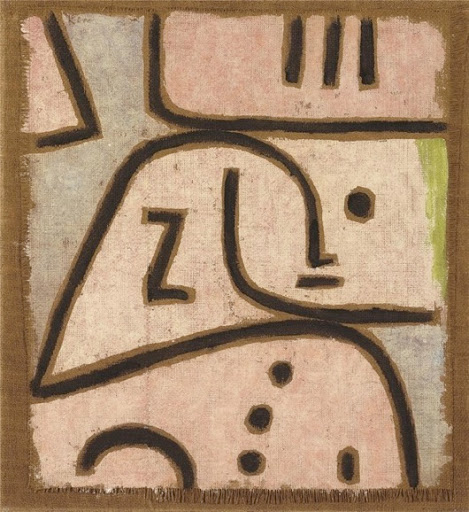
Klee person

930 words, 5 min read

The question of who I am is at the very heart of philosophy and a failure to answer it was presented by Socrates even as grounds for voiding the very value of his being, when he said his famous “The unexamined life is not worth living.” during the trial that lead to his being sentenced to death. A philosopher who has given this question some very careful and insightful thought is Giuseppe Maria Zanghí, who in his 1980 article entitled “A few thoughts on the person” has looked at the distinction between person and individual.

His starting point is the presentation is a key challenge that we face when attempting to subject the person to scientific enquiry:

“In the humanity common to all humans, the person is precisely that which is not in common, that which constitutes me as me in a shared humanity. How is it possible, then, to objectify the person? If we do that, we can only state what the person is not (not to confuse with, e.g., human nature); but if we want to say what the person is, we won’t find a “scientific” answer.”

By definition, that of which there is only a single specimen can not be subjected to the scientific method, since it does not allow for repeatability, for generalization and for verification (already Aristotle knew this well, when he argued in he Metaphysics (XIII, 10) that there can be no science of individual entities).

This initial roadblock leads Zanghí to define the person as follows:

“The person […] is a “singularity” irreducible to another since it is other; it is that unrepeatable “singularity” that makes a human be this human, who then is the concretely existing one.”

Next, Zanghí introduces an important nuance and distinction: that between the person and the individual, lest his definition of the former be taken as pointing to the latter:

“Could we, therefore, say that the person is the individual? The answer to this question calls for careful reflection. If we analyze ourselves, we realize that the individual is that which exists concretely: only in it does human nature not exist as a logical concept but as effective reality. But there remains a difference between nature and individual, without which the individual would absorb the totality of the nature and would deny the other. We can say, therefore, that the individual is defined by the precise limits within which it exists; the individual is, to use an image, carved into the common, shared nature. Human nature is constrained, it contracts, becoming concrete in the space-times that are individuals.”

What I believe Zanghí is saying here is that the individual is an instance of human nature, but distinct from it, since, otherwise, there could be only one individual, and that it is a spatiotemporal restriction and concretization of that nature.

This leads Zanghí to the realization of what it is that distinguishes the person from the individual:

“Yet, as I affirm all this (non-identity between the individual and nature, spatiotemporality of the individual), if what I say makes sense, I demonstrate to myself that, because of the awareness that I have of it, I am overcoming precisely the limits that make me an individual; I overcome, by speaking about it, the space-time in which I am an individual, I overcome the individual-nature distinction. Not in a sense that confuses the logical and existential planes, but in the sense that I unite them on a higher level, that I call ontological. I can think of myself as I think, because I transcend myself as an individual, I achieve a way of being where the individual-nature opposition, and thus individuality itself, is overcome (but not negated). In this act of transcendence, in this overcoming that I achieve while thinking, I reverse the state proper to the individual, that is, I assume nature, through the individual but beyond the individual, in an “other” with regard to the individual, and that is the person.”

The person is essentially the individual’s self-transcendence, a going beyond the constraints and unicity of the individual that is demonstrated by the very act of thinking about oneself, which would otherwise not be possible – without transcendence the individual could not think about itself.

Zanghí unpacks this transcendental nature of the person as follows:

“I would say, then, that the person is the individual’s act of transcendence, it is the individual that overcomes itself by taking nature up into itself and achieving a unity between universality (proper to nature) and existential concreteness, that is, the particular (proper to the individual). Human nature exists concretely in an act of transcendence that, while it “limits” it in the concreteness of the here and now (the individual), it returns it to an existing universality (the person).”

Finally, in anticipation of a potential misunderstanding that the above could lead to, Zanghí focuses on how individual and person relate:

“It is to be understood, also, that the person is not placed above, so to speak, the individual: almost as though, if the individual is what exists, is substance, then the person is also another substance added to the individual. The person is the act of the individual human substance, the act in which that-which-is-human (the individual human individual) is in its fullness, I would simply say: is.”

In other words, Zanghí is careful to avoid a dualist misinterpretation of his thought by stressing that we are not some strange amalgams of two distinct substances: individual and person, but that it is the person which is how the individual exists/is.
Theology: necessary, but only for experts

Experts

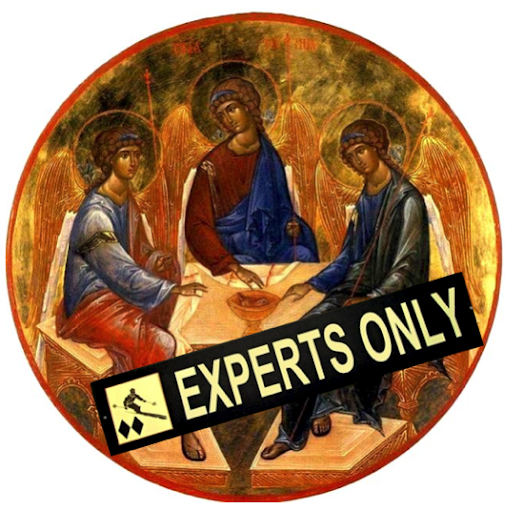
Last Sunday was Trinity Sunday – the day when the Church focuses on the one God having revealed himself to be a communion of three persons, whose self-giving love for one another means that they are both three and one – distinct persons, yet of one substance. As St. John Paul II put it in Familiaris Consortio (§11): “God is love and in Himself He lives a mystery of personal loving communion.”

John Paul II then goes on to discussing the relevance of an understanding of the Trinity for humanity, when he says that

“God created man in His own image and likeness: calling him to existence through love, He called him at the same time for love. […] Creating the human race in His own image and continually keeping it in being, God inscribed in the humanity of man and woman the vocation, and thus the capacity and responsibility, of love and communion. Love is therefore the fundamental and innate vocation of every human being.”

Maybe naively, but I therefore expected to read some edifying insight into this trinitarian nature of God when picking up an official leaflet distributed with my parish’s newsletter last Sunday. Instead, I started reading a piece that kicks off as follows:

“The liturgy of Trinity Sunday is full of abstract words that many of us find difficult – unity, trinity, person, substance. They can seem to belong more to a mathematical text-book than to a prayer. This is the technical language of theology, necessary but only for experts.”

At this point I stopped reading, since, whatever followed, could be neither edifying nor enriching, and I preferred to spend the rest of the time I had before mass in a positive way instead of by trying to calm myself down in the face of more drivel.

I am not sure what maths books the author of the above patronizing had read, but I can only think of one of those four terms coming up there. More seriously wrong is the idea though that our understanding of the nature of God is in some way an academic exercise, that it is something that just has to be put up with and that it is best left to experts. The rest of us, for whom this must all be terribly confusing, should just get on with our lives and not let ourselves be troubled by abstract concepts. In fact, we should shelve all this hoity-toity talk about persons and substances under the soothing blanket of “mystery,” as the author of the above insult to every rational human being suggests later in the same piece.

Absolutely no way, Bruce! This would be – to use a soccer analogy – like telling players that they didn’t need to know anything about the Laws of the Game, that they should just run around kicking the ball however they liked (since those complicated rules would just give them headaches) and that the referees would tell them what’s going on and, at some point, who won.

Luckily the author in question here is comfortably outranked by another, whose words I will chose to use against him and to adhere to myself. Yes, you guessed it – I am talking again about St. John Paul II, who said:

“[T]he Trinity is beyond the capacities of our understanding and can only be known through revelation. Nevertheless, this mystery which infinitely transcends us is also the reality closest to us, because it is the very source of our being. For in God we “live and move and have our being” (Acts 17:28), and what St Augustine says of God must be applied to all three divine persons: he is “intimior intimo meo” (Confessions, 3, 6, 11). In the depths of our being, where not even our gaze can penetrate, the Father, Son and Holy Spirit, one God in three persons, are present through grace. Far from being a dry intellectual truth, the mystery of the Trinity is the life that dwells in us and sustains us. […]

He is love in his inner life, where the Trinitarian dynamism is the very expression of the eternal love with which the Father begets the Son and both give themselves to each other in the Holy Spirit. He is love in his relationship to the world, since the free decision to make it out of nothing is the fruit of this infinite love which radiates into the sphere of creation.”

Yes, the Trinity is a mystery, but saying so is not a conversation stopper or an excuse, and neither is it code for saying that we cannot think or reason about what it means. Christianity has at its heart the gift of revelation, where God became man and dwelt among us, precisely so that we could also have some understanding of who He is. While being wholly other, and justifiably approached also by apophatic means, He is at the same time “more inward to us than our inmost self and higher than our highest self” (“intimior intimo meo et superior summo meo”), as St. Augustine says. Being made in His image means that by understanding Him we understand ourselves, and vice versa, and this surely is worth struggling for and putting up with (seemingly) abstract and technical language for.

Let’s not let others tell us that thinking about the Trinity is for experts only, that it is too technical and abstract for us to trouble our pretty little heads with. Let’s receive the gift of revelation and the glimpses of His innermost life that God shared with us, since these are treasures beyond the wildest imagination and keys to unlocking joy in our lives. And even if you, my dear reader, are not a Christian, see what it is that we mean by speaking about God as Trinity, since it tells you what we mean by love.

From individual to person

Community1

I am feeling quite “meta” today and have no less than four reasons for it: first, what I am about to discuss is fundamentally meta, second, the act of writing about it to you is an instance of it, third, it ties several of the strands that I started in previous posts together, and, fourth, it has come to me in a way that illustrates the topic itself (thanks to my bestie, Margaret, of ‘the God of Explanations’ fame). If that is not enough to pique your interest, let me add that it is centered around a talk given by one of my favorite contemporary thinkers – Dr. Rowan Williams, the Archbishop of Canterbury.

The subject of the talk is an exploration of what it means to be human and revolves around the distinction between an individual and a person. In customary magisterial fashion, Archbishop Williams ties together the thinking of St. Augustine, Orthodox and Catholic theologians (Vladimir Lossky and Robert Spaemann), a Russian and a French philosopher (Mikhail Bakhtin and René Descartes), a French thinker (Alexis de Tocqueville), a psychotherapist (Patricia Gosling) and an LSE sociologist (Richard Sennett). The argument begins by claiming that the relevant polarity is not between individualism and communitarianism but between the concepts of an individual and a person.

Here an individual is simply an example of a certain thing: e.g., Bob is an example of a human being, just like Fido is an example of a dog. Seen from this “atomic” perspective (where, incidentally, “individuum” is merely the latinized version of the Greek “atomos”), the individual is the center of their own world – its solid core. Even when they engage in relationships with others, they always have “the liberty of hurrying back home,” and the best relationship they can have with the world, that is separate from them and beyond them, is control. The consequences of such a view of what it is to be human are alienation, non-cooperation and unease with limits. This view is summed up clearly by de Tocqueville saying that “[e]ach person, withdrawn into himself, behaves as though he is a stranger in the destiny of all the others.” It is also the psychological and anthropological parallel of the epistemic approach pioneered by Descartes (and driven to its limit in the “brain-in-a-vat” scenario), that I also adapted in an earlier post and that, in art, is mirrored by Antony Gormley’s approach to sculpture.

The other concept of a human being is that of a person, where there is “something about us as a whole that is not defined just by listing the facts that happen to be true about us” and where a person is a “subject [that is] irreducible to its nature” (Lossky). Williams argues though that while “we know what we mean by personal/impersonal and persons in relation, […] we struggle to pin down what we mean that we cannot be reduced just to our nature.” He then goes on to postulating that “what makes me a person and distinct from another person is not a bundle of facts, but relations to others. I stand in the middle of a network of relations.” This leads to the definition of a person as the “point at which relationships intersect.”

Williams then moves on to the question of how one is to determine whether another is a human person and, following from the previous analysis, concludes that this cannot be done on the basis of a checklist for whether a given set of pre-requisites are present. Instead, we need to “form a relation, converse, to determine whether another is a person” and that language helps us to decide. He is quick here to move from a narrow concept of language as verbal only to a broad one that includes gestures and the “flicker of an eyelid.” This means that “[p]ersonal dignity or worth is ascribed to human individuals because, in a relationship, each of us has a presence or meaning in someone else’s existence. We live in another’s life. Living in the life of another is an implication of the profound mysteriousness about personal reality. Otherwise you end up with the model where somebody decides who is going to count as human.” Such a test of human personhood based on relateability very much reminded me of Turing’s test of machine intelligence, where the basis again is not a predetermined set of criteria, but the ability for a machine to converse with (relate to) a human person and for that person to recognize the machine as a person. Williams’ point about “each of us [having] a presence or meaning in someone else’s existence” also brought back echoes of Martini’s “the other is within us.”

How does the individual (which is by far the position with the strongest epistemic justification) see themselves as a person though? Here Williams quotes the following passage from Spaemann:

“Each organism naturally develops a system that interacts with its environment. Each creature stands at the center of its own world. The world only discloses itself as that which can do something for us; something becomes meaningful in light of the interest we take in it. To see the other as other, to see myself as his “thou” over against him, to see myself as constituting an environment for other centers of being, thus stepping out of the center of my world, is an eccentric position. […] As human beings in relationship, we sense that our environment is created by a relation with other persons; we create an environment for them and in that exchange, that mutuality, we discover what person means.”

How do you “step out” and assume an “eccentric position” tough? Here, Williams admits that such “stepping beyond one’s own individuality requires acts of faith. Living as a person is a matter of faith.” And I completely agree with him – strictly from a position of introspective enquiry, from Gormley’s “darkness of the body,” there is no fact-based way out. There is a need for a Kierkegaardianleap of faith,” but I would like to argue that it does not require a belief in God and in fact is akin to Eco’s communist acquaintance’s belief in the “continuity of life” discussed in an earlier post.

Finally, let’s also look at what Williams says about the aspect of personhood that is revealed as a consequence of belief in God:1

“Before personal relations, we are in relation with God. I am in relation to a non-worldly, non-historical attention which is God. My neighbor is always somebody who is in a relation with God, before they are in a relation with me. There is a very serious limit for me to make of my neighbor what I choose. They don’t belong to me and their relation to me is not what is true of them or even the most most important thing that is true of them. Human dignity – the unconditional requirement that we attend with reverence to one another – rests firmly on that conviction that the other is already related to something that isn’t me.”

In summary, a very clear picture emerges here, where I can think of myself as an individual – a world unto myself – or as the intersection of relations with others that allows me to go beyond myself and recognize in others that they are part of my world and I part of theirs. As a Christian this eccentricity also reveals to me that the relations I have with others build on the relations He has with them already and allow me to relate to Him not only in the intimacy of my self but also through my neighbors.


1 As an argument, this is essentially a variant of Bishop Berkeley’s response to the following challenge to his philosophy, where being is predicated on perceiving:

There was a young man who said God,
must find it exceedingly odd
when he finds that the tree
continues to be
when noone’s about in the Quad.

To which Berkeley responded with another limerick:

Dear Sir, your astonishment’s odd
I’m always about in the Quad
And that’s why the tree
continues to be
Since observed by, yours faithfully, God

:)))