Abortion

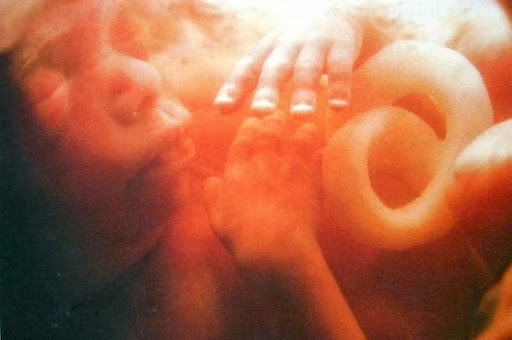
Foetus 5 months

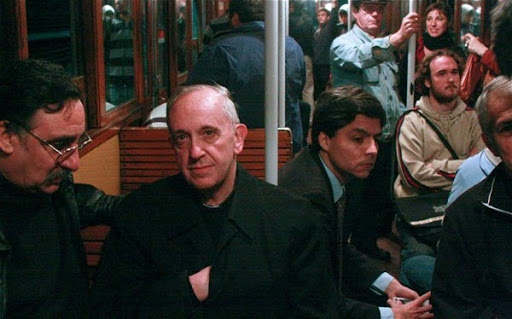
If you search through the 166 posts published on this blog since its launch over a year ago, you won’t find any mention of abortion. If, like soviet historians who, when they failed to find any sign of telephone cables during their excavations, inferred the use of wireless communication in 19th century Russia, you interpret this as my not considering the topic important, you’d be wrong. Fundamentally I find myself in the same boat as Pope Francis, whose first and until two days ago only public reference to it has been during the off-the-cuff interview with the press on his return flight from Rio, where he said that “[t]he Church has already addressed [this] issue and its position is clear.”

In his interview with Jesuit media two days ago (“the” interview), he returned to the topic and essentially just expanded on his point from the Rio flight:

“We cannot insist only on issues related to abortion, gay marriage and the use of contraceptive methods. This is not possible. I have not spoken much about these things, and I was reprimanded for that. But when we speak about these issues, we have to talk about them in a context. The teaching of the church, for that matter, is clear and I am a son of the church, but it is not necessary to talk about these issues all the time.”

In fact, the root of this reluctance is not born of attempts to please or to be popular, but of a profound care for those who are affected by suffering, as is clear from the example that Francis gives just before the above declaration:

“The confessional is not a torture chamber, but the place in which the Lord’s mercy motivates us to do better. I also consider the situation of a woman with a failed marriage in her past and who also had an abortion. Then this woman remarries, and she is now happy and has five children. That abortion in her past weighs heavily on her conscience and she sincerely regrets it. She would like to move forward in her Christian life. What is the confessor to do?”

On the above basis, Francis proceeds to lay out his vision of how the teaching of the Church on questions like abortion, which he adheres to and upholds, fits into the bigger picture:

“The dogmatic and moral teachings of the church are not all equivalent. The church’s pastoral ministry cannot be obsessed with the transmission of a disjointed multitude of doctrines to be imposed insistently. […] We have to find a new balance; otherwise even the moral edifice of the church is likely to fall like a house of cards, losing the freshness and fragrance of the Gospel. The proposal of the Gospel must be more simple, profound, radiant. It is from this proposition that the moral consequences then flow.”

While the above may (with a stretch of the imagination) sound like a move away from what the Church teaches about abortion, that is decidedly not the case, as Francis’ immediately following point (made in the context of what sermons ought to be like) demonstrates:

“[We] must begin with the first proclamation, with the proclamation of salvation. There is nothing more solid, deep and sure than this proclamation. Then you have to do catechesis. Then you can draw even a moral consequence. But the proclamation of the saving love of God comes before moral and religious imperatives. […] The message of the Gospel, therefore, is not to be reduced to some aspects that, although relevant, on their own do not show the heart of the message of Jesus Christ.”

The picture here is very clear: God loves all and wants all to love each other, like he loves them. Only once this is internalized and felt can its consequences be understood also with one’s reason and “imperatives” make sense. Yet, in spite of their clarity, the interview that the above words are taken from has by many media outlets been taken as a departure from the condemnation of abortion. E.g., the Daily Mail summed it up by saying that Francis “condemned the church’s obsession with such ‘small-minded things’ [as abortion].” The mind boggles!

Not by coincidence, I believe, Francis then addressed a group of Catholic gynecologists the very next day (yesterday) and spoke very clearly and at length about the evil of abortion, in a context where that made perfect sense:

“A widespread mentality of the useful, the “throw away culture” which today enslaves the hearts and intelligences of so many, has a very high cost: it requires eliminating human beings, especially if physically or socially weaker. Our answer to this mentality is a decisive and unhesitant “yes” to life. “The first right of a human person is his/her life. He/she has other goods and some of them are more precious; but life is the fundamental good, condition for all the others” (Congregation for the Doctrine of the Faith, Declaration on Procured Abortion, November 18, 1974, 11). Things have a price and are saleable, but persons have a dignity, they are worth more than things and they have no price. Because of this, attention to human life in its totality has become in recent times a real and proper priority of the Magisterium of the Church, particularly for life which is largely defenseless, namely, that of the disabled, the sick, the unborn, children, the elderly.

Each one of us is called to recognize in the fragile human being the face of the Lord, who in his human flesh experienced indifference and loneliness to which we often condemn the poorest, be it in developing countries, be it in well-off societies. Every unborn child, condemned unjustly to being aborted, has the face of the Lord, who before being born, and then when he was just born, experienced the rejection of the world. And every elderly person, even if he/she is sick or at the end of his/her days, bears in him/herself the face of Christ. They cannot be discarded!”

Francis then points to the fundamental logic behind the Church’s teaching:

“[Life] is always, in all its phases and at every age, sacred and is always of quality. And not because of a discourse of faith, but of reason and science! There is no human life that is more sacred than another, as there is no human life that is qualitatively more significant than another.”

I wholeheartedly agree and absolutely fail to see how a Catholic can possibly think otherwise: abortion, like euthanasia and any neglect, torture or killing of a human person, is an absolute evil. By the exact same logic, it is necessary to treat all with mercy and compassion though, and I equally fail to understand how a Catholic can possibly think otherwise. Directing hatred at another human being, absolutely regardless of what they have done or who they are, is as much contrary to the sanctity of life as abortion or euthanasia.
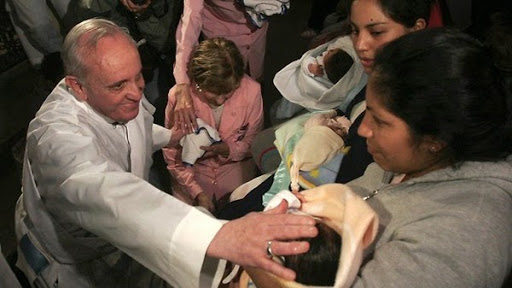
Pope Francis: "the" interview

117049 pope francis

I believe it will take many weeks and months to digest all Pope Francis has said in the interview granted to Fr. Antonio Spadaro, editor in chief of the Italian Jesuit journal La Civiltà Cattolica, and published simultaneously in multiple Jesuit publications worldwide. As a taster, let me just pick out my favorite parts, from the English version in America magazine:

  1. “I am a sinner whom the Lord has looked upon. I ​​am one who is looked upon by the Lord. I always felt my motto, Miserando atque Eligendo [By Having Mercy and by Choosing Him], was very true for me.”
  2. “According to St. Ignatius, great principles must be embodied in the circumstances of place, time and people. In his own way, John XXIII adopted this attitude with regard to the government of the church, when he repeated the motto, ‘See everything; turn a blind eye to much; correct a little.’”
  3. “[N]ow I hear some people tell me: ‘Do not consult too much, and decide by yourself.’ Instead, I believe that consultation is very important.”
  4. “I see the holiness in the patience of the people of God: a woman who is raising children, a man who works to bring home the bread, the sick, the elderly priests who have so many wounds but have a smile on their faces because they served the Lord, the sisters who work hard and live a hidden sanctity. […] This was the sanctity of my parents: my dad, my mom, my grandmother Rosa who loved ​​me so much. In my breviary I have the last will of my grandmother Rosa, and I read it often. For me it is like a prayer. She is a saint who has suffered so much, also spiritually, and yet always went forward with courage.”
  5. “This church with which we should be thinking is the home of all, not a small chapel that can hold only a small group of selected people. We must not reduce the bosom of the universal church to a nest protecting our mediocrity. And the church is Mother; the church is fruitful. It must be. You see, when I perceive negative behavior in ministers of the church or in consecrated men or women, the first thing that comes to mind is: ‘Here’s an unfruitful bachelor’ or ‘Here’s a spinster.’ They are neither fathers nor mothers, in the sense that they have not been able to give spiritual life. Instead, for example, when I read the life of the Salesian missionaries who went to Patagonia, I read a story of the fullness of life, of fruitfulness.”
  6. “I see clearly that the thing the church needs most today is the ability to heal wounds and to warm the hearts of the faithful; it needs nearness, proximity. I see the church as a field hospital after battle. It is useless to ask a seriously injured person if he has high cholesterol and about the level of his blood sugars! You have to heal his wounds. Then we can talk about everything else. Heal the wounds, heal the wounds…. And you have to start from the ground up.”
  7. “The church sometimes has locked itself up in small things, in small-minded rules. The most important thing is the first proclamation: Jesus Christ has saved you. And the ministers of the church must be ministers of mercy above all. The confessor, for example, is always in danger of being either too much of a rigorist or too lax. Neither is merciful, because neither of them really takes responsibility for the person. The rigorist washes his hands so that he leaves it to the commandment. The loose minister washes his hands by simply saying, ‘This is not a sin’ or something like that. In pastoral ministry we must accompany people, and we must heal their wounds.”
  8. “Instead of being just a church that welcomes and receives by keeping the doors open, let us try also to be a church that finds new roads, that is able to step outside itself and go to those who do not attend Mass, to those who have quit or are indifferent. The ones who quit sometimes do it for reasons that, if properly understood and assessed, can lead to a return. But that takes audacity and courage.”
  9. “A person once asked me, in a provocative manner, if I approved of homosexuality. I replied with another question: ‘Tell me: when God looks at a gay person, does he endorse the existence of this person with love, or reject and condemn this person?’ We must always consider the person. Here we enter into the mystery of the human being. In life, God accompanies persons, and we must accompany them, starting from their situation. It is necessary to accompany them with mercy. When that happens, the Holy Spirit inspires the priest to say the right thing.”
  10. “The dogmatic and moral teachings of the church are not all equivalent. The church’s pastoral ministry cannot be obsessed with the transmission of a disjointed multitude of doctrines to be imposed insistently. Proclamation in a missionary style focuses on the essentials, on the necessary things: this is also what fascinates and attracts more, what makes the heart burn, as it did for the disciples at Emmaus. We have to find a new balance; otherwise even the moral edifice of the church is likely to fall like a house of cards, losing the freshness and fragrance of the Gospel. The proposal of the Gospel must be more simple, profound, radiant. It is from this proposition that the moral consequences then flow.”
  11. “We must walk united with our differences: there is no other way to become one. This is the way of Jesus.”
  12. “Women are asking deep questions that must be addressed. The church cannot be herself without the woman and her role. The woman is essential for the church. Mary, a woman, is more important than the bishops. I say this because we must not confuse the function with the dignity. We must therefore investigate further the role of women in the church. We have to work harder to develop a profound theology of the woman. Only by making this step will it be possible to better reflect on their function within the church. The feminine genius is needed wherever we make important decisions. The challenge today is this: to think about the specific place of women also in those places where the authority of the church is exercised for various areas of the church.”
  13. “[T]here is a temptation to seek God in the past or in a possible future. God is certainly in the past because we can see the footprints. And God is also in the future as a promise. But the ‘concrete’ God, so to speak, is today. For this reason, complaining never helps us find God. The complaints of today about how ‘barbaric’ the world is—these complaints sometimes end up giving birth within the church to desires to establish order in the sense of pure conservation, as a defense. No: God is to be encountered in the world of today.”
  14. “In this quest to seek and find God in all things there is still an area of uncertainty. There must be. If a person says that he met God with total certainty and is not touched by a margin of uncertainty, then this is not good. For me, this is an important key. If one has the answers to all the questions—that is the proof that God is not with him. It means that he is a false prophet using religion for himself. The great leaders of the people of God, like Moses, have always left room for doubt. You must leave room for the Lord, not for our certainties; we must be humble.”
  15. “If the Christian is a restorationist, a legalist, if he wants everything clear and safe, then he will find nothing. Tradition and memory of the past must help us to have the courage to open up new areas to God. Those who today always look for disciplinarian solutions, those who long for an exaggerated doctrinal ‘security,’ those who stubbornly try to recover a past that no longer exists­—they have a static and inward-directed view of things. In this way, faith becomes an ideology among other ideologies. I have a dogmatic certainty: God is in every person’s life. God is in everyone’s life. Even if the life of a person has been a disaster, even if it is destroyed by vices, drugs or anything else—God is in this person’s life. You can, you must try to seek God in every human life. Although the life of a person is a land full of thorns and weeds, there is always a space in which the good seed can grow. You have to trust God.”
  16. “[H]uman self-understanding changes with time and so also human consciousness deepens. Let us think of when slavery was accepted or the death penalty was allowed without any problem. So we grow in the understanding of the truth. Exegetes and theologians help the church to mature in her own judgment. Even the other sciences and their development help the church in its growth in understanding. There are ecclesiastical rules and precepts that were once effective, but now they have lost value or meaning. The view of the church’s teaching as a monolith to defend without nuance or different understandings is wrong.”

Wow! I am deeply grateful for having such a loving and holy pope and one whose teaching will, I believe, bear abundant fruit not only for Christians but for all.

Priests as welcomers and accompaniers

Emmaus

This morning Pope Francis met with Rome’s priests at the basilica of St. John Lateran and, following some brief, opening remarks, spent two hours in a Q&A with them. The meeting was private and away from the lenses and microphones of journalist, but details of Pope Francis’ words have been emerging during the course of the day.

To begin with, the priests invited to the meeting were sent a letter that Francis wrote in 2008, while still a cardinal and archbishop of Buenos Aires, in which he reflects on the implications of the Aparecida document on the priesthood. There, Francis starts out by defining the “identity of the priest in relation to a community, with two characteristics. First, as “gift,” as opposed to “delegate” or “representative.” Second, in terms of faithfulness to the call of the Master, instead of “management.”” Francis then emphasizes that identity means belonging: “The priest belongs to the People of God, from which he has been drawn, to which he has been sent, and a part of which he is.” This communitarian aspect is further emphasized in the Aparecida document, which in its §156 affirms that “a constitutive dimension of the Christian event is belonging to a concrete communion in which we can be part of an ongoing experience of discipleship and communion with the successors of the apostles and with the successor of Peter.”

Further along in this preparatory document for today’s meeting, Francis emphasizes the joint importance of truth and mercy, which in the Aparecida document (§199) is presented thus: “to care for the flock entrusted to them and to seek out who have strayed furthest [… that they may be] servant-of-life-priests: who are alert to the needs of the poorest, committed to the defense of the rights of the weakest, and promoters of the culture of solidarity. The need is also for priests full of mercy.” Finally, Francis proposes to priests to be “enamored disciples,” since, “logically the missionary dimension is born from the interior experience of a love of Jesus Christ.” His letter to the Argentinian priests is a beautiful document in its entirety, and the above is meant to serve only as context for the very telegraphic details that have emerged so far from today’s private meeting with the priests of Rome.

The most extensive source of information so far has been an article in today’s Roma Sette, a website of the Diocese of Rome, where the following snippets are shared:

  1. Francis kicked off the Q&A by stating that “he considered himself above all to be a priest, and now as Pope he was afraid of feeling otherwise. “I would be afraid of feeling a bit more important; I am afraid of that, because the devil is cunning … and makes you think you have power, that you can do this and that … But thanks to God, I haven’t yet lost that fear, and if once you see that I have lost it, please, tell me, and if you can’t tell me privately, say it publicly, but say it: ‘Look, convert!’ It’s clear, isn’t it?”.” Wow! This is pretty strong stuff and it paints such a vivid picture – one that reminds me of St. Peter in the Early Church, as its head, but one that listens (cf. Galatians 2:11-14 where Paul says: “And when Cephas came to Antioch, I opposed him to his face because he clearly was wrong.” – i.e., the “Incident at Antioch”).
  2. A focus again on the “existential peripheries” that Francis has spoken about before. Here, he adds that such peripheries also refer to “weak and poor thought.” Francis also added that “reality is better understood from the periphery and not from the centre, which, instead, runs the risk of degenerating.”
  3. Francis acknowledges the “serious problems of the Church,” but without being pessimistic. “The Church does not crumble. The Church has never been as well as today, it is a beautiful moment for the Church, it is enough to read its history. There are saints recognized even by non-Catholics – let’s think of Blessed Teresa – but there is also the everyday holiness of ordinary mothers and women, of men who work every day for their families, and this brings us hope. Holiness is greater than scandals.” As an example of everyday holiness, he gives the example of a woman he spoke to over the phone the previous day (!), who is a “cleaner at Buenos Aires airport and who supports her drug-addicted, unemployed son: “This is holiness.””
  4. He also speaks about the fatigue that priests feel, remembering the expression John Paul II used in his “Redemptoris Mater,” where he speaks about Mary’s “particular heaviness of heart” (§17). Francis says that “when a priest is in touch with his people, he gets tired. Faced with this tiredness, there is only Jesus’ answer: be with the poor, announce the Gospel and go ahead.” Here Francis also differentiates between different kinds of tiredness: “When a priest is in contact with his people, he works, but he sleeps well. When a priest is not in contact with his people, he works, but he works badly and sleeps badly. … When a priest is in contact with his people, who have many real needs, need for God, then this requires serious effort – but they are the needs of God, no?, that seriously make you tired, and there is no need for sleeping pills.”
  5. Beyond fatigue, priests can also experience what St. John of the Cross called the “Dark Night of the Soul”: “there is a final effort, which is necessary at the moment that there should be triumph. … This happens when a priest questions himself about his existence, he looks within himself at the path he has followed, at the sacrifices he has made, the children he has not had and asks if perhaps he made a mistake, if his life was a failure [… John the Baptist,] in the darkness of his confinement experienced the darkness of his soul, and sent his disciples to ask Jesus if it was He Who awaited him.”
  6. Francis then proposes the following solution both to fatigue and existential darkness: “So, what can a priest do when he lives the experience of John the Baptist? Pray, to the point of falling asleep before the Tabernacle, but stay there.” Also important are “closeness with other priests and closeness of the bishop.” Francis then goes on to underline this last point: “Us bishops have to be close to priests, we have to love our neighbors, and our closest neighbors are the priests. The closest neighbors of the bishop are the priests. [applause] The opposite is true too, eh? [laughter, applause]: the closest neighbor of the priests must be the bishop: the closest neighbor. The bishop says: my closest neighbors are my priests. This exchange is beautiful, no? I believe this to be the most important moment of closeness, between bishop and priests: this moment without words, because there are no words for this fatigue.” Another great piece of advice by Pope Francis, which very much reminds me of the key moment in Herman Hesse’s Siddhartha, where the eponymous protagonist communicates wordlessly with the ferryman Vasudeva in a moment of profound union.
  7. Another remedy against fatigue and darkness is the memory “of one’s vocation, entering seminary, one’s priestly ordination: memory is the life-blood of the Church.” Francis invites all priests to remember their initial falling in love with Jesus, the moment when they first felt Jesus’ gaze on them. “For me this is the key point: that a priest has the capacity to return in memory to his first love. … A Church that loses her memory is an electronic Church, without life.”
  8. Francis also insisted that priest extend a “heartfelt welcome” so that “the faithful feel at home.” Referring in particular to couples who live together outside marriage, Francis emphasized the need for welcome – a welcome in truth. “Always speak the truth, knowing that the truth is not exhausted by a dogmatic definition, but that it inserts itself in the love and the fullness of God.” The priest therefore has to “accompany.” We just have to think of the disciples of Emmaus and how “the Lord has accompanied them and warmed their hearts.”
  9. Here Francis emphasizes the importance of creativity instead of novelty: “[do not] confuse creativity with making something new. Creativity is finding the path to proclaim the Gospel and … this is not easy. It is not simply a question of changing things. It is something different, it comes from the spirit and passes through prayer and dialogue with people, with the faithful. […] The Code of Canon Law give us many, many possibilities, so much freedom to look for these things. … We must find those moments to welcome and receive the faithful, when they enter the parish church for one reason or another.”
  10. Francis also addressed the topic of remarried divorcees: “The problem cannot be reduced merely to a matter of who can receive communion or not, because to pose the question in these terms does not enable an understanding of the real problem. … It is a serious problem regarding the Church’s reponsibility towards families living in this situation. … The Church must now do something to solve the problem of marriage annulment.”
  11. He also warned against economic interests by saying: “There must be a cordial welcome so that those who go to Church feel at home. They feel comfortable and do not feel as if they are being exploited. … When people feel there are economic interests at work, they stay away”.
  12. Finally, Francis advised the priests of his diocese to beware of both severe and lax priests. “Instead, the merciful priest proclaims that ‘God’s truth is this, so to speak, dogmatic or moral truth’, but always accompanied by God’s love and patience. Do not panic – the good God awaits us. … We must always keep in mind the word ‘accompany’ – let us be travelling companions. Conversion always takes place on the street, not in the laboratory”. This, to my mind is a fundamental point – the distinction among lax, strict and merciful – a point I didn’t get before. It made me realize that mercy involves adherence to the truth (which laxity lacks) while loving (which strictness misses).

As a married person, I am grateful to Pope Francis for these profound directions, addressed to the priests of Rome, and I feel that a lot of what he says applies equally to me and is a challenge that I too want to accept and respond to.

UPDATE (18 September 2013): Yesterday several Vatican sources (e.g., VIS, L’Osservatore Romano and Radio Vaticana) have published further details of Pope Francis’ words from the meeting with Roman clergy, which have now been added to the above post.

Pope Francis’ letter to non-believers

Pope 2509845b

That Pope Francis cares deeply for non-believers1 is nothing new, with his previous declaration that Jesus has redeemed atheists too having lead both to very positive responses and to a great media muddle. In today’s issue of the Italian newspaper La Repubblica, Francis continues in this dialogue with non-believers by responding to questions sent to him by the atheist journalist Eugenio Scalfari regarding Francis’ encyclical Lumen Fidei, and I would like to share my favorite parts of his letter with you here.2

Francis starts out by arguing that dialogue between the followers of Jesus and non-believers is “necessary and valuable” today for two reasons: First, the paradox that “Christian faith, whose novelty and impact on human life have since the beginning been expressed through the symbol of light, has become branded as the darkness of superstition that is opposed to the light of reason,” resulting in an absence of communication between Christian and Enlightenment-based contemporary culture. Second, for those who seek “to follow Jesus in the light of faith, […] this dialogue is not a secondary accessory[, but …] an intimate and indispensable expression of faith instead.” This, Francis argues, is expressed by §34 of Lumen Fidei, from which he proceeds to quote:

“Clearly, then, faith is not intransigent, but grows in respectful coexistence with others. One who believes may not be presumptuous; on the contrary, truth leads to humility, since believers know that, rather than ourselves possessing truth, it is truth which embraces and possesses us. Far from making us inflexible, the security of faith sets us on a journey; it enables witness and dialogue with all.”

After a beautiful exposition of how Francis himself came to believe in God and how the Christian faith has Jesus’ incarnation and resurrection at its heart, through which all of humanity is shown God’s love and connectedness to each other – to every single human being,3 he proceeds to answering the three questions Scalfari put to him.

The first of Scalfari’s questions regards whether “the God of Christians forgives those who don’t believe and don’t seek faith.” Here Francis’s response, which I particularly like, is the following:

“Given that – and this is the fundamental point – the mercy of God has no limits if one turns to Him with a sincere and contrite heart, the question for those who don’t believe in God is about obeying one’s own conscience. Sin, also for those who don’t have faith, occurs when one goes against conscience. Listening and obeying to it means, in fact, taking decisions in the face of what becomes understood as good or as bad. And it is on the basis of this decision that the goodness or evil of our actions plays out.”

Wow! While this is in some sense nothing more than what the Catechism has been saying explicitly since Vatican II, having it presented in the above universal way is great. I have often argued in exactly these terms and have faced quizzical looks from other Catholics, who wouldn’t quite believe it. It also confirms me in the answer I have given to several of my best, atheist or agnostic friends when they have asked me whether they should want to believe in God, which was “no,” with the caveat of seeking to be honest in front of their consciences.

Scalfari’s second question asks whether “thinking that there is no absolute and therefore no absolute truth either, but only a series of relative and subjective truths, is a mistake or a sin.” Great question! 🙂 To this Francis responds by saying:

“To begin with, I wouldn’t talk, not even to those who believe, about “absolute” truth, in the sense that the absolute is that which is disconnected, which is devoid of any relation. Now, the truth, according to Christian faith, is the love of God for us in Jesus Christ. Therefore, the truth is a relationship! It is also true that each one of us takes it, the truth, and expresses it by departing from oneself: from one’s history and culture, the circumstances in which one lives, etc. This does not mean though that the truth is variable and subjective. Instead, it means that it gives itself to us always and only as a journey and a life. Didn’t maybe Jesus say the same: “I am the way and the truth and the life.”?4 In other words, truth, being ultimately all one with love, requires humility and openness when sought, accepted and expressed. Therefore, it is necessary to understand each other’s terminology better, and, maybe, to avoid the constraints of an opposition that is … absolute, deepen the framing of the question. I believe that this is absolutely necessary today, so that a serene and constructive dialogue can take place.”

Another fantastic answer! Anyone who has tried to pigeonhole Francis as a populist, as opposed to the thinker that Benedict XVI undoubtedly is, can proceed to eat their own words …

The third, and final of Scalfari’s questions asks whether “the disappearance of humans from Earth would also mean a disappearance of thought that is capable of thinking God.” Here, Francis’ answer, which I won’t translate in full, revolves around arguing that, in his experience and those of many others, God is not an idea, but a “reality with a capital ‘R’.” Instead of going into more detail here, I’d instead like to translate Francis’ closing thoughts, before which he expresses his hope that his reflections would be “received as a tentative and provisional response, but one that is sincere and faithful to the invitation of walking along a stretch of road together.”:

“The Church, believe me, in spite of all the slowness, the unfaithfulness, the mistakes and sins that it may have committed and may yet commit in those who compose it, has no other meaning and end than that of living and giving testimony to Jesus: Him who has been sent by the Father “to bring glad tidings to the poor, to proclaim liberty to captives and recovery of sight to the blind, to let the oppressed go free, and to proclaim a year acceptable to the Lord” (Luke 4:18-19).”

I have to say I am delighted by these words of Pope Francis – both the emphasis on conscience that I have held dear for a long time and the insights about truth as relationship and love – and I would be keen to hear from my atheist, agnostic, humanist (and even Christian 🙂 friends what they made of them.

UPDATE (12 Sept. 2013): This morning Vatican Radio broadcast a short interview with Cardinal Gianfranco Ravasi on the topic of Pope Francis’ letter discussed above (which is now available in an official English translation here). Ravasi, who leads the Pontifical Council for Culture and in its context the “Courtyard of the Gentiles” initiative, whose aim is dialogue with non-believers, naturally welcomed Francis’ letter with great positivity, including it among the initiatives foundational documents. He then also proceeds to elaborate on the, to my mind key, point Francis made about the truth being a relationship:

“Already Plato affirmed [that the truth is a relationship] when he said that the chariot of the soul runs along the plane of truth, which means that the truth is not a cold reality like a precious stone that you can put in your pocket. Instead, it is an immense plane, a horizon – or, to use another image by a writer from the last century5 – we can say that the truth is a sea that one enters and navigates. So, in this light, I believe that the concept of truth not as absolute, but personal, interpersonal, will be very fruitful for dialogue, without losing the dimension of objectivity, of identity in itself, typical of the truth.”


1 Picking what term to use to refer to those who do not believe in God is tricky and I am going with the term Francis is using himself, not necessarily because I believe it is the most appropriate one, but because my aim here is to share his message with you today. I am mindful though of Prof. Cox’s point about the undesirability of negative labels, but since the positive alternatives (e.g., humanist) may not be self-applied by all whom the Pope intends to address here, I am sticking with his terminology. If you belong to his target audience (and to some extent everyone does – including me, a Catholic) and have a suggestion for what term to use, please, let me know.
2 Since I haven’t found an English translation of this article yet, the following quotes are my own crude translations, for which I apologize in advance.
3 I’d like to return to this great synthesis of Christianity in a future post and, if you understand Italian, I’d wholeheartedly recommend reading the full letter to you straight-away.
4 John 14:6.
5 Ravasi refers to this quote in an earlier talk, where he attributes it to Musil’s The Man Without Qualities, although I couldn’t find it there.
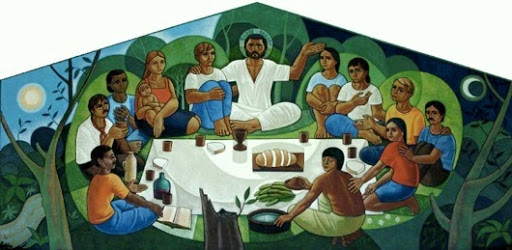
Liberation Theology rehabilitated

Santa cena teologia liberacion

Pope Francis is about to meet with the founder of Liberation Theology, Fr. Gustavo Gutiérrez, thanks to the current head of the Congregation for the Doctrine of the Faith (CDF) – Archbishop Gerhard Ludwig Müller, which – on the face of it – is a 180° turn versus its past condemnations by the Vatican. Taken superficially, it is a meeting between Francis and a proponent of a theology that has been categorically denounced both by Blessed Pope John Paul II and his successor, Pope Benedict XVI.

A closer look reveals quite a different picture though:

  1. Fr. Gutiérrez, unlike other teachers of Liberation Theology (e.g., Leonardo Boff), has never been censured by the Vatican.
  2. John Paul II and Benedict XVI never condemned Liberation Theology as such, but only those variants of it that placed Marxist analysis at their cores and thereby de-Christified it. In fact, Benedict XVI (then then-Cardinal Ratzinger) is quite clear about the distinction in the “instruction” he published in 1984 as the head of the CDF:

    “The aspiration for ‘liberation’, as the term itself suggests, repeats a theme which is fundamental to the Old and New Testaments. In itself, the expression “theology of liberation” is a thoroughly valid term: it designates a theological reflection centered on the biblical theme of liberation and freedom, and on the urgency of its practical realization. […] The warning against the serious deviations of some “theologies of liberation” must not be taken as some kind of approval, even indirect, of those who keep the poor in misery, who profit from that misery, who notice it while doing nothing about it, or who remain indifferent to it. The Church, guided by the Gospel of mercy and by the love for mankind, hears the cry for justice and intends to respond to it with all her might.”

  3. Instead of this being a change brought in by Francis, the re-visiting of the position taken with respect to Liberation Theology escalated when Benedict XVI appointed Müller as the head of the CDF in 2011 – Müller, who was known to be a personal friend of Gutiérrez, whom he considered as his mentor and whose summer lectures he has been attending annually since 1998 in Peru.
  4. While the new attitude is a change version previous positions, it is not a change as far as Marxist-based flavors of Liberation Theology go. Instead, it is a sign of support for those strands of Liberation Theology that have presented social justice and a focus on the poor on a wholly Christian basis. Fr. Juan Carlos Scannone, one of Pope Francis’ former professors puts it as follows: “In the Argentinean Liberation Theology, social Marxist analysis is not used, but rather a historical-cultural analysis, not based on class warfare as a determining principle for the interpretation of society and history.”

To get a sense of why Müller, who is clearly the catalyst behind the rehabilitation of some strands of Liberation Theology, took an interest in it, it is worth taking a look at the speech1 he gave at the Pontifical Catholic University of Peru in 2008, when it awarded him an honorary doctorate.

There, Müller starts by admitting that he had read expositions of Liberation Theology as well as their criticisms by the CDF, before meeting Gutiérrez, but that his engagement with them was purely theoretical. His initial attitude was one of skepticism and concern about both a danger of leading to violence and a naïveté with regard to the application of Marxist principles. Attending a seminar lead by Gutiérrez then turned him “from academic reflection on a new theological concept to experience with the men and women for whom this theology had been developed.” From the start, Gutiérrez emphasized that Liberation Theology was about theology and not politics, with the aim “to understand the world, history and society and transform them in light of the God’s own supernatural revelation as savior and liberator of man.” The “point of departure” is very clearly put by Müller as follows:

“How one can speak of God in the face of human suffering, of the poor who don’t have sustenance for their children, or the right to medical assistance, or access to education, who are excluded from social and cultural life, marginalized and considered a burden and a threat to the lifestyle of the wealthy few.

These poor are not an anonymous mass. Each one of them has a face. How can I as a Christian, priest or layman, whether through evangelization or scientific theological work, talk about God and His Son who became man and died for us on the cross and bear witness to Him, if I don’t want to build another theological system in addition to the existing one, except by saying to the specific poor person face to face: God loves you and your inalienable dignity is rooted in God. How does one make Biblical considerations real in individual and collective life, when human rights originate in the creation of man in the image and likeness of God.”

Müller then moves on to what I believe is the core of his message, when he speaks about not only attending courses about Liberation Theology in various Latin American countries, but also their being accompanied by:

“long weeks of pastoral work in the Andean region, especially in Lares in the Archdiocese of Cuzco. There the faces acquired names and became personal friends, this experience of universal Communion in the love of God and neighbor, which must be the essence of the Catholic Church. Finally it was a deep joy for me when in 2003, in Lares, in the Archdiocese of Cuzco, being already a bishop, I could administer the sacrament of Confirmation to young people whose parents I had already known for a long time and whom I myself had baptized.

Hence I have not been speaking of liberation theology in an abstract and theoretical way, much less ideologically to flatter progressive church groups. Similarly I have no fear that this may be interpreted as a lack of orthodoxy. Gustavo Gutiérrez’s theology, regardless of which angle you look at it from, is orthodox because it is orthopractic and teaches us proper Christian action because it comes from true faith.”

Müller’s assessment of Liberation Theology comes not only from a reading of and reflection on its teachings, but from him personally having put it into practice and experienced its fruits. It is these fruits that reinforce the truth of its principles, whose flowing from “true faith” can be inferred from them. It is a “see, judge, act” process, which Müller says “has been decisive in my own theological development” and which follows Jesus’ own words as regards orthopraxy:

“Beware of false prophets, who come to you in sheep’s clothing, but underneath are ravenous wolves. By their fruits you will know them. Do people pick grapes from thornbushes, or figs from thistles? Just so, every good tree bears good fruit, and a rotten tree bears bad fruit. A good tree cannot bear bad fruit, nor can a rotten tree bear good fruit. Every tree that does not bear good fruit will be cut down and thrown into the fire. So by their fruits you will know them.” (Matthew 7:15-20).

UPDATE (13 September 2013): The Catholic New Service has just tweeted that the Vatican has confirmed that a meeting between Pope Francis and Fr. Gutiérrez took place two days ago.


1 The original, Spanish version can be found here. Note that the English text used above includes my adjustments based on this original (e.g., at one point “imperdible” is translated as “amazing” in the English referred to above, while I render it as “inalienable”).

The sickness of the Pharisees

Abstract joy

Pope Francis’ homilies yesterday and today are a pair of true gems and since they have filled me with joy, I’d like to share their highlights here with you.

This morning Francis starts out by warning against various flavors of Christianity that don’t have the person of Jesus at their center – in other words, that are not honest! – and that get bogged down in paraphernalia. Their first type is what I’d call headless Christians:

“The Pharisees of today’s Gospel (Luke 6:1-5) make so many commandments the centre of their religiosity. [… T]hose who have the sickness of the Pharisees and are Christians that put their faith, their religiosity in so many commandments, so many. ‘Ah, I have to do this, I have to do this, I have to do this. Christians of this attitude … ‘But why do you do this?’ – ‘No, it must be done!’ – ‘But why?’ – ‘Ah, I don’t know, but it must be done.’ And Jesus – where is He? A commandment is valid if it comes from Jesus: I do this because the Lord wants me to do this. But if I am a Christian without Christ, I do this and I don’t know why I have to do it.”

Then Francis warns against what I’d say are procedural Christians:

“There are other Christians without Christ: those who only seek devotions … But Jesus is not there. If your devotions bring you to Christ, that works. But if you remain there [in those devotions], something’s wrong.”

Finally, there are the Christians 2.0 who seek novelty for its own sake:

“[Then there are t]hose who seek things that are a little uncommon, a little special, that go back to private revelations, while Revelation concluded with the New Testament. Such a spectacle of revelation, to hear new things [is misguided. Instead,] take the Gospel!”

With the wrong approaches ridiculed, Francis turns to how to tell whether one is on the right track:

“‘But Father, what is the rule for being a Christian with Christ, and not becoming a Christian without Christ. What is the sign of a person that is a Christian with Christ?’ The rule is simple: only that which brings you to Jesus is valid, and only that is valid that comes from Jesus. Jesus is the centre.”

A consequence then of such a centeredness on Jesus is joy:

“The Christian is fundamentally joyful. [… To be sure], there are truly moments of crucifixion, moments of pain – but there is ever that profound peace of joy, because Christian life is lived as a celebration, like the nuptial union of Christ with the Church.”

Getting rid of the clutter that has accumulated around following Jesus and seeking to imitate Him honestly and consciously will not annihilate difficulties, but will lead to profound peace and joy. I wish this for myself as much as I wish its consequences for everyone – especially those who endure the most difficult circumstances in war-torn parts of the world.

Against against understanding

484px Trophime Bigot Singer Candle

You know the caricatures of religious people that Richard Dawkins battles like windmills? Well, I have just read a blog post by one of them. He even self-applied the label “Catholic” and had his missive published in the “National Catholic Register” … Richard, all is forgiven! I’m with you to un-delude this guy – you can even have him as an atheist at the end!

“The world burns because nobody is willing to burn for it.”

“[We are not] to dialogue with over a billion people whose lives are dictated by a false religion and a false ideology, an ideology that threatens to burn the world. [We are not asked] to understand them better.”

“God commissioned [us] to convert the world, not to dialogue with it.”

“There is no antidote to error but truth.”

“We should raise money to send missionaries and pray for their souls when they perish for the effort, and then send more missionaries.”

No, these aren’t the words of Abu Qatada, but those of a “Catholic” blogger.

Let me just be clear about one thing – the above are not the words of a Catholic. Being a Catholic is “not to have a ‘label’ but to live and testify to faith in prayer, in works of charity, in the promotion of justice, in doing good,” as Pope Francis is quoted in another article, ironically on the same website. Calling for “conversion, not dialogue,” a refraining from understanding and raising money to send missionaries to their death are not “works of charity, the promotion of justice, [or] doing good.”

And if that weren’t enough, the author of the above expletives disqualifies himself from the Catholic life by distancing himself from the Church’s teaching: “Well, if we listen to many Church leaders, we hear that we should seek to understand them better. […] And of course, we should seek to dialogue with them. Dialogue, dialogue solves everything. Baloney.” Well, not just any old church leader, but Pope Francis himself, who has been explicit about the Church’s desire to understand and dialogue not only with Muslims, but also with members of other religions, Christian denominations, agnostics and atheists. Everyone!

Does that mean that the Catholic Church and its leaders are not interested in spreading the Good News and in bringing Jesus to all, or as the blog’s author puts it in his closing paragraph:

“For God so loved the world that he gave his one and only Son, that whoever believes in him shall not perish but have eternal life. Do we love the world enough to even tell them about Him?”

Now that’s baloney (in the parlance of our times). Pope Francis is monomaniacally focused on Jesus and on pointing to him at every opportunity. Just look at his daily homilies, where the word Jesus is by far the most frequently used. And you don’t need to look any further back than his last Angelus message, delivered only two days ago to see what he is all about:

“Jesus tells us that there is a door to enter into the family of God. This door is Jesus. Everyone is invited to enter this door, to go through the door of faith, to enter into his life and to allow Jesus into their lives, so that he may transform them, renew them and give them full and lasting joy.”

But it is an invitation, not a conquest, a desire for friendship, not a call to use force. The basis is understanding, compassion, friendship. To look at Jesus and infer from His words that He wants us to make others believe in Him is not having listened to Him at all. Just like Jesus didn’t set out to kidnap the apostles with a cohort of hired muscle, so we too need to invite instead of “burn and perish.”

Let’s be friends (even if we disagree)

Francis japanese

I know I keep talking about Pope Francis, but I can’t help telling you about his meeting with a group of Japanese school kids yesterday, since his words there were an even further crystalized and simplified exposition of the ideas he shared in the message to Muslims last month.

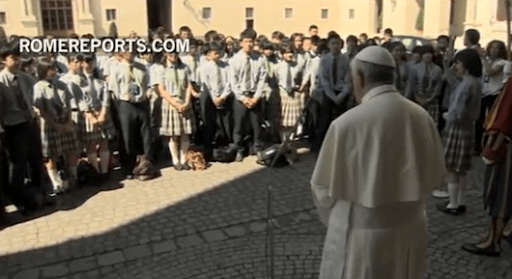
First, it’s worth noting a bit of the back story though. The 200 pupils – both Buddhist and Christian – of the Seibu Gakuen Bunri Junior High School from Tokyo had planned a trip to Rome long before the Vatican announced that Pope Francis wouldn’t be holding general audiences during the month of August. Not wanting to disappoint them, Francis instead met just with their small group yesterday in the courtyard of the Vatican’s Apostolic Palace.

To begin with, Francis praised them for their visiting a foreign country, since:

“to meet other people, other cultures is always good for us, it helps us grow. And, why? Because if we are isolated in ourselves we only have what we have, we cannot grow culturally; instead, if we go in search of other people, other cultures, other ways of thinking, other religious, we come out of ourselves and begin that beautiful adventure that is called “dialogue”.”

Then, he moved on to the core of his short talk, where he proposes meekness as the method of dialogue – a subject he has spoken of at least a dozen timed during his morning homilies:

“And what is the most profound attitude that we should have in order to dialogue and not fight? Meekness, the ability to find people, to find culture, with peace; the ability to make intelligent questions: “Why do you think this way?” “Why does this culture does that?” To listen to others and then talk. First listen, then talk. All of this is meekness.”

His next words though are what really caught my attention since they embody the essence of how dialogue must be an activity among friends and how its purpose is mutual understanding rather than conquest or proselytizing:

“And if you do not think like me – well, you know … I think in a different way, you do not convince me – but we are still friends, I have listened to how you think and you have listened to how I think.”

Having the head of the Catholic Church lay out his view of and expectations from dialogue in this simple way is a big deal. While these ideas are not new by any means, their plain exposition here leaves little room for misinterpretation and is a great contribution to the development of closer relationships not only between believers of different faiths but also none.

Finally, Francis wraps up his address by pointing to the ultimate end of dialogue, which is peace: “This dialogue is what makes peace. You cannot have peace without dialogue. All wars, all struggles, all problems that are not resolved, with which we face, are due to a lack of dialogue. When there is a problem, dialogue: this makes peace.”

It’s only pastoral …

Shepherd boy a19029819

Pope Francis has unquestionably introduced a dramatic change in what the pope does or does not do. He travelled back from the conclave on the bus with the cardinals who elected him, he asked the crowd in St. Peter’s square to bless him during his first moments as pope, the next day he went to pay his bill in the hotel where he stayed before the conclave, he phoned his newsagent back in Buenos Aires to cancel his newspaper subscription, he skipped a concert organized in his honor, he has been inviting vatican staff to join him for daily morning mass, he has had summaries and excerpts from his impromptu homilies published shortly after he delivers them and he even gave an almost hour and a half long interview in which he answered unscripted questions. None of this is news and one could begin to take it for granted, since Francis has been behaving in this immediate, open way from the get go and with complete consistency. Nonetheless, I would like to dwell on his behavior for a moment to talk about a particularly persistent throw-away label that keeps being applied to Francis’ words, in an attempt to contain, limit and at least implicitly make light of them and suggest that they ought to be taken with a pinch of salt.

That label is “pastoral.”

You’ll come across statements like: “up until now he has only shown the pastoral and – some would concede – populist aspects of his personality” (Andrea Gagliarducci), “The homilies are pastoral in nature, often using homespun language to make his points.” (John L. Allen Jr.), “[Pope Francis’ first,] pastoral-sounding message was another indication of how different a style [he] is approaching his papacy” (Natalie Baker) or “Pope Francis seems to be taking a more pastoral and conversational tone” (Bob Shine).

And the implication is invariably that Francis’ words are a bit of hand-waving, populist simplification for the great unwashed and that what he really means cannot be inferred from them and has to wait for a proper, systematically-theological, logically-rigorous1 and magisterially-triplicated exposition, delivered under precisely prescribed conditions. His “pastoral” words are just a bit of fun for the punters, but nothing that serious minds need concern themselves about. Their “meat” will appear in encyclical form in due course.

To be honest, I find this tremendously misguided and divorced from the Christian faith, which is nothing other than an attempt to imitate, relate to and share with others the person of Jesus. The above attitudes are akin to their owners turning up at the Sermon on the Mount and knowingly whispering (whilst winking and nudging [they do deserve credit for multitasking]) to one of its listeners (let’s say a cheese-maker, to pick a random occupation): “Don’t worry about all that meekness or righteousness jazz … What the fella really means is more like Heidegger’s “in-der-Welt-sein” and it only applies to you in substance and not form anyway.” I can also see them tutting at Jesus’ simile about the eye of the needle (“Since several angels can be in the same place, this hardly represents any constraint at all.”), or his speaking about virgins running out of oil (“He doesn’t mean oil per se, but any of a plurality of incendiary fuels, including, but not limited to, oil.”)

All of Jesus’ teaching was pastoral, a lot of it was private and none of it was peer-reviewed, double-checked or nihil-obstat-ed. If anything, the pope’s pastoral teaching is of the highest importance, with later systematized, structured and cross-referenced expositions being of subordinate nature. Just like no theologian would dream of pooh-poohing the Gospel and preferring even the most sublime systematic theology to it, so the spontaneous, impromptu ad-libbing of Pope Francis too should receive preferential status over other forms of expressing the faith.


1 Please, don’t get me wrong: I have nothing whatsoever against the systematically-theological and logically-rigorous. On the contrary, you could say that I consider it the worst form of thought, except for all others.

Francis: let’s share the joys of Muslims

Francis sultan

A while ago now, Pope Francis wrote a, to my mind, very important message to Muslims at the end of Ramadan (on the feast of Eid al-Fitr), and, I believe, I, as a Christian, need to read it too, as if it were addressed to me personally. Aside from the gesture of Francis himself1 sending the message “as an expression of esteem and friendship for all Muslims,” his choice of theme itself is of great importance, as is the way in which he introduces himself.

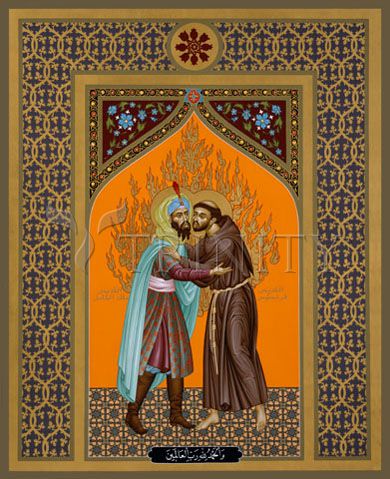
First, he ties himself closely to St. Francis, who had very close links with the Muslim world of his day and who – with Jesus and Mary – is revered also among Muslims and who, after speaking with Sheikh al-Malik al-Kamel (the Sultan of Egypt) told his followers: “[You] are not to engage in arguments or disputes, but to be subject to every human creature for God’s sake.” Then, Francis underlines a number of themes close to the hearts of Muslims: alms giving, a reverence for creation and the family:

“[W]hen the Cardinals elected me as Bishop of Rome and Universal Pastor of the Catholic Church, I chose the name of “Francis”, a very famous saint who loved God and every human being deeply, to the point of being called “universal brother”. He loved, helped and served the needy, the sick and the poor; he also cared greatly for creation. I am aware that family and social dimensions enjoy a particular prominence for Muslims during this period, and it is worth noting that there are certain parallels in each of these areas with Christian faith and practice.”

Next we arrive at the theme chosen for this year’s Ramadan message: “Promoting Mutual Respect through Education,” which Francis lays out as follows:

““Respect” means an attitude of kindness towards people for whom we have consideration and esteem. “Mutual” means that this is not a one-way process, but something shared by both sides. What we are called to respect in each person is first of all his life, his physical integrity, his dignity and the rights deriving from that dignity, his reputation, his property, his ethnic and cultural identity, his ideas and his political choices. We are therefore called to think, speak and write respectfully of the other, not only in his presence, but always and everywhere, avoiding unfair criticism or defamation.”

So far Francis’ message is universal and, I believe, applies to all human relationships and not only those between Christians and Muslims. Kindness, esteem, reciprocity, respect and refraining from gossip are all basics that prepare the ground for the “sincere and lasting friendship” that Francis speaks about later.

Then, Francis’ focus shifts to the aspect of religious belief in this context of human relationships:

“Turning to mutual respect in interreligious relations, especially between Christians and Muslims, we are called to respect the religion of the other, its teachings, its symbols, its values. Particular respect is due to religious leaders and to places of worship. How painful are attacks on one or other of these! It is clear that, when we show respect for the religion of our neighbours or when we offer them our good wishes on the occasion of a religious celebration, we simply seek to share their joy, without making reference to the content of their religious convictions.”

I believe the above is a key move by Francis, in that it explicitly calls for mutual respect of the religious expressions of others while placing the emphasis on the joy and wishing for the good of others that accompany them and that are universally human. No buy-in with regard to the content of religious expression is inferred from being kind and participating in the other’s joy. There is neither proselytizing or attempting to convert the other here nor the suggestion of syncretism.

All of the above is very consistent with what I have heard from Francis so far – we have to realize that we are all brothers and sisters before anything else can happen. In the context of speaking about the poor, his emphasis is always on “touch[ing] the flesh of Christ,” on looking into the eyes of those in need when they are being helped. Just like helping the poor is about building human relationships with them and not only about material assistance, so interreligious dialogue too – and the very essence of the Christian life – is about the exact same thing.

How is this to be achieved though? While the answer here is pretty obvious (education), it is nonetheless worth seeing how Francis puts it:

“Regarding the education of Muslim and Christian youth, we have to bring up our young people to think and speak respectfully of other religions and their followers, and to avoid ridiculing or denigrating their convictions and practices.”

It is impossible to respect and esteem caricatures – if that is how we get used to referring to others (whether they be of a different religion, or none, or of other convictions to our own) we are putting up barriers that prevent us from ever discovering what lives in the hearts and minds of our neighbors.

To conclude, Francis puts his own teaching into practice and concludes his message a follows: “Finally, I send you my prayerful good wishes, that your lives may glorify the Almighty and give joy to those around you. Happy Feast to you all!”

No pomp and circumstance, just sincere simplicity.


1 Instead of having the message sent by the Pontifical Council for Interreligious Dialogue, who normally do so.