Amoris Lætitia: tips & tricks for family life

Pollock

4509 words, 23 min read

It would be a mistake to overlook a beautiful track that runs through Amoris Lætitia, which is that of Pope Francis offering hands-on advice on how to live well together as a family. In fact, these tips and tricks, I believe, also transpose very well onto any other community, whether it be civil or religious, and offer guidance on how to preserve open, loving and welcoming relationships of mutual care and closeness. What I would therefore like to do is put the theology and pastoral guidance that is in AL to one side and just share with you some of my favorites from among Francis gems of advice next.

The first set of Pope Francis’ suggestions comes from a meditation on St. Paul’s Hymn to Love, which goes as follows, and which focus on what individual attitudes make me most predisposed to loving others in the way Jesus did:

“Love is patient, love is kind;
love is not jealous or boastful;

it is not arrogant or rude.

Love does not insist on its own way,
it is not irritable or resentful;

it does not rejoice at wrong,

but rejoices in the right.

Love bears all things,

believes all things,

hopes all things,

endures all things” (1 Cor 13:4-7).

Here Francis first dispels and misunderstanding of patience and then goes on to talk about what it is that can undermine it:

“Being patient does not mean letting ourselves be constantly mistreated, tolerating physical aggression or allowing other people to use us. We encounter problems whenever we think that relationships or people ought to be perfect, or when we put ourselves at the centre and expect things to turn out our way. Then everything makes us impatient, everything makes us react aggressively.” (§92)

The remedy he then presents consists in compassion and an acceptance of difference:

“Patience takes root when I recognize that other people also have a right to live in this world, just as they are. It does not matter if they hold me back, if they unsettle my plans, or annoy me by the way they act or think, or if they are not everything I want them to be. Love always has an aspect of deep compassion that leads to accepting the other person as part of this world, even when he or she acts differently than I would like.” (§92)

To combat feelings of envy, Pope Francis reminds us of the uniqueness of each person and of one’s pursuit of happiness not being enemy to that of another:

“Envy is a form of sadness provoked by another’s prosperity; it shows that we are not concerned for the happiness of others but only with our own well-being. Whereas love makes us rise above ourselves, envy closes us in on ourselves. True love values the other person’s achievements. It does not see him or her as a threat. It frees us from the sour taste of envy. It recognizes that everyone has different gifts and a unique path in life. So it strives to discover its own road to happiness, while allowing others to find theirs.”(§95)

Such an attitude then leads to a broadening of scope for my attention and extends the circle of those who are candidates for being loved:

“Love inspires a sincere esteem for every human being and the recognition of his or her own right to happiness. I love this person, and I see him or her with the eyes of God, who gives us everything “for our enjoyment” (1 Tim 6:17). As a result, I feel a deep sense of happiness and peace. This same deeply rooted love also leads me to reject the injustice whereby some possess too much and others too little. It moves me to find ways of helping society’s outcasts to find a modicum of joy. That is not envy, but the desire for equality.” (§96)

Commenting on St. Paul speaking out against arrogance, Francis contrasts it with a love for the weak:

“[Some people] become “puffed up” before others. [… They] think that, because they are more “spiritual” or “wise”, they are more important than they really are. […] Some think that they are important because they are more knowledgeable than others; they want to lord it over them. Yet what really makes us important is a love that understands, shows concern, and embraces the weak.” (§97)

Next, rudeness is countered with a kind look that builds bonds and prevents egoism:

“[L]ove is not rude or impolite; it is not harsh. Its actions, words and gestures are pleasing and not abrasive or rigid. Love abhors making others suffer. […] To be open to a genuine encounter with others, “a kind look” is essential. This is incompatible with a negative attitude that readily points out other people’s shortcomings while overlooking one’s own. A kind look helps us to see beyond our own limitations, to be patient and to cooperate with others, despite our differences. Loving kindness builds bonds, cultivates relationships, creates new networks of integration and knits a firm social fabric. In this way, it grows ever stronger, for without a sense of belonging we cannot sustain a commitment to others; we end up seeking our convenience alone and life in common becomes impossible.” (§99-100)

Such a move beyond oneself calls for generosity, whose prerequisite is love of oneself so that love of another may become possible:

“The Bible makes it clear that generously serving others is far more noble than loving ourselves. Loving ourselves is only important as a psychological prerequisite for being able to love others: “If a man is mean to himself, to whom will he be generous? No one is meaner than the man who is grudging to himself” (Sir 14:5-6).” (§102)

Irritability and and discord are tackled next and Pope Francis reminds us that a small gesture is often all it takes to put and end to them:

“It is one thing to sense a sudden surge of hostility and another to give into it, letting it take root in our hearts: “Be angry but do not sin; do not let the sun go down on your anger” (Eph 4:26). My advice is never to let the day end without making peace in the family. “And how am I going to make peace? By getting down on my knees? No! Just by a small gesture, a little something, and harmony within your family will be restored. Just a little caress, no words are necessary. But do not let the day end without making peace in your family”. Our first reaction when we are annoyed should be one of heartfelt blessing, asking God to bless, free and heal that person. “On the contrary bless, for to this you have been called, that you may obtain a blessing” (1 Pet 3:9).” (§104)

Seeing mountains where there are only molehills is an obstacle to forgiveness that Francis warns against in following paragraph:

“As Jesus said, “Father, forgive them; for they know not what they do” (Lk 23:34). Yet we keep looking for more and more faults, imagining greater evils, presuming all kinds of bad intentions, and so resentment grows and deepens. Thus, every mistake or lapse on the part of a spouse can harm the bond of love and the stability of the family. Something is wrong when we see every problem as equally serious; in this way, we risk being unduly harsh with the failings of others. The just desire to see our rights respected turns into a thirst for vengeance rather than a reasoned defence of our dignity.” (§105)

Next, Francis comments on St. Paul speaking about the importance of joy, which needs to be triggered by the successes of others just as much as by my own:

“If we fail to learn how to rejoice in the well-being of others, and focus primarily on our own needs, we condemn ourselves to a joyless existence, for, as Jesus said, “it is more blessed to give than to receive” (Acts 20:35). The family must always be a place where, when something good happens to one of its members, they know that others will be there to celebrate it with them.” (§110)

The final four attributes of love that St. Paul lists refer to how it engages with “all things.” First, it abstains from judgement:

“[Love] implies limiting judgment, checking the impulse to issue a firm and ruthless condemnation: “Judge not and you will not be judged” (Lk 6:37). Although it runs contrary to the way we normally use our tongues, God’s word tells us: “Do not speak evil against one another, brothers and sisters” (Jas 4:11). Being willing to speak ill of another person is a way of asserting ourselves, venting resentment and envy without concern for the harm we may do. We often forget that slander can be quite sinful; it is a grave offense against God when it seriously harms another person’s good name and causes damage that is hard to repair.” (§112)

Such an attitude also favors silence over expressing judgment and recognizes that love and imperfection can coexist:

“[Married couples] keep silent rather than speak ill of them. This is not merely a way of acting in front of others; it springs from an interior attitude. Far from ingenuously claiming not to see the problems and weaknesses of others, it sees those weaknesses and faults in a wider context. It recognizes that these failings are a part of a bigger picture. We have to realize that all of us are a complex mixture of light and shadows. The other person is much more than the sum of the little things that annoy me. Love does not have to be perfect for us to value it. The other person loves me as best they can, with all their limits, but the fact that love is imperfect does not mean that it is untrue or unreal. It is real, albeit limited and earthly. If I expect too much, the other person will let me know, for he or she can neither play God nor serve all my needs. Love coexists with imperfection. It “bears all things” and can hold its peace before the limitations of the loved one.” (§113)

Second, trust is the attitude with which all is approached, leading to freedom, sincerity and transparency:

“[T]rust enables a relationship to be free. It means we do not have to control the other person, to follow their every step lest they escape our grip. Love trusts, it sets free, it does not try to control, possess and dominate everything. This freedom, which fosters independence, an openness to the world around us and to new experiences, can only enrich and expand relationships. The spouses then share with one another the joy of all they have received and learned outside the family circle. At the same time, this freedom makes for sincerity and transparency, for those who know that they are trusted and appreciated can be open and hide nothing. Those who know that their spouse is always suspicious, judgmental and lacking unconditional love, will tend to keep secrets, conceal their failings and weaknesses, and pretend to be someone other than who they are.” (§115)

Third, hope allows for being more persistent in recognizing the good in all circumstances and people:

“[St. Paul] speaks of the hope of one who knows that others can change, mature and radiate unexpected beauty and untold potential. This does not mean that everything will change in this life. It does involve realizing that, though things may not always turn out as we wish, God may well make crooked lines straight and draw some good from the evil we endure in this world. […] This realization helps us, amid the aggravations of this present life, to see each person from a supernatural perspective, in the light of hope, and await the fullness that he or she will receive in the heavenly kingdom, even if it is not yet visible.” (§116-117)

Finally, love is all-enduring, whose meaning Pope Francis explains by the following, extensive quote from a sermon given by Martin Luther King:

“The person who hates you most has some good in him; even the nation that hates you most has some good in it; even the race that hates you most has some good in it. And when you come to the point that you look in the face of every man and see deep down within him what religion calls ‘the image of God’, you begin to love him in spite of [everything]. No matter what he does, you see God’s image there. There is an element of goodness that he can never sluff off… Another way that you love your enemy is this: when the opportunity presents itself for you to defeat your enemy, that is the time which you must not do it… When you rise to the level of love, of its great beauty and power, you seek only to defeat evil systems. Individuals who happen to be caught up in that system, you love, but you seek to defeat the system… Hate for hate only intensifies the existence of hate and evil in the universe. If I hit you and you hit me and I hit you back and you hit me back and so on, you see, that goes on ad infinitum. It just never ends. Somewhere somebody must have a little sense, and that’s the strong person. The strong person is the person who can cut off the chain of hate, the chain of evil.” (§118)

In the next part of AL, Francis builds on the above analysis of what it means to love that followed St. Paul’s hymn and applies it to interpersonal relationships in a family. Here he starts with underlining the importance of looking at each other:

“A look of appreciation has enormous importance, and to begrudge it is usually hurtful. How many things do spouses and children sometimes do in order to be noticed! Much hurt and many problems result when we stop looking at one another. […] Love opens our eyes and enables us to see, beyond all else, the great worth of a human being.” (§128)

Beyond looking at each other kindly, expressing mutual love to one another also through words further nourishes and strengthens it:

“The love of friendship unifies all aspects of marital life and helps family members to grow constantly. This love must be freely and generously expressed in words and acts. In the family,“three words need to be used. I want to repeat this! Three words: ‘Please’, ‘Thank you’, ‘Sorry’. Three essential words!”. “In our families when we are not overbearing and ask: ‘May I?’; in our families when we are not selfish and can say: ‘Thank you!’; and in our families when someone realizes that he or she did something wrong and is able to say ‘Sorry!’, our family experiences peace and joy”. Let us not be stingy about using these words, but keep repeating them, day after day. […] The right words, spoken at the right time, daily protect and nurture love.” (§133)

Francis next warns against an idealizing of earthly love, which denies its need for growth:

“It is not helpful to dream of an idyllic and perfect love needing no stimulus to grow. A celestial notion of earthly love forgets that the best is yet to come, that fine wine matures with age. […] It is much healthier to be realistic about our limits, defects and imperfections, and to respond to the call to grow together, to bring love to maturity and to strengthen the union, come what may.” (§135)

In the following paragraphs, Francis presents a masterclass in dialogue, which “can only be the fruit of a long and demanding apprenticeship.” Here the starting point are differences:

“Men and women, young people and adults, communicate differently. They speak different languages and they act in different ways. Our way of asking and responding to questions, the tone we use, our timing and any number of other factors condition how well we communicate. We need to develop certain attitudes that express love and encourage authentic dialogue.” (§136)

The first of these prerequisite attitudes is taking time:

“This means being ready to listen patiently and attentively to everything the other person wants to say. It requires the self-discipline of not speaking until the time is right. Instead of offering an opinion or advice, we need to be sure that we have heard everything the other person has to say. This means cultivating an interior silence that makes it possible to listen to the other person without mental or emotional distractions. Do not be rushed, put aside all of your own needs and worries, and make space. Often the other spouse does not need a solution to his or her problems, but simply to be heard, to feel that someone has acknowledge their pain, their disappointment, their fear, their anger, their hopes and their dreams.” (§137)

The second attitude is giving importance to the other:

“This means appreciating them and recognizing their right to exist, to think as they do and to be happy. Never downplay what they say or think, even if you need to express your own point of view. Everyone has something to contribute, because they have their life experiences, they look at things from a different standpoint and they have their own concerns, abilities and insights. We ought to be able to acknowledge the other person’s truth, the value of his or her deepest concerns, and what it is that they are trying to communicate, however aggressively. We have to put ourselves in their shoes and try to peer into their hearts, to perceive their deepest concerns and to take them as a point of departure for further dialogue.” (§138)

Third, dialogue requires an open mind, a willingness to change and an appreciation of diversity:

“Don’t get bogged down in your own limited ideas and opinions, but be prepared to change or expand them. The combination of two different ways of thinking can lead to a synthesis that enriches both. The unity that we seek is not uniformity, but a “unity in diversity”, or “reconciled diversity”. Fraternal communion is enriched by respect and appreciation for differences within an overall perspective that advances the common good. We need to free ourselves from feeling that we all have to be alike.” (§139)

Francis then moves from talking about the “what” to the “how,” which also calls for “astuteness”:

“[I]f hard feelings start to emerge, they should be dealt with sensitively, lest they interrupt the dynamic of dialogue. The ability to say what one is thinking without offending the other person is important. Words should be carefully chosen so as not to offend, especially when discussing difficult issues. Making a point should never involve venting anger and inflicting hurt. A patronizing tone only serves to hurt, ridicule, accuse and offend others. Many disagreements between couples are not about important things. Mostly they are about trivial matters. What alters the mood, however, is the way things are said or the attitude with which they are said.” (§139)

The fourth attitude of dialogue then is to show care for the other:

“Love surmounts even the worst barriers. When we love someone, or when we feel loved by them, we can better understand what they are trying to communicate. Fearing the other person as a kind of “rival” is a sign of weakness and needs to be overcome. It is very important to base one’s position on solid choices, beliefs or values, and not on the need to win an argument or to be proved right.” (§140)

Finally, the fifth prerequisite for dialogue is that I need to have something to say, to share:

“This can only be the fruit of an interior richness nourished by reading, personal reflection, prayer and openness to the world around us. Otherwise, conversations become boring and trivial. When neither of the spouses works at this, and has little real contact with other people, family life becomes stifling and dialogue impoverished.” (§141)

Following the above recipes for successful dialogue, Pope Francis reflects on emotions and the need to direct them towards the good of others:

“Experiencing an emotion is not, in itself, morally good or evil.140 The stirring of desire or repugnance is neither sinful nor blameworthy. What is morally good or evil is what we do on the basis of, or under the influence of, a given passion. But when passions are aroused or sought, and as a result we perform evil acts, the evil lies in the decision to fuel them and in the evil acts that result. Along the same lines, my being attracted to someone is not automatically good. If my attraction to that person makes me try to dominate him or her, then my feeling only serves my selfishness. To believe that we are good simply because “we feel good” is a tremendous illusion. There are those who feel themselves capable of great love only because they have a great need for affection, yet they prove incapable of the effort needed to bring happiness to others. They remain caught up in their own needs and desires. In such cases, emotions distract from the highest values and conceal a self-centredness that makes it impossible to develop a healthy and happy family life.” (§145)

Lest the above be misunderstood as opposition to enjoyment and pleasure, Francis goes on to putting them into context:

“This does not mean renouncing moments of intense enjoyment,145 but rather integrating them with other moments of generous commitment, patient hope, inevitable weariness and struggle to achieve an ideal. […] Some currents of spirituality teach that desire has to be eliminated as a path to liberation from pain. Yet we believe that God loves the enjoyment felt by human beings: he created us and “richly furnishes us with everything to enjoy” (1 Tim 6:17). Let us be glad when with great love he tells us: “My son, treat yourself well… Do not deprive yourself of a happy day” (Sir 14:11-14). Married couples likewise respond to God’s will when they take up the biblical injunction: “Be joyful in the day of prosperity” (Ec 7:14). What is important is to have the freedom to realize that pleasure can find different expressions at different times of life, in accordance with the needs of mutual love. In this sense, we can appreciate the teachings of some Eastern masters who urge us to expand our consciousness, lest we be imprisoned by one limited experience that can blinker us. This expansion of consciousness is not the denial or destruction of desire so much as its broadening and perfection.” (§148-149)

Much later on in Amoris Lætitia, Pope Francis offers advice to married couples by encouraging to make time for each other a suggestion that also applies to other communities and where it may only be the forms that change but not the substance of the following:

“Love needs time and space; everything else is secondary. Time is needed to talk things over, to embrace leisurely, to share plans, to listen to one other and gaze in each other’s eyes, to appreciate one another and to build a stronger relationship. Sometimes the frenetic pace of our society and the pressures of the workplace create problems. At other times, the problem is the lack of quality time together, sharing the same room without one even noticing the other. […] Once a couple no longer knows how to spend time together, one or both of them will end up taking refuge in gadgets, finding other commitments, seeking the embrace of another, or simply looking for ways to flee what has become an uncomfortable closeness.” (§ 224-225)

Francis then points to the importance both of routine and its interruption by celebrations and parties:

“Young married couples should be encouraged to develop a routine that gives a healthy sense of closeness and stability through shared daily rituals. These could include a morning kiss, an evening blessing, waiting at the door to welcome each other home, taking trips together and sharing household chores. Yet it also helps to break the routine with a party, and to enjoy family celebrations of anniversaries and special events. We need these moments of cherishing God’s gifts and renewing our zest for life. As long as we can celebrate, we are able to rekindle our love, to free it from monotony and to colour our daily routine with hope.” (§226)

The role of crises and their being integral to the life of a family is on Francis’ mind next:

“The life of every family is marked by all kinds of crises, yet these are also part of its dramatic beauty. Couples should be helped to realize that surmounting a crisis need not weaken their relationship; instead, it can improve, settle and mature the wine of their union. Life together should not diminish but increase their contentment; every new step along the way can help couples find new ways to happiness. Each crisis becomes an apprenticeship in growing closer together or learning a little more about what it means to be married. There is no need for couples to resign themselves to an inevitable downward spiral or a tolerable mediocrity. On the contrary, when marriage is seen as a challenge that involves overcoming obstacles, each crisis becomes an opportunity to let the wine of their relationship age and improve.” (§232)

Finally, at the end of Amoris Lætitia, Pope Francis draws this thread to its conclusion by pointing to the consequences of a life lived along the above lines: freedom and a choice of God as the greatest good:

“There comes a point where a couple’s love attains the height of its freedom and becomes the basis of a healthy autonomy. This happens when each spouse realizes that the other is not his or her own, but has a much more important master, the one Lord. No one but God can presume to take over the deepest and most personal core of the loved one; he alone can be the ultimate centre of their life. At the same time, the principle of spiritual realism requires that one spouse not presume that the other can completely satisfy his or her needs. The spiritual journey of each – as Dietrich Bonhoeffer nicely put it – needs to help them to a certain “disillusionment” with regard to the other, to stop expecting from that person something which is proper to the love of God alone. This demands an interior divestment. The space which each of the spouses makes exclusively for their personal relationship with God not only helps heal the hurts of life in common, but also enables the spouses to find in the love of God the deepest source of meaning in their own lives. Each day we have to invoke the help of the Holy Spirit to make this interior freedom possible. (§320)

Amoris Lætitia: Communion for the divorced and remarried

Giovanni francesco barbieri called guercino the return of the prodigal son ca 1640

2314 words, 13 min read

The most hotly debated aspect of Amoris Lætitia, much to Pope Francis’ chagrin, is whether or not it opens access to the Eucharist for at least some divorced and remarried Catholics. Some say that it clearly does not (e.g., Cardinal Gerhard Ludwig Müller, prefect of the Congregation of the Doctrine of the Faith, or Bishop Philip Egan of Portsmouth), others say that is clearly does (e.g., the German Synod Fathers, Card. Marx, Abp. Koch and Bp. Bode, the great German philosopher Robert Spaemann, who by the way doesn’t like that one bit), yet others are reported as saying that it doesn’t, while – if you listen to what they say – they don’t actually do so (e.g., Cardinal Christoph Schönborn of Vienna, whose introduction to Amoris Lætitia Pope Francis singled out as being authoritative). What is clear from the numerous reactions so far is that Pope Francis’ words are being interpreted in contradictory terms not only by some, whose capacity for interpreting them could be questioned and whose conclusions could easily be dismissed, but by competent and expert readers of this 264 page apostolic exhortation.

Instead of engaging with interpretations of Francis’ text, I would here like to take a look directly at what he says in AL that could lead us to a “yes” or “no” conclusion, and instead of presuming to settle the issue, just offer you my own reading.

The obvious starting point is a passage from §305, which is often quoted and which is in the middle of the section entitled “The discernment of “irregular” situations” that spans paragraphs 296-312. Before looking at it, let’s get a sense of the lay of the land first. Right from the get go, in §296, Francis declares that:

“There are two ways of thinking which recur throughout the Church’s history: casting off and reinstating. The Church’s way, from the time of the Council of Jerusalem, has always always been the way of Jesus, the way of mercy and reinstatement… The way of the Church is not to condemn anyone for ever; it is to pour out the balm of God’s mercy on all those who ask for it with a sincere heart… For true charity is always unmerited, unconditional and gratuitous.”

In §297, Francis then reiterates that “No one can be condemned for ever, because that is not the logic of the Gospel!” and speaks with great clarity about the need to preserve the Gospel ideal:

“Naturally, if someone flaunts an objective sin as if it were part of the Christian ideal, or wants to impose something other than what the Church teaches, he or she can in no way presume to teach or preach to others; this is a case of something which separates from the community (cf. Mt 18:17). Such a person needs to listen once more to the Gospel message and its call to conversion.”

What reinstatement and inclusion do not mean is an “anything goes” or a change to what the Church has taught about Christian ideals. At the same time, in §298, Francis calls for nuance instead of a “one size fits all” approach when it comes to the divorced and remarried:

“The divorced who have entered a new union, for example, can find themselves in a variety of situations, which should not be pigeonholed or fit into overly rigid classifications leaving no room for a suitable personal and pastoral discernment. One thing is a second union consolidated over time, with new children, proven fidelity, generous self giving, Christian commitment, a consciousness of its irregularity and of the great difficulty of going back without feeling in conscience that one would fall into new sins. […] Another thing is a new un- ion arising from a recent divorce, with all the suffering and confusion which this entails for children and entire families, or the case of someone who has consistently failed in his obligations to the family.”

Francis echoes Benedict XVI in acknowledging that no “easy recipes” exist here and adds that “the discernment of pastors must always take place “by adequately distinguishing”, with an approach which “carefully discerns situations”.” §300 then sets out a specific, five-stage “examination of conscience” that is to be part of a discernment process involving a pastor and the divorced remarried person. Such a process also has specific pre-conditions: “humility, discretion and love for the Church and her teaching, in a sincere search for God’s will and a desire to make a more perfect response to it.”

§301 presents the consideration of “mitigating factors in pastoral discernment” and Francis declares that it “can no longer simply be said that all those in any “irregular” situation are living in a state of mortal sin and are deprived of sanctifying grace.” (Bearing in mind that “sanctifying grace” is the state that one needs to be in to be eligible for the reception of the Eucharist.) §302 then backs up the legitimacy of the concept of mitigating factors by pointing to passages in the Catechism, which Francis summarizes by saying:

“For this reason, a negative judgment about an objective situation does not imply a judgment about the imputability or culpability of the person involved.”

§303 then calls for a “better incorporation” of “individual conscience […] into the Church’s praxis,” saying that

“conscience can do more than recognize that a given situation does not correspond objectively to the overall demands of the Gospel. It can also recognize with sincerity and honesty what for now is the most generous response which can be given to God, and come to see with a certain moral security that it is what God himself is asking amid the concrete complexity of one’s limits, while yet not fully the objective ideal. In any event, let us recall that this discernment is dynamic; it must remain ever open to new stages of growth and to new decisions which can enable the ideal to be more fully realized.”

Next, we get a section entitled “Rules and discernment,” which opens with the following statement at the beginning of §304:

“It is reductive simply to consider whether or not an individual’s actions correspond to a general law or rule, because that is not enough to discern and ensure full fidelity to God in the concrete life of a human being.”

Next, Francis “earnestly ask[s] that we always recall a teaching of Saint Thomas Aquinas and learn to incorporate it in our pastoral discernment”:

“Although there is necessity in the general principles, the more we descend to matters of detail, the more frequently we encounter defects… In matters of action, truth or practical rectitude is not the same for all, as to matters of detail, but only as to the general principles; and where there is the same rectitude in matters of detail, it is not equally known to all… The principle will be found to fail, according as we descend further into detail”.

What does this mean? Even general rules that set out an absolute good, cannot – in their formulation – provide for all particular situations. Therefore, Francis says in the opening line of §305, “a pastor cannot feel that it is enough simply to apply moral laws to those living in “irregular” situations, as if they were stones to throw at people’s lives,” which brings us to the key passage in §305 where Francis declares that a person “in an objective situation of sin” (such as re-marriage after divorce) can nonetheless be “living in God’s grace” (a pre-requisite for access to the Eucharist1):

“Because of forms of conditioning and mitigating factors, it is possible that in an objective situation of sin – which may not be subjectively culpable, or fully such – a person can be living in God’s grace, can love and can also grow in the life of grace and charity, while receiving the Church’s help to this end.”

To elaborate on what help can be expected from the Church, the above sentence points to the following, much-debated footnote number 351:

“In certain cases, this can include the help of the sacraments. Hence, “I want to remind priests that the confessional must not be a torture chamber, but rather an encounter with the Lord’s mercy” (Apostolic Exhortation Evangelii Gaudium [24 November 2013], 44: AAS 105 [2013], 1038). I would also point out that the Eucharist “is not a prize for the perfect, but a powerful medicine and nourishment for the weak” (ibid., 47: 1039).”

The most obvious interpretation, to my mind, here is that, yes, what Pope Francis is saying is that access to the Eucharist is a possibility in the context of the pastor-lead discernment, where he understands the particular circumstances of a person who approaches him on the back of the pre-conditions spelled out above. It is worth noting here that Cardinal Müller has specifically denied such an interpretation of footnote 351, claiming that “this footnote refers to objective situations of sin in general, not to the specific case of civilly remarried divorcees.” Personally, I find this very hard to see, given that the entire section, in the very middle of which we are here, is all about the divorced and civilly remarried … Furthermore, it is primarily §301 that is the basis of the Eucharist being offered to some divorced and civilly remarried – as “medicine and nourishment”, since it states that those in “irregular” circumstances may nonetheless be in a state of grace. Footnote 351 is then just a spelling out of §301’s consequences.

Before wrapping up my reading of AL from the perspective of whether or not the divorced and civilly remarried have access to the Eucharist (through the above process of pastor-lead discernment), it is also worth noting two aspects of the exhortation that, I believe, indirectly support my interpretation.

First, that Pope Francis never says that the divorced and civilly remarried are excluded from access to the Eucharist, while at the same time making categorical statements about abortion (“So great is the value of a human life, and so inalienable the right to life of an innocent child growing in the mother’s womb, that no alleged right to one’s own body can justify a decision to terminate that life.” (§83)), same-sex marriage (“there are absolutely no grounds for considering homosexual unions to be in any way similar or even remotely analogous to God’s plan for marriage and family” (§251)) and the indissolubility of marriage (“only the exclusive and indissoluble union between a man and a woman has a plenary role to play in society as a stable commitment that bears fruit in new life” (§52)). If Pope Francis would have wanted to maintain pastoral practice as it stands, he could have said that there is no change to it. In fact, even when asked directly after the publication of AL about whether there were “new, concrete possibilities that didn’t exist before” with regard to the “discipline that regulates access to the sacraments for the divorced and remarried”, his response was: “I can say yes, many.”

Second, Pope Francis does explicitly speak about obstacles to receiving the Eucharist in a different context, which consist in “creating scandalous distinctions and divisions among [the Church’s] members” and in “turn[ing] a blind eye to the poor and suffering, or consent[ing] to various forms of division, contempt and inequality”:

“The Eucharist demands that we be members of the one body of the Church. Those who approach the Body and Blood of Christ may not wound that same Body by creating scandalous distinctions and divisions among its members. This is what it means to “discern” the body of the Lord, to acknowledge it with faith and charity both in the sacramental signs and in the community; those who fail to do so eat and drink judgement against themselves. The celebration of the Eucharist thus becomes a constant summons for everyone “to examine himself or herself”, to open the doors of the family to greater fellowship with the underprivileged, and in this way to receive the sacrament of that eucharistic love which makes us one body. We must not forget that “the ‘mysticism’ of the sacrament has a social character”. When those who receive it turn a blind eye to the poor and suffering, or consent to various forms of division, contempt and inequality, the Eucharist is received unworthily. On the other hand, families who are properly disposed and receive the Eucharist regularly, reinforce their desire for fraternity, their social consciousness and their commitment to those in need.” (§186)

Against the background of the above secondary features of Amoris Lætitia, but primarily because of the introduction of greater granularity to how the state of grace is understood of those who are divorced and civilly remarried, as expressed in §301, I have to side with the German Synod Fathers’ and with Robert Spaemann’s reading that Amoris Lætitia does indeed allow for access to the Eucharist for some divorced and civilly remarried Catholics.2, 3

[UPDATE on 13 September 2016] Last Friday, a pair of documents were published that confirm the above reading of Amoris Lætitia directly through the words of Pope Francis, who, responding to a document shared with him by the bishops of the diocese of Buenos Aires, stated that “there is no other interpretation” of Amoris Lætitia’s chapter 8 than that the divorced and civilly remarried may in some cases be admitted to receiving the Eucharist. In addition to the continence scenario that the Buenos Aires document mentions (and that comes from St. John Paul II’s Familiaris Consortio), it also states that such access may also be an option under other circumstances:

“Under other, more complex circumstances, and when it was not possible to obtain a declaration of nullity, the option mentioned above [i.e., continence] may not in fact be feasible. Nonetheless, a path of discernment is still possible. If this arrives, in a specific case, at the conclusion that there are limitations that attenuate responsibility and culpability (cf. 301-302), in particular when a person deems that they would commit further faults that would harm the children of the new union, Amoris Lætitia opens the possibility of access to the sacraments of Reconciliation and the Eucharist (cf. notes 336 and 351). These in turn will dispose the person to continue maturing and growing with the power of grace.”

The document then proceeds to caution against interpreting this as unrestricted access to the sacraments and emphasizes the importance of continuing accompaniment, and examination of conscience.

Having Pope Francis identify this as the only interpretation of Amoris Lætitia now confirms the substantial change that it has introduced to the Church’s pastoral care for the divorced and civilly remarried.


1 The Catechism of the Catholic Church states that “Anyone conscious of a grave sin must receive the sacrament of [Penance and] Reconciliation before coming to communion.” (§1385) and that “[t]he whole power of the sacrament of Penance consists in restoring us to God’s grace and joining us with him in an intimate friendship.” (§1468), with Pope Benedict XVI even bringing these two points together explicitly in in Sacramentum Caritatis §20, emphasizing “the need to be in a state of grace in order to approach sacramental communion worthily”.
2 Beyond what Familiaris Consortio set out in its §84, where the divorced and civilly remarried who abstained from sex were declared to be in a position to receive the Eucharist. I.e., already with St. John Paul II the prohibition was not absolute.
3 Just in case you feel like exclaiming that the Church’s understanding and teaching never changes, take a look here and here (but mainly at the second “here”).

Amoris Lætitia: virginity and marriage

Arcabas holy family

2104 words, 11 min read

The change of mindset that is at the heart of Amoris Lætitia, in terms of how we are to journey together with and towards God, also has implications on a variety of more specific questions and Pope Francis even spells some of them out in the text itself. One of the most beautiful of these, to my mind, is a re-presentation of the value of virginity and marriage and of their mutual relationship.

If we look back at the development of how virginity and marriage have been understood throughout the history of the Church, we can trace the roots of a long-standing preference for virginity to the words of St. Paul: “[B]ecause of cases of immorality every man should have his own wife, and every woman her own husband. [… But] I wish everyone to be as I am [celibate]” (1 Corinthians 7:2,7) and to Jesus’ words in the Gospels: “When they rise from the dead, they neither marry nor are given in marriage, but they are like the angels in heaven.” (Mark 12:25).

St. Thomas Aquinas then supplements these passages with rational grounds for a higher value being attached to virginity:

“Virginity is more excellent than marriage, which can be seen by both faith and reason. Faith sees virginity as imitating the example of Christ and the counsel of St. Paul. Reason sees virginity as rightly ordering goods, preferring a Divine good to human goods, the good of the soul to the good of the body, and the good of the contemplative life to that of the active life.” (ST II-II.152.4)

At the council of Trent (1545–1563), a claim to the opposite is declared as punishable by excommunication: “If anyone saith that the marriage state is to be preferred before the state of virginity, let him be anathema,” which was re-affirmed as recently as 1954 by Pope Pius XII in his encyclical Sacra Virginitas:

“This doctrine of the excellence of virginity and of celibacy and of their superiority over the married state was, as We have already said, revealed by our Divine Redeemer and by the Apostle of the Gentiles; so too, it was solemnly defined as a dogma of divine faith by the holy council of Trent, and explained in the same way by all the holy Fathers and Doctors of the Church. Finally, We and Our Predecessors have often expounded it and earnestly advocated it whenever occasion offered. But recent attacks on this traditional doctrine of the Church, the danger they constitute, and the harm they do to the souls of the faithful lead Us, in fulfillment of the duties of Our charge, to take up the matter once again in this Encyclical Letter, and to reprove these errors which are so often propounded under a specious appearance of truth.” (§32)

Now, there have also been examples of a more egalitarian perspective on marriage and virginity, including in the early centuries of the Church, such as the Synod of Gangra in 340 AD:

“Canon 1: If any one shall condemn marriage, or abominate and condemn a woman who is a believer and devout, and sleeps with her own husband, as though she could not enter the Kingdom [of heaven] let him be anathema.

Canon 9: If any one shall remain virgin, or observe continence, abstaining from marriage because he abhors it, and not on account of the beauty and holiness of virginity itself, let him be anathema.

Canon 10: If any one of those who are living a virgin life for the Lord’s sake shall treat arrogantly the married, let him be anathema.”

And the current, 1993 Catechism also speaks about the two states in a balanced way:

“Both the sacrament of Matrimony and virginity for the Kingdom of God come from the Lord himself. It is he who gives them meaning and grants them the grace which is indispensable for living them out in conformity with his will. Esteem of virginity for the sake of the kingdom and the Christian understanding of marriage are inseparable, and they reinforce each other.” (§1620)

Yet, even here there are remnants of a superiority being attributed to virginity:

“Virginity for the sake of the kingdom of heaven is an unfolding of baptismal grace, a powerful sign of the supremacy of the bond with Christ and of the ardent expectation of his return, a sign which also recalls that marriage is a reality of this present age which is passing away.” (§1619)

It is against this backdrop that paragraphs 159-162 of Amoris Lætitia are so important in that they dispel lingering feelings of disparity that even the post-conciliar Catechism contains.

Pope Francis starts off by associating virginity with love and pointing to the Scriptural roots of its value:

Virginity is a form of love. As a sign, it speaks to us of the coming of the Kingdom and the need for complete devotion to the cause of the Gospel (cf. 1 Cor 7:32). It is also a reflection of the fullness of heaven, where “they neither marry not are given in marriage” (Mt 22:30).

He then provides context and nuance, especially with regard to St. Paul’s words:

Saint Paul recommended virginity because he expected Jesus’ imminent return and he wanted everyone to concentrate only on spreading the Gospel: “the appointed time has grown very short” (1 Cor 7:29). Nonetheless, he made it clear that this was his personal opinion and preference (cf. 1 Cor 7:6-9), not something demanded by Christ: “I have no command in the Lord” (1 Cor 7:25). All the same, he recognized the value of the different callings: “Each has his or her own special gift from God, one of one kind and one of another” (1 Cor 7:7).

So, already Paul’s preference for virginity can be read in a personal context and against a background of a recognition of other paths to God, which leads Pope Francis to making the following declaration – again quoting St. John Paul II’s Theology of the Body, as he does profusely throughout AL:

Reflecting on this, Saint John Paul II noted that the biblical texts “give no reason to assert the ‘inferiority’ of marriage, nor the ‘superiority’ of virginity or celibacy” based on sexual abstinence. Rather than speak absolutely of the superiority of virginity, it should be enough to point out that the different states of life complement one another, and consequently that some can be more perfect in one way and others in another.

To counter-balance the well-known and historically-dominant presentation of virginity being more perfect than marriage, Francis next points to the 13th century English theologian, Alexander of Hales, who:

stated that in one sense marriage may be considered superior to the other sacraments, inasmuch as it symbolizes the great reality of “Christ’s union with the Church, or the union of his divine and human natures”.

Therefore, and here Francis passes the word to St. John Paul II again:

“it is not a matter of diminishing the value of matrimony in favour of continence”.“There is no basis for playing one off against the other… If, following a certain theological tradition, one speaks of a ‘state of perfection’ (status perfectionis), this has to do not with continence in itself, but with the entirety of a life based on the evangelical counsels”. A married person can experience the highest degree of charity and thus “reach the perfection which flows from charity, through fidelity to the spirit of those counsels. Such perfection is possible and accessible to every man and woman”.

What John Paul II does here masterfully is not reject virginity’s claim to perfection, but, by going to its root, which is “a life based on the evangelical counsels” he argues that such perfection – the perfection previously though to be exclusively that of virginity – “is possible and accessible to every man and woman”. Instead of a downgrading of virginity, this is a recognition of the potential virginity – as a putting into practice of the evangelical counsels – of all.

Next follows Pope Francis’ presentation of what virginity and marriage are and how they complement each other:

The value of virginity lies in its symbolizing a love that has no need to possess the other; in this way it reflects the freedom of the Kingdom of Heaven. Virginity encourages married couples to live their own conjugal love against the backdrop of Christ’s definitive love, journeying together towards the fullness of the Kingdom. For its part, conjugal love symbolizes other values. On the one hand, it is a particular reflection of that full unity in distinction found in the Trinity. The family is also a sign of Christ. It manifests the closeness of God who is a part of every human life, since he became one with us through his incarnation, death and resurrection. Each spouse becomes “one flesh” with the other as a sign of willingness to share everything with him or her until death.

After pointing to how married couples can benefit from the witness of virgins, who remind them of “Christ’s definite love”, Francis elaborates the mirror image of this advice by spelling out how virgins can be enriched and encouraged by the witness of married couples:

Celibacy can risk becoming a comfortable single life that provides the freedom to be independent, to move from one residence, work or option to another, to spend money as one sees fit and to spend time with others as one wants. In such cases, the witness of married people becomes especially eloquent. Those called to virginity can encounter in some marriages a clear sign of God’s generous and steadfast fidelity to his covenant, and this can move them to a more concrete and generous availability to others. Many married couples remain faithful when one of them has become physically unattractive, or fails to satisfy the other’s needs, despite the voices in our society that might encourage them to be unfaithful or to leave the other. A wife can care for her sick husband and thus, in drawing near to the Cross, renew her commitment to love unto death. In such love, the dignity of the true lover shines forth, inasmuch as it is more proper to charity to love than to be loved. We could also point to the presence in many families of a capacity for selfless and loving service when children prove troublesome and even ungrateful. This makes those parents a sign of the free and selfless love of Jesus. Cases like these encourage celibate persons to live their commitment to the Kingdom with greater generosity and openness. Today, secularization has obscured the value of a life-long union and the beauty of the vocation to marriage. For this reason, it is “necessary to deepen an understanding of the positive aspects of conjugal love”.

To sum up Francis’ position, virginity and marriage can be seen as reflecting different aspects of the one reality of Christ: virginity its definitive fullness, marriage its trinitarian incarnation and universal closeness. In fact, Francis distills their complementarity in the following words:

Whereas virginity is an “eschatological” sign of the risen Christ, marriage is a “historical” sign for us living in this world, a sign of the earthly Christ who chose to become one with us and gave himself up for us even to shedding his blood. Virginity and marriage are, and must be, different ways of loving. For “man cannot live without love. He remains a being that is incomprehensible for himself, his life is senseless, if love is not revealed to him” (St. John Paul II, Redemptor Hominis, 1979).

When I read the above, it made me think of how its opposite mirrors some of the Christological heresies of the Early Church. In some sense, a valuing of virginity over marriage can be thought of as a form of gnostic docetism that emphasizes Jesus’ divinity and denies the truth of his incarnation, while a preference for marriage, at the expense of virginity, would be aligned with an Arianism that denies the divinity of Jesus and his unity with the Father and the Holy Spirit. To my mind, Pope Francis’ words present virginity and marriage in a truly Trinitarian way, where their diversity expresses the richness and personal nature of God’s love and where their unity is a witness to its all-encompassing universality. It is only when both virginity and marriage are recognized as “different ways of loving” – both made perfect insofar as they are love – that we see the God who is Love, who is Trinity and who is fullness of life (cf. John 10:10).

Amoris Lætitia: has anything changed?

Brueghel jesus writing

1965 words, 10 min read

On the flight back from visiting refugees on the island of Lesbos (and bringing three Muslim families back with him to the Vatican!), Pope Francis was asked point blank: “[W]ith respect to the discipline that regulates access to the sacraments for the divorced and remarried, […] are there new, concrete possibilities that didn’t exist before the publication of the exhortation or not?” In other words, has anything actually changed, or is it “just” a rehashing of the previous status quo, albeit in nicer words.

To this, Francis responded with a clear: “I can say yes, many,” and then recommended a reading of Cardinal Christoph Schönborn’s presentation of Amoris Lætitia during the press conference on 8th April, when the exhortation was published. Pope Francis then added that Schönborn “is a great theologian. He was the secretary for the Congregation of the Doctrine of the Faith, and he knows the doctrine of the faith well. In that presentation, your question will find an answer.”

Before we take a look at what the cardinal said, let’s look at Pope Francis’ next answer from the same in-flight press conference, just to put the question about the divorced and re-married into context:

“One of the recent popes, speaking of the Council, said that there were two councils: the Second Vatican Council in the Basilica of St. Peter, and the other, the council of the media. When I convoked the first synod, the great concern of the majority of the media was communion for the divorced and remarried, and, since I am not a saint, this annoyed me a bit, and then made me sad. Because, thinking of those media who said, this, this and that, don’t they realize that that is not the important problem? Don’t they realize that instead the family throughout the world is in crisis? And the family is the basis of society. Do you not realize that young people don’t want to marry? Don’t you realize that the lack of jobs and employment opportunities mean that dad and mum take on two jobs, and children grow up alone and don’t learn to grow in dialogue with dad and mum? These are the big problems!”

Let’s turn to Cardinal Schönborn’s presentation of Amoris Lætitia (AL) now, to get a sense of what its impact on the divorced and re-married is.

First, Schönborn sets out the foundation of AL, which is universal inclusion:

“No-one must feel condemned, no-one is scorned. In this climate of welcome, the discourse on the Christian vision of marriage and the family becomes an invitation, an encouragement, to the joy of love in which we can believe and which excludes no-one, truly and sincerely no-one.”

Second, he highlights two modes of engagement that AL revolves around and emphasizes that they are directed towards all:

“In Evangelii Gaudium Pope Francis said that we must take of our shoes before the sacred ground of others (EG 36). This fundamental attitude runs throughout the Exhortation. And it is also provides the most profound reason for the other two key words, to discern and to accompany. These words apply not only to the so-called “irregular situation” (Pope Francis underlines this “so-called”) but rather for all people, for every marriage and for every family. Indeed, we are all journeying and we are all in need of “discernment” and “accompaniment”.”

Schönborn then acknowledges a potential misunderstanding of inclusion as “relativism,” “permissiveness,” “laxity” or “anything goes,” and juxtaposes it against an opposite, contrary danger of an “obsession with controlling and dominating everything.” As a means of navigating between these opposed dangers,

“Pope Francis often returns to the issue of trust in the conscience of the faithful: “We have been called to form consciences, not to replace them” (AL 37). The great question, obviously, is this: how do we form consciences? How do we arrive at what is the key concept of all this great document, the key to correctly understanding Pope Francis’ intentions: “personal discernment”, especially in difficult and complex situations? “Discernment” is a central concept in Ignatian exercises. Indeed, these must help to discern the will of God in the concrete situations of life. It is discernment that grants a person a mature character, and the Christian path should be of help in reaching this personal maturity: not forming automatons, externally conditioned and remote-controlled, but people who have matured in their friendship with Christ. Only when this personal “discernment” is mature is it also possible to arrive at “pastoral discernment”; which is important especially in “those situations that fall short of what the Lord demands of us” (AL 6).”

We now arrive at the point in AL (Chapter 8), where “the question of how the Church treats these wounds, of how she treats the failure of love” is addressed. The basis here is again a declaration of the desire to integrate, reinstate:

“With regard to those who are divorced and civilly remarried, [Pope Francis] states: “I am in agreement with the many Synod Fathers who observed that … the logic of integration is the key to their pastoral care. … Such persons need to feel not as excommunicated members of the Church, but instead as living members, able to live and grow in the Church and experience her as a mother who welcomes them always…” (AL 299).”

Schönborn then acknowledges the elephant in the room: “But what does this mean in practice? Many rightly ask this question,” and responds by saying that “The definitive answers are found in Amoris Lætitia, paragraph 300.” So, let’s take a look at it next in full:

“If we consider the immense variety of concrete situations such as those I have mentioned, it is understandable that neither the Synod nor this Exhortation could be expected to provide a new set of general rules, canonical in nature and applicable to all cases. What is possible is simply a renewed encouragement to undertake a responsible personal and pastoral discernment of particular cases, one which would recognize that, since “the degree of responsibility is not equal in all cases”, the consequences or effects of a rule need not necessarily always be the same. Priests have the duty to “accompany [the divorced and remarried] in helping them to understand their situation according to the teaching of the Church and the guidelines of the bishop. Useful in this process is an examination of conscience through moments of reflection and repentance. The divorced and remarried should ask themselves: how did they act towards their children when the conjugal union entered into crisis; whether or not they made attempts at reconciliation; what has become of the abandoned party; what consequences the new relationship has on the rest of the family and the community of the faithful; and what example is being set for young people who are preparing for marriage. A sincere reflection can strengthen trust in the mercy of God which is not denied anyone”. What we are speaking of is a process of accompaniment and discernment which “guides the faithful to an awareness of their situation before God. Conversation with the priest, in the internal forum, contributes to the formation of a correct judgment on what hinders the possibility of a fuller participation in the life of the Church and on what steps can foster it and make it grow. Given that gradualness is not in the law itself (cf. Familiaris Consortio, 34), this discernment can never prescind from the Gospel demands of truth and charity, as proposed by the Church. For this discernment to happen, the following conditions must necessarily be present: humility, discretion and love for the Church and her teaching, in a sincere search for God’s will and a desire to make a more perfect response to it”. These attitudes are essential for avoiding the grave danger of misunderstandings, such as the notion that any priest can quickly grant “exceptions”, or that some people can obtain sacramental privileges in exchange for favours. When a responsible and tactful person, who does not presume to put his or her own desires ahead of the common good of the Church, meets with a pastor capable of acknowledging the seriousness of the matter before him, there can be no risk that a specific discernment may lead people to think that the Church maintains a double standard.” (AL, §300)

Here, Schönborn singles out that those who expected a “new set of general rules” will be “disappointed” and that it is pastoral discernment instead that AL puts forward. This is covered in paragraphs 300-312 and contains the process and examination of conscience proposed in last year’s Synod by the German-language working group (§85 of the 2015 Relatio Finalis which is quoted above in AL §300).

The next big question then is about what Pope Francis says “in relation to access to the sacraments for people who live in “irregular” situations.” And the answer here is in the context presented in §300, where the formulaic is shunned in favor of personal and pastoral discernment:

““Discernment must help to find possible ways of responding to God and growing in the midst of limits. By thinking that everything is black and white, we sometimes close off the way of grace and of growth, and discourage paths of sanctification which give glory to God” (AL 205). [Pope Francis] also reminds us of an important phrase from Evangelii Gaudium, 44: “A small step, in the midst of great human limitations, can be more pleasing to God than a life which appears outwardly in order but moves through the day without confronting great difficulties” (AL 304). In the sense of this “via caritatis” (AL 306), the Pope affirms, in a humble and simple manner, in a note (351) that the help of the sacraments may also be given “in certain cases”. But for this purpose he does not offer us case studies or recipes, but instead simply reminds us of two of his famous phrases: “I want to remind priests that the confessional should not be a torture chamber but rather an encounter with the Lord’s mercy” (EG 44), and the Eucharist “is not a prize for the perfect but a powerful medicine and nourishment for the weak” (EG 47).”

Finally, Schönborn acknowledges the challenges of the above and sums up AL as follows:

“Pope Francis acknowledges this concern [of the “discernment of situations” not being regulated more precisely]: “I understand those who prefer a more rigorous pastoral care which leaves no room for confusion” (AL 308). However, he challenges this, remarking that “We put so many conditions on mercy that we empty it of its concrete meaning and real significance. That is the worst way of watering down the Gospel” (AL 311). Pope Francis trusts in the “joy of love”. Love is able to find the way. It is the compass that shows us the road. It is both the goal and the path itself, because God is love and love is from God. Nothing is more demanding than love. It cannot be obtained cheaply. Therefore, no-one should be afraid that Pope Francis invites us, with Amoris Lætitia, to take too easy a path. The road is not an easy one, but it is full of joy!”

Cardinal Christoph Schönborn’s presentation of Amoris Lætitia is very clear and the answer both to the question of whether anything has changed for the divorced and civilly remarried and to the question of whether anything has changed about their access to the Eucharist is a clear “Yes!”. However, it is a yes that is not in the form of a new decision tree, à la those used in call centers to deal with customer queries, but an invitation to a relationship of accompanying and discernment in which God’s will is sought and where God’s love and mercy flow.

Amoris Lætitia: help each person find their own way

Amoris laetitia

13319 words, 1 hr 7 min read

I have just finished reading Amoris Lætitia (The Joy of Love) – Pope Francis’ apostolic exhortation “on love in the family” – and I would like to share those passages from its 264 pages (60K words) that spoke to me most intensely. Amoris Lætitia is a profoundly beautiful gift to the Church and to the world since it, to my mind, is above all a brave recognition of the vast variety in which God’s love can manifest itself (“Unity of teaching and practice is certainly necessary in the Church, but this does not preclude various ways of interpreting some aspects of that teaching or drawing certain consequences from it.”) and a dramatic emancipation of the laity (“We have been called to form consciences, not to replace them.”) The tone of the exhortation is brotherly, rather than regal or pre- or proscriptive (e.g., certain methods “are to be promoted”, “I sincerely believe …”, “… help each person find his or her proper way of participating in the ecclesial community.”) and there is a tremendous sense of tenderness and concern for all emanating from its lines.

I have also been surprised by the extensive incorporation of entire paragraphs from the final documents of the two Synods on the Family (with Pope Francis occasionally just adding that he agrees with the Synod Fathers) and by the wholesale reliance on St. John Paul’s Theology of the Body (to my delight!) and on St. Thomas Aquinas’ thought.

A final highlight for me has been both the avoidance of replacing one set of rigid rules by another set of (even if more inclusive) rules. Rules are placed at the service of personal relationship, of discernment and of awe in the face of the ineffable nature of how God relates to each one of us at our most intimate.

I feel a great sense of gratitude to Pope Francis for what he has done for the Church and the world through this apostolic exhortation and I am sure I will return to it many times and reflect on it beyond just having scratched its surface above.

Next follows about 1/5th of the exhortation that stood out for me (and I, obviously, encourage you to read the text in full for yourself):


The Joy of Love experienced by families is also the joy of the Church. (§1)

Since “time is greater than space”, I would make it clear that not all discussions of doctrinal, moral or pastoral issues need to be settled by interventions of the magisterium. Unity of teaching and practice is certainly necessary in the Church, but this does not preclude various ways of interpreting some aspects of that teaching or drawing certain consequences from it. This will always be the case as the Spirit guides us towards the entire truth (cf. Jn 16:13), until he leads us fully into the mystery of Christ and enables us to see all things as he does. Each country or region, moreover, can seek solutions better suited to its culture and sensitive to its traditions and local needs. For “cultures are in fact quite diverse and every general principle… needs to be inculturated, if it is to be respected and applied”. (cf Gaudium et Spes, 44) (§3)

Given the rich fruits of the two-year Synod process, this Exhortation will treat, in different ways, a wide variety of questions. This explains its inevitable length. Consequently, I do not recommend a rushed reading of the text. […] It is my hope that, in reading this text, all will feel called to love and cherish family life, for “families are not a problem; they are first and foremost an opportunity”. (§7)

The Bible is full of families, births, love stories and family crises. This is true from its very first page, with the appearance of Adam and Eve’s family with all its burden of violence but also its enduring strength (cf. Gen 4) to its very last page, where we behold the wedding feast of the Bride and the Lamb (Rev 21:2, 9). Jesus’ description of the two houses, one built on rock and the other on sand (cf. Mt 7:24-27), symbolizes any number of family situations shaped by the exercise of their members’ freedom, for, as the poet says, “every home is a lampstand” (Jorge Luis Borges, “Calle Desconocida”). (§8)

The majestic early chapters of Genesis present the human couple in its deepest reality. Those first pages of the Bible make a number of very clear statements. The first, which Jesus paraphrases, says that “God created man in his own image, in the image of God he created them; male and female he created them” (1:27). It is striking that the “image of God” here refers to the couple, “male and female”. Does this mean that sex is a property of God himself, or that God has a divine female companion, as some ancient religions held? Naturally, the answer is no. We know how clearly the Bible rejects as idolatrous such beliefs, found among the Canaanites of the Holy Land. God’s transcendence is preserved, yet inasmuch as he is also the Creator, the fruitfulness of the human couple is a living and effective “image”, a visible sign of his creative act. (§10)

The ability of human couples to beget life is the path along which the history of salvation progresses. Seen this way, the couple’s fruitful relationship becomes an image for understanding and describing the mystery of God himself, for in the Christian vision of the Trinity, God is contemplated as Father, Son and Spirit of love. The triune God is a communion of love, and the family is its living reflection. Saint John Paul II shed light on this when he said, “Our God in his deepest mystery is not solitude, but a family, for he has within himself fatherhood, sonship and the essence of the family, which is love. That love, in the divine family, is the Holy Spirit”.6 The family is thus not unrelated to God’s very being.7 This Trinitarian dimension finds expression in the theology of Saint Paul, who relates the couple to the “mystery” of the union of Christ and the Church (cf. Eph 5:21-33). (§11)

This encounter, which relieves man’s solitude, gives rise to new birth and to the family. Significantly, Adam, who is also the man of every time and place, together with his wife, starts a new family. Jesus speaks of this by quoting the passage from Genesis: “The man shall be joined to his wife, and the two shall become one” (Mt 19:5; cf. Gen 2:24). The very word “to be joined” or “to cleave”, in the original Hebrew, bespeaks a profound harmony, a closeness both physical and interior, to such an extent that the word is used to describe our union with God: “My soul clings to you” (Ps 63:8). The marital union is thus evoked not only in its sexual and corporal dimension, but also in its voluntary self-giving in love. The result of this union is that the two “become one flesh”, both physically and in the union of their hearts and lives, and, eventually, in a child, who will share not only genetically but also spiritually in the “flesh” of both parents. (§13)

[I]n the concern he shows for children – whom the societies of the ancient Near East viewed as subjects without particular rights and even as family property – Jesus goes so far as to present them as teachers, on account of their simple trust and spontaneity towards others. “Truly I say to you, unless you turn and become like children, you will never enter the kingdom of heaven. Whoever humbles himself like this child, he is the greatest in the kingdom of heaven” (Mt 18:3-4). (§18)

For good reason Christ’s teaching on marriage (cf. Mt 19:3-9) is inserted within a dispute about divorce. The word of God constantly testifies to that sombre dimension already present at the beginning, when, through sin, the relationship of love and purity between man and woman turns into domination: “Your desire shall be for your husband, and he shall rule over you” (Gen 3:16). (§19)

Jesus knows the anxieties and tensions experienced by families and he weaves them into his parables: children who leave home to seek adventure (cf. Lk 15:11-32), or who prove troublesome (Mt 21:28-31) or fall prey to violence (Mk 12:1-9). He is also sensitive to the embarrassment caused by the lack of wine at a wedding feast (Jn 2:1-10), the failure of guests to come to a banquet (Mt 22:1-10), and the anxiety of a poor family over the loss of a coin (Lk 15:8-10). (§21)

[W]e can see that the word of God is not a series of abstract ideas but rather a source of comfort and companionship for every family that experiences difficulties or suffering. For it shows them the goal of their journey, when God “will wipe away every tear from their eyes, and death shall be no more, neither shall there be mourning nor crying nor pain any more” (Rev 21:4). (§22)

Christ proposed as the distinctive sign of his disciples the law of love and the gift of self for others (cf. Mt 22:39; Jn 13:34). He did so in stating a principle that fathers and mothers tend to embody in their own lives: “No one has greater love than this, to lay down one’s life for one’s friends” (Jn 15:13). Love also bears fruit in mercy and forgiveness. We see this in a particular way in the scene of the woman caught in adultery; in front of the Temple, the woman is surrounded by her accusers, but later, alone with Jesus, she meets not condemnation but the admonition to lead a more worthy life (cf. Jn 8:1-11). (§27)

Against this backdrop of love so central to the Christian experience of marriage and the family, another virtue stands out, one often overlooked in our world of frenetic and superficial relationships. It is tenderness. Let us consider the moving words of Psalm 131. As in other biblical texts (e.g., Ex 4:22; Is 49:15; Ps 27:10), the union between the Lord and his faithful ones is expressed in terms of parental love. Here we see a delicate and tender intimacy between mother and child: the image is that of a babe sleeping in his mother’s arms after being nursed. As the Hebrew word gamûl suggests, the infant is now fed and clings to his mother, who takes him to her bosom. There is a closeness that is conscious and not simply biological. Drawing on this image, the Psalmist sings: “I have calmed and quieted my soul, like a child quieted at its mother’s breast” (Ps 131:2). We can also think of the touching words that the prophet Hosea puts on God’s lips: “When Israel was a child, I loved him… I took them up in my arms… I led them with cords of compassion, with the bands of love, and I became to them as one who eases the yoke on their jaws, and I bent down to them and fed them” (Hos 11:1, 3-4). (§28)

With a gaze of faith and love, grace and fidelity, we have contemplated the relationship between human families and the divine Trinity. The word of God tells us that the family is entrusted to a man, a woman and their children, so that they may become a communion of persons in the image of the union of the Father, the Son and the Holy Spirit. Begetting and raising children, for its part, mirrors God’s creative work. The family is called to join in daily prayer, to read the word of God and to share in Eucharistic communion, and thus to grow in love and become ever more fully a temple in which the Spirit dwells. (§29)

Like Mary, [families] are asked to face their family’s challenges with courage and serenity, in good times and bad, and to keep in their heart the great things which God has done (cf. Lk 2:19, 51). The treasury of Mary’s heart also contains the experiences of every family, which she cherishes. For this reason, she can help us understand the meaning of these experiences and to hear the message God wishes to communicate through the life of our families. (§30)

[W]e rightly value a personalism that opts for authenticity as opposed to mere conformity. While this can favour spontaneity and a better use of people’s talents, if misdirected it can foster attitudes of constant suspicion, fear of commitment, self-centredness and arrogance. Freedom of choice makes it possible to plan our lives and to make the most of ourselves. Yet if this freedom lacks noble goals or personal discipline, it degenerates into an inability to give oneself generously to others. (§33)

We also need to be humble and realistic, acknowledging that at times the way we present our Christian beliefs and treat other people has helped contribute to today’s problematic situation. We need a healthy dose of self-criticism. Then too, we often present marriage in such a way that its unitive meaning, its call to grow in love and its ideal of mutual assistance are overshadowed by an almost exclusive insistence on the duty of procreation. Nor have we always provided solid guidance to young married couples, understanding their timetables, their way of thinking and their concrete concerns. At times we have also proposed a far too abstract and almost artificial theological ideal of marriage, far removed from the concrete situations and practical possibilities of real families. This excessive idealization, especially when we have failed to inspire trust in God’s grace, has not helped to make marriage more desirable and attractive, but quite the opposite. (§36)

We have long thought that simply by stressing doctrinal, bioethical and moral issues, without encouraging openness to grace, we were providing sufficient support to families, strengthening the marriage bond and giving meaning to marital life. We find it difficult to present marriage more as a dynamic path to personal development and fulfillment than as a lifelong burden. We also find it hard to make room for the consciences of the faithful, who very often respond as best they can to the Gospel amid their limitations, and are capable of carrying out their own discernment in complex situations. We have been called to form consciences, not to replace them. (§37)

[W]e have often been on the defensive, wasting pastoral energy on denouncing a decadent world without being proactive in proposing ways of finding true happiness. Many people feel that the Church’s message on marriage and the family does not clearly reflect the preaching and attitudes of Jesus, who set forth a demanding ideal yet never failed to show compassion and closeness to the frailty of individuals like the Samaritan woman or the woman caught in adultery. (§38)

We treat affective relationships the way we treat material objects and the environment: everything is disposable; everyone uses and throws away, takes and breaks, exploits and squeezes to the last drop. Then, goodbye. Narcissism makes people incapable of looking beyond themselves, beyond their own desires and needs. Yet sooner or later, those who use others end up being used themselves, manipulated and discarded by that same mind-set. It is also worth noting that breakups often occur among older adults who seek a kind of “independence” and reject the ideal of growing old together, looking after and supporting one another. (§39)

Here I would stress that dedication and concern shown to migrants and to persons with special needs alike is a sign of the Spirit. Both situations are paradigmatic: they serve as a test of our commitment to show mercy in welcoming others and to help the vulnerable to be fully a part of our communities. (§47)

Here I would also like to mention the situation of families living in dire poverty and great limitations. The problems faced by poor households are often all the more trying. For example, if a single mother has to raise a child by herself and needs to leave the child alone at home while she goes to work, the child can grow up exposed to all kind of risks and obstacles to personal growth. In such difficult situations of need, the Church must be particularly concerned to offer understanding, comfort and acceptance, rather than imposing straightaway a set of rules that only lead people to feel judged and abandoned by the very Mother called to show them God’s mercy. Rather than offering the healing power of grace and the light of the Gospel message, some would “indoctrinate” that message, turning it into “dead stones to be hurled at others”. (§49)

In various countries, legislation facilitates a growing variety of alternatives to marriage, with the result that marriage, with its characteristics of exclusivity, indissolubility and openness to life, comes to appear as an old-fashioned and outdated option. Many countries are witnessing a legal deconstruction of the family, tending to adopt models based almost exclusively on the autonomy of the individual will. Surely it is legitimate and right to reject older forms of the traditional family marked by authoritarianism and even violence, yet this should not lead to a disparagement of marriage itself, but rather to the rediscovery of its authentic meaning and its renewal. (§53)

In this brief overview, I would like to stress the fact that, even though significant advances have been made in the recognition of women’s rights and their participation in public life, in some countries much remains to be done to promote these rights. Unacceptable customs still need to be eliminated. I think particularly of the shameful ill-treatment to which women are sometimes subjected, domestic violence and various forms of enslavement which, rather than a show of masculine power, are craven acts of cowardice. The verbal, physical, and sexual violence that women endure in some marriages contradicts the very nature of the conjugal union. I think of the reprehensible genital mutilation of women practiced in some cultures, but also of their lack of equal access to dignified work and roles of decision-making. History is burdened by the excesses of patriarchal cultures that considered women inferior, yet in our own day, we cannot overlook the use of surrogate mothers and “the exploitation and commercialization of the female body in the current media culture”. There are those who believe that many of today’s problems have arisen because of feminine emancipation. This argument, however, is not valid, “it is false, untrue, a form of male chauvinism”. The equal dignity of men and women makes us rejoice to see old forms of discrimination disappear, and within families there is a growing reciprocity. If certain forms of feminism have arisen which we must consider inadequate, we must nonetheless see in the women’s movement the working of the Spirit for a clearer recognition of the dignity and rights of women. (§54)

It is a source of concern that some ideologies of this sort, which seek to respond to what are at times understandable aspirations, manage to assert themselves as absolute and unquestionable, even dictating how children should be raised. It needs to be emphasized that “biological sex and the socio-cultural role of sex (gender) can be distinguished but not separated”. […] It is one thing to be understanding of human weakness and the complexities of life, and another to accept ideologies that attempt to sunder what are inseparable aspects of reality. Let us not fall into the sin of trying to replace the Creator. We are creatures, and not omnipotent. Creation is prior to us and must be received as a gift. At the same time, we are called to protect our humanity, and this means, in the first place, accepting it and respecting it as it was created. (§56)

I thank God that many families, which are far from considering themselves perfect, live in love, fulfill their calling and keep moving forward, even if they fall many times along the way. The Synod’s reflections show us that there is no stereotype of the ideal family, but rather a challenging mosaic made up of many different realities, with all their joys, hopes and problems. The situations that concern us are challenges. We should not be trapped into wasting our energy in doleful laments, but rather seek new forms of missionary creativity. (§57)

In and among families, the Gospel message should always resound; the core of that message, the kerygma, is what is “most beautiful, most excellent, most appealing and at the same time most necessary”. This message “has to occupy the centre of all evangelizing activity”. It is the first and most important proclamation, “which we must hear again and again in different ways, and which we must always announce in one form or another”. Indeed, “nothing is more solid, profound, secure, meaningful and wise than that message”. In effect, “all Christian formation consists of entering more deeply into the kerygma”. (§58)

Our teaching on marriage and the family cannot fail to be inspired and transformed by this message of love and tenderness; otherwise, it becomes nothing more than the defence of a dry and lifeless doctrine. The mystery of the Christian family can be fully understood only in the light of the Father’s in nite love revealed in Christ, who gave himself up for our sake and who continues to dwell in our midst. I now wish to turn my gaze to the living Christ, who is at the heart of so many love stories, and to invoke the re of the Spirit upon all the world’s families. (§59)

Marriage is a vocation, inasmuch as it is a response to a specific call to experience conjugal love as an imperfect sign of the love between Christ and the Church. Consequently, the decision to marry and to have a family ought to be the fruit of a process of vocational discernment. (§72)

Here I feel it urgent to state that, if the family is the sanctuary of life, the place where life is conceived and cared for, it is a horrendous contradiction when it becomes a place where life is rejected and destroyed. So great is the value of a human life, and so inalienable the right to life of an innocent child growing in the mother’s womb, that no alleged right to one’s own body can justify a decision to terminate that life, which is an end in itself and which can never be considered the “property” of another human being. The family protects human life in all its stages, including its last. (§83)

The Church is a family of families, constantly enriched by the lives of all those domestic churches. (§87)

[W]e cannot encourage a path of fidelity and mutual self-giving without encouraging the growth, strengthening and deepening of conjugal and family love. Indeed, the grace of the sacrament of marriage is intended before all else “to perfect the couple’s love”. Here too we can say that, “even if I have faith so as to remove mountains, but have not love, I am nothing. If I give all I have, and if I deliver my body to be burned, but have not love, I gain nothing” (1 Cor 13:2-3). The word “love”, however, is commonly used and often misused. (§89)

In a lyrical passage of Saint Paul, we see some of the features of true love:
“Love is patient, love is kind;
love is not jealous or boastful;

it is not arrogant or rude.

Love does not insist on its own way,
it is not irritable or resentful;

it does not rejoice at wrong,

but rejoices in the right.

Love bears all things,

believes all things,

hopes all things,

endures all things” (1 Cor 13:4-7). (§90)

Being patient does not mean letting ourselves be constantly mistreated, tolerating physical aggression or allowing other people to use us. We encounter problems whenever we think that relationships or people ought to be perfect, or when we put ourselves at the centre and expect things to turn out our way. Then everything makes us impatient, everything makes us react aggressively. Unless we cultivate patience, we will always find excuses for responding angrily. We will end up incapable of living together, antisocial, unable to control our impulses, and our families will become battlegrounds. That is why the word of God tells us: “Let all bitterness and wrath and anger and clamour and slander be put away from you, with all malice” (Eph 4:31). Patience takes root when I recognize that other people also have a right to live in this world, just as they are. It does not matter if they hold me back, if they unsettle my plans, or annoy me by the way they act or think, or if they are not everything I want them to be. Love always has an aspect of deep compassion that leads to accepting the other person as part of this world, even when he or she acts differently than I would like. (§92)

Throughout the text, it is clear that Paul wants to stress that love is more than a mere feeling. Rather, it should be understood along the lines of the Hebrew verb “to love”; it is “to do good”. As Saint Ignatius of Loyola said, “Love is shown more by deeds than by words”. It thus shows its fruitfulness and allows us to experience the happiness of giving, the nobility and grandeur of spending ourselves unstintingly, without asking to be repaid, purely for the pleasure of giving and serving. (§94)

Love inspires a sincere esteem for every human being and the recognition of his or her own right to happiness. I love this person, and I see him or her with the eyes of God, who gives us everything “for our enjoyment” (1 Tim 6:17). As a result, I feel a deep sense of happiness and peace. This same deeply rooted love also leads me to reject the injustice whereby some possess too much and others too little. It moves me to find ways of helping society’s outcasts to find a modicum of joy. That is not envy, but the desire for equality. (§96)

To be open to a genuine encounter with others, “a kind look” is essential. This is incompatible with a negative attitude that readily points out other people’s shortcomings while overlooking one’s own. A kind look helps us to see beyond our own limitations, to be patient and to cooperate with others, despite our differences. Loving kindness builds bonds, cultivates relationships, creates new networks of integration and knits a rm social fabric. In this way, it grows ever stronger, for without a sense of belonging we cannot sustain a commitment to others; we end up seeking our convenience alone and life in common becomes impossible. […] Those who love are capable of speaking words of comfort, strength, consolation, and encouragement. These were the words that Jesus himself spoke: “Take heart, my son!” (Mt 9:2); “Great is your faith!” (Mt 15:28); “Arise!” (Mk 5:41); “Go in peace” (Lk 7:50); “Be not afraid” (Mt 14:27). These are not words that demean, sadden, anger or show scorn. In our families, we must learn to imitate Jesus’ own gentleness in our way of speaking to one another. (§100)

We have repeatedly said that to love another we must first love ourselves. Paul’s hymn to love, however, states that love “does not seek its own interest”, nor “seek what is its own”. This same idea is expressed in another text: “Let each of you look not only to his own interests, but also to the interests of others” (Phil 2:4). The Bible makes it clear that generously serving others is far more noble than loving ourselves. Loving ourselves is only important as a psychological prerequisite for being able to love others: “If a man is mean to himself, to whom will he be generous? No one is meaner than the man who is grudging to himself ” (Sir 14:5-6). (§101)

Saint Thomas Aquinas explains that “it is more proper to charity to desire to love than to desire to be loved”; indeed, “mothers, who are those who love the most, seek to love more than to be loved”. Consequently, love can transcend and over ow the demands of justice, “expecting nothing in return” (Lk 6:35), and the greatest of loves can lead to “laying down one’s life” for another (cf. Jn 15:13). Can such generosity, which enables us to give freely and fully, really be possible? Yes, because it is demanded by the Gospel: “You received without pay, give without pay” (Mt 10:8). (§102)

[W]e keep looking for more and more faults, imagining greater evils, presuming all kinds of bad intentions, and so resentment grows and deepens. Thus, every mistake or lapse on the part of a spouse can harm the bond of love and the stability of the family. Something is wrong when we see every problem as equally serious; in this way, we risk being unduly harsh with the failings of others. The just desire to see our rights respected turns into a thirst for vengeance rather than a reasoned defence of our dignity. (§105)

Today we recognize that being able to forgive others implies the liberating experience of understanding and forgiving ourselves. Often our mistakes, or criticism we have received from loved ones, can lead to a loss of self-esteem. We become distant from others, avoiding affection and fearful in our interpersonal relationships. Blaming others becomes falsely reassuring. We need to learn to pray over our past history, to accept ourselves, to learn how to live with our limitations, and even to forgive ourselves, in order to have this same attitude towards others. (§107)

When a loving person can do good for others, or sees that others are happy, they themselves live happily and in this way give glory to God, for “God loves a cheerful giver” (2 Cor 9:7). Our Lord especially appreciates those who find joy in the happiness of others. If we fail to learn how to rejoice in the well-being of others, and focus primarily on our own needs, we condemn ourselves to a joyless existence, for, as Jesus said, “it is more blessed to give than to receive” (Acts 20:35). The family must always be a place where, when something good happens to one of its members, they know that others will be there to celebrate it with them. (§110)

Paul says that love “bears all things” (panta stégei). This is about more than simply putting up with evil; it has to do with the use of the tongue. The verb can mean “holding one’s peace” about what may be wrong with another person. It implies limiting judgment, checking the impulse to issue a rm and ruthless condemnation: “Judge not and you will not be judged” (Lk 6:37). (§112)

Married couples joined by love speak well of each other; they try to show their spouse’s good side, not their weakness and faults. In any event, they keep silent rather than speak ill of them. This is not merely a way of acting in front of others; it springs from an interior attitude. Far from ingenuously claiming not to see the problems and weaknesses of others, it sees those weaknesses and faults in a wider context. It recognizes that these failings are a part of a bigger picture. We have to realize that all of us are a complex mixture of light and shadows. The other person is much more than the sum of the little things that annoy me. Love does not have to be perfect for us to value it. The other person loves me as best they can, with all their limits, but the fact that love is imperfect does not mean that it is untrue or unreal. It is real, albeit limited and earthly. If I expect too much, the other person will let me down, for he or she can neither play God nor serve all my needs. Love coexists with imperfection. It “bears all things” and can hold its peace before the limitations of the loved one. (§113)

[T]rust enables a relationship to be free. It means we do not have to control the other person, to follow their every step lest they escape our grip. Love trusts, it sets free, it does not try to control, possess and dominate everything. This freedom, which fosters independence, an openness to the world around us and to new experiences, can only enrich and expand relationships. The spouses then share with one another the joy of all they have received and learned outside the family circle. At the same time, this freedom makes for sincerity and transparency, for those who know that they are trusted and appreciated can be open and hide nothing. Those who know that their spouse is always suspicious, judgmental and lacking unconditional love, will tend to keep secrets, conceal their failings and weaknesses, and pretend to be someone other than who they are. On the other hand, a family marked by loving trust, come what may, helps its members to be themselves and spontaneously to reject deceit, falsehood, and lies. (§115)

[T]he love between husband and wife, [is] a love sanctified, enriched and illuminated by the grace of the sacrament of marriage. It is an “affective union”,116 spiritual and sacrificial, which combines the warmth of friendship and erotic passion, and endures long after emotions and passion subside. (§120)

Marriage is the icon of God’s love for us. Indeed, God is also communion: the three Persons of the Father, the Son and the Holy Spirit live eternally in perfect unity. And this is precisely the mystery of marriage: God makes of the two spouses one single existence. (§121)

We should not however confuse different levels: there is no need to lay upon two limited persons the tremendous burden of having to reproduce perfectly the union existing between Christ and his Church, for marriage as a sign entails “a dynamic process…, one which advances gradually with the progressive integration of the gifts of God”. (§122)

In marriage, the joy of love needs to be cultivated. When the search for pleasure becomes obsessive, it holds us in thrall and keeps us from experiencing other satisfactions. Joy, on the other hand, increases our pleasure and helps us find fulfillment in any number of things, even at those times of life when physical pleasure has ebbed. Saint Thomas Aquinas said that the word “joy” refers to an expansion of the heart. Marital joy can be experienced even amid sorrow; it involves accepting that marriage is an inevitable mixture of enjoyment and struggles, tensions and repose, pain and relief, satisfactions and longings, annoyances and pleasures, but always on the path of friendship, which inspires married couples to care for one another: “they help and serve each other”. (§126)

Beauty – that “great worth” which is other than physical or psychological appeal – enables us to appreciate the sacredness of a person, without feeling the need to possess it. In a consumerist society, the sense of beauty is impoverished and so joy fades. Everything is there to be purchased, possessed or consumed, including people. Tenderness, on the other hand, is a sign of a love free of selfish possessiveness. It makes us approach a person with immense respect and a certain dread of causing them harm or taking away their freedom. Loving another person involves the joy of contemplating and appreciating their innate beauty and sacredness, which is greater than my needs. This enables me to seek their good even when they cannot belong to me, or when they are no longer physically appealing but intrusive and annoying. For “the love by which one person is pleasing to another depends on his or her giving something freely”. (§127)

The aesthetic experience of love is expressed in that “gaze” which contemplates other persons as ends in themselves, even if they are in rm, elderly or physically unattractive. A look of appreciation has enormous importance, and to begrudge it is usually hurtful. How many things do spouses and children sometimes do in order to be noticed! Much hurt and many problems result when we stop looking at one another. This lies behind the complaints and grievances we often hear in families: “My husband does not look at me; he acts as if I were invisible”. “Please look at me when I am talking to you!”. “My wife no longer looks at me, she only has eyes for our children”. “In my own home nobody cares about me; they do not even see me; it is as if I did not exist”. Love opens our eyes and enables us to see, beyond all else, the great worth of a human being. (§128)

[J]oy also grows through pain and sorrow. In the words of Saint Augustine, “the greater the danger in battle the greater is the joy of victory”. After suffering and struggling together, spouses are able to experience that it was worth it, because they achieved some good, learned something as a couple, or came to appreciate what they have. Few human joys are as deep and thrilling as those experienced by two people who love one another and have achieved something as the result of a great, shared effort. (§130)

Marital love is not defended primarily by presenting indissolubility as a duty, or by repeating doctrine, but by helping it to grow ever stronger under the impulse of grace. A love that fails to grow is at risk. Growth can only occur if we respond to God’s grace through constant acts of love, acts of kindness that become ever more frequent, intense, generous, tender and cheerful. Husbands and wives “become conscious of their unity and experience it more deeply from day to day”. The gift of God’s love poured out upon the spouses is also a summons to constant growth in grace. (§134)

Everyone has something to contribute, because they have their life experiences, they look at things from a different standpoint and they have their own concerns, abilities and insights. We ought to be able to acknowledge the other person’s truth, the value of his or her deepest concerns, and what it is that they are trying to communicate, however aggressively. We have to put ourselves in their shoes and try to peer into their hearts, to perceive their deepest concerns and to take them as a point of departure for further dialogue. (§138)

Keep an open mind. Don’t get bogged down in your own limited ideas and opinions, but be prepared to change or expand them. The combination of two different ways of thinking can lead to a synthesis that enriches both. The unity that we seek is not uniformity, but a “unity in diversity”, or “reconciled diversity”. Fraternal communion is enriched by respect and appreciation for differences within an overall perspective that advances the common good. We need to free ourselves from feeling that we all have to be alike. A certain astuteness is also needed to prevent the appearance of “static” that can interfere with the process of dialogue. For example, if hard feelings start to emerge, they should be dealt with sensitively, lest they interrupt the dynamic of dialogue. The ability to say what one is thinking without offending the other person is important. Words should be carefully chosen so as not to offend, especially when discussing difficult issues. Making a point should never involve venting anger and inflicting hurt. A patronizing tone only serves to hurt, ridicule, accuse and offend others. Many disagreements between couples are not about important things. Mostly they are about trivial matters. What alters the mood, however, is the way things are said or the attitude with which they are said. (§139)

Finally, let us acknowledge that for a worthwhile dialogue we have to have something to say. This can only be the fruit of an interior richness nourished by reading, personal reflection, prayer and openness to the world around us. Otherwise, conversations become boring and trivial. When neither of the spouses works at this, and has little real contact with other people, family life becomes stifling and dialogue impoverished. (§141)

[A] love lacking either pleasure or passion is insufficient to symbolize the union of the human heart with God: “All the mystics have affirmed that supernatural love and heavenly love find the symbols which they seek in marital love, rather than in friendship, filial devotion or devotion to a cause. And the reason is to be found precisely in its totality” (A. Sertillanges, L’Amour chrétien ). Why then should we not pause to speak of feelings and sexuality in marriage? (§142)

As true man, Jesus showed his emotions. He was hurt by the rejection of Jerusalem (cf. Mt 23:27) and this moved him to tears (cf. Lk 19:41). He was also deeply moved by the sufferings of others (cf. Mk 6:34). He felt deeply their grief (cf. Jn 11:33), and he wept at the death of a friend (cf. Jn 11:35). These examples of his sensitivity showed how much his human heart was open to others. (§144)

Excess, lack of control or obsession with a single form of pleasure can end up weakening and tainting that very pleasure and damaging family life. A person can certainly channel his passions in a beautiful and healthy way, increasingly pointing them towards altruism and an integrated self-fulfillment that can only enrich interpersonal relationships in the heart of the family. This does not mean renouncing moments of intense enjoyment, but rather integrating them with other moments of generous commitment, patient hope, inevitable weariness and struggle to achieve an ideal. Family life is all this, and it deserves to be lived to the fullest. (§148)

Some currents of spirituality teach that desire has to be eliminated as a path to liberation from pain. Yet we believe that God loves the enjoyment felt by human beings: he created us and “richly furnishes us with everything to enjoy” (1 Tim 6:17). Let us be glad when with great love he tells us: “My son, treat yourself well… Do not deprive yourself of a happy day” (Sir 14:11-14). Married couples likewise respond to God’s will when they take up the biblical injunction: “Be joyful in the day of prosperity” (Ec 7:14). What is important is to have the freedom to realize that pleasure can find different expressions at different times of life, in accordance with the needs of mutual love. In this sense, we can appreciate the teachings of some Eastern masters who urge us to expand our consciousness, lest we be imprisoned by one limited experience that can blinker us. This expansion of consciousness is not the denial or destruction of desire so much as its broadening and perfection. (§149)

God himself created sexuality, which is a marvellous gift to his creatures. If this gift needs to be cultivated and directed, it is to prevent the “impoverishment of an authentic value”. Saint John Paul II rejected the claim that the Church’s teaching is “a negation of the value of human sexuality”, or that the Church simply tolerates sexuality “because it is necessary for procreation”. Sexual desire is not something to be looked down upon, and “and there can be no attempt whatsoever to call into question its necessity”. (§150)

Sexuality is not a means of gratification or entertainment; it is an interpersonal language wherein the other is taken seriously, in his or her sacred and inviolable dignity. As such, “the human heart comes to participate, so to speak, in another kind of spontaneity”. In this context, the erotic appears as a specifically human manifestation of sexuality. It enables us to discover “the nuptial meaning of the body and the authentic dignity of the gift”. In his catecheses on the theology of the body, Saint John Paul II taught that sexual differentiation not only is “a source of fruitfulness and procreation”, but also possesses “the capacity of expressing love: that love precisely in which the human person becomes a gift”. A healthy sexual desire, albeit closely joined to a pursuit of pleasure, always involves a sense of wonder, and for that very reason can humanize the impulses. (§151)

In no way, then, can we consider the erotic dimension of love simply as a permissible evil or a burden to be tolerated for the good of the family. Rather, it must be seen as gift from God that enriches the relationship of the spouses. As a passion sublimated by a love respectful of the dignity of the other, it becomes a “pure, unadulterated affirmation” revealing the marvels of which the human heart is capable. (§152)

As Saint John Paul II wisely observed: “Love excludes every kind of subjection whereby the wife might become a servant or a slave of the husband… The community or unity which they should establish through marriage is constituted by a reciprocal donation of self, which is also a mutual subjection”. (§156)

[A]uthentic love also needs to be able to receive the other, to accept one’s own vulnerability and needs, and to welcome with sincere and joyful gratitude the physical expressions of love found in a caress, an embrace, a kiss and sexual union. (§157)

Virginity is a form of love. As a sign, it speaks to us of the coming of the Kingdom and the need for complete devotion to the cause of the Gospel (cf. 1 Cor 7:32). It is also a reflection of the fullness of heaven, where “they neither marry not are given in marriage” (Mt 22:30). […] Saint John Paul II noted that the biblical texts “give no reason to assert the ‘inferiority’ of marriage, nor the ‘superiority’ of virginity or celibacy” based on sexual abstinence. Rather than speak absolutely of the superiority of virginity, it should be enough to point out that the different states of life complement one another, and consequently that some can be more perfect in one way and others in another. Alexander of Hales, for example, stated that in one sense marriage may be considered superior to the other sacraments, inasmuch as it symbolizes the great reality of “Christ’s union with the Church, or the union of his divine and human natures”. (§159)

A married person can experience the highest degree of charity and thus “reach the perfection which flows from charity, through fidelity to the spirit of those counsels. Such perfection is possible and accessible to every man and woman”. (§160)

The value of virginity lies in its symbolizing a love that has no need to possess the other; in this way it reflects the freedom of the Kingdom of Heaven. Virginity encourages married couples to live their own conjugal love against the backdrop of Christ’s definitive love, journeying together towards the fullness of the Kingdom. For its part, conjugal love symbolizes other values. On the one hand, it is a particular reflection of that full unity in distinction found in the Trinity. The family is also a sign of Christ. It manifests the closeness of God who is a part of every human life, since he became one with us through his incarnation, death and resurrection. Each spouse becomes “one flesh” with the other as a sign of willingness to share everything with him or her until death. Whereas virginity is an “eschatological” sign of the risen Christ, marriage is a “historical” sign for us living in this world, a sign of the earthly Christ who chose to become one with us and gave himself up for us even to shedding his blood. Virginity and marriage are, and must be, different ways of loving. For “man cannot live without love. He remains a being that is incomprehensible for himself, his life is senseless, if love is not revealed to him”. (§161)

The family is the setting in which a new life is not only born but also welcomed as a gift of God. Each new life “allows us to appreciate the utterly gratuitous dimension of love, which never ceases to amaze us. It is the beauty of being loved first: children are loved even before they arrive”. Here we see a reflection of the primacy of the love of God, who always takes the initiative, for children “are loved before having done anything to deserve it”. And yet, “from the first moments of their lives, many children are rejected, abandoned, and robbed of their childhood and future. There are those who dare to say, as if to justify themselves, that it was a mistake to bring these children into the world. This is shameful! … How can we issue solemn declarations on human rights and the rights of children, if we then punish children for the errors of adults?” […] God allows parents to choose the name by which he himself will call their child for all eternity. (§166)

Every child growing within the mother’s womb is part of the eternal loving plan of God the Father: “Before I formed you in the womb I knew you, and before you were born I consecrated you” (Jer 1:5). Each child has a place in God’s heart from all eternity; once he or she is conceived, the Creator’s eternal dream comes true. Let us pause to think of the great value of that embryo from the moment of conception. We need to see it with the eyes of God, who always looks beyond mere appearances. (§168)

A child is a human being of immense worth and may never be used for one’s own bene t. So it matters little whether this new life is convenient for you, whether it has features that please you, or whether it fits into your plans and aspirations. (§170)

I certainly value feminism, but one that does not demand uniformity or negate motherhood. For the grandeur of women includes all the rights derived from their inalienable human dignity but also from their feminine genius, which is essential to society. Their specifically feminine abilities – motherhood in particular – also grant duties, because womanhood also entails a specific mission in this world, a mission that society needs to protect and preserve for the good of all. (§173)

A mother who watches over her child with tenderness and compassion helps him or her to grow in confidence and to experience that the world is a good and welcoming place. This helps the child to grow in self-esteem and, in turn, to develop a capacity for intimacy and empathy. A father, for his part, helps the child to perceive the limits of life, to be open to the challenges of the wider world, and to see the need for hard work and strenuous effort. A father possessed of a clear and serene masculine identity who demonstrates affection and concern for his wife is just as necessary as a caring mother. There can be a certain flexibility of roles and responsibilities, depending on the concrete circumstances of each particular family. But the clear and well-de ned presence of both figures, female and male, creates the environment best suited to the growth of the child. (§175)

Some couples are unable to have children. We know that this can be a cause of real suffering for them. At the same time, we know that “marriage was not instituted solely for the procreation of children… Even in cases where, despite the intense desire of the spouses, there are no children, marriage still retains its character of being a whole manner and communion of life, and preserves its value and indissolubility”.199 So too, “motherhood is not a solely biological reality, but is expressed in diverse ways”. (§178)

[S]ome Christian families, whether because of the language they use, the way they act or treat others, or their constant harping on the same two or three issues, end up being seen as remote and not really a part of the community. Even their relatives feel looked down upon or judged by them. (§182)

The Eucharist demands that we be members of the one body of the Church. Those who approach the Body and Blood of Christ may not wound that same Body by creating scandalous distinctions and divisions among its members. […] The celebration of the Eucharist thus becomes a constant summons for everyone “to examine himself or herself” (v. 28), to open the doors of the family to greater fellowship with the underprivileged, and in this way to receive the sacrament of that eucharistic love which makes us one body. We must not forget that “the ‘mysticism’ of the sacrament has a social character”.207 When those who receive it turn a blind eye to the poor and suffering, or consent to various forms of division, contempt and inequality, the Eucharist is received unworthily. On the other hand, families who are properly disposed and receive the Eucharist regularly, reinforce their desire for fraternity, their social consciousness and their commitment to those in need. (§186)

In the replies given to the worldwide consultation, it became clear that ordained ministers often lack the training needed to deal with the complex problems currently facing families. The experience of the broad oriental tradition of a married clergy could also be drawn upon. (§202)

Seminarians should receive a more extensive interdisciplinary, and not merely doctrinal, formation in the areas of engagement and marriage. Their training does not always allow them to explore their own psychological and affective background and experiences. Some come from troubled families, with absent parents and a lack of emotional stability. There is a need to ensure that the formation process can enable them to attain the maturity and psychological balance needed for their future ministry. […] It is important for families to be part of the seminary process and priestly life, since they help to reaffirm these and to keep them well grounded in reality. (§203)

There are a number of legitimate ways to structure programmes of marriage preparation, and each local Church will discern how best to provide a suitable formation without distancing young people from the sacrament. They do not need to be taught the entire Catechism or overwhelmed with too much information. Here too, “it is not great knowledge, but rather the ability to feel and relish things interiorly that contents and satisfies the soul” (Ignatius of Loyola, Spiritual Exercises). Quality is more important than quantity, and priority should be given – along with a renewed proclamation of the kerygma – to an attractive and helpful presentation of information that can help couples to live the rest of their lives together “with great courage and generosity”.241 Marriage preparation should be a kind of “initiation” to the sacrament of matrimony, providing couples with the help they need to receive the sacrament worthily and to make a solid beginning of life as a family. (§207)

It is important that marriage be seen as a matter of love, that only those who freely choose and love one another may marry. (§217)

I recall an old saying: still water becomes stagnant and good for nothing. If, in the first years of marriage, a couple’s experience of love grows stagnant, it loses the very excitement that should be its propelling force. Young love needs to keep dancing towards the future with immense hope. Hope is the leaven that, in those first years of engagement and marriage, makes it possible to look beyond arguments, conflicts and problems and to see things in a broader perspective. It harnesses our uncertainties and concerns so that growth can take place. Hope also bids us live fully in the present, giving our all to the life of the family, for the best way to prepare a solid future is to live well in the present. (§219)

Among the causes of broken marriages are unduly high expectations about conjugal life. Once it becomes apparent that the reality is more limited and challenging than one imagined, the solution is not to think quickly and irresponsibly about separation, but to come to the sober realization that married life is a process of growth, in which each spouse is God’s means of helping the other to mature. […] Each marriage is a kind of “salvation history”, which from fragile beginnings – thanks to God’s gift and a creative and generous response on our part – grows over time into something precious and enduring. Might we say that the greatest mission of two people in love is to help one another become, respectively, more a man and more a woman? Fostering growth means helping a person to shape his or her own identity. Love is thus a kind of craftsmanship. (§221)

Decisions involving responsible parenthood presupposes the formation of conscience, which is ‘the most secret core and sanctuary of a person. There each one is alone with God, whose voice echoes in the depths of the heart’ (Gaudium et Spes, 16). Moreover, “the use of methods based on the ‘laws of nature and the incidence of fertility’ (Humanae Vitae, 11) are to be promoted, since ‘these methods respect the bodies of the spouses, encourage tenderness between them and favour the education of an authentic freedom’ (Catechism of the Catholic Church, 2370). (§222)

Love needs time and space; everything else is secondary. Time is needed to talk things over, to embrace leisurely, to share plans, to listen to one other and gaze in each other’s eyes, to appreciate one another and to build a stronger relationship. Sometimes the frenetic pace of our society and the pressures of the workplace create problems. At other times, the problem is the lack of quality time together, sharing the same room without one even noticing the other. (§224)

Young married couples should be encouraged to develop a routine that gives a healthy sense of closeness and stability through shared daily rituals. These could include a morning kiss, an evening blessing, waiting at the door to welcome each other home, taking trips together and sharing household chores. Yet it also helps to break the routine with a party, and to enjoy family celebrations of anniversaries and special events. We need these moments of cherishing God’s gifts and renewing our zest for life. As long as we can celebrate, we are able to rekindle our love, to free it from monotony and to colour our daily routine with hope. (§226)

[S]howing love for a spouse who is not a believer, bestowing happiness, soothing hurts and sharing life together represents a true path of sanctification. Love is always a gift of God. Wherever it is poured out, it makes its transforming presence felt, often in mysterious ways (§228)

The life of every family is marked by all kinds of crises, yet these are also part of its dramatic beauty. Couples should be helped to realize that surmounting a crisis need not weaken their relationship; instead, it can improve, settle and mature the wine of their union. Life together should not diminish but increase their contentment; every new step along the way can help couples find new ways to happiness. Each crisis becomes an apprenticeship in growing closer together or learning a little more about what it means to be married. There is no need for couples to resign themselves to an inevitable downward spiral or a tolerable mediocrity. On the contrary, when marriage is seen as a challenge that involves overcoming obstacles, each crisis becomes an opportunity to let the wine of their relationship age and improve. Couples will gain from receiving help in facing crises, meeting challenges and acknowledging them as part of family life. (§232)

Family breakdown becomes even more traumatic and painful in the case of the poor, since they have far fewer resources at hand for starting a new life. A poor person, once removed from a secure family environment, is doubly vulnerable to abandonment and possible harm. (§242)

It is important that the divorced who have entered a new union should be made to feel part of the Church. “They are not excommunicated” and they should not be treated as such, since they remain part of the ecclesial community. (§243)

The Church makes her own the attitude of the Lord Jesus, who offers his boundless love to each person without exception. During the Synod, we discussed the situation of families whose members include persons who experience same-sex attraction, a situation not easy either for parents or for children. We would like before all else to reaffirm that every person, regardless of sexual orientation, ought to be respected in his or her dignity and treated with consideration, while ‘every sign of unjust discrimination’ is to be carefully avoided, particularly any form of aggression and violence. Such families should be given respectful pastoral guidance, so that those who manifest a homosexual orientation can receive the assistance they need to understand and fully carry out God’s will in their lives. (§250)

The work of handing on the faith to children, in the sense of facilitating its expression and growth, helps the whole family in its evangelizing mission. It naturally begins to spread the faith to all around them, even outside of the family circle. Children who grew up in missionary families often become missionaries themselves; growing up in warm and friendly families, they learn to relate to the world in this way, without giving up their faith or their convictions. We know that Jesus himself ate and drank with sinners (cf. Mk 2:16; Mt 11:19), conversed with a Samaritan woman (cf. Jn 4:7-26), received Nicodemus by night (cf. Jn 3:1-21), allowed his feet to be anointed by a prostitute (cf. Lk 7:36-50) and did not hesitate to lay his hands on those who were sick (cf. Mk 1:40-45; 7:33). The same was true of his apostles, who did not look down on others, or cluster together in small and elite groups, cut off from the life of their people. Although the authorities harassed them, they nonetheless enjoyed the favour “of all the people” (Acts 2:47; cf. 4:21, 33; 5:13). (§289)

Christian marriage, as a reflection of the union between Christ and his Church, is fully realized in the union between a man and a woman who give themselves to each other in a free, faithful and exclusive love, who belong to each other until death and are open to the transmission of life, and are consecrated by the sacrament, which grants them the grace to become a domestic church and a leaven of new life for society. Some forms of union radically contradict this ideal, while others realize it in at least a partial and analogous way. The Synod Fathers stated that the Church does not disregard the constructive elements in those situations which do not yet or no longer correspond to her teaching on marriage. (§292)

The Synod addressed various situations of weakness or imperfection. Here I would like to reiterate something I sought to make clear to the whole Church, lest we take the wrong path: “There are two ways of thinking which recur throughout the Church’s history: casting off and reinstating. The Church’s way, from the time of the Council of Jerusalem, has always always been the way of Jesus, the way of mercy and reinstatement… The way of the Church is not to condemn anyone for ever; it is to pour out the balm of God’s mercy on all those who ask for it with a sincere heart… For true charity is always unmerited, unconditional and gratuitous”. Consequently, there is a need “to avoid judgements which do not take into account the complexity of various situations” and “to be attentive, by necessity, to how people experience distress because of their condition”. (§296)

It is a matter of reaching out to everyone, of needing to help each person find his or her proper way of participating in the ecclesial community and thus to experience being touched by an “unmerited, unconditional and gratuitous” mercy. No one can be condemned for ever, because that is not the logic of the Gospel! Here I am not speaking only of the divorced and remarried, but of everyone, in whatever situation they find themselves. Naturally, if someone flaunts an objective sin as if it were part of the Christian ideal, or wants to impose something other than what the Church teaches, he or she can in no way presume to teach or preach to others; this is a case of something which separates from the community (cf. Mt 18:17). Such a person needs to listen once more to the Gospel message and its call to conversion. Yet even for that person there can be some way of taking part in the life of community, whether in social service, prayer meetings or another way that his or her own initiative, together with the discernment of the parish priest, may suggest. (§297)

If we consider the immense variety of concrete situations such as those I have mentioned, it is understandable that neither the Synod nor this Exhortation could be expected to provide a new set of general rules, canonical in nature and applicable to all cases. What is possible is simply a renewed encouragement to undertake a responsible personal and pastoral discernment of particular cases, one which would recognize that, since “the degree of responsibility is not equal in all cases”, the consequences or effects of a rule need not necessarily always be the same. […] For this discernment to happen, the following conditions must necessarily be present: humility, discretion and love for the Church and her teaching, in a sincere search for God’s will and a desire to make a more perfect response to it”. These attitudes are essential for avoiding the grave danger of misunderstandings, such as the notion that any priest can quickly grant “exceptions”, or that some people can obtain sacramental privileges in exchange for favours. When a responsible and tactful person, who does not presume to put his or her own desires ahead of the common good of the Church, meets with a pastor capable of acknowledging the seriousness of the matter before him, there can be no risk that a specific discernment may lead people to think that the Church maintains a double standard. (§300)

For an adequate understanding of the possibility and need of special discernment in certain “irregular” situations, one thing must always be taken into account, lest anyone think that the demands of the Gospel are in any way being compromised. The Church possesses a solid body of reflection concerning mitigating factors and situations. Hence it is can no longer simply be said that all those in any “irregular” situation are living in a state of mortal sin and are deprived of sanctifying grace. More is involved here than mere ignorance of the rule. A subject may know full well the rule, yet have great difficulty in understanding “its inherent values”, or be in a concrete situation which does not allow him or her to act differently and decide otherwise without further sin. As the Synod Fathers put it, “factors may exist which limit the ability to make a decision”. Saint Thomas Aquinas himself recognized that someone may possess grace and charity, yet not be able to exercise any one of the virtues well; in other words, although someone may possess all the infused moral virtues, he does not clearly manifest the existence of one of them, because the outward practice of that virtue is rendered difficult: “Certain saints are said not to possess certain virtues, in so far as they experience difficulty in the acts of those virtues, even though they have the habits of all the virtues”. (§301)

[I]ndividual conscience needs to be better incorporated into the Church’s praxis in certain situations which do not objectively embody our understanding of marriage. Naturally, every effort should be made to encourage the development of an enlightened conscience, formed and guided by the responsible and serious discernment of one’s pastor, and to encourage an ever greater trust in God’s grace. Yet conscience can do more than recognize that a given situation does not correspond objectively to the overall demands of the Gospel. It can also recognize with sincerity and honesty what for now is the most generous response which can be given to God, and come to see with a certain moral security that it is what God himself is asking amid the concrete complexity of one’s limits, while yet not fully the objective ideal. In any event, let us recall that this discernment is dynamic; it must remain ever open to new stages of growth and to new decisions which can enable the ideal to be more fully realized. (§303)

It is reductive simply to consider whether or not an individual’s actions correspond to a general law or rule, because that is not enough to discern and ensure full fidelity to God in the concrete life of a human being. I earnestly ask that we always recall a teaching of Saint Thomas Aquinas and learn to incorporate it in our pastoral discernment: “Although there is necessity in the general principles, the more we descend to matters of detail, the more frequently we encounter defects… In matters of action, truth or practical rectitude is not the same for all, as to matters of detail, but only as to the general principles; and where there is the same rectitude in matters of detail, it is not equally known to all… The principle will be found to fail, according as we descend further into detail”. It is true that general rules set forth a good which can never be disregarded or neglected, but in their formulation they cannot provide absolutely for all particular situations. At the same time, it must be said that, precisely for that reason, what is part of a practical discernment in particular circumstances cannot be elevated to the level of a rule. That would not only lead to an intolerable casuistry, but would endanger the very values which must be preserved with special care. (§304)

For this reason, a pastor cannot feel that it is enough simply to apply moral laws to those living in “irregular” situations, as if they were stones to throw at people’s lives. This would bespeak the closed heart of one used to hiding behind the Church’s teachings, “sitting on the chair of Moses and judging at times with superiority and superficiality difficult cases and wounded families”. Along these same lines, the International Theological Commission has noted that “natural law could not be presented as an already established set of rules that impose themselves a priori on the moral subject; rather, it is a source of objective inspiration for the deeply personal process of making decisions”. Because of forms of conditioning and mitigating factors, it is possible that in an objective situation of sin – which may not be subjectively culpable, or fully such – a person can be living in God’s grace, can love and can also grow in the life of grace and charity, while receiving the Church’s help to this end.[Footnote: In certain cases, this can include the help of the sacraments. Hence, “I want to remind priests that the confessional must not be a torture chamber, but rather an encounter with the Lord’s mercy” (Apostolic Exhortation Evangelii Gaudium [24 November 2013], 44: AAS 105 [2013], 1038). I would also point out that the Eucharist “is not a prize for the perfect, but a powerful medicine and nourishment for the weak” (ibid., 47: 1039).] Discernment must help to find possible ways of responding to God and growing in the midst of limits. By thinking that everything is black and white, we sometimes close off the way of grace and of growth, and discourage paths of sanctification which give glory to God. Let us remember that “a small step, in the midst of great human limitations, can be more pleasing to God than a life which appears outwardly in order, but moves through the day without confronting great difficulties”. The practical pastoral care of ministers and of communities must not fail to embrace this reality. (§305)

In order to avoid all misunderstanding, I would point out that in no way must the Church desist from proposing the full ideal of marriage, God’s plan in all its grandeur: “Young people who are baptized should be encouraged to understand that the sacrament of marriage can enrich their prospects of love and that they can be sustained by the grace of Christ in the sacrament and by the possibility of participating fully in the life of the Church”. A lukewarm attitude, any kind of relativism, or an undue reticence in proposing that ideal, would be a lack of fidelity to the Gospel and also of love on the part of the Church for young people themselves. To show understanding in the face of exceptional situations never implies dimming the light of the fuller ideal, or proposing less than what Jesus offers to the human being. Today, more important than the pastoral care of failures is the pastoral effort to strengthen marriages and thus to prevent their breakdown. (§307)

I understand those who prefer a more rigorous pastoral care which leaves no room for confusion. But I sincerely believe that Jesus wants a Church attentive to the goodness which the Holy Spirit sows in the midst of human weakness, a Mother who, while clearly expressing her objective teaching, “always does what good she can, even if in the process, her shoes get soiled by the mud of the street”. The Church’s pastors, in proposing to the faithful the full ideal of the Gospel and the Church’s teaching, must also help them to treat the weak with compassion, avoiding aggravation or unduly harsh or hasty judgements. The Gospel itself tells us not to judge or condemn (cf. Mt 7:1; Lk 6:37). Jesus “expects us to stop looking for those personal or communal niches which shelter us from the maelstrom of human misfortune, and instead to enter into the reality of other people’s lives and to know the power of tenderness. Whenever we do so, our lives become wonderfully complicated”. (§308)

The teaching of moral theology should not fail to incorporate these considerations, for although it is quite true that concern must be shown for the integrity of the Church’s moral teaching, special care should always be shown to emphasize and encourage the highest and most central values of the Gospel, particularly the primacy of charity as a response to the completely gratuitous offer of God’s love. At times we find it hard to make room for God’s unconditional love in our pastoral activity. We put so many conditions on mercy that we empty it of its concrete meaning and real significance. That is the worst way of watering down the Gospel. It is true, for example, that mercy does not exclude justice and truth, but first and foremost we have to say that mercy is the fullness of justice and the most radiant manifestation of God’s truth. For this reason, we should always consider “inadequate any theological conception which in the end puts in doubt the omnipotence of God and, especially, his mercy”. (§311)

This offers us a framework and a setting which help us avoid a cold bureaucratic morality in dealing with more sensitive issues. Instead, it sets us in the context of a pastoral discernment filled with merciful love, which is ever ready to understand, forgive, accompany, hope, and above all integrate. That is the mindset which should prevail in the Church and lead us to “open our hearts to those living on the outermost fringes of society”. I encourage the faithful who find themselves in complicated situations to speak confidently with their pastors or with other lay people whose lives are committed to the Lord. They may not always encounter in them a confirmation of their own ideas or desires, but they will surely receive some light to help them better understand their situation and discover a path to personal growth. I also encourage the Church’s pastors to listen to them with sensitivity and serenity, with a sincere desire to understand their plight and their point of view, in order to help them live better lives and to recognize their proper place in the Church. (§312)

We have always spoken of how God dwells in the hearts of those living in his grace. Today we can add that the Trinity is present in the temple of marital communion. Just as God dwells in the praises of his people (cf. Ps 22:3), so he dwells deep within the marital love that gives him glory. (§314)

If a family is centred on Christ, he will unify and illumine its entire life. Moments of pain and difficulty will be experienced in union with the Lord’s cross, and his closeness will make it possible to surmount them. In the darkest hours of a family’s life, union with Jesus in his abandonment can help avoid a breakup. Gradually, “with the grace of the Holy Spirit, [the spouses] grow in holiness through married life, also by sharing in the mystery of Christ’s cross, which transforms difficulties and sufferings into an offering of love”.374 Moreover, moments of joy, relaxation, celebration, and even sexuality can be experienced as a sharing in the full life of the resurrection. Married couples shape with different daily gestures a “God-enlightened space in which to experience the hidden presence of the risen Lord”. (§317)

There comes a point where a couple’s love attains the height of its freedom and becomes the basis of a healthy autonomy. This happens when each spouse realizes that the other is not his or her own, but has a much more important master, the one Lord. No one but God can presume to take over the deepest and most personal core of the loved one; he alone can be the ultimate centre of their life. At the same time, the principle of spiritual realism requires that one spouse not presume that the other can completely satisfy his or her needs. The spiritual journey of each – as Dietrich Bonhoeffer nicely put it – needs to help them to a certain “disillusionment” with regard to the other, to stop expecting from that person something which is proper to the love of God alone. This demands an interior divestment. The space which each of the spouses makes exclusively for their personal relationship with God not only helps heal the hurts of life in common, but also enables the spouses to find in the love of God the deepest source of meaning in their own lives. Each day we have to invoke the help of the Holy Spirit to make this interior freedom possible. (§320)

Our contemplation of the fulfillment which we have yet to attain also allows us to see in proper perspective the historical journey which we make as families, and in this way to stop demanding of our interpersonal relationships a perfection, a purity of intentions and a consistency which we will only encounter in the Kingdom to come. It also keeps us from judging harshly those who live in situations of frailty. All of us are called to keep striving towards something greater than ourselves and our families, and every family must feel this constant impulse. Let us make this journey as families, let us keep walking together. What we have been promised is greater than we can imagine. May we never lose heart because of our limitations, or ever stop seeking that fullness of love and communion which God holds out before us. (§325)
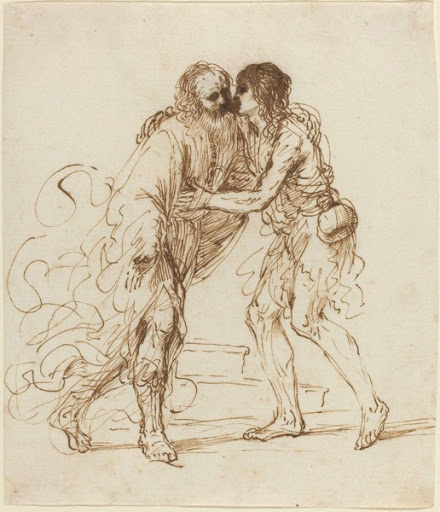
Conscientious objection

Brangwyn1

1611 words, 8 min read

The supremacy of conscience in determining the actions of an individual is a key principle of the current Catechism of the Catholic Church, which, in no uncertain terms, presents it as the ultimate criterion: “A human being must always obey the certain judgment of his conscience. If he were deliberately to act against it, he would condemn himself.” (CCC, §1790). Regardless of whether it is “right” or not – and it can certainly also be wrong! – “[i]n all his activity a man is bound to follow his conscience in order that he may come to God, the end and purpose of life. It follows that he is not to be forced to act in a manner contrary to his conscience. Nor, on the other hand, is he to be restrained from acting in accordance with his conscience.” (Dignitatis Humanae, §3).

This is, indeed, not only the teaching of the Catholic Church, but also enshrined in the Universal Declaration of Human Rights’ articles 1 and 18:

“Article 1. All human beings are born free and equal in dignity and rights. They are endowed with reason and conscience and should act towards one another in a spirit of brotherhood.

Article 18. Everyone has the right to freedom of thought, conscience and religion; this right includes freedom to change his religion or belief, and freedom, either alone or in community with others and in public or private, to manifest his religion or belief in teaching, practice, worship and observance.”

In practice, the picture is far from clear though, in that external forces – but internal ones too – often push in directions opposed to a person’s conscience and going against them can come with significant risks, to the point of putting one’s own life on the line. The United Nations themselves recognize this clearly and in their guidance about conscientious objection with regard to military service, give the following example of probably the earliest recorded conscientious objector:

“In the year 295, on reaching the age of 21, Maximilianus, as the son of a Roman army veteran, was called up to the legions. However, he reportedly told the Proconsul in Numidia that because of his religious convictions he could not serve as a soldier. He persisted in his refusal and was executed. He was subsequently canonized as Saint Maximilian.”

It may not always be a matter of life and death though, at least for the person whose conscience can come in conflict with external forces, such as a state’s laws, and the qualifier “certain” used in the Catechism as well as the knowledge that one’s own conscience may be erroneous can both put a question mark over one’s conscience. The principle of following it can therefore be less than unambiguous in practice and arguments for its bending and dulling can easily creep in. This may, in part be what has resulted in the, to my mind, disgraceful positions taken by some politicians and representatives of the Catholic Church in Central Europe with regard to the refugee crisis (and the opposite of what has thankfully lead many citizens as well as clergy and lay persons to do the right thing).

Against the above background, I would here like to translate parts of an interview that Cardinal Walter Kasper gave yesterday, in which he addressed the question of conscience in the context of the refugee crisis and with reference to the laws of individual states. Here Kasper starts his argument from the position of mercy:

“To welcome someone is a work of mercy and justice that goes beyond state laws. The Holy Year of Mercy reminds us about what the Old and New Testament teach: we must welcome as brothers and sisters those who arrive to us from oppressions and persecutions. And even before we understand whether or not they are to be considered refugees, we must remember that they are human beings and as such have the right to live in a healthy and free environment. It is clear that immigrants must respect the rules of the society that welcomes them, but we must be open because that is what Christian mercy asks of us.”

Next, he goes on to directly address how mercy and the laws of states relate:

“State laws are to be observed, but they are not the ultimate criterion of being a Christian. Mercy goes further. The state cannot give orders to mercy. In this sense, the laws stipulate a minimum level for the rules of coexistence, while mercy goes beyond. And it is only mercy that gives a certain warmth to our society, without it and without compassion we would live in a very cold society. […] There is a question of conscience. One has to wonder if a man who has no documents can be returned to a country where he was persecuted. It is clear that a state has the right to ask for the documents of immigrants, but there is always room for individual conscience.”

In fact, Pope Francis took this same argument even beyond the confines of the Church, by emphasizing the inviolability of a person’s conscience also in the case of non-believers (in one of his first acts as Pope – the letter to the atheist Eugenio Scalfari):

“[T]he mercy of God is limitless for those who turn to him with a sincere and contrite heart, the issue for the unbeliever lies in obeying his or her conscience. There is sin, even for those who have no faith, when conscience is not followed. Listening to and obeying conscience means deciding in the face of what is understood to be good or evil. It is on the basis of this choice that the goodness or evil of our actions is determined.”

And, some months earlier, in his remarks before the Angelus prayer, he explained what he means by conscience, in clearly Christian terms:

“[T]he importance, even for Jesus, of conscience [was this]: listening in his heart to the Father’s voice, and following it. Jesus, in his earthly life, was not, so to speak, “remote-controlled”: He was the Word made flesh, the Son of God made man, and at one point he made a firm decision to go up to Jerusalem for the last time – a decision taken in His conscience, but not on His own: ​​with the Father, in full union with Him! He decided in obedience to the Father, in profound intimate attunement to the Father’s will. For this reason, then, the decision was steadfast: because it was taken together with the Father. In the Father, then, Jesus found the strength and the light for His journey. Jesus was free. His decision was a free one. Jesus wants us Christians to be free as he is: with that liberty, which comes from this dialogue with the Father, this dialogue with God. Jesus wants neither selfish Christians, who follow their egos and do not speak with God, nor weak Christians, without will: “remote-controlled” Christians, incapable of creativity, who seek ever to connect with the will of another, and are not free. Jesus wants us free, and this freedom – where is it found? It is to be found in the inner dialogue with God in conscience. If a Christian does not know how to talk with God, does not know how to listen to God, in his own conscience, then he is not free – he is not free.

So we also must learn to listen more to our conscience. Be careful, however: this does not mean we ought to follow our ego, do whatever interests us, whatever suits us, whatever pleases us. That is not conscience. Conscience is the interior space in which we can listen to and hear the truth, the good, the voice of God. It is the inner place of our relationship with Him, who speaks to our heart and helps us to discern, to understand the path we ought to take, and once the decision is made, to move forward, to remain faithful.”

During the press conference after his visit to the USA, Francis also explicitly applied this same principle to the scenario of a conflict between individual conscience and state law:

“[C]onscientious objection is a right, and enters into every human right. It is a right, and if a person does now allow for conscientious objection, he or she is denying a right. Every legal system should provide for conscientious objection because it is a right, a human right. Otherwise, we would end up selecting between rights: “this right is good, this one less so”. It is a human right. I am always moved when I read, and I have read it many times, when I read the “Chanson de Roland”, when there were all these Moors lined up before the baptismal font, and they had to choose between baptism and the sword. They had to choose. They weren’t permitted conscientious objection. It’s a right and if we want to have peace, we have to respect all rights.”

While its prominence has recently been heightened, conscience has been given great respect throughout the history of Christianity, which can also be seen in the following guidance given by St. Francis of Assisi to the leaders of his own order:

“If a superior give any order to one who is under him which is against that man’s conscience, although he do not obey it yet he shall not be dismissed.”

At a time when obedience to hierarchy was unquestionable, Francis underlined the importance of placing conscience above obedience even in a context where authority may be exercised with the best of motives and by the best and most holy of people.

Enter darkness, make your closeness felt

Widow nain

1532 words, 8 min read

A book-length interview with Pope Francis, by the Italian journalist Andrea Tornielli and entitled “The Name of God is Mercy”, has been published today and I would here like to share some of my favorite passages with you (and encourage you to read it in full!).

First, there is Francis’ rooting of mercy in Ezekiel’s account of the foundation of Jerusalem:

“[M]ercy is God’s identity card. God of Mercy, merciful God. For me, this really is the Lord’s identity. I was always impressed by the story of Jerusalem as it is told in chapter 16 of the Book of Ezekiel. The story compares Jerusalem to a little girl whose umbilical cord wasn’t cut, who was left in blood and cast out. God saw her wallowing in blood, he washed the blood from her, he anointed her, he dressed her, and when she grew up he adorned her with silk and jewels. But she, infatuated with her own beauty, became a harlot, taking lovers not for money but paying them herself. God, however, will never forget his covenant and he will place her above her sisters so that Jerusalem will remember and be ashamed (Ezekiel 16:63), when she is forgiven for what she has done.

For me this is one of the most important revelations: you will continue to be the chosen people and all your sins will be forgiven. So mercy is deeply connected to God’s faithfulness. The Lord is faithful because he cannot deny himself. This is explained well by Saint Paul in the Second Letter to Timothy: “If we are faithless, he remains faithful, for he cannot deny himself.” You can deny God, you can sin against him, but God cannot deny himself. He remains faithful.”

Second, Francis exalts the goodness of starting again over that of an (impossible) never failing:

“The most important thing in the life of every man and every woman is not that they should never fall along the way. The important thing is always to get back up, not to stay on the ground licking your wounds. The Lord of mercy always forgives me; he always offers me the possibility of starting over. He loves me for what I am, he wants to raise me up, and he extends his hand to me.”

In fact, earlier in the book, Francis is explicit about the impossibility of not sinning and follows it up with a great quote by St. Francis de Sales:

“We must take this sad reality of ours into account: no one can avoid sin, small or great, for very long. ‘But,’ as Saint Francis de Sales said, ‘if you have a little donkey and along the road it falls onto the cobblestones, what should you do?’ You certainly don’t go there with a stick to beat it, poor little thing; it’s already unfortunate enough. You must take it by the halter and say: ‘Up, let’s take to the road again . . . Now we will get back on the road, and we will pay more attention next time.’”

Third, there is a good number of personal experiences that Pope Francis shares in the book, to give his answers to Tornielli’s questions a fresh sense of concreteness and specificity. Of these one of my favorites is the following:

“Back when I was rector of the Collegio Massimo of Jesuits and a parish priest in Argentina, I remember a mother with young children, whose husband had left her. She did not have a steady job and only managed to find temporary work a couple of months out of the year. When there was no work, she had to prostitute herself to provide her children with food. She was humble, she came to the parish church, and we tried to help her with our charity, Caritas. I remember one day—it was during the Christmas holidays—she came with her children to the College and asked for me. They called me and I went to greet her. She had come to thank me. I thought it was for the package of food from Caritas that we had sent to her. “Did you receive it?” I asked. “Yes, yes, thank you for that, too. But I came here today to thank you because you never stopped calling me Señora.” Experiences like this teach you how important it is to welcome people delicately and not wound their dignity. For her, the fact that the parish priest continued to call her Señora, even though he probably knew how she led her life during the months when she could not work, was as—or perhaps even more—important than the concrete help that we gave her.”

Fourth, in response to being asked to clarify what he meant when he said that famous “who am I to judge” soon after being elected pope, Francis said:

“I am glad that we are talking about “homosexual people” because before all else comes the individual person, in his wholeness and dignity. And people should not be defined only by their sexual tendencies: let us not forget that God loves all his creatures and we are destined to receive his infinite love. I prefer that homosexuals come to confession, that they stay close to the Lord, and that we pray all together.”

Fifth, in the context of being asked about the “scholars of the law” whom Francis frequently lambasts in his homilies, he recalled a great quote from St. Ambrose’s De Abraham:

“When it comes to bestowing grace, Christ is present; when it comes to exercising rigor, only the ministers of the Church are present, but Christ is absent.”

Sixth, Francis addresses the important question put to him by Tornielli of whether there is a risk of “infection” when dealing with those who live in sin:

“We need to enter the darkness, the night in which so many of our brethren live. We need to be able to make contact with them and let them feel our closeness, without letting ourselves be wrapped up in that darkness and influenced by it. Caring for outcasts and sinners does not mean letting the wolves attack the flock. It means trying to reach everyone by sharing the experience of mercy, which we ourselves have experienced, without ever caving in to the temptation of feeling that we are just or perfect. The more conscious we are of our wretchedness and our sins, the more we experience the love and infinite mercy of God among us, and the more capable we are of looking upon the many “wounded” we meet along the way with acceptance and mercy. So we must avoid the attitude of someone who judges and condemns from the lofty heights of his own certainty, looking for the splinter in his brother’s eye while remaining unaware of the beam in his own. Let us always remember that God rejoices more when one sinner returns to the fold than when ninety-nine righteous people have no need of repentance.”

Seventh, there is also a great deal that made me smile in this book, like the following passage that, while clearly communicating a profound truth, does so with humor:

“At times I have surprised myself by thinking that a few very rigid people would do well to slip a little, so that they could remember that they are sinners and thus meet Jesus. I think back to the words of God’s servant John Paul I, who during a Wednesday audience said, “The Lord loves humility so much that sometimes he permits serious sins. Why? In order that those who committed these sins may, after repenting, remain humble. One does not feel inclined to think oneself half a saint, half an angel, when one knows that one has committed serious faults.””

Eighth, Pope Francis speaks beautifully about how compassion relates to mercy, using Jesus himself as the example:

“Let us reflect on the beautiful pages that describe the raising from the dead of the widow’s son. When Jesus arrived in the village of Nain in Galilee, he was moved by the tears of the widow, who was devastated by the loss of her only son. He says to her, “Woman, do not weep.” As Luke writes in the Gospel: “When the Lord saw her, he felt compassion for her” (7:13). God Incarnate let himself be moved by human wretchedness, by our need, by our suffering. The Greek verb that indicates this compassion is σπλαγχνίζομαι [splanchnízomai, ed.], which derives from the word that indicates internal organs or the mother’s womb. It is similar to the love of a father and mother who are profoundly moved by their own son; it is a visceral love. God loves us in this way, with compassion and mercy. Jesus does not look at reality from the outside, without letting himself be moved, as if he were taking a picture. He lets himself get involved. This kind of compassion is needed today to conquer the globalization of indifference. This kind of gaze is needed when we find ourselves in front of a poor person, an outcast, or a sinner. This is the compassion that nourishes the awareness that we, too, are sinners.”

Adversus Scruton

Tracey emin

2191 words, 11 min read

Is the body subject to the mind, or the mind something that the body does? Is it my body that holds me – my true, immaterial self – back, or is it my parasitic mind that inhibits the freedom of my body, my true, physical self? Ought I to favor the purity of ideas over messy matter, or the concreteness of being over the ephemeral nature of the mind?

Such questions are the polar opposites of a concept of the human person as a single being that is at home both in the material world and in a world that – at least apparently – is beyond matter: a world of thought, memory, relationships and values.

In the context of Christianity, the above is an opposition between the dualist heresy that denigrates matter and the body and attributes goodness only to the soul, and the concept of differentiated unity pervading the New Testament and made explicit in St. Paul speaking of the “spiritual body” [soma pneumatikón] (1 Corinthians 15:44). In Karl Barth’s words, “man is an embodied soul, a besouled body” and the Catechism of the Catholic Church presents an ultimately Trinitarian anthropology: “[t]he unity of soul and body is so profound that one has to consider the soul to be the “form” of the body. [… S]pirit and matter, in man, are not two natures united, but rather their union forms a single nature.” (§365).

With that brief preamble in mind, let us turn to a program by the philosopher Roger Scruton where he speaks about beauty, a subject very close to my heart (in the Homerian sense). Instead of being enlightening or thought provoking, Scruton’s position lead me to disappointment and frustration and, eventually (after some hesitation, given the strength of my initial aversion) to the writing of this piece.

There is a lot to be “against” in this hour-long program, but I will focus on only three of its, liberally intermingled, aspects here: superficiality, internal inconsistency and dualism.

Before arguing in favor of his positions’ flaws, I would first like to underline the good that I have seen in Scruton’s thought. For a start, I wholeheartedly share his insistence on the importance of beauty:

“I want to persuade you that beauty matters; that it is not just a subjective thing, but a universal need of human beings. If we ignore this need we find ourselves in a spiritual desert. I want to show you the path out of that desert. It is a path that leads to home.”

Scruton also presents beauty in art as impelling its recipient towards the good – “The beautiful work of art brings consolation in sorrow and affirmation in joy.” – and as a gateway to profound truths: “The most ordinary event can be made into something beautiful by a painter who can see into the heart of things.” And Scruton also aligns himself with Immanuel Kant’s emphasis of selflessness in art:

“Kant argued that the experience of beauty comes when we put our interests to one side; when we look on things not to use them for our own purposes or to explain how they work or to satisfy some need or appetite, but simply to absorb them and to endorse what they are.”

Sadly that is all I can echo from Scruton’s 6300 word defense of beauty, since the rest strikes me as little more than an attempt to justify what is to his taste and belittle what isn’t, instead of being an attempted enquiry into beauty.

The first issue I find with Scruton’s thought is that there is a tremendous superficiality and lack of charity in his approach to post-nineteenth-century art. This is coupled with a blanket attribution of goodness to all that came before it, paired with a universal belittling of all that came since. Virtually at the start of the program, Scruton declares:

“[I]n the 20th century beauty stopped being important. Art increasingly aimed to disturb and to break moral taboos. It was not beauty but originality however achieved and at whatever moral cost that won the prizes. Not only has art made a cult of ugliness. Architecture too has become soul-less and sterile. […] One word is written large on all these ugly things and that word is “Me.” My profits, my desires, my pleasures. […] Our world has turned its back on beauty and because of that we find ourselves surrounded by ugliness and alienation.”

To my mind this is little more than an expression of Scruton’s esthetic response to contemporary art rather than the result of an analysis either of its motives (in which he assumes beauty not to feature) or of its beauty (which, incidentally, Scruton never defines or analyses beyond declaring its presence or absence). If Scruton had taken the trouble to listen to even just the responses of those who were interviewed in his own program (!), he could have seen that beauty is very much still a driving force in contemporary art. Admittedly not a beauty that he might recognize or appreciate, but beauty nonetheless and not the universally base consumerist pursuit of selfish pleasures that he attributes it.

The clearest example in the program is the following passage from Tracey Emin being interviewed by David Frost about her 1998 piece “My Bed”:

Frost: “[T]he Tate says that it is [beautiful]. But what do you want the viewer, the visitor to the gallery to say? Do you want…. You don’t want them to say, ‘I think that’s beautiful.’”
Emin: “No, no one’s actually said that, only me.”
Frost: “You think it’s beautiful?”
Emin: “Yeah…. I do, otherwise I wouldn’t have showed it.”

Far from beauty being absent from artistic expression, Emin here not only points to it as the motive of her work (“otherwise I wouldn’t have showed [sic] it”) but, to my mind, also expresses a sadness about its absence from the minds of those who view her work.

Another piece that Scruton presents as an example for the absence of beauty is Marcel Duchamp’s 1917 “Fountain” which, he argues “was [a] satirical [gesture], designed to mock the world of art and the snobberies that go with it.” In other words, Duchamp’s work is about mockery and is entirely disconnected from beauty. Interestingly, the Tate describes this work in different terms – as “testing the commitment of the new American Society to freedom of expression and its tolerance of new conceptions of art.” And, importantly, the photographer Alfred Stieglitz, writing in a letter from 1917 describes his photograph of Duchamp’s work as “really quite a wonder – Everyone who has seen it thinks it beautiful – And it’s true – it is. It has an oriental look about it – a cross between a Buddha and a Veiled Woman.” Again, news of the death of beauty is greatly exaggerated …

Finally, let’s look at the words of a third of the enemies of beauty as presented by Scruton – the conceptual artist and painter Michael Craig-Martin. During his interview with Scruton, he responds to a question about what the point was of the changes that Duchamp wanted to usher in, by saying:

“I also think it is important to say that the notion of beauty has been extended to include things that would not have been thought of – that’s part of the artist’s function, to make one see something as beautiful that no one thought was beautiful until now.”

The difficulty here is not that Scruton does not like what Emin, Duchamp and Craig-Martin have done – he is free to experience reality as he pleases – but that he equates the lack of his perception of beauty in their work with their own disinterest in beauty and that he attributes motives to them that are base and among which beauty does not figure.

A second flawed strand in Scruton’s arguments is a total lack of self-consistency. E.g., he is quite content to launch into a tirade against today’s “people”:

“Maybe people have lost their faith in beauty because they have lost their belief in ideals. All there is, they are tempted to think, is the world of appetite. There are no values other than utilitarian ones. Something has a value if it has a use and what’s the use of beauty? […] Our consumer society puts usefulness first and beauty is no better than a side-effect.”

And, almost in the same breath put the following question to Craig-Martin, as a challenge to contemporary art: “What is the use of this art? What does it help people to do?” In other words: “Consumer society puts utility before beauty, and what’s the use of contemporary art anyway?!”

Scruton also simultaneously does two things: he bemoans a “cult of ugliness” at the beginning of the program and, half an hour later, states that art has always done that:

“Of course, this habit of dwelling on the distressing side of human life isn’t new. From the beginning of our civilisation it has been one of the tasks of art to take what is most painful in the human condition and to redeem it in a work of beauty. Art has the ability to redeem life, by finding beauty even in the worst aspect of things. Mantegna’s crucifixion displaying the cruellest and most ugly of deaths achieves a kind of majesty and serenity”

The third flaw I see though is the one that presents the greatest gulf between the beauty that Scruton speaks about and the one that I know: his putting in dualist opposition of the ideal and the particular, of desire and adoration:

“But if human beauty arouses desire how can it have anything to do with the divine? Desire is for the individual, living in this world. It is an urgent passion. Sexual desire presents us with a choice: adoration or appetite? Love or lust? Lust is about taking, but love is about giving.

Lust brings ugliness – the ugliness of human relations in which one person treats another as a disposable instrument. To reach the source of beauty we must overcome lust.

This longing without lust is what we mean today by Platonic love. When we find beauty in a youthful person it is because we glimpse the light of eternity shining in those features from a heavenly source beyond this world. The beautiful human form is an invitation to unite with it spiritually not physically. Our feeling for beauty therefore is a religious and not a sensual emotion.”

Beyond the questionable leaps from desire to sexual desire to lust, Scruton’s thought here too is self-inconsistent: lust leads to ugliness which makes one treat another as an instrument; beauty in youth points to “light of eternity”. To my mind Scruton’s proposal for how to engage with beauty is as objectifying as the sexually-lustful one he decries. In both the case of a source of beauty being turned into an object of one’s pleasure and the case of it being treated as a means for seeking an eternal ideal, that source of beauty is not engaged with for its own sake but is used as a device for satisfying its “consumer”’s ends. And while one can argue about the relative merits of those two ends, their seeking degrades beauty into a mere means.

Scruton’s thought here seems like a polar opposite of the caricature of contemporary art that he battles against, which, however, makes it a caricature too, pitting the beauty of the material and sensory against the beauty of the spiritual and ideal, instead of being open to the union and mutual enrichment of both.

Just to give an example of what an approach of differentiated unity – instead of dualism – looks like when applied to desire, let us consider the way Fr. James Martin, SJ speaks about it:

“[S]adly, desire has a disreputable reputation in many religious circles. When many hear the term, they think of two things: sexual desire or material wants, both of which are often condemned by some religious leaders. The first is one of the greatest gifts from God to humanity; without it the human race would cease to exist! The second is part of our natural desire for a healthy life — desire for food, shelter and clothing. […]

The deep longings of our hearts are our holy desires. Not only desires for physical healing, as Bartimaeus asked for (and as many ask for today) but also the desires for change, for growth, for a fuller life. And our deepest desires, those desires that lead us to become who we are, are God’s desires for us. They are ways that God speaks to you directly, one way that the Creator deals with the creation. They are also the way that God fulfills God’s own dreams for the world, by calling people to certain tasks.”

Such a recognition of good in desire leads to greater appreciation of the entirety of the universe we inhabit rather than to an a priori discarding of either the totality of the material/sensual or spiritual/ideal. In fact it leads to a vision of art like that of Pope Francis who said that “art must discard nothing and no one.”

Antony Gormley: tools for carrying nothing

0401 quantumcloud ix 1999 001

3083 words, 16 min read

Ever since my first encounter with Antony Gormley’s sculptures, I have had a sense of great affinity with his work and later, as I started reading various of his writings and interviews, also with his thought. What attracted me to his sculptures initially is not verbalizable, but reflecting on it leads me to a recognition of shared experience and of shared values. And I am thinking here of existential and ontological values first, although not to the exclusion of moral ones.

Being in the presence of one of his pieces has always given me a profound sense of incarnation – of a beyond in the here – and of communion, of a blurring of boundaries. The latter is obvious in sculptures since his Domain series (and also in Quantum Could, Hive and other, later ones) but I feel it is also there in his earlier work that, at first sight, may suggest the polar opposite – isolation, separation, individuation. Already the Three Part Lead Bodycase works, which on the face of it are solid, lead boundaries, impermeably encasing individuals, are such strong pointers to that “darkness of the body” that Gormley presents as “objectless”, that they too bring out a sense of a collective, shared place – to which each one of us has access in their own bodies, open to encounter and communion.

Instead of talking more about how I see Gormley’s work, I’d like to share some of his thoughts with you, and encourage you to go an see his sculptures next time you get a chance.

To begin with, Gormley has a concept of art that is extreme (a matter of life and death), paradoxical (useless yet vital), but at the same time profound (potentially life-changing confrontation rather than illustrative decoration):

“Art is the way that life tests and expresses itself, without which we are already dead. [… A]rt […] is useless but vital; it is through art that we communicate what it feels like to be alive.” (Art In The Time Of Global Warming, 2010)

“Art is the means by which we communicate what it feels like to be alive – in the past that was mixed up with other illustrative duties but that was still its central function that has been liberated in the art called modern. Art is not necessarily good for you or about communicating “good things”. […] Making beautiful things for everyday use is a wonderful thing to do – making life flow more easily – but art confronts life, allowing it to stop and perhaps change direction – they are completely different.” (BBC Forum Questions And Answers, 2002)

Gormley’s art is very much also about meaning and has parallels with religion: “[My] work comes from the same source as the need for religion: wanting to face existence and discover meaning. The work attempts by starting with a real body in real time to face space and eternity. The body – or rather the place that the body occupies is seen as the locus on which those forces act.” (Concerning The Religious Dimension In My Art, 1987) While rejecting the Christianity of his childhood, which he recounts as something that he was “indoctrinated” with and where he speaks about how he was told that the Devil is inside him, Gormley looks to art as the means also for preserving what is good in religion, while excluding its past errors:

“I am interested in reviving this idea of presence. Can we have presence without the God? Can we resurrect the monument without bringing the shadow of bad history? The idea of an image that is open enough to be interpreted widely, that has multiple and generative potential for meaning but is strong enough to be a focus. How do we construct such an image? In its being someone’s can it become everyone’s? It has seemed for quite a long time obvious to me that the body can represent at the present time what abstraction did at the beginning of the twentieth century. That is, the ground on which all the seeds of emancipated identity are to grow: the last frontier, the inner realm. (Space has been probed but what do we really know of the body’s darkness.) The body, not as an object of idealisation that should be forced to carry allegorical, symbolic or dramatic readings, but the body as a place. The body not as hero or as sexual object, but the body in some way as the collective subjective – the place where we all live. The place on which the pressures of society are inscribed and out of which expression, language, feeling can come.” (Still Moving, 1996)

In the same interview, Gormley emphasizes communion as a purpose of art – also a deeply Christian teleology:

“Can we use the space of art for communion? A contact not only between ourselves but between ourselves and history? In doing this can we also derive the energy necessary to believe in our part in the construction of the future? Is it possible for art to provide a space that can be regenerative? Is it possible to use the space of art to resist this restlessness, this sense of fragmentation, this sense of alienation from self and from place?”

In fact, Gormely sees art as closely tied to beliefs about the value of life and its future not only in the context of an individual but of society and humanity as a whole:

“It is necessary these days to hold on to the crucial function art has in the continuance and regulation of life. It provides us with images and acts by which we identity ourselves but so often now in an unstable way. Art can be a focus for life by reasserting in times of vicissitude the central belie[fs] of a people. In tribal cultures it is a collective act whether in dance, carving, self-decoration that reasserts the body of the people and it is from this that the individual draws his or her power. Art and the practice of non-utilitarian skills is an act of will for the future and is as critical an aspect of survival as hunting or gathering food. What has happened to this urgency expressed in a collective creativity that projects into the future and ensures the belief necessary for life? It is not that we have lost it, but the repositories of dance, dream and art are dispersed into the hands of individuals who have responsibility not simply to a single family or tribe but as points of consciousness of the whole world.” (The Impossible Self, 1988)

The desire for community and an undoing of alienation and fragmentation through art is also a strong theme in Gormley’s 2010 talk about the specific role of art in the context of Global Warming, which is highly relevant also to the upcoming UN conference on climate change that starts on Monday in Paris and deeply consonant with Pope Francis’ Laudato si’ encyclical:

“Is it possible to re-think art and take it from this finished-object status and make it into a verb, a participatory, open space, a place of transformation and the exchange of ideas and reflection on our state and status? Can we use art as a way of investigating this perilous time? Can we change from our obsession with production values? Instead of the perfection of an Asprey’s catalogue or the gloss of the desirable branded object can we accept that art has to find its own raw and direct way of existing?

[In my studio w]e create here situations and objects that can become catalysts for a form of reflexivity that allows the viewing subject not simply to be a passive consumer of an already tested experience but for the experience of art itself to be testing ground for both the model of art and the model of the human subject. We have in making art a specialisation and its exchange as a matter of high monetary worth lost its central subject – the human being. In the art of the 20th century the Duchampian breakthrough was the examination of human labour and mass production in the ‘found object’. I would like art to re-focus on the lost subject.” (Art In The Time Of Global Warming, 2010)

I particularly like that Gormley self-applies his thinking about the state of the world – to his own most immediate environment: his studio. At the same time his perspective is anything but parochial and extends to a global scale [in same text as above]:

“In facing the challenges of global climate crisis in a culture which encourages us to do more, produce more, be seen more – my initial response is paralysing fear, I want to shrink, to go into a hibernating state with minimum muscular effort and put minimal demand on any kind of fuel.

This position is not helpful but perhaps is a good place to start to rethink one’s place in the world.

[…] We can no longer assume that more is better. We have to change our cultural heroes from generals and captains of industry to meditators and mediators, from Rambo and Terminator to Ghandi and the Dalai Lama.

Our tool systems, no longer stone, having separated us from the rest of the planet and biosphere, are now what will, without this revolution, destroy both. The notion that human life was going to be improved by an empirical march of tool making that would make life stronger, longer and safer is challenged by the fall out effects of this very technology. Technology that was in some senses made to make life better has now become the problem.”

Given the above context, let’s turn to what is at the basis of Gormley’s own work as an artist, a sculptor:

“I’m interested in art’s ability to bear witness, and I start with what I know, the bit of the material world in which my consciousness is embedded: my body. And I try to present that bit of material (to myself as much as to anybody else) in a way in which its trace is registered. So my work always starts with the idea of a body at a particular moment in a particular position, fixed by a negative just like a photographic negative, except that this is a three-dimensional negative and we call it a mould. I still think of a mould as being the most magical and mysterious thing. The mould is a testament, a proof of the existence of an object or a body and, for my sculpture, the particular body that I inhabit. […]

I think of my work as instrumental. My sculptures will be seen as very boring objects if you look at them in terms of Western art history, or a kind of desire to make beautiful objects or a “picture” of reality. But if you look at them as instruments then they can become vessels, empty things that can be used for a type of thinking or a kind of feeling, then they begin to get more interesting.” (Silence And Stillness: Antony Gormley Interviewed By Enrique Juncosa, 2002)

I get a great sense of humility from Gormley’s words: a starting from one’s own body, a witnessing first to oneself, a recognition of one’s work being an empty vessel (immediately making me think of Christ’s kenotic self-emptying).

This impression is further strengthened by seeing how Gormley explains the need for starting from the body, which represents common ground and which he sees as an invitation for others to inhabit his work:

“The issue for me is that it is impossible to make art that can truly be shared without acknowledging the body as a starting point of common experience. So I have to acknowledge the body and at the same time try to find a way of not representing it, or presenting it simply as an object. This is the reason why I’m not interested in the perfect copy, in representation. We probably never did it better than Mantegna or Masaccio, and anyway, photography does it perfectly. […]

[My sculptures] are tools for carrying nothing, nothing else than emptiness, shadow, darkness, carrying the condition of embodiment. They each carry the condition we all know. All you have to do is to shut your eyes when you are awake you are in the place that the bodyforms and the bodycases carry. […]

I completely disagree with the […] proposition that the highest aspiration of art is to have a specific object that is purely itself and refers to nothing. I want people to inhabit my sculpture with their own lives, feelings, thoughts, emotions, whatever. I would like the logical and affective to be in the right balance.” (Interview With Pierre Tillet, 2008)

A final point in this thread is also that Gormley sees art as non-elitist, as a landscape open to all:

“We could say that for most of European art’s progress, it’s been about picturing. Then in Modernism it turns to interpretation and deconstruction. And now, I think, we’re into a completely new phase in which art is about providing a place where the human subject is somehow able to concentrate on his/her own being. […] The subjective experience of space-time, the condition of life, rather than being in some way the assumed background condition for refined perceptions of the object, now becomes a landscape in itself. And I think this is a new paradigm in the evolution of art.” (Interview With Hans Ulrich Obrist, 2008)

While Gormley has been extremely successful in his appreciation by the art world, there is an explicit desire in his thought to not be confined by it and to live “in the wild” instead:

“All art now has to be lost: to be an awkward interloper within life, that is its job. What Heidegger talks about in The Origin of the Work of Art, the idea that the temple is part of its landscape and the landscape part of the temple is an ideal, and we have lost it. This is a classical image of interdependence of site and object. And while I recognise this ideal, I think that sculpture does not have a home. For me, sculpture is a lost subject, an alien body that infects and interrupts the cohesion of place. The museum is just one place amongst many wherein you might find art – but not art at work but in refuge. I’m not against museums because I think they have a very important part to play in the memory of a culture. But before my work has any need to be in the museums it has to have a life, it has to have adventures in the real world. For me, art has to be part of everyday life and every one of my pieces is an attempt to look at a new context and say: how can I deal with this opportunity?” (Interview With Pierre Tillet, 2008)

Gormley then positions the scope of art even beyond inter-personal communication, between artist and viewer:

“I’m not so interested in formal validations of work, where people called artists make something called art that belongs in a gallery. It’s tiny the ecology and economy of the art world. Art is not simply human communication or a way of explaining ourselves to ourselves. I’m interested in art that speaks of our vulnerability in time, in the same way that a figure on Easter Island looks up at the sky somewhere above the horizon and is evidently not a substitute for me speaking to you. It’s not about communication between human beings; it’s about communication between human beings and deep time and deep space. This is the broader horizon that I’m interested in positioning the work against. I want to make an art that has to do with survival, that thinks about where human beings fit in the chain of being, that asks who we are, and where we’re going…well, these big, big questions.” (Silence And Stillness: Antony Gormley Interviewed By Enrique Juncosa, 2002)

On the basis of the above, it should come as no surprise that Gormley is an admirer of Teilhard de Chardin, whose concepts of a continuum between matter and spirit and of an evolution towards collective consciousness bear strong resemblance to his art:

“The Internet, for better or worse, is an objectification of Teilhard de Chardin’s idea of the communion of human mind – the noosphere, which is the third encirclement of the globe, the first being the biosphere and the second the atmosphere. With this possibility of instant communication, created by a non-space that is everywhere, the idea of place becomes very important.” (Still Moving, 1996)

“I love Teilhard de Chardin’s idea of the ‘Noosphere’; the idea that there is a deep connection between the mineral and the mental. This has everything to do with sculpture. But in some way the history of material transformation on the planet is a progress from slower, less complex forms to faster, more complex forms and that, in some way, human consciousness is a kind of atmosphere. He calls it ‘Noosphere’ – the idea of an encirclement of the entire surface of the globe by ‘mind’. I think that mind is collective; a collective subjective and one of the tasks is to make that collectivity more apparent.” (Interview With Marjetica Potrc, 1994)

To conclude, let’s look at how Gormley positions his own work in such a continuous world view, speaking about the Earth in not dissimilar ways to St. Francis’ Canticle of Brother Sun:

“Sculpture is a direct way of allowing mind to dwell in matter. It is a means of becoming aware of the connections between matter, space and time in a way that complements (but is completely different from) the connections that science has demonstrated. I firmly believe that we are part of a chain of being and that sculpture is a way of providing instruments in which our place within it can be tested, made manifest and perhaps transformed.

Where does the world begin? Of course we can make it moment by moment and most intimately in what we call the self – but world and self cannot be separated – they are continuous. Where consciousness ends and the world begins is not so easy to define. We are, after all, borrowing our bodies from the earth and is it not likely that the earth knows more of us than we of it? Nothing is ever lost.” (Present Time, 1996)


I’d also recommend a great BBC documentary about Antony Gormley that has only come out recently.

The only thing that’s changed is everything

Francis behind cross

2610 words, 13 min read

Yesterday, at the closing mass of the Synod on the Family, Pope Francis concluded his homily with the following words:

“There is a […] temptation, that of falling into a “scheduled faith”. We are able to walk with the People of God, but we already have our schedule for the journey, where everything is listed: we know where to go and how long it will take; everyone must respect our rhythm and every problem is a bother. We run the risk of becoming the “many” of the Gospel who lose patience and rebuke Bartimaeus. Just a short time before, they scolded the children (cf. Mark 10:13), and now the blind beggar: whoever bothers us or is not of our stature is excluded. Jesus, on the other hand, wants to include, above all those kept on the fringes who are crying out to him. They, like Bartimaeus, have faith, because awareness of the need for salvation is the best way of encountering Jesus. In the end, Bartimaeus follows Jesus on his path (cf. v. 52). He did not only regain his sight, but he joined the community of those who walk with Jesus. Dear Synod Fathers, we have walked together.”

To my mind, these few lines sum up the Synod perfectly, by presenting two poles: one, characterized by rules, clarity and predictability and the other by an path that twists and turns, that is full of surprises, but where we are walking not only among Jesus’ friends, but side-by-side with Jesus himself.

Detractors of the Synod have already declared it a failure, a preservation of the status quo, a “no change” of doctrine, a failure for not opening up access to the Eucharist for the divorced and remarried and a giving-in to African pressures on gays. They, however, are precisely the group for whom Pope Francis had harsh words in the speech he delivered after the Synod Fathers voted on the final report (the Relatio Finalis) paragraph-by-paragraph:

“[The Synod] was about bearing witness to everyone that, for the Church, the Gospel continues to be a vital source of eternal newness, against all those who would “indoctrinate” it in dead stones to be hurled at others. It was also about laying bare closed hearts that frequently hide even behind the Church’s teachings or good intentions, in order to sit in the chair of Moses, sometimes with superiority and superficiality, and judge difficult cases and wounded families.”

Instead of being a failure, I believe, that the Synod was a dramatic first step along the path that Pope Francis presented the week before, on the occasion of the 50th anniversary of the institution of the Synod of Bishops. In that landmark speech, Francis shared his vision of a synodal Church, a Church that is on a journey with Christ in the present moment:

“A synodal Church is a Church of listening, knowing that listening “is more than hearing”. It is a mutual listening in which everyone has something to learn. Faithful people, the College of Bishops, Bishop of Rome: each one listening to the others; and all listening to the Holy Spirit, the “Spirit of truth” (Jn 14:17), to know what he “says to the Churches” (Rev 2:7).”

In such a synodal Church, authority too changes, and becomes rooted in the cross, as Pope Francis explains:

“Let us never forget it! For the disciples of Jesus, yesterday, today and always, the only authority is the authority of service, the only power is the power of the cross, in the words of the Master: “You know that the rulers of the Gentiles lord it over them, and the great ones make their authority over them felt. But it shall not be so among you. Rather, whoever wishes to be great among you shall be your servant; whoever wishes to be first among you shall be your slave.”(Mt 20: 25-27). It shall not be so among you: in this expression we reach the heart of the mystery of the Church – “it shall not be so among you” – and receive the necessary light to understand hierarchical service.”

Pope Francis is also very clear, in the homily he delivered on the morning of the Synod’s last day, about a consequence of being a journeying, synodal Church also being constant change. However, since the journeying party includes Jesus, it is not a thrashing about or a bending with the wind. Instead it is a tight adherence to the person of Christ, while being immersed in the ever-changing now. A freedom with rather than a freedom from or a freedom to:

“The times change and we Christians must change continuously. We must change while being firm in our faith in Jesus Christ, firm in the truth of the Gospel, but our attitude must move continuously according to the signs of the times. We are free. We are free by the gift of freedom that Jesus Christ gave us. But it is our task to look at what happens inside us, to discern our feelings, our thoughts; and what happens outside us and to discern the signs of the times. With silence, with reflection and with prayer.”

All of the above is, to my mind a beautiful spelling out of what Pope Benedict XVI meant when he said, at the beginning of the 2012-13 Year of Faith, that faith “is no theory, but an encounter with a Person who lives within the Church.”

With the above perspective, of a community walking with Jesus, where service is the basis of authority and where life is full of surprises because we aren’t following a set of instructions, but developing a relationship with Jesus instead, let us look at what the Synod on the Family was all about.

First, the Synod was a resounding endorsement of the family, as Cardinal Schönborn put very clearly:

“I think that the principal message of this Synod is the theme of the Synod: that the Catholic Church around the world, with one billion and 200 million Catholics, have discussed the topic of marriage and the family for two years, with all its positives aspects and difficulties … This alone is a remarkable fact for our time, because the core of the message is this: a great yes to the family. The success of this Synod for me is a great yes to the family; that the family is not over, not an old model, but that it is a fundamental model of human society.”

Second, that this endorsement wasn’t just a pre-cooked message to be rubber-stamped, but that it was, instead, the result of an intense process of discernment, discussion and at times even outright verbal warfare both inside the Synod and by interests outside it. Just as examples, a letter from some cardinals to the pope got leaked and resulted in all sorts of recriminations, some cardinals accused others of being opposed to Jesus, and false news about the pope’s health was released two days before the final vote. The inappropriate nature of some of the behavior inside the Synod lead the German language working group to open their final report with the following words:

“We have observed the public statements of individual Synod Fathers regarding the people, content and course of the Synod with great dismay and sadness. This contradicts the spirit of walking together, the spirit of the Synod and its elementary rules. The images and comparisons used are not only coarse and wrong, but hurtful. We distance ourselves from them categorically.”

Third, that there was a great diversity among the Synod Fathers. One of the English language working group’s reports stated that “[o]n many […] points there was consensus, on others there was wide if not universal agreement, and on a few there was significant disagreement.” Pope Francis too saw this very clearly, when he said in his closing speech:

“[W]e have also seen that what seems normal for a bishop on one continent, is considered strange and almost scandalous for a bishop from another; what is considered a violation of a right in one society is an evident and inviolable rule in another; what for some is freedom of conscience is for others simply confusion. Cultures are in fact quite diverse, and each general principle needs to be inculturated, if it is to be respected and applied.”

To my mind this is a very positive picture, which sends a clear message that it is possible to talk about even divisive and sensitive topics openly in the Church.

Fourth, that there was a tremendous desire for unity in the Synod, in the face of the variety of disparate views represented in it. Two things evidence this very clearly. First, that all of the final report’s 94 points were accepted with a 2/3rds majority. In fact, the vast majority (something around 80% of the points) were accepted with near unanimity, and even the handful of more controversial points received support from over 2/3rds of the Synod Fathers. Second, that the German language working group, which included the strongest proponents of both positions in favor of least change (Cardinal Gerhard Ludwig Müller) and of most change (Cardinal Walter Kasper), arrived at unanimous support for all of its reports. Cardinal Reinhard Marx, who was also in that group, gave a very intimate account of how that came about in one of the official press conferences:

“You have to argue. You can’t say I have an opinion. You must be very clear in your knowledge, to quote St. Thomas and the others. When you listen for a few minutes to Cardinal Müller, Cardinal Kasper and Cardinal Schönborn discussing about St. Thomas that is very interesting and when they say St. Thomas said this or that then he really did. So, you have to be together and say: that is the meaning of St. Thomas. […] We had the will to make a text together. It was clear when we wouldn’t find unanimity but we tried to come together and also in the different points, for example regarding the divorced and remarried, we tried to make a text that everyone could accept as a proposal to the Holy Father. [Before the first set of reports we felt that other groups were looking to us to see whether we would find unanimity, given who we are in this group] and Cardinal Schönborn said: “The others are looking at us, so make an effort to come together.””

Fifth, the Synod presented the family as a subject, an agent, rather than an as an object, as something that needs to be managed. One of the Italian working groups put this particularly clearly:

“Given […] that evangelization is the duty of the whole Christian people, […] families, under the grace of the sacrament of marriage, need to become ever more subjects of pastoral care, expression of a mission that becomes visible through a concrete life, not something that is only theoretical but an experience of faith rooted in people’s real problems. Priests should therefore be trained to recognize families as subjects, valuing the skills and experiences of all: lay, religious and ordained.”

Sixth, that the sheer variety and breadth of family circumstances and factors affecting them requires closeness, tenderness and discernment to be the basis of sharing God’s love with all. No set of rules, laws, principles can be a substitute for personal relationships, and Pope Francis is very clear about this too:

“[T]he true defenders of doctrine are not those who uphold its letter, but its spirit; not ideas but people; not formulae but the gratuitousness of God’s love and forgiveness. This is in no way to detract from the importance of formulae, laws and divine commandments, but rather to exalt the greatness of the true God, who does not treat us according to our merits or even according to our works but solely according to the boundless generosity of his Mercy (cf. Rom 3:21-30; Ps 129; Lk 11:37-54). It does have to do with overcoming the recurring temptations of the elder brother (cf. Lk 15:25-32) and the jealous labourers (cf. Mt 20:1-16). Indeed, it means upholding all the more the laws and commandments which were made for man and not vice versa (cf. Mk 2:27).”

An example of this personal discernment-based approach is also the proposal in the final report regarding the divorced and re-married, which says (in §85-86):

“It is […] the task of pastors to accompany interested [divorced and civilly remarried] persons on the way of discernment in keeping with the teaching of the Church and the guidance of bishops. In this process it will be useful to make an examination of conscience through times of reflection and penitence. The divorced and remarried should ask themselves how they behaved toward their children when the conjugal union entered into crisis; if there were attempts at reconciliation; how is the situation with the abandoned partner; what consequences the new relationship has on the rest of the family and the community of the faithful; what example it offers to young people who must prepare for marriage. A sincere reflection can strengthen the trust in the mercy of God which is never denied to anyone. […] Therefore, while upholding a general norm, it is necessary to recognize that the responsibility regarding certain actions or decisions is not the same in all cases. Pastoral discernment, while taking account of the rightly formed conscience of persons, must take responsibility for these situations. Even the consequences of the acts carried out are not necessarily the same in all cases. The process of accompaniment and discernment directs these faithful to an awareness of their situation before God. Conversation with the priest, in the internal forum, contributes to the formation of a correct judgment on what hinders the possibility of a fuller participation in the life of the Church and the steps that can foster it and make it grow.”

Seventh, that mercy is the root of divine love [“Misericordia est radix amoris divini”] as already St. Thomas Aquinas taught and as Pope Francis again underlined as the Synod closed and as the opening of the Jubilee of Mercy approaches:

“The Church’s first duty is not to hand down condemnations or anathemas, but to proclaim God’s mercy, to call to conversion, and to lead all men and women to salvation in the Lord (cf. Jn 12:44-50). […] In effect, for the Church to conclude the Synod means to return to our true “journeying together” in bringing to every part of the world, to every diocese, to every community and every situation, the light of the Gospel, the embrace of the Church and the support of God’s mercy!”

One of the Synod Fathers, Fr. Antonio Spadaro SJ, the director of the Jesuit journal La Civiltà Cattolica, summed this up beautifully in a tweet today:

“After #Synod15 the #Jubilee switches from the binary logic of a door, open/closed, to that of a face, which vitally changes before another face.”


Just in case you are left feeling short-changed about the content of the final report, the scarcity of references to it in the above post are a consequence of two facts: first, that it has no magisterial value (i.e., it is not the Church speaking to its faithful or the world through it – instead, it is a collection of ideas that serve as input for Pope Francis), and, second, that it was the shared journey of the Synod Fathers that matters rather than that document – in keeping with Pope Francis’ call for being a synodal Church instead of one that feels herself best expressed in laws, rules or documents.