Saints as teaching

Communion of saints elise ritter

Especially if you are a nonbeliever (and even if you aren’t), you would be forgiven for looking at saints as a rather outmoded, superficially pious and self-congratulatory aspect of Christianity. Their statues can appear as nothing more than window dressing and be part of what Cardinal Martini referred to as off-putting ‘pomp‘. Even a closer look can yield unedifying results and present a view of saints as freaks, focusing either on their horrific deaths (burning, skinning, drawing and quartering, beheading, mauling, hanging, …) or on weird stunts like levitation, bilocation, living atop a pillar, or severe self-mortification. With a view like that, you’d do best to stay well clear of them and the last thing you’d want to do is tell your children about them!

If you have seen this blog before, you’ll know that I profoundly admire many saints and that I strive to learn from them. St. Francis is an example for approaching poverty, St. Therese for valuing simple, everyday life, St. Maximilian Kolbe for what it means to give one’s life for one’s friends, St. Anselm for how logic can point to God, St. Philip Neri for recognizing humor as a gift, Bl. Chiara ‘Luce’ for how cancer can be an encounter with Jesus, St. John of the Cross for how one’s relationship with God can be misunderstood even by one’s closest fellow believers, St. Thomas More for how adherence to Jesus is above any secular power. And I could go on and on 🙂

What is the point of looking up to saints though? Actually, the point is precisely that it is a looking across rather than a looking up, since saints are my fellow followers of Jesus – subject to weakness, limitations, errors, lapses, pride, difficulties of personality and bounded intelligence. They are what makes me think that I too may have a shot at faithfully following Jesus and it is their virtue, selflessness, compassion, determination and love for all that spurn me on.

There is another key aspect to saints that has been forming in my mind since I have started writing this blog, and it is the following: Church teaching is a complex, often technical and hierarchically–governed set of prescriptions and proscriptions. It is far more akin to the law than anything else, and – just like in the case of the law, its correct interpretation and application to ‘real life’ is arbitrated by professionals: theologians and church officials – the barristers/solicitors and judges of theology. This, however, presents a serious challenge for the individual Christian, who is keen to be faithful to Jesus’ teaching, but who faces the complexities of a technical corpus with finely-tuned, carefully-crafted, legalistic language. How am I, an apprentice follower of Jesus, to grapple with encyclicals, exhortations, the church fathers, canon law, the councils, and even the relatively user-friendly catechism, when I lack theological and legal training? How on earth did St. Peter – a fisherman – do it?

The answer lies precisely in what the early Christians realized already: that it requires putting one’s faith in God and acting on the inspiration provided by the Holy Spirit (e.g., see the account of St. Stephen’s trial and execution in the Acts of the Apostles – chapters 6-8, where Stephen is repeatedly referred to as being ‘filled with the holy Spirit’ (e.g., Acts 7:55), but it also requires continuity with how God acts in others and has acted in others in the past (where the more structured aspect of Church teaching, referred to before, comes from) also so that one’s conscience is purified of errors. What all of this leads to is that explicit Church teaching is certainly a guide to following Jesus, but also that the example of others can provide a more accessible means of seeing it put into practice. For example, by imitating St. Therese in seeking God’s will in everyday chores and doing them out of love for Him and my neighbors, I will not only act orthopractically, but also on an orthodox basis. By seeing how a saint has acted, I have a more applied and immediate view of what the Church teaches. In fact, Pope Benedict XVI said something similar yesterday in the context of ecumenism, when he highlighted that while Church unity is not something that we can cause (it will be a gift from God), we can “learn from each other how to follow Christ today.” In other words, orthopraxy is to be imitated regardless of who does it.

Finally, there is another aspects of learning from the actions of saints, which is that it is not only individual Christians who can do so, but the Church as a whole too. I believe that official, formal Church teaching can be seen as a distillation of the orthopraxy (holiness) and therefore orthodoxy of saints. This was evidently so at the very beginning of the Church, where it is Jesus’ actions and beliefs that are Church teaching, but right from the get go it is also the teachings of the apostles that attain orthodox status (e.g., see Peter’s ‘trance’ in which he is told to eat food considered impure and told “What God has made clean, you are not to call profane.” (Acts, 10:15)). The history of the church is then a sequence of growing insight into how best to follow Jesus and the actions and beliefs of saints are a key part of it (just look at the Catechism and notice the number of references to what the saints have said). Since such growth of insight also involves change, the new understanding, acted upon by saints, is often misunderstood and often so for decades or centuries (but luckily saints don’t do what they do for celebrity status). In the end though, the orthopraxy of saints tends to be of such vehemence that doubts about the origin of their beliefs are dispelled.

Servant of servants

Jesusfeet

Today is the feast of a saint whose name alone – Pope Gregory the Great – promises an edifying closer look and, if you have been following this blog (e.g., here and here), you will also know that he influences the Church to this day. St. Gregory had a varied and rich career, whose first milestone (after an extensive and broad eduction spanning music, law, mathematics and natural sciences) was to be named Prefect of the City of Rome (effectively its mayor). Following the death of this father, Gregory became a monk though and withdrew from the world, only to be called upon by Pope Pelagius II to act as his ambassador to Constantinople. Instead of being allowed to retire to the monastic life after this mission, he was instead elected pope, very much against his will, and lead the Church for 14 years during which he introduced reforms both in the administration of the Church and in its liturgy.

There would be lots to say about St. Gregory, but I would like to focus only on two points:

  1. His love for the poor and his large-scale charitable work, best expressed by him saying: “I hold the office of steward to the property of the poor.” St. Gregory saw the church as a not-for-profit organization (in secular terms) and distributed the many donations the Church received to the poor – only keeping what was necessary for maintaining its facilities and supporting its personnel.
  2. His reluctance towards being pope, born of a deep humility, very clearly expressed by his adoption of the title “Servant of the servants of God” – by far my favorite papal title and one used to this day by his successors. St. Gregory also emphasized the importance of personal spiritual life for those holding high office in the Church, e.g., by saying “[U]nder the cloak of the Ecclesiastical office, I found myself plunged on a sudden in a sea of secular matters, and because I had not held fast the tranquillity of the monastery when in possession, I learnt by losing it, how closely it should have been held.” This is certainly an attitude I have seen very clearly both in the current pope and his predecessor and in many priests I have known and admire.

Orthodoxy and/or orthopraxy

640px Ariel between Wisdom and Gaiety

What is the relationship between correct belief (orthodoxy) and correct action (orthopraxy) and how much does one matter versus the other? Is it more important what you think or what you do? While this is not a new question, I believe it is still a key one today.

Starting with Jesus, we can see him emphasizing both orthopraxy (also as a means of inferring orthodoxy when heterodoxy may be suspected):

“By their fruits you will know them. Do people pick grapes from thornbushes, or figs from thistles?” (Matthew 7:16) and

“Not everyone who says to me, ‘Lord, Lord,’ will enter the kingdom of heaven, but only the one who does the will of my Father in heaven.” (Matthew 7:21)

and validating orthodoxy in spite of it’s proponents’ heteropraxy:

“The scribes and the Pharisees have taken their seat on the chair of Moses. Therefore, do and observe all things whatsoever they tell you, but do not follow their example. For they preach but they do not practice. They tie up heavy burdens [hard to carry] and lay them on people’s shoulders, but they will not lift a finger to move them. All their works are performed to be seen.” (Matthew 23:2-5)

Looking at Jesus’s teaching, there is a clear preference for orthopraxy (whose absence is an obstacle and which will also be the basis for the questions asked at the last judgement about feeding the hungry, quenching their thirst, welcoming strangers, clothing the naked, caring for the sick, visiting prisoners, … (Matthew 25:31-46)) but orthodoxy is valued in its own right as a (non-exclusive) means for engendering orthopraxy (and, by Christians, as a gift from God). In a way it can be seen as being assumed to be present at least implicitly, partially, unconsciously in those behaving orthopractically.

Let me just pick out two examples of where this principle of orthopraxy being taken to assume (implicit) orthodoxy has been employed by Jesus’ followers – a very recent one and a rather ancient one:

  1. Saint Pope Gregory the Great (6-7 century AD) was so taken by the justice that the emperor Trajan (1-2 century AD) has shown towards a widow, who violently lost her only son, and by his virtue that he prayed for the salvation of his soul and it’s promotion from purgatory to heaven. In other words, Gregory was motivated by Trajan’s orthopraxy to petition for his receiving the rewards he thought were only due to the orthodox.
  2. Archbishop Müller, when questioned about his friendship with Gustavo Gutiérrez, the father of Liberation Theology, responded: “The theology of Gustavo Gutiérrez, independently of how you look at it, is orthodox because it is orthopractic. It teaches us the correct way of acting in a Christian fashion since it comes from true faith.” This is not to say that all of Liberation Theology is exonerated by virtue of the virtue of its followers (the Vatican’s criticisms of Marxist influences in some of its strands are upheld by Müller), but that the virtue of its followers is a fruit of their orthodoxy.

All of this links rather nicely with Martini’s idea of (non)believers and is another argument for appreciating the orthopraxy of all while also valuing beliefs that can lead to it. I also believe it is a key to reading some Protestant–Catholic differences, to relating the lives of saints and Church doctrine and to appreciating great works of art created by artists who have committed heinous crimes (a.k.a., my roadmap for a couple of future posts :).

What do you mean, John 3:16?

Joseph nicodemus

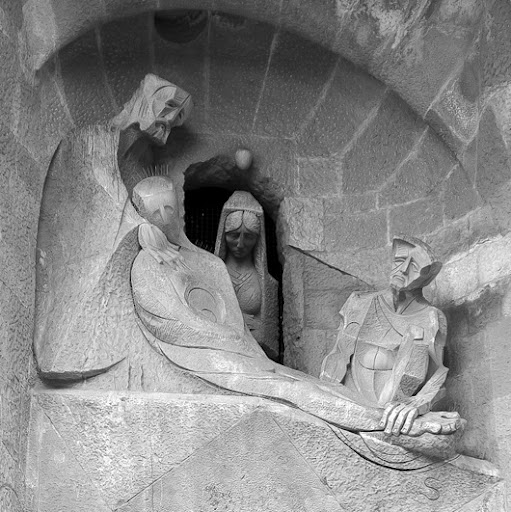
Today is the feast of two great saints: Nicodemus and Joseph of Arimathea. Neither was involved in the great battles against heresy that mark the lives of so many saints nor were they believed to have been martyred, to have lead ascetic lives or to have had visions or ecstasies. Also, in all likelihood, both were married men – pillars of the Jewish community at the time. Nicodemus was a politician, judge and prominent public figure, while Joseph (believed by some to be none other than Josephus Flavius) was an aristocrat and scholar. If they had LinkedIn profiles, they would come across as regular 1%ers.

Nonetheless, these guys are great examples of following Jesus – and they had the privilege of doing so in person. Nicodemus visiting Jesus in secret at first (John 3:1-21) but then coming out in the open to help Joseph to bury him (John 19:39–42) and Joseph being the one who stepped out of the shadows to petition Pilate for Jesus’s corpse. To my mind, both have shown great courage to place themselves at Jesus’s side under risky circumstances, putting their good standing and reputation at risk by associating themselves with a convicted and executed criminal. While that may not be asked of me, I see them as examples for taking Jesus’s side also when it is uncomfortable in the eyes of society.


Nicodemus can’t be mentioned without a nod to Wyclef Jean‘s “John 3 16,” where “pig couldn’t fly straight so you die in your sleep; I stay awake only to see Nicodemus.” Here you can find the lyrics and the song itself.

Hatred and liberty cannot coexist

Chief Rabbi Lord Sacks pic 3 Copy

I have been following Lord Sacks, the chief rabbi of the Commonwealth, for a while on Twitter and have greatly enjoyed his writings ever since. Today’s post on his website is no exception and is well worth reading in full. Kicking off with a great quote by Martin Luther King:

Darkness cannot drive out darkness: only light can do that. Hate cannot drive out hate: only love can do that. Hate multiplies hate, violence multiplies violence, and toughness multiplies toughness …

he then goes on to discuss one of the instructions Moses gives to his people: “Do not hate an Egyptian, because you were a stranger in his land.” (Deuteronomy 23: 8). Lord Sacks emphasizes how counter-intuitive a law this is, given the exploitation and slavery the Israelites suffered at the hands of the Egyptians, instead of a spell of hospitality that the quote may suggest. His key point though is that hatred makes us slaves of the past and allows for past wrongs to persist in us even after they occurred. This does not mean that injustice ought to be forgotten, but only that its remembrance is to serve the purpose of prevention rather than retaliation. The key paragraph from Lord Sacks’s exegesis to me is the following though:

Hatred and liberty cannot coexist. A free people does not hate its former enemies; if it does, it is not yet ready for freedom. To create a non-persecuting society out of people who have been persecuted, you have to break the chains of the past; rob memory of its sting; sublimate pain into constructive energy and the determination to build a different future.

In many ways this is similar also to what St. Augustine, whose feast it is today, said:

“[He] he shall neither hate the man because of his vice, nor love the vice because of the man, but hate the vice and love the man. For the vice being cursed, all that ought to be loved, and nothing that ought to be hated, will remain.” (The City of God, 14:6)

Here Lord Sacks’ words can be read as saying that a fault’s or wrongdoing’s ‘cure’ needs to be accelerated and that those who have been wronged can take the first step. Maybe hatred is not a feeling I have myself, but there are certainly past events that have hurt or saddened me and I will strive to apply Lord Sacks’s advice to my attitude to them.

The wedding garment


Yesterday’s gospel reading was a bit of a puzzler and as I don’t think I ever heard it convincingly explained in a homily or made satisfactory sense of it myself, I started digging a bit into it. The text is from Matthew’s gospel (22:1-14) and presents the parable of the king’s son’s wedding feast where those who are invited refuse and the king’s servants bring in whomever they can find. The parable then ends in one of the guests being expelled for wearing the wrong gear plus there is a bit of killing too. Here is the full text:

Jesus said to the chief priests and the elders of the people, ‘The kingdom of heaven may be compared to a king who gave a feast for his son’s wedding. He sent his servants to call those who had been invited, but they would not come. Next he sent some more servants. “Tell those who have been invited” he said “that I have my banquet all prepared, my oxen and fattened cattle have been slaughtered, everything is ready. Come to the wedding.” But they were not interested: one went off to his farm, another to his business, and the rest seized his servants, maltreated them and killed them. The king was furious. He despatched his troops, destroyed those murderers and burnt their town. Then he said to his servants, “The wedding is ready; but as those who were invited proved to be unworthy, go to the crossroads in the town and invite everyone you can find to the wedding.” So these servants went out on to the roads and collected together everyone they could find, bad and good alike; and the wedding hall was filled with guests. When the king came in to look at the guests he noticed one man who was not wearing a wedding garment, and said to him, “How did you get in here, my friend, without a wedding garment?” And the man was silent. Then the king said to the attendants, “Bind him hand and foot and throw him out into the dark, where there will be weeping and grinding of teeth.” For many are called, but few are chosen.’

So, what does all this mean? I had a quick look at homilies over the last 2000 years and found the following:

  1. St. Cyril of Jerusalem (4th century AD) basically considers this parable self-explanatory 😐
  2. St. John Chrysostom (4th century AD) gives the parable a historical reading whereby those invited are the people of Israel while the random crowd picked from the cross-roads are the Gentiles. He also focuses on the invitation to the latter being due to no merit of their own but wholly down to grace. The most interesting part if the parable to me is the poor guy who gets kicked out after he was invited at random. Here St. John focuses on the fact that he condemns himself – only after the king personally questions him about his improper attire (representing the corrupted state of his life) and he is unable to bring anything to his own defense, is he condemned. St. John also makes a point about this guest having had a clean garment given to him to begin with: “And yet the calling was of grace; wherefore then doth He take a strict account? Because although to be called and to be cleansed was of grace, yet, when called and clothed in clean garments, to continue keeping them so, this is of the diligence of them that are called.” This addresses the prima facie peculiarity of the parable: why punish someone who was invited in at random. The answer seems to be that the second cohort of guests were given appropriate attire (grace) but failed to maintain it.
  3. St. Augustine (4th-5th century AD) offers a rather convoluted explanation of this parable, spending an inordinate amount of time on evidencing that the one expelled guest actually represents a whole category (he is to be commended for his rigor though). As regards the expelled guest, St. Augustine equates the wedding garment with charity and quotes St. Paul to warn against its imperfect variants :““though I distribute all my goods for the use of the poor, and though I give my body to be burned, and have not charity, it profiteth me nothing.” This then is “the wedding garment.””
  4. Martin Luther (14th-15th century AD) reiterates the historical reading of St. John and St. Augustine and, as regards the expelled guest he characterizes them as follows: “These are pious people, much better than the foregoing; for you must consider them the ones who have heard and understood the Gospel, yet they cleaved to certain works and did not creep entirely into Christ; like the foolish virgins, who had no oil, that is, no faith.” That is, Christians, who were given everything, but have squandered it. What is it that God wants instead? Here Martin Luther has the following to say: “Now, what do we bring to him? Nothing but all our heart-aches, all our misfortunes, sins, misery and lamentations.” God wants us to be open with him and give him our all – weaknesses and strengths included.
  5. Finally, Pope Benedict XVI also offers his reading of this parable in a recent sermon: “God is generous to us, He offers us His friendship, His gifts, His joy, but often we do not accept His words, we show more interest in other things, we put our material concerns, our interests first.” As far as the expelled guest, Pope Benedict says: “on entering the hall, the king sees someone who has not wanted to wear the wedding garment, and for this reason he is excluded from the feast.” again echoing St. John’s position that the wedding garment was available to the guest but that it was his choice not to wear/maintain it. Pope Benedict then quotes St. Gregory the Great, who says that “this garment is symbolically interwoven on two pieces of wood, one above and one below: love of God and love of our neighbour.”

This parable has certainly been given a lot of thought since Jesus shared it with his followers and it seems clear that it is squarely directed at those who have heard the call of God to follow him. It is a warning both to those who hear it and ignore it and to those who follow it on the surface, but don’t back it up with faith and charity. In no way is this any criticism of sincere atheists/agnostics. Instead it is a rather harsh warning to those of us who claim to be Jesus’ followers, and, as St. John says “indicates […] the strictness of the life required, and how great the punishment appointed for the careless.” So, instead of a “oh, isn’t this a bit unfair to the poor, random fella” the message is clearly: take your relationship with God seriously – it is no game.

Salve Regina


Salve, Regina, Mater misericordiæ,
vita, dulcedo, et spes nostra, salve.
ad te clamamus exsules filii Hevæ,
ad te suspiramus, gementes et flentes
in hac lacrimarum valle.
Eia, ergo, advocata nostra, illos tuos
misericordes oculos ad nos converte;
et Iesum, benedictum fructum ventris tui,
nobis post hoc exsilium ostende.
O clemens, O pia, O dulcis Virgo Maria.

Today is the feast of Mary, Queen of Heaven, and my first reaction was to skip this as a blog topic as monarchic themes mean nothing to me (their frequent use in theology being, to my mind, a historical aberration rather than something that tells us anything profound about God). Then I remembered the hymn Salve Regina, in its original above and in a contemporary English translation here:

Hail, holy Queen, Mother of mercy,
our life, our sweetness, and our hope.
To you we cry, the children of Eve;
to you we send up our sighs,
mourning and weeping in this land of exile.

Turn, then, most gracious advocate,
your eyes of mercy toward us;
lead us home at last
and show us the blessed fruit of your womb, Jesus:
O clement, O loving, O sweet Virgin Mary.

This hymn is one of the few that have emotional resonance for me both because it has been sung at important moments in my life and because it says some key things about Mary, who is the model for how to follow her son, Jesus. The hymn both sets the context of suffering and persecution that Mary was exposed to throughout her life (just think of her desolation at the foot of the cross), and that we too experience at different moments, and points to its resolution in her son. Why is it though that Mary should play this role of intercessor? Can’t we just pray to Jesus? Sure! Invoking Mary’s help in no way bypasses Jesus – in fact if you look at everything we know about her, it always points to God. Does this mean that she is in some way insubstantial? On the contrary! What I see when I look at Mary is a person fulfilled to the maximum since she perfectly followed God’s plan for her. I believe God has a plan for each one of us (a plan that always starts in the now, regardless of what we have done before) and that fulfils us, gives us joy and makes us free.

The cowardice and weakness of good men


St. Pope Pius X, whose feast day it is today, has been a hero of mine since my childhood, when I read his inspiring biography by Wilhelm Hünermann. He grew up in a poor family and was given an education only thanks to his parish priest’s charity. As he then rose through the ranks of the Church, he maintained his focus on the essential and lived in Evangelical poverty until his death. Upon being elected pope he decided to only use a small room in the Vatican and proceeded to sell off many of the papacy’s insignia (including the papal tiara – the headpiece adorned with three crowns), with the takings going to the poor. He also suffered greatly from the upheaval that culminated in WWI, saying that “[i]n our time more than ever before, the chief strength of the wicked, lies in the cowardice and weakness of good men.”

Given this great saint’s and pope’s holiness, I am just dismayed at the break-away ‘traditionalist’ group – the Society of St. Pius X – using his name in vain. I am sure it wouldn’t be to his liking …


A post about St. Pius X can’t go out without mention of a prank he pulled as a kid. When asked to look after an old lady’s house in her absence, he went on to teach her cats to fear the rosary by chasing them with a stick while rattling it. When the old lady returned and got to praying the rosary, her cats went nuts 🙂

The Word is near you


Today is the feast day of St. Bernard of Clairvaux, a great reformer of the Church and of monasticism and co-founder of the Cistercians. He also warned strongly against antisemitism and was an outspoken critic of the corruption in the Church of the 12th century (e. g., saying “One cannot now say, the priest is as the people, for the truth is that the people are not so bad as the priest.”) In many ways he prefigured the Reformation, and while he was an outspoken critic, he remained a reformer who stayed faithful to the Church and was later proclaimed saint and Doctor of the Church. What I find most attractive about him though are his insights about how to follow in Jesus’ footsteps, with sayings like “The true measure of loving God is to love Him without measure.” My favourite though is: “You don’t have to navigate seas, break through clouds or cross the Alps. The way that is being shown to you is not long. You only have to go towards God as far as yourself since the Word is near you: it is in your mouth and in your heart.”

Victories of all kinds

Fr. Maximilian

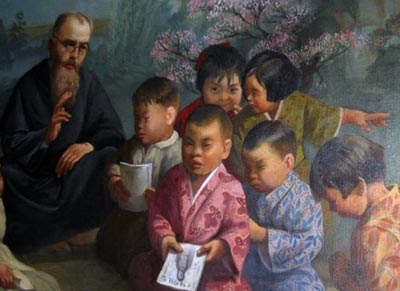
Today is the feast of one of the most heroic saints of modern times: St. Maximilian Kolbe, who gave his life for a fellow inmate at Auschwitz. When a prisoner escaped the camp, 10 inmates were to be executed as a reprisal. One of them was the young father of a family, who pleaded for mercy. In response Fr. Maximilian offered to take his place and the guards acquiesced. After a prolonged starvation during which he supported his fellows on death row and which made his guards’ patience run out, Fr. Maximilian was given a lethal injection, which killed him.

This much is generally known about him and it is indeed worthy of admiration and contemplation. Fr. Maximilian was also a person of great openness and learning, having spent many years in Japan, encountering Buddhism and Shintoism, and a person who stood up to the oppressive Nazi regime, having written articles and transmitted radio broadcasts calling for resistance, which ultimately got him sent to the death camp.

His act of heroism was not a momentary exception, but the fruit of a life dedicated to truth and love.

Here is what he has to say in his own words:

“No one in the world can change Truth. What we can do and and should do is to seek truth and to serve it when we have found it. The real conflict is the inner conflict. Beyond armies of occupation and the hetacombs of extermination camps, there are two irreconcilable enemies in the depth of every soul: good and evil, sin and love. And what use are the victories on the battlefield if we are ourselves are defeated in our innermost personal selves?”