Schönborn: The door is never closed

Yesterday, the Jesuit journal, La Civiltà Cattolica, published an extensive interview of its director Fr. Antonio Spadaro, SJ with Cardinal Christoph Schönborn of Vienna in Italian. Even though some partial translations in English are already available, the following is my, rough translation of the passages that spoke to me most strongly (it is around 90% of the full text and the passages I left out were only left out for practical reasons …).

In response to a question about whether the scope of the upcoming Synod on the family ought to be doctrinal, Cardinal Schönborn replied:

“The challenge that Pope Francis puts in front of us is to believe that, with the courage that comes from simple closeness, from the everyday reality of people, we will not distance ourselves from doctrine. We don’t risk diluting its clarity by walking with people, because we ourselves are called to walk in faith. Doctrine isn’t, in the first place, a series of abstract statements, but the light of the word of God demonstrated by the apostolic witness at the heart of a Church and in the hearts of believers who walk in the world today. The clarity of the light of faith and its doctrinal development in each person is not in contradiction with the journey that God undertakes with us, who are often far from living the Gospel fully.”

When asked about how we ought to view and what attitude we ought to have towards those who live in irregular arrangements, he then replied:

“At the last Synod, I proposed an interpretative key that has lead to much discussion and was referred to in the Relatio post disceptationem, but that was no longer present in the final document, the Relatio Synodi. It was an analogy with the ecclesiological interpretative key given by Lumen Gentium, the constitution on the Church, in its article 8. There the question is: “Where is the Church of Christ? Where it is incarnated concretely? Does the Church of Jesus Christ, which he desired and founded, really exist?” To this, the Council responded with the famous statement: “The only Church of Christ subsists in the Catholic Church”, subsistit in Ecclesia catholica. It is not a pure and simple identification, like saying that the Church of Jesus Christ is the Catholic Church. The Council affirmed: it “subsists in the Catholic Church”, united with the Pope and legitimate bishops. The Council adds this phrase, which has become key: “Although many elements of sanctification and of truth are found outside of its visible structure. These elements, as gifts belonging to the Church of Christ, are forces impelling toward catholic unity.” Other denominations, other churches, other religions are not simply nothing. Vatican II excludes and ecclesiology of the all or nothing. The all is fulfilled in the Catholic Church, but there are elements of truth and holiness in other churches, and even in other religions. These elements are elements of the Church of Christ, and by their nature they tend to catholic unity and the unity of mankind, towards which the Church herself tends, in anticipation of, so to speak, the great plan of God that is the one Family of God, humanity. The approach of the Council is justified in this key, because of which one does not consider first what is missing in the other Churches, Christian communities or religions, but what is positive there. One gathers the semina Verbi, as has been said, the seeds of the Word, elements of truth and sanctification.”

And how does this translate to the family?

“I simply proposed to apply this interpretation to the ecclesiological reality of the sacrament of marriage. Because marriage is a Church in miniature, an ecclesiola, the family as a small Church, it seems legitimate to me to establish an analogy and say that the sacrament of marriage is fully realized where there is a properly established sacrament between a man and a woman living in faith etc. But this does not prevent that, outside of this full realization of the sacrament of marriage, there be elements of marriage that are anticipatory signs, positive elements.”

Let’s take, for example, civil marriage:

“Yes, we consider it as something more than simple cohabitation. Why? It is a simple civil contract that from a strictly ecclesial point of view has no meaning. But we recognize that in civil marriage there is more commitment, therefore a greater alliance, than in simple cohabitation. The two make a commitment before society, humanity and themselves, in a more explicit alliance, anchored legally with sanctions, obligations, duties, rights … The Church believes that this is a further step than simply living together. There is in this case a greater proximity to sacramental marriage. As a promise, an anticipatory sign. Instead of speaking about all that is missing, one can approach these realities, noting the positive that exist in this love that is becoming more stable.”

How do we therefore consider situations that have objective shortcomings?

“We should look at the numerous situations of coexistence not only from the point of view of what is missing, but also from the point of view of what is already promised, what is already present. Moreover, the Council adds that, although there is always real holiness in the Church, it is made up of sinners and advances along the path of conversion (LG 8). It is always in need of purification. A Catholic mustn’t put themselves on a step above others. There are saints in all the Christian churches, and even in other religions. Jesus said twice to the pagans, a woman [cf. Luke 8:48] and a Roman officer [Luke 7:9]: “I tell you, not even in Israel have I found such faith.” A true faith, that Jesus found outside the chosen people.”

So, the dividing line is not between those who live sacramental marriage and who don’t?

“Those who have the grace and the joy of living sacramental marriage in faith, humility and mutual forgiveness, in a trust in God who acts in our daily lives, know how to look and discern in a couple, in a cohabitation, the elements of true heroism, true charity, true mutual giving. Even though we must say: “It is not yet the full reality of the sacrament.” But who are we to judge and say that there are no elements of truth and sanctification in them? The Church is a people that God draws to himself and to which all are called. The Church’s role is to accompany everyone in growth, along a path. As a pastor I experience this joy of being on a journey, among believers, but also among many non-believers.”

Cardinal Schönborn then gives examples of how a person who has been through several marriages may find faith in later life and how accompanying them and caring for them may require considering their specific, individual circumstances rather than a simple application of rules. He concludes that answer with saying “I can’t hide […] that I have been shocked by how a purely formalist way of thinking wields the axe of the “intrinsece malum.” Fr. Spadaro then explains it in a footnote thus: “What is meant by an “intrinsically evil” (intrinsece malum) act is an action whose moral connotation is such that it can in no case change from negative to positive. Therefore it is an act that is always considered morally evil, irrespective of the ulterior intentions of the one acting and of the circumstances.”

Could you elaborate on the problem of that which is defined as “intrinsece malum”?

“In practice, it excludes any reference to the question of fitness [convenientia] that, for St. Thomas, is always a way of expressing prudence. It is neither utilitarianism nor an easy pragmatism, but a way to express a sense of appropriateness, of conformity, of harmony. Regarding the question of divorce, this type of argument has been systematically excluded by our intransigent moralists. If misunderstood, the intrinsece malum suppresses discussion of – by definition complex – circumstances of and situations in life. A human act is never simple, and the risk is to “paste” in a false relationship between the true object, purpose and circumstances, which instead should be read in the light of freedom and of an attraction to the good. The free act is reduced to a physical one so that the clarity of logic suppresses any moral discussion and all circumstances. The paradox is that by focusing in the intrinsece malum one loses all the wealth, I would say almost the beauty of a moral articulation, resulting in its annihilation. Not only does the moral analysis of situations become univocal, but but one is left cut off from a comprehensive perspective on the dramatic consequences of divorce: economic, educational, psychological, etc. This is true for everything that regards the themes of marriage and the family. The obsession with intrinsece malum has so impoverished the debate that we are deprived of a wide range of arguments in favor of the uniqueness, indissolubility, openness to life, of the human foundation of the doctrine of the Church. We have lost the flavor of discourse on these human realities. One of the key elements of the Synod is the reality of the Christian family, not from an exclusive point of view, but from an inclusive one. The Christian family is a grace, a gift of God. It is a mission, and by its nature – if it is lived in a Christian way – is something to be welcomed. I remember a proposal for a pilgrimage for families in which the organizers wanted to invite only those who practice natural birth control. During a meeting of the Bishops Conference we asked them how they would: “Select only those who practice 100%, n%? How do you do that?”. From these somewhat caricature expressions you realize that if the Christian family is lived in this way, it inevitably becomes sectarian. A world apart. When you seek safety, you are not a Christian, you are focused only on yourself!”

On the challenges of pastoral accompaniment of persons living in irregular unions:

“If a valid sacramental marriage existed, a second marriage is an irregular union. However, there is the whole dimension of spiritual and pastoral care for people living in irregular situations, where it will be necessary to discern between everything and nothing. You can not transform an irregular situation into a regular, but there are ways of healing, of deepening, ways in which the law is experienced step by step. There are also situations where the priest, the accompanying person, who knows the people well, may arrive at saying: “Your situation is such that, in conscience, in your and in my consciousness as a pastor, I see your place in the sacramental life of the Church.””

Could you tell me about a pastoral experience that was particularly significant for you?

“I have an unforgettable memory of the time when I was a student at Saulchoir, with the Dominicans in Paris. I was not yet a priest. Under the bridge over the Seine that leads to the Évry convent lived a homeless couple. She had been a prostitute and I don’t know what he has done in life. Certainly they were not married, nor did they frequent the Church, but every time I passed by there, I said to myself: “My God, they help each other along the path through such a hard life.” And when I saw gestures of tenderness between them, I said to myself: “My God, it is beautiful that these two poor people should help each other, what a great thing!” God is present in this poverty, this tenderness. We must break free from this narrow perspective on the access to the sacraments in irregular situations. The question is: “Where is God in their lives? And how can I, as a pastor, discern the presence of God in their lives? And how can they can me to better discern the work of God in a life?” We need to learn how to read the Word of God in actu [in reality] between the lines on which life is written and not only between the lines of incunabula!”

Are there any situations that are irreparable for the mercy of God?

“There may certainly be situations of self-exclusion. When Jesus says: “But you were unwilling” [Matthew 23:37]. Faced with this, in some way, God is disarmed, because He gave us the freedom … And the Church must recognize and accept the freedom to say no. It’s hard to want to reconcile at all costs complex situations in life with full participation in the life of the Church. This will never prevent either hoping or praying, and will always be an invitation to entrust such a situation to the providence of God, which can continuously offer instruments of salvation. The door is never closed.”

How can we find realist and Gospel-based words to accompany homosexuals along their journey of faith?

“We can and we must respect the decision to form a union with a person of the same sex, to seek means under civil law to protect their living together with laws to ensure such protection. But if we are asked, if it is demanded of the Church to say that this is a marriage, well, we have to say: non possumus [we cannot]. It is not a discrimination of persons: to distinguish does not mean to discriminate. This absolutely does not prevent having great respect, friendship, or collaboration with couples living in this kind of union, and above all we mustn’t look down on them. No one is obliged to accept this doctrine, but one can’t pretend that the Church does not teach it.”

Have you come across circumstances in the lives of homosexuals that have spoken to you in a particular way?

“Yes, for example, I know a homosexual person who has lived a series of experiences for years, not with a particular person or cohabiting, but frequent experiences with different people. Now he has found a stable relationship. It is an improvement, if nothing else then on a human level, this not jumping from one relationship to another, but being in a stable relationship that is not based only on sexuality. One shares one’s life, one shares the joys and sufferings, one helps one another. We must recognize that this person has made an important step for his own good and for the good of others, even though, of course, this is not a situation that the Church can consider regular. The judgment on homosexual acts as such is necessary, but the Church mustn’t look first in the bedroom, but in the dining room instead! We must accompany.”

What then is the correct, Gospel-based attitude in the face of all these challenges?

“Pope Benedict has magnificently shown in his teaching that the Christian life is not at first a morality, but a friendship, a meeting, a person. In this friendship we learn how to behave. If we say that Jesus is our teacher, it means that we learn directly from him the path of Christian life. It is not a catalog of abstract doctrine or a backpack full of heavy stones that we must carry, it is a living relationship instead. In the life and Christian practice of following Christ, the Christian path shows its soundness and its fruits of joy. Jesus promised us that on this path “the Holy Spirit will teach you everything and remind you of all that I told you.” (Jn 14:26). The entire doctrine of the Church acquires sense only in a living relationship with Jesus, of a friendship with him and a docility towards the guidance of the Holy Spirit. Herein lies the power of Pope Francis’ gestures. I think that he really lives the charism of the Jesuits and of St. Ignatius, that of being available to the movement of the Holy Spirit. It is also the classical doctrine of St. Thomas on the new law, the law of Christ, which is not an external law, but the work of the Holy Spirit in the human heart. Of course, we also need external teaching, but for it to be a living reality, it must pass through the heart. When we observe a lived Christian marriage, we perceive the meaning of marriage; and seeing Mother Teresa in action, in her gestures, we understand what it means to love the poor. Life teaches us doctrine, more than doctrine not teaching us life.”

How do we unite the two dimensions of doctrine and mercy?

“The doctrine of the Church is the doctrine of the Good Shepherd. In an attitude of faith, there is no opposition between “doctrine” and “pastoral”. Doctrine is not an abstract utterance without a link to “what the Spirit says to the churches” (Rev 2.7). Pastoral ministry is not a degraded putting into practice, or even a pragmatic version of doctrine. The doctrine is the teaching of the “Good Shepherd”, which manifests itself in his person, the true way of life, a teaching of a Church who, as she walks, goes towards all those who are awaiting Good News, a waiting that is sometimes kept secret in the heart . The pastoral is a doctrine of salvation in actu [in reality], the “Good Teacher”‘s Word of life for the world. There is an involution between these two dimensions of the Word of God, of which the Church is bearer. The pastoral without doctrine is nothing but a “clashing cymbal” (1 Cor 13.1). The pastoral without doctrine is only “human thought” (Mt 16:[23]). Doctrine is first of all the Good News: “For God so loved the world that he gave his only Son, so that everyone who believes in him might not perish but might have eternal life.” (Jn 3:16). It is the announcement of the fundamental truth of faith: God has used mercy. And all that the Church teaches is this message, that is then translated into complementary doctrines, into a true hierarchy of truth, both dogmatic and moral. We must constantly return to the kerygma, to what is essential and gives meaning to our whole body of doctrine, especially to moral teaching.”

We need to be pastors [shepherds] …

“Pope Francis calls each of us, pastors to a real pastoral conversion. In the final speech of the Synod, he summed up what he meant when he said that the experience of the Synod is an experience of the Church: one, holy, catholic, and apostolic and composed of sinners, in need of His mercy. It is the Church who is not afraid of eating and drinking with prostitutes and tax collectors. The Pope expresses perfectly the balance that must characterize this pastoral conversion. At the end of this, his speech, all spontaneously stood up, and there was a unanimous and intense applause. Everyone felt that it was the Pope, Peter, who spoke.”

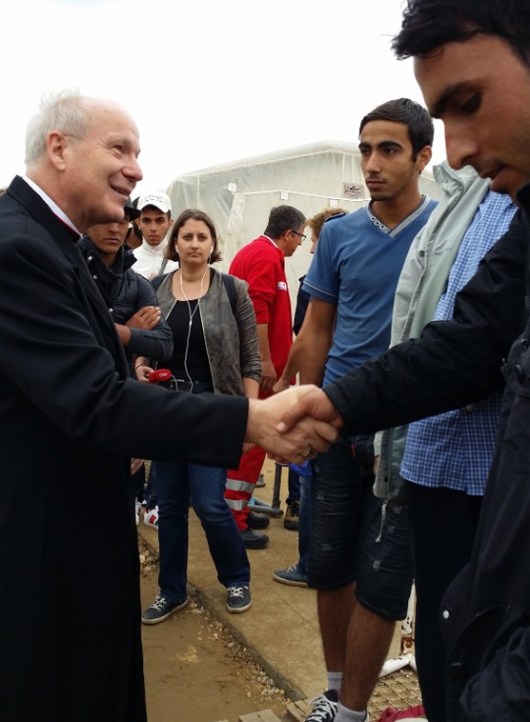
I feel a great sense of gratitude towards Cardinal Schönborn for his deep wisdom and obvious love for humanity, that has also shone during this last days in his welcoming of Syrian refugees – a welcoming that was not only conceptual by highly practical when he went to meet and welcome them as they crossed the border from Hungary to Austria. I wish the bishops of other Central European countries would follow his example. I am also grateful to Fr. Spadaro for not only having conducted such an outstanding interview, but for having made it freely available. Thank you!
The apostles screamed at each other

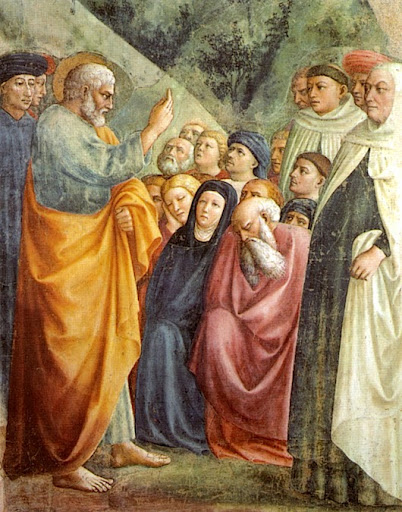
Cappella brancacci Predica di San Pietro restaurato Masolino

This morning, Pope Francis has started a new series of Wednesday General Audience talks about the family, given that we are in the year between two synods on the subject. Instead of launching straight into it, Francis today focused on last October’s Synod. After first thanking the media for their extensive coverage, he criticized them for reporting on the synod as if it had been a sports event, with opposing sides fighting each other, and then proceeded to provide his own account:

“Above all I have asked the Synod Fathers to speak frankly and with courage, and to listen with humility, to say all they had in their hearts, with courage. During the Synod there was no prior censorship, there wasn’t. Everyone could, even he had to, say what he had in his heart, what he thought sincerely. ‘But, Father, this will lead to arguments.’ That’s true, we saw how the apostles argued. The text says: a strong argument followed. They screamed at each other, the apostles, yes! Because they were seeking the will of God about the Gentiles, whether they could enter the Church or not. It was a new thing. Always, when you seek the will of God, in a synodal assembly, there are different points of view and there are arguments and that is not a bad thing! As long as it is approached with humility and a spirit of service to the assembly of brothers. But, it would have been a bad thing, eh!, to have prior censorship. No, no, everyone had to say what they thought.”

Francis then proceeded to present a walk-through of the Synod’s milestones, as has been covered previously on this blog, and then proceeded to reflect again on the confrontational nature of some of the proceedings:

“Some of you may ask: ‘But, father, have the Fathers fought?’. I don’t know about fighting, but they have raised their voices, yes, really, eh! And this is freedom, it is the freedom that’s in the Church. Everything happened “cum Petro et sub Petro,” that is, with the presence of the Pope, which is a guarantee for all of freedom and trust, and the guarantee of orthodoxy. And in the end, in my speech I gave a synthetic reading of the synodal experience.”

After emphasizing that there are only three official documents resulting from last October’s synod: the final message, the final report (Relatio Synodi) and his closing speech, Pope Francis spoke about what the synod is:

“We need to know that the synod is not a parliament, with the representative of this church, that church, another church … No, it’s not that. They are representatives, yes, but the structure is not parliamentary. It is totally different. The Synod is a protected space so that the Holy Spirit may work; there was no clash between factions, as in a parliament, which is licit in a parliament, but an exchange among Bishops, which came after a long process of preparation and now continues in further work, for the good of families, the Church and society. It’s a process, it is the normal synodal journey. Now this Relatio [Synodi] returns to the particular Churches, and in those Churches the work of prayer, reflection and fraternal discussion continues, in order to prepare for the next Assembly. This is the Synod of Bishops. We entrust it to the protection of the Virgin Mary our Mother. May she help us to follow the will of God, taking pastoral decisions that help the family most and best. I ask you to accompany this synodal journey until the next synod with prayer. May the Lord enlighten us, help us progress to the maturity of what we have to say to all the Churches as Synod. And it is important for you to pray for this. Thank you.”

I find Francis’ clarity very encouraging here and I believe that the openness of discussion that I saw during the Synod even just from the outside is very positive for the Church. After all, what is at stake is of great importance and discerning how to remain faithful to Jesus’ Good News today is a constant challenge. I very much look forward to what Pope Francis will speak about next Wednesday!

The Extraordinary Synod: Family, Church, God

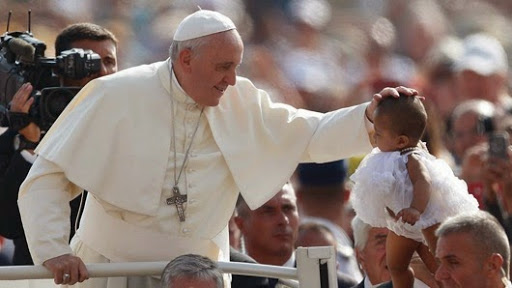
Francis w baby

[Guest post: The following is a talk about the Extraordinary Synod on the Family given at a retreat by Dr. Ján Morovič, which is reproduced here with the author’s permission.]

What I’d like to do today is to give you an overview of the Extraordinary Synod on the Family that took place from 5th to 19th October, by covering the following:

  • First, to give you an “executive summary” in Pope Francis’ own words from a week ago,
  • second, walk you through the process that is underway towards a renewal of how families are cared for by the Church and how they form part of the Church,
  • third, give you a flavor of the key topics discussed during the Synod,
  • fourth, focus on Francis’ role in the Synod,
  • and finally, argue that what is at stake here both goes far beyond the family, and doesn’t 🙂

Francis’ executive summary

The best, most concise exposition of why there is a need for the question of the family to be addressed today and, therefore, of why there was a need for the Synod that concluded a couple of weeks ago, comes from Pope Francis himself, who addressed a meeting of the Schönstatt movement last Saturday with the following words:

“The Christian family, the family, marriage, have never been attacked as much as now. Attacked directly or attacked as a matter of fact. Maybe I am mistaken, and the historians of the Church could tell us, but the family is being beaten, is being bastardized, as if it were just a loose association, as if you could call anything a family. And then, how many wounded families there are, how many broken down marriages, how much relativism there is, as far as the understanding of the sacrament of marriage is concerned. From the sociological point of view, from the point of view of human values, and from the point of the Catholic sacrament, the Christian sacrament, there is a crisis of the family. It gets beaten up from all sides. It ends up being very wounded.

So, we have no choice but to do something. So, what can we do? Yes, we can give nice talks, declare some nice principles, this we do have to do for sure to have clear ideas. Look, these things you are proposing, they are not marriage. It is an association, but it is not marriage. Sometimes it is necessary to say things very clearly. And they must be said. But, the pastoral help that is needed is body to body. Accompanying. And this means loosing time. The greatest teacher of how to lose time is Jesus. He lost time by accompanying, helping consciences mature, healing wounds, teaching. Accompanying means to share a journey.

Evidently, the sacrament of marriage has been devalued. And, unconsciously, there has been a move from the sacrament to the ritual. A reduction of sacrament to ritual. This leads to thinking about the sacrament as a social matter. Yes, with religious elements, for sure, but the strong point being the social. […] The social aspect obscures that which is most important about marriage, which is union with God.”

With the above landscape in mind, consisting of the scaramentality of marriage, its being under attack, the ubiquity of wounded families, the need for imitating Jesus’ closeness to all, and the importance of understanding marriage as union with God, let’s look at how the Church arrived at this Synod and what journey it is on, moving forward.

The process

The Extraordinary Synod on the Family, whose full title is: “Pastoral Challenges of the Family in the Context of Evangelisation,” was called by Pope Francis in October 2013. It being an extraordinary synod, as opposed an ordinary one, taking place at regular intervals, points directly to its purpose being to “deal with matters which require a speedy solution” (Code of Canon Law, canon 346 §2). And the fact that it was announced as part of a pair of Synods – the one we just had, and its follow-up that will take place from 4th to 25th October 2015 – indicates the complexity of the topic, and the need for a year’s work and discernment to be part of the process.

Within weeks of the Synod’s announcement last October, a preparatory document was published by the Synod’s secretariat, consisting both of some thoughts on the key challenges facing the family and – in an unprecedented move – a questionnaire that was sent to dioceses around the world for completion. It is a questionnaire that asked very open and direct questions about what of the Church’s teaching was understandable, and what positions were held with regard to its teaching on abortion, contraception, same-sex marriage, etc. Importantly, many dioceses opened the questionnaire up to the public (e.g., including Brentwood and Westminster), which resulted in a very large-scale response.

The Synod secretariat’s next move was to publish an extensive summary (the “instrumentum laboris”) of the responses at the end of June. This was a great move of openness and transparency, further underlined by its very frank presentation of the questionnaire’s responses. There was both a reinforcing of positives here – i.e., the continuing recognition of the value and beauty of marriage – and an identification of and admission to problems – e.g., the general lack of an understanding of the Church’s teaching, a loss of meaning of the concept of “natural law,” the damage caused by the sexual scandals in the Church, and the mounting external and internal pressures that families face today.

Next, the Synod Fathers, comprising heads of all local episcopal conferences, the heads of some religious orders and a number of members directly appointed by Pope Francis, were asked to submit written statements in response to the “instrumentum laboris.” The Synod’s secretariat then summarized these in its first working document – the “relatio ante disceptationem,” whose reading took place during the first morning of the Synod. A week of interventions followed – including “witnesses” from married couples at the beginning of each of a day’s two sessions, after which an updated working document was produced – the “relatio post disceptationem.” Note, that it was written single-handedly by Archbishop Bruno Forte, appointed to this role directly by Pope Francis. The following week saw work in groups of around 30 people each that resulted in feedback to the small team in charge of editing the working document and producing the official outcome of the Synod. Finally, this “Relatio Synodi” was voted on, paragraph by paragraph, and published as a guide for what topics to deepen during the following year.

Next year, the second Synod, still on the topic of the Family, will result in proposals to the Holy Father, who can then freely choose how to take them into account in the measures he takes with regard to the care for and role of families in the Church. When looking at the details of the content discussed at the Synod, it is worth noting the very loose relationship between the Synod on the New Evangelization that took place in 2011 and Pope Francis’ Evangelii Gaudium, that, procedurally, follows from it. In the end, the paradigm that applies here is the Jesuit concept of “You discern, we discern, I decide.”

The topics

Turning to what was discussed at the Synod, I’d like to pick out some key themes for you, without being comprehensive, as it may otherwise turn into sounding like a shopping list, and I’d like to focus on the areas that have received either the greatest support or where there was most debate. Before diving into these “hot” topics, it is worth noting that the sacramentality and indissolubility of marriage, its being a source of joy, its being between a man and a woman, and the sanctity of life that originates, runs its course and completes its earthly journey there, were unanimously reaffirmed. There was also broad agreement on the need to revise and strengthen marriage preparation and accompanying of married couples, and the pressures following from economic hardship (unemployment, separation as a result of traveling for work, the inequitable treatment of women) and the tragedy of wars were also a theme running through the Synod.

Subjects of evangelization

First, there was an emphasis on the family not only as object of evangelization (i.e., an entity to be evangelized), but also as its subject (an entity that evangelizes). In particular, movements like the Focolare and the Neocatecumenal Way (which were mentioned explicitly), were highlighted as examples of families carrying out evangelization by “patient and delicate accompanying” and by presenting “the attractive testimony of authentic Christian families.” As a consequence, it was also declared that “the Church must be more open to dialogue, and must listen more frequently (and not only in exceptional cases) to the experiences of married couples.”

A new language

Second, a very prominent topic throughout the Synod has been the call for a new language to be used when announcing the Gospel, calling for “forms and suitable language […] to be devised to proclaim that all are and remain God’s children and are loved by God the Father and the Church as Mother.” The need to listen to the world, so that it may listen to the Church was emphasized and it was noted that “dialogue may be based on important themes, such as the equal dignity of men and women and the rejection of violence.” As an example, “terms like “living in sin,” “intrinsically disordered,” and “contraceptive mentality” were singled out by the Synod Fathers as instances of “harsh language,” where there was a need for change that would demonstrate the Church’s openness and love.” Let me quote a passage from Dublin’s Archbishop Dairmuid Martin’s intervention that regards this point:

“To many the language of the Church appears to be a disincarnated language of telling people what to do, a “one way dialogue”. I am in no way saying that the Church is not called to teach. I am not saying that experience on its own determines teaching or the authentic interpretation of teaching. What I am saying is that the lived experience and struggle of spouses can help find more effective ways of expression of the fundamental elements of Church teaching. Jesus himself accompanied his preaching the good news with a process of healing the wounded and welcoming those on the margins. His teaching was never disincarnated and unmoved by the concrete human situation in which people could come to be embraced by the Good News. Jesus’ care for the sick and the troubled and those weighed down by burdens is the key which helps to understand how he truly is the Son of God.”

I also found the words of our Cardinal Vincent Nichols, the next day, to be a great example of what this new language might look like:

“I don’t doubt that most young people aspire to having their own family, having their own family within the stable relationship between husband and wife, having that family with a sense of permanence and a permanent, faithful commitment. Nobody wants a wife or a husband who is unfaithful. And so what we have to get across to people is that casual relationships before marriage is actually being casual with somebody’s future husband or wife. And its that sense of the real value that’s written in us, its in the hearts of people, that they aspire to, that has consequences for how we behave today as well.”

Seeds of the Word

Third, one of the most revolutionary ideas of the Synod is that of recognizing whatever good there is also under imperfect circumstances, which the “relatio post disceptationem” puts as follows:

“Some ask whether the sacramental fullness of marriage does not exclude the possibility of recognizing positive elements even the imperfect forms that may be found outside this nuptial situation, which are in any case ordered in relation to it. The doctrine of levels of communion, formulated by Vatican Council II, confirms the vision of a structured way of participating in the Mysterium Ecclesiae by baptized persons. […] (§18)

Realizing the need, therefore, for spiritual discernment with regard to cohabitation, civil marriages and divorced and remarried persons, it is the task of the Church to recognize those seeds of the Word that have spread beyond its visible and sacramental boundaries. Following the expansive gaze of Christ, whose light illuminates every man (cf. Jn 1,9; cf. Gaudium et Spes, 22), the Church turns respectfully to those who participate in her life in an incomplete and imperfect way, appreciating the positive values they contain rather than their limitations and shortcomings. (§20)”

The idea of “levels of communion” is with reference to how ecumenism is presented in Lumen Gentium (§15): “The Church recognizes that in many ways she is linked with those who, being baptized, are honored with the name of Christian, though they do not profess the faith in its entirety or do not preserve unity of communion with the successor of Peter.” It is also important to note that this analogy was proposed by Cardinal Christoph Schönborn of Vienna, who was the general editor of the current Catechism. Another way of looking at what these changes mean is what Antonio Spadaro SJ (the editor of Civiltà Cattolica, and Synod Father by direct papal appointment) tweeted about it: “Today […] we have seen a church that pays more attention to sowing seeds than to pulling out weeds.”

Mercy

Closely related to the above desire, to look for the traces of God’s presence under all circumstances, is the focus on mercy that has been the backbone of the Synod:

“[M]ercy is not a justification to sin but rather the sinner’s justification, to the extent that he converts and aims to sin no more. Mercy, the central theme of the God’s revelation, is highly important as a hermeneutic for the Church’s actions (cf. Evangelii gaudium, 193 ff.). Certainly, she does not do away with truth nor relativize it, but seeks to interpret it correctly in the hierarchy of truths (cf. Unitatis redintegratio, 11; Evangelii gaudium, 36-37). Nor does she do away with the demands of justice.” (Relatio ante disceptationem, 3b)

One of the Spanish-speaking Synod Fathers put this point particularly forcefully:

“Above all we must kneel before the Holy Spirit and remember that we aren’t the bosses of God’s mercy. We must remember that the mission that Jesus entrusted to his apostles, and by extension to us as their successors, is to evangelize and to heal. And this means, spreading the Good News.”

And finally, one of the English-speaking working groups feedback on the “relatio post disceptationem” has been the affirmation that mercy is needed by all of us:

“All of us need the help of the mercy of God. The mercy of God is not just a medicine, much less a consolation prize, for those who fail. None of us can be faithful without experiencing God’s mercy. No one should devalue the place of mercy in the economy of salvation.” (Relatio – Circulus Anglicus “B”)

Inclusion

A consequence of the above mercy is also the emphasis that inclusion has seen throughout the Synod, which was put particularly emphatically by the German Cardinal Reinhard Marx:

“We must be close to everyone, each with their particular circumstances. We must give them opportunities to find their place in the Church. No one is excluded! No one is redundant! No one is marginalized! Exclusion is not the language of the Church!”

It is also a point that Pope Francis underlined during the Angelus address he gave half-way through the Synod:

“The goodness of God has no boundaries and does not discriminate against anyone: this is why the feast of the Lord’s gifts is universal, for all. Everyone is given the opportunity to respond to his invitation, to his call; no one has the right to feel privileged or to an exclusive claim. All this leads us to overcome the habit of positioning ourselves comfortably in the middle, as did the chief priests and the Pharisees. This mustn’t be done; we must open ourselves to the peripheries, recognizing that even those who are on the margins, even one who is despised and rejected by society, is an object of God’s generosity. We are all called to not reducing the Kingdom of God to the confines of a “little church” – our “tiny little church” – but to widen the Church to the scale of the Kingdom of God. There is only one condition: to wear a wedding dress, which is showing love towards God and neighbor.”

The law of gradualness

Looking at the above, the mistaken impression may arise that there is a departure from a striving for perfection, or that virtue and a close adherence to the Church’s teaching and the Gospel are somehow secondary or optional. Such a reading of the Synod’s discussions would be missing an important point though:

“In the Christian life, the reception of Baptism brings the believer into the Church through the domestic church, namely, the family; thus beginning “a dynamic process [which] develops, one which advances gradually with the progressive integration of the gifts of God” (Familiaris Consortio, 9), in an ongoing conversion to a love which saves us from sin and gives us fullness of life.” (Relatio Synodi, §13)

Cardinal Marx, putting the above into his own words, declares that:

“On every human journey, including one that may be based on a mistake, there is growth and increasing maturity, there is improvement, there is something that can be lived through the spirit of the Gospel.”

The key here is that the recognition of goodness in imperfection is a stepping stone, the beginning of a journey towards fulness.

Divorced and remarried

The first case to which the above focus on inclusion, mercy and the recognition was applied, and one that has had a lot of media attention already before the synod, are the divorced and remarried, and the question of their access to the Eucharist. Here the main aspects of discernment revolved around, on the one hand, the indissolubility of marriage being recognized by all, and, on the other hand, there being differing conceptions of the Eucharist, ranging from a focus on a compliance with prerequisites by some and a focus on its being a healing gift by others. The latter is best represented by Fr. Adolfo Nicolas SJ, the Superior General of the Jesuits, saying: “A divorced person has suffered, but we withdraw medicine from him or her who needs it most. No, this cannot be!”

At the conclusion of the Synod, there was great variety in how this challenge is to be addressed, ranging from some, few, being emphatic about there being no way to provide the divorced and remarried with access to the Eucharist, to a variety of positions that called for further study and discernment both with an initial proposal for what a solution might look like, and without. Here the types of solutions ranged from individual, case-by-case discernment by the local bishop to prolonged penitential processes.

An example of the more cautious, yet not categorically opposed position here is that of Cardinal Angelo Scola:

“Personally, on a substantial level, I can not find an answer yet to the possibility that [the divorced and civilly remarried] could have access to sacramental communion without this clashing with the indissolubility of marriage. In short, indissolubility either has an impact on the reality of daily life, or remains a Platonic idea.”

The attitude to adopt already while potential solutions are considered was best expressed by Cardinal Godfried Danneels of Brussels:

“In the first place we are invited to greatly respect our brothers and sisters, the divorced and remarried. Mercy starts where we have unconditional respect for all who want to live within the Church but can’t marry again for the Church and receive Communion. […]

It is so important to speak with them, to let them speak about the beauty of marriage and the Christian family. Beauty is so powerful! This is obviously not esthetic beauty, but beauty who is the sister of truth and goodness. According to Aristotle “beauty is truth in all its glory”.”

Welcoming homosexual persons

The second case under discussion was the question of the Church’s relationship with gay people, where the “relatio post disceptationem” declared:

“Homosexuals have gifts and qualities to offer to the Christian community: are we capable of welcoming these people, guaranteeing to them a fraternal space in our communities? Often they wish to encounter a Church that offers them a welcoming home. Are our communities capable of providing that, accepting and valuing their sexual orientation, without compromising Catholic doctrine on the family and matrimony? (§50)

The question of homosexuality leads to a serious reflection on how to elaborate realistic paths of affective growth and human and evangelical maturity integrating the sexual dimension: it appears therefore as an important educative challenge. The Church furthermore affirms that unions between people of the same sex cannot be considered on the same footing as matrimony between man and woman. […] (§51)

Without denying the moral problems connected to homosexual unions it has to be noted that there are cases in which mutual aid to the point of sacrifice constitutes a precious support in the life of the partners. (§52)”

The above represents a very clear application of the desire to seek the presence of good under all circumstances and to recognize in it the potential for a journey towards perfection, not being exclusive of anyone. It was Cardinal Marx again who also put the position most bluntly here:

“[… I know] a homosexual couple who have been together for 30-35 years in a faithful relationship, which as a sexual relationship is not accepted by the Church, but they live together, one looks after the other, during the last phase of his life. Here, as Church, I cannot say that everything that these people have done during their lives is without value, because they have a homosexual relationship. […] It would be unthinkable to say that because you are homosexual, you can live nothing of the spirit of the Gospel. That’s unthinkable! At least for me.”

Archbishop Vincenzo Paglia, President of the Pontifical Council for the Family, also spoke about homosexual people with great warmth, putting the ball in our, the Church’s, court to make the first step:

“[Homosexuals] are our brothers or sisters. To be loved as children of God to the end, to be embraced, accompanied, sustained, to be close to. Another question is that of marriage. Because marriage, since the world has been the world, is between man and woman. […] Then … affection … well we can be attracted by anyone. What’s more, I wish for all of us that we would all love each other, so we aren’t like frigid sticks that don’t encounter each other! The challenge is how to be close to those who are maybe in difficulty, and here I believe that it is all of us, believers, who need to take the first step. Whoever is in difficulty is to be embraced and helped.”

Again, as in the case of the divorced and remarried, the path forward is not clear and there was a great deal of difference in opinion on this subject (including objections to the use of “welcoming” with reference to gays), but that we must – as followers of Jesus – direct a merciful, loving gaze at them too is crystal clear. Not because they are gay or divorced, but because we are all children of God, members of the one family.

Francis’ role

Having given you a taster of what the process has been and a flavor of what has been discussed and how, I would like to turn our attention to Pope Francis’ presence in the above picture, and I would just like to pick out a few of the key moments, since I think they offer a model that we can learn from also.

First, I’d like to give you a sense of the timescale and consistency of Francis’ vision. Already during the meeting of cardinals before the consistory that elected him, the then-cardinal Bergoglio said:

“Holy Week challenges us to step outside ourselves so as to attend to the needs of others: those who long for a sympathetic ear, those in need of comfort or help. We should not simply remain in our own secure world, that of the ninety-nine sheep who never strayed from the fold, but we should go out, with Christ, in search of the one lost sheep, however far it may have wandered.”

And it is on the back of this vision that he is elected, and it is a vision he re-iterates the very next day, when addressing the cardinals:

“[A]ll together, pastors and faithful, we will make an effort to respond faithfully to the eternal mission: to bring Jesus Christ to humanity, and to lead humanity to an encounter with Jesus Christ: the Way, the Truth and the Life, truly present in the Church and, at the same time, in every person.”

Note the focus on bringing Jesus to humanity and on his pointing to His presence in every person. Eight months later, he reaffirms this commitment in his apostolic exhortation – Evangelii Gaudium, a magisterial document of the Church, where he says:

“Everyone can share in some way in the life of the Church; everyone can be part of the community, nor should the doors of the sacraments be closed for simply any reason. This is especially true of the sacrament which is itself “the door”: baptism. The Eucharist, although it is the fullness of sacramental life, is not a prize for the perfect but a powerful medicine and nourishment for the weak.”

And finally, on the eve of this Synod on the Family, Francis’ homily focuses on excessive burdens and on “God’s dream”:

“[E]vil pastors lay intolerable burdens on the shoulders of others, which they themselves do not lift a finger to move (cf. Mt 23:4). We too, in the Synod of Bishops, are called to work for the Lord’s vineyard. […] We are all sinners and can also be tempted to “take over” the vineyard, because of that greed which is always present in us human beings. God’s dream always clashes with the hypocrisy of some of his servants. […] My Synod brothers, to do a good job of nurturing and tending the vineyard, our hearts and our minds must be kept in Jesus Christ by “the peace of God which passes all understanding” (Phil 4:7). In this way our thoughts and plans will correspond to God’s dream: to form a holy people who are his own and produce the fruits of the kingdom of God (cf. Mt 21:43).”

Taken with everything he has done during the year and a half between his election and the Synod, he couldn’t have been clearer about what he wants to see from his brothers, and, so – after encouraging them to speak their minds freely on the first morning of the Synod, he spends the following two weeks attending all but one of the sessions (skipping only one due to a General Audience) and doing so in silence. This, to me, is a remarkable approach and one that makes me immediately think about how Chiara saw Mary in Paradise – “as the blue of the sky contains sun and moon and stars.” In fact, Cardinal Gianfranco Ravasi pointed out that Pope Francis’s silence was fundamental for the Synod’s discussions to be possible, quoting the Latin saying “Roma locuta, causa finita.” If Francis had spoken, it would have been the end of the discussion.

What Francis did at the end of the Synod is another important lesson though. First, he had the entire final report – the “Relatio Synodi” published, instead of only the paragraphs that received 2/3rds of the Synod Fathers’ votes, as follows from the Synod’s constitution. Not only that, but he ordered for the vote counts to be published for each paragraph too. This ensured that all topics discussed during the first Synod would be deepened over the next year and discussed again at next year’s Synod – including those that did not get a 2/3rds majority, which were all of the controversial ones regarding the challenges of welcoming divorced and gay people, and ones that spoke about the need to recognize the presence of the seeds of the Word in imperfect circumstances.

To further underline his resolve and his commitment to the need for an opening and a going out to the peripheries that he has been pioneering since before his election, Francis gives an unscheduled closing speech that effectively upstages the Synod’s final report.

There, he first chastises the Synod Fathers for having succumbed to some of four types of temptation:

“- One: the temptation of hostile rigidity, that is, wanting to enclose oneself in the written (the letter) and not allowing oneself to be surprised by God, the God of surprises (the spirit); within the law, in the certainty of what we know and not of what we still need to learn and achieve. Since the time of Jesus, there has been the temptation of the zealots, the scrupulous, the cautious, the – today – so-called “traditionalists” and even the intellectuals.

– The temptation of destructive do-goodery, which in the name of a false mercy bandages wounds without first curing and medicating them; which treats symptoms and not their causes and roots. It is the temptation of the “do-gooders”, of the fearful and even the so-called “progressives and liberals.”

– The temptation to turn stone into bread so as to break a long, heavy and painful fast (cf. Lk 4:1-4), and also to turn bread into stone and throw it at sinners, the weak and the sick (cf. Jn 8.7), that is, to turn it into “unbearable burdens” (Lk 10:27).

– The temptation to come down from the cross, to please people, and not to stay, to fulfill the will of the Father; to bow to a worldly spirit instead of purifying it and bending it to the Spirit of God.

– The temptation to neglect the “deposit of faith”, not considering themselves custodians, but masters or owners, or, on the other hand, the temptation to ignore reality by using meticulous language and language so polished that saying many things result in not having said anything! Such language used to be called “byzantine”, I think, such language …”

Next, he reiterates what the Church is:

“And this is the Church, the Lord’s vineyard, the fertile Mother and caring [female] Teacher, who is not afraid to roll up her sleeves to pour oil and wine on the wounds of men (cf. Lk 10: 25-37); who does not look at humanity from a glass castle to judge or categorize people. This Church is the One, Holy, Catholic, Apostolic and composed of sinners, in need of His mercy. This is the Church, the true bride of Christ, seeking to be faithful to her spouse and to his doctrine. It is the Church who is not afraid of eating and drinking with prostitutes and tax collectors (Luke 15). The Church that has doors wide open to receive the needy, the repentant and not only the righteous or those who think they are perfect! The Church that is not ashamed of the fallen brother and does not pretend not to see him, what’s more, she feels involved and almost obliged to raise him and encourage him to continue his journey, and she accompanies him to the final encounter with her ​​Spouse, in the heavenly Jerusalem.

This is the Church, our mother! And when the Church, in the variety of its charisms, is expressed in communion, she can make no mistakes: this is the beauty and strength of the sensus fidei, of that supernatural sense of faith, which is bestowed by the Holy Spirit so that, together, we can all enter into the heart of the Gospel and to learn to follow Jesus in our lives, and this must not be seen as a source of confusion and discomfort.”

And, finally, after quoting an extensive excerpt from an address Pope Benedict XVI gave about who the pope is, he concludes by speaking to those who have been misusing the law as a veto against the renewal that the Holy Spirit has been driving in the Church since the first Pentecost, by quoting canon law to them:

“So, the Church is Christ’s – she is His bride – and all the bishops, in communion with the Successor of Peter, have the task and the duty of guarding her and serving her, not as masters but as servants. The Pope, in this context, is not the supreme lord but rather the supreme servant – the “servant of the servants of God”; the guarantor of the obedience and the conformity of the Church to the will of God, to the Gospel of Christ, and to the Tradition of the Church, putting aside every personal whim, despite being – by the will of Christ Himself – the “supreme Pastor and Teacher of all the faithful” (Can. 749) and despite enjoying “supreme, full, immediate, and universal ordinary power in the Church” (cf. Cann. 331-334).”

“You discern, we discern, I decide.” 🙂

What is at stake

To conclude this long, but still only very sketchy and incomplete run through the Extraordinary Synod on the Family, I would like to argue that it hasn’t really been about the family. Much greater things are at stake here than “just” the nature of how man and woman unite to welcome each other and be open to new life.

What is at stake here is the very nature of the Church. Is she restricted to the virtuous few, to the wholly compliant, to the pious and proper, to the i dotters and t crossers? Or is she the mother who seeks out her children wherever they may be, welcoming them with open arms and an even more open heart, healing their wounds, but also delighting in their child-like achievements, and enveloping them in a warm embrace? Francis’ position is very clear here, but so is that of many of our bishops and pastors. Archbishop Philip Tartaglia of Glasgow puts it as follows:

“[T]he Church has to find a way to speak St Paul’s words of love, which compassionately excuse and forgive, but which also heal and renew and lift up again; where forgiveness is not accommodation or indifference but genuine and sometimes hard-won reconciliation, engendering new trust, new hope, new endurance, and new faithfulness, a new page in the story of love.”

And the notes from one of the Synod’s sessions emphasize:

“[T]he Church is not a customs [checkpoint], but rather the house of the Father, and must therefore offer patient accompaniment to all people, including those who find themselves in difficult pastoral situations. The true Catholic Church encompasses healthy families and families in crisis, and therefore in her daily effort of sanctification must not show indifference in relation to weakness, as patience implies actively helping the weakest.”

In fact, what is at stake here is not only what the family is, who the Church is, but also who God is. Here, our understanding of both Church and family flow from who we believe God is, and Pope Francis again places a crystal-clear image in front of us, an image projected from the words of Jesus about his Father, brought into focus by the Holy Spirit’s presence today:

“God is good to us, freely offering us his friendship, his joy, salvation, but often it is us who do not accept his gifts, we place our material concerns, our interests in the first place and also when the Lord calls us, it often seems to bother us.” (Angelus, 12 October 2014)

“God is always new; He never denies himself, never says that what He said was wrong, never, but He always surprises us.” (Homily at Santa Marta, 13 October 2014)

“Our name is in God’s heart, is in God’s bowels, just as the baby is inside its mother. Our joy lies in our being elected. We cannot understand this with our head alone. We cannot understand this even with our heart. To understand this we must enter into the Mystery of Jesus Christ. The Mystery of His beloved Son: ‘He has poured out his blood for us in abundance, with all wisdom and intelligence, making known to us the mystery of His will’.” (Homily at Santa Marta, 17 October 2014)

Yet, in spite of having said that more than the family is at stake, it is also true to say that we have been talking about the family all along, which becomes clear through the words of St. John Paul II: “[T]he primordial model of the family is to be sought in God himself, in the Trinitarian mystery of life. […] The family itself is the great mystery of God.” (Letter to Families, 1994, §6, §19)

The family: union with God

8417364534 92a9f089c2 z

On Saturday, Pope Francis met with members of the Schönstatt Apostolic Movement in the Vatican and answered some of their questions. Since I haven’t found the full text in English anywhere, and since the topic of most of the questions was the family, I was keen to hear Francis’ words this soon after the conclusion of the Synod.

Instead of an extensive analysis, I would just like to share the following translated transcript of the introduction to his first answer, which I read as a beautiful “relatio synodi” put in Francis’ own words:

“The Christian family, the family, marriage, have never been attacked as much as now. Attacked directly or attacked as a matter of fact. Maybe I am mistaken, and the historians of the Church could tell us, but the family is being beaten, is being bastardized, as if it were just a loose association, as if you could call anything a family. And then, how many wounded families there are, how many broken down marriages, how much relativism there is, as far as the understanding of the sacrament of marriage. From the sociological point of view, from the point of view of human values, and from the point of the Catholic sacrament, the Christian sacrament, there is a crisis of the family. It gets beaten up from all sides. It ends up being very wounded.

So, we have no choice but to do something. So, what can we do. Yes, we can give nice talks, declare some nice principles, this we do have to do for sure to have clear ideas. Look, these things you are proposing, they are not marriage. It is an association, but it is not marriage. Sometimes it is necessary to say things very clearly. And they must be said. But the pastoral help that is needed is body to body. Accompanying. And this means loosing time. The greatest teacher of how to lose time is Jesus. He lost time by accompanying, to help consciences mature, to heal wounds, to teach. Accompanying means to share a journey.

Evidently the sacrament of marriage has been devalued. And, unconsciously, there has been a move from the sacrament to the ritual. A reduction of sacrament to ritual. This leads to thinking about the sacrament as a social matter. Yes, with religious elements, for sure, but the strong point being the social. […] The social aspect obscures that which is most important about marriage, which is union with God.”

And this, in turn, made me think of St. John Paul II’s profound words on the same subject:

“[T]he primordial model of the family is to be sought in God himself, in the Trinitarian mystery of life. […] The family itself is the great mystery of God.” (Letter to Families, 1994, §6, §19)

Very much is at stake here. Not only the family, but our relationship with God too. The God of mercy and vicinity, who invites us to share in the life of his being family.

Synod14: A reality check

Francis synod

If you are a regular on this blog, you’ll know that I have been following the Extraordinary Synod on the Family very closely. I have seen all the press conferences, read all the documents, watched all the interviews, waded through the, sadly mostly morass, of tweets tagged with #synod14, and have written blog posts daily. At the end of the Synod’s two weeks, I felt a great sense of joy and I delighted at the whole process, which, to my mind, was an example of a shared journey, of transparency, and of a group of bishops and lay people striving for the good of the family, with a tremendous sense of seriousness and honesty.

When I then read the first reports on Saturday evening, and then during the course of today in the general press, about what this Synod has arrived at, I have to admit that I came away from them with disappointment. I shouldn’t have been that naive, since this seems to be the norm in how anything moderately nuanced gets reported. From the perspective of the media, the result has been some variant of the following Guardian headline: “Catholic bishops veto gay-friendly statements leaving Pope Francis the loser.”

What I have seen over the last two weeks couldn’t be further from a loss for Pope Francis, first of all because that is a meaningless way of looking at the situation. And even if one were to apply the loss/victory categories to the Synod, the opposite would be my conclusion. Let me therefore lay out what I believe just happened, in as blunt terms as I can, and, please, bear with me while I take a couple of steps back to do this picture justice.

In the beginning was the Word …

No, let me not go back that far just yet (although that verse from the Johannine prologue is highly relevant to one of the keys to the Synod that I will return to in a later post) and instead start with a thought from Pope Benedict XVI’s resignation letter, where he assesses the current situation in the world as follows:

“[T]oday’s world [is] subject to so many rapid changes and shaken by questions of deep relevance for the life of faith”

Questions of deep relevance need to be addressed and Benedict does not have the strength to do it. So, he does what a true servant of servants must, and vacates the See of Peter. A conclave is called and cardinals present their visions for the Church. One Jorge Bergoglio presents the following program:

“Holy Week challenges us to step outside ourselves so as to attend to the needs of others: those who long for a sympathetic ear, those in need of comfort or help. We should not simply remain in our own secure world, that of the ninety-nine sheep who never strayed from the fold, but we should go out, with Christ, in search of the one lost sheep, however far it may have wandered.”

He gets elected Pope Francis and, the next day, in his first address to the cardinals since his election he declares:

“[A]ll together, pastors and faithful, we will make an effort to respond faithfully to the eternal mission: to bring Jesus Christ to humanity, and to lead humanity to an encounter with Jesus Christ: the Way, the Truth and the Life, truly present in the Church and, at the same time, in every person.”

Then follow months of Francis putting his mission to welcome and accompany not only every single person who comes his way, but to go out of his way to reach out to those who may feel far from the Church. His correspondence with the atheist Eugenio Scalfari, his iPhone video to Evangelical Christians in the US and his resounding “Who am I to judge them?” with regard to gays are just a couple of examples off the top of my head.

Eight months after his election and to drive home the message that being a Church that is open and welcoming of all is a must, Francis pens the magnificent apostolic exhortation Evangelii Gaudium – a magisterial document of the Catholic Church, where he declares in the section entitled “A mother with an open heart” that:

“Everyone can share in some way in the life of the Church; everyone can be part of the community, nor should the doors of the sacraments be closed for simply any reason. This is especially true of the sacrament which is itself “the door”: baptism. The Eucharist, although it is the fullness of sacramental life, is not a prize for the perfect but a powerful medicine and nourishment for the weak.[51] These convictions have pastoral consequences that we are called to consider with prudence and boldness. Frequently, we act as arbiters of grace rather than its facilitators. But the Church is not a tollhouse; it is the house of the Father, where there is a place for everyone, with all their problems.” (§47)

A whole year later, and a year where an outreach to the peripheries, an openness to all, regardless of how “proper” or well-ordered their lives are, have been Francis’ daily mission, he has the following to say on the eve of the Synod – just in case someone hasn’t been listening during the preceding year and a half:

“The temptation to greed is ever present. We encounter it also in the great prophecy of Ezekiel on the shepherds (cf. ch. 34), which Saint Augustine commented upon in one his celebrated sermons which we have just reread in the Liturgy of the Hours. Greed for money and power. And to satisfy this greed, evil pastors lay intolerable burdens on the shoulders of others, which they themselves do not lift a finger to move (cf. Mt 23:4)

We too, in the Synod of Bishops, are called to work for the Lord’s vineyard. […] We are all sinners and can also be tempted to “take over” the vineyard, because of that greed which is always present in us human beings. God’s dream always clashes with the hypocrisy of some of his servants. We can “thwart” God’s dream if we fail to let ourselves be guided by the Holy Spirit. The Spirit gives us that wisdom which surpasses knowledge, and enables us to work generously with authentic freedom and humble creativity.

My Synod brothers, to do a good job of nurturing and tending the vineyard, our hearts and our minds must be kept in Jesus Christ by “the peace of God which passes all understanding” (Phil 4:7). In this way our thoughts and plans will correspond to God’s dream: to form a holy people who are his own and produce the fruits of the kingdom of God (cf. Mt 21:43).”

Note two things about what Francis says here: First, God’s dream is a holy people who are his own and who are looked after by his servants, servants who are not to overburden them. Second, he quotes Scripture and a saint to them [remember this for contrast with how he speaks to the Synod Fathers after the Synod].

A week of the Synod later, during which Francis attends almost every single session (skipping one due to the General Audience on the Wednesday), but during which he does not intervene, the interim report of the Synod is published – written by Archbishop Bruno Forte, whom Francis directly appointed to the job of doing so. What does the interim report (the “relatio post disceptationem”) say? Well, amongst other things:

“[I]t is the task of the Church to recognize those seeds of the Word that have spread beyond its visible and sacramental boundaries. Following the expansive gaze of Christ, whose light illuminates every man (cf. Jn 1,9; cf. Gaudium et Spes, 22), the Church turns respectfully to those who participate in her life in an incomplete and imperfect way, appreciating the positive values they contain rather than their limitations and shortcomings. […]

In this respect, a new dimension of today’s family pastoral consists of accepting the reality of civil marriage and also cohabitation, taking into account the due differences. Indeed, when a union reaches a notable level of stability through a public bond, is characterized by deep affection, responsibility with regard to offspring, and capacity to withstand tests, it may be seen as a germ to be accompanied in development towards the sacrament of marriage. […]

Homosexuals have gifts and qualities to offer to the Christian community: are we capable of welcoming these people, guaranteeing to them a fraternal space in our communities? Often they wish to encounter a Church that offers them a welcoming home. Are our communities capable of providing that, accepting and valuing their sexual orientation, without compromising Catholic doctrine on the family and matrimony?”

The Pope listened to everyone speaking their mind and then had “his man” pen the key takeaways – recognize a participation in the life of the Gospel no matter under what circumstances it happens, be welcoming, look for ways for everyone, who wants to, to find their place in the Church.

A week later, during which significant resistance is shown by some cardinals to the interim report, a final report is produced that tones down the interim reports’ language, but that still speaks about all the topics mentioned in the interim report. The final report is voted on paragraph by paragraph, but instead of only those paragraphs that have reached the 2/3 majority needed for them to be official proposals from the Synod to the Pope, all paragraphs are published on the Pope’s orders, including the data on how many votes each paragraph received. The purpose of this final document of the Extraordinary Synod on the Family is that it sets the agenda for the work of this, next year that leads to the Ordinary Synod on the Family in October 2015. Keeping all topics from the interim report in the final report means that they will get discussed both over the course of this year and at the next Synod.

Is that the end of the story? Not at all! What Pope Francis does next is to completely upstage the final report of the Synod, by delivering an amazing closing speech. Why does he do that? Because this Synod is not about its final document – it is the kick-off for a year of discernment and work towards the next Synod, after which proposals are going to be made to the Pope.

So, what did Pope Francis say at the end of this year’s Synod? First, he thanked all for their great effort and then he moved straight to telling them the temptations he saw them struggle with: “the temptation of hostile rigidity,” “the temptation of destructive do-goodery,” “the temptation to turn stone into bread and also to turn bread into stone,” “the temptation to come down from the cross” and “the temptation to neglect the “deposit of faith” and the temptation to ignore reality.” Ouch!

Then he proceeds to spell out, yet again!, what he is looking for:

“And this is the Church, the Lord’s vineyard, the fertile Mother and caring [female] Teacher, who is not afraid to roll up her sleeves to pour oil and wine on the wounds of men (cf. Lk 10: 25-37); who does not look at humanity from a glass castle to judge or categorize people. This Church is the One, Holy, Catholic, Apostolic and composed of sinners, in need of His mercy. This is the Church, the true bride of Christ, seeking to be faithful to her spouse and to his doctrine. It is the Church who is not afraid of eating and drinking with prostitutes and tax collectors (Luke 15). The Church that has doors wide open to receive the needy, the repentant and not only the righteous or those who think they are perfect! The Church that is not ashamed of the fallen brother and does not pretend not to see him, what’s more, she feels involved and almost obliged to raise him and encourage him to continue his journey, and she accompanies him to the final encounter with her ​​Spouse, in the heavenly Jerusalem.”

But he doesn’t leave it there and in true Steve Jobs fashion pulls a “one more thing”:

“We will speak a little bit about the Pope, now, in relation to the Bishops [laughing]. So, the duty of the Pope is that of guaranteeing the unity of the Church; it is that of reminding the faithful of their duty to faithfully follow the Gospel of Christ; it is that of reminding the pastors that their first duty is to nourish the flock – to nourish the flock – that the Lord has entrusted to them, and to seek to welcome – with fatherly care and mercy, and without false fears – the lost sheep. I made a mistake here. I said welcome: [rather] to go out and find them.”

Francis pulls a great in-joke here, since the word “welcome” as applied to homosexuals was one of the most contested points in the interim report. Note the serrated edge that the above (“I made a mistake here. I said welcome”) gets in light of what Francis says at the end of his speech. First, however, he reads to them from one of Benedict XVI’s General Audiences:

“His duty is to remind everyone that authority in the Church is a service, as Pope Benedict XVI clearly explained, with words I cite verbatim: “The Church is called and commits herself to exercise this kind of authority which is service and exercises it not in her own name, but in the name of Jesus Christ… through the Pastors of the Church, in fact: it is he who guides, protects and corrects them, because he loves them deeply. But the Lord Jesus, the supreme Shepherd of our souls, has willed that the Apostolic College, today the Bishops, in communion with the Successor of Peter… to participate in his mission of taking care of God’s People, of educating them in the faith and of guiding, inspiring and sustaining the Christian community, or, as the Council puts it, ‘to see to it… that each member of the faithful shall be led in the Holy Spirit to the full development of his own vocation in accordance with Gospel preaching, and to sincere and active charity’ and to exercise that liberty with which Christ has set us free (cf. Presbyterorum Ordinis, 6)… and it is through us,” Pope Benedict continues, “that the Lord reaches souls, instructs, guards and guides them. St Augustine, in his Commentary on the Gospel of St John, says: ‘let it therefore be a commitment of love to feed the flock of the Lord’ (cf. 123, 5); this is the supreme rule of conduct for the ministers of God, an unconditional love, like that of the Good Shepherd, full of joy, given to all, attentive to those close to us and solicitous for those who are distant (cf. St Augustine, Discourse 340, 1; Discourse 46, 15), gentle towards the weakest, the little ones, the simple, the sinners, to manifest the infinite mercy of God with the reassuring words of hope (cf. ibid., Epistle, 95, 1).”

In other words, Francis is saying: what I have set out before you at the beginning of the Synod is pretty much what Benedict asked of you four years ago and what I have been telling you day in, day out, for the last year and a half.

And, just to sharpen the point a touch – and make it more directly understandable for those who have been misusing the law as a veto against accepting change – Francis concludes by quoting canon law to them (a. k. a. reading them the riot act!):

“So, the Church is Christ’s – she is His bride – and all the bishops, in communion with the Successor of Peter, have the task and the duty of guarding her and serving her, not as masters but as servants. The Pope, in this context, is not the supreme lord but rather the supreme servant – the “servant of the servants of God”; the guarantor of the obedience and the conformity of the Church to the will of God, to the Gospel of Christ, and to the Tradition of the Church, putting aside every personal whim, despite being – by the will of Christ Himself – the “supreme Pastor and Teacher of all the faithful” (Can. 749) and despite enjoying “supreme, full, immediate, and universal ordinary power in the Church” (cf. Cann. 331-334).”

Boom! Oh, you think my saying “welcoming” was a “mistake”? Think again.

“Catholic bishops veto gay-friendly statements leaving Pope Francis the loser.” Not even close.

Synod14: A Church composed of sinners

Francis uj

The work of the Extraordinary Synod on the Family has concluded today with a vote on the final report – the “Relatio Synodi”, which is now available in the full, Italian original (including data on how many of the Synod Fathers were in favor of or not in favor of each of the Relatio’s 62 paragraphs.

Instead of taking at look at the Relation, I would like to share some passages from the closing address of Pope Francis, who spent the last two weeks without intervening in the Synod, since – as Card. Ravasi said in the press conference earlier today, the saying “Roma locuta, causa finita” applies – if Francis had spoken it would have been the end of the discussion. Instead, as Ravasi pointed out, the Pope’s silence was fundamental for the Synod’s discussions to be possible.

Now that the Synod has concluded, Pope Francis could speak again, and speak he did!1

After thanking all for the shared journey of the past days and highlighting the positive, mutual help and collaboration among all involved, Francis turned to the challenges, in the form of five temptations that the Synod Fathers faced:

“- One: the temptation of hostile rigidity, that is, wanting to enclose oneself in the written (the letter) and not allowing oneself to be surprised by God, the God of surprises (the spirit); within the law, in the certainty of what we know and not of what we still need to learn and achieve. Since the time of Jesus, there has been the temptation of the zealots, the scrupulous, the cautious, the – today – so-called “traditionals” and even the intellectuals.

The temptation of destructive do-goodery, which in the name of a false mercy bandages wounds without first curing and medicating them; which treats symptoms and not their causes and roots. It is the temptation of the “do-gooders”, of the fearful and even the so-called “progressives and liberals.”

The temptation to turn stone into bread so as to break a long, heavy and painful fast (cf. Lk 4:1-4), and also to turn bread into stone and throw it at sinners, the weak and the sick (cf. Jn 8.7), that is, to turn it into “unbearable burdens” (Lk 10:27).

The temptation to come down from the cross, to please people, and not to stay, to fulfill the will of the Father; to bow to a worldly spirit instead of purifying it and bending it to the Spirit of God.

The temptation to neglect the “deposit of faith, not considering themselves custodians, but masters or owners, or, on the other hand, the temptation to ignore reality by using meticulous language and language so polished that saying many things result in not having said anything! Such language used to be called “byzantine”, I think, such language …”

While the above are strong accusations, Francis does not list them out of a desire to tell the Synod Fathers off, but sees them as a sign of the reality and seriousness of the work done over the preceding two weeks:

“Dear brothers and sisters, temptations must neither scare nor disconcert us, or even discourage us, because no disciple is greater than his master; therefore since Jesus was tempted – and even called Beelzebul (cf. Mt 12:24) – his disciples should not expect better treatment.

Personally I would have been very worried and saddened, if there hadn’t been these temptations and these animated discussions; this movement of the spirits, as St. Ignatius (EE 6) called it, if all were in agreement or silent in a false, quietist peace. Instead I saw and heard – with joy and gratitude – speeches and interventions full of faith, doctrinal and pastoral zeal, wisdom, frankness, courage and boldness [parresia]. And I felt that was put in front of your eyes was the good of the Church, of families and the “suprema lex”, the “salus animarum” (cf. Can. 1752). And this always – as we have said here, in the hall – without ever putting into question the fundamental truths of the Sacrament of Marriage: indissolubility, unity, fidelity and procreation, that openness to life (cf. Cann. 1055, 1056 and Gaudium et Spes, 48).”

Next, Francis presents his vision of the Church – a Church welcoming of all, open to all:

“And this is the Church, the Lord’s vineyard, the fertile Mother and caring [female] Teacher, who is not afraid to roll up her sleeves to pour oil and wine on the wounds of men (cf. Lk 10: 25-37); who does not look at humanity from a glass castle to judge or categorize people. This Church is the One, Holy, Catholic, Apostolic and composed of sinners, in need of His mercy. This is the Church, the true bride of Christ, seeking to be faithful to her spouse and to his doctrine. It is the Church who is not afraid of eating and drinking with prostitutes and tax collectors (Luke 15). The Church that has doors wide open to receive the needy, the repentant and not only the righteous or those who think they are perfect! The Church that is not ashamed of the fallen brother and does not pretend not to see him, what’s more, she feels involved and almost obliged to raise him and encourage him to continue his journey, and she accompanies him to the final encounter with her ​​Spouse, in the heavenly Jerusalem.

This is the Church, our mother! And when the Church, in the variety of its charisms, is expressed in communion, she can make no mistakes: this is the beauty and strength of the sensus fidei, of that supernatural sense of faith, which is bestowed by the Holy Spirit so that, together, we can all enter into the heart of the Gospel and to learn to follow Jesus in our lives, and this must not be seen as a source of confusion and discomfort.”

Wow! This is indeed the Church, my Church, and the Church I am proud for all of my friends to meet.

Francis then continues with this magnificent line of thought, but, for today that’s all from me :).


1 Since, at the time of writing this post, only the Italian version has been made available, the following is my, rough translation.

Synod14: Exclusion is not the language of the Church

Francis inclusion

Like all this week, today too is best started with Pope Francis’ homily, which is not only a source of joy and edification, but also an answer to the incessant question on the lips of all Synod pundits this week about what he thinks.

Today Pope Francis focused on the first reading (Ephesians 1:11-14) in which St. Paul tells us that “God not only chose us, but [he] gave us a style, a way of life, which is not only a list of habits, it is more: it is an identity”:

“Our identity is precisely this seal, this power of the Holy Spirit, that we all have received in Baptism. And the Holy Spirit has sealed our hearts, and more, walks with us. This Spirit, that was promised us – that Jesus promised us – this Spirit not only gives us an identity, but it is also a down payment on our inheritance. With Him, Heaven begins. We are already living in this Heaven, this eternity, because we have been sealed by the Holy Spirit, which is the very beginning of Heaven: it was our down payment; we have it in hand. We have Heaven in hand with this seal.”

This is very much in line with St. John Paul II saying that “Eschatology has already begun with the coming of Christ,” and it leads Francis to warn against a “dulling down” of our Christian identity:

“This is the lukewarm Christian. It is a Christian who, yes, goes to Mass on Sundays, but whose identity is not visible in his way of life. He may even live like a pagan, but he is a Christian. Being lukewarm. Dulling down our identity. And the other sin, of which Jesus spoke to his disciples, and which we heard: ‘Beware of the leaven of the Pharisees, which is hypocrisy.’ ‘Pretending’: I pretend to be a Christian, but am not. I am not transparent, I say one thing – ‘yes, yes I am a Christian’ – but I do another, something that is not Christian”

And, finally, Francis points to what is needed: “Love, joy, peace, patience, kindness, goodness, faithfulness, gentleness, self-control. And this is our path to Heaven, it is our road, so that Heaven may begin here.”

With the above it mind, I would just like to share some of the highlights of today’s press conference with Synod participants, where I will focus in particular on the words of Cardinal Reinhard Marx, who – to my mind – spoke with great clarity and charity today. To begin with Cardinal Marx declared that the answer to the question of whether anything will come out of this process as to be a “clear yes.”

“The Holy Father doesn’t invite for two Synods just to hear at the end that we can keep repeating what we have always been saying. […] He expects input from us that leads ahead, that opens doors, that points to ways of proclaiming the Gospel of the family in a clearer, more intensive way. Also in conversation with the people. Not just by quoting ourselves, but by being in dialogue about what moves people.”

Commenting on the work of the Synod, Marx pointed to its purpose being both to develop and to “sharpen” the material it deals with. When asked what he thought the Pope thinks about the question of access to the Eucharist for the divorced and remarried, Cardinal Marx said: “The spokesperson of the Pope is Fr. Lombardi.” while pointing at him and giving a big smile :). He then proceeded to comment on it being a key question of how irregular circumstances are approached:

“circumstances that don’t fit the sacramental scheme of marriage, but that are not entirely devoid of value. There are examples here of people who are on a journey, people who live in broken relationships, yet who live elements of good community. Fundamentally this is the question. […] And here it is my opinion that we must find a different language. We have to make it clear that this is not about black or white, all or nothing, but that the circumstances of people are more difficult. And that’s also how I’d interpret the Pope’s words in Evangelii Gaudium. I have to interpret it in this way. First, it is about seeing people in their circumstances, including the good that is alive in their circumstances. And that is why I believe we have to develop further in this area.”

In response to a question asking for clarification about where the Synod is heading with regard to homosexuals, Marx provides the following, beautifully clear and personal piece of thinking:

“Here it is fundamentally about looking at individual cases. The Catechism of the Catholic Church is clear that homosexuals are not condemned because of their orientation; the sexual practice, the sexual relationship cannot be accepted. This applies to other aspects too. But not everything is to be evaluated with an equal measure of negativity. [… I know] a homosexual couple who have been together for 30-35 years in a faithful relationship, which as a sexual relationship is not accepted by the Church, but they live together, one looks after the other, during the last phase of his life. Here, as Church, I cannot say that everything that these people have done during their lives is without value, because they have a homosexual relationship. This is what it is about, that one can differentiate here. Then, someone who is in a different relationship every day, will receive a different assessment in terms of spiritual accompaniment, that someone who tries to be chaste, or who is striving towards faithfulness, a faithful relationship. We are still not at the destination, where we could say: “Aha! Now we can say that all is in order.” Of course. But I can’t just say that everything is either black or white. And it is difficult to make this understood sometimes and it is also the responsibility of individual pastoral care. […] Maybe this cannot be encapsulated in rules, that may be correct, but nonetheless I can share a journey with them and also experience a maturing. No question about it! That is possible. On every human journey, including one that may be based on a mistake, there is growth and increasing maturity, there is improvement, there is something that can be lived through the spirit of the Gospel. It would be unthinkable to say that because you are homosexual, you can live nothing of the spirit of the Gospel. That’s unthinkable! At least for me.”

Then, in the context of a question about the divorced and remarried, Marx declared forcefully:

“We must be close to everyone, each with their particular circumstances. We must give them opportunities to find their place in the Church. No one is excluded! No one is redundant! No one is marginalized! Exclusion is not the language of the Church!”

In response to a question about the principle of gradualness, Marx emphasized that:

“We must take the circumstances of an individual seriously. […] In the relationships among people, which have become so varied, we must recognize the good they contain in terms of the Gospel being lived by them, without giving up the aim of sacramental marriage. But there is a variety of ways that lead there.”

Cardinal Marx’s next answer, to the question of whether the teaching of the Church can change, was particularly important, and presented the same position as shared by Archbishop Paglia the other day and by Pope Francis on many occasions:

“Of course! Of course! Two thousand years of Church history isn’t a repetition of always the same. First of all, the teaching of the Church isn’t a static collection of statements that just sit there, but a development. The teaching of the Church does not change, it gets understood more deeply. […] It is not like doctrine is given and we try to apply it. Instead, doctrine too is in dialogue with the pastoral.1 For example, the decision of John XXIII to call for a pastoral Council, is a dogmatic decision. This is not about saying: “Here is something solid that doesn’t move and our problem is only about how to make people understand it.” Then it looks like it is people who are the problem. But that can’t be! Doctrine is given, yes, it doesn’t answer to the spirit of the times, but it can develop. Benedict XVI […] said, with reference to the Council, that it wasn’t a hermeneutic of rupture, of discontinuity, but a hermeneutic of reform. And this reform, naturally, also affects what is being said about teaching. Otherwise we wouldn’t need theology anymore. A new discovery, a deeper discovery of what is meant by the truth of Christ, of what the Gospel wants to tell us today. The truth isn’t a system, the truth is a person, with whom we speak. Just to say that the Church’s teaching will never change, in this sense, that is too narrow a view. At it’s core, Catholic truth and what the Gospel tells us remain unchanged, but whether we have discovered everything, whether we have found everything, that I dare to doubt.”

All I can say to that is: Amen! 🙂


1 Note that this point has been mistranslated by some as “doctrine is communicated pastorally,” which is a different position altogether.

Synod14: God knew me before He created the world

Pope baby

Putting to one side a variety of great interviews that I have come across over the course of the last day, my focus today will be on the summaries of the 10 working groups (“circoli minori”) that have worked on refining the “relatio post disceptationem” since it was published on Monday morning and that have presented their conclusions to the whole Synod today. The team preparing the final “relatio” of the Synod will now take these 10 sets of inputs and work over the next day and a half to arrive at the final document of the current, extraordinary Synod. This in turn will be the basis for work over the course of the following year, which in turn will provide an input to the pope following which he will take his decisions. It is a long process (thank God!) and one that allows for deep understanding and a shared journey to be traversed.

Before looking at the working group syntheses, let me just quote from Pope Francis’ homily from this morning, where he stresses the importance of giving praise to God and of remembering who we are in His eyes:

“Prayers of praise bring us the joy of being happy before the Lord. Let’s make a real effort to rediscover this! However, the starting point is remembering this choice: God chose me before the creation of the world.

This is impossible to understand or even imagine: The fact that the Lord knew me before the creation of the world, that my name was in the Lord’s heart. This is the truth! This is the revelation! If we do not believe this then we are not Christian! We may be steeped in a theist religiosity, but not Christian! The Christian is a chosen one, the Christian is someone who has been chosen in God’s heart before the creation of the world. This thought also fills our hearts with joy: I am chosen! It gives us confidence.

Our name is in God’s heart, is in God’s bowels, just as the baby is inside its mother. Our joy lies in our being elected. We cannot understand this with our head alone. We cannot understand this even with our heart. To understand this we must enter into the Mystery of Jesus Christ. The Mystery of His beloved Son: ‘He has poured out his blood for us in abundance, with all wisdom and intelligence, making known to us the mystery of His will’. And this is a third attitude to have: entering into the Mystery.”

It is with the above image of the human person that Francis arrives at the imperative to closeness, to accompanying, to a shared journey.

Turning to the working group summaries (which weigh in at 12K words), what I’d like to do is group their content into themes, rather than keep to an arrangement by working group.1

  1. An explicit setting out of the Christian understanding of marriage. The final document ought “to speak of human life, marriage and family life, as we know it to be revealed to us by God through reason and faith, both aided by the grace of God, [… to] proclaim the truth of the Gospel, the truth of human life and sexuality as revealed by Christ” [AA] “It is important that the Scriptural foundation for marriage, as well as the teaching found in Tradition, be made clear in the document from its beginning in order to build the framework for the issues to be discussed.” [AC] (+ [AB], [IA], [IB], [IC], [HB])
  2. An emphasis on the centrality of the Gospel. ““Listening” or “seeing” must always be through the lens of the Gospel.” [AA] (+ [AC], [IA], [IB], [IC])
  3. A need to evidence continuity. “The pastoral character of this Synod, ought to show even more clearly that there is no break between doctrine and pastoral care, but that the latter is based on the former and expresses its truth in the daily life of the Christian community. In the words of St. Gregory the Great: “Pastoral commitment is the proof of love.” […] This also implies the need to highlight that we are always faced with a progressive development of doctrine.” [IB]
  4. Being explicit about recognizing the need for change in imperfect situations. A call to “honestly recognizing and acknowledging sinful situations, and searching for ways to invite conversion of heart.” [AA] “It seems that there is a fear of expressing an opinion on several issues that have by now become dominant cultural expressions. This does not seem consistent with the prophetic mission of the Church.” [IB] “The Relatio [ought to] reiterate explicitly the doctrine on marriage, family and sexuality, without hesitating to relying on the categories of “sin” and “adultery” and “conversion,” with respect to situations which are objectively contrary to the Gospel of the family.” [IC]
  5. An emphasis on mercy. “All of us need the help of the mercy of God. The mercy of God is not just a medicine, much less a consolation prize, for those who fail. None of us can be faithful without experiencing God’s mercy. No one should devalue the place of mercy in the economy of salvation.” [AB] “The context of and the challenges of the family raise the need for the Church to repeat words of the Gospel combining hope with truth and mercy, looking to engage with the concrete lives of people, bringing about a re-emergence of the desire for God in them.” “The Gospel of mercy is an indispensable, integral part of truth itself and truth, therefore, can not be reduced to the mere observance of a pastoral attitude towards people.” [IC] “Knowing that the greatest mercy is to speak the truth with love (St. Augustine), we go beyond compassion. As merciful love attracts and unites, so it also transforms and exalts and calls to conversion. (cf. John 8:1– 11).” [HA]
  6. The need to clarify or more broadly apply the principle of graduality. To show that “we are not speaking of the GRADUALITY of DOCTRINE of faith and morals, but rather the gradual moral growth of the individual in his or her actions.” [AA] “The group expressed concern about an over emphasis on the term “positive elements” when speaking of civil marriage and cohabitation. It preferred language which would address the law of gradualness as a way to enter into a pastoral dialogue with [them]. […] The law of gradualness always involves a progression and a conversion towards the full ideal.” [AB] “We felt it necessary to carefully define the meaning of the law of gradualness, which should not be understood as gradualness of the law. Gradualness should not make insipid the challenge of the Gospel to conversion, to “go and sin no more”, as Jesus said to the woman caught in adultery. The aim of recognizing gradualness should be to draw people closer to Christ.” [AC] There is a danger that the principle of graduality “would make one think that the difficulties of married life ought to lead to a reduction of the full meaning of the vocation to marriage itself.” [IA] (+ [IC])
  7. An expression of support and encouragement for those who are living marriage faithfully. The relatio ought to “express words of encouragement and support to those who are faithfully living out their marriage vows and bringing up their families according to the teaching of the Church.” [AA] It ought “to provide an enthusiastic message which would encourage and inspire hope for those Christian families who despite many challenges and even failures – strive every day to live out faithfully and joyfully their mission and vocation within the Church and society. […] The main thrust should be to encourage those who are committed and witness to the Christian ideal and who struggle day by day, with the help of God’s grace to realize that ideal.” [AB] (+ [AC], [HA])
  8. A re-balancing of the document between problems and a positive message, in favor of the latter. “We should not fall into the trap of thinking, or in some way conveying, that marriage and family are a failure, no longer appropriate to our times.” [AC] (+ [AB], [IB], [HB])
  9. The presentation of an attractive message about the family. The relatio “should direct itself towards young people, to help them understand and be attracted by the Christian vision of marriage and the family, in a world in which they are exposed to many contradictory visions.” [AB] “We must not lose sight of the fact that there are many marriages that – despite the ups and downs of life – do radiate harmony and love, where children are raised in a safe environment, are nurtured and educated in virtue and the values taught to us by Christ, and where the family is truly a domestic Church.” [AC] Marriage is a ““mutual gift of self.” Like this a strong emphasis is given to Christ the Lord, Bridegroom of the Church: a spousal relationship that began with the Incarnation, made complete on Calvary and current for humanity through the gift of the Holy Spirit in the sacraments; only in this way are the beauty and attractiveness of spousal and family life made to shine as signs of the love of Christ.” [IA] The family is “a school for sanctification, in which the path of holiness of the spouses and of children is nurtured and followed[. It] must be a special nursery for vocations to the priesthood and the consecrated life. For these reasons, the Church proclaims the value and beauty of the family, by which it provides service to a world that yearns for illumination by the light of hope.” [IC] (+ [HB])
  10. A focus on openness to life. “In many areas of the world children are seen as a burden rather than a gift of God. The group stressed that children are really the supreme gift of marriage. Hence, while not making the other purposes of matrimony of less account, the true practice of conjugal love will help couples to be ready with generous hearts to cooperate with the love of the Creator who through them will enlarge and enrich His own family day by day.” [AB] (+ [HA])
  11. An emphasis on the mystical and self-giving nature of sex. “The gift of self in marriage, which in some way manifests the self-giving of Jesus Christ to his people, reaches its fullest expression in sexual intercourse, where the couple express their total giving of self to other, emotionally, physically and spiritually, and not as a selfish self-gratification. It is in such self-giving that we become more human and more Christ-like.” [AC] (+ [HA])
  12. Addressing the needs of older people. “The lengthening of life is creating situations of serious difficulty that the Church should not be unprepared for, but, on the contrary, should have a far-sighted perspective on, by offering pastoral commitments that make its presence and its closeness clear. There are households of elderly people reduced to poverty, lonely elderly people far from the rest of their family and households of elderly people deprived of hope, with the sole desire for death. These realities challenge us and require a credible answer. Our silence would be harmful.” [IB]
  13. An emphasis on the goodness found in all people. We want to “acknowledge that there are seeds of truth and goodness found in the persons involved [in lifestyles that do not lead to human fulfillment], and through dedicated pastoral care these can be appreciated and developed.” [AA] The ““desire for family” is sown by the Creator in the heart of every person, even those faithful who, for various reasons,do not live fully in line with the Word of Christ.” [IC] (+ [IA], [HA])
  14. An emphasis on being a welcoming Church. We have a “strong desire to invite and embrace sincere Catholics who feel alienated from the family of the Church because of irregular situations.” [AB] We want “to care for individuals with same sex attraction, providing for them in the family of the Church, always protecting their dignity as children of God, created in his image. Within the Church, they should find a home” [AB] “We rightly wish to welcome, without judgement or condemnation, those who, for some reason, are not yet able to express life-long commitment in a marriage between a man and a woman. We wish also to give them encouragement, to help them recognize their own goodness, and to care for them as Christ cares for his sheep. We wish them to know that they are loved by God and rejected neither by him nor the Church. […] The document must be a positive expression of the Church’s love for all people, the love which knows no bounds and which welcomes sinners and those who are made to be on the fringes of society.” [AC] (+ [HA])
  15. A reiteration of the need for accessible language. We must “use language which does not hurt people but which encourages them and helps them in their journey to God. It must speak the Truth of the Gospel clearly and directly, using language that cannot be interpreted by some to be condemning them, but rather expressing the Church’s deep interest and care for them.” [AA] “The group felt that it could well draw on the testimonies – and the language – of the lay men and women who addressed the Synod. […] The narrative [should not] end up marginalizing or discouraging those [who] are still struggling.” [AB] To “leverage on the positive elements that are already present in imperfect family experiences.” [IC]
  16. A variety of positions were taken with regard to the reception of the Eucharist by the divorced and remarried: some against [AA], others in favor of access on a case-by-case basis [AB], others proposing specific conditions under which it could be possible [IC], others asking for further study of the arguments [IA] [HB], while others did not mention it [AC], [IB], [HA].
  17. The suggestion for pastors to recognize their own failures “and their inadequacies in fostering support for families.” [AB]
  18. Emphasizing the positive role of lay movements. ([IB], [IC], [HA])
  19. Emphasizing the role of women. [IA]
  20. A recognition of the family as the subject of pastoral work. [IA] (+ [HA])
  21. Surprise at the publication of the “relatio post disceptationem”. [AC] [IC]

Finally, let me conclude with a passage that spoke to me particularly strongly, from the summary of the Anglicus B working group:

“Very often when we find the courage to knock on forbidden doors what we discover surprises us: what we encounter inside is the loving presence of God which helps us to address the challenges of today, no longer on our terms, but in new ways which might otherwise have been unimaginable. Knocking on forbidden or unaccustomed doors involves risk and courage. Fear and anxiety of what we think are forbidden doors may mean excluding opening ourselves to the God who always surprises.”


1 Since I don’t speak French, I’ll only look at 8 of the 10 groups here. Note also that I have tagged quotes with a two-letter code. The first letter indicates the language group: A – Anglicus (English), I – Italicus (Italian) and H – Hibericus (Spanish), and the second letter which of the two (A, B) or three (A, B, C) groups speaking the same language is meant. Indicating groups at the end of a point in brackets means that they too brought up a topic, even if I don’t quote them verbatim.

Synod14: No distinction between us and them

Pope francis boy

“After much debate had taken place, …” is not a quote from an article about the Synod, but about the Council of Jerusalem, from the Acts of the Apostles (15:7), where there was ample discord among participants, some favoring tradition – extending Jewish circumcision to all Christians – and others feeling compelled to change in response to a prompting from the Holy Spirit, put into words by St. Peter, the pope in office then, who said (15:9-11):

“[God] made no distinction between us and them, for by faith he purified their hearts. Why, then, are you now putting God to the test by placing on the shoulders of the disciples a yoke that neither our ancestors nor we have been able to bear? On the contrary, we believe that we are saved through the grace of the Lord Jesus, in the same way as they.”

I don’t know about you, but this very much reminds me of Pope Francis’ homilies from the last two days …

Reading the reports about the Synod since the “relatio post disceptationem” has been released could give one the sense that it has been a mistake, that it is leading to a schism, that what it says will be retracted and that there is huge opposition to its content in general. Not being at the Synod myself (obviously!), it is hard to get a sense of the temperature on the ground. While there is no shortage of positive, optimistic voices coming from there, e.g., Cardinal Lluís Martínez Sistach of Barcelona tweeting this morning that “The atmosphere at the Synod is one of communion and of being pastoral. The Church wants to become closer to and be with all the families of the world,” the vast majority of media outlets report mayhem (which, lets be honest, sells better than harmony :).

Without wanting to give too much oxygen to negativity, I would just like to point to a lack of subtlety in reporting the words of the Synod Fathers. E.g., taking Cardinal Raymond Burke’s words that the relatio “advances positions which many synod fathers do not accept and, I would say, as faithful shepherds of the flock cannot accept,” and presenting them as disagreement with the relatio is accurate. However, the same conclusion can’t be drawn from what Cardinal Wilfrid Napier saying:

“The message has gone out: This is what the synod is saying, this is what the Catholic church is saying. And it’s not what we’re saying at all. No matter how we try correcting that … there’s no way of retrieving it. The message has gone out and it’s not a true message. Whatever we say hereafter is going to be as if we’re doing some damage control.”

This is universally interpreted as “Cardinal Napier says, message of “relatio” is not true.” Hold on. Read it again. What does he actually say? What does he say the message is? He even spells it out: “The message has gone out: This is what the synod is saying, this is what the Catholic church is saying.” The message is that the content of the relatio expresses the consensus of the Synod and presents the teaching of the Church. That, as Cardinal Napier rightly says, is untrue. The “relatio” is a working document (as it states itself) put together by a committee as input to the discussions and adjustments that it is receiving as we speak, during this week’s work in smaller groups. It couldn’t possibly be an expression of the Synod’s consensus, since the Synod Fathers first saw it the morning it was publicly read out and streamed across the internet. I can very well see how this would be irritating to those at the Synod, regardless of what they think about the content.

With that out of the way, let me point you to a couple of interviews that have come out over the course of the last day and that I consider to have great beauty.

First, the following interview with a Rwandan couple – Jean Dieudonné and Emerthe Gatsinga, who are members of the Focolare Movement, who are at the Synod as “auditors,” and with whom I am in complete agreement, has been published on the Vatican Television YouTube channel:

“Jean: “Families need the help of the Church to deepen their faith. Because, with faith in Jesus one receives, one earns the strength to overcome various situations. When there is faith, when one has chosen to place Jesus at the first place in one’s life, everything is possible. Life is not always easy, but in Jesus we take strength for overcoming many difficulties.”

Eremite: “With faith, the husband gives dignity to the wife. This helps the development of the family, because they try to build it together, relying on love. Like that, the family can be promoted in a spirit of reciprocal love and also of mutual help.””

A brief interview with Archbishop Vincenzo Paglia, President of the Pontifical Council for the Family, again underlines what this Synod is about, with a constant thread of closeness to and love for all running through his words: 1

“There is a need for attentive listening and accompanying, because there are also wounded families. It is not like there is the category of the divorced and remarried, there are stories, at times even dramatic ones. The theme with highest priority is that of closeness to all of them, with no one excluded. Then, within this new horizon, there is also the question of access to the sacraments. And here I have to say that, once the indissolubility of marriage is confirmed, which is that the true marriage is the one that took place and the rest is not a marriage union, then there is a range of possibilities. Certainly there are still some clean-cut cases, but it seems to me that there should be openness to evaluate individual cases by bishops so that a closer, more direct solution may be found. […]

[Homosexuals] are our brothers or sisters. To be loved as children of God to the end, to be embraced, accompanied, sustained, to be close to. Another question is that of marriage. Because marriage, since the world has been the world, is between man and woman. […] Then … affection … well we can be attracted by anyone. What’s more, I wish for all of us that we would all love each other, so we aren’t like frigid sticks that don’t encounter each other! The challenge is how to be close to those who are maybe in difficulty, and here I believe that it is all of us, believers, who need to take the first step. Whoever is in difficulty is to be embraced and helped. […]

There is a greater understanding that to participate in the Eucharist also means to be in communion – not only by listening to the Word of God – Bread descended from Heaven – but also by being in communion with the body and blood of the Lord. In this sense, doctrine grows, expands, like each one of us. I, when I was ten years old, was very different from how I am now. I had hair and today I don’t anymore. But I am always Vincenzo! I am always me. And this is also how it is with Christianity. We mustn’t be rigid men made of marble, constrict ourselves, one the other hand we can’t stretch our necks to infinity either. I believe that the Gospel here is important. If we are faithful to the Gospel, we avoid all risks of turning Christianity into an ideology. The Gospel is the same, but the Spirit helps us to understand it in a way that fits the time in which we live. Today we are at the beginning of the 21st century. Many things have changed. We must be able to – and this is why the Spirit of the Lord is important – to speak the Gospel that has always been, in a way that the men and women of today may understand and put into practice.”

Cardinal Christoph Schönborn of Vienna gave an interview yesterday, in which he shared his experience of a gay couple with great humility: “In Vienna, I got to know two men of homosexual orientation who have been living together for some time in a civil partnership. And I have seen how they have been helping each other when one of them fell seriously ill. It was wonderful, both in human and Christian terms, how one has cared for the other, staying by his side. These are things that need to be recognized. Jesus said: tax collectors and prostitutes will precede you into the Kingdom of God.2 And he says this to us, us cardinals, bishops, priests. Many times, even if we do not approve of this form of sexuality, we can bow down in front of exemplary human behavior.” Schönborn, himself a son of divorced parents, then also spoke about the importance of putting children first when families fall apart, and gave a first-hand account:

“Those who get divorced and have children must never forget that they remain parents. They mustn’t allow for the weight of their failure to fall on the shoulders of their children. There is so much suffering today … I was thirteen years old [when my parents divorced]. It’s strange, but what stays with you is the dream that your parents get back together, until the end of their lives. It’s an instinctive thing, not rational. It is the heart. I know a lot of children in my situation. The dream remains for Mum and Dad to get back together.”

Another interview, very much worth reading in full, that has been published yesterday is with Bishop Anthony Borwah from Liberia, who was invited to participate at the Synod, but who has remained at home due to borders closing as a result of the outbreak of Ebola. At the beginning of the interview he says: “As Bishop of my people I carry within my heart their wounds and pains every moment of life here.” And this attitude also shines through the passage I would like to quote next, where he speaks about one of the sufferings of his people. His words struck me to be extremely Jesus-like:

“Generally the economy of the nation is in the pocket of few men, hence there is a lot of women prostitution. I often say that these prostitutes are prophets and friends of Jesus as they signify the inequality, marginalization and injustice meted out against the poor and nobodies of our society, especially women. Women are generally subject to men culturally, and are often subjected to brutal domestic violence and impoverishment. The government of President Ellen Johnson Sirleaf has done a lot to raise the dignity of womanhood in beloved Liberia, but the walk is still too long.”

Finally, to round out the above thoughts on the family, I would like to share a quote from the writings of the Servant of God Igino Giordani, who speaks about how he, a married man and father of four children, understood God’s plan for the family:

“The family is not closed in on itself, as if in a fortress, but it grows like a cell that lives for itself when it lives with its brothers. It communicates in some way with the whole of humanity, which has the potential to be the Church, which is the family of God the Father. As it participates in the ideals and hopes, joys and sorrows of the largest family, there is no danger of boredom and loneliness, and not even of being abandoned, for its individual members. From this communion, which carries with it the duties of apostolate, of charity and justice, towards society, it can be understood how great the scope of the social and spiritual responsibilities of marriage is.”


1 Like a lot of the text here, this too is my own, choppy translation, which seems even choppier to me in this case, since listening to Archbishop Paglia’s Italian has been a bit like drinking from a fire hose for me. Apologies for any gross misinterpretations.
2 cf. Matthew 21:31.

Synod14: Be open to God’s surprises

Cafeteria pope

Yesterday’s “relatio post disceptationem” has lead to an avalanche of reactions – many positive but many also very negative. Before looking at some of them, it is worth taking a look at Pope Francis’ beautiful homily (on Luke 11:29-32) at Santa Marta before the document was presented, since it further fleshes out his vision:

“Why were these Doctors of the Law unable to understand the signs of the times? Why did they demand an extraordinary sign (which Jesus later gave to them), why they did not understand? First of all, because they were closed. They were closed within their system, they had perfectly systemized the law, it was a masterpiece. Every Jews knew what they could do and what they could not do, how far they could go. It was all systemized. And they were safe there. […]

They did not understand that God is the God of surprises, that God is always new; He never denies himself, never says that what He said was wrong, never, but He always surprises us. They did not understand this and they closed themselves within that system that was created with the best of intentions and asked Jesus: ‘But, give us a sign’. And they did not understand the many signs that Jesus did give them and which indicated that the time was ripe. Closure! Second, they had forgotten that they were a people on a journey. On a path! And when we set out on a journey, when we are on our path, we always encounter new things, things we did not know.

And this should make us think: am I attached to my things, my ideas, [are they] closed? Or am I open to God’s surprises? Am I at a standstill or am I on a journey? Do I believe in Jesus Christ – in Jesus, in what he did: He died, rose again and the story ended there – Do I think that the journey continues towards maturity, toward the manifestation of the glory of the Lord? Am I able to understand the signs of the times and be faithful to the voice of the Lord that is manifested in them? We should ask ourselves these questions today and ask the Lord for a heart that loves the law – because the law belongs to God – but which also loves God’s surprises and the ability to understand that this holy law is not an end in itself.”

Even though Francis has not spoken during the Synod, other than opening it and setting the tone for the discussions, his daily homilies are very much aimed at it, and none more so than yesterday morning’s one. With that key in mind, let’s turn to his homily from this morning (on Luke 11:37-41):

“Jesus condemns this cosmetic spirituality, of appearing to be good, beautiful, but the truth inside is another thing! Jesus condemns the people of good manners but bad habits, of habits that can’t be seen but are done in secret. But the appearance is right: these people who liked to go for walks in the squares, to be seen praying, wearing the ‘make-up’ of a little weakness when fasting … Is the Lord like that? You saw that there are two, but related, adjectives that he uses here: greed and wickedness.

What counts is faith. But what faith? That which is ‘working through love’.1 Jesus says the same to the Pharisee. A faith that is not merely reciting the Creed: we all believe in the Father, the Son and the Holy Spirit, in eternal life … We all believe! But this is a static faith, not active. What is true in Jesus Christ is the actions that come from faith, or rather the faith that becomes active in love, that turns to alms. Alms in the broadest sense of the word: breaking away from the dictatorship of money, the idolatry of money. Every greed leads us away from Jesus Christ.”

Wow! This is truly a return to the Early Church and not the “laxity” or “modernism” for which yesterday’s “relatio” has been criticised so broadly and so harshly by many. It is, as Fr. Antonio Spadaro SJ, who said that “at the Synod one looks with the eyes of the shepherd who looks for every sheep, starting from the lost ones”2 and that “Today in the “relatio” we have seen a church that pays more attention to sowing seeds than to pulling out weeds.”3With all of the above under out belts, let’s look at the official notes from the free discussion that immediately followed the presentation of the “relatio” yesterday. To begin with it was acknowledged that the document represents the preceding week’s work well and that it:

“reveals the Church’s love for the family faithful to Christ, but also her capacity to be close to humanity in every moment of life, to understand that, behind the pastoral challenges, there are many people who suffer. The Synod, it was emphasised, should have the watchful gaze of the shepherd who devotes his life to his sheep, without a priori judgement.”

For the sake of balance, it was suggested that:

“while the Church must welcome those in difficulty, it would be useful to speak more widely about those families who remain faithful to the teachings of the Gospel, thanking them and encouraging them for the witness they offer. From the Synod it emerged more clearly that indissoluble, happy marriage, faithful for ever, is beautiful, possible and present in society, therefore avoiding a near-exclusive focus on imperfect family situations.”

Having the week’s summary also lead to the identification of important themes that haven’t received adequate coverage and it was suggested what is needed is:

“giving more emphasis to the theme of women, their protection and their importance for the transmission of life and faith; to include consideration of the figure of grandparents within the family unit; more specific reference to the family as a “domestic Church” and the parish as a “family of families”, and to the Holy Family, an essential model for reference. In this respect, it was also suggested that the family and missionary role in proclaiming the Gospel in the world be further promoted.”

The other interventions were focused on being careful about a sense of balance and of not loosing sight of what is good while being merciful to what is imperfect.

While the focus of the Synod has been very positive and optimistic, in my opinion, and my own impression of it is one of unreserved admiration and a joy because of the greater love that the Church will be able to show all – both within it and without,4 there have also been very negative reactions. And I believe it is important to hear them, try to understand them, and find ways to make their authors too feel welcome in the Church. Here the most prominent negative voice so far has been that of Archbishop Stanisław Gądecki, head of the Polish Bishops’ Conference, who said that the “relatio” is “not acceptable to many bishops,” that it “departs from the teaching of John Paul II, and even that traces anti-marriage ideology can be seen in it,” adding that:

“Our main task is to support the family pastorally, not to attack her, by exposing difficult situations that do exist, but that do not make up the core of the family itself and that do not do away with the need for support, which should be given a good, normal, ordinary families who are struggling not so much for survival as for faithfulness. […]

[The “relatio”], instead of presenting incentives for faithfulness, family values​​, seems to accept everything as is. It creates the impression that the teaching of the Church has been merciless, while it now starts a teaching of mercy.”


1 cf. Galatians 5:6.
2 cf. Luke 15:1-7.
3 cf. Matthew 13:24-30.
4 Not to mention that this kind of opening is precisely what I have been hoping for when Pope Francis was elected :).