God is a family

Border father son

588 words, 3 min read

Last Sunday our new parish priest started his homily with reflecting on Jesus’ startling rebuke of St. Peter: “Get behind me, Satan! You are thinking not as God thinks, but as human beings do.” (Mark 8:33). This, our parish priest argued, was akin to him going up to the parents of a disabled child, taking them to one side and saying: “Look, why don’t you put your kid into a home so you can live a calmer, more relaxed life?” The parents would look at him like at an alien and would be as horrified as Jesus was when Peter suggested to him to get out of his impending suffering and death. Peter’s saying “Heaven preserve you, Lord, this must not happen to you.” (Matthew 16:22) was like parents hearing someone telling them to get rid of their child for a quiet life. Our parish priest then went on to develop an edifying line of thought about “thinking as God does” but I saw a different path leading on from such an insightful opening.

What struck me was the wisdom of the simile. Jesus related to the will of his Father in as inalienable and unquestionable a way as a parent relates to their child. Suggesting alternatives to it or a turning away from it then elicits as visceral a reaction as would result from being faced with separation from one’s own kids. Jesus therefore reaches for the most savage label he has at his disposal – Satan. He, who enjoyed direct access to the Father’s will and chose to turn away from it with full knowledge of the consequences. He, about whom Jesus said: “I watched Satan fall like lightning from heaven.” (Luke 10:18). St. Peter must have been well freaked out, as must have Jesus. “How can he say that to me when I just wanted the best for him”; “How can he still not get it?! Hasn’t anything I said to him sunk in?” they may have thought …

Then it seemed to me that this simile points to another angle: that the preference parents have for their children mirrors an essential aspect of the nature of God, whose inner life is that of a family. As St. John Paul II said, “our God in his deepest mystery is not a solitude, but a family, since he has in himself fatherhood, sonship and the essence of the family, which is love.” The Father favors the Son, the Son favors the Father and their preference for each other is the Holy Spirit, who thereby doesn’t remain “unfavored” since he is integral to the preferential relationship of the other two Persons. Thinking about my relationship with my family, I at times wonder about how my manifest preference for them sits with my relationship with everyone else, whom I am called to love equally. What struck me on Sunday is that the solution here is not to diminish my preference for my own family but to realize that every single person I meet is loved by God as his own child. Being a child of God myself, this places everyone else into my immediate family. Having a spouse and children (and parents and siblings) also serves the purpose of making me experience more deeply how it is that the Persons of the Trinity favor and love one another and each one of us. Yet again I return to Patriarch Athenagoras’ dictum: “God loves us all equally, but secretly each one of us is his favorite.”

Capacity for otherness

Moma conner untitledfrommandalaseries ct2538 06 x2016

1390 words, 7 min read

A couple of weeks ago I had an article recommended to me that I then read and greatly appreciated. Since the original is in Spanish, I would here like to offer a quick translation of the text to English, since I believe that it has a high degree of relevance and value beyond its original context. The article is entitled “A space yet to be discovered” and was written by the Catalan Jesuit, Xavier Melloni, in response to the current, tense political situation in Catalonia. Here Melloni offers his perspective on what it takes to truly dialogue with another person, which is something that is needed everywhere and at all times.


In view of the events of recent months in Catalonia, the assessments and interpretations we have made have grown out of our own positions. At first it can not be otherwise, because we do not see reality as it is, but as we are. There is no objective reality and subjective perception, instead at the moment of perceiving reality we are already configuring and co-creating it with our categories. Starting from this assessment, is essential to avoid falling into moral judgments about the opinions of others, because opinion is preceded by perception, at the same time as perception being conditioned by opinion, because every cognitive act is both affective and perceptive. Now, if we want to go beyond the increasingly polarized, tense and entrenched situation in which we find ourselves, we have to find a place that transcends us and makes us all grow. This place is not behind us, as if nothing had happened, but within each one of us and in front of us, in a space still to be discovered and created. A space that will only appear and will only be reached when we are capable of mutual recognition, which also involves the ability to recognize one’s own excesses or mistakes.

So much is the vehemence of our positions that we do not have nor leave space for the other. We are facing an important and delicate issue that corresponds to the third and fourth needs according to the scale of Abraham Maslow: the sense of belonging and the need for recognition, issues that revolve around identity. Leaving space for the other does not mean confusing ourselves with them or submitting to their point of view, instead it implies considering them seriously and tenaciously as part of the reality that we both (three, four, hundreds, thousands, millions of citizens) are parts of. We are all parts of everything and we are parts of an All. We must come to accept that the other’s point of view is as necessary and valid as our own and welcome it, just as we expect the other to do so with regard to ourselves. For this to be possible, the first step is to avoid judgment, to not dismiss the other. I can only maintain my own position with nobility if I consider that the position of the other is also noble and that they, as I do, look for their sense of belonging and for their need for recognition. Every time I think or say that the other is stupid or lies, we are annihilating them and committing mental or verbal violence against them, even if they do not hear us. We have to arrive at a vote of confidence in the other having some reasons in terms of which they perceive-interpret events in a way that is different and even opposed to mine, but that this does not mean that they lie, just as I hope that they do not consider me an idiot or a liar either, because I perceive-interpret things in a way opposite to theirs.

If we are able to have such openness and such respect, many things will follow, since an affective and cognitive space will appear where the other is present also. This nobility and generosity towards the other, this vote of firm and sustained confidence is put to the test when the other then does not give me space, when I do not feel that they recognize me. It is then easy to give in and respond with the same dismissal and judgment that I receive.

The principles of non-violence are very demanding and their fruits tend to be long-term. Only rarely are they immediate. But this is the test that a confrontation must go through if it wants to be noble. If the confrontation is noble, it will ennoble those who participate in it and they will turn it into fertile dialogue. If it is vile, confrontation will degrade them. It is difficult, very difficult, to persist in the non-dismissal of the other when their opinion, attitude or action are opposed to our own. But it is here that the extent to which we have integrated the values of the Gospel into our lives, which are the same as those of non-violence, manifests itself. Jesus says in the Sermon on the Mount: ““You have heard that it was said to your ancestors, ‘You shall not kill; and whoever kills will be liable to judgment.’ But I say to you, whoever is angry with his brother will be liable to judgment, and whoever says to his brother, ‘Raqa,’ will be answerable to the Sanhedrin, and whoever says, ‘You fool,’ will be liable to fiery Gehenna.” (Mt 5:21-22).

What Jesus means is that when we insult someone, we are killing them. We kill them because we do not recognize them, because we eliminate them by condemning them to the categories we have assigned them. The other cannot be recognized in the image I have made of him. Then I cannot expect them to recognize me either. An abyss has been created between the two. We are both condemned by the other. This is the fire by which we are consumed. What is the way out of this hell? “You have heard that it was said, ‘An eye for an eye and a tooth for a tooth.’ But I say to you, offer no resistance to one who is evil. When someone strikes you on your right cheek, turn the other one to him as well. If anyone wants to go to law with you over your tunic, hand him your cloak as well. Should anyone press you into service for one mile, go with him for two miles.” (Mt 5:38-41).

The bar is very high, as high are the flames of the fire that devours us and as tall are the walls that we must transcend to find the place where we still are not.

This is not naiveté or “do-goodery”, instead they are the conditions for the possibility of a new way of existing and co-existing that can be born in each moment if we apply ourselves to it. The challenge is to convert every act, every word and every thought into a spiritual exercise. I understand by “spiritual” the open and available space that exists between me and the other, beyond and deeper than our understandable, but visceral and totally insufficient, reactions. Political and civic life are urgently in need of this demanding exercise of the containment and transcendence of our positions that are still too primary and emotional. The emotions are intense, but ephemeral. What remains are acts and we still have time to reorient them towards the creation of a common space.

Space widens when we look, speak and act from a broader perspective that includes the other. Conversely, when we absolutize our point of view, we constrain our inner space and also the common space and we tear each other apart because there is no space for everyone. We cannot wait to open this space until the other is willing to do so. It begins to appear when one takes the first step and acts with courage and generosity, giving a vote of confidence to the other, as many times as necessary. “As many as seven times?” “Not seven times but seventy-seven times.” (Mt 18:21-22).

Each one of those times brings me closer to the other, who, feeling recognized, sooner or later will also recognize me and we will discover a space that is fruitful for all. Is not this the opportunity we have to grow together in greater capacity for otherness?

Holy Saturday: the logic of freedom

7060307609 632056d692 z

1864 words, 10 min read

A highlight of the Easter Triduum has for me always been Holy Saturday, when the tabernacle’s emptiness, the stripped altar and the absence of the Eucharist are all stark reminders of what a world without God’s incarnation as a fellow human would be like. It is, for me, a day for being particularly close to atheists and agnostics and for reflecting on the gift of Jesus’ friendship, whose enormity is heightened by its apparent absence.

I have, for some years now, had a feeling that there is much more to Holy Saturday than I am aware of, that Jesus’ participation in death is saying more than I am hearing. Against this background, I have come across Hans Urs von Balthasar’s “Mysterium Paschale: The Mystery of Easter”, whose 4th chapter is dedicated to Holy Saturday, and I would here like to give you a sense of the beautiful line of thought he sets out there.

Von Balthasar starts by tracing the origins of the idea of Jesus’ participation in death to the New Testament and argues for this being a consequence of redemption’s scope extending beyond the living. Jesus’ death here is a “being with” a “solidarity” with death as a human condition:

“‘[G]oing to the dead’, an expression justified, in our opinion, by I Peter 3, 19: ‘he went, poreutheis, and preached to the spirits in prison’—preached, that is, the ‘good news’ as I Peter 4, 6 adds by way of a self-evident clarification. […]

There is no difficulty about understanding this ‘going to the souls in prison’ as, first and foremost, a ‘being with’, and the ‘preaching’ in the same primary fashion as the publication of the ‘redemption’, actively suffered, and brought about by the Cross of the living Jesus—and not as a new activity, distinct from the first. For then the solidarity with the condition of the dead would be the prior condition for the work of redemption, whose effects would be deployed and exercised in the ‘realm’ of the dead, though that work itself would remain fundamentally finished (consummatum est!) on the Cross. In this sense the actively formulated term ‘preaching’ (I Peter 3, 19; in 4, 6 it is passive, evēngelisthē) should be conceived as the efficacious outworking in the world beyond of what was accomplished in the temporality of history.”

More important even than his descent and the being with the departed, is Jesus’ ascent from the dead, as a paving of the way for the resurrection of all:

“It is not the going to the dead which is important here—that is taken for granted, and identified, simply, with what it is to be genuinely dead—but rather the return from that bourn. God has not ‘left’ (or ‘abandoned’) Jesus ‘in Hades’ where he tarried; he has not let his Holy One see corruption. The accent is placed on the whence—the phrase ek nekrōn occurs some fifty times in the New Testament—a whence which implies a point of departure, namely, being with the dead. Death here is characterised by ‘pangs’, by ‘pains’ (?dines), and by its lust to seize and hold (krateisthai): but God is stronger than death. The only thing that matters is the facticity of the ‘being’ of the one who is dead in ‘death’ or—for this amounts to the same thing—in Hades, whose character is (objectively) referred to by the term ‘pains’. It is from thence that Jesus is ‘awoken’. […]

[I]n the Cross the power of Hell is already broken (down), the locked door of the grave is already burst open, yet Christ’s own laying in the tomb and his ‘being with the dead’ is still necessary, so that, on Easter Day, the common resurrection ek tōn nekrōn—with ‘Christ the first-fruits’—can follow.”

Von Balthasar then turns to the motivation for Jesus’ descent and again ascribes it to solidarity with the “unredeemed dead”, relying on St. Augustine who insists that Christ’s descent extended not only to the as-yet-unredeemed, but redemption-worthy, but also to those considered unworthy:

“The fact of being with the unredeemed dead, in the Sheol of the Old Testament, signifies a solidarity in whose absence the condition of standing for sinful man before God would not be complete. This is why Sheol must be understood in the classic Old Testament sense […]

Augustine distinguishes between a lower infernum (where the ‘rich man’ lives) and a higher (where Lazarus dwells, in the bosom of Abraham). The two are separated by a chaos magnum, yet both belong equally to Hades. That Christ descended even to the lower infernum, in order to ‘deliver from their sufferings tortured souls, that is, sinners’ (salvos facere a doloribus) Augustine regards as certain (non dubito). The grace of Christ redeemed all those who tarried there: adhuc requiro1. […]

This ultimate solidarity is the final point and the goal of that first ‘descent’, so clearly described in the Scriptures, into a ‘lower world’.

Looking at what the Early Fathers of the Church have written about Holy Saturday, von Balthasar presents the descent into hell as a matter of logical necessity, following from the incarnation. To become fully human, Christ had to participate in death too. Without this, his incarnation would have been incomplete, as would his redemptive action:

“And so, in order to assume the entire penalty imposed upon sinners, Christ willed not only to die, but to go down, in his soul, ad infernum. As early as the Fathers of the second century, this act of sharing constituted the term and aim of the Incarnation. The ‘terrors of death’ into which Jesus himself falls are only dispelled when the Father raises him again. According to Tertullian, the Son of God adapted himself to the whole law of human death: Huic quoque legi satisfecit, forma humanae mortis apud inferos functus2. The same affirmation is found in Irenaeus: Dominus legem mortuorum servavit, ut fieret primogenitus a mortuis.3 He insists on his own grounding principle, namely, that only what has been endured is healed and saved. Since above all this is a matter of penetrating into the realm of the inferi, so for Ambrosiaster in the Quaestiones ex Novo Testamento, Christ had to die so as to be capable of this step. Christ willed to be like us, says Andrew of Crete, in ‘walking amidst the shadows of death, in that place where souls had been bound with chains unbreakable’. All that only expresses the law of human death, thought through to its logical conclusion.”

Von Balthasar then draws our attention to a seemingly paradoxical aspect of Christ’s being among the dead – i.e., that is was a “solitary [being] with others” that did not come with a subjective experience:

“To the extent that the experience of death was objectively capable of containing an interior victory and thus a triumph over hostile powers, to that extent it was in no way necessary that this triumph be subjectively experienced. For precisely that would have abolished the law of solidarity. Let it not be forgotten: among the dead, there is no living communication. Here solidarity means: being solitary like, and with, the others.”

A further aspect of Christ’s being with the dead is that it is both an act of ultimate obedience and an act of the Trinity, where the self-noughting of its persons is enacted here in creation. This is also reminiscent of Slavoj Žižek’s concept of God taking into himself the gap that may otherwise be between Him and humanity:

“His being with the dead is an existence at the utmost pitch of obedience, and because the One thus obedient is the dead Christ, it constitutes the ‘obedience of a corpse’ (the phrase is Francis of Assisi’s)4 of a theologically unique kind. By it Christ takes the existential measure of everything that is sheerly contrary to God, of the entire object of the divine eschatological judgment, which here is grasped in that event in which it is ‘cast down’ (hormēmati blēthēsetai, Apocalypse 18, 21; John 12, 31; Matthew 22, 13). But at the same time, this happening gives the measure of the Father’s mission in all its amplitude: the ‘exploration’ of Hell is an event of the (economic) Trinity.”

Finally, von Balthasar brings his line of thought to its pinnacle, by presenting Jesus’ being among the dead as a logical consequence of his having received the power to judge from the Father and from Hell being the “supreme entailment of human liberty”. Without participating in it, and to do so as a human entails death, the transformation he brought about by his resurrection would have been incomplete.

“If the Father must be considered as the Creator of human freedom—with all its foreseeable consequences—then judgment belongs primordially to him, and thereby Hell also; and when he sends the Son into the world to save it instead of judging it, and, to equip him for this function, gives ‘all judgment to the Son’ (John 5, 22), then he must also introduce the Son made man into ‘Hell’ (as the supreme entailment of human liberty). But the Son cannot really be introduced into Hell save as a dead man, on Holy Saturday. This introducing is needful since the dead must ‘hear the voice of the Son of God’, and hearing that voice, ‘live’ (John 5, 15). The Son must ‘take in with his own eyes what in the realm of creation is imperfect, unformed, chaotic’ so as to make it pass over into his own domain as the Redeemer.”

To my mind, von Balthasar presents a beautiful insight into the events of Holy Saturday, whose coverage in Scripture is scant, by returning to a close reading of those passages, by understanding what the Early Church and the saints have written about it and by connecting it with the drama of salvation, which entails a transformation of creation as a whole. Only by being with the dead could Christ’s incarnation be complete and his redeeming power extend to the full scale of the consequences of human freedom.


1 “I yet enquire.”
2 “He also satisfied this law, enduring the form of human death in Hell.” De Anima, Chapter LIV.
3 “The Lord observed the law of the dead, that he would be the first-born from the dead.”
4 This is a reference to the following passage from St. Francis’ The Mirror of Perfection:

““Tell us, Father, what is perfect obedience?” To which he answered, speaking of true and perfect obedience under the figure of a corpse, “ Take a dead body and place it anywhere you please, it will not murmur at being moved, it will not change its position or cry out if you let it go. If you seat it on a throne it will not look up but down, and to clothe it in purple but makes it more pale. This is the type of perfect obedience, that asks not why he is moved, minds not where he is placed, nor insists upon being sent elsewhere. If he be promoted to office he still keeps humble, and the more he is honoured the more he counts himself unworthy.”

Our Sister, Mother Earth

Klimt

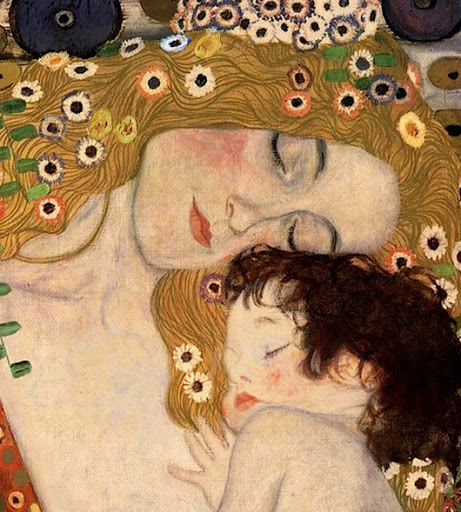
Pope Francis’ much anticipated encyclical on the environment, entitled “Praised Be” (“Laudato Si’”) after the opening line of St. Francis’ canticle, starts by personifying our planet, calling her our sister and mother, and lamenting the violence we have visited on her, with whom we are one, who lives in us and who sustains us:

““Laudato si’, mi’ Signore” – “Praise be to you, my Lord”. In the words of this beautiful canticle, Saint Francis of Assisi reminds us that our common home is like a sister with whom we share our life and a beautiful mother who opens her arms to embrace us. “Praise be to you, my Lord, through our Sister, Mother Earth, who sustains and governs us, and who produces various fruit with coloured flowers and herbs”.1

This sister now cries out to us because of the harm we have inflicted on her by our irresponsible use and abuse of the goods with which God has endowed her. We have come to see ourselves as her lords and masters, entitled to plunder her at will. The violence present in our hearts, wounded by sin, is also reflected in the symptoms of sickness evident in the soil, in the water, in the air and in all forms of life. This is why the earth herself, burdened and laid waste, is among the most abandoned and maltreated of our poor; she “groans in travail” (Rom 8:22). We have forgotten that we ourselves are dust of the earth (cf. Gen 2:7); our very bodies are made up of her elements, we breathe her air and we receive life and refreshment from her waters.”

Already the above, opening paragraphs of this encyclical are worth pausing over, and before even proceeding with reflecting on its remaining 183 pages, I would like to pick up on the idea that the earth ought to be thought of as another person, instead of “just” as some inanimate matter that is alien to the human race. In fact, Pope Francis decries such an attitude towards our planet later on in Laudato si’ by quoting Romano Guardini (§115):

“[T]he technological mind sees nature as an insensate order, as a cold body of facts, as a mere ‘given’, as an object of utility, as raw material to be hammered into useful shape; it views the cosmos similarly as a mere ‘space’ into which objects can be thrown with complete indifference.”

To get a sense of the origin and nature of St. Francis’ broad use of personification when addressing not only the Earth as sister and mother, but all of creation too, let us take a look at the circumstances of his writing the Canticle of Brother Sun that Pope Francis quotes. In a profound analysis of the Canticle, Ilia Delio, O.S.F. recounts the circumstances of its writing in the spring or summer of 1225 (some 6-10 months after St. Francis received the stigmata), quoting from the Legenda perugina:

“He could no longer see in the daytime the light of day, nor at night the light of the fire, but always remained in the house and in the little cell in darkness. Moreover, he had great pain in his eyes day and night so that at hight he could scarcely rest or sleep, which was very bad for him and greatly aggravated the sickness of his eyes and his other infirmities.”

St. Francis was at a low point in the midst of this suffering and he cried out to God for help: “Lord, come to my help and look on my infirmities so that I may bear them patiently.” He then heard a voice promising him eternal happiness in the kingdom of heaven, expressed via an image in which the earth transformed into gold (still in the Legenda perugina):

“Tell me brother: if anyone were to give you for your infirmities and tribulations such a great and precious treasure that, if the whole earth were pure gold, all stones were precious stones, and all water were balsam, yet you would consider all this as nothing, and these substances as earth, stones, and water in comparison with the great and precious treasure given to you, surely you would rejoice greatly?”

To this St. Francis replied:

“That would be a great treasure, Lord, and worth seeking, truly precious and greatly to be loved and desired.”

The voice then said to him:

“Therefore, brother, rejoice, and rather be glad in your infirmities and tribulations, since henceforth you are as secure as if you were already in my kingdom.”

The next morning, St. Francis awoke, wrote the Canticle of Brother Sun and sent his fellow friars out to sing it “as minstrels of the Lord.”

What seems particularly significant to me here is that the Canticle was not the result of some euphoric lyricising, but instead the response to having received consolation from God in response to St. Francis placing his trust in Him in the midst of suffering and distress.

Beyond the circumstances of its writing, it is important to note what St. Francis’ disciple, St. Bonaventure though of the motives behind Francis’ personification of the created. The following are passages Delio quotes from Bonaventure’s Legenda maior:

“When he considered the primordial source of all things, he was filled with even more abundant piety, calling creatures, no matter how small, by the name of brother or sister, because he knew they had the same source as himself.

[…]

With a feeling of unprecedented devotion he savored in each and every creature – as in so many rivulets – that Goodness which is their fountain source … and like the prophet David sweetly exhorted them to praise the Lord.”

St. Francis called the Earth sister and mother because both she and he share the one origin: God. Since we and all of creation share the one Father, we are all siblings – not only among members of the human race, but also in relation to all of creation, from the simplest forms of inanimate matter to lifeforms most similar to us: a worldview also highly consistent with that of Pierre Teilhard de Chardin, whom Pope Francis also refers to in Laudato Si’ (§83).

St. Francis tracing brotherhood and sisterhood with the Earth and with all of creation to a shared source in God is also very closely related to the intellectual visions of the Servant of God, Chiara Lubich, who in 1949 experienced insights into the life of the Trinity. There, Lubich saw the following image of how all creation proceeds from God:

“When God created, He created all things from nothing because He created them from Himself: from nothing signifies that they did not pre-exist because He alone pre-existed (but this way of speaking is inexact as in God there is no before and after). He drew them out from Himself because in creating them He died (of love), He died in love, He loved and therefore He created.

As the Word, who is the Idea of the Father, is God, analogously the ideas of things, that “ab aeterno” are in the word, are not abstract, but they are real: word within the Word.

The Father projects them — as with divergent rays — “outside Himself,” that is, in a different and new, created dimension, in which he gives to them “the Order that is Life and Love and Truth.” Therefore, in them there is the stamp of the Uncreated, of the Trinity.”

All of creation is a projection of the Word (words within the Word) “outside” of the Father, where these words (ideas) are the models, laws or forms of things, as Dr. Callan Slipper explains in an analysis of Lubich’s visions of creation. While all of creation is viewed in the above terms, consonant with St. Francis, Lubich also sees differences between the relationship that humans have with the Word (Jesus) and the relationship that the rest of creation has:

“At the end of time (and already now for God) the model of each pine tree, that is beneath each pine tree, will come into light and both the particular and the universal will be seen contemporaneously. Now the head is on High, and together with the other models, in the Word of God. […]

The plants that we see now, for instance the pine trees, are “members” of the model pine tree [that is, various forms of the model pine tree, Lubich explains] that is in the Word and thus destined to be Word. Here too is the mystery of the Mystical Body in nature. […]

Human beings, instead, because they are immortal, will return into the Word: son in the Son, but they will also be distinct from the Son as another son of God. Having however in themselves the whole of the Word they too will be a mirror of the Universe that is in the Word. […]

[I]n each human being [Jesus] sees the Human Being, that is Himself, the model of humanity, likewise He already sees beneath other creatures (as the pine tree for example) the Idea, the Word, that is then part (= the whole) of Himself. The human being (made in the image of God) is the whole of Himself; the plant is part of Himself (but = to Himself and it says: humanity—its God—is greater than me).”

While every created entity has its source in God, human beings each are both particular instances of a word-idea and the whole of the Word (Jesus); the rest of creation too has its source in the Word, but in a way that only partly expresses Him. Instead of suggesting superiority, the relationships between God (Word), human beings (particular instances of the whole Word) and the rest of creation (particular instances of the partial Word), place human beings in a position of containing the rest of creation (being “mirrors of the Universe”) by being instances of the Word that is their source and destination. This particular nature of humanity is also addressed in Laudato si’, where Pope Francis highlights both the need for treating all living beings responsibly and the greater dignity of the human person that is particularly, and most perversely, violated by other humans:

“At times we see an obsession with denying any pre-eminence to the human person; more zeal is shown in protecting other species than in defending the dignity which all human beings share in equal measure. Certainly, we should be concerned lest other living beings be treated irresponsibly. But we should be particularly indignant at the enormous inequalities in our midst, whereby we continue to tolerate some considering themselves more worthy than others.” (§90)

I believe that the personification of creation that St. Francis used as a means for acknowledging that all of creation has the same Father as each one of us, that Chiara Lubich’s vision of the life of the Trinity clarified with even greater nuance, and that Pope Francis placed at the basis of his call for a new culture of relating to each other and to nature is a perspective that immediately brings with it a deep sense of clarity. Thinking of nature as a sibling rather than as the “mere given” that Pope Francis criticized is a great token for investing it with a whole architecture of care and affection that other mental models would struggle to bring about. And it is a perspective that was easily accessible even to my 7 and 12 year old sons, who understood what it meant as soon as I told them about it and who immediately saw that it makes sense.


1 Just because of its beauty, here is the original in St. Francis’ own, Umbrian words: «Laudato si’, mi’ Signore, per sora nostra matre Terra, la quale ne sustenta et governa, et produce diversi fructi con coloriti flori et herba.»

Chiaretto: truth, freedom, unity

Chiara e Don Foresi

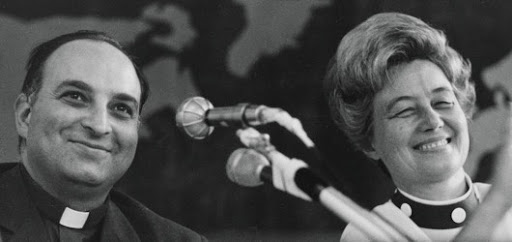
This morning, Don Pasquale Foresi, one of Chiara Lubich’s first companions and a co-founder of the Work of Mary, has completed his earthly journey. Don Foresi, known to his friends as Chiaretto, was a man who has given his life to God unreservedly and I am sure that there will be much written about him in the years to come. Instead of attempting to share an outline of his life here, I will focus on his thought, which shone with brilliance and where he displayed not only a love of the truth, but also great care for and familiarity with the world and the Church. Chiaretto was an extraordinary theologian and philosopher, but before all else, he was a follower of Jesus worthy of the apostles.

Chiaretto’s thoughts on prayer are something I shared here already, but since they are such a great example of his characteristic focus on the essential, let’s re-read them again:

Prayer does not consist in dedicating time during the day to meditation, or to reading some passages from Scripture or from the writings of the saints, or in thinking of God or our ourselves with the aim of some internal reform. This isn’t prayer in its essence.

Reciting the rosary or morning or evening prayers is just the same. One can do these things all day without ever having prayed even for a minute.

Prayer, to be truly such, requires above all a relationship with Jesus: to go with the spirit beyond our human condition, our worries, our prayers – no matter how nice and necessary they may be, and establishing this intimate, personal relationship with him.

In an early article in Nuova Umanità from 1979, Chiaretto embarks on an profound analysis of the first three chapters of Genesis, with the aim of examining the way woman is presented there and arriving at a conclusion of fundamental equality between her and man. Just to get a sense of his clarity of thought, take a look at the following excerpt:

“Verse 23 [of Genesis 2], which says that: “the man said: “This one, at last, is bone of my bones and flesh of my flesh; This one shall be called ‘woman,’ for out of man this one has been taken.”” is a hymn of joy of the man who has found his partner. He discovers the same flesh, the same bones. In Hebrew “flesh” had a far vaster meaning than in our languages, because there was no word for “body”. Von Rad sees in this verse the key to explaining the creation account of Eve; this is in fact about understanding one fact: the primordial attraction between the sexes – whence comes a love as strong as death?

It seems to me that the Yahwist writer certainly explains the origin of the sexes, but his story is far more extensive and elevated than that. It is not just about a differentiation internal to the first couple, but it is the story of how all of humanity is meant to be that is being presented to us.

The deep love, (made tangible by the account of the birth of woman from a rib) between the first man and the first woman, foreshadows the love between all beings that are to be born; hatred ought not to exist, because it is against one’s own flesh; that which later will be said spiritually, “then” was true also physically.”

Many years later, in a seminal paper from 2001 entitled “Doing philosophy,” Chiaretto presents a startling picture of what is at stake when true philosophy is sought:

“[P]hilosophy implies a risk: the risk of one’s own peace of mind. Doing philosophy, in the sense I intend, is to say: I prefer to take risks, not be calm; I want to know, I want clear things up, I want to go further beyond. And this is a terrifying step, because no one helps us, because the answers that all give us the feel prefabricated, something that is meaningless because we must look for the real answer within ourselves. Only in these moments do we know what the real problem is, we feel it, even if we can not express it yet, to clarify it, to say it. It is the choice of a non-peace in the face of the appearance of peace offered by the world around us. It is a choice that involves changing all relationships with others. Because of this I would say that one aspect of this tragic situation is that almost no one will understand us. The surprise implies a break with the world around us: that surprise which is the wonder of being in the world without being in the world. One is cut off from everyone else, one is alone, naked. You say one thing and the others will understand another; they say one thing and you maybe understand the contrary. Basically, you do not receive any solution from the others, and even though you know that you have to find the solution with others, one feels alone, not in the sense of not having company but in the sense of a radical, metaphysical impossibility of “feeling oneself with someone.” It is as if one lived in another world. It’s like entering a cave, with the risk of never coming out of it again. But none of this is of interest in those moments: “what will be will be,” I can not have peace until I accept to face myself, to face the problem of my existence and of my knowing myself. We realize that we are at sea, in an abyss, in a dark universe. We have only just started to walk and we can not turn back. There is nothing left but to press ahead. This is the drama of doing authentic philosophy.”

In a follow-up paper Chiaretto then argues for knowledge being intrinsically social, even though the journey towards it starts in that dark universe of the self that artists like Antony Gormley have explored with such beauty:

“Knowledge is always born in dialogue. All knowledge is a talking with others while addressing myself. Or, more precisely, it is a dialogue with myself which others are present intrinsically and profoundly. They will perhaps be present in a confused, imperfect way, but they are there. I never know solipsistically, even when when I know “by myself.”

What happens then when I give some of my knowledge to others? The words that I formulate to express and transmit that being that I perceived, are not only mine, but come simultaneously from me and from others: this means that when I offer what I have known, those who are listening to me are already inserted in the expressions that become formulated from before.

In telling others those words-knowledge of mine, they are completely, even if unknowingly, inserted in what I am saying, precisely because they have contributed to my knowing, they have given it to me and constructed it for me at least to some extent. Those insights are already the result of some communion with them.”

And finally, let me share with you Chiaretto’s synthesis of how Mary completes God making us in His own image, which is highly consonant also with how Pope Benedict XVI spoke about the Trinity in his “Introduction to Christianity”:

“God is the Father who gives himself wholly in the Son, who in turn wholly re-gives himself to Him. And their reciprocal love for each other – the relationship that unites them among themselves – is the Holy Spirit.

Being like God means therefore to live with Him in this same Trinitarian dynamic.

We, like all creatures, are called to being by God, just like the Son by the Father, and, precisely because we are his creatures, we tend to return to him in a relationship of love. Yet, this re-giving of oneself, even when total, of the creature to God, does not yet fully expresses its capacity to be like Him. Such a way of being does not in fact reach a “re-giving” of God to God, as it is in the Trinity. There, the Father is Father because he begets the Son. In other words, being Father is determined by the relation of sonship, that is, the Son being makes the Father be the Father.

To us too, then, created “in the likeness” of God, must be given the opportunity to give God to God, that is, to return to Him as creatures truly able to be his likes.

This possibility has taken on complete form on earth, at a given moment in history, in Mary.”

There would be so much more to talk about in terms of Chiaretto’s thought, but I believe that the above give a sense of his genius, even in the crude translations provided here.

Dearest Chiaretto, thank you!

Francis: God’s tenderness for man and woman

Blake divine presence

Pope Francis has dedicated two of his Wednesday General Audiences to the topic of men and women, their equal dignity, complementarity and the challenges they and their relationships face today. These two catecheses are set within the broader context of the family that he has been speaking about for several weeks now. However, since the question of how the complementarity of men and women is to be understood is close to my heart, I would like to offer a selection of passages from these two talks, which present a particularly clear and useful perspective.

Two weeks ago, Pope Francis started addressing this question by going back to its first treatment in the Bible, to the first creation account in Genesis, and underlining the joint value of man and woman:1

“As we all know, sexual differences are present in so many forms of life, in the long scale of the living. However, only in man and in woman does it bear in itself the image and likeness of God: the biblical text repeats it a good three times in two verses (Genesis 1:26-27): Man and woman are image and likeness of God! This tells us that not only man in himself is the image of God, not only woman in herself is the image of God, but also that man and woman, as a couple, are the image of God. The difference between man and woman is not for opposition, or for subordination, but for communion and creation, always in the image and likeness of God.”

Pope Francis then reflects on gender theory, which he rejects, and to which he offers an alternative, but whose roots he recognizes:

“I wonder […] if the so-called gender theory is not also an expression of a frustration and of a resignation, which aims to cancel the sexual difference because it no longer knows how to address it. Yes, we risk taking a step backward. The removal of the difference, in fact, is the problem, not the solution. To resolve their problems of relation, man and woman must instead talk more to one another, listen more to one another, know one another more, love one another more. They must relate to one another with respect and cooperate with friendship.”

Instead of a denial of differences, the key is respect, communication, friendship and love. However, the present problems are not to be laid equally at the feet of men and women:

“It is without doubt that we must do much more in favor of woman if we want to give back more strength to the reciprocity between men and women. In fact, it is necessary that women not only be more listened to, but that her voice has real weight, a recognized authoritativeness in society and in the Church. The way itself with which Jesus considered women – we read it in the Gospel, it is so! – in a context less favorable than ours, because in those times women were in fact in second place … and Jesus considered them in a way which gives a powerful light, which enlightens a path that leads far, of which we have only followed a small piece. We have not yet understood in depth what things the feminine genius can give us, which woman can give to society and also to us. Perhaps to see things with other eyes that complements the thoughts of men. It is a path to follow with more creativity and more audacity.”

While Pope Francis does not present a solution, he very clearly identifies the problem and sets the challenge of identifying ways that would lead to women having the place in society and the Church that they are due.

In the second catechesis this morning, Pope Francis returns to the question of reciprocity and equal dignity, and he takes the second creation account from Genesis as the starting point:

“[In the second chapter of Genesis] we read that the Lord, after having created heaven and earth, “formed man of dust from the ground, and breathed into his nostrils the breath of life; and man became a living being.” He is the pinnacle of creation. Then God put man in a most beautiful garden so that he would till and keep it. […] When […] God presents woman to him, man rejoices and recognizes that creature, and only that one, which is part of him: “bone of my bones and flesh of my flesh.” Finally, there is a reflection of himself, a reciprocity.”

While the second creation account establishes a closeness between man and woman, where woman is the “flesh of [man’s] flesh,” and which Pope Francis refers to in the same way in which the creed describes how God the Father and Jesus relate (as being consubstantial), he is quick also to emphasize that woman is created directly by God and not in some way by or through man:

“Woman is not a “replica” of man; she comes directly from the creative gesture of God. The image of the “rib” does not express inferiority or subordination but, on the contrary, that man and woman are of the same substance and are complementary. And the fact that – still in the parable – God formed woman while man slept, stresses in fact that she is in no way creature of man, but of God. And it also suggests something else: To find woman, and we can say to find love in woman, to find woman, man must first dream her and then he finds her.”

I particularly like the poetry of Pope Francis speaking about man dreaming woman to then find her and find love in her!

Francis then returns to the challenges facing men and women by reference to suspicion and mistrust and delusions of one’s omnipotence that we are all prone to:

“God’s trust in man and woman, to whom he entrusts the earth, is generous, direct and full. However, it is here where the Evil One introduces in his mind suspicion, incredulity, mistrust and finally disobedience to the commandment that protected them. They fall into that delirium of omnipotence that contaminates everything and destroys harmony. We also feel it within ourselves, so many times, all of us.”

From the general, Francis turns to denouncing injustice and violence committed against women as a result of patriarchal excesses, chauvinism and a turning of women into merchandise and a means:

“Sin generates mistrust and division between man and woman. Their relationship is threatened by thousands of ways of dishonesty and submission, of deceitful seduction and humiliating arrogance, even to the most dramatic and violent degrees. History bears their marks. Let us think, for instance, of the negative excesses of patriarchal cultures. Let us think of the many forms of chauvinism where woman is considered to be second class. Let us think of the instrumentalization and merchandising of the female body in current media culture.”

Next, he makes a pitch for a revival of an alliance between man and woman, whose absence leads to an uprooting of children from their maternal wombs:

“However, let us also think of the recent epidemic of mistrust, skepticism and even hostility that is spreading in our culture – in particular beginning with an understandable mistrust by women – in relation to an alliance between man and woman that would be able to, at the same time, improve the intimacy of communion and to protect the dignity of difference. If we do not find a jolt of sympathy for this alliance, that leads new generations to repairing mistrust and indifference, children will come into the world ever more uprooted from the maternal womb. The social devaluation of the stable and generative alliance of man and woman is certainly a loss for all. We must reassess marriage and the family!”

How so we go about such a reassessment though? Here Francis offers two indications. First, that marriage derives from a self-emptying for the sake of a new, joint journey where the spouses become all for each other (which is precisely the Trinitarian economy):

“And the Bible says a beautiful thing: man finds woman, they find one another, and man must leave something to find her fully. And for this, man will leave his father and his mother to go to her. It is beautiful! This means beginning a journey. Man is all for woman and woman is all for man.”

Second – and this should come as no surprise to anyone who has been following last year’s Synod on the Family or even just the Bull of indiction of the coming Jubilee of Mercy – that God is a tender, loving father to all, regardless of their shortcomings and that we too are called to treat others in exactly that same way. And Francis offers a surprising, beautiful reading of the motives behind Adam and Eve leaving Paradise clothed:2

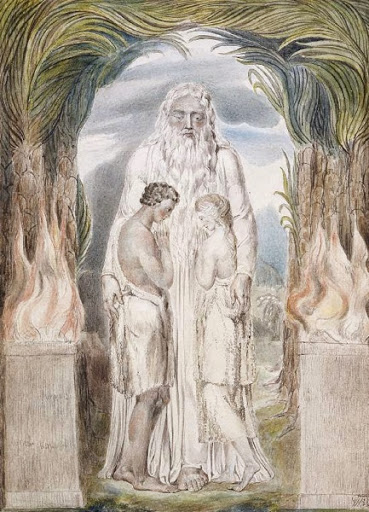
“To care for this alliance of man and woman – even if they are sinners and wounded, confused and humiliated, mistrustful and uncertain – is therefore, for us believers, a challenging and exciting vocation, under present circumstances. The same account of creation and of sin, at its end, gives us a most beautiful icon: “And the Lord God made for Adam and for his wife garments of skins, and clothed them.” It is an image of tenderness to that sinful couple that leaves us with our mouth open: the tenderness of God for man and for woman. It is an image of paternal care of the human couple. God himself takes care of and protects his masterpiece.”


1 Note, that the English quotes from Pope Francis’ catecheses are mostly verbatim from the Zenith translations, except for a few passages that are adjusted based on the Italian original in an attempt of a more literal rendering.
2 Which turns out to be highly consonant with William Blake’s depiction of that scene, shown at the top of this post.

A marriage and family questionnaire

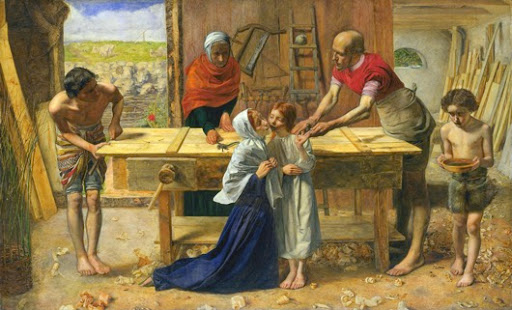
John Everett Millais Christ in the House of His Parents `The Carpenter s Shop Google Art Project s

Ahead of this October’s Synod on the Family, the Bishops of England and Wales have published a questionnaire about marriage and the family, in line with the recommendations issued at the end of last year’s Extraordinary Synod on the same subject. If you reside in England or Wales, I would very much encourage you to complete it, and if you live elsewhere, you might like to find out whether your local bishops’ conference is doing something similar.

Finally, in case you are interested, I would also like to share my own responses to this questionnaire, which I found to be a good opportunity for stopping and reflecting (although not in one go, obviously – I wrote these lines while taking a break from a basketball game with my sons, later while having a couple of minutes to myself before a supper and finally while waiting for a flight – continuity, sadly, is the stuff of fairytales :).

What are your joys and hopes of marriage and family life today?

To me the greatest source of joy with regard both to the family and marriage is the warmth and tenderness that can be experienced there. The family is where all its members can be free to express themselves unreservedly, to share their joys and sorrows, to develop their love for others and to know that their welcome by all in the family is unconditional. It is a place where difficulties can be overcome without judgment and where successes can be shared without envy. Above all though, marriage and the family are an openness to participating in the life of the Trinity: in mutual self-giving, in loving and being loved, that invite Jesus’ presence among those gathered together in His name

What are your struggles and fears of marriage and family life today?

The struggles and challenges that each member of a family faces individually are also a challenge for the family as a whole. Self-centeredness, isolation, indifference, consumerism, a lack of concern for the poor and a tendency to see what distinguishes at the expense of what unites are all prominent dangers. What makes them worse is if they are faced individually and without the benefit of the family or the relationship between spouses. And what makes them even more serious is if a family closes itself, instead of sharing its warmth and tenderness with those around it, if it only looks inside, instead of recognising the presence of God in all around them. These are the greatest dangers and fears I see today. 

How can we better understand marriage as a vocation?

By first understanding and responding to the vocation that follows from baptism and that consists in participation in Christ’s priestly, prophetic and royal nature. Only then can the membership in the mystical body of Christ that the Eucharist gives life to and the access to the Holy Spirit that follows from confirmation be understood and lived. And only on the basis of a conscious experience of these sacraments can an understanding of the sacramentality and vocational nature of marriage be understood and its choice, instead of the choice of other vocations, be discerned and made in alignment with the will of God. Both the putting into practice of the Gospel and a life-long learning of the faith are indispensable here.

  How does your marriage enrich you?

This is a question akin to asking about the benefits derived from oxygen. Getting married is an existential transformation that is followed by a new, joint being where the spouses are one. It is a monologue becoming dialogue, an individual participating in communion and a one that is not alone. It is a complementarity that is not self-sufficient or self-fulfilling but oriented towards God and neighbours instead. 

How does your family life enrich those around you?

This question would better be addressed to those around my family, while for us it is more of an examination of conscience. I hope those around us feel welcomed by us as they are and feel that we understand and don’t judge them. If we keep Jesus’ words and He makes His home with us, I hope we are able to share Him with those whom we meet. 

In what way, through the abiding presence of God, is your family “salt of the earth and light to the world,” and a place of and for handing on our faith?

By placing the Gospel at the heart of our family’s life: as a guiding light and explicit interpretative key for the events in our family and the world at large, as the motivation for our actions, as a mirror in which to identify our failings and as the inspiration for starting again and again with putting it into practice. 

Do you have any other comments?

I would like to express my wholehearted agreement with and support for Pope Francis’ words at the close of last year’s Extraordinary Synod on the Family, where he emphasised the need for the Church to be open to all, not ashamed of the wounds of our fallen brothers and sisters, and be “[t]he Church that has doors wide open to receive the needy, the repentant and not only the righteous or those who think they are perfect!”

The Catechism’s Universe

Genesis

After sharing sketches of how Pope Francis and Chiara Lubich have spoken about the universe, I will have take a quick look at what the Catechism of the Catholic Church says on the subject. As in the previous two cases, the terms “universe” (used 18 times), “cosmos” (6x) and “creation” (125x) are again used as synonyms, while the term “world” refers to social, cultural, economic, political realities (219x, two of which, however, synonymously with “universe”). Note also that the following overview will (with some small exceptions) follow the sequence laid out in the Catechism, since there is a clear logic to it and since that logic itself is worth paying attention to.

The Catechism’s exposition of a Catholic understanding of the universe starts from the central mystery of faith – the Trinity, where the universe is introduced as a source of clues about it and evidence for it:

“The Trinity is a mystery of faith in the strict sense, one of the “mysteries that are hidden in God, which can never be known unless they are revealed by God.” To be sure, God has left traces of his Trinitarian being in his work of creation […]” (§237)

The importance of the universe is then highlighted by pointing out that it is mentioned in the very first verse of Scripture (Genesis 1:1) and that the belief in its being created by God is part of the most succinct exposition of faith – the creed:

“In the beginning God created the heavens and the earth.” Holy Scripture begins with these solemn words. The profession of faith takes them up when it confesses that God the Father almighty is “Creator of heaven and earth” (Apostles’ Creed), “of all that is, seen and unseen” (Nicene Creed).” (§279)

Very soon after the close bond between God and the universe is established, the good of scientific enquiry into the working of the universe is declared, as is its potential to enrich our relationship with God:

“The question about the origins of the world and of man has been the object of many scientific studies which have splendidly enriched our knowledge of the age and dimensions of the cosmos, the development of life-forms and the appearance of man. These discoveries invite us to even greater admiration for the greatness of the Creator, prompting us to give him thanks for all his works and for the understanding and wisdom he gives to scholars and researchers. With Solomon they can say: “It is he who gave me unerring knowledge of what exists, to know the structure of the world and the activity of the elements… for wisdom, the fashioner of all things, taught me.”” (§283)

Creation is then presented as the start of a sequence where a relationship with God follows the creation of the universe and that culminates in His own dwelling among us:

“Creation is revealed as the first step toward [God’s] covenant [with humanity], the first and universal witness to God’s all-powerful love.” (§288)

“The glory of God consists in the realization of [the] manifestation and communication of his goodness, for which the world was created. God made us “to be his sons through Jesus Christ, according to the purpose of his will, to the praise of his glorious grace,” for “the glory of God is man fully alive; moreover man’s life is the vision of God: if God’s revelation through creation has already obtained life for all the beings that dwell on earth, how much more will the Word’s manifestation of the Father obtain life for those who see God.” […]” (§294)

The deep rationality of the universe and God’s invitation for us to engage with it by participating in His own “being, wisdom and goodness” are presented next, alongside the affirmation of our human intellect being capable of understanding the universe (whose “measurability” is also declared):

“We believe that God created the world according to his wisdom. It is not the product of any necessity whatever, nor of blind fate or chance. We believe that it proceeds from God’s free will; he wanted to make his creatures share in his being, wisdom, and goodness: “For you created all things, and by your will they existed and were created.” Therefore the Psalmist exclaims: “O LORD, how manifold are your works! In wisdom you have made them all”; and “The LORD is good to all, and his compassion is over all that he has made.”” (§295)

“Because God creates through wisdom, his creation is ordered: “You have arranged all things by measure and number and weight.” The universe, created in and by the eternal Word, the “image of the invisible God,” is destined for and addressed to man, himself created in the “image of God” and called to a personal relationship with God. Our human understanding, which shares in the light of the divine intellect, can understand what God tells us by means of his creation, though not without great effort and only in a spirit of humility and respect before the Creator and his work. Because creation comes forth from God’s goodness, it shares in that goodness — “And God saw that it was good… very good” — for God willed creation as a gift addressed to man, an inheritance destined for and entrusted to him. On many occasions the Church has had to defend the goodness of creation, including that of the physical world.” (§299)

The Catechism then also talks about our response to God speaking to us also through the universe, which takes on the form of us searching for Him:

“Man is in search of God. In the act of creation, God calls every being from nothingness into existence. “Crowned with glory and honor,” man is, after the angels, capable of acknowledging “how majestic is the name of the Lord in all the earth.” Even after losing through his sin his likeness to God, man remains an image of his Creator, and retains the desire for the one who calls him into existence. All religions bear witness to men’s essential search for God.” (§2566)

At the same time as creating an intelligible universe, God himself infinitely exceeds it both at the macro and micro scales and remains ineffable:

“God is infinitely greater than all his works: “You have set your glory above the heavens.” Indeed, God’s “greatness is unsearchable.” But because he is the free and sovereign Creator, the first cause of all that exists, God is present to his creatures’ inmost being: “In him we live and move and have our being.” In the words of St. Augustine, God is “higher than my highest and more inward than my innermost self.” (§300)

God’s relationship to the universe is not that of an absentee father who withdraws from his offspring. Instead, He “upholds and sustains” its being:

“With creation, God does not abandon his creatures to themselves. He not only gives them being and existence, but also, and at every moment, upholds and sustains them in being, enables them to act and brings them to their final end. Recognizing this utter dependence with respect to the Creator is a source of wisdom and freedom, of joy and confidence: “For you love all things that exist, and detest none of the things that you have made; for you would not have made anything if you had hated it. How would anything have endured, if you had not willed it? Or how would anything not called forth by you have been preserved? You spare all things, for they are yours, O Lord, you who love the living.”” (§301)

Instead of the universe having sprung forth fully-formed, it was created “in a state of journeying,” on a journey that contains the “free action of creatures”:

“Creation has its own goodness and proper perfection, but it did not spring forth complete from the hands of the Creator. The universe was created “in a state of journeying” (in statu viae) toward an ultimate perfection yet to be attained, to which God has destined it. We call “divine providence” the dispositions by which God guides his creation toward this perfection: “By his providence God protects and governs all things which he has made, “reaching mightily from one end of the earth to the other, and ordering all things well.” For “all are open and laid bare to his eyes,” even those things which are yet to come into existence through the free action of creatures.” (Vatican Council I, Dei Filius 1: DS 3003; cf. Wis 8:1; Heb 4:13.)” (§302)

Coming back to its relationship with the Trinity, the universe’s links to all three divine Persons are emphasized:

“God created the universe and keeps it in existence by his Word, the Son “upholding the universe by his word of power” (Heb 1:3) and by his Creator Spirit, the giver of life.” (§320)

That the Genesis account is symbolical and a hint at the universe’s inner nature is presented next:

“God himself created the visible world in all its richness, diversity, and order. Scripture presents the work of the Creator symbolically as a succession of six days of divine “work,” concluded by the “rest” of the seventh day. On the subject of creation, the sacred text teaches the truths revealed by God for our salvation, permitting us to “recognize the inner nature, the value, and the ordering of the whole of creation to the praise of God.”” (§337)

Then, God being the source of all that exists is underlined:

“Nothing exists that does not owe its existence to God the Creator. The world began when God’s word drew it out of nothingness; all existent beings, all of nature, and all human history are rooted in this primordial event, the very genesis by which the world was constituted and time begun.” (§338)

The Catechism then speaks about the universe’s beauty, which points beyond itself to the beauty of God, as the trigger for our desire to understand it, which – incidentally – is not dissimilar to how atheists like Richard Dawkins speak about awe and wonder1:

“The beauty of the universe: The order and harmony of the created world results from the diversity of beings and from the relationships which exist among them. Man discovers them progressively as the laws of nature. They call forth the admiration of scholars. The beauty of creation reflects the infinite beauty of the Creator and ought to inspire the respect and submission of man’s intellect and will.” (§341)

Having sketched out the key features of how the universe relates to God, what it is and how our engaging with it is also an engaging with God, the intimate nature of the relationships between humans and the rest of the universe is laid out:

“There is a solidarity among all creatures arising from the fact that all have the same Creator and are all ordered to his glory: “May you be praised, O Lord, in all your creatures, especially brother sun, by whom you give us light for the day; he is beautiful, radiating great splendor, and offering us a symbol of you, the Most High…. May you be praised, my Lord, for sister water, who is very useful and humble, precious and chaste…. May you be praised, my Lord, for sister earth, our mother, who bears and feeds us, and produces the variety of fruits and dappled flowers and grasses…. Praise and bless my Lord, give thanks and serve him in all humility.” (St. Francis of Assisi, Canticle of the Creatures.)” (§344)

“The first man was not only created good, but was also established in friendship with his Creator and in harmony with himself and with the creation around him, in a state that would be surpassed only by the glory of the new creation in Christ.” (§374)

“By the radiance of this grace all dimensions of man’s life were confirmed. As long as he remained in the divine intimacy, man would not have to suffer or die. The inner harmony of the human person, the harmony between man and woman, and finally the harmony between the first couple and all creation, comprised the state called “original justice.”” (§376)

This harmony among God, man and woman and the universe is not only there as a good in itself, but also a basis for men and women to work with God:

“The sign of man’s familiarity with God is that God places him in the garden. There he lives “to till it and keep it.” Work is not yet a burden, but rather the collaboration of man and woman with God in perfecting the visible creation.” (§378)

“Human work proceeds directly from persons created in the image of God and called to prolong the work of creation by subduing the earth, both with and for one another. Hence work is a duty: “If any one will not work, let him not eat.” Work honors the Creator’s gifts and the talents received from him. It can also be redemptive. By enduring the hardship of work in union with Jesus, the carpenter of Nazareth and the one crucified on Calvary, man collaborates in a certain fashion with the Son of God in his redemptive work. He shows himself to be a disciple of Christ by carrying the cross, daily, in the work he is called to accomplish. Work can be a means of sanctification and a way of animating earthly realities with the Spirit of Christ.” (§2427)

“The primordial value of labor stems from man himself, its author and beneficiary. By means of his labor man participates in the work of creation. Work united to Christ can be redemptive.” (§2460)

The idea of God’s traces in the universe, introduced in the early paragraphs of the Catechism is picked up again and our capacity to intuit God’s actions from what is accessible through sensory perception is highlighted. The empirical here becomes a conduit for what lies beyond it (echoing St. Paul’s “At present we see indistinctly, as in a mirror” (1 Corinthians 13:12)) – “the universal language of creation”:

“God speaks to man through the visible creation. The material cosmos is so presented to man’s intelligence that he can read there traces of its Creator. Light and darkness, wind and fire, water and earth, the tree and its fruit speak of God and symbolize both his greatness and his nearness.” (§1147)

“Inasmuch as they are creatures, […] perceptible realities can become means of expressing the action of God who sanctifies men, and the action of men who offer worship to God. The same is true of signs and symbols taken from the social life of man: washing and anointing, breaking bread and sharing the cup can express the sanctifying presence of God and man’s gratitude toward his Creator.” (§1148)

“The practice of goodness is accompanied by spontaneous spiritual joy and moral beauty. Likewise, truth carries with it the joy and splendor of spiritual beauty. Truth is beautiful in itself. Truth in words, the rational expression of the knowledge of created and uncreated reality, is necessary to man, who is endowed with intellect. But truth can also find other complementary forms of human expression, above all when it is a matter of evoking what is beyond words: the depths of the human heart, the exaltations of the soul, the mystery of God. Even before revealing himself to man in words of truth, God reveals himself to him through the universal language of creation, the work of his Word, of his wisdom: the order and harmony of the cosmos—which both the child and the scientist discover — “from the greatness and beauty of created things comes a corresponding perception of their Creator,” “for the author of beauty created them.”” (§2500)

God’s presence in the universe, its being a gift to us and a means by which God speaks to us and we can strive to know him, also mean that it calls for respect and care:

“Far from diminishing our concern to develop this earth, the expectancy of a new earth should spur us on, for it is here that the body of a new human family grows, foreshadowing in some way the age which is to come. That is why, although we must be careful to distinguish earthly progress clearly from the increase of the kingdom of Christ, such progress is of vital concern to the kingdom of God, insofar as it can contribute to the better ordering of human society.” (§1049)

And not only is care in order, but a just and universal access to the goods contained in the universe:

“In the beginning God entrusted the earth and its resources to the common stewardship of mankind to take care of them, master them by labor, and enjoy their fruits. The goods of creation are destined for the whole human race. However, the earth is divided up among men to assure the security of their lives, endangered by poverty and threatened by violence. The appropriation of property is legitimate for guaranteeing the freedom and dignity of persons and for helping each of them to meet his basic needs and the needs of those in his charge. It should allow for a natural solidarity to develop between men.” (§2402)

“The seventh commandment enjoins respect for the integrity of creation. Animals, like plants and inanimate beings, are by nature destined for the common good of past, present, and future humanity. Use of the mineral, vegetable, and animal resources of the universe cannot be divorced from respect for moral imperatives. Man’s dominion over inanimate and other living beings granted by the Creator is not absolute; it is limited by concern for the quality of life of his neighbor, including generations to come; it requires a religious respect for the integrity of creation.” (§2415)

And finally, the universe – as “the great book of creation” – is also presented as helping us to meditate:

“Meditation is above all a quest. The mind seeks to understand the why and how of the Christian life, in order to adhere and respond to what the Lord is asking. The required attentiveness is difficult to sustain. We are usually helped by books, and Christians do not want for them: the Sacred Scriptures, particularly the Gospels, holy icons, liturgical texts of the day or season, writings of the spiritual fathers, works of spirituality, the great book of creation, and that of history—the page on which the “today” of God is written.” (§2705)

In summary, the Catechism presents a universe that is intimately linked with God, who is its source and who sustains it and who also speaks to us through it. This communication is in the form of God’s “traces” in the universe and in the form of an invitation to engage with it rationally (as a pointer to God’s wisdom) and through beauty (as a foretaste of the beauty of God Himself). The universe is more than just a teaser for the goodness, truth and beauty of what is to come and is a good in itself, to be developed and enjoyed by all in a just and equitable way. This is a universe that we are call to care for and think of in the context of the relationships among us and with God.


1 “The feeling of awed wonder that science can give us is one of the highest experiences of which the human psyche is capable. It is a deep aesthetic passion to rank with the finest that music and poetry can deliver. It is truly one of the things that make life worth living and it does so, if anything, more effectively if it convinces us that the time we have for living is quite finite.” ― Richard Dawkins, Unweaving the Rainbow: Science, Delusion and the Appetite for Wonder

Pope Francis’ Universe

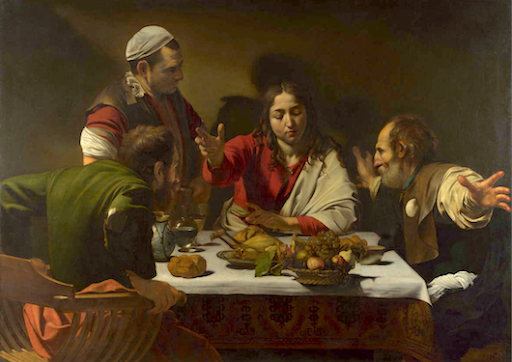
Caravaggio

As I outlined in the first installment of this series, I am in the process of looking at how the universe is being thought of from different perspectives and by thinkers of different backgrounds. After a brief look at Chiara Lubich’s intellectual visions concerning creation, I would now like to share a high-level view of how Pope Francis has been speaking about this topic.

The first thing to note is that he uses the terms “universe,” “creation,” and “nature” (with the odd mention of “cosmos”) interchangeably, while referring to social, economic and cultural spheres when speaking about the “world.” With this categorization, we can look at what Francis thinks the universe is, how he speaks about approaching and understanding it, what value he gives it and what relationship he proposes for us to have with it.

The most important point in terms of which to read all that follows is the intimate relationship Francis sees between God and “the universe, the precious gift of the Creator”:

“[T]he Holy Trinity […] leads us to contemplate and worship the divine life of the Father, the Son and the Holy Spirit: a life of communion and perfect love, origin and aim of all the universe and of every creature: God.” (Angelus, 15th June 2014)

Not only is the universe God’s gift to us and a gift that has both source and destination in the inner life of the Trinity, but it is also permeated by God’s presence:

“God and Christ walk with us and are present also in nature, as the Apostle Paul affirmed in his address at the Areopagus: “In Him we live and move and have our being” (Acts 17:28). When we read in Genesis the account of Creation, we risk imagining that God was a magician, with such a magic wand as to be able to do everything. However, it was not like that. He created beings and left them to develop according to the internal laws that He gave each one, so that they would develop, and reach their fullness. He gave autonomy to the beings of the universe at the same time that He assured them of his continual presence, giving being to every reality.” (Address to Pontifical Academy of Sciences, 27th October 2014)

God is paradoxically, simultaneously present throughout the universe, giving it being, and at the same time investing it with laws and autonomy. He desires its development, but remains close to his creation. Francis then, in the same speech, elaborates on the significance of these God-given laws of nature:

“The beginning of the world was not the work of chaos, which owes its origin to another, but it derives directly from a Supreme Principle who creates out of love. The Big-Bang, that is placed today at the origin of the world, does not contradict the divine intervention but exacts it. The evolution in nature is not opposed to the notion of Creation, because evolution presupposes the creation of beings that evolve.”

The world is not arbitrary, but has order, which it turn leads to repeatability and therefore rationality, making the universe knowable – an aspect of God’s gift that Francis values highly, and about which he speaks in the context of its relationship with faith and truth in the encyclical Lumen Fidei (§34):

“A common truth intimidates us, for we identify it with the intransigent demands of totalitarian systems. But if truth is a truth of love, if it is a truth disclosed in personal encounter with the Other and with others, then it can be set free from its enclosure in individuals and become part of the common good. [… F]aith is not intransigent, but grows in respectful coexistence with others. One who believes may not be presumptuous; on the contrary, truth leads to humility, since believers know that, rather than ourselves possessing truth, it is truth which embraces and possesses us. Far from making us inflexible, the security of faith sets us on a journey; it enables witness and dialogue with all. Nor is the light of faith, joined to the truth of love, extraneous to the material world, for love is always lived out in body and spirit; the light of faith is an incarnate light radiating from the luminous life of Jesus. It also illumines the material world, trusts its inherent order and knows that it calls us to an ever widening path of harmony and understanding. The gaze of science thus benefits from faith: faith encourages the scientist to remain constantly open to reality in all its inexhaustible richness. Faith awakens the critical sense by preventing research from being satisfied with its own formulae and helps it to realize that nature is always greater. By stimulating wonder before the profound mystery of creation, faith broadens the horizons of reason to shed greater light on the world which discloses itself to scientific investigation.”

Believing in God being the creator of the universe is not an alternative to a scientific world view, but its enabler for the Christian scientist, who trusts in the inherent order of their object of inquiry and who responds to God’s invitation to know Him also through His creation. Francis elaborates on this point in his apostolic exhortation Evangelii Gaudium (§242-243), also calling for a multidisciplinary approach to understanding the universe:

“Whereas positivism and scientism “refuse to admit the validity of forms of knowledge other than those of the positive sciences”,[190] the Church proposes another path, which calls for a synthesis between the responsible use of methods proper to the empirical sciences and other areas of knowledge such as philosophy, theology, as well as faith itself […]. Faith is not fearful of reason; on the contrary, it seeks and trusts reason, since “the light of reason and the light of faith both come from God”[191] and cannot contradict each other. […]

The Church has no wish to hold back the marvellous progress of science. On the contrary, she rejoices and even delights in acknowledging the enormous potential that God has given to the human mind. Whenever the sciences – rigorously focused on their specific field of inquiry – arrive at a conclusion which reason cannot refute, faith does not contradict it. […]”

In fact, on a separate occasion, Francis puts the Church’s appreciation of science in maternal terms: “as a mother rejoices and is rightly proud as her children grow “in wisdom, and age and grace” (Lk 2:52)” and adds art to the modes of engagement with the universe, saying:

“In every age the Church has called upon the arts to give expression to the beauty of her faith and to proclaim the Gospel message of the grandeur of God’s creation, the dignity of human beings made in his image and likeness, and the power of Christ’s death and resurrection to bring redemption and rebirth to a world touched by the tragedy of sin and death.”

The sense of awe and wonder that drive both rational and artistic engagement with the universe (for believers and non-believers alike) is further emphasized in one of Francis’ catecheses about the Holy Spirit:

“When our eyes are illumined by the Spirit, they open to contemplate God, in the beauty of nature and in the grandeur of the cosmos, and they lead us to discover how everything speaks to us about Him and His love. All of this arouses in us great wonder and a profound sense of gratitude! It is the sensation we experience when we admire a work of art or any marvel whatsoever that is borne of the genius and creativity of man: before all this, the Spirit leads us to praise the Lord from the depths of our heart and to recognize, in all that we have and all that we are, an invaluable gift of God and a sign of his infinite love for us.”

And to round out this picture of how a knowledge of the universe complements faith, it is worth reading Pope Francis’ words from this year’s Epiphany homily, where he places the two side-by-side as “great books”:

“[O]ur life is a journey, illuminated by the lights which brighten our way, to find the fullness of truth and love which we Christians recognize in Jesus, the Light of the World. [… E]very person has two great “books” which provide the signs to guide this pilgrimage: the book of creation and the book of sacred Scripture. What is important is that we be attentive, alert, and listen to God who speaks to us, who always speaks to us.”

Pope Francis also points to Jesus himself having made use of this “book of creation” in his own teaching:

“When he speaks to the people, Jesus uses many parables: in language understandable to everyone, with images from nature and from everyday situations.”

Far from being optional or even frowned upon, knowledge of the material world is a guide to the Christian as is that of Scripture, which is further underlined by the universe being seen as good (as opposed to evil or even just neutral):

“In the first Chapter of Genesis, right at the beginning of the Bible, what is emphasized is that God is pleased with his creation, stressing repeatedly the beauty and goodness of every single thing. At the end of each day, it is written: “God saw that it was good” (1:12, 18, 21, 25): if God sees creation as good, as a beautiful thing, then we too must take this attitude and see that creation is a good and beautiful thing.” (General Audience, 21st May 2014)

““And God saw that it was good” (Gen 1:12, 18, 21, 25). The biblical account of the beginning of the history of the world and of humanity speaks to us of a God who looks at creation, in a sense contemplating it, and declares: “It is good”.” (Vigil for Peace, 7th September 2013)

What then ought to be our attitude towards a universe that we can relate to in truth (through knowledge), beauty (through the senses and art) and goodness (through contemplation)? Francis’ answer, unsurprisingly, is “respect and gratitude”:

“[I]f God sees creation as good, as a beautiful thing, then we too must take this attitude and see that creation is a good and beautiful thing. […] Creation is not some possession that we can lord over for our own pleasure; nor, even less, is it the property of only some people, the few: creation is a gift, it is the marvellous gift that God has given us, so that we will take care of it and harness it for the benefit of all, always with great respect and gratitude. […] We must protect creation for it is a gift which the Lord has given us, it is God’s present to us; we are the guardians of creation. When we exploit creation, we destroy that sign of God’s love. To destroy creation is to say to God: “I don’t care”. And this is not good: this is sin.”

An important aspect here is the harnessing of the universe for the good of all, which Francis also ties to the universe’s “grammar”:

“The human family has received from the Creator a common gift: nature. The Christian view of creation includes a positive judgement about the legitimacy of interventions on nature if these are meant to be beneficial and are performed responsibly, that is to say, by acknowledging the “grammar” inscribed in nature and by wisely using resources for the benefit of all, with respect for the beauty, finality and usefulness of every living being and its place in the ecosystem. Nature, in a word, is at our disposition and we are called to exercise a responsible stewardship over it.”

And on another occasion he then links the care for nature to the care we must have for one another:

“All of creation forms a harmonious and good unity, but above all humanity, made in the image and likeness of God, is one family, in which relationships are marked by a true fraternity not only in words: the other person is a brother or sister to love, and our relationship with God, who is love, fidelity and goodness, mirrors every human relationship and brings harmony to the whole of creation. God’s world is a world where everyone feels responsible for the other, for the good of the other.”

In summary, Francis’ universe is a gratuitous gift from God whose being He sustains and in which He is close to us, but also where He instituted laws and, at the same time, autonomy. It is a gift that has its origin and being in God and its destiny too, via its being harnessed for the good of all. It is a gift that exhibits goodness and beauty and whose nature can be expressed in truth. As a result it invites respectful stewardship for the good of all, contemplation and rational understanding. Francis, using a rich metaphor, therefore issues an “appeal for respect and protection of the entire creation which God has entrusted to man, not so that it be indiscriminately exploited, but rather made into a garden.”

Chiara Lubich’s Universe

All in one

In anticipation of Pope Francis’ upcoming encyclical on ecology, I have been reading up on various Christian perspectives on the universe, since it is the context to which Francis’ thought will be applied. Speaking about ecology – the “interrelationship of organisms and their environments” – presupposes at least an implicit concept of what those environments and organisms are, and what I will attempt over a series of blog posts will be to sketch out how various Christian thinkers, and the official teaching of the Catholic Church, conceive of it.

Instead of following a chronological or hierarchical order, I will first look at the view that is closest to my own heart – the mystical experience of Chiara Lubich. In 1949, after several years of living to put the Gospel into practice during World War II and its aftermath, Lubich and her companions went to spend a summer in the Dolomites. There, Lubich experienced a series of intellectual visions during which she saw the Trinity reveal Itself to her and provide her with insights that she then proceeded to share with her companions and gradually with all she came in contact with. Here I don’t mean to dwell on the nature of these experiences, but instead pick out a couple of passages from them that show how creation (i.e., the Universe) was experienced by her in the context of the Trinity.

In fact, the first passage relates to the days before the first mystical experience took place, where Lubich recounts her sensation of God’s presence permeating nature (speaking in 1961):

“I remember that during those days, nature seemed to me to be enveloped totally by the sun; it already was physically, but it seemed to me that an even stronger sun enveloped it, saturated it, so that the whole of nature appeared to me as being “in love.” I saw things, rivers, plants, meadows, grass as linked to one another by a bond of love in which each one had a meaning of love with regard to the others.”

On another occasion, she speaks about the same experience as follows:

“I felt that I could perceive, perhaps because of a special grace from God, the presence of God beneath things. Therefore, if the pine trees were gilded by the sun, if the brooks flowed into the glimmering falls, if the daisies, other flowers and the sky were all decked in summer array, stronger than all this was the vision of a sun beneath all creation. In a certain sense, I saw, I believe, God who supports, who upholds things. … The vision of God beneath things, which gave unity to creation, was stronger than the things themselves; the unity of the whole was stronger than the distinction among them.”

What emerges clearly from this event is an intuition of God’s sustaining presence in nature, of His being a unifying and all-pervasive presence and of nature being ordered according to the internal life of the Trinity, which is that of being a self-noughting, self-othering gift – i.e., love. While one way of thinking about the above is a spiritual one, the same experience can also be read from a conceptually paradigmatic perspective that suggests a relational, dynamically-interconnected nature of the universe. And while this is not science, and does not pretend to be science, it is a perspective on the same universe that science is working to understand.

Later, in the midst of a sequence of mystical visions, Lubich experiences creation (the universe) as seen from the perspective of paradise:

“When God created, He created all things from nothing because He created them from Himself: from nothing signifies that they did not pre-exist because He alone pre-existed (but this way of speaking is inexact as in God there is no before and after). He drew them out from Himself because in creating them He died (of love), He died in love, He loved and therefore He created.

As the Word, who is the Idea of the Father, is God, analogously the ideas of things, that “ab aeterno” are in the word, are not abstract, but they are real: word within the Word.

The Father projects them — as with divergent rays — “outside Himself,” that is, in a different and new, created dimension, in which he gives to them “the Order that is Life and Love and Truth.” Therefore, in them there is the stamp of the Uncreated, of the Trinity.”

The pre-mystical intuition of God being beneath all things is brought into focus and spelled out with greater specificity by making three points here: First, that the nothing that is the Universe’s origin is a nothing that results from God’s self-emptying (dying), motivated by love (a total giving of self (God), to the point of becoming nothing, out of love for an other (the Universe)). Second, that the “ideas of things” have a reality in themselves, instead of being mere abstractions. Third, that the way that God relates to the Universe is akin to the relationship between the sun and its rays (the rays being projected outwards, while remaining all sun) and that these “rays” (the Universe) are ordered (have “laws”, regularity – cf. earlier blog post on Genesis 1).

Dr. Callan Slipper, a theologian and close collaborator of Lubich, expands on the above passage as follows:

“Created things in themselves are not and remain nothing, but they have being insofar as it is given to them by participation. This means that creation, even though it is created and distinct from God and always dependent upon God, is, in its being, God. It is an externalized “God,” a “God” transferred outside Godself, a “God” that has become other. Certainly things are always nothing in themselves, but insofar as they are, they are constantly created by God. Their being is “God,” a “God,” so to speak, who is created and so having all the characteristics proper to creatures (finitude, temporality, incapacity, ignorance, and the possibility of suffering).”

What emerges is a picture where the Universe is anything but a remnant of a long forgotten game of snooker where God may have made the first shot and then withdrawn to the point of appearing dead. It is instead an image where God is the singer and the universe his song (cf. Zephaniah 3:17) – nothing in and of itself, yet made real and beautiful by the actions of its performer. On another occasion, Lubich speaks more specifically about how the universe relates to God-Trinity:

“In fact, in Creation all is Trinity: Trinity the things in themselves, because their Being is Love, is Father; the Law in them is Light, is Son, Word; the Life in them is Love, is Holy Spirit. The All given by participation to the Nothing.”

The point here is that the dependence on God is not just some wishy-washy generalisation, but that the Universe is seen as specifically intertwined with the Persons of the Trinity in ways that simultaneously reflect the specificity of each Person (Being, Law, Life) and their being one (Love). Slipper puts this particularly forcefully: “the “vestigia trinitatis” — the “traces of the Trinity” — that can be seen impressed upon things are neither arbitrary nor metaphorical, but are the presence of God” (emphasis mine).

Later, Lubich offers another powerful insight about how creation (the Universe) relates to God:

“When I see a lake of water projected by the sun upon the walls and see the play of the water upon the walls shudder according to the quivering of the real water, I think of creation.

The Father is the real sun. The Word is the real water. The lake reflected is the created. The created is nothingness clothed in the Word: it is the Word reflected. Of “being” in the created therefore there is only God. Except that, while the lake on the walls is false, in creation the Word is present and alive: “I am . . . the Life.”

In the created there is unity between God and nothingness. In the Uncreated between God and God.”

While this is fundamentally analogous to the image of the sun and its rays, the image of the reflection of a lake adds nuance by investing the created (the Universe) with reality. Not a reality independent of God (as has already been established), but a reality of finite, temporal, variety nonetheless. In fact, Lubich returns to this point when recounting a vision of the Eschaton – the end of time:

“I think, for example, of a bird. In paradise there will be the Idea of the bird and there will be all the various ideas. It is likely that there will be therefore also this bird ‘clarified.’ […] And they [i.e., all created things] are Trinity among themselves, since the one is Son and Father of the other, and they all come together, loving one another in the One from whence they came.”

Slipper again explains the above with great clarity, by emphasising that “In bringing about this return to the model, each thing will not be lost in a unity without qualifications, a kind of totalizing void, but, returning to the model Idea, the various ideas come back together in all their variety.”

Finally, and bringing this thread to its point of contact with the question of ecology, Lubich also speaks about the consequences of the above relationship between God and the Universe:

“[T]he fact that God was beneath things meant that they weren’t as we see them; they were all linked to one another by love; all, so to speak, in love with one another. So if the brook flowed into the lake it was out of love. If the pine tree stood high next to another pine tree, it was out of love. […]

I have been created as a gift for the person next to me, and the person next to me has been created by God as a gift for me. … On earth all stands in a relationship of love with all: each thing with each thing. We have to be Love, however, to discover the golden thread among all things that exist.”

Love of and care for the entire Universe are, in Lubich’s vision, a direct consequence of all creation being Trinity by participation, of all relating to all as the Persons of the Trinity relate to each other. I am ontologically bound not only to my neighbours, but the Universe in its totality, all of us jointly having resulted from God’s total gift of self. Such an understanding of creation takes John Donne’s famous “any man’s death diminishes me, because I am involved in mankind, and therefore never send to know for whom the bell tolls; it tolls for thee” and projects it out beyond humanity to the entire Universe.

Just to avoid a potential misunderstanding, it is worth addressing the question of what the nature of the above insights is and how they relate to other forms of rational enquiry, such as philosophy and science. Here, the thoughts of another of Lubich’s collaborators – the nuclear engineer, philosopher and theologian, Prof. Sergio Rondinara – provide a framework by arguing for a unity of knowledge applied to a single reality, albeit approached by different means:

“[Philosophy, science and theology] are forms of autonomous and legitimate interpretation because of the different methods each employs. They are also formally distinct based on the different purposes each has assigned to the same act of cognition. [… They] are not comparable one with the other, since what is affirmed by one cannot be said by the other. For this reason they are mutually complementary, and […] can best express their approach to truth and their truthful contents in a dialogical context.

This […] aims to prevent the isolation of single fields of knowledge. Through appropriate philosophical mediation an indirect interaction among different fields of knowledge can be realized. It is a context in which proper interdisciplinary dialogue presumes that the quest for truth demands openness and acceptance of the position of others, requires each party to know and accept the differences and the specific contributions of the other, seeks what is common, and recognizes the interdependence of the parties. For [Lubich], dialogue between the natural sciences, philosophy, and the knowledge of the faith — that is, theology — is a way toward knowledge of the only reality and the only truth that can help the consciousness reach a unity of knowledge.”