Judaism and Christianity: A common heritage

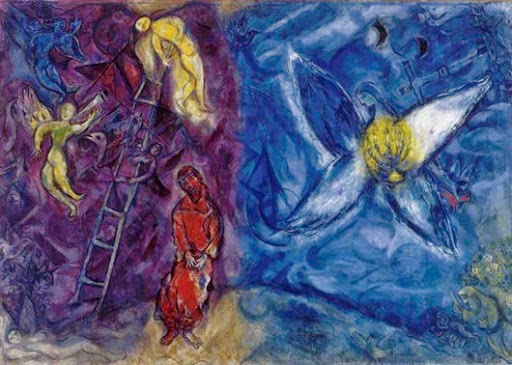
Chagall jacobs dream

A very good friend of mine (CA) lent me a great book about Judaism, entitled “What is a Jew?” and aimed at providing an introduction to a broad variety of aspects of what it means to be Jewish. The book is structured in the form of questions and answers and its tone exudes warmth and a desire to share rather than to impose or indoctrinate. Even before I started reading the book, I was looking forward to learning more about Judaism, both because of a desire to have a better understanding of the religion of several friends of mine, and because of the heightened insistence on a rediscovery of Judaism made by the Catholic Church since Vatican II.

John Paul II was famously the first pope to visit a synagogue, during which visit he spoke with clarity and warmth about the relationship between Christianity and Judaism:

“The Jewish religion is not ‘extrinsic’ to us, but in a certain way is ‘intrinsic’ to our own religion. […] With Judaism, therefore, we have a relationship which we do not have with any other religion. You are our dearly beloved brothers, and, in a certain way, it could be said that you are our elder brothers.”

Benedict XVI went on to maintain very strong relationships with Judaism, both acknowledging the Church’s past wrongs and expressing its gratitude and debt to the Jewish people:

“Abraham, father of the people of Israel, father of faith, has become the source of blessing, for in him ‘all the families of the earth shall call themselves blessed.’ The task of the Chosen People is therefore to make a gift of their God – the one true God – to every other people. In reality, as Christians we are the inheritors of their faith in the one God. Our gratitude therefore must be extended to our Jewish brothers and sisters who, despite the hardships of their own history, have held on to faith in this God right up to the present and who witness to it…”

Finally, Pope Francis has not only continued along the direction indicated by his predecessors, but has also benefitted from close personal friendships with the Jewish community. An example of this is the book – “On Heaven and Earth” that he co-authored with Rabbi Abraham Skorka, who also accompanied him on his recent visit to Israel and who has been a frequent visitor at the Vatican. Pope Francis has also reiterated, in his apostolic exhortation Evangelii Gaudium, the brotherly relationship that his predecessors have stressed:

“We hold the Jewish people in special regard because their covenant with God has never been revoked, for “the gifts and the call of God are irrevocable” (Rom 11:29). The Church, which shares with Jews an important part of the sacred Scriptures, looks upon the people of the covenant and their faith as one of the sacred roots of her own Christian identity (cf. Rom 11:16-18). As Christians, we cannot consider Judaism as a foreign religion; nor do we include the Jews among those called to turn from idols and to serve the true God (cf. 1 Thes 1:9). With them, we believe in the one God who acts in history, and with them we accept his revealed word. Dialogue and friendship with the children of Israel are part of the life of Jesus’ disciples. […] While it is true that certain Christian beliefs are unacceptable to Judaism, and that the Church cannot refrain from proclaiming Jesus as Lord and Messiah, there exists as well a rich complementarity which allows us to read the texts of the Hebrew Scriptures together and to help one another to mine the riches of God’s word. We can also share many ethical convictions and a common concern for justice and the development of peoples.” (§247-9)

Against this background I was particularly pleased to see the relationship between Christianity and Judaism described by Rabbi Morris Kertzer in “What is a Jew?” as follows:

“[The] German dramatist, Gotthold Ephraim Lessing, caught the essence of this common heritage [of Judaism and Christianity] in a play called Nathan, the Wise. One of the most memorable scenes depicts a meeting between a friar and the Jew Nathan. Moved by the beauty of Nathan’s character, the friar exclaims, “Nathan! Nathan! You are a Christian!” His friend replies, “We are of one mind, for that which makes me, in your eyes, a Christian, makes you, in my eyes, a Jew!”” (pp. 279)

I have to say that this paragraph from the last pages of the book very much rang true for me and expressed with accuracy the feeling I had as I made my way through the whole book. To give you a sense of what triggered such a recognition of what I believe to be very much mine in Rabbi Kertzer’s description of Judaism, I will share a number of excerpts from it next.

To begin with, the mystical tradition in Judaism, and its propensity to expressing itself by means of short stories reminded me immediately of the stories told about the Desert Fathers (and also about Zen kōans and the stories of the Sufi Mullah Nasrudin):

““Rabbi,” one of the disciples complained, “some of the congregants are gossiping in the midst of prayer!” “How wonderful are your people, O God,” The rabbi retorted. “Even in the midst of gossip, they devote a few moments to prayer!”

“Can you tell me, Rabbi, why the wicked are always looking for companions while the righteous are not?” “The answer is simple: The wicked walk in darkness, so are anxious for company. Good people walk in the light of God; they don’t mind walking alone.”” (pp. 21-22)

Next, I was struck by a repeated insistence on orthopraxy, which has a strong tradition in Christianity too:

“Jews are urged to put their religion into action. “Talking is not the main thing; action is,” goes a talmudic maxim, and action includes not just activity within the confines of the Jewish world, but working for the welfare of the larger society in which we live. We call this tikkun olam, meaning the “reparation of world.”” (pp. 30)

And Rabbi Kertzer goes on to recounting the same story about the building of the Tower of Babel that Pope Francis reflects on in his above-mentioned book, and then to presenting a synthesis of principles that resonate very strongly with Christianity too:

“The Rabbis used telling parables to illustrate this point. Why did the Tower of Babel crumble? Because the leaders of the project were more interested in the work than in the workers. When a brick fell to earth, they would pause to bewail its loss; when a worker fell they would urge the others to keep on building. The brick was more important than the human being. So God destroyed the imposing edifice. […]

Basic to Judaism are these fundamental principles, which are also basic to democracy: 1) God recognizes no distinction among us  on the basis of creed, color, gender, or class; all of us are equal in God’s sight. 2) We are all our brother’s and sister’s keepers; we bear responsibility for our neighbors’ failings as well as for their needs. 3) All of us, being made in God’s image, have infinite capacity for doing good; therefore the job of society is to evoke the best that is in each of us. 4) Freedom is to be prized above all things; the very first words of the Ten Commandments depict God as the Great Liberator: “I am the Eternal your God who brought you out of the land of Egypt.”” (pp. 31)

A couple of questions later, Kertzer then sets out an understanding of Scripture that could have come from the Vatican II dogmatic constitution Dei Verbum:

“[M]ost Jews look upon the accounts of miracles as inspiring literature, rather than as actual historical events. That is to say, we do not necessarily accept older interpretations of their significance, since an important lesson for the fifth century may be unimportant in the face of today’s spiritual questions; but we do use these tales as sources of inspiration ourselves, trying to draw religious lessons from the text, even the text of an event that may not be literally true. God did not create the world in precisely six days, just as the biblical text insists, but we can learn lessons for our lives from such stories as the Garden of Eden or the Tower of Babel.” (pp. 45)

On the subject of death and the Kaddish prayer, the book presents a profoundly beautiful reflection by Rabbi Steinberg:

“It is easier for me to let go of life with all its treasures, because these things are not and never have been mine. They belong to the Universe and the God who stands behind it. True, I have been privileged to enjoy them for an hour but they were always a loan to be recalled.

And I let go of them the more easily because I know that as parts of the divine economy they will not be lost. The sunset, the bird’s song, the baby’s smile, the thunder of music, the surge of great poetry, the dreams of the heart, and my own being—all these I can well trust to the God who made them. There is a poignancy and regret about giving them up, but no anxiety. When they slip from my hands they will pass to hands better, stronger, and wiser than mine.

Life is dear; let us then hold it tight while yet we may. But we must hold it loosely also! It is at once infinitely precious and yet a thing lightly to be surrendered. Because of God, we clasp the world, but with relaxed hands; we embrace it, but with open arms.” (pp. 67)

The juxtaposition of an enjoyment of the beauty of the universe and a detachment from it leads to an experiencing of everything in relationship with and gratitude to God:

“Because of its innate trust in both God and God’s world, Judaism affirms the value of life and life’s pleasures. It is therefore a religion that urges us to pay attention to the wonderful universe about us. To help us do so, it provides blessings for all of life’s bounties: seeing a rainbow; experiencing a thunderstorm; observing the first blossoms of springtime; putting on new clothes; even eating our first garden produce, as each crop ripens year after year.” (pp. 85)

That the above relationship with God is not simply an individual matter is shown clearly through the concept of minyan, which also reminded me of Jesus’ promise of his presence where “two or three” are gathered together in his name:

“Personal prayer between the individual and God may take place anywhere, any time, and with no one present but God and the individual worshiper. Public services, however, have traditionally required what is known as a minyan, that is, the presence of at least ten adult worshipers. […] Behind the idea of a minimum number is the notion that Jewish spirituality is in some sense communal. We all received the Torah together on Mount Sinai. We are all part of the people Israel.” (pp. 86)

Kertzer then goes on to presenting a simultaneous openness to diversity and faithfulness to God, that has echoes in the Church’s desire for “unity in diversity”:

“Our experience with diverse cultures has enriched our religion in many ways. Above all, perhaps, has been our hospitality to differences. Every question of Jewish law contains both an austere interpretation and a liberal one, and the Rabbis ruled that “both opinions are the word of the living God.” […] One famous rabbinic aphorism pictures God as saying, in effect, “As long as Jews do My will, they need not believe in Me.” That is an exaggeration, of course. Judaism does teach some beliefs, among them the firm conviction that God is real: a real presence in the lives of men and women, children and adults. We can know that reality as surely as we know the beauty of love, the satisfaction of faithfulness, or the buoyancy of hope.” (pp. 108)

In more specific terms, the three pillars of the Jewish faith are presented next, and unity among them is declared:

“We believe, then, in God: a personal God whose ways may be beyond our comprehension, but whose reality makes the difference between a world that has purpose and one that is meaningless.

We believe all human beings are made in God’s image; our role in the universe is thus uniquely important, and despite the failings that spring from our mortality, we are endowed with infinite potential for goodness and greatness.

We believe too that human beings actualize their potential as part of a community. The people Israel is such a community, harking back to Sinai, existing despite all odds from then until now, and still the source of satisfaction for Jews who wish to pursue a life of purpose grounded in the age-old wisdom we call Torah.

And we believe in Torah, therefore, as a continuing source of revelation.

It has been said that you can sum up Jewish belief in these three words, God, Torah, Israel. As the mystics used to say, “God, Torah, and Israel are all one.” If we lose our faith in any one of them, the others quickly perish. […]

In antiquity, it was common for scholars to distill the essence of religion in a simple formula. Thus, Hillel, the great Rabbi and scholar of the first century B.C.E., was asked to sum up Judaism while the questioner stood on one foot! Hillel replied: “Certainly! What is hateful to you, do not do to your neighbor. That is all there is in the Torah. All the rest is mere commentary. I suggest you study the commentary.”” (pp. 109)

The transcendence of God, the universal access to following Him and its being rooted in a putting into practice of His qualities brings the exposition of the Jewish faith to completion:

“Jews believe in the existence of a God who cannot be accurately conceived, described, or pictured. But God is a real presence in the universe at large; and the lives of each of us in particular. We believe also that we most genuinely show God honor when we imitate the qualities that are godly: As God is merciful, so we must be compassionate; as God is just, so we must deal justly with out neighbor; as God is slow to anger, so we must be tolerant in our judgment.” (pp. 110)

“It is the recognition of the reality of God, and the basic moral virtues, such as kindliness, justice, and integrity, that we regard as eternal verities. But we claim no monopoly on these verities, for we recognize that every great religious faith has discovered them. That is what Rabbi Meir meant some eighteen centuries ago, when he said that a non-Jew who follows the Torah is as good as our high priest.” (pp. 113)

Finally, Kertzer also speaks very powerfully about the necessity of remembering the horrors of the Shoah:

“[T]he moral reason [to remember the Shoah] may be the most important one. When the mass murderer Adolf Eichmann was on trial, the Israelis informed the world that the motive behind the judicial proceedings was not vengeance but the moral education of contemporary women and men. The striking thing about Eichmann was precisely that he was so ordinary, a living symbol of what historian Hannah Arendt called “the banality of evil.” Contemplating the events of the Nazi era, we came to see that the sin of omission on the part of the decent peoples of the world was the sin of silence, the refusal to believe that a highly enlightened people like the Germans could permit themselves to be led by a madman into acts of national depravity that culminated in the events of Auschwitz and the other death camps. We had to learn to readjust our vision and take evil seriously once again.” (pp. 161)

Not only is it essential to pursue the doing of good, but so is a taking seriously of evil and a standing up to it, since omission and silence too are grave sins – insights that are of acute relevance today and that were at the time of the Shoah also shared by Christians. The Lutheran theologian Dietrich Bonhoeffer, whose anniversary of being murdered in the Flossenbürg concentration camp in 1945 was yesterday, said:

“Silence in the face of evil is itself evil:
God will not hold us guiltless.
Not to speak is to speak.
Not to act is to act.”

Romero: disobey false absolutes

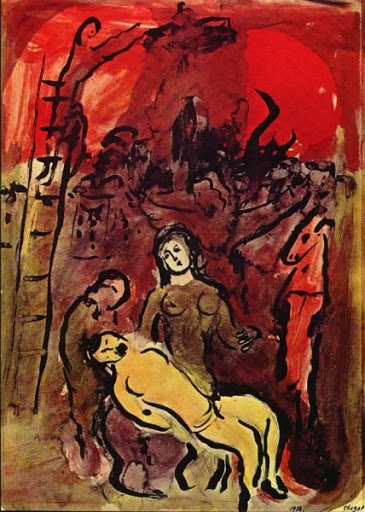
Romero

After a tumultuous process following his martyrdom, Oscar Romero is finally due to be beatified on 23rd May in San Salvador, where he served as archbishop and where he was assassinated by a member of a death squad on 24th March 1980. Instead of writing about his life,1 I would like to share some of his own words with you, from his pastoral letters, homilies and diaries.

Starting from his pastoral letters, there is a strong sense of the social dimension of Christianity, which grows from and is interconnected with individual choices:

“Throughout the centuries the Church has, quite rightly, denounced sin. Certainly she has denounced personal sins, and she has also denounced the sin that perverts relationships between persons, especially at the family level. But she has begun to recall now something that, at the Church’s beginning, was fundamental: social sin – the crystalization, in other words, of individuals’ sins into permanent structures that keep sin in being, and make its force to be felt by the majority of the people.” (2nd pastoral letter, 1977)

In the same pastoral letter, Romero’s response to the “crystalization” of personal sin into “structures of sin” is a call to an authentic, present-day, up-to-date Christianity that understands tradition like Vatican II does – as being alive:

“To remain anchored in a non-evolving traditionalism, whether out of ignorance or selfishness, is to close one’s eyes to what is meant by authentic Christian tradition. For the tradition that Christ entrusted to his Church is not a museum of souvenirs to be protected. It is true that tradition comes out of the past, and that it ought to be loved and faithfully preserved. But it has always a view to the future. It is a tradition that makes the Church new, up to date, effective in every historical epoch. It is a tradition that nourishes the Church’s hope and faith so that she may go on preaching, so that she may invite all men and women to the new heaven and new earth that God has promised (Revelation 21:1; Isaiah 65:17).”

Next, Romero moves on to emphasizing the non-legal, non-rule-based nature of faith and instead presents a model of participation in the person of Christ, as St. Paul did:

“The Church’s foundation is not to be thought of in a legal or juridical sense, as if Christ gathered some persons together, entrusted them with a teaching, gave them a kind of constitution, but then himself remained apart from them. It is not like that. The Church’s origin is something much more profound. Christ founded the Church so that he himself could go on being present in the history of humanity precisely through the group of Christians who make up his Church. The Church is the flesh in which Christ makes present down the ages his own life and his personal mission.”

This is an idea that he returned to in a meditation later that year, which also foreshadows Pope Benedict XVI’s introduction to the 2012-13 Year of Faith:

“How I would like to engrave this great idea
on each one’s heart:
Christianity is not a collection of truths to be believed,
of laws to be obeyed,
of prohibitions.

That makes it very distasteful.
Christianity is a person,
one who loved us so much,
one who calls for our love.
Christianity is Christ.” (November 6, 1977)

Romero continues in his second pastoral letter with making the link between the Church’s authenticity and her being the Body of Christ:

“That is how changes in the Church are to be understood. They are needed if the Church is to be faithful to her divine mission of being the Body of Christ in history. The Church can be Church only so long as she goes on being the Body of Christ. Her mission will be authentic only so long as it is the mission of Jesus in the new situations, the new circumstances, of history. The criterion that will guide the Church will be neither the approval of, nor the fear of, men and women, no matter how powerful or threatening they may be. It is the Church’s duty in history to lend her voice to Christ so that he may speak, her feet so that he may walk today’s world, her hands to build the kingdom, and to enable all its members to make up all that has still to be undergone by Christ (Colossians 1:24).”

And again it is a theme he picks up in a mediation around a year later, which is also an examination of conscience:

“Christ became a man of his people and of his time:
He lived as a Jew,
he worked as a laborer of Nazareth,
and since then he continues to become incarnate in everyone.

If many have distanced themselves from the church,
it is precisely because the church
has somewhat estranged itself from humanity.
But a church that can feel as its own all that is human
and wants to incarnate
the pain,

the hope,

the affliction
of all who suffer and feel joy,
such a church will be Christ loved and awaited,
Christ present.
And that depends on us.” (December 3, 1978)

What does a Church that has not become estranged from humanity and that lends “her feet so that he may walk today’s world” look like? Romero here points to the Matthean questions and updates them to his own time and place:

“There is one rule
by which to judge if God is near us
or is far away –
the rule that God’s word is giving us today:
everyone concerned for the hungry,
the naked,
the poor,
for those who have vanished in police custody,
for the tortured,
for prisoners,
for all flesh that suffers,
has God close at hand.” (February 5, 1978)

Returning to his second pastoral letter, Romero also underlines the non-negotiability of Jesus’ command – even in the face of aggression directed against the Church – to love one another has He has loved us and for that “another” to include our enemies:

“The Church has never incited to hatred or revenge, not even at those saddest of moments when priests have been murdered and faithful Christians have been killed or have disappeared. The Church has continued to preach Jesus’ command love one another (John 15:12). This is a command that the Church cannot renounce, nor has she renounced it, not even in recent months. On the contrary, she has recalled that other command, pray for those who persecute you (Matthew 5:44).”

Such conduct is anything but plain sailing though and is both a thorn in the side of those who seek wealth and power for themselves and a pretext for accusations being leveled against the Church (still from Romero’s second pastoral letter):

“The Church is not dedicated to any particular ideology as such. She must be prepared to speak out against turning any ideology into an absolute. As several of the Latin American hierarchies have said time and again in recent years, worldly interests try to make the Church’s position seem Marxist when it is in fact insisting on fundamental human rights and when it is placing the whole weight of its institutional and prophetic authority at the service of the dispossessed and weak.”

What struck me in the above was also Romero’s denunciation of the absolutization of ideologies, where it is not hard to see examples of this happening also today, and I was glad to see him return to this point and expand on it in his fourth (and final) pastoral letter as the Archbishop of San Salvador. There, his point of departure is an acclamation of transcendence, which he – interestingly – links to critical thinking and which he puts in opposition against the absolutization of human (limited) values:

“As well as offending God, every absolutization disorients, and ultimately destroys, human beings. It is the vocation of human beings to raise themselves to the dignity of the children of God and to participate in God’s divine life. This transcendence of human beings is not an escape from problems here on earth, still less is it an opium that distracts them from their obligations in history. On the contrary, by virtue of this transcendent destiny people have the capacity to always remain critical vis-a-vis the events of history. It gives them a powerful inspiration to reach out to ever higher goals. Social forces should hearken to the saving voice of Christ and of true Christians, cease their questioning, and open themselves to the values of the one and only Absolute. When a human value is turned into an absolute and endowed, whether in theory or in practice, with a divine character, human beings are deprived of their highest calling and inspiration. The spirit of the people is pushed in the direction of a real idolatry, which will only deform and repress it.”

Next, he applies the analysis of absolutization to two contexts, the first of which is wealth:

“The absolutization of wealth holds out to persons the ideal of having more and to that extent reduces interest in being more, whereas the latter should be the ideal for true progress, both for the people as such and for every individual. The absolute desire of having more encourages the selfishness that destroys communal bonds among the children of God. It does so because the idolatry of riches prevents the majority from sharing the goods that the Creator has made for all, and in the all-possessing minority it produces an exaggerated pleasure in these goods.”

Second, he looks at national security with the same optics – a topic of acute relevance also in today’s world:

“By virtue of [the absolutization of national security], the individual is placed at the total service of the state. His or her political participation is suppressed, and this leads to an unequal participation in the results of development. Peoples are put into the hands of military elites, and are subjected to policies that oppress and repress all who oppose them, in the name of what is alleged to be total war. The armed forces are put in charge of social and economic structures under the pretext of the interests of national security. Everyone not at one with the state is declared a national enemy, and the requirements of national security are used to justify assassinations, disappearances, arbitrary imprisonment, acts of terrorism, kidnappings, acts of torture … [all] indicate a complete lack of respect for the dignity of the human person (Puebla #1262).”

It is not hard to see from all of the above why Archbishop Vincenzo Paglia, the postulator of Oscar Romero’s cause for beatification, characterized him by saying: “Romero is truly a martyr of the Church of Vatican II, a Church, as Pope John used to say, who is mother of all, but in particular of the poor.” Everything I have read by him was steeped in the Gospel and in its reading today through the eyes of Vatican II. It is also for this reason that Paglia referred to Romero as the “proto-martyr” of contemporary martyrs.

No account of a martyr’s thought would be complete without including the words pertaining to his own martyrdom, which is a culmination of a life of imitating Christ. Here, Romero was acutely aware of the risk to his own life, which can be readily seen from an interview he gave just days before being shot at long range while celebrating mass:

“You can tell the people that if they succeed in killing me, that I forgive and bless those who do it. Hopefully, they will realize they are wasting their time. A bishop will die, but the church of God, which is the people, will never perish.” 

In spite of the severe threats to his life, even on the day before his death, Romero spoke out against the “structures of sin” that he had been fighting for many years, addressing a group of soldiers:

“Brothers, you came from our own people. You are killing your own brothers. Any human order to kill must be subordinate to the law of God, which says, ‘Thou shalt not kill’. No soldier is obliged to obey an order contrary to the law of God. No one has to obey an immoral law. It is high time you obeyed your consciences rather than sinful orders. The church cannot remain silent before such an abomination … In the name of God, in the name of this suffering people whose cry rises to heaven more loudly each day, I implore you, I beg you, I order you: stop the repression!”


1 For a brief biography of Archbishop Romero, see the one provided by the UN on the website about the “International Day for the Right to the Truth Concerning Gross Human Rights Violations and for the Dignity of Victims,” dedicated to him and held on the anniversary of his martyrdom, the 24th March.

Lumen Gentium: Mary

Red pieta

The final chapter of Lumen Gentium,1 the Vatican II dogmatic constitution on the Church, is dedicated in its entirety to Jesus’ mum, Mary, and to her role not only in the Church but in the whole of Jesus’ mission and the salvation he brought for all.2

The starting point here is a strong emphasis on Mary’s intimate union both with the Trinity and with humanity:

“The Virgin Mary, who at the message of the angel received the Word of God in her heart and in her body and gave Life to the world, is acknowledged and honored as being truly the Mother of God and Mother of the Redeemer. Redeemed by reason of the merits of her Son and united to Him by a close and indissoluble tie, she is […] the Mother of the Son of God, by which account she is also the beloved daughter of the Father and the temple of the Holy Spirit. [… S]he far surpasses all creatures, both in heaven and on earth. At the same time, however, because she belongs to the offspring of Adam she is one with all those who are to be saved.”

Mary’s unique position in creation is next traced back to the Tanakh, where she fulfills the “promise of victory over the serpent which was given to our first parents after their fall into sin (cf. Genesis 3:15),” and is foretold as the “Virgin who shall conceive and bear a son, whose name will be called Emmanuel” (cf. Isaiah 7:14), where “Emmanuel” (עִמָּנוּאֵל) in Hebrew means “God is with us.” As such “[s]he stands out among the poor and humble of the Lord, who confidently hope for and receive salvation from Him.”

While Mary’s “unique holiness” is underlined repeatedly, so is her free assent to the will of God:

“Adorned from the first instant of her conception with the radiance of an entirely unique holiness, the Virgin of Nazareth is greeted, on God’s command, by an angel messenger as “full of grace”, (cf. Luke 1:28) and to the heavenly messenger she replies: “Behold the handmaid of the Lord, be it done unto me according to thy word”.(287) Thus Mary, a daughter of Adam, consenting to the divine Word, became the mother of Jesus.”

Here Mary was “used by God not merely in a passive way, but as freely cooperating in the work of human salvation through faith and obedience,” which – in St. Irenaeus’ words – made her “the cause of salvation for herself and for the whole human race. […] The knot of Eve’s disobedience was untied by Mary’s obedience; what the virgin Eve bound through her unbelief, the Virgin Mary loosened by her faith.”(St. Irenaeus, Against Heresies, III, 22, 4).

From His conception to His ascension to Heaven, Mary closely follows and supports Jesus, including her prompting Jesus’ first miracle at the wedding feast of Cana (cf. John 2:1-11) and her faith being tested at the foot of the cross, “grieving exceedingly with her only begotten Son, uniting herself with a maternal heart with His sacrifice.” Already at that moment, Mary took on a new role, when “she was given by […] Jesus dying on the cross as a mother to His disciple” John and thereby to the whole Church:

“She conceived, brought forth and nourished Christ. She presented Him to the Father in the temple, and was united with Him by compassion as He died on the Cross. In this singular way she cooperated by her obedience, faith, hope and burning charity in the work of the Saviour in giving back supernatural life to souls. Wherefore she is our mother in the order of grace.”

She is a key presence at Pentecost too, when “by her prayers [she] implor[es] the gift of the Spirit, who had already overshadowed her in the Annunciation.” And at the end of her earthly life she is “taken up body and soul into heavenly glory, and exalted by the Lord as Queen of the universe.”

Mary is therefore the model Christian and an example to follow both individually and together as Church:

“And so they turn their eyes to Mary who shines forth to the whole community […] as the model of virtues. [… M]editating on her and contemplating her in the light of the Word made man, the Church […] enters more intimately into the great mystery of the Incarnation and becomes more and more like her Spouse. For Mary, who […] unites in herself and re-echoes the greatest teachings of the faith […], calls the faithful to her Son and His sacrifice and to the love of the Father.”

This leads to emphasizing an important aspect of how Mary is seen by the Catholic Church:

“The maternal duty of Mary toward men in no wise obscures or diminishes [the] unique mediation of Christ […] For all the salvific influence of the Blessed Virgin on men originates, not from some inner necessity, but from the divine pleasure. It flows forth from the superabundance of the merits of Christ, rests on His mediation, depends entirely on it and draws all its power from it. In no way does it impede, but rather does it foster the immediate union of the faithful with Christ. [… T]he unique mediation of the Redeemer does not exclude but rather gives rise to a manifold cooperation which is but a sharing in this one source.”

In other words, being a Christian is about having a personal, immediate, direct relationship with Jesus and Mary helps it rather than being an intermediary, which is also true of the saints. Another point worth noticing in the above is how Mary’s role is presented as “divine pleasure” – it is not like she had to be given a role, like her role was a necessity, but that she has a role because it pleased God to invest her with it. Much like all of creation, which was not necessary either, Mary’s elevation in the history of salvation is a gratuitous, loving act of God too.

Finally, Lumen Gentium is also clear about how superficiality and credulity are to be avoided and how the focus needs to be on a simple love for and imitation of Mary:

“Let the faithful remember moreover that true devotion consists neither in sterile or transitory affection, nor in a certain vain credulity, but proceeds from true faith, by which we are led to know the excellence of the Mother of God, and we are moved to a filial love toward our mother and to the imitation of her virtues.”

As you can see from my blog posts on Lumen Gentium, I have found it to be a source of great encouragement and joy. Encouragement, because the treasures of Christianity are presented with clarity, born on wings both of faith and reason, and joy, because throughout this great presentation of who the Church is, the focus has been on the person of Jesus and on our mission to bring his love to all in freedom.3


1 For posts on previous chapters, see here.
2 If you are not a Catholic – welcome! 🙂 To get more out of what follows, you might want to take a look at a caveat I wrote for the first of my Vatican-II-themed posts here.
3 Given how long it has taken me to make my way through Dei Verbum, Lumen Gentium and Sacrosanctum Concilium (three of the four dogmatic constitutions of Vatican II), I have to revise my plan to read all of the Council’s documents during this Year of Faith. Instead, but still with plenty of challenge, I’ll try to just cover the fourth of the Council’s constitutions – Gaudium et Spes – next.

Lumen Gentium: in heaven and on earth

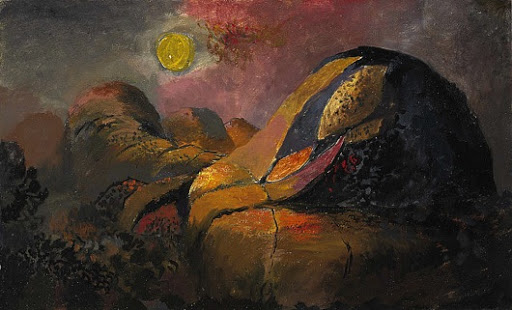
Sutherland

Continuing in the series on Vatican II, let me resume a reading of Lumen Gentium, where the last post looked at its sixth chapter, addressing the role of the religious (i.e., those who have taken vows of poverty, chastity and obedience). In its penultimate, seventh chapter, Lumen Gentium turns to the relationship between the Church on earth and the Church in heaven. As the full title of the chapter – “The eschatological nature of the pilgrim church and its union with the church in heaven” – sets out in a nutshell, the focus here is on the final purpose of the Church on earth (its eschatology) and its union with the Church in heaven. This may at first seem like just a bit of jiggery-pokery, and to be honest, when I read it for the first couple of times, I was at a loss to extract from it more than a sentence’s worth of essence. Repeated reflection, an overflowing measure of enlightenment from John Paul II,1 and a personal experience I already shared here, have all lead me to what I’ll try to set out next.2

The best way to approach this chapter is to let John Paul II lead us to what is novel about it:3

“It can be said that until recently the Church’s catechesis and preaching centered upon an individual eschatology [… and] this pastoral style was profoundly personal: “Remember that at the end you will present yourself before God with your entire life. Before His judgment seat you will be responsible for all of your actions” […] The vision proposed by the Council, however, was that of an eschatology of the Church and of the world.”

Returning to Lumen Gentium, the opening paragraph of chapter 7 declares that:

“The Church, to which we are all called in Christ Jesus, and in which we acquire sanctity through the grace of God, will attain its full perfection only in the glory of heaven, when there will come the time of the restoration of all things.(cf. Acts 3:21) At that time the human race as well as the entire world, which is intimately related to man and attains to its end through him, will be perfectly reestablished in Christ. (cf. Ephesians 1:10)”

The first insight then is that the final purpose (eschatology) of the human person is not their individual, singular business, but fundamentally a property of a community – the Church. It is not I, alone, self-sufficiently and relying on my individual powers only, who sets out into the deep, but the I-we of the Church. Returning to a frequently emphasized point in previous parts of Lumen Gentium, here too the focus is on the Church being Jesus’ Body, where it is His “having been lifted up from the earth [that] has drawn all to Himself. (cf. John 12:32.)” Jesus draws all to himself and takes us (an all-inclusive “us”) with Him to our ultimate destiny.

The nature of the eschatology referred to extensively in this chapter merits greater reflection, in particular in terms of its timing. A naïve approach could lead us to thinking of it as referring to an event in some distant future (at the “end of time”), while what John Paul II puts forward is a very different perspective:

“[What the] Gospel teaches about God requires a certain change in focus with regard to eschatology. First of all, eschatology is not what will take place in the future, something happening only after earthly life is finished. Eschatology has already begun with the coming of Christ. The ultimate eschatological event was His redemptive Death and His Resurrection. This is the beginning of “a new heaven and a new earth” (cf. Revelation 21:1). For everyone, life beyond death is connected with the affirmation: “I believe in the resurrection of the body,” and then: “I believe in the forgiveness of sins and in life everlasting.” This is Christocentric eschatology.”

John Paul II again pivots what may have become a diffuse, deformed view and returns its focus to Jesus – it is His coming that has brought us into the final chapter of creation. As Lumen Gentium puts it:

“Already the final age of the world has come upon us and the renovation of the world is irrevocably decreed [… T]he promised restoration which we are awaiting has already begun in Christ, is carried forward in the mission of the Holy Spirit and through Him continues in the Church in which we learn the meaning of our terrestrial life through our faith, while we perform with hope in the future the work committed to us in this world by the Father, and thus work out our salvation.”

This then is the second insight: we are not just waiting around for the world to come to an end, instead we are in the “Last Days” and are active participants in the universe completing its function and returning to perfection in God. This is an understanding that neither lets us “check out” of the world’s affairs (instead obliging us to engage in them for the good of all), nor does it amount to being a millenarianist Doomsday cult (since Jesus himself assured the apostles that “of that day and hour no one knows, neither the angels of heaven, nor the Son, but the Father alone.” (Matthew 24:36)).

While some of us have already completed their earthly journey and form the heavenly Church, others are still “exiles on earth,” proceeding along it “groan[ing] and travail[ing] in pain” (cf. Romans 8:19-23). The two communities are not separate entities though, and instead:

“form one Church and cleave together in Him. (cf. Ephesians 4:16) […] For by reason of the fact that those in heaven are more closely united with Christ, they establish the whole Church more firmly in holiness, lend nobility to the worship which the Church offers to God here on earth and in many ways contribute to its greater edification. (cf. 1 Corinthians 12:12-27)”

The Church in heaven and on earth is the one Mystical Body of Christ. As a consequence, “the pilgrim Church from the very first ages of the Christian religion has cultivated with great piety the memory of the dead [… and] has always believed that the apostles and Christ’s martyrs who had given the supreme witness of faith and charity by the shedding of their blood, are closely joined with us in Christ.” This then is the third insight – communion is not only among those of us who are alive on earth today and with Jesus whose body we form, but equally with those who have gone before us. While the death of loved ones is unquestionably and profoundly painful, it is not a separation, but, paradoxically, a coming closer “by reason of the fact that those in heaven are more closely united with Christ.” In many ways, the 14th Dalai Lama’s tweet from yesterday is also very well aligned with the concept of the Mystical Body that pervades Lumen Gentium as well as Sacrosanctum Concilium, when he says: “we develop care and concern by thinking of others not as ‘them’ but ‘us’”.

Not only is such union the case with those close to me, but with all, and in a particular way with the saints: “For just as Christian communion among wayfarers brings us closer to Christ, so our companionship with the saints joins us to Christ, from Whom as from its Fountain and Head issues every grace and the very life of the people of God.” Instead of being only examples, through their intimate union with Jesus, I personally am united with them too.

On the subject of saints, Lumen Gentium also cautions against superficial excesses and underlines the fact that the Christian life is always directed towards the Trinity:

“the authentic cult of the saints consists not so much in the multiplying of external acts, but rather in the greater intensity of our love, whereby, for our own greater good and that of the whole Church, we seek from the saints “example in their way of life, fellowship in their communion, and aid by their intercession.” [… O]ur communion with those in heaven […] in no way weakens, but conversely, more thoroughly enriches the […] worship we give to God the Father, through Christ, in the Spirit.”

Instead of being a bit of esoteric navel-gazing, the insights about how the Church is one across heaven and earth, with Jesus at its head and as its heart, firmly place the focus on the importance of community, on acting in the world for its good and on the persistence of relationships beyond death and with all.


1 See the “Does “Eternal Life” exist?” chapter of his beautifully profound Crossing the Threshold of Hope.
2 Yes, I am going to send you to the second paragraph of a previous post, in case you are not a Catholic and would like my perspective on how to read the rest of this post.
3 Emphasis preserved from original text.

Sacrosanctum Concilium: liturgy together

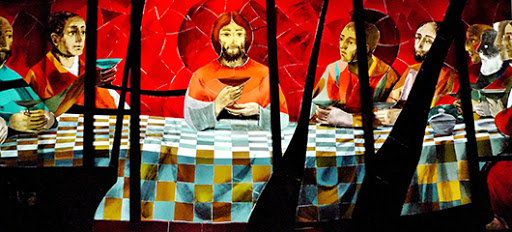
Arcabas last supper

For reasons beyond the scope of this post I feel compelled to take up my quest to read the documents of Vatican II during this Year of Faith, by postponing and leapfrogging the last two chapters of Lumen Gentium and confronting the Council’s constitution on the liturgy: Sacrosanctum Concilium.1 Here I have to admit that the opening chapters of the document were challenging in that their form had to be endured for the sake of getting to their content, but – like when reading The Name of the Rose, where Umberto Eco himself characterizes the first 100 pages as a mountain that is to be climbed to reach the rewards lying beyond it2 – the core of the reform of the liturgy, as well as the very frank and practical steps defined for achieving it, are gems worth working for and I hope you too will take on the climb.

Before delving into the content of Sacrosanctum Concilium, it is worth noting that the concept of liturgy (λῃτουργία / leitourgia) predates Christianity and has its origins in ancient Greece where it referred to a public service – a work (ἔργο / ergon) of the people (λαός / Laos) – “whereby [a city-state’s] richest members […] financed the State with their personal wealth.” In the Christian context, this public service has since the first century AD had as its core what Jesus himself had “told His followers to do in memory of Him” – i.e., to nourish themselves by His body and blood, which he shared with the apostles at the Last Supper (cf. Luke 22:19). This Christian liturgy is a public service in that it strengthens and supports those who participate in it, by bringing them closer both to God and to each other.

The aim then of Sacrosanctum Concilium is to support Christian life by adapting “to the needs of our own times [that] which [is] subject to change; foster[ing] whatever can promote union among all who believe in Christ; strengthen[ing] whatever can help to call the whole of mankind into the […] Church.” The result is a desire to “reform and promote the liturgy,” where the changes introduced in it are a consequence of the Church “be[ing] both human and divine, visible and yet invisibly equipped, eager to act and yet intent on contemplation, present in this world and yet not at home in it.”

As in the other Vatican II documents, the starting point here too is the Trinity, where:

“[God] sent His Son, the Word made flesh, anointed by the Holy Spirit, to preach the gospel to the poor, to heal the contrite of heart, to be a “bodily and spiritual medicine”, the Mediator between God and man. […] Therefore in Christ “the perfect achievement of our reconciliation came forth, and the fullness of divine worship was given to us”. […] Thus by baptism men are plunged into the paschal mystery of Christ: they die with Him, are buried with Him, and rise with Him. [Thus, since its beginning] the Church has never failed to come together to celebrate the paschal mystery: reading those things “which were in all the scriptures concerning him” (Luke 24:27) [and] celebrating the eucharist in which “the victory and triumph of his death are again made present”.”

In the liturgy, there is a particular, personal presence of Jesus, who

“is always present in His Church, especially in her liturgical celebrations. He is present in the sacrifice of the Mass, not only in the person of His minister, “the same now offering, through the ministry of priests, who formerly offered himself on the cross”, but especially under the Eucharistic species. […] He is present in the sacraments, so that when a man baptizes it is really Christ Himself who baptizes. He is present in His word, since it is He Himself who speaks when the holy scriptures are read in the Church. He is present, lastly, when the Church prays and sings, for He promised: “Where two or three are gathered together in my name, there am I in the midst of them” (Matthew 18:20).”

In other words, the liturgy is a personal encounter with Jesus, which demands one’s full and active participation both individually and as a community. Sacrosanctum Concilium’s objective is to reform the liturgy as it was before Vatican II, since:

“the liturgy is made up of immutable elements divinely instituted, and of elements subject to change. These not only may but ought to be changed with the passage of time if they have suffered from the intrusion of anything out of harmony with the inner nature of the liturgy or have become unsuited to it. In this restoration, both texts and rites should be drawn up so that they express more clearly the holy things which they signify; the Christian people, so far as possible, should be enabled to understand them with ease and to take part in them fully, actively, and as befits a community.”

The first principle in such a restoration is to foster “warm and living love for scripture,” which “is of the greatest importance in the celebration of the liturgy.” The second is that “[liturgical services] are celebrations of the Church, which is the “sacrament of unity,” [of] the holy people united.” Third, while “the sacred liturgy is above all things the worship of the divine Majesty, it likewise contains much instruction for the faithful. For in the liturgy God speaks to His people and Christ is still proclaiming His gospel. And the people reply to God both by song and prayer. […] The rites should [therefore] be distinguished by a noble simplicity; they should be short, clear, and unencumbered by useless repetitions; they should be within the people’s powers of comprehension, and normally should not require much explanation.”

Guided by the above principles, the use of mother tongues (which were not in liturgical use before Vatican II) in addition to Latin is encouraged, “in the first place [for] the readings and directives, and [for] some of the prayers and chants.” Sacrosanctum Concilium goes much further though, in an effort to bring the liturgy close to all of its participants and allow for full participation as a community:

“Even in the liturgy, the Church has no wish to impose a rigid uniformity in matters which do not implicate the faith or the good of the whole community; rather does she respect and foster the genius and talents of the various races and peoples. Anything in these peoples’ way of life which is not indissolubly bound up with superstition and error she studies with sympathy and, if possible, preserves intact. Sometimes in fact she admits such things into the liturgy itself, so long as they harmonize with its true and authentic spirit. […] In some places and circumstances, however, an even more radical adaptation of the liturgy is needed. […] The competent territorial ecclesiastical authority […], must, in this matter, carefully and prudently consider which elements from the traditions and culture of individual peoples might appropriately be admitted into divine worship. Adaptations which are judged to be useful or necessary should then be submitted to the Apostolic See, by whose consent they may be introduced. To ensure that adaptations may be made with all the circumspection which they demand, the Apostolic See will grant power to this same territorial ecclesiastical authority to permit and to direct […] the necessary preliminary experiments over a determined period of time among certain groups suited for the purpose.”

The above, to me, is the first of the real eye-openers about Sacrosanctum Concilium in that is seems to go way beyond what I see in the Church today. Here there is a clear intention to recognize what is good in various cultures and make it part of the public service that is the liturgy. This is not the cultural imperialism that the Church is often criticized for, but a readiness to seek out and recognize value wherever it is present, so that communities can bring their treasures to the table at which the Last Supper is celebrated, instead of being observers at a foreign spectacle. Neither is it recalcitrant adherence to established forms or wanton novelty for its own sake, but a process that involves controlled “experiments” – the last concept I expected to see in an official Church document.

To further make them accessible to all and welcoming of participation,

“the rites are to be simplified, due care being taken to preserve their substance; elements which, with the passage of time, came to be duplicated, or were added with but little advantage, are now to be discarded; other elements which have suffered injury through accidents of history are now to be restored to the vigor which they had in the days of the holy Fathers. […] Especially on Sundays […] there is to be restored, after the Gospel and the homily, […] “the prayer of the faithful.” By this prayer, in which the people are to take part, intercession will be made for holy Church, for the civil authorities, for those oppressed by various needs, for all mankind, and for the salvation of the entire world.”

These are changes that not only invite participation by a community, but do so in a way where it faces both Jesus and the world. Clear efforts are also made here to involve the laity in new ways where “provision [are to] be made [so] that some sacramentals […] may be administered by qualified lay persons.”

In amongst the extensive list of specific changes introduced by Sacrosanctum Concilium, there are also several whose directness and verging on irony were a treat to read in a document of this kind: “The rite for the baptism of infants is to be revised, and it should be adapted to the circumstance that those to be baptized are, in fact, infants.” [Duh! :)], “The prayer for the bride, [is to be] amended to remind both spouses of their equal obligation to remain faithful to each other.” and “The accounts of martyrdom or the lives of the saints are to accord with the facts of history.” were definitely among my favorites.

Finally, the reform of the liturgy is also extended to the music and visual art used to support and enhance it, with a strong emphasis on simplicity and service:

“[B]ishops and other pastors of souls must be at pains to ensure that, whenever the [liturgy] is to be celebrated with song, the whole body of the faithful may be able to contribute that active participation which is rightly theirs. […] In certain parts of the world […] there are peoples who have their own musical traditions, and these play a great part in their religious and social life. For this reason due importance is to be attached to their music, and a suitable place is to be given to it, not only in forming their attitude toward religion, but also in adapting worship to their native genius. Therefore, when missionaries are being given training in music, every effort should be made to see that they become competent in promoting the traditional music of these peoples, both in schools and in sacred services.

The Church has not adopted any particular style of art as her very own; she has admitted styles from every period according to the natural talents and circumstances of peoples, and the needs of the various rites. Thus, in the course of the centuries, she has brought into being a treasury of art which must be very carefully preserved. The art of our own days, coming from every race and region, shall also be given free scope in the Church, provided that it adorns the sacred buildings and holy rites with due reverence and honor. [… Bishops], by the encouragement and favor they show to art which is truly sacred, should strive after noble beauty rather than mere sumptuous display. […] Let bishops carefully remove […] those works of artists which […] lack artistic worth, [or display] mediocrity and pretense. […] And when churches are to be built, let great care be taken that they be suitable for the celebration of liturgical services and for the active participation of the faithful.”

Reading through the entirety of Sacrosanctum Concilium, what stuck in my mind was how apt the term “restoration” was for what its principles and instructions amount to. It is a restoration of the simplicity and immediacy of being in Jesus’ presence that the apostles and the Early Church must have experienced. It is a de-cluttering, a removal of exaggeration and deformation, and a consistent and all-pervasive re-focusing on the liturgy being “performed by the Mystical Body of Jesus Christ, that is, by the Head and His members.” The changes to the structure and extent of the liturgy, the use of the congregation’s mother tongue and the principles guiding the use of music and art all serve a single purpose: to make the liturgy be a knowing, active, living expression of a community, gathered around the one table in the Upper Room, with Jesus at it’s head.


1 As is now de rigueur here for posts that verge on or fully wade into the theologically technical, please, consider reading paragraph two of the following post as a caveat, if you are not a Catholic.
2 “After reading the manuscript, my friends and editors suggested I abbreviate the first hundred pages, which they found very difficult.and demanding. Without thinking twice, I refused, because, as I insisted, if somebody wanted to enter the abbey and live there for seven days, he had to accept the abbey’s own pace. If he could not. he would never manage to read the whole book. Therefore those first hundred pages are like a penance or an initiation, and if someone does not like them, so much the worse for him. He can stay at the foot of the hill.” (Umberto Eco, Reflections on “The Name of the Rose”)

Atheists: adversaries, or brothers?

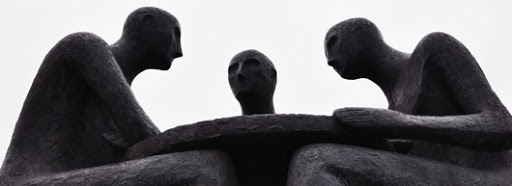
Trio

It is no secret that I have a great deal of respect for my atheist and agnostic friends and I feel like I have learned a lot from them about matters that are of profound value to me as a Christian. With Cardinal Ravasi I can also say that I too have absolutely no interest in converting them (or anyone else for that matter). At the same time I am aware of this attitude not having been the mainstream position of the Church for a long time (although there have always been those who have shared it – many of whom were saints) and that atheism is seen by some (many?) in the Church as a problem even today.

It is against this background that I was pleased to hear voices consonant with mine while reading two great books: On Heaven and Earth (by Cardinal Bergoglio – now Pope Francis – and Rabbi – and biophysicist! – Abraham Skorka, mentioned here before) and Colloqui (by Fr. Pasquale Foresi – one of the co-founders of the Focolare Movement).

Here Francis has the following to say:1

“When I meet atheist persons, I share with them human questions […] which are such rich material for sharing and working on together that they can easily lead to mutual and complementary enrichment. As a believer I know these riches are a gift from God[, but] instead of proselytizing, I respect atheists and I present myself the way I am. I have nothing to hide and I would not say that their life is condemned, because I am convinced that I have no right to judge their honesty. […] We have to be coherent with the message we receive from the Bible: all men and women are made in the image of God, whether they are believers or not.”

Later in the book, this attitude is also reinforced by Rabbi Skorka, saying that “we are all joined by the links of brotherhood.” While the position is, to my mind, positive – we are all brothers and sisters irrespective of our beliefs and there are great riches to be shared with each other in openness, a point worth elaborating on are the positions that Pope Francis rejects here – i.e., proselytism and condemnation.

Why these are novelties in the Catholic Church is addressed in Fr. Foresi’s book, which I happened to read at the same time :). There he points to the great changes that have been confirmed by the Second Vatican Council, a key point of which was an increased emphasis on and respect for following one’s conscience.2 Among others, this shift also legitimized pacifist positions held by prominent Christians during the last century’s World Wars. E.g., see the Catholic, Italian MP Igino Giordani – now in the process of being considered for sainthood, who championed a bill to allow for conscientious objectors to abstain from military service – incidentally in collaboration with atheist Communists (a great rarity during the first half of the 20th century).

It was on the back of this rediscovery of the importance of conscience that the honesty of atheist beliefs was contemplated and while the Church certainly has a position different from atheism, it stated clearly in the Gaudium et Spes constitution of the Second Vatican Council that,

“motivated by love for all men, [the Church] believes [that the] questions [raised by atheism] ought to be examined seriously and more profoundly. [… T]he Church sincerely professes that all men, believers and unbelievers alike, ought to work for the rightful betterment of this world in which all alike live; such an ideal cannot be realized, however, apart from sincere and prudent dialogue. Hence the Church protests against the distinction which some state authorities make between believers and unbelievers, with prejudice to the fundamental rights of the human person.” (Gaudium et Spes, 21)

Fr. Foresi explains that prior to Vatican II it was generally thought that “one couldn’t be an atheist in good faith, and that it was “impossible” for them to be saved.” This has all changed though, so that now there are not only individuals in the Church, who are keen to build relationships with their atheist friends, but it is the Church’s official teaching that the dignity of believers and non-believers alike be protected and valued.

And there is more. In his book, Fr. Foresi recounts how the Focolare Movement, founded by Chiara Lubich, has gone a step further and has done so with the Church’s formal approval. The Focolare Movement is an organization that promotes unity and universal brotherhood among all and even though it started in the Catholic Church during the Second World War, it also has members from other Christian churches and communities and from other religions. And it also counts agnostics or atheists among its members. While links with non-Catholics and atheists were at first informal, as the Focolare Movement was gaining official recognition by the Catholic Church, it also asked for its non-Catholic members to be officially recognized as such – a request eventually granted by the Vatican.

Why am I saying all this? Do I care so much about being “official”? No, not for its own sake, but I believe that it is an indication of how seriously these questions are taken by the Church and how it is not only its declared intention to be open to atheists but also something it approves formally.


1 Since I have the original book in Spanish, the English text is my rough translation.
2 For a more detailed discussion of this topic see a previous post.

Igino Giordani: the oxymoron of a catholic party

Foco2

I have long been aware of the figure of Igino Giordani through his writings, of which the most beautiful one to me is his “Diary of Fire” and I also knew of his having been an MP in the Italian parliament, a journalist and an expert on the Fathers of the Church. It is only now though, after having read his memoirs (“Memorie d’un cristiano ingenuo” – “Memoirs of a simple christian”) that I am beginning to realize more fully the enormity of his example. While in the past I have very much admired certain aspects of his life, I am now seeing that it is really his life as a whole that is an instance of his imitation of Jesus. To give you a sense of what I mean, let me pick out just a couple of moments from his autobiography.

While I don’t intend to summarize his story, it is worth noting that Giordani (1894–1980) was the first of six children of a bricklayer and his illiterate wife and that he initially trained to become a bricklayer like his dad. Thanks to his father’s employer, who provided him with the necessary financial support, Giordani ended up attending a junior seminary and eventually studying humanities at the University of Rome. On the verge of going to university, he was conscripted and sent to fight in the First World War. There a bullet shattered a ten centimeter segment of his right femur, requiring a three year stay in hospital and a series of 18 operations (the first of which was performed without anesthetics!).

It is at this point of exposure to war, that I was particularly impressed by the following passage, where Giordani talks about the impossibility he felt of “killing a human person: a brother”:1

“The five or six shots that I fired, in the air, I did out of necessity: I could never aim the barrel of my gun at the enemy trenches, with the intention of killing a child of God.”

Upon being discharged from hospital at the end of the war, Giordani immediately finds himself confronted with another battle: that of opposing the fascist regime and the alignment of parts of the Church with it. Here he speaks out against clericalism, which is:

“an exploitation of religious power for the political ends of a government, a party, a bank, … [… It is an] iron belt, disguised as gold, by which the freedom of the children of God was restrained, the proclamation of the Gospel deformed and the spirituality of the Church compromised.”

And adds that:

“During other periods Christianity was being attacked in the name of reason and freedom, while today we can affirm that it is only by a destruction of reason and freedom that Christianity can be attacked.”

A particularly poignant assessment of that period is also expressed by him as follows:

“Christ wasn’t crucified because Judas betrayed him, but he was crucified because Pilate washed his hands of him.”

Giordani’s outspoken attacks against the abuse of clerical power and offenses against reason, published also in the monthly “Parte Guelfa” whose editor he was, led to a clear and direct condemnation by Church authorities in 1925. Instead of rebelling and placing himself in opposition against the Church, Giordani chose obedience and published one final issue of the magazine. There, on the first page, he reprinted the authorities’ condemnation and added that the magazine “submits itself fully” to the Church’s judgment and “happily offers its loyal and disinterested allegiance,” evidenced by its decision to shut down. This struck me in many ways like St. Thomas More’s silence, which in “A Man For All Seasons” was described as “bellowing up and down Europe!” or Pierre Teilhard de Chardin’s obedient submission to being denied permission to publish his theological and philosophical works.

After the war, Giordani moves from being part of the antifascist resistance to joining the public political life, which results in his becoming a member of the Italian parliament. Here, the following reasoning about how the Church and politics are to relate struck me in particular (and I believe it prefigures the Vatican II position also expressed in Lumen Gentium2):

“The Church incarnates the Gospel: but it mustn’t become a party, confuse itself with a category (party or regime) because it is catholic, i.e., universal, and, as the mystical Christ, it must love all, serve all, even enemies.”

All of the above paints a very clear picture to my mind of someone who was all about following Jesus, disregarding whether that brought him into conflict with state or Church, but also of someone who did it with tremendous humility and, as the memoirs’ title indicates, simplicity. A great example of this attitude is also the following event:

“One day Pius XII called me […] and asked me: “Giordani, but what have you written in that newspaper3 of yours? I have received complaints saying that you are a revolutionary” He then quoted a phrase from my latest cover story, where it says that the excess of the rich is the lack of the poor: that unjust or unjustly used property is theft.
“Holy Father,” I answered, “that is a quote from Saint John Chrysostom.”
“But you should have said so …”
“Holy Father, when an article is written in half an hour or an hour, there is not time for citing sources.”
“True, true, ” he said, beginning to smile, “They say that you are a revolutionary. But, don’t worry, they also say that about me: what do you think? In fact, in these days, Roosevelt put it as “too radical””
“But,” I replied, “a true christian is necessarily a revolutionary: don’t we want to change the world? But, our revolution is beneficial, it builds rather than destroys; brings love instead of hatred, it brings society back together in solidarity.”

There would be so much more to say about him (e.g., his life as a lay, married person and father of four, his establishing of the modern Vatican library (and publishing a journal of library science that both the Moscow and Beijing libraries subscribed to during the height of communism), his career as a writer, his encounters with the great minds of the 20th century, etc.), but that will have to wait for a future post. To conclude, let me instead leave you with the following poem by Igino Giordani, which also gives us a glimpse of his interior life:

“I have begun to die
and what happens,
matters to me no more;
now I want to vanish
in the forsaken heart of Jesus.
All this sinning,
by greed and by vanity,
in love disappears:
I have reconquered my freedom.
I have begun to die
to death that no longer dies;
now I want to rejoice
with God in his eternal youth.”

It should come as no surprise that Igino Giordani – Servant of God – is in the process of being recognized as a saint – a saint I will be very proud of!


1 All the quotes from Igino Giordani here are from “Memorie d’un cristiano ingenuo,” with the crude translations from Italian, for which I apologize, being mine.
2 “[T]he faithful should learn how to distinguish carefully between those rights and duties which are theirs as members of the Church, and those which they have as members of human society. Let them strive to reconcile the two, remembering that in every temporal affair they must be guided by a Christian conscience, since even in secular business there is no human activity which can be withdrawn from God’s dominion. [… I]t must be admitted that the temporal sphere is governed by its own principles, since it is rightly concerned with the interests of this world.” (Lumen Gentium, §36)
3 “Il Quotidiano” was a daily newspaper, directed by Giordani 1944–1946.

Lumen Gentium: The Religious

Obedience

In an effort to get at least to the end of the second of the Vatican II documents that I would like to read during this Year of Faith, let me now turn to chapter six of Lumen Gentium, which talks about the religious. After its first two chapters set out who the church is and how it lives, the next pair present its hierarchy and laity and chapter five speaks about a universal call to holiness, this chapter is about, what in contemporary organizations would be called, a horizontal group.1

The logic of presenting the religious after the universal call to holiness in chapter five is very clear in that the religious take a specific commitment to the evangelical counsels of “chastity dedicated to God, poverty and obedience” that are presented to all the Church as means for attaining holiness. The distinguishing feature of the religious is that they “bind themselves to the three aforesaid counsels either by vows, or by other sacred bonds, which are like vows in their purpose.” In this context, the Church’s hierarchy has the role of “interpreting these evangelical counsels, of regulating their practice and finally to build on them stable forms of living.” These “forms of living” include “community life, as well as various religious families,” yet:

“the religious state of life is not an intermediate state between the clerical and lay states. But, rather, the faithful of Christ are called by God from both these states of life so that they might enjoy this particular gift in the life of the Church.”

The purpose of the vows that the religious profess is “to free [themselves] from those obstacles, which might draw [them] away from the fervor of charity and the perfection of divine worship.” As a result, “[t]he evangelical counsels […] lead to charity [and] join their followers to the Church and its mystery in a special way. [… T]he spiritual life of [the religious] should then be devoted to the welfare of the whole Church.” In other words, the vows of chastity, obedience and poverty are aids to living with greater love for the good of the whole Church.

A particularly beautiful insight is shared next: “[the] purpose [of the religious state] is to free its members from earthly cares, [which] more fully manifests to all believers the presence of heavenly goods already possessed here below. […] Christ proposed to His disciples this form of life, which He, as the Son of God, accepted in entering this world to do the will of the Father.” Instead of being directed at the benefit only of the religious, their withdrawal from some aspects of natural life serves the purpose of highlighting a foretaste of heaven that is to be had already here and now. I believe this foretaste is the love that they show the Church and the world, and based on the religious I know, this is certainly something many of them radiate! Just to avoid any misunderstanding, I don’t believe the religious have a monopoly on accessing the “heavenly goods already possessed here below” – we can all do so (and this is not even restricted only to Christians or other people of faith), but it is the religious who give them particular visibility due to their relinquishing certain aspects of everyday life.

As a consequence of their “duty […] to care for the People of God,” the hierarchy “regulate the practice of the evangelical counsels by law,” just like they do the practice of the priesthood and marriage. The impetus are always “rules presented by outstanding men and women” (such as St. Francis, St. Benedict, Bl. Mother Teresa, Chiara Lubich, etc.), which the hierarchy then receives “following with docility the prompting of the Holy Spirit” and, after possible adjustments, approves. The resulting religious orders, communities or movements (called “institutes of perfection”) can then either be under the direct authority of the pope or of a local bishop, to whom they owe obedience. Incorporated in the Church in this way, the religious show Jesus “to believers and non-believers alike[, … portraying Him] in contemplation on the mountain, in His proclamation of the kingdom of God to the multitudes, in His healing of the sick and maimed, in His work of converting sinners to a better life, in His solicitude for youth and His goodness to all men, always obedient to the will of the Father who sent Him.”

To conclude its brief presentation of the religious, Lumen Gentium takes care to be clear about the nature of the renunciation and withdrawal that the evangelical counsels entail:

“Let no one think that religious have become strangers to their fellowmen or useless citizens of this earthly city by their consecration. For even though it sometimes happens that religious do not directly mingle with their contemporaries, yet in a more profound sense these same religious are united with them in the heart of Christ and spiritually cooperate with them.”

Finally, the religious are summed up as “Brothers and Sisters, who in monasteries, or in schools and hospitals, or in the missions, adorn the Bride of Christ by their unswerving and humble faithfulness in their chosen consecration and render generous services of all kinds to mankind.” Again the emphasis is on service to all and on a transmission of Jesus’ love to them, which has been a focus throughout the presentation of the hierarchy and laity in previous chapters too. From personal experience, I am deeply grateful for the gifts I have received thanks to those “Brothers and Sisters” of mine who have bound themselves to the evangelical counsels and who are shining beacons of God’s love.


1 If you have read previous “Lumen Gentium” posts on this blog, you will be familiar with my pointing to a caveat for non-Catholic readers, in paragraph 2 of this post.

The riches of poverty

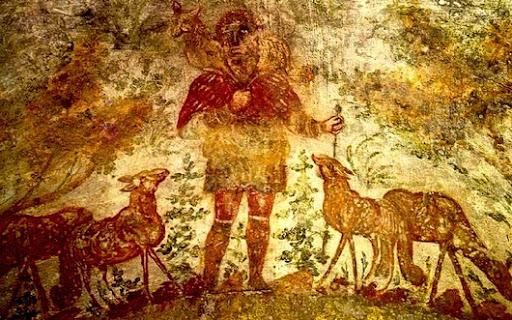
Goodshepherd domitilla

The other day I came across a very interesting article shared by one of my besties – MS – on Facebook. It reproduced the text of a pact signed by 40 bishops in the catacombs of St. Domitilla (the oldest and most extensive of the Roman catacombs) shortly before the Second Vatican Council’s conclusion – “The Pact of the Servant and Poor Church,” also known as “The Pact of the Catacombs.” The core of this group was made up of Brazilian bishops, but it also included several from Europe, Africa, Asia and both North and South America.1 At its heart, this pact was a commitment made by each signatory to live the evangelical counsel of poverty in their position as bishop of their local church and it echoed a point also emphasized in Vatican II’s Lumen Gentium, which says:2

“Jesus, “though He was by nature God … emptied Himself, taking the nature of a slave”, and “being rich, became poor” for our sakes. Thus, the Church, although it needs human resources to carry out its mission, is not set up to seek earthly glory, but to proclaim, even by its own example, humility and self-sacrifice.”

The following then is my abbreviated version of the pact’s preamble and 13 points:

“We, Bishops meeting at Vatican Council II, being aware of the deficiencies of our life of poverty according to the Gospel, encouraged by one another in this initiative in which each one wants to avoid singularity and presumption, in union with all our brothers in the Episcopate; counting, especially, on the grace and strength of our Lord Jesus Christ, on the prayer of the faithful and priests of our respective diocese; putting ourselves in thought and prayer before the Trinity, commit ourselves to the following:

  1. We will seek to live in accordance with the ordinary manner of our people, regarding housing, food, means of transportation, etc.
  2. We renounce wealth and the appearance thereof, especially in clothing (expensive fabrics and garish colors), and insignia of precious metals.
  3. We will possess neither liquid nor fixed assets in our names; and if it is necessary to possess anything, we will place it under the name of our diocese or other social or charitable works.
  4. We will entrust the financial and material administration of our diocese to a commission of competent lay people conscious of their apostolic role, since we should be pastors and apostles rather than administrators.
  5. We refuse to be called by names or titles that signify grandeur and power. We prefer to be called by the Gospel name “Father”.
  6. We will avoid everything that could appear to confer privilege, priority, or even preference to the rich and powerful.
  7. We will also avoid fostering or flattering the vanity of anyone, whoever they might be, when rewarding or requesting donations, or for any other reason. We will invite our faithful to consider their gifts as normal participation in worship, ministry and social action.
  8. We will give our time, thought, heart, means, etc. to the service of working individuals and groups who are economically weak and underdeveloped, without this being at the expense of other people and groups in the diocese.
  9. We will seek to transform the works of charity into social works based on charity and justice that take everyone into account.
  10. We will endeavor to ensure that government and public services decide on and implement laws, structures and social institutions that are necessary for justice, equality and the full and harmonious development of the whole person and all people.
  11. We commit ourselves to share, according to our ability, in the urgent projects of the dioceses in poor nations; together to always give witness to the Gospel at the international level, by asking for the adoption of economic and cultural structures that do not create poor nations in an ever richer world, but that allow the poor majority to emerge from their poverty.
  12. We pledge to share our life with our brothers and sisters in Christ (priests, religious and laity), so that our ministry constitutes a real service. We will seek out partners so that we can be promoters according to the spirit rather than rulers according to the world. We will try to be present, to be welcoming. We will be open to everyone, whatever their religion.
  13. When we return to our diocese we will present these resolutions to our diocesan priests, asking them to help us with their understanding, collaboration and prayers.

God help us to be faithful.”

When I first read this pact, my immediate reaction was of great admiration for its signatories, who resolve in it to start afresh in their role as bishops, returning to what is fundamental in imitating Jesus and applying the resolutions of Vatican II to themselves with great specificity and individuality. I also appreciated their making this choice together and following the model of the Early Church. In essence, I saw – and see – here that going of an extra mile and that self-noughting that is also set out as an example in Lumen Gentium, where the whole Church is warned not to “[l]et [either] the use of the things of this world [or] attachment to riches, which is against the spirit of evangelical poverty, hinder them in their quest for perfect love.”

In the process of looking up some background on this pact, it has become clear to me that the vast majority of texts that refer to it are ones dissenting from the Catholic Church’s teaching and are critical of its conduct. On the one hand this is not difficult to understand – there are numerous bishops who behave in ways incompatible with this pact’s letter and spirit (or who at least seem to do so) and it can be used as a handy ruler by which to find them wanting. I find such a reading incongruous on two counts: First, this pact is one freely entered into by specific bishops who, probably as a result of participating in the Council, received the grace to impose on themselves specific measures that they felt called to follow. Second, it smacks of a basic disregard to the very spirit in which the pact’s signatories acted, whose desire was to “avoid presumption” and be “aware of the deficiencies of [their] life of poverty.” Furthermore, it flies in the face of Jesus’ own reprimand: “You hypocrite, remove the wooden beam from your eye first; then you will see clearly to remove the splinter from your brother’s eye.” (Matthew 7:5). This is in no way to deny or attempt to excuse the unchristian conduct of some bishops, but simply to recognize this document for what it is – the sincere resolution of a group of bishops to renew their commitment to Jesus, instead of waving it around like a weapon.


1 For scans of a reproduction of the original Portuguese text – Bonaventure Kloppenburg’s 1974 The ecclesiology of Vatican II – see here. While the above is based on the source from the first paragraph, I chose to translate some words differently, taking advantage of the original version’s scans (e.g., I translate “berrante” in point 2 as “garish” instead of “brilliant” and – in point 9 – “beneficência” as “charity”).
2 For a very interesting analysis that situates this pact in the context of Benedict XVI’s thought as well as of that of other post-conciliar theologians, see this article.

Lumen Gentium: The Call to Holiness

Paul klee marked man

Following presentations of the Church’s purpose, life, hierarchy and laity, Lumen Gentium1 turns to the call to holiness that Jesus addresses to “each and everyone of His disciples of every condition” by inviting them to “be perfect, just as your heavenly Father is perfect” (Matthew 5:48). This holiness “is expressed in many ways in individuals, who in their walk of life, tend toward the perfection of charity, thus causing the edification of others.”

While holiness is a grace – a gift from God – that Christians receive in baptism, they need to “hold on to and complete [it] in their lives” – again thanks to grace – by having a “heart of mercy, kindness, humility, meekness, patience” (Colossians 3:12). The result then is not something restricted to Christians, but instead is the promotion of “a more human manner of living […] in this earthly society.” More specifically, the instructions to Christians are the following:

“They must follow in His footsteps and conform themselves to His image seeking the will of the Father in all things. They must devote themselves with all their being to the glory of God and the service of their neighbor. In this way, the holiness of the People of God will grow into an abundant harvest of good, as is admirably shown by the life of so many saints in Church history.”

Holiness thus is an imitation of Jesus, a seeking to do the Father’s will (as Jesus did) and a service to all of humanity, as demonstrated by the saints. Holiness is to “follow the poor Christ, the humble and cross-bearing Christ in order to be worthy of being sharers in His glory.”

Bishops, by the sacramental grace they have received, “are given the courage necessary to lay down their lives for their sheep, and the ability of promoting greater holiness in the Church by their daily example.” Priests, are called to “the holiness of humble and hidden service” and “should grow daily in their love of God and their neighbor by the exercise of their office through Christ.” Deacons are called to “stand before men as personifications of goodness and friends of God.” The path to holiness for married couples and parents is “by faithful love” through which they “sustain one another in grace throughout the entire length of their lives” and lead their children to the practice of the evangelical virtues (poverty, chastity, obedience). Work too is a path to holiness by which the Christian “should raise all of society, and even creation itself, to a better mode of existence.” “Poverty, infirmity and sickness” as well as “hardships or […] suffer[ing] persecution for justice sake” also result in being “united with the suffering Christ.” A shared prerequisite for all is “to receive all things with faith from the hand of their heavenly Father and […] cooperate with the divine will.”

While it might seem from the above that those in different circumstances and positions in the Church have different paths to holiness, Lumen Gentium emphasizes both that “holiness is one” and that “God is love, and he who abides in love, abides in God and God in Him” (1 John 4:16). This primacy of love, which is a gift from the Holy Spirit, is the means “by which we love God above all things and our neighbor because of God.” This gift of love is nourished by listening to the Word of God, accepting His Will, participating in the Eucharist and the Liturgy, “prayer, self-abnegation, lively fraternal service and the constant exercise of all the virtues.” It is love again that “rules over all the means of attaining holiness and gives life to these same means.” In summary, “[i]t is the love of God and the love of one’s neighbor which points out the true disciple of Christ.”

Given the above view of love, which is a gift from God, nourished by the sacraments, and which is then directed back at God, also through one’s neighbor, the supreme manifestation of love is “lay[ing] down [ones] life for Christ and His brothers” – martyrdom.

“By martyrdom a disciple is transformed into an image of his Master by freely accepting death for the salvation of the world—as well as his conformity to Christ in the shedding of his blood. Though few are presented such an opportunity, nevertheless all must be prepared to confess Christ before men. They must be prepared to make this profession of faith even in the midst of persecutions, which will never be lacking to the Church, in following the way of the cross.”

Next, celibacy is singled out, which is a “grace given by the Father to certain souls, whereby they may devote themselves to God alone the more easily, due to an undivided heart.” The free choice of poverty and obedience are also praised as means for attaining holiness. “Th[ese are] beyond the measure of the commandments, but are done in order to become more fully like the [poor and] obedient Christ.” Finally, the following exhortation is made to aid all in their seeking of holiness, which is not only an invitation but an obligation for every Christian:

“Let neither the use of the things of this world nor attachment to riches, which is against the spirit of evangelical poverty, hinder them in their quest for perfect love. Let them heed the admonition of the Apostle [Paul – cf. 1 Corinthians 7:31] to those who use this world; let them not come to terms with this world; for this world, as we see it, is passing away.”

The key takeaways for me from this short chapter in Lumen Gentium are the underlining of the oneness and universality of holiness, the obligation for all Christians to seek it and its synonymity with love. A love that is directed at God through one’s neighbors, that leads to God through the selfless giving of oneself to others. There are details here about different aspects to emphasis for different roles within the Church and different means that the Church offers its members in aid of holiness, but the core point here is that holiness is about imitating Jesus, who loved us so much that he even gave his life for us. Holiness is a path that leads from every ordinary moment to the extraordinary, total giving of oneself out of love.


1 If you are not a Catholic, you might like to read the caveat in paragraph two of this post, where I propose a way for you to approach this post in which I attempt to summarize what I understand the Catholic Church as addressing to its members.