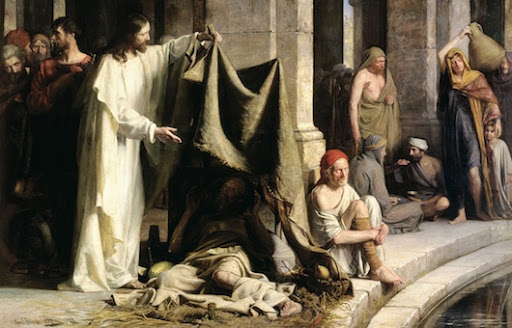
Lumen Gentium: The Laity

Emm

Chapter 4 of Lumen Gentium brings us to a presentation of the role of the laity – i.e., “all the faithful except those in holy orders [discussed at length in chapter 3] and those in the state of religious life [to be covered in detail later].” Like in previous posts about Vatican II documents, if you are not a Catholic, I would again encourage you to take a look at paragraph two of my post on Dei Verbum, where I propose an approach that might make reading the following more accessible.

The chapter on the laity starts with, and is run through by, repeated emphases on the unity and singularity of purpose of the whole Church, against the background of which any distinctions are to be read: “Everything that has been said [about] the People of God is intended for the laity, religious and clergy alike. [… The lay] faithful are by baptism made one body with Christ and are constituted among the People of God; they are in their own way made sharers in the priestly, prophetical, and kingly functions of Christ.” The specific aspect of the laity os that they “live in the ordinary circumstances of family and social life […] They are called there by God that by exercising their proper function and led by the spirit of the Gospel they may work for the sanctification of the world from within as a leaven.” The key here to me is that the laity is not some sort of “other” or “miscellaneous” category, but that its members are “called there by God” – being a lay person can be a calling like being a member of the church’s hierarchy or of a religious order.

The equality of the People of God (i.e., laity, clergy and religious all together) is then stated very explicitly:

“[T]he chosen People of God is one: “one Lord, one faith, one baptism”; sharing a common dignity as members from their regeneration in Christ, having the same filial grace and the same vocation to perfection; possessing in common one salvation, one hope and one undivided charity. There is, therefore, in Christ and in the Church no inequality on the basis of race or nationality, social condition or sex, because “there is neither Jew nor Greek: there is neither bond nor free: there is neither male nor female. For you are all ‘one’ in Christ Jesus”.”

Furthermore this equality of dignity extends not only across natural but also across spiritual categories: “And if by the will of Christ some are made teachers, pastors and dispensers of mysteries on behalf of others, yet all share a true equality with regard to the dignity and to the activity common to all the faithful for the building up of the Body of Christ.” A source for this equality can also be found in the mutual interdependence of the clergy and laity: “[P]astors and the other faithful are bound to each other by a mutual need. Pastors of the Church, following the example of the Lord, should minister to one another and to the other faithful. These in their turn should enthusiastically lend their joint assistance to their pastors and teachers.” This is further (and to my mind beautifully!) underlined as follows:

“Therefore, from divine choice the laity have Christ for their [brother] who though He is the Lord of all, came not to be served but to serve. They also have for their brothers those in the sacred ministry who by teaching, by sanctifying and by ruling with the authority of Christ feed the family of God so that the new commandment of charity may be fulfilled by all.”

St. Augustine then puts the difference between his being a Christian and a bishop in particularly clear terms: “What I am for you terrifies me; what I am with you consoles me. For you I am a bishop; but with you I am a Christian. The former is a duty; the latter a grace. The former is a danger; the latter, salvation.” Again it is the saints, whose words illuminate and breathe a heightened sense of life into the Church’s formal teaching.

Next, Lumen Gentium elaborates on the apostolic and prophetic roles of the laity and there is a clear sense here even just from the language that this is a blueprint for the future (e.g., by many sentences having the form of “let the laity …”), rather than a re-statement of well-established teaching, as is the case in some of the earlier parts of this document.

The apostolic role of the laity (to which they are commissioned “[t]hrough their baptism and confirmation”) is a call “to [making] the Church present and operative in those places and circumstances where only through them can it become the salt of the earth.” The apostolate of the laity (i.e., it’s spreading of the Gospel) is not restricted only to such conditions where the hierarchy would be less effective or appropriate. Instead, it “can also be called in various ways to a more direct form of cooperation in the apostolate of the Hierarchy. This was the way certain men and women assisted Paul the Apostle in the Gospel. […] Further, they have the capacity to assume from the Hierarchy certain ecclesiastical functions.” The model here is very much one of co-operation rather than exclusive leadership by the hierarchy. This does not in any way diminish the leadership of the hierarchy, but, to my mind, it expresses a desire to reflect the emphasis on equality in the preceding paragraphs. It shows a desire for spreading of the Gospel in a way where the talents of all are put to good use.

The way the laity spread the Gospel, “by a living testimony as well as by the spoken word, takes on a specific quality and a special force in that it is carried out in the ordinary surroundings of the world. […] For all their works, prayers and apostolic endeavors, their ordinary married and family life, their daily occupations, their physical and mental relaxation, if carried out in the Spirit, and even the hardships of life, if patiently borne—all these become “spiritual sacrifices acceptable to God through Jesus Christ”.” What strikes me as key here is that a lay person is called to follow Jesus 24/7 and that even when they rest, that is an opportunity to bear witness to God’s love for all. This is very explicitly the opposite of the unhealthy compartmentalization that can creep into anyone’s life, where their Christianity is manifest only in some contexts but not in all. Finally, the part on the laity’s apostolic role concludes with the profound statement that “the laity consecrate the world itself to God.”

Turning to the prophetic aspect, Lumen Gentium states that “Christ […] continually fulfills His prophetic office […] not only through the hierarchy who teach in His name and with His authority, but also through the laity whom He made His witnesses and to whom He gave understanding of the faith (sensu fidei).” Here I was immediately struck by the attribution of a rational and reflexive function to the laity, which again does not detract from the authority of the hierarchy, but which places the lay person in a position of intellectual engagement rather than blind obedience. This is again underlined by the exhortation to “let the laity devotedly strive to acquire a more profound grasp of revealed truth, and let them insistently beg of God the gift of wisdom.”

Then comes a bit of a surprise to me:

“In connection with the prophetic function is that state of life which is sanctified by a special sacrament […], namely, married and family life. […] In such a home husbands and wives find their proper vocation in being witnesses of the faith and love of Christ to one another and to their children. The Christian family loudly proclaims both the present virtues of the Kingdom of God and the hope of a blessed life to come. […] They must assist each other to live holier lives even in their daily occupations. In this way the world may be permeated by the spirit of Christ and it may more effectively fulfill its purpose in justice, charity and peace. The laity have the principal role in the overall fulfillment of this duty.”

This places the sacrament of marriage in a position not only of a commitment of the spouses to each other and to their children – for their individual good, but also makes it a foretaste of things to come and a source from which Jesus’ love is to be brought to the whole world so that “justice, charity and peace” may be brought about. Such projection into the world has its challenges though and the laity is reminded that:

“[T]he faithful should learn how to distinguish carefully between those rights and duties which are theirs as members of the Church, and those which they have as members of human society. Let them strive to reconcile the two, remembering that in every temporal affair they must be guided by a Christian conscience, since even in secular business there is no human activity which can be withdrawn from God’s dominion.”

The relationship of the laity and the hierarchy is then introduced as follows:

“The laity […] should openly reveal to [the hierarchy] their needs and desires with that freedom and confidence which is fitting for children of God and brothers in Christ. They are, by reason of the knowledge, competence or outstanding ability which they may enjoy, permitted and sometimes even obliged to express their opinion on those things which concern the good of the Church.”

This again underlines the need for active, rational participation of the laity in the life of the Church and even the obligation to escalate concerns to its leadership, but it also requires that “[t]he laity [… then] accept in Christian obedience decisions of their spiritual shepherds, since they are representatives of Christ as well as teachers and rulers in the Church.”

In summary, “[e]ach individual layman must stand before the world as a witness to the resurrection and life of the Lord Jesus and a symbol of the living God. All the laity as a community and each one according to his ability must nourish the world with spiritual fruits. They must diffuse in the world that spirit which animates the poor, the meek, the peace makers—whom the Lord in the Gospel proclaimed as blessed.”

As a lay person I found this part of Lumen Gentium particularly encouraging as it shows very clearly that in Vatican II the hierarchy of the Church (since all of these documents’ authors were part of it!) calls for greater participation by all members of the Church in its life. The hierarchy does not shirk away from its responsibilities (and I don’t believe it should), but it makes it clear that it desires dialogue among equals. Even though a bishop is placed at the head of his local church, he is the brother of all the faithful he leads and this brotherhood, pioneered by Jesus himself outranks any hierarchical distinctions. I know full well that this is often not what happens even today – 50 years after Vatical II, but I am pleased to see at least that this is the blueprint, even if the boat is still under construction.

Lumen Gentium: On Hierarchical Structure

Shepherd

Following the coverage of chapters one and two of Lumen Gentium, let me now take a look at chapter three, which deals with the Church’s hierarchy, before then turning to the laity in chapter four. As before, if you are not a Catholic, I’d like to encourage you to read paragraph two of my post on Dei Verbum, the first of the sixteen Vatican II documents I would like to try and read during this Year of Faith.

So, after chapter one sketched out what the purpose of the Church is and chapter two covered how the “priestly community” that is the Church lives and relates to the rest of humanity, we now proceed to consider the Church’s hierarchy.

The starting point here (as everywhere else in Lumen Gentium) is Jesus who “sent forth the apostles as He Himself had been sent by the Father; and He willed that their successors, namely the bishops, should be shepherds in His Church,” the purpose of their pastoral function being to “serve their brethren, so that [… they] may arrive at salvation[, …] freely and in an orderly way.” To ensure that the bishops themselves, who serve the rest of the People of God, are “one and undivided, He placed Blessed Peter over the other apostles, and instituted in him a permanent and visible source and foundation of unity of faith and communion.”

In the Early Church, “the apostles, by preaching the Gospel everywhere, and it being accepted by their hearers under the influence of the Holy Spirit, gather together the universal Church.” Since the Gospel that the apostles taught is meant for all time, their mission too needs to persist, which is why the apostles appointed successors. “They passed on to [them …], as it were, in the form of a testament, the duty of confirming and finishing the work begun by themselves” and called them to appoint their successors in turn. “Through those who were appointed bishops by the apostles, and through their successors down in our own time, the apostolic tradition is manifested and preserved.”

“Bishops, therefore, with their helpers, the priests and deacons, […] presid[e] in place of God over the flock, whose shepherds they are, as teachers for doctrine, priests for sacred worship, and ministers for governing. […] In the bishops, therefore, for whom priests are assistants, [… Jesus], is present in the midst of those who believe.” The “outpouring of the Holy Spirit” that the apostles received from Jesus was “passed on […] to their helpers by the imposition of hands, and it has been transmitted down to us in Episcopal consecration.” In addition to sanctifying, episcopal consecration “also confers the office of teaching and of governing, which […] can be exercised only in hierarchical communion with the head and the members of the college.” This to my mind is an important point as it underlines the centrality of communion among the members of the hierarchy of the Church (as among all of its members). While episcopal consecration is a gift to the consecrated individual, the powers it confers in terms of teaching and governing are contingent on the entire hierarchy of the Church and don’t ultimately reside with the single bishop. This is again very much modeled on how the Early Church operated: the apostles weren’t just an association of individuals, but a united body of Jesus’ followers, with Jesus in their midst. Lumen Gentium calls them a “college,” which already etymologically points to collaboration, since it derives from collega: “one chosen to work with another.”

“St. Peter and the other apostles constitute one apostolic college, so in a similar way the Roman Pontiff, the successor of Peter, and the bishops, the successors of the apostles, are joined together.” Hence, “issues [are to be] settled in common, the opinion of the many having been prudently considered.” Nonetheless, “the college […] of bishops has no authority unless it is understood together with the Roman Pontiff, the successor of Peter as its head.” The college of bishops, “insofar as it is composed of many, expresses the variety and universality of the People of God, but insofar as it is assembled under one head, it expresses the unity of the flock of Christ.” To my mind, the balance presented here between collegiality on the one hand and singular, individual authority on the other, and between variety and unity, are all modeled on the Trinity itself, where unity and distinction coexist and where there is a life that needs to be participated in rather than rules for mindless execution.

One of the main roles of bishops is preaching the Gospel, from which they bring forth “new things and old,[see Matthew 13:52] making it bear fruit and vigilantly warding off any errors that threaten their flock.” When “teaching in communion with the Roman Pontiff, [they] are to be respected by all as […] speak[ing] in the name of Christ.”

In this context, Lumen Gentium underlines the doctrine of papal infallibility, by again starting from Jesus, who “willed His Church to be endowed [with infallibility] in defining doctrine of faith and morals.” The pope’s infallibility manifests itself when he, “the head of the college of bishops, […] as the supreme shepherd and teacher of all the faithful, who confirms his brethren in their faith, by a definitive act […] proclaims a doctrine of faith or morals.” The resulting proclamations “of themselves, and not from the consent of the Church, are […] irreformable, since they are pronounced with the assistance of the Holy Spirit, promised to him in blessed Peter, and therefore they need no approval of others, nor do they allow an appeal to any other judgment.” Seen within the above presentation of the Church’s hierarchy, there is nothing jarring or surprising about infallibility being attributed to the above proclamations. Furthermore the weight of responsibility they carry has meant a tremendously sparing use since this teaching first became dogmatically binding in Vatican I (see Pastor Aeternus).

Another of a bishop’s key roles is his being the steward of priesthood in the local church that he serves, “especially in the Eucharist, which he offers or causes to be offered.” “Every legitimate celebration of the Eucharist is regulated by the bishop, […] administering it in accordance with the Lord’s commandments and the Church’s laws, as further defined by his particular judgment for his diocese.” Bishops are therefore there to transmit Jesus’ holiness: “By the ministry of the word […] and through the sacraments, the regular and fruitful distribution of which they regulate by their authority, they sanctify the faithful. [… B]y the example of their way of life they must be an influence for good to those over whom they preside, refraining from all evil and, as far as they are able with God’s help, exchanging evil for good, so that together with the flock committed to their care they may arrive at eternal life.” In all this they need to “remember that he who is greater should become as the lesser and he who is the chief become as the servant” (cf. Luke 22:26-27).

The above “job description” is brought together by emphasizing the Good Shepherd as the role model for bishops, “who came not to be ministered unto but to minister, and to lay down his life for his sheep” (cf. John 10:11). Bishops are then reminded that they too are “beset with weakness” and that this ought to lead them “to hav[ing] compassion on the ignorant and erring.” A bishop is “not [to] refuse to listen to his subjects” and needs to “take care of [his flock] by his prayer, preaching, and all the works of charity, and not only of them but also of those who are not yet of the one flock.” The faithful in turn “must cling to their bishop, as the Church does to Christ, and Jesus Christ to the Father, so that all may be of one mind through unity.”

Having presented the role of the bishop, Lumen Gentium proceeds to introduce priests and deacons, to whom a bishop “hand[s] on […] various degrees of participation in [his] ministry.” Priests, who “are dependent on the bishops in the exercise of their power[, …] are consecrated to preach the Gospel and shepherd the faithful and to celebrate divine worship.” “They exercise their sacred function especially in the Eucharistic worship or the celebration of the Mass[, …] acting in the person of Christ.” Priests “believ[e] what they have read and meditated upon in the law of God, teach what they have believed, and put in practice in their own lives what they have taught.” Finally, priests are also called to “wipe out every kind of separateness, so that the whole human race may be brought into the unity of the family of God.”

Chapter three then ends with a presentation of how deacons figure in the Church’s hierarchy. “[S]trengthened by sacramental grace, in communion with the bishop and […] priests they serve in the diaconate of the liturgy, of the word, and of charity to the people of God.” The list of a deacon’s duties then is to “administer baptism solemnly, to be custodian and dispenser of the Eucharist, to assist at and bless marriages in the name of the Church, to bring Viaticum to the dying, to read the Sacred Scripture to the faithful, to instruct and exhort the people, to preside over the worship and prayer of the faithful, to administer sacramentals, to officiate at funeral and burial services.” In other words, this looks to me like almost everything that a priest is ordained to do, expect for celebrating the Eucharist. Lumen Gentium then states that “[t]he diaconate can in the future be restored as a proper and permanent rank of the hierarchy [… and] be conferred upon men of more mature age, even upon those living in the married state.” Raising the diaconate to a permanent state (as opposed to a transitory one that those preparing for the priesthood received towards the end of their studies) and opening it to married men was a big deal and something contemplated for the future during Vatican II. Today, fifty years later, it is great to see that – at least in some countries – this vision has become reality.

The end of the third chapter brings us to the point where the Church, initially presented as the link between God and humanity and then fleshed out in terms of how it operates, has had its hierarchy presented in greater detail. Like in its previous chapters, here too there is a constant balancing act (that was also present in Dei Verbum), which attempts to present the transcendent, divine and perfect, incarnate in the weak, human and limited. Instead of being a cause for frustration and disappointment, humanity is lifted up and called to participate in the life of the Trinity, while remaining conscious of its limitations. Instead of being obstacles, these limitations are opportunities for compassion and for the overcoming of separateness. To my mind this chapter too is a source of joy and I look forward to reading about the laity next in chapter four.

Lumen Gentium: On the People of God

Fish family

[Just a quick apology before you proceed – this post has turned out to be rather longer than I hoped for, but there was just so much of interest in this chapter of Lumen Gentium that I couldn’t be any more succinct. You may prefer to read it in parts rather than all in one go …]

To have any chance of reading the full set of 16 Vatican II documents during this Year of Faith, I need to press on and take a look at the second chapter of Lumen Gentium, the council’s dogmatic constitution on the Church. In the first chapter, we got a view of who the Church is, as seen from God’s perspective – i.e., what the ultimate end of the Church is, while here, in chapter two, the focus is more on a view from the trenches: the People of God.

If you are reading this as an agnostic or a non-Catholic, let me first point you to the caveat in my post on Dei Verbum (paragraph 2), and re-iterate how this particular document does not use the most accessible language (e.g., with sentences like “Fortified by so many and such powerful means of salvation, all the faithful, whatever their condition or state, are called by the Lord, each in his own way, to that perfect holiness whereby the Father Himself is perfect.”). While I would feel quite at ease recommending a direct reading of Dei Verbum to anyone interested in how the Church understands Scripture, I’d hesitate when it comes to Lumen Gentium. Nonetheless, if you consider Lumen Gentium to be like a patent is to a scientific paper and take the time to peel away its particular form, the substance it carries is well worth the effort.

The starting point of Chapter 2 is Jesus’ New Testament, which forms a new people (the People of God) by means not of genetics (as was the case in the Old Testament, where the Israelites are already called the “Church of God”) but of the Spirit. All who believe in Jesus, become members of His people through baptism and the actions of the Holy Spirit. “The state of this people is that of the dignity and freedom of the sons of God, in whose hearts the Holy Spirit dwells as in His temple. Its law is the new commandment to love as Christ loved us.” A clearer distinction is made here between those who are members of the People of God and those who are not than in the first chapter. The Church is presented as the salt or yeast from which the whole world can benefit: “although it does not actually include all men, and at times may look like a small flock, [the Church] is nonetheless a lasting and sure seed of unity, hope and salvation for the whole human race.” Looking back at chapter one and at Dei Verbum, this should not be taken as an indication of superiority, but simply as an attempt at specificity. Clearly not all of humanity believes that Jesus is God, who came to show us the way to Himself, and Lumen Gentium here strives to spell out what it is that those who hold this belief are like and how they live as a community. This positioning of the Church is particularly clear from the following: “Established by Christ as a communion of life, charity and truth, [the Church] is also used by Him as an instrument for the redemption of all.”

The role of the People of God is to “bear witness to Christ and give an answer to those who seek an account of that hope of eternal life which is in them.” This is done by all members of the Church by participating in the priesthood of Jesus, who is its head. Those consecrated to the “ministerial priesthood” “teach and rule the priestly people; acting in the person of Christ, making present the Eucharistic sacrifice, and offering it to God in the name of all the people.” The laity too participate in Jesus’ (“royal”) priesthood, which they exercise “in receiving the sacraments, in prayer and thanksgiving, in the witness of a holy life, and by self-denial and active charity.” The whole church therefore is a “priestly community.”

It is a community that operates through the “sacraments and the exercise of the virtues,” where members are “[i]ncorporated in the Church through baptism” (incorporated since the Church is the Body of Christ, as chapter one sets out). This membership is further perfected by confirmation, when “the Holy Spirit endows them with special strength so that they are more strictly obliged to spread and defend the faith, both by word and by deed.” The Eucharist, which is “the fount and apex of the whole Christian life” strengthens them and “manifest[s] in a concrete way [the] unity of the people of God.” Through the sacrament of Penance, they “obtain pardon from […] God for the offence committed against Him and are […] reconciled with the Church.” Through the anointing of the sick, the People of God “associat[e] themselves freely with the passion and death of Christ.” Those who are consecrated by “Holy Orders[,] are appointed to feed the Church in Christ’s name with the word and the grace of God,” while those who receive the sacrament of Matrimony, “partake of the mystery of that unity and fruitful love which exists between Christ and His Church, help each other to attain to holiness in their married life and in the rearing and education of their children.” “From the wedlock of Christians there comes the family, in which new citizens of human society are born, who by the grace of the Holy Spirit received in baptism are made children of God, thus perpetuating the people of God through the centuries. The family is, so to speak, the domestic church.” What is crystal clear from the above is that the sacraments (shown in bold) are the “means of salvation,” helping the members of the Church to “bear witness to Christ.”

So far, so good, but what comes next in §12 is to me the most interesting part of Chapter 2 (as the preceding paragraphs were edifying, but had a sense of the taxonomical about them):

“The entire body of the faithful […] cannot err in matters of belief. They manifest this special property by means of the whole peoples’ supernatural discernment in matters of faith when “from the Bishops down to the last of the lay faithful” they show universal agreement in matters of faith and morals. That discernment in matters of faith is aroused and sustained by the Spirit of truth. It is exercised under the guidance of the sacred teaching authority, in faithful and respectful obedience to which the people of God accepts that which is not just the word of men but truly the word of God. Through it, the people of God adheres unwaveringly to the faith given once and for all to the saints, penetrates it more deeply with right thinking, and applies it more fully in its life.”

This is strong stuff, both as it states that the entire body of the faithful “cannot err” when it comes to faith and morals and as it calls for careful thought being applied to these beliefs and for their ever more perfect putting into practice. To my mind the key takeaway here is that infallibility here is attributed to the “entire body of the faithful” – i.e., the Mystical Body of Christ that has Jesus as its head. If truly all the faithful hold a certain belief then I can well subscribe to that belief having to be taken seriously and having to be attributed to the Holy Spirit. What this view does is to place the whole of the Church in a position of tremendous importance and responsibility, far from the usual caricature where the hierarchy is seen as dictating to a flock that follows it blindly and unthinkingly. The flip side of such status is the responsibility we carry for disagreements and disunity within the Church, which prevents us from accessing the unerring insights that the Holy Spirit has prepared for us when we are united.1

Two aspects of the above strike me as relevant: first, that this is not a new idea, but instead a centuries-old idea that has had new light shed on it and second, that it again points to the continuing action of the Holy Spirit. In terms of the first aspect, the basic idea can be seen already in the Latin proverb: “Vox populi, vox Dei” (“The voice of the people is the voice of God”) which has been quoted as a proverb already in the 8th century AD. The second aspect then is particlarly clearly illuminated by what Pope Benedict XVI in fact said just today:

“This gift, the sensus fidei, constitutes in the believer a kind of supernatural instinct that has a connatural life with the same object of faith. It is a criterion for discerning whether or not a truth belongs to the deposit of the living apostolic tradition. It also has a propositional value because the Holy Spirit does not cease to speak to the Churches and lead them to the whole truth.”

To underline the profound vocation of every single member of the People of God, Lumen Gentium points to the Holy Spirit’s gifts being bestowed on anyone whom He chooses: “[T]he Holy Spirit sanctifies and leads the people of God and enriches it with virtues, “allotting his gifts to everyone according as He wills.” He distributes special graces among the faithful of every rank. By these gifts He makes them fit and ready to undertake the various tasks and offices which contribute toward the renewal and building up of the Church.” This acknowledges very clearly that it is not the hierarchy of the church alone who have a role of leadership in the Church, but that the Holy Spirit can choose anyone to contribute to its renewal, “but judgment as to their genuinity and proper use belongs to those who are appointed leaders in the Church, to whose special competence it belongs, not indeed to extinguish the Spirit, but to test all things and hold fast to that which is good.” A very careful balance is presented here between the hierarchical and the “charismatic” aspect of the Church, which underlines again the fact that the Church are all the People of God.

Paragraph 13 then focuses on there being only one People of God, “which takes its citizens from every race, making them citizens of a kingdom which is of a heavenly rather than of an earthly nature.” This “takes nothing away from the temporal welfare of any people. On the contrary it fosters and takes to itself, insofar as they are good, the ability, riches and customs in which the genius of each people expresses itself.” All the diversity in the Church then has as its goal the fulfillment of St. Peter’s words: “According to the gift that each has received, administer it to one another as good stewards of the manifold grace of God” (1 Peter 4:10).

In paragraph 14 we turn to the role of the Church in the context of salvation and we start with a warning: “Whosoever, […] knowing that the Catholic Church was made necessary by Christ, would refuse to enter or to remain in it, could not be saved.” Membership in the Church requires acceptance of “her entire system and all the means of salvation given to her, and [being] united with her as part of her visible bodily structure and through her with Christ, who rules her through the Supreme Pontiff and the bishops.” Even membership (for those who know that it is necessary for salvation) is not sufficient though: “He is not saved, however, who, though part of the body of the Church, does not persevere in charity. He remains indeed in the bosom of the Church, but, as it were, only in a “bodily” manner and not “in his heart.”” And it gets even worse! Those who “fail […] to respond to [the grace of Christ] in thought, word and deed, not only shall they not be saved but they will be the more severely judged.” Reading Chapter two very much gives you a sense of growing wonder as you proceed towards the end of §13, only to be followed by a cold shower and stark warnings!

So, what does §15 hold? First, it starts by acknowledging that there are Christians outside the Catholic Church:

“They lovingly believe in God the Father Almighty and in Christ, the Son of God and Saviour. They are consecrated by baptism, in which they are united with Christ. They also recognize and accept other sacraments within their own Churches or ecclesiastical communities. Many of them rejoice in the episcopate, celebrate the Holy Eucharist and cultivate devotion toward the Virgin Mother of God. They also share with us in prayer and other spiritual benefits. Likewise we can say that in some real way they are joined with us in the Holy Spirit, for to them too He gives His gifts and graces whereby He is operative among them with His sanctifying power.”

The key to me here is not only the extensive list of similarities that the Catholic Church sees in other “churches and ecclesiastical communities” but also the warmth of the language used (“lovingly believe,” “consecrated by baptism,” “rejoice in the episcopate,” “cultivate devotion,” “joined with us in the Holy Spirit”). There is a real yearning and well-wishing here and a desire to “pray, hope and work” towards being “peacefully united.”

Paragraph 16 then talks about where the Catholic Church sees non-Christians in this picture and there is again a sense of openness, warmth and yearning here. First come the Jews, “from whom Christ was born according to the flesh”: “this people remains most dear to God, for God does not repent of the gifts He makes nor of the calls He issues.” Next, come the Muslims “who, professing to hold the faith of Abraham, along with us adore the one and merciful God, who on the last day will judge mankind.” Then there are all others who seek God: “Nor is God far distant from [them], for it is He who gives to all men life and breath and all things, and as Saviour wills that all men be saved.” Finally, all those of good will are in the picture too: “Divine Providence [does not] deny the helps necessary for salvation to those who, without blame on their part, have not yet arrived at an explicit knowledge of God and with His grace strive to live a good life.” The message is very clear: all are called to salvation and each has to take advantage of all the means they are offered for reaching it, according to their conscience and understanding.

Finally, Chapter 2 closes with a reminder of Jesus’ words: “Go, therefore, make disciples of all nations, baptizing them in the name of the Father and of the Son and of the Holy Spirit, teaching them to observe all things whatsoever I have commanded you. And behold I am with you all days even to the consummation of the world” (Mathew 28:19). All members of the Church have an “obligation of spreading the faith” so that “whatever good is in the minds and hearts of men, whatever good lies latent in the religious practices and cultures of diverse peoples, is not only saved from destruction but is also cleansed, raised up and perfected unto the glory of God.” All this is done so that “the entire world may become the People of God,” which instead of being an attempt to conquer or colonize is one of striving for unity in diversity.


1 I would just like to tip my hat to my bestie PM, who has essentially arrived at this point without having read Lumen Gentium!

In search of joy

Joy

As I haven’t managed to write a post here for over a week, I would just like to take the opportunity now to tie together a couple of the strands of the last seven days, which happen to have a shared theme of joy.

First, there is a talk by Pope Benedict XVI that I have been wanting to read for a while and that I finally got to last night. It is the first sermon he gave after the start of the Year of Faith, where he sets out to – what else – talk about the nature of faith. Amongst other things (and I encourage you to read the original in full), he says that “[f]aith is a gift of God, but it is also a deeply human and free act” and he asks himself how we can get “that openness of heart and mind […] to believe in the God.” The answer Benedict puts forward comes from Dei Verbum (§5): “To make this act of faith, the grace of God and the interior help of the Holy Spirit must precede and assist, moving the heart and turning it to God, opening the eyes of the mind and giving “joy and ease to everyone in assenting to the truth and believing it” (Second Council of Orange, Canon 7, 529 AD).” And this makes him conclude: “To believe is to trust freely and joyfully in God’s providential plan” and saying “yes” to God “transforms life, opens the way towards fullness of meaning, thus making it new, full of joy and of reliable hope.”

Second, this joy and freedom of choice (also supported by the ultimate emphasis placed on the freedom of conscience in the Catechism (§1790)) then lead to lives like those of the saints, whom Benedict considers to be “the greatest apologetic for our faith,” alongside art. The accessibility and attractiveness of the joy that another person has, was then one of the topics that I spoke about with my bestie JMGR – a (in my opinion accurately) self-proclaimed “born-again agnostic” :). While our beliefs and views cannot be transferred to another and can remain the subject of doubt and suspicion, the joy and goodness of another’s life is accessible to us regardless of what we think about their beliefs. We can recognize the goodness of the fruit and as a result be more receptive to listening to the tree. A related theme that came up during our chat was also the role of uncertainty in the context of building personal relationships. Acknowledging the fundamental limitations of knowledge (which make it impossible to go beyond one’s self epistemologically) can lead not to indifference or nihilism (which is exhausting) but instead to openness and a greater readiness to hear out those who hold other beliefs.

Third, preceding these explicit instances of thinking about joy as the primary focus, was my reflecting on the activities of aggressive atheists like Richard Dawkins and realizing that I should be grateful for them! On this blog alone, I have confronted their claims repeatedly (about goodness, rationality, science, cosmology) and have always come away from the process enriched both because I read up on the relevant science or philosophy and because I have discovered that the views held by the Church (through the Catechism, the teaching of the Popes or the insights of the Saints) are eminently rational, warmheartedly open and very much my own. There is also no denying the fact that the Church’s teaching has become what it is today also in response to attacks from militant atheists, which have meant that it had to think more carefully about how faith and reason relate and to clean itself from some aberrations that have crept in over the centuries.

Fourth, a very good friend of mine – MK – has been a constant source of joy to me over the last months, during which he has been battling with a serious, life-threatening disease. Throughout this time he has been sharing his experiences on Facebook and on a blog, where he chronicles his battling with the disease, while firmly keeping his sight set on God and on loving his neighbors. His blog is such a source of light for me that I could pick a paragraph at random and share it with you here. In fact, I am just going to share the beginning of what he wrote today:

“I am a child of God not by merit but by a gift of love from Him. Not only that, everybody else is a child of God and if God is our father, we are brothers and sisters, equal! Sounds obvious, but from my, our behaviour, we don’t treat each other as equal. How many times do I put me before loving God in my neighbour. I have all the experience in this and that, I know best, because I have done it before, I have a talent from God! More and more I discover that all these things are given into my hand to make his love visible! When I and my talents, inspirations and gifts from God get in the way of taking time to love my neighbour, it is always me. Where there is me there God can’t be! Here is the challenge: To love the way Jesus loved when he was on the cross, giving everything, becoming nothing out of love!”

True joy is rich, rewarding and all-encompassing. It is not a matter of only the good, easy times, but an insight and gift that transforms challenge, difficulty and suffering. My bestie Margaret once wrote the following to another bestie of ours – DF – and me: “Hope all is very very well (I mean, of course all manner of things are always well because we are loved immensely, so maybe I should wish that you are in the state where you are able to see that it is).” That too is joy and I couldn’t put it any better myself.

Lumen Gentium: The mystery of the church

Christ Healing the Sick at Bethesda

In my attempt to read the full set of Vatican II documents during this Year of Faith, and after having greatly enjoyed both reading Dei Verbum and trying to share my takeaways from it here, I have turned to the next one of the four dogmatic constitutions: Lumen Gentium.1

The first thing to note about Lumen Gentium (LG) is its heft – while Dei Verbum (DV) comes in at ~6K words, LG clocks up just short of 35K. To keep my posts from draining your tablet batteries and to make the challenge more manageable for myself, I am going to look at LG chapter by chapter. The second aspect of LG that jumped out at me was its language as compared with DV. While DV strikes me as much more direct, synthetic and to the point, in LG there seems to be a much greater use of epithets, honorifics and circumlocution. This is not by way of criticism, but just as an observation that would probably make me recommend DV more easily than LG to someone who would otherwise not read these kinds of texts.

With the preambles out of the way, let me share with you what the first chapter of Lumen Gentium, entitled “The Mystery of the Church,” meant to me. While the whole of LG is about the Church, its first chapter is essentially the answer the Church gives to the question: “Who are you?” Even if you aren’t a Catholic, you can take the answer to be how the Church thinks of herself, and throughout this chapter you’d see that it does so along two dimensions: God-Church-World and Nature-Mission. The Church presents herself “as a sign and instrument both of a very closely knit union with God and of the unity of the whole human race” – facing not only towards God but also towards humanity, and “desires […] to unfold more fully to the faithful of the Church and to the whole world its own inner nature and universal mission.”

God the Father created the world and planned to “raise men to a participation of the divine life.” The Church, which Jesus “inaugurated,” is the “Kingdom of heaven on earth,” the Kingdom of the divine life. This may at first sound odd, but I believe, it could also have been put as “where God’s law (i.e., love) is adhered to on earth,” with the “where” not being restricted to location but applicable also to persons (i.e., an “in whom” and “among whom”). This ”Kingdom” is “the unity of all believers who form one body in Christ,” where that unity is “expressed and brought about” by the Eucharist:

“[I]n the breaking of the Eucharistic bread, we are taken up into communion with Him and with one another. “Because the bread is one, we though many, are one body, all of us who partake of the one bread”. In this way all of us are made members of His Body, “but severally members one of another”.”

The image of the Church as the “body of Christ” is very prominent in LG – Jesus is the “head of the Body which is the Church [… and all its] members ought to be molded in the likeness of Him, until Christ be formed in them.” This is very clearly not just about “what would Jesus do” but about a “becoming Jesus” and thereby “becoming one another.” This is not some rhetorical flourish, but an emphasis on the profound, existential nature of following Jesus, who “is the image of the invisible God and in [whom] all things came into being.” And neither is it about my, individual seeking of God only, but fundamentally about how I relate to others, how I become a “member of another,” how – as Cardinal Martini put it “the other is within us.” This is further emphasized in the following passage, where the role of the Holy Spirit (who “was sent [… to] continually sanctify the Church”) is presented:

“Giving the body unity through Himself and through His power and inner joining of the members, [the Holy] Spirit produces and urges love among the believers. From all this it follows that if one member endures anything, all the members co-endure it, and if one member is honored, all the members together rejoice.”

If this all sounds too idealized and removed from reality, it is worth bearing in mind that it is about what the Church is (or how it thinks of itself) and not about what it looks like. While saying anything about being (as opposed to empirically observed phenomena) is very difficult (if not impossible, if you are epistemologically honest) in the context of philosophy and science. Christianity, on the other hand, holds beliefs about it, justified by revelation in the person of Jesus and subsequently illuminated by the Holy Spirit.

What about the way that the Church appears? How does that relate to the “body of Christ” presented above? Here LG is very explicit:

“[T]he society structured with hierarchical organs and the Mystical Body of Christ, are not to be considered as two realities, nor are the visible assembly and the spiritual community, nor the earthly Church and the Church enriched with heavenly things; rather they form one complex reality which coalesces from a divine and a human element. For this reason, by no weak analogy, it is compared to the mystery of the incarnate Word. As the assumed nature inseparably united to Him, serves the divine Word as a living organ of salvation, so, in a similar way, does the visible social structure of the Church serve the Spirit of Christ, who vivifies it, in the building up of the body.”

Jesus, the Word of God, is to Jesus the person who walked the earth 2000 years ago as the social structure – the Church, is to the Mystical Body of Christ – the Church. Just like every aspect of how Christianity views anything is ultimately rooted in the Trinity, so too the Church mirrors the incarnation of one of its Persons – Jesus. I believe this is a very powerful way of understanding the Church, that reconciles both the temporal, limited, imperfect with the infinite, perfect that sustains it and gives life to it.

Just to avoid giving the impression that LG is divorced from the phenomenological experience of the Church, with its obvious limitations, that sadly also include some shocking perversions, it is useful to highlight the following passage:

“While Christ, holy, innocent and undefiled knew nothing of sin, but came to expiate only the sins of the people, the Church, embracing in its bosom sinners, at the same time holy and always in need of being purified, always follows the way of penance and renewal. […]

By the power of the risen Lord it is given strength that it might, in patience and in love, overcome its sorrows and its challenges, both within itself and from without, and that it might reveal to the world, faithfully though darkly, the mystery of its Lord until, in the end, it will be manifested in full light.”

Finally, I was also encouraged to see a clear acknowledgement that the Church as an organization does not claim to have a monopoly, by saying that “many elements of sanctification and of truth are found outside of its visible structure” and a clear reminder of the Church’s status in the world:

“Just as Christ carried out the work of redemption in poverty and persecution, so the Church is called to follow the same route that it might communicate the fruits of salvation to men. Christ Jesus, “though He was by nature God … emptied Himself, taking the nature of a slave”, and “being rich, became poor” for our sakes. Thus, the Church, although it needs human resources to carry out its mission, is not set up to seek earthly glory, but to proclaim, even by its own example, humility and self-sacrifice.”

While I have certainly found the first chapter of Lumen Gentium much more challenging than Dei Verbum (and I don’t know how well I managed to get my impressions from it across), it has left me with a vision of the Church that is profound, universal, open and positioned to draw itself and all closer to God-Love.


1 If you haven’t read my post on Dei Verbum (and I am not suggesting you should feel bad about that :), you might like to at least take a quick look at the caveat there in paragraph 2.

Hellfire and brimstone: not in my name

While the current bishop’s synod in Rome is a joy to follow (with gems like Archbishop Williams’ talk or the pope’s opening sermon and contributions from many of the world’s bishops as well as other invited participants), there are the inevitable oddities swirling around its periphery.

Today, for example, I came across a piece about one of the synod’s observers, Dr. Ralph Martin, Director of Graduate Theology and New Evangelization at Sacred Heart Major Seminary in Detroit, who argues that “Evangelization should include fear of hell” and that “[t]he assumption that almost everyone is basically good and destined for heaven is a “silent apostasy” infecting a culture “drifting toward destruction.”” Martin then proceeds to invoke Lumen Gentium (the Vatican II document I am reading now) and say that while it “does allow the possibility “for certain people to be saved without hearing the Gospel under specific conditions,” […] very often people aren’t inculpably ignorant of the Gospel, they’re not seeking God, they’re not living according to the light of their conscience, they’re not responding to God’s grace, and they actually exchange the truth of God for a lie.” In summary, “we can’t presume that everyone’s on the way that’s leading to Heaven.”

I couldn’t disagree more!

  1. While Martin (rightly) points out that people are often “not living according to the light of their conscience” (and who isn’t at some time or another?!), it is some stretch to go from there to suggest that they (we!) are not on the way to heaven.
  2. Lumen Gentium makes absolutely no mention of hell (or any related concept I could think of) whatsoever, so brandishing it as the justification of one’s views is a bit of a leap of (non)faith.
  3. Martin’s approach seems divorced from both Benedict XVI’s and John Paul II’s teaching about hell:

    “[H]ell is the ultimate consequence of sin itself… Rather than a place, hell indicates the state of those who freely and definitively separate themselves from God, the source of all life and joy.” (Blessed Pope John Paul II, general audience, 28 July 1999)

    “Who will [be in hell]? The Church has never made any pronouncement in this regard. This is a mystery, truly inscrutable, which embraces the holiness of God and the conscience of man. The silence of the Church is, therefore, the only appropriate position for Christian faith. Even when Jesus says of Judas, the traitor, “It would be better for that man if he had never been born” (Matthew 26:24), His words do not allude for certain to eternal damnation.” (Blessed Pope John Paul II, Crossing the Threshold of Hope)

    “Perhaps there are not so many who have destroyed themselves so completely, who are irreparable forever, who no longer have any element upon which the love of God can rest, who no longer have the slightest capacity to love within themselves. This would be hell.” (Pope Benedict XVI, question and answer session with the priests of Rome, 11 February 2008)

    With the above concept of hell (a voluntary separation of oneself from God, in the face of God!), it is hard to see who would be there. Benedict XVI only goes so far as to say that there are perhaps “not so many” there, while John Paul II flatly refuses to speculate! Both of their positions are very much aligned though with the view that Martin opposes (“[t]he assumption that almost everyone is basically good and destined for heaven”) and calls a “silent apostasy” … Not the smartest of criticisms to level at a pope and especially not at the current and previous ones.

  4. Threatening others with hell just seems to be contrary both to the Golden Rule and the Good News that Jesus taught, as can be seen also from what some of the early Church Fathers had to say about the subject, including St. Gregory of Nyssa’s belief that “all free creatures will share the grace of salvation” (i.e., apocatastasis) and another exclaiming: “If anyone has to be in hell, let it be me.” Even just from the perspective of charity, I cannot see how I could wish for anything other than for hell to be empty.
  5. Even from a psychological perspective, reinforcement of good behaviour is more effective than threatening to punish bad behaviour (e. g., see Kahneman’s treatment of the subject).
  6. Jesus’ call is a positive one: love your neighbor as yourself, feed the hungry, clothe the naked, visit prisoners, … Following it leads to heaven, while just trying to avoid transgressions that are punishable is not enough.

I don’t mean to deny the reality of hell – just like heaven (communion with God-Love), a foretaste of hell (separation from God-Love) can readily be had in this life already. What I am saying though is that a focus on hell is counterproductive. By keeping my eyes on God in my neighbors, I am leaving myself less time to be absorbed by myself. Hell is kept at bay by my being busy with the pursuit of heaven.

Dei Verbum: a first look

Word made flesh 2

As set out in a previous post, I have embarked on a journey through the 16 Vatican II documents, starting with the dogmatic constitution Dei Verbum here.

Before getting into it, let me start with a few words to those of you – my friends! – who hold no or other beliefs about God than me. Without meaning to tell you what to do, I’d say that probably the best attitude to have when reading this post (and the rest of the series that will follow on Vatican II) is that of Thomas Nagel in his well-known paper entitled: “What is it like to be a bat?1 I don’t mean to get sidetracked here into his superb challenge to how consciousness is to be approached, but would just like to take some pointers from him on how one can consider the words of another, who holds different beliefs (and I am talking purely about understanding, without meaning to reduce relationships to knowledge alone). Nagel has the key insight that the question of what it is to be a bat is not about what it would be like for me to be a bat, but what it is for a bat to be a bat. “Yet if I try to imagine this, I am restricted to the resources of my own mind, and those resources are inadequate to the task. I cannot perform it either by imagining additions to my present experience, or by imagining segments gradually subtracted from it, or by imagining some combination of additions, subtractions, and modifications.” Just to avoid any misunderstanding, I believe these limitations apply in both directions. I too lack the direct experience of not believing in God or of holding other beliefs to my own, and therefore can only get so far with understanding what it is like to be an atheist or agnostic using my own “inadequate resources.” Sticking to Nagel’s example, trying to understand another person with whom I don’t share a key characteristic is like trying to understand from a bat what it is like to have sonar. Even if the bat could speak English, we wouldn’t have a shared vocabulary for it to quite get that across to me. In spite of such limitations, I hope that you will find interest in how Catholics look at the way they believe God has revealed himself to the world, which is precisely the subject of Dei Verbum.

Where else would the discourse start but with a quote from the New Testament, where John says the following:

“We announce to you the eternal life which dwelt with the Father and was made visible to us. What we have seen and heard we announce to you, so that you may have fellowship with us and our common fellowship be with the Father and His Son Jesus Christ” (1 John 1:2-3)

This puts us in a very clear context from the word go: that of continuity with Jesus’s disciples desiring to share what they have “seen and heard,” for the sake of building relationships with others and with God. The purpose of Dei Verbum then is to clarify how the above revelation of God to the world is to be understood. This revelation, where “the invisible God out of the abundance of His love speaks to men as friends and lives among them, so that He may invite and take them into fellowship with Himself.”

Dei Verbum proceeds to present different ways in which God has revealed and continues to reveal himself:

  1. Nature. “God, who through the Word creates all things and keeps them in existence, gives men an enduring witness to Himself in created realities” and “he ceaselessly kept the human race in His care, to give eternal life to those who perseveringly do good in search of salvation.” The message here is clear: God can be found in his creation,2 “known […] by the light of human reason” and all who live for others rather than themselves will find him.
  2. The people of Israel. “Then, at the time He had appointed He called Abraham in order to make of him a great nation. Through the patriarchs, and after them through Moses and the prophets, He taught this people to acknowledge Himself the one living and true God, provident father and just judge.” The books of the Old Testament “give expression to a lively sense of God, contain a store of sublime teachings about God, sound wisdom about human life, and a wonderful treasury of prayers, and in them the mystery of our salvation is present in a hidden way.” Even though these books “also contain some things which are incomplete and temporary, [we] should receive them with reverence.” “God, the inspirer and author of both Testaments, wisely arranged that the New Testament be hidden in the Old and the Old be made manifest in the New.”
  3. Jesus. “He sent His Son, the eternal Word, who enlightens all men, so that He might dwell among men and tell them of the innermost being of God.” God sends his Son, Jesus – the “eternal Word” – and through his life, teaching, death and resurrection, God shows himself directly to us and reveals himself in full intimacy.
  4. The Holy Spirit. For someone to “freely assent to the truth revealed by Him […], the grace of God and the interior help of the Holy Spirit must precede and assist” and “[t]o bring about an ever deeper understanding of revelation the same Holy Spirit constantly brings faith to completion.” While revelation is complete in the person of Jesus, the Holy Spirit (“the Spirit of truth”), whom Jesus sent to his followers after his resurrection, continues to deepen our understanding of it.

How is it then, that God’s revelation is preserved, maintained and spread? Jesus commissioned the Apostles to share with others “what they had received from [His lips], from living with Him, and from what He did, or what they had learned through the prompting of the Holy Spirit.” They were also prompted to “commit the message of salvation to writing” and, “to keep the Gospel forever whole and alive.” “[T]he Apostles left bishops as their successors, “handing over” to them “the authority to teach in their own place.” (St. Irenaeus, Against Heretics III, 3)” Since the words of the Gospel are put into practice by Jesus’ followers, and since the Holy Spirit inspires them, “there is a growth in the understanding of the realities and the words which have been handed down.” This to me is quite a key passage – the account of Jesus’s life and teaching is not a static piece of text, frozen in time, but instead a source of growing understanding and new insights brought about with the help of the Holy Spirit in those who follow Jesus: “[T]hus God, who spoke of old, uninterruptedly converses with the bride of His beloved Son; [through the] Holy Spirit, through whom the living voice of the Gospel resounds in the Church, and through her, in the world.” The upshot of this is a very tight link between Scripture (a record of Jesus’ life and teaching) and Tradition (Jesus’ followers’ growing insight into Scripture from putting it into practice and with the help of the Holy Spirit), interpreted over time by the successors of the Apostles.

How is one to understand the nature of Scripture though? Dei Verbum first reaffirms the Church’s belief in “the books of both the Old and New Testaments in their entirety, with all their parts, [being] sacred and canonical because written under the inspiration of the Holy Spirit, they have God as their author and have been handed on as such to the Church herself.” However, since they were written by men, we “should carefully investigate what meaning the sacred writers really intended, and what God wanted to manifest by means of their words.” Here, a distinction needs to be made between passages that are “historical, prophetic, poetic, or of other forms of discourse.” “[We] must investigate what meaning the sacred writer intended to express and actually expressed in particular circumstances by using contemporary literary forms in accordance with the situation of his own time and culture. [… D]ue attention must be paid to the customary and characteristic styles of feeling, speaking and narrating which prevailed at the time of the sacred writer, and to the patterns men normally employed at that period in their everyday dealings with one another.” This is as far from literalism as you can get – instead it is a teasing out of intention from a text anchored in a specific period of history and in a specific geographical location. No wonder its understanding has the potential to grow and for “new insights [to be] brought about”!

An important warning follows next in Dei Verbum: “serious attention must be given to the content and unity of the whole of Scripture if the meaning of the sacred texts is to be correctly worked out [and t]he living tradition of the whole Church must be taken into account along with the harmony which exists between elements of the faith.” Understanding what was meant by a passage from Scripture mustn’t be done on the basis of picking a couple of phrases out of the whole and trying to make sense of them from scratch. They are part of a textual corpus and there is a rich body of existing insight into them and interpretation of them, to which any new understanding can add. Preserving the message God sent us through his Son and the Holy Spirit – and understanding it in the context I am in – requires a careful and critical interaction with all of Scripture, in which the Church’s judgment plays a key guiding and interpretative role too. Ultimately, the aim is “that we may learn the gentle kindness of God, which words cannot express, and how far He has gone in adapting His language with thoughtful concern for our weak human nature” (St. John Chrysostom, On Genesis).

Within the New Testament, the Gospels have a special “preeminence,” “for they are the principal witness for the life and teaching of the incarnate Word.” Their authors wrote the four Gospels, “selecting some things from the many which had been handed on by word of mouth or in writing, reducing some of them to a synthesis, explaining some things in view of the situation of their churches and preserving the form of proclamation but always in such fashion that they told us the honest truth about Jesus. For their intention in writing was that […] we might know “the truth” concerning those matters about which we have been instructed.” To make these “words of God” “accessible at all times, the Church […] sees to it that suitable and correct translations are made into different languages, especially from the original texts of the sacred books.” Preference is given also to producing translations “with the separated brethren[…, so that] all Christians will be able to use them.”

Finally, all Christians are called to a frequent reading of Scripture and to accompany it with prayer, “so that God and man may talk together; for “we speak to Him when we pray; we hear Him when we read the divine saying.” (St. Ambrose, On the Duties of Ministers I)” In this way “the treasure of revelation, entrusted to the Church, may more and more fill the hearts of men.”

So, these are my 1500 word notes on the 6000 word Vatican II text 🙂 – if you are interested, do read it in full. I certainly got a lot out of it and feel very comfortable with what the Church teaches about Scripture: they are believed to be the true Words of God, but since they were recorded by humans and within the “literary forms” and cultural conventions of a specific place and time, the task of understanding what the authors’ intentions were and what God meant to communicate, is a delicate process. That it is a process is also key, to my mind – it is not like these 2000 year old texts can just be internalized immediately (no text can!). Instead, they require knowledge, discernment, an open mind and the willingness to hear what God has to say to me – here and now.

Lumen Gentium is up next, and since it has 27000 words, I reckon it will occupy me for a while :).


1 Thanks to my bestie, Margaret, for introducing me to this paper a good 10 years ago! If you are interested in consciousness at all, I highly recommend it in full.
2 Note, that this does not imply the lunacy of Creationism – instead, I read this as, with our best knowledge today, God sustaining a universe that he made to follow the (his!) Standard Model.

Havel, Jobs and my conciliar reading list

Redemptorist

The Year of Faith has properly kicked off in our parish today, with a letter from our local bishop being read out during the masses. While nothing new struck me about its content, it’s focus on two “pillars” for deepening an understanding of the Catholic faith – the Catechism and the documents of Vatican II – gave me an idea. Since I know the Catechism fairly well and have read it in full not that long ago, I’ll set myself the challenge of reading the 16 Vatican II documents during the coming year. I’ll proceed in the order shown here, starting with the four conciliar constitutions (being the highest level of Papal decree with legislative power): Dei Verbum (on divine revelation), Lumen Gentium (on the Church), Sacrosanctum Concilium (on the liturgy) and Gaudium et Spes (on the Church in the “modern world”). If you are that way inclined, why don’t you join me in starting with Dei Verbum.

Another pleasant surprise at today’s mass were the Year of Faith diaries ordered by our parish priest from Redemptorist Publications. I am not usually one for diaries, but I was asked by my spouse to buy one and I have to say, I have been impressed both by the layout and aesthetics and the content, from which I would like to share with you two of the quotes provided there for reflection:

“Remembering that I’ll be dead soon is the most important tool I’ve encountered to help me make the big choices in life. Because almost everything – all external expectations, all pride, all fear of embarrassment or failure – these things just fall away in the face of death, leaving only what is truly important.” (Steve Jobs)

“Isn’t it the moment of most profound doubt that gives birth to new certainties? Perhaps hopelessness is the very soil that nourishes human hope; perhaps one could never find sense in life without first experiencing its absurdity.” (Václav Havel)

Kudos to the Redemptorists for such great choices and on to Dei Verbum!