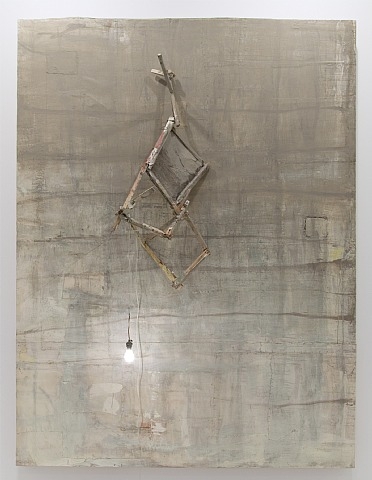
Holy See at Venice Biennale: The Word became flesh

Following its first participation in the Venice Biennale two years ago, the Holy See returns this year with the continuing “desire to re-establish dialogue between art and faith” (Card. Gianfranco Ravasi). The theme this year is: “In the beginning … the Word became flesh,” where the focus is on encounters:1

“[T]he transcendent Word that is “in the beginning”, and, at the same time, reveals the dialogical and communicative nature of the God of Jesus Christ (John 1:1-5), and the Word that becomes “flesh”, body, to bring the presence of God into the essence of humanity, above all where it appears injured and suffering (John 1:14).”

Cardinal Ravasi continues with an exposition of the theme by highlighting the parable of the Good Samaritan:

“The return to immanence is expressed in almost visual terms in the parable of the Good Samaritan, which is taken up in this context as a further thematic suggestion completing the perspective. The pages of the Gospel of Luke offer the image of a God present within a humanity harassed in its human condition. The God made flesh aids the injured man, marked by death and fragility.

The “vertical-transcendent” dimension of the Logos and the “horizontal-immanent” one of the “flesh” are, in this sense, the axes of inquiry. These, including their “intersections”, need to be referred to for an understanding of the individual pieces, of the dialogue that they weave among themselves within the exhibition space.”

Micol Forti, curator of the Holy See pavilion and head of the Vatican Museums’ contemporary art collection, expresses her vision of the theme in particularly vibrant terms:

“There are two poles around which the project for the Pavilion of the Holy See revolves and takes shape: the Logos and the flesh. The Logos establishes a relationship, a harmony, a mediation; the flesh imposes an immanence, a track, a process of in-carnation.

Their inseparable link brings about a dialectic dynamism, irregular, elliptical, abruptly accelerating, precipitously slowing down, to solicit in the artists as in the public, a reflection on a twinning that is at the root of humanity itself.”

Forti then proceeds to introduce this year’s choice of artists – a choice she characterizes as having resulted from risk-taking – two women and one man, all in the early stages of their artistic practices, and all from places that merit the label “peripheral.”
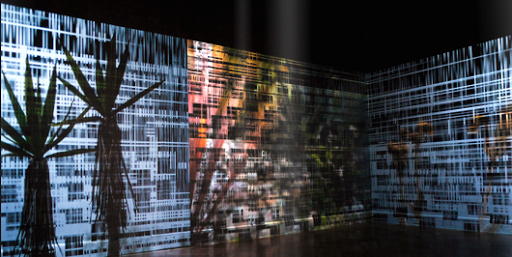
Monika bravo

The Colombian multi-disciplinary artist, Monika Bravo, presents “a narrative that is assembled and reassembled on six screens and as many transparent panels, placed on strongly colored walls. In every composition, Nature, Word – written and spoken – and artistic Abstraction present themselves as active elements of a heuristic vision, open to a degree of experimental uncertainty in the development of a new perceptual space and of a sensory fullness, through the gracefulness and poetic “manualness” with which the artist uses technological media.”
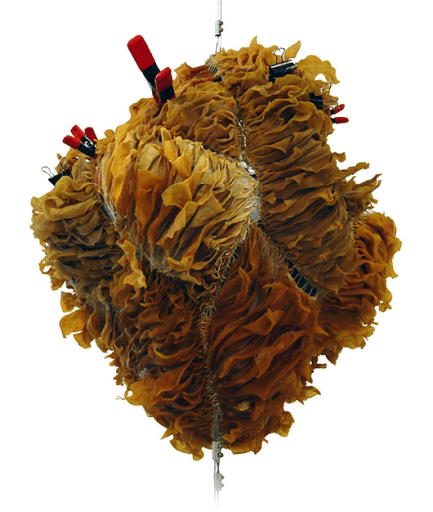
Elpida

The Macedonian site-specific installation artist, Elpida Hadzi-Vasileva, “blends artisanal abilities, scientific knowledge and a powerful aesthetic vision. She has designed a monumental architectural installation for the Pavilion, whose “fabric,” almost a skin, a mantle, welcomes visitors both in a physical and symbolic dimension at the same time. Made with organic waste materials, in a way that leads from the ready-made to the re-made, the artist creates a cloth that is both an embroidery and a surface, a physical presence and transparency, an instrument of suggestion and surprise.”
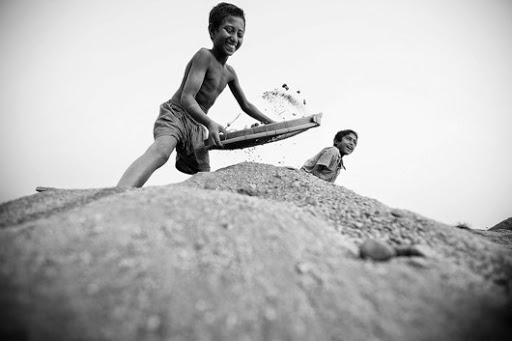
Macilau

And finally, the Mozambican photographer Mário Macilau, presents a “series of nine black and white photographs, taken in Maputo, the capital of Mozambique, […] dedicated to the street children who, while still little find themselves facing life as survival. This is not a documentary, but a poetic work that brings the connections between the Now and the Already passed, the Near and the Far, the Visible and the Non-visible. The theme of the origin and the end of each artistic act is carried by the power of photographic composition in confrontation with the agony of the real.”

I believe, this year’s offering of the Holy See pavilion is again an excellent one and both well-balanced, with a representation of video, installation, sculptural and photographic art, and daring, in the choice of artists brought together to represent the Catholic Church at this important event in the art world. It is further confirmation that the Vatican is becoming serious again about engaging with contemporary art and that – to my mind – is essential.


1 Note that the quotes here are from the press kit provided by the Holy See, but that they are a re-translation from the Italian original instead of a use of the official English translation as is.
Art’s dialogue: Vatican @ Venice Biennale

“It’s Sandro, about the Biennale.” was the first thought that entered my mind when I heard about the Vatican’s latest plans to engage with contemporary art, followed by an “Phew!” as soon as I read the details. While the Church has been a patron of the arts during many centuries, it would be fair to say that it’s ties with contemporary art have slipped of late. While still proclaiming the importance of art as such, the picture it portrayed was one of art having expired after the Renaissance.

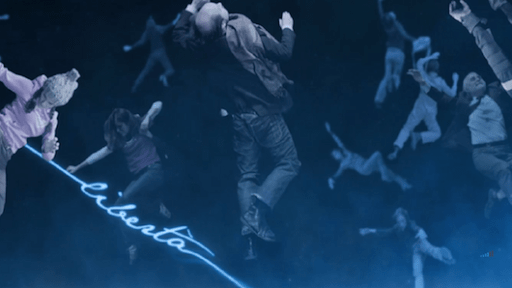
It was therefore great to see the announcement yesterday by Cardinal Ravasi that the Holy See is going to present a pavilion at this year’s Venice Biennale and to hear about the artists commissioned for it: Studio Azzurro (a Milanese group of video and performance artists), Josef Koudelka (a highly respected Czech photographer, represented by Magnum Photos) and Lawrence Carroll (Australian-born, American painter whose work is in the permanent collections of galleries like the MOCA). Before taking a closer look at these artists, it is worth noting the theme of the pavilion: “In the Beginning.”1 The focus here is on the first 11 chapters of Genesis as an inspiration for the exploration of man’s origins (“Creation”), the introduction of evil into history (“Un-creation”) and the hope that enters the world via the New Man (“Re-creation”). In Ravasi’s words:

“Creation concentrates on the first part of the biblical narrative, when the creative act is introduced through the Word and the breath of the Holy Spirit, generating a temporal and spatial dimension, and all forms of life including human beings.

Un[-]creation, on the other hand, invites us to focus on the choice of going against God’s original plan through forms of ethical and material destruction, such as original sin and the first murder (Cain and Abel), inviting us to reflect on the “inhumanity of man.” The ensuing violence and disharmony trigger a new start for humanity, which begins with the punitive/purifying event of the Flood.

In this biblical story, the concept of the voyage, and the themes of seeking and hope, represented by the figure of Noah and his family and then by Abraham and his progeny, eventually lead to the designation of a New Man and a renewed creation, where a profound internal change gives new meaning and vitality to existence.”

By the sounds of it, this is a very broad brief, which Ravasi underlines by saying that “each of these aspects was only a starting point for the selected artists. A vital, rich, and elaborate dialogue has been established with them and is a sign of a renewed, modern patronage.” And the aim of such patronage? “[I]nstituting and promoting occasions of dialogue within an ever broader and diversified context,” which sounds exactly like the mission statement of Ravasi’s Pontifical Council for Culture and a natural extension to the dialogue already in progress with intellectuals of all faiths an none, promoted via the Courtyard of the Gentiles initiative.

So, who are the three artists chosen for the first Vatican presence at a Venice Biennale?

Studio azzurro

Of the three, the only one I didn’t know of is Studio Azzurro, who have been given the first of the three themes: “Creation” and who place “light, sound, and sensory stimuli at the center of their artistic investigation,” in the words of the art historian and director of the Vatican Museums Prof. Antonio Paolucci. He adds that “[t]heir work triggers a dialogue, awash with echoes and reverberations, between the vegetable and animal kingdoms and the human dimension, which leads, via memory, to other personal narrations.” In broad strokes this sounds like their “Fare gli Italiani” installation in Turin two years ago (a video of which can be seen here) or their earlier “Meditazioni Mediterraneo.” From the perspective of the artists themselves, their interests lie in the “values of memory, places and communities” and their use in “strongly participatory” ways.

Koudelka slovacchia 1963

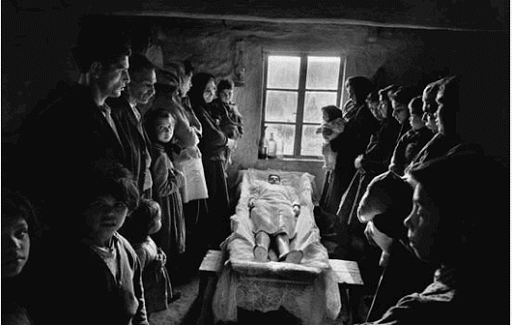
“Un-creation” is entrusted to the photographer Josef Koudelka, whose work is described by Paolucci as follows: “themes such as the destruction brought about by war, the material and conceptual consumption of history through time, and the two opposing poles of nature and industry are made to emerge. The photographer’s images expose an abandoned, wounded world, and at the same time are able to transform fragments of reality into works of art bordering on abstraction.” In many ways this sounds like the “redeeming ugliness” also explored by Michel Pochet, mentioned in an earlier post. To my mind this part of the theme is of great importance as it underlines the being “in the world but not of the world” (cf. John 15:19) of Christianity and a readiness to engage with all of reality. This is an attitude that is at the heart of Koudelka’s approach, who says that “I would like to see everything, look at everything, I want to be the view itself.” His portfolios covering the 1968 invasion of Prague by the Soviet army, the lives of gypsies in Eastern Europe in the ’70s (from which the above photo is taken) and the Welsh landscape in the late ’90s are all great examples of his desire to “be part of everything that is around [him].”

Lawrence carroll

Finally, “Re-creation” will be taken up in the work of the painter Lawrence Carroll, who uses “salvaged materials and the processes of transfiguration, which [he] presents both realistically and symbolically together. His is an elaboration that, meditating on the experiences of Arte Povera, actualizes a continuous and cyclical action of recovery and erosion, of suspension and decline, and of pause and reactivation through the reintroduction of objects into a temporal circuit, forcing fragility and monumentality to coexist” (Paolucci). Carroll himself says that his work “is about the idea that ideas and things have the possibility of having another life” carried from generation to generation of artists. In many ways his work is not only about the transformative, transcendent aspects of art but also its interconnectedness both with past and present ideas, forms and objects.

I believe Cardinal Ravasi has achieved something very impressive here. First, he has chosen a theme with universal appeal and accessible to believers and non-believers alike. Second, he has chosen a set of three artists who are very different from each other, who are respected in and representative of the contemporary art world (insofar as that is possible) and who have a great sense personal freedom (both Koudelka and Carroll have been emphasizing their commitment to their own independence over the year, e.g., with Koudelka saying: “I refuse assignments, even for projects that I have decided to do anyhow […] the idea that no one can buy me is important for me”). Third, he has steered clear of art “destined for the liturgy and sacred spaces” – this is not about interior decoration or illustration but about “rebuild[ing] relations between art and faith.” While not overtly religious, the works commissioned by the Vatican nonetheless speak to themes that are core to Christianity, since – as Cardinal Ravasi puts it – “they should raise questions in people’s minds about their origins and the origins of the world, about sin and destruction, about suffering, but also about hope for a new creation and new way of living.”


1 A theme dear to this blog, where it was covered in the context of the Johannine prologue, the perspective of the roots of science in Genesis and of John Paul II’s Theology of the Body among others.