Romero: disobey false absolutes

Romero

After a tumultuous process following his martyrdom, Oscar Romero is finally due to be beatified on 23rd May in San Salvador, where he served as archbishop and where he was assassinated by a member of a death squad on 24th March 1980. Instead of writing about his life,1 I would like to share some of his own words with you, from his pastoral letters, homilies and diaries.

Starting from his pastoral letters, there is a strong sense of the social dimension of Christianity, which grows from and is interconnected with individual choices:

“Throughout the centuries the Church has, quite rightly, denounced sin. Certainly she has denounced personal sins, and she has also denounced the sin that perverts relationships between persons, especially at the family level. But she has begun to recall now something that, at the Church’s beginning, was fundamental: social sin – the crystalization, in other words, of individuals’ sins into permanent structures that keep sin in being, and make its force to be felt by the majority of the people.” (2nd pastoral letter, 1977)

In the same pastoral letter, Romero’s response to the “crystalization” of personal sin into “structures of sin” is a call to an authentic, present-day, up-to-date Christianity that understands tradition like Vatican II does – as being alive:

“To remain anchored in a non-evolving traditionalism, whether out of ignorance or selfishness, is to close one’s eyes to what is meant by authentic Christian tradition. For the tradition that Christ entrusted to his Church is not a museum of souvenirs to be protected. It is true that tradition comes out of the past, and that it ought to be loved and faithfully preserved. But it has always a view to the future. It is a tradition that makes the Church new, up to date, effective in every historical epoch. It is a tradition that nourishes the Church’s hope and faith so that she may go on preaching, so that she may invite all men and women to the new heaven and new earth that God has promised (Revelation 21:1; Isaiah 65:17).”

Next, Romero moves on to emphasizing the non-legal, non-rule-based nature of faith and instead presents a model of participation in the person of Christ, as St. Paul did:

“The Church’s foundation is not to be thought of in a legal or juridical sense, as if Christ gathered some persons together, entrusted them with a teaching, gave them a kind of constitution, but then himself remained apart from them. It is not like that. The Church’s origin is something much more profound. Christ founded the Church so that he himself could go on being present in the history of humanity precisely through the group of Christians who make up his Church. The Church is the flesh in which Christ makes present down the ages his own life and his personal mission.”

This is an idea that he returned to in a meditation later that year, which also foreshadows Pope Benedict XVI’s introduction to the 2012-13 Year of Faith:

“How I would like to engrave this great idea
on each one’s heart:
Christianity is not a collection of truths to be believed,
of laws to be obeyed,
of prohibitions.

That makes it very distasteful.
Christianity is a person,
one who loved us so much,
one who calls for our love.
Christianity is Christ.” (November 6, 1977)

Romero continues in his second pastoral letter with making the link between the Church’s authenticity and her being the Body of Christ:

“That is how changes in the Church are to be understood. They are needed if the Church is to be faithful to her divine mission of being the Body of Christ in history. The Church can be Church only so long as she goes on being the Body of Christ. Her mission will be authentic only so long as it is the mission of Jesus in the new situations, the new circumstances, of history. The criterion that will guide the Church will be neither the approval of, nor the fear of, men and women, no matter how powerful or threatening they may be. It is the Church’s duty in history to lend her voice to Christ so that he may speak, her feet so that he may walk today’s world, her hands to build the kingdom, and to enable all its members to make up all that has still to be undergone by Christ (Colossians 1:24).”

And again it is a theme he picks up in a mediation around a year later, which is also an examination of conscience:

“Christ became a man of his people and of his time:
He lived as a Jew,
he worked as a laborer of Nazareth,
and since then he continues to become incarnate in everyone.

If many have distanced themselves from the church,
it is precisely because the church
has somewhat estranged itself from humanity.
But a church that can feel as its own all that is human
and wants to incarnate
the pain,

the hope,

the affliction
of all who suffer and feel joy,
such a church will be Christ loved and awaited,
Christ present.
And that depends on us.” (December 3, 1978)

What does a Church that has not become estranged from humanity and that lends “her feet so that he may walk today’s world” look like? Romero here points to the Matthean questions and updates them to his own time and place:

“There is one rule
by which to judge if God is near us
or is far away –
the rule that God’s word is giving us today:
everyone concerned for the hungry,
the naked,
the poor,
for those who have vanished in police custody,
for the tortured,
for prisoners,
for all flesh that suffers,
has God close at hand.” (February 5, 1978)

Returning to his second pastoral letter, Romero also underlines the non-negotiability of Jesus’ command – even in the face of aggression directed against the Church – to love one another has He has loved us and for that “another” to include our enemies:

“The Church has never incited to hatred or revenge, not even at those saddest of moments when priests have been murdered and faithful Christians have been killed or have disappeared. The Church has continued to preach Jesus’ command love one another (John 15:12). This is a command that the Church cannot renounce, nor has she renounced it, not even in recent months. On the contrary, she has recalled that other command, pray for those who persecute you (Matthew 5:44).”

Such conduct is anything but plain sailing though and is both a thorn in the side of those who seek wealth and power for themselves and a pretext for accusations being leveled against the Church (still from Romero’s second pastoral letter):

“The Church is not dedicated to any particular ideology as such. She must be prepared to speak out against turning any ideology into an absolute. As several of the Latin American hierarchies have said time and again in recent years, worldly interests try to make the Church’s position seem Marxist when it is in fact insisting on fundamental human rights and when it is placing the whole weight of its institutional and prophetic authority at the service of the dispossessed and weak.”

What struck me in the above was also Romero’s denunciation of the absolutization of ideologies, where it is not hard to see examples of this happening also today, and I was glad to see him return to this point and expand on it in his fourth (and final) pastoral letter as the Archbishop of San Salvador. There, his point of departure is an acclamation of transcendence, which he – interestingly – links to critical thinking and which he puts in opposition against the absolutization of human (limited) values:

“As well as offending God, every absolutization disorients, and ultimately destroys, human beings. It is the vocation of human beings to raise themselves to the dignity of the children of God and to participate in God’s divine life. This transcendence of human beings is not an escape from problems here on earth, still less is it an opium that distracts them from their obligations in history. On the contrary, by virtue of this transcendent destiny people have the capacity to always remain critical vis-a-vis the events of history. It gives them a powerful inspiration to reach out to ever higher goals. Social forces should hearken to the saving voice of Christ and of true Christians, cease their questioning, and open themselves to the values of the one and only Absolute. When a human value is turned into an absolute and endowed, whether in theory or in practice, with a divine character, human beings are deprived of their highest calling and inspiration. The spirit of the people is pushed in the direction of a real idolatry, which will only deform and repress it.”

Next, he applies the analysis of absolutization to two contexts, the first of which is wealth:

“The absolutization of wealth holds out to persons the ideal of having more and to that extent reduces interest in being more, whereas the latter should be the ideal for true progress, both for the people as such and for every individual. The absolute desire of having more encourages the selfishness that destroys communal bonds among the children of God. It does so because the idolatry of riches prevents the majority from sharing the goods that the Creator has made for all, and in the all-possessing minority it produces an exaggerated pleasure in these goods.”

Second, he looks at national security with the same optics – a topic of acute relevance also in today’s world:

“By virtue of [the absolutization of national security], the individual is placed at the total service of the state. His or her political participation is suppressed, and this leads to an unequal participation in the results of development. Peoples are put into the hands of military elites, and are subjected to policies that oppress and repress all who oppose them, in the name of what is alleged to be total war. The armed forces are put in charge of social and economic structures under the pretext of the interests of national security. Everyone not at one with the state is declared a national enemy, and the requirements of national security are used to justify assassinations, disappearances, arbitrary imprisonment, acts of terrorism, kidnappings, acts of torture … [all] indicate a complete lack of respect for the dignity of the human person (Puebla #1262).”

It is not hard to see from all of the above why Archbishop Vincenzo Paglia, the postulator of Oscar Romero’s cause for beatification, characterized him by saying: “Romero is truly a martyr of the Church of Vatican II, a Church, as Pope John used to say, who is mother of all, but in particular of the poor.” Everything I have read by him was steeped in the Gospel and in its reading today through the eyes of Vatican II. It is also for this reason that Paglia referred to Romero as the “proto-martyr” of contemporary martyrs.

No account of a martyr’s thought would be complete without including the words pertaining to his own martyrdom, which is a culmination of a life of imitating Christ. Here, Romero was acutely aware of the risk to his own life, which can be readily seen from an interview he gave just days before being shot at long range while celebrating mass:

“You can tell the people that if they succeed in killing me, that I forgive and bless those who do it. Hopefully, they will realize they are wasting their time. A bishop will die, but the church of God, which is the people, will never perish.” 

In spite of the severe threats to his life, even on the day before his death, Romero spoke out against the “structures of sin” that he had been fighting for many years, addressing a group of soldiers:

“Brothers, you came from our own people. You are killing your own brothers. Any human order to kill must be subordinate to the law of God, which says, ‘Thou shalt not kill’. No soldier is obliged to obey an order contrary to the law of God. No one has to obey an immoral law. It is high time you obeyed your consciences rather than sinful orders. The church cannot remain silent before such an abomination … In the name of God, in the name of this suffering people whose cry rises to heaven more loudly each day, I implore you, I beg you, I order you: stop the repression!”


1 For a brief biography of Archbishop Romero, see the one provided by the UN on the website about the “International Day for the Right to the Truth Concerning Gross Human Rights Violations and for the Dignity of Victims,” dedicated to him and held on the anniversary of his martyrdom, the 24th March.
Synod14: No distinction between us and them

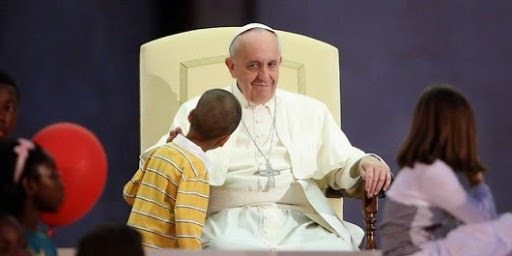
Pope francis boy

“After much debate had taken place, …” is not a quote from an article about the Synod, but about the Council of Jerusalem, from the Acts of the Apostles (15:7), where there was ample discord among participants, some favoring tradition – extending Jewish circumcision to all Christians – and others feeling compelled to change in response to a prompting from the Holy Spirit, put into words by St. Peter, the pope in office then, who said (15:9-11):

“[God] made no distinction between us and them, for by faith he purified their hearts. Why, then, are you now putting God to the test by placing on the shoulders of the disciples a yoke that neither our ancestors nor we have been able to bear? On the contrary, we believe that we are saved through the grace of the Lord Jesus, in the same way as they.”

I don’t know about you, but this very much reminds me of Pope Francis’ homilies from the last two days …

Reading the reports about the Synod since the “relatio post disceptationem” has been released could give one the sense that it has been a mistake, that it is leading to a schism, that what it says will be retracted and that there is huge opposition to its content in general. Not being at the Synod myself (obviously!), it is hard to get a sense of the temperature on the ground. While there is no shortage of positive, optimistic voices coming from there, e.g., Cardinal Lluís Martínez Sistach of Barcelona tweeting this morning that “The atmosphere at the Synod is one of communion and of being pastoral. The Church wants to become closer to and be with all the families of the world,” the vast majority of media outlets report mayhem (which, lets be honest, sells better than harmony :).

Without wanting to give too much oxygen to negativity, I would just like to point to a lack of subtlety in reporting the words of the Synod Fathers. E.g., taking Cardinal Raymond Burke’s words that the relatio “advances positions which many synod fathers do not accept and, I would say, as faithful shepherds of the flock cannot accept,” and presenting them as disagreement with the relatio is accurate. However, the same conclusion can’t be drawn from what Cardinal Wilfrid Napier saying:

“The message has gone out: This is what the synod is saying, this is what the Catholic church is saying. And it’s not what we’re saying at all. No matter how we try correcting that … there’s no way of retrieving it. The message has gone out and it’s not a true message. Whatever we say hereafter is going to be as if we’re doing some damage control.”

This is universally interpreted as “Cardinal Napier says, message of “relatio” is not true.” Hold on. Read it again. What does he actually say? What does he say the message is? He even spells it out: “The message has gone out: This is what the synod is saying, this is what the Catholic church is saying.” The message is that the content of the relatio expresses the consensus of the Synod and presents the teaching of the Church. That, as Cardinal Napier rightly says, is untrue. The “relatio” is a working document (as it states itself) put together by a committee as input to the discussions and adjustments that it is receiving as we speak, during this week’s work in smaller groups. It couldn’t possibly be an expression of the Synod’s consensus, since the Synod Fathers first saw it the morning it was publicly read out and streamed across the internet. I can very well see how this would be irritating to those at the Synod, regardless of what they think about the content.

With that out of the way, let me point you to a couple of interviews that have come out over the course of the last day and that I consider to have great beauty.

First, the following interview with a Rwandan couple – Jean Dieudonné and Emerthe Gatsinga, who are members of the Focolare Movement, who are at the Synod as “auditors,” and with whom I am in complete agreement, has been published on the Vatican Television YouTube channel:

“Jean: “Families need the help of the Church to deepen their faith. Because, with faith in Jesus one receives, one earns the strength to overcome various situations. When there is faith, when one has chosen to place Jesus at the first place in one’s life, everything is possible. Life is not always easy, but in Jesus we take strength for overcoming many difficulties.”

Eremite: “With faith, the husband gives dignity to the wife. This helps the development of the family, because they try to build it together, relying on love. Like that, the family can be promoted in a spirit of reciprocal love and also of mutual help.””

A brief interview with Archbishop Vincenzo Paglia, President of the Pontifical Council for the Family, again underlines what this Synod is about, with a constant thread of closeness to and love for all running through his words: 1

“There is a need for attentive listening and accompanying, because there are also wounded families. It is not like there is the category of the divorced and remarried, there are stories, at times even dramatic ones. The theme with highest priority is that of closeness to all of them, with no one excluded. Then, within this new horizon, there is also the question of access to the sacraments. And here I have to say that, once the indissolubility of marriage is confirmed, which is that the true marriage is the one that took place and the rest is not a marriage union, then there is a range of possibilities. Certainly there are still some clean-cut cases, but it seems to me that there should be openness to evaluate individual cases by bishops so that a closer, more direct solution may be found. […]

[Homosexuals] are our brothers or sisters. To be loved as children of God to the end, to be embraced, accompanied, sustained, to be close to. Another question is that of marriage. Because marriage, since the world has been the world, is between man and woman. […] Then … affection … well we can be attracted by anyone. What’s more, I wish for all of us that we would all love each other, so we aren’t like frigid sticks that don’t encounter each other! The challenge is how to be close to those who are maybe in difficulty, and here I believe that it is all of us, believers, who need to take the first step. Whoever is in difficulty is to be embraced and helped. […]

There is a greater understanding that to participate in the Eucharist also means to be in communion – not only by listening to the Word of God – Bread descended from Heaven – but also by being in communion with the body and blood of the Lord. In this sense, doctrine grows, expands, like each one of us. I, when I was ten years old, was very different from how I am now. I had hair and today I don’t anymore. But I am always Vincenzo! I am always me. And this is also how it is with Christianity. We mustn’t be rigid men made of marble, constrict ourselves, one the other hand we can’t stretch our necks to infinity either. I believe that the Gospel here is important. If we are faithful to the Gospel, we avoid all risks of turning Christianity into an ideology. The Gospel is the same, but the Spirit helps us to understand it in a way that fits the time in which we live. Today we are at the beginning of the 21st century. Many things have changed. We must be able to – and this is why the Spirit of the Lord is important – to speak the Gospel that has always been, in a way that the men and women of today may understand and put into practice.”

Cardinal Christoph Schönborn of Vienna gave an interview yesterday, in which he shared his experience of a gay couple with great humility: “In Vienna, I got to know two men of homosexual orientation who have been living together for some time in a civil partnership. And I have seen how they have been helping each other when one of them fell seriously ill. It was wonderful, both in human and Christian terms, how one has cared for the other, staying by his side. These are things that need to be recognized. Jesus said: tax collectors and prostitutes will precede you into the Kingdom of God.2 And he says this to us, us cardinals, bishops, priests. Many times, even if we do not approve of this form of sexuality, we can bow down in front of exemplary human behavior.” Schönborn, himself a son of divorced parents, then also spoke about the importance of putting children first when families fall apart, and gave a first-hand account:

“Those who get divorced and have children must never forget that they remain parents. They mustn’t allow for the weight of their failure to fall on the shoulders of their children. There is so much suffering today … I was thirteen years old [when my parents divorced]. It’s strange, but what stays with you is the dream that your parents get back together, until the end of their lives. It’s an instinctive thing, not rational. It is the heart. I know a lot of children in my situation. The dream remains for Mum and Dad to get back together.”

Another interview, very much worth reading in full, that has been published yesterday is with Bishop Anthony Borwah from Liberia, who was invited to participate at the Synod, but who has remained at home due to borders closing as a result of the outbreak of Ebola. At the beginning of the interview he says: “As Bishop of my people I carry within my heart their wounds and pains every moment of life here.” And this attitude also shines through the passage I would like to quote next, where he speaks about one of the sufferings of his people. His words struck me to be extremely Jesus-like:

“Generally the economy of the nation is in the pocket of few men, hence there is a lot of women prostitution. I often say that these prostitutes are prophets and friends of Jesus as they signify the inequality, marginalization and injustice meted out against the poor and nobodies of our society, especially women. Women are generally subject to men culturally, and are often subjected to brutal domestic violence and impoverishment. The government of President Ellen Johnson Sirleaf has done a lot to raise the dignity of womanhood in beloved Liberia, but the walk is still too long.”

Finally, to round out the above thoughts on the family, I would like to share a quote from the writings of the Servant of God Igino Giordani, who speaks about how he, a married man and father of four children, understood God’s plan for the family:

“The family is not closed in on itself, as if in a fortress, but it grows like a cell that lives for itself when it lives with its brothers. It communicates in some way with the whole of humanity, which has the potential to be the Church, which is the family of God the Father. As it participates in the ideals and hopes, joys and sorrows of the largest family, there is no danger of boredom and loneliness, and not even of being abandoned, for its individual members. From this communion, which carries with it the duties of apostolate, of charity and justice, towards society, it can be understood how great the scope of the social and spiritual responsibilities of marriage is.”


1 Like a lot of the text here, this too is my own, choppy translation, which seems even choppier to me in this case, since listening to Archbishop Paglia’s Italian has been a bit like drinking from a fire hose for me. Apologies for any gross misinterpretations.
2 cf. Matthew 21:31.

The identity of discernibles

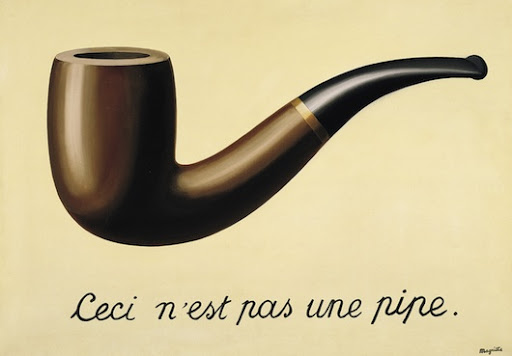
margritti-this-is-not-a-pipe_s.jpg

If two men or two women want to make a life-long commitment of love and support to one another, for better, for worse, for richer, for poorer, in sickness and in health, why shouldn’t that be called marriage? Why do many religious people have an issue with this and why don’t they just recognize and appreciate the love and commitment such couples have for one another? Doesn’t a lack of support for same-sex marriages show an elitism, judgment and discrimination that are foreign to Jesus’ message? As heterosexual couples can marry, why should that right be denied to homosexual ones? And why is it that same-sex marriage should be a threat to the very idea of marriage?

Questions like the above have, I believe, a great deal of profound Christian appeal: love, commitment, not judging, equality and taking the beam out of one’s own eye before proceeding to the splinter in another’s are all deeply Christian principles and when Christians are criticized for their seeming lack, they better take them seriously. Actually, when I say they, I mean me, so let me make this train of thought more personal. What do I think? Where do I stand?

First, let me be super clear about one thing: I believe God has a plan for every single human being and loves each one of us immensely. The late Patriarch Athenagoras saying that “God loves everyone equally, but secretly each one of us is his favorite,” Martin Luther saying “It is not because we are beautiful that God loves us, but because God loves us that we are beautiful,” John Paul II adding that “The person who does not decide to love forever will find it very difficult to really love for even one day,” and Benedict XVI tweeting yesterday that “Everything is a gift from God: it is only by recognizing this crucial dependence on the Creator that we will find freedom and peace,” sum it up for me. Everyone is loved by God, who sees beauty in them, and my love for all mustn’t be selective, jealous or fretting either. So, I believe God loves homosexual men and women and I too need to do the same to call myself a follower of Jesus.

I am therefore vehemently opposed to any lack of love shown towards homosexual persons and am strongly against homophobia, bullying, marginalization or any other respect and care that is not extended to them. Violence against homosexual men or women horrifies me, with cases where it is the state that fuels it (as in Uganda and countries where there are criminal penalties for homosexuality) being particularly abhorrent to me. This is a position that I hold beyond doubt and one in which I feel fully in line with the position and teaching of the Church.

The Catechism states clearly that homosexual persons “must be accepted with respect, compassion, and sensitivity. Every sign of unjust discrimination in their regard should be avoided. These persons are called to fulfill God’s will in their lives.” (Catechism of the Catholic Church, §2358). Several bishops have emphasized that there is good in relationships among homosexual men or women, such as Bishop Woelki of Berlin saying “I also try to acknowledge that they take responsibility for each other on a permanent basis, have promised each other faithfulness and want to look after each other,” the Bishops of England and Wales stating that “We also recognise that many same sex couples raise children in loving and caring homes,” or the late Cardinal Basil Hume affirming that “Homosexual people […] can, and often do, give a fine example of friendship and the art of chaste loving.” As recently as last Monday, there is also the determination by Archbishop Vincenzo Paglia, head of the Pontifical Council for the Family, for the Church to “do more to protect gays and lesbians from discrimination in countries where homosexuality is illegal. […] In the world there are 20 or 25 countries where homosexuality is a crime, […] I would like the church to fight against all this.”1

So, am I in favor of same sex marriage then? Actually, no … My reason for this is that marriage is a lifelong commitment of one woman and one man to each other. This commitment results in the birth of a family, which, at least in principle, is open to the procreation of children. As this is what the concept of marriage means, it is not applicable to same sex couples. But isn’t this discriminatory and doesn’t it fly in the face of everything I have said above? I honestly don’t think so, and I am fully in agreement with the Bishops of England and Wales, who say:

“We disagree that the signal that is sent currently, by restricting marriage to opposite sex couples, is one of disparagement of same sex relationships. The basic argument that is advanced in favour of same sex marriage is one of equality and fairness. But we suggest that this intuitively appealing argument is fundamentally flawed. Those who argue for same sex marriage do so on the basis that it is unjust to treat same sex and heterosexual relationships differently in allowing only heterosexual couples access to marriage. Our principal argument against this is that it is not unequal or unfair to treat those in different circumstances differently. Indeed, to treat them the same would itself be unjust.”

This to me is the crux of the argument: the outcome of even the commitment expressed by marriage vows results in two different states depending on whether it is done by two people of different sexes or the same sex. While there are similarities (i.e., the value and sincerity of the commitment and the love that it springs from and subsequently supports), there are categorical differences too (i.e., the possibility of bringing children into the world and the complementarity of the male and female sexes). Ignoring such differences is the beginning of a loss of clarity of thought and consequently of judgment and action. It is akin to suddenly deciding that we will call an ear an eye – they are both organs and result in sensory perception and surely the ear is just as good as the eye. It is certainly possible to do this, but it will result in confusion (were all the pre-ear=eye statements about eyes meant to apply to the new eye or only to eye-eyes and not ear-eyes?).

The motivation for extending marriage to same sex couples may in many cases be good and be underpinned by principles that I fully subscribe to, but the result is a delusion and a divorce from reality.

Nonetheless, I believe that many homosexual men and women do not feel welcomed by the Church, which to me is similar to the lack of unity among Christians – both pain me, but for both I place myself firmly inside the Church and try to understand what it is that I can do towards overcoming them. With Christian unity too we could decide from one day to the next that we will declare ourselves to be united, that we’ll just change the definition of a couple of terms so that they span previously exclusive concepts. But what would we achieve with that? Not only nothing, but it would be a step back, as it would hinder a true understanding of underlying reality and efforts to arrive at a loving solution that has its eyes wide open.2


1 Even though it is not the topic of this post and addressing it even just briefly would make it way too long, I can’t not mention the Church’s classification of homosexual relationships as “objectively disordered.” This, I have to say, is an unfortunate choice of words. Cardinal Hume felt the same and provided the following reflection:

“The word ”disordered” is a harsh one in our English language. It immediately suggests a sinful situation, or at least implies a demeaning of the person or even a sickness. It should not be so interpreted. First, the word is a term belonging to the vocabulary of traditional Catholic moral theology and philosophy. It is used to describe an inclination which is a departure from what is generally regarded to be the norm. The norm consists of an inclination towards a sexual relationship with a person of the opposite sex and not between persons of the same sex. Being a homosexual person is, then, neither morally good nor morally bad.”

This is an argument I do agree with: the sexual relationship between a man and a woman is constituent of what it means to be human, while such relationships between persons of the same sex are a departure from the inherent purpose of sexuality (without meaning to restrict it to its procreative function). I do believe this to be a fact, but that does not mean that homosexual men and women should not be welcomed by the Church in more effective and constructive ways than is the case today. What these ought to be is not clear to me, but I am convinced of their necessity.
2 Thanks to my überbesties KM, PM and MR for reviewing a draft of this post and for their great feedback!