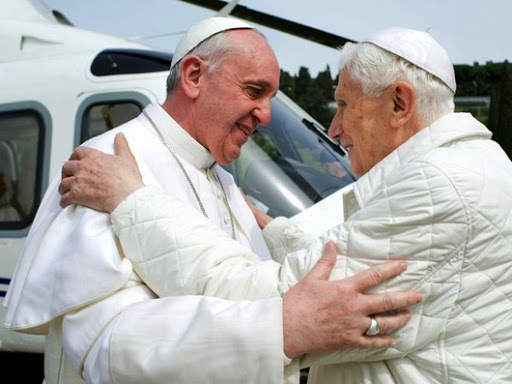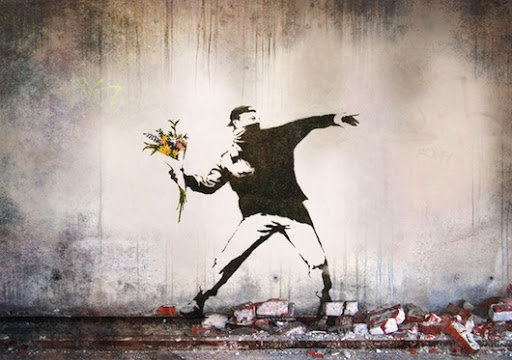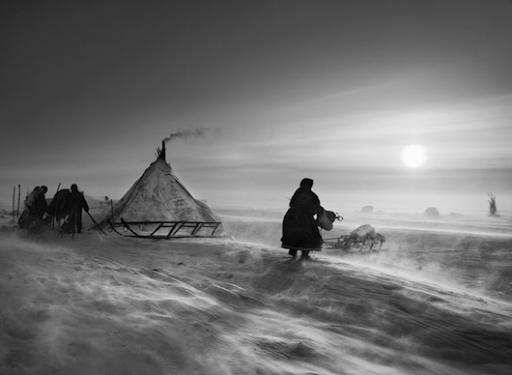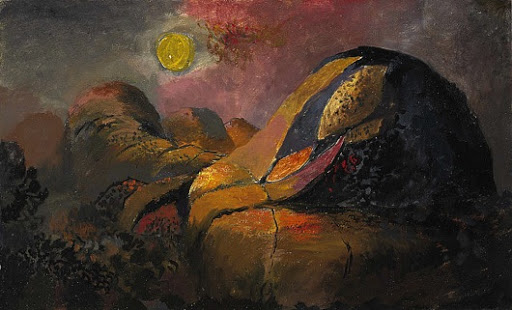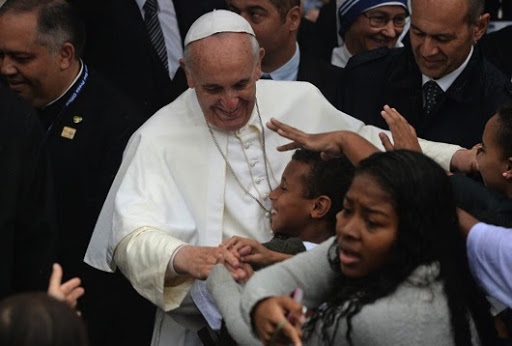
Francis: let’s share the joys of Muslims

Francis sultan

A while ago now, Pope Francis wrote a, to my mind, very important message to Muslims at the end of Ramadan (on the feast of Eid al-Fitr), and, I believe, I, as a Christian, need to read it too, as if it were addressed to me personally. Aside from the gesture of Francis himself1 sending the message “as an expression of esteem and friendship for all Muslims,” his choice of theme itself is of great importance, as is the way in which he introduces himself.

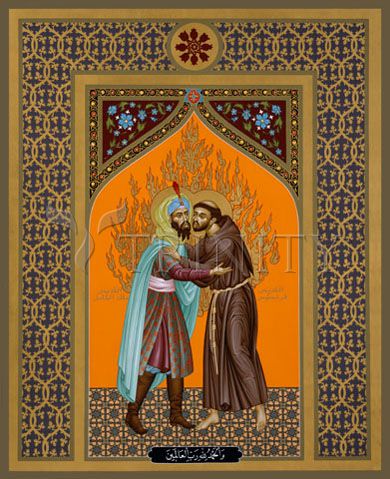
First, he ties himself closely to St. Francis, who had very close links with the Muslim world of his day and who – with Jesus and Mary – is revered also among Muslims and who, after speaking with Sheikh al-Malik al-Kamel (the Sultan of Egypt) told his followers: “[You] are not to engage in arguments or disputes, but to be subject to every human creature for God’s sake.” Then, Francis underlines a number of themes close to the hearts of Muslims: alms giving, a reverence for creation and the family:

“[W]hen the Cardinals elected me as Bishop of Rome and Universal Pastor of the Catholic Church, I chose the name of “Francis”, a very famous saint who loved God and every human being deeply, to the point of being called “universal brother”. He loved, helped and served the needy, the sick and the poor; he also cared greatly for creation. I am aware that family and social dimensions enjoy a particular prominence for Muslims during this period, and it is worth noting that there are certain parallels in each of these areas with Christian faith and practice.”

Next we arrive at the theme chosen for this year’s Ramadan message: “Promoting Mutual Respect through Education,” which Francis lays out as follows:

““Respect” means an attitude of kindness towards people for whom we have consideration and esteem. “Mutual” means that this is not a one-way process, but something shared by both sides. What we are called to respect in each person is first of all his life, his physical integrity, his dignity and the rights deriving from that dignity, his reputation, his property, his ethnic and cultural identity, his ideas and his political choices. We are therefore called to think, speak and write respectfully of the other, not only in his presence, but always and everywhere, avoiding unfair criticism or defamation.”

So far Francis’ message is universal and, I believe, applies to all human relationships and not only those between Christians and Muslims. Kindness, esteem, reciprocity, respect and refraining from gossip are all basics that prepare the ground for the “sincere and lasting friendship” that Francis speaks about later.

Then, Francis’ focus shifts to the aspect of religious belief in this context of human relationships:

“Turning to mutual respect in interreligious relations, especially between Christians and Muslims, we are called to respect the religion of the other, its teachings, its symbols, its values. Particular respect is due to religious leaders and to places of worship. How painful are attacks on one or other of these! It is clear that, when we show respect for the religion of our neighbours or when we offer them our good wishes on the occasion of a religious celebration, we simply seek to share their joy, without making reference to the content of their religious convictions.”

I believe the above is a key move by Francis, in that it explicitly calls for mutual respect of the religious expressions of others while placing the emphasis on the joy and wishing for the good of others that accompany them and that are universally human. No buy-in with regard to the content of religious expression is inferred from being kind and participating in the other’s joy. There is neither proselytizing or attempting to convert the other here nor the suggestion of syncretism.

All of the above is very consistent with what I have heard from Francis so far – we have to realize that we are all brothers and sisters before anything else can happen. In the context of speaking about the poor, his emphasis is always on “touch[ing] the flesh of Christ,” on looking into the eyes of those in need when they are being helped. Just like helping the poor is about building human relationships with them and not only about material assistance, so interreligious dialogue too – and the very essence of the Christian life – is about the exact same thing.

How is this to be achieved though? While the answer here is pretty obvious (education), it is nonetheless worth seeing how Francis puts it:

“Regarding the education of Muslim and Christian youth, we have to bring up our young people to think and speak respectfully of other religions and their followers, and to avoid ridiculing or denigrating their convictions and practices.”

It is impossible to respect and esteem caricatures – if that is how we get used to referring to others (whether they be of a different religion, or none, or of other convictions to our own) we are putting up barriers that prevent us from ever discovering what lives in the hearts and minds of our neighbors.

To conclude, Francis puts his own teaching into practice and concludes his message a follows: “Finally, I send you my prayerful good wishes, that your lives may glorify the Almighty and give joy to those around you. Happy Feast to you all!”

No pomp and circumstance, just sincere simplicity.


1 Instead of having the message sent by the Pontifical Council for Interreligious Dialogue, who normally do so.

Married priests: a hermeneutic of choice

That the Catholic Church should allow for married men to become priests (or for priests to marry) is frequently put forward as a must and as a sure-fire way to address the current dearth of priests in many parts of the world. Celibacy, it is argued, is an outmoded idea and one that presents an obstacle to otherwise great candidates for the priesthood. And, it is suggested that having married priests would both make them better understand their parishioners and avoid crimes like pedophilia, which are laid at the feet of celibacy. The hope then is that a “modern” pope, e. g., like Francis, would finally see sense and do the right thing.

As should be obvious from the tone of the above, I have never seen these as being good grounds for changing the practice of requiring Roman Catholic priests to be celibate (for that is all it is – practice, not dogma, and the desire for its change is furthermore directed primarily at the Roman rite and not, e. g., the Eastern Catholic ones, where married priests have always been an alternative to celibate ones).

First, I don’t believe having married priests would lead to more priests (the low numbers today deriving from what Pope Francis has called a “fascination with the temporary”, equally affecting the sacrament of marriage). Second, I consider celibacy to be a treasure – different from, yet equal to marriage in its potential for sanctification. Third, I have my suspicions about those who today would opt for the priesthood in the Roman rite if only it allowed for marriage too (note the specific wording of this point). Fourth, I don’t believe that shared experience is a necessary prerequisite for understanding – it can help, but it is not what is essential (otherwise – via reductio ad absurdum – understanding would be impossible – see Nagel’s bats). Fifth, linking pedophilia to celibacy is a red herring, and, sixth, you can bet your bottom dollar that Francis will do the right thing – it’s only its level of “modernity” that remains to be seen.

And then there is probably the most serious reservation I have about married priests – that it is just too hard! Being married asks for 100% of one’s capacity and, I am sure, so does being a priest. Even with the above I wouldn’t have said that I am against married priests though, as I have seen great ones both in the Catholic Church an the Anglican Communion. It undoubtedly is challenging, but I wouldn’t exclude its being an option just on those grounds.

A couple of weeks ago I read a book chapter about this subject (in the book “La grande meretrice”) and it changed my mind. Its author, Prof. Lucetta Scaraffia, a historian from Rome’s La Sapienza University, presents the history of priestly celibacy in the Catholic Church and has the following to say about the reasons for allowing priests to marry that were put forward in the Church’s early days:

“The problem of clerical celibacy, and its eventual imposition, clashed with another point that was one of the principal innovations of Christian culture: the value of free choice, especially in the context of spiritual life. […] The high regard enjoyed by chastity meant that, since the first centuries, many clerics spontaneously practiced celibacy, especially in the West, where it was particularly valued. But the Church has not declared a norm with regard to it. The married state too, in fact, had a religious and spiritual value, which made it difficult to exclude clerics from it without provoking its devaluation.”

What struck me about the above was that the argument pivoted around an insistence on the fundamental value of choice and therefore on freedom. It was an argument that decidedly was not pitting celibacy against marriage but presented this important choice as being both orthogonal to that of the priesthood and as having great importance, which in turn placed equal value on the two choices: celibacy and marriage. How strongly this was believed is exemplified by the following canons of the Synod of Gangra in 340 AD:

“Canon 1: If any one shall condemn marriage, or abominate and condemn a woman who is a believer and devout, and sleeps with her own husband, as though she could not enter the Kingdom [of heaven] let him be anathema.

Canon 4: If any one shall maintain, concerning a married presbyter, that is not lawful to partake of the oblation when he offers it, let him be anathema.

Canon 9: If any one shall remain virgin, or observe continence, abstaining from marriage because he abhors it, and not on account of the beauty and holiness of virginity itself, let him be anathema.

Canon 10: If any one of those who are living a virgin life for the Lord’s sake shall treat arrogantly the married, let him be anathema.”

Not only were married priests to be treated as the equals of celibate ones and marriage be afforded with reverence, but anyone who acted contrary to this teaching was anathema and therefore subject to excommunication.

While the above is a strong argument already, what really clinched it for me is the realisation that Jesus himself called married men to the priesthood, while he could have just as easily chosen only unmarried ones. St. Peter was certainly married (the Gospel referring to his mother-in-law, cf. Matthew 8:14-15) and in all likelihood so were more of the apostles. Even being sure only of St. Peter’s married state is sufficient for knowing that Jesus called married men to go out in His name and proclaim the Good News. St. Peter having been the first pope further underlines the deliberate character of Jesus’ choice and it can’t be argued that only some peripheral apostle was married and that this was some anomaly (and even that would be a weak argument). As it stands though, we have Jesus call a married man to be not only a priest and bishop but also the first pope.

There are certainly challenges with opening up the choice between celibacy and marriage to priests (both practical and psychological), but I am left with standing on the side of those in favor of it, predominantly because Jesus himself chose to stand among them too (as he chose to stand among those in favor of celibacy (e.g., cf. Matthew 19:12). In no way is this in opposition to celibacy though, which I consider to be a great good when chosen for the sake of giving one’s life to God. Neither is this a call to disobedience with the Church’s norms or a demand for a change. Instead, it is a (albeit minuscule) contribution to a discussion of the topic and, I believe wholly consonant with the magisterium of the Church. For example, the Vatican II decree Presbyterorum Ordinis clearly states that celibacy “is not demanded by the very nature of the priesthood, as is apparent from the practice of the early Church and from the traditions of the Eastern Churches” (§16). Pope Francis too has spoken on this subject in a way that is open to discussion, while being clear about the norm in force today, when he said that priestly celibacy “is a matter of discipline, not of faith. It can change, [but] for the moment, I am in favor of maintaining [it], with all its pros and cons, because we have ten centuries of good experiences rather than failures” (On Heaven and Earth). Even though I don’t dispute at all that priestly celibacy is working well “for the moment,” an understanding of the reasons for having it co-exist with priestly marriage in the Early Church has made me understand that this co-existence was a “discipline” practiced for profound, and to my mind, very strong reasons of choice and freedom.

Francis in Rio: we’re ALL brothers and sisters

Francis favela

[Warning: Long read! 🙂 The following are my favorite bits from the many talks and homilies Pope Francis gave last week in Brazil. The originals span 30K words, while the following comes in at just above 3K. As you will see, it is more of a collection of gems than an attempt to comment on them, which I am sure I’ll get to in due course. For now I just wanted to give you my “best of” of Francis’ spectacular week in Brazil.]

Last week saw the 28th World Youth Day take place in Rio de Janeiro in Brazil, where as many as 3.7 million young people participated in a variety of events and during which time Pope Francis went on a pilgrimage to the Marian shrine of Aparecida, met with local bishops as well as the leadership of the Latin American Bishops’ Conference (CELAM) and visited one of Rio’s favelas. Instead of giving you a run-through of the week’s proceedings, let me instead just pick out my favorite bits.

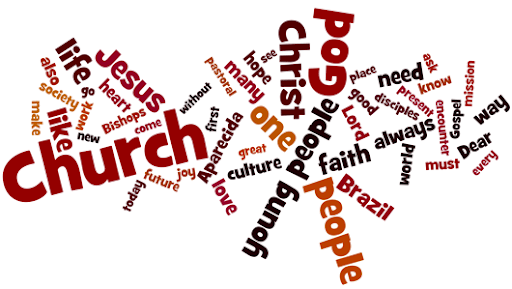
Before digging into Francis’ 30K words spoken publicly last week, it might again be interesting to see the ones he used most frequently, with the top 50 being the following:
Wyd2013

Even just from the above, it is clear both that his emphasis, as ever, is on Jesus, but it can also be seen that he had a particular concern for emphasizing our communion among ourselves and with Him – the Church. Looking at the other words, there is a high frequency of active verbs: make, work, come, love, hope, see, ask, know, encounter – and his frequent use of the word “Aparecida” also stands out. Here, the references are not so much to the place of pilgrimage as to the document written there in 2007 by the Latin American bishops, under the leadership of the then-cardinal Bergoglio. A document that Francis has referred to several times already and with even greater frequency during his visit to Brazil.

Already the day before his departure for Rio, Francis set out his expectations by saying: “All those who come to Rio want to hear Jesus’ voice, to listen to Jesus: ‘Lord, what should I do with my life? What path I should take?’” During the flight from Rome he then spoke briefly to the journalists on his plane, starting by saying that he doesn’t give interviews (a point worth remembering once we’ll come to the spectacular interview he gave during the flight back 🙂 and going on to outline his intentions for the trip, where his aim is:

“to reach out to young people, not in isolation but rather within the larger fabric of society. When we isolate them, we do them an injustice because young people already belong in several ways … they belong to a family, a country, a culture and a faith. […] It’s true, of course, that youth are the future of a people. They’re the future because they have the strength, as young people, to move forward. But those at the other extremity of life, the elderly, are also the future of a people. A people has a future if it moves forward with both these ends – young people with their strength to go forward and the elderly because they’re the ones who offer us the wisdom of life.”

Upon arrival in Rio, Francis heads to the Guanabara Palace for an official welcome, where he starts his speech by saying: “I have neither silver nor gold, but I bring with me the most precious thing given to me: Jesus Christ!,” which again underlines the constant focus on Jesus and a preference for the poor.

Two days later, Francis travels to the Marian shrine of Aparecida, where he starts off by emphasizing the role of Mary: “When the Church looks for Jesus, she always knocks at his Mother’s door and asks: “Show us Jesus”. It is from Mary that the Church learns true discipleship. That is why the Church always goes out on mission in the footsteps of Mary.” Francis then proceeds to talk about “three simple attitudes: hopefulness, openness to being surprised by God, and living in joy” and has the following to say about the last one:

“Christians are joyful, they are never gloomy. God is at our side. We have a Mother who always intercedes for the life of her children, for us […]. Jesus has shown us that the face of God is that of a loving Father. Sin and death have been defeated. Christians cannot be pessimists! They do not look like someone in constant mourning. If we are truly in love with Christ and if we sense how much he loves us, our heart will “light up” with a joy that spreads to everyone around us.”

The next morning Francis headed to the Varginha which is part of the Manguinhos Favela in Rio and said the following to the community assembled in a football field:

“From the start, my wish in planning this visit to Brazil was to be able to visit every district throughout the nation. I would have liked to knock on every door, to say “good morning”, to ask for a glass of cold water, to take a cafezinho, to speak as one would to family friends, to listen to each person pouring out his or her heart – parents, children, grandparents. […]

I am well aware that when someone needing food knocks at your door, you always find a way of sharing food; as the proverb says, one can always “add more water to the beans”! And you do so with love, demonstrating that true riches consist not in material things, but in the heart![…]

No amount of “peace-building” will be able to last, nor will harmony and happiness be attained in a society that ignores, pushes to the margins or excludes a part of itself. A society of that kind simply impoverishes itself, it loses something essential. Let us always remember this: only when we are able to share do we become truly rich; everything that is shared is multiplied! The measure of the greatness of a society is found in the way it treats those most in need, those who have nothing apart from their poverty!”

From the favela, Francis headed for an unscheduled meeting with Argentinian youth in Rio’s cathedral, where he indicated his expectations for when they return home from the World Youth Day:

“I would like us to make noise, I would like those inside the Dioceses to go out into the open; I want the Church to be in the streets; I want us to defend ourselves against all that is worldliness, comfort, being closed and turned within – Parishes, colleges and institutions must get out otherwise they risk becoming NGOs, and the Church is not a Non-Governmental Organization. […] Young people and old people in this moment of history are condemned to the same destiny: exclusion. Don’t let yourselves be excluded!”

Next, Francis headed to the St Francis of Assisi hospital, located in the run-down Tijuca district of northern Rio de Janeiro, where young Franciscan friars and sisters care for the poorest and most marginalized slum dwellers. His message was again about brotherhood and he returned to the image of the “flesh of Christ” that he spoke of on previous occasions:

“[W]hen Francis embraced a leper, this brother, suffering and an outcast, [he] was the “mediator of light … for Saint Francis of Assisi” (Lumen Fidei, 57), because in every suffering brother and sister that we embrace, we embrace the suffering Body of Christ. Today, in this place where people struggle with drug addiction, I wish to embrace each and every one of you, who are the flesh of Christ, and to ask God to renew your journey, and also mine, with purpose and steadfast hope. […] We all need to look upon one another with the loving eyes of Christ, and to learn to embrace those in need, in order to show our closeness, affection and love.”

This same Thursday, that Francis started in Aparecida, continued in the favelas, the cathedral of Rio and finally the hospital caring for drug addicts, concluded with a prayer service on Copacabana beach with the World Youth Day pilgrims, whom he addressed as follows:

“[T]oday you are all here, or better yet, we are all here together as one, in order to share the faith and the joy of an encounter with Christ, of being his disciples. […] Today Christ asks each of us again: Do you want to be my disciple? Do you want to be my friend? Do you want to be a witness to my Gospel? […] I think the answer is yes, because here today, it is good for all of us to be gathered together around Jesus! It is he who welcomes us and who is present in our midst here in Rio. […] Certainly, possessions, money and power can give a momentary thrill, the illusion of being happy, but they end up possessing us and making us always want to have more, never satisfied. “Put on Christ” in your life, place your trust in him and you will never be disappointed!”

On Saturday, Francis first met with Brazil’s political, cultural and business leaders, whom he addressed by touching on on “cultural tradition, joint responsibility for building the future, and constructive dialogue in facing the present moment”:

“Memory of the past and utopian vision of the future meet in the present. […]

[A]n integral humanism and the culture of encounter and relationship: this is the Christian way of promoting the common good, the joy of living. Here, faith and reason unite, the religious dimension and the various aspects of human culture – art, science, labour, literature… Christianity combines transcendence and incarnation; it has the capacity to bring ever new vitality to thought and life, in the face of the threat of frustration and disillusionment which can creep into hearts and spread in the streets.

No one should be denied what is necessary and everyone should be guaranteed dignity, fraternity and solidarity: this is the road that is proposed. In the days of the prophet Amos, God’s frequent warning was already being heard: “They sell the righteous for silver and the needy for a pair of sandals – they … trample down the head of the poor into the dust of the earth and push the afflicted out of the way” (Amos 2:6-7). The outcry, the call for justice, continues to be heard even today.

Between selfish indifference and violent protest there is always another possible option: that of dialogue. Dialogue between generations, dialogue within the people, because we are all that people, the capacity to give and receive, while remaining open to the truth. […] Others always have something to give me, if we know how to approach them in a spirit of openness and without prejudice. This open spirit, without prejudice, I would describe as “social humility”, which is what favours dialogue. Only in this way can understanding grow between cultures and religions, mutual esteem without needless preconceptions, in a climate that is respectful of the rights of everyone. Today,either we take the risk of dialogue, we risk the culture of encounter, or we all fall; this is the path that will bear fruit.”

From the encounter with secular society, Francis proceeds to celebrating mass with priests, religious and seminarian in Rio’s cathedral and speaks to them about the call by God, to proclaim the Gospel and to “promote the culture of encounter”:

“It is not pastoral creativity, or meetings or planning that ensure our fruitfulness, but our being faithful to Jesus, who says insistently: “Abide in me and I in you” (John 15:4). And we know well what that means: to contemplate him, to worship him, to embrace him, especially through our faithfulness to a life of prayer, and in our daily encounter with him, present in the Eucharist and in those most in need. “Being with” Christ does not isolate us from others. Rather, it is a “being with” in order to go forth and encounter others.

We cannot keep ourselves shut up in parishes, in our communities, when so many people are waiting for the Gospel! It is not enough simply to open the door in welcome, but we must go out through that door to seek and meet the people! Let us courageously look to pastoral needs, beginning on the outskirts, with those who are farthest away, with those who do not usually go to church. They are the V.I.P.s invited to the table of the Lord… go and look for them in the nooks and crannies of the streets.”

After lunch with the Brazilian bishops and cardinals, Francis addresses the following words to them:

“[H]umility is one of God’s essential features, part of God’s DNA.

Let us read once again […] the story of Emmaus (cf. Luke 24:13-15). The two disciples have left Jerusalem. They are leaving behind the “nakedness” of God. They are scandalized by the failure of the Messiah in whom they had hoped and who now appeared utterly vanquished, humiliated, even after the third day (vv. 17-21). Here we have to face the difficult mystery of those people who leave the Church, who, under the illusion of alternative ideas, now think that the Church – their Jerusalem – can no longer offer them anything meaningful and important. […] Perhaps the Church appeared too weak, perhaps too distant from their needs, perhaps too poor to respond to their concerns, perhaps too cold, perhaps too caught up with itself, perhaps a prisoner of its own rigid formulas, perhaps the world seems to have made the Church a relic of the past, unfit for new questions; perhaps the Church could speak to people in their infancy but not to those come of age. It is a fact that nowadays there are many people like the two disciples of Emmaus; not only those looking for answers in the new religious groups that are sprouting up, but also those who already seem godless, both in theory and in practice.

Faced with this situation, what are we to do?

We need a Church unafraid of going forth into their night. We need a Church capable of meeting them on their way. We need a Church capable of entering into their conversation. We need a Church able to dialogue with those disciples who, having left Jerusalem behind, are wandering aimlessly, alone, with their own disappointment, disillusioned by a Christianity now considered barren, fruitless soil, incapable of generating meaning.”

In the evening Francis was back with the young people on Copacabana beach, talking to them about being a disciple and a missionary, by analogy with three different uses of a field: as a place for sowing, as a training ground and as a construction site:

“Jesus offers us something bigger than the World Cup! He offers us the possibility of a fulfilled and fruitful life; he also offers us a future with him, an endless future, eternal life. But he asks us to train, “to get in shape”, so that we can face every situation in life undaunted, bearing witness to our faith. How do we get in shape? By talking with him: by prayer, which is our daily conversation with God, who always listens to us. By the sacraments, which make his life grow within us and conform us to Christ. By loving one another, learning to listen, to understand, to forgive, to be accepting and to help others, everybody, with no one excluded or ostracized.”

On Sunday Francis returned to say mass on Copacabana beach, to a crowd of 3 million, and continued with the theme of mission:

“Jesus did not say: “go, if you would like to, if you have the time”, but he said: “Go and make disciples of all nations.” Sharing the experience of faith, bearing witness to the faith, proclaiming the Gospel: this is a command that the Lord entrusts to the whole Church, and that includes you; but it is a command that is born not from a desire for domination, from the desire for power, but from the force of love, from the fact that Jesus first came into our midst and did not give us just a part of himself, but he gave us the whole of himself, he gave his life in order to save us and to show us the love and mercy of God. Jesus does not treat us as slaves, but as people who are free, as friends, as brothers and sisters; and he not only sends us, he accompanies us, he is always beside us in our mission of love.

Where does Jesus send us? There are no borders, no limits: he sends us to everyone. The Gospel is for everyone, not just for some. It is not only for those who seem closer to us, more receptive, more welcoming. It is for everyone. Do not be afraid to go and to bring Christ into every area of life, to the fringes of society, even to those who seem farthest away, most indifferent. The Lord seeks all, he wants everyone to feel the warmth of his mercy and his love.”

After lunch, Francis addressed the leadership of the Council of Bishops’ Conferences of Latin America and the Caribbean, CELAM, with a rich speech, from which I’d just like to pick out a couple of points:

“Christ’s followers are not individuals caught up in a privatized spirituality, but persons in community, devoting themselves to others.

Is pastoral discernment a habitual criterion, through the use of Diocesan Councils? Do such Councils and Parish Councils, whether pastoral or financial, provide real opportunities for lay people to participate in pastoral consultation, organization and planning? The good functioning of these Councils is critical. I believe that on this score, we are far behind. […] As pastors, bishops and priests, are we conscious and convinced of the mission of the lay faithful and do we give them the freedom to continue discerning, in a way befitting their growth as disciples, the mission which the Lord has entrusted to them? Do we support them and accompany them, overcoming the temptation to manipulate them or infantilize them?

Responding to the existential issues of people today, especially the young, listening to the language they speak, can lead to a fruitful change, which must take place with the help of the Gospel, the magisterium, and the Church’s social doctrine. The scenarios and the areopagi involved are quite varied. For example, a single city can contain various collective imaginations which create “different cities”. If we remain within the parameters of our “traditional culture”, which was essentially rural, we will end up nullifying the power of the Holy Spirit. God is everywhere: we have to know how to find him in order to be able to proclaim him in the language of each and every culture; every reality, every language, has its own rhythm.

Every utopian (future-oriented) or restorationist (past-oriented) impulse is spiritually unhealthy. God is real and he shows himself in the “today”. With regard to the past, his presence is given to us as “memory” of his saving work, both in his people and in each of us as individuals; with regard to the future, he gives himself to us as “promise” and hope. In the past God was present and left his mark: memory helps us to encounter him; in the future is promise alone… […] The “today” is closest to eternity; even more: the “today” is a flash of eternity. In the “today”, eternal life is in play.”

Before embarking on the journey back to Rome, Francis met with the volunteers who had helped out with the World Youth Day and addressed the following words to them on the subject of vocations:

“God calls you to make definitive choices, and he has a plan for each of you […]. God calls each of us to be holy, to live his life, but he has a particular path for each one of us. Some are called to holiness through family life in the sacrament of Marriage. Today, there are those who say that marriage is out of fashion; in a culture of relativism and the ephemeral, many preach the importance of “enjoying” the moment. They say that it is not worth making a life- long commitment, making a definitive decision, “for ever”, because we do not know what tomorrow will bring. I ask you, instead, to be revolutionaries, to swim against the tide; yes, I am asking you to rebel against this culture that sees everything as temporary and that ultimately believes that you are incapable of responsibility, that you are incapable of true love. I have confidence in you and I pray for you. Have the courage “to swim against the tide”. Have the courage to be happy.”

Finally, the return flight itself was one of the highlights of this trip, as Francis spent an hour and twenty minutes answering unvetted questions from the journalist on board his plane. I wonder what brought about this change of attitude in Francis, who on the outbound flight declared that he doesn’t do interviews, but I am glad he changed his mind :). Of the many interesting, and masterfully answered questions, let me just pick out the following few:1

“[In response to a question asking Francis why he didn’t address the topics of abortion and same sex marriage:]

Francis: The Church has already expressed itself clearly about this. There was no need to return to it, like there was no need to talk about fraud, or lying, or other topics about which the Church has a clear doctrine.

Patricia Zorzan: But this is a question that interests young people …

Francis: Yes, but there was no need to speak about this, but rather about positive things that open the way ahead for kids. Isn’t that true? Furthermore, young people know perfectly well what the position of the Church is!

Patricia Zorzan: What is the position of Your Holiness, could you tell us?

Francis: That of the Church. I am a son of the Church!

[Asked about the role of women in the Church, Francis responded:]

A Church without women is like the college of apostles without Mary. The role of the woman in the Church is not only maternity, being the mum of a family, it is stronger: she is the icon of the Virgin, of the Madonna; her who helps to grow the Church! Think that the Madonna is more important than the Apostles! She is more important! The Church is female: she is Church, she is a spouse, she is a mother. But the role of the woman in the Church mustn’t end up being just that of a mum, a worker, limited … No! It is something else! […] It is impossible to think of a Church without women, but women who are active in the Church. […] In the Church one has to think of a woman from this perspective: making risky choices, but as women. This has to be explained better. I believe that we haven’t done a deep theology of the woman in the Church yet. She can only do this or that, now she is an altar server, now she reads a reading, she is the president of Caritas … But, there is more! There is a need for a profound theology of the woman. This is what I think.

[In response to another journalist’s question Francis returns to this topic:]

I would like to explain a bit what I have said about the participation of women in the Church: it mustn’t be limited to them being an altar server, president of the Caritas, a catechist … No! It has to be more, but profoundly more, also mystically more, with regard to what I have said about the theology of the woman. And, as far as the ordination of women, the Church has spoken and says: “No.” John Paul II said it with a definitive formulation. That one is closed, that door, but I would like to tell you one thing about it. I have already said it, but I’ll repeat it. The Madonna, Mary, was more important than the Apostles, than bishops, that deacons and than priests. The woman, in the Church, is more important than bishops and than priests; how, is what we need to try and explain better, because I believe that we are missing a theological explanation of this. Thank you.

[Finally, the answer that most stirred the media (for, I believe, good reasons), was in response to a two-part question, whose second part was about the “gay lobby”]

[…] You mention the gay lobby. Uff! [Mah! in Italian :)] A lot is being written about the gay lobby. So far I have not met anyone who’d give me their Vatican ID card with “gay” on it. They say that there are some of them. I believe that when one meets a person like that, it is necessary to distinguish between the fact of it being a gay person and the fact of lobbying, because lobbying is never good. That is bad. If a person is gay and they seek the Lord and have good will, who am I to judge them? The Catechism of the Catholic Church explains this in a very beautiful way. It says: “these persons mustn’t be marginalized for this, they need to be integrated in society.” The problem is not having this tendency, no, we must be brothers, because this is one, but there are others and others. The problem is lobbying: a lobby of misers, a lobby of politicians, a lobby of masons, many lobbies. This is the most serious problem for me. I thank you very much for having asked me this question. Thank you very much!”

In spite of this being a long post, the passages I picked here are just a skimming of the surface of Francis’ spectacular week in Brazil and there will be a lot to think about and internalize in the coming weeks and months. From everything I have read, and from the videos I have seen of Francis speak, by far the most consistent message that I have heard is the emphasis on us all – Christians or not – being brothers and sisters and the need for dialogue, encounter and love. Every person must be loved first, before anything else can be said or done. It is this profound conviction that, I believe, drives Francis to reaching out to all who are in any way marginalized: the poor, the young and elderly, women, gays. It is not some politicking, demagoguery or a giving–in to external pressures that are at play, but a consistent and universal reading of brotherhood and sisterhood.

A final comment I’d like to make regards the frequent insistence over the last days that Francis is not changing Church teaching and that he couldn’t even if he wanted to. While it remains to be seen what changes to Church teaching will result from his unquestionable change of tone and emphasis, I believe that the signs are very strong already: the admission that the theology of the woman is lacking, the outreach to gays (and even the use of the word “gay”!), and his response to a question about the divorced and re-married (that I didn’t quote above) are all pointers that have an unmistakeable direction. To claim that Francis, the head and supreme legislator of the Catholic Church, successor of Peter to whom Jesus said: “I will give you the keys to the kingdom of heaven. Whatever you bind on earth shall be bound in heaven; and whatever you loose on earth shall be loosed in heaven.” (Matthew 16:19), cannot change Church teaching is astonishingly naïve and historically uninformed. Francis insists that he is a “son of the Church,” but let’s not be blind to the fact that it is a Church where, as Francis said, “[t]he “today” is closest to eternity.”


1 For the full, official Italian transcript see here, and for notes from one of the journalists in English, go here. The English in this post is my own, crude, strepidotious, but close, translation from the Italian (and where available, Spanish).
Francis’ “grammar of simplicity”

Dsm01

Yesterday the 28th World Youth Day has come to a close in Rio de Janeiro and there would undoubtedly be a lot to say about it. Instead, I would like to look at a different, yet related, topic today, which is that of Pope Francis’ daily morning sermons, delivered at the Domus Sanctæ Marthæ (DSM). Since his election in March, Francis has been inviting different groups of Vatican staff and other visitors to join him for morning mass at his residence of choice, during which he’d deliver a short, off-the-cuff-style reflection, inspired by the day’s readings. Since these morning masses, and the homilies they contained, have now been suspended for the summer months, one can consider their first season, so to speak, as complete, and reflect on them as a whole. These, by my count 123, homilies form a corpus that is not only important in terms of the themes that it addresses, but also as a body of linguistic content, and it is both of these aspects that I would like to reflect on here.

Before proceeding to the DSM homilies, it is worth hearing the following point made by Francis on Saturday, during a lunch with Brazilian bishops, since it is the key to unlocking their language:

“Another lesson which the Church must constantly recall is that she cannot leave simplicity behind; otherwise she forgets how to speak the language of Mystery. Not only does she herself remain outside the door of the mystery, but she proves incapable of approaching those who look to the Church for something which they themselves cannot provide, namely, God himself. At times we lose people because they don’t understand what we are saying, because we have forgotten the language of simplicity and import an intellectualism foreign to our people. Without the grammar of simplicity, the Church loses the very conditions which make it possible “to fish” for God in the deep waters of his Mystery.”

With the above in mind, let’s turn to the DSM homilies. According to the Vatican’s spokesman, Fr. Federico Lombardi, the morning homilies are spontaneous instead of delivered from a prepared written text and a “‘complete’ publication, therefore, would necessarily entail a transcription and a reworking of the text at various points, given that the written form is different from the spoken one, which in this case is the original form chosen intentionally by the Holy Father.” The result would be “‘something else’, which isn’t what the Holy Father intends to do [with his daily homily] each morning.” As a result of this primarily spoken and spontaneous form of the morning homilies, only summaries and quotes from them are available, instead of full transcripts. These summaries, furthermore, include notes on who was present at the individual masses, on what the readings of the day were and addenda like “the Holy Father said,” “pope Francis noted,” etc.

As a direct linguistic analysis of the summaries would be skewed by the above additions, I first parsed the 123 summaries and removed from them any text that went beyond a transcript or paraphrasing of Pope Francis. The end result are 27K words, resulting in an average of 220 words per sermon, which corresponds to about half a page of written text. The end result are only snippets of what Francis said and a degree of separation between his full, albeit short, sermons and the record available publicly is inevitable, and indeed in accord with Francis’ own wishes.

Running a textual analysis on the above corpus yields very interesting results, which make plain the simplicity of the language Francis employs:

  1. The total of 27,132 words result from using only 4,118 different ones, which is less than the typical vocabulary of a 6-year-old.
  2. The Gunning fog readability score of the text, which derives from the number of words per sentence and the percentage of complex words used, is 6.6. This is at the very bottom end of the scale and matches that of the Bible (with popular novels coming in at 8-10 and academic texts at 15-20).
  3. The average sentence length here is 13 words, where 17 is typical and 11-13 is considered easy.
  4. Word length too is at the low end of the scale, with an average of 1.49 syllables per word (as compared with typical language having 1.66).

That Francis speaks simply can easily be seen when listening to him and the above just underlines how consistently and persistently he does so during his morning sermons.

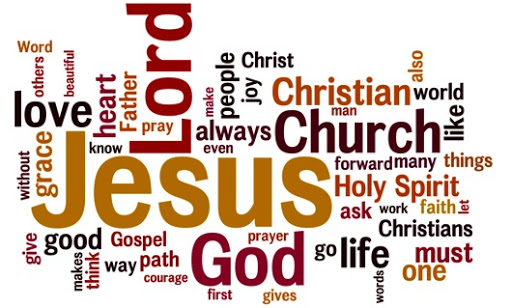
Turning to the content of his homilies, the word cloud at the top of this post shows the 50 most frequently used words, where font size is proportional to frequency. As can be seen immediately, “Jesus” is the word that Francis uses by far most often (2.3% of the time), followed by “Lord” (1.5%), where the two top words are in fact synonyms in this context. Comparing this to an analysis of his first sermons after being elected pope, it can be seen that his focus on the person of Jesus is a constant feature of his preaching. If we combine these two words, the second most frequent word becomes “our,” which, to my mind, underlines the sense one gets of Francis being one of us, referring to issues and ideas applicable to an “us” that includes him, rather than a “you” that he is removed from. Worth noting is also that the highest-ranked verb among the 4K words used in these homilies is “love” (7th among all words). A final point to pick up on in terms of word frequency is that of the top 50 words, only two imply obstacles or prohibition by themselves: “cannot” (48th) and “without” (49th). Looking at four word phrases, the most frequent one is “the word of God” (used 41 times in these 123 homilies) and in third place comes “the name of Jesus.” Francis continuously stays close to the person of Jesus, even just from the perspective of the vocabulary he employs, stays close to the congregation he addresses and is overwhelmingly positive.

Since I have already written at length about some of Francis’ DSM homilies in earlier posts, I would here just like to highlight some of the aspects that stood out to me while editing the text of these 123 sermons:

  1. Francis uses the term “pope” quite generously: he refers to the apostle Paul by saying that he “is a Pope, a builder of bridges.” and he also refers to Tawadros II in the same way, and has the following to say about him to the morning mass congregation: “Today there’s a good reason for joy in this house, where we are hosting the Pope of Alexandria, the Patriarch of the See of St Mark. He is a brother who has come to visit the Church of Rome to talk and to make a journey together.”
  2. Similes are a great favorite of Francis’, and he uses them liberally: “The confessional is not a laundromat,” “To solve the problems of life it is necessary to look reality in the face, ready like the goalkeeper of a football team to grab the ball whatever side it comes from,” that God is “not an indefinite God dispersed in the air like a spray”, that Jesus is “like an engineer, like an architect; He tells them what He will do: ‘I am going to prepare a place, in my Father’s house is my dwelling’,” that the Church is like a mother (“How would you feel if someone said: she’s a domestic administrator? ‘No, I am the mother!’ And the Church is Mother.”) and that some Christians are like pickled peppers (“Sometimes these melancholy Christians faces have more in common with pickled peppers than the joy of having a beautiful life”) are just a couple of examples.
  3. Francis draws inspiration from a very broad range of sources, including his grandmother (who’d tell him and other children in the family: ‘Look he is dead, but tomorrow he will be Risen!,’ when visiting the tomb on Good Friday), a man who worked for the diocese of Buenos Aires (“before going to do any of the things he had to do, he would always whisper to himself: ‘Jesus!’”), Pope Paul VI (who “said that you cannot advance the Gospel with sad, hopeless, discouraged Christians”), the martyrs of Nagasaki (“each one helped the other, they struggled mightily and spoke of Jesus as they awaited the moment of their death”), the garment factory collapse in Dhaka (which “killed hundreds of workers who were being exploited and who worked without the proper safety preoccupations. It is a title, which struck me the day of the tragedy in Bangladesh: ‘How to die for 38 euros a month’”), an electrician who prayed for his daughter’s recovery (“Miracles do happen. But we need to pray with our hearts: A courageous prayer, that struggles to achieve a miracle, not prayers of courtesy”) and a priest, who, when he was appointed bishop worried about his unworthiness (to which his confessor told him: “But do not worry. If after the mess Peter made of things, they made him Pope, then you go ahead!”).

Le Corbusier: the sacred cubic centimeter

Le corbusier

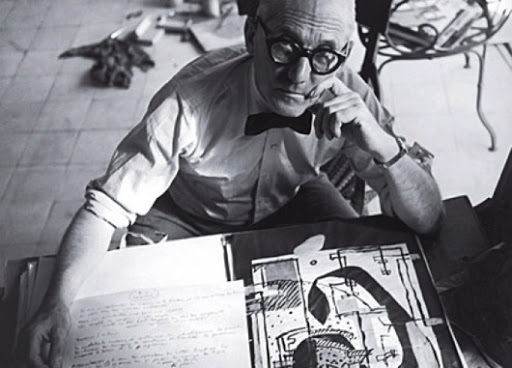
Having come across yet another profoundly misguided piece on church architecture, and not feeling like rehashing previous posts on the subject,1 I instead set out to learn more about Le Corbusier, whose name the aforementioned piece took in vain.

Le Corbusier defined architecture as “giving living form to dead material” and elaborated on its dual nature of construction and art as follows:

“You employ stone, wood and concrete, and with these materials you build houses and palaces. That is construction. Ingenuity is at work. But suddenly you touch my heart, you do me good, I am happy and I say: “This is beautiful.” That is Architecture. Art enters in.”

Even before turning to church architecture, there is a great sense of focus not only on beauty but also on the sacred in Le Corbusier’s thought:

“One preoccupation has concerned me compulsively; to introduce into the home a sense of the sacred; to make the home the temple of the family. From that moment on, everything changed. A cubic centimetre of housing was worth gold, represented possible happiness. With such an idea of dimension and purpose, today you can build a temple to meet family needs beside the very cathedrals.” (Mise Au Point)2

How does one infuse matter with life, introduce the sacred into every cubic centimeter of a home? Again, Le Corbusier’s thoughts are illuminating:

“I am not faultless or simple, I am filled with turmoil and undercurrents. When pondering and working out a project (town planning, architecture or painting), always a long process, I bring into focus, I realise, I come to the point. I have made an immense effort without a word spoken; over the drawing boards of my office […] I do not speak; my private office (used for patient research) […] is opened to no one. There I am alone. Never in my life have I “explained” a painting. The painting will go out and will be loved or hated, understood or not. Do you think that bothers me! (How could it bother me?)” (The Chapel at Ronchamp, 1957)

Ronchamp chapelle le Corbusier
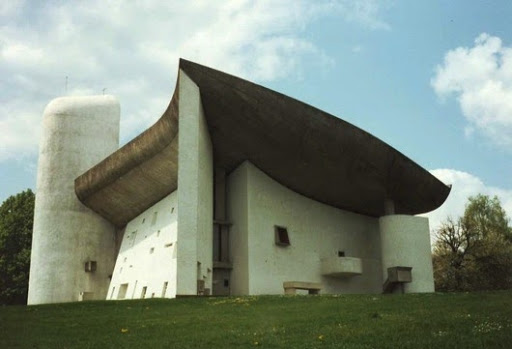
This attitude of infusing matter with purpose, with intention, and doing so in a subtle, hinting rather than overpowering way comes to the fore again when Le Corbusier inaugurates one of his greatest masterpieces – the Chapel of Our Lady of the Height in Ronchamp:

This is “a project difficult, meticulous, primitive, made strong by the resources brought into play, but sensitive and informed by all-embracing mathematics which is the creator of that space which cannot be described in words. A few scattered symbols, a few written words telling the praises of the Virgin. The cross – the true cross of suffering – is raised up in this space; the drama of Christianity has taken possession of the place from this time onwards. […] I give you this chapel of dear, faithful concrete, shaped perhaps with temerity but certainly with courage in the hope that it will seek out in you (as in those who will climb the hill) an echo of what we have drawn into it.” (Le Corbusier’s dedication speech at the chapel’s inauguration, June 25 1955)

To my mind all of the above exudes a profound love of beauty and of the sacred, and a desire to offer it to others in a way that is inviting instead of imposing. Yet, in the course of reading about Le Corbusier, I kept coming across two criticisms leveled against his work. First, that it is inferior to renaissance and antique architecture and that this inferiority stems from ignorance. It is an argument that baffled me from the start, and that I see directly countered when reading about Le Corbusier’s reaction to the Acropolis:

“In 1910 I spent six weeks at the Parthenon. At the age of 23 my consciousness had determined its future direction. “Laborious hours in the revealing light of the Acropolis. Perilous hours which brought a distressing doubt about the (real) strength of our strength, the (real) art of our art. Those who, practising the art of architecture, find themselves at a point in their career,their brain empty, and heart broken with doubt in face of the task of giving living form to dead material, will realise the despondency of soliloquies amongst the ruins. Very often I left the Acropolis, my shoulders bowed with heavy foreboding, not daring to face the fact that one day I would have to practise. The Parthenon is a drama …”” (The Chapel at Ronchamp, 1957)

The second criticism is even more ad hominem and one that I find deeply repugnant. It is an objection to Le Corbusier’s lack of faith and adherence to Catholicism, put forward as a disqualifying obstacle regarding his involvement in church architecture. Such an attitude is exemplified by the following criticism directed at the Dominican3 Fr. Marie-Alain Couturier, O.P., who commissioned Le Corbusier’s work on the Monastery of Sainte-Marie-de-La-Tourette:

“By mistaking the “spirit of the age,” or Zeitgeist, for the Holy Spirit, Couturier assisted in the production of structures by famous modernist architects at the expense of the essential features of Catholic artistic work. […] Couturier placed his trust in artists, believing that all true art revealed something of the sacred. Since true art could only be revealed by true artists, he therefore sought the services of the masters of his time, Catholic or not, to reach the sacred through the production of a supposedly “true” art.”

I couldn’t disagree more! Like Fr. Couturier, and, incidentally, Pope Paul VI,4 I too firmly believe that “all true art reveal[s] something of the sacred.”

La tourette

In response to these criticisms, it is worth noting two aspects to Le Corbusier, the first of which is his directness and honesty about his beliefs:

“I am not a churchgoer myself, but one thing I do know is that every man has the religious consciousness of belonging to a greater mankind, to a greater or lesser degree, but in the end he is part of it. Into my work I bring so much effusion and intense inner life that it becomes something almost religious. […] People were at first surprised to see me participating in a sacred art. I am not a pagan. Ronchamp is a response to a desire that one occasionally has to extend beyond oneself, and to seek contact with the unknown.”

To leave a reflection on Le Corbusier’s compatibility with Christianity there would be unfair though and could leave a sense of vagueness and hand-waving. Instead, let me conclude by sharing with you the following passage from his book, “When Cathedrals Were White”:

“But those of us who live intensely in the present moment of modem times,[…] have extended our sympathy to all the world and to all times. We have rediscovered life and the axis of all human marvels and agonies. We are far from the theatrical stage which tries to place events of qualitative interest above and outside of human labors. We plunge into daily realities, are face to face with consciousness itself. […] Life bursts forth everywhere, outside the studios where art is “made,” outside of the small circles where it is talked about, outside of the writings in which the spirit of quality is isolated, localized, and disintegrated. […] Every day, every hour, the Earth sees splendors surging up which are truths and present-day beauty. Ephemeral perhaps! Tomorrow, new truths and new beauties bloom. The day after tomorrow, etc. … Thus life is replenished, full. Life is beautiful! We do not have-do we?-any intention or claim to fix the destiny of the eternal things of the future? Everything, at every hour, is only the work of the present moment. The present moment is creative, creating with an unheard-of intensity.”

If that is not Christian thought (albeit thought by a non-Christian), then I don’t know what is, and to support my claim I only need to look as far as Jesus’ own words:

“Therefore I tell you, do not worry about your life, what you will eat [or drink], or about your body, what you will wear. […] Look at the birds in the sky; they do not sow or reap, they gather nothing into barns, yet your heavenly Father feeds them. Are not you more important than they? Can any of you by worrying add a single moment to your life-span? Why are you anxious about clothes? Learn from the way the wild flowers grow. They do not work or spin. But I tell you that not even Solomon in all his splendor was clothed like one of them. If God so clothes the grass of the field, which grows today and is thrown into the oven tomorrow, will he not much more provide for you, O you of little faith? So do not worry and say, ‘What are we to eat?’ or ‘What are we to drink?’ or ‘What are we to wear?’ […] But seek first the kingdom (of God) and his righteousness, and all these things will be given you besides. Do not worry about tomorrow; tomorrow will take care of itself.” (Matthew 6:25-34)


1 The only point I’ll allow myself to make on account of refuting the ludicrous idea that church architecture has had a golden age in some past centuries is to quote from a great post on the Idle Speculations blog, which presents the killer argument that “[i]n Roman times, the early Roman basilicas were of course based on the public buildings of ancient Rome.” The tradition of church architecture is to be contemporary and not a saccharine pastiche of past forms, like the examples touted as successful by blogs like the one that triggered the present post.
2 A great source on Le Corbusier has for me been the excellent “Le Corbusier in Detail” by Flora Samuel, where this quote too can be found.
3 I am becoming quite a fan of the Dominicans, given also their links with Camus, mentioned here before.
4 “[T]he Church of the council declares to you through our voice: if you are friends of genuine art, you are our friends.” (Council Closing Messages December 8, 1965 By Pope Paul To Council Fathers)

Camus on dialogue, revolt, beauty and love

Camus

One of the features of Pope Francis’ first encyclical, Lumen Fidei, that stood out for me most is its constant reference to love, regardless of the specific subject of its reflection. This certainly is not surprising in the context of Christian theology – a theology that is all about God, who is Love – but it’s all-pervasiveness nonetheless made me think. In particular, it made me think about what someone who is not a Christian, who is an atheist or humanist, would say on the subject.

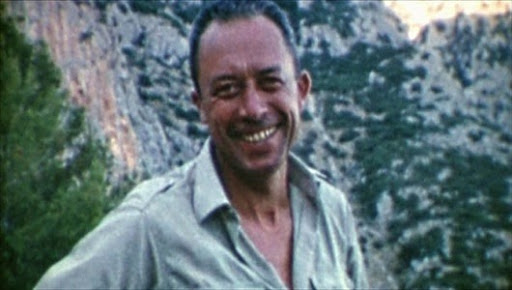
With these questions in mind, I turned to my “read later” reading list and my eyes landed on a piece by Cardinal Gianfranco Ravasi, where he speaks about how Albert Camus‘ thought is a confrontation with the same questions that Christianity grapples with. Questions of meaning, purpose, suffering, revolt, hope and love.

Ravasi there starts with quoting from a talk Camus gave to a group of Dominicans in 1948, where he says to his hosts that “the world of today needs Christians who remain Christians” and where he declares:

“I shall not, as far as I am concerned, try to pass myself off as a Christian in your presence. I share with you the same revulsion from evil. But I do not share your hope, and I continue to struggle against this universe in which children suffer and die.”

This directness and honesty of Camus has always been very attractive to me, which made me look for the full text of his talk to the Dominicans and I found a fairly extensive set of fragments from it here. What struck me there is how I find myself very much agreeing with him, where what he says is in fact a very powerful examination of conscience for Christianity and also for me personally.

From these fragments it is explicit that the Dominicans invited Camus to talk to them about what “unbelievers expect of Christians,” which makes me very impressed with them too, and for which Camus also acknowledged their “intellectual generosity.” He then proceeds to set out the following principles of dialogue:

that “if I allowed myself at the end of this statement to demand of you certain duties, these could only be duties that it is essential to ask of any man today, whether he is or is not a Christian.”

that “I shall never start from the supposition that Christian truth is illusory, but merely from the fact that I could not accept it.”

and that “I shall not try to change anything that I think or anything that you think (insofar as I can judge of it) in order to reach a reconciliation that would be agreeable to all. On the contrary, what I feel like telling you today is that the world needs real dialogue, that falsehood is just as much the opposite of dialogue as is silence, and that the only possible dialogue is the kind between people who remain what they are and speak their mind.”

These are an excellent set of principles: do to others as you would want them to do to you, the principle of charity and respect for the other being who they are, not setting out to change them. In fact, they seem to me to be very much in sync with what Pope Francis said on the same topic: “Dialogue is born of an attitude of respect towards another person, of a conviction that the other has something good to say; it requires that we make space in our heard their point of view, their opinion and their position.”

With these principles as the basis, Camus proceeds to spelling out his expectations:

“What the world expects of Christians is that Christians should speak out, loud and clear, and that they should voice their condemnation in such a way that never a doubt, never the slightest doubt, could rise in the heart of the simplest man. That they should get away from abstraction and confront the blood-stained face history has taken on today. The grouping we need is a grouping of men resolved to speak out clearly and to pay up personally. When a Spanish bishop blesses political executions, he ceases to be a bishop or a Christian; even a man; he is a dog just like the one who, backed by an ideology, orders that execution without doing the dirty work himself. We are still waiting, and I am waiting, for a grouping of all those who refuse to be dogs and are resolved to pay the price that must be paid so that man can be something more than a dog. […]

Perhaps we cannot prevent this world from being a world in which children are tortured. But we can reduce the number of tortured children. And if you don’t help us, who else in the world can help us do this? […]

But it may be […] that Christianity will insist on maintaining a compromise or else on giving its condemnations the obscure form of the encyclical. Possibly it will insist on losing once and for all the virtue of revolt and indignation that belonged to it long ago. In that case Christians will live and Christianity will die. In that case the others will in fact pay for the sacrifice. [… I]f Christians made up their minds to it, millions of voices—millions, I say—throughout the world would be added to the appeal of a handful of isolated individuals who, without any sort of affiliation, today intercede almost everywhere and ceaselessly for children and for men.”

When I read this, it really stopped me in my tracks. This is the kind of dialogue that we, Christians need – someone from the “outside” shaking us, pointing to our errors and doing so not for the sake of some propagandist point-scoring, but out of a genuine concern for our returning to our roots and maintaining our identity. In many ways, what Pope Francis is doing now from the “inside” is similar – the call to poverty, to the “existential peripheries” and to respect for and collaboration with atheists are all examples of it and I am deeply grateful to him and to Camus.

Returning to Ravasi’s discourse, he steers it to another very interesting point of common interest to Christianity and Camus, by quoting from “Helen’s Exile” and then from “The Rebel”:

“Man cannot do without beauty, and this is what our era pretends to want to disregard. It steels itself to attain the absolute and authority; it wants to transfigure the world before having exhausted it, to set it to rights before having understood it. Whatever it may say, our era is deserting this world.”

“Beauty, no doubt, does not make revolutions. But a day will come when revolutions will have need of beauty.”

Here the connection between beauty and the revolt Camus speaks about to the Dominicans is clear – both are set against an exploitation and ignoring of the world. Revolt is directed against suffering while beauty is aimed at appreciating existence.

Ravasi then makes the, to me at first surprising, summary of the above as being “the way of love.” To get a sense of why he may have interpreted it as such, Camus’ own words in “The Rebel” point to the key: “The procedure of beauty, which is to contest reality while endowing it with unity, is also the procedure of rebellion.” Rebellion and beauty bring about unity, which in turn is synonymous with love in Christianity – the Persons of the Trinity being One is their love for each other; Jesus-Love is present among his followers if they are united in his name (cf. Matthew 18:20), etc.

Finally, to underline the importance Camus gives to love, Ravasi quotes the following from his “Notebooks” from 1937:

“If someone told me to write a book on morality, it would have a hundred pages and ninety-nine of them would be blank. On the last page I would write, “I recognize only one duty and that is to love.” And as far as everything else is concerned, I say no.”

St. Augustine would be pleased, as am I 🙂

Lumen Gentium: Mary

Red pieta

The final chapter of Lumen Gentium,1 the Vatican II dogmatic constitution on the Church, is dedicated in its entirety to Jesus’ mum, Mary, and to her role not only in the Church but in the whole of Jesus’ mission and the salvation he brought for all.2

The starting point here is a strong emphasis on Mary’s intimate union both with the Trinity and with humanity:

“The Virgin Mary, who at the message of the angel received the Word of God in her heart and in her body and gave Life to the world, is acknowledged and honored as being truly the Mother of God and Mother of the Redeemer. Redeemed by reason of the merits of her Son and united to Him by a close and indissoluble tie, she is […] the Mother of the Son of God, by which account she is also the beloved daughter of the Father and the temple of the Holy Spirit. [… S]he far surpasses all creatures, both in heaven and on earth. At the same time, however, because she belongs to the offspring of Adam she is one with all those who are to be saved.”

Mary’s unique position in creation is next traced back to the Tanakh, where she fulfills the “promise of victory over the serpent which was given to our first parents after their fall into sin (cf. Genesis 3:15),” and is foretold as the “Virgin who shall conceive and bear a son, whose name will be called Emmanuel” (cf. Isaiah 7:14), where “Emmanuel” (עִמָּנוּאֵל) in Hebrew means “God is with us.” As such “[s]he stands out among the poor and humble of the Lord, who confidently hope for and receive salvation from Him.”

While Mary’s “unique holiness” is underlined repeatedly, so is her free assent to the will of God:

“Adorned from the first instant of her conception with the radiance of an entirely unique holiness, the Virgin of Nazareth is greeted, on God’s command, by an angel messenger as “full of grace”, (cf. Luke 1:28) and to the heavenly messenger she replies: “Behold the handmaid of the Lord, be it done unto me according to thy word”.(287) Thus Mary, a daughter of Adam, consenting to the divine Word, became the mother of Jesus.”

Here Mary was “used by God not merely in a passive way, but as freely cooperating in the work of human salvation through faith and obedience,” which – in St. Irenaeus’ words – made her “the cause of salvation for herself and for the whole human race. […] The knot of Eve’s disobedience was untied by Mary’s obedience; what the virgin Eve bound through her unbelief, the Virgin Mary loosened by her faith.”(St. Irenaeus, Against Heresies, III, 22, 4).

From His conception to His ascension to Heaven, Mary closely follows and supports Jesus, including her prompting Jesus’ first miracle at the wedding feast of Cana (cf. John 2:1-11) and her faith being tested at the foot of the cross, “grieving exceedingly with her only begotten Son, uniting herself with a maternal heart with His sacrifice.” Already at that moment, Mary took on a new role, when “she was given by […] Jesus dying on the cross as a mother to His disciple” John and thereby to the whole Church:

“She conceived, brought forth and nourished Christ. She presented Him to the Father in the temple, and was united with Him by compassion as He died on the Cross. In this singular way she cooperated by her obedience, faith, hope and burning charity in the work of the Saviour in giving back supernatural life to souls. Wherefore she is our mother in the order of grace.”

She is a key presence at Pentecost too, when “by her prayers [she] implor[es] the gift of the Spirit, who had already overshadowed her in the Annunciation.” And at the end of her earthly life she is “taken up body and soul into heavenly glory, and exalted by the Lord as Queen of the universe.”

Mary is therefore the model Christian and an example to follow both individually and together as Church:

“And so they turn their eyes to Mary who shines forth to the whole community […] as the model of virtues. [… M]editating on her and contemplating her in the light of the Word made man, the Church […] enters more intimately into the great mystery of the Incarnation and becomes more and more like her Spouse. For Mary, who […] unites in herself and re-echoes the greatest teachings of the faith […], calls the faithful to her Son and His sacrifice and to the love of the Father.”

This leads to emphasizing an important aspect of how Mary is seen by the Catholic Church:

“The maternal duty of Mary toward men in no wise obscures or diminishes [the] unique mediation of Christ […] For all the salvific influence of the Blessed Virgin on men originates, not from some inner necessity, but from the divine pleasure. It flows forth from the superabundance of the merits of Christ, rests on His mediation, depends entirely on it and draws all its power from it. In no way does it impede, but rather does it foster the immediate union of the faithful with Christ. [… T]he unique mediation of the Redeemer does not exclude but rather gives rise to a manifold cooperation which is but a sharing in this one source.”

In other words, being a Christian is about having a personal, immediate, direct relationship with Jesus and Mary helps it rather than being an intermediary, which is also true of the saints. Another point worth noticing in the above is how Mary’s role is presented as “divine pleasure” – it is not like she had to be given a role, like her role was a necessity, but that she has a role because it pleased God to invest her with it. Much like all of creation, which was not necessary either, Mary’s elevation in the history of salvation is a gratuitous, loving act of God too.

Finally, Lumen Gentium is also clear about how superficiality and credulity are to be avoided and how the focus needs to be on a simple love for and imitation of Mary:

“Let the faithful remember moreover that true devotion consists neither in sterile or transitory affection, nor in a certain vain credulity, but proceeds from true faith, by which we are led to know the excellence of the Mother of God, and we are moved to a filial love toward our mother and to the imitation of her virtues.”

As you can see from my blog posts on Lumen Gentium, I have found it to be a source of great encouragement and joy. Encouragement, because the treasures of Christianity are presented with clarity, born on wings both of faith and reason, and joy, because throughout this great presentation of who the Church is, the focus has been on the person of Jesus and on our mission to bring his love to all in freedom.3


1 For posts on previous chapters, see here.
2 If you are not a Catholic – welcome! 🙂 To get more out of what follows, you might want to take a look at a caveat I wrote for the first of my Vatican-II-themed posts here.
3 Given how long it has taken me to make my way through Dei Verbum, Lumen Gentium and Sacrosanctum Concilium (three of the four dogmatic constitutions of Vatican II), I have to revise my plan to read all of the Council’s documents during this Year of Faith. Instead, but still with plenty of challenge, I’ll try to just cover the fourth of the Council’s constitutions – Gaudium et Spes – next.

Lumen Fidei: Love and truth are inseparable

Pope 001 4 3 rx513 c680x510

Pope Benedict XVI’s long-awaited encyclical on faith (completing the trilogy of encyclicals with those on love and hope) and Pope Francis’ equally eagerly awaited first encyclical are out – and they are one and the same – the encyclical entitled “Lumen Fidei” – “The Light of Faith.” As Francis puts it, “It’s an encyclical written with four hands, so to speak, because Pope Benedict began writing it and he gave it to me. It’s a strong document. I will say in it that I received it and most of the work was done by him and I completed it.”

I couldn’t agree more – it is a very strong document indeed, and one rich in insights that merit reflection and repeated analysis. It is a document that is beautifully written, in rich yet purposeful language, with razor-sharp logic and with a tremendous openness to the world as it is today. The references alone are worth highlighting, as they range from theological classics like the works of St. Augustine and St. Thomas Aquinas, through ancient non-Christian texts like the writings of Celsus, up to more recent and also critical voices like Nietzsche, Wittgenstein or T. S. Eliot. This is not a piece of propaganda, but a carefully thought out presentation of what faith means to a Christian, from a Catholic perspective, and how it relates not only to matters internal to the Church but to secular thought as well. As such, if you are not a Christian and curious about what we mean when way talk about faith, I would recommend a reading of Lumen Fidei (a recommendation I don’t make lightly).1

Since Lumen Fidei is a hefty document, and one where “padding” is minimal, I won’t even attempt an overview of the topics it touches upon and will instead just highlight the section where Benedict and Francis talk about how faith, truth, knowledge and love are related.

This train of thought starts already in the introductory chapter:

“Faith […] appear[s] to some as an illusory light, preventing mankind from boldly setting out in quest of knowledge. The young Nietzsche encouraged his sister Elisabeth to take risks, to tread “new paths… with all the uncertainty of one who must find his own way”, adding that “this is where humanity’s paths part: if you want peace of soul and happiness, then believe, but if you want to be a follower of truth, then seek”. Belief would be incompatible with seeking. From this starting point Nietzsche was to develop his critique of Christianity for diminishing the full meaning of human existence and stripping life of novelty and adventure. Faith would thus be the illusion of light, an illusion which blocks the path of a liberated humanity to its future.”

Faith is here portrayed as an illusion that at best can be an anxiolytic, but that is opposed to a seeking of truth and to free human fulfillment. This is certainly a view I have come across in person and I was pleased to see it be the position with which Lumen Fidei sets out to contrast it’s understanding, where it first declares what it understands by faith, before then considering its consequences:

“Christian faith is […] faith in a perfect love, in its decisive power, in its ability to transform the world and to unfold its history. “We know and believe the love that God has for us” (1 John 4:16). In the love of God revealed in Jesus, faith perceives the foundation on which all reality and its final destiny rest. […] Our culture has lost its sense of God’s tangible presence and activity in our world. We think that God is to be found in the beyond, on another level of reality, far removed from our everyday relationships. But if this were the case, if God could not act in the world, his love would not be truly powerful, truly real, and thus not even true, a love capable of delivering the bliss that it promises. It would make no difference at all whether we believed in him or not. Christians, on the contrary, profess their faith in God’s tangible and powerful love which really does act in history and determines its final destiny: a love that can be encountered, a love fully revealed in Christ’s passion, death and resurrection.”

To my mind the above does two important things: first, it underlines that faith is all about love and second, that this love is real here and now – that it is an incarnate, material, tangible love and not some ethereal, abstract, wholly otherness. Lumen Fidei goes on to underlining these important features of faith:

“Far from divorcing us from reality, our faith in the Son of God made man in Jesus of Nazareth enables us to grasp reality’s deepest meaning and to see how much God loves this world and is constantly guiding it towards himself. This leads us, as Christians, to live our lives in this world with ever greater commitment and intensity.”

Having established the focus of faith on love and on its incarnation in the world, Lumen Fidei, proceeds to linking it to truth:

“Faith without truth does not save, it does not provide a sure footing. It remains a beautiful story, the projection of our deep yearning for happiness, something capable of satisfying us to the extent that we are willing to deceive ourselves. Either that, or it is reduced to a lofty sentiment which brings consolation and cheer, yet remains prey to the vagaries of our spirit and the changing seasons, incapable of sustaining a steady journey through life. […] Only to the extent that love is grounded in truth can it endure over time, can it transcend the passing moment and be sufficiently solid to sustain a shared journey. If love is not tied to truth, it falls prey to fickle emotions and cannot stand the test of time. True love, on the other hand, unifies all the elements of our person and becomes a new light pointing the way to a great and fulfilled life. Without truth, love is incapable of establishing a firm bond; it cannot liberate our isolated ego or redeem it from the fleeting moment in order to create life and bear fruit.”

This, to me, is both a beautiful and a particularly lucid way of putting faith’s dependence on truth, knowledge and honesty. Looking back to the quote from Nietzsche’s letter to his sister, the above agrees with him on the deficiency of the kind of faith Nietzsche criticizes as being divorced from the truth and points to a (Hegelian dialectic) resolution of the initial, seeming opposition.

Lumen Fidei then goes further and emphasizes that it is not only “love [that] needs truth, [but that] truth also needs love.”:

“Love and truth are inseparable. Without love, truth becomes cold, impersonal and oppressive for people’s day-to-day lives. The truth we seek, the truth that gives meaning to our journey through life, enlightens us whenever we are touched by love. One who loves realizes that love is an experience of truth, that it opens our eyes to see reality in a new way, in union with the beloved. […] It is a relational way of viewing the world, which then becomes a form of shared knowledge, vision through the eyes of another and a shared vision of all that exists. [… F]aith-knowledge does not direct our gaze to a purely inward truth. The truth which faith discloses to us is a truth centred on an encounter with Christ, on the contemplation of his life and on the awareness of his presence. Saint Thomas Aquinas speaks of the Apostles’ oculata fides — a faith which sees! — in the presence of the body of the Risen Lord. With their own eyes they saw the risen Jesus and they believed.”

Since they derive from love, faith and truth are neither a private matter, nor are they oppressive, imposing or colonizing:

“But if truth is a truth of love, if it is a truth disclosed in personal encounter with the Other and with others, then it can be set free from its enclosure in individuals and become part of the common good. As a truth of love, it is not one that can be imposed by force; it is not a truth that stifles the individual. […] Clearly, then, faith is not intransigent, but grows in respectful coexistence with others. One who believes may not be presumptuous; on the contrary, truth leads to humility, since believers know that, rather than ourselves possessing truth, it is truth which embraces and possesses us. Far from making us inflexible, the security of faith sets us on a journey; it enables witness and dialogue with all.”

The above is a great manifesto not only for a Christian’s understanding of their own faith but of its inherent pointing outward towards others, with an openness and a welcoming disposition aimed at profound dialogue.2Unsurprisingly, the above faith sees science as a great good and sees itself as being a source of wonder that is also the motivational root cause of scientific endeavor, as readily agreed to by atheist and religious scientists alike:

“Nor is the light of faith, joined to the truth of love, extraneous to the material world, for love is always lived out in body and spirit; the light of faith is an incarnate light radiating from the luminous life of Jesus. It also illumines the material world, trusts its inherent order and knows that it calls us to an ever widening path of harmony and understanding. The gaze of science thus benefits from faith: faith encourages the scientist to remain constantly open to reality in all its inexhaustible richness. Faith awakens the critical sense by preventing research from being satisfied with its own formulae and helps it to realize that nature is always greater. By stimulating wonder before the profound mystery of creation, faith broadens the horizons of reason to shed greater light on the world which discloses itself to scientific investigation.”

I have barely scratched the surface of Lumen Fidei here, but what I have found has been a joy to read, reflect on and try to share with you here. Thank you, Benedict and Francis, for such a beautiful piece of thinking!


1 Plus, if you are interested, take a look at the second paragraph here for a suggestion of how to read both this blog and the Lumen Fidei encyclical.
2 I can’t not mention again one of Benedict XVI’s most astonishingly beautiful insights that is echoed here: “As far as preserving identity is concerned, it would be too little for the Christian, so to speak, to assert his identity in a such a way that he effectively blocks the path to truth. Then his Christianity would appear as something arbitrary, merely propositional. He would seem not to reckon with the possibility that religion has to do with truth. On the contrary, I would say that the Christian can afford to be supremely confident, yes, fundamentally certain that he can venture freely into the open sea of the truth, without having to fear for his Christian identity.” (Christmas Greetings to the Roman Curia, 2012)

Art as incarnation today

That God is greater than any attempt to describe or represent Him is universally acknowledged in religion. Yet, this basic insight leads to different implications for visual art. In some cases (Islam, Judaism) it results in a prohibition of any representation of God and even of other living beings. E.g., the second of the Ten Commandments prescribes that “You shall not make for yourself an idol or a likeness of anything in the heavens above or on the earth below or in the waters beneath the earth” (Exodus 20:4), adding in the following verse that “you shall not bow down before them or serve them.”

In fact, in Christianity too the use of “holy images” was prohibited by Emperor Leo III in 726 AD. Strong opposition followed immediately though and its source was deeply theological. St. John Damascene put his counterargument, which eventually prevailed, as follows:

“Of old, God the incorporeal and uncircumscribed was never depicted. Now, however, when God is seen clothed in flesh, and conversing with men, (cf. Baruch 3:38) I make an image of the God whom I see. I do not worship matter, I worship the God of matter, who became matter for my sake, and deigned to inhabit matter, who worked out my salvation through matter. I will not cease from honouring that matter which works my salvation.” (Apologia Against Those Who Decry Holy Images)

In other words, the root cause of the visual arts and material objects in general having the potential to contribute to one’s spiritual growth and salvation is the incarnation itself – “God […] clothed in flesh.” Just like Jesus, God “who became matter for my sake” instead of appearing as pure spirit, who took advantage of matter to spread His message and be present in the world, we too can use matter even for the most spiritual of activities, following His example.

The key though is a heeding of the second commandment’s admonition that we “shall not bow down before […] or serve” matter, which St. John Damascene too insisted on: “I do not worship matter, I worship the God of matter.” The difference between the Ten Commandments’ warning and St. John’s position is not about whether the worshiping of matter is wrong or not (they – and I – all agree that it is). It is about a much more subtle point, and one that again derives from Jesus’ direct teaching. It is about looking beyond matter and about the capacity that matter has for pointing beyond itself. Remember Jesus himself saying: “Whoever has seen me has seen the Father.” (John 14:9) and note the significance of His reference to visual sensory perception. He didn’t say “whoever has understood my words,” or “whoever has felt their spirit united with mine,” but “whoever has seen me.” He takes sensory experience and makes it project beyond itself.

Make no mistake though, this topic is not only of historical interest but of currency even today, as also demonstrated by a recent pair of articles:

The first was Rev. Giles Fraser‘s energetic defense of the theological basis of protests like those seen in front of St. Paul’s in London some time ago and now in Gezi Park. There he underlines that “God is not some thing that can be wielded out and beaten into the shape of a national polity or political programme. Such a god is an idol.” Such “idolization” is “the deathly move whereby something living is turned into something dead, into a thing.” What Fraser is concerned about is precisely what St. John objected to and called the “worship of matter,” which is a mistaking of the signifier for the signified, rendering the signified inaccessible. Fraser looks at the question very broadly – from a perspective where art and political protest fall in the same category – and I couldn’t agree more with his conclusions.

The second article by Fr. Alexander Lucie-Smith sets itself up in opposition against Rev. Fraser, by stating that “great Catholic art does precisely the opposite of what [Rev. Fraser] fears. It makes clear to the viewer (or, better, participant) that God is always greater than the sum of our thoughts about Him. God is not made into a thing, rather, great art cracks open the things we create and lets in a shaft of divine light.” While I do agree with Fr. Lucie-Smith’s positioning of art, I don’t believe his reading of Rev. Fraser’s position to be comprehensive in that an analogous reading of St. John Damascene’s treatise would make even him come across as an iconoclast.

While Fr. Lucie-Smith has a lot to say about art that is close to my heart, including that it can “communicate something about the transcendent nature of God, without words,” I have another gripe with his article, which is that the most recent of the five examples of good, towards-God-pointing art he picks, is from the 16th century. It is as if human creativity and striving for closeness with God concluded or at least peaked in a distant past, which we have to keep looking back to and imitating. Not wanting to re-visit this topic again, let me point you to its previous coverage here, and instead pick five examples of contemporary art that I consider to be in this category:

Banksy s

Banksy (2003) “Love is in the air”

Damien Hirst  Valium s

Damien Hirst (2000) “Valium”

0565 feelingmaterial vi 2003 001 l

Antony Gormley (2003-2008) “Feeling material”

Kusama s

Yayoi Kusama (2013) “Fireflies on the water”

SalgadoSebastião Salgado (2011) “They stand, and they withstand”

Lumen Gentium: in heaven and on earth

Sutherland

Continuing in the series on Vatican II, let me resume a reading of Lumen Gentium, where the last post looked at its sixth chapter, addressing the role of the religious (i.e., those who have taken vows of poverty, chastity and obedience). In its penultimate, seventh chapter, Lumen Gentium turns to the relationship between the Church on earth and the Church in heaven. As the full title of the chapter – “The eschatological nature of the pilgrim church and its union with the church in heaven” – sets out in a nutshell, the focus here is on the final purpose of the Church on earth (its eschatology) and its union with the Church in heaven. This may at first seem like just a bit of jiggery-pokery, and to be honest, when I read it for the first couple of times, I was at a loss to extract from it more than a sentence’s worth of essence. Repeated reflection, an overflowing measure of enlightenment from John Paul II,1 and a personal experience I already shared here, have all lead me to what I’ll try to set out next.2

The best way to approach this chapter is to let John Paul II lead us to what is novel about it:3

“It can be said that until recently the Church’s catechesis and preaching centered upon an individual eschatology [… and] this pastoral style was profoundly personal: “Remember that at the end you will present yourself before God with your entire life. Before His judgment seat you will be responsible for all of your actions” […] The vision proposed by the Council, however, was that of an eschatology of the Church and of the world.”

Returning to Lumen Gentium, the opening paragraph of chapter 7 declares that:

“The Church, to which we are all called in Christ Jesus, and in which we acquire sanctity through the grace of God, will attain its full perfection only in the glory of heaven, when there will come the time of the restoration of all things.(cf. Acts 3:21) At that time the human race as well as the entire world, which is intimately related to man and attains to its end through him, will be perfectly reestablished in Christ. (cf. Ephesians 1:10)”

The first insight then is that the final purpose (eschatology) of the human person is not their individual, singular business, but fundamentally a property of a community – the Church. It is not I, alone, self-sufficiently and relying on my individual powers only, who sets out into the deep, but the I-we of the Church. Returning to a frequently emphasized point in previous parts of Lumen Gentium, here too the focus is on the Church being Jesus’ Body, where it is His “having been lifted up from the earth [that] has drawn all to Himself. (cf. John 12:32.)” Jesus draws all to himself and takes us (an all-inclusive “us”) with Him to our ultimate destiny.

The nature of the eschatology referred to extensively in this chapter merits greater reflection, in particular in terms of its timing. A naïve approach could lead us to thinking of it as referring to an event in some distant future (at the “end of time”), while what John Paul II puts forward is a very different perspective:

“[What the] Gospel teaches about God requires a certain change in focus with regard to eschatology. First of all, eschatology is not what will take place in the future, something happening only after earthly life is finished. Eschatology has already begun with the coming of Christ. The ultimate eschatological event was His redemptive Death and His Resurrection. This is the beginning of “a new heaven and a new earth” (cf. Revelation 21:1). For everyone, life beyond death is connected with the affirmation: “I believe in the resurrection of the body,” and then: “I believe in the forgiveness of sins and in life everlasting.” This is Christocentric eschatology.”

John Paul II again pivots what may have become a diffuse, deformed view and returns its focus to Jesus – it is His coming that has brought us into the final chapter of creation. As Lumen Gentium puts it:

“Already the final age of the world has come upon us and the renovation of the world is irrevocably decreed [… T]he promised restoration which we are awaiting has already begun in Christ, is carried forward in the mission of the Holy Spirit and through Him continues in the Church in which we learn the meaning of our terrestrial life through our faith, while we perform with hope in the future the work committed to us in this world by the Father, and thus work out our salvation.”

This then is the second insight: we are not just waiting around for the world to come to an end, instead we are in the “Last Days” and are active participants in the universe completing its function and returning to perfection in God. This is an understanding that neither lets us “check out” of the world’s affairs (instead obliging us to engage in them for the good of all), nor does it amount to being a millenarianist Doomsday cult (since Jesus himself assured the apostles that “of that day and hour no one knows, neither the angels of heaven, nor the Son, but the Father alone.” (Matthew 24:36)).

While some of us have already completed their earthly journey and form the heavenly Church, others are still “exiles on earth,” proceeding along it “groan[ing] and travail[ing] in pain” (cf. Romans 8:19-23). The two communities are not separate entities though, and instead:

“form one Church and cleave together in Him. (cf. Ephesians 4:16) […] For by reason of the fact that those in heaven are more closely united with Christ, they establish the whole Church more firmly in holiness, lend nobility to the worship which the Church offers to God here on earth and in many ways contribute to its greater edification. (cf. 1 Corinthians 12:12-27)”

The Church in heaven and on earth is the one Mystical Body of Christ. As a consequence, “the pilgrim Church from the very first ages of the Christian religion has cultivated with great piety the memory of the dead [… and] has always believed that the apostles and Christ’s martyrs who had given the supreme witness of faith and charity by the shedding of their blood, are closely joined with us in Christ.” This then is the third insight – communion is not only among those of us who are alive on earth today and with Jesus whose body we form, but equally with those who have gone before us. While the death of loved ones is unquestionably and profoundly painful, it is not a separation, but, paradoxically, a coming closer “by reason of the fact that those in heaven are more closely united with Christ.” In many ways, the 14th Dalai Lama’s tweet from yesterday is also very well aligned with the concept of the Mystical Body that pervades Lumen Gentium as well as Sacrosanctum Concilium, when he says: “we develop care and concern by thinking of others not as ‘them’ but ‘us’”.

Not only is such union the case with those close to me, but with all, and in a particular way with the saints: “For just as Christian communion among wayfarers brings us closer to Christ, so our companionship with the saints joins us to Christ, from Whom as from its Fountain and Head issues every grace and the very life of the people of God.” Instead of being only examples, through their intimate union with Jesus, I personally am united with them too.

On the subject of saints, Lumen Gentium also cautions against superficial excesses and underlines the fact that the Christian life is always directed towards the Trinity:

“the authentic cult of the saints consists not so much in the multiplying of external acts, but rather in the greater intensity of our love, whereby, for our own greater good and that of the whole Church, we seek from the saints “example in their way of life, fellowship in their communion, and aid by their intercession.” [… O]ur communion with those in heaven […] in no way weakens, but conversely, more thoroughly enriches the […] worship we give to God the Father, through Christ, in the Spirit.”

Instead of being a bit of esoteric navel-gazing, the insights about how the Church is one across heaven and earth, with Jesus at its head and as its heart, firmly place the focus on the importance of community, on acting in the world for its good and on the persistence of relationships beyond death and with all.


1 See the “Does “Eternal Life” exist?” chapter of his beautifully profound Crossing the Threshold of Hope.
2 Yes, I am going to send you to the second paragraph of a previous post, in case you are not a Catholic and would like my perspective on how to read the rest of this post.
3 Emphasis preserved from original text.