Evening came and morning followed: the roots of science in Genesis

Day and Night

The hallmarks of the scientific method include its basis in empirical evidence and its reliance on repeatability for the sake of verifying or falsifying hypotheses accounting for and predicting observations that can be aided by measurement. An aspect of the above that has interested me for a while now has been the nature of repeatability (or reproducibility), which certainly does make good intuitive sense, but where I had questions about whether some other principle couldn’t be used instead to form an equally consistent method of enquiry. Essentially, I was wondering to what extent the scientific method, as anchored in repeatability, allowed for a formalistic reading (like mathematics does – in contrast with conceiving of it as a form of realism).

The breakthrough for me came when my bestie NP wrote a soon to be published article to stimulate dialogue between science and faith and listed the following two of the assumptions of science: namely, that “the universe is intelligible […] and that it has a rational structure.” While both of these may sound self-evident and be taken for granted, having them called out made me think more carefully about intelligibility. What is it that renders an event or entity intelligible and how does a successful understanding demonstrate itself? Especially the latter is a staple of epistemology and the philosophy of science and I don’t mean to review the literature on explanatory power or models of scientific explanation like the deductive-nomological one here. Instead, I’d like to focus on the role of repeatability and to argue that it is necessary not only for science but that it is inextricable from any expression of reason.

The repeatability of events, of the meaning of concepts and of the modes of reasoning is essential to rationality. If such recurrence and persistence of relationships and states did not exist, then each event would be a one-off and it would be impossible to conceive of it using human reason. Language would not exist since words would at most be labels for individual entities and the games it relies on would be impossible too since they require regularity and repetition. Understanding of any kind would also be impossible since reflection and either deductive or inductive modes of analysis would have a sole window of opportunity in which to relate to an event or entity. There would be no laws, rules, regularities or even statistics, since everything that would be, would be a unique, a one-of-a-kind. This necessity of repeatability and its being a constituent of rationality are also expressed in Einstein’s definition of “Insanity: doing the same thing over and over again and expecting different results.”

In science, the insistence on repeatability is then anything but arbitrary and instead becomes an expression of its rationality. It can even be seen as closing the loop that starts with the assumption of the repeatability and regularity of phenomena by requiring of a theory to be repeatably applicable to their recurrences to merit the status of scientific. In other words, the requirement of repeatability in science mirrors the assumption of the repeatability in nature to which it strives to correspond.1

With the above thoughts in mind, and having read and hugely admired John Paul II‘s analysis of Genesis from the perspective of the human person, I proceeded to attempt an imitation from the point of view of science, knowing full well that it could at best be as if seen through a mirror, darkly. Nonetheless, I believe that I have found – to me – surprising traces of the scientific method in the first chapter of the Bible.2 Before making these explicit, I would like to emphasize that I am not looking for a justification of science in the Bible (it is solidly derived from reason alone as sketched out above as well) and neither am I setting out to anachronistically twist the Genesis text to fit contemporary thought (although I am necessarily looking at it from a contemporary perspective). Instead, inspired by John Paul II, I am attempting to look for the roots of what today is the scientific method and I would have been unperturbed even if I had found no traces of it there.

The first thing that struck me when re-reading Genesis 1 over the weekend is its use of the following, exact sentence to conclude the account of each “day” of creation: “Evening came, and morning followed—the [n-th] day.” (verses 5, 8, 13, 19, 23 and 31). Instead of the creation myth3 being a single “poof” event or a random sequence of entities popping into existence (à la Eddie Izzard’s great sketch4), it has a repeating structure as its backbone. Once set up on the first day (“God then separated the light from the darkness. God called the light “day,” and the darkness he called “night.”” 1:4-5), the alternation of day and night repeats itself and becomes subject to predictability and intelligibility.

The second feature of Genesis 1 that is worth noting in this attempt to trace the roots of science in the Torah is the repeated reference to visual observation. As early as verse 4, after the creation of light, we hear that “God saw that the light was good” and as far as the various translations and analyses I have seen, the term translated into English as “saw” does refer to ocular perception as opposed to just understanding in the abstract. Then, in verses 10 (after dry land is separated from water), 12 (after the introduction of vegetation), 18 (after the sky is populated), 21 (after fish and birds are created) and 25 (after animals living on land enter the scene) we are told repeatedly that “God saw that it was good.” From this perspective of visual perception, it is also worth noting that it is employed in a categorically different way once the two first humans are present.

Instead of vision only being a means for God to assess His own work, in His relationship with humans he calls them to use it as a source of evidence for His actions: “God also said: See, I give you every seed-bearing plant on all the earth and every tree that has seed-bearing fruit on it to be your food; and to all the wild animals, all the birds of the air, and all the living creatures that crawl on the earth, I give all the green plants for food.” (Genesis 1:29-30). In fact, the very last verse of Genesis 1 (verse 31), brings both visual observation and the repetitive, predictable nature of the universe together: “God looked at everything he had made, and found it very good. Evening came, and morning followed—the sixth day.”

What the above means to me is that Genesis, and therefore the whole of Judeo-Christian thought, is rooted in an account of creation that, albeit being in the form of a myth, has features that clearly contain two core aspects of the scientific method: repeatability and predictability on the one hand and sensory observation as a means of obtaining evidence on the other. While not a factual account of cosmogeny, Genesis nonetheless hints at how nature is to be approached also from the perspective of understanding it: that regularity can be expected and that the senses are a basis for engaging with it. Instead of being a source of superstition and confusion, the Bible to me is a source of gems that reinforce rather than oppose rationality.


1 I think it unlikely for this train of thought to be novel, so the absence of references is an expression of my ignorance rather than innovation. All I can offer here is the acknowledgement of Aristotle’s already realizing that “there is no science of the individual” (“If they are individual and not universal, real things will be just of the same number as the elements, and the elements will not be knowable.” Metaphysics XIII, 10).
2 I don’t wish to scare you off by setting out to link science directly to the Bible. Let me assure you that my intentions couldn’t be further from those who consider the universe to the 6000 years old or who run lunatic websites like answersingenesis.org (scarily that was the website that the vast majority of Google “science Genesis” searches point to). On the topic of answersingenesis.org, I was particularly struck by their attempt to distinguish between two flavors of science: historical (explaining past events) and operational (applied in the present for utilitarian ends). What the @#$%?!
3 I am using the term myth in the way in which John Paul II employed it: myth “does not refer to fictitious-fabulous content, but simply to an archaic way of expressing a deeper content.” (Man and Woman He Created Them).
4 “So then God created the world, and on the first day he created light and air and fish and jam and soup and potatoes and haircuts and arguments and small things and rabbits and people with noses and jam – more jam, perhaps – and soot and flies and tobogganing and showers and toasters and grandmothers and, uh … Belgium. And the second day he created fire and water and eggnog and radiators and lights and Burma and things that go “urh” and … and Colonel Gaddafi and Arthur Negus. On the third day he probably got lists and said, “I can’t remember what I’ve invented now. I’ve just been ad-libbing so far.”” (Eddie Izzard, Glorious, 1997)

Igino Giordani: the oxymoron of a catholic party

Foco2

I have long been aware of the figure of Igino Giordani through his writings, of which the most beautiful one to me is his “Diary of Fire” and I also knew of his having been an MP in the Italian parliament, a journalist and an expert on the Fathers of the Church. It is only now though, after having read his memoirs (“Memorie d’un cristiano ingenuo” – “Memoirs of a simple christian”) that I am beginning to realize more fully the enormity of his example. While in the past I have very much admired certain aspects of his life, I am now seeing that it is really his life as a whole that is an instance of his imitation of Jesus. To give you a sense of what I mean, let me pick out just a couple of moments from his autobiography.

While I don’t intend to summarize his story, it is worth noting that Giordani (1894–1980) was the first of six children of a bricklayer and his illiterate wife and that he initially trained to become a bricklayer like his dad. Thanks to his father’s employer, who provided him with the necessary financial support, Giordani ended up attending a junior seminary and eventually studying humanities at the University of Rome. On the verge of going to university, he was conscripted and sent to fight in the First World War. There a bullet shattered a ten centimeter segment of his right femur, requiring a three year stay in hospital and a series of 18 operations (the first of which was performed without anesthetics!).

It is at this point of exposure to war, that I was particularly impressed by the following passage, where Giordani talks about the impossibility he felt of “killing a human person: a brother”:1

“The five or six shots that I fired, in the air, I did out of necessity: I could never aim the barrel of my gun at the enemy trenches, with the intention of killing a child of God.”

Upon being discharged from hospital at the end of the war, Giordani immediately finds himself confronted with another battle: that of opposing the fascist regime and the alignment of parts of the Church with it. Here he speaks out against clericalism, which is:

“an exploitation of religious power for the political ends of a government, a party, a bank, … [… It is an] iron belt, disguised as gold, by which the freedom of the children of God was restrained, the proclamation of the Gospel deformed and the spirituality of the Church compromised.”

And adds that:

“During other periods Christianity was being attacked in the name of reason and freedom, while today we can affirm that it is only by a destruction of reason and freedom that Christianity can be attacked.”

A particularly poignant assessment of that period is also expressed by him as follows:

“Christ wasn’t crucified because Judas betrayed him, but he was crucified because Pilate washed his hands of him.”

Giordani’s outspoken attacks against the abuse of clerical power and offenses against reason, published also in the monthly “Parte Guelfa” whose editor he was, led to a clear and direct condemnation by Church authorities in 1925. Instead of rebelling and placing himself in opposition against the Church, Giordani chose obedience and published one final issue of the magazine. There, on the first page, he reprinted the authorities’ condemnation and added that the magazine “submits itself fully” to the Church’s judgment and “happily offers its loyal and disinterested allegiance,” evidenced by its decision to shut down. This struck me in many ways like St. Thomas More’s silence, which in “A Man For All Seasons” was described as “bellowing up and down Europe!” or Pierre Teilhard de Chardin’s obedient submission to being denied permission to publish his theological and philosophical works.

After the war, Giordani moves from being part of the antifascist resistance to joining the public political life, which results in his becoming a member of the Italian parliament. Here, the following reasoning about how the Church and politics are to relate struck me in particular (and I believe it prefigures the Vatican II position also expressed in Lumen Gentium2):

“The Church incarnates the Gospel: but it mustn’t become a party, confuse itself with a category (party or regime) because it is catholic, i.e., universal, and, as the mystical Christ, it must love all, serve all, even enemies.”

All of the above paints a very clear picture to my mind of someone who was all about following Jesus, disregarding whether that brought him into conflict with state or Church, but also of someone who did it with tremendous humility and, as the memoirs’ title indicates, simplicity. A great example of this attitude is also the following event:

“One day Pius XII called me […] and asked me: “Giordani, but what have you written in that newspaper3 of yours? I have received complaints saying that you are a revolutionary” He then quoted a phrase from my latest cover story, where it says that the excess of the rich is the lack of the poor: that unjust or unjustly used property is theft.
“Holy Father,” I answered, “that is a quote from Saint John Chrysostom.”
“But you should have said so …”
“Holy Father, when an article is written in half an hour or an hour, there is not time for citing sources.”
“True, true, ” he said, beginning to smile, “They say that you are a revolutionary. But, don’t worry, they also say that about me: what do you think? In fact, in these days, Roosevelt put it as “too radical””
“But,” I replied, “a true christian is necessarily a revolutionary: don’t we want to change the world? But, our revolution is beneficial, it builds rather than destroys; brings love instead of hatred, it brings society back together in solidarity.”

There would be so much more to say about him (e.g., his life as a lay, married person and father of four, his establishing of the modern Vatican library (and publishing a journal of library science that both the Moscow and Beijing libraries subscribed to during the height of communism), his career as a writer, his encounters with the great minds of the 20th century, etc.), but that will have to wait for a future post. To conclude, let me instead leave you with the following poem by Igino Giordani, which also gives us a glimpse of his interior life:

“I have begun to die
and what happens,
matters to me no more;
now I want to vanish
in the forsaken heart of Jesus.
All this sinning,
by greed and by vanity,
in love disappears:
I have reconquered my freedom.
I have begun to die
to death that no longer dies;
now I want to rejoice
with God in his eternal youth.”

It should come as no surprise that Igino Giordani – Servant of God – is in the process of being recognized as a saint – a saint I will be very proud of!


1 All the quotes from Igino Giordani here are from “Memorie d’un cristiano ingenuo,” with the crude translations from Italian, for which I apologize, being mine.
2 “[T]he faithful should learn how to distinguish carefully between those rights and duties which are theirs as members of the Church, and those which they have as members of human society. Let them strive to reconcile the two, remembering that in every temporal affair they must be guided by a Christian conscience, since even in secular business there is no human activity which can be withdrawn from God’s dominion. [… I]t must be admitted that the temporal sphere is governed by its own principles, since it is rightly concerned with the interests of this world.” (Lumen Gentium, §36)
3 “Il Quotidiano” was a daily newspaper, directed by Giordani 1944–1946.

Benedict XVI: Servant of the servants of God

B16

The papal title that has always impressed me the most by far is Servus servorum Dei (Servant of the servants of God), first used by Saint Gregory the Great, and I believe Benedict XVI’s shock resignation today is an extreme expression of taking it seriously. When a servant can no longer serve, the ultimate manifestation of service is to resign. The Italian economist Prof. Luigino Bruni put this particularly clearly by saying that Benedict XVI’s humble decision has “shown us that the Pope is not a king but a servant.”

Having spent the day thinking about what to say, I have decided against the following, all of which would have been great choices:

  1. Reflecting on the specifics of his beautiful resignation message (a highlight being his affirmation that the Petrine ministry “must be carried out not only with words and deeds, but no less with prayer and suffering.”).
  2. Reviewing the many heartfelt messages arriving from all around the world (a great example being Israeli Chief Rabbi Yona Metzger’s spokesman saying that “I think he deserves a lot of credit for advancing inter-religious links the world over between Judaism, Christianity and Islam. During his period there were the best relations ever between the Church and the chief rabbinate and we hope that this trend will continue.”)
  3. Surveying both the historical precedents (admiring in particular Saint Pontian, who in 235 AD “was arrested and sent to the salt mines, and in order for a successor to be able to be elected in Rome, […] resigned his office.”) and the canon law applicable in this case (pausing over the fact that for the resignation to be valid it does not need to be accepted by anyone).
  4. Arguing that at the heart of both Benedict XVI’s resignation and John Paul II’s persistence in spite of his crippling illness (retorting that “Christ did not come down from the cross either,” when asked whether he’d consider resigning), which prima facie look contradictory, lies a profound commitment to discerning and heroically acting on the will of God.

Instead, I will share with you those insights and teachings of Benedict XVI that have most encouraged, guided and delighted me:1

  1. His joint highlighting of the saints and of art: “[T]o me art and the Saints are the greatest apologetic for our faith. [… I]f we look at the Saints, this great luminous trail on which God passed through history, we see that there truly is a force of good which resists the millennia; there truly is the light of light. [… H]eart and reason encounter one another, beauty and truth converge, and the more that we ourselves succeed in living in the beauty of truth, the more that faith will be able to return to being creative in our time too, and to express itself in a convincing form of art.”
  2. His insistence on a fearless seeking of the Truth, backed by a profound trust in God: “[T]he search for knowledge and understanding always has to involve drawing closer to the truth. […] As far as preserving identity is concerned, it would be too little for the Christian, so to speak, to assert his identity in a such a way that he effectively blocks the path to truth. Then his Christianity would appear as something arbitrary, merely propositional. He would seem not to reckon with the possibility that religion has to do with truth. On the contrary, I would say that the Christian can afford to be supremely confident, yes, fundamentally certain that he can venture freely into the open sea of the truth, without having to fear for his Christian identity.”
  3. His freedom to recognize truth even in sources that don’t have the Church’s approval, such as quoting Origen attributing the following saying to Jesus: “Whoever is close to me is close to the fire” – a statement not found in Catholic canonical Scripture, or praising Teilhard de Chardin’s vision that “At the end we will have a true cosmic liturgy, where the cosmos becomes a living host.”
  4. His clear denunciation of fideism, by affirming that Catholic tradition “has always rejected the so-called principle of ‘fideism’, that is, the will to believe against reason. […] Indeed, although a mystery, God is not absurd. […] If, in contemplating the mystery, reason sees only darkness, this is not because the mystery contains no light, rather because it contains too much. Just as when we turn our eyes directly to the sun, we see only shadow – who would say that the sun is not bright? Faith allows us to look at the ‘sun’ that is God, because it welcomes His revelation in history. […] God has sought mankind and made Himself known, bringing Himself to the limits of human reason.”
  5. His passionate emphasis of the centrality of joy: “Joy is at the heart of the Christian experience. [W]e experience immense joy, the joy of communion, the joy of being Christian, the joy of faith [… and w]e can see the great attraction that joy exercises. In a world of sorrow and anxiety, joy is an important witness to the beauty and reliability of the Christian faith.”
  6. His proclamation that closeness to God is not contingent on a belief in His existence:2 “[A]gnostics, who are constantly exercised by the question of God, those who long for a pure heart but suffer on account of our[, the Church’s,] sin, are closer to the Kingdom of God than believers whose life of faith is “routine” and who regard the Church merely as an institution, without letting their hearts be touched by faith.”
  7. His insight that faith is not a subscription to this or that dogma, but an encounter with the person of Jesus: “[M]any Christians dedicate their lives with love to those who are lonely, marginalized or excluded, as to those who are the first with a claim on our attention and the most important for us to support, because it is in them that the reflection of Christ’s own face is seen. […] It is faith that enables us to recognize Christ and it is his love that impels us to assist him whenever he becomes our neighbour along the journey of life.”

1 Thanks to my bestie PM for this great suggestion!
2 The truth of this was yet again brought home to me today, when my expressing admiration for Pope Benedict was met with understanding from an agnostic and an atheist friend of mine and with mockery from two Christian ones …

The identity of discernibles

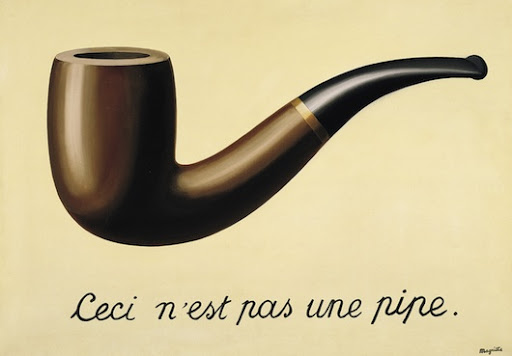
margritti-this-is-not-a-pipe_s.jpg

If two men or two women want to make a life-long commitment of love and support to one another, for better, for worse, for richer, for poorer, in sickness and in health, why shouldn’t that be called marriage? Why do many religious people have an issue with this and why don’t they just recognize and appreciate the love and commitment such couples have for one another? Doesn’t a lack of support for same-sex marriages show an elitism, judgment and discrimination that are foreign to Jesus’ message? As heterosexual couples can marry, why should that right be denied to homosexual ones? And why is it that same-sex marriage should be a threat to the very idea of marriage?

Questions like the above have, I believe, a great deal of profound Christian appeal: love, commitment, not judging, equality and taking the beam out of one’s own eye before proceeding to the splinter in another’s are all deeply Christian principles and when Christians are criticized for their seeming lack, they better take them seriously. Actually, when I say they, I mean me, so let me make this train of thought more personal. What do I think? Where do I stand?

First, let me be super clear about one thing: I believe God has a plan for every single human being and loves each one of us immensely. The late Patriarch Athenagoras saying that “God loves everyone equally, but secretly each one of us is his favorite,” Martin Luther saying “It is not because we are beautiful that God loves us, but because God loves us that we are beautiful,” John Paul II adding that “The person who does not decide to love forever will find it very difficult to really love for even one day,” and Benedict XVI tweeting yesterday that “Everything is a gift from God: it is only by recognizing this crucial dependence on the Creator that we will find freedom and peace,” sum it up for me. Everyone is loved by God, who sees beauty in them, and my love for all mustn’t be selective, jealous or fretting either. So, I believe God loves homosexual men and women and I too need to do the same to call myself a follower of Jesus.

I am therefore vehemently opposed to any lack of love shown towards homosexual persons and am strongly against homophobia, bullying, marginalization or any other respect and care that is not extended to them. Violence against homosexual men or women horrifies me, with cases where it is the state that fuels it (as in Uganda and countries where there are criminal penalties for homosexuality) being particularly abhorrent to me. This is a position that I hold beyond doubt and one in which I feel fully in line with the position and teaching of the Church.

The Catechism states clearly that homosexual persons “must be accepted with respect, compassion, and sensitivity. Every sign of unjust discrimination in their regard should be avoided. These persons are called to fulfill God’s will in their lives.” (Catechism of the Catholic Church, §2358). Several bishops have emphasized that there is good in relationships among homosexual men or women, such as Bishop Woelki of Berlin saying “I also try to acknowledge that they take responsibility for each other on a permanent basis, have promised each other faithfulness and want to look after each other,” the Bishops of England and Wales stating that “We also recognise that many same sex couples raise children in loving and caring homes,” or the late Cardinal Basil Hume affirming that “Homosexual people […] can, and often do, give a fine example of friendship and the art of chaste loving.” As recently as last Monday, there is also the determination by Archbishop Vincenzo Paglia, head of the Pontifical Council for the Family, for the Church to “do more to protect gays and lesbians from discrimination in countries where homosexuality is illegal. […] In the world there are 20 or 25 countries where homosexuality is a crime, […] I would like the church to fight against all this.”1

So, am I in favor of same sex marriage then? Actually, no … My reason for this is that marriage is a lifelong commitment of one woman and one man to each other. This commitment results in the birth of a family, which, at least in principle, is open to the procreation of children. As this is what the concept of marriage means, it is not applicable to same sex couples. But isn’t this discriminatory and doesn’t it fly in the face of everything I have said above? I honestly don’t think so, and I am fully in agreement with the Bishops of England and Wales, who say:

“We disagree that the signal that is sent currently, by restricting marriage to opposite sex couples, is one of disparagement of same sex relationships. The basic argument that is advanced in favour of same sex marriage is one of equality and fairness. But we suggest that this intuitively appealing argument is fundamentally flawed. Those who argue for same sex marriage do so on the basis that it is unjust to treat same sex and heterosexual relationships differently in allowing only heterosexual couples access to marriage. Our principal argument against this is that it is not unequal or unfair to treat those in different circumstances differently. Indeed, to treat them the same would itself be unjust.”

This to me is the crux of the argument: the outcome of even the commitment expressed by marriage vows results in two different states depending on whether it is done by two people of different sexes or the same sex. While there are similarities (i.e., the value and sincerity of the commitment and the love that it springs from and subsequently supports), there are categorical differences too (i.e., the possibility of bringing children into the world and the complementarity of the male and female sexes). Ignoring such differences is the beginning of a loss of clarity of thought and consequently of judgment and action. It is akin to suddenly deciding that we will call an ear an eye – they are both organs and result in sensory perception and surely the ear is just as good as the eye. It is certainly possible to do this, but it will result in confusion (were all the pre-ear=eye statements about eyes meant to apply to the new eye or only to eye-eyes and not ear-eyes?).

The motivation for extending marriage to same sex couples may in many cases be good and be underpinned by principles that I fully subscribe to, but the result is a delusion and a divorce from reality.

Nonetheless, I believe that many homosexual men and women do not feel welcomed by the Church, which to me is similar to the lack of unity among Christians – both pain me, but for both I place myself firmly inside the Church and try to understand what it is that I can do towards overcoming them. With Christian unity too we could decide from one day to the next that we will declare ourselves to be united, that we’ll just change the definition of a couple of terms so that they span previously exclusive concepts. But what would we achieve with that? Not only nothing, but it would be a step back, as it would hinder a true understanding of underlying reality and efforts to arrive at a loving solution that has its eyes wide open.2


1 Even though it is not the topic of this post and addressing it even just briefly would make it way too long, I can’t not mention the Church’s classification of homosexual relationships as “objectively disordered.” This, I have to say, is an unfortunate choice of words. Cardinal Hume felt the same and provided the following reflection:

“The word ”disordered” is a harsh one in our English language. It immediately suggests a sinful situation, or at least implies a demeaning of the person or even a sickness. It should not be so interpreted. First, the word is a term belonging to the vocabulary of traditional Catholic moral theology and philosophy. It is used to describe an inclination which is a departure from what is generally regarded to be the norm. The norm consists of an inclination towards a sexual relationship with a person of the opposite sex and not between persons of the same sex. Being a homosexual person is, then, neither morally good nor morally bad.”

This is an argument I do agree with: the sexual relationship between a man and a woman is constituent of what it means to be human, while such relationships between persons of the same sex are a departure from the inherent purpose of sexuality (without meaning to restrict it to its procreative function). I do believe this to be a fact, but that does not mean that homosexual men and women should not be welcomed by the Church in more effective and constructive ways than is the case today. What these ought to be is not clear to me, but I am convinced of their necessity.
2 Thanks to my überbesties KM, PM and MR for reviewing a draft of this post and for their great feedback!

Man and Woman: Nakedness

Arm back

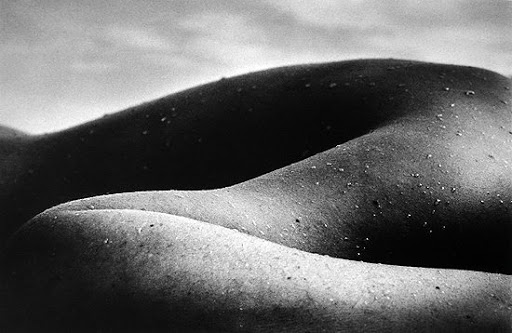
John Paul II opens the 11th talk on the Theology of the Body1 by reflecting on the previous ten. He highlights the profile of the human person and the male-female union presented there as always being “at the root of every human experience. […T]hey are so interwoven with the ordinary things of life that we generally do not realize their extraordinary character. [… They show] the absolute originality of what the male-female human being is inasmuch as he or she is human, that is, also through the body.”

The aspect of Genesis that is taken under the microscope in talks 11-13 is the following sentence: “Now both were naked, the man and his wife, but they did not feel shame.” (2:25), which is placed alongside the insights about “man’s original solitude and original unity” in importance. Original nakedness in the absence of shame evidences innocence, and shows the original “reciprocal experience of the body, that is, the man’s experience of the femininity that reveals itself in the nakedness of the body and, reciprocally, the analogous experience of masculinity by the woman.” This also makes shame the boundary experience between the original human state and that after the fall, also since shame is used in later passages to highlight how reality has altered after the fall: “Then the eyes of both were opened, and they realized that they were naked; they sewed fig leaves together and made themselves loincloths.” (Genesis 3:7).2

The next challenge in understanding the fullness of original nakedness is to attempt its reconstruction by first trying to understand shame. Here John Paul II offers the following description, given the context already set up in the previous chapters: “In the experience of shame, the human being experiences fear in the face of the “second I” (thus, for example, woman before man), and this is substantially fear for ones own “I.”” What then is the meaning of its absence from the original human state? Here John Paul II argues that such a question is a misunderstanding of the Genesis account – it is not like there was a lack of shame before the fall, but that shame was inapplicable, which “indicate[s] a particular fullness of consciousness and experience, above all the fullness of understanding the meaning of the body connected with the fact that “they were naked.”” To understand this “fullness of consciousness” we need to pan out and remember how original solitude (separateness from the rest of creation) is overcome by being created as man and woman (the other being another “I”). This overcoming of solitude occurs “through the body [… which is the] direct and visible source of [the] experience that effectively establishes their unity.” Therefore “the man and the woman were originally given to each other precisely according to this truth inasmuch as “they were naked”” also as evidenced by the “perception of the senses.”

At this point John Paul II argues that while the above external view of nakedness is essential and not to be discounted, it is necessary to look at its inner dimension as well. “[T]hrough its own visibility, the body manifests man and, in manifesting him, acts as an intermediary that allows man and woman, from the beginning, to communicate with each other.” But what is this interior nakedness that the body manifests? Here John Paul II’s answer is yet another stunner:

“To this fullness of “exterior” perception, expressed by physical nakedness, corresponds the “interior” fullness of the vision of man in God, that is, according to the measure of the “image of God” (see Genesis 1:27). According to this measure, man “is” truly naked (“they were naked”), even before becoming aware of it (see Genesis 3:7–10).”

Before the fall man internally sees (understands!) woman as she was created in God and woman sees man again as created in God, which makes shame inapplicable. Pure genius! And he continues:

“[Man] has […] a share in the vision of the Creator himself — in that vision about which the account of Genesis 1 speaks several times, “God saw everything that he had made, and indeed, it was very good” (Genesis 1:31). “Nakedness” signifies the original good of the divine vision. It signifies the whole simplicity and fullness of this vision, which shows the “pure” value of man as male and female, the “pure” value of the body and of [its] sex.”

A consequence of this state is that it “does not contain an inner break and antithesis between what is spiritual and what is sensible. […] They see and know each other, in fact, with all the peace of the interior gaze, which creates precisely the fullness of the intimacy of persons.” Finally, John Paul II concludes by summing up the original meaning of nakedness in that it “corresponds to the simplicity and fullness of vision in which [man’s and woman’s] understanding of the meaning of the body is born from the very heart, as it were, of their community-​communion. We will call this meaning “spousal.”” This brings us to the end of his analysis of man and woman “from the beginning,” which has taken us up to the threshold of the fall. The next part of the book then looks at how man and woman are created as a gift and takes the “spousal” relationship as its point of departure.

I have to say that, beyond the content for which my enthusiasm should be explicit from the above, I continue to be hugely impressed with John Paul II’s method, behind which I feel a profound trust in God and in Scripture containing wisdom. His efforts to access it are, to my mind, a perfect embodiment (pardon the pun) of the critical, rational approach set out in Vatican II’s Dei Verbum, where faith and trust fuel the quest and where reason and analysis are its means. An aspect of the book that I haven’t mentioned so far are also its superb footnotes, which span sources as diverse as C. G. Jung, Shakespeare, Nietzsche, Marx and Freud, as well as a rich body of biblical scholarly and theological literature (including the young Ratzinger). Far from being carried out in isolation, John Paul II’s thought is lucidly aware of the intellectual context of his time and references the insights of those in and beyond the Church alike.


1 If you are interested in this topic, consider taking a look of the first two posts where I cover earlier chapters first here and then here and getting the book they are based on: Man and Woman He Created Them.
2 John Paul II is very careful throughout these talks to be clear about the fact that the Genesis account is a myth, which “does not refer to fictitious-fabulous content, but simply to an archaic way of expressing a deeper content.” So, references to the fall and to humanity before and after it are not to be read historically, but rather as means of conceiving of different aspects of human anthropology, psychology and ontology.

Lumen Gentium: The Religious

Obedience

In an effort to get at least to the end of the second of the Vatican II documents that I would like to read during this Year of Faith, let me now turn to chapter six of Lumen Gentium, which talks about the religious. After its first two chapters set out who the church is and how it lives, the next pair present its hierarchy and laity and chapter five speaks about a universal call to holiness, this chapter is about, what in contemporary organizations would be called, a horizontal group.1

The logic of presenting the religious after the universal call to holiness in chapter five is very clear in that the religious take a specific commitment to the evangelical counsels of “chastity dedicated to God, poverty and obedience” that are presented to all the Church as means for attaining holiness. The distinguishing feature of the religious is that they “bind themselves to the three aforesaid counsels either by vows, or by other sacred bonds, which are like vows in their purpose.” In this context, the Church’s hierarchy has the role of “interpreting these evangelical counsels, of regulating their practice and finally to build on them stable forms of living.” These “forms of living” include “community life, as well as various religious families,” yet:

“the religious state of life is not an intermediate state between the clerical and lay states. But, rather, the faithful of Christ are called by God from both these states of life so that they might enjoy this particular gift in the life of the Church.”

The purpose of the vows that the religious profess is “to free [themselves] from those obstacles, which might draw [them] away from the fervor of charity and the perfection of divine worship.” As a result, “[t]he evangelical counsels […] lead to charity [and] join their followers to the Church and its mystery in a special way. [… T]he spiritual life of [the religious] should then be devoted to the welfare of the whole Church.” In other words, the vows of chastity, obedience and poverty are aids to living with greater love for the good of the whole Church.

A particularly beautiful insight is shared next: “[the] purpose [of the religious state] is to free its members from earthly cares, [which] more fully manifests to all believers the presence of heavenly goods already possessed here below. […] Christ proposed to His disciples this form of life, which He, as the Son of God, accepted in entering this world to do the will of the Father.” Instead of being directed at the benefit only of the religious, their withdrawal from some aspects of natural life serves the purpose of highlighting a foretaste of heaven that is to be had already here and now. I believe this foretaste is the love that they show the Church and the world, and based on the religious I know, this is certainly something many of them radiate! Just to avoid any misunderstanding, I don’t believe the religious have a monopoly on accessing the “heavenly goods already possessed here below” – we can all do so (and this is not even restricted only to Christians or other people of faith), but it is the religious who give them particular visibility due to their relinquishing certain aspects of everyday life.

As a consequence of their “duty […] to care for the People of God,” the hierarchy “regulate the practice of the evangelical counsels by law,” just like they do the practice of the priesthood and marriage. The impetus are always “rules presented by outstanding men and women” (such as St. Francis, St. Benedict, Bl. Mother Teresa, Chiara Lubich, etc.), which the hierarchy then receives “following with docility the prompting of the Holy Spirit” and, after possible adjustments, approves. The resulting religious orders, communities or movements (called “institutes of perfection”) can then either be under the direct authority of the pope or of a local bishop, to whom they owe obedience. Incorporated in the Church in this way, the religious show Jesus “to believers and non-believers alike[, … portraying Him] in contemplation on the mountain, in His proclamation of the kingdom of God to the multitudes, in His healing of the sick and maimed, in His work of converting sinners to a better life, in His solicitude for youth and His goodness to all men, always obedient to the will of the Father who sent Him.”

To conclude its brief presentation of the religious, Lumen Gentium takes care to be clear about the nature of the renunciation and withdrawal that the evangelical counsels entail:

“Let no one think that religious have become strangers to their fellowmen or useless citizens of this earthly city by their consecration. For even though it sometimes happens that religious do not directly mingle with their contemporaries, yet in a more profound sense these same religious are united with them in the heart of Christ and spiritually cooperate with them.”

Finally, the religious are summed up as “Brothers and Sisters, who in monasteries, or in schools and hospitals, or in the missions, adorn the Bride of Christ by their unswerving and humble faithfulness in their chosen consecration and render generous services of all kinds to mankind.” Again the emphasis is on service to all and on a transmission of Jesus’ love to them, which has been a focus throughout the presentation of the hierarchy and laity in previous chapters too. From personal experience, I am deeply grateful for the gifts I have received thanks to those “Brothers and Sisters” of mine who have bound themselves to the evangelical counsels and who are shining beacons of God’s love.


1 If you have read previous “Lumen Gentium” posts on this blog, you will be familiar with my pointing to a caveat for non-Catholic readers, in paragraph 2 of this post.

Tarkovsky: glimpse with sightless eyes

Tarkovsky76 s

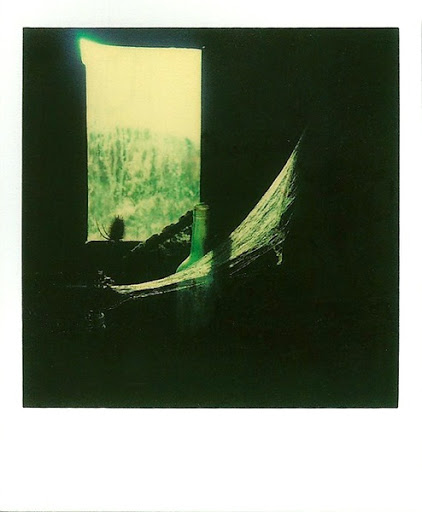
Today I have received a wonderful Christmas present from my bestie PM: the book “Instant Light Tarkovsky Polaroids” that contains a series of Polariods taken by the Russian film director Andrei Tarkovsky. If you haven’t seen any of his work, I highly recommend it – his movies are beautifully shot, profound, thought-provoking and reveal a desire to use cinema as a means of exploring fundamental aspects of human nature: “Juxtaposing a person with an environment that is boundless, collating him with a countless number of people passing by close to him and far away, relating a person to the whole world, that is the meaning of cinema.” Fortunately, his movies can now be seen for free on-line, with openculture.com having an up-to-date listing here.
What struck me about the book is first of all the personal character of its photos. They are how I’d imagine Tarkovsky’s Instagram feed to be, rather than a polished fine art collection. While exhibiting the atmospheric, observant nature of his movies, they instead show his dog, son and wife or scenes from places he visited during travels in Russia and Italy. In addition to the photos, there are also a couple of poems, prayers and reflections by Tarkovsky here and I believe these to be the true gems of the book. Let me share a couple of my favorites with you.

First, Tarkovsky gives thought to the nature of artistic expression (italics show original emphasis):

“The image is not a certain meaning
expressed by the director,
but the entire world
reflected as in a drop of water.”

This view very much rings true for me. Whenever I am asked to “explain” my own paintings I feel like I am just one of the multitude of possible viewers, all of whom can confront the work as a world in itself and extract feelings, insights, questions, etc. from it. To my mind, as to Tarkovsky’s, a piece of art is not a message, but an alternate representation of the world. This concept of the image as world, is taken further along a religious line in the following:

“An image
is an impression
of the Truth,
which God
has allowed us
to glimpse
with our
sightless eyes.”

Again there is the world/Truth impressed in an image here, but it is now confronted with our inherent inability to even glimpse it with our “sightless eyes.” I believe this expresses beautifully that basic inability to absolutely interpret artistic work, which is an impression (i.e., not the thing in and of itself) or a reflection (again, only a twisted representation) of a reality that lies beyond it. Tarkovsky here attributes any success in attaining meaning or Truth to God’s benevolence and takes his religious viewpoint further still in the following passage:

“Whatever it expresses –
even destruction and ruin –
the artistic image
is by definition an embodiment of hope,
it is inspired by faith.
Artistic creation
is by definition a denial of death.
Therefore it is optimistic,
even if in an ultimate sense the artist is tragic.
And so there can never be
optimistic artists and pessimistic artists.
There can only be talent and mediocrity.”

To my mind this very much resonates with both what the painter Michel Pochet said about the redemptive power of ugliness and what Benedict XVI said about the liberating, uplifting effect of art even when it is shocking. The role of faith that Tarkovsky sees here, comes out even more clearly in the next quote, where he emphasizes love as the key to faith and their subsequent resolution of the limitations set out above:

“We are crucified on one plane,
while the world is many-dimensional.
We are aware of that
and are tormented by our inability
to know the truth.
But there is no need to know it!
We need to love.
And to believe.
Faith is knowledge with the help of love.”

Finally, Tarkovsky also reflects on man being created in the “image of God” according to the Genesis account – a point that is also central to John Paul II’s Theology of the Body (covered first here and then here):

“In my opinion, when we talk about God
making man in His own image and likeness,
we should understand that the likeness
has to do with His essence, and this is creation.
From this comes the possibility
of evaluating a work and what it represents.
In short, the meaning of art
is the search of God in man.”

This, I believe, is a beautiful synthesis of the above quotes. Man is created in God’s image and is by himself incapable of going beyond the surface of even his own creations. It is only through love and faith that he can seek to be granted access to meaning, Truth and God in himself, in art and in the world.

Man and woman: a communion of persons

Twoone

In a previous post (that I highly recommend if you’d like to get the most out of this one), I shared my notes on the first eight chapters of John Paul II’s “Man and Woman He Created Them.” There he presents an astonishing view of the human person, derived from the creation account of Genesis. It centers around his argument for the self-consciousness and self-determination of the human person, and, as their consequence, their relating to God as a partner. The human person is set against the background of man’s initial solitude, out of which the differentiation of the male and female sexes arises. In this post I would like to continue sharing my takeaways from John Paul II’s book, where the relationship between the “two ways in which [a] human being […] is a body” is further elaborated.

Here the narrative continues on from the “unity of two beings” established in chapter 8, and emphasizes the value of the human person to God (“God saw everything that he had made, and indeed, it was very good” Genesis 1:31) and of man and woman to each other, as “an overcoming of the frontier of solitude.” This original solitude of man is already an indication that man is made for woman and vice versa. The “existence of the person “for” the person1 […] is confirmed, in a negative sense, precisely by [man’s original] solitude.” Such being for each other results in the formation of a communion of persons, where it is the ““double solitude” of the man and the woman, […] which [gives] to both the possibility of being and existing in a particular reciprocity.” The human person’s being created “in the image of God” (Genesis 1:27) lets us deduce that “man became the image of God not only through his own humanity, but also through the communion of persons, which man and woman form from the very beginning.” This is beautifully summed up by John Paul II saying that “[m]an becomes an image of God not so much in the moment of solitude as in the moment of communion.” Man is “not only an image in which the solitude of one Person, who rules the world, mirrors itself, but also and essentially the image of an inscrutable divine communion of Persons.”

All I can say to that is: wow! The clarity of thought, the beauty of the universal image of the human person and its relationship with God that John Paul II presents here is astonishing and seems so fresh and open that I am lost for words!

Turning back to the human person, he extracts yet another profound realization from the Genesis account: “on the basis of the original and constitutive solitude of his being – man has been endowed with a deep unity between what is, humanly and through the body, male in him and what is, equally humanly and through the body, female in him.” The “twofold aspect of man’s somatic constitution” – masculinity and femininity – indicates “the new consciousness of the meaning of one’s body[, which is] reciprocal enrichment.” These “two reciprocally completing ways of “being a body” [… are] complementary dimensions of self-knowledge and self-determination.” It is important to note here that John Paul II does not refer to an individual, when he says “man” in the above quotes (i.e., he is not saying that a single person is constituted by masculine and feminine parts) and neither is he talking about a male human being. Instead, “man” refers to humanity, where human person have these two “ways of being” that have among them a deep unity. This becomes particularly clear also from the following passage, where he says that being male or female “is “constitutive for the person” (not only “an attribute of the person”) [… Man] is [deeply] constituted by the body as “he” or “she”.”

With the human person understood as above, the next step is to turn to the unity between male and female that Genesis expresses as: “the two will be one flesh” (2:24). This “is without doubt the unity that is expressed and realized in the conjugal act.” “When they unite with each other (in the conjugal act) so closely so as to become “one flesh,” man and woman rediscover every time and in a special way the mystery of creation, thus returning to the union in humanity (“flesh from my flesh and bone from my bones” [Genesis 2:23]) that allows them to recognize each other reciprocally.” “This means reliving in some way man’s original virginal value [… and for man and woman to discover] their own humanity, both in its original unity and in the duality of a mysterious reciprocal attraction.” “[S]ex expresses an ever-new surpassing of the limit of man’s solitude [… and] always implies that in a certain way one takes upon oneself the solitude of the body of the second “I” as one’s own.”

Finally, chapter 10 (yes, all of this is in only two, short chapters!), highlights the core importance of choice in becoming “one flesh” “While the man, by virtue of generation, belongs “by nature” to his father and mother, “he unites,” by contrast, with his wife (or she with her husband) by choice.” This choice, which is an “expression of self-determination” that is fundamental to the “structure” of the human person, “is what establishes the conjugal covenant between the persons, who become “one flesh” only based on [it].” “When both unite so intimately with each other that they become “one flesh,” their conjugal union presupposes a mature consciousness of the body.” The result is a new “discovery of the […] original consciousness of the unitive meaning of the body in its masculinity and femininity.”

OK, that’s about as much as I can try to cover in one go. John Paul II’s thought is intricate, dense (re-reading a good few times is a must) and has peculiarities of vocabulary (like all good, philosophically meaty texts), but the rewards are rich and will, at least for me, lead to many more re-reads and hopefully new insights in the future. Even the surface I managed to skim here presents the sexual relationship between man and woman as a mirror of the cosmic event of creation (in the rich depth that John Paul II has exposed in these first 10 chapters ), as a mirror of the innermost nature of God’s own Trinitarian life and as a mirror of the fundamental complementarity and reciprocity of human relationships. Consciousness, choice, bodiliness, solitude and a gratuitous giving of one’s self to another self are all weaved into a profoundly illuminating tapestry, which shows off the beauty of a positive, Christian understanding of humanity and sexuality.


1 Please, note that all italicized emphases are John Paul II’s own, from the original text.

The riches of poverty

Goodshepherd domitilla

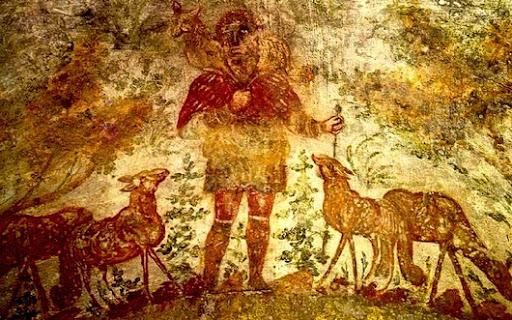
The other day I came across a very interesting article shared by one of my besties – MS – on Facebook. It reproduced the text of a pact signed by 40 bishops in the catacombs of St. Domitilla (the oldest and most extensive of the Roman catacombs) shortly before the Second Vatican Council’s conclusion – “The Pact of the Servant and Poor Church,” also known as “The Pact of the Catacombs.” The core of this group was made up of Brazilian bishops, but it also included several from Europe, Africa, Asia and both North and South America.1 At its heart, this pact was a commitment made by each signatory to live the evangelical counsel of poverty in their position as bishop of their local church and it echoed a point also emphasized in Vatican II’s Lumen Gentium, which says:2

“Jesus, “though He was by nature God … emptied Himself, taking the nature of a slave”, and “being rich, became poor” for our sakes. Thus, the Church, although it needs human resources to carry out its mission, is not set up to seek earthly glory, but to proclaim, even by its own example, humility and self-sacrifice.”

The following then is my abbreviated version of the pact’s preamble and 13 points:

“We, Bishops meeting at Vatican Council II, being aware of the deficiencies of our life of poverty according to the Gospel, encouraged by one another in this initiative in which each one wants to avoid singularity and presumption, in union with all our brothers in the Episcopate; counting, especially, on the grace and strength of our Lord Jesus Christ, on the prayer of the faithful and priests of our respective diocese; putting ourselves in thought and prayer before the Trinity, commit ourselves to the following:

  1. We will seek to live in accordance with the ordinary manner of our people, regarding housing, food, means of transportation, etc.
  2. We renounce wealth and the appearance thereof, especially in clothing (expensive fabrics and garish colors), and insignia of precious metals.
  3. We will possess neither liquid nor fixed assets in our names; and if it is necessary to possess anything, we will place it under the name of our diocese or other social or charitable works.
  4. We will entrust the financial and material administration of our diocese to a commission of competent lay people conscious of their apostolic role, since we should be pastors and apostles rather than administrators.
  5. We refuse to be called by names or titles that signify grandeur and power. We prefer to be called by the Gospel name “Father”.
  6. We will avoid everything that could appear to confer privilege, priority, or even preference to the rich and powerful.
  7. We will also avoid fostering or flattering the vanity of anyone, whoever they might be, when rewarding or requesting donations, or for any other reason. We will invite our faithful to consider their gifts as normal participation in worship, ministry and social action.
  8. We will give our time, thought, heart, means, etc. to the service of working individuals and groups who are economically weak and underdeveloped, without this being at the expense of other people and groups in the diocese.
  9. We will seek to transform the works of charity into social works based on charity and justice that take everyone into account.
  10. We will endeavor to ensure that government and public services decide on and implement laws, structures and social institutions that are necessary for justice, equality and the full and harmonious development of the whole person and all people.
  11. We commit ourselves to share, according to our ability, in the urgent projects of the dioceses in poor nations; together to always give witness to the Gospel at the international level, by asking for the adoption of economic and cultural structures that do not create poor nations in an ever richer world, but that allow the poor majority to emerge from their poverty.
  12. We pledge to share our life with our brothers and sisters in Christ (priests, religious and laity), so that our ministry constitutes a real service. We will seek out partners so that we can be promoters according to the spirit rather than rulers according to the world. We will try to be present, to be welcoming. We will be open to everyone, whatever their religion.
  13. When we return to our diocese we will present these resolutions to our diocesan priests, asking them to help us with their understanding, collaboration and prayers.

God help us to be faithful.”

When I first read this pact, my immediate reaction was of great admiration for its signatories, who resolve in it to start afresh in their role as bishops, returning to what is fundamental in imitating Jesus and applying the resolutions of Vatican II to themselves with great specificity and individuality. I also appreciated their making this choice together and following the model of the Early Church. In essence, I saw – and see – here that going of an extra mile and that self-noughting that is also set out as an example in Lumen Gentium, where the whole Church is warned not to “[l]et [either] the use of the things of this world [or] attachment to riches, which is against the spirit of evangelical poverty, hinder them in their quest for perfect love.”

In the process of looking up some background on this pact, it has become clear to me that the vast majority of texts that refer to it are ones dissenting from the Catholic Church’s teaching and are critical of its conduct. On the one hand this is not difficult to understand – there are numerous bishops who behave in ways incompatible with this pact’s letter and spirit (or who at least seem to do so) and it can be used as a handy ruler by which to find them wanting. I find such a reading incongruous on two counts: First, this pact is one freely entered into by specific bishops who, probably as a result of participating in the Council, received the grace to impose on themselves specific measures that they felt called to follow. Second, it smacks of a basic disregard to the very spirit in which the pact’s signatories acted, whose desire was to “avoid presumption” and be “aware of the deficiencies of [their] life of poverty.” Furthermore, it flies in the face of Jesus’ own reprimand: “You hypocrite, remove the wooden beam from your eye first; then you will see clearly to remove the splinter from your brother’s eye.” (Matthew 7:5). This is in no way to deny or attempt to excuse the unchristian conduct of some bishops, but simply to recognize this document for what it is – the sincere resolution of a group of bishops to renew their commitment to Jesus, instead of waving it around like a weapon.


1 For scans of a reproduction of the original Portuguese text – Bonaventure Kloppenburg’s 1974 The ecclesiology of Vatican II – see here. While the above is based on the source from the first paragraph, I chose to translate some words differently, taking advantage of the original version’s scans (e.g., I translate “berrante” in point 2 as “garish” instead of “brilliant” and – in point 9 – “beneficência” as “charity”).
2 For a very interesting analysis that situates this pact in the context of Benedict XVI’s thought as well as of that of other post-conciliar theologians, see this article.

The inescapable indulgence of philosophy

Homunculus drawing s

If you are not in the mood for reading a rant, please, kindly, move along to some calmer, more edifying post.

OK, so, for those of you who are reckless with you blood pressure, the topic of today’s rant is, yet again, the “Faith and Reason” section of the the “Our Faith on Sunday” leaflet that now accompanies my parish’s newsletter (for a previous run in with it see here). This time the topic is none other than philosophy, and it gets disposed of in less than 150 words.1 You’d think that those few words would have to be carefully chosen to say anything meaningful about a complex topic like this. Yet, instead, the opening words are the following:

“Every person will at some stage in life indulge that inescapable curiosity which seeks answers to philosophical questions; even small children exhibit impressive levels of philosophical inquiry when, during the so called ‘Why Stage’, they demonstrate an insatiable desire to know the causes of things.”

The unidentified author of the above wisdom then drops gems like: “[h]ow articulate and explicit each person’s philosophical investigation is will depend on circumstances,” “there is in human nature a questioning quality, an irresistible urge to find out” and “although no single philosophical system can claim to give us a complete account of reality, some do reflect it more fully than others.”

Two words: WOW! Where do you even start in the face of such platitudes and inanity? First, let’s just spell out what the above actually implies about philosophy:

  1. The opening line makes philosophy sound like sneezing, a temporary infatuation with Brad Pitt or the onset of puberty. It makes philosophy seem like something that may one day overcome you, out of the blue. You’ll have no control over it and you’ll just have to indulge it. But, don’t worry – it will pass …
  2. Philosophy may also have the hallmarks of a disease – how serious its symptoms will be in your case (and at some point it will wash over you for sure) depends “on circumstances.” It would have been useful to get at least at hint of what it is about “circumstances” that may make a philosophy attack more or less severe. Is it open spaces, high altitudes, allergens or the presence of nanosphere complexes that one should watch for?
  3. The paragon of philosophical activity is a small child asking “why?”. Having actually been at the receiving end of barrages of “why”s by small children (and having greatly enjoyed the game), I am therefore inferring that the purpose of philosophy is entertainment, attention-seeking and maybe in 1/10 of its instances an actual desire for an answer. [Well, this one may not be that far off :)]
  4. You may find this hard to believe, but some philosophical systems reflect reality more fully than others … Mind. Blown. I would love to see the unidentified author of this gem of a treatise on philosophy sketch out how one might go about determining the extent to which a given philosophical system reflects reality. Maybe we could have a star rating in next week’s newsletter. (Dialectical materialism: x stars, Neoplatonism: y stars, Deconstructivism: z stars … You didn’t think I’d actually assign specific values, did you?)

“It is easy to be critical,” I hear you think. So, let me show you how I would use a ~100 word limit to talk about philosophy (and I’d do so by letting another, far better qualified mind, speak):

“Men and women have at their disposal an array of resources for generating greater knowledge of truth so that their lives may be ever more human. Among these is philosophy [meaning “love of wisdom”], which is directly concerned with asking the question of life’s meaning and sketching an answer to it. Philosophy emerges, then, as one of noblest of human tasks [… and] shows in different modes and forms that the desire for truth is part of human nature itself. […] Through philosophy’s work, the ability to speculate […] produces a rigorous mode of thought; and then in turn, through the logical coherence of the affirmations made and the organic unity of their content, it produces a systematic body of knowledge.” (John Paul II, Fides et Ratio)


1 I owe it at least to my überbestie MR (née MM) to rush to the defense of philosophy. Not that it is being attacked particularly efficaciously here, but an attack is an attack and this one is bringing the game into disrepute … its a matter of principle!