Due to the coronavirus pandemic, masses are suspended in many parts of the world and Pope Francis invites all Catholics both to comply with the measures imposed by local civil and Church government and cling to Jesus’ presence in the Eucharist:
“In this pandemic situation, in which we find ourselves living more or less isolated, we are invited to rediscover and reflect further on the value of communion, which unites all the members of the Church. United to Christ, we are never alone, but we form one body, of which He is the Head. It’s a union that is nourished in prayer, and also in spiritual communion with the Eucharist, a greatly recommended practice when it’s not possible to receive the Sacrament. I say this for all, especially for persons that live alone.”
Pope Francis, Angelus address, 15th March 2020
To help with the practice of spiritual communion, I would here like to share the words St. Alphonsus Liguori used for it:
“My Jesus, I believe that You are present in the Most Holy Sacrament. I love You above all things, and I desire to receive You into my soul. Since I cannot at this moment receive You sacramentally, come at least spiritually into my heart. I embrace You as if You were already there and unite myself wholly to You. Never permit me to be separated from You. Amen.”
An Act of Spiritual Communion St. Alphonsus Liguori
You can also find a wallet-sized card with this prayer available here in single and 3×3 A4-sized formats:
Thinking about what emotions or attitudes ought to characterise a Christian, the following may well show up in top-ten lists: self-giving, generous, caring, compassionate, humble, faithful, peace-loving, merciful, just, patient, gentle, bold, persistent, forgiving and joyful. However, an emotion that would not make it into such lists appears repeatedly in the Gospels, namely fear. Fear fills the hearts of the chief priests and the scribes when they see the crowds cheering Jesus’ entrance into Jerusalem before his passion (cf. Luke 22:2, Matthew 21:46, Mark 12:12), it grips Pilate when the chief priests invoke the law to force Jesus’ execution (cf. John 19:8), it pervades even the battle-hardened centurion and his men who were guarding Jesus on the cross (cf. Matthew 27:54), it makes the guards who watch Jesus’ tomb become “like dead men” when the angel appears and rolls away the stone blocking its entrance (cf. Matthew 28:4), it fills the townspeople who see Jesus curing a possessed man and sending his demons into a herd of swine (cf. Mark 5:33, Luke 8:35) or bringing a dead young man back to life (cf. Luke 7:16), it strikes the shepherds to whom an angel announces the birth of Jesus (cf. Luke 2:9).
In all these instances it can easily and rightly be argued though that fear is an emotion associated with those who oppose Jesus or who are, at least, far from him.
More interesting is the case of Jesus’ earthly father, Joseph, whom an angel admonishes in a dream: “Joseph, son of David, do not be afraid to take Mary your wife into your home. For it is through the holy Spirit that this child has been conceived in her. She will bear a son and you are to name him Jesus, because he will save his people from their sins.” (Matthew 1:20-21). Joseph’s fears subside and he refrains from divorcing Mary, who bears another’s child. Fear enters Joseph’s life again when he follows an angel’s instructions to take Mary and Jesus back to Israel (Matthew 2:20) after living as refugees in Egypt, also on the angel’s instructions. Here Joseph followed what the angel tells him, “[b]ut when he heard that Archelaus was ruling over Judea in place of his father Herod, he was afraid to go back there. And because he had been warned in a dream, he departed for the region of Galilee.” (Matthew 2:22) Joseph’s fear here is part of discerning God’s will and contributes to keeping his family safe.
Fear is also very much present in the minds of Jesus’ closest followers, the apostles, and I think it is good both to note this and to see how Jesus responds to it.
To begin with, fear enters the apostles’ life from their very first encounter with Jesus. St. Luke recounts that event for Peter, James and John as follows:
“He saw two boats there alongside the lake; the fishermen had disembarked and were washing their nets. Getting into one of the boats, the one belonging to Simon, he asked him to put out a short distance from the shore. Then he sat down and taught the crowds from the boat. After he had finished speaking, he said to Simon, “Put out into deep water and lower your nets for a catch.” Simon said in reply, “Master, we have worked hard all night and have caught nothing, but at your command I will lower the nets.” When they had done this, they caught a great number of fish and their nets were tearing. They signaled to their partners in the other boat to come to help them. They came and filled both boats so that they were in danger of sinking. When Simon Peter saw this, he fell at the knees of Jesus and said, “Depart from me, Lord, for I am a sinful man.” For astonishment at the catch of fish they had made seized him and all those with him, and likewise James and John, the sons of Zebedee, who were partners of Simon. Jesus said to Simon, “Do not be afraid; from now on you will be catching men.” When they brought their boats to the shore, they left everything and followed him.” (Luke 5:2-11)
Fear here is quite a natural reaction when faced with the miraculous actions of Jesus and one for which he does not castigate or admonish them – he simply reassures them that fear is not necessary, without reprimanding them for it.
Jesus is very patient with the apostles though and even on the next occasion, when they are afraid – St. Matthew even says that they are “terrified” – that the boat they and the sleeping Jesus are in is going to capsize, his response is rather mild:
“He got into a boat and his disciples followed him. Suddenly a violent storm came up on the sea, so that the boat was being swamped by waves; but he was asleep. They came and woke him, saying, “Lord, save us! We are perishing!” He said to them, “Why are you terrified, O you of little faith?” Then he got up, rebuked the winds and the sea, and there was great calm. The men were amazed and said, “What sort of man is this, whom even the winds and the sea obey?” (Matthew 8:23-27; cf. Mark 4:36-41)
And still the apostles cannot get used to Jesus’ actions and it is terror that fills them again when they see him walking on water (the same man they saw stop a storm!). Jesus again just reassures them, draws their attention to himself, whom they know, and does not make a big deal out of it:
“When it was evening, the boat was far out on the sea and he was alone on shore. Then he saw that they were tossed about while rowing, for the wind was against them. About the fourth watch of the night, he came toward them walking on the sea. He meant to pass by them. But when they saw him walking on the sea, they thought it was a ghost and cried out. They had all seen him and were terrified. But at once he spoke with them, “Take courage, it is I, do not be afraid!” He got into the boat with them and the wind died down. They were [completely] astounded.” (Mark 6:47-51, cf. Matthew 14:26-27; Cf. John 6:19-20)
Fear returns again when the apostles (the same three who were scared when they first met him) see Jesus transfigured and joined by Moses and Elijah. Here Jesus not only, but again simply, gently, invites them not to be afraid, but he touches them, since part of their fear in this case must stem from their doubting his reality and the sense of touch both dispels that fear and is a sign of warmth and affection:
“After six days Jesus took Peter, James, and John his brother, and led them up a high mountain by themselves. And he was transfigured before them; his face shone like the sun and his clothes became white as light. And behold, Moses and Elijah appeared to them, conversing with him. Then Peter said to Jesus in reply, “Lord, it is good that we are here. If you wish, I will make three tents here, one for you, one for Moses, and one for Elijah.” While he was still speaking, behold, a bright cloud cast a shadow over them, then from the cloud came a voice that said, “This is my beloved Son, with whom I am well pleased; listen to him.” When the disciples heard this, they fell prostrate and were very much afraid. But Jesus came and touched them, saying, “Rise, and do not be afraid.”” (Matthew 17:1-7; Cf. Mark 9:2-6)
Not only his deeds, but his words too make the apostles afraid, as in the following passage where Jesus tells them about his impending suffering and death:
“He was teaching his disciples and telling them, “The Son of Man is to be handed over to men and they will kill him, and three days after his death he will rise.” But they did not understand the saying, and they were afraid to question him.” (Mark 9:31-32; Luke 9:43-45)
Finally, even after his death and resurrection, Jesus’ presence engendered fear among his followers, as can be seen from St. Luke’s account of two disciples meeting him on the road to Emmaus and then telling the apostles about it, only to have Jesus himself appear among them:
“So they set out at once and returned to Jerusalem where they found gathered together the eleven and those with them who were saying, “The Lord has truly been raised and has appeared to Simon!” Then the two recounted what had taken place on the way and how he was made known to them in the breaking of the bread. The Appearance to the Disciples in Jerusalem. While they were still speaking about this, he stood in their midst and said to them, “Peace be with you.” But they were startled and terrified and thought that they were seeing a ghost.” (Luke 24:33-37)
Clearly Jesus does not want his followers to be afraid, as he also emphasises during the Last Supper where he says: “Peace I leave with you; my peace I give to you. Not as the world gives do I give it to you. Do not let your hearts be troubled or afraid.” (John 14:27) At the same time, fear in the face of the unknown is something that the apostles kept experiencing in spite of – and sometimes because of! – Jesus’ own presence among them, which Jesus in turn had a lot of understanding for and patience with and which he helped them out of with gentleness and closeness.
Fear was also not absent from Jesus’ own mind, e.g., when he feared for the wellbeing of his followers: “Jesus summoned his disciples and said, “My heart is moved with pity for the crowd, for they have been with me now for three days and have nothing to eat. I do not want to send them away hungry, for fear they may collapse on the way.”” (Matthew 15:32). And while he broadly reassured his followers that fear was not necessary even in the face of persecution, Jesus did warn against the Devil and tell his disciples that he is to be feared:
“Therefore do not be afraid of them [who persecute you]. Nothing is concealed that will not be revealed, nor secret that will not be known. What I say to you in the darkness, speak in the light; what you hear whispered, proclaim on the housetops. And do not be afraid of those who kill the body but cannot kill the soul; rather, be afraid of the one who can destroy both soul and body in Gehenna. Are not two sparrows sold for a small coin? Yet not one of them falls to the ground without your Father’s knowledge. Even all the hairs of your head are counted. So do not be afraid; you are worth more than many sparrows.” (Matthew 10:26-31, Cf. Luke 12:4-7)
My favorite Gospel passage though, in which Jesus’ followers are shown to be afraid, is that of Mary Magdalene and “the other Mary” going to see Jesus’ tomb on Easter morning:
“After the sabbath, as the first day of the week was dawning, Mary Magdalene and the other Mary came to see the tomb. And behold, there was a great earthquake; for an angel of the Lord descended from heaven, approached, rolled back the stone, and sat upon it. His appearance was like lightning and his clothing was white as snow. The guards were shaken with fear of him and became like dead men. Then the angel said to the women in reply, “Do not be afraid! I know that you are seeking Jesus the crucified. He is not here, for he has been raised just as he said. Come and see the place where he lay. Then go quickly and tell his disciples, ‘He has been raised from the dead, and he is going before you to Galilee; there you will see him.’ Behold, I have told you.” Then they went away quickly from the tomb, fearful yet overjoyed, and ran to announce this to his disciples. And behold, Jesus met them on their way and greeted them. They approached, embraced his feet, and did him homage. Then Jesus said to them, “Do not be afraid. Go tell my brothers to go to Galilee, and there they will see me.”” (Matthew 28:1-10; Cf. Mark 16:1-8)
A couple of significant things happen here: first, that it is not fear versus no fear that distinguishes the two Marys from the guards – they were all afraid in the face of an unknown and inexplicable event. However, the guards had nothing to soften the blow and were terrified into unconsciousness. The Marys, instead had their relationship with Jesus, which did not cancel out fear, but supplemented it with joy: “fearful yet overjoyed” may just be what a Christian response to the unknown and daunting ought to look like. The fear is real, but so is the knowledge of Jesus’ saving love. Second, the basis for their joy is confirmed by Jesus later meeting them, greeting them and allowing them to come close to him, to embrace him.
I invariably feel a sense of unease when someone is told off or criticised for being afraid or for being unhappy with an unpleasant situation (or when a person in such situations self-criticises or self-censors), because “fear is not of God” or because we have to “accept God’s will” when things go against us. And my unease here is not born of disagreement with either of those statements, but of the, to my mind, unwarranted suppression or denial of the validity of fear or displeasure. Jesus brought the Good News of God’s universal love to a world where fear and unhappiness persist, but where they can be lived with the help of a simultaneous joy born of Jesus’ love for us and closeness to us.
Yesterday saw the publication of Pope Francis’ apostolic exhortation entitled Querida Amazonia (Beloved Amazonia) in which he offers a reflection on the Amazon Synod that took place last October. The text is structured as a sequence of “dreams” that the pope has for the Amazon region, but also for the whole world. The “dreams” proceed from social, via cultural and ecological to ecclesial, in a sequence where each aspect leads to the next. The heart of Pope Francis’ thought to me seems to be born of a desire to bring all of creation and the fullness of human life into closer communion with God and therefore with each other. It is a reflection that starts out from the fundamental interrelatedness of everything and is directed towards God by means of all that is good, no matter its history, culture or origin. Instead of engaging more with the content of this brief (17K word) magisterial text, I would just like to offer the following collection of passages and a suggestion for those who won’t find in it what they may have hoped for: notice not only what Pope Francis says but also what he does not say …
“Everything that the Church has to offer must become incarnate in a distinctive way in each part of the world, so that the Bride of Christ can take on a variety of faces that better manifest the inexhaustible riches of God’s grace. Preaching must become incarnate, spirituality must become incarnate, ecclesial structures must become incarnate.” (§6)
“The businesses, national or international, which harm the Amazon and fail to respect the right of the original peoples to the land and its boundaries, and to self-determination and prior consent, should be called for what they are: injustice and crime. When certain businesses out for quick profit appropriate lands and end up privatizing even potable water, or when local authorities give free access to the timber companies, mining or oil projects, and other businesses that raze the forests and pollute the environment, economic relationships are unduly altered and become an instrument of death. They frequently resort to utterly unethical means such as penalizing protests and even taking the lives of indigenous peoples who oppose projects, intentionally setting forest fires, and suborning politicians and the indigenous people themselves. All this accompanied by grave violations of human rights and new forms of slavery affecting women in particular, the scourge of drug trafficking used as a way of subjecting the indigenous peoples, or human trafficking that exploits those expelled from their cultural context. We cannot allow globalization to become “a new version of colonialism”. (§14)
“We need to feel outrage, as Moses did (cf. Ex 11:8), as Jesus did (cf. Mk 3:5), as God does in the face of injustice (cf. Am 2:4-8; 5:7-12; Ps 106:40). It is not good for us to become inured to evil; it is not good when our social consciousness is dulled before “an exploitation that is leaving destruction and even death throughout our region… jeopardizing the lives of millions of people and especially the habitat of peasants and indigenous peoples”.” (§15)
“Alternatives can be sought for sustainable herding and agriculture, sources of energy that do not pollute, dignified means of employment that do not entail the destruction of the natural environment and of cultures. At the same time, the indigenous peoples and the poor need to be given an education suited to developing their abilities and empowering them. These are the goals to which the genuine talent and shrewdness of political leaders should be directed. Not as a way of restoring to the dead the life taken from them, or even of compensating the survivors of that carnage, but at least today to be authentically human.” (§17)
“Christ redeemed the whole person, and he wishes to restore in each of us the capacity to enter into relationship with others. The Gospel proposes the divine charity welling up in the heart of Christ and generating a pursuit of justice that is at once a hymn of fraternity and of solidarity, an impetus to the culture of encounter.” (§22)
“The Amazon region ought to be a place of social dialogue, especially between the various original peoples, for the sake of developing forms of fellowship and joint struggle. The rest of us are called to participate as “guests” and to seek out with great respect paths of encounter that can enrich the Amazon region. If we wish to dialogue, we should do this in the first place with the poor. They are not just another party to be won over, or merely another individual seated at a table of equals. They are our principal dialogue partners, those from whom we have the most to learn, to whom we need to listen out of a duty of justice, and from whom we must ask permission before presenting our proposals. Their words, their hopes and their fears should be the most authoritative voice at any table of dialogue on the Amazon region. And the great question is: “What is their idea of ‘good living’ for themselves and for those who will come after them?”” (§25)
“Dialogue must not only favour the preferential option on behalf of the poor, the marginalized and the excluded, but also respect them as having a leading role to play. Others must be acknowledged and esteemed precisely as others, each with his or her own feelings, choices and ways of living and working. Otherwise, the result would be, once again, “a plan drawn up by the few for the few”, if not “a consensus on paper or a transient peace for a contented minority”. Should this be the case, “a prophetic voice must be raised”, and we as Christians are called to make it heard.” (§27)
“That is in fact what education is meant to do: to cultivate without uprooting, to foster growth without weakening identity, to be supportive without being invasive. Just as there are potentialities in nature that could be lost forever, something similar could happen with cultures that have a message yet to be heard, but are now more than ever under threat.” (§28)
“Each of the peoples that has survived in the Amazon region possesses its own cultural identity and unique richness in our multicultural universe, thanks to the close relationship established by the inhabitants with their surroundings in a non-deterministic symbiosis which is hard to conceive using mental categories imported from without:
“Once there was a countryside, with its river, its animals, its clouds and its trees.
But sometimes, when the countryside, with its river and trees,
was nowhere to be seen,
those things had to spring up in the mind of a child”. Juan Carlos Galeano, “Paisajes”, in Amazonia y otros poemas, ed. Universidad Externado de Colombia, Bogotá, 2011, 31.
“Make the river your blood…
Then plant yourself,
blossom and grow:
let your roots sink into the ground
forever and ever,
and then at last
become a canoe,
a skiff, a raft,
soil, a jug,
a farmhouse and a man”. Javier Yglesias, “Llamado”, in Revista peruana de literatura, n. 6 (June 2007), 31.” (§31)
“Human grouings, their lifestyles and their worldviews, are as varied as the land itself, since they have had to adapt themselves to geography and its possibilities. Fishers are not the same as hunters, and the gatherers of the interior are not the same as those who cultivate the flood lands. Even now, we see in the Amazon region thousands of indigenous communities, people of African descent, river people and city dwellers, who differ from one another and embrace a great human diversity. In each land and its features, God manifests himself and reflects something of his inexhaustible beauty. Each distinct group, then, in a vital synthesis with its surroundings, develops its own form of wisdom. Those of us who observe this from without should avoid unfair generalizations, simplistic arguments and conclusions drawn only on the basis of our own mindsets and experiences.” (§32)
“Starting from our roots, let us sit around the common table, a place of conversation and of shared hopes. In this way our differences, which could seem like a banner or a wall, can become a bridge. Identity and dialogue are not enemies. Our own cultural identity is strengthened and enriched as a result of dialogue with those unlike ourselves.” (§37)
“When the indigenous peoples “remain on their land, they themselves care for it best”, provided that they do not let themselves be taken in by the siren songs and the self-serving proposals of power groups. The harm done to nature affects those peoples in a very direct and verifiable way, since, in their words, “we are water, air, earth and life of the environment created by God. For this reason, we demand an end to the mistreatment and destruction of mother Earth. The land has blood, and it is bleeding; the multinationals have cut the veins of our mother Earth”.” (§43)
“[P]oets, contemplatives and prophets, help free us from the technocratic and consumerist paradigm that destroys nature and robs us of a truly dignified existence:
“The world is suffering from its feet being turned into rubber, its legs into leather, its body into cloth and its head into steel… The world is suffering from its trees being turned into rifles, its ploughshares into tanks, as the image of the sower scattering seed yields to the tank with its flamethrower, which sows only deserts. Only poetry, with its humble voice, will be able to save this world”. Vinicius De Moraes, Para vivir un gran amor, Buenos Aires, 2013, 166.” (§46)
“The powerful are never satisfied with the profits they make, and the resources of economic power greatly increase as a result of scientific and technological advances. For this reason, all of us should insist on the urgent need to establish “a legal framework which can set clear boundaries and ensure the protection of ecosystems… otherwise, the new power structures based on the techno-economic paradigm may overwhelm not only our politics, but also freedom and justice”. If God calls us to listen both to the cry of the poor and that of the earth, then for us, “the cry of the Amazon region to the Creator is similar to the cry of God’s people in Egypt (cf. Ex 3:7). It is a cry of slavery and abandonment pleading for freedom”.”
“From the original peoples, we can learn to contemplate the Amazon region and not simply analyze it, and thus appreciate this precious mystery that transcends us. We can love it, not simply use it, with the result that love can awaken a deep and sincere interest. Even more, we can feel intimately a part of it and not only defend it; then the Amazon region will once more become like a mother to us. For “we do not look at the world from without but from within, conscious of the bonds with which the Father has linked us to all beings”.” (§55)
“Let us awaken our God-given aesthetic and contemplative sense that so often we let languish. Let us remember that “if someone has not learned to stop and admire something beautiful, we should not be surprised if he or she treats everything as an object to be used and abused without scruple”. On the other hand, if we enter into communion with the forest, our voices will easily blend with its own and become a prayer: “as we rest in the shade of an ancient eucalyptus, our prayer for light joins in the song of the eternal foliage”. This interior conversion will enable us to weep for the Amazon region and to join in its cry to the Lord.” (§56)
“[W]e believers encounter in the Amazon region a theological locus, a space where God himself reveals himself and summons his sons and daughters.” (§57)
“The Church, with her broad spiritual experience, her renewed appreciation of the value of creation, her concern for justice, her option for the poor, her educational tradition and her history of becoming incarnate in so many different cultures throughout the world, also desires to contribute to the protection and growth of the Amazon region.” (§60)
“An authentic option for the poor and the abandoned, while motivating us to liberate them from material poverty and to defend their rights, also involves inviting them to a friendship with the Lord that can elevate and dignify them. How sad it would be if they were to receive from us a body of teachings or a moral code, but not the great message of salvation, the missionary appeal that speaks to the heart and gives meaning to everything else in life. Nor can we be content with a social message. If we devote our lives to their service, to working for the justice and dignity that they deserve, we cannot conceal the fact that we do so because we see Christ in them and because we acknowledge the immense dignity that they have received from God, the Father who loves them with boundless love.” (§63)
“As she perseveres in the preaching of the kerygma, the Church also needs to grow in the Amazon region. In doing so, she constantly reshapes her identity through listening and dialogue with the people, the realities and the history of the lands in which she finds herself. In this way, she is able to engage increasingly in a necessary process of inculturation that rejects nothing of the goodness that already exists in Amazonian cultures, but brings it to fulfilment in the light of the Gospel. Nor does she scorn the richness of Christian wisdom handed down through the centuries, presuming to ignore the history in which God has worked in many ways. For the Church has a varied face, “not only in terms of space… but also of time”. Here we see the authentic Tradition of the Church, which is not a static deposit or a museum piece, but the root of a constantly growing tree. This millennial Tradition bears witness to God’s work in the midst of his people and “is called to keep the flame alive rather than to guard its ashes”.” (§66)
“There is a risk that evangelizers who come to a particular area may think that they must not only communicate the Gospel but also the culture in which they grew up, failing to realize that it is not essential “to impose a specific cultural form, no matter how beautiful or ancient it may be”. What is needed is courageous openness to the novelty of the Spirit, who is always able to create something new with the inexhaustible riches of Jesus Christ. Indeed, “inculturation commits the Church to a difficult but necessary journey”. True, “this is always a slow process and that we can be overly fearful”, ending up as “mere onlookers as the Church gradually stagnates”.99 But let us be fearless; let us not clip the wings of the Holy Spirit.” (§69)
“Inculturation elevates and fulfills. Certainly, we should esteem the indigenous mysticism that sees the interconnection and interdependence of the whole of creation, the mysticism of gratuitousness that loves life as a gift, the mysticism of a sacred wonder before nature and all its forms of life.
At the same time, though, we are called to turn this relationship with God present in the cosmos into an increasingly personal relationship with a “Thou” who sustains our lives and wants to give them a meaning, a “Thou” who knows us and loves us:
“Shadows float from me, dead wood.
But the star is born without reproach over the expert hands of this child,
that conquer the waters and the night.
It has to be enough for me to know
that you know me completely,
from before my days”. Pedro Casaldáliga, “Carta de navegar (Por el Tocantins amazónico)” in El tiempo y la espera, Santander, 1986.” (§73)
“Similarly, a relationship with Jesus Christ, true God and true man, liberator and redeemer, is not inimical to the markedly cosmic worldview that characterizes the indigenous peoples, since he is also the Risen Lord who permeates all things. In Christian experience, “all the creatures of the material universe find their true meaning in the incarnate Word, for the Son of God has incorporated in his person part of the material world, planting in it a seed of definitive transformation”. He is present in a glorious and mysterious way in the river, the trees, the fish and the wind, as the Lord who reigns in creation without ever losing his transfigured wounds, while in the Eucharist he takes up the elements of this world and confers on all things the meaning of the paschal gift.” (§74)
““[F]rom the heart of the Gospel we see the profound connection between evangelization and human advancement”. For Christian communities, this entails a clear commitment to the justice of God’s kingdom through work for the advancement of those who have been “discarded”. It follows that a suitable training of pastoral workers in the Church’s social doctrine is most important.” (§75)
“Let us not be quick to describe as superstition or paganism certain religious practices that arise spontaneously from the life of peoples. Rather, we ought to know how to distinguish the wheat growing alongside the tares, for “popular piety can enable us to see how the faith, once received, becomes embodied in a culture and is constantly passed on”.” (§78)
“It is possible to take up an indigenous symbol in some way, without necessarily considering it as idolatry. A myth charged with spiritual meaning can be used to advantage and not always considered a pagan error. Some religious festivals have a sacred meaning and are occasions for gathering and fraternity, albeit in need of a gradual process of purification or maturation. A missionary of souls will try to discover the legitimate needs and concerns that seek an outlet in at times imperfect, partial or mistaken religious expressions, and will attempt to respond to them with an inculturated spirituality.” (§79)
“Such a spirituality will certainly be centred on the one God and Lord, while at the same time in contact with the daily needs of people who strive for a dignified life, who want to enjoy life’s blessings, to find peace and harmony, to resolve family problems, to care for their illnesses, and to see their children grow up happy. The greatest danger would be to prevent them from encountering Christ by presenting him as an enemy of joy or as someone indifferent to human questions and difficulties. Nowadays, it is essential to show that holiness takes nothing away from our “energy, vitality or joy”.” (§80)
“[T]he sacraments should not be viewed in discontinuity with creation. They “are a privileged way in which nature is taken up by God to become a means of mediating supernatural life”. They are the fulfillment of creation, in which nature is elevated to become a locus and instrument of grace, enabling us “to embrace the world on a different plane”.” (§81)
“[I]t is important to determine what is most specific to a priest, what cannot be delegated. The answer lies in the sacrament of Holy Orders, which configures him to Christ the priest. The first conclusion, then, is that the exclusive character received in Holy Orders qualifies the priest alone to preside at the Eucharist. That is his particular, principal and non-delegable function. There are those who think that what distinguishes the priest is power, the fact that he is the highest authority in the community. Yet Saint John Paul II explained that, although the priesthood is considered “hierarchical”, this function is not meant to be superior to the others, but rather is “totally ordered to the holiness of Christ’s members”. When the priest is said to be a sign of “Christ the head”, this refers principally to the fact that Christ is the source of all grace: he is the head of the Church because “he has the power of pouring out grace upon all the members of the Church”.” (§87)
“The priest is a sign of that head and wellspring of grace above all when he celebrates the Eucharist, the source and summit of the entire Christian life. That is his great power, a power that can only be received in the sacrament of Holy Orders. For this reason, only the priest can say: “This is my body”. There are other words too, that he alone can speak: “I absolve you from your sins”. Because sacramental forgiveness is at the service of a worthy celebration of the Eucharist. These two sacraments lie at the heart of the priest’s exclusive identity.” (§88)
“In the specific circumstances of the Amazon region, particularly in its forests and more remote places, a way must be found to ensure this priestly ministry. The laity can proclaim God’s word, teach, organize communities, celebrate certain sacraments, seek different ways to express popular devotion and develop the multitude of gifts that the Spirit pours out in their midst. But they need the celebration of the Eucharist because it “makes the Church”. We can even say that “no Christian community is built up which does not grow from and hinge on the celebration of the most holy Eucharist”.131 If we are truly convinced that this is the case, then every effort should be made to ensure that the Amazonian peoples do not lack this food of new life and the sacrament of forgiveness.” (§89)
“The Eucharist, then, as source and summit, requires the development of that rich variety. Priests are necessary, but this does not mean that permanent deacons (of whom there should be many more in the Amazon region), religious women and lay persons cannot regularly assume important responsibilities for the growth of communities, and perform those functions ever more effectively with the aid of a suitable accompaniment.” (§92)
“Consequently, it is not simply a question of facilitating a greater presence of ordained ministers who can celebrate the Eucharist. That would be a very narrow aim, were we not also to strive to awaken new life in communities. We need to promote an encounter with God’s word and growth in holiness through various kinds of lay service that call for a process of education – biblical, doctrinal, spiritual and practical – and a variety of programmes of ongoing formation.” (§93)
“This summons us to broaden our vision, lest we restrict our understanding of the Church to her functional structures. Such a reductionism would lead us to believe that women would be granted a greater status and participation in the Church only if they were admitted to Holy Orders. But that approach would in fact narrow our vision; it would lead us to clericalize women, diminish the great value of what they have already accomplished, and subtly make their indispensable contribution less effective.” (§100)
“Jesus Christ appears as the Spouse of the community that celebrates the Eucharist through the figure of a man who presides as a sign of the one Priest. This dialogue between the Spouse and his Bride, which arises in adoration and sanctifies the community, should not trap us in partial conceptions of power in the Church. The Lord chose to reveal his power and his love through two human faces: the face of his divine Son made man and the face of a creature, a woman, Mary. Women make their contribution to the Church in a way that is properly theirs, by making present the tender strength of Mary, the Mother. As a result, we do not limit ourselves to a functional approach, but enter instead into the inmost structure of the Church. In this way, we will fundamentally realize why, without women, the Church breaks down, and how many communities in the Amazon would have collapsed, had women not been there to sustain them, keep them together and care for them. This shows the kind of power that is typically theirs.” (§101)
“In a synodal Church, those women who in fact have a central part to play in Amazonian communities should have access to positions, including ecclesial services, that do not entail Holy Orders and that can better signify the role that is theirs. Here it should be noted that these services entail stability, public recognition and a commission from the bishop. This would also allow women to have a real and effective impact on the organization, the most important decisions and the direction of communities, while continuing to do so in a way that reflects their womanhood.” (§103)
“None of this needs to create enmity between us. In a true spirit of dialogue, we grow in our ability to grasp the significance of what others say and do, even if we cannot accept it as our own conviction. In this way, it becomes possible to be frank and open about our beliefs, while continuing to discuss, to seek points of contact, and above all, to work and struggle together for the good of the Amazon region. The strength of what unites all of us as Christians is supremely important. We can be so attentive to what divides us that at times we no longer appreciate or value what unites us. And what unites us is what lets us remain in this world without being swallowed up by its immanence, its spiritual emptiness, its complacent selfishness, its consumerist and selfdestructive individualism.” (§108)
“All of us, as Christians, are united by faith in God, the Father who gives us life and loves us so greatly. We are united by faith in Jesus Christ, the one Saviour, who set us free by his precious blood and his glorious resurrection. We are united by our desire for his word that guides our steps. We are united by the fire of the Spirit, who sends us forth on mission. We are united by the new commandment that Jesus left us, by the pursuit of the civilization of love and by passion for the kingdom that the Lord calls us to build with him. We are united by the struggle for peace and justice. We are united by the conviction that not everything ends with this life, but that we are called to the heavenly banquet, where God will wipe away every tear and take up all that we did for those who suffer.” (§109)
“All this unites us. How can we not struggle together? How can we not pray and work together, side by side, to defend the poor of the Amazon region, to show the sacred countenance of the Lord, and to care for his work of creation?” (§110)
As the events surrounding the introduction of Cardinal Sarah’s book “From the Depths of Our Hearts” unfolded last week, I felt no desire whatsoever to write about them. Instead, seeing Pope emeritus Benedict XVI, for whom I have the highest regard and to whom I am deeply grateful, being dragged into that mess was a real source of suffering for me, also on the back of having watched a recent documentary about him done by Bavarian television from which it was clear that his health is much deteriorated and that he is coming to the end of his life. The events surrounding this book, of which he at first was alleged to have been a co-author, simply did not make sense and were not consistent with the great theologian whose wisdom has been and remains a source of light for me. As events unfolded, it emerged that Benedict had only written one of that book’s chapters and I was keen to get hold of it to see what he had actually said about the topics of the priesthood and of celibacy.
A few days ago, the German edition of CNA then published Benedict’s chapter in full (in German) and I would here like to share a rough translation of some of its passages.1 The chapter is 5903 words long (including 3 footnotes), is entitled “Die Gestaltwerdung des neutestamentlichen Priestertums in der christologisch-pneumatischen Exegese” (i.e., “The taking shape of New Testament Priesthood in Christological-Pneumatic Exegesis”) and is dated 17th September 2019. What follows will be well short of a full reflection on the text and will focus on the parts that either most spoke to me or that most puzzled me. The chapter overall focuses on the question of how the priesthood brought about by Jesus is in continuity with the priesthood of the people of Israel that precedes it and that, Benedict argues, it brings to its fulfilment. Far from being the central question of this chapter, celibacy is only one of a variety of aspects of the priesthood that Benedict speaks about here. The central focus here, as in all of Benedict’s thought, is Jesus and his invitation to us, as humanity, to become one with him.
Early on in the chapter, Benedict speaks about how the Jewish priesthood was viewed differently in Jesus’ time, with the Pharisees being its proponents, while the Essenes opposing its then-current form that they wanted to see purified. In that context, Benedict writes:
“This means that Jesus sees the destruction of the temple as a result of the misguided attitude of the ruling priest hierarchy. God, however, uses the misguided attitude of people, as at all corner points of salvation history, as a means for his greater love. In this respect, Jesus obviously sees the destruction of the current temple ultimately as a step of divine healing and interprets it as a final redesign of ritual worship. In this sense, the cleansing of the temple is the announcement of a new form of worshiping God and thereby affects the nature of ritual worship and priesthood as such.”
What radiates from Benedict’s words here is God’s love and and a thinking whose stage is that of eternity and universality. This is also apparent from my favorite passage, where he offers an astonishingly beautiful exegesis of the last supper, the crucifixion and resurrection:
“It is important to consider that the same Jesus who stands among the disciples surrenders himself to them in his flesh and blood and thus anticipates the cross and resurrection. It would all be pointless without the resurrection. The crucifixion of Jesus is not in itself an act of ritual worship, and the Roman soldiers who carry it out are not priests. They carry out an execution, but do not even remotely think of preforming an act of ritual worship. That Jesu, in the Upper Room [and] for all time, gives Himself as food, means an anticipation of his death and resurrection and the transformation of an act of human atrocity into an act of devotion and love. Thus Jesus himself performs the fundamental renewal of ritual worship, which remains decisive for all time: He transforms people’s sin into an act of forgiveness and love, into which future disciples can enter by participating in the foundation of Jesus. This explains what Augustine called the transition from the Last Supper to morning offering in the church. The Last Supper is God’s surrender to us in the forgiving love of Jesus Christ and enables humanity in turn to take up God’s gesture of love and to return it to God.”
Benedict then continues with setting out the significance of the cross and its relationship to the Eucharist, which he presents with reference to not only the Church but to all of humanity and he concludes with reflecting on the relationship between New Testament priesthood and the priestly office of Israel.
“The cross of Jesus Christ is the act of radical love, in which the reconciliation between God and the sinful world takes place in reality. Therefore this, which is in no way an event of ritual worship, is nevertheless the highest worship of God. In the cross, the katabatic line of the descent of God and the anabatic line of the devotion of mankind to God became one single act that made the new temple of his body in the resurrection possible. In the celebration of the Eucharist, the Church, indeed humanity, is repeatedly drawn into this process. In the cross of Christ, the prophetic criticism of ritual worship has reached its goal once and for all. However, at the same time, new ritual worship is established. Christ’s love, which is ever present in the Eucharist, is the new act of worship. Accordingly, the priestly offices of Israel are “raised up” into the service of love, which at the same time means worship of God. This new unity of love and ritual worship, of a criticism of ritual worship and the glorification of God in the service of love is, of course, an unheard-of assignment for the Church, which has to be renewed in every generation.”
After setting out the role of New Testament priesthood as existing in a tension between the cross and worship, and as being preceded by and bringing to fulfilment the priesthood of Israel, Benedict turns to the question of celibacy by first reflecting on its Old Testament nature:
“In the general awareness of Israel, it was apparently clear that priests were obliged to practice sexual abstinence during the times when they were involved in ritual worship, that is, in contact with the divine mystery. The connection between sexual abstention and worshiping God was entirely clear in the general awareness of Israel. As an example, I would only like to bring to mind the episode in which David asks Ahimelech for bread while fleeing from Saul. “The priest replied to David, “I have no ordinary bread on hand, only holy bread; if the men have abstained from women, you may eat some of that.” David answered the priest: “We have indeed stayed away from women.”” (1 Sam 21, 5f). Since Old Testament priests only had to devote themselves to ritual worship at certain times, marriage and priesthood were perfectly compatible.”
It seems to me that this is a curious argument and one that lacks the sharpness and deep insight of the earlier part of the text. Instead of going to the heart of the matter, like in the case of his profound reflections on the relationship between Jesus’ crucifixion and ritual worship, this passage effectively says: during Old Testament times it was obvious to everyone that priests had to abstain from sex during times when they were involved in ritual worship, and it offers as Scriptural foundation a passage where a priest (Ahimelech) tells King David that his soldiers may only consume bread used in ritual worship if they (the solders) have abstained from sex during some preceding period of time2.
What follows immediately after the above is a paragraph on how New Testament priesthood differs from the Old Testament one:
“For the priests of the Church of Jesus Christ, the situation was fundamentally changed due to the regular or in many cases daily celebration of the Eucharist. Their whole life stands in contact with the divine mystery and thus demands an exclusivity for God, which excludes another, life-encompassing bond like marriage alongside itself. From the daily celebration of the Eucharist and from the comprehensive service for God that comes with it, the impossibility of a conjugal bond arose by itself. One could say that functional abstinence had by itself become ontological. This changed the reasons for it and its meaning from the inside. Today, however, the objection immediately arises that this is a negative valuation of the body and of sexuality. The accusation that priestly celibacy was based on a Manichaean worldview was raised as early as the 4th century, but was immediately rejected by the fathers with determination and then fell silent for some time. Such a diagnosis is wrong already because in the Church marriage was considered from the beginning to be a gift given by God in Paradise. But it required the human person as a whole and the service for the Lord also requires the human person completely, so that both vocations appear as not realizable at the same time. In this way the ability to forgo marriage to be fully present for the Lord had become a criterion for priestly service.”
This also strikes me as a peculiar argument since it suggests that married people could not wholly devote themselves to serving God or that married priests would in some way also be incomplete in their service (a long list of counter examples here includes St. Hilary, 4th century bishop of Poitiers and Doctor of the Church, who was married and had a daughter – St. Abra). It is also at odds with a 4th century magisterial text of the Catholic Church – the Apostolic Canons, where canon #6 declares “Let not a bishop, a priest, or a deacon cast off his own wife under pretence of piety; but if he does cast her off, let him be suspended. If he go on in it, let him be deprived.” In no way do I mean to argue against the value of celibacy here – its choice is certainly a gift that one can be called to make and a gift that also flourishes and becomes an ontological part of priesthood for celibate priests. But, post hoc does not imply propter hoc, and an argument for ontological unity between celibacy and the priesthood for a person who made the beautiful choice of giving themselves wholly to God in celibacy does not imply that it is a necessary prerequisite.
I really have mixed feelings about this text, where some of its parts brightly radiate with Benedict’s genius and are on par with the masterful magisterial writings from his time as Pope Benedict XVI, while other passages seem intellectually sluggish and superficial – adjectives I could not apply to any of his other writings …
Let me conclude with a translation of a brief passage from later on in the chapter, which made my heart burn within me, like the hearts of the disciples on the road to Emmaus:
“It is the temptation of mankind time and again to want to be completely autonomous, to follow only one’s own own will and to think that only then will we be free; that only in such freedom without barriers is a person wholly human. But that’s precisely how we position ourselves against the truth.
Because the truth is that we have to share our freedom with others and that we can only be free together. This shared freedom can be true freedom only if we place ourselves into the measure of freedom itself, into the will of God.”
1 I will again favor as literal a translation of the text as I can manage, over polish or readability. All mistakes in the translated text here are exclusively mine. 2 In the Hebrew original it says “about three days”, which is rendered as “yesterday and the day before yesterday” in the German translation used in this passage’s original, while a variety of English translations, like the New American Bible (Revised Edition) I used in my translation here, make no specific reference to duration.
The Amazon Synod has concluded today with a mass at St. Peter’s, following yesterdays voting on and subsequent publication of the Synod’s final document (in Spanish), addressed to Pope Francis. Since there is no English translation of the final document yet, I would here like to offer my own, rough translation of some of its paragraphs that I consider to be key (please, bear in mind that this document is not a magisterial text of the Catholic Church – that will follow in the form of Pope Francis’ exhortation, expected by the end of this year):
9. The quest of indigenous Amazonian peoples for a full life, is embodied in what they call “good living” [“buen vivir”], which attains its fullness in the Beatitudes. It is about living in harmony with oneself, with nature, with human beings and with the supreme being, since there is intercommunication among the entire cosmos, where there are none who exclude nor who are excluded, and where we can forge a project leading to a full life for everybody. Such an understanding of life is characterized by the connectivity and harmony of relationships among water, territory and nature, community life and culture, God and the various spiritual forces. For them, “good living” consists in understanding the centrality of the transcendent relational character of human beings and of creation, and it presupposes “good doing.” This integral way is expressed in its own way of organizing that starts with the family and the community, and that embraces a responsible use of all the goods of creation. Indigenous peoples aspire to achieve better living conditions, especially in terms of health and education, to enjoy sustainable development led and discerned by themselves and to maintain harmony with their traditional ways of life, dialoguing between the wisdom and technology of their ancestors and new ones.
10. But, the Amazon today is a wounded and deformed beauty, a place of pain and violence. The attacks on nature have negative consequences for the life of peoples. This unique socio-environmental crisis was reflected in the pre-synodal listening process that pointed out the following threats against life: appropriation and privatization of natural resources, such as water itself; legal logging concessions and the arrival of illegal loggers; predatory hunting and fishing; non-sustainable mega-projects (hydroelectric, forest concessions, large-scale logging, monocultures, roads, waterways, railways and mining and oil projects); pollution caused by the extractive industry and city dumps and, above all, climate change. They are real threats that have serious social consequences associated with them: diseases derived from pollution, drug trafficking, illegal armed groups, alcoholism, violence against women, sexual exploitation, human trafficking, the sale of organs, sex tourism, the loss of the original culture and identity (language, spiritual practices and customs), the criminalization and murder of leaders and defenders of the territory. Behind all this are the economic and political interests of dominant groups, with the complicity of some governments and some indigenous authorities. The victims are the most vulnerable groups, children, youth, women and sister mother earth.
17. Listening to the clamor of the earth and the cry of the poor and the people of the Amazon with whom we walk calls us to a true integral conversion, with a simple and sober life, all fueled by a mystical spirituality in the style of Saint Francis of Assisi, an example of integral conversion lived with Christian cheerfulness and joy (cf. LS 20-12). A prayerful reading of the Word of God will help us deepen and discover the groans of the Spirit and will encourage us in the commitment to care for our “common home.”
22. We want to be an Amazonian, Samaritan Church, embodied in the way in which the Son of God became incarnate: “He took up our infirmities and bore our diseases.” (Mt 8:17b). He who became poor to enrich us with his poverty (2 Cor 8:9), through his Spirit, exhorts the missionary disciples of today to encounter everyone, especially the original peoples, the poor, those excluded from society and the others. We also want a Magdalen Church that feels loved and reconciled, that announces with joy and conviction Christ crucified and risen. A Marian Church that generates children to the faith and educates them with love and patience, also learning from the wealth of the people. We want to be a servant, kerygmatic, educating, inculturated church in the midst of the towns we serve.
47. The life of indigenous, mestizo, riverside dwelling [riberiños], peasant, quilombola and / or Afro-descendant peoples and traditional communities is threatened by destruction, environmental exploitation and the systematic violation of their territorial rights. It is necessary to defend the rights to self-determination, the demarcation of territories and a prior, free and informed consultation. These peoples have “social, cultural and economic conditions that distinguish them from other sectors of the national community, and which are governed totally or partially by their own customs or traditions or by special legislation” (Conv. 169 ILO, art. 1, 1a). For the Church, the defense of life, community, land and the rights of indigenous peoples is an evangelical principle, in defense of human dignity: “I have come that they may have life, and have it to the full” (Jn 10:10b).
48. The Church promotes the integral salvation of the human person, valuing the culture of indigenous peoples, speaking of their vital needs, accompanying movements that struggle for their rights. Our pastoral service constitutes a service for the full life of the indigenous peoples, which moves us to announce the Good News of the Kingdom of God and to denounce the situations of sin, structures of death, violence and injustice, promoting intercultural, interreligious and ecumenical dialogue (cf. DAp 95).
51. Christ through the incarnation left his prerogative of God behind and became man in a concrete culture to identify with all mankind. Inculturation is the incarnation of the Gospel in indigenous cultures (“what is not assumed is not redeemed”, St. Irenaeus, cf. Puebla 400) and at the same time the introduction of these cultures into the life of the Church. In this process the peoples are protagonists and are accompanied by their agents and pastors.
55. We are all invited to approach the Amazonian peoples as equal to equal, respecting their history, their cultures, their style of “good living” (PF 06.10.19). Colonialism is the imposition of certain ways of living of some peoples on others, both economically, culturally or religiously. We reject a colonialist style evangelization. Announcing the Good News of Jesus implies recognizing the seeds of the Word already present in various cultures. The evangelization that we propose today for the Amazon, is an inculturated announcement that generates processes of interculturality, processes that promote the life of the Church with an Amazonian identity and an Amazonian face.
66. God has given us the earth as a gift and as a task, to take care of it and to answer for it; We are not her owners. Integral ecology is based on the fact that “everything is closely related” (LS 16). That is why ecology and social justice are intrinsically linked (cf. LS 137). With integral ecology a new paradigm of justice emerges, since “a true ecological approach always becomes a social approach, which must integrate justice into discussions about the environment, to hear both the cry of the earth and the cry of the poor ”(LS 49). Integral ecology, thus, connects the exercise of the care of nature with that of justice for the most impoverished and disadvantaged on earth, who are God’s preferred option in revealed history.
67. It is urgent to face the unlimited exploitation of the “common home” and of its inhabitants. One of the main causes of destruction in the Amazon is predatory extractivism that responds to a logic of greed, typical of the dominant technocratic paradigm (LS 101). Faced with the pressing situation of the planet and the Amazon, integral ecology is not one more path that the Church can choose for the future in this territory, it is the only possible way, because there is no other viable path to save the region. The pillaging of the territory is accompanied by the shedding of innocent blood and the criminalization of the defenders of the Amazon.
74. It is up to all of us to be guardians of God’s work. The protagonists of the care, protection and defense of the rights of peoples and the rights of nature in this region are the Amazonian communities themselves. They are the agents of their own destiny, of their own mission. In this scenario, the role of the Church is that of an ally. They have clearly expressed that they want the Church to accompany them, to walk with them, and not to impose a particular way of being, a specific mode of development that has little to do with their cultures, traditions and spiritualities. They know how to take care of the Amazon, how to love and protect it; what they need is for the Church to support them.
82. We propose to define ecological sin as an action or omission against God, against others, the community and the environment. It is a sin against future generations and manifests itself in acts and habits of pollution and destruction of the harmony of the environment, transgressions against the principles of interdependence and the breaking of solidarity networks among creatures (cf. Catechism of the Catholic Church, 340-344) and against the virtue of justice. We also propose to create special ministries for the care of the “common home” and the promotion of integral ecology at the parish level and in each ecclesiastical jurisdiction, which have as its functions, among others, the care of the territory and the waters, as well as the promotion of the encyclical Laudato Si’. To take on the pastoral, educational and advocacy program of the Encyclical Laudato Si’ in its chapters V and VI at all levels and in all structures of the Church.
87. “Synod” is an ancient word revered by Tradition; it indicates the path that members of God’s people travel together; it refers to the Lord Jesus, who presents himself as “the way, the truth and the life” (Jn 14:6), and to the fact that Christians, his followers, were called “the disciples of the way” (Acts 9:2); to be synodal is to follow together “the way of the Lord” (Acts 18:25). Synodality is the way of being of the early Church (cf. Acts 15) and must be ours too. “ Just as a body, though one, has many parts, but all its many parts form one body, so it is with Christ.”(1 Cor 12:12). Synodality also characterizes the Church of Vatican II, understood as the People of God, in equality and common dignity in the face of the diversity of ministries, charisms and services. She “indicates the specific way of living and acting (modus vivendi et operandi) of the Church, the People of God, which reveals and gives substance to her being as communion when all her members journey together, gather in assembly and take an active part in her evangelising mission” (…), that is, in the “involvement and participation of the whole People of God in the life and mission of the Church” (ITC, Synodality … n. 6-7).
88. To walk together, the Church today needs conversion to a synodal experience. It is necessary to strengthen a culture of dialogue, reciprocal listening, spiritual discernment, consensus and communion to find spaces and modes of joint decision making and responding to pastoral challenges. This will foster shared responsibility in the life of the Church in a spirit of service. It is urgent to walk, propose and assume the responsibilities to overcome clericalism and arbitrary impositions. Synodality is a constitutive dimension of the Church. You cannot be a Church without acknowledging an effective exercise of the sensus fidei of the entire People of God.
102. Given the reality suffered by women, victims of physical, moral and religious violence, including femicide, the Church positions herself in defense of their rights and recognizes them as protagonists and guardians of creation and the “common home”. We recognize the ministeriality that Jesus reserved for women. It is necessary to promote the formation of women in studies of biblical theology, systematic theology, canon law, valuing their presence in organizations and leadership within and outside the ecclesial environment. We want to strengthen family ties, especially with migrant women. Let us ensure their place in leadership and training contexts. We ask for a review of the Motu Propio of St. Paul VI, Ministeria quedam, so that properly trained and prepared women too may receive the ministries of the Lector and Acolyte, among others to be developed. In the new contexts of evangelization and pastoral work in the Amazon, where the majority of Catholic communities are led by women, we ask that the instituted ministry of “woman leader of the community” be created and recognized within the service of the changing demands of evangelization and care for communities.
103. In multiple consultations held in the Amazon, the fundamental role of religious and lay women in the Church of the Amazon and its communities was recognized and emphasized, given the multiple services they provide. In a high number of these consultations, the permanent diaconate was requested for women. For this reason the subject was also very present in the Synod. Already in 2016, Pope Francis had created a “Study Commission on the Diaconate of Women” which, as a Commission, reached a partial result on what the reality of the diaconate of women was like in the first centuries of the Church and its implications today. Therefore, we would like to share our experiences and reflections with the Commission and look forward to its results.
110. A community has the right to celebration, which derives from the essence of the Eucharist and its place in the economy of salvation. The sacramental life is the integration of the various dimensions of human life in the Paschal Mystery, which strengthens us. That is why living communities truly cry out for the celebration of the Eucharist. It is undoubtedly the point of arrival (climax and consummation) of the community; but it is, at the same time, a starting point: of encounter, of reconciliation, of learning and catechesis, of community growth.
111. Many of the ecclesial communities of the Amazonian territory have enormous difficulties in accessing the Eucharist. Sometimes not only months go by, but even several years before a priest can return to a community to celebrate the Eucharist, offer the sacrament of reconciliation or anoint the sick in the community. We appreciate celibacy as a gift from God (Sacerdotalis Caelibatus, 1) to the extent that this gift allows the missionary disciple, ordained to the presbyterate, to devote himself fully to the service of the Holy People of God. It stimulates pastoral charity and we pray that there may be many vocations that may live celibate priesthood. We know that this discipline “is not required by the very nature of the priesthood … although it has a many-faceted suitability for it” (PO 16). In his encyclical on priestly celibacy, St. Paul VI maintained this law and presented theological, spiritual and pastoral motivations that support it. In 1992, the post-synodal exhortation of St. John Paul II on priestly formation confirmed this tradition in the Latin Church (PDV 29). Considering that legitimate diversity does not harm the communion and unity of the Church, but rather manifests and serves it (LG 13; OE 6) which testifies to the plurality of existing rites and disciplines, we propose establishing criteria and provisions on the part of the competent authority, within the framework of Lumen Gentium 26, to ordain suitable and recognized men of the community as priests, who have had a fruitful permanent diaconate and receive adequate training for the presbyterate, who may have a legally constituted and stable family, to sustain the life of the Christian community through the preaching of the Word and the celebration of the Sacraments in the most remote areas of the Amazon region. In this regard, some asked for a universal approach to the issue.
117. In the Catholic Church there are 23 different Rites, a clear sign of a tradition that since the first centuries has tried to inculturate the contents of the faith and its celebration through a language as coherent as possible with the mystery to be expressed. All these traditions have their origin based on the mission of the Church: “Churches of the same geographical and cultural area came to celebrate the mystery of Christ through particular expressions characterized by the culture: in the tradition of the “deposit of faith,” in liturgical symbolism, in the organization of fraternal communion, in the theological understanding of the mysteries, and in various forms of holiness” (CCC 1202; see also CCC 1200-1206).
118. It is necessary that the Church, in its tireless evangelizing labor, work so that the process of inculturation of the faith is expressed in the most coherent ways, so that it can also be celebrated and lived according to the Amazonian peoples own languages. It is urgent to form translation and writing committees of biblical and liturgical texts in the languages of the different places, with the necessary resources, preserving the matter [substance] of the sacraments and adapting them to the form, without losing sight of what is essential. In this sense it is necessary to encourage music and singing, all of which is accepted and encouraged by the liturgy.
119. The new organization of the Church in the Amazon must establish a competent commission to study and discuss, according to customs and manners of the ancestral peoples, the elaboration of an Amazonian rite, which expresses the liturgical, theological, disciplinary and spiritual heritage of the Amazon, with special reference to what Lumen Gentium affirms for the Eastern Churches (cf. LG 23). This would add to the rites already present in the Church, enriching the work of evangelization, the ability to express faith in one’s own culture and the sense of decentralization and collegiality that can be expressed by the Catholicity of the Church. One could also study and propose how to enrich ecclesial rites with the way in which these peoples take care of their territory and relate to their waters.
120. We conclude under the protection of Mary, Mother of the Amazon, venerated with various advocations throughout the region. Through her intercession, we ask that this Synod be a concrete expression of synodality, so that the full life that Jesus came to bring to the world (cf. Jn 10:10) reaches all, especially the poor, and contributes to the care of the “common home”. May Mary, Mother of the Amazon, accompany our way; To Saint Joseph, faithful guardian of Mary and her son Jesus, we consecrate our ecclesial presence in the Amazon, a Church with an Amazonian face and missionary release.
Worth adding to these rough translations of excerpts from the final document of the Amazon Synod are also a couple of passages from the off-the-cuff address of Pope Francis to its members during the Synod’s closing session yesterday evening, where he warned against a false attachment to a dead, fake caricature of Tradition:
“Some think that tradition is a museum of old things. I like to repeat what Gustav Mahler said: “Tradition is the safeguard of the future and not the custody of ashes.”1 It is like the root from which the sap comes that makes a tree grow so that it bears fruit. Taking this and making it go ahead, is how the first Fathers [of the Church] understood what tradition is. Receive and walk in the same direction, with that beautiful triple dimension that Vincent of Lérins already gave in the fifth century [“Christian dogma, remaining absolutely intact and unaltered, consolidates over the years, develops over time, deepens with age ”(cf. Common Prime, 23: PL 50, 667-668)]. […]
Thinking today about these Catholic “elites”, and sometimes Christian ones, but especially Catholic ones, who want to go “to every little trifle” and forget about what is “great”, I remembered a phrase from Péguy, and I went to look for it. I’ll try to translate it well, I think it can help us, when he describes these groups that want the “little trifle” and forget about the “thing” [itself]. “Because they don’t have the courage to be with the world, they believe they are with God. Because they do not have the courage to engage in man’s life choices, they believe they are fighting for God. Because they don’t love anyone, they believe they love God.” I was very enlightened by it, not to fall prisoner of these selective groups that, as far as the Synod goes, will want to see what was decided on this intra-ecclesiastical point or on this other one, and who will deny the body [core] of the synod, which are the diagnoses we have made in the four dimensions [pastoral, cultural, ecological, synodal].
These are themes that Pope Francis also picked up today, in the homily during the Synod’s closing mass, where the following passages were most expressive:
“The prayer of the Pharisee begins in this way: “God, I thank you”. This is a great beginning, because the best prayer is that of gratitude, that of praise. Immediately, though, we see the reason why he gives thanks: “that I am not like other men” (Lk 18:11). He also explains the reason: he fasts twice a week, although at the time there was only a yearly obligation; he pays tithes on all that he has, though tithing was prescribed only on the most important products (cf. Dt 14:22ff). In short, he boasts because he fulfils particular commandments to the best degree possible. But he forgets the greatest commandment: to love God and our neighbour (cf. Mt 22:36-40). Brimming with self-assurance about his own ability to keep the commandments, his own merits and virtues, he is focused only on himself. The tragedy of this man is that he is without love. Even the best things, without love, count for nothing, as Saint Paul says (cf. 1 Cor 13). Without love, what is the result? He ends up praising himself instead of praying. In fact, he asks nothing from the Lord because he does not feel needy or in debt, but he feels that God owes something to him. He stands in the temple of God, but he worships a different god: himself. And many “prestigious” groups, “Catholic Christians”, go along this path. […]
Even Christians who pray and go to Mass on Sunday are subject to this religion of the self. Let us examine ourselves and see whether we too may think that someone is inferior and can be tossed aside, even if only in our words. Let us pray for the grace not to consider ourselves superior, not to believe that we are alright, not to become cynical and scornful. Let us ask Jesus to heal us of speaking ill and complaining about others, of despising this or that person: these things are displeasing to God.[…]
[T]he root of every spiritual error, as the ancient monks taught, is believing ourselves to be righteous. To consider ourselves righteous is to leave God, the only righteous one, out in the cold. This initial stance is so important that Jesus shows it to us with an unusual comparison, juxtaposing in the parable the Pharisee, the most pious and devout figure of the time, and the tax collector, the public sinner par excellence. The judgment is reversed: the one who is good but presumptuous fails; the one who is a disaster but humble is exalted by God. If we look at ourselves honestly, we see in us all both the tax collector and the Pharisee. We are a bit tax collectors because we are sinners, and a bit Pharisees because we are presumptuous, able to justify ourselves, masters of the art of self-justification. This may often work with ourselves, but not with God. This trick does not work with God. Let us pray for the grace to experience ourselves in need of mercy, interiorly poor. For this reason too, we do well to associate with the poor, to remind ourselves that we are poor, to remind ourselves that the salvation of God operates only in an atmosphere of interior poverty.”
And, finally, during the Angelus this afternoon he picked up on Mary as the model for closeness and evangelization:
“For the journey to come, let us invoke the Virgin Mary, venerated and loved as Queen of Amazonia. She became that not by conquering but by “inculturating herself”: with the humble courage of a mother she became the protector of her children, the defender of the oppressed. Always going to the culture of the peoples. There is no standard culture, there is no pure culture that purifies the others; there is the Gospel, pure, which inculturates itself. To her, who took care of Jesus in the poor house of Nazareth, we entrust the poorest children and our common home.”
1 A variant of “Tradition is not to preserve the ashes, but to pass on the flame” attributed to Mahler.
Before the final document of the Amazon Synod is published, I wanted to share one more gem from yesterday’s Vatica press briefing, where Sister Inés Azucena Zambrano Jara, M.M.I. gave a very clear and compelling account of what the Synod has meant for her. It radiates joy and warmth and provides a glimpse into the inner life of this event that may well end up having far-reaching consequences for the life of the Catholic Church worldwide. I offer this translated transcript with the usual caveats and hope it will bring you as much joy as listening to Sr. Inés gave me:
“I would like to share with you, through the eyes of a woman, with the heart of a woman, this participation in the Synod, of what our, my experience as a woman, our experience as women has been in the this Synod. I feel that the Synod has been lived in the setting of a family. There was been a lot of closeness, a lot of trust, and a mutual getting to know one another among all. We lived an environment of synodality.
We were all – men and women – listened to. We all had the opportunity to share – us, women, based on our experience and, I believe, we all did it, because we all wanted to provide this topic in the Synod. There was attentive listening to God, with the strong moments of prayer that we had. A permanent listening to the voice of the Amazon was always present, a listening to the peoples, a listening to the pain, the suffering, to this pain of Mother Earth. It was a very active listening throughout the Synod.
I feel that this Syond has also been – and I don’t know whether this word can be said – set in an environment of witness. What most remains from an experience is what is seen, what enters through the eyes and what arrives at the heart. Because of this, the witness of Pope Francis has been very great. A witness of humility, of simplicity, and I feel that he is a man of God. He has God and gives Him. Such a humble attitude, to bow his head and to permit that two indigenous women bless him. For me this has been very evangelising. Jesica from Peru and Cecaliqui [?] from Ecuador blessed the Holy Father. The witness of the indigenous people – a prophetic and very bold witness.
The witness of the cardinals, of the bishops – I believe we all speak with the heart about the reality we are living, the reality that the Amazon is living. I very much liked the initiative they had of going to the catacombs to renew the choice of the poor, and this time to renew a choice of native people and of care for our common home. I believe this was very important.
Then, us as women – our participation. I fell that is was a very active participation. We felt very responsible throughout the Synod. Therefore, in certain moments we heard – and we felt it like that – being spoken of as Synod Mothers – I don’t know whether that can be said, but we lived it like that. We felt it. We owned it, we lived this Synod with passion, what the Amazon is living hurts us, what the peoples there are living hurts us. This is how we [women] lived this experience, and, sharing it, we sent a letter to the Holy Father, saying that consecrated life is here, that we, women are here – Holiness, we will continue going ahead.
What do I take away from the Synod? I take with me a great commitment to continue building this Church with an Amazonian face. Pope St. John Paul II, when he came to Ecuador he was very challenging in ’84. “We have to build an indigenous Church, with indigenous catechists, leaders, animators, bishops, priests and with its own liturgy” he told us already in ’84. And I believe this has been going ahead, this has been worked on during all this time and now we are already talking about this Amazonian rite. But for this to happen, for this Church with an Amazonian face to happen, we need to continue to deepen and live the inculturation of the Gospel, an Indian theology. We need to keep sharing this spiritual richness of the peoples, we need to do it. There is an immense spiritual richness in their rites, in all their spirituality, in their entire vision of the universe. Therefore there is an urgency, not only now, but for some time already, of learning their languages. Because only when the same language is spoken, the languages of the peoples, but above all the language of the heart, is it possible to enter into this experience of the peoples. I feel that when they are viewed from afar, the rites of these people are being criticised, demonized. Because they are not understood. Then one can only say: “Father forgive them for they do not know what they are saying” because they haven’t lived this rich experience of faith together with these peoples.
We will also continue working on the defense of the rites of indigenous peoples and of our common home, but we will not be working alone. The indigenous in Ecuador tell us: Sister, let’s walk with two legs: the Church and the organization, together. They don’t want networking, “we want an alliance with you” – and this is what we will continue doing together with them, because this “suma causai” [i.e., a Quechua expression meaning harmony with neighbor and nature] is what we are all looking for, which is an expression of the Kingdom, which is the life of God that is there in all peoples. This is what we will continue doing together with them. And as far as religious life is concerned, we will continue building this face of consecrated life with an indigenous heart, with an Amazonian heart. A consecrated life that is close, that is together with the people, walking together with them, inserted, inculturated, itinerant, working in an intercongregational way. This is what we want to do, this is what is ready in the suitcase, to be taken with us from this Synod.”
Following on from the first piece about the Amazon Synod, I would here like to only cover three contributions to the Synod from the last week and skip entirely the reports of the “circoli minori” that were published a week ago and that give a first sense of the inputs to the Synod’s final document that is being drafted now and that will be voted on tomorrow. I’ll just mention some of the key themes that came up frequently in these intermediate working reports: a focus on caring for our common home – Mother Earth – where the Church plays an integral role, a denunciation of violence in the Amazon, the diversity of the Church and the need for inculturation (an Amazonian Rite was mentioned several time), a call for the need for regular, frequent, stable access to the Eucharist and the related call for ordaining married men (viri probati) to the priesthood, the call for a greater, more prominent, more “official” role of women in the Church, including a call for reinstating the diaconate for women.
Let me turn to the three moments from the last week or so that particularly stood out to me. The first was an interview with the newly-appointed Cardinal Jean Claude Hollerich of Luxembourg, who started with putting things into perspective:
“If our planet is destroyed, we can shout as much as we want about married priests or women priests, but there will be no priests needed anymore. So it’s the most important problem and it’s a problem with the greatest urgency.”
Another, equally important attempt at going back to basics was an impassioned plea by one of the lay participants of the synod, Delio Siticonatzi Camaiteri, of the Asháninka indigenous people of Perù, who was quite direct with the journalists – and through them with the broader population – at the Vatican press briefing yesterday, who said:
“I see you looking quite uneasy from here, not understanding what the Amazon really needs. We have our view of the universe, our way of looking at the world that surrounds us and it is nature that brings us closer to God. Seeing God’s face in our culture in our experience brings us closer [to him], because we, as indigenous people, live in harmony with all beings that are there. For you, I see that the idea of us as indigenous people does not make sense. You look worried to me, you look doubtful in the face of this reality that we seek as indigenous people. Don’t harden your heart, soften your heart – this is what Jesus invites us to do. May we live together. We believe in one God. In the end we will all be united. And this is what we, as indigenous people, desire. We have our rites. Yes, we do have our rites. But this rite must include its centre, which is Jesus Christ! There is nothing else to talk about here. The center that unites us now in this Synod is Jesus Christ. Defending life itself, natural life – there is nothing else besides.”
And, finally, there were Pope Francis’ own words at Wednesday’s General Audience, which, while addressed to the whole Church, I can’t help hear as being particularly meant for the Synod members, ahead of their vote on the Synod’s final document tomorrow:
“The nature of the Church emerges from the Book of the Acts, which is not a fortress but a tent capable of enlarging its space (Cf. Isaiah 54:2) and giving access to all. The Church is either “going forth” or it’s not Church, it is either a path that is always widening its space so that all can enter, or it’s not Church,’ — “a Church with open doors” (Apostolic Exhortation Evangelii Gaudium, 46), always with the doors open. When I see a church here, in this city, or when I see it in the other diocese from which I come, with the doors closed, this is a bad sign. The churches must always have the doors open because this is the symbol of what a church is: always open. The Church is “called to be always the open House of the Father. [. . . ] So that, if someone wants to follow a motion of the Spirit and approaches, seeking God, he/she won’t meet with the coldness of a closed door” (Ibid., 47).”
Last Sunday saw the opening of the Synod for the Amazon, which Pope Francis announced two years ago and whose aim is “to find new ways for the evangelization of that portion of the People of God, especially the indigenous, often forgotten and without a perspective of a good future, also for the cause of the crisis of the Amazonian forest, lung of fundamental importance for our planet”. During the two years leading up to ip, 80 000 people living in the Amazon basin (which has an indigenous population of 20 million) were consulted and raised issues ranging from care for the environment, via social justice to constraints on access to the sacraments and pastoral care. The Synod will last 3 weeks and will result in a final document addressed to Pope Francis, who will take it as a basis for a future encyclical or exhortation (like he has done in the case of synods on the family and on youth in the past).
Over the course of the Synod, I will try to periodically share here a selection of news and reflections about its progress, as a way to be engaged with this important event in the life of the Church. I will not try to be exhaustive (you can follow media outlets like news.va and americamagazine.org for that) but focus on what gives me greatest joy or sorrow instead.
As with previous Synods, here too Pope Francis’ opening homily, delivered during mass celebrated at St. Peter’s last Sunday, is key to understanding what is at stake. Off the bat, he frames the Synod as an exercise in receiving, being and sharing a gift:
“We [bishops] received a gift so that we might become a gift. Gifts are not bought, traded or sold; they are received and given away. If we hold on to them, if we make ourselves the centre and not the gift we have received, we become bureaucrats, not shepherds. We turn the gift into a job and its gratuitousness vanishes. We end up serving ourselves and using the Church. […] The gift we have received is a fire, a burning love for God and for our brothers and sisters. A fire does not burn by itself; it has to be fed or else it dies; it turns into ashes. If everything continues as it was, if we spend our days content that “this is the way things have always been done”, then the gift vanishes, smothered by the ashes of fear and concern for defending the status quo. […] Jesus did not come to bring a gentle evening breeze, but to light a fire on the earth.”
Francis then proposes prudence as the attitude with which to approach these gifts, a prudence that is active and a vehicle for the newness of the Holy Spirit:
“The fire that rekindles the gift is the Holy Spirit, the giver of gifts. […] Not a spirit of timidity, but of prudence. Someone may think that prudence is a virtue of the “customs house”, that checks everything to ensure that there is no mistake. No, prudence is a Christian virtue; it is a virtue of life, and indeed the virtue of governance. And God has given us this spirit of prudence. Paul places prudence in opposition to timidity. What is this prudence of the Spirit? As the Catechism teaches, prudence “is not to be confused with timidity or fear”; rather, it is “the virtue that disposes practical reason to discern our true good in every circumstance and to choose the right means of achieving it” (No. 1806). […] Rekindling our gift in the fire of the Spirit is the opposite of letting things take their course without doing anything. Fidelity to the newness of the Spirit is a grace that we must ask for in prayer. May the Spirit, who makes all things new, give us his own daring prudence; may he inspire our Synod to renew the paths of the Church in Amazonia, so that the fire of mission will continue to burn.”
Finally, he contrasts the fire of the Gospel that is God’s gift with the destructive fire of human greed and self-interest:
“When peoples and cultures are devoured without love and without respect, it is not God’s fire but that of the world. Yet how many times has God’s gift been imposed, not offered; how many times has there been colonization rather than evangelization! May God preserve us from the greed of new forms of colonialism. The fire set by interests that destroy, like the fire that recently devastated Amazonia, is not the fire of the Gospel. The fire of God is warmth that attracts and gathers into unity. It is fed by sharing, not by profits. The fire that destroys, on the other hand, blazes up when people want to promote only their own ideas, form their own group, wipe out differences in the attempt to make everyone and everything uniform.”
Echoing St. Irenaeus1, the same mindset was also summed up by the newly appointed cardinal (and newly ordained bishop) Michael Czerny SJ saying that:
“[O]ur vocation is to help men and women to live their human lives and to live them to the full…. This is the big mission. This is what it means to preach the Gospel and to bring the Good News to the ends of the earth.”
On the next day, Monday 7th October, Cardinal Cláudio Hummes, the Relator General of the Synod, then set the scene for the upcoming process of synodal discernment by summarising the work of the preceding two years, including a start overview of the harsh challenges facing the region:
“Numerous consultations held throughout the Amazon show that the communities consider that life in the Amazon is especially threatened by: (a) criminalization and assassination of leaders and defenders of the territory; (b) appropriation and privatization of natural goods such as water itself; (c) both legal logging concessions and illegal logging; (d) predatory hunting and fishing, mainly in rivers; (e) mega-projects: hydroelectric and forest concessions, logging for monoculture production, construction of roads and railways, or mining and oil projects; (f) pollution caused by the entire extractive industry that causes problems and diseases, especially among children and young people; (g) drug trafficking; (h) the resulting social problems associated with these threats such as alcoholism, violence against women, sex work, human trafficking, loss of original culture and identity (language, spiritual practices and customs), and all conditions of poverty to which the peoples of the Amazon are condemned (IL,15).”
Cardinal Hummes then panned out to show the big picture in which these challenges play out, which is that of God’s relationship with his creation:
“Integral ecology teaches us that everything is connected, human beings and nature. All living beings on the planet are children of the earth. The human body is made of the “dust of the ground”, into which God “breathed” the spirit of life as the Bible says (cf. Gen 2,7). Consequently, all damage done to the earth damages human beings and all the other living creatures on the earth. This proves that one cannot address ecology, economy, culture and other issues separately. In Laudato Si’ it is stated that they must be considered as one; an environmental, economic, social and cultural ecology (cf. LS, cap. IV).
The Son of God too became a man and his human body comes from the earth. In this body, Jesus died for us on the Cross to overcome evil and death, he rose again among the dead and now sits to the right of God the Father in eternal and immortal glory. The Apostle Paul writes, “For in him all the fullness was pleased to dwell, and through him to reconcile all things for him (…) whether those on earth or those in heaven.”(Col. 1,19-20). In Laudato si’ we read that, “This leads us to direct our gaze to the end of time, when the Son will deliver all things to the Father, so that “God may be everything to everyone” (1 Cor.15:28). Thus, “the creatures of this world no longer appear to us under merely natural guise because the risen One is mysteriously holding them to himself and directing them towards fullness as their end” (LS, 100). It is thus that God has definitively connected Himself to His entire creation. This mystery is accomplished in the sacrament of the Eucharist.”
He also touched on the very infrequent access to the sacraments that the Catholics of the Amazon suffer from and shared both a call for the ordination to the priesthood to be opened to married men and for greater recognition of the spiritual service and leadership of women in the region:
“There is a lack of appointed priests and this means pastoral care consisting of occasional instead of adequate daily pastoral care. The Church lives on the Eucharist and the Eucharist is the foundation of the Church (St. John Paul II). Participation in the celebration of the Eucharist, at least on Sundays, is essential for the full and progressive development of Christian communities and a true experience of the Word of God in people’s lives. It will be necessary to define new paths for the future. During the consultation stages, indigenous communities, faced with the urgent need experienced by most of the Catholic communities in Amazonia, requested that the path be opened for the ordination of married men resident in their communities, albeit confirming the great importance of the charisma of celibacy in the Church. At the same time, faced with a great number of women who nowadays lead communities in Amazonia, there is a request that this service be acknowledged and there be an attempt to consolidate it with a suitable ministry for them.”
During that same first general congregation of the Synod, Pope Francis spoke2 again and also warned against ideologies, prejudices and contempt:
“Ideologies are a dangerous weapon; we always tend to latch onto an ideology for interpreting a people. Ideologies are reductive, and they lead us to exaggeration in our pretence to understand intellectually, but without accepting, understanding without admiring, understanding without taking on and then reality is received in categories, the most common are the categories of “isms.” Then when we have to approach the reality of a native people we speak of “indigenisms”, and when we want to provide them with a launch pad towards a bette life, we don’t ask them, we speak of developmentalism. These “isms” re-formulate life from an illustrious and enlightened laboratory. There are catchphrases that take root and condition the approach to native people. In our country, the catchphrase: “civilization and barbarism” served to divide, to annihilate and it reached its culmination toward the end of the 80s, [in the 19th century] annihilating the majority of the native people, because they were “savage” and “civilization” came from another side. [This] still continues in my homeland, with offensive words, and then there is talk of a second class civilization, of those that come from barbarism, which today are the “bolitas” [meaning “marbles” and used as a racial slur for Bolivian immigrants in Argentina], the “paraguas” [meaning “umbrellas”, referring to Paraguayans], the “little black heads,” always removing ourselves from the reality of a people, qualifying it and putting distances in place. That’s the experience in my country — and then, contempt. Yesterday I was very sad to hear, here, a mocking comment about that pious man who brought the gifts [during mass on Sunday] with feathers on his head, tell me: what difference is there between wearing feathers on the head and the biretta [a three-cornered hat] that some officials of our Dicasteries wear? Then we run the risk of proposing simply pragmatic measures, when, on the contrary, we are asked to contemplate the people, to have a capacity for admiration, which then lead to paradigmatic thinking. If someone has come with pragmatic intentions, let him pray the “I confess,” let him convert and open his heart to a paradigmatic perspective that is born of the reality of the people.
From the second day onwards, there then followed testimonies of Synod participants during the daily Vatican press briefings, which were rich both in sharing the Amazon peoples’ profound sufferings and joys and in transmitting the warm and positive atmosphere of the synod. On that second day, one experience that particularly struck me was that of Sister Alba Teresa Cediel Castillo, of the Missionary Sisters of Mary Immaculate and of St. Catherine of Siena, who lives in Colombia among the indigenous communities and whose words display both a profound love for the people she serves and a clear absurdity of current practice:
“We are present everywhere and we do what a woman can do by virtue of her Baptism: we accompany the indigenous people, and when priests cannot be present, we perform baptisms. If someone wants to get married, we are present and we witnesses to the love of the couple. We have often had to listen to confessions, but we have not given absolution. In the depth of our hearts, though, we have said that with the humility with which this man or woman approached us because of illness, or because they were close to death – we believe God the Father intervenes there”.
On Thursday, 10th October, Bishop Medardo de Jesús Henao Del Río, Apostolic Vicar of Mitú, and Titular Bishop of Casae Medianae, in Colombia spoke at the press briefing, starting with examples of the horrors that his people endure, summarized by Vatican News as follows:
“He described the situation there as particularly difficult. The drug trade, he said, is exploiting indigenous people in the area. While there is a school and a paramedic station, there is widespread malnutrition and many live abandoned. The Bishop told the story of a woman who was experiencing a difficult pregnancy. She had nowhere to go and had to perform a C-section on herself. Her husband managed to get her to the hospital where the gynecologist was shocked this could have happened. In this case, the woman and her child survived. In other cases, men have had to help their wives deliver babies using knives, and women sometimes die as a result.”
He also gave examples of multi-national companies exploiting the region by mining and logging that forces the indigenous people off their land. Finally, Bishop Del Rio also spoke very beautifully of what inculturation looks like in how he ordains deacons:3
“I have recently ordained an indigenous deacon. I have ordained him – and many may be scandalized by this – I have ordained him in two rites: the Roman rite and the indigenous rite. Many may say: what did I do, did I ordain a wizard? No. If we enter the indigenous cosmogonic context, I followed the rite of ordaining a deacon until the point where I deliver the Gospel to him. The the indigenous leaders then placed a crown on his head, which is the sign of a man who acquires wisdom within a community and who will care for the community. […] It is a sign of distinction. Then they receive him and pass him all around the church – him with the Word of God which is the ultimate wisdom. They dance all around the church, the community applauds him. Then follows the embrace of peace with which the rite of ordination concludes. Once the ceremony and Eucharist conclude, this community welcomes him, asks him for his blessing, they tell him: “You will help us … When will you come and bless me at my work …” So, this is not a mixing, but an assimilation of certain values that are there in the indigenous communities that go together with Christian values. We can neither consider all that is indigenous to be holy, nor to be of the devil. It is necessary to study all their myths, what their rites mean, so that rites are such that they accept them and that they are in communion with service. The other thing is that the deacon is at the service of the community. Recently the pope told us that they are not there to serve in a liturgy beside a bishop or a priest but to be at the service of the community. It is a ministry that has strong consonance with indigenous tradition.”
1 “For the glory of God is the living man, and the life of man is the vision of God.” (Against Heresies, Book 4, Chapter 34, Section 7) 2 The original Spanish text of Pope Francis’ address can be found here and I took the liberty of adjusting the zenith.org translation in some places with the desire to render the original text more faithfully in English. 3 Please, note, that this is my translated transcript of Bishop Del Rio’s words, spoken at the press briefing, and that all mistakes here are mine.
Just like with a punnet of strawberries, there are obvious places to look at here too, when trying to decide whether or not to buy it. An easy way to start is to review “truth” #28 on capital punishment, which reads as follows:
“In accordance with Holy Scripture and the constant tradition of the ordinary and universal Magisterium, the Church did not err in teaching that the civil power may lawfully exercise capital punishment on malefactors where this is truly necessary to preserve the existence or just order of societies (see Gen 9:6; John 19:11; Rom 13:1-7; Innocent III, Professio fidei Waldensibus praescripta; Roman Catechism of the Council of Trent, p. III, 5, n. 4; Pius XII, Address to Catholic jurists on December 5, 1954).”
This is a direct challenge to the recent change to the Catechism of the Catholic Church, effected by Pope Francis (who has “supreme, full, immediate, and universal ordinary power in the Church” (cf. Cann. 331-334)), which now states the following regarding the death penalty:
“Recourse to the death penalty on the part of legitimate authority, following a fair trial, was long considered an appropriate response to the gravity of certain crimes and an acceptable, albeit extreme, means of safeguarding the common good.
Today, however, there is an increasing awareness that the dignity of the person is not lost even after the commission of very serious crimes. In addition, a new understanding has emerged of the significance of penal sanctions imposed by the state. Lastly, more effective systems of detention have been developed, which ensure the due protection of citizens but, at the same time, do not definitively deprive the guilty of the possibility of redemption.
Consequently, the church teaches, in the light of the Gospel, that “the death penalty is inadmissible because it is an attack on the inviolability and dignity of the person”, and she works with determination for its abolition worldwide.”
Against this background, let us look at three aspects of Burke’s claim: first whether the Church erred, second, whether its tradition (on the basis of the references in this “truth”) has been constant and – most seriously – whether the lawfulness of capital punishment is in accordance with Holy Scripture.
First, the Catholic Church today does teach that the death penalty is always inadmissible as is set out by its supreme legislator (Pope Francis) and promulgated in its Catechism. Applying the Church’s past teaching to today – as Cardinal Burke does – is therefore an act of erring and in direct conflict with the Church’s Magisterium.2
Second, let’s take a closer look at the references to the “constant tradition of the ordinary and universal Magisterium” provided by Burke. The first of these is a passage from the 1566 Catechism of the Council of Trent, which reads as follows:
“Execution Of Criminals
Another kind of lawful slaying belongs to the civil authorities, to whom is entrusted power of life and death, by the legal and judicious exercise of which they punish the guilty and protect the innocent. The just use of this power, far from involving the crime of murder, is an act of paramount obedience to this Commandment which prohibits murder. The end of the Commandment- is the preservation and security of human life. Now the punishments inflicted by the civil authority, which is the legitimate avenger of crime, naturally tend to this end, since they give security to life by repressing outrage and violence. Hence these words of David: In the morning I put to death all the wicked of the land, that I might cut off all the workers of iniquity from the city of the Lord.”
This is pretty clear: to preserve and secure human life, civil authority has the right to put criminals to death as a protective and punitive measure.
Let’s now look at the second of the two references for the constancy of tradition, a talk Pope Pius XII addressed to Italian lawyers in 1954, and at the only paragraph in that text that talks about the death penalty:
“The human judge, on the other hand, since he does not possess the omnipresence and omniscience of God, has the duty of forming for himself, before issuing the judicial sentence, a moral certainty, that is, one which excludes every reasonable and serious doubt about the external fact and the internal guilt. But he does not have immediate insight into the interior dispositions of the accused at the very moment of the crime; rather, in most cases the judge is not in a position to reconstruct them with absolute clarity from the arguments offered as proof, nor, often enough, from the very confession of the delinquent. But this difficulty should not be exaggerated, as though it were ordinarily impossible for a human judge to attain sufficient certainty, and therefore a solid foundation for a sentence. According to the cases, the judge will not fail to consult renowned specialists on the capacity and responsibility of the presumed criminal, and to take into consideration the findings of the modern sciences of psychology, psychiatry and characterology. If, despite all these precautions, there still remains a grave and serious doubt, no conscientious judge will proceed to pronounce a sentence of condemnation, all the more so when there is question of an irrevocable punishment, such as the death penalty.”
Hm … this is somewhat different from the first reference. Yes, the death penalty is not deemed inadmissible. However, it is presented as a case where the general challenges of ascertaining guilt and culpability, that are essential limitations of human judges as compared with God, the ultimate Judge, impose a heightened degree of caution and a heightened burden of proof on the jurist. Incidentally the whole text is set in the context of reforms being considered to the penal code and speaks about the relationship between crime and punishment, which it examines from psychological, juridical, moral and religious angles. Far from being a simple affirmation of the rights of the state, as set out by the Tridentine Catechism, Pius XII’s reflection is a careful, cautious one, calling for checks and balances commensurate with the irrevocability of capital punishment.
Moving beyond the two references provided to substantiate “constancy of tradition”, it is worth noting that the first mention of the death penalty in any conciliar document of the western Church comes on 6th July 1415, during the 16th session of the Council of Constance (none of the 15 councils that pre-date it, starting with the Council of Nicea in 325 AD, even mention the topic):
“Doctors who state that anybody subjected to ecclesiastical censure, if he refuses to be corrected, should be handed over to the judgment of the secular authority, are undoubtedly following in this the chief priests, the scribes and the pharisees who handed over to the secular authority Christ himself, since he was unwilling to obey them in all things, saying, It is not lawful for us to put any man to death; these gave him to the civil judge, so that such men are even greater murderers than Pilate.”
Again, this does not sound very “constant” (pun intended) with the Tridentine text. Church authorities handing transgressors over to secular authority are “greater murderers than Pilate”? But, isn’t the state perfectly within its rights to mete out the death penalty, as the Tridentine text suggests?
Let’s also bracket Burke’s references from the other end, with the wording of the Catechism as approved by St. John Paul II, where its §2267 sets out the Church’s position in 1992 (now replaced by Francis’ text quoted above):
“Assuming that the guilty party’s identity and responsibility have been fully determined, the traditional teaching of the Church does not exclude recourse to the death penalty, if this is the only possible way of effectively defending human lives against the unjust aggressor.
If, however, non-lethal means are sufficient to defend and protect people’s safety from the aggressor, authority will limit itself to such means, as these are more in keeping with the concrete conditions of the common good and more in conformity to the dignity of the human person.
Today, in fact, as a consequence of the possibilities which the state has for effectively preventing crime, by rendering one who has committed an offense incapable of doing harm – without definitely taking away from him the possibility of redeeming himself – the cases in which the execution of the offender is an absolute necessity “are very rare, if not practically nonexistent.””
Note again the tone of how the topic is dealt with, which is in continuity with Pius XII’s approach and takes it further still. Unlike the Tridentine text, capital punishment is a last resort and one whose likelihood of being legitimate is close to nil, if not nil.
Third, let’s turn to Burke’s claim that capital punishment is in accordance with Holy Scripture, and in particular with the two New Testament references. The first points to John 19:11, which goes: “Jesus answered [him], “You would have no power over me if it had not been given to you from above. For this reason the one who handed me over to you has the greater sin.”” Here the “him” is Pilate and reading the passage as condoning capital punishment is a rather lazy application of how this passage has been interpreted during the history of the Church (although not an uncommon one). While St. Augustine takes the reference to “from above” here as being “from God”, as in “all power comes from God”, to go from there to taking all application of power to be good is some stretch and one that both St. Augustine himself and later St. Thomas Aquinas refutes very clearly in his commentary on John’s Gospel:
“So, first Christ teaches Pilate about the source of his power; secondly, about the greatness of his sin.
In regard to the first he says, You would have no power over me unless it had been given you from above. He is saying in effect: If you seem to have some power, you do not have this from yourself, but it has been given to you from above, from God, from whom all power comes: “By me kings reign” (Prv 8:15). He says no power, that is, no matter how little, because Pilate did have a limited power under a greater one, the power of Caesar: “For I am a man under authority” (Mt 8:9).
Therefore, he concludes, he who delivered me to you, that is, Judas or the chief priests, has the greater sin. He says greater, to indicate that both those who delivered him up to Pilate and Pilate himself were guilty of sin.” (§2394-2396)
Far from suggesting that Pilate’s application of the death penalty to Jesus is a “good thing”, St. Thomas recognises it as a sin – as sin committed while exercising God-given power. Just by giving you a knife (that can be used for a lot of good), I am not condoning let alone approving everything you do with it.
The second reference, to Romans 13:1-7 again seems to be taken by Burke to follow the same pattern of equating the divine source of power with the goodness of its application. And it is St. Thomas Aquinas who succinctly debunks this misinterpretation of Scripture too:
“The order of authority derives from God, as the Apostle says [in Romans 13:1-7]. For this reason, the duty of obedience is, for the Christian, a consequence of this derivation of authority from God, and ceases when that ceases. But, as we have already said, authority may fail to derive from God for two reasons: either because of the way in which authority has been obtained, or in consequence of the use which is made of it.”
I’ll leave the analysis of the other 39 “truths” to the reader who chooses to ignore my advice …
1 For the previous one, on Cardinal Müller, see here. 2 I know that I am side-stepping the literal claim of “truth” #28 which is about whether the Church did or did not err in the past. This is a different question from whether its past teaching is true today.
It is interesting to see the approach that Cardinal Gerhard Ludwig Müller has taken to responding to an ostensible call from “many bishops, priests, religious and lay people of the Catholic Church” to “make a public testimony about the truth of revelation”, which he constructs by referencing 33 of the Catechism’s 2865 paragraphs.
Sadly, those 33 paragraphs do not include the one that would have sufficed: §85, which goes like this and two thirds of which come from one of Vatican II’s four dogmatic constitutions – Dei Verbum:
““The task of giving an authentic interpretation of the Word of God, whether in its written form or in the form of Tradition, has been entrusted to the living teaching office of the Church alone. Its authority in this matter is exercised in the name of Jesus Christ.” (Dei Verbum, §10) This means that the task of interpretation has been entrusted to the bishops in communion with the successor of Peter, the Bishop of Rome.”
Also curious is the total lack of mention of the pope, the “successor of Peter, the Bishop of Rome” in Cardinal Müller’s attempt to dispel confusion and shed light on the “many bishops, priests, religious and lay people of the Catholic Church” who are currently at a loss with regard to the “truth of revelation”, especially since he is rather central (to put it mildly) to the “shepherds’ very own task” that Cardinal Müller self-attributes in his statement. Yet again the answer is in the Catechism that Cardinal Müller presents – quoting St. John Paul II’s Fidei Depositum – as the “safe standard for the doctrine of the faith” in the opening paragraph of his declaration. There, at §883, and quoting from another of Vatican II’s dogmatic constitutions, we read:
““The college or body of bishops has no authority unless united with the Roman Pontiff, Peter’s successor, as its head.” As such, this college has “supreme and full authority over the universal Church; but this power cannot be exercised without the agreement of the Roman Pontiff.” (Lumen Gentium, §22)”
Besides such paradigmatic confusion, Cardinal Müller also seems to be exercising some, shall we say, poetic license. Just to give an example, he presents “[f]or he who dies in mortal sin without repentance will be forever separated from God” as the summary of §1033, which reads:
“We cannot be united with God unless we freely choose to love him. But we cannot love God if we sin gravely against him, against our neighbor or against ourselves: “He who does not love remains in death. Anyone who hates his brother is a murderer, and you know that no murderer has eternal life abiding in him.” (1 Jn 3:14-15) Our Lord warns us that we shall be separated from him if we fail to meet the serious needs of the poor and the little ones who are his brethren. (Cf. Mt 25:31-46.) To die in mortal sin without repenting and accepting God’s merciful love means remaining separated from him for ever by our own free choice. This state of definitive self-exclusion from communion with God and the blessed is called “hell.””
I’m afraid the Catechism (and the magisterium of at least the last three popes) is a shade more nuanced. Instead of Cardinal Müller’s “[f]or he who dies in mortal sin without repentance will be forever separated from God” we have “[t]o die in mortal sin without repenting and accepting God’s merciful love means remaining separated from him for ever by our own free choice” (emphasis mine). Not the same and a bit confusing, if you ask me … or even better, if you ask the Pope, or read and put into practice the Gospel, or read the whole Catechism, instead of Reader’s Digest versions of 33 of its 2865 paragraphs.
Finally, the entire missive ends on another confusion, which is its author’s title, given as “Prefect of the Congregation for the Doctrine of the Faith 2012-2017” and which instead ought to be “Prefect emeritus of the Congregation for the Doctrine of the Faith”, with all the implications of authority that this difference entails.

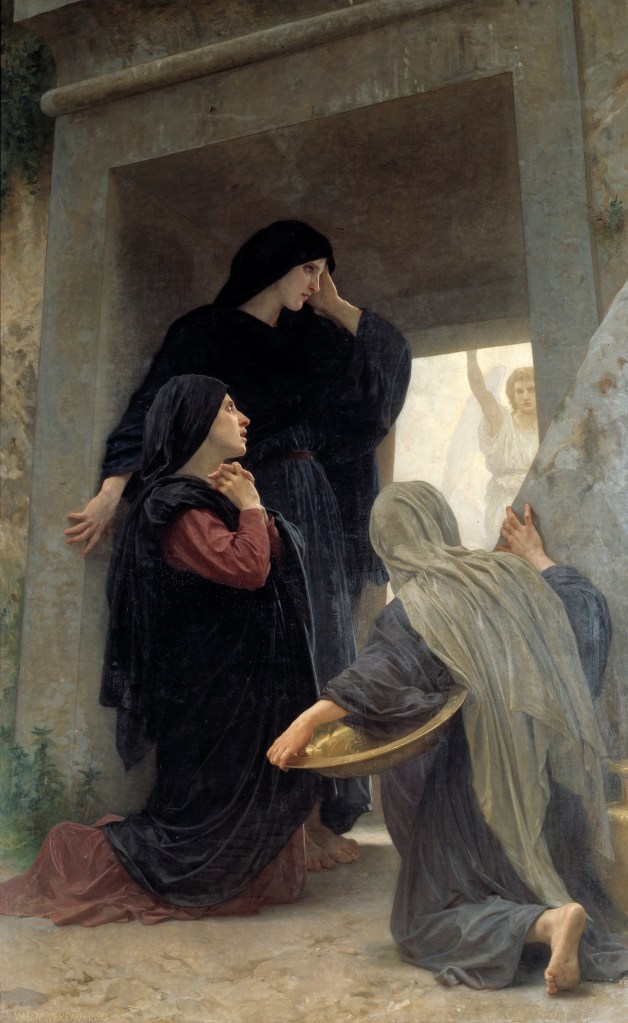
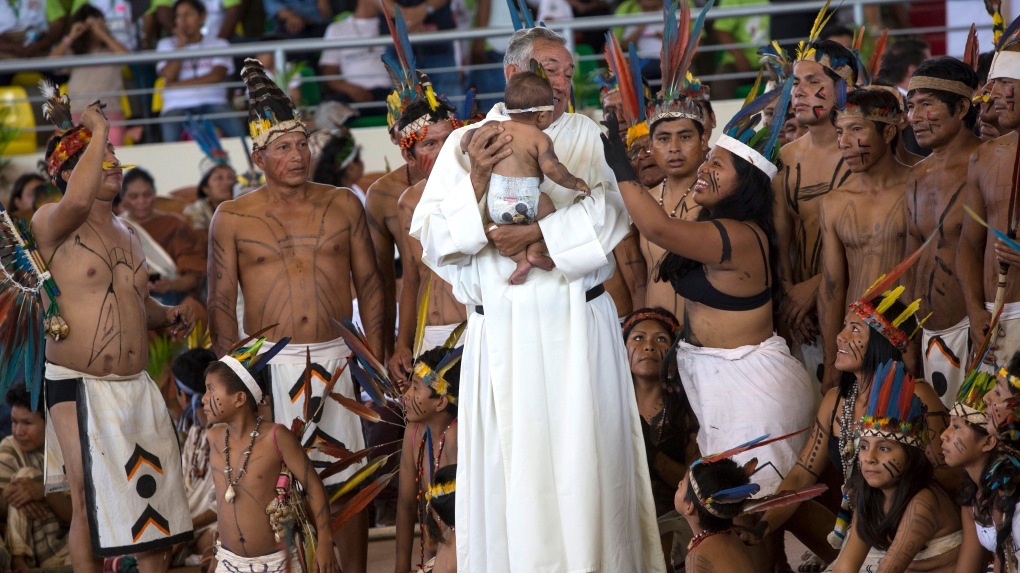
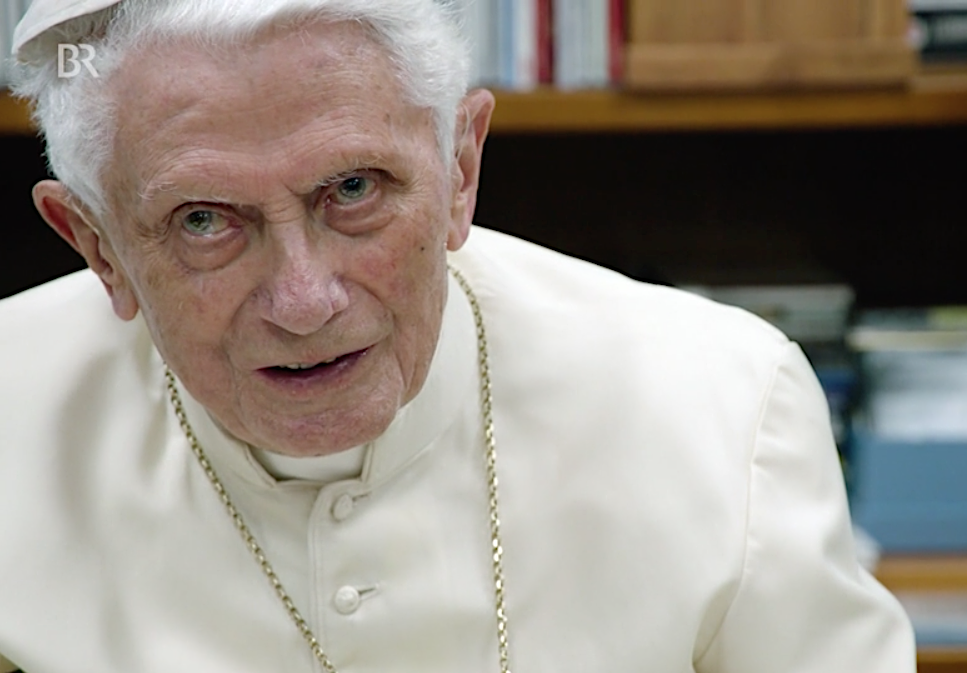

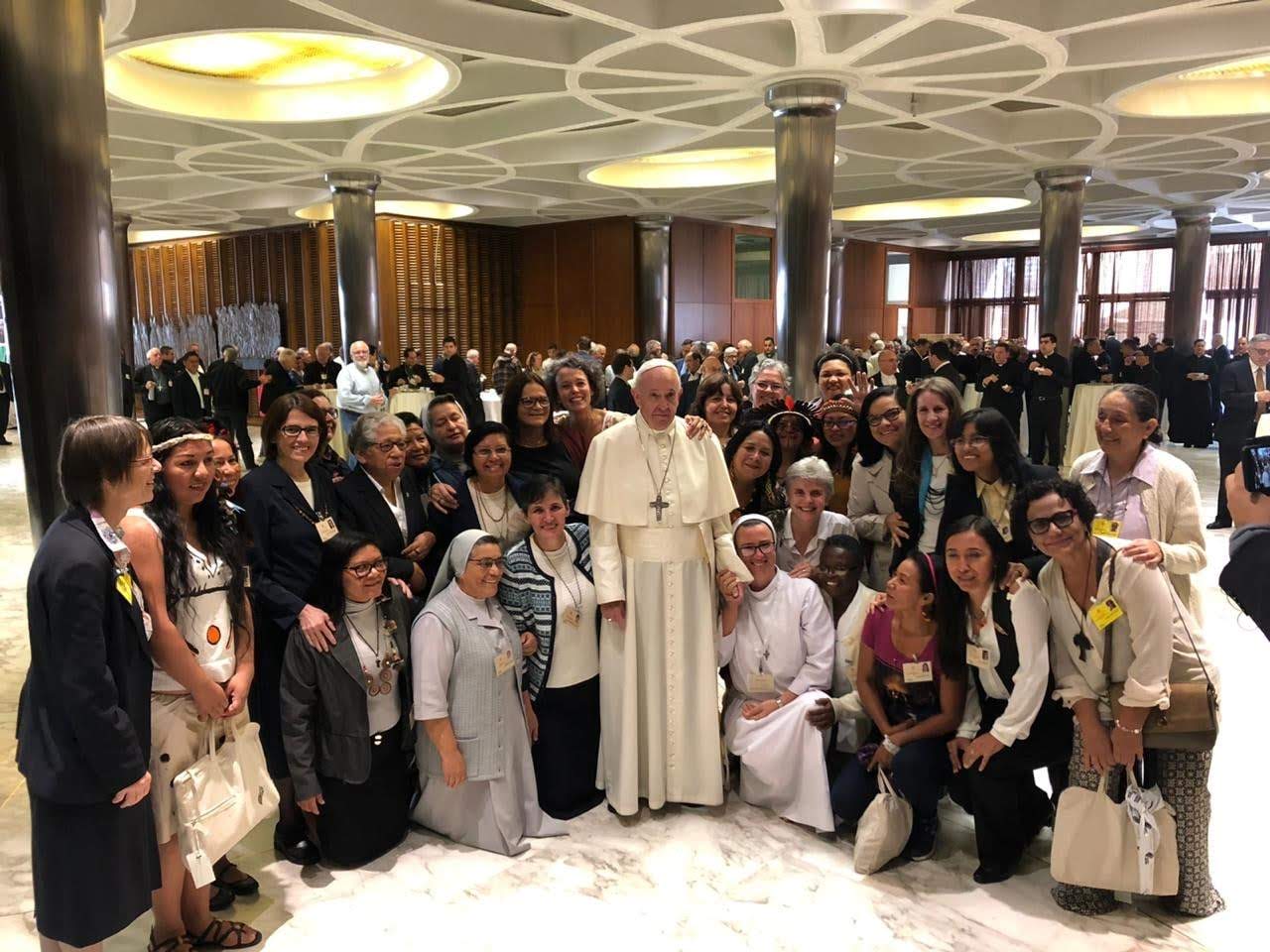
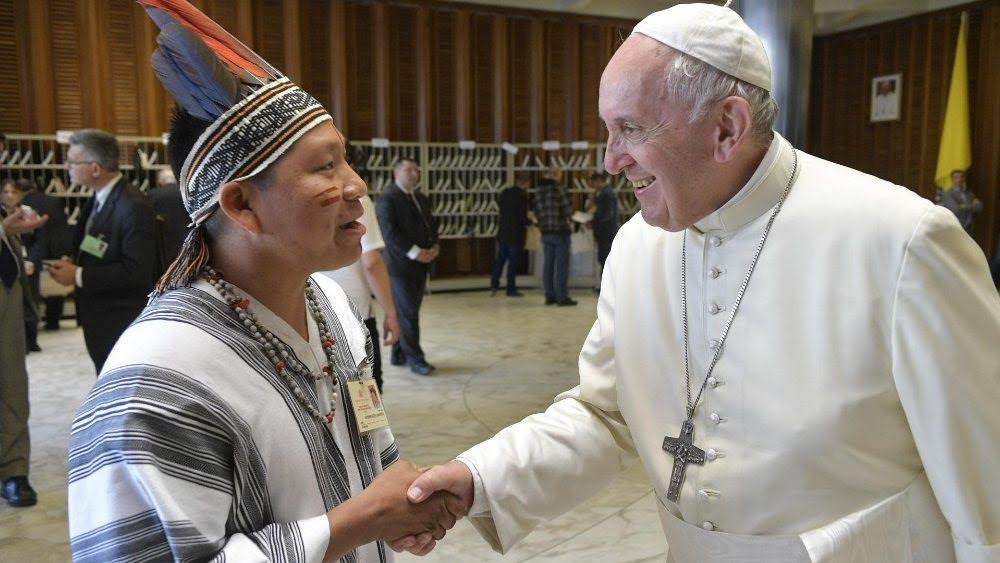


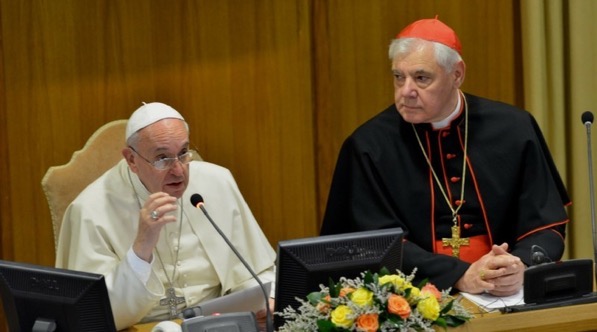
 eyebeleave